Where to start with this complex, unusual and gorgeously written novel that manages to convey the horrors of child marriage, of colonialism, and of patriarchal cultures, without eulogising or demonising the characters involved? It’s quite a feat, and it made this book a deeply involving read.
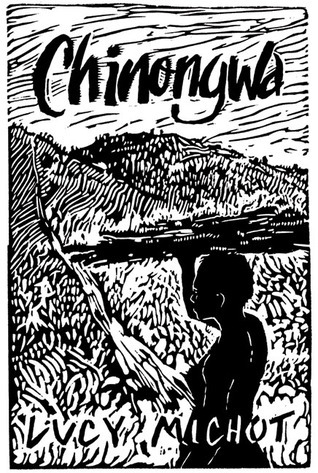
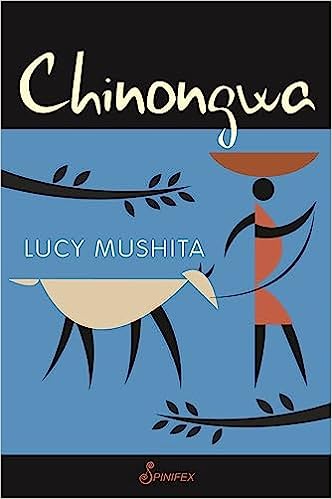
The place to start, I suppose, is the beginning, which is that Chinongwa is the debut novel of Zimbabwean author Lucy Mushita. Published most recently by Australia’s Spinifex Press in 2023, it was originally published in 2008 in South Africa, under the author name of Lucy Michot (which I discovered when searching for the book cover in GoodReads.) Its eponymous protagonist, Chinongwa, is 9 years old when the novel opens:
Chinongwa Murehwa was nine, but her age was not vital. Just her virginity. Though she was not yet washing, her fruits were already protruding. That was a relief for her family. Anyway, she was the only one they could use.
And there you have it. For a reason that soon becomes obvious, Chinongwa is to be “used”, that is, married off to save the rest of her family from starvation. The root cause of this starvation is colonialism – the arrival of the “kneeless” or vasinamabvi and the fact that Chinongwa’s family ended up with the poorest quality land in the village because her paternal grandfather had stood up to the vasinamabvi and arrived late at the place their community settled.
So, in Book 1 of the novel, 9-year-old Chinongwa is “hawked” around neighbouring villages by her father and aunt, with little success. Can you imagine it? She is starved and thin, not one of those “juicy” nubile young women men desire and are happy to pay for with cows and grain. At last, however, a childless woman, Amai Chitsva, for reasons of her own, offers to take Chinongwa as a second wife to her own husband. Not only is this husband, Baba Chitsva, thirty nine years her elder, but he does not want a second wife. Regardless, Book 1 ends with Chinongwa about to start her new life with her new family.
Now, before I get to Book 2, I should explain that this book is a novel, but one based on the life of a real person. I say this because a Chronology is provided at the beginning of the book. It tells us that Baba Chitsva was born in 1871, and Chinongwa in 1910, that Baba Chitsva died in 1935, and, finally, that “Chinongwa is telling all” in 1940. There are other dates, but these are the most relevant in terms of grounding the book.
So, Book 2. Unlike Book 1, which is told from the third person voice (albeit mostly through Chinongwa’s eyes), Book 2 is told in the first person voices of Amaiguru (Amai Chitsva) and Chinongwa, with one chapter in Baba Chitsva’s voice. This shift works because in Book 1 Chinongwa is a child, so not fully aware of the ways of the adult world, whereas in Book 2 she grows up – very rapidly. It’s a heart-breaking story of a young woman who is essentially groomed to seduce a man who doesn’t want her, a young woman who subsequently has her first baby at the age of 11.
For the first few years she and Amaiguru make it work well enough, as we hear through their individual voices. Chinongwa has no other real option, while Amaiguru tries to make work what she had started. But things turn sour when, upon her mother’s death, Chinongwa finally realises she is on her own, and that it’s time to be more independent:
I now had to take my destiny into my own hands: I would have to return to my jail and fight for my freedom from within.
And so she does with disastrous results.
What makes the novel such good reading is that Mushita is able to convey the culture, how and why it tolerates the practice of child marriage and polygamy, including the economics of it all – how cows are passed back and forth between families, for example – while simultaneously recognising the humanity of those involved. These men and women – the mothers and fathers, the child-brides, the first wives and second wives, the husbands, the aunts, the villagers – are human beings with the full range of social and emotional behaviours. Some are kind and some cruel, some are envious, some are sensible, some are weak, some are manipulative, some are scared, some are wise, and so on. Chinongwa eventually recognises this truth:
At first I refused to accept what life had dealt me. I said that my load was too heavy. But, with time, and as I look around me, I decided that one will never know the weight of one’s neighbour’s load. Maybe if I were to carry it, I might ask for mine back. Only that one who carries it knows its weight.
In other words, people will be people. They are rarely to blame for the system in which they find themselves. Some will survive and some won’t, but that’s not the point. The point is the system, and its complex historical and cultural interconnections. The point, too, is that child marriage still happens, and that patriarchies still govern much of women’s lives. In Chinongwa, Mushita conveys the economic, social and cultural imperatives that underpin these practices while also showing the personal costs. It makes compelling reading.
A little contribution to Bill’s Africa Project. Lisa also enjoyed this novel.
Lucy Mushita
Chinongwa
Little River, Vic/Mission Beach, Qld: Spinifex Press, 2023 (orig. pub. 2008)
235pp.
ISBN: 9781925950816
(Review copy courtesy Spinifex Press)
 Whispering Gums
Brilliant review. The tragedies of existence are universal – just that the parts are arranged differently depending upon the historical setting and the cultural setting. I think I could almost set my mother’s story (she was born in 1930) as a kind of parallel to that of the protagonist of the story you are presenting here, WG. And no – she wasn’t married off at nine – but she suffered the loss of her bodily integrity aged eight – to an elder of the fundamentalist Protestant church her parents had just entered during the latter years of the Great Depression.
Thanks Jim. I am so sorry for your mum, but you have seen some of the truth of this book.
Thanks, WG: The tendency is often to point fingers at that “other” society or era – when variations are right here within our own. Jim
Yes, absolutely.
I was very sorry to read this too.
Lisa – thanks. My mother did not reveal such matters till into her 80s – me then doing my best to counter more than 70+ years of her feeling guilt and shame. Never revealed to her parents. Were I a writer…there’d be a short story at least…
It’s very difficult to know how to react to disclosures like this. For all the publicity in recent years, I would hazard a guess that very few people recognise a disclosure when it’s being tentatively made, and very few know what to say at the time, or later, even if they realise what they’re being told.
It was not until I attended professional development about all this when Victoria implemented mandatory reporting that I was shocked to realise that there had been three occasions where I had not understood what I was being told.
I’m sure that your mother would have been grateful for the way that you validated her experience and provided continued support.
Nicely said Lisa.
A couple of weeks ago I mentioned to WG that I’d purchased Barbara Kingsolver’s Demon Copperhead – having read WG’s excellent review. She said to get back to her when I’d finished. Well, I am now at 94% finished. And my initial positive comment/feeling/response has not changed. It is an amazing book and truly I love the parts where she explicitly explains the background and ways of being hillbilly – and not as something for ridicule. It’s leapt to the top of my list of great books over this past year. And deals with many aspects of the story I told of my mother – and in answer to WG’s question – I think a mix of documentary/other more open discussion of these things from #MeToo and the Epstein, Lehrmann and other cases revealed here over the past number of years have encouraged her to broach the subject of her own life – and maybe, too, the human need to – not exactly “confess” but to “declare” the more difficult aspects – to be truly known – if I can put it like that. And yes, only kindness and generosity are required. Her age as a child and in later years other aspects of the misogyny of those years militated against her own agency. I’m not a psychologist though my studies – as with so many of us – contained courses and programs built on and from it. And literature – as with the review drawing my commentary – it’s all there in the best of writing. Thanks for the positives in response. I’ll share these things with my mother when I see her next month…
Thanks Jim, and particularly for answering my question. As you say part of it probably was the need to confess or declare or “get off her chest” this experience. I think with age we can feel freer and that, together with a more supportive society, must all be part of it.
So glad you like Demon too!
It’s so sad to hear stories like this that have been bottled up for years. Did she share it because it was coming out more into the open? I really hope sharing it benefited her – albeit very late in life.
“It’s quite a feat”, this review; but as always you manage to see the book’s worth, ST.
Jim Kable’s comment is more appalling, imnsho: but then, it’s about religion – the opiate of the masses, and its cost.
Thanks MR, and yes re Jim’s comment. Absolutely appalling.
Aah, yes – MR – religion – especially fundamentalist versions!
And there are many who don’t even realize that fundamentalism in its ugliest form exists in “religions” other than that supposedly practised by some Muslims.
Gosh, Jim, your unfortunate ma !!
Hmmm … I wasn’t even thinking Islam given what we’ve been talking about.
Narrow-minded, literal religion is truly worrying.
great review for a fascinating book! Alas not available in me ebook library apps!
great review of a fascinating book. Alas not available in local library ebook apps..
Thanks Kate. Perhaps you could ask the Library to get it. I think Spinifex does eBooks. It’s the sort of book that should be available I reckon.
Thankyou Sue for thinking of my project. Apart from a little general knowledge about S Africa in particular, Africa has been pretty opaque to me all my life, and it was time I added it into my reading, literary and political – amidst all the clamour from Gaza on Twitter there are cries from Sudan and the Congo of similar atrocities going on unheeded.
Yes, me too, really. South Africa has been where most of my knowledge of Africa has resided. As a stamp collector I “knew” African countries like, as it was then, Rhodesia Nyasaland, Tanganyika, and so on. Then they all changed, my life moved on, and I was lost!
As for atrocities around the world – where does it start and end …
Some several years ago I read The Last Massai Warrior by Frank Coates. This book explains how the Maasai were tricked out of their lands by the British Government in the early 1900s. Perhaps slightly north of what is the setting for this novel, the conditions would have been similar, giving rise to the horrific choices forced upon Chinongwa. I recommend it to all who wish to know more background.
Thanks, Gwendoline. That certainly sounds relevant background to this book.
I don’t know a lot about child marriage in Africa. Most of what I’ve read happened in India. And then on the opposite side we have China, where they have a proverb stating that raising a daughter is like watering your neighbor’s tree. I will never understand how all of this works other than to assume it has something to do with a man’s ability to produce many children at the same time.
No my understanding is pretty general too Melanie, but this book shows what an economic imperative it could be – “selling” a daughter not only brought in resources for everyone else (sacrifice one to save ten) but also reduced the mouths to feed. (Until of course a girl was bought for a son and produced more mouths to feed! Complex)
It is all of that Jacqui … interesting how little known it is even though it was first published 15 years ago.
I used to occasionally find Spinifex’s books second-hand but it’s been awhile since I “lucked” into one. Back when there were women’s bookstores, these kinds of books would have been brought into the shop as imports, which made paperbacks the price of hardcovers, but it kept us reading more broadly and sharing stories like these.
Oh that’s a shame, Marcie, though I love that you did once occasionally come across them. Their books, like Virago’s, are recognisable on bookshelves.