My participation in Nonfiction November has been sporadic, but this year I have done Week 1, and am now combining Weeks 2 and 3, partly because there’s an element of repetition in my Week 2 responses.
Nonfiction November is hosted by several bloggers. This year, Week 2 – Choosing Nonfiction is hosted by Frances at Volatile Rune, and, my favourite, Week 3 – Book Pairings, by Liz at Adventures in Reading, Running and Working from Home.
According to the plan, Week 2 finished last Friday (10 November), and Week 3 commences tomorrow (Monday 13 November), so I am dragging the chain for the first and jumping the gun for the second, by posting today, Sunday 12 November.
Choosing Nonfiction
This week the questions relate to what sort of nonfiction we like to read. My answers will mostly be known to regular readers here, but there are some new twists on the questions.
What are you looking for when you pick up a nonfiction book?
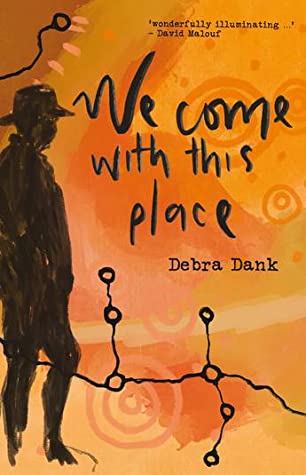
Depending on the book and the topic, I am looking to learn something new, to increase my understanding of something I already know, and/or to have my perspective challenged (which might result in my changing that perspective, or, being able to better defend it.) The two books I named in my Week 1 post – Debra Danks’ We come with this place (my review) and JD Vance’s Hillbilly elegy (my review) – satisfied at least one of these criteria.
Dank’s book, in fact, satisfied all three – I learnt new things about First Nations history and culture; I better understand it, particularly in terms of connection to Country; and, as a result, I can better explain and defend my support for First Nations’ people’s fight for fairness.
Do you have a particular topic you’re attracted to?
I haven’t changed from what I’ve said before, which is that my overriding interests are literary biographies/memoirs, nature writing, and works about social justice/social history (which includes First Nations history and decolonisation, climate change and feminism.)
This year, as you already know, I’ve read very little nonfiction, but those I’ve read have been memoirs in the social justice/social history area.
Do you have a particular writing style that works best?
For want of a better word, I enjoy what is broadly called creative or narrative nonfiction. Because I love fiction, I like the writing to be engaging and evocative, which tends to mean writing that draws on some of the techniques of fiction to tell a nonfiction story. This does not mean playing with the facts, but making the facts, shall we say, accessible. Where a case is being argued, I want it to be clear and logical, not characterised by academese or jargon that is understood only by those in the know.
While this question doesn’t specifically ask it, I also like, where it’s appropriate, to know what sources have been used (either through an author’s note or footnotes/endnotes), and I LOVE an index. I know indexing is expensive, but, unless you are reading an eBook with search functionality, the value of a nonfiction book can be seriously diminished by the absence of an index.
When you look at a nonfiction book, does the title or cover influence you? If so, share a title or cover which you find striking.
I wouldn’t say I am influenced by titles and covers, because with nonfiction – for me, anyhow – content or subject matter is queen. However, this is not to say that a good titles and beautiful covers don’t enhance the experience, because they do.
Debra Dank’s We come with this place is a powerful title. It categorically announces that First Nations people were always here, that is, they WERE HERE when the settlers/invaders arrived. More than that, it suggests they are an intrinsic part of, if not essential to, this place. WE. COME. WITH. THIS. PLACE.

By brother Ian Terry’s book, Uninnocent landscapes, also has a strong title (but I will discuss that in my review). The book’s design and its cover are also glorious. The cover is striking in a minimalist restraint that also happens to be literal, in that it depicts Robinson’s journey that Ian followed.
Book Pairings
Our instruction is to “pair up a nonfiction book with a fiction title. Maybe it’s a historical novel and the real history in a nonfiction version, or a memoir and a novel, or a fiction book you’ve read and you would like recommendations for background reading. You can be as creative as you like! “
Okay, so my creativity will extend to two pairings:
Nonfiction read this year, paired with fiction from any year
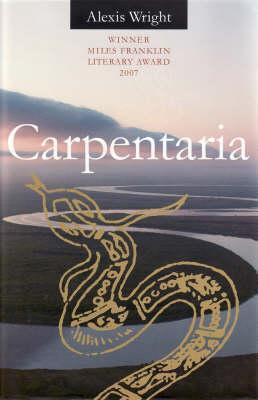
Debra Dank, We come with this place with Alexis Wright’s Carpentaria (my post). For a start, both books are set in neighbouring parts of northeast Australia, just south of the Gulf of Carpentaria. Secondly, both convey, in powerfully descriptive ways, the catastrophic dislocation experienced by First Nations peoples when they are separated from Country and/or when they are not able to interact with Country in the ways that are essential to their (and Country’s) wellbeing.
Fiction read this year, paired with nonfiction from any year

I have read a lot of First Nations and other non-white/BIPOC fiction this year, but I’ve already focused on First Nations writing in the post, so I’m changing tack, and am pairing Edwina Preston’s Bad art mother (my review) with Jane Sinclair’s memoir Shy love smiles and acid drops (my review), which I read early last year. Preston’s novel was inspired by several Australian artists (visual artists and writers) including the story of Sunday and John Reed’s adoption of Joy Hester’s son Sweeney. Jane Sinclair’s parents were part of the Reeds’ Heide Circle, and in her book Sinclair includes letters written by her mother to Sunday Reed, which include discussions of Sweeney. These are just two of the books I’ve read which deal with or reference in some way Heide. There are many more I haven’t read, as this Circle was not only fascinating but one of the most influential in Australia’s arts history, particular in terms of Modernism.
What would you pair (and/or do you have anything to share regarding the first questions)?
 Whispering Gums
Oh, I am terrible at pairing.
Each time I’ve contemplated it, I’ve been amazed at the clever pairings others come up with, but the concept eludes me every time!
I suspect you are not as bad as you think, Lisa. As you can tell though, I love this question. My pairings aren’t very creative, particularly this time, but interesting to some I hope.
I missed the week two topic – mine does not vary from year to year (memoir, memoir, memoir with the odd bit of grief related writing thrown in. Oh, and anything written by Patrick Radden Keefe).
Book pairings is one of my favourite posts to write – I’m busy preparing my post!
Haha, Kate, why am I not surprised?
I enjoy the pairing posts so will look out for yours.
This is what makes you so good a reviewer: you know what you like but, far better, are able to enunciate it clearly and comprehensibly.
I am jealous.
And I am so jealous of your creativity M-R, your fresh, fun and open ways of doing or describing things
I’m with you on the whole referencing and indexing thing, it’s so important to see people’s workings. I love your pairings too and will be looking into the books you mention (I know of some of them already). Now my masterpost is up you can add this post to the Inlinkz if you feel so inclined (or just add a comment including it) so everyone can find it.
Thanks Liz … I have been to your blog and don the link thing, though do you think people really use them?
I wish more people wold see what we do about referencing and indexing!
I often find myself inadvertently paring books because I start down a topic vein. Good job finding some of your pairs.
My Nonfiction November Week Three Post
Oh that’s interesting Anne … I don’t do that at all, but I can understand the impetus to do it. It would certainly make this pairing task simpler.
HI Anne, I wrote a comment on your blog but disqus would not let me sign in with my Google account. Here is what I wrote (in case you come back here):
I love this Anne and I admire you for persevering with a read that wasn’t giving you joy. What I love about Middlemarch is the way she whks and develops her characters. The insights she provides into people. That interests me more than the plot or whether I care about characters. I’m so glad Mead’s book enhanced the experience for you. I’ve been interested in reading it since it came out.
I used to be a cataloguer and indexer many years ago and I completely agree with about indexing, etc. I think it is essential for nonfiction – as is the need for a list of sources and a bibliography. I also like to know how much of an historical fiction novel is based on fact as opposed to the author’s imagination. It annoys me when I read something that is out of context, or simply incorrect.
Yes! I like historical fiction in which the author provides a note about their sources, and how much they have, or haven’t, deviated from the historical truths. It’s not necessary because it is fiction, but it is it does make it more interesting to me to know those things.
I would pair the nonfiction title Sounds Like Titanic with any fiction set in Appalachia.
Oh good one Melanie. I had to look up that book, but it sounds like one I’d enjoy. But, do you have any favourite Appalachian fiction? I’m not an expert. __________________________________
Sue Terry sue.terry@bigpond.com
Living on Ngunnawal/Ngambri country, never ceded “Let us read, and let us dance; these two amusements will never do any harm to the world.” (Voltaire) __________________________________
>
My mom’s favorite book is Cold Mountain, and that is set in the Appalachian Mountains, so there you go!
I’ll be adding We Come With This Place to my TBR. Thanks for sharing
That’s great Shelleyrae. I don’t like saying this, but really it should be read by everyone, and particularly by anyone with an iota of interest in the topic.
Pingback: Nonfiction November: Week Five – whatmeread
I thought Carpentaria was amazing; I read large sections of it aloud to slow myself into her world.
And I love an index. There’s a memoir by a lifelong Canadian editor about his memories working with many of the key Canadian writers over decades and it is not indexed and I love the anecdotes but hate remembering, every time, that IT NEEDS AN INDEX. Heheh
Oh that’s terrible Marcie. A book like that demands an index. I have a couple of similar books and find it infuriating.
Carpenteria is great though, isn’t it?