Introducing my first review for the 1962 Year Club – Shirley Hazzard’s “The picnic” – I said I had read two short stories and might post on the second one. I am doing so now but, stupidly, I left the book back in Canberra and here I am in Melbourne, so my post will be limited, and without the usual quotes to convey Porter’s writing style. But, it was this, or not at all, because by the time we return home, I will be onto other things. I am cross though, because Kerryn Goldsworthy did write a useful introduction, which, if I remember correctly, placed Porter as part of a change in short story writing from the more realist school that had held on strongly since Lawson.
Like Hazzard’s story, “Francis Silver” appears in the Carmel Bird edited anthology, The Penguin century of Australian stories.
Who was Hal Porter?
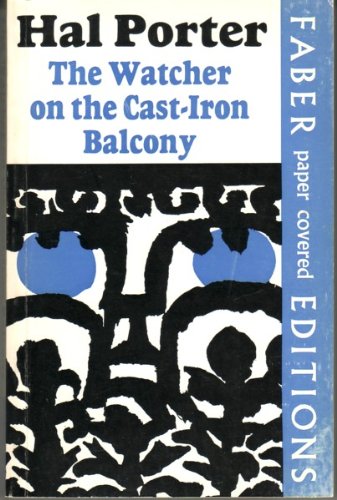
Porter (1911-1984) was an Australian novelist, playwright, poet and short story writer. His first autobiography, The watcher on the cast-iron balcony (1963), is regarded as a classic.
The Wikipedia article, linked on his name, is relatively brief, but there is a more thorough biographical entry for him in the Australian dictionary of biography (ADB). Written by literary critic and academic, Peter Pierce, it tells us that he had many occupations, including teaching (on-and-off at many schools), librarian, and shorter term jobs like window-dresser and sheep-station cook. But, cutting to the chase, it also reveals Porter as a problematic figure, because of his pederast behaviour. Peter Pierce writes, for example, that, around 1940, he had “an affair” with a male student at the school where he taught, “an indiscretion that went unpunished”. Those were the days, I suppose. This “affair” – should we grace it with that description? – is apparently fictionalised in his short story “The dream”.
Pierce also writes that, in her 1993 book, Hal Porter: Man of many parts, Porter’s biographer, Mary Lord was, “even-handed in judging an old friend and sensational in revealing Porter’s paedophilia, in particular his sexual relations with one of her sons.” Hard to understand. Moreover, Pierce says that Porter’s third autobiography, The extra (1975),
ventilated many of Porter’s prejudices — against Jews, ‘foreigners’ and Aborigines. The counterpart of Porter’s grace, charm and cultivation was an intense snobbery that, for instance, saw him elevate his father’s occupation from engine-driver to engineer. His facility at winning friends was matched by ceaseless demands on their patience.
So, a difficult man, and one I thought twice about sharing here. However, I read the story, liked it, and as it doesn’t smell of these difficult issues, I am covering it in the uncomfortable spirit of separating the work from its creator. Peter Pierce described him in his 2012 ADB entry as “one of the finest of all Australia’s authors of short stories and a pioneer of the first flowering of autobiographical writing in this country”. (This piece by the late academic Noel Rowe explores the Porter issue in depth.)
“Francis Silver”
“Francis Silver” is a first-person story in which an older man tells of fulfilling a deathbed request from his mother who had died at the age of 41 when he was 18. All through his childhood, he had heard about a man called Francis Silver, who, his mother had implied, had been not only a beau, but an alternative potential husband to the country-living man she did marry, the narrator’s seemingly long-suffering father.
Through our narrator’s childhood, his mother had shared with him an album of postcards sent to her by Francis Silver. Along with sharing this album, she had told stories about this man which suggested he was a worldly, debonair man, who loved the theatre. Her wish was for him to give the postcard album to Silver – but, on no account, was he to also give the lock of her hair that she had kept in an envelope with Francis Silver’s name on it. He was to burn that.
Francis Silver, his mother told him, had worked in a picture-framing shop, and that is where our narrator finds him – but what he finds doesn’t gel at all with the stories his mother had told. The story, then, is about memory, illusion and reality, and the boy’s recognition of the difference. In his own romantic fantasy, he had decided to ignore his mother’s second request and give Francis Silver (whose name works as a mantra in the story, hence my using it in full for each reference here) the lock of hair too. But, as he confronts reality, he changes his mind. The closing sentence vividly conveys his decision in an act that encompasses layers of meaning and feeling.
The father is a less developed figure, because the son was in his lively mother’s thrall, but the sense we get is of a man who loves his wife, and who tolerates her flights of fancy, feeling comfortable, it seems, that she chose – and remains with – him. He seems to recognise (or trust) that Francis Silver is one of those escape fantasies people have to help them cope with the tedium of life, the fantasy that, should it get too hard, there were, or perhaps even are, other options. The narrator, as a boy, doesn’t understand these nuances.
There was a strong autobiographical element, I understand, to Porter’s writing. From the little I read for this post, I am aware that there are such elements in this story. For example, Porter’s beloved mother died when he was 18 years old, as does the narrator’s mother in this story. How much else might be autobiographical though, I don’t know.
Anyhow, just to finish … in the end, the narrator resolves the differences he confronts and is generous to his father for whom Francis Silver had seemed an imagined (if not, as it turns out, real) rival. Our narrator has also learned something about the imagined, illusory past, and its relationship to present realities. A tight, neat, engrossing story.
* Read for the 1962 reading week run by Karen (Kaggsy’s Bookish Rambling) and Simon (Stuck in a Book).
Hal Porter
“Francis Silver” (orig. pub. in Hal Porter, A bachelor’s children, 1962)
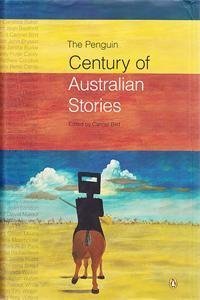
in Carmel Bird (ed.), The Penguin century of Australian stories
Camberwell: Penguin Books, 2006 (first ed. 2000)
pp. 186-197
 Whispering Gums
Yes, it sounds like a good story. Pity about Porter’s personality, she added alliteratively ..
Porter’s problematic personality, in fact, MR – just to pile it on. (What a shame his name wasn’t Peter!)
The older I get, the less I am able to say, “I can separate the art from the artist.” Part of the problem is that in the horror movie genre, some directors will include really uncomfortable, horrific scenes only for it to be later revealed that the director did something similar in real life. For instance, Lars von Trier directed The House That Jack Built, which is like American Psycho, only more gruesome. You look at his Wikipedia page and you see he’s a Nazi sympathizer and has been accused of sexual violence, the kinds of things you see in his movies. Roman Polanski always infantilizes his female characters. I don’t know, I might be making a stretch, but it starts to seem obvious if the female characters never escape from the violence….some sort of respite from the horror, something that shows strength. It looks like obvious control of women.
Yes, I agree Melanie that it is a difficult issue … in this story, I can’t see any evidence of the behaviours or attitudes that would bother me, so in that sense I didn’t have a problem, but there is an ethical concern about “supporting” someone whose values are problematical. The lines we draw are so complicated.
I’ve only seen one Polanski so I can’t comment but what you say makes sense.
Great to see ‘Francis Silver’ being read. (I am not sure what the ‘pp 186?’ signifies in the post above. The story is on page 542 of The Penguin Century of Australian Stories, and the whole book has 733 pages.)
Thanks Carmel … I did enjoy reading it.
Re pagination, I’ll check my copy at home and fix. I thought Shirley Hazzard was the preceding story and I have to p. 185 in my post on that but maybe I’ve got that wrong too?
Ooops! I must APOLOGISE. I was looking at the hardback version of the book, and you were working from the paperback. One is an Australian publication and the other is American. I am not sure which is which. For some reason the stories in the hardback are alphabetical by author, while the stories in the paperback are by author date. So the hardback begins with Glenda Adams and ends with Fay Zwicky, while the paperback begins with Barbara Baynton and ends with Marele Day. So please forgive me for my bossy error.
No worries Carmel, but my copy is a hardback. However, as you rightly presume it is presented in chronological order. I found my copy on eBay – hardback, and the seller has kindly imaged all the table of contents which I recognise as mine: https://www.ebay.com.au/itm/175145288053? From what I can see there were a few HB and PB versions of this book, which says something about its worth, don’t you think? (Mine is the 2006 edition, as shown on the back of the title page for this one).
Which did you want? Alphabetical or Chronological? I would have thought Chronological was the way to go?
(And please don’t apologise! I can understand if your copy is different to mine. So weird, really.)
This is a reply to the Whispering Gums comment regarding the different editions of The Penguin Century of Australian Stories. The history of this book’s path to publication was long and complex. Perhaps, as a consequence of this fact, I no longer recall some of the details. However, I THINK I preferred the alphabetical list by author. However, I can now see that the chronological list might be more useful and sensible. I am pretty sure the chronological list was done for the American market. I remember being sad that the American cover was a Ned Kelly painting by Sidney Nolan, whereas the Australian cover was the one I had chosen: ‘Jetty at Rosebud 1938’ by Arthur Boyd. The Boyd cover was so deliciously designed by Sandy Cull.
(History: The book was originally signed to Random and was called The Random Century of Australian Stories (which I thought was a kind of nifty title). But when Random was sold to Bertelsmann the publication was cancelled and I moved the book to Penguin. This meant I had to re-do all the permissions. I remember the stress and confusion of all this. The order of the stories was perhaps the least of my worries.)
Oh this is so interesting to hear Carmel. I love the idea of Random! What a shame. So it wasn’t commissioned but your idea to do? I can imagine the work involved in all those commissions. But while an index would be necessary I think a Century title does invite chronological (and is great for seeing trends, perhaps). But there is a chronological table in my edition as well which seemed weird given it’s ordered that way. Maybe that’s because it was done for the alphabetical listing and my edition retained the table anyhow.
I finally read The Watcher on the Cast Iron Balcony recently, and it was beautiful.
Yes, I love that book. I know lots of people who don’t.
I looked for your review Lisa, but I only saw the Sensational Snippet, so thought you must have given up on it. I’m glad to hear you finished it.
No. not at all, it was a coffee table book which I read over a few months.
Ah … a coffee table edition! Awkward to read. I’ve always wanted to read it. One day perhaps.
No, no, not a coffee table edition, a book kept on the coffee table to read when the sports news is on between the news and the weather.
Oh, haha Lisa … I must admit that I hadn’t seen many autobiographies published as coffee table books. This is a wonderful new definition of coffee table book.
I first came across Hal Porter thanks to his letter writing friendship with Eve Langley. But I didn’t know about his problematic history.
He had a funny (slightly snobbish) passage about Metung in one his autobiographies that described his visit there with Eve to retrace some of the places in her book, which I read just before I stayed in Metung myself.
Thanks Brona … I need to read more of him. This story is so interesting and well-written.
Yes, the criss-crossing of so much of the production process gave rise to the edition you have with the two chronological elements. I had no say in that. Just one of the mysteries of publishing. And of course, ironically, Random and Penguin are now one and the same.
Oh yes, so they are.
BTW, I like my cover for its cheeriness but I understand your preference for the Boyd over a Ned Kelly image.
Well, yet another Australian writer I never heard of.
Thanks for the “Hal Porter” introduction.
The Penguin century of Australian stories is difficult to come by! Library does not have it, German Amazon asks 87 euro, Dutch Amazon not available at all and oh yes,
Abe Books on USA: softcover book cost 6,50 (bingo!) …but the shipping is 30 dollars. If you have that book…it is a collectors item!
Amazon shipping is horrendous Nancy, as is other shipping from the USA, particularly when you add the poor exchange rate. I found some second hand copies on eBay. Have you ever tried that? All I can say is that I’m glad I nabbed this copy when I saw it in Mum’s collection.
I like a title that conjures an image of watching from the balcony, I suppose because I’ve often felt as though I was on the margins watching something unfold, but I also realise that might have a negative connotation (i.e. spying, predatory behaviour). Once again, the Club strikes a hit, pulling unusual reading choices into our stacks! Have you already had a peek for their next, 1937?
Yes I like the title too Marcie … it’s evocative. Cast iron balcony could have layered meaning too!
And yes I have, but only at an Aussie novels list. There are many authors there I know with titles of theirs I haven’t read, so I am intrigued. But, I haven’t checked my short story anthologies because I’ve been away since the year was announced.
Just catching up and this sounds brilliant. I’d not come across Hal Porter before, so thanks once again for introducing me to a new author!
Thanks Karen. I love using your “years” to read authors like this that I haven’t got around to doing before. I’ve started looking out for the next year.