Eight years ago, I wrote a Monday Musings on Australian literary biographies, but the main focus there was on novelists. With this month being National Poetry Month and with, coincidentally, this year’s National Biography Award going to a biography of a poet, it seemed a match made in heaven. In other words, it seemed appropriate to share some biographies of Australian poets, on those writers, that is, for whom poetry was their main literary output.
In his latest emailed newsletter, Jason Steger, Literary Editor of the Sydney Morning Herald and The Age, writes about this year’s National Biography Award winner, Ann-Marie Priest’s, My tongue is my own: A life of Gwen Harwood (2020). Harwood, some of you might remember, was one of Edwina Preston’s inspirations for her novel Bad art mother (my review). As a woman poet, she had to fight hard for recognition by the male-dominated publishing world. Steger explains that “Harwood’s was a complex life and Priest had to persevere to sort it all out”. Two would-be biographers, Alison Hoddinott and the late Gregory Kratzmann, who edited her collected poems, were, he explains, defeated by the task. Not Priest, though, for which we should be grateful. One of the judges, Suzanne Falkiner, says Steger, put it this way:
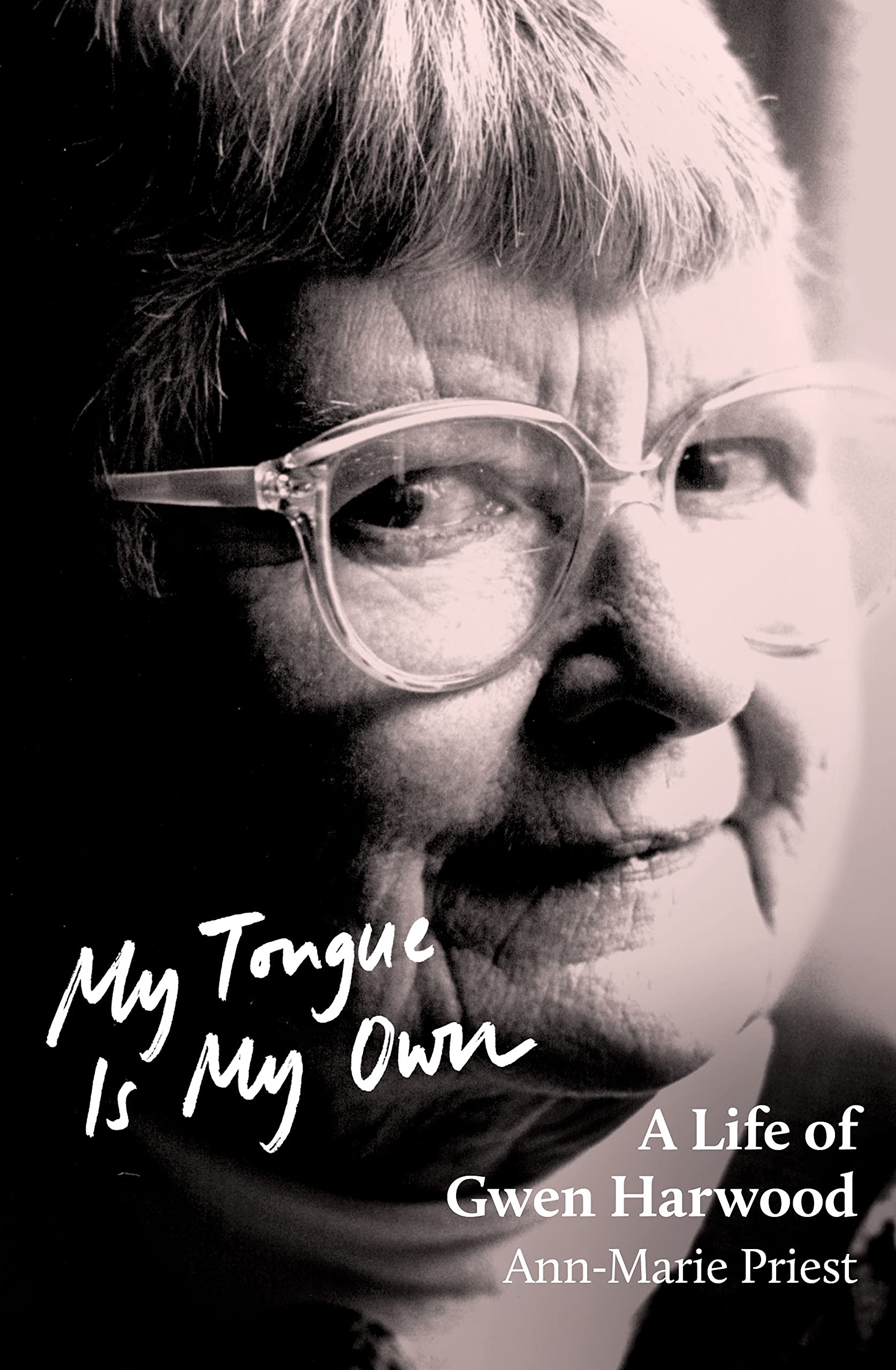
Ann-Marie Priest has captured completely the sprite-like nature of one of Australia’s finest poets; a woman who used a fierce intellect and penchant for trickery to upend dusty institutions that steadfastly refused to see women as capable or talented. Through these pages, the great poet feels so alive.
To completely capture the nature of their subject must surely be a biographer’s goal, by which I mean it is not to fill up the pages with unending chronicling of carefully researched facts, albeit facts are important, but to give readers a sense of who the person was. Sounds like Priest has done this.
Selected biographies of Australian poets
These are listed, in the time-honoured vein of biography sorting, by the last name of the poet being written about. It’s a small select list to get us started:
- Sarah Mirams, Coasts of dream: A biography of E.J. Brady (2018): I had never heard of Edwin Brady (as a poet or otherwise) when this turned up in my search, but he was apparently “a socialist and bohemian who knew Henry Lawson and many other well-known writers”. He was mainly a composer of sea ballads. I haven’t read this but I am hoping to do a post on him next week, now that I’m on a Poetry Month roll.
- Cathy Perkins, The shelf life of Zora Cross (2019, on my TBR): on poet and journalist Cross, who could be provocative and should, I think, be better known than she is. (See article by Jonathan Shaw on AWW.)
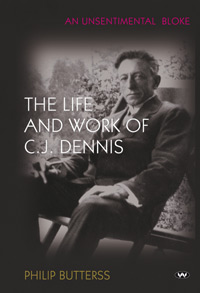
- Phillip Buttress, An unsentimental bloke the life and work of C.J. Dennis( 2014): (my review)
- W.H. Wilde, Courage, a grace: A biography of Dame Mary Gilmore (1985)
- Gregory Bryan, Mates: The friendship that sustained Henry Lawson and Colin Roderick, Henry Lawson: A life (1999)
- Deborah Fitzgerald, Her sunburnt country: The extraordinary literary life of Dorothea McKellar (2023, available for pre-order): apparently “the first definitive biography” of the author of one of Australia’s most favourite poems
- Kathie Cochrane and Judith Wright, Oodgeroo (1994, on Oodgeroo Noonuccal)
- Georgina Arnott, The unknown Judith Wright (2016) and Veronica Brady, South of my days: A biography of Judith Wright (1998)
“Enjoyably controversial” (John Docker)
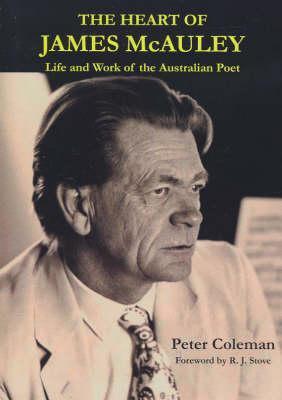
Biographies, of course, can be quite the battleground when there is disagreement about the legacy of the subject, particularly when that subject may have been controversial to start with. I found such an example in my research. It concerns the poet James McAuley, who was known for the Ern Malley modernist poetry hoax. I came across two biographies of him. One, The heart of James McAuley: life and work of the Australian poet, was published in 1980 and is by Peter Coleman. He was editor of Australia’s conservative journal Quadrant – which was founded by McAuley – and is on record as saying of McAuley that “no one else in Australian letters has so effectively exposed or ridiculed modernist verse, leftie politics and mindless liberalism”. The other was by Cassandra Pybus who could be described as Coleman’s political opposite. Her biography, published in 1999, was provocatively titled, The devil and James McAuley. Coleman wrote an excoriating review of it in which he detailed multiple inaccuracies and called it “a silly book degrading a great writer”. Literary critic and cultural historian, John Docker, launched Pybus’ “enjoyably controversial” book, concluding with:
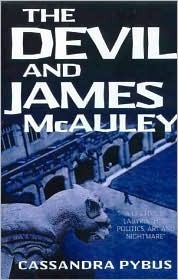
Cassandra has written a lively, entertaining and enjoyable book, very alive to the conflicts and differences within conservative groupings. She has the daring to break with the stifling convention of Australian literary criticism, which bizarrely is that critics should abandon the critical function, they should be obsequious to Australian writers living and dead, they should puff and promote and endlessly praise them – as Leonie Kramer, Cassandra points out, has tirelessly effected for her friend McAuley.
Now that was a book launch! Not having read either book, I can’t make any judgements. It is possible that Pybus, writing 19 years after Coleman, had found more information on McAuley’s life that was not available to Coleman. It’s also possible that Coleman’s sharing political values with McAuley affected his assessment, just as Pybus’ different political views may have affected hers. Whatever the merits of this particular situation, it reminds readers of biographies to consider who is writing the biography and why. I do like biographies in which the biographer introduces their book with this sort of background.
(A revised edition of Coleman’s book was published in 2008, and Coleman spoke at the launch. Pybus still rankles. Ignore Tony Staley’s and Tony Abbott’s comments, if you like, and move on down to Coleman. I enjoyed his closing story.)
Can you share any favourite biographies of poets?
 Whispering Gums
“no one else in Australian letters has so effectively exposed or ridiculed modernist verse, leftie politics and mindless liberalism”.
McAuley is a hero ! – we need him here right now !! Anyone who ridicules our truly mindless liberalism should have a statue to ’em erected.
Them’s fighting words, M-R! “Mindless” anything is poor form, isn’t it.
I have another one for you: From Poet to Novelist, the Orphic Journey of John A Scott by Peter D Mathews. I’m reading it at the moment.
Not because I’ve read Scott’s poetry, but because I read and loved his masterpiece, a novel called ‘N’.
Oh thanks Lisa. I hadn’t come across that one.
We, on AWWC, have an excellent review of Zora Cross’s poetry and Perkins ‘the shelf life of’ by Johnathan Shaw.
Colin Roderick, not my favourite literary academic, wrote lives of both Henry Lawson and Banjo Patterson.
Nettie Palmer was a poet – who doesn’t have a life (about her) sadly. I thought she might have written one of Maurice Furnley (Frank Wilmot). She didn’t that I can see but did write one of Bernard O’Dowd.
There’s no life of Judith Wright either that I can see, though like Palmer, she has had volumes of letters published.
Aileen Palmer was also a poet and is the subject of the excellent biography Ink in Her Veins by Sylvia Martin
That’s all I can think of for now. I’ll have some toast and coffee and have a look through my (mostly unread) Australiana
Thanks Bill … I have added a link to the AWW post that Jonathan write. I’d let than slip my mind!! I have listed two biographies of Judith Wright above… you read my post too fast (as I have been known to do when reading blogs!)
But ah, thanks re Bernard O’Dowd and Aileen Palmer.
Further. I have plenty of collections (also unread) of the poetry/ballads of Lawson, Patterson, Adam Lindsay Gordon, Henry Kendall. Geoffrey Hutton wrote a life of ALG – The man and the myth. I’m not sure about Kendall, there were some links to obscure works. We are very lucky we have the ADB.
Looking to see what you wrote about CJ Dennis, I see that I was wrong about Wright. I should read slower.
Haha, I replied about reading too fast, before I saw this second comment! I have done it myself.
Thanks re ALG. An interesting man. I didn’t go specifically looking for biographies of those older poets. Dame Mary was the oldest I specifically looked for. The E.J. Brady one popped up in a general search.
And yes, you are so right about the ADB. A magnificent resource, and so great that it’s freely available online.
I have Anne Brooksbank’s fictionalized account of the love affair of Mary Gilmore and Henry Lawson, All My Love. I’m not sure it says much about poetry.
There’s so little about any of our famous poets that one year I think I’ll have to devote my January ‘Week’ to Australian poets and poetry
That would be a good idea! There are bits and pieces out there but it’s still not a lot.
I have picked up Gwen Harwood’s book a couple of times but didn’t buy it. Too many books on the TBR pile but it looks interesting.
I know the feeling Pam … you just can’t buy and read every book. (But she is of your adopted state you know, says she provocatively!)
It’s funny. I was organising a couple book shelves and see I have this book!!! I have no memory of buying it. I really am getting old!!!!! Just pitiful!!!😄😄
Aren’t we all!
I think you’ve covered most of the ones I can think of. Although Grantlee Kieza has his great big tomes on Banjo and Lawson and there is also The Extraordinary Literary Life of Dorothea Mackellar by Deborah FitzGerald coming out later this month.
Haha Brona … you’re as good as Bill at reading quickly. Deborah Fitzgerald is in my list! Though I hadn’t realised it was a capital-G in her name.
Thanks re those Kiera titles.
Ooops sorry Sue. I read your post on my phone at lunch yesterday, I often miss/skip whole paragraphs in the scroll 🙂
I know the feeling. I hate reading posts on my phone but I do it sometimes because it’s convenient.
Haven’t read any biographies of Australian poets but have enjoyed a good number of literary biographies. Two that come to mind are Richard Holmes on the Samuel Johnstone/Richard Savage friendship, Doctor Johnstone and Mr Savage and Hilary Spurling’s marvellous book about Pearl S Buck. Both of these as gripping as any fiction.
Sounds like you are like many of us readers, Ian, who enjoy literary biographies. I haven’t heard of those two, but I do think a good biography can be as gripping – as page-turning – as fiction. I’d love to read more about Pearl S. Buck, in particular.
I haven’t read any biographies of poets, but I do appreciate that when I worked at the library, I noticed that Mark Twain had something like 3 massive autobiographies. It just made me giggle that he had so much of his life to share.
Haha Melanie … three autobiographies is impressive!
They’re HUGE.
Hmmm …!