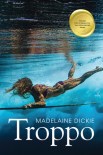
Madelaine Dickie, Troppo (Review)

Madelaine Dickie, Troppo“Write what you know” is the advice commonly given to writers, and this is exactly what Madelaine Dickie has done in her debut novel, Troppo, which won the City of Fremantle TAG Hungerford Award. For readers, on the other hand, the opposite could be true, as in “read what you don’t know.” This is certainly what I’ve done by reading Dickie’s novel because I’ve barely travelled in southeast Asia, where the novel is set, and all I know about that risky business of surfing, which frames the novel, comes from Tim Winton’s Breath (my review).

So, where to start? Well, to begin with, it’s a while since I’ve read what I might call a “youth culture” novel. I’ve read novels by young authors, such as Hannah Kent’s Burial rites (my review), Brooke Davis’ Lost & found (my review) and Tara June Winch’s Swallow the air (my review), but these novels have different drivers. One is historical fiction, one was inspired by grief over a mother’s death, and the other explores indigenous identity issues. The closest to Troppo that I can recollect reading is Andrew O’Connor’s The Australian/Vogel Award-winning Tuvalu, about a young Australian teaching English in Japan, but I read that long before blogging.

I say all this to give Troppo a context – a sort of sub-genre, if you will – of young writers writing about a young person’s experience of the world, an experience that is post-coming-of-age but encompasses a degree of uncertainty about one’s place. I don’t intend this to mean, though, that the novel is autobiographical. While it obviously draws on Dickie’s knowledge of southeast Asia and surfing, for example, I wouldn’t presume to say protagonist Penny is she. Indeed, in an interview on the publisher’s website, Dickie says that:

Some of the anecdotes are almost true, certainly stemming from my own experiences as a traveller and surfer … The texture of Troppo is also very true, the intoxicating smell of kretek cigarettes, the nights bleary on Bintang beer, and the way the call to prayer from the mosques drift down through mountain valleys.

Further, “the characters are entirely fictional”, she says, as is the setting, Batu Batur.

But now, preamble done, let’s get to the book. Set in southwest coastal Sumatra, it starts a couple of months after the bombing of the Australian Embassy in Jakarta in September 2004 and ends just after the tsunami hit Aceh on 26 December 2004. Penny, around 22 years old, had lived in Indonesia as a teen, but is returning to have “a break” from her significantly older boyfriend Josh. She has lined up a job on a surfing resort run by expat Shane, but arrives early to have a holiday. That’s the set up. The novel then explores the personal and political relationships that develop (or pre-exist) between the locals and the expat community, and within the expat community itself, in a tense situation where corruption and bullying is rife, and fundamentalist Islam is on the rise, threatening a culture that has traditionally accommodated different values and beliefs.

Troppo is a good read that gets you in quickly. Its fresh, lively but also reflective, first-person voice is engaging, and the various supporting characters are well-drawn. They include Ibu Ayu, the manager of the tourist bungalows where Penny stays in the beginning; young Cahyati, her niece; Penny’s soon-to-be-boss, Shane; and the “hot” but somewhat mysterious expat Matt. We soon sense mystery, with the locals not liking Shane, and the expats suggesting he won’t be around much longer. There’s a thriller element to the novel, but it’s not “just” thriller.

The novel’s over-riding concern is Penny’s uncertainty about her life. She’s not sure, exactly, why she’s fled Josh (except that his routine stultifies her), or why she’s “always jerked along by whim and the conviction there’s something better just ahead”. And yet, we readers know why, just as Belle in Disney’s (original and recently remade) Beauty and the Beast does!

I want much more than this provincial life,
I want adventure in the great wide somewhere.
(lyrics by Howard Ashman)

It’s not our culture (Matt)

In addition to the personal, however, the novel also explores social and political themes. One concerns tourists and cultural differences, expats and First World guilt. Penny sees “men whose bodies are halved over new rice” and “old women buckled under bundles of sticks” while she and friends are “off to surf, off to play and play and play, for months if we want.” It’s two-edged of course: the tourists bring money but their lives can inspire resentment.

Another theme concerns changing politics in Indonesia. When asked in the interview (linked above) about the novel’s timing, Dickie responded that:

Troppo is set two years after the Bali bombings, a year after the bombing outside the JW Marriott Hotel, and two months after the bombing of the Australian embassy in Jakarta. This context is important for Troppo, as some of the themes explored are the rise of fundamental Islam and the coexistence of Islam and traditional beliefs. … I was also aware of the two dimensional depictions of Islam in the media, and wanted to create rounded characters and discussions based on some of the stickier topics I liked to discuss with my Muslim friends. Has the relationship changed? Of course, things are always in a state of flux. However, our news media is now less concerned with Jemaah Islamiyah, and more concerned with the rise of Islamic State, which no one had heard of ten years ago. So the shape of fundamental Islam has also changed.

This theme pervades the novel through a growing sense of menace, not only against the corrupt expat, Shane, but against the “bule” (foreigner) in general. Moreover, Marika, a young New Zealander who runs an internet cafe, tells Penny that “the vibe has changed”, Matt tells her “there are bigger issues at play”, and locals in a bar tell her of imams “only wanting mosques, not churches”. Dickie handles this well. Suspense builds slowly – in fits and starts – and the plotting is sure. The crisis, when it comes, is swift but believable because the groundwork has been done.

Overall, in fact, Dickie proves to be a skilled writer. The novel feels tight and honed. Sometimes first-time novelists can overdo imagery, but Dickie keeps it under control, mixing up evocative descriptions with dialogue and action. It’s the lovely little descriptions that pop out of nowhere which delight the most, like this of a middle-aged expat’s hands being “like sea-creatures that have been left out on the sand. Dried out and peppered with sunspots”. Or this, “The night is young. The mozzie coil has only just begun its inward inch.”

Dickie also handles well that challenge of writing a story about a place whose language is different from her own. Her strategy is to sometimes translate Indonesian words and phrases, but other times to let the context make it clear. This can be an effective approach, and Dickie makes it work, using enough local language to convey place, but not enough to stall our reading.

Partway through the book, Penny says that “Risk always makes things sharper, throws into contrast the highs and lows, gives clarity”. Troppo, in the end, is about this. Yes, it comments on tourist and expat life, and yes, it exposes the beginnings of a dark political underbelly in the region, but the main point, really, is the personal. Penny recognises by the end that she is “living, by choice, on a fault line”. She finds living in “extreme places, among extreme people”, “intoxicating”. The challenge, I’d say, is how to live such a life authentically and respectfully. I’d love to see Dickie explore this theme further.
aww2017 badge

Madelaine Dickie
Troppo
Fremantle: Fremantle Press, 2016
263pp.
ISBN: 9781925163803

DISCLOSURE: I have not met Madelaine Dickie, but her fiancé is the son of one of the founding members of my bookgroup (not to mention of my now long-past playgroup and babysitting groups).

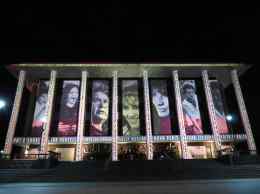
Monday musings on Australian literature: Boosting women’s entries on Wikipedia

Have you heard or read about the large discrepancy in Wikipedia between biographical entries (or “individual profiles”) for women and for men? The actual figure is a bit fluid because, of course, Wikipedia is a dynamic site, but most researchers on the topic come up with a figure of around 15-20% as the percentage of biographical articles on women (versus men) in Wikipedia. Why is this? Well, the point Austen so succinctly made in the early nineteenth century seems as true today, 200 years later:

Men have had every advantage of us in telling their own story. Education has been theirs in so much higher a degree; the pen has been in their hands.

In other words, men are also the main contributors to Wikipedia (about which I’ve written before). In fact, the percentage of women editors is less than or similar to the percentage of women’s biographical articles. The Sydney Morning Herald (SMH) reports that Wikipedia had “failed to meet its goal of increasing women’s participation on the website to 25 per cent by 2015”.

Now, it is probably true that men feature more heavily in the public sphere – more politicians, more world leaders, etc etc, are men. Consequently, we might expect some gender imbalance in biographical articles. But, we also know that many women of achievement are under-recognised and under-reported. Feminists have been highlighting this since Feminism’s Second Wave in the 1970s – and yet here, in 2017, we can identify large numbers of women in every field of endeavour who are not in Wikipedia.

Gender symbols

Courtesy: CKSinfo.com

Consequenlty, in recent years women have been taking action, by holding, for example, “edit-a-thons” to support and encourage the creation and upgrading of women’s entries in Wikipedia. On December 8 last year, as reported by SMH (linked above), some 400 new entries were created for women in an international edit-a-thon. Specific events were held, SMH says, in “Istanbul, Cairo, Dhaka, Jerusalem, Delhi, Abuja, London, Cardiff and Washington DC” and individuals also worked “from their own computers across the world”.

But, what about Australia?

Australia has not been missing from this action. In fact, in 2014, as reported by another SMH article, Sydney’s Museum of Contemporary Art hosted an edit-a-thon during which “volunteers gathered to edit and expand the paucity of Wiki pages on Australian female artists”. As well as creating new entries they worked on “improving their academic rigour by providing citations and references”. This is important work, because it enables Wiki’s users to be confident about what they read.

In August 2016, the ABC reports, a group of Australian female scientists took “part in a Wikibomb in an effort to be recognised for their contribution to Antarctic research”. The event took place “at the Scientific Committee on Antarctic Research conference in Malaysia, 93 Wikipedia profiles were created and 20 were improved upon.” There was apparently also a Wikibomb-edit-a-thon event held in Melbourne in November last year.

Significant indigenous Australian women (Enlighten 2017)

Some significant indigenous Australian women (Enlighten 2017)

And now, tomorrow, 28 March, Sydney University Press (SUP) and the university’s Fisher Library are holding an edit-a-thon “to improve the representation of Australian women in the world’s favourite reference work.” They’ve chosen March because it’s Women’s History Month. They have a Facebook page and a Twitter account, and they are building an accessible document listing “notable” women in a wide variety of fields who need Wikipedia entries or whose entries need upgrading. It’s a wonderful list, including scientists, artists, activists, historians, botanists and even the odd writer! SUP urges people to come, even if they have no experience or training in Wikipedia editing, as they

will have roving helpers and a cheatsheet with everything you need to know to become a Wiki champion in just a few minutes. It’s going to be a collaborative and fun exercise that will involve EVERYONE.

I’d be there in a flash if I lived in Sydney. You do need to RSVP, so if you are in Sydney and are interested, do check the Facebook Page link I’ve given to see whether it is still possible to join. But, if you can’t, there’s nothing to stop you having a go at home. They give advice on how to do that too on their Facebook page, with links to various useful tutorials.

So, I wish them a very successful day and look forward to hearing the results.

Meanwhile, I would love to know if any of you contribute to Wikipedia – and, if so, what your experience has been? (I have written on this blog about one of my early experiences.)

PS: SUP shares on its Facebook page an Inside Story article reporting that the Australian Dictionary of Biography (ADB) is looking for nominations for women to include in its online database, but that’s a topic, perhaps, for another day because the articles raises some interesting issues about “who” to include.

Noah Webster, On the absurdity of a Bill of Rights (Review)

Noah Webster

By James Herring (1794 – 1867) [Public domain], via Wikimedia Commons

If you’ve read my last post you may have guessed from the title why I’ve chosen Noah Webster’s “On the absurdity of a Bill of Rights” as my next Library of America (LOA) Story of the Week to discuss. For those of you who haven’t read that post, or who, like me, have a memory like a sieve, I discussed the play adaptation of Frank Moorehouse’s Cold light, and protagonist Edith Campbell Berry’s desire for government (or, those governing) to act according to the Universal Declaration of Human Rights.

Now, before I briefly share Webster’s arguments, a little background to this clearly very tricksy man! I’ll start by admitting that my main knowledge of Noah Webster was as the creator of America’s best known dictionary, Webster’s of course. It wasn’t initially, or even in his lifetime, called that, though. He published his first dictionary in 1806 under the title, A compendious dictionary of the English language, but his first big, comprehensive dictionary, An American Dictionary of the English Language, wasn’t published until 1828.

All this, though, came after the writing I’m talking about here, but it is related because it was through his writing and publishing work that he became interested in federation, and thus the Bill of Rights issue. You see, as LOA’s notes tell us, in 1783, when he was a twenty-five-year-old schoolteacher, Webster “began publishing his Grammatical Institute of the English Language, the first part of which became The American Spelling Book”. A spelling book leading to the Bill of Rights? How, you might wonder? Well, here’s LOA again:

Less familiar to many readers is the pivotal role Webster played in the founding of the American republic and the adoption of its new constitution—and his advocacy was very much related to the success of his publications. The difficulty of securing copyrights from thirteen separate state governments for each subsequent edition of his spelling book convinced him of the need for an effective national government, and he became an advocate for the Federalist cause.

He started campaigning for the federalist cause in 1785, and here comes the particularly “tricksy” bit because when the new constitution was proposed in 1787, he wrote articles supporting its ratification under various pseudonyms! One of these was Giles Hickory under which he wrote the article I’m discussing here. As LOA writes,

One of the main objections to the new constitution was that it did not include a bill of rights, an argument Webster dismisses in his first Hickory letter by responding that such documents are only needed as protection against tyrants and would become unnecessary in a government elected by the people.

This is one of the main arguments he puts in “On the absurdity of a Bill of Rights”. He argues that a Bill of Rights [like the “Magna Charta”] against “the encroachment of Kings and Barons, or against any power independent of the people, is perfectly intelligible” but that a Bill of Rights in a democracy would essentially be the people guarding against the people. In other words, in an elected legislature “the rulers have the same interest in the laws, as the subjects have” so, he argues, “the rights of the people will be perfectly secure without any declaration in their favour”. Hmm, that sounds perfectly good in theory, but in practice, well, it doesn’t always seem to quite work out that way does it?

Anyhow, as it turned out, those in favour of a Bill of Rights won the argument, as Massachusetts, for example, only agreed to ratify the Constitution with the addition of “ten amendments”. These became known as the “Bill of Rights“, and were adopted in 1791.

Webster’s second argument, which he calls his “principal point”,  is also, given how the Bill of Rights has played out in the US, very interesting:

I undertake to prove that a standing Bill of Rights is absurd, because no constitutions, in a free government, can be unalterable. The present generation have indeed a right to declare what they deem a privilege; but they have no right to say what the next generation shall deem a privilege.

He argues, in other words, that times change, and what one generation might see as a right may not be appropriate to another generation, and that it is therefore inappropriate to set such rights in stone. He uses, as an example, “trial by jury”:

The right of Jury-trial, which we deem invaluable, may in future cease to be a privilege; or other modes of trial more satisfactory to the people, may be devised. Such an event is neither impossible nor improbable. Have we then a right to say that our posterity shall not be judges of their own circumstances? The very attempt to make perpetual constitutions, is the assumption of a right to control the opinions of future generations; and to legislate for those over whom we have as little authority as we have over a nation in Asia.

Would the US be different now, if, for example, they did not have the “perpetual”, enshrined right to “bear arms”?

Webster suggests that:

There are perhaps many laws and regulations, which from their consonance to the eternal rules of justice, will always be good and conformable to the sense of a nation. But most institutions in society, by reason of an unceasing change of circumstances, either become altogether improper or require amendment …

He makes some excellent points, but I’d like to believe there are some rights which stem from “the eternal rules of justice”. However, I can also see how temporal and cultural it all is. Australia, rare for a western democracy, does not have a federal bill of rights – the issue arises occasionally – but my state (well, territory) did pass one in 2004, and was followed by Victoria in 2006.

What do you think?

Noah Webster (as Giles Hickory)
“On the absurdity of a Bill of Rights”
First published: American Magazine, December 1787
Available: Online at the Library of America

My literary week (7), adaptations

With Ma and Pa Gums in the process of selling house and preparing for a downsize move, my time has been taken up with many things besides reading – but I did get out at night in the last week to see a couple of adaptations of novels I’ve enjoyed in the past.

There’s still time … brother

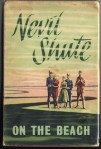
Nevil Shute, On the beachOne of my favourite novelists when I was a teen – when my friends were reading Georgette Heyer – was Nevil Shute. He wrote more than 20 novels, and I sought every one out over a period of years until I’d read them all. His best-known novels are probably No highway, A town like Alice and On the beach, all of which were made into films (as were others too, I know). This post is about the last I mentioned, On the beach, which was his dystopian (or post-apocalyptic) Cold War novel about the end-of-the-world due to nuclear war. Something I didn’t know on my first reading is that on the title page of the first edition are lines from TS Eliot’s poem “The hollow men”. Makes sense, and you can read about it in the Wikipedia article I’ve linked to above.

I hadn’t read Shute for a few decades until the early 2000s when one of my online reading groups decided to read On the beach. How disappointing I found it. The story was still powerful, but the writing seemed so wooden and the characters so stereotyped. I was therefore uncertain about seeing the original Stanley Kramer movie last week, when it was shown at the National Film and Sound Archive as part of its season of atomic age films.

I needn’t have worried. It was great – and must have been a work of passion given how quickly Kramer got onto the story. The novel was published in 1957, and the film released in 1959. The Wikipedia article on the film adaptation provides a useful introduction to the film and discusses where the adaptation departs from the novel. Apparently, Shute was not happy with the changes, but it’s too long since I read the novel for me to comment on that. One of the changes, Wikipedia says, is that the film doesn’t detail who was responsible for the conflagration. There could be various political reasons for this, but it could also be because Kramer had a very clear message he wanted his audience to take home – one that he didn’t want diluted by people thinking it had nothing to do with them. He wanted everyone to take the dangers of nuclear weapons seriously – and wow, did the film make that point …

Towards the end, as the radiation is reaching Melbourne, the film shows crowds of people in a Melbourne street attending a Salvation Army service. Above them is a banner reading “There is still time … brother”, reminding the attendees, of course, that there is still time to “find God”. The final scene of the film shows the same street – now empty of life – and closes on the banner “There is still time … brother”. It floored me. It so neatly, so confrontingly, shifted the meaning from the religious to the political. And, the message (either narrowly or broadly interpreted) is as relevant today as it was then. That’s the scary thing.

From the Cold War to Cold Light

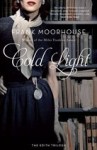
Frank Moorhouse, Cold LightIn the last novel of Frank Moorhouse’s Edith trilogy, Cold light (my review), Edith Campbell Berry, star of the League of Nations (well, in her mind), comes to Canberra, hoping to make her mark. It’s fitting, then, that an adaptation – in this case a play not a film – should be made in Canberra. However, it’s a big book – over 700 pages of it – with many themes. Two that grabbed my attention when I read it were the failure of idealism and the challenge of aging, so I wondered what playwright Alana Valentine would choose. The main promo line for the play’s advertising was “How far can a woman of vision go?”, which encompasses I’d say the idealism angle.

It was a daring adaptation, which used song, verse and, occasionally, dance to transition between scenes. The verse was particularly intriguing. It all came from Adam Lindsay Gordon’s The Rhyme of Joyous Garde and was recited by Edith herself. I grew up with some of Gordon’s more sentimental bush poetry, but I’d never come across this one. However, a Google search uncovered that the whole poem is a soliloquy by Lancelot after Guinevere and Arthur are dead. It’s about heady days, grand passions and big ideals, guilt and regret. I don’t believe it was referred to in the book, so Valentine’s using it reveals her desire to convey those grand but murky themes which closely mirror Edith’s colourful, passionate life.

I’m not going to review the play, as there are links to some excellent reviews on the Street Theatre’s site. I’m just going to comment on what I took away. The overriding theme was Edith’s indefatigable spirit, but another was its exploration of human rights – women’s rights, and freedom of expression, in particular. Edith refers regularly to the Universal Declaration of Human Rights which Australia helped draft back in 1948, but hadn’t (and still hasn’t) fully enshrined into national law. For Edith, it represents ideals she wants (us all) to live by.

Cold light is set from 1950 to 1974, but the significant thing is that its concerns are still relevant: freedom of expression is being attacked right now; women’s rights are not safe; the nuclear threat is not over; and so on.

At the end of the play – and some of these specific words are in the novel too – Edith says

I have witnessed great events and participated in great events. I have met and talked with fascinating people who have made history. But it is only, here, now that I am in it, however briefly, making history, participating in it. One must give everything to participate. To be in it. So many, so many will want you to observe, to commentate, to support those who are in it. But you must open your palate to the right stuff. You must stare down the world and see it in a clear, cold light … It’s not what the world hands you, but what you try to wrest from it. That is all that is valuable. To act, to speak, to make. To live, to live, to live it. Your allegiance must be to the republic of the mind, not to any country or state… (from Cold light, adapted by Alana Valentine, Currency Press, 2017)

See? Relevant, right now – which made a thoroughly engaging and creatively produced play a meaningful one too.

Cold Light 
Based on the novel by Frank Moorhouse
At the Street Theatre, Canberra, 4-10 March 2017
Script: Alana Valentine
Director: Caroline Stacey
Cast: Sonia Todd, Craig Alexander, Nick Byrne, Gerard Carroll, Tobias Cole and Kiki Skountzos

Do you enjoy adaptations? And if so, do you have any favourites?

Monday musings on Australian literature: Whither magazines?

Meanjin Canberra Issue 2013

Courtesy: Meanjin

Are you a magazine reader? I was once a big magazine reader and subscriber – Ms Magazine, the Smithsonian, Choice and Australian Gourmet were my favourites in the 1980s and 1990s. In more recent times, I’ve gravitated to local literary journals like Griffith Review, Meanjin and Kill Your Darlings, but I tend not to subscribe to them. I pick and choose issues, when I feel I have time to read them. Some I buy in print form and some digital.

Australians have long had a reputation for being big magazine readers – but, things are changing, according to The Conversation (“From pig hunting to quilting: why magazines still matter”, by  and and the ABC (“Australian indie magazines thriving as big publications struggle”, by Emily Stewart). We are still big readers of magazines – though, hmmm, apparently the magazines with the biggest readerships are those produced by our two big supermarket chains, Coles and Woolworths. They’re free, which probably helps. But, they don’t represent the main change that’s happening …

Well, actually, it seems that two significant changes are happening. One is the increase in specialised titles, in “niche-interest publications that range from trail bikes to organic gardening”. These magazines still come and go, says The Conversation, but they can survive because of the advertisers:

advertising to a niche rather than a mass audience still makes financial sense and allows these specialised magazines to survive.

Stewart, of the ABC, also reports that “niche titles [with their lower overheads, for a start] have room to thrive”. It’s not easy though. They have, she says, to “think outside the square with their distribution channels to reach their audience, and instead of only using newsagents, Lunch Lady is also available in boutique home wares stores and art galleries”. This seeking out of “niche” distribution outlets is probably something that is easier for a small, and therefore more flexible, publisher to do?

The other change relates to print versus digital. Many magazines, as you probably know, offer print and digital versions, while others offer one or the other, depending on their knowledge of their clientele. Those that offer both versions use them in different ways. Sometimes the print and digital versions replicate each other, sometimes they contain different content. Sometimes, placing some digital content online is used as a teaser to draw readers in. Sometimes you have to subscribe to the whole magazine, while other times you can purchase individual articles. The digital domain offers publishers so many options for reaching their readers.

Griffith Review, for example, offers some of the content of their current issue online – but other articles are only available by subscription or can be purchased individually. The Conversation writes that

It’s tempting to say that we’re in a time of transition from old (print) to new (digital) technology, and that paper will eventually disappear.

The reality is the opposite. Newer magazines like Frankie, an Australian title popular among young women, and Collective, which tackles anything from business to lifestyle and culture, are thriving and selling in print in numbers that rival mainstream women’s magazines.

I love this, I love it because it tells us once again that all those doomsayers who, when a new technology arrives, proclaim the death of the previous technology – remember those claims that television would be the death of cinema? – whereas in fact, new technologies tend to offer more choices, more ways of doing things that suit different needs. It takes time for us all to work out how we want to use new technologies versus old ones, but work it out we usually do. (Of course, some technologies never do come back but in general, I’d argue, doomsaying is not a useful approach to handling change.)

Anyhow, The Conversation goes on to say that

New titles like contemporary women’s magazine Womankind, literary journal The Lifted Brow and Archer, which explores sexuality, gender and identity, are emerging every month – not just in Australia but globally. It is a response to digital overload and distraction – a way to slow down and focus on a beautifully designed, collectible object.

They conclude that the magazine industry “continues to evolve” and that this “evolution is tied to technological change, as it always has been”. But they suggest there’s more to it, proposing that the industry is “also tied to the desire for what political scientist Benedict Anderson famously called the imagined community.” (Nice!) In other words, while social media supports our need to feel part of a group, “magazines offer … an immersion in a carefully curated space made by experts who share your interests … even if that might be babes and boars!”

So, do you read magazines – and if so, what sorts of magazines do you read, and in what form do you read them?

Northanger Abbey musings (2)

A month ago I posted some musings arising from the first part of my current slow read of  Northanger Abbey with my Jane Austen group. In this post I’ll share some reflections on the rest of the novel, Chapters 20 to 31, which is the part that encompasses our “heroine” Catherine’s arrival in and departure from the Abbey.

On the art of fiction

In my previous post, I discussed how Northanger Abbey spoofs or parodies Gothic novels. Northanger Abbey also contains Austen’s famous defence of the novel. These contribute to one of the pleasures of this novel, which is the joy Austen seems to be having in being an author. She intrudes regularly with her own voice, not only commenting on the characters but on fiction itself. It’s the new novelist having fun, flexing her muscles, and making an argument for more “realistic” fiction over the Gothic novel that was popular in her time.

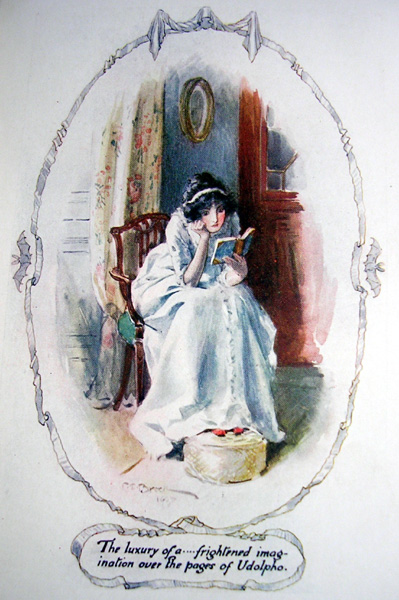
Northerner Abbey illus br Brock

So, for example, here is Catherine, at the Abbey, deciding that the General had been up to no good regarding his late wife:

His cruelty to such a charming woman made him odious to her. She had often read of such characters, characters which Mr. Allen had been used to call unnatural and overdrawn; but here was proof positive of the contrary.

Mr Allen is the sensible neighbour who, with his wife, had taken Catherine to Bath. One of the things Austen does in this novel, and particularly in the second half, is satirise readers of Gothic novels, readers who let their imaginations run away with them. Catherine, our narrator tells us, is too “well-read” to let the General’s “grandeur of air” and “dignified step” dissuade her from her belief about his dastardliness. And so, when at last she is proved wrong (though the General does prove villainous in other ways), Henry admonishes her:

What have you been judging from? Remember the country and the age in which we live. Remember that we are English, that we are Christians. Consult your own understanding, your own sense of the probable, your own observation of what is passing around you. Does our education prepare us for such atrocities? Do our laws connive at them? Could they be perpetrated without being known, in a country like this, where social and literary intercourse is on such a footing, where every man is surrounded by a neighbourhood of voluntary spies, and where roads and newspapers lay everything open?

There is so much to tease out here besides Austen’s satirising the Gothic sensibility … but let’s save them for another re-read, and move on.

Soon after, Catherine considers Henry’s admonition, and thinks:

the whole might be traced to the influence of that sort of reading which she had there indulged. Charming as were all Mrs. Radcliffe’s works, and charming even as were the works of all her imitators, it was not in them perhaps that human nature, at least in the Midland counties of England, was to be looked for.

So, it is human nature that most interests Austen – not the one-dimensional “angel” and “fiend” characters of the Gothic novelists.

Late in the novel, as our hero and heroine are coming together, Austen writes:

Henry was now sincerely attached to her, though he felt and delighted in all the excellencies of her character and truly loved her society, I must confess that his affection originated in nothing better than gratitude, or, in other words, that a persuasion of her partiality for him had been the only cause of giving her a serious thought. It is a new circumstance in romance, I acknowledge, and dreadfully derogatory of an heroine’s dignity; but if it be as new in common life, the credit of a wild imagination will at least be all my own.

Here, I’d say, there are two main things going on. One is the cheeky novelist teasing us with her “new circumstance in romance” undermining the conventional idea of romantic love between heroes and heroines in novels. The other is the more serious Austen making a rather subversive observation about the realities of love and human relationships, because she was a pragmatist at heart. She believed in love, but she also understood the implications of the marriage market.

If all this sounds a little confused, that’s probably because it is. Austen plays around in this novel with ideas about fiction versus reality, Gothic (European) sensibility versus more ordered (English) values, and reading versus readers. To do so, she slips in and out of different modes of narrative, daring us to keep up with her. No wonder it’s the book that has proven the hardest to adapt to film.

More word teasing from Henry

In my last post, I shared Henry’s little tirade about the word “nice”. I can’t resist sharing another little tirade from later in the novel:

“No, and I am very much surprised. Isabella promised so faithfully to write directly.”

“Promised so faithfully! A faithful promise! That puzzles me. I have heard of a faithful performance. But a faithful promise—the fidelity of promising! It is a power little worth knowing, however, since it can deceive and pain you…

Love it …

And here endeth my reflections on my most recent re-read of Northanger Abbey. What a delight it has been, yet again. It may not have the romance of Pride and prejudice or the complexity of Emma, but it has the lively, fresh mind of an author who wants to engage with her readers about the very thing she is doing, writing a novel. I find that irresistible.

Picture credit: From Chapter 9, illus. by CE Brock (Presumed Public Domain, from solitaryelegance.com)

Mena Calthorpe, The dyehouse (Review)

Mena Calthorpe, The dyehouseMena Calthorpe’s novel The dyehouse was, as I wrote in a post last year, Text Publishing’s choice for its 100th Text Classic, which surely says something about its quality or worth, wouldn’t you think? And yet, as Lisa (ANZLitLovers) pointed out in her post, it is not mentioned in recent books discussing the history of Australian literature, such as Geordie Williamson’s The Burning Library and Jane Gleeson-White’s Australian Classics.

However, it is listed in bibliographic and encyclopaedic works like Debra Adelaide’s Australian women writers: A bibliographic guide, Joy Hooton and Harry Heseltine’s Annals of Australian literature, and William Wilde, Joy Hooton and Barry Andrews’ The Oxford companion to Australian literature. It has also captured the attention of others, including Introduction-writer Fiona McFarlane (whose The night guest I’ve reviewed here). She writes of coming across a secondhand copy in a Sydney bookshop and says that she’d never heard of Mena Calthorpe, but as soon as she’d read the opening sentences, she decided to buy it. I can understand that. I would have too.

Now, before I get to the book, I’m going to bore you a little more with what people have or haven’t said about the book. In my above-linked 100th Text Classics post, I noted that while most reviewers were favourable, one from my city’s paper was less so. S/he, RR, called it “badly written and pretentious”, though conceded that if Calthorpe focused on “telling a story simply, economically, and honestly” she could be “a force … on the Australian literary scene”. Marian Eldridge, reviewing a reprint in the same paper, two decades later, had quite the opposite opinion. She praised Calthorpe’s “spare, clear prose and jaunty dialogue”, and called the book …

“a fine example of the social realist genre”

Well, I’m with McFarlane and Eldridge. The book got me in from its first paragraph, and I enjoyed it immensely. It is, what Lisa would call, a book that matters because its subject is, to put it broadly (and baldly!), the impact of capitalism-at-all-costs on workers. That could make for a dry, didactic book, but Calthorpe’s writing and characterisation bring the story to life. Her political message is unavoidable but it’s tempered by a cast of believable people (ranging from the cold chairman-of-the-board to the lowliest labourers), a well-controlled story that contains tragedy and romance without turning into melodrama, and writing that’s fresh and lively.

I’ll start with the writing first. The novel starts in 1956 and takes place over about a year. It’s told third person, in short chapters which move between the many, but not hard to keep track of, characters. It starts with Miss Merton arriving at the Dyehouse and meeting the on-site boss, Mr Renshaw. In chapter 2, we meet the Chairman of the Directors Harvison, the General Manager Larcombe, and Company Secretary Cuthbert. They’re discussing problems in the Dyehouse: it’s not keeping up with production. We quickly get a sense of the characters of these three men. Harrison’s lips tighten as he wonders “Where’s the firing squad?” Larcombe is ineffective – wary, unexciting, and full of excuses – while Cuthbert is “sharp-featured, pleasantly mannered”. We soon learn that he has some humanity, some empathy, but too easily lets his accounting distract him from troubling people issues. Then, in the same chapter, we shift to the General Office, and this (which McFarlane loved too):

Clack! Clack! Up came the carrier and ejected papers onto Mr Dennet’s table. There they lay: the Fanfolds! the Ledger Copies!
The Debits!
Mr Dennet took up his pen and began entering into the Control Book. The Comptometers sprang to life. Two young women with painted nails fell upon the papers.
Tic-tac, tic-tac. Now over to the files.
OK, Miss Brennan, you sort them out. City, Country, Government. Now break them up. A to K, L to Z, and then into the files with them.

There are other short interludes like this – a paragraph on worker Barney running for the morning train, for example – which break up the rhythm and convey the life better than any straight descriptive text could do. I have no idea what RR was thinking. Pretentious? No! Instead, I’d agree with McFarlane’s description of it as “formally experimental … with its episodic structure and its restrained lyricism …  its playful attention to sound.” It all makes for delicious reading.

“The trap’s set for us all” (Miss Merton)

Next, the well-controlled story. Told over a year, Calthorpe explores how the Dyehouse manages with its production crisis. We see Renshaw scapegoating the skilled, experienced but not certificated Hughie, moving him from his beloved dye-room to working on the vats. We also see Renshaw sexually preying on pretty young women in his employ, including the initially gullible Patty. We see the workers, their lack of security – those on “Staff” versus those brought in as needed – and their struggle to sustain their lives. We see the bosses turning a blind eye to the struggles of their people, or, not even noticing these struggles. We see nascent attempts to “organise” for better conditions. Along the way there’s an unplanned mid-life pregnancy, a tragic death, physical assaults and sexual abuse. The novel is nicely structured, beginning and ending with the calm, mature Miss Merton.

All this might suggest that the characters are stereotypical, designed simply to serve the “idea” but, while they do serve the idea, they come across as real, authentic human beings. Larcombe and Cuthbert, for example, are not simple villains. They are, in Larcombe’s case, for example, a bit lazy, a bit self-protective, a bit uncertain, resulting in his being a bit ineffective! Even the biggest villain of the piece, Renshaw, is shown to to have the odd ounce of humanity. Similarly, the workers. Hughie, Barney, Patty, Miss Merton and Oliver Henery, to name a few, are all rounded out with succinctly presented backstories, which establish their authenticity while also adding depth to the plot.

It is, essentially, an ensemble cast, but the stories of two characters primarily carry the plot – Hughie (whose love of his job “had given purpose and dignity to his labour”) and Patty (a naive young women who believes Renshaw will marry her, until she discovers otherwise).

The ending, which I won’t give away, is inspired, striking the right balance between realism and hope.

I really can’t recommend this book enough. It slots well into other books exploring the struggles of the working poor of the early post-war period, like Ruth Park’s Harp in the South series. And it is a thoroughly engaging read which is relevant today, not only because its humans reflect universals of human behaviour as well as the life of the period, but because we are currently seeing new threats to worker security which ensures that this book’s concerns do not feel dated. A worthwhile read on multiple counts, in other words.

Mena Calthorpe
The dyehouse
Melbourne: Text Publishing, 2016 (Orig. pub. 1961)
299pp.
ISBN: 9781925355758

(Review copy courtesy Text Publishing)

Monday musings on Australian literature: Books that matter

In the comments on her post about Alan Paton’s Cry, the beloved country, Lisa (ANZLitLovers) commented that we need “politically aware authors to keep writing books that matter”. Hmm, I thought, most books I read matter, I think, but then a few posts later, when reviewing Jared Thomas’ Songs that sound like blood, she made clear that she meant by this “a yearning for books that tackle the issues of our time”. Ah, I thought, I can work with that idea – and so, here I am, working with it. Thanks Lisa for another Monday Musings inspiration.

The first question is, what are the issues of our time?

Off the top of my head, they would include indigenous rights, climate change and the associated issue of clean energy, asylum-seekers and refugees, women’s rights (including domestic violence), and sexual identity. There are many more, but let’s just work with these.

The second question, of course, is whether contemporary Australian literature – and here I’m meaning fiction, short and long form – is dealing with these?

Before I discuss this, a disclaimer, which is that, for me, books that matter don’t have to deal overtly with issues of the day. Jane Austen has often been criticised for not writing about the big issues of her day, which included the Napoleonic Wars and the impact of the industrial revolution. And yet, I’d argue that she did write about important personal and social issues – particularly concerning the condition of women. She just showed them – rather than explicitly told them.

So, let’s turn now to today’s issues – and I’ll confine myself to books written this century:

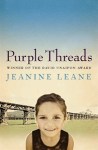
  • Jeanine Leane's Purple threadsIndigenous rights: slowly, very slowly, we are seeing more books written by indigenous people which expose the impact on them of two hundred years of dispossession. There’s historical fiction like Kim Scott’s That deadman dance (my review) and Ali Cobby Eckermann’s Ruby Moonlight (my review), and more contemporary books like Jeanine Leane’s Purple threads (my review). These are just a few, but writers like Tony Birch, Melissa Lucashenko, Ellen van Neerven, Tara June Winch and Alexis Wright are getting their stories out. It’s up to us to seek them and read them so we can inform ourselves better. Lisa’s annual Indigenous Literature Week provides a good opportunity for us to do that.
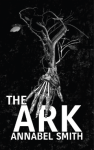
  • Climate and energy: some of the strongest books here are the cli-fi books like Jane Rawson’s A wrong turn at the Office of Unmade Lists (my review), Alice Robinson’s Anchor point (my review) and Annabel Smith’s The ark (my review), but other books like Stephen Orr’s The hands (my review) show the longterm impact on farms of climate change. It’s a topic which lends itself to speculative fiction, but it’s good to see more realistic fiction also exploring the subject.
  • Asylum seekers and refugees: the plight of asylum seekers and refugees has been reasonably well covered in recent years, from all sorts of angles, by non-fiction writers, but what about fiction? Nam Le’s The boat included short stories about refugees – albeit Vietnamese boat people of the late 20th century – and A S Patric’s Miles Franklin award-winning Black rock white city deals with Bosnian refugees in Australian suburbs. Maxine Beneba Clarke’s short story collection Foreign soil explores the lives of migrants, and includes a story set in a detention centre. Irma Gold’s Two step forward (my review) also includes a (memorable to me) detention centre story – from an employee’s point of view. There are also children’s and YA books in this area but I’m not sure the specific issues we are facing right now are being actively covered by our fiction writers. If we believe that fiction can have a positive impact, then …
  • Danielle Wood, Mothers Grimm, book coverWomen’s rights: the most obvious recent book exposing women’s lack of “real” equality, is Charlotte Wood’s dystopian novel, The natural way of things (my review). Interestingly, the Copyright Council, in its Reading Australia program, listed last March (that is, 2016), “8 books to read on International Women’s Day”. It’s a good list, but none of the fictional works were written after 2000. Hmmm … I might have added a book like Danielle Wood’s Mothers Grimm (my review) which exposes at a more domestic, personal level the challenges confronted by contemporary mothers, and the way societal values and attitudes contribute, or even sometimes, create these challenges.
  • Sexual identity: my sense is that this area is being increasingly covered by YA authors, exemplified by the book Lisa praised when she made the statement I’m exploring here. Australia has a growing number of LGBTQI writers. The Australian Women Writers’ (AWW) Challenge maintains a list of Lesbian and Queer Woman Writers, which is useful for anyone wishing to read more diversely. This is not to say, though, that all of their works are political or issues-based – and why should they be? Many write books in which diverse (aka non-heteronormative) sexual identities are a given. That in itself can be read as a political act because we all know the value of seeing ourselves reflected in the arts – in movies, television, books, and so on. Ellen van Neerven’s Heat and light (my review), for example, includes queer characters but their “queerness” is not the issue being explored. This is the point we are aiming for in the real world, but we are not completely there yet. As Yvette Walker wrote in a post for the AWW Challenge, “We appear. We disappear. We are in. We are out.” It’s a slow process.
Annabel Smith. The ark

So, where have we got to in this weird, idiosyncratic (read, minimally researched) ramble I’ve produced? I’d say “the issues” of our day are being covered by our fiction writers, but not always explicitly or politically. The thing is, political novels – or novels of ideas – are problematic. Sometimes the story and the characters become subservient to the politics, which can result in very dull reading. The challenge for fiction writers who do want to explore “issues that matter” is to find “palatable” ways of doing so. Some of those can be (appropriately) in-your-face, like Charlotte Wood’s The natural way of things or Annabel Smith’s The ark or, even, Jeanine Leane’s more realistic Purple threads, while others are more subtle, preferring to let the reader identify the “issues” on the fly. My other conclusion is that short story writers, only a few of whom I included here, are worth checking out when looking for writing about “issues”.

I’d love to know whether you yearn for books that tackle the issues of our time and, if so, whether you’ve found much that meets your needs? 

(And of course I’d love Lisa to add her perspective, because I’ve made assumptions from her comments that may very well have departed from her intention or meaning – and I’d like this to be a conversation.)

Festival Muse: Question time – Robyn Cadwallader with Irma Gold

Robyn Cadwallader, Irma Gold
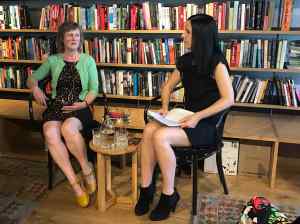
Cadwallader (L) and Gold in the Muse bookshop

Introducing the first event of their Sunday afternoon program, Dan, co-owner of Muse, commented on a peculiarity of Canberra: when they offer sessions on politics or history, they are packed out, but when the focus is fiction, the events are more intimate. Fine by me! I love small, cosy events. But it’s interesting, eh? Anyhow, we then got down to the event, which involved local author and editor, whom you’ve met several times here before, Irma Gold, interviewing local poet, essayist, novelist, Robyn Cadwallader, about her debut novel The anchoress (my review).

It was excellent. Gold structured her questions beautifully, starting with some background questions, moving through well-targeted questions about the book itself – well-targeted for me anyhow because she focused on historical fiction and feminism – and then ending with Cadwallader’s future plans. There was something for everyone – though I suspect most of us were interested in it all.

Gold commenced by providing a quick bio, which included the facts that Cadwallader migrated to Australia with her family when young, and that her background is academic writing. Gold shared Cadwallader’s shock that, when she moved from academic writing to fictional, her struggles with the dreaded term structure followed her! That made me laugh because I love thinking about structure in fiction. Gold also told us that The anchoress had been published in the USA and UK as well as Australia, and has been (or is being) translated into French. She said Marie Claire described The anchoress as “the book the whole literary world can’t stop talking about”. Wow, eh?

The interview commenced then with a brief discussion of Cadwallader’s early interest in books and writing, but let’s get to …

The anchoress

Robyn Cadwallader, The anchoress

The discussion started with Cadwallader doing a reading – and she chose the Prologue. That was great not only because it’s always (hmm, mostly) good to hear authors read from their own work, but also because it refreshed the book and some of its themes for me.

Gold said she’d never heard of anchoresses and asked Cadwallader what sparked Sarah’s particular story. Cadwallader responded that she’d come across anchoresses in her research for her PhD and, like Gold, was both horrified and fascinated by the concept. She said the inspiration for the story came from sitting in an anchorhold, unable to leave it, for an hour or so. It got her thinking about how it would feel to be in such a place forever. What would be the experience? She said her poetry is “about taking a moment and investigating it”. In this book, she took a small space and investigated it. Reinforcing her interest in focusing on the “experience”, she said she’d started writing the novel in 1st person but felt it wasn’t working, so tried 3rd but that didn’t work either. She then realised she had to be there to share the experience. She also made the point that she didn’t want Sarah to speak for all anchoresses.

Gold then honed in on the book’s genre, historical fiction, and asked Cadwallader how she went about separating her research from the writing. Cadwallader said she was lucky because she’d done so much research on the period before she started writing. She had to do a lot of thinking, however, and when she started writing she needed to do extra research on aspects she knew less well, such as village life and monasteries.

Next Gold moved onto how Cadwallader approached incorporating the history into the story. Cadwallader said she knew people would know little or nothing about anchoresses – how right she was! – but didn’t want to do exposition. She used the example of the section where Sarah stands in her cell (anchorhold) for first time. This was hard to write she said without “describing”. She tried to write it from Sarah’s experience in a way that would “show” modern readers, too, what it was like.

Some of the questions at the end concerned the historical fiction issue, so I’m sneaking them in here. Responding to what next, Cadwallader said that some people assumed she’d do a sequel! No, she said, as far as she’s concerned she’d wrapped up Sarah’s life and didn’t have anything more to say. Love it. This points, I think, to a difference between genre and literary-fiction. Genre tends to focus on plot, on the story of characters’ lives. Readers of genre love to get lost in – escape into – the characters’ lives and want to follow them, on and on. Readers of literary fiction – and they can be the same people, so I’m not suggesting a “snooty hierarchy” here – look for different things. They tend to be happy with ambiguous endings, and look forward to moving on to something different. I tend to be one of these readers. You could call me fickle.

Other questions picked up the relationship between fact/history and fiction, about the degree to which historical fiction should focus on the fact versus the fiction. Again, I loved Cadwallader’s considered response. She described historical fiction as an engagement between the present and the past. Writers, she said, need to balance what will communicate effectively with contemporary audiences and what’s accurate. She cited swearing as an example: a medieval oath, like “God’s teeth”, would not convey anger to a modern audience the way a modern swear word would.

Back to Gold now. Her next question concerned feminism. Yes! Was Cadwallader conscious of feminist issues from the start or did they emerge through the writing process. I loved Cadwallader’s answer. She said she was aware of feminist issues and theory from the start because her research had brought her face-to-face with medieval thinking about women, including the belief that women represent the body, and tempt men. However, she is concerned, she said, about historical fiction that wants to be positive about women. Such fiction needs to create strong, feisty women, but she wanted to explore what ordinary women experience.

So, her Sarah pretty soon finds her experience of her body starting “to bump against” the rule that tells her that her body is terrible. Cadwallader wanted to tell about ordinary women doing things that are not “spectacular”. She thinks some readers expected a “spectacular ending” but that would have plucked Sarah out of her context. Her approach to feminism was to describe these women’s experience, to honour them. She didn’t want to exploit them, but explore who Sarah was. She then talked about the village women. (They’re wonderful supporting characters in the book.) She didn’t want them to be “campaigners”, but wanted us to “see” them. It’s too easy for us to miss and not respect the ordinariness of women and what they do.

Muse bookshop

Gold ended with questions regarding how Cadwallader has handled her success and what her future writing plans were. Cadwallader talked about ongoing feelings of self-doubt and how easy it is to buy into criticism (rather, it seems, than praise). She described it – and being a writer, she used a metaphor – as being a headwind that you just have to keep walking into! And yes, she is writing another book. And yes, it’s mediaval-focused – to do with illuminators.

There was a brief Q&A, then it was over. We might have been an intimate group, but what a privilege to have been present at a conversation between an intelligent, warm interviewer and a thoughtful, open interviewee. Lucky us.

Festival Muse: Women of the Press Gallery

Muse Festival

Muse is one of my favourite places in Canberra. It’s a cafe-restaurant-winebar plus bookshop plus arts event space – self-described as “a meeting place for those who enjoy a grenache with their Grenville, and their Winton with a good washed rind”. They have offered many short, mostly afternoon events, in the 18 months of their existence, but this is their first festival. Mr Gums and I went to the opening event, Women of the Press Gallery. How great that they chose to begin with a woman-focused event in a week that contained International Women’s Day.

The event took the form of a conversation-style panel but first, the Festival was opened by the doyenne of (women) political journalists, Michelle Grattan. I put “women” in parenthesis because the qualification is not necessary – she’s a doyenne, full stop – and yet it’s relevant to the context of this event, if you know what I mean. She talked about her early days as a journalist in 1970s Canberra – and the role played by restaurants in journalists’ lives. Muse, she said, has taken this role to a new level, by merging food, books, politics and talk in one place. She did say more, but I want to focus on the event, so will just say that she opened Festival Muse, and we got on with it!

Women of the Press Gallery

The panel comprised:

  • Katina Curtis, political journalist and Canberra chief of staff with newswire AAP
  • Karen Middleton, The Saturday Paper’s chief political correspondent
  • Katharine Murphy, political editor of Guardian Australia
  • Primrose Riordan, political journalist, focusing on foreign affairs, with The Australian

The political

After a quick welcome and introduction from co-Muse-owner Dan, Karen Middleton opened proceedings,  by saying that she loved being “participating chair” because she got to chair the panel and contribute ideas as well! She said the topics they’d cover would be media, politics, and chicks in media and politics.

To get the conversation going, Middleton asked the panel whether they “take sides” in their writing. The ensuing conversation also took in how the media is changing, and the impact of this on journalists’ work. Each had slightly different perspectives, partly due to their different roles.

Katina Curtis, for example, works for a newswire service so she needs to frame her stories to make them saleable to different news outlets. She can’t therefore pick a side.

Primrose Riordan commented that tailoring stories to particular audiences is problematic. It impacts the quality of the journalism and affects what stories are chased. She talked about the push for “hits”, the desire for “clickbait” – and how this drives journalists to write stories that focus on emotionalism.

Katharine Murphy, who conversed with Charlotte Wood in my last post, commented that the centre has gone, leaving us with two extremes that repel each other. This loss of the centre has massive implications. She also argued that media should have values, because all facts are not the same. (We all loved that, of course.) Guardian Australia, she said, has a distinctive, progressive voice.

Karen Middleton commented on the missing centre, suggesting that the people who are disengaging most from politics are probably the centrists.

Riordan agreed, noting that people aren’t dealing well with what they disagree with. But she – who clearly wanted to make some political points about what’s happening to journalism itself – commented that journalism is also hollowed out. By this she meant the large-scale departure of experienced journalists before retirement age was resulting in the loss of their teaching/knowledge to the next generation.

Moving to a different – and interesting to me – tack, Murphy, with her long experience, talked about changes to the journalistic process. In the old print days, she said, she would file stories once a day. This provided the opportunity for journalists and their editors to choose the important stories. Now, though, filing tends to be continuous, because this is what you (that is, we readers) want. (I felt a bit accused at this point!) In this scenario, the NEW is prioritised over the IMPORTANT. We are all part of a social experiment, she said. In the early days of the transition from the traditional print cycle to the new live cycle, the journalism tended to be shoddy. However, she believes, with experience, it is improving.

This point regarding the prioritising of the new over the important gave me one of those light-bulb moments. Ah, yes, makes sense, I thought. In the rush to produce news, and particularly to beat your competitor in this “live cycle” world, there’s no time to explore the nuances, and analyse what’s really important. Later, but I’ll pop it in here, Riordan made some points about the negative impact of “free” journalism with its high level of advertisements and clickbait-driven content. We should value journalism and pay for it, she said.

The personal (is the political)

Middleton asked the panel for their greatest challenges (and here, to break things up a bit, I’ll dot-point):

  • Curtis talked about the constant need to file stories. It’s hard to get/be given the mental space to write something that feels well-informed, she said. The story changes as it is being written; the deadline is always now!
  • Riordan reiterated this point about the importance of investigative work (and referenced the movie, Spotlight, longingly!) Then she added her main challenge: “reading” what’s happening. Politicians can talk all day, she said, but journalists have to work out what is really going on.
  • Middleton concurred with Riordan’s point regarding what’s happening on the surface versus what’s going on underneath. She said journalists need to “read” the chamber in terms of the little things – facial expressions, note-passing, etc.
  • Murphy said that time was the big thing!

Next up, Middleton got onto the gender issue, asking the panel for their comments on life as female political journalists.

Curtis said that a friend had told her, before she joined the press gallery, that the women read and research while the men socialise and get news from the bar. She laughed that she finds herself doing the reading, and would rather like to get more news from the bar!

Riordan, ever the political one regarding journalists and journalism, commented on the challenge for mothers. Motherhood impacts careers. Men can stay late, while women usually can’t. This is still somewhat a barrier – though Curtis said that she feels lucky that the generation of women before her had forged the way so that being a mother and a journalist was now a little more normal. She was a little irritated though that though she (a mother of less than 18 months) has been covering education and childcare for 6 years, her male colleagues now suggest that she’s interested in those topics because she’s a mother.

Riordan also noted that the management of news organisations is still heavily male-dominated.

Murphy shared that when Michelle Grattan came to Canberra in 1973, she was one of the few women here – and had to do social pages! She was an important trailblazer. Murphy also stated that for women to prosper, they need to be better than men. They have to be persistent, resilient, tough, fair, and safeguard their reputation. She believes that some of Australia’s best journalism at present is coming from women.

Middleton asked the panel about life outside work. Riordan said that journalists have to be prepared to miss family events and that for press gallery journalists, “sitting weeks are insane”. Curtis said that the work is potentially all-consuming, but that having grown up in Canberra she has friends outside the profession which helps her separate. Murphy commented that she’s either “fully in” or “fully out”. This means that when she’s on leave, she completely disconnects from social media – and engages in her other interests.

The end

We then moved into Q&A, and while there were several questions, I’m going to share just one, the one which referred back to the loss of the centre. How, the questioner asked, can the middle be made more worthy (more interesting, I suppose, too)? Murphy suggested that it can be achieved by looking for opportunities to find common ground, by finding politicians and others who are more nuanced in their views. She commented that for many people politics is like religion, meaning it’s about belief not facts. For these people, if the facts don’t concur with their belief, they don’t listen. Hmm … that made me stop and think a bit about my own practice! Do I do this? I like to think not, but will have to watch myself …

Anyhow, moving right along, Curtis added that journalists feel what’s important but their editors don’t always agree. And Riordan commented on the diversionary tactics used by politicians such as putting out “announceables”  – like a new policy – to distract journalists from something else!

All in all, it was a lively evening spent in the company of intelligent, engaged and committed journalists. I learnt a lot about the pressures of modern journalism – and was entertained at the same time. Thanks Muse.

NOTE: Check out the Muse link above for more Festival events.