For some reason, I’m often drawn to dystopian fiction. In my younger days I read Nevil Shute’s On the beach (probably my first book of this ilk) and then, of course, George Orwell’s 1984, Aldous Huxley’s A brave new world, moving later on to books like Margaret Atwood’s A handmaid’s tale and Cormac McCarthy’s The road, to name a few. But when I look at this list, and think about my reading, I realise that very few are Australian. Perhaps we are indeed “the lucky country”! Hmmm …
There are, in fact, Australian dystopias. Nevil Shute’s novel is set in Australia, and my latest read (to be reviewed this week), Charlotte Wood’s The natural way of things, is also. But, in researching this topic, I was surprised to discover that by far the greatest number of dystopian novels written in Australia seem to be Young Adult (YA) novels, and that they’ve really gained in popularity since the 1980s. John Marsden’s Tomorrow, when the war began series – some of which I read and enjoyed with my children – is an example. But there are many others, such as Isabelle Carmody’s Obernewtyn series (loved by my daughter), Victor Kelleher’s Taronga, Ruth Park’s My sister Sif, and they keep coming apparently with increasing frequency. Says something surely about the current zeitgeist.
However, while YA fiction is popular and worth exploring, I want to focus here, because it’s what I read, on adult fiction. So, I did a bit more delving and came across a few books and articles, such as Roslyn Weaver’s book Apocalypse in Australian fiction and film: A critical study and Russell Smith’s article “The literary destruction of Canberra: Utopia, Apocalypse and the national Capital”. I was only able to scan the works I found but between them, they have come up with several “types” of Australian dystopias:
- effect of white colonisation on indigenous people
- futuristic dystopias, including post-nuclear and apocalyptic scenarios, technocratic stories, government collapses
- ecological thrillers (including some cli-fi fiction, I’d add)
- fear of invasion
- fear of the outback
 For those who just want a quick starter list, here are a few that I’ve read, know of or have come across in my research:
- M. Barnard Eldershaw’s Tomorrow and tomorrow (1947, a controversial novel in its time, set in the 24th century, and only published in full – as Tomorrow and tomorrow and tomorrow – in 1983)
- Andrew McGahan’s Underground (2006, commentary on the “war on terror”)
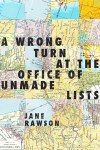
- Jane Rawson’s A wrong turn at the Office of Unmade Lists (2013, my review)
- Annabel Smith’s The Ark (2014, my review)
- Andrew Sullivan’s A sunburnt country (2003, Sullivan was – still is? – an expert in Bushfire Dynamics at the CSIRO!)
- George Turner’s The destiny makers (1993, about overpopulation, food shortages and economic collapse)
- Ellen van Neerven’s Heat and light (2014, my review, includes a dystopian longform story in its central section)
- Sam Watson’s The Kadaitcha sung (1990, Roslyn Weaver writes that “Watson has reworked the notion of a dead heart [of Australia] … by populating the land with the spirits of murdered Indigenous people and also presenting the landscape, and particularly Uluru, as the sacred setting of power and restoration”)
- Charlotte Wood’s The natural way of things (2015, review coming soon)
The two main characters in Steve Toltz’s Quicksand engaged in a lot of satirical repartee. One example I quoted in my review included the statement that:
‘You know how while we’re enjoying reading dystopian fiction, for half our population this society is dystopia?’
Toltz’s character is not talking about climate change, or terror attacks, or other apocalyptic scenarios. He’s talking about ordinary lives that are tough, lives that made the Sydney Morning Herald describe Kate Jennings’ Snake (my review) as a “domestic dystopia”. You don’t have to look hard, in other words, for dystopias!
At the 2013 Perth Writers Festival, there was a session (not that I was there) on “The Rise of the Apocalypse”. The question posed in the program was: “Is the recent increase in dystopian fiction due to our concern about what lies ahead with global warming and other environmental catastrophes or does it just make really good fiction?”
Do you read dystopian fiction, and if so, do you have favourites?


 Whispering Gums