Monday musings on Australian literature: Melbourne, a City of Literature?

A year ago I finally wrote a post on the UNESCO Cities of Literature, focusing on Melbourne’s designation as UNESCO’s second such city in 2008, and Hobart’s addition as Australia’s second city in 2023. The full list is available online at the Cities of Literature website.

As I wrote in that post, the criteria against which cities are assessed aren’t specifically listed, but the Cities of Literature website says that these Cities “share similar characteristics”, which presumably draw from the criteria. The characteristics are:

  • Quality, quantity and diversity of publishing in the city
  • Quality and quantity of educational programmes focusing on domestic or foreign literature at primary, secondary and tertiary levels
  • Literature, drama and/or poetry playing an important role in the city
  • Hosting literary events and festivals which promote domestic and foreign literature
  • Existence of libraries, bookstores and public or private cultural centres which preserve, promote and disseminate domestic and foreign literature
  • Involvement by the publishing sector in translating literary works from diverse national languages and foreign literature
  • Active involvement of traditional and new media in promoting literature and strengthening the market for literary products.

Again, in last year’s post, I shared that UNESCO has pages for some of the cities. Melbourne’s (Naarm) commences with:

Celebrated for its vibrant literary culture, Melbourne supports a diverse range of writers, a prosperous publishing industry, a successful culture of independent bookselling, a wide variety of literary organisations, a well-established culture of reading and is actively involved in many events and festivals.

In addition to this, Melbourne has its own City of Literature website, in which it describes what this means and what Melbourne does to support literature and reading.
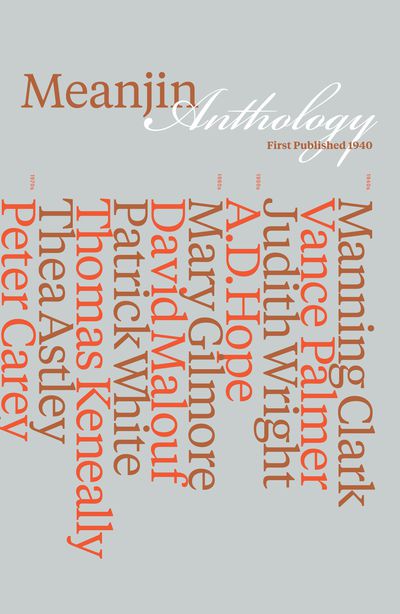
Now here’s the thing, and why I am writing this post today, Melbourne’s credentials are currently being questioned by some of its own, for a couple of very good reasons. Last year, Melbourne University Press announced that it would cease publication of one of Australia’s longest-running literary magazines, Meanjin, at the end of 2025. Established in Brisbane in 1940, Meanjin had been published in Melbourne since 1945. This was devastating news to the literary community, because this magazine is one of our treasures, for both its history and what it still does. Fortunately, a last minute reprieve has seen Meanjin return to its originating state with the Queensland University of Technology acquiring it early this year. This is great for Meanjin, but it does nothing for the City of Literature.

And then, in January of this year, Writers Victoria (about which I have written before in my writers centre series) was told it would not receive the funding it had been receiving from the State Government (via Creative Victoria). It was given emergency funding to help it survive through to June 30, but no more after that. As Angela Glindemann wrote in The Conversation, the loss of this centre – if it cannot change the government’s mind or obtain other funding – “would make Victoria (whose capital, Melbourne, is a UNESCO City of Literature) the only mainland state without a state government-funded peak organisation for writers”. 

In the last three months, I have heard several literary commentators, besides The Conversation’s Glindemann, raise the issue of Melbourne’s City of Literature status in relation to these literary losses. The others include literary journalist Jason Steger (who was Literary Editor for Melbourne’s The Age newspaper), authors and podcasters Irma Gold and Karen Viggers (in Secrets from the Green Room, Season 7 Episode 79), and academic Patrick Stokes in ArtsHub.

Steger wrote earlier this month in his weekly emailed newsletter:

It’s dismally ironic that in Melbourne, Writers Victoria has been denied funding by the state government. Ironic because in 2008 Melbourne became only the second UNESCO City of Literature, but now could become the only state capital in Australia not to have an organisation that supports its writers.

[…]

Why are writers organisations important? Because they give crucial support to writers at all stages of their careers. They provide information, resources, workshops and plenty more. They also employ writers to conduct workshops and teach. In 2025 Writers Victoria employed 70 tutors, paying $50,000 in fees.

Irma Gold and Karen Viggers in their podcast speak from personal experience about the value of writers organisations to their careers, as does Toni Jordan in The Conversation’s article. These three writers (as did others I quoted in my Writers Victoria post) see writers centres as critical to supporting emerging writers and to the ongoing education of established writers. (Worryingly, The Conversation says that Writers Victoria is not the only one to confront threats to its existence in recent times.)

Stokes brings into his argument a recent controversy involving the State Library of Victoria and its direction, about which you can read at the ArtsHub link I’ve provided. Here I will simply share Stokes’ main point which is that

A library that is reduced to a museum has lost its inherent function. Likewise, the City of Literature designation shouldn’t turn a city into a sort of literary museum, a celebration of past glories now preserved under glass or atop marble plinths. It needs to reflect a commitment that’s as much forward-directed as backward. Cities of Literature ought to be as much about the books that are not yet written as the ones that already are.

I’m not sure that these actions would – or should – affect Melbourne’s City of Literature status, but they are a worry, on their own and as potentially indicative of a trend (particularly in Victoria right now) to cutting support for the arts. If you are a Victorian resident, you can sign a petition to the Victorian Parliament requesting it to “reverse the decision to cut state funding to Writers Victoria”. The petition is open until late April.

Thoughts?

Monday musings on Australian literature: Neilma Sidney Literary Travel Fund

We all know that a writer’s life is not a well-paid one. One way that writers keep going, that is, that enables them to continue writing, is through winning awards and grants. I report often on awards, and they also regularly appear in the media, but how much do we know about grants? And what exactly is a grant?

I’m not sure what the official definition of an artist’s grant is, but I’d define it broadly to encompass any monies or, other in-kind products or services (like residencies), intended to support creators doing their work. Grants tend to be offered by government bodies, foundations, trusts and non-profit organisations, with the best-known ones in Australia being, probably, those offered by the Australia Council for the Arts and the Copyright Agency. However, there are many other grants – big and small, general and specific – that writers can apply for. Darned if I know how they find out about them all, but their state writers centres, most of which I’ve now covered in this blog, are probably a good start.

I don’t want to get into the politics of funding artists. There’s the politics involved in grant-making (as anyone who has followed the Australia Council over the years knows only too well) but there’s also the bigger issue of how (or if, some would say) we should, as a society, support artists in the first place. Instead, today, I just want to share one specific grant, as an example of the sort of support artists (in this case writers) need and can get.

Neilma Sidney Literary Travel Fund

The Neilma Sidney Literary Travel Fund was established in 2017 by Writers Victoria, with funding from the Myer Foundation, in the name of poet, novelist and short story writer Neilma Gantner (1922-2015). Gantner was the daughter of businessman and philanthropist Sidney Myer. The Fund recognises, says the Writers Victoria webpage, “the unique value of travel in the development of new writing and literary careers”.

The grants, which range between $2000 and $10,000, are “intended to support emerging, midcareer and established Australian writers and literary sector workers. This includes writers, editors, agents, publishers, librarians, booksellers, employees and associates of literary organisations and journals, and other literary professionals currently living in Australia”.

Last week, Books + Publishing advised that Writers Victoria had announced the fifth round of recipients for the Fund. This round was the second offered in 2019. The judges change for each round, with those for Round 5 being writer Eugen Bacon, podcaster Astrid Edwards, and Black Inc. publisher Kirstie Innes-Will.

Here are the recipients (in grant amount order), showing the sorts of activities the fund supports:

  • Evelyn Araluen and Jonathan Dunk ($9656): to research Aboriginal and settler–colonial literary and cultural relations in England and the Czech Republic. Araluen is an Indigenous Australian poet, educator and researcher, while Dunk is a poet, critic, fiction-writer and academic.
  • Cate Kennedy ($7000): to attend writers’ festivals in Ireland and Jamaica, and residencies and reading events in the US. I’ve read some of Kennedy’s short stories, and have reviewed the excellent anthology Australian love stories which she edited.
  • Ruhi Lee ($6850): to research her memoir in India. Lee is a Melbourne-based writer, and was, in fact,  part of this year’s HARDCOPY program, run by the ACT Writers Centre (about which I wrote in 2015).
  • Mirandi Riwoe ($6062): for a residency at the Tyrone Guthrie Centre in Ireland. I’ve reviewed her powerful novella, The fish girl.
  • Book cover for Madelaine Dickie's TroppoMadelaine Dickie ($4374): to research a proposed biography of Wayne Bergmann in Broome. I’ve reviewed Dickie’s debut novel, Troppo, and will be attending the launch of her second book, the intriguingly titled Red can origami, this month. Dickie won the T.A.G Hungerford Award for Troppo, and it was also shortlisted for the Dobbie Literary Award and the Barbara Jefferis Award.
  • Fiona Hardy ($3920): to research and begin her middle-grade fiction book on Christmas Island. Hardy is a children’s book writer, reviewer and bookseller.
  • Robert Lukins ($3473): to research a novel in Carter Lake, Iowa–Nebraska, US. Lukins’ debut novel, The everlasting Sunday, was short or longlisted for some major literary awards this year.
  • Maria Takolander ($3177): to attend the Arteles artist-in-residency in Finland. I have Takolander’s short story collection, The double, on my TBR, but keep not getting to it! My bad.
  • Sara Saleh ($3100): to take part in the inaugural Arab–Palestinian literature festival in New York. Saleh is an Arab-Australian poet, creative artist and activist.
  • Tamara Lazaroff ($2723): to research her memoir on De Witt Island, Tasmania. Lazaroff is a Queensland-based writer of fiction and nonfiction, who took part in last year’s HARDCOPY program.

Books + Publishing referred to “eleven successful writers, booksellers and publishers” but in fact all these grants have been given to writers and/or for writing projects. This is not surprising really, given their generally insecure funding base, but it would be interesting to know how often other literary professionals have been given grants.

It’s darned hard work applying for grants, I know. The above 11 (for ten projects) were selected from 99 applicants, which is probably not a bad ratio. Still, writers must have to juggle the time spent on writing grant applications against writing their books. I congratulate the above 11 on their success, and hope they find spending their money both fruitful and enjoyable!

Monday musings on Australian literature: Writers Victoria

When I wrote my last post in this Monday Musings series on Australia’s writers centres, author Angela Savage, who is also the current Director of Writers Victoria, commented that the centre was celebrating its 30th anniversary this year. She was hinting, in the nicest way of course, that I should “do” Writers Victoria this year – so, here I am.

Like Writing NSW and Writers SA, Writers Victoria changed its name (in 2011) from its original name, the Victorian Writers’ Centre. A not-for-profit membership organisation, it was created in 1989 by a group of writers who believed Victoria’s writing community needed a professional organisation. I love the clarity and comprehensiveness of their overall goal:

Writers Victoria supports and connects all types of writers at all stages of their writing careers.

This is supported by more specific purposes as listed on their About Us page. It’s not surprising that what they do is similar to other centres, but, like the others, they have their own flavour. They also operate within a very specific environment, given Melbourne’s status as a UNESCO City of Literature and the presence of The Wheeler Centre (for Books, Writing, Ideas). The then Victorian Writers Centre played an instrumental role in achieving both of these. Writers Victoria is, apparently, “the largest writers’ organisation in the country” and “the country’s leading employer of writers” through their programs.

You will have read enough of these writers centre posts now to know what they offer – courses and workshops, mentorships, manuscript assessments, fellowships, writing spaces or studios, to name the main activities. Writers Victoria also specifically supports regional writers, young writers, diverse writers, and writers with a disability. They also advocate for writers and the literary culture.

Book coverTheir diverse writers program, for example, supports “writers who face barriers in the development of their writing careers”. The programs are, well, diverse, catering for women of colour, Asian Australian writers, Aboriginal and Torres Strait Islander people, refugee writers, and so on. The program recognises that money can be an issue for these writers, so among the support it offers are bursaries, and paid commissions. The indigenous writing program has used writers you’ve met here – Tony Birch, Anita Heiss and Bruce Pascoe.

For writers with a disability they have a program called Write-ability. Its aim is “to remove some of the barriers that have traditionally prevented people with disability from connecting with writing and publishing”. This support includes regional and online programs, and fellowships.

30 Years

However, because this year is their 30th anniversary, I thought I’d focus mainly on how they are celebrating this milestone – particularly since October was their establishment month.

Here are some of the ways they are celebrating their anniversary:

Flash fiction challenge

In April – the first month of the year with 30 days – they held a Flash Fiction Challenge, which they promoted as “30 days. 30 prompts. 30 Words.” For each day they offered a word prompt, and writers had to submit their 30-word works of flash fiction inspired by that word by midnight of that day. The 30 winners are shared at the link I’ve given, with the first winner, for the word Grit, being blogger Tony Messenger. As a wordlover, I enjoyed the variety of the prompt words, which included Baroque, Gloss, Remember, Nacreous, and Perfectionism.

For a clever, pointed piece, check out Sumitra Shankar’s Beginning, on April 21. It’s a perfect example of the power of flash fiction.

Writers on Writers Vic

Book cover for Toni Jordan's AdditionFor each month – they are up to September – a Victorian writer comments on what Writers Victoria means to them. The writers to date are:

  • Lee Kofman (who co-edited Rebellious daughters which I’ve reviewed)
  • Mark Brandi
  • Toni Jordan (whose Addition, Fall girl and Nine days, I’ve reviewed)
  • Melanie Cheng (whose Australia Day I really must read)
  • Shivaun Plozza
  • Fiona Wood
  • Andy Griffiths (with whom I’m sure to soon have a close acquaintance through my grandson!)
  • Anna Spargo-Ryan (whose The paper house I’ve reviewed)
  • Else Fitzgerald

You can check them all out by going to the site’s page, but to whet your appetite, here are some of the things they say:

… the main antidote to that famous writer’s malady – loneliness, isolation – is in hanging around with peers. Today writers’ centres seem to serve a similar function to that of literary salons from the previous centuries. (Lee Kofman)

I always tell aspiring and emerging writers about Writers Victoria. Many, like me, are just bumbling along, feeling lost and isolated. Writers’ centres like Writers Victoria are invaluable in making writers feel less alone. (Melanie Cheng)

First, I would wholeheartedly recommend it [joining Writrs Victoria]. But second, know what you want to get out of it. A centre like Writers Victoria has something to offer writers at all stages. (Anna Spargo-Ryan)

And so, a very big Happy Birthday to another active writers centre. Australians should be proud of the energy and commitment centres like this one are putting into both supporting all writers and keeping our literary culture alive. Oh, and thanks to Angela Savage for the birthday heads up!

Writers Centres covered to date: the ACT, New South Wales, the Northern Territory, Queensland, South Australia and Tasmania.