Marion Halligan, Words for Lucy (#BookReview)

For my reading group’s tribute to Marion Halligan last year, I had planned to read one of her older novels, Wishbone, which I did (my review), and her last book, the memoir Words for Lucy, which I didn’t. But, I have now. I guess a book born of a mother’s grief for a daughter who died too young doesn’t make the cheeriest start to this year’s reviews. However, such is the life of a reader so you’ll just have to bear with me!

Lucy, for those who don’t know Halligan’s biography, was born in 1966, with a congenital heart defect. She was not expected to survive more than a few days, but she did – for nearly 39 years. In the end, however, in 2004, her heart gave out. I’ve read two other memoirs written by a mother about her seriously ill daughter, Isabel Allende’s Paula and Joan Didion’s The year of magical thinking. They are very different books and in fact, in Didion’s case, her daughter did not die during the book, though she did die young (and Didion wrote a book about that, Blue nights). The reason I am sharing this is that Halligan, Allende and Didion were all published authors, and it shows. As Halligan writes in the opening to her book, “My business is words”. For these three writers, the process of writing was an important part of how they processed their feelings. Halligan’s book might have come out some 18 years after Lucy’s death, but she’d been writing all that time.

While confirming my memory concerning Allende and Didion, I came across the Wikipedia article on Blue nights. It includes a quote from Rachel Cusk’s review of the book. She says “Didion’s writing is repetitive and nonlinear, reflecting the difficult process of coping with her daughter’s death”. While I don’t know about the reason, the “repetitive and nonlinear” description could equally be applied to Words for Lucy. The book is divided into twelve parts (plus a postscript), with each part comprising many small sections. There is an overall chronological arc to the book, in that after briefly describing Lucy’s death, Halligan does start with her birth, and tells of the funeral and wake near the end. What comes in between, however, is, writes Halligan, like “box of snapshots. You find your own way through the story, from random details”. In other words, if you are looking for a traditional grief memoir in which the memoirist works chronologically through the “stages” of their grief, you won’t find it here.
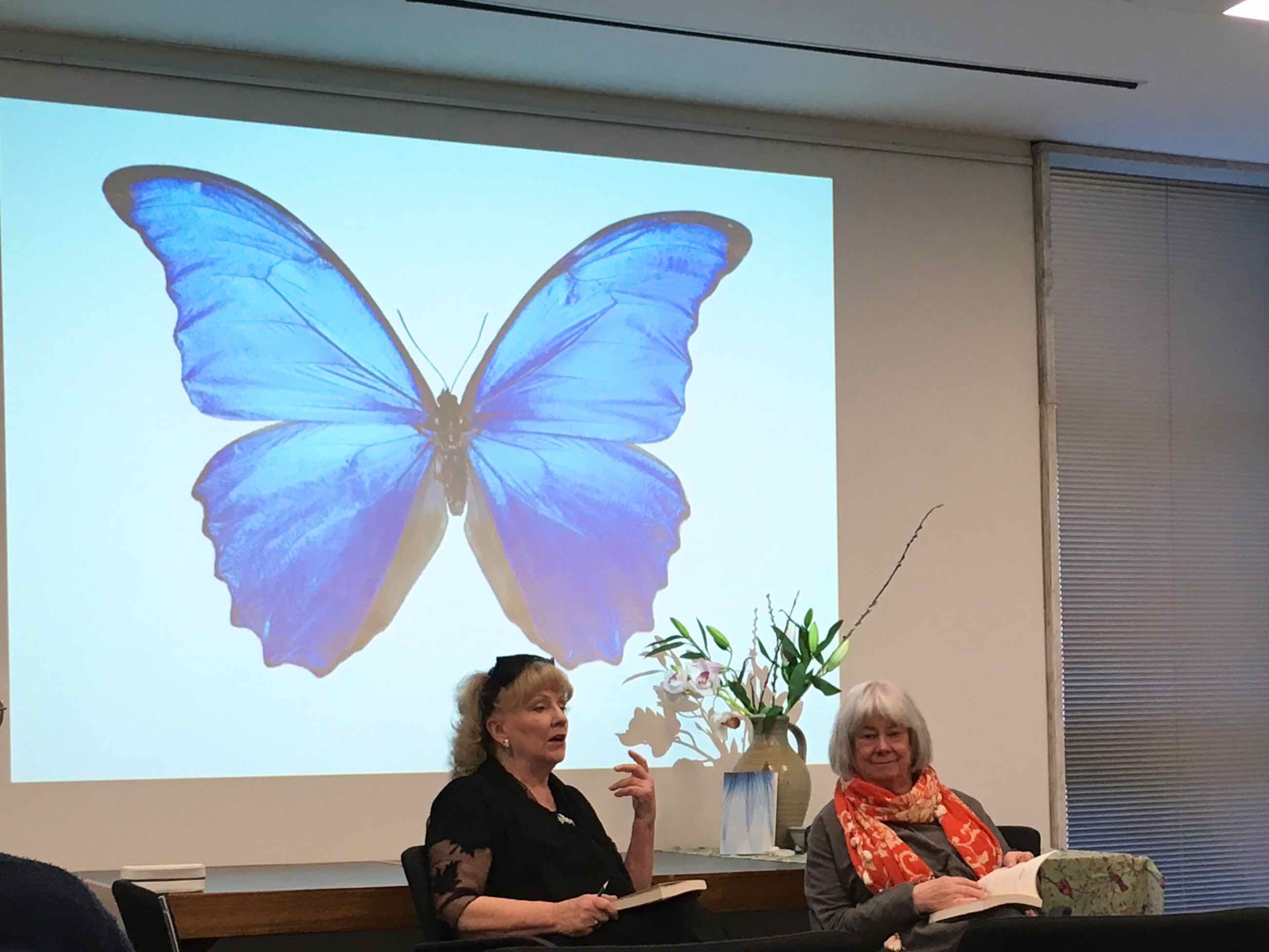
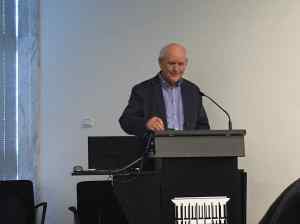
Carmel Bird and Marion Halligan
Carmel Bird and Marion Halligan, 2016

What you will find is a book about mothering and “daughtering”, about living with a chronically-ill child, about making memories and living with memories, about sadness and joy, about loss and grief (because Halligan has had more than you’d think fair), and about writing. It’s also about friendship. Having experienced my own devastating loss (of my sister in her early 30s), I know very well the value of friends. For Halligan, a great friend was the writer Carmel Bird. I was much moved by the role Carmel played in Lucy’s life, and by the love and support she clearly gave Marion.

Now, returning to Halligan’s “snapshots”, I enjoyed how, within a broad thematic structure, Halligan wanders through family life – from the lighthearted like Lucy’s love of things to the serious like her long and complex medical journey that cramped her life so much, from the family’s experience of living overseas to travelling there together later. From these, and more, so many truths emerge. For example, Halligan writes on page 2,

Love is so important to us. We so much need it. We can’t do without it. What we don’t realise at the beginning is the price it comes at.

Right there I knew I was going to like this book, because I was immediately taken back to my first pregnancy, and the fear I had that something would happen to this child I was bringing into the world. Ah well, I reassured myself, I didn’t have him (as the child turned out to be) before and I was fine, so I’d be alright! But of course, as soon as that child came into the world, my life changed and I realised things would never be the same, that if anything happened to him, I would not – indeed, could not – go back to how I was. The price of love…

The price of love isn’t all bad of course, even when the loved person dies, because there are the memories, and it is through memories that Halligan charts both Lucy’s life and her own grief. There is, though, a sort of paradox here that Halligan admits to. It’s what she calls the Janus face of grief. There’s the grief we feel for the person who has gone, for the life they are missing, the things they’ll not see or experience, and there’s that selfish grief the bereaved person feels, the loss, the misery, the wanting that person back in your life to make you happy (in effect).

It’s a complex thing grief – not linear, which Halligan knows and hence her book’s structure, and not all misery either, which Halligan also knows. Happy, joyful memories do pop up. You do laugh. Halligan describes some special memories, and then writes this beautiful thing about them:

Those are perfect memories, I can take them out whenever I like and run their cool and sparkling shapes though my fingers, look at their brilliant colours, the light refracting through them.

These memories may not be “factual”, may not be the same as those of others who experienced the same person or event, but as Halligan would tell her sisters who questioned her memory of some family event, “Write your own narratives … this is mine and I’m sticking to it”.

Throughout Words for Lucy there is the writer’s eye on what is fact and what is truth. Truths can be “different” (indeed, “many”, as Emmanuelle learns in Wishbone) while facts are “another matter”. And so, in the final pages of the book, Halligan, paying her due to “a memoir’s desire for honesty”, shares one last painful fact so that we don’t go away believing some wrong truths about her family.

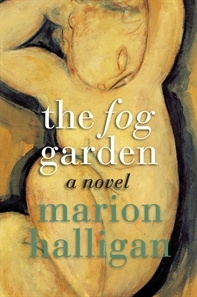
Words for Lucy was Marion Halligan’s last book. It’s a memoir, and has the honesty that form demands. However, I see it as also containing her apologia, her final statement on what fiction is. For her, and she understood the slipperiness of this, it’s about truth, which is different from fact. “Fiction is always life”, she writes in this book. It means writers using life – including their own – “in all sorts of imaginative ways”. Think Jane Eyre, David Copperfield, and her own, somewhat controversial, The fog garden.

Ultimately, whether Halligan was writing fiction or nonfiction, words were her business. And these, her final ones, represent a fitting legacy for a brilliant career as well as a beautiful tribute to a beloved daughter.

Marion Halligan
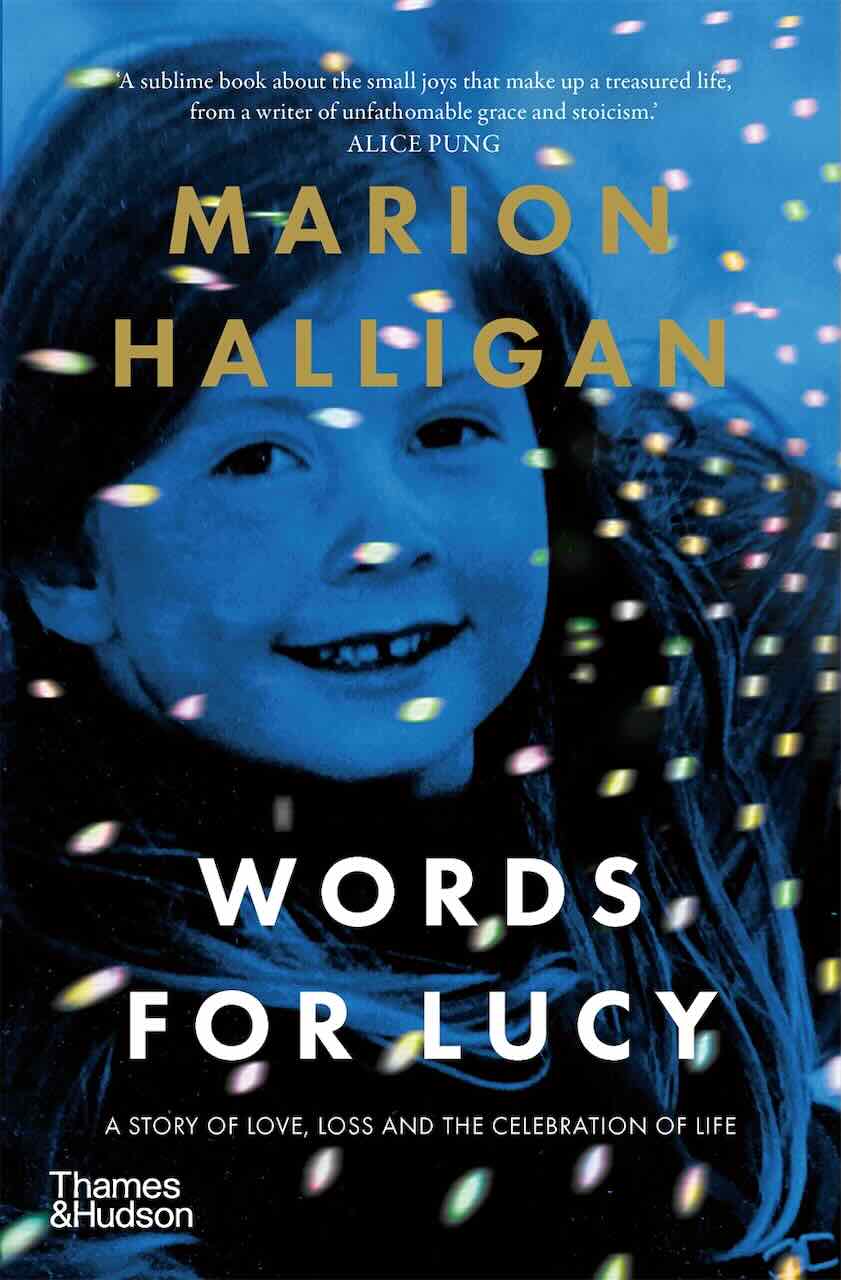
Words for Lucy: A story of love, loss and the celebration of life
Port Melbourne: Thames and Hudson, 2022
218pp.
ISBN: 9781760762209
Marion Halligan, Wishbone (#BookReview)

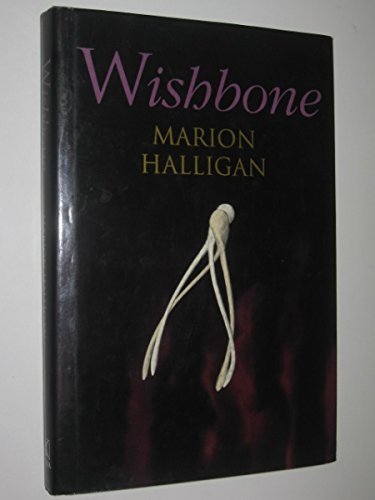
My reading group’s last meeting of the year took the form of a tribute to Marion Halligan, who died earlier this year and who had generously attended our meeting when we discussed her Valley of grace (my review). We have done this once before with Helen Garner (albeit she hadn’t died) and it worked well. The process is that we choose something we want to read and share our thoughts with the group. I have read several of Halligan’s books, but I have a few on my TBR, so of course I chose one of those, Wishbone, her fourth novel, published in 1994.

Before I share my thoughts on that, I thought you might like to know what everyone read. Ten members attended the meeting. Some read two books, while others chose a short story or article. It is, after all, a busy time of year. The novels read were, in chronological order, Wishbone (1), The golden dress (2), The fog garden (1), Valley of grace (1), Goodbye sweetheart (2). Three people read her most recent memoir, Words for Lucy, while others read selections from Canberra tales (“Most mortal enemy”), The taste of memory (the first piece), Canberra Red (“A city of mind”), and Shooting the fox (“Shooting the fox”). In other words, we read widely across her oeuvre, resulting in an enjoyable – and occasionally excitable – meeting as we teased out some of her themes and ideas, including how much of her fiction was drawn from life!

“who knows what the hell is going on”

So now, Wishbone. It tells the story of a woman, Emmanuelle, her “motley family”, and the wishes they have for themselves. The novel starts with a young, passionate Emmanuelle having an affair with a married man, but it soon jumps some years hence when she is now married (to a man named Lance), and living in well-heeled Sydney with two children, Maud and William. The rest of the novel follows a period in the lives of these four and others in their close circle – friends, family and employees. During this time, we experience a life-threatening stroke, extra-marital affairs, mistaken assumptions, and a suspicious death, all set within perfectly rendered scenes of domesticity. Halligan can make you gasp with her audaciousness.

As I was reading this novel, a light dawned for me about why I so often use Jane Austen as a benchmark for writing I love. I do like all sorts of writing, but I am particularly drawn to writing that exposes human nature with wit, irony and a generous spirit. This is what Austen does, and this is also what Halligan does. Wishbone is a generous story about messy human lives. Halligan writes with a knowingness about those deep-down thoughts, wishes, and desires we all have, but she is also forgiving about her characters’ foibles and less admirable traits and behaviours. In Wishbone, she explores the tension between our wishes – particularly regarding love – and living with what you’ve got.

There’s something of a fatalist element, here, in the sense that we think we have choice in all this, but choice proves in fact to be elusive. Things happen that we have no control over. Late in the novel, as Emmanuelle sits around the kitchen table with her two children and au pair Mel, in what looks to be a cosy domestic scene, a question – which is both literal and existential – is suddenly proffered, “who knows what the hell is going on”. Who indeed? (And who is asking the question? Emmanuelle, surely, but there’s also an omniscient voice overlaying the characters’ perspectives. At least I believe so. Wishbone slides seamlessly between voices and perspectives in a way that never loses the reader, but that ensures we see multiple sides of things.)

This brings me to style, and how Halligan does what she does. Halligan is a born short-story writer. As I started Wishbone, I almost wondered whether I was reading a book of short stories. Every chapter is gorgeously titled and most felt like they could stand on their own as little nuggets from a life. The opening chapter, The Glade, tells of Emmanuelle’s youthful affair with her married man. It starts:

The difficulty of a love affair between a young woman and a married man may be its logistics. Where can they go? He lives with his wife. She lives with her parents.

They can’t afford hotels, and anyhow it’s too risky as the town is small, but Brian knows “a good place”, a little glade under a cliff. Whenever Brian thinks of going to the glade, he whistles Handel’s tune, “Where e’er you walk”, which “always gladdened his wife’s heart, because she knew her husband was feeling cheerful”. Halligan’s discussion of this song, Brian’s behaviour, and the wife’s response is delicious in more ways than this little irony, but I will just share Halligan’s nailing the point, with “the song told her about the walking and the sitting but what she didn’t know about was the lying”. Just think of the double meaning in that last word! This writing just makes you splutter.

From here, the plot unfolds quietly but surely. Hints are dropped but aren’t heavy-handed, so we are still surprised when certain events occur, which brings me to the title, and its reference to wishes. In the third chapter, The Man in the Train, there is a mostly mundane discussion about wishes until the chapter’s titular, and unnamed, “man” asks Emmanuelle what she would wish for. Her answer?

I would wish for the gift of making dangerous choices.

As the novel progresses, various characters express their wishes. Emmanuelle’s friend Susie idly wishes she were a widow, while au pair Mel wishes she were beautiful. Emmanuelle wants more passion from her husband, while chauffeur Stuart wants money. And so on … What these characters learn, you won’t be surprised to hear, is that their seemingly ordinary, or common, wishes often carry a danger that is not expected. You know that saying, “be careful what you wish for”. But Halligan’s book is no simple moral tale. What Emmanuelle realises near the end, in fact, is that all choices can be dangerous. Susie asks her:

Have you ever wished Lance dead?
I’ve wished him different.
And did that come true?
Not in ways that I’d have chosen.

Where does this leave us? We won’t stop wishing, and we certainly can’t stop making choices, but we can think about our choices and be realistic about the outcomes, whether they are the expected or unexpected ones. In the end, Emmanuelle probably has the answer:

being alive is like reading a book. You might think you’ve got a fair idea of the plot but you don’t actually know what’s going to happen next, you’re as much a mystery to yourself as a character in a novel. Perhaps the secret is just to keep turning the pages.

Reading Wishbone has reminded me how much I enjoy Halligan. I must get back to that TBR.

Marion Halligan
Wishbone
Port Melbourne: William Heinemann Australia, 1994
235pp.
ISBN: 0855615974

Vale Marion Halligan (1940-2024)

Such sad news. I have just heard that Marion Halligan, one of Australia’s literary treasures, died yesterday. She has been frail for some time, but the last time I saw, and spoke briefly to, her was at the 2023 ACT Book Awards in December. She was her usual engaged self, though also frustrated with the limitations her health was placing on her life. Getting old, as many of us know, isn’t a heap of fun.

Before I share a few thoughts of my own, here is how I heard the news. It was from Karen Viggers, via Facebook. I hope she’s OK with my sharing this:

It is with infinite sadness that I share the sad news with you today that the wonderful literary champion, Marion Halligan, died peacefully last night.

Marion was just the most amazing, beautiful, graceful, wise and generous person. She always had time to talk to and support other writers and was always generous in her friendships. She had a sparkling wit and personality, was always astute and sharp in conversation and she enjoyed books and literature to the end.

She has had an incredible life and will be very sadly missed.

Marion Halligan Valley of grace

It is so hard to know where to start. I do not want to write an obituary, as there will be plenty of those in the coming days and weeks. Rather, I’d like to share my experience of her, which started in the 1980s when I decided to focus my reading on women writers, and particularly on Australian women writers. I read three of her novels with my reading group, Lover’s knots, The golden dress and Valley of Grace. For this last discussion, Marion attended our meeting. What an absolute treat that was.

Outside of the reading group, I have read more of her books, including The fog garden and The point, and I have around five others waiting on my TBR. It was through Marion, too, that I met Carmel Bird when she approached me about posting the speech she was making to launch Marion’s novel Goodbye sweetheart.

Carmel Bird and Marion Halligan
Halligan launching Bird’s Family skeleton

Marion lived her writing life in Canberra, and was a member of the “Canberra Seven” or “Seven Writers” group about which I have written. I have seen her at award events, festivals and conversations, sometimes the interviewer and sometimes the interviewee. One memorable occasion was when she interviewed Margaret Atwood back in the early 2000s. Atwood was not easy to interview, but Marion held her ground with grace and humour. I will never forget it. (I was glad it was she and not me in that seat!)

Marion is loved here as our grand dame of literature, and her presence will be greatly missed. Not only did she support local writers generously, as Karen Viggers says above, but she was for many years patron of the ACT Writers Centre (now named Marion partly in her honour), was at one time the chairperson of the Literature Board of the Australia Council and also an organiser of Canberra’s previous writers festival, the Australian National Word Festival.

She was a versatile writer. She wrote eleven novels, several of which won and/or were shortlisted for some of Australia’s best literary awards, and which included a little foray into crime fiction. She was a big supporter of the short story form, ruing their unpopularity with publishers, and she also wrote non-fiction books, as well as journalism, including articles on food. Wikipedia lists her books and awards. Searching her in your browser will retrieve several interviews with her, and she was interviewed by Irma Gold and Karen Viggers for their Secrets from the Green Room podcasts I posted on recently. You can see most of my posts involving Marion on this tag. (There are few reviews here, though, because most of my reading of her books was before blogging.)

I could go on, but this is enough for now. I will close with a quote I’ve shared before on this blog. It comes from one of my favourite books of hers, a work of autofiction, The fog garden. I just loved this book, her cheeky, wry way of telling us that it was fiction not biography. It’s a lesson, in fact, in how to read fiction, and it also has one of my favourite statements about the value of reading. It goes like this:

Read a wise book and lay its balm on your soul.

All I can say is, thanks Marion for your intelligent wit, your warmth and your wisdom – and for the balm you laid on our souls. We will miss you muchly.

Favourite quotes: from Marion Halligan’s Fog Garden

Some time ago, I started a little ad hoc Favourite Quotes series but I haven’t added to it for some time. This post, I actually drafted back then, but never got around to completely it, but I will now!

One of my favourite Australian writers, though I’ve only reviewed one of her recent books on my blog, is Marion Halligan. It’s fitting therefore, that she feature in this little series. The quotes – and there are four – all come from The fog garden, which was shortlisted for the Queensland Premier’s Literary Award and the Nita Kibble Literary Award (which is for “life writing”). I loved it, and felt it deserved these and more accolades.

I read The fog garden in 2002, a year after it came out, and so, unfortunately, a few years before blogging. It’s an autobiographical novel. In other words, it’s a novel, it’s fiction, but it draws from Halligan’s life. It is about Clare, a novelist, and how she copies with grief after the death of her beloved husband. The novel was triggered or inspired by, or a response to – I’m not sure which here is the most accurate – the death of Halligan’s husband of 35 years.

What I love about it is that as well as being about grief, and the wisdom one learns from the tough experiences of life, it is also about fiction. What I love, in other words, is that it’s about life, it’s about writing, and it is also about reading. It asks us readers to think about how we read. It’s cheeky – and those of you who know how much I love Jane Austen, how much I love Carmel Bird, will know how much I love cheeky writers.

So, here is our first person narrator writing about her character Clare:

She isn’t me. She’s a character in fiction. And like all such characters she makes her way through the real world which her author invents for her. She tells the truth as she sees it, but may not always be right.  (p. 9)

I mean, really, you’ve got to love that. It’s the real world, but a version of it invented by the author for her character. Just because it’s a recognisable world, and just because the things Clare says and does are “true” doesn’t mean that they are the things author Halligan said, did and believed. They could be but they aren’t necessarily so, and we should not assume they are so, because this is fiction not a memoir. If Halligan had wanted to write a memoir she certainly would have. By writing fiction Halligan was freer to explore her feelings and to play with where they might take her.

Anyhow, here again is our first person narrator writing about writing Clare:

A reader could think that, since Clare is my character, I can make all sorts of things happen to her that I can’t make happen to myself. This is slightly true, but not entirely … only if it is not betraying the truths of her life and character as I have imagined them. (p. 10)

Of course: once you create a character, that character must be true to what you have created.

And here is a little insight into the challenges of writing. I certainly know about writers’ metaphors that have taken me in wrong directions.

That is the trouble with metaphor, it may take you to places you don’t want to go. (p. 279)

And, finally, one of my favourite quotes from all the books I’ve read, and one I’ve shared before.

Read a wise book and lay its balm on your soul.

If you haven’t read The fog garden, and ever get a chance, do give it a go. It’s a wise – but also lively – book.

Meanwhile, do any of these quotes speak to you?

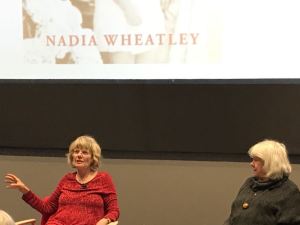
Nadia Wheatley in conversation with Marion Halligan

Nadia Wheatley, Marion Halligan,

Nadia Wheatley and Marion Halligan, ANU Meet the Author

Nadia Wheatley is, I fear, not as well-known in Australia’s literary firmament as she should be because her credentials are excellent. Not only is there My place (1987) – a wonderful multi-award-winning children’s book about the history of place – but her biography of Charmian Clift, The life and myth of Charmian Clift, has been described by critic Peter Craven as “one of the greatest Australian biographies.” She has appeared here in a Monday Musings list of books recommended by indigenous writers (even though she is not indigenous) for her book, with Ken Searle, The Papunya School book of country and history. And these are just a few of her literary credentials.

All this is to say that when I saw that she was to be a “Meet the author” subject this week at the ANU – on a free night for me, no less – I didn’t hesitate to book. It didn’t hurt, too, that her Conversation partner was to be Marion Halligan (who has appeared here several times, in various guises.)

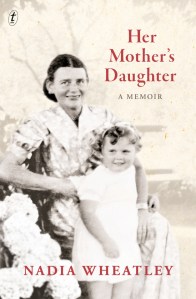
Now, I don’t want to discuss in detail her latest book – Her mother’s daughter: A memoir – which was the reason for this event, because I have almost finished it and will discuss it in my soon-to-come post, so I’ll just share, briefly, some of the main points from the conversation.

“Caught between an independent woman and a controlling man”

The book’s title suggests that the book is Wheatley’s memoir of her life with her mother (Nina, familiarly called Neen.) However, this is only part of the story. The book is, in fact, like a few I’ve read recently, a sort of hybrid biography-memoir, because it is as much a biography of her mother, who died in 1958 when Nadia was 9, as it is a memoir. Three others I’ve discussed here in recent years are Susan Varga’s Heddy and me, Anna Rosner Blay’s Sister, sister, and Halina Rubin’s Journeys with my mother. Interestingly, the mothers in all of these books experienced World War 2 in some way, though Wheatley’s mother differs from the other three European-born women in that she was an Australian who went over to work in the war.

Marion Halligan commenced the conversation by commenting that the book was a difficult read, and that it must also have been difficult to write. Wheatley agreed, commenting that people under-estimate children’s ability to suffer, but also their ability to survive…

… and both suffer and survive, Wheatley did. She was caught, she said, “between an independent woman and a controlling man”, but that was only the half of it. She wasn’t helped by a family which – only partly because it was the 1950s – did not feel the need to tell Wheatley what had really happened to her mother, resulting in the young Nadia hoping (if not totally believing), for some years, that one day her mother would return. She was abandoned by her father, whom she described as “a strange, sadistic person.” The family dynamics are complex, and I’ll discuss some of them a little more in my post on the book.

I will say, however, that the underlying biographer’s question for Nadia in writing the book was:

Why would a nice person like Neen marry an awful person like my father?

Because, awful he was … though not, it seems, to Neen in the early years of their relationship when they were working for/with refugees and displaced persons in post-war Europe!

What lifts this book above what could so easily have been a misery memoir is that it also works as social history of an era – of life in Australia in the first half of the twentieth century, and of the work Australian nurses did during and after the Second World War. The pictures Wheatley draws of the joys (yes) and challenges of the War for Nina are vivid, and ring true. Nina was a truly independent woman, despite the demands home and family exerted on unmarried “girls” at the time. The pictures Wheatley then draws of Nina post-marriage are, consequently, even more devastating – because of the gap between what could (should) have been and what was. Nina’s dire situation was compounded by the confluence of a controlling, sadistic husband and a time, the 1950s, when women had little agency in the face of such a situation. Even so, Nina did her best …

At one point during the conversation, Wheatley made the interesting – and obvious, if you know their stories – point that there are some parallels between her and her mother’s stories. Both were motherless from a young age, and both became involved in social justice action. There was discussion in fact about how her mother’s work with refugees is relevant to today’s refugee situation. Nina worked for the short-lived UNRRA and was involved in the early definition of just what a refugee is and in the practice of placing them.

Telling the story

Nadia Wheatley, Her mother's daughterIn the Q&A, I asked Wheatley about the structure she chose to use in the book, about the fact that while is it generally chronological, she inserts herself into this chronology at times when she herself wouldn’t have been alive. For example, she describes the young Nadia asking her mother about a photo in an album. This enables us to see Nadia’s interest in her mother’s story, her reaction to her mother’s story, and her mother’s later reaction to the events in her life, at least in terms of how she wants to present them to Nadia. From the reader’s point of view, it makes reading this book far more engaging.

Wheatley answered that felt she needed to be in there “on the quest”, and referred us to AJA Simon’s biography A quest for Corvo: An experiment in biography, as one of her inspirations. She wanted the book to be her journey of discovery – “to have the detective story of her unravelling her mother’s story” – rather than just be a presentation of the evidence. Again, I will talk more about this in my post, but Wheatley did share some of the stories about how she went about this unravelling. I like this approach to non-fiction, not only because it’s usually engaging, but because it can strengthen the authority or integrity of the work.

There was more to the conversation – but some of it, as I’ve already said, will come out in my post, and some of it is best left for you to read yourselves in the book. I mustn’t give it all away!

Vote of thanks

To conclude, MC Colin Steele introduced The Canberra Times’ past – and, distressingly, to date, last – literary editor, Gia Metherell, to give the vote of thanks. In doing so, she said that Wheatley’s book shows why childhood biographies can be so potent. She quoted the late Australian critic Geraldine Pascall* (I think) who said that Australian writers write more often and more potently about their childhood than anyone else, besides English and French writers. What an interesting thought on which to end a thoroughly engaging conversation.

* Gia Metherell clarifies this in the comments below saying that it wasn’t Geraldine Pascall to whom she was referring but English academic Roy Pascal. However, on checking later, she realised she had misremembered and it was Richard Coe, in “Portrait of the Artist as a Young Australian: Childhood, Literature and Myth”, Southerly, 41, no. 2, 1981. Thanks Gia.

ANU/The Canberra Times Meet the Author
MC: Colin Steele
Australian National University
8 October 2018

Canberra Writers Festival, Day 1: Two book launches

Well folks, finally we have another writers festival here in Canberra. From 1983 to 2001, we had something called the Word Festival (though its name varied a little over the time). Since then, to the best of my knowledge, we’ve only had the one-off Canberra Readers’ Festival (on which I posted) in 2012, so it was a thrill to hear many months ago that a Writers Festival was once again in the offing – and now it is here. I do hope there are plans for it to continue. If today’s buzz is evidence of success then I hope the organisers are feeling positive about future events.

However, here’s the thing. This year has been a topsy-turvy one for me, so I didn’t book a season ticket, and missed out on a couple of events that I would like to have attended, but that’s no biggie. I’ve booked some appealing events and look forward to those. Today, though, due to other commitments, I decided to just attend a couple of free afternoon events (so I missed, for example, Anne Summers). Oh well, I can’t do everything, and I know that whatever I choose to do I will enjoy. I’m easy that way!

Carmel Bird’s Family Skeleton (launched by Marion Halligan)

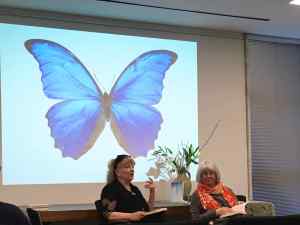
Carmel Bird and Marion Halligan
Bird, Halligan and butterfly, 2016

I’ve written about Carmel Bird and Marion Halligan before, when Bird launched Halligan’s Goodbye sweetheart. I realised then, and it was clear again today, that they are good friends. So when they launch each other’s books which they’ve done for each other a couple of times now, there’s no formality or stiffness, and they almost make it up as they go, making for a delightfully relaxed but nonetheless meaningful launch.

I won’t summarise the whole launch but just share a couple of points that struck me. First though, something about the book. It’s a black comedy – which, if you’ve read Bird, wouldn’t surprise you – and is largely narrated by a skeleton. It is about the O’Day family, and particularly about Margaret, the family’s widowed, wealthy matriarch. The epigraph, by Bird’s fictional character Carrillo Mean who provides all her epigraphs, goes like this: “The Storyteller knows what the Storyteller knows, and the Storyteller tells what the Storyteller tells”. But, said Halligan, does the Storyteller tell all that he knows? I think this is a book for me, so I’ve bought it.

And so the launch proceeded, with a couple of expressive readings by Bird, and engaging repartee between Bird and Halligan about Bird’s love of words and the naming of characters; her inspiration for the novel (which was seeing an Edwardian hearse on a country road in Victoria); and death, sex and butterflies, and whether the novel’s butterflies are a trope or a motif! I’m not a creative writing specialist, said Bird airily, passing off this issue! Fair enough. Leave that to the reviewers!

There was a lot more, but what I mainly wanted to share was Bird’s statement that she is always “looking for virtue” in her novels. That made us all sit up. Novels, she said, always explore evil, because evil is more interesting than goodness, but the end point of it all is always “where is the good, where is the hope?” An audience question had her clarify this a little further by saying this hope could for things like goodness, reason, happiness, beauty. I immediately thought of those grim, depressing books that many readers feel have none of this, like, for example, Charlotte Wood’s The natural way of things (my review)and the fact that in most of those books I do usually find a hint of hope. I can’t help thinking that most writers are like Bird, that is, that they want to end with some little bit of positivity, even when they also want us to remember the serious issue they are exploring.

Carmel Bird
Family skeleton
Crawley: UWA Publishing 2016

Nicholas Hasluck’s The Bradshaw case (launched by himself)

Nicholas Hasluck
Nicholas Hasluck, 2016

A completely different kettle of fish was the launch of Nicholas Hasluck’s The Bradshaw case, partly because he launched it himself and partly because it’s a very different sort of book – a fact-based courtroom drama about contemporary political issues regarding native title.

I haven’t read Hasluck before, though he’s won The Age Book of the Year and been shortlisted twice for the Miles Franklin Award. The packed room for his launch was evidence of his renown I’d say.

Again, I’m not going to going to summarise the whole session. He started by telling us he was launching a “device” called a book, in which thoughts and images could be conjured up in your mind from the pages you read. We all liked that, of course.

His book, he said, mixes fact and fiction. It explores, via a court case, some controversial issues about the origin of rock art in the Kimberley and how this plays out in terms of native title. He provided quite a lot of background about the rock art at the centre of this controversy – the Bradshaw images and the Wandjina images – a controversy I’ve come across in some of our outback Australia holidays. Hasluck was inspired to write his novel by the ambiguity surrounding this. But this is not what I want to share here.

What I was particularly interested in was some of his general comments regarding novels and history. Novels, he said, can both cast a light on what happened in the past and on what is said about the past now. They can explore (expose?) contested versions of the past.

Commenting on his use of fiction to tell this story, he said “give a man a mask and he will tell the truth”. I like that – as regular readers here who’ve read me on truth and fiction would expect. He also said that he chose fiction because he’s not an expert in the area and that many specialists have, and are, going the non-fiction path.

Discussing the question of how readers should approach the fact-fiction nexus of historical fiction, he said that the author-reader contract is that readers will assume everything they are told is true. (Note that he didn’t say “factual”). He hopes that people, once intrigued by something they’ve read in fiction, might then question what they’ve read and do their own research. This brought us back to the central controversy about the images, and what this means for indigenous people – and it resulted in his making a statement that, like Bird’s regarding looking for virtue, made me sit up. He said that the odd thing about Australian literature is that novels are not seen as part of current debates, unlike the USA, where works by Gore Vidal and Thomas Wolfe (Bonfire of the vanities), for example, do enter such debates. Australians, he said, see fiction as something quite separate. I’d love to know what others think about this claim – but for me, again, it made me think of Charlotte Wood’s The natural way of things and the contribution she clearly wanted to make to the misogyny debate.

The issue we didn’t really discuss, though it was touched on, concerns indigenous Austrlians’ reaction to this story being told this way by a non-indigenous writer. All Hasluck said on this point was that his book is about “cultural integrity”. It will be interesting to see.

Nicholas Hasluck
The Bradshaw case
North Melbourne: Arcadia, 2016

STOP PRESS: AS Patric’s debut novel Black rock white city has just been announced the winner of the Miles Franklin Literary Award. Congratulations to him! Another book for the TBR!

Carmel Bird launches Marion Halligan’s latest at Paperchain

Sometimes blogging brings you little thrills, and I had one a few days ago when Carmel Bird, one of Australia’s literary luminaries, emailed me with the offer to post her launch speech for Marion Halligan’s latest book. Was this out of order she asked? As if! So, I attended the delightful launch, and received the text from Carmel Bird’s hands. Here it is …

Carmel Bird launches Goodbye Sweetheart

I acknowledge the traditional custodians of the land on which we are gathered.

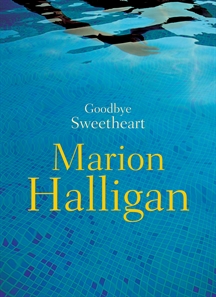
Marion Halligan, Goodbye Sweetheart

Courtesy: Allen & Unwin

For a writer, the so-called literary world is made up, as are many worlds, of friends and enemies. Marion and me, we are friends. You don’t invite your enemies to launch your books. Goodbye Sweetheart is Marion’s twenty-second book, and it’s the first one I have had the honour of launching. I can tell you this is a great pleasure.

Margaret Atwood says she thinks that all narrative writing is motivated by a fear and fascination with mortality. I agree with her. This doesn’t mean the details of the plots are necessarily going to focus on death. But sometimes they do. The publisher’s advertising for Goodbye Sweetheart begins by telling you the main character has just drowned, that the novel is going to explore the mourning of his family. And clearly there is going to be plenty of that other important topic, sex. In fact the two key subjects of fiction – sex and death – are entwined in the title Goodbye Sweetheart.

The blue, blue cover of the book is soothing, until you connect the shadow at the top with the information about the drowning. The story begins and ends with water – William drowns in the luxury pool of a fancy hotel, and ultimately his ashes are scattered in the sea, becoming ‘part of the shredding of the water on the rocks below’. When I talk fancy here, I’m quoting the book. His son and one of his wives then watch the moon on the water – a benign and hope-filled image that lulls the reader as the book is closed.

Novels often pose a question for the reader. Goodnight Sweetheart asks not only how you would behave if you were part of William’s family, but how, in your heart, you would mourn.

The narrator suggests that there are enough births, deaths and marriages, enough anguish here for half a dozen nineteenth century novels. This is a bit of a challenge for the writer. But Marion is up to it of course. The rhythms of her sentences, the precision of her words. One of the wives is advised to seek the joy of grief, the gift of sorrow, but she thinks these are just the threads of words all plaited together making a pattern but having no meaning. Later on she realizes that the true thing is that William loved her, and this will always be true. So there is the ‘true thing’, the good thing, the meaning. And fiction may be motivated by death, but its aim is usually to seek out meaning. To unravel the tangles of lives and to present the reader with a pattern that makes some sense of it all. Another character says ‘Meaning is what we make for ourselves.’ Marion takes a pretty big cast of characters and weaves them – I am inclined to say she stitches them up – into a pattern, and the meaning – the true thing – emerges and stays in the reader’s mind.

Now this is getting to sound rather philosophical and serious – have I forgotten about the sex and death thing? No. I have not. The story unfolds in present-day Australia, in the domestic lives of an extended and muddled family. Early on, a character points out that some of the great traditions of literature had a domestic beginning. This story is going to be domestic, not epic or anything like that. But it will frequently spin the focus round to someone such as Milton or Browning or, in particular George Eliot. For one of William’s sons is a great admirer of Middlemarch. The narrative refers back to the dense narratives of myth and poetry and fiction.

Now a lovely thing, speaking of the domestic again, is the way the titles of the chapters keep bringing you back to the very ordinary everyday. Like no chapter headings you have ever seen. There’s a list of them in the front – ‘The gym is busy’ – ‘Lynette plans a sale’ – ‘Jack goes fishing’. They play so sweetly against the grand themes of death and love and betrayal. Love might be the true thing, but the fabric of everyday life is made up of things such as ‘Helen comes home late’ – and ‘Aurora drinks vodka’. Watch out for ‘Barbara drinks the last of the wine’, though. Of course, people are often drinking things – and eating nice stuff too. Marion never lets a good story get in the way of a fine meal.

Now I want to talk about coincidence. It is such a joyful thing that happens really quite frequently in everyday life. It also happens quite a bit in literature – think of the works of Dickens, for one. It isn’t always easy to make coincidence smooth and acceptable in fiction. But at the end of Goodbye Sweetheart there is a delightful one, and it is part of the melody of the novel, is a graceful gift offered to one of the nicest characters. It will put a smile on your face. Not only is there love, there is hope. Even the title of the chapter in which it happens is a joy – suggesting as it does that the young man is at last on the right path – it’s called ‘Ferdie takes the bus’.

There are also a few ghosts involved along the way, and a rich vein of fascinating short narratives, one in particular that appealed to me – the tale, legend, of a boat that came, once upon a time, into the bay at Eden. It had picked up smallpox in India when it took on a cargo of silk. The infected silk was buried with the bodies of the dead. Then guess what – people dug up the infected silk and sold it, and the ladies of the town made it into dresses. The complex everyday lives of the main characters are threaded with mysterious narratives such as that one. And these narratives form a subtle, dark undertow to the everyday problems of the characters. So while the surfaces of lives are followed in meticulous detail, from the clothes people wear to the food they eat, the wines they drink, the glasses they drink from, the landscapes they contemplate – a darker undertow works away in the depths.

So, William dies. His wife, his two ex-wives, his children, his mistress – I think I’ve got it covered – gradually gather, revealing their own stories, discovering parts of the story of William, until William is ashes in the sea, and the moon moves across the water.

You are going to love reading this novel. You are going to love having it alongside all the rest of Marion’s books. It is my honour and joy to launch it on its way to the open arms of your lucky bookshelves.

– Paperchain Bookshop, Canberra, April 14, 2015

PS Carmel has what she calls a “sleepy blog”, Blue Lotus. She plans to post this speech there also. Do go check her out because there you will find her short story, “When honey meets the air”, which I featured in my review last year of Australian love stories. It’s one of those pieces that has you chuckling, marvelling and puzzling all at once. Carmel’s next book, a collection of short stories titled My hearts are your hearts, will be published by Spineless Wonders later this year.

Marion Halligan’s reponse

No, I don’t have her speech too, but I did make some brief notes! Mostly, of course, she thanked various people – publisher and editors, family, and Carmel. However, she did say a few other things. Responding to Carmel’s comment on chapter titles, she said she has to name, not number, her chapters, because she doesn’t write them in order and needs to recognise them when she comes to shuffling them around! Don’t you love it? I can see why Halligan and Bird are such friends, they such have a wonderfully confident cheekiness about them. (I’m sure you detected some cheekiness in Bird’s speech).

Marion also commented that reading about death isn’t necessarily miserable. Death is something we all have to face up to, some sooner than later, she said (!), so we may as well get used to it. Must say I agree with her. I’m not one to shy away from books that deal with grief and death. I know many people love Joan Didion’s beautiful memoir, The year of magical thinking, but Halligan’s novel, The fog garden, is an equally beautiful book, a novel, about the loss of a loved partner.

Finally, Marion praised the book’s designer, Sandy Cull, who also designed Valley of grace and Shooting the fox. She’s right – I have all three now – and they are all, simply, luminous. It was a delightful launch involving two special Australian writers – and I now have a signed copy of Halligan’s book in my hands, and Bird’s thoughtful speech about this book and fiction in general preserved on my blog for posterity. Thanks Carmel. Thanks Marion.

Monday musings on Australian literature: Late bloomers

Bloomers (Flowers in vases and pots)

Bloomin' bloomers

I guess every country has them, the writers who aren’t recognised until their middle age. Australia certainly does, and many of them seem to be women. I’m not sure whether this apparent gender imbalance is a fact or simply reflects my biased interest in the lives of women writers. I wouldn’t be surprised if it were a fact, though, given that women often need to balance motherhood and wifehood with the rest of their lives. Anyhow, I thought I’d share five of my favourite late Australian bloomers. They are mostly my usual suspects and, like many people who seem to appear overnight, they  worked for a long time at their craft before they gained their much deserved recognition. I’m listing them in the order of their age when their first major writing was published.

Jessica Anderson (47, An ordinary lunacy in 1963)

Jessica Anderson wrote stories and plays, and adapted other works for radio before hitting big time with her novel An ordinary lunacy. I’ve only read two of hers – Tirra lirra by the river and her one piece of historical fiction, The commandant, which I reviewed last year. I have her last novel, One of the wattle birds, in my burgeoning TBR pile. Like many women writers, I suppose, her subject matter tends to be families. Even The commandant, which is ostensibly about the male head of the Norfolk Island penal colony, is really about the family relationships, and the reaction of the women (his wife and sister-in-law) to their circumstances in particular. According to Wikipedia, Tirra Lirra by the river, was reviewed well in the USA.

Marion Halligan (47, Self possession in 1987)

Marion Halligan was a member of the now legendary Canberra Seven or Seven Writers, a group of Canberra-based women writers who met regularly to read and discuss each other’s work. The group comprised: Dorothy Johnston, Margaret Barbalet, Sara Dowse, Suzanne Edgar, Marian Eldridge, Dorothy Horsfield and Marion Halligan . In 1988, Australia’s Bicentennial Year, they published an anthology titled Canberra Tales. It made quite a splash on the literary scene at the time. Halligan had just published her first novel then, but the first of hers that I read was Lovers’ knots which won several awards. I have gone on to read several of her novels, including the gorgeous Valley of Grace which I reviewed last year. Halligan wrote one of my favourite quotes about reading: “Read a wise book and lay its balm on your soul”. Really, how beautiful is that!

Elizabeth Jolley (53, Five acre virgin and other stories in 1976)

Jolley was the subject of my second favourite writers post. She began writing in her twenties, and did have individual short stories published in the 1960s, but she also suffered rejection after rejection after rejection. However, she kept on and became a much lauded novelist, and a successful creative writing teacher. After all, Tim Winton was one of her students! She is recorded as saying that her eventual success was partly due to “the 1980s awareness of ‘women’s writing'”, an awareness that I fear we have lost again! Anyhow, she made up for lost time, and published 15 novels in about 20 years, as well as short story collections. I’ve read half of the novels and love the way she gets into the dark parts of our souls, into those areas where we feel alone or alienated, while being funny (albeit in a black way) at the same time.

Amy Witting (59, The visit in 1977)

Amy Witting is probably the least well-known of the five I’ve listed here. Her real name was Joan Austral Fraser. According to Wikipedia she met Thea Astley when they both taught at the same school and Astley encouraged her to submit a story for publication. It was published in The New Yorker in 1965, but it would be 12 more years before her first novel was published. I’ve read two of her novels, I for Isobel and A change in the lighting, and would happily read more. Again she deals with families, and often with the challenges middle-aged and older women face in navigating a society which is not necessarily friendly to them. She also published several collections of short stories.

Olga Masters (63, Home girls short stories in 1982)

Olga Masters was a journalist for a long time before she finally had a novel published. She was also mother to seven children, many of whom are well-known in their various fields (but you can read about all that at Wikipedia). She died in 1986, just four years after her book was published, and so her output was small, just a few novels and a couple of short story collections. Her first novel Loving daughters is still vivid in my mind, though I read it over twenty years ago. It’s set in a small coastal town in New South Wales in the 1920s and is about two sisters of marriageable age, Enid the pragmatic home-maker, and Una, the romantic, restless one. Which one will catch the eligible clergyman who comes into town, and does he make the right choice? It’s a wonderful book about character and choice. As you’ve probably assumed, she too focused primarily on the domestic. I can’t help thinking that this focus is another reason why women writers found (find, in fact) it hard to be published.

There is of course something reassuring about late bloomers. They remind us it is never too late. It may be too late at 50 years old to represent your country in the sprint at the Olympics or win Wimbledon, but it’s not too late to write a novel if that’s your passion. I’d love to hear of late bloomers you love (yourself maybe?), Australian or otherwise.

Marion Halligan on fact, fiction and character

More on playing with that line between fact and fiction… One of my favourite writers – though I have nowhere near read all her works – is Marion Halligan, who also happens to be local to my town. Halligan has been shortlisted for and/or won several signifcant Australian literary awards but I’d be surprised if many readers overseas had ever heard of her. A particularly beautiful novel of hers is The fog garden (2002) which she wrote after her  husband’s death. It’s about love and grief (reminding me of Joan Didion‘s non-fiction work, The year of magical thinking which was published in 2005), but it also explores the nature of fiction, and the relationship between life and art.

And so, here she is introducing the heroine:

She isn’t me. She is a character in fiction. And like such characters she makes her way through the real world which her author invents for her. She tells the truth as she sees it, but may not always be right.

And here she is, the next page, on keeping your character honest:

A reader could think that, since Clare is my character, I can make all sorts of things happen to her that I can’t make happen to myself. This is slightly true, but not entirely … only if it is not betraying the truths of her life as I have imagined them.

Some readers may not like this sort of self-conscious writing but I often enjoy it … I like the recognition that we are, writer and reader, meeting in a very particular space, that of art (or is it artifice!). I like it that Halligan is here writing fiction inspired by a very personal experience and tackling head on the questions her readers will raise … playing with us, teasing us even, but also teaching us about the nature of fiction.

Sarah Waters in conversation with Marion Halligan

Sarah Waters
Sarah Waters, 2006 (Courtesy: Annie_C_2, via Wikipedia, under Creative Commons CC-BY-2.0)

In a delightful coincidence, Sarah Waters was in town tonight for a literary event, just one night after my reading group discussed her novel The little stranger – and so, naturally, those of us who were free turned up to hear her converse with Canberra novelist and literati, Marion Halligan.

It can be very special hearing one novelist interview another – and this was one of those occasions. Marion and Sarah appeared very comfortable together, respectful of each other’s skills, and Sarah was generous and open in her answers – except when it came to the ending of The little stranger! All she said on THAT score was that she left it deliberately open but that she tried to lead the reader to a certain conclusion. She’s been fascinated, she said, by the discussions that have ensued about the ending. Don’t we know it!

That said, she did share some things about The little stranger, and these may or may not throw light on the mystery! Its subject is of course class, and the changes that were occurring in post-war England. She said that her original plan was to use Dr Faraday as a straightforward, transparent narrator, someone who was firmly in the middle class and a friend of the family, and who would chronicle their decline. But as she started writing, she decided to make him more uncomfortable class-wise with some lingering class resentments. A little later, she talked about poltergeists and how they represent the release of unresolved tensions, conflicts and frustrations. Hmmm … if we accept poltergeists, then I think we have to see that more than one “person” is implicated in what happened at Hundreds Hall.

Some interesting issues were raised during question time. I’ll just dot-point the ones that grabbed me in particular:

  • Echoes of and homages to other works. Waters said that she does a lot of research for her novels and that that research includes reading fiction of the era she’s researching. It’s not surprising then, she said, if people see echoes of works like Brideshead revisited, The yellow wallpaper, Rebecca and The fall of the House of Usher in this novel. She doesn’t mind people seeing these in her work.
  • Genre. She was asked how the demands of genre shape her work, and her response was that she likes to see how you can both bend genre and surrender to it at the same time.  You can certainly see her doing that in The little stranger in the way it takes the conventions of the ghost story and yet does not resolve it in any way that you could call traditional.
  • Setting a novel overseas. For some reason, someone asked whether she would ever consider setting a novel outside of England. Her flippant response was that she thought she did well to move The little stranger from her usual London to Warwickshire!  But, then she answered seriously, and I found her response interesting. She didn’t give us that old chestnut about “writing what you know”. Rather, she said she likes “to have dialogues with the traditions of British fiction”. Good for her; she has a PhD in English literature and is clearly imbued with its traditions. The Roger Federer of the literary world perhaps?

Interspersed throughout the hour were some light-hearted interactions between Sarah and Marion. One concerned the fact that Sarah writes historical novels while Marion focuses on contemporary subjects. Marion said she admired all the research Sarah does, and suggested that lazy people write in the present. Sarah quickly rejoined that writing in the present is terrifying. Where, she said, is the security of the research. Vive la différence, I say!

There was more, as you can imagine, but that is the gist of it…except of course to boast that I do now have my very own signed copy of The little stranger.

ANU/The Canberra Times Meet the Author