My literary week (7), adaptations

With Ma and Pa Gums in the process of selling house and preparing for a downsize move, my time has been taken up with many things besides reading – but I did get out at night in the last week to see a couple of adaptations of novels I’ve enjoyed in the past.

There’s still time … brother

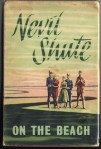
Nevil Shute, On the beachOne of my favourite novelists when I was a teen – when my friends were reading Georgette Heyer – was Nevil Shute. He wrote more than 20 novels, and I sought every one out over a period of years until I’d read them all. His best-known novels are probably No highway, A town like Alice and On the beach, all of which were made into films (as were others too, I know). This post is about the last I mentioned, On the beach, which was his dystopian (or post-apocalyptic) Cold War novel about the end-of-the-world due to nuclear war. Something I didn’t know on my first reading is that on the title page of the first edition are lines from TS Eliot’s poem “The hollow men”. Makes sense, and you can read about it in the Wikipedia article I’ve linked to above.

I hadn’t read Shute for a few decades until the early 2000s when one of my online reading groups decided to read On the beach. How disappointing I found it. The story was still powerful, but the writing seemed so wooden and the characters so stereotyped. I was therefore uncertain about seeing the original Stanley Kramer movie last week, when it was shown at the National Film and Sound Archive as part of its season of atomic age films.

I needn’t have worried. It was great – and must have been a work of passion given how quickly Kramer got onto the story. The novel was published in 1957, and the film released in 1959. The Wikipedia article on the film adaptation provides a useful introduction to the film and discusses where the adaptation departs from the novel. Apparently, Shute was not happy with the changes, but it’s too long since I read the novel for me to comment on that. One of the changes, Wikipedia says, is that the film doesn’t detail who was responsible for the conflagration. There could be various political reasons for this, but it could also be because Kramer had a very clear message he wanted his audience to take home – one that he didn’t want diluted by people thinking it had nothing to do with them. He wanted everyone to take the dangers of nuclear weapons seriously – and wow, did the film make that point …

Towards the end, as the radiation is reaching Melbourne, the film shows crowds of people in a Melbourne street attending a Salvation Army service. Above them is a banner reading “There is still time … brother”, reminding the attendees, of course, that there is still time to “find God”. The final scene of the film shows the same street – now empty of life – and closes on the banner “There is still time … brother”. It floored me. It so neatly, so confrontingly, shifted the meaning from the religious to the political. And, the message (either narrowly or broadly interpreted) is as relevant today as it was then. That’s the scary thing.

From the Cold War to Cold Light

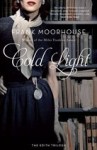
Frank Moorhouse, Cold LightIn the last novel of Frank Moorhouse’s Edith trilogy, Cold light (my review), Edith Campbell Berry, star of the League of Nations (well, in her mind), comes to Canberra, hoping to make her mark. It’s fitting, then, that an adaptation – in this case a play not a film – should be made in Canberra. However, it’s a big book – over 700 pages of it – with many themes. Two that grabbed my attention when I read it were the failure of idealism and the challenge of aging, so I wondered what playwright Alana Valentine would choose. The main promo line for the play’s advertising was “How far can a woman of vision go?”, which encompasses I’d say the idealism angle.

It was a daring adaptation, which used song, verse and, occasionally, dance to transition between scenes. The verse was particularly intriguing. It all came from Adam Lindsay Gordon’s The Rhyme of Joyous Garde and was recited by Edith herself. I grew up with some of Gordon’s more sentimental bush poetry, but I’d never come across this one. However, a Google search uncovered that the whole poem is a soliloquy by Lancelot after Guinevere and Arthur are dead. It’s about heady days, grand passions and big ideals, guilt and regret. I don’t believe it was referred to in the book, so Valentine’s using it reveals her desire to convey those grand but murky themes which closely mirror Edith’s colourful, passionate life.

I’m not going to review the play, as there are links to some excellent reviews on the Street Theatre’s site. I’m just going to comment on what I took away. The overriding theme was Edith’s indefatigable spirit, but another was its exploration of human rights – women’s rights, and freedom of expression, in particular. Edith refers regularly to the Universal Declaration of Human Rights which Australia helped draft back in 1948, but hadn’t (and still hasn’t) fully enshrined into national law. For Edith, it represents ideals she wants (us all) to live by.

Cold light is set from 1950 to 1974, but the significant thing is that its concerns are still relevant: freedom of expression is being attacked right now; women’s rights are not safe; the nuclear threat is not over; and so on.

At the end of the play – and some of these specific words are in the novel too – Edith says

I have witnessed great events and participated in great events. I have met and talked with fascinating people who have made history. But it is only, here, now that I am in it, however briefly, making history, participating in it. One must give everything to participate. To be in it. So many, so many will want you to observe, to commentate, to support those who are in it. But you must open your palate to the right stuff. You must stare down the world and see it in a clear, cold light … It’s not what the world hands you, but what you try to wrest from it. That is all that is valuable. To act, to speak, to make. To live, to live, to live it. Your allegiance must be to the republic of the mind, not to any country or state… (from Cold light, adapted by Alana Valentine, Currency Press, 2017)

See? Relevant, right now – which made a thoroughly engaging and creatively produced play a meaningful one too.

Cold Light 
Based on the novel by Frank Moorhouse
At the Street Theatre, Canberra, 4-10 March 2017
Script: Alana Valentine
Director: Caroline Stacey
Cast: Sonia Todd, Craig Alexander, Nick Byrne, Gerard Carroll, Tobias Cole and Kiki Skountzos

Do you enjoy adaptations? And if so, do you have any favourites?

Festival Muse: Question time – Robyn Cadwallader with Irma Gold

Robyn Cadwallader, Irma Gold
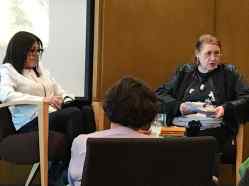
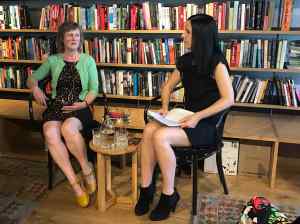
Cadwallader (L) and Gold in the Muse bookshop

Introducing the first event of their Sunday afternoon program, Dan, co-owner of Muse, commented on a peculiarity of Canberra: when they offer sessions on politics or history, they are packed out, but when the focus is fiction, the events are more intimate. Fine by me! I love small, cosy events. But it’s interesting, eh? Anyhow, we then got down to the event, which involved local author and editor, whom you’ve met several times here before, Irma Gold, interviewing local poet, essayist, novelist, Robyn Cadwallader, about her debut novel The anchoress (my review).

It was excellent. Gold structured her questions beautifully, starting with some background questions, moving through well-targeted questions about the book itself – well-targeted for me anyhow because she focused on historical fiction and feminism – and then ending with Cadwallader’s future plans. There was something for everyone – though I suspect most of us were interested in it all.

Gold commenced by providing a quick bio, which included the facts that Cadwallader migrated to Australia with her family when young, and that her background is academic writing. Gold shared Cadwallader’s shock that, when she moved from academic writing to fictional, her struggles with the dreaded term structure followed her! That made me laugh because I love thinking about structure in fiction. Gold also told us that The anchoress had been published in the USA and UK as well as Australia, and has been (or is being) translated into French. She said Marie Claire described The anchoress as “the book the whole literary world can’t stop talking about”. Wow, eh?

The interview commenced then with a brief discussion of Cadwallader’s early interest in books and writing, but let’s get to …

The anchoress

Robyn Cadwallader, The anchoress

The discussion started with Cadwallader doing a reading – and she chose the Prologue. That was great not only because it’s always (hmm, mostly) good to hear authors read from their own work, but also because it refreshed the book and some of its themes for me.

Gold said she’d never heard of anchoresses and asked Cadwallader what sparked Sarah’s particular story. Cadwallader responded that she’d come across anchoresses in her research for her PhD and, like Gold, was both horrified and fascinated by the concept. She said the inspiration for the story came from sitting in an anchorhold, unable to leave it, for an hour or so. It got her thinking about how it would feel to be in such a place forever. What would be the experience? She said her poetry is “about taking a moment and investigating it”. In this book, she took a small space and investigated it. Reinforcing her interest in focusing on the “experience”, she said she’d started writing the novel in 1st person but felt it wasn’t working, so tried 3rd but that didn’t work either. She then realised she had to be there to share the experience. She also made the point that she didn’t want Sarah to speak for all anchoresses.

Gold then honed in on the book’s genre, historical fiction, and asked Cadwallader how she went about separating her research from the writing. Cadwallader said she was lucky because she’d done so much research on the period before she started writing. She had to do a lot of thinking, however, and when she started writing she needed to do extra research on aspects she knew less well, such as village life and monasteries.

Next Gold moved onto how Cadwallader approached incorporating the history into the story. Cadwallader said she knew people would know little or nothing about anchoresses – how right she was! – but didn’t want to do exposition. She used the example of the section where Sarah stands in her cell (anchorhold) for first time. This was hard to write she said without “describing”. She tried to write it from Sarah’s experience in a way that would “show” modern readers, too, what it was like.

Some of the questions at the end concerned the historical fiction issue, so I’m sneaking them in here. Responding to what next, Cadwallader said that some people assumed she’d do a sequel! No, she said, as far as she’s concerned she’d wrapped up Sarah’s life and didn’t have anything more to say. Love it. This points, I think, to a difference between genre and literary-fiction. Genre tends to focus on plot, on the story of characters’ lives. Readers of genre love to get lost in – escape into – the characters’ lives and want to follow them, on and on. Readers of literary fiction – and they can be the same people, so I’m not suggesting a “snooty hierarchy” here – look for different things. They tend to be happy with ambiguous endings, and look forward to moving on to something different. I tend to be one of these readers. You could call me fickle.

Other questions picked up the relationship between fact/history and fiction, about the degree to which historical fiction should focus on the fact versus the fiction. Again, I loved Cadwallader’s considered response. She described historical fiction as an engagement between the present and the past. Writers, she said, need to balance what will communicate effectively with contemporary audiences and what’s accurate. She cited swearing as an example: a medieval oath, like “God’s teeth”, would not convey anger to a modern audience the way a modern swear word would.

Back to Gold now. Her next question concerned feminism. Yes! Was Cadwallader conscious of feminist issues from the start or did they emerge through the writing process. I loved Cadwallader’s answer. She said she was aware of feminist issues and theory from the start because her research had brought her face-to-face with medieval thinking about women, including the belief that women represent the body, and tempt men. However, she is concerned, she said, about historical fiction that wants to be positive about women. Such fiction needs to create strong, feisty women, but she wanted to explore what ordinary women experience.

So, her Sarah pretty soon finds her experience of her body starting “to bump against” the rule that tells her that her body is terrible. Cadwallader wanted to tell about ordinary women doing things that are not “spectacular”. She thinks some readers expected a “spectacular ending” but that would have plucked Sarah out of her context. Her approach to feminism was to describe these women’s experience, to honour them. She didn’t want to exploit them, but explore who Sarah was. She then talked about the village women. (They’re wonderful supporting characters in the book.) She didn’t want them to be “campaigners”, but wanted us to “see” them. It’s too easy for us to miss and not respect the ordinariness of women and what they do.

Muse bookshop

Gold ended with questions regarding how Cadwallader has handled her success and what her future writing plans were. Cadwallader talked about ongoing feelings of self-doubt and how easy it is to buy into criticism (rather, it seems, than praise). She described it – and being a writer, she used a metaphor – as being a headwind that you just have to keep walking into! And yes, she is writing another book. And yes, it’s mediaval-focused – to do with illuminators.

There was a brief Q&A, then it was over. We might have been an intimate group, but what a privilege to have been present at a conversation between an intelligent, warm interviewer and a thoughtful, open interviewee. Lucky us.

Olive Ann Burns, Cold Sassy Tree (Review)

Olive Ann Burns, Cold Sassy TreeAs I explained in my post last year on Annie Dillard’s The Maytrees, we are slowly listening to some of the audiobooks we gave Mr Gums’ mother in the last years of her life, and have just finished Olive Ann Burn’s epic-length, Cold Sassy Tree. From what I’ve read in Wikipedia, Olive Ann Burns was another late bloomer (albeit not an Australian one of course). Born in 1924, she didn’t publish Cold Sassy Tree, which was her only completed novel, until 1984. It was so successful that her readers pleaded for more, for a sequel, that is. She started it, but died of a heart attack in 1990 before finishing it. It, Leaving Cold Sassy, was apparently published unfinished, but with her notes, in 1992.

Now, when authors write historical fiction – particularly one that is not about a specific event, like, say, World War 2, or a person, like, say, the ever popular Ann Boleyn – my first question is why have they decided to write about a past time? Cold Sassy Tree is set in the American South in 1906, though if I remember back to the first CD correctly, the first person narrator, Will Tweedy, is telling the story some 8 years later (which would make it on the verge of the World War 1 – not that that is relevant given the USA’s delayed entry into the war.) According to Wikipedia, Burns was a journalist and columnist, and it wasn’t until 1971 that she “began writing down family stories as dictated by her parents. In 1975 she was diagnosed with lymphoma and began to change the family stories into a novel that would later become Cold Sassy Tree”. So, I guess, there’s my answer: she was capturing the stories from her family’s past. Will Tweedy, I believe, is based on her father. And it is, fundamentally, a simple, but charming, family story.

But, like all family stories, there is a little more to it than that. The American South is – or was, particularly, at the turn of the twentieth century – conservative, religious and prejudiced against other (coloured folks, poor folks, and so on). This is the society that Will Tweedy is born into. Luckily for him, he was also born into a family with an independent-thinker, live-by-his-own-rules, grandfather, E. Rucker Blakeslee. Early in the novel, Cold Sassy Tree (for that’s the name of the town), and particularly Will’s mother and aunt, are thrown into turmoil when 60-odd-year-old Rucker, just three weeks widowed to a wife he clearly loved, ups and marries the 33-year-old Yankee, Miss Love Simpson, who was working as a milliner in his general store.

Will, just entering adolescence, is the perfect narrator in what is, partly, a coming-of-age novel. He adores his grandfather, and becomes a sometime confidant, sometime unwitting but not unwilling eavesdropper, of the newly married couple. He has a mind of his own but is still obedient enough to mostly do what he is told. He soaks up what is going on around him, and is prepared to take risks and listen to new ways of doing things while also maintaining some of that level of shock about change that his parents have.

I’m not going to write a long post on this, partly because I listened to it over a long period of time and partly because, having listened to it, I don’t have good quotes to share. Burns has written the book in southern dialect, but it’s not hard to follow, and she uses some lovely fresh appropriate imagery – similes, in particular – which adds to the enjoyment. The coloured man, Loomis, for example says that religion is “like silver”, you “must keep polishing” it.

Besides the main story of this “shocking” marriage – which has its own trajectory to which Will becomes privy – we see the introduction of motor cars to the small town, the lack of opportunity for the children of the poor working class, the changing role of women, the economic challenges faced by small towns, and the stultifying effect of narrow religious beliefs. It’s not, in other words, all light. There’s drama – a near train accident, a returned would-be lover, a suicide, to name a few. There is also awareness of racism, but Burns glosses over this a little, preferring to show, overall, positive, more humane attitudes. She doesn’t necessarily gild the situation, but she doesn’t draw out the ugliness either.

This is not, probably, a book I would have picked up and read of my own accord, but as a book to listen to during hours on the road it did an excellent job with its engaging characters, its light touch, its warm but clear-eyed view of small-town life, and its sense that although times have changed people haven’t all that much.

Olive Ann Burns
Cold Sassy Tree (audio)
(read by Tom Parker)
BlackstoneAudio, 1993
12H 30M on 11 CDs (Unabridged)

Pierre Lemaitre, The great swindle (Review)

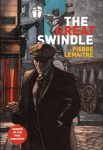
Pierre Lemaitre, The great swindleAs I was reading Pierre Lemaitre’s literary page-turner, The great swindle, I started to wonder about the endings of books, what I look for, what I most appreciate. What I don’t look for is neat, happy conclusions. There are exceptions to this of course. Jane Austen, for example, but she was writing at a different time when the novel was in an earlier stage of development. In contemporary novels, I look for something a little challenging, something that suggests that life isn’t neatly wrapped up. Fiction isn’t life, I know, but its role, for me anyhow, is to reflect on, and thus make me think about, life. So, Lemaitre’s The great swindle? How does it end? I’m not going to tell you – it’s not the done thing in reviews – but I will say that it’s satisfying, even though it does have one of those many-years-later wrap-ups that I’m not convinced is needed.

There, that’s an unusual opening for me, isn’t it, to start with the end? Where do I go now? Back to the beginning I think. The novel is divided into sections: 1918, November 1919, March 1920, and Epilogue. It starts in the trenches on 2 November 1918, just days before the First World War ends. One of our two main characters Albert Maillard is there, wanting a quiet, safe time until the war ends, but his commanding officer, Lieutenant Henri d’Aulnay-Pradelle, has other ideas, setting off a series of events that reverberates through all their years.

This is, in fact, quite a plot-driven novel, despite having many strings to its bow. And you all probably know how much I hate describing plots, so I’m going to keep it simple. After a devastating opening which leaves soldier Édouard Péricourt with a severely damaged face and Albert, for good reasons, taking responsibility for his care, the novel focuses on life in Paris in the immediate aftermath of war. While our two soldiers struggle to survive, Pradelle has been demobbed a Captain, as he’d orchestrated, married a wealthy young woman, Madeleine, who happens to be Édouard’s sister, and is engaged in the business of providing coffins and burying soldiers in cemeteries around France – focusing more on the money he can make than on whether, say, the right soldier ends up in the right coffin. You getting the picture of this Pradelle by now?

There are several other characters – this is a big story that owes much to the 19th century novel – but I’ll just mention a couple more: Monsieur Péricourt, Madeleine and Édouard’s father, a tough businessman who had never had time for his artisitic, effeminate son, and Merlin, the dogged, bottom-rung, about-to-retire civil servant who is given the job of reporting on the cemetery project.

Finally, just two more things you should know before I leave the plot. One is that Édouard did not want to return home after the war, so in the military hospital Albert manages to swap his identity – in a swindle, you might say – with a dead soldier, resulting in Édouard Péricourt becoming Eugene Lariviere. His father and sister, therefore, do not know he is alive. The other is the war memorial swindle concocted by Édouard (Eugene), which he finally manages to convince the “even when well-intentioned, lying was not in his nature” Albert to support.

The novel, then, has a complex plot with a rather large cast of characters, but Lemaitre, who is apparently known for his crime novels, handles it all very well so you never feel lost. One of the ways he does this is through vivid characterisation. Every character, from the main “cast” (it’s to be filmed I hear) to the supporting characters, is so strikingly portrayed that you feel you are there in postwar France – there in the streets where poor, injured returned soldiers struggle to make a living, there in the houses of the well-to-do where money is king, there in the cemeteries where Pradelle’s exploited Arab, Chinese and Senegalese workers do what they can to survive.

Another is through the clever set pieces which illuminate the characters, such as Edouard/Eugene’s increasingly bizarre masks – from horse-head to budgerigar – which he creates and wears to cover his horrendously disfigured face. Or the more gruesome scenes in which the taciturn, not very agreeable, but diligent public servant Merlin tramps around cemeteries investigating coffins. Using these set pieces, many of which border on farce, alongside controlled doses of satire and irony, Lemaitre creates a tragicomic tone – but to what end?

“will this war never be over?”

Early postwar, concerning Pradelle’s cemetery plans, the (mostly omniscient) narrator says:

To an entrepreneur, war represents significant business opportunities, even after it is over.

War, then, is the over-riding theme – but war is a big canvas. Lemaitre’s focus is war’s aftermath. What does it mean for those who went and those who stayed, and for the new world they must forge, preferably together. At one point Albert, worn down by his cares and responsibilities, and facing yet another hurdle, wonders, “will this war never be over”. But, as ordinary citizens get back to life, the needs of the returned are forgotten:

ex-soldiers were all the same, forever banging about their war, forever giving little homilies, people had had just about enough of heroes. The true heroes were dead!

A ripe environment, in other words, for cemetery and war memorial scandals, for profiteering – particularly when you add that it was a time of great social change in France, one where the nouveau riche (represented by M. Péricourt) were getting the upper hand over the often money-short aristocracy (represented by Pradelle).

Opposing this almost obsessive focus on money is a sense of resignation. It can be seen in Madeleine who marries the execrable Pradelle. “We each settle down as best we can”, comments our narrator. For many, there is a sense of “emptiness”, this word appearing several times in the novel. They were tough times – the time of “the lost generation” or what the French called “the génération au feu” – for which society was not equipped to cope. So, in the end, what Lemaitre has painted is a picture of a society under stress, a picture which is conveyed most directly through our “everyman”, our struggling returned solider Albert who just wants to make a life for himself but who is also loyal to those who need him:

War had been a lonely business, but it was nothing compared to the period since demobilisation that was beginning to seem a veritable descent into hell …

The novel, as you will have gathered, is replete with swindles, but the greatest of all, Lemaitre is saying, was the abominable treatment, upon their return, of the ordinary soldier.

This is one of those novels which uses a light touch to tell a heavy story. No wonder it won France’s main literary prize, the Prix Goncourt.

Lisa at ANZLitLovers also enjoyed this book.

Pierre Lemaitre
The great swindle
(trans. by Frank Wynne)
London: MacLehose Press, 2015
ISBN (eBook): 9781848665804

My literary week (5), or, those reading coincidences

Last time I wrote a My Literary Week post it was because I’d scarcely read that week, but had some literary moments to share. This time it’s because I’ve been reading things which have generated some thoughts that I want to document, but not in long dedicated posts. (I’m feeling lazy). Most have been inspired by those reading coincidences (or synchronicities) where you read something in one place and then it, or something related to it, pops up in another.  See what you think …

Critical critics (and Jane Austen)

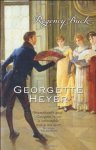
Georgette Heyer Regency BuckA week ago, I read a post about Georgette Heyer by blogger Michelle who, knowing my love of Jane Austen, wondered what I thought about Heyer, given she was an avowed Austen fan and wrote about the Regency. I’m afraid I disappointed Michelle because I confessed that I’ve never read Heyer. I tried one a couple of years ago, but I just. couldn’t. get. into. it. I commented on Michelle’s post that what some of those (not Michelle I might add) who try to compare Heyer and Austen miss is that Heyer was writing historical fiction, while Austen was writing contemporary fiction. Austen was writing about her own time, and this makes their works very different. Heyer doesn’t write Jane-Austen sorts of stories. Her stories are not about small villages and a small number of families, but are set on bigger stages and mostly amongst the wealthy. War and high drama are more her subject matter. Austen’s characters are mostly middle class, and even those who are wealthy live in the country and attend quiet social events. Her themes involve critiques of society and human behaviour.

And here comes the synchronicity, sort of. As I was preparing for my local Jane Austen group’s meeting this weekend on Austen’s grand houses, I read the essay “Domestic architecture” by Clare Lamont in Janet Todd’s (ed.) Jane Austen in context. In it, Lamont notes that critics have expressed disappointment at the lack of architectural information or descriptions of interiors in her novels. But, but, but, I say, Austen was writing contemporary fiction. She was writing for readers who knew the homes the wealthy, the middle-class, the parsons, farmers and others lived in. Austen did not have to describe these in detail. Historical novelists do though! So Austen, being the sort of writer she was, used her descriptions to convey character, not to tell us what the places were like.

When we read, it is so important to know the context and genre within which we are reading before we start casting aspersions!

What contemporary readers know

And this brings me to another comment on the topic of what contemporary readers – that is, readers reading books around the time they were written – know. I was mooching through Instagram this morning, and came across an image of mini-pineapples by Iger aforagersheart. She wrote that she’d read a history of pineapples which told her, among other things, that they were used as a symbol of wealth for “fancy Europeans”.

Aha, I thought, Jane Austen used this – and her contemporary readers would have recognised it for what it was, a pointer to the pretensions and focus on money of the character involved, General Tilney in Northanger Abbey. He has “a village of hot-houses” but, oh dear, “The pinery had yielded only one hundred [pineapples] in the last year” he complains to our heroine Catherine. General Tilney, we gradually discover, values people by their money, and is ungenerous to those without. This starkly contrasts with the admirable Mr Knightley in Emma who grows strawberries and apples, in fields and orchards, and shares them willingly with neighbourhood families. He even gives his last keeping apples, to his housekeeper’s dismay, to the poor Bateses:

 Mrs. Hodges … was quite displeased at their being all sent away. She could not bear that her master should not be able to have another apple-tart this spring.

We readers of later times see, of course, this generosity, but we may not know what the pineapples symbolise, and are therefore likely to miss that little early hint to where Austen was going with General Tilney.

Hungary and the war

Susan Varga, Heddy and me Book cover

Penguin edition

The third reading coincidence relates to my review last weekend of Susan Varga’s Heddy and me, in which she tells of her mother’s life in Hungary before, during and after the war, and her (and the 1943-born Susan’s) immigration to Australia. A great read. Then, I opened my digital edition of The Canberra Times this morning, and what did I see but an article about local food-blogger Liz Posmyk’s recently published book, The barber from Budapest, which tells the story of her parents through two world wars in Hungary, the challenge they faced in living postwar under Communism, and their subsequent migration to Australia.

There are still many stories to tell about people’s experiences of the two world wars, and about what happened postwar. Whether we’ll ever learn the lessons they provide is another thing.

Christina Stead Week

And finally, of course, I can’t let the post finish without mentioning Lisa’s (ANZLitLovers) Christina Stead Week, with which she has aimed to raise the profile of, and gather together a list of blog reviews for, this often overlooked writer. Stead was, Lisa shares on her post, described by the New Yorker as “the most extraordinary woman novelist … since Virginia Woolf” and by Saul Bellow as “really marvellous.”

I have contributed two posts – one on the story, “Ocean of story”, and another on the first three stories in the Ocean of story collection. I thoroughly enjoyed reading these, and thank Lisa for giving me the impetus to read them.

Anthony Doerr, All the light we cannot see (Review)

Anthony Doerr, All the light we cannot seeJust when you thought that there couldn’t possibly be another angle to writing about World War 2, up comes another book that does just that, like, for example, Anthony Doerr’s Pulitzer prize-winning All the light we cannot see. I had, of course, heard of it, but it wasn’t high on my reading agenda until it was chosen as my reading group’s September book. I wasn’t sorry we chose it, because I do, in fact, like World War 2 stories, and Doerr’s turned out to be an engaging one – warm, generous but not sentimental, and highly readable despite its alternating time-frames, locations and characters.

I’ve read several and reviewed some World War 2 novels and memoirs. Many have been about Jews and the Holocaust, such as Imre Kertesz’s Fateless, Hans Bergner’s Between sea and sky, Marcus Zusak’s The book thief, and two memoirs, Halina Rubin’s  Journeys with my mother and Anna Rosner Blay’s Sister, sister. A couple have been about the fighters, such as Alan Gould’s The lakewoman and Richard Flanagan’s The narrow road to the deep north. Some have drawn on the perspectives of children and young people – Zusak’s The book thief, Ursula Hegi’s Stones from the river and, of course, Anne Frank’s The diary of a young girl. Doerr’s book fits into this last group, but is different again. Zusak’s and Hegi’s girls are non-Jewish Germans, and Anne Frank is of course a Jewish girl in Amsterdam. These books focus on the Holocaust. Doerr’s does not. His interest is the personal experience of his young people – a blind French girl, Marie-Laure, born around 1928, and an orphan German boy, Werner, born around 1927. Their stories – Marie-Laure’s birth in Paris and flight with her father to Saint-Malo after Paris is occupied, and Werner’s childhood and youth in Germany followed by his war experience in Russia, Central Europe and France – are told in parallel until they inevitably meet.

Marie-Laure and Werner are nicely realised characters. They are ordinary young people trying to make a life for themselves in terrible times, but are extraordinary too. Marie-Laure’s childhood-onset blindness makes her initially helpless but she becomes a resourceful and imaginative young girl. Werner, the orphan, is a clever boy who develops a fascination with radios and things electrical. This leads him to a particular role in the war – tracking down partisan-resistance transmitters – that is different from most “soldier” stories.

All the light we cannot see is a big book. It has a wide, but not unwieldy, cast of characters, and a complex structure comprising two chronological sequences, within each of which the stories of our two young people alternate. This might sound difficult or confusing to read, but Doerr handles it well.

I’m not going to write a thorough review of this. Being a top-selling prize-winner, it has been reviewed widely. Instead, I’d like to share some of its themes, or ideas, because these are what interests me most. Before that though, I want to raise one issue. One review I read and some in my reading group expressed irritation at Doerr’s use of American idiom (such as people going “to the bathroom in their pants”). For some reason this sort of issue rarely worries me. Does that make me a bad reader? Perhaps. But it’s difficult, I think, to write in the language of another place and time, and when writers try to do it, it can feel forced. Some manage it (like Peter Carey’s True history of the Kelly Gang) and some compromise by relying on some well-placed words from an era. Generally, I’m happy for the author to use contemporary-to-them expression.

What you could be (Volkheimer to Werner)

What interests me most as a reader is not whether authors get these sorts of details right but questions like why is the author writing this, why has the author structured the story this way, what does the imagery mean, and so on. It is to the first of these that I’ll turn now. The novel’s overall subject matter is the obvious one – the tragedy of war, the way war destroys people’s lives – but within this are some interesting ideas.

One relates to logic and reason. Early in the novel, Marie-Laure’s locksmith father believes (or, perhaps, wants to believe) in logic:

Walk the paths of logic. Every outcome has its cause, and every predicament has its solution. Every lock its key.

This idea is reiterated in the book Marie-Laure is given by her father, Verne’s Twenty thousand leagues under the sea:

Logic, reason, pure science: these, Aronnax insists, are the proper ways to pursue a mystery. Not fables and fairy tales.

The opposing view, however, is put by Werner late in the war when he is tracking resistance transmitters:

Everybody, he is learning, likes to hear themselves talk. Hubris, like the oldest stories. They raise the antenna too high, broadcast for too many minutes, assume the world offers safety and rationality when of course it does not.

Logic and reason may work well enough in “normal” life, but during war they can stand for very little.

Somewhat related to this are the discussions about curses and luck. A major plot line concerns an ancient gem, the Sea of Flames diamond, which is said to carry a curse. It’s surely not by chance (ha-ha) that Doerr hides this stone behind the 13th door in the museum, and that his novel has 13 sections! Anyhow, here is Marie-Laure’s father on curses and luck. There are, he says:

no such things as curses. There is luck, maybe, bad or good. A slight inclination of each day toward success or failure. But no curses.

AND

Stones are just stones and rain is just rain and misfortune is just bad luck.

Later though, when her father has been arrested and Marie-Laure is scared and alone, she conducts an imaginary conversation with him:

You will survive, ma chérie.
How can you know?
Because of the diamond in your coat pocket. Because I left it here to protect you.
All it has done is put me in more danger.
Then why hasn’t the house been hit? Why hasn’t it caught fire?
It’s a rock, Papa. A pebble. There is only luck, bad or good. Chance and physics. Remember?
You are alive.

In almost every story I’ve read about war – fiction and non-fiction – luck has played a significant role. It’s one of the things that makes war so scary. You cannot expect reason to prevail.

Finally, related to these two ideas is that of choice:

Frederick [Werner’s friend at Schulpforta, the Nazi training school] said we don’t have choices, don’t own our lives, but in the end it was Werner who pretended there were no choices …

Frederick, in fact, chose to exercise his choice by refusing to follow orders and he suffered the consequences, while Werner did as he was told – at school and later in the field (“they do as they’re told”) and suffered the consequences in a different way. Late in the novel, Werner meets Marie-Laure:

He says, “You are very brave.”
She lowers the bucket. “What is your name?”
He tells her. She says, “When I lost my sight, Werner, people said I was brave. When my father left, people said I was brave. But it is not bravery; I have no choice. I wake up and live my life. Don’t you do the same?” 

These and similar discussions thread through the book. They remind us that in war survival is largely a matter of “luck”, that reason and logic will only get you so far when you confront the chaos of war, and that, perhaps paradoxically, you do have choices even if they are between two unappealing alternatives. The ultimate tragedy is that war destroys “what you could be” – all those talents, all those dreams, are subsumed into the business of survival.

This is not a perfect book. It’s a bit sprawling, trying to do a lot with imagery that I haven’t been able to completely untangle. And I wonder about the necessity of the final decades-later chapters. However, it is a page-turning read and produced a lively discussion in my bookgroup. I’m glad I read it.

Anthony Doerr
All the light we cannot see
London: Fourth Estate, 2014
531pp.
ISBN: 9780007548682 (eBook)

Ariella Van Luyn, Treading air (Review)

Arielle Van Luyn, Treading air

It wasn’t until I reached the end of Ariella Van Luyn’s debut novel, Treading air, that I discovered it was loosely based on the life of a real person. I’m glad it happened that way. I like introductions, but I always read them last because I like to come to my reading as unencumbered as possible – and totally unencumbered I was with this one. Even the title gives nothing away.

So, I was pleasantly surprised to find the first page labelled “Brisbane 1945”, because I spent some of my formative years in Brisbane, albeit rather later than 1945. I was even more surprised, a couple of chapters in, to find a section labelled “Townsville 1922”, because my Mum was born in Townsville at the end of that decade, and I visited it a few times in my youth. There, see how I’ve sneakily given you the historical setting –  and implied the structure – without specifically saying so?

Now, let’s get to the story. As Van Luyn explains in her acknowledgements at the end of the novel, it concerns Elizabeth (Lizzie) O’Dea, aka Betty Knight/O’Brian/Stewart/Johnson, who was born in Brisbane around the turn of the 20th century*. She married Joe O’Dea and moved to Townsville in 1922 where Joe was promised a job. However, as Van Luyn tells it, Joe soon loses that job, and Lizzie, with few work skills, becomes a prostitute, which she sees as far more lucrative, and yes, less demeaning, than the domestic work her mother had done. From there, life becomes increasingly challenging … but, I’ll leave the plot here, because there are other things to discuss.

The novel opens in Brisbane’s lock hospital where Lizzie’s been sent by a magistrate. This opening set-up gives me a great opportunity to discuss how Van Luyn uses fiction and history to construct her character and story. Brisbane’s Courier Mail and the Townsville Daily Bulletin both report on a case at that time: Lizzie is accused of “attempting to steal £20” which brings about a “bond” (deferred) sentence on 8 May 1945. The Courier-Mail writes

“It is rather remarkable,” said Mr. Wilson, “that in this long list of stealing convictions she has never been given a chance to see if she could reform. “We will just try it for an experiment. …” Mr. Wilson ordered O’Dea to enter into a bond to come up for sentence if called upon within six months. “We will both thank you, sir,” said the woman as she left the dock.

Mr Wilson’s “experiment” idea resulted from O’Dea arguing that she wanted a chance to be there for her husband Joe’s imminent release from his 20-year prison sentence.

However, the “crime” Van Luyn uses in the opening of her novel is Lizzie’s stealing “tins of bully beef and some US army blankets”. This crime actually occurred in 1944 and the court case in October of that year resulted in a fine of £5. Here is Van Luyn’s story of the court case in her opening chapter:

At first, in the police court, surrounded by dark wood, she couldn’t make sense of what Mr Wilson was saying about Joe. In a wig that hung down his cheeks, he looked at her medical report and decided to be generous: only six weeks in the lock hospital to recover [because she’d been found to have “the clap”]. He said when Joe got out a few days after she had, they could start a new life together. “We’ll try it for an experiment,” Wilson said, and Lizzie wanted to stick her fingers in his eyeballs. She isn’t a bloody lab rat.

My marginalia here is: “feisty, independent”. So, I have two points to make. One is that Van Luyn shifts a crime of which Lizzie was accused to a different time because, presumably, it’s a more interesting time, narratively speaking. And the other is that, instead of having Lizzie thank Mr Wilson, Van Luyn has her responding (internally, anyhow) in a feisty manner to establish Lizzie as an independent woman, a survivor. For an historian, these “plays” with the facts would be unforgivable, but for Van Luyn, they enable her to engage the reader in the story and quickly establish the sort of person she believes, from her research, that Lizzie was. In other words, Van Luyn plays with the “facts” to create her “truth”. As she is writing fiction, I have no problem with that! Do you?

The other main point I want to make about this book draws from Sulari Gentill’s comments at the Canberra Writers Festival. She said she likes to find interesting but forgotten people. I understood this to mean working class people and minorities, that is, the “little” people, the women, and those disadvantaged by culture, race, and so on. This is certainly what Van Luyn does here. In addition to Lizzie, a working class woman, she also has Chinese and indigenous characters in Townsville. In this focus on the “forgotten people”, her book reminds me of others I’ve reviewed recently, including Eleanor Limprecht’s Long Bay (my review) about abortionist Rebecca Sinclair, and Emma Ashmere’s The floating garden (my review), which uses fictional people to tell the story of a real situation, the removal of marginalised people from their Milson’s point community to make way for the Sydney Harbour Bridge.

“Her life has twisted away from her”

Back to the story. It’s told third person, but from Lizzie’s perspective, and alternates between the 1920s and the mid 1940s, so we know at the beginning that Lizzie’s been “on the game” and is a survivor. Several dramas occur during the novel – including a murder, a shooting, an attempted suicide  – and all these can be found in court records of the time. Van Luyn doesn’t over-sensationalise these, any more than she does Lizzie’s life as a prostitute. She is, though, explicit in her descriptions, giving us a picture of a lusty, resourceful young woman who’s determined to survive. Life is tough going, however. Lizzie, like Townsville, is “unformed”, but Joe, she comes to realise, “can’t look after her” as she’d hoped, so “she has to look after herself”. Moreover, although prostitution is more lucrative than domestic work, she’s not very good at saving – not surprisingly, given her upbringing – so the gap between the dream of an independent future and the reality stays wide for much of the novel.

It’s to Van Luyn’s credit that she has managed to create out of a scrappy historical record a character who, petty criminal though she is, not only comes alive but engages us fully. This is not a sentimental story, but it nonetheless reminds us that not everyone gets a lucky start in life. There are Lizzies still amongst us today. This is the sort of historical fiction I enjoy.

awwchallenge2016

Ariella Van Luyn
Treading air
South Melbourne: Affirm Press, 2016
282pp.
ISBN: 9781925344011

(Review copy courtesy Affirm Press)

* Researching Trove, I found several court reports in which her age wanders around wildly, suggesting birthdates anywhere between 1893 to 1902.

Robyn Cadwallader, The anchoress (Review)

Robyn Cadwallader, The anchoressLet me start by saying that I’m not a big reader of historical fiction, and particularly not of non-Australian historical fiction, so to read a novel set in mediaeval times is quite a departure for me. However, I did want to read Robyn Cadwallader’s The anchoress for a number of reasons. Not only is Cadwallader an Australian writer living in the outskirts of my city, but we did meet a couple of years ago for a lovely lunch when she was in the throes of negotiating the publication of this book in three countries! And, besides this, the topic was so intriguing. I’m not a mediaevalist and had never heard of anchoresses and anchorholds before. It’s taken me sometime to get to it, but I finally have.

Now, one of the reasons I don’t jump to historical fiction is that I’ve tended to see it in terms of bodice-rippers and romances, and these don’t really interest me. But, The anchoress is not such a story. I don’t read back cover blurbs before I read books but towards the end of this book, as I was trying to guess where it might be going, I did look at the back, not because I wanted to know the end – because I didn’t – but because I was intrigued about how this book that was teasing me was marketed. The last sentence of the blurb is that the book is “both quietly heartbreaking and thrillingly unpredictable”. This reassured me that it wasn’t likely to go where a “genre” novel would probably go. Does that make sense?

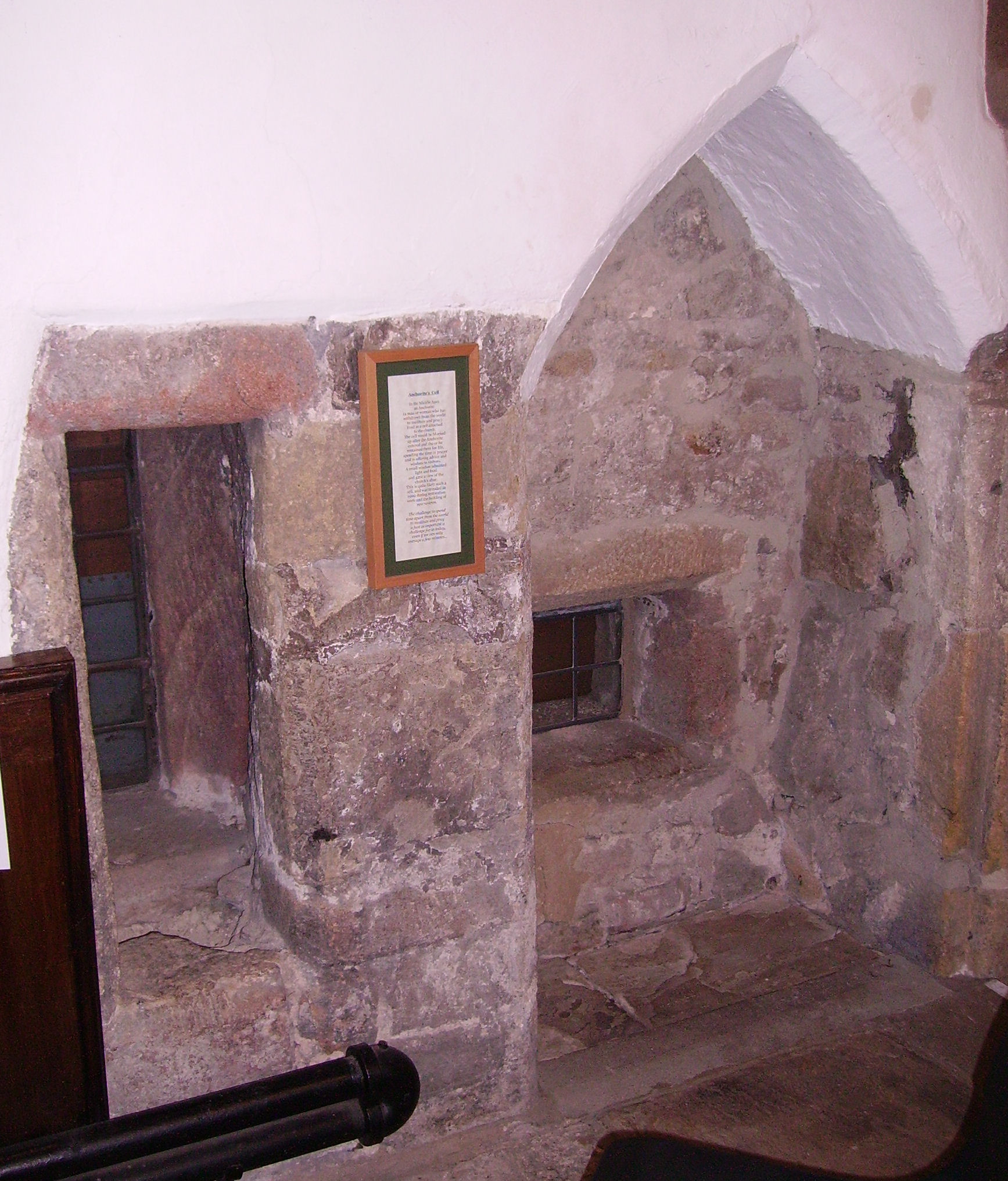
Anchorites' cell, Skipton

Anchorite’s cell, Holy Trinity Church, Skipton, UK (Courtesy: Immanuel Giel, Public domain, via Wikimedia Commons)

So, the plot. It tells the story of Sarah, a young 17-year-old girl who, after some traumatic experiences including the death of a loved sister in childbirth, asks to be enclosed as an anchoress. This means she agrees to spend the rest of her life in a small stone cell, essentially “dead to the world”, tended to by a maid through a window in the wall and visited by a priest who will provide guidance and take her confession. Her support is paid for by a patron, the local Lord. She is given a Rule book as her guide, and is expected to provide advice to village women. Sarah’s story is told first person but, interspersed with hers – in shorter third person chapters – is the story of young, inexperienced Father Ranaulf, her priest-advisor-confessor. And so the stage is set for – well, we don’t quite know what.

As the story progresses, all sorts of narrative possibilities present themselves. Will she stay (like Sister Agnes) or leave (like Sister Isabella)? How will her relationship with Father Ranaulf develop? And why did Sarah really decide on this rather extreme course for her life (because, of course, there is a reason)? These all have the potential for melodrama or cliche, but Cadwallader keeps it grounded. There is drama – a fire – but even it is downplayed in the service of Cadwallader’s bigger themes rather than generating page-turning excitement.

However, it’s not plot that draws me in my reading, but character, themes and language. And here the main characters are well-drawn. The story takes place over the period of a year or so. At the beginning Sarah is an idealistic young anchoress, keen to do it right. She takes seriously her decision with the uncompromising enthusiasm typical of a young person, and so is determined to be disciplined. She allows herself no pleasure, not even some tasty food donated by the villagers, despite advice that this level of self-denial is not expected, and moves into self-flagellation. Over the course of the novel she comes to a more realistic understanding of what being “holy” might mean, and of what she needs to survive her chosen role. Father Ranaulf is also young and inexperienced, which results, initially, in stiff, black-and-white responses to Sarah. Over time, he too comes to a more humane understanding of her and of his role as her advisor. I’m almost tempted to call it a mediaeval coming-of-age story as these two young people come to a maturer world view. Anyhow, it’s nicely and realistically done.

There are other characters of course – Sarah’s maids, villagers who visit Sarah, various priests, and Sarah’s patron and local Lord, the somewhat cliched Sir Thomas. These are less rounded but they enrich the picture Cadwallader paints of mediaeval life, and contribute to the story-line.

“Body without a body”

“True anchoresses”, Sarah reads in her Rule, “are like birds, for they leave the earth – that is, the love of all that is worldly – and … fly upwards towards heaven”. Birds are a recurring motif in the novel, starting with a symbolic bird, the jongleur whom Sarah calls Swallow. “An acrobat”, she says in the opening paragraph of the novel, “is not a bird, but it is the closest a person can come to being free in the air. The nearest to an angel’s gift of flying”. For Sarah, being enclosed was her way of emulating Swallow, of leaping into the air, of being a “body without a body”. She yearns to be free of her body, to leave the senses behind, but the more she tries to escape them, the more they make themselves known. Her challenge is to reconcile this dichotomy, this need to deny the senses while still very much having them, this being, theoretically, dead to the world, while very much alive.

Tied up with Sarah’s challenge is the wider story of mediaeval life and values. Cadwallader conveys life at the times, mostly through the people who visit Sarah. Life, we discover, if we didn’t already know it, is hard for women. We meet women who are abused and assaulted, and we realise that their rights are few in a society which sees women as “lustful and tempting”. Father Ranaulf tell Sarah that:

It is man who is mind and soul, woman who is body.

Wise Father Peter allows women some advance on this when he tells Father Ranaulf that holy women can develop manly souls and “almost become a man”! But it is Sarah who really confronts Renaulf, and forces him to a more empathetic understanding of her (and, by extension, of other women).

Life is also hard for the poor, as Cadwallader tells through the villagers’ lack of power in the face of the Lord’s control over the land they work. And life is a challenge too for church-men, who have to manage villagers and lords while earning money to survive. Father Ranaulf wants to make beautiful books but must “produce an income”, not to mention advise an intelligent young woman who won’t accept his platitudes and thoughtless “rules”!

So, The anchoress is an engaging story. It’s about a time long distant, thus satisfying our historical curiosity, and it’s about power in gender and class, that still resonates today. But, above all, it is about human beings, about how we read or misread each other, about how (or if) we rise to the hard challenges, and about whether or not we accept a duty of care to those who come into our lives. An enjoyable read.

awwchallenge2016Robyn Cadwallader
The anchoress
Sydney: Fourth Estate, 2015
314pp.
ISBN: 9780732299217

Ali Cobby Eckermann, Ruby Moonlight (Review)

ANZLitLovers ILW 2016Ali Cobby Eckermann has been on my radar for a while, so when Lisa announced her 2016 Indigenous Literature Week, I decided Eckermann’s verse novel Ruby Moonlight would be my first choice. This novel won the poetry prize and the book of the year in the 2013 New South Wales Premier’s Literary Awards.

I enjoy verse novels but don’t read them often enough to build up a comprehensive understanding of the form. Eckermann’s Ruby Moonlight is the shortest and sparest of those I’ve reviewed on this blog, but its narrative is just as strong. It is set in colonial South Australia – the not-very-poetic subtitle being “a novel of the impact of colonisation in mid-north South Australia around 1880” –  and tells the story of Aboriginal teenage girl, Ruby Moonlight, whose family is massacred by white settlers. The novel reads like a classic three-act drama. It opens with the massacre and Ruby’s lonely wanderings, and then moves into a somewhat idyllic phase when Ruby meets the also lonely “colourless man”, Miner Jack. They become friends and lovers, giving each other the company and warmth they both so desire:

good friendships
blossom
slowly
(from “Friends”)

and

in the moonlight
solace is shared
in this forbidden friendship
( “Solace”)

But it can’t last, of course, not in that place and time, because neither the colonisers nor the Aboriginal lawmen will accept it: “it is the oasis of isolation/that tolerates this union”. Nothing else.

Ali Cobby Eckermann, Ruby MoonlightThe poetry, as you can see from my excerpts, is spare. There’s no punctuation, not even apostrophes, and no capitalisation except for proper names. Lines are generally short, and description is generally minimal. There’s a lovely but restrained used of repetition, and the rhythm is matter-of-fact, that is, it moves the story along with few flourishes (if that makes sense). The story is told through separately titled poems, each of which occupies its own page, though some only part of it. The titles are simple and to the point – “Ambush”, “Friends”, “Oasis”, “Hate”, “Cursed”, “Sunset”. You could almost track the trajectory of the story through its titles. This spareness, I think, enhances the emotional power. The poems say what they need to say without embellishment.

The excerpts above are from more narrative-focused poems, but there are also poems which provide context, describing the seasons as time passes, commenting on the landscape within which our characters operate, providing a sense of the country’s spirits watching, tending, ready to act. The novel opens on the poem “Nature” which sets the scene perfectly by conveying the opposing faces of nature – “sometimes/turning to/butterfly” or sometimes just to “dust” – which also subtly heralds the coming massacre. And, a few poems in, soon after the massacre, comes one describing nature’s nurturing of Ruby:

chirping red-browed finches lead to water
ringneck parrots place berries in her path
trust nature
(“Birds)

The words “trust nature” are repeated at the end of each couplet in this poem, providing a soothing mantra for Ruby.

Most of the poems are presented in couplets or triplets, but occasionally one uses a different structure, usually to mark a dramatic change. Early in the novel is the devastating, shaped-poem, “Ambush”, in which all lines but one comprise single words (“hack/hack/hack” it starts); and half-way through is another shaped-poem, “Tempo”, which marks both the passing of time and acts as a transition from a short time of idyll for Ruby and Jack to the appearance of others:

Jack knows the remainder of the conversation
before it was spoke ya see any blacks roaming
best ya kill ’em disease spreading pests
(“Visitor”, immediately after “Tempo”)

The irony of it! Who brought disease?

So, Ruby and Jack. One of the delights of the book is the sympathetic representation of these two characters. Bereft after the loss of her family, Ruby stumbles across Jack, a loner who scrapes a living out of fur-trapping. Both are outcasts in colonial Australia, Jack an Irishman, a hated “Mick” (“a music-less man stands aloof at the bar/scowling his hatred for the Micks”, from “Loose”) and of course Ruby, a lubra or black woman. These two cautiously find a “small trust … growing” (“Solace”) between them, but it is a “forbidden friendship”, forbidden from both cultures, so their times together are snatched carefully. Ruby is watched by members of another mob, people who are “slowed by fatigue” and “weary with worry” (“Signs”), and who know the dangers:

camp smoke whispers
tell story of the killings
(“Whispers)

Jack and Ruby become the target of the aforementioned “music-less man” – a man who’d lost his “music heart” after an act of barbarity – and his hired help, two brothers “with rotten teeth smirks” (“Scheme”). Hatred and greed fuel these men. And so the scene is set, but it doesn’t quite play out the way you expect, because Eckermann wants to focus more on our universal need for warmth, love and companionship, and also on survival.

The novel is imbued with indigenous presence, from the opening where Ruby’s family live in “Harmony” in their environment, through her meeting with the other mob, the Cloud people, “on their winter trek”, to the appearance of “Kuman”, her guardian spirit who guides her to safety.

Ruby Moonlight is a special read that adds another perspective and voice to colonial contact narratives, a voice that pays respect to indigenous law and traditions, addresses the politics of contact, but also recognises our personal and universal need for love and companionship. It’s a warm and generous book, but it doesn’t pull punches either. A good read.

awwchallenge2016Ali Cobby Eckermann
Ruby Moonlight
Broome: Magabala Books, 2012 (2015 reprint)
74pp.
ISBN: 9781921248511

Eleanor Limprecht, Long Bay (Review)

LimprechtLongBaySleepersOne of the things that interests me about historical fiction, of which Eleanor Limprecht’s Long Bay is an example, is why the author in question chooses to write his/her story as fiction rather than non-fiction. As I’ve written before, this is an issue with which Kate Grenville grappled when she wrote The secret river. That book was initially going to be non-fiction about her ancestor Solomon Wiseman. However, for various reasons which she outlines in Searching for The secret river, the book ended up as fiction. Her reasons included gaps in the historical record, and finding the story – and particularly the voice – within the facts she had. I wondered, as I read Limprecht’s Long Bay, what her reasons were.

Long Bay, which draws its name from Sydney’s Long Bay Gaol, tells the story of Rebecca Sinclair, a young woman who in 1909, at the age of 23, was gaoled for manslaughter after a botched abortion. Limprecht describes on her website how she came to write the story: she was hunting for first person stories from the gaol when she came across two letters about Sinclair from the Prison Comptroller. Both those letters are reproduced in the book. Limprecht writes that she became obsessed with Rebecca Sinclair’s life, and started seeking out her story:

I found out everything I could and then began looking for living relatives in the hope they could tell me more. I joined an online genealogy site and made contact with a woman who had Rebecca on her family tree … she was Rebecca’s granddaughter.

Not only, it turned out, was she Rebecca’s grand-daughter, but the daughter of the baby Rebecca had had in goal. That baby, Freda, never did tell her daughter where she was born and why. Grand-daughter Christine

said that she wanted to honour her mother, who never felt she could share the story of her birth with anyone. She gave me permission to use her grandmother’s name and story for the novel, Long Bay.

Limprecht doesn’t specifically discuss why she chose to tell this story as fiction. Most likely it’s because she’s a fiction writer. Duh! (She does say on her site that Rebecca’s “story told me to look deeper, to understand bad choices, and to see beyond the razor wire, to the messy, real truth that fiction can reveal”.) But it may also be because, while there are several official records relating to Rebecca, there are major gaps in the record of her life. The lives of poor people, Limprecht implies, are not well documented. At the back of the novel, Limprecht notes the specific sources she quotes in the novel, but she does not, as some historical fiction authors do, discuss the historical basis of her story in any other detail – such as how much she has assumed, and how much she is confident of as “fact”. I’m interested in this, though it’s certainly not critical to analysis of the book as a piece of fiction.

So let’s get to the fiction! Limprecht tells the story straightforwardly. She starts with the letter – the one which inspired her story – from the Prison Comptroller to the Royal Hospital for Women advising of the arrangements for admitting Rebecca Sinclair. This is followed by a Prologue describing Rebecca’s admission and taking us to the beginning of labour. The novel then flashes back to her childhood (Chapter 1) and her story is told chronologically from this point.

Limprecht carefully sets up Rebecca’s character as a hard-working young woman who has a pretty good head and can be resourceful, but who in youthful naiveté let herself be taken in by Donald Sinclair, the only son of Nurse Sinclair, an abortionist, and a man who is, let us say, “an operator”. While there does seem to be love between them, Rebecca also slowly becomes aware that he is not to be trusted. Limprecht sets up a motive, to do with her sexuality, for Rebecca’s early willingness to accept Sinclair’s attentions. To modern minds, it could seem a little unrealistic but for the time it’s probably valid enough.

Rebecca is presented as responsible, and having integrity. As she imagines her trial, she realises that her

family will sit in that courtroom and watch her be led up into the cage. They will listen to all of the horrible things she has done. She did them with Don, for Don, but he did not force her hand.

I liked that self-awareness – though it’s true that her options if she did not go along with the plan, like those of poor women of her time, were few. I was intrigued to read in a contemporary newspaper report in Trove that she “caused a painful scene when she was sentenced. She sobbed and clung to her husband, the other prisoner, and appealed piteously to the court not to separate her from him.” Without giving too much away, this is not quite the Rebecca depicted by Limprecht, but perhaps her court-side Rebecca is drawn from what she knows was the trajectory of Rebecca’s life after her release.

Overall, while I enjoyed reading Rebecca’s story, she didn’t fully come alive for me – and I think back to Grenville’s challenge with her novel, that of finding the story, the voice, within the facts she had. I wonder whether having the permission of the family to tell this story hampered Limprecht in some way. Did she feel a little constrained to be sympathetic to Rebecca? Grenville decided to break free of her “real” subject and invent a character based on him. Not all historical fiction writers do this of course – Hilary Mantel didn’t for Wolf Hall (my review) and neither did Hannah Kent for Burial rites (my review) – but in this case, it may have freed Limprecht to fly a little more with the character, to have been, perhaps, a little less laboured about justifying her actions and decisions.

Nonetheless, the novel does make excellent reading. The plotting is confident and coherent, with the ground carefully laid for the “crisis” point. There’s some lovely imagery. Here, for example, is Rebecca feeling shame:

Like a hem on a dress that is too long, it drags behind her, gathering dirt, there for everyone to see.

And Limprecht’s description of turn of the century Sydney, and of the lives of poor women in particular, feels authentic. Rebecca’s mother, with six children, falls on hard times when her husband dies. She makes her money as a seamstress, which is a skill Rebecca learns. Her other daughters find different paths in life – one respectable, another not so. Limprecht is careful not to moralise on the abortion issue, preferring to show, rather than exhort. Nurse Sinclair is clear and unsentimental about why she does what she does – women need the service and they need it done safely, and she needs an income (“a trade that turns a pretty profit”). Rebecca sees the sorts of women coming through – servant women abused by their master, poor women with too many children, unmarried women. A prison guard shows rare kindness because she understands the issues.

Rebecca Sinclair’s story is a fascinating one. Notwithstanding my little equivocation, Limprecht has done it justice and brought to our modern times the story of a woman whose story is worth telling. A perfect one for the Australian Women Writers Challenge.

awwchallenge2015Eleanor Limprecht
Long Bay
Collingwood: Sleepers, 2015
313pp
ISBN: 9780987507044

(Review copy supplied by Sleepers Publishing)