Monday musings on Australian literature: recent Australian creative nonfiction on my TBR

Brona (This Reading Life) recently announced her main reading project for next year, Reading Nonfiction 2026, in which she plans to read 24 nonfiction books from her TBR. She has written a few posts on the project, including on two nonfiction categories on her TBR shelves, Australian Lit Bios and Environment, Climate and Travel. If you are looking for some good Aussie nonfiction – perhaps to get ahead of the game for Nonfiction November 2026 – these posts would be a good place to start.

While I also have nonfiction books on my TBR shelves, including some in the categories above, particularly the Lit Bio one, I thought I would share here some books from another “genre”, that described as creative or narrative or even literary nonfiction. As I have written before, including in my Supporting Genres post back in 2021, it generally refers to nonfiction writing that uses some of the techniques of fiction, particularly, but not only, in terms of narrative style. Wikipedia defines it as “a genre of writing that uses literary styles and techniques to create factually accurate narratives.” This is a good enough description (I’ll use “description” that rather than “definition”) for me to use here.

I do enjoy nonfiction, including history of all sorts but particularly social history, autobiography and biography, travel, science, and more, but the form which this writing takes can make a difference and, being a lover of fiction, creative nonfiction is my preferred form. As is my wont and as I explained in that 2021 post, I define it broadly, so I won’t repeat all that here. Instead, I’ll just list a few that are on my TBR right now that fill the bill. 

Interestingly, several of them come from Upswell Publishing which, as publisher Terri-ann White says on her About page, publishes “books that elude easy categorising and work somewhat against the grain of current trends. They are books that may have trouble finding a home in the contemporary Australian publishing sector.” They are, in fact, the sorts of books that tend to fall into the creative nonfiction basket. Other publishers who publish in this area include Transit Lounge, Text Publishing, and, although small in output, Finlay Lloyd. Interestingly too, these books are often, but certainly not always, written by writers of fiction.

So, here is a somewhat eclectic and random list of recent books from my TBR. I have ascribed some sort of “form” to them, but because, by definition, they are hard to categorise, these descriptors are loose, even those that don’t look like they are:

  • Anne-Marie Condé, The prime minister’s potato and other essays (Upswell, 2025, sociocultural studies)
  • Gregory Day, Words are eagles (Upswell, 2022, landscape writing)
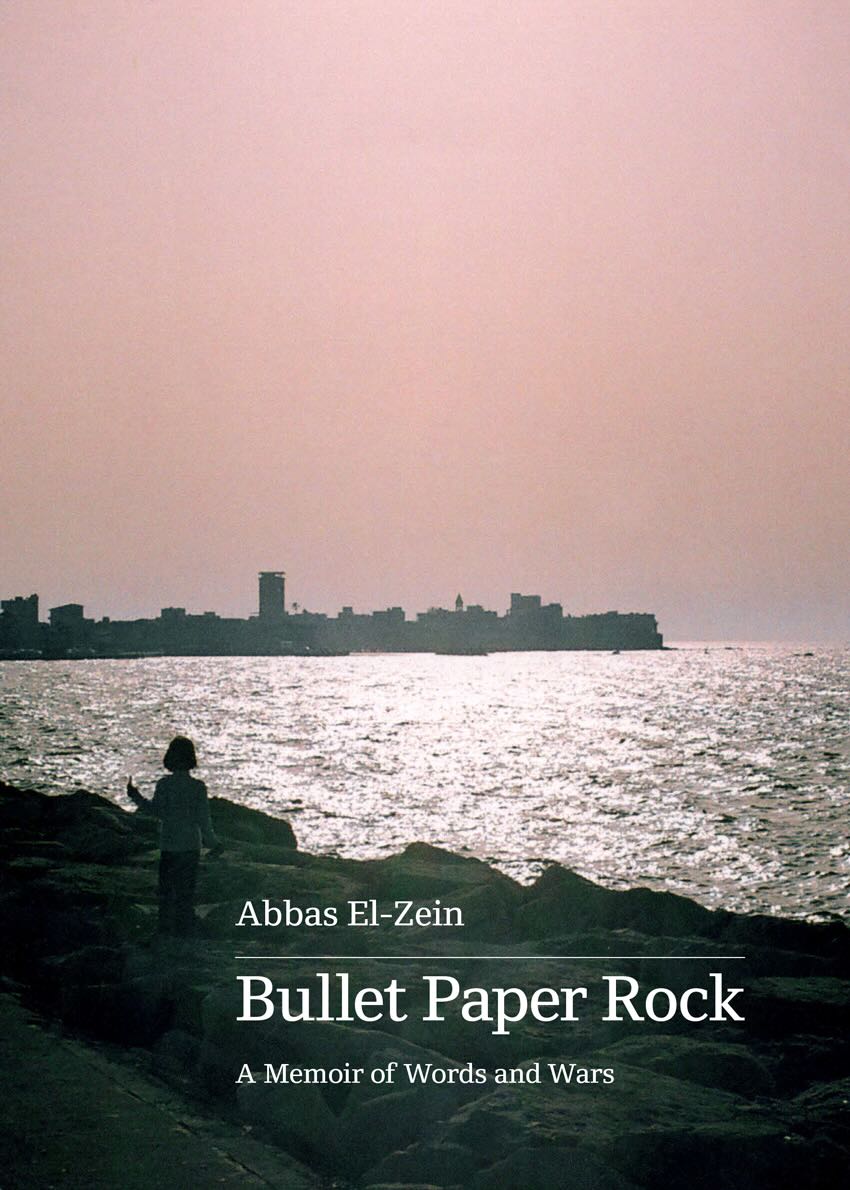
  • Abbas El-Zein, Bullets, paper, rock: A memoir of words and wars (Upswell, 2024, memoir)
  • Helen Garner, Chloe Hooper and Sarah Krasnostein, The mushroom tapes (Text, 2025, true crime)
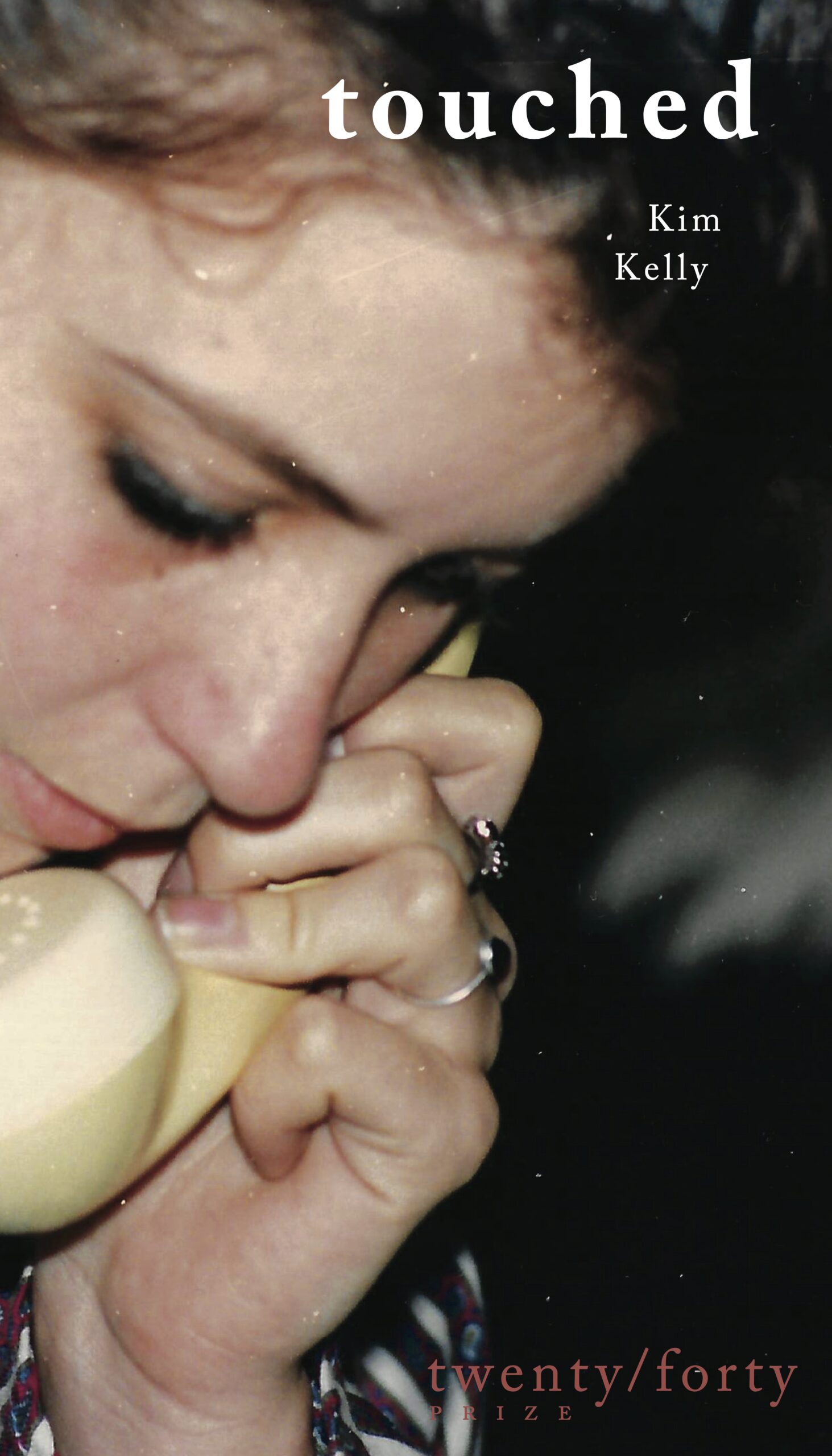
  • Kim Kelly, Touched (Finlay Lloyd, 2025, memoir, review coming soon)
  • Belinda Probert, Imaginative possession: Learning to live in the Antipodes (Upswell, 2021, memoir/place writing)
  • Susan Varga, Hard joy: Life and writing (Upswell, 2022, memoir)
  • Jessica White, Silence is my habitat (Upswell, 2025, ecobiographical writing)

What do you think about creative (or whatever you prefer to call it) nonfiction?

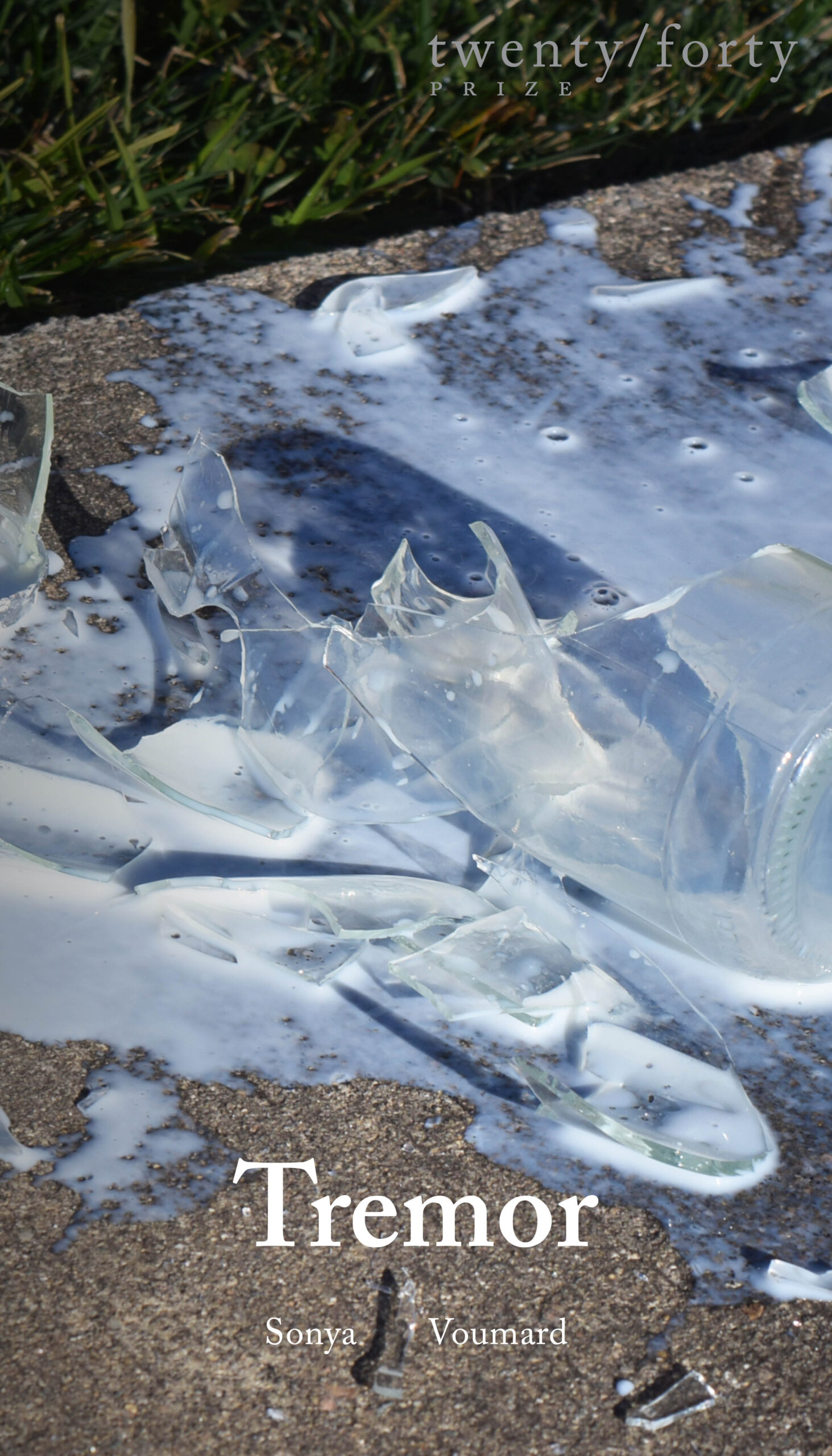
Sonya Voumard, Tremor (#BookReview)

As I’ve previously reported, Sonya Voumard’s short memoir, Tremor, is one of the two winners of this year’s Finlay Lloyd 20/40 Publishing Prize. Earlier this month, I reviewed the fiction winner, P.S. Cottier and N.G. Hartland’s novella The thirty-one legs of Vladimir Putin. Now it’s Voumard’s turn, with her book on living with a neurological movement disorder called dystonia.

While essentially a memoir, Tremor also fits within that “genre” we call creative nonfiction. The judges would agree, I think, given their comment that Tremor is “notable for its compellingly astute interweaving of the author’s personal experience with our broader societal context where people with disabilities, often far more challenging than her own, try to adapt to the implicit expectations and judgements that surround them” (back cover). The interweaving of something personal with something wider is a common feature of creative nonfiction, but what seals the deal for me is its structure. Tremor has a strong – subjective – narrative arc that propels the reader on, with more objective information providing the necessary support.

The narrative opens on December 3, 2020, the day Voumard is to undergo brain surgery for her condition. It leaves us in no doubt that what we are about to read is a very personal journey. “I am”, she writes on this first page, “a hairless head on top of a flimsy cotton gown and long compression socks”. But then, two sentences later, she opens a new paragraph with, “as I wait to be taken to the operating theatre, I channel my inner journalist. I’m on a news assignment for which I have already gathered some key facts.” And just like that, we are in journalist mode, with Voumard describing her condition and the relatively new treatment she is about to receive, followed by some facts and figures. Around 800,000 Australians, she informs us, experience tremors of the body, and about 70,000 of these have dystonia. A couple of paragraphs later we flash back to early 1960s Melbourne. Voumard is four or five years old, and her personal trajectory begins with an anecdote about dropping a bottle of milk, about being “clumsy, prone to dropping things”, but also being “a risk-taker”.

From here, the book takes us on the two journeys I’ve just intimated. There’s the mostly chronological one tracking her life with dystonia until we arrive – at the end of the book – back at the beginning with her surgery and its aftermath. And there’s her exploration of dystonia, its causes, diagnosis, and treatment. Voumard binds these two journeys together with her astute, and empathetic, reflections and analyses. She knows what it’s like to live with a disability, even if early on she didn’t recognise it as such.

So, for example, she chronicles the tactics she’d use to hide her shaking, in order to get jobs and then to demonstrate she could do them (when clearly she could). She would sit on her hands, refuse offers of drinks, self-medicate with alcohol. Whatever it took to hide her condition. She talks about navigating a medical world that is so “siloed” that diagnoses ranged from the “psychogenic” (due to “some sort of failure of womanhood, an unfulfilled yearning, a cloak for something else”) to the “purely physical” (like a sports injury or from computer use) – depending on the speciality she was dealing with – when it was something else altogether. She touches on the cost of treatment, the overall politics of medicine, the gender issues which see women’s conditions so often dismissed.

And, lest I’ve given the wrong impression, she does this not only through her own experiences, but through those of others – met personally, or found through her research – ensuring that Tremor is not a “misery memoir” but something bigger, that contributes to our understanding of how people navigate a world in which they don’t fit the norm. This navigation has a few prongs: the obvious ones relate to coping with the physical limitations, discomfort, and/or pain the condition brings; and the less visible ones concern managing your expectations and aspirations, while also dealing with how people interact with you. Voumard shares the story of a woman who had suffered for over twenty years from cervical dystonia before she got a diagnosis. While diagnosis didn’t bring a cure, “identifying her condition had helped her to live her life more calmly, to not try to do too much and to understand something of others’ suffering”.

Voumard, you’ve probably realised by now, packs a lot into the 20/40 form (that is, into 20,000 to 40,000 words). At the winners’ conversation, she said there is the assumption that to be marketable you need to write 55,000 plus words. She had the bones, and had then started filling them out, but it was just “flab”. The competition, and then Julian Davies’ editing guidance, taught her that she had a good “muscular story”. So she set about “decluttering”. The end result is interesting, because this book doesn’t have that spare feeling common to short works. Tremor feels tight – there’s little extraneous detail – but not pared back to a single core.

Voumard, in fact, covers a lot of ground. She uses the Eurydice Dixon murder case, for example, to epitomise her ongoing interest in media and reporting, particularly regarding structural disadvantage and social justice. She also contextualises the latter stages of her journey against the 2019 bushfires, the 2020-2021 pandemic and lockdowns, and the 2022 floods in NSW’s northern rivers. Why all this? The subtitle explains it. This book, this “tremor”, is not just about a movement disorder but about something bigger:

My more recent thinking about disability has strengthened my belief in the urgent need to privilege the voices of others more marginalised than mine. But I also cling to the concept of freedom of speech – not as a neoliberal, tabloid-news defender of hate speech – but as someone striving to find ways to respond to the challenges of a democratic society that is becoming more disordered.

Tremor is another beautiful, thoughtful product of the Finlay Lloyd stable. Recommended.

Read for Novellas in November, because, while not a novella, it is a short work.

Sonya Voumard
Tremor: A movement disorder in a disordered world
Braidwood: Finlay Lloyd, 2024
129pp.
ISBN: 9780645927023

Review copy courtesy Finlay Lloyd.

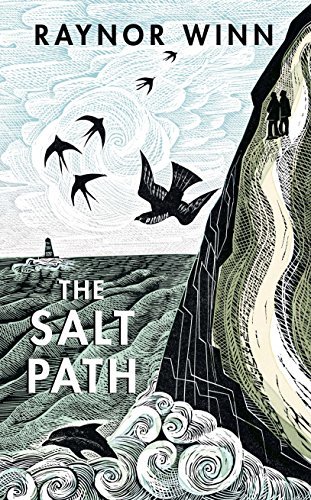
Raynor Winn, The salt path (#BookReview)

While my reading group’s main fare is fiction, we do include nonfiction in the mix. In fact, this year has been unusual as we’ve scheduled three nonfiction books – Richard Flanagan’s Question 7 (my review), Anna Funder’s Wifedom (my review), and, last month, Raynor Winn’s The salt path. I can’t recollect how The salt path came to be chosen, and nor could the 8 (of our 11) members who attended the meeting, but we weren’t about to complain.

Many of you will know this book already, given it became a bestseller after its publication in 2018. It was shortlisted for some major awards, and won the inaugural RSL Christopher Bland Prize (which I would call a “late bloomer” prize.) However, in case it escaped your notice, I will briefly summarise it. The book opens with two disasters befalling author Raynor and and her husband of 32 years, Moth. He is diagnosed with a rare, terminal degenerative disease called CBD (corticobasal degeneration) and, in an ultimately unjust court case, they lose their home which was also their livelihood. They have nothing but each other (and their two children who, fortunately, are young adults linving away from home). What do you do in a situation like this? You decide to walk England’s challenging 630-mile South West Coast Path, wild camping most of the way. That’s what.

Although it’s essentially a memoir, The salt path is better described as a road story that combines memoir, nature writing and social commentary. I would also argue that it’s a work of creative nonfiction, partly because of its strong narrative arc (albeit this is not uncommon in memoir and travel writing) but also because it includes dialogue (which, given there’s no evidence to the contrary, has presumably been recreated for the book). The result is a book which interweaves description, anecdote, personal reflection, social commentary and dialogue in a way that maintains our interest because it never bogs down in one mode or another. The balance Winn achieves is not only between these modes, but also in tone, which moves between serious and scared, melancholic and thoughtful, and light and humorous.

“you’ve felt the hand of nature … you’re salted” (woman on path)

I want to explore a little more how the combination of memoir and road story works to tell Winn’s story. Memoir, by definition, deals with a particular issue or time period in a person’s life. This gives the story a natural trajectory which conveys how that issue is handled or progresses – and/or what happens over that chosen time – until some sort of resolution or conclusion is reached. A road story has an even more obvious or natural narrative arc – the beginning of the trip, the middle with all the events and challenges met on the way, and the trip’s end (which may or may not be the originally intended one.)

So, in The salt path, the memoir, with its central issues being Moth’s illness and their homelessness, is framed by the road story, which describes the physical journey, that is, the landscape they walk through, and their experience of walking and wild camping. As in most road stories, we meet characters along the way, some positive or helpful, some amusing, and others negative or obstructive. And, as is also common in travel literature, we are introduced to issues that are relevant to the places travelled through. In this case they include conflicting ideas about heritage, conservation and the role of the National Trust in the communities and regions along the path.

There is, then, a lot to this book and while it works well as a coherent whole, some parts, of course, left a stronger impression than others. The strongest was their experience of the path, particularly given its recognised toughness combined with their impecunious state, inexpert preparation, and Moth’s ill-health. They were often hungry, wet and cold, and they walked at half the pace of Paddy Dillon whose guidebook they followed, but as time wore on Moth’s health improved. Why is a question never fully answered because they didn’t know why. Years later, he is still alive, still with the condition. Their strong interpersonal connection sustains them when little else does! And there is always the nature. This is Winn’s first book but she can clearly write. Her descriptions of the environment – the wildlife, the landscape, the vegetation, the sea – and of their feelings as they walk through it are perfect, like:

“A hidden land of weather and rock, remote and isolated. Unchanged through millennia yet constantly changed by the sea and the sky, a contradiction at the western edge. Unmoved by time or man, this ancient land was draining our strength and self-will, bending us to acceptance of the shaping elements.”

“The moon climbed into a clear sky, just past full, polishing the landscape in tones of grey and silver.”

After some time of walking the path, they start to look weathered – peeling skin, ragged clothes, and so on. It is around this time that they meet a woman who recognises the look. She tells them “you’ve felt the hand of nature … you’re salted”. Winn’s title is more than a literal description of a sea-swept path. It is also about being part of the nature, the life, they walk through.

From early in the book, however, another theme is introduced that threads through the book – homelessness. Obviously, it occupied Winn’s mind because they were suddenly homeless, but as the book progresses, she supplements their personal experience of being homeless with facts and figures. The facts are sobering, but they are made powerful by Raynor and Moth’s firsthand experience. For example, very quickly they became cautious about being honest about their circumstances, because it affected people’s attitudes to them:

“We could be homeless, having sold our home and put money in the bank, and be inspirational. Or we could be homeless, having lost our home and become penniless, and be social pariahs.” 

All sorts of other thoughts and issues arise, as you would expect on a long walk. Another is the aformentioned issue of protecting heritage and the environment, and the role of the National Trust. Locals complain about National Trust restrictions affecting their traditional jobs, but she also sees all the money coming in from the resultant tourism and senses “a strong whiff of hypocrisy”. In an area dug up for clay-mines, she discusses the various approaches taken after the mines have gone. One is creating an attraction like the Eden Project. Returning the land to its original state seems the least likely option, because “no tourist is going to pay to walk over a meadow with a leaflet that says, ‘You’d never know it, but this used to be a mine.’” By contrast, there’s the town of Tyneham that had been requisitioned during World War Two, and where

Strangely enough, limited public access, a lack of intensive farming and the occasional blasting by small-arms fire has allowed wildlife and vegetation to thrive throughout the ranges. A form of khaki conservation that no one expected to be the outcome when the villagers left their homes as part of the war effort.

Of course, insights into the land – into the many ways it has been used, modified and re-used – are common to those who walk, and land-loving Raynor Winn is no exception. Her observations are idiosyncratic to her. Readers may not always agree, but she is real and honest.

There is much more to say, but I’ll conclude on the personal, because this is ultimately a personal journey as much as a physical one. Winn starts off, somewhat angry but mostly scared (very scared about her beloved Moth dying) and deeply worried about the future and whether they are doing the right thing. Slowly though, as Moth’s symptoms seem to subside, and as time passes, she senses change in herself

I was no longer striving, fighting to change the unchangeable, not clenching in anxiety at the life we’d been unable to hold on to, or angry at an authoritarian system too bureaucratic to see the truth. A new season had crept into me, a softer season of acceptance.

I don’t think it’s a spoiler to say that The salt path is a book about reality, not miracles but not tragedy either. Its interest lies in the particular situation this couple finds themselves in, in the path itself, and in Winn’s ability to write about it all with warmth, humour and honesty.

So, how did my reading group like it? Very much overall. Depending on our own experiences and perspectives, we varied in our reaction to the different decisions they took, but as lovers of the environment we all appreciated the description of the walk, and as lovers of “stories” we enjoyed the anecdotes about the people they met. Of course, we had questions, and there were little niggles – some didn’t always like the tone, and some couldn’t believe the couple’s poor preparation and apparent lack of sunscreen! But the discussion we had was excellent. So, a good book all round.

Brona also reviewed this book (nearer its publication!)

Raynor Winn
The salt path
Penguin, 2018
273pp
ASIN: ‎ B0793GXSBL
ISBN: 9781405937528

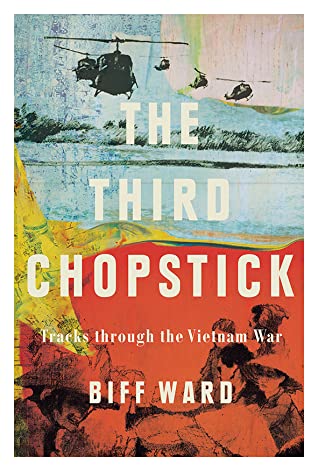
Biff Ward, The third chopstick: Tracks through the Vietnam War (#BookReview)

Biff Ward’s The third chopstick was my reading group’s October selection. It’s the second book by Ward that we’ve done, the first being her memoir, In my mother’s hands (my review), about growing up with her academic father, the historian Russel Ward, and her mentally ill mother, at a time when mental illness was shameful and to be hidden. It was a moving book that engendered an engaged and wide-ranging discussion. Biff Ward, in fact, attended that meeting.

The third chopstick is another personal book, but one that’s not so easy to classify. I would describe it as hybrid memoir-creative nonfiction. Memoir, because it’s about her experience as an anti-Vietnam war protester who later chose to meet Vietnam veterans and listen to their stories. And creative nonfiction, because, although nonfiction, it uses some of the devices of fiction to engage its readers. These include hinging her story around one particular vet, Ray, whom she describes as her “muse”, her “archetypal veteran”, her conduit, perhaps, to “the missing piece”. His story, combined with his powerful presence, gives the book its compelling, narrative drive.

The implication of what I’m saying here is that while The third chopstick is historical it is not an academic history. Although Ward did the historian thing, and conducted recorded interviews with vets, she does not attempt to present an “authoritative” analysis of protesters or of vets, but a thoughtful, personal quest. It has no footnotes, although there is a selected reading list at the end, and there’s no index. This is not to say, however, that it doesn’t add to our understanding of history, because it certainly does.

The book has a logical, and more or less chronological, structure, though there is criss-crossing of timelines where appropriate. It has three main parts – Protest, Veterans, Vietnam – which are bookended by a Prologue and Epilogue. In Protest, Ward describes her life as a protester, and introduces us to her ongoing interest in Vietnam long after the war ended. In Veterans, she introduces us to the veterans she met and interviewed, shares their stories and experiences, and reflects on these. Finally, in Vietnam, she discusses post-war Vietnam, including how Vietnamese people have processed, and live with, what happened. She has visited the country many times – as a sole tourist, on war-themed tours, and as a tour leader herself. On some of those visits, she either accompanied or met vets. Through these postwar connections, she starts to bring together her central questions concerning how we Australians got caught up in this, and what it did to us – as a nation, as individuals – though, of course, there are no simple answers.

“a scrambled snarl”

A bit over halfway through the book, while interviewing Nick, an SAS veteran of the war, Ward confronts the issue of “killing”. Nick’s story causes her to think about that and, thence, her stance as a pacifist. She realises she’d never really grappled with it. She had, she writes, a ‘”natural” antipathy to killing, a generalised kind of pacifism which yearns for peace’ but she also believed that, if needed, she would strive as hard as she could to defend “me and mine”. Her pacifism was “a scrambled snarl of thoughts and feelings”. She doesn’t explore this further, as it’s not the subject of the book, but …

… I liked this expression because what her book does is explore just what “a scrambled snarl” war is, whichever way you look at it. I particularly liked her various reflections on war. She makes the point early on that it is well known that war takes years to recover from. Vet Graham tells her that medieval knights “used to go into a monastery after being on a crusade”. He himself had, after leaving the army, been ill; he’d been in hospital and at a health farm, before spending “thirteen years, mostly alone, making music, keeping quiet”. By the time Ward met him, he was working with the Federation for Vietnam veterans.

Throughout the book, then, Ward reflects on war in general, but I’ll just share a couple that captured my attention, both resulting from her reading of Ray’s journal, where he expresses the trauma he experienced. It leads Ward to suggest “that the truth of all war is only these depthless oceans of grief”. A few pages later, she discusses “moral injury”, which “refers to an injury to the soul, to morality, to what can happen when a soldier has to do something against his own sense of what is right and wrong.” The injury done to Ray is immense.

Ward may not have intended this, but her book also functions, at least a little, as a cautionary tale, because she shows how easy it is to believe you are doing the right thing when you protest for a humane cause, and be oblivious to the potential for unintended consequences. The anti-Vietnam War protesters’ beef was with the government and its policies, but the result, as we all know now, was that the soldiers who went to Vietnam were vilified – not so much by the core protesters but by others who took their ideas on without understanding the politics. Ward shares some of the facts and myths about how it played out.

Ward also discusses those other two big fall-outs from this particular war – Agent Orange and its ongoing impact on the health of both soldiers and Vietnamese people, and PTSD, which she describes as the Vietnam vets’ gift to the world.

What makes this book a particularly good read, besides all this subject matter, is the language, which mixes journalistic-style reportage with more evocative writing. There’s too much to share, but here’s one describing her experience of transcribing Ray’s journal:

As I transferred his words from the page to pixels on my screen, they sometimes spiralled off and pranced about the room like leering pixies.

(This sometimes necessitated her needing to take a break!)

Here’s an appropriate point to explain the title, because it came from Ray, as she explains in Chapter 2. While in a restaurant, he places two chopsticks in parallel lines, about two centimetres apart, across a bowl, and names the space between the two as “normal life … where people get born and grow up …” etc. Then, he takes another chopstick (“the third chopstick”), places it parallel to the others, the same distance apart, and says

The veteran lives here, alongside but separate, see? He can see this life, he pointed back to the first space. He can see what other people are doing, but he can’t join in. He doesn’t know the rules anymore. It might look like like garbage to him. It’s got no connection to what’s happening inside him, see?

The secret, Ray continues, is for the veteran to be able to handle both “his own stuff” and join in. There’s a little more to it but that’s the gist.

    Lest you be thinking so, The third chopstick is not just relevant to those who lived through the Vietnam War era. As I read this book, I couldn’t help thinking about a war that is happening right now. Near the end, Ward writes:

    So even today, for the People of the Bag*, the mountains and the rivers, the land and the water and their interconnectedness are concepts integral to the way Vietnamese conceive of themselves. And, I chucke to myself, those men in Washington and Canberra thought they could somehow beat them, that the People of the Bag would eventually give up? Really?

    Given its origins in a leftie anti-Vietnam war protester who went on to engage openly and genuinely with soldiers involved in that very war, The third chopstick is quite an astonishing book. For anyone interested in the complex experience of war, it makes excellent reading. All eleven who attended my reading group agreed.

    * The Vietnamese, from their Creation Myth

    Biff Ward
    The third chopstick: Tracks through the Vietnam War
    Penrith: IndieMosh, 2022
    313pp.
    ISBN: 9781922812025

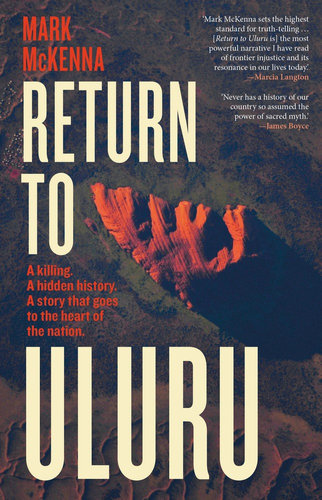
    Mark McKenna, Return to Uluru (#BookReview)

    Mark McKenna’s engrossing history, Return to Uluru, takes as its starting point the arrival in Central Australia, in 1931, of 29-year-old police officer, Bill McKinnon. Of course, Uluru’s true history reaches back into the almost-incomprehensible mists of geological time, and its human history back to the arrival of Indigenous Australians tens of thousands of years ago. But, a historian has to start somewhere, and McKenna’s choice of McKinnon’s arrival speaks to the particular story he wants to tell.

    Uluru

    Before I get to that, though, I would like to share my own little story. Mr Gums and I have visited Uluru three times (so far), in 2000, 2009, and 2015. Each visit, we walked around “the rock” rather than climb it, because that was the expressed preference of its traditional owners, the Anangu. In 2019, the climb was finally closed. Interestingly, each of our circumnavigations was a bit longer than the previous one, stretching from around 9kms the first time to around 11kms the last. This is because the Anangu have gradually moved the route away from particularly sacred sections of Uluru. It’s been a very slow process for the Anangu to claw back ownership of their own country and it is to this, really, that McKenna’s book ultimately speaks.

    But, that’s not immediately obvious at the book’s opening. It’s divided onto four parts, with Part one, “Looking for the centre”, introducing the reader to Central Australia. It teases out the role of “the centre” in Australian life and culture, pitting its Indigenous history and significance against the early settlers/explorers’ “awe, terror and incomprehension” at what they found. McKenna writes that for the settler “to find the centre was to confront the metaphysical dilemma of being a white man in an Aboriginal country”:

    What they saw as empty was layered with story … Where European explorers saw arid desolation, Aboriginal people knew a larder teeming with sources of animal protein and fat and a wide variety of plants that provided nutrition, medicine, tools and shelter.

    McKenna then shifts from traditional history-writing to the personal, placing himself in the story by sharing his own experience of the Centre but continuing to reveal its history as well. This approach enables McKenna to reflect philosophically, as well as historically, on what he was doing. He conveys how confronting, and how paradoxical, the Centre can be. “It laid everything bare at the same time as it pushed all language and emotion within.” But, most significantly, he writes how actually visiting the centre “unsettled the history” that he had intended to write. So, let’s get to that.

    Part two, “Lawman”, returns to a more traditional history – or biography, now – style. It tells the story of Bill McKinnon, who he was, how he ended up in the Centre, and what he did there. The focus, though, is a particular expedition in 1934 whose goal was to capture some Aboriginal men accused of killing, under Tribal Law, another Aboriginal man. One of these men, Yokununna, was shot and killed by McKinnon. This incident was to be just part of McKenna’s history but, as he wrote in Part one, it became the centre of the book when he recognised that the “biography of one moment in one man’s life encompassed the entire history of the centre and went straight to the heart of the nation’s long struggle to come to terms with its past”.

    “Lawman” is the longest part of the book. Bill McKinnon was a complex man. He unquestioningly bought into the settler project and saw “discipline” as the key to maintaining control, a discipline that, of course, frequently involved brutality. But he wanted “to be both the centre’s law enforcer and its storyteller”. He was keenly interested in the centre’s history, and, writes McKinnon, had “moments of contemplation … when he became faintly aware of the depth and complexity of Aboriginal culture”. He was also a meticulous recordkeeper, and retained his records because “his desire to be present in history was insatiable”.

    Part three, “Uluru”, the second longest part, returns, obviously, to focus on Uluru. Here, McKinnon comes back in the frame. He delves more deeply into the settler-era history of Uluru, interweaving it with Indigenous culture and stories. He traces the dispossession of the Anangu, as the settlers moved in, and their gradual return in the second half of the twentieth century. He identifies McKinnon’s shooting of Yokununna at the rock’s Mutitjulu Waterhole as “the foundational moment in a long history of injustice”. It is here that McKenna shows his historian’s eye for the symbolic that makes a point:

    Uluru’s creation story and the frontier murder which defined the killing times for the Anangu more than any other event in the twentieth century took place at the same sacred site.

    It is also in this part that we see the historian’s drive for the clue that nails the truth, and the challenge that can result. It occurs when he visits McKinnon’s daughter, and is given access to McKinnon’s archives. Remember what a recordkeeper he was? What McKenna finds transforms the story he was telling.

    In the final part, “Desert Oak No. 1”, McKenna remains in the frame, as he shares more of his research journey. The focus is Yokununna (“Desert Oak No. 1”) and we start at the South Australian Museum where Yokununna’s skull had been identified. Till this point, I felt McKenna had managed well the tricky business of being a non-Indigenous historian writing an Indigenous-focused history, but I did feel he made a false step when describing the centre as a “region where darkness stalked the landscape”. The word “darkness” seems unfortunate in the context. This, however, is a small miss in a work that recovers a significant story and carefully places it within the context of the return of Uluru to the Anangu in 1983, and the 2017 Uluru Statement from the Heart. Returnng Uluru to its rightful owners is a win for all Australians because Uluru is the spiritual heart of our nation, and it’s critical that our heart be in the right place – if you know what I mean!

    Return to Uluru is a beautiful book in every way. It is gorgeously produced. Those of us in my reading group who read the physical version loved the paper and the extensive images. We felt sorry for the Kindle readers who missed this experience. But more importantly, Return to Uluru is sophisticated, conceptually, in the structured way McKenna elicits the symbolism from the facts to make very clear not only what happened but why it matters.

    For an historian’s perspective, check out Janine’s review.

    Mark McKenna
    Return to Uluru
    Carlton, Vic: Black Inc, 2019
    256pp.
    ISBN: 9781760642556

    Monday musings on Australian literature: Supporting genres, 4: Literary nonfiction

    Continuing my little Monday Musings sub-series on “supporting” genres, I’m turning next to a rather “rubbery” genre, literary nonfiction. It is tricky to define – and partly for that reason, it is not obviously well supported.

    Literary nonfiction goes by a few other names including creative nonfiction and narrative nonfiction. This last one provides a bit of a clue to its definition, which is that it generally refers to non-fiction writing that uses some of the techniques of fiction, particularly, but not only, in terms of narrative style. Wikipedia defines it as “a genre of writing that uses literary styles and techniques to create factually accurate narratives.” It quotes Lee Gutkind, who founded Creative Nonfiction magazine:

    “Ultimately, the primary goal of the creative nonfiction writer is to communicate information, just like a reporter, but to shape it in a way that reads like fiction.”

    In other words, it aims for a prose style that is more entertaining (but not at the expense of fact.) In my review of Anna Funder’s Stasiland, I wrote that she “uses some of the literary techniques – relating to structure, voice and language – more commonly found in fiction to tell her story”.

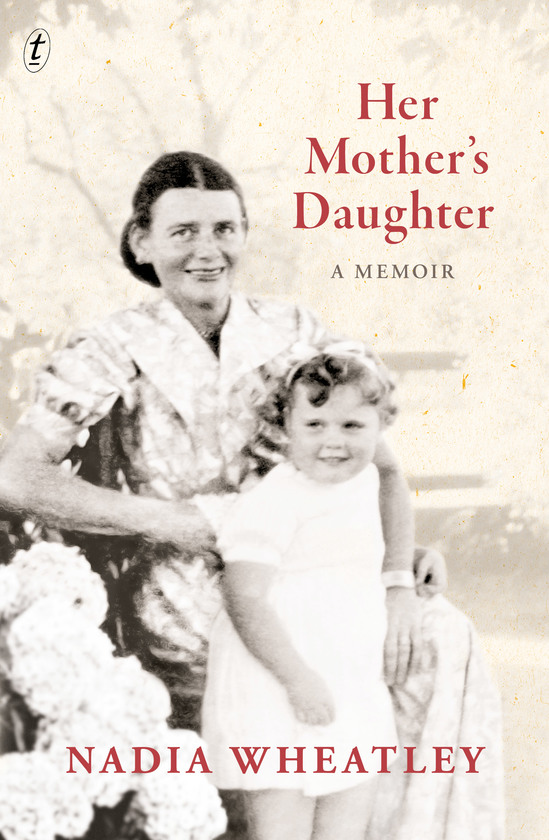
    Well-known Australian writers in this “genre” include Helen Garner, Chloe Hooper, Anna Krien, Anna Funder and Sarah Krasnostein, all of whom I’ve read. It is a grey area, though, and I suspect each of us would draw the line at different places. However, I would include essay collections by Fiona Wright and Maria Tumarkin, and many hybrid memoir/biographies, like Nadia Wheatley’s Her mother’s daughter (my review)? Historians who write for general audiences rather than academia might also be included. I’m thinking here of Clare Wright and Inga Clendinnen, as possibilities. What do you think?

    Prizes

    For some genres – literary fiction and crime for example – awards/prizes are a major source of support (in terms of money and recognition) but this is less so for literary nonfiction.

    Anna Funder's Stasiland bookcover

    Back in 2004, Anna Funder’s Stasiland (my review) won the Samuel Johnson Prize for Nonfiction. Now renamed the Baillie Gifford Prize for Non-Fiction, it is, says Wikipedia, “an annual British book prize for the best non-fiction writing in the English language”. Not surprisingly, winners include works from this literary nonfiction “genre”. Another winner I’ve reviewed here (though it’s not Australian) is Helen Macdonald’s H is for hawk (my review). Australians have not featured highly in this award.

    In Australia, several of the state awards include a nonfiction category, and these have been won by literary nonfiction, though they compete with other forms of nonfiction like histories, biographies and other forms of life-writing, essays, and so on.

    Major Australian Nonfiction Literary Prizes

    None of the awards listed here are specifically for “literary nonfiction” but these are awards which may be won by such books.

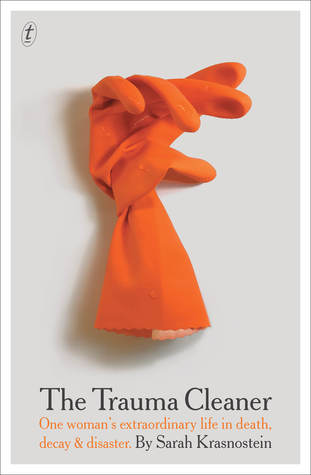
    Sarah Krasnostein, The trauma cleaner

    Also relevant are awards that are not “specifically” nonfiction:

    Nadia Wheatley, Her mother's daughter
    • Mark and Evette Moran Nib Literary Award: this award for “excellence in research” and “in writing” has been won by books in this genre, like Helen Garner’s Joe Cinque’s consolation (2005) and Nadia Wheatley’s Her mother’s daughter (2019).
    • Stella Prize: while this multi-genre/multi-form prize has more often been won by fiction, nonfiction – and particularly literary nonfiction – does feature in its long- and shortlists. Rebecca Giggs’ Fathoms, for example, was shortlisted in 2021.

    But, is there more?

    The issue, though, for writers is what support do they get when they come up with an idea? Are the sorts of fellowships, grants and writer’s residencies that fiction writers can access also around for nonfiction writers? Well, yes, there are, such as:

    • Neilma Sidney Literary Travel Fund is an unusual award that is open not just to writers but also to “literary sector workers”. It recognises the importance of travel to writing and literary careers. Awardees have included writers researching nonfiction topics – and, despite COVID, it is still being offered, with a round being made in June this year. To give some examples, in 2018, the aformentioned Rebecca Giggs received a grant for expenses related to a writing residency at the Rachel Carson Centre for Environment and Society in Munich, Germany. And, in November 2019, Tamara Lazaroff received some funds to research her experimental narrative non-fiction memoir Hermit girls on De Witt Island, Tasmania. 
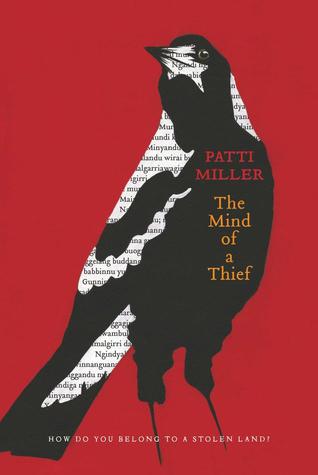
    • Varuna Writers House Residencies are open to “committed writers from all genres”. With around 160 residencies a year, the alumni is extensive, but they include Gail Bell whose The poison principle (on my TBR) won the 2002 NSW Premier’s Prize for Non-Fiction and Patti Miller whose complex memoir, The mind of a thief, was longlisted for the 2013 Stella Prize.

    There are more, but these two provide a good start.

    Do you read literary nonfiction? If so, would you care to share some favourites?

    Previous supporting genre posts: 1. Historical fiction; 2. Short stories; 3. Biography

    Chloe Hooper, The arsonist: A mind on fire (#BookReview)

    Chloe Hooper, The ArsonistIt may not have been the most sensible decision to read Chloe Hooper’s book, The arsonist, during Australia’s worst-ever bushfire week, but in fact I picked it up a few days before the crisis became evident, and once I started I couldn’t put it down. The arsonist tells the story of the man arrested and tried for one of the major fires in the Black Saturday series of bushfires that ravaged much of Victoria in February 2009. I have often wondered how you identify how and where a fire started. Hooper answers much of this.
    However, what made this book unputdownable was that Hooper adopted, as she did in The tall man, the narrative (or creative) nonfiction style to tell her story, and proved herself, again, to be a skilled exponent of this genre. For those not sure about this genre, Lee Gutkind’s definition, quoted in Wikipedia, is a good start: “Ultimately, the primary goal of the creative nonfiction writer is to communicate information, just like a reporter, but to shape it in a way that reads like fiction.” In other words, the information must be true or factual, but presented like a story.

    Car in fire burnt bush

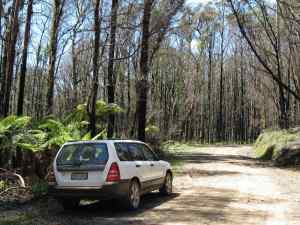
    Bush, eastern Victoria, 9 mths after Black Saturday, 2009

    Hooper structures her story like a classic three-act drama: I The detectives, II The lawyers, III The courtroom, followed by the Coda. She provides the facts – the whos, whens, wheres and whys – as much as they are known, but forms them into a narrative. So, after an opening paragraph which evocatively describes a fire-destroyed bush landscape, the second paragraph reads:

    At the intersection of two nondescript roads, Detective Sergeant Adam Henry sits in his car taking in a puzzle. On one side of Glendonald Road, the timber plantation is untouched: pristine Pinus radiata, all sown at the same time, growing in immaculate green lines. On the other side, near where the road forms a T with a track named Jellef’s Outlet, stand rows of Eucalyptus globulus, the common blue gum cultivated the world over to make printer paper. All torched, as far as the eye can see. On Saturday 7 February 2009, around 1.30pm, a fire started somewhere near here and now, late on Sunday afternoon, it is still burning several kilometres away.

    You can see, in this, that we are being invited in to see what her “character” Detective Henry is seeing, but we are also given very specific facts. The next paragraph, provides some personal background to this first “character” in her story:

    Detective Henry has a new baby, his first, a week out of hospital. The night before, he had been called back from paternity leave for a 6 am meeting …

    As Part I progresses, we meet other police officers and forensic experts; we travel with them as they investigate the fire itself and then follow leads to the most likely suspect; and we are with them as they interview this suspect and arrest him for the crime. We also meet many victims who lost family members and/or property. Their stories are heartrending – excruciating, in fact, as I wrote in the margins – and were particularly hard to read, with similar losses occurring in Australia right now.

    Using a similar narrative technique in Part II – providing facts, and describing the “characters” and their feelings – Hooper then introduces us to the Legal Aid lawyers, or one lawyer in particular, brought in to defend the accused. As she does this, our allegiance and sympathies shift a bit from the hardworking police to the hardworking lawyer – and, perhaps even, to her client who, only now, at this point in his life, is finally diagnosed as autistic, which provides a previously missing context for his strange responses and behaviours. And then, finally, in the third “act” or part, these two – the police and the legal team – come head to head in court, with our allegiances swaying between the two as they tussle it out, until the jury delivers its verdict.

    The Coda, “set” some years later, contains Hooper’s reflections on the aftermath and some commentary on the process. For example, it’s clear that she had researched the case, had visited the fire region many times, including soon after the arrest, and had interviewed many of the participants, but, like Helen Garner in her three major narrative nonfiction works, had not managed to speak to the person at the centre, in this case, Brendan Sokaluk, the arsonist. Her request is refused, for understandable reasons. She was, she writes, both “disappointed” and “relieved”. Would speaking to him, she wonders, answer the book’s central question of “why”, and, even if he were able to explain why,

    would understanding why Brendan lit a fire make the next deliberate inferno any more explicable? Or preventable? I now know there isn’t a standardised Arsonist. There isn’t a distinct part of the brain marked by a flame. There is only a person who feels spiteful, or lonely, or anxious, or enraged, or bored, or humiliated: all the things that can set a mind – any mind – on fire.

    And there, I suppose, is the multiple tragedy of this story: the tragedy of a man ridiculed and bullied all his life for being different; the tragedy of a community that isn’t very good at managing people who are different; the tragedy of the conflagration (in this case a fire, but it could be anything) that can result when the two collide; and the overriding tragedy that there are no simple answers to arson.

    Now, I fear you might think that I have given the “story” away and that you therefore need not read it. But, you don’t read The arsonist for the “story”. After all, this is nonfiction and the basic “story” is known. You read it for the insights that a fine mind (not a mind on fire!) like Hooper’s can bring to the situation. What she brings is both clarity about the facts and a nuanced understanding of what they mean. The arsonist is, as everyone’s been saying, an excellent read.

    Lisa’s (ANZLitLovers) review of this book includes information from a festival conversation session featuring Hooper.

    Challenge logoChloe Hooper
    The arsonist: A mind of fire
    Hamish Hamilton, 2018
    254pp.
    ISBN: 9780670078189

    Non-fiction November 2019, Weeks 1 to 3

    Meme logoI’m a relative latecomer to Non-fiction November, but I like to take part in some way because I do like and read non-fiction. However, I don’t have the time to fully take part, so as in previous years, I plan to do a couple of concatenated posts.
    The meme is jointly hosted by Julz (Julz Reads) (Week 1), Sarah (Sarah’s Book Shelves) (Week 2), Katie (Doing Dewey) (Week 3), Leanne (ShelfAware) (Week 4) and Rennie (What’s Nonfiction) (Week 5).

    Week 1: (Oct. 28 to Nov. 1) (Julz ReadsYour Year in Nonfiction:

    There are several questions for this week, but I’m just going to answer a couple …

    What was your favorite nonfiction read of the year?

    My year starts at the end of last November. I’ve not read a lot of non-fiction, but have read a lot of really interesting non-fiction! I’m choosing three highlights:

    • The immortal life of Henrietta Lacks by Rebecca Skloot (my review): because it’s a biography that also explores the history and ethics of science, as well as social justice and racism. It’s the whole package really.
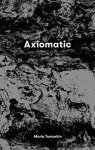
    • Axiomatic, by Maria Tumarkin (my review): because, again, social justice is at its core, and it forces us to rethink those maxims that we trot out, often without thinking about them too deeply.
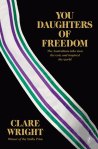
    • You daughters of freedom, by Clare Wright (my review): because it illuminates how progressive Australia was at the time of our Federation, and the significant role played by women, nationally and internationally, in that progressive thought and action.

    Do you have a particular topic you’ve been attracted to more this year?

    I wouldn’t say this is a topic I’ve been particularly attracted to this year, but I have had a long, ongoing interest in the stories and rights of Indigenous Australians, and try to keep my reading up in this area. This year, in terms of non-fiction regarding Indigenous Australians, I read Anita Heiss’s anthology Growing up Aboriginal in Australia (my review) and Stan Grant’s On identity (my review). I also read Neil H Atkinson’s The last wild west (my review), in which he chronicles his enlightenment of the injustices under which Indigenous Australians live.

    Week 2: (Nov. 4 to 8) (Sarah’s Bookshelves) Book Pairing:

    “This week, pair up a nonfiction book with a fiction title. It can be a “If you loved this book, read this!” or just two titles that you think would go well together. Maybe it’s a historical novel and you’d like to get the real history by reading a nonfiction version of the story.”

    Clare Wright, You daughters of freedomI love this week of the Challenge, because for as long as I can remember I’ve enjoyed seeing connections between my reading. However, because I’m doing three weeks in one, I’m going to do just one pairing, and it pairs two books I’ve read this year, Clare Wright’s You daughters of freedom (my review) which chronicles the women’s suffrage movement in Australia with Sue Ingleton’s Making trouble: Tongue with fire (my review) which tells the story of two women’s rights advocates, Harriet Elphinstone Dick and Alice C Moon.

    Book coverBoth these books focus on the late nineteenth and early twentieth century, though Ingleton’s ends right at the beginning of the twentieth century. Ingleton’s Dick and Moon weren’t actively involved in the suffrage movement, but they were passionate advocates of the rights of women and of women’s ability to live independent lives, and they, particularly Moon, met and associated with early Sydney leaders of the suffrage movement, like Rose Scott and Louisa Lawson, who feature in Wright’s book.
    Week 3: (Nov. 11 to 15) (Doing Dewey) Be The Expert/Ask the Expert/Become the Expert:

    Either share 3 or more books on a single topic that you have read and can recommend (be the expert) … [or] put the call out for good nonfiction on a specific topic that you have been dying to read (ask the expert) or … create your own list of books on a topic that you’d like to read (become the expert).

    Hmm, except that I wouldn’t and couldn’t call myself an expert, I could choose Indigenous Australian rights and lives, and repeat the three books I listed under Week 1’s particular topic question. I will stay with this idea, and share some more books I’d like to read, but with the proviso that I, as a non-indigenous person, could never actually become the expert. Some non-fiction indigenous works I’d like to read include:

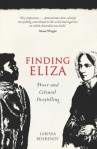
    • Larissa Behrendt’s Finding Eliza: Power and colonial storytelling (Lisa’s ANZLitLovers review): this book which explores/exposes early writing about Indigenous Australians has been on my TBR for a few years now. I hope to read it for Lisa’s 2020 Indigenous Literature Week.
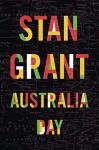
    • Stan Grant’s Australia Day (my post on a conversation with Stan Grant): having heard the conversation, I’d now like to read the book!
    • Alexis Wright’s Tracker (Bill’s The Australian Legend review) which won the Stella Prize in 2018, and which appeals for its story of a strong but controversial Indigenous Australian activist and for its “take” on biography/memoir.

    (I am early with Week 3, but I figure that balances the fact that I’m very late with Week 1. I hope I’ll be forgiven.)

    Maria Tumarkin, Axiomatic (#BookReview)

    Maria Tumarkin, Axiomatic

    A couple of weeks ago, I posted a guest post by Amanda for Maria Tumarkin’s book of essays, Axiomatic. At the time that post was negotiated, I had no immediate plans to read the book myself, but that changed when Brother Gums and family gave me a copy for Christmas …

    Now, if you are a regular reader here, you may remember that Amanda had mixed feelings about the book. She liked the writing, and found the analysis was “at its best in the first three sections when dealing with complex social issues”. But, she found the book “unrelenting”, “not balanced or fair”, and ultimately nihilistic in not offering hope or, to put it simply, ways forward. She concluded by asking what Tumarkin wanted to achieve with the book. Having now read the book, all of these comments make sense to me, but my response is more positive. Perhaps it’s because this Ukrainian-born Australian Tumarkin reminds me of Helen Garner whose bold, clear-eyed writing about tricky subjects I greatly appreciate. Indeed, Garner is quoted on the back of my edition, describing Tumarkin as charging “headlong into the worst and best of us, with an iron refusal to soften or decorate…” That’s Garner, and that’s Tumarkin.

    Axiomatic comprises five long essays, each interrogating an axiom:

    • time heals all wounds
    • those who forget the past are condemned to re–––––
    • history repeats itself
    • give me a child before the age of seven and I will show you the woman
    • you can’t enter the same river twice

    As you’ve probably worked out by now, Tumarkin doesn’t unquestionably accept these axioms, showing them instead to be simplistic or misguided, if not, false.

    In the first essay, she explores the notion that “Time heals all wounds” through the prism of teenage suicide. At one point she references psychologist Erminia Colucci’s study of “attitudes to suicide and suicidal thoughts among young people in Italy, Australia, India”, and adds, in parentheses:

    (There are intellectually rigorous reasons for her choice of countries. There are lovely simple ones too: ‘I am Italian. I love Australia. I am fascinated by India.’)

    This description could also be applied to Tumarkin’s rather idiosyncratic approach to her book. There is intellectual rigour – at least to the best of my knowledge and experience – but it also frequently feels personal, subjective, drawing on stories that interest her, that relate to her experiences, and that may not, initially anyhow, seem the most obvious choices. A lot of names – like Colucci’s, for example – are given, but this is not a foot-noted academic book, so you need to use your search engine if you want to check out the authorities she invokes. All this suggests that the book belongs to the creative non-fiction genre, one for which Garner, too, is well recognised. Amanda described Tumarkin’s writing as “a powerful composite of investigative journalism, analytical thinking and literary technique”. I’d agree, and add “personal reflection”.

    But, now, how to discuss this complicated, rather slippery book? Discuss each of the essays, teasing out the ideas Tumarkin explores? Choose just one essay, and use it to discuss Tumarkin’s approach? Or, just focus on some specific aspects of the book that stood out for me? I’m opting for the latter.

    What most appealed to me is the iconoclastic way Tumarkin thinks, the way she looks behind the assumptions we make, confronting the platitudes, or the way she asks questions from different (but often logical) angles. Regarding adolescent suicide in “Time heals all wounds”, for example, she identifies the nature of adolescence itself:

    … one of adolescence’s constants is not knowing what’s happening inside you. And by extension not knowing what you’re capable of.

    How do schools, society, handle this inherently unstable nature of adolescence? Then there’s the current “untreated depression” model of suicide causation, an explanation more common, Colucci tells her, in Australia than in Italy and India. What are the implications of this? This is a powerful essay – offering no resolution or answers. Just questions. I’d argue, though, that there’s value in that. Without asking the right questions, there can be no answers?

    In “History repeats itself”, Tumarkin applies her pen to the justice system and the way it treats “offenders”, the way it assumes that they’ll re-offend, and then behaves, treats them, accordingly. It’s devastating – and certainly discomforts those of us, including herself she admits, living “cushy middle-class” lives.

    Tumarkin discusses how offenders fall through the cracks. For example, she writes:

    It’s a real issue, how to keep people real. And not make them into catchphrases for banners, appendixes to principles … Many of those who advocate on behalf of others don’t want a connection with those they are advocating for.

    And yet, there are paradoxes, she sees, in connecting. Beware what you start if you can’t see it through. What, for example, does giving up drugs do to a person whose whole life is bound up in that community? What indeed? Do you have an answer?

    (An aside: I can’t resist mentioning here that the idea of “connecting” recurs several times in the book, reminding me of EM Forster’s Howards End and its theme, “only connect”.)

    Then there’s the notion of “knowing [my emphasis] your life is precious” and the assumption that that is “the default state of the human psyche”. But

    How about all those people for whom their life does not feel precious? Why not is often the easy bit to get [and she then catalogues the reasons why not]. A harder question is can the feeling your life’s worth shit be fixed, whether from outside in, or inside out? Can it? All the services offering legal aid, food, counselling, employment (tedious employment), shelter, they cannot get close to this worth-shit feeling … I mean this feeling’s impervious to being messed with, it is too deep and diffused … And when this feeling is there it skews the survival instinct  …

    “History repeats itself” also provides examples of another feature of the book – its writing. There are perfect (often gut-wrenching) descriptions like this:

    Perhaps one way of putting it is that many of Vanda’s [her main “guide” in this essay] clients live their lives on a highway where they are repeatedly hit by passing trucks. As they are bandaging their wounds, cleaning them out with rainwater, putting bones back into sockets, another truck’s coming.

    Beyond this, the writing is varied, and rather eccentric, slipping from formal perfection, dialogue and narrative, to, at times, idiosyncratic syntax and punctuation that stop you in your tracks, forcing you to think about what she is saying. Compounding this are digressions and odd juxtapositions which also keep the grey matter exercised.

    There is so much more to say about the content, style, thought processes, and inspirations for the book, not to mention the ‘yes’ moments – so many of those – but I’ll close with what I see as a unifying idea running through the five essays – the past. How the past affects us, how we perceive and deal with it. I’m not sure I fully grasped her meaning on one reading – and maybe there is no one meaning. But I sense she’s saying that although the past is significant, although it doesn’t “disappear”, we are not – to quote one of her contacts – “all sum totals of our histories.” That idea is too simplistic – and yet is the way it is too often viewed, which limits us, repeatedly, in our interactions with each other, personally, politically and systemically.

    Axiomatic is, for me, a compassionate work. While Amanda sees it as lacking hope, I see it as realistic. True, it doesn’t offer answers. As Vanda says, “there are no fairytale endings.” Why not, Tumarkin asks. “Because,” replies Vanda, “people are people.” And that, I’d say, is the fundamental humanity of this slippery, uncomfortable, provocative book.

    AWW Challenge 2019 Badge

    Maria Tumarkin
    Axiomatic
    Brow Books, 2018
    201pp.
    ISBN: 9781925704051

    Non-fiction November 2018, Weeks 4 and 5

    Non-fiction November 2018Well, bizarrely, I did the first three weeks from 2016 for my first Non-fiction November of 2018 post! I won’t revisit those – they’re similar topics to this year’s anyhow – but I’m back on track for this post. Non-fiction November, if you haven’t guessed, involves celebrating non-fiction for the month, with each week focusing on a specific issue, question or topic. This year’s meme is being hosted by Katie (Doing Dewey), Kim (Sophisticated Dorkiness), Rennie (What’s Nonfiction), Julz (JulzReads), and Sarah (Sarah’s Bookshelves). 

    As with my first post which covered weeks 1 to 3, I’m combining weeks 4 and 5 into one post and am publishing it during the weekend between the two weeks.

    Week 4: (Nov. 19 to 23) – Reads Like Fiction (Rennie @ What’s Nonfiction)

    This topic essentially asks whether we like a form of non-fiction called “narrative” or “creative non-fiction”, which Wikipedia describes as “writing that uses literary styles and techniques to create factually accurate narratives.”

    Well, in a word, yes – I do – very much. If that makes me sound soft, then so be it, but I’d argue that non-fiction writer using literary styles and techniques to engage readers doesn’t automatically weaken the seriousness or worthiness of their content. Commenting on a previous post of mine, historian Yvonne Perkins quoted historian Penny Russell who said that “Writing history… is a creative art. It requires empathy, intuition, a keen sense of drama and pathos, a distinct narrative flair.”

    Helen Garner, This house of grief book cover

    So, who (or what) are my favourites? One of the internationally recognised exponents of this form is the Australian writer, Helen Garner, whom I started reading long before blogging. Her books Joe Cinque’s consolation and This house of grief are excellent examples, and she influenced, I believe, younger Australian writers, like Chloe Hooper (The tall man) and Anna Krien (Into the woods and Night games). In these books the narrative drive comes from the writer’s involvement in the “story”, in their taking us along in their thinking and investigation. And to be not entirely ethnocentric, I’ll name one excellent non-Australian author I’ve read, albeit some years ago – Erik Larson and his book Isaac’s storm.

    Michelle Scott Tucker, Elizabeth MacarthurTurning to this year, most of my non-fiction reading has been biography, which lends itself to this “creative” approach though not all biographers do adopt it. Two that I’ve read this year did, however, Sarah Krasnostein’s The trauma cleaner and Michelle Scott Tucker’s Elizabeth Macarthur: A life at the edge of the world. Krasnostein achieves it by being part of the journey, by using a creative structure interweaving her subject’s past with her present life, and by evocative language which uses the sort of imagery more common in fiction. Tucker, on the other hand, takes the more traditional straight chronological approach, but she encourages us to engage with Elizabeth Macarthur the woman, rather than present her to us as a fait accompli. There are gaps in Macarthur’s story. For example, we might know what happened, but not, perhaps, how or why, so Tucker uses her imagination – and makes it clear she’s doing to – to consider the situation. Here’s an example:

    No. The most likely source is Elizabeth Macarthur, once more trying to mitigate her husband’s wilder misjudgements. But we have to imagine it: a hushed yet heated conversation with Edward to send him flying out after Oakes and then a vain attempt to placate and soothe John …

    This is a thoroughly researched and documented biography, but written with a narrative, dare I say, novelist’s flair.

    Week 5: (Nov. 26 to 30) – New to My TBR (Katie @ Doing Dewey)

    Unfortunately, like last year, and although I’ve been reading several participants’ posts, I haven’t added anything to my TBR as a result of these November posts, because – and it’s a big because – I have so much already on that pile, including, most recently:

    • Peter Ackroyd’s Dominion (History of England V)
    • Elizabeth Kleinhenz’s Germaine: The life of Germaine Greer (about which I have also posted recently)
    • Clare Wright’s You daughters of freedom (currently reading, and about which I have already posted)

    However, if I were looking for book ideas, I’d probably go back to some of “expert” posts. What a variety of topics – from Kate (booksaremyfavouriteandbest) on Empathy to Debbie (ExUrbanis) on Downsizing and Making Major Life Changes, from Buried In Print’s call for good non-fiction books on Indigenous Storytellers to Brona (Brona’s books) wanting more on the French Revolution (which reminds me that I must go recommend something!) To name just a few!

    Meanwhile, I’d love your comments on any of the above, but particularly your thoughts on non-fiction that reads like fiction. Do you like it? And if so, do you have any you’d recommend?