Monday musings on Australian literature: Favourite books 2021, Part 1: Fiction

For a few years now, I’ve shared favourite Aussie reads of the year, from the ABC and, last year, other sources.

This year I’m doing it a bit differently. I’m focusing on the Sydney Morning Herald’s Books we loved in 2021 and ABR’s Books of the Year 2021. Both these contain favourites from a large number of Australian writers. Both also include fiction and nonfiction, Australian and non-Australian works – and there are a lot. So, I’m writing two posts, one on fiction (this week) and the other on nonfiction and poetry (next week). I am only including their Australian favourites – this is a Monday Musings after all.

Novels

Book cover
  • David Allan-Petale’s Locust summer: (Toni Jordan) (Lisa’s review)
  • Miles Allinson’s In moorland: “lays out his territory with authority and a quiet, complex beauty” (Helen Garner); “darkly funny novel of generational bonds, a dazzling ride that is full of heart” (Lucy Treloar); “insightful and ambitious” (Toni Jordan); (Emily Bitto); “engrossing portrayal of obsession, loyalty and destruction within a family” (Robbie Arnott); “very smart novel” (Robbie Arnott) (Lisa’s review)
  • Amal Awad’s The things we see in the light: (Toni Jordan)
  • Larissa Behrendt’s After story: “ambitious in conception and masterful in execution” (Clare Wright); (Anita Heiss) (on my TBR, Lisa’s review)
  • Hannah Bent’s When things are alive they hum: “heartfelt and sweet” (Trent Dalton)
  • Emily Bitto’s Wild abandon: “kicks over the traces and breaks hearts” (Helen Garner); “brilliant and inventive” (Craig Silvey); “wonderful novel, daring and surprising, and profoundly humane” (Christos Tsiolkas); “thrilling and audacious” (Michelle de Kretser); lushly baroque, ruinous, and fantastically inventive … style in spades: its lyricism is exhilarating” (Sarah Holland-Batt)
  • Katherine Brabon’s The shut ins: “a poignant conceit, reminiscent of the work of W.G. Sebald and Patrick Modiano” (Anders Villani)
  • Brendan Cowell’s Plum: “the brain-damaged-rugby-league-poet-book I was waiting all my life to find” (Trent Dalton)
  • Garry Disher, The way it is now: (Judith Brett)
  • Jennifer Down’s Bodies of light: “witness to the creation of a resilient self” (Bernadette Brennan); “mesmerising chronicle … of one of the most sharply drawn characters I’ve encountered in recent fiction … extraordinary” (Robbie Arnott); “an epic Bildungsroman that honours the dignity of crafting a life in the wake of childhood trauma” (Yves Rees); “equal parts devastating and hopeful” (Giselle Au-Nhien Nguyen)
  • Stephen Downes’ The hands of pianists: “an extraordinary book which appropriates the style and strategies of W.B. Sebald but then succeeds in equalling him” (Peter Craven)
  • Robert Gott’s The orchard murders: “perfectly executed Melbourne noir” (Jock Serong)
  • Anita Heiss’s Bila Yarrudhanggalangdhuray: “much-needed look at white settlement from an Indigenous maid’s point of view” (Jane Sullivan) (on my TBR, Lisa’s review)
  • Sally Hepworth’s The younger wife: “delivered wit, warmth and suspense” (Jane Harper) (Theresa’s review)
  • Kathryn Heyman’s Fury: (Fiona Wright); (Anita Heiss)
  • Antoni Jach’s Travelling companions: “funny, layered” (Toni Jordan) (Lisa’s review)
  • Mette Jakobsen’s The wingmaker: ‘dare I say “uplifiting”‘ (Graeme Simsion); “exquisite” (Favel Parrett)
  • Susan Johnson’s From where I fell: “inspired me as an author” (Anita Heiss) (Lisa’s review)
  • Michelle de Kretser’s Scary monsters: “about the thought crimes that divide us, but also stunning, profound and funny” (Anna Funder); (Fiona Wright); (Emily Bitto); “its riskiness, unashamed intellectualism, and rage against ageism, misogyny and racism” (Bernadette Brennan); “brilliant, chimeric” (Sarah Holland-Batt); “creatively repositions contemporary concerns around race, immigration, and national identity” (Paul Giles)
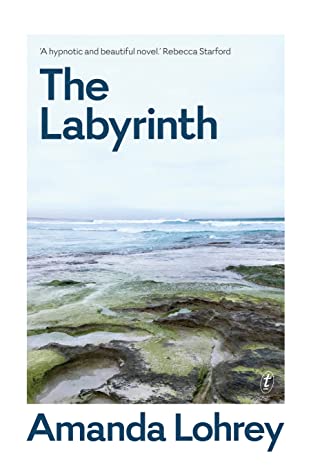
  • Amanda Lohrey’s The labyrinth: “luminous, meditative and richly layered fiction” (Cassandra Pybus): “moody and allegorical with overcast skies, distant waves, and silences” (Glyn Davis) (On my TBR, Lisa’s review)
  • Laura Jean McKay’s The animals in that country: (Emily Bitto) (kimbofo’s review)
  • Emily Maguire’s Love objects: (Fiona Wright); “a tender and aching story” (Tony Birch) (Lisa’s review)
  • Meg Mason’s Sorrow and bliss: “contemporary laughter and heartbreak” (Mick Herron)
  • Jennifer Mills’ The airways: (Fiona Wright); “subtle and fierce” (Geordie Williamson) (Lisa’s review)
  • Liane Moriarty’s Apples never fall: (Jane Harper)
  • Alice Pung’s One hundred days: ” the quiet, bold power of Pung’s writing, the commanding precision of her prose” (Christos Tsiolkas); “warm, funny, compelling read” (Judith Brett) (kimbofo’s review)
  • Diana Reid’s Love and virtue: “discomfiting ambiguities” (Hannah Kent); ‘restores what’s gone missing from contemporary sexual politics: the distinction between “being hurt and being wronged”’ (Helen Garner); “sharp” (Victoria Hannan) (Brona’s review)
  • Nicolas Rothwell’s Red heaven: “an engrossing novel of ideas” (Glyn Davis)
  • Claire Thomas’ The performance: (Emily Bitto) (on my TBR, Brona’s review
  • Evie Wyld’s The bass rock (Emily Bitto) (on my TBR)

Short stories

  • Tony Birch’s Dark as last night: “richly evocative and deeply empathetic … Birch is more at home with his material than any other modern writer I know” (Alex Miller)
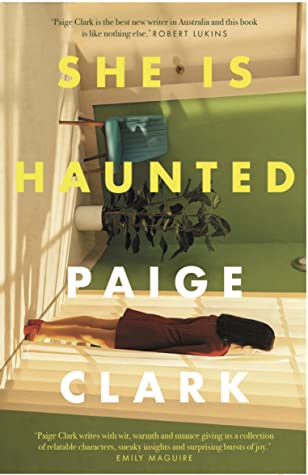
  • Paige Clark’s She is haunted: “deft and original” (Craig Silvey); “stayed with me long after the last word” (Victoria Hannan); “fresh and fantastic” (Bri Lee); (Jennifer Down)
  • Melissa Manning’s Smokehouse: “exquisite” (Jennifer Down) 
  • SJ Norman’s Permafrost: “ghost stories that queer and disrupt the Western gothic tradition” (Hannah Kent); “a beguiling collection of queer ghost stories” (Yves Rees)
  • Chloe Wilson’s Hold your fire: “enthralled and amazed” (Anna Funder)

Finally …

It’s always interesting to see what books feature more than once – which is not to say that popularity equals quality, but it does say what has most captured attention this year. And it seems that Miles Allinson’s In moorland, Emily Bitto’s Wild abandon, Jennifer Down’s Bodies of light, Michelle de Kretser’s Scary monsters, Diana Reid’s Love and virtue, and Paige Clark’s She is haunted are this year’s ones. Most by women writers. I wonder if they’ll all be longlisted (at least) for the Stella?

Another interesting thing about lists is discovering new books. Paige Clark and Chloe Wilson’s short story collections, for example, are new to me – and appeal. Dare I put them on the wishlist?

I know lists will appear constantly over the next month, but I’d be interested in any thoughts you have on these (or on your own list, if you’d prefer!)

Monday musings on Australian literature: 2021 Mark and Evette Moran Nib Literary Award shortlist

Once again I am using my Monday Musings post to make an awards announcement, though I prefer not to. However, I am breaking my rule-of-thumb so soon again for a few reasons: I spent too much time on yesterday’s Living under Covid-19 post leaving less time for today’s post; I have a zoom Tai Chi class this evening; and, the Mark and Evette Moran Nib Literary Award shortlist was announced today. I hope this doesn’t disappoint those of you who enjoy my more usual MM posts (however you define that), but it’s the best I have for you today! It has inspired a future MM post, but you’ll have to wait to see what that is.

Now, you may remember that the longlist for this year’s Nib award was a very long one – 18 titles. I wondered how they were going to whittle it down, and to how many. Before I share their decision, I’ll remind you that this award celebrates “excellence in research and writing”. It is not limited by genre, though given the research focus, nonfiction always features heavily.

Wonderfully, all shortlisted authors automatically win the Alex Buzo Shortlist Prize, of $1000, each. So, a big congratulations to them. And now …

The shortlist

Book cover
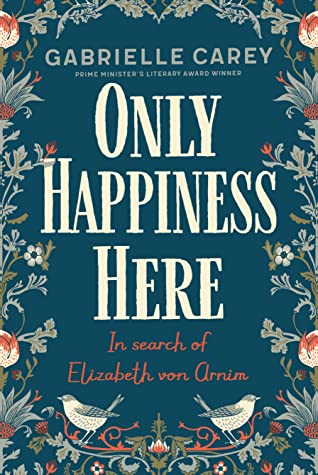
  • Gabrielle Carey‘s Only happiness here: In search of Elizabeth von Arnim (biography/memoir) (on my wishlist) (Brona’s review)
  • Kate Holden’s The winter road: A story of legacy, land and a killing at Croppa Creek (nonfiction/environment)
  • Ramona Koval’s A letter to Layla: Travels to our deep past and near future (nonfiction)
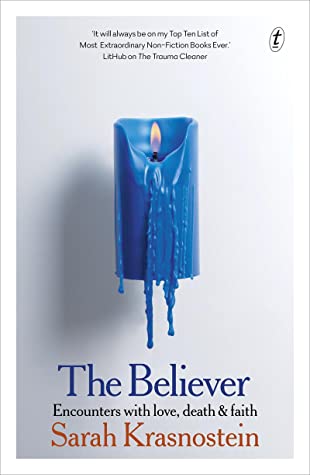
  • Sarah Krasnostein’s The believer: Encounters with love, death & faith (nonfiction/religion) (on my TBR)
  • Tim Olsen’s Son of the brush (nonfiction/memoir)
  • Luke Stegemann’s Amnesia Road, landscape, violence and memory (nonfiction/history) (Janine’s review)

Unfortunately, only one of the five books from the longlist that I had on my TBR – I identified four in my longlist post, and bought another since – made it through. However, that one l will definitely read this year, whether it wins or not.

Head judge Jamie Grant said that

This year’s Nib shortlist has been chosen from the largest and most diverse field that the prize has yet known. There are biographies, true crime stories, philosophical meditations, and personal memoirs among the shortlisted books, a variety the judges hope will include as many different readers as possible.

It certainly was diverse in terms of content, and in terms of author gender, but it could be more diverse regarding author background. I wonder if the lack of diversity in this aspect is due to authors not being aware of this prize. Hopefully, posts like this will help improve its visibility.

The judges for the 2021 award are Katerina Cosgrove (author), Jamie Grant (poet and editor), and Lee Kofman (author and editor).

Finally, I should add that there is a People’s Choice prize, which is now open for voting. It is worth $2,500, and all who vote will go into a draw to win a Nib Award prize pack containing all six of this year’s shortlisted books and $100 voucher from Nib Award community partners, Gertrude & Alice Bookstore Cafe. You can Cast Your Vote here!

The overall Winner ($20,000) and the People’s Choice Prize will be announced on 24 November.

Many of you commented on the longlist … any further thoughts now?

Monday musings on Australian literature: 2021 Mark and Evette Moran Nib Literary Award longlist

I only occasionally use my Monday Musings post to make awards announcements. Today is one of those occasions, because the Nib Literary Awards longlist was announced today and I did want to share it, as it’s one of Australia’s quieter but yet interesting awards.

I have written about it before and in that post you can read about about its origins and intentions but, in a nutshell, it celebrates “excellence in research and writing”. It is not limited by genre, though given the research focus, nonfiction always features heavily.

The Nib, which celebrates its 20th anniversary this year, is managed by Sydney’s Waverley Council. It is, according to the email announcement I received, the “only major literary award of its kind presented by a local council”. Whether you like awards or not, this represents an impressive and meaningful commitment to Australia’s literary culture, wouldn’t you say?

Anyhow, the judges for the 2021 award are Katerina Cosgrove (author), Jamie Grant (poet and editor), and Lee Kofman (author and editor). They worked their way through 150 nominations, with their judging criteria being “high literary merit, readability and value to the community”.

The longlist

Book cover
  • Bill Birtles‘ The truth about China: Propaganda, patriotism and the search for answers (nonfiction/political)
  • Tanya Bretherton’s The husband poisoner: Suburban women who killed in post-World War II Sydney (nonfiction/true crime) (Kim’s review)
  • Gabrielle Carey‘s Only happiness here: In search of Elizabeth von Arnim (biography/memoir) (on my wishlist) (Brona’s review)
  • Alison Croggon’s Monsters: A reckoning (nonfiction/memoir) (on my TBR)
  • Sarah Dingle’s Brave new humans: The dirty reality of donor conception (nonfiction/science)
  • Richard Fidler’s The golden maze (nonfiction/history)
  • Tim Flannery’s The climate cure: Solving the climate emergency in the era of COVID-19 (nonfiction/environment) (on my TBR)
  • Anthony Ham’s The last lions of Africa: Stories from the frontline in the battle to save a species (nonfiction/environment)
  • Kate Holden’s The winter road: A story of legacy, land and a killing at Croppa Creek (nonfiction/environment)
  • Zoe Holman’s Where the water ends: Seeking refuge in Fortress Europe (nonfiction/refugees) (Lisa’s review)
  • Ramona Koval’s A letter to Layla: Travels to our deep past and near future (nonfiction)
  • Sarah Krasnostein’s The believer: Encounters with love, death & faith (nonfiction/religion) (on my TBR)
  • Bri Lee’s Who gets to be smart: Privilege, power and knowledge (nonfiction/sociopolitics)
  • Mark McKenna’s Return to Uluru (nonfiction/racial politics) (on my TBR) (Janine’s review)
  • Tim Olsen’s Son of the brush (nonfiction/memoir)
  • Dymphna Stella Rees’ A paper inheritance (nonfiction/biography)
  • Rebecca Starford’s The imitator (fiction)
  • Luke Stegemann’s Amnesia Road, landscape, violence and memory (nonfiction/history) (Janine’s review)

At 18 titles, this is a long longlist. Eleven of the 18 are by women, but beyond that it’s not a particularly diverse list in terms of authors. It would be great to see that change. However, thinking of “value to the community”, it does encompass several of our important contemporary political issues including the environment (climate change and species extinction), refugees, racial politics and difficult histories. Four books fall into the life-writing category. There is only one work of fiction, which is probably why very few of these books have been reviewed by the bloggers I follow. We are mostly a fiction-focused lot!

The shortlist will be announced in late September, with the overall Winner ($20,000) and the People’s Choice Prize being announced in November.

Do you have any thoughts on this list?

The Age Book of the Year 2021 shortlist announced

A few weeks ago, I wrote a Monday Musings on the revival of The Age Book of the Year award. Back then, there was no information about when the shortlist would be announced. Suddenly, however, with no fanfare, it was announced yesterday afternoon – at least that’s when the announcement I saw was posted.

The judging panel comprised Jason Steger (The Age’s literary editor); Susan Wyndham (author and former The Sydney Morning Herald literary editor), and Thuy On (poet and critic).

The shortlist was drawn from books published between 1 June last year and 31 May this year.

The shortlist

I’ve included a brief excerpt for each book of Steger’s (the judging panel’s?) comments:

  • Robbie Arnott’s The rain heron (Kim’s review): “Its separate but connected narratives are beguiling, beautiful and violent”.
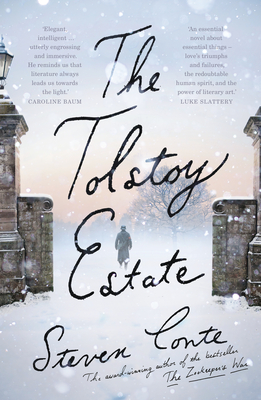
  • Steven Conte’s The Tolstoy Estate (my review): “restrained, elegant prose that crackles with sexual, moral and political tension”.
  • Richard Flanagan’s The living sea of waking dreams (Lisa’s review): “provocative story [that] taps into our anxieties with an urgent plea and hopeful flashes of beauty”.
  • Kate Grenville’s A room made of leaves: “a witty voice that blends echoes of Jane Austen with a contemporary perspective”.
  • Amanda Lohrey’s The labyrinth (Lisa’s review): “explores the contradictions of human nature and community with wry wisdom”.
  • Nardi Simpson’s Song of the crocodile (my review): “its lyricism and attentiveness to language are testament to Simpson’s musicality”.
  • Adam Thompson’s Born into this (my review): “the past is never far from the present in these nuanced glimpses of complex lives”.

A lucky seven, eh? It’s not a particularly provocative or surprising list. It largely reflects the books currently doing the awards rounds, which is not to say it’s not a reasonable list. It contains four male to three female writers; two First Nations writers; a short story collection; two debut books; two works of historical fiction; four by previous winners of major literary awards. Something for everyone?

I’m thrilled that I’ve actually read – and greatly enjoyed – three of these.

The winner, who will receive $10,000, will be announced on September 3, at the opening of the Melbourne Writers Festival.

Now, my usual question. Thoughts anyone?

Miles Franklin Award 2021 winner announced

Nothwithstanding this week’s Monday Musings posts on literary awards, I still like the Miles Franklin – partly because of its significance in the Australian literary firmament – and so I am sharing today’s announcement of this year’s winner which I watched via You Tube.

You may remember that this years shortlist was:

  • Aravind Adiga’s Amnesty (Lisa’s review)
  • Robbie Arnott’s The rain heron
  • Daniel Davis Wood’s At the edge of the solid world
  • Amanda Lohrey’s The Labyrinth (Lisa’s review)
  • Andrew Pippos’ Lucky’s
  • Madeleine Watts’ The inland sea
Book cover

And the winner is: Amanda Lohrey’s Labyrinth

(Lisa will be pleased!)

Just to recap, from my shortlist post: Each of the shortlisted writers received $5000 from the Copyright Agency’s Cultural Fund, with the winner receiving $60,000 prize. This year’s judges comprised, as always, continuing judges and new ones, providing I think a good mix of experience and fresh ideas: Richard Neville (State Library of NSW), author and activist Sisonke Msimang, and critics Melinda Harvey, Bernadette Brennan and James Ley.

So, more on the winner …

This is Lohrey’s second listing for the Miles Franklin award, but her first win. The panel described the novel as a “profound mediation” on loss, with judging panel chair, Richard Neville commanding the “clarity” of her prose in exploring “loss at so many levels”. (Notably, Neville also mentioned the increasing cultural diversity appearing in the awards, by which I assume he meant, in the books submitted. Ninety-six titles were submitted.)

Amanda Lohrey spoke briefly, thanking various people – including family, publisher, editor, of course. She praised her publisher, the wonderful Text Publishing, for supporting “literary values” and she talked of the award’s benefactor, Miles Franklin, as “the great Australian nonconformist”. She also thanked the readers whom she described as an “indestructible tribe” in a world of Netflix (etc). She characterised the relationship between writer and readers as “an extraordinary exchange among strangers.” I like that.

Book cover

The presentation also included last year’s winner Tara June Winch congratulating Amanda Lohrey. She said that what she gained, in particular, from the award, was “a readership”. Isn’t that great to hear, because that – and the “gift of time” – is what we hope awards like this offer books and their writers.

And, finally, just for fun. Today The Sydney Morning Herald published an article on How to win the Miles Franklin: Analysing 64 years of data, by Pallavi Singhal. It looks at the usual issues like gender, origin (birth location, ethnicity), age, but also other points you may not have considered like length (“write about 400 pages”, it says), title style (“Begin your book title with ‘the’ and keep it short”) and publisher (Allen & Unwin is ahead at the moment)!

Do you have any thoughts on this year’s winner?

Miles Franklin Award 2021 shortlist

I haven’t posted on the Miles Franklin Award since 2019, and I didn’t post this year’s longlist when it came out last month, but, despite my woeful record – I’ve yet to read any on the longlist – I felt it was about time I returned to Australia’s best known literary award.

Unfortunately, I was driving in the back blocks of northeast Victoria when the announcement was made, with no Internet connection in our room overnight. We have landed in civilisation – hmmm – depending on you definition, and are once more connected! I thought I’d start by sharing the longlist:

The longlist

Book cover
  • Aravind Adiga’s Amnesty (Lisa’s review)
  • Robbie Arnott’s The rain heron
  • Daniel Davis Wood’s At the edge of the solid world
  • Gail Jones’ Our shadows
  • Sofie Laguna’s Infinite Splendours (on my TBR and will definitely be read this year)
  • Amanda Lohrey’s The Labyrinth (Lisa’s review)
  • Laura Jean Mckay’s The animals in that country (my, I wish I’d read this already, given its popularity on awards lists)
  • Andrew Pippos’ Lucky’s
  • Mirandi Riwoe’s Stone sky, gold mountain (on my TBR)
  • Philip Salom’s The fifth season (on my TBR) (Lisa’s review)
  • Nardi Simpson’s Song of the crocodile ((on my TBR and will definitely be read this year)
  • Madeleine Watts’ The inland sea

The judges describe the spread as “‘a rich mix of well-established, early career and debut novelists whose work ranges from historical fiction to fabulism and psychologism”.

And now, the shortlist:

  • Aravind Adiga’s Amnesty
  • Robbie Arnott’s The rain heron
  • Daniel Davis Wood’s At the edge of the solid world
  • Amanda Lohrey’s The Labyrinth
  • Andrew Pippos’ Lucky’s
  • Madeleine Watts’ The inland sea

Some random observations:

  • Two of the authors – Adiga and Wood – are not Australian-born or based, but meet the award’s criteria because their subject matter is Australian (that is, they present ‘Australian life in any of its phases’). Adiga won the Booker Prize in 2008 with The white tiger, and Wood is apparently the founder and publisher of Splice, a small UK-based press.
  • None of these books are on my TBR pile – wah – though I have been wanting to read Lohrey so this might be the impetus I need.
  • There appears to be less diversity in terms of author background, though Adiga is Indian.
  • There are four women and two men, which is fine, particularly given the award has rebalanced the gender representation well over recent years.
  • None of these authors have won the Award before, but two, Arnott and Lohrey, have been listed before.
  • Two – Pippos and Watts – are debut novelists.
  • Lisa (ANZLitLovers) will be happy as she was mightily impressed with Lohrey’s Labyrinth (see her review above).

Each of the shortlisted writers will receive $5000 from the Copyright Agency’s Cultural Fund, with the winner receiving $60,000 prize.

The chair of the judging panel, Richard Neville, said

‘In various ways each of this year’s shortlisted books investigate destructive loss: of loved ones, freedom, self and the environment … There is, of course, beauty and joy to be found, and decency and hope, largely through the embrace of community but, as the shortlist reminds us, often community is no match for more powerful forces.’

This year’s judges comprise, as always, continuing judges and new ones, providing I think a good mix of experience and fresh ideas: Richard Neville (State Library of NSW), author and activist Sisonke Msimang, and critics Melinda Harvey, Bernadette Brennan and James Ley.

The winner will be announced on 15 July.

And, for a bit of fun, we saw this on a school notice board as we drove by today:

I always knock on the fridge door just in case salad’s dressing. (Eltham Primary School) 

What do you think – of the shortlist, I mean!?

Stella Prize and Christina Stead Prize for Fiction 2021 Shortlists announced

With two shortlists being announced on the heels of each other, I thought I would combine them into one post, so here goes …

Stella Prize Shortlist

The Stella Prize shortlist was announced this morning and is, I suppose, a bit of a surprise for me – though I haven’t read the books so I have nothing to base that on. I was hoping Ellen Savage’s Blueberries, Nardi Simpson’s Song of the crocodile and Elizabeth Savage’s Smart ovens for lonely people would be in the list as they are on my TBR or I’m keen to read them. However, besides the Stella judges, I have it on good authority from other bloggers that many of the books below are excellent reads, so … on with the show … and I’ll see what I can read!

The shortlist

Book cover

Stella’s Executive Director, Jaclyn Booton makes a political point – which is very Stella!:

As recent events have shown, there’s significant cultural change needed in this country to ensure women’s voices are heard. Books can be a tool for positive social change – I encourage everyone to seek out these books and delve into the stories and perspectives within.

The judge’s chair, Zoya Patel, says:

“The 2021 Stella Prize shortlist truly demonstrates the immensity of talent in Australian women and non-binary authors. This shortlist is varied, diverse, and reflects on urgent themes across the gamut of human experience.

To read the judges on each of the shortlisted books, do check out the Stella website.

The winner will be announced on April 22.

NSW Premiers Literary Awards

Unlike the Stella, these awards comprise several categories, but I’m just going to share the two fiction ones.

Book cover

The Christina Stead Prize for Fiction

  • Kate Grenville’s A room made of leaves
  • Carol LeFevre’s Murmurations (my review)
  • Laura McPhee-Browne’s Cherry Beach
  • Pip Williams’ The dictionary of lost words
  • Charlotte Wood’s The weekend (my review)
  • Evie Wyld’s The bass rock

UTS Glenda Adams Award for New Writing

  • Erin Hortle’s The octopus and I
  • Laura McPhee-Browne’s Cherry Beach
  • Sean O’Beirne’s A couple of things before the end
  • Nardi Simpson’s Song of the crocodile
  • Madeleine Watts’ The Inland Sea

For more categories in these awards, and links to her own and other bloggers’ reviews, please see Lisa’s post on them.

Any comments?

Stella Prize 2021 Longlist announced

Unfortunately, because I’m on the road, I wasn’t able to “attend” the announcement earlier this evening, but at least I have been able to get my post out on the night, as it were.

As I say every year, I think, I don’t do well at having read the Stella Prize longlist at the time of its announcement. In 2017 I’d read none; in 2018, one, and in 2019, two! Last year, I was back to one! By the end of 2020, I’d read 3.5 which is worse than previous years.

Again, as I’ve said before, I do better at reading the winners, having read Carrie Tiffany’s Mateship with birds (2013), Clare Wright’s The forgotten rebels of Eureka (2014), Emily Bitto’s The strays (2015), Charlotte Wood’s The natural way of things (2016), Heather Rose’s The museum of modern love (2017), and Vicki Laveau-Harvie’s The erratics (2019). So far, I’ve missed 2018’s winner, Alexis Wright’s Tracker, and I’m only halfway through reading last year’s winner, Jess Hill’s See what you made me do. I will finish though, as it’s a significant book I believe.

The judges are again different to last year’s with only Zoya Patel (this year’s chair), continuing on the panel: memoirist and editor Zoya Patel (Chair); playwright, author and Blak & Bright First Nations Literary Festival Director Jane Harrison; 3RRR radio producer, presenter and literary critic Elizabeth McCarthy;  production editor of The Saturday Paper Ian See; and Deputy Programme Director at Edinburgh Book Festival Tamara Zimet. As always, attention has been paid to diversity on the panel.

The longlist

Book cover
  • Rebecca Giggs’ Fathoms: The world in the whale (non-fiction)
  • SL Lim’s Revenge (fiction) (Lisa’s review)
  • Laura Jean McKay’s The animals in that country (fiction)
  • Louise Milligan’s Witness (non-fiction)
  • Cath Moore’s Metal fish, falling snow (fiction)
  • Intan Paramaditha’s The wandering (fiction)
  • Mirandi Riwoe’s Stone sky gold mountain (fiction) (on TBR; Kate’s mini-review)
  • Ellena Savage’s Blueberries (non-fiction/essays)
  • Nardi Simpson’s Song of the crocodile (fiction) (on TBR)
  • Elizabeth Tan’s Smart ovens for lonely people (short stories) (Bill’s review and on TBR)
  • Jessie Tu’s A lonely girl is a dangerous thing (fiction) (Kim’s review)
  • Evie Wyld’s The bass rock (fiction)

Well, I guessed five of these might be in the list – McKay, Riwoe, Simpson, Tan and Tu, but I also guessed some more non-fiction like Grace Karskens’ People of the river, and Jacqueline Kent’s Vida. However, as I haven’t read any of the longlist – and have not, in fact, heard of several of them – I’m not going to judge. I’ll just say, how interesting!

Oh, and for the record, I’ve read none – though I have a few on my pile!

The judges’ chair, Zoya Patel commented on the longlist:

The 2021 Stella Prize longlist demonstrates the breadth of expression present in Australian literature, and the importance of raising the profile of women and non-binary voices in celebrating this expansive talent. In reading these titles, we pondered what might be lost or overlooked should a prize such as the Stella not exist to specifically examine the output of Australian women and non-binary writers. […]

This year’s reading presented a diversity of talent and expression, with books exploring the people and animals through the lens of fiction and non-fiction, and with a common objective to reach into the heart of what it means to exist in the world today.

To read the judges on each of the longlisted books, do check out the Stella website.

Stella’s announcements are all later this year than in previous years – including this longlist which has usually been announced in February. So, the shortlist will be announced on March 25, and the winner on April 22.

Any comments?

Monday musings on Australian literature: Some New Releases in 2021

For some years now, I’ve made my first Monday Musings of the year, a “new releases” post. As in previous years, my list is mostly drawn from the Sydney Morning Herald, whose writers do a wonderful job of checking out publishers large and small, but I have found a couple of extras on my own! Also, remember, as this is Monday musings on Australian literature post, it will be limited to Australian authors (listed alphabetically.) Do click on the SMH link to see the full list, which includes non-Aussies, Aussies I haven’t selected, and additional info about some of the books.

Links on the authors’ names are to my posts on them.

Fiction

Last year, I listed 24 fiction works plus a few new voices and short story collections, and read only TWO (par for last year’s course, really) – but I will be reading some more of them in the next few months.

Book cover
  • Pip Adams, Nothing to see (March, Giramondo)
  • Michael Mohammed Ahmad, The other half of you (June, Hachette)
  • Larissa Behrendt, After story (July, QUP)
  • Emily Bitto, Menagerie (second half, A&U)
  • Steven Carroll, O (February, Fourth Estate)
  • Claire G. Coleman, Enclave (October, Hachette)
  • Paul Daley, Jesustown (August, Allen & Unwin) 
  • Michelle de Kretser, Scary monsters (“a flip book”, second half of 2021, Allen & Unwin)
  • Briohny Doyle, Echolalia (June, Vintage)
  • Nikki Gemmell, The ripping tree (April, Fourth Estate)
  • Irma Gold, The breaking (March, MidnightSun)
  • Chris Hammer, no title yet (second half, Allen & Unwin) (my token crime inclusion!)
  • John Kinsella, Pushing back (February, Transit Lounge)
  • Jamie Marina Lau, Gunk baby (May, Hachette) (and I have to include the description: it’s “about a budding entrepreneur who opens an ear-cleaning business in the local mall”)
  • Charlotte McConaghy, Once there were wolves (August, Hamish Hamilton)
  • Emily Maguire, Love objects (April, Allen & Unwin)
  • Sophie Masson, The ghost squad (yes, I know, YA, but – February, MidnightSun)
  • Jennifer Mills, Airwaves (August, Picador)
  • Kate Morton, no title yet (second half, Allen & Unwin)
  • Stephen Orr, Sincerely, Ethel Malley (April, Wakefield Press)
  • Debra Oswald, The family doctor (March, A&U)
  • Alice Pung, One hundred days (June, Black Inc.)
  • Trevor Shearston, The beach caves (February, Scribe)
  • Graeme Simsion and Anne Buist, Two steps onward (collaborative novel, March, Text)
  • Claire Thomas, The performance (March, Hachette)
  • Christos Tsiolkas, (“auto-fiction”, second half, Allen & Unwin)

I’m surprised to find that many more authors from this year’s list are already on my blog than ever before, which sort of makes me feel I’m getting somewhere!

SMH also lists “new voices” (including new forms for established voices):

  • Ella Baxter, New animal (February, Allen & Unwin)
  • Hannah Bent, When things are alive they hum (second half, Ultimo Press)
  • Barry Divola, Driving Stevie Fracasso (March, HarperCollins) (music journalist/short story writer)
  • Max Easton, Leaving the plain (TBA, Giramondo)
  • Martin McKenzie-Murray, The speech writer (Scribe, February) (journalist)
  • L.P McMahon, As swallows fly (March, Ventura)
  • Jacqueline Maley, The truth about her (April, Fourth Estate) (journalist)
  • Campbell Mattinson, We were not men (June, Fourth Estate) (wine writer)
  • Angela O’Keeffe, Night blue (May, Transit) (here’s one for next year’s “interesting narrative voices” – the narrator is Pollock’s Blue Poles painting!)
  • Sophie Overett, The rabbits (July, Michael Joseph)
  • Madeleine Ryan, A room called Earth (March, Scribe)
  • Emma Spurr, A million things (March, Text)

Short stories

  • Tony Birch, Dark as last night (August, UQP)
  • Te-Ping Chen, Land of big numbers (March, Scribner)
  • Paige Clark, She is haunted and other stories (August, A&U).  
  • Melissa Manning, Smokehouse (April, UQP)
  • Adam Thompson, Born into this (February, UQP) 
  • Chloe Wilson, Hold your fire (March, Simon & Schuster)

Non-fiction

SMH provides a long long list of new non-fiction books covering a huge range of topics, so my two lists are highly selective.

Life-writing (loosely defined)

  • Emma Alberici, Rewrite the story (September, Hardie Grant): memoir.
  • Alison Croggon, Monsters: A reckoning (March, Scribe): hybrid memoir/essay (award-winning essayist).
  • Carly Findlay (ed.) Growing up disabled (February, Black Inc.): from the Growing Up series.
  • Clementine Ford, How we love (second half, Allen & Unwin): memoir about love, motherhood and her family.
  • Evelyn Juers, The dancer (TBA, Giramondo): biography of Philippa Cullen, that was listed in my 2020 new releases and is listed again but still without a date.
  • Nathan Hobby, biography of Katharine Susannah Prichard (first half, MUP)
  • Eleanor Hogan, Into the loneliness (March, NewSouth): biography of Daisy Bates and Ernestine Hill
  • Yumiko Kadota, Emotional female (March, Viking): memoir about the challenges of being a young female surgeon in an often toxic environment.
  • Sarah Krasnostein, The believer (March, Text): faith and conviction in six people.
  • Joyce Morgan, The Countless from Kirribilli (July, Allen & Unwin): biography of Elizabeth von Arnim. I can’t believe there is a third book coming out in reasonably short time about this author, with whom I fell in love way back in the 1980s. 
  • Rick Morton, My year of living vulnerably (March, HarperCollins): follow-up memoir.
  • Fiona Murphy, The shape of sound (March, Text): memoir about being deaf, by an emerging writer admired by Jessica White and Angela Savage.
  • Christine Skyes, Gough and me (May, Ventura): memoir about the role Gough Whitlam played in her life.
  • Alf Taylor, God, the devil and me (February, Magabala): Memoir
  • Robert Wainwright, The diva and the duc (second half, A&U): biography of soprano Nellie Melba.
  • David Williamson, untitled autobiography (October, HarperCollins). 
  • Charlotte Wood, Inner life (second half, A&U): expanding her essay on “the creative process, inspiration and hard work”. 

SMH lists a number of biographies coming out on politicians, past and present, and memoirs by current political figures, but let’s give ourselves a break from parliamentary politics today. (You can check out the SMH link, of course, if you are interested.)

History and other non-fiction

  • Santilla Chingaipe, Black convict (July, Picador): convicts of African descent transported to the Australian penal colonies.
  • Helen Garner, presumably the next diary volume (Text)
  • Stan Grant, With the falling of the dusk (April, HarperCollins): “the challenges facing our world”. 
  • David Hunt, Girt nation (November, Black Inc.): third instalment after Girt and True girt.
  • Bri Lee, Brains (second half, Allen & Unwin): the structural inequalities behind elite institutions.
  • Mark McKenna, Return to Uluru (March, Black Inc.): starts from the 1934 shooting at Uluru of Aboriginal man Yokunnuna by white policeman Bill McKinnon.
  • David Marr, A family business (October, Black Inc.): Queensland’s frontier massacres in the 19th century. 
  • Henry Reynolds Truth-telling (February, NewSouth): First Nations sovereignty and the importance of the Uluru Statement from the Heart. 

SMH also identifies some special current-interest topics being written about, including:

  • Last year’s bushfires: Bronwyn Adcock, Currowan (August, Black Inc.); Danielle Celermajer, Summertime (February, Hamish Hamilton); Greg Mullins, Firestorm (September, Viking Australia); John Pickrell, Flames of extinction (March, NewSouth); and Michael Rowland (ed), Black summer (January, ABC Books).
  • Climate change: Richard Beasley, Dead in the water (February, Allen & Unwin); Jonica Newby, Beyond climate grief (NewSouth); Gabrielle Chan, Why you should give a f— about farming (August, Vintage); and Ian Lowe, Long half life (August, Monash).
  • COVID-19 (of course): Ross Garnaut, Reset (February, La Trobe); Hugh McKay, The loving country (May, A&U); Duncan McNab, The Ruby Princess (February, Macmillan); and Norman Swan, So you think you know what’s good for you (July, Hachette).
  • Politics and current affairs: David Brophy, China panic (June, La Trobe); Zoe Daniel and Roscoe Whalan, Greetings from Trumpland (February, ABC Books); Zareh Ghazarian and Katrina Lee-Koo (ed), Gender politics: Navigating political leadership in Australia (May, NewSouth); Nicholas Jose and Benjamin Madden (ed), Antipodean China (February, Giramondo); Peter van Onselen and Wayne Errington, How good is Scott Morrison? (March, Hachette); and Trevor Watson and Melissa Roberts (ed), The Beijing Bureau (May, Hardie Grant).

Does anything here interest you?

Reading highlights for 2020

For newbies here, my annual Reading Highlights post is my answer to other bloggers’ Top Reads posts. In other words, I don’t do a ranked list of the books I consider my year’s “best”, but instead share my “highlights”, which I define as those books and events that made my reading year worthwhile.

I don’t, as I say each year, set reading goals, but do have certain “rules of thumb”, including trying to reduce the TBR pile, increase my reading of indigenous authors, and read some non-anglo literature. This year though has been an annus horribilis for me – of which COVID-19 was only a part. Consequently, I didn’t make great inroads into any of these … as you’ll see.

Literary highlights

My literary highlights, aka literary events, were different this year, given the pandemic’s early (and ongoing) presence in the year, However, going on-line, while a less personal experience, had its pluses:

Book cover
  • Writing War panel discussion: This in-person event was changed into a Zoom one. As it included local writer Nigel Featherstone on his book, Bodies of men, I loved being able to attend!
  • Writers in Residence: This tightly run online festival aimed to give exposure to some emerging writers, and it worked a treat.
  • Melbourne Writers Festival: Covid-19 had some silver linings, including enabling me to attend, at last, some Melbourne Writers Festival events. I only attended two sessions, one on short stories and the other a lecture by Alexis Wright, but they were both so stimulating.
  • Yarra Valley Writers Festival: Another silver lining saw me able to attend sessions of the inaugural Yarra Valley Writers Festival. Session topics were wide-ranging, such as climate change and crime. I wrote four posts.
  • Author interviews/book launches: I only got to a few of the many offered: Heidi Sze, Sara Dowse, Robert Dessaix and Ramona Koval (the last two from Yarra Valley Writers Festival’s New Release Sundays program).

Reading highlights

Book cover

This is where I share some random observations about the year’s reading, rather than a ranked list. That said, I’d happily recommend all I mention here:

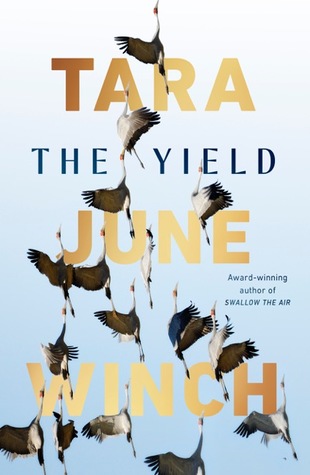
  • Indigenous authors: Each year I try to ensure my reading diet includes a few indigenous authors. This year I didn’t quite achieve the number I did last year, but I did read three novels, Tara June Winch’s Miles Franklin Award-winning The yield, Julie Janson’s Benevolence, and the collaborative On a barbarous coast by Craig Cormick and Indigenous writer Harold Ludwick – plus Archie Roach’s memoir, Tell my why.
  • The year of single-word titles: I can’t remember when I read so many books with single word titles, titles not even preceded by an article, like Benevolence, Bruny, Damascus, Displaced, Mammoth, Murmurations, and Unsettled. I like the possibilities contained in direct, simple-sounding titles like these.
  • Rethinking colonial Australia: Completely serendipitously, I read a few books this year by Indigenous and non-Indigenous writers that attempted to correct the white-version of Australia’s colonisation that many of us grew up with: Craig Cormick and Harold Ludwick’s On a barbarous coast; Julie Janson’s Benevolence; and Gay Lynch’s Unsettled. Poet John Kinsella’s memoir, Displaced, also addresses these issues, albeit within a contemporary framework. And, at a tangent, Madeleine Dickie’s contemporary novel Red can origami hinges on this colonial dispossession to explore the complex relationships and exploitation behind mining in northwest Australia.
  • That “accusing” TBR (which I define as books waiting for more than 12 months): This year I read 5, one more than last year, so, a win. The highlights were Ruth Park and D’Arcy Niland’s collaborative memoir, The drums go bang! and Chloe Hooper’s The arsonist.
  • Returning to an old favourite author: Looking for books for my mum to read, I chose, among others, Anne Tyler’s Redhead by the side of the road. She wanted to read it, but her time ran out. However, I read it, and Tyler’s quirky world was just the right thing at the time. Other favourite authors I returned to this year included Thea Astley (An item from the late news), Jane Austen (Juvenilia Vol. 1), and Helen Garner (Yellow notebook).
  • Out of left field from Brother Gums came Sue Lovegrove and Adrienne Eberhard’s nourishing art-poetry book, The voice of water, and, from my reading group, Balli Kaur Jaswal’s cheekily titled Erotic stories for Punjabi widows.
  • Observing contemporary Australia: My reading always includes books that interrogate contemporary life, and two stand out from this year, Carmel Bird’s wry, satirical Field of poppies about a retired couple’s failed escape from the city, and Charlotte Wood’s The weekend about older women and friendship.
  • Other people’s lives: Biographies and memoirs are always part of my reading fare. Two standouts this year were Desley Deacon’s thorough and beautifully designed biography of Judith Anderson, and Rick Morton’s heart-rending but not self-indulgent memoir, One hundred years of dirt.
  • Some interesting voices: Each year seems to produce an unusual narrator or two – a foetus or skeleton, perhaps. This year produced another variation, with Chris Flynn’s Mammoth narrated by, yes, the fossil of a 13,000-year-old mastodon. It was more enjoyable than I expected.
  • Surprise of the year: I read a couple of books for Bill’s (The Australian Legend) AWW Gen3 week but Angela Thirkell’s Trooper to the Southern Cross took the cake. I didn’t know what to expect, and was both surprised and entertained by what I got.
  • The quiet achiever: A beautiful, perceptive book that just didn’t get the recognition it deserves is John Clanchy’s historical novel exploring clerical abuse of children, In whom we trust.
  • The book most relevant to me this year won’t surprise those who know my year: Griffith Review 68, Getting on. It’s enlightening, informative, and even, at times, inspiring, about all things ageing!
Book cover

These are just some of 2020’s worthwhile reads.

Some stats …

I don’t read to achieve specific stats, but I like to keep an eye on what I’m doing to ensure some balance, all the while maintaining my particular interest in women and Australian writers:

  • 63% of my reading was fiction, short stories and novels (70% in 2019 and 80% in 2018): Around 75% is my rule of thumb, so this is quite a bit lower. Not sure why, but these things happen!
  • 80% were by women which is significantly higher than my 2015-2019 average of 68%: This is a bigger weighting than the 65-70% I prefer. Some of this 80% includes collaborations with male writers and editors.
  • 18% were NOT by Australian writers (28% in 2019 and 18% in 2018): I would like the balance to be something more like one-third non-Australian, two-thirds Australian, so this is a regression on last year’s achievement, but this year was an aberration overall so I’m not going to beat myself up. It is what it is.
  • 15% were published before 2000 (significantly less than for the last three years which hovered around 30%): Too low. I really like to read more older books.
  • 22% were published in 2020 (rather less than last year), which pleases me, because (obviously) I don’t want all my reading to be the latest books.

Overall, it was a disappointing reading year, in which much of my reading was driven by review books and my reading group. Both of these resulted in some good reads, and I don’t for a moment regret them, but my personal circumstances meant I did less self-directed reading and that was a bit frustrating. I hope I can get back to a more even keel in 2021.

As always, I’m grateful to all of you who read my posts, engage in discussion, recommend more books and, generally, be all-round great people to talk with. You know I love you!

I wish you all an excellent 2021, and thank you so much for hanging in this year.

What were your 2020 reading or literary highlights?