Monday musings on Australian literature: Ideal books for newcomers, 1965-style

Another treasure from Trove! Just over 50 years ago, on 1 January, 1965, an article appeared in a journal titled The Good Neighbour, which was published from 1950 to 1969 by the then Department of Immigration.

The article is called “Ideal books for newcomers” and opens with:

Following Mary Durack’s articles on “The Old Australia” which appeared in the October and November issues of The Good Neighbour, the author has compiled a list for some suggested reading.

I assume “the author” is Mary Durack? If so, I must say that I’d have written it as ‘Following her articles on “The Old Australia” which appeared in the October and November issues of The Good Neighbour, Mary Durack has …’. Anyhow, the article continues that:

The books named are not necessarily the best or most profound, the author states, but would seem to provide the readiest introduction to Australian literature and history. Many of these books would make useful presents for newcomers to Australia.

So, what does this “author”, let’s presume Mary Durack, recommend? I’m not sure about copyright* on this, so I won’t reproduce it all but the full list is available at the link I’ve provided above. Durack produces her list under headings, such as Australian History, Australian Aborigines, Early Colonial Novels (before 1900), and so on. As you will see, there’s no playing to the lowest common denominator here. The list assumes a good facility with English, and decent concentration levels.

History and culture

Two books are recommended on “Australian Aborigines”. One is AP Elkin’s The Australian Aborigines: how to understand them (Angus and Robertson). An unfortunate subtitle by today’s standards, but this was first published in 1938. A much later edition was a set text for me when I studied Anthropology, Elkin having been Professor of Anthropology at Sydney University. I might be wrong, but I’d be surprised if many Australian citizens had read this book in 1965. Still, in the first edition’s preface, Elkin does suggest that the book has three audiences: the general public, administrative officials and missionaries, and university students and scientists. He suggests that those with a more general interest could skip the chapters detailing relationship systems.

Another category is “Documentary, Travel and Biography”. There’s a strong focus here on the rural, with books about Cobb and Co, the Overland Telegraph, and the Outback (including her own, now classic, Kings in grass castles) being recommended.

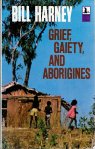
Bill Harney, Grief, gaiety and aboriginesWith her outback experience, Mary Durack was familiar with Aboriginal people, and so in this, and other categories, she makes sure to include books about (though not by, given the time we are talking about) indigenous people. I was intrigued by one, unknown to me, Bill Harney’s Grief, gaiety, and the Aborigines. My link here is his Australian Dictionary of Biography (ADB) entry. He had close connections with indigenous people, and is described by ADB as “gregarious and generous person who regarded everyone as equal”. This ABC News item supports this assessment. It would be interesting to know how he managed the difficult role of government patrol officer and protector of Aborigines, which he did from 1940 to 1947.

The last category I’ll mention in this group is “Critical and Interpretive Studies”. Among the three books listed here is Russell Ward’s classic, ground-breaking history of Australia, The Australian legend. Last year I reviewed his daughter Biff Ward’s memoir, In my mother’s hands. (And, blogger “wadholloway” who regularly comments here has named his blog for this book.)

Novels

The lists of novels are divided into three categories: early colonial (before 1900), early colonial and pioneering days (post 1900), and later Australian life.

Only two are recommended in the first group, Henry Kingsley’s The recollections of Geoffrey Hamlyn (on my TBR) and Rolf Boldrewood’s Robbery under arms. Not, I notice Marcus Clarke’s classic For the term of his natural life which would perhaps be the first of the early novels that people would think of today. Was she wanting to avoid the convict stain?

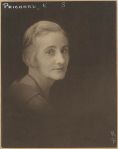
Katharine Susannah Prichard

Katharine Susannah Prichard, by May Moore (Presumed Public Domain, State Library of NSW)

Her next group – her post-1900 date referring, it seems, to the date of publication not of the content of the novels – contains the usual suspects: Joseph Furphy’s Such is life, Miles Franklin’s All that swagger, (not My brilliant career), Henry Handel Richardson’s famous Richard Mahoney trilogy, Eleanor Dark’s The timeless land, Katharine Susannah Prichard’s The Roaring Nineties, Ernestine Hill’s My love must wait, and Patrick White’s Voss. These seem fair enough, though every Australian literature lover would probably tinker with this. She also includes a book unknown to me, Brian Penton’s Landtakers. According to Wikipedia he was a novelist and journalist, and this novel featured pioneering life in Queensland from 1824–64. Given the Durack family’s story (see my review of Brenda Niall’s biography of the Durack sisters, True north) it’s not surprising that she’d recommend a book on this subject. Interestingly, women writers feature well in her list!

The final group focuses on “later Australian life” – in other words, they’re mostly about life in the 1930s to 1960s. It contains many books I know, some authors I know but not the particular book, and some I’ve never heard of:

  • Katharine Susannah Prichard: Coonardoo
  • Louis Stone: Jonah
  • Xavier Herbert: Capricornia
  • Kylie Tennant: The battlers
  • Patrick White: Riders in the chariot
  • A. G. Hungerford: Riverslake
  • Donald Stuart: The driven
  • Tom Ronan: Moleskin Midas
  • Frank Dalby Davison: Man Shy
  • B. Vickers: First place to the stranger
  • Judah Waten: Alien son
  • Gavin Casey: Snowball
  • Randolph Stowe: To the islands
  • Elizabeth Harrower: The long prospect
  • Nene Gare: The fringe dwellers
  • Eve Langley: The pea pickers (my review)

An interesting and probably reasonable list, given the 1965 date. I’m impressed to see Elizabeth Harrower’s second novel, The long prospect, here. It suggests the regard in which she was held at the time she was being published. An obvious omission is George Johnston’s now classic My brother Jack. However, it was only published in 1964, and perhaps Durack didn’t know it.

Again, there are a few authors I don’t know at all: Donald Stuart, Tom Ronan (who appears in other categories too), B. Vickers, and Gavin Casey (who also appears in other categories). That’s 25% of the list! Stuart, Wikipedia says, “attempts to view the world from the aboriginal point of view, making him one of the few Australian writers, along with anthropologists … to even attempt to come close to a personal knowledge of the aborigines”. It would be interesting to read him now – such as his first novel, Yandy – given current thinking on this..

Overall, these books, as in the non-fiction categories, tend to be country rather than urban based. This probably partly reflects what novelists at that time were writing about, but could also reflect Durack’s background and interests. Would this focus have addressed the likely interests of newcomers?

Durack also recommends some verse and short stories, but you can read them at the link.

Meanwhile, I’d love to know what you think about this list (from any point of view you choose!)

* If the government holds copyright on the article, then it is now, just, out of copyright I believe.

Monday musings on Australian literature: New Australian releases for 2016

With the first month of 2016 already gone, I thought it was time I had a look around to see what new works are in the pipeline this year from our Aussie authors. This is a serendipitous list, partly because tracking down this information isn’t easy and partly because I’m more interested in providing a flavour than in being comprehensive. My main aim is simply to tantalise us all a little, so below you’ll find novels, short stories, poetry, essays and non-fiction. See what you think:

  • Larissa Behrendt’s Finding Eliza: Power and Colonial Storytelling (January 2016, University of Queensland Press) is a non-fiction work inspired by the story of Eliza Fraser, who was apparently captured by the Butchulla people after she was shipwrecked on their island in 1836. Fraser’s story has been fictionalised before. Behrendt springboards from Eliza’s story to explore how indigenous people in Australia and elsewhere have been portrayed in their colonisers’ stories.
  • David Brooks’ Napoleon’s roads (February 2016, University of Queensland Press) is the fourth collection of short stories from this writer, who is a poet and prose writer.
  • Maxine Beneba Clarke’s The hate race (August 2016, Hachette Australia) is a memoir by the author of the award-winning short story collection, Foreign soil. It’s the second of a three book deal she has with Hachette, the third one being a novel.
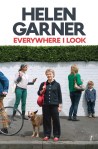
  • Helen Garner’s Everywhere I look (March 2016, Text Publishing) is a collection of essays. I’ve reviewed here a few books by Garner, including a novel, Cosmo Cosmolino, a book of short stories, Postcards from Surfers, and a non-fiction work, This house of grief, but I haven’t read any of her essay collections. This might be the one.
  • Patrick Holland, OnePatrick Holland’s One (April 2016, Transit Lounge) is an historical fiction about Australia’s last bushrangers. Known for his minimalist writing, Holland has written several works, including The Mary Smokes boys and Navigatio, both of which were shortlisted for various awards.
  • Fiona McFarlane’s The high places (February 2016, Hamish Hamilton) is a collection of short stories from the author of the multiply-shortlisted The night guest, which I reviewed last year.
  • Michelle Michau-Crawford’s Leaving Elvis (February 2016, University of Western Australia Publishing) is a debut collection of mostly, but not totally, linked short stories. Michau-Crawford is new to me but she won the Australian Book Review’s Elizabeth Jolley Short Story Prize in 2013, so this collection sounds worth checking out.
  • Meg and Tom Keneally’s The Soldier’s Curse (March 2016, Random House) is the first in The Monserrat Series (a new crime series). I wouldn’t normally include a crime book in a list like this because crime is not in my sphere of interest, but I’m including this one because it’s by Tom Keneally, who as you probably know is the Booker prize-winning author of Schindler’s ark, a Miles Franklin winning author, to name just a couple of accolades. And, also because it’s a collaborative novel with his daughter.
  • Ellen van Neerven’s Comfort food (May 2016, University of Queensland Press) is a book of poetry by the author of the award-winning Heat and light and the short story Sweetest thing, both of which I’ve reviewed.
  • Terri-Ann White’s Desert writing: Stories from country (February 2016, University of Western Australia Publishing) is something a little different. It’s a collection edited by White, comprising stories that resulted from writers’ workshops held with indigenous people in remote communities.
  • Dominique Wilson’s That devil’s madness (February 2016, Transit Lounge) is a novel set in Algeria. It tells story of a photojournalist who, while covering current politics decides to also retrace the steps of her grandfather a century earlier. Wilson was a founding editor of the now defunct but much lamented literary journal Wet Ink. (For an advance review of this book, check out Lisa’s at ANZLitLovers.)
  • Arnold Zable’s The fighter (April 2016, Text Publishing) is a biography of Henry Nissen, a boy from Melbourne’s Carlton who became a champion boxer but who now devotes his spare time to helping disaffected people on the streets. It’s also about his mother and her decline into mental illness. I’ve read a few of Zable’s novels, including The sea of many returns which I reviewed early in this blog’s life.

Steven Amsterdam, Ashley Hay, Toni Jordan and Hannah Kent, some of whose earlier books I have reviewed here, also have books coming out this year … Meanwhile, Text Publishing is continuing to put out its classics, and Fremantle Press is starting a Treasures series celebrating its 40 years of publishing. Nice to see backlists (or older works) continuing to get second lives.

Do any of these inspire or you? Or are there books coming up in your region or area of interest that you are keen to read. 

Monday musings on Australian literature: Best books of 1975

Given we’re all looking at best reads, I thought it might be fun to look at best reads of a past time? My initial thought was 1965, a neat 50 years ago, but I couldn’t find any appropriate lists. Google found a 1965 New York Times bestseller list on Wikipedia and a couple of 1965 lists in GoodReads, but they weren’t quite what I was looking for. I wanted Australian lists, but my first port of call, Trove, wasn’t helping. However, not being quite ready to give up, I thought I’d try ten years later, 1975, which is the year I moved to Canberra. Eureka! This time Trove produced two lists …

And they are nicely representative. One is by classics collector, “book reviewer and litterateur”, Maurice Dunlevy, writing in the Canberra Times (woo hoo!) on December 26. Dunlevy wrote a book review page for the paper for 30 years, to 2000 apparently. The other is by one Nina Valentine. A brief search hasn’t turned up much about her except that she was clearly a writer for the Australian Women’s Weekly, which is where I found her December 31 article. Given their different publishing environments, you won’t be surprised to hear that their styles, not to mention their recommendations, are rather different. Both, though, focus on books for summer reading – and, although this post is dedicated to Australian literature, I’m going to break my usual rule and include some non-Australian picks. After all, they were writing for Australian readers.

“… books to help you enjoy lazy, long summer days to the full”

Let’s start with Nina Valentine. Her circa 700-word article focuses on books that tell a strong story, though not all are fiction. Since there’s only five of them, I’ll list them all:

  • Evelyn Anthony, The Persian kingdom (an error, I think, for Persian ransom) A British writer, Anthony is, she says, “one of my favorite writers of sculptured novels”. Sculptured novels? That’s a new term for me, but she does define it. They are novels which – wait for it – have “form, character and situation”. Hmmm. Anyhow the novel has an interesting setting, Iran. It’s about the oil crisis, the Palestinian Liberation Army, and a secretary who, Anthony’s heroine knows, threatens her marriage. “Thrilling holiday reading”, Valentine says. According to Trove, many Australian libraries hold it, so there’s no excuse for not adding it to your summer pile!
  • Kenneth Harrison, Dark man white world. This, however, is something completely different. It is a biography of famous indigenous Australian tenor, Harold Blair. In addition to singing, he became an Aboriginal activist fighting, she writes, “for better education, better understanding and a better lifestyle for his people”. I love that Valentine chose this as a holiday read.
  • James Quartermain, The diamond hostage. Part of a series, this book she says is “tailor-made for holiday escapist fare”. Set in Frankfurt, it features Raven, who is security chief for Mrs Diamond, a very wealthy “diamond-hard business woman”. She’s kidnapped (as is the heroine’s child in Anthony’s book), setting up, presumably, an exciting read.
  • ReyTheGreekAmazonPierre Rey, The Greek. Translated from French, it’s about a “Greek shipping magnate whose affair with a concert singer finishes when he marries the widow of an American who has been assassinated”. Ring a bell, anyone? Rey swears it’s fiction, says Valentine, but for her the point is that it’s “racy” in the style of Harold Robbins and Jacqueline Sussan. (Love the cover.)
  • The Saturday Book sounds a little more interesting (to me). It’s an “elegant, gift-boxed collection of stories, poems, drawings, photographs and nostalgia”. Annually published, it may, she writes, be the last due to production costs. She describes it as “a book to beguile you while on holidays, and to enchant you at all times”.

So, overall, an interesting mix of the usual beach holiday plot-driven fare combined with a couple of other options for those looking for something a little different. Minimal Australian content, but interesting to see a translated – genre – book in the mix.

Doing “your bit in the grit to further your cultural education”

Dunlevy’s article is the same length as Valentine’s but he packs more into his by spending less time describing the books. He discusses his selections under categories, recognising his (surely) more diverse set of readers than Valentine’s.

  • IrelandBurnLiterary fiction: I love that he starts with Australian literary fiction naming Xavier Herbert’s doorstopper Poor fellow my country, David Malouf’s autobiographical novel Johnno (the only one I’ve read), Thomas Keneally’s Gossip from the forest, David Ireland’s “fine novel about the Aborigines” Burn, Michael Wilding’s The short story embassy, and Laurie Clancy’s A collapsible man. I haven’t in fact heard of these last two. His foreign literary fiction choices are the last volume in Anthony Powell’s Music of Time sequence Hearing secret harmonies, Iris Murdoch’s A word child, and Saul Bellow’s Humboldt’s gift.
  • Poetry (or Verse, to him): This is his second category! Love it. His selections are all from established poets he says: A. D. Hope’s A late picking (which I actually have), David Campbell’s Deaths and pretty cousins, and Gwen Harwood’s Selected poems.
  • Australian literary criticism: If I was surprised by poetry being his second group, this third one made me really sit up. He recommends poet Judith Wright’s Because I was invited and poet Douglas Stewart’s The broad stream, describing them as fine successors to poet A. D. Hope’s Native companions, published in late 1974. The final critical work he names is again by a poet, Vivian Smith’s Vance and Nettie Palmer. I know a couple of these – but am mightily intrigued by the others.
  • Biographies: Here we move away from a focus on Australian works. He lists several books, including Hilary Spurling’s Ivy when young: The early life of I. Compton-Burnett, describing it “as a fine re-creation of the Victorian family life of an oddball novelist”; Michael Holroyd’s Augustus John; R. M. Crawford’s life of fellow English-Australian historian G. Arnold Wood A bit of a rebel; and Scottish-born Australian Mary Rose Liverani’s autobiography The winter sparrows. According to AustLit, this last book “has been acclaimed as a landmark in Australia’s migrant literature”. Onto the TBR list it goes.
  • Histories: Dunlevy says he’d read so many good popular histories in the year that he “would not know where to begin if I were not now reading the most diverting of all, William Manchester’s narrative social history of the United States 1932-72, The Glory and the Dream”. He describes it as “a huge journalistic history which reads like a massive newspaper written by a single brilliant journalist”. He offers two other social histories suitable for holiday reading: John Ritchie’s Australia as once we were and Michael Cannon’s “third volume about Australia in the Victorian Age, Life in the Cities“. I don’t know any of these historians.

Having gone to the trouble of listing all these worthy works, he then admits that he doesn’t “very often see people reading high quality fiction or poetry or criticism or biographies or history on the beach”! Not sure I do either. The “best-selling paperback” is probably the better bet, he thinks, and to that end he suggests P. Benchley’s Jaws, Harold Robbins’ The Pirate (‘which includes lots of stirring sex scenes, including one in front of a mirror”!), Frederyk Forsyth’s The dogs of war, and Irving Wallace’s The fan club. Personally, though, I’d be looking at those books in his first category. I reckon they still make perfectly good recommendations today.

Reading highlights for 2015

Well, dear readers, we have turned the calendar to 2016 so I can now reveal my highlights for 2015. As usual, I won’t be naming top picks. I find that too hard to do. Instead, I’ll discuss highlights which combines best reads with those that were interesting for other reasons. I’d love to mention every book I read, as every one had something to commend it. I have too little time for reading to read books that have no value!  (Seriously. I know I’m retired, but …)

First, though, this year’s …

Literary highlights

By literary highlights I tend to mean literary events, and I went to a few this year (though no writer’s festivals. One day!) What I did attend, though, gave me such pleasure, not to mention new things to think about:

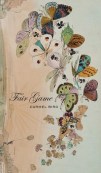
  • Carmel Bird’s launch of Marion Halligan’s latest novel, Goodbye sweetheart, at one of Canberra’s best independent bookshops, Paperchain. This was particularly a thrill because, out of the blue, Carmel Bird emailed me asking me if I’d like to post her launch speech on my blog. I would and I did. I’m embarrassed to say though that the book is still on my TBR. This has been a bad reading year. Bird and Halligan are two of Australia’s literary treasures. Unfortunately, I was travelling in Tasmania when Bird returned to Canberra later in the year for an In Conversation event with Halligan. (And here, I’ll sneak a reference to Carmel Bird’s clever, delightful essay Fair Game which I did read and review!)
  • Jane Austen Society of Australia’s biennial weekend conference titled this year, Emma: 200 years of perfection. I wrote three posts on this wonderful weekend, here, here, and here. No matter how often I read Austen, or how many academics write about her, there’s always to something new to learn.
  • Robert Drewe’s talk titled Who, me? for the National Library of Australia’s Seymour Biography Lecture. Halligan* needn’t feel too badly about her book still being on my TBR pile, because Drewe’s second memoir, Montebello, that I bought at this event, is there too.
  • Author talk with Kate Llewellyn, Barbara Hill and Ruth Bacchus, focusing on Hill and Bacchus’ edition of selected letters written by Llewellyn (my review).
  • Griffyn Ensemble’s Utopia Experiment concert was a musical event, but its focus on poet Dame Mary Gilmore made it, for me, a literary musical event – and a most enjoyable one at that.

Reading highlights

As I’ve done in previous years, I’m going to discuss this year’s reading under categories which reflect this year’s experience.

Literary trends … in my reading, anyhow

  • ScarfeHungerWakefieldHistorical fiction: I don’t see myself as a reader of historical fiction, and yet it seems to feature significantly in my reading fare. I guess it’s a case of interesting stories will out, no matter when they are set. Not surprisingly, most of these stories deal with the poor, or disadvantaged, such as Eleanor Limprecht’s Long Bay about a young woman gaoled for manslaughter in early 1900s Sydney, Wendy Scarfe’s Hunger town set on the Port Adelaide docks in the 1920s-30s, and Emma Ashmere’s The floating garden about a woman losing her home through construction of the Sydney Harbour Bridge in early 1930s Sydney. Emily Bitto’s The strays is not about disadvantaged people, but her Bohemian arts community of 1930s Melbourne comprises people on the edge of society in another way. I’d happily recommend all these books for the way they evoke their respective eras – and for the variety of their subject matter.
  • Farm stories: Although Australia is one of the world’s most urbanised nations, we do have farmers! Given climate change, concerns about food security, not to mention, here in Australia, the dispossession of indigenous people from their land, it’s good to see “literary” authors tackling these issues, such as Jessica White in Entitlement and Alice Robinson in Anchor point. Coincidentally, my first review for 2016 will probably be a farm story …
  • Climate change: Speaking of climate change, I’m keen to continue reading novelists who tackle this issue, and have created a cli fi tag to identify them. This year, in addition to the above mentioned Anchor point, I loved Jane Rawson’s inventive A wrong turn at the Office of Unmade Lists.
  • Danielle Wood, Mothers Grimm, book cover

    Courtesy: Allen & Unwin

    Is it a novel?: I love it when writers play with form, and two Australian books I read this year thrilled me with their use of the short story/long short story/novella forms to produce fascinating works: Ellen van Neerven’s Heat and light and Danielle Wood’s Mothers Grimm. And then there was Julian Davies’ Crow Mellow, with its exhortation on the back page that “This book is a novel. It has drawings on every page”. It is a novel – but the drawings add another dimension to the reading experience.

  • Short stories rule: I read some excellent short stories this year, and particularly enjoyed John Clanchy’s Six and Paddy O’Reilly’s Peripheral vision. Angela Meyer’s collection of flash fiction, Captives, also captivated me!
  • From over the seas: Contrary to how it might look, I did read some books that weren’t Australian. The three standout novels were Vincenzo Cerami’s A very normal man, Aminatta Forna’s The hired man, and Neel Mukherjee’s The lives of others.
  • It wasn’t all fiction: While fiction is my main fare, I do enjoy non-fiction too. Standouts this year were Karen Lamb’s biography Thea Astley: Inventing her own weather, Richard Lloyd Parry’s true crime work People who eat darkness, and Biff Ward’s memoir In my mother’s hands.
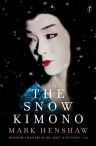
  • Mark Henshaw, The snow kimonoSpecial mentions: I can’t complete this list without mentioning two books that don’t fit the above categories but must be mentioned: Mark Henshaw’s The snow kimono and Fiona McFarlane’s The night guest. Both take their readers on a merry (or not so merry really, but you know what I mean) dance, and are very satisfying reads.

Serendipitous Reading Stats

Just because I like them (these percentages are for this year of course):

  • 67% of the authors I read were women.
  • 27% of the works I read were not by Australian writers.
  • 73% of my reading was fiction (short, long or in-between!)
  • 20% of the works I read were published before 2000
  • 30% of the works I read were published in 2015
  • I reviewed multiple (2) works by two authors – Jane Austen, and Ellen van Neerven

I did not achieve my one real goal for the year, which was to read more from my TBR, and, for reasons which regular readers here know, I did not manage to read more books. But, I had a great reading year, nonetheless, and I want to thank you all for joining me in my journey – for reading my posts, engaging in discussion, recommending more books to read and, generally, being all-round great people to know (cyberly, anyhow). I wish you all a wonderful 2016, and hope to see you here whenever the spirit moves you.

What were your reading or literary highlights for the year?

* I nearly missed the autocorrect of Halligan to Halogen!

Books given and received for Christmas, in 2015

I did a “books given and received post” last Boxing Day, and decided to do it again. It’s a useful record for me to keep, and may just interest you, so, here goes.

  • For Mr Gums, who is often up for a walk: Walking and cycling Canberra’s Centenary Trail
  • For Ms Gums Jr, in her stocking: Anna Funder’s The girl with the dogs.
  • For Mr Gums Jr, in his stocking: Richard Flanagan’s Short Black The Australian Disease: On the Decline of Love and the Rise of Non-Freedom.
  • For Ma Gums, who has worked as a lexicographer: Mary Norris’s Between you and me: Confessions of a comma queen (inspired by a review by Stefanie at So Many Books) AND, in her stocking, Elizabeth Gaskell’s The old nurse’s story.
  • For Brother Gums, lover of nature and good writing: Tim Winton’s Land edge: A coastal memoir
  • For Sister-in-law Gums, who loves art, nature and is interested in women’s lives: Louisa Atkinson’s nature notes (a selection of sketches and writings by this nineteenth century Australian naturalistDanielle Wood, Mothers Grimm, book cover.
  • For Gums’ Californian friend, who indicated in a comment on my post that she’d like to read this book: Danielle Wood’s Mothers Grimm.
  • For Gums’ Californian friend’s daughter, who’s busy studying for her law degree and might like some little interludes: Paul McDermott’s Fragments of the hole (my review) and Cassandra Atherton’s Trace (two fl smalls).
  • For Gums’ Californian friend’s other daughter, who’s developing quite a passion for baking: Delicious Bake.

As for what I received, a lovely, eclectic bunch:

  • From Ma and Pa Gums: Elizabeth Harrower’s In certain circles, in readiness for my reading group doing it in 2016) and Betty Churcher’s The forgotten notebook (about trips she made in the 1990s arranging loans of art of a blockbuster exhibition at the National Gallery of Australia).
  • From my Californian friend, who knows what my New Year’s resolution is going to be: Marie Kondo’s Life-Changing Magic of Tidying Up: The Japanese Art of Decluttering and Organizing (oh dear, now I’m really going to have to do it). Carolyn, that’s her name, wrote about it in her letters this year and, quite coincidentally, I read about the same book in Travellin’ Penguin’s blog. The title is slightly different but that’s just different editions I believe. She and Carolyn did make me laugh with their discussions of applying this book to their own decluttering projects.
  • From “old” Canberra friends: Tom Griffiths’ Endurance, historical fiction about photographer/explorer Frank Hurley (and they gave us a book gift voucher too. Lucky, us).

What about you? Any Christmas book news you care to report?

Monday musings on Australian literature: Some Aussie lit links

Well, folks, I’ve been back in Sydney over the last four days working on my aunt’s house. With that, and with Christmas looming, I’ve not have much time to think about Monday Musings for this week – or, more to the point, to spend time researching and writing it. I did have an idea, but that will have to wait.

So, instead, I’m just going to share a few interesting links that you may like to check out in any spare moments you have:

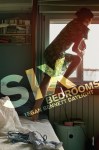
  • 25 Aussie books by Australian women to read right now (published in The Guardian online, and written by Melbourne’s independent bookstore, Readings): This is a useful list, organised into categories like “If you like novels that transport you into the past…” and “If you prefer your fiction with some fantastical elements…”. The list includes the book I’ll be reviewing next, Eleanor Limprecht’s Long Bay; the book that I mentioned last week as being the most frequently picked best Aussie read this year, Charlotte Wood’s The natural way of things; one of the most reviewed books this year in my section of the Australian Women Writer’s Challenge, Robyn Cadwallader’s The anchoress; and two wonderful sounding short story collections, Abigail Ulman’s Hot little hands and Tegan Bennett Daylight’s Six bedrooms. All this says to me that it’s a list well worth checking out!
  • Your summer reading guide for 2015 (from some RN, that is ABC Radio National, presenters): Last year I wrote a post on picks from RN presenters, picking out just the Aussie books. This year I’m just giving you the link, and you’ll have to pick out the Aussie ones yourselves – but you can look at the non-Aussie selections too, while you are at it! The Aussie picks include two memoirs that interest me, writer Gerald Murnane’s Something for the pain, which I hope to get to in the next month, and comedian Magda Szubanski’s Reckoning, which is garnering a lot of positive vibes.
  • How Australian dystopian young adult fiction differs from its US counterparts was written in August this year, but I came across it when I was looking for links about Australian cli-fi in honour of the Paris Climate Change Conference. However, I’ve talked about cli-fi before, and so when I came across this article I thought I’d share it instead of looking further. I’m not an expert in this area at all – in YA fiction, I mean – and so I won’t say whether the conclusions drawn by writer, Diana Hodge, are valid or not, but I found her argument that Australian YA dystopian fiction resorts to “magical” abilities and a return to nature for resolution while American books are more likely to look to technical skills and knowledge in their protagonists rather interesting. I’d love to know what readers versed in YA dystopian fiction think.
  • Susan Wyndham, the Sydney Morning Herald’s literary editor, wrote about Aussie literary trends also back in August. She briefly looked at trends in Australian fiction through 2014 and into 2015, and identified issues like domestic violence and child abuse, and dystopias, as featuring in recent Australian literature. This makes sense given our society’s current preoccupations. But there are other issues too – like religious (in)tolerance, the plight of refugees and asylum-seekers, and racism? Are many books exploring these? I can think of a couple, but not many. What about you?  (The rest of this pretty brief article is worth a read too.)

And there, I’m afraid, I’ll leave it … hope it’s been of some interest to you!

This is, of course, the last Monday Musings before Christmas. I do hope you all have an excellent holiday season, that you receive some exciting books, if you celebrate Christmas, and/or that you are able to make lots of wonderful time to read whatever books you have. Next week, I will do some annual reviews. Watch this space, if you are interested!

Monday musings on Australian literature: Aussie writers name their pick reads of 2015

It’s the month of the lists, and so, while I’ll be saving my lists until the END of 2015, I thought today I’d share some of the lists that have already been published. I appreciate that there’s value in publishing these lists now, as they might just help people with their Christmas shopping (or with compiling their Santa lists for other people’s shopping!).

Because my Monday Musings series is about Australian literature, I’m only going to list the favourite Australian books chosen by Australian writers. Most of the books nominated were published in the last 12 months or so, but writers were allowed to choose the best of what they’d read during the year, so some have chosen older books.

So, here’s the list of books, in alphabetical order (with the nominating author/s in parentheses at the end):

  • ***Robert Adamson’s Net needle (poetry) (Luke Davies, Jennifer Maiden, Gig Ryan)
  • Debra Adelaide’s Letter to George Clooney (short stories) (Christos Tsiolkas)
  • Nigel Bartlett’s King of the road (crime novel) (Debra Adelaide)
  • Tony Birch’s Ghost river (novel) (Omar Musa) (reviewed 2016)
  • Stephanie Bishop’s The other side of the world (novel) Susan Johnson)
  • Frank Bongiorno’s The eighties (non-fiction) (Tom Keneally)
  • Margaret Bowman’s (comp. & ed.) Every hill got a story (history) (Alexis Wright)
  • James Bradley’s Clade (novel) (Luke Davies)
  • Tania Chandler’s Please don’t leave me (novel) Graeme Simsion)
  • **Tegan Bennett Daylight’s short story collection, Six bedrooms (Susan Johnson, Charlotte Wood) (reviewed later) (reviewed 2016)
  • Ceridwen Dovey’s Only the animals (novel) (Chris Wallace-Crabbe)
  • Peter Doyle’s The big whatever (crime novel) (Debra Adelaide)
  • **Ali Cobby Eckermann’s, Inside my mother (poetry) (Robert Adamson, Jennifer Maiden)
  • Delia Falconer’s The lost thoughts of soldiers (novel) (Luke Davies)
  • Michael Farrell’s Cocky’s joy (poetry) (Gig Ryan)
  • **Martin Flanagan’s The short long book (biography) (Anita Heiss, Favel Parrett)
  • Bill Garner’s Born in a tent (non-fiction) (Don Watson)
  • Lisa Gorton’s The life of houses (novel) (Chris Wallace-Crabbe)
  • Barbara Hanrahan’s The scent of eucalyptus (novel) (Peter Goldsworthy) (my review)
  • Lesley Harding and Kenneth Morgan’s Modern love (biography) (Steven Carroll)
  • Natalie Harkin’s Dirty words (poetry) (Anita Heiss)
  • **Martin Harrison’s Happiness (poetry) (Robert Adamson, Lisa Gorton)
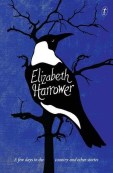
  • Elizabeth Harrower’s A few days in the country and Other stories (short stories) (Joan London) (reviewed 2016)
  • Sonya Hartnett’s Golden boys (novel) (Robert Adamson) (reviewed 2016)
  • John Hawke’s Aurelia (poetry) (Gig Ryan)
  • Antonia Hayes’ Relativity (memoir) (Graeme Simsion)
  • Lisa Heidke’s The Callahan split (self-published novel) (Anita Heiss)
  • Marty Hiatt’s Hard-line (poetry) Gig Ryan)
  • **Sarah Holland-Batt’s The hazards (poetry) (Chris Wallace-Crabbe, Fiona Wright)
  • Chloe Hooper’s The tall man (non-fiction) (Abigail Ulman) (read before blogging)
  • Clive James’ Poetry notebook (essays) (Peter Goldsworthy)
  • Karen James’ On purpose: Why great leaders start with the PLOT (non-fiction) (Anita Heiss)
  • **Gail Jones’ A guide to Berlin (novel) (Debra Adelaide, Fiona Wright)
  • Mireilla Juchau’s The world without us (novel) (Fiona Wright)
  • **Leah Kaminsky’s The waiting room (novel) (Graeme Simsion, Clare Wright)
  • Krissy Kneen’s Eating my grandmother (poetry) (Kristina Olsson)
  • **Malcolm Knox’s The wonder lover (novel) (Christos Tsiolkas, Don Watson)
  • Lee Kofman’s The dangerous bride (Clare Wright)
  • **Ramona Koval’s Bloodhound (memoir) (Shane Maloney, Clare Wright)
  • Anna Krien’s Night games (non-fiction) (Abigail Ulman) (my review)
  • Chip Le Grand’s The straight dope (non-fiction) (Steven Carroll)
  • Joan London’s The golden age (novel) (Don Watson)
  • Alan Loney’s Crankhandle (poetry) (Gig Ryan)
  • Tim Low’s Where song began (non-fiction) (Don Watson)
  • Helen Macrae’s Dinner with the devil (history) (Favel Parrett)
  • Jennifer Maiden’s The fox petition (poetry) (Fiona Wright)
  • Chris Mansell’s avian triptych, Aves (poetry) (Jennifer Maiden)
  • Drusilla Modjeska’s Second half first (memoir) (Joan London)
  • Gerald Murnane’s Something for the pain (memoir – and on my actual TBR) (Gregory Day) (reviewed 2016)
  • Les Murray’s On bunyah (poetry) (Peter Goldsworthy)
  • **Pi O’s Fitzroy: The biography (poetry) (Maxine Beneba Clarke, Gig Ryan)
  • Kerry O’Brien’s Keating (biography) (Tom Keneally)
  • Anthony Reid’s Southeast Asia in the Age of Commerce, 1450-1680 (non-fiction) (Omar Musa)
  • Michael Robotham’s Life or death (crime novel) (Shane Maloney)
  • Margaret Simons’ Six square metres (gardening, with reflections) (Helen Garner)
  • Rebecca Starford’s Bad behaviour (memoir) (Abigail Ulman)
  • TGH Strehlow’s Journey to Horseshoe Bend (memoir) (Lisa Gorton)
  • **Magda Szubanski’s Reckoning (memoir) (Graeme Simsion, Christos Tsiolkas)
  • **John Tranter’s Heart starter (poetry collection) (Jennifer Maiden, Gig Ryan)
  • Ellen van Neerven’s Heat and light (fiction/short stories) (Omar Musa) (my review)
  • Abigail Ulman’s Hot little hands (short stories) (Omar Musa)
  • Ann Vickery’s The complete pocketbook of swoon (poetry) (Gig Ryan)
  • Susan Whelan’s Don’t think about purple elephants (children’s) (Anita Heiss)
  • Petra White’s A hunger (poetry) (Chris Wallace-Crabbe)
  • Anne Whitehead’s Betsy and the emperor (history) (Tom Keneally)
  • Jessica L Wilkinson’s Suite for Percy Grainger (poetry) (Jennifer Maiden)
  • WoodNatural*****Charlotte Wood’s The natural way of things (novel) (James Bradley, Maxine Beneba Clarke, Susan Johnson, Kristina Olsson, Fiona Wright) (reviewed 2016)
  • Fiona Wright’s Small acts of disappearance (essays) (Luke Davies) (reviewed 2016)
  • Beth Yahp’s Eat first, talk later (memoir) (Drusilla Modjeska)
  • Ouyang Yu’s Fainting with freedom (poetry) (Alex Miller)

There are some surprises for me here, that is, some books and/or writers I’ve never heard of, such as Abigail Ulman, not to mention some of the poets. I was also surprised – or, perhaps just interested – in the variety of books chosen, that not only is there fiction and poetry, but also quite a diverse selection of non-fiction. I had never heard of Anne Whitehead, for example, until I did some research on the New Australia movement in Paraguay, during which I discovered that she’d written a book about Mary Gilmore, and now, here’s Tom Keneally nominating a recent book of hers. Hmmm … poor TBR.

Unless I’ve made a mistake, a few Australian writers didn’t choose any Aussie books – Geraldine Brooks, Jessie Cole (though she did mention several Australian literary journals), Malcolm Knox, Tim Flannery, and Michael Robotham. I’m naming them to shame them! Well, not really, but still … I do hope they read their peer Aussie writers.

On the other hand, there’s Alex Miller who only chose ONE book, and that was Chinese-born Australian writer Ouyang Yu’s poetry collection, Fainting with freedom. Miller describes it as “some of the finest poetry ever written this century”. No beating about the bush there, no feet in multiple camps as I’ll do with my list – when I get to it! I love such bravery!

Finally, it’s very clear I need to read Charlotte Wood’s The natural way of things.

And now, over to you: Do you read top pick lists in your neck of the woods (no pun intended!)? And if so, have you been surprised, delighted, or perhaps, shocked?

________________________________________________________________

Source: Panorama section, The Canberra Times, 12/12/2015

* Asterisks denote those books nominated more than once – the number of asterisks identify the number of nominations.

Monday musings on Australian literature: Australian literary autobiographies

I’ve written Monday Musings on autobiographies and memoirs by indigenous Australians, and I’ve reviewed biographies of Australian writers, like Mary Durack and Madeleine St John. However, I haven’t written about what we might call literary autobiographies, that is, autobiographies by authors. So, today’s the day. I have read several literary autobiographies, but few since I started blogging. Being a reader, I’m interested in writers’ autobiographies or memoirs – because I’m interested in writers, and because, rightly or wrongly, I expect a good writer to be able to write a good autobiography (however we define “good”!)  There are, as I’m sure you know some famous/popular/well-regarded author autobiographies, such as Nabokov’s Speak, memory, but of course here I’m focussing on Australians.

I’m not going to get into the why and wherefores of writing autobiography or analyse how useful or relevant they might be to understanding a particular writer’s works.I’m just going to list – alphabetically by author – a few that I’ve either read, dipped into, or would like to read.

Robert Drewe’s The shark net (2000) and Montebello: A memoir (2012). I haven’t read The shark net, though it’s on my TBR. However, I did see the 2003 television miniseries. For those of you who don’t know, this is quite different to the usual writer’s growing up story. Drewe grew up in Perth in the 1950s and 1960s when the serial killer Eric Edgar Cooke was creating havoc with the locals’ sense of security. “The murders immediately changed the spirit of the place”, he writes. Drewe knew this man, and knew one of his victims. He wrote this memoir “to try to make sense of this time and place”. I haven’t heard much about Montebello, but Drewe is a significant Australian writer.

David Malouf reading Ransom

Malouf reading Ransom, National Library of Australia, August 2009

David Malouf’s 12 Edmondstone St (1985) is a very short book, running to just 134 pages. 12 Edmonstone Street is the address of the Brisbane house he grew up in, but this is not your typical autobiography starting with “I was born in …”. Instead, it discusses selected places in his life, starting with that childhood home. I enjoyed his description of that home, of its weatherboard construction with verandahs. His father, he writes, wanted something more modern, something permanent, like brick.

As for verandahs. Well, their evocation of the raised tent flap gives the game away completely. They are a formal confession that you are just one step up from nomads.

So of course, as soon as he could, he closed it in.

This is a thoughtful, meditative – Malouf-like – book.

Ruth Park’s A fence around the cuckoo (1992) and Fishing in the Styx (1993) are more traditional autobiographies, but they are not ordinary. I read them both when they came out and loved them – as much as I loved Park’s books, like her Harp in the South trilogy. A fence around the cuckoo won the Age Book of the Year Non-fiction Award in 1992.

Together, the two books are great reads about life in New Zealand and Australia in the early to mid twentieth century. They also provide wonderful insight into the writer she was to become, and tell the story of one of Australia’s most famous literary couples, Ruth Park and D’Arcy Niland. Here she is on an early contact with Niland (when she was still in New Zealand and he in Australia). He sent, she writes

a stately and respectful letter, carefully written in the sender’s amazing handwriting, and really got up my nose. The writer seemed to think I was some powerful editorial person, capable of assisting him to sell his stories in New Zealand. … I banged off a letter on my three-decker monster, saying that I was but a lowly copyholder with no efficacy or charisma whatsoever, and if he offered to sell my stories in Australia it might be more to the point. Reading his letter now, it is a marvel that the future father of my children did not take a terminal huff and go off and father someone else’s. However, he was choked off for months, much to my relief.

Hal Porter’s The watcher on the cast-iron balcony (1963) is the first of several memoirs written by Porter. It is regarded as an Australian classic, and covers his growing up years. Porter, however, has a reputation for an interest in paedophilia, which has resulted in some different “readings” of this book. Not having read it or any of Porter’s work, I’m afraid I can’t comment.

Patrick White’s Flaws in the glass (1981) is on my TBR. I dip into it frequently when I’m thinking about White, but have not managed to find time to read it from cover to cover. I should though, because every time I dip into it, I find something well worth my dip! For example, he comments frequently on his homosexuality, reflecting particularly on what it means for him and his art. Here is one:

Indeed, ambivalence has given me insights into human nature, denied, I believe, who are unequivocally male or female – and Professor Leonie Kramer*. I would not trade my halfway house, frail though it be, for any of the entrenchments of those who like to think themselves unequivocal.

[…]

Where I have gone wrong in life is in believing that total sincerity is compatible with human intercourse. Manoly [White’s longterm partner], I think, believes that sincerity must yield to circumstance, without necessarily becoming tainted with cynicism. His sense of reality is governed by a pureness of heart which I lack. My pursuit of that razor-bald truth has made me a slasher.

The New York Times Book Review is quoted on my back cover saying that it is “as absorbing an autobiography as has been written by a novelist this century”. Oh dear, I really should read it. Wish I could emulate Stefanie of So Many Books who consistently has five, six or more books simultaneously on the go.

* An Australian academic whom White disdained and called “Killer Kramer”. This singling out of her here is typical of White’s bite.


Do you have favourite literary autobiographies?

Monday musings on Australian literature: Novels about scientists

It’s National Science Week (15-23 August) here down under and, while science is not my area of expertise, my mind is always opened by the breadth of events and discussions that take place. I don’t, I admit, get to many events, but I do enjoy the increased focus on science on my favourite radio station, ABC Radio National. For example, a program this weekend on the art of (scientific) taxonomy fascinated my librarian-archivist mind!

And then it occurred to me that I could do my own little “program” here – a post on novels featuring scientists. I’m going to mostly avoid the obvious – science fiction, where scientists often abound – and suss out more general fiction. It’s not easy and this is necessarily a selection of course. I’d love to hear of any novels you love about scientists. As always, although my focus here is, by definition, Australian, you can spread your thoughts as widely as you like!

I’m listing the books in the order they were published. I have read them all, but many before I started blogging.

Geraldine Brooks’ Year of wonders (2001) is set in a village in England in the 17th century during the time of the plague. Its main character, a widow and housemaid, learns how to use herbs for medical purposes, after previous owners of the herb garden had been murdered for practising witchcraft. Science, it’s clear, has not always been respected! Another Brooks’ novel, The people of the book, 2008, has as its main character a museum paper conservator, a job which relies heavily on scientific knowledge and principles.

Sue Woolfe’s The secret cure (2003) is set in a hospital science lab. The main character is a cleaning lady, secretly, searching for a cure for her autistic daughter. She, during the course of the book, has to deal with researchers and other scientific professionals, who don’t always show science and scientists in the most positive light as they grapple for fame and recognition. The novel is partly narrated by another worker in the hospital – a repair and maintenance man who, himself, seems to suffer from a form of autism. The novel explores, broadly, what being human means, and is one of the first novels I read about autism/Asperger Syndrome.

Carrie Tiffany’s Everyman’s rules for scientific living (2006) was inspired by Victoria’s Better Farming Train, which, between the Great Depression and the Second World War, traveled through small country towns to provide practical advice of all sorts to farming people. The train’s staff, in the novel, included a nurse and seamstress, a chicken expert, and the scientist Robert Pettigrew, a soil expert with indefatigable faith in value of superphosphates. It was a time when science was seen as the answer to all challenges, but … well, if you haven’t read this, I recommend it to you. It’s a little treasure.

Jordan Fall Girl

Fall girl cover (Courtesy: Text Publishing)

Eva Horning’s Dog boy (2009) (my review) is about a young boy who, after the disappearance of his parents, is taken in by a pack of dogs. It’s a feral child story, and the first part focuses on his experience as a “dog”. He is eventually reintroduced to the human world and becomes a subject of interest for husband-and-wife scientists, psychiatrist Dimitry and paediatrician Natalya, who start to wonder whether, for all that humans “know”, the boy may have been better off with his dog family.

Toni Jordan’s Fall girl (2010) (my review) is a comic novel about Ella Canfield, an evolutionary biologist who seeks funding to prove that the extinct Tasmanian Tiger still exists – except that Dr Canfield is not who she appears. She is in fact a con-artist, trying to snare Daniel Metcalfe, or at least his money! Things don’t though, go as she expected, and various tables, as you might expect, are turned as Jordan spoofs scientific research and grant seeking, among other targets.

Graeme Simsion’s The Rosie project (2013) (my review) is a romantic comedy about genetics professor Don Tilman and his search for a wife. Genetics plays a role when he puts his “wife project” on hold to help bartender-turned-student Rosie with her “father project”.

Annabel Smith. The arkAnnabel Smith’s The ark (2014) (my review) is a dystopian novel in the relatively new genre of cli-fi. “The Ark” is a seed bank aimed at preserving seeds for the future. Built into a remote mountain-side, it is populated by people selected for their skills, which include of course scientists and technologists. Most of the novel takes place between 2041 an 2043 in a post peak oil crisis world, and explores explores the tensions that develop as power undermines trust in a small community where co-operation is critical to survival. In this case, while science could be seen to be both the cause of and solution to the situation the world has found itself in, for this group science turns out to be the least of their problems, because once again, as in Dog boy, humans find themselves facing some uncomfortable truths about, yes, humans.

Have you noticed that several of these “scientists” are not quite what you’d expect? We have a cleaning lady seeking a cure for her daughter, a housemaid becoming a herbalist during the plague, a con artist pretending to be a scientist to lure a wealthy donor … I will avoid, however, drawing simplistic conclusions from this, and simply ask if you would like to recommend any novels featuring scientists!

Monday musings on Australian literature: Noted Works series

In early December I wrote a post about online journal The Conversation‘s occasional series they call The case for …. I promised that I would write my own case, and I will – soon. It’s just that I feel like a – well – a reader in a library. So many great books to choose from. I think I know which one I’ll choose, but I’m still thinking …

In the meantime I thought I’d share another occasional series The Conversation has created in its literary area, Noted Works. They describe it as:

 a new series on The Conversation devoted to long-form reviews of significant new books.

They go on to say that “If you’re an academic or researcher and you’d like to write on a recent work that has been a game-changer in your field, please contact the Arts + Culture editor.” So far it seems that not many have contacted the editor – but more on that anon. First I want to clarify these two literature-focused series: “The Case For …” is about arguing for “the merits of one Australian book, one piece of writing” which means it can be any sort of written work from any period, while “Noted Works” is intended to be long-form reviews of new works. Hmm, fair enough though the title “Noted Works” is not particularly self-explanatory. However, wot’s in a name? The important thing is that The Conversation is supporting the idea of long-form reviews.

Book cover, The forgotten rebels of Eureka

Courtesy: Text Publishing

But, although they announced this series in July last year, so far, if I have searched the site correctly, only three “Noted Works” reviews have been published. They are (in the order published):

  • Carolyn D’Cruz and Mark Pendleton’s (ed) After Homosexual: The legacy of gay liberation (UWA Publishing): After Homosexual, reviewer Peter Robinson writes, is a celebration, or festschrift, of Dennis Altman’s Homosexual: Oppression and liberation which was published in 1971. Robinson argues that the book explains “the rhetoric and underpinning philosophies of gay liberation in the 1970s and queer social movements that have been bubbling along in the four decades since then”.
  • Nicholas Clements’ The black war: Fear, sex and resistance in Tasmania (UQP): Reviewer Lyndall Ryan begins by contextualising this book as a descendant of the now well-known Australian “History Wars” in which historians argued, fiercely, over how we interpret the history of settlement in Australia in relation to our indigenous inhabitants. She then discusses Clements’ analysis of the “war” in Tasmania, arguing that his approach identifies a different way of looking at its major triggers, and confirms that it was indeed a significant war that should be recognised as such.
  • Clare Wright’s The forgotten rebels of Eureka (Text Publishing) (My review): Reviewer Zora Simic‘s aim is to “locate The Forgotten Rebels of Eureka as part of the wider field of Australian feminist history”. She discusses the challenges feminist historians face in the inevitable “historical silences and ambiguities”, because, of course, women’s stories/lives/actions (like those of other disempowered groups) were regularly not deemed important enough to capture and document at the time. She argues that Wright’s history is as important for its contribution to the way history (women’s history) can be researched and written, as it is for the arguments she’s presented about Eureka.

So, here we have three thoughtful reviews tackling significant social/historical issues. It’s interesting that all three books featured to date are non-fiction, and all are historically focused. Where are the academics in literature? Surely there are recently published fictional works or poetry that warrant in-depth reviewing – from the point of view of their content and style, or perhaps in terms of their reception (or lack thereof), or even, say, exploring different theoretical approaches that might be taken to understanding them?

The three reviews I’ve described here were all published in July and August last year. Will there be any more or has this series died an early death? I hope not.