Finlay Lloyd 20/40 Publishing Prize 2023 Winning Books Launch with Conversation

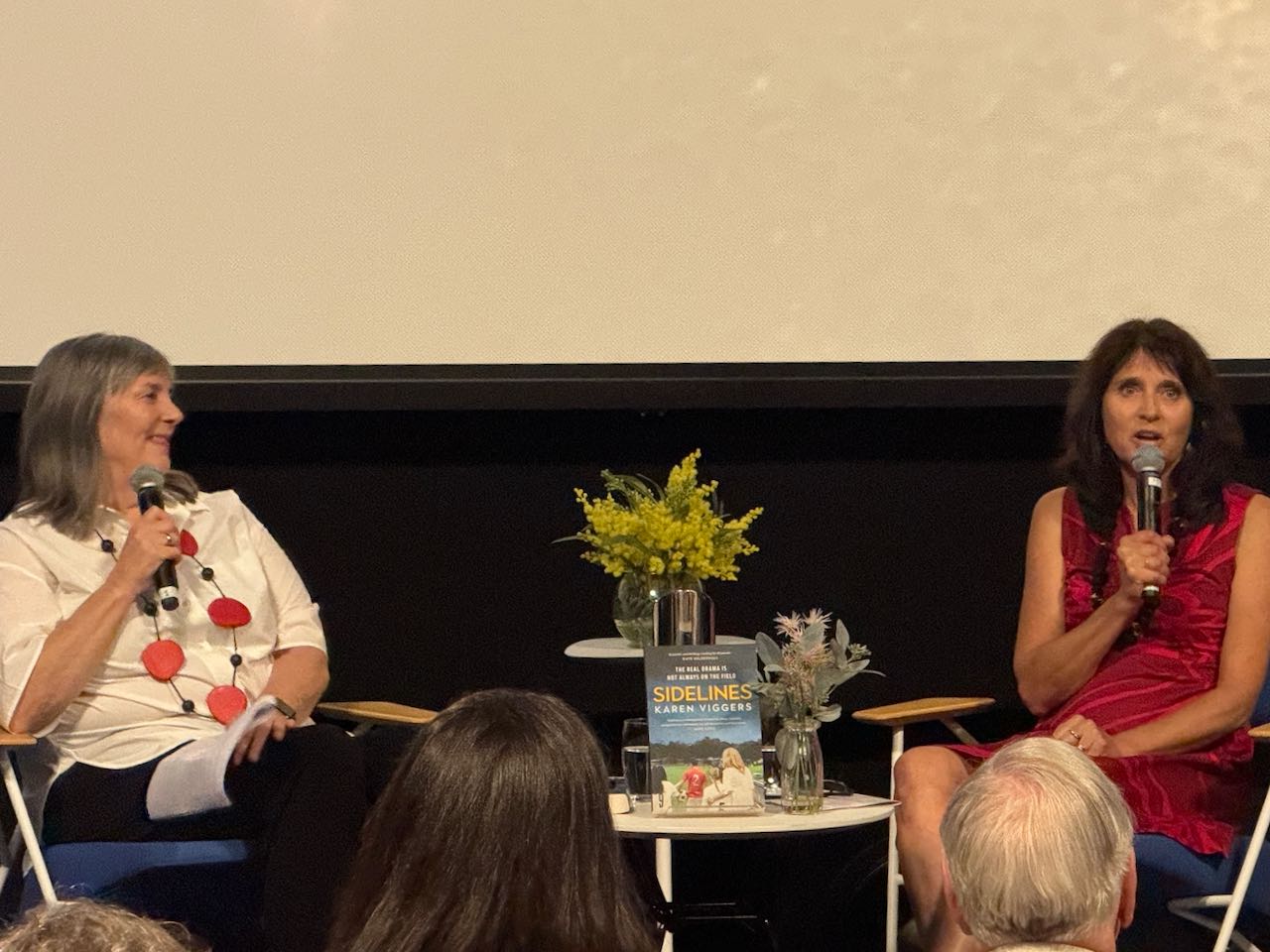
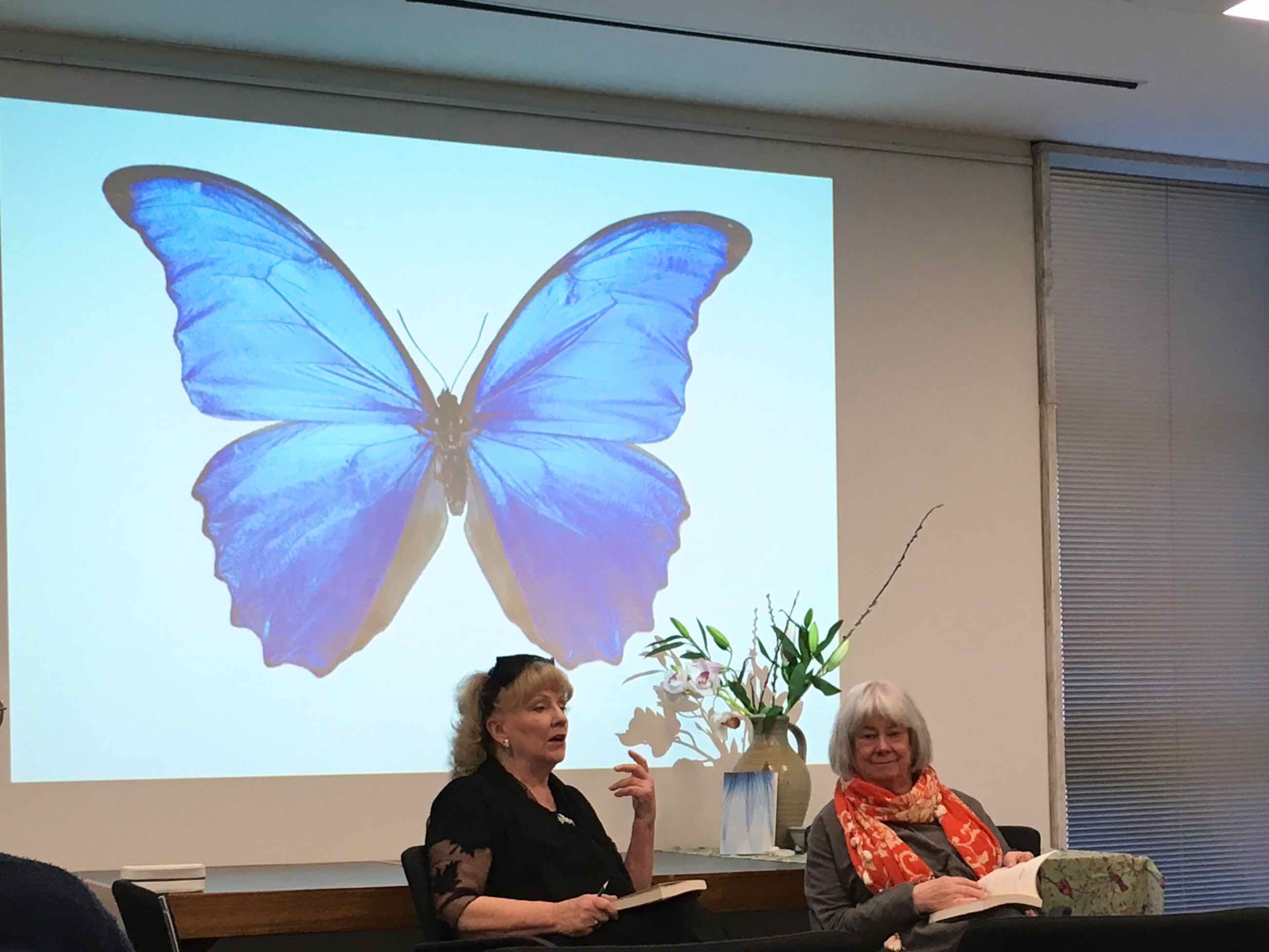
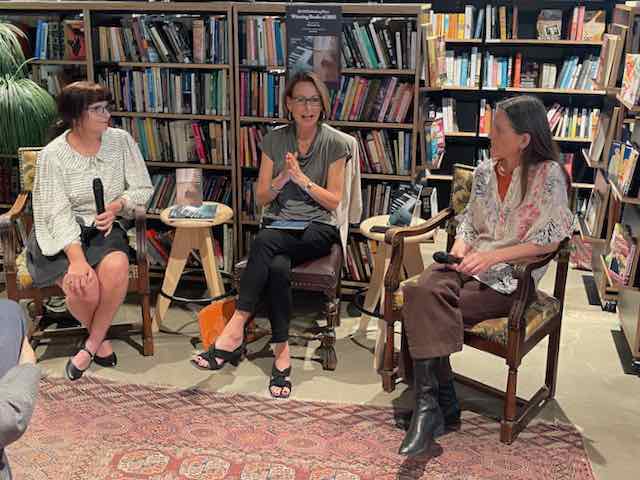
I have written about Finlay Lloyd’s 20/40 Publishing Prize a few times now, so I hope I’m not imposing too much on your precious time. However, this weekend was the launch here in Canberra, and it involved a conversation led by a favourite Canberra journalist, Virginia Hausseger, with the two winning authors. I had to go.

The participants

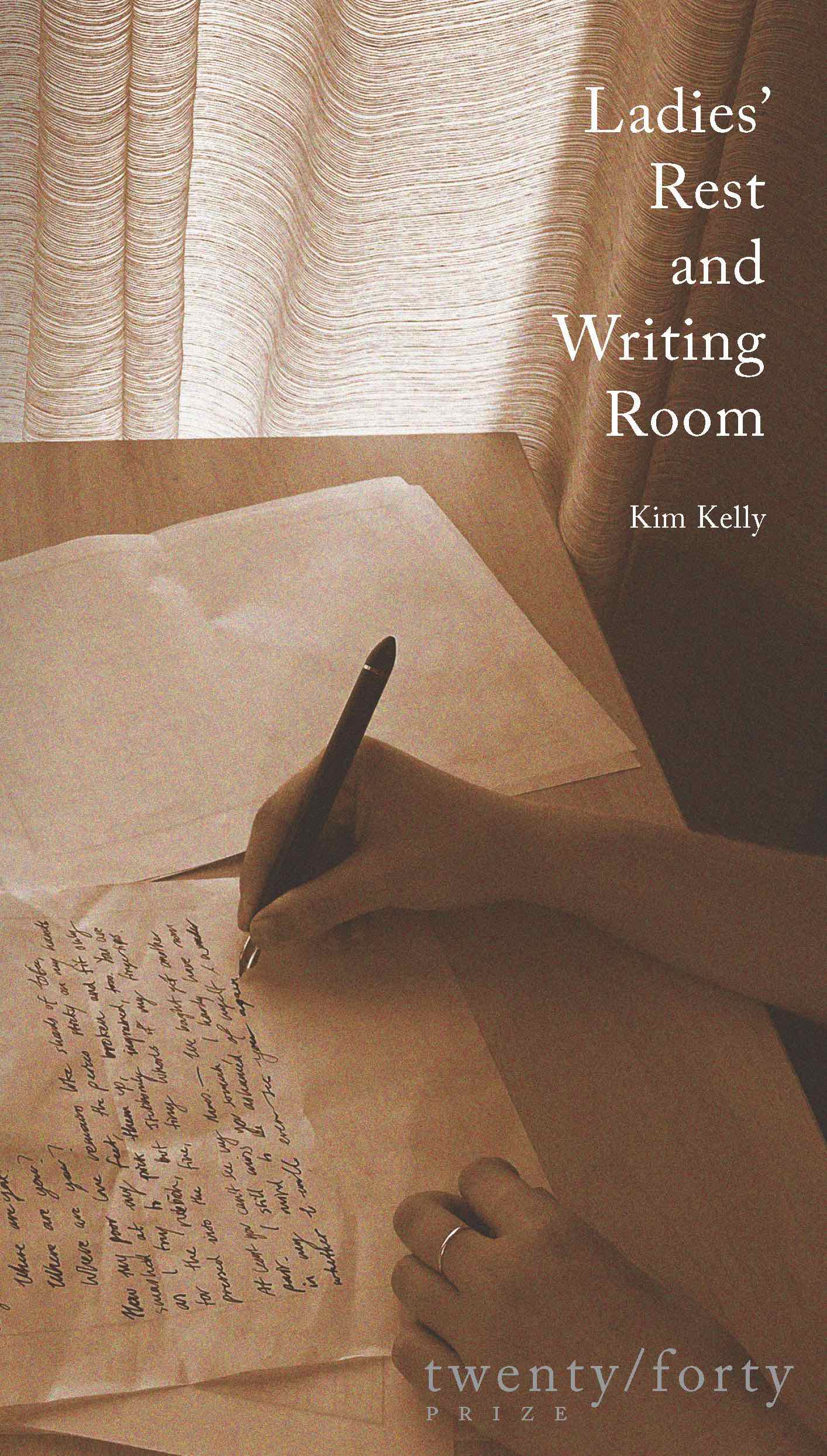
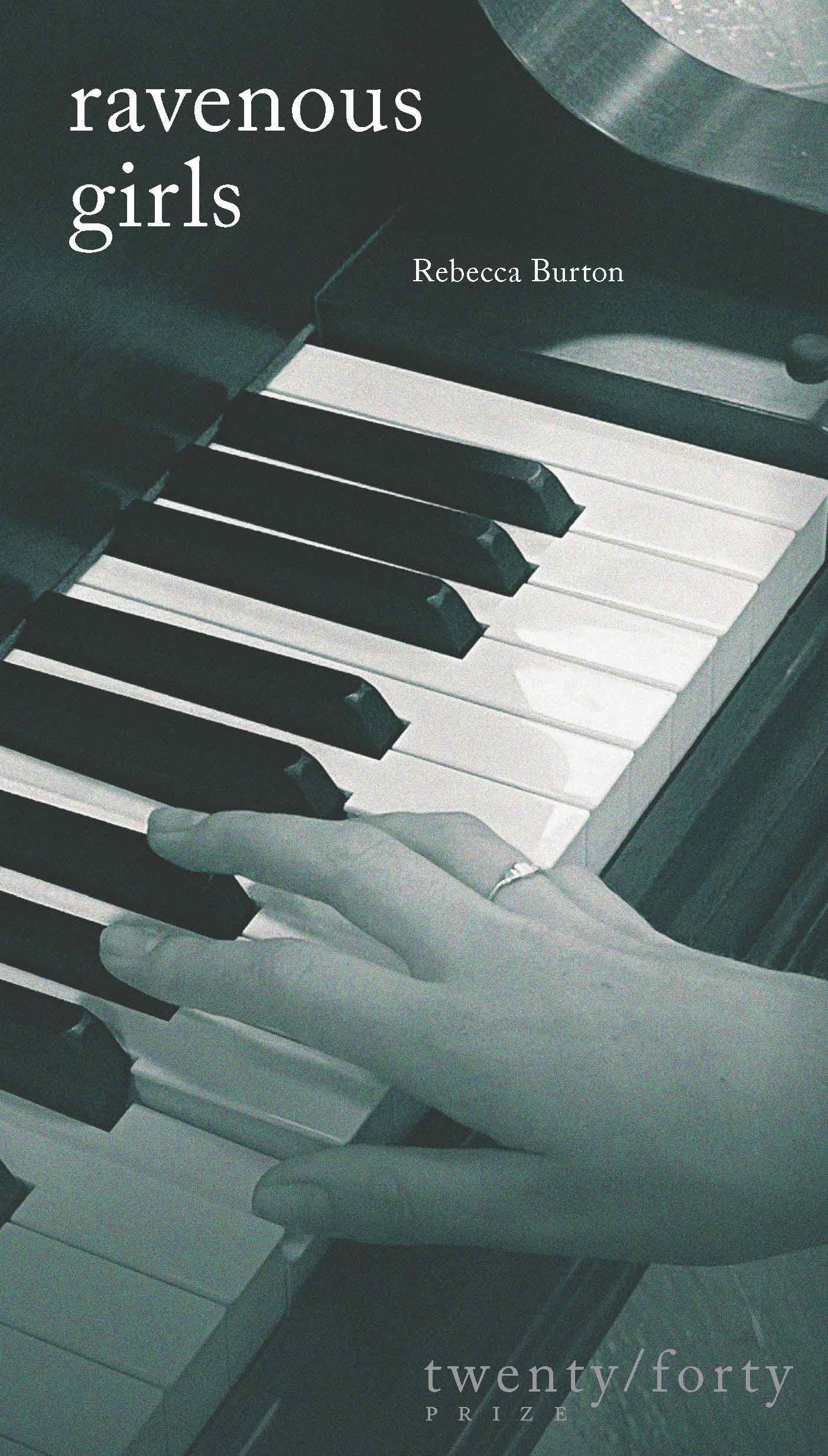
Rebecca Burton and Kim Kelly are the two winners, and I’ve introduced them before, so just to recap, Burton is an editor and author of two young adult novels, while Kelly is also an editor and the author of twelve adult historical fiction novels.

Virginia Hausseger is, to use Wikipedia’s description, an “Australian journalist, academic advocate for gender equity, media commentator and television presenter”. She is well-known to Canberra audiences, having been our local ABC news presenter from 2001 to 2016.

Julian Davies did the introductions. He is the inspiring publisher and editor behind Finlay Lloyd, a company he runs with great heart and grace (or so it seems to me from the outside.)

The conversation

Before the conversation started proper, Julian provided some background to the prize. Human nature, he said, seems drawn to large things. Why else would we have things like the Big Potato! What is it about large things? He sees it related to the “tussle between quality and quantity” and thinks there’s something problematic in our tendency to admire the grand and overlook the miniature. (Yes!) He believes restrictions can liberate writers, and sees the novella form as perfect for this. It can encourage succinctness while allowing room for development. I don’t expect he had any argument about that in the room.

He reminded us that it was judged blind (by two old men and three young women). That it was won by published writers shows that those who have developed their craft are likely to shine through.

Then, Virginia took over …

On their novellas

Kim described her novella with beautiful succinctness saying it was set in 1922 Sydney in the wake of World War 1, just as the city was starting to wake up. It’s about grief, and about how recognising pain in the other leads to the young women rescuing each other. She added a little later that many novels have been written about the War, but not so many about after it, and even fewer about young women’s experience of that time.

She has written three novellas, and “kind of” knows at the beginning which form the story will be. The impetus for this one was wanting to impress a potential PhD supervisor. While researching Trove she saw the ad for the Room (which she included as an epigraph.) Virginia remarked that the closing pages set up a whole new story.

Rebecca said that hers was about two teenage sisters over six weeks of summer in 1986. The old sister, who is anorexic, has been admitted to hospital for bed-rest, and the younger sister visits her daily. It’s about what the sisters learn about each other, and the impact of this condition on the family.

She said that she hadn’t set out to write a novella, but she is comfortable with a word length which is shorter than the standard novel. Then she saw the prize! Writing adult fiction is a new genre for her, but she had stopped reading YA fiction and adores literary fiction. A friend suggested that she write what she reads. Sounds good advice to me.

On Ladies Rest and Writing Room

Kim explained that rest and writing rooms “were a thing” in the late 19th and early 20th centuries, for men and women. What is special about hers is that it was in a department store, and how it was advertised.

Dotty’s grief comes out in shopping addiction and behaving as though she had a death wish. She is so tied up in herself that she doesn’t notice her old schoolmate Clarinda. The book is built around the moment of recognition, that is, when Dotty “sees” Clarinda.

When Virginia commented on how well the “story gallops along” while still being “tight, descriptive, elegant”, Kim said that was the “magic of editorial process”. Also, she said, she knows that Sydney well.

On Ravenous girls

Answering where her story came from, Rebecca said that it was a story she had to write. Frankie had been with her for a long time, and a story about her childhood kept coming to her. The trickiness was not so much the 1986 summer story, but managing the way the time telescopes at the end. She wanted to nod at the years that go by after someone comes out of hospital.

When Virginia commented on how well she’d handled the scene of another girl post-hospital, providing an alternative glimpse of how it goes, Rebecca said she wanted to tell other stories because every story is different.

Young Frankie loves her sister, but is bewildered. An enlightening moment for her is when she realises that sister Justine is the only one allowed to suffer, that her own pain is not seen. She realises that the story she’s been told is not right. Hers is a story of loss, grief, sadness. She’s left to her own resources, and because her older sister is sick, she’s left with no role model.

As for Justine, she uses hunger to mute her desires. Rebecca said that her working title was Yearn, and quoted that great line from the novella, “I don’t want to want the things I want”. Justine feels shame for wanting things, and so starves herself for wanting them.

On the physical process of writing

Kim throws her whole self into a new project, trying to get it all down before she loses her emotional or imaginative connection. Then she goes away, coming back some time later to a “full tub of play dough” that she can then mould. She is able to quarantine the time to work this way because as a freelancer she can manage her time. She loves to be free to fly through the story.

Rebecca has a very different more measured process. She works part-time to a set roster, so has a “chipping away” process. Since her new job, she has created a ritual involving getting up an hour earlier than usual, making a cup of tea and writing for an hour. This helps her manage the peaks and troughs that happen with writing. If things go badly she can get up and go away, leaving it for the next time, and if they go well, she can get up feeling good! It’s important for her not to get obsessed with writing.

On the editing process

Rebecca said for her it went structural edit, then copy edit, then the final proofread. The delight of working with small publisher was that time was allowed for growth.

Kim seconded Rebecca’s comment about the delight of working with Julian, who “cares about words and ideas”. In her worklife as commercial fiction editor, time is of the essence, so she luxuriated in the “nurturing” experience of working with Julian.

On what’s next

Kim’s next project is her PhD, which will include a story about an ancestral grandfather who intersects with Dickens. It’s an idea she has had for a long time, but she will need to try Rebecca’s “chipping away” approach for this!

Rebecca has these characters in head, and wants to see these young girls into adulthood. This could mean three related novellas, the next set in 1993 with Justine in recovery and in her first relationship. She wants to explore recovery because some never move beyond “functional recovery”. The third book she’d like to be about Frankie in her 30s or 40s to see how things have worked out for her. Some of these futures are hinted at in Ravenous girls.

Virginia was an excellent, well-prepared and enthusiastic interviewer. She knew the books well and showed genuine interest in them and their authors.

There was no Q&A which suited me, as I had to rush off to get to my monthly Jane Austen meeting where we were to discuss the up-and-comers in Austen’s novels. However, I did have a very brief chat, as I was leaving, with the other “old man” judge, John Clanchy whose writing I love and who had commented on my recent novella post. He talked about his interest in the form and the choices writers need to make when working within it, such as which characters or stories to develop and which to leave by the wayside.

The Finlay Lloyd 20/40 Publishing Prize Winning Books of 2023 Launch
Harry Hartog Booksellers, Kambri Centre, ANU
Saturday, 18 November, 12.30-1.30pm

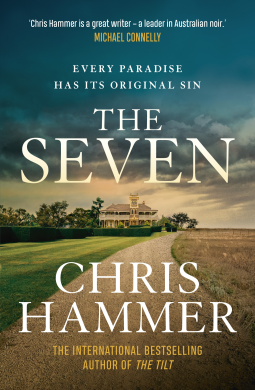
Chris Hammer in conversation with Jack Heath

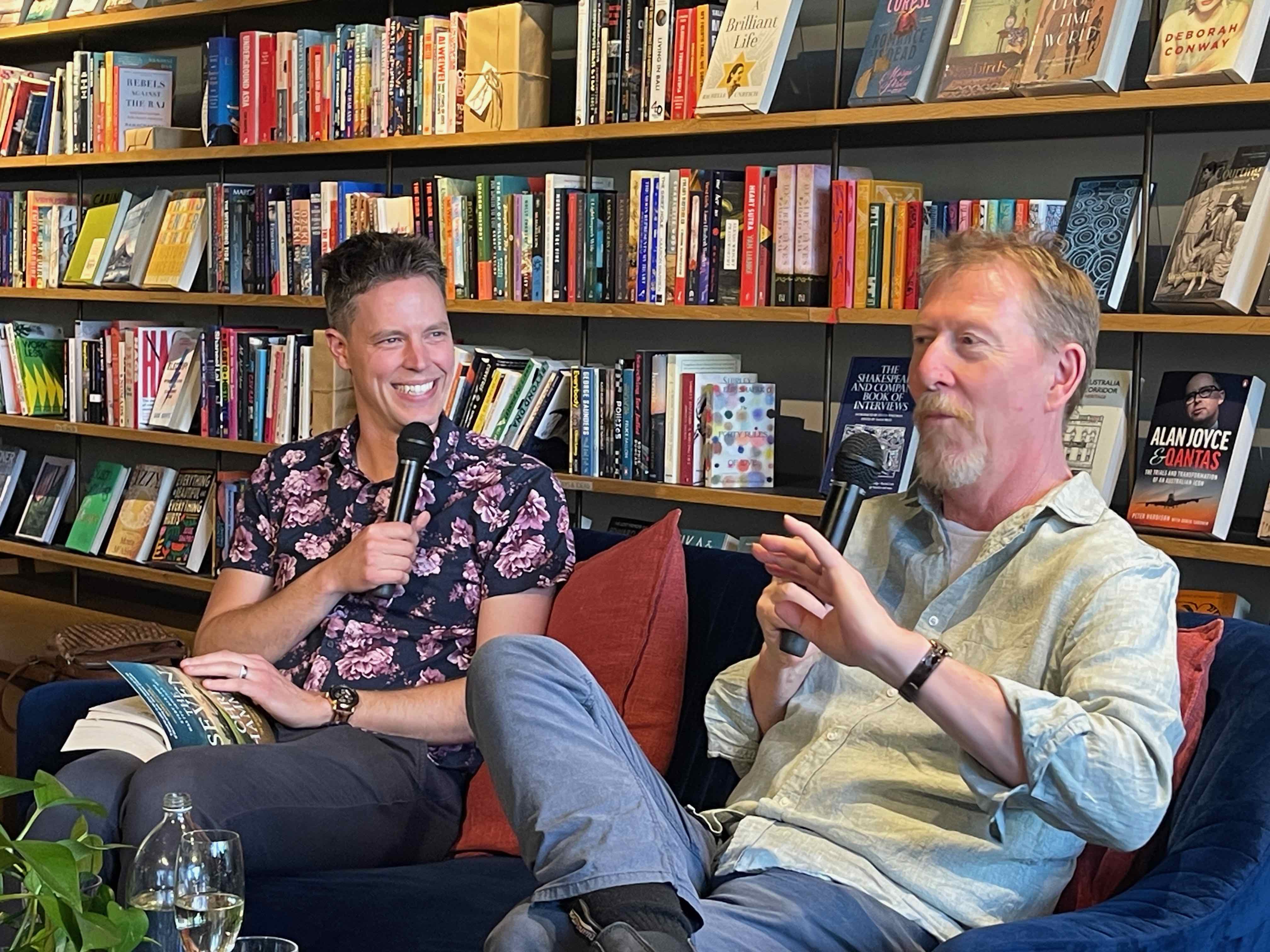
Apologies for those of you expecting a Monday Musings. I did think about it, as this conversation turned out to be a bit of a Chris Hammer retrospective so it could have worked as one of my Monday Musings spotlight-on-an-author post. However, after considering my options, I decided to call this post what it is, a report of an author event. It was held at the wonderful Muse Canberra, a restaurant-cum-bookshop or vice versa, where co-owner Dan did the introductions before passing the baton to Jack Heath to conduct the conversation.

The participants

Chris Hammer is a multi-award-winning local Canberra author, who worked for 30 years as a journalist, during which he also published two nonfiction books. Since 2018, when he was 58, he has written six bestselling crime novels. (If he’d been around when I wrote my Late Bloomers post in 2011, he would have qualified – as the only man!) His first three novels (Scrublands, Silver, and Trust) feature the journalist Martin Scarsden, with the next three (Treasure and dirt, The tilt, and The seven) featuring a detective duo, Ivan Lucic and Nell Buchanan. The seven was the official subject of the conversation.

Jack Heath is also a local writer – of fiction for children/young adults and adults. He is definitely not a late bloomer, having published his debut novel, The lab, in 2006, when he was 20. Since then he has written around 40 science fiction and crime novels. His new book, Kill your husbands, is coming out now.

From these intros, I think you’ll be able to work out who’s who in the pic!

The conversation

I loved that Jack launched straight in, with little of the usual pleasantries. It was clear that they were comfortable with each other, which is probably not surprising, both being Canberra-based crime writers.

On moving from nonfiction to fiction 

Although his first novel only came out five years ago, Chris said that fiction had always been a passion. Like many writers, he has in his drawer a very bad one he wrote in his 20s (that will never see the light of day – unless, joked Jack, you don’t destroy it and your literary executor thinks otherwise! We all know some of those examples.) Chris said he didn’t have the talent or attention span for fiction when he was young, so he turned to journalism, but persistence pays off.

On dramatic openings

The seven starts with a bizarre death. Is this his modus operandi, Jack wondered. Chris’s answers to this and the next question were fantastic, taking us through his novels, and, at the same time, his development as a writer. I’m not sure I’ve ever attended such a lucid discussion of a writer’s oeuvre in one session before.

After giving a sly little plug to the premiere of the Scrublands TV series on Stan later this week, Chris said not all start like that, but most, including Scrublands, do. He finds it works effectively.

However, Scrublands did not start like that. He was six or seven drafts in before he decided to start with a prologue describing the murder. He was learning on the job, he said. The narrative then jumps a year with his journalist investigating the murder on its first anniversary.

With The Seven, the dramatic opening death marks the start of a contemporary story. The homicide detectives arrive. (The murder victim is an accountant. They are good victims, Chris said, because they have secrets. That got a laugh.) Anyhow, the killer is still on loose, so the detectives are in a race against time. But, there are two other storylines: a university student in the 1990s who decides to do his thesis on the history of irrigation (during which he finds some skeletons); letters from an Indigenous girl from 1913. The connection between them all is not clear until near the end.

On his voices

All Chris’ novels are set in Australia, and all but one are rural. Will this always be the case? Further, Scrublands, his debut novel, features a journalist, a bit like himself. It is set in the present, but gradually, through his later books, he has been moving back in time, and diversifying his characters. How did he get into voices that aren’t a middle-aged ex-journalist?

Chris described his development beautifully:

  • Scrublands, the first of his journalist series, has a simple structure, and is told completely chronologically.
  • Silver, the second in the series, has similar trajectory but there are flashbacks.
  • Trust, the third (and currently final) in the series, has two alternating points-of-view.
  • Treasure and dirt, the first of his detective duo (Ivan-Nell) series, has a dramatic prologue (like Scrublands) and alternating points-of-view. The duo start finding crimes in the past, and this got him into some exposition. However, writers are always told to show-not-tell, so in ….
  • The tilt, the second Ivan-Nell book, he decided not to use exposition, which meant needing to create voices from the past. The 1973 voice wasn’t a big stretch since he was alive then, but the 11-year-old boy from World War 2 was a challenge, so he created an old man looking back on his time as an 11-year-old. This novel has multiple (four, I think) points-of-view.
  • The Seven, the third Ivan-Nell book, also has multiple points-of-view from different times, but they include a 15 to 16-year-old Indigenous girl. Before I or anyone could ask the question, Chris said that we need diverse – including Indigenous – characters in books, otherwise it’s terra nullius all over again. But there’s the issue of appropriation, so he decided to tell her story through letters, which, he said, can be unreliable, given people “present” themselves through letters.

Each book, he told us, has built on the experience of the previous books, with the latest ones being “more accomplished”. This doesn’t necessarily mean they are better stories! Jack interrupted, though, with the comment that Chris just keeps getting better and better.

By this point in the session, I felt we were getting gold.

On second-guessing issues of the day

Jack noted that many of his books seem to have second-guessed coming issues of the day (such as reference to Afghanistan war crimes in 2018’s Scrublands, and irrigation corruption in The seven). How did he do it?

Some has been luck, some has come from keeping his ear to the ground (with his journalist friends). For example, rumours were just starting to appear regarding the SAS-Afghanistan war crimes when he was writing Scrublands, so he included that. Given it’s fiction, he didn’t have to be factual. Most of his books are set in rural Australia, where ongoing concerns are climate change and Indigenous dispossession. These are part of The seven. It’s not hard to write his stories, he said, because, given its history, “the Australian continent is a crime scene”. Touché. He added that “Crime writers often touch on matters of societal concern”.

However, the opal mines’ skulduggery in Treasure and dirt he made up, only to be told later that what he’d described really does happen.

On changing his setting

Most of his novels, except for Trust, are set in dying country towns, but The seven’s setting is a beautiful, tidy town. Was he playing against his “type”?

The answer in a single word was No – but he was looking for something new. An earlier novel had featured a lot of water, and he thought water-trading would be good to explore, but not in that book. The town in The seven is fictional, but is based on Leeton, which was planned by Canberra’s Griffins. It has circular layouts and lovely art deco buildings.

On being a nice guy!

Finally, Jack, saying what a nice guy Chris was, offered four reasons: 1. he’s not really nice, but is a villain; 2. he’s so successful, he can afford to be generous; 3. he came to success late, so he realises how lucky he is; and 4. he’s just always been very nice!

Having learnt from his two nonfiction books how hard it is to make a living from writing, Chris considers himself fortunate to be “living the dream”. Scrublands was life-changing, and he is very grateful. He is financially secure and doesn’t have to struggle for that work-life-writing balance that most writers do. Also, Australian crime writers are welcoming and collegial, and – unlike many journalists – have their egos under control!

Q & A

There was a brief Q&A, some of which required knowledge about Hammer’s earlier books.

  • On whether there will be more Ivan and Nell books, or a new tortured detective: The next book is another Ivan one, but he is thinking of bringing journalist Martin back. (The way this questioner started her question made Jack and Chris palpably nervous about spoilers!)
  • On whether he plots carefully: As I’ve heard authors say before, Chris said there are the “plotters” (like Jane Harper) and the “pantsers” (like himself). He has a setting, an idea, and a few plot lines, and then sees how it goes. If he doesn’t know where the plot is going, how can the reader, the implication being this is good in crime writing. He also wants his main character/s to have “skin in the game”. There is usually an emotional storyline, whose trajectory he knows, but the crime plotting is done constantly as he goes.
  • On his “silly” character names, which critics have commented on: If I understood correctly, he said that as he was writing Scrublands, he got a bit bored and created fun names. He feels sheepish about them now as he is stuck with them, the reason being he has many recurring characters, and can’t really have recurring characters with exotic names alongside new ones with plain names. Also, his editors didn’t complain, which they’d do if they disapproved. And, one reader told him that the distinctive names helped her keep track of who’s who.

A wonderfully lively session, one enjoyed also by Mr Gums who has read three of the novels, and bought a fourth from Muse.

Chris Hammer in conversation with Jack Heath
Muse (Food Wine Books)
Sunday, 12 November 2023, 3-4pm

Hal Porter, Francis Silver (#Review, #1962 Club)

Introducing my first review for the 1962 Year Club – Shirley Hazzard’s “The picnic” – I said I had read two short stories and might post on the second one. I am doing so now but, stupidly, I left the book back in Canberra and here I am in Melbourne, so my post will be limited, and without the usual quotes to convey Porter’s writing style. But, it was this, or not at all, because by the time we return home, I will be onto other things. I am cross though, because Kerryn Goldsworthy did write a useful introduction, which, if I remember correctly, placed Porter as part of a change in short story writing from the more realist school that had held on strongly since Lawson.

Like Hazzard’s story, “Francis Silver” appears in the Carmel Bird edited anthology, The Penguin century of Australian stories.

Who was Hal Porter?

Porter (1911-1984) was an Australian novelist, playwright, poet and short story writer. His first autobiography, The watcher on the cast-iron balcony (1963), is regarded as a classic.

The Wikipedia article, linked on his name, is relatively brief, but there is a more thorough biographical entry for him in the Australian dictionary of biography (ADB). Written by literary critic and academic, Peter Pierce, it tells us that he had many occupations, including teaching (on-and-off at many schools), librarian, and shorter term jobs like window-dresser and sheep-station cook. But, cutting to the chase, it also reveals Porter as a problematic figure, because of his pederast behaviour. Peter Pierce writes, for example, that, around 1940, he had “an affair” with a male student at the school where he taught, “an indiscretion that went unpunished”. Those were the days, I suppose. This “affair” – should we grace it with that description? – is apparently fictionalised in his short story “The dream”.

Pierce also writes that, in her 1993 book, Hal Porter: Man of many parts, Porter’s biographer, Mary Lord was, “even-handed in judging an old friend and sensational in revealing Porter’s paedophilia, in particular his sexual relations with one of her sons.” Hard to understand. Moreover, Pierce says that Porter’s third autobiography, The extra (1975),

ventilated many of Porter’s prejudices — against Jews, ‘foreigners’ and Aborigines. The counterpart of Porter’s grace, charm and cultivation was an intense snobbery that, for instance, saw him elevate his father’s occupation from engine-driver to engineer. His facility at winning friends was matched by ceaseless demands on their patience.

So, a difficult man, and one I thought twice about sharing here. However, I read the story, liked it, and as it doesn’t smell of these difficult issues, I am covering it in the uncomfortable spirit of separating the work from its creator. Peter Pierce described him in his 2012 ADB entry as “one of the finest of all Australia’s authors of short stories and a pioneer of the first flowering of autobiographical writing in this country”. (This piece by the late academic Noel Rowe explores the Porter issue in depth.)

“Francis Silver”

“Francis Silver” is a first-person story in which an older man tells of fulfilling a deathbed request from his mother who had died at the age of 41 when he was 18. All through his childhood, he had heard about a man called Francis Silver, who, his mother had implied, had been not only a beau, but an alternative potential husband to the country-living man she did marry, the narrator’s seemingly long-suffering father.

Through our narrator’s childhood, his mother had shared with him an album of postcards sent to her by Francis Silver. Along with sharing this album, she had told stories about this man which suggested he was a worldly, debonair man, who loved the theatre. Her wish was for him to give the postcard album to Silver – but, on no account, was he to also give the lock of her hair that she had kept in an envelope with Francis Silver’s name on it. He was to burn that.

Francis Silver, his mother told him, had worked in a picture-framing shop, and that is where our narrator finds him – but what he finds doesn’t gel at all with the stories his mother had told. The story, then, is about memory, illusion and reality, and the boy’s recognition of the difference. In his own romantic fantasy, he had decided to ignore his mother’s second request and give Francis Silver (whose name works as a mantra in the story, hence my using it in full for each reference here) the lock of hair too. But, as he confronts reality, he changes his mind. The closing sentence vividly conveys his decision in an act that encompasses layers of meaning and feeling.

The father is a less developed figure, because the son was in his lively mother’s thrall, but the sense we get is of a man who loves his wife, and who tolerates her flights of fancy, feeling comfortable, it seems, that she chose – and remains with – him. He seems to recognise (or trust) that Francis Silver is one of those escape fantasies people have to help them cope with the tedium of life, the fantasy that, should it get too hard, there were, or perhaps even are, other options. The narrator, as a boy, doesn’t understand these nuances.

There was a strong autobiographical element, I understand, to Porter’s writing. From the little I read for this post, I am aware that there are such elements in this story. For example, Porter’s beloved mother died when he was 18 years old, as does the narrator’s mother in this story. How much else might be autobiographical though, I don’t know.

Anyhow, just to finish … in the end, the narrator resolves the differences he confronts and is generous to his father for whom Francis Silver had seemed an imagined (if not, as it turns out, real) rival. Our narrator has also learned something about the imagined, illusory past, and its relationship to present realities. A tight, neat, engrossing story.

* Read for the 1962 reading week run by Karen (Kaggsy’s Bookish Rambling) and Simon (Stuck in a Book).

Hal Porter
“Francis Silver” (orig. pub. in Hal Porter, A bachelor’s children, 1962)
in Carmel Bird (ed.), The Penguin century of Australian stories
Camberwell: Penguin Books, 2006 (first ed. 2000)
pp. 186-197

Shirley Hazzard, The picnic (#Review, #1962 Club)

As I have done for most “year” reading weeks*, I decided for 1962 to read a short story by an Australian author. I read two, in fact, and may post on the second one later.

Today’s story, though, is Shirley Hazzard’s “The picnic” which I found in an anthology edited by Carmel Bird, The Penguin century of Australian stories. It was my mother’s book, which Daughter (or Granddaughter to her) Gums gave her for Christmas 2006. I’m glad she kept it when she downsized. Shirley Hazzard is a writer I’ve loved. I have read three of her books, including the novels, Transit of Venus and The great fire, but all of this was long before blogging. I have mentioned her on the blog many times for different reasons, but an early one was in my Monday Musings on expat novelists back in 2010.

Who was Shirley Hazzard?

Hazzard (1931-2016) is difficult to pin down, and can hardly be called Australian given she left Australia in 1947 when she 16, returned here briefly, but left here for good when she was 20. Wikipedia calls her an Australian-born American novelist. As I wrote in my expat post, Hazzard didn’t like to be thought of in terms of nationality. However, she did set some of her writing in Australia, and did win the Miles Franklin Award in 2004 with her novel The great fire, against some stiff competition.

According to Wikipedia, she wrote her first short story, “Woollahra Road”, in 1960, while she was living in Italy, and it was published by The New Yorker magazine the following year. This means, of course, that “The picnic”, first published in 1962, comes from early in her writing career. Her first book, Cliffs of fall, was published in 1963. It was a collection of previously published stories, including this one. Her first novel, The evening of the holiday, was published in 1966, and her second, The bay of noon, was published in 1970, but it was her third novel, The transit of Venus, published in 1980, that established her.

She is known for the quality, particularly the clarity, of her prose, which, it has been suggested, was partly due to her love of poetry

“The picnic”

It didn’t take long for me to discover that “The picnic” is the second story of a linked pair, which were both published in The New Yorker in 1962. Together they tell of an affair between the married Clem and a younger woman, Nettie, his wife May’s cousin. The first story, “A place in the country”, concerns the end of the affair, while in “The picnic” the ex-lovers meet again, eight years later. They are left alone by May, probably deliberately thinks Clem, while she plays with their youngest son down the hillside.

This is a character-driven slice-of-life story in which not a lot happens in terms of action but which offers much insight into human nature – and into that grandest passion of all, love.

In 2020, The Guardian ran a review of Shirley Hazzard’s Collected stories, edited by Hazzard biographer Brigitta Olubas. Reviewer Stephanie Merritt writes that “Hazzard’s recurring themes here – enlarged upon in her novels – are love, self-knowledge and disappointment”. From my memory of Transit of Venus in particular, this rings true. And, it is certainly played out in “The picnic”.

So, love, albeit a failed love, is presumably played out in the first story, but in this story it is still present in its complicated messiness. The two ex-lovers look at each other uncomfortably. Self-knowledge is part of it, but it’s not easily achieved for Clem for whom self-deception has also powerful sway. There’s resignation about love – “an indignity, a reducing thing” which he sees can be a “form of insanity” – and about marriage, which involves “a sort of perseverance, and persistent understanding”. There’s also a male arrogance. He didn’t, he realises, “know much about her [Nettie’s] life these past few years – which alone showed there couldn’t be much to learn”. By the end of his reverie, he comes to some self-understanding, despite earlier denials, about his true feelings and about the decision he’d made. Whether the reader agrees or not, he feels he has “grown”.

Nettie’s reveries tread a roughly similar path. There’s not a lot of regret to start with. She sees he is nearly fifty, and with “a fretful, touchy air”. She sees his self-deceptions, and his caution, and yet her feelings, like his, are conflicted. For her, too, love is a complicated thing:

… one couldn’t cope with love. (In her experience, at any rate, it always got out of hand).

What I haven’t conveyed here, because you have to read it all to see and enjoy it, is the delicious way Hazzard conveys their internal to-ing and fro-ing, through irony and other contradictions. They say nothing to each other, but in their thoughts and observations, while they rationalise what happened and why it was right, they reveal their true feelings. Love and disappointment or disillusion live side by side, never quite resolved.

The story is told third person but from shifting perspectives. First Clem, followed by Nettie, reflect on their situation at some length. Then, in a surprise switch, the short last paragraph moves to May, whose feelings neither of them had seriously considered in all their internal ponderings. But Hazzard makes sure we see them. This technique reminded me of Kevin Brophy’s very different short story “Hillside” which does a similarly powerful switch of perspective in the last paragraph. In both cases, concluding with the perspective of someone who is both outsider but very much affected by the situation just nails it.

Not only did I enjoy this story, but I’m very glad to finally have Hazzard reviewed on my blog.

* Read for the 1962 reading week run by Karen (Kaggsy’s Bookish Rambling) and Simon (Stuck in a Book). This week’s Monday Musings was devoted to the year.

Shirley Hazzard
“The picnic” (orig. pub. The New Yorker, 16 June 1962)
in Carmel Bird (ed.), The Penguin century of Australian short stories
Camberwell: Penguin Books, 2006 (first ed. 2000)
pp. 178-185

Kevin Brophy, The lion in love (#BookReview)

This year has been, for me, the year of the short story, partly because short stories have fitted in with the sort of year I’ve had, but also because short stories – individually, in anthologies, and in collections – have been coming my way in great number. This is fine, because I love a good short story. Fortunately, this latest collection, The lion in love by Kevin Brophy, contains good short stories.

The lion in love is Brophy’s second collection, but I’ve not read him before. He worked in many jobs, but his last job was teaching creative writing at the University of Melbourne, where he is now an Emeritus Professor. According to the university’s page for him, he has twenty books of poetry, fiction and essays to his name. Finlay Lloyd’s page lists some of his awards and other accolades, and adds that “as a writer he has chronicled urban Melbourne, especially the street life of his heartland, Brunswick”. This focus is evident in The lion in love, but not exclusively so, as several stories are set in other places. The opening story, “The lesson”, for example, is set in England, while “Apartment with balcony” is mostly set in Amsterdam, and the tight little “Experience” is set in Spain, to name some. I loved those set in Melbourne and Victoria – because these are places I’m getting to know – but the inclusion of these more exotic settings gave the book a richness I wasn’t expecting.

What also gives this book its richness is the variety in voice, tone and form present in the collection. Some stories are first person, and some third; some are realistic, while others, like “The googly” and the titular “The lion in love”, are more fable-like; some are dark, some a little melancholy, and some contain humour while others offer little slices of a time in a life. They range in length from the single-page “A child’s tale” to the 16-page “Apartment with balcony”. Despite the variety, however, every story feels carefully observed.

What, then, are they observing? Good question! The answer, to put it simply, is human beings – old ones, young ones, male ones, female ones, the seekers and questioners, the sad, the curious, the certain, the uncertain, and so on. Take for example, “Apartment with balcony”, in which the unnamed third person narrator tells the story of his youthful friendship – from school days to young adulthood – with rich boy, Herman. It starts in Melbourne, but mostly takes place in Amsterdam where they have been given the opportunity to apartment-sit. The apparently “ugly” Herman is sure of himself, while our narrator is far less so, with his thoughts frequently turning to death – but he is willing to watch and learn. The boys are interested in girls, and Herman talks about them a lot:

He was a dreamer, I guess. I admired that, because it meant he might one day dream about more serious things, more ambitious things, once we got the talking-about-girls thing out of the way. And he would be okay, we both knew that, because he was from a wealthy-enough family of well-educated parents, uncles, aunts and cousins. When he was ready for it, the right girl would hook up with him, we both knew that without having to say it.  Whether I would find a girl eventually was a more difficult question.

There’s a familiar sensible-poor-boy-accompanies-more-reckless-rich-boy trope here, and the ending won’t greatly surprise, but there’s much to enjoy and think about in the telling.

Now, though, let’s go back to the beginning, to “The lesson”, an English-set realist story about a young boy living with his recently separated mother. Like “Apartment with balcony”, this is a coming-of-age story. Our third person narrator is on the cusp. He’s interested in girls, and experiences his first kiss, but more significantly, he’s trying to work out who he is and how life works. Insecure, uncertain, but imaginative, he peppers his mother with “what if” questions, but she’s too mired in her own grief to engage.

This story perfectly exemplifies the subtle way Brophy conveys meaning. It starts with our protagonist in a tumble-down church cemetery where “tombstones lean at all sorts of angles”, but it is spring with jonquils and bluebells growing “any-which-way”. Already a contrast is established between dark chaos and a more lively one. The opening paragraph ends at the church gate, where the sombre meets the mundane, with one sign “listing the names of local men who died in the First World War” and another “asking people to take away their rubbish when they leave”. Such is the stuff of life where big things jostle against the everyday. Without spoiling anything, the story ends with the boy holding “an ice cream in one hand and a grey sea stone in the other hand, a stone, not much smaller than his boy’s heart”.

Closing the collection is the more surreal titular story, “The lion in love”, whose first person narrator is an older, experienced woman. It’s set in a Melbourne street – in Brunswick, presumably, given the referenced proximity to the zoo – during the pandemic. As people’s hair grows longer and wilder during Melbourne’s long lockdown, our protagonist’s neighbour across the road looks increasingly like a lion, and starts to behave like one, at least in the eyes of our narrator whose imagination runs amok. In a very different way, this story, which traverses that fine line between the wild and the civilised, also jostles the everyday with bigger questions about “love and pain”.

In between these two are fifteen other stories. In many, the characters aren’t named, creating a detached tone that encourages us to observe and think, rather than be emotionally led through identifying with characters. It works well, particularly in the stories that are more fairy-tale or fable-like, such as “The googly” which is about the middle of three brothers. It riffs, surely, on the traditional “three bears” story, but in this case the “middle” one is not necessarily “just right”, though neither is he the opposite. He is just another being working his way through life’s ups and downs:

He knew now that the difference between fiction and living is that in living there are no shapely endings, there can only be endurance.

“Hillside” is one of the shorter stories, and tells of an ageing couple who visit their son’s grave. The third person perspective subtly shifts between the husband, wife, and an omniscient narrator, as the couple contemplate life, death, grief and ageing:

They bend over their son, close together, their heads so close they might be looking down over a bassinet. She says something. He nods because whatever it is she is saying he knows he would agree with her. He notices some clay has splashed across the lettering on the plaque in one corner, so he takes out his handkerchief and bends down to wipe it. This cleaning is something he can do even if he cannot weep or pray or say words his heart should be composing.

Look at that spare precision. Soon after, the husband and wife topple over, and must wait for a cemetery worker to help them up. The next day the wife tells their daughter what had happened. Upon that, in the last sentence, the perspective suddenly shifts to the daughter’s, and we see a whole other element to this story.

The lion in love is full of characters who engage us with their quiet sincerity. Whether they know it or not, they offer us wisdoms that are worth heeding, because they are like us. I’m going to leave you with a couple of my favourite takeaways. The first comes from “The lesson” and refers to the arrival of the Vikings on the English coast. Our young narrator considers their impact:

Those mad pagan Vikings taught the men of Beeston how to make the boats that would make them famous, so you can’t know, can you, whether what you see coming out of the water in front of you is a dog of doom or an angel of salvation?

No, you can’t – but you can always be open to possibility. The other is from one of the few stories with named characters, “But if she did”. This is another observer story, and is a little reminiscent of “Apartment with balcony” except it traverses a longer period of time and thus of life. Our observer, watching his rich friend struggle with grief, notes that

There are no true endings, only pauses for one thing to stop and another thing to start.

I, however, need to end this post. I’m not sure I’ve done this collection justice, but I hope I’ve conveyed enough of its subtle beauty and quiet truths to encourage you to give it a try.

Lisa reviewed this in a far more timely fashion than I, but I offer this, now, to Brona for her 2023 AusReading Month.

Kevin Brophy
The lion in love
Braidwood: Finlay Lloyd, 2022
173pp.
ISBN: 9780994516572

(Review copy courtesy Finlay Lloyd)

Melissa Lucashenko in conversation with Alex Sloan

I can’t believe it’s been a year since I attended an ANU/The Canberra Times Meet the Author event, but this year has been packed. Finally, though, we were free on at the right time – and the event happened to be one of high interest for me, Melissa Lucashenko being interviewed about her latest book, Edenglassie. The interviewer was popular ex-radio journalist and well-known Canberra booklover, Alex Sloan.

I have posted on Lucashenko several times before, including on her Miles Franklin award winning novel, Too much lip. I don’t always hang around for book signings these days – do authors really like doing them? – but we thought we’d see how long the line was. It wasn’t too long, so I decided to hang around. When it got to my turn I told her that I loved that she could write with humour about serious things. It’s a skill. Quick as a flash, she signed my book “For Sue / Keep laughing/ Melissa Lucashenko”. It was worth lining up for.

The conversation

The event started as always with MC Colin Steele, acknowledging country and introducing the speakers. He explained that the title of Lucashenko’s latest book Edenglassie, comes from the name, combining Edinburgh and Glasgow, that was nearly given to Brisbane in early colonial times. He summarised the book as being about the “impact of loss of country” but also being a “novel of strength and love”.

Before getting into the conversation, Alex Sloan referred to the elders at Uluru and their request of us, the Voice, that we are now voting on in this weekend’s referendum – and asked us all “to do the right thing”. Problem is she was probably preaching to the converted.

I’m going to use first names, mostly, in the rest of the report where the alternative would feel too formal.

Alex started the conversation by referring to a review in The Guardian which described the novel in terms of its “flair, humour, generosity” and as being a novel about ongoing resistance. She then asked Melissa to share the origins of her novel.

Melissa commenced with “hello friends” and said she’d like to “extend good feelings to anyone touched by events in the Middle East”. There’s nothing much else she can say, she said, but “war crimes are never ok”.

She then introduced her novel, describing it as a historical novel, with a contemporary thread to add some humour. She said it had grown out of the memoir she’d read of the Queensland “pioneer” Tom Petrie. She told an amusing story about being in London at the same time as Alexis Wright, then working on Carpentaria (my post), and as Peter Carey, who had won the Booker Prize with True history of the Kelly Gang. We are talking around 2001, I guess. Apparently, after they’d had a brief moment with Carey, Wright, who liked Carey’s book, also said that the problem was that Australians “write too many historical novels”.

Melissa took this to heart, and so her first three novels were contemporary novels. But, on catching up with Alexis Wright several years later, she reminded Wright of her comment. Wright looked at her, and clarified that she meant “white people write too many historical novels, not us”. Lucashenko went back to her historical novel interest!

Alex then moved the discussion on to place, noting the epigraph from Jean Rhys’ Wide Sargasso Sea. It comes from when the now locked-up Antoinette is told she is in England, and responds “I don’t believe it…and I will never believe it”. Lucashenko explained its application to her novel, to the fact that Australia is “aways Aboriginal land”. All her books are about place she said.

Alex asked about the novel’s first line, which describes Granny Eddie “falling, falling, falling”. Lucashenko said that besides Granny’s literal fall, it also alludes to an old woman “falling, falling, falling” in a Thea Astley* novel, and to the biblical fall.

Next, Alex turned to the novel’s love theme. Lucashenko said it has two love stories, one in each time period. Blackfellas are human too, she said, and deserve “love, joy and peace” like anyone else. I hate that she feels she has to say this. What sort of world do we live in? Anyhow, Alex described the historical lover Mulanyin as “hot, move over Mr Darcy”, she said. She asked Melissa to do a reading, which she did, from Chapter 8, when the historical section lovers meet. “Love at first sight,” said Alex.

The conversation moved from Mulanyin and his love interest Nita to the modern storyline and the character of Winona, who, Lucashenko said, is around 27 or 28, and “likes to tell it straight”. Alex asked her why she interlinked this modern story with the historical one, and the answer was clear and to the point. She wanted to counteract the trope of the dying race. It has been slowly changing since Mabo, but is still evident. Because of it, she never kills off her Aboriginal characters. She also wanted to balance feisty characters still here in 2024, who are talking back, with her historical figures.

From here, Alex asked Melissa about Edenglassie being a work of fiction. Lucashenko responded that although it was a work of fiction, she’d done a lot of research. She’d agonised on getting facts right, because she had Keith Windschuttle on one shoulder and Andrew Bolt on the other (an image that tickled Alex.) She knew her novel would be attacked because she was telling the story from a non-conservative position. Her historian friend reassured her, though, that “it’s all fiction” – a position I don’t disagree with. Melissa also shared Barry Lopez’s point that everything in life is “story and compassion”.

At this point we returned to the title. Lucashenko elaborated on Colin Steele’s intro, saying it had come from the Scottish Chief Justice Forbes who had established a property in NSW called Edenglassie, and had liked it so much that he tried to later give this name to Brisbane. It’s a great find for a writer. Lucashenko loved it with its “Eden” and “lassie” (for a feminist like her) references. 

In terms of the novel’s perspective, she said that at the time the historical part of the novel is set, the Aboriginal people, who were in the majority at that point, felt the whites would go away. This brought us back to discussing Mulanyin, whom Lucashenko described as brave, and a fisherman. She did another wonderful reading from early in the book, when he is taught some lessons by his elders, but taught in the way First Nations culture does it, which, as Lucashenko describes it, is “you go work it out”. In this case, the lesson involved honouring old ones and not being destructive out of greed. 

Lucashenko also explained that her idea for the novel had its origins in the fact that next year will be the bicentenary of white Queensland. She wanted to provide an Aboriginal perspective on the story but it developed into something more complex, that included love, and also encompassed the idea of “what could have been”. 

She talked quite a bit about Tom Petrie who had established a pastoral station with the permission of the local Aboriginal headman – in a location that was strategically chosen by that headman. The central question of the novel concerns “what was going through these people’s minds”. Things could have been different then, she said, and could still be now. There’s the paradoxical idea of British pluck and courage versus the facts involving murder, mayhem, theft. The conversation teased out several complex ideas about colonisation – attitudes to law, and to beliefs, for example. Lucashenko talked about pastoral workers being branded, and how that can be seen in two ways – it marks a person as a slave, but it can also work as protection (as in “don’t shoot me, I belong to Petrie”.)

Her story explores how colonisation could have been done differently. In Petrie’s case, for example, it was still colonisation, but the way he did it saved Aboriginal lives and partly at least protected their culture. I’m intrigued. Without having read it yet, I can see why she felt the need to prepare herself for attacks. (She’s been attacked before for her “non-conservative”, confronting exploration of difficult subjects.)

Alex talked about the section in the book where Mulanyin asks for permission to marry Nita. She felt it explained things about Aboriginal practices and beliefs that she had not known (which is how Debra Dank’s We come with this place impacted me, so I look forward to continuing that journey here.) Lucashenko then talked about the novel’s modern thread, about Winona confronting the wanna-be (my term) Aboriginal, and her upfront message to him. About this, Lucashenko said that “being harsh is not blackfella law” but there is also a “right way”.

Q & A

On what she learnt about herself through writing each novel: That she has stamina for writing, though not for much else. So, the lesson is, “Do what you are good at”! 

On not providing a glossary for words in language: Meaning can be understood with a little work; knowledge is best earned not given. (Love this.) 

On the novel taking four years: She has been writing this novel her own life, but serious research for it started in 2019, just before the fires, floods and pestilence!

On how Brisbane is affected by its history: All Australia is affected by colonisation, but in Brisbane’s case it was a brutal penal settlement, giving meaning to that phrase, “Another day in the colony”, which still has meaning today. Melissa talked about the question “Are you a monkey or an ape” experienced by an Aboriginal woman prisoner in Logan in 2014.

Vote of thanks

Lucy Neave (whose novel Believe in me I’ve reviewed), gave a sincere vote of thanks, which included thanking Melissa for the special readings from her book (there were three.) She described Edenglassie as a generous book, that’s “compelling, accessible, and meticulously researched”. It encompasses diverse values, she said, and shows what enormous value we can get “if we listen”. 

I would add thanks to Lucashenko for her gracious handling of occasional clumsiness from her questioners, because we whitefellas can be hamfisted at times.

* First Chris Flynn (Here be Leviathans) and now Lucashenko admit to the influence of Thea Astley. Love it

ANU/The Canberra Times Meet the Author
MC: Colin Steele
Australian National University
12 October 2023

Carmel Bird, Love letter to Lola (#BookReview)

In her prose piece, “Ocean of story” (my post), Christina Stead wrote that

It is only when the short story is written to a rigid plan, or done as an imitation, that it dies. It dies when it is pinned down, but not elsewhere. It is the million drops of water that are the looking-glasses of all our lives.

The stories in Carmel Bird’s latest collection, Love letter to Lola, could never be accused of being written to a rigid plan – and if you know Carmel Bird, you would never expect them to. What I so enjoy about Bird is the subversive way she plays with form and tone, while never losing sight of the things she wants to say – but more on that later. Love letter to Lola contains eighteen short stories, the majority of which have been published elsewhere, but mostly in niche or themed journals and collections. However, “The tale of the last unicorn” appeared in The dead aviatrix (my review), as did the titular “Love letter to Lola”, except that here Spixi’s letter earns response.

This new collection is divided into two main sections – Animals, comprising twelve stories, and Human and Angels, the other six. These are followed by a Reflection in which Bird discusses the inspirations for the stories, and much more besides, including, if you read it carefully, her thoughts on stories, writing and fiction. Ignore it at your peril! She tells us, in this last piece, that while the collection has “no primary overall topic … there is a fairly consistent kind of slant on life in general, and a distinct recurrence of themes, motifs, and propositions”. That there is, and in big picture terms, it involves “peering at life and death from different angles, in varying moods”, with a particular interest in “the wild and weird things humans do to undermine the safety of the planet”.

“inklings and threads” (“Two thirds of the truth”)

So, let’s start with the first section, Animals. The twelve stores are told in the voices of different animals, reminding me a little of Chris Flynn‘s Here be leviathans (my review). The animals, their locations and habitats, and their eras vary, but the subject matter all relates in some way to death, and, in several cases to a very particular type of death – extinction. Consequently, we have stories from, or about, a Spix’s macaw (“Love letter to Lola”), a passenger pigeon (“Resurrecting Martha”); a dodo (“The comeback or a pond of dreams”); and a thylacine (“Fertile and faithful”). In these stories, Bird plays with, among other things, plans by the “scientificators” to clone and return animals to existence, but in each one there is a different spin, drawn from the facts. Overall, there is a valid incredulity about the whole business, but the way Bird writes it through her various creatures is gloriously entertaining. Just read Dodo’s story to see what I mean.

“Fertile and faithful” is a good example of Bird’s playing with form and voice. It a distinct biblical look and tone to it, but the bite and wordplay are ever-present. She writes of plans by “delirious and magical scientists” to “grow a shiny new version of the great stripy animal within the being of a tiny little browny grey Sminthopsis, known as a dunnart”:

CHAPTER 3

8. And in the almost fullness of time the scientists became gods.

At the other end of the spectrum – hmm, is it the other end? – are the pathogenic creatures capable of playing havoc with the human race, like mosquitoes (“It’s a mosquito thing”), flies (“Surveillance”) and rats (“Completing the 1080 project”), not to mention that most reviled of creepy-crawlies, the cockroach (“The affair at the Ritz”). Then, there is the sad story of a spider, “Margaret Orb-Weaver, The Interview, 19 September 1922”, inspired by the small green spider seen crawling across a white card on Queen Elizabeth II’s coffin. This story takes the form of an interview with Margaret just before she descends into the vault on the coffin. In her brief moment of fame, Margaret manages to pass on a few truths. In this and other stories, like “The cockatoo’s question”, Bird, whose imagination runs rife while simultaneously being grounded in reality, reminds us of our contemporary ills, like the spectre of fake news, or our faith in money.

The second section, Humans and Angels, picks up more of Bird’s fascinations, fascinations that won’t be new if you’ve read other work by her, and particularly if you’ve read her bibliomemoir Telltale (my review). Through her love of fantasy and magic, and of weaving fact through her imagination, she further explores and shares her thoughts about the weird and disturbing things that humans do – and with the same sophisticated wit that we experience in Animals.

I loved “Yes my darling daughter” with its cheeky, pointed playing with the idea of wolves and sharks, and the dangers confronting young women. The chatty tone, as in so many of the stories, belies the message, but if you miss it, the “helpful quotations” at the end should see you straight.

Our last speaker is Beau, the Recording Angel (“Recording Angel”) who leads us on a merry dance (or, danse macabre, perhaps) through the island of Nevermind, referencing, presumably, humans’ general apathy. As he does so, he tells various stories including those of two young historical figures, “Walter’n’Matilda”, who suffer tragic deaths but find true love in Nevermind. If, as our angel instructs, you put their two names together quickly, you might catch a hint of a popular Australian song – and thereby catch some of the workings of Carmel Bird’s mind.

The delight of reading Carmel Bird is also the challenge. The delight comes from the playful way she digresses, the way she can allude to, or reference, anything from a children’s picture book to a Greek philosopher to the latest work of scientists, or even to her own characters and works. The challenge is how many of these we pick up because Bird‘s mind is not our mind and her reading is not our reading. But it doesn’t really matter because we are sure to pick up enough of the inklings and threads woven throughout to recognise the things Bird would like us to think about – seriously but with hope in our hearts too.

But again, if you are struggling, there are the four epigraphs which provide the perfect guide to how to approach her stories and what we should expect as we read them. Pure gold.

If you haven’t realised by now, I love reading Carmel Bird. Her “endless search for meaning”, as she describes it, is wrapped in the sort of darkly entertaining writing that I can’t resist. It is the sort of writing I can happily read again and again – with the same expectation that I read Jane Austen. That is, both writers can make me laugh and squirm at the same time, which for me is just right.

(Review copy courtesy the author, but copies are available from Spineless Wonders. Yes, Carmel Bird herself sent me this book, but that is not why I loved it. It made me do that all by itself.)

Carmel Bird
Love letter to Lola
Strawberry Hills: Spineless Wonders, 2023
223pp.
ISBN: 9781925052961

Shelley Burr, Ripper (#BookReview)

When I started reading Ripper, Shelley Burr’s follow-up novel to her bestselling award-winning debut novel Wake (my review), I thought about crime novels, about how they are often written in series and how I am not a big series fan. Ripper looked to me like a stand-alone novel – and it is, somewhat! I say somewhat, because a few chapters in we come across one Lane Holland.

The plot thickens…

Lane Holland, I thought. I know that name. Sure enough, Lane Holland is the private investigator protagonist of the aforementioned Wake. However, he is not the prime investigator in this novel, because he is in prison as a result of his previous investigation. (You’ll need to read Wake to find out more!) The result is an intriguing crime novel in which we have our prime, self-appointed amateur investigator, Gemma, plus the police working away in the background, and Lane who is pulled into the investigation by his prison governor, Patton Carver. Yes, you’ve guessed right, the plot thickens – except I haven’t really told you about the plot yet.

Ripper is set in a fictional town called Rainier, which, as Burr confirms in her acknowledgements, is partly based on the town of Tarcutta. Seventeen years before the novel opens, three murders had occurred in this little country town, the last one outside the door of Gemma’s little teashop. She – and the town – have never fully recovered from these events. The town has stagnated under its black reputation, and Gemma herself suffers PTSD from what she had experienced. Now a tour company has arrived wanting to run a true crime or dark tourism walking tour of the Rainier Ripper’s murderous path, but Rainier’s residents have mixed feelings about the idea. On the eve of the trial tour aimed at garnering their support, the tour operator is killed in what looks like a copycat murder. It has to be copycat because the Rainier Ripper is in prison, the same prison as Lane Holland. As I said, the plot thickens, and part of the thickening springs from why prison governor Carver is interested.

Once again, I enjoyed Burr’s story, because once again it is more than a crime story, exploring issues like the impact on a small town of having a reputation for violence, the impact on people who have been close to a violent crime, the idea of dark tourism, and the murky world of police investigations and the ways in which confessions are elicited. I am not an expert but Burr’s research into the relevant issues, including prison life, felt thorough but lightly applied.

I also enjoyed Burr’s characterisation. Gemma and Lane are well-evoked. Other characters are necessarily more sketchy, but they are individualised enough to lift them above pure stereotype, to make them feel true. There is an engaging exploration, through Gemma’s daughter and her friends, of how teenagers cope with a complex adult world. There are some truly “tangled” family relationships in the town. There is some diversity, including a non-binary teen and a Wiradjuri woman, which Burr introduces without trying to appropriate other experiences. There are farmers, business people, pub owners, and doctors whose lives are entwined through marriage and murders. It’s a lot to convey, and there are plenty of names, but I rarely got lost!

Ripper has some similarities with Wake, in addition to also belonging to the rural noir sub-genre. It’s told through roughly alternating third person voices (Gemma and Lane); the protagonist is privately investigating; and it deals with a cold case, which involves a missing person. But it is significantly different, too, including the fact that Gemma is an amateur unlike Wake‘s Lane, and that it is set in a different place with different issues to confront. This means that it is not formulaic, which keeps us readers on our toes. We can’t assume anything about where Burr is going.

Now, I am not a big plot-follower, by which I mean I don’t put serious brainpower into trying to work out who dunnit. Rather, I read crime like I read most books, that is, with a focus on the characters and the issues being explored. But of course, I can’t help following the actual plot, particularly when the characters have engaged me and I want them to fare well. In Ripper, I worked out one of the plot twists, but it had several – like those Christie and Christie-like TV shows I watch – and they left me for dead. They did make sense, though, which is the important thing.

On the basis of her manuscript for Wake, Burr won a two-book deal with Hachette, and Ripper is the second book. I do hope she is offered more book deals because, while there is absolute closure on this book’s crimes, there is also a clear hint at the end about where a next book might go – and I’m intrigued. Burr is a clever writer, with her wits about her. Ripper’s readers will guess the main investigation Burr plans for her next novel, but what will the context be this time? What will be the issues? Time will hopefully tell.

Shelley Burr
Ripper
Sydney: Hachette Australia, 2023
346pp.
ISBN: 9780733647857

(Review copy courtesy Hachette Australia)

Monday musings on Australian literature: Elizabeth Webby (1941-2023)

This might be a first for me, an obituary-style post for an academic/literary scholar rather than for an author. However, this post seemed appropriate as, Elizabeth Webby, who died last month, is someone whom I’ve mentioned several times in my blog due to her having written in areas that are of interest to me. Specifically, these areas were colonial Australian literature and contemporary Australian writers, particularly women writers. I heard about her death from the Association of the Study of Australian Literature, for which she was a founding member and of which she was President from 1988 to 1990.

A significant legacy

Julieanne Lamond, current president of ASAL and co-editor of its online journal, Australian Literary Studies, has posted a tribute to her on ASAL’s website. It is well worth reading, because it outlines her major roles and achievements, which include her being Professor of Australian Literature at the University of Sydney from 1990 to 2007. This involved her “supporting works of scholarly infrastructure including the AustLit Database, numerous scholarly editions, and the online Australian Poetry Library”. I have often used AustLit (albeit much of the content is paywalled) and the Australian Poetry Library (which seems not to be currently available, perhaps due to lack of ongoing support?) Webby also edited the Southerly literary journal for over a decade.

However, my “experience” of Webby has also been more specific. While I had come across her before, I became seriously aware of her through The Cambridge companion to Australian literature (1996), which she edited. This book is a little different from those “companion” style books which contain alphabetic encyclopaedic entries related to their chosen topic. Rather, it comprises essays which provide a partly chronological, partly thematic, survey of Australian literature starting with “Indigenous texts and narratives”. It works, in other words, more like a text book or history than a reference book. I often dip into it, when I am researching specific aspects of Australian literature, and find it sometimes useful sometimes not, depending on how well my particular interest has been covered.

However, I had came across Webby earlier via her essay on colonial poets in Debra Adelaide’s A bright and fiery troop (1988), which is another book of essays on Australian literature, but this one limited to 19th century women writers. It’s another book I often dip into when researching earlier writers.

Both these books, though, were in my ken before I started blogging. Skip a couple of decades to 2018 when I wrote a Monday Musings post titled Literary culture in colonial Australia drawing on Webby’s work. It was fascinating research, both for what she found and for the sorts of sources she used and their varying levels of completeness. Then in 2021, I wrote another Monday Musings on the Irish-Australian poet, Eliza Hamilton Dunlop (1796-1880), using research by Elizabeth Webby and another academic, Anna Johnston. These are just two examples of Webby’s work but, as Lamond of ASAL writes, her research interests spanned the breadth and depth of Australian literature, from early colonial literature, through early 20th century writers like Miles Franklin and Barbara Baynton, and mid-20th century ones like Patrick White, to those more contemporary to her own times like Frank Moorhouse, Elizabeth Harrower and Joan London. She was also, apparently, a loved and respected teacher, academic supervisor and mentor.

All this is important and significant, but another measure of who she was can be found in the funeral notice for her in the Sydney Morning Herald where can be found the following request, “In lieu of floral tributes, please consider a donation to the Indigenous Literary Foundation”. Presumably that was her own request – or from her family based on their knowledge of her passions. Either way, it’s the icing on the cake. Vale, indeed, Elizabeth Webby.

Chris Flynn, Here be Leviathans (#BookReview)

I am not one of those readers who shun weird narrators. Indeed, you’ll find several in this blog, including a skeleton, a dead baby, a foetus and a mammoth fossil. The critical thing for me is not who the narrator is, but whether that narrator is convincing and offers a perspective that engages my mind and heart. Of all the writers I’ve read over the last decade, one that stands out in his ability to surprise and excite me with different voices is Chris Flynn. His short story collection, Here be Leviathans, is astonishing from its first page to its last in its array of narrators.

There are nine stories in this collection, and it is a testament to Flynn that by the second or third one I was fully invested in who would be the narrator this time. I was never disappointed, albeit they ranged from the animate (like the grizzly bear which opens the collection, in “Inheritance”) to the inanimate (such as the airplane seat which narrates the second story, “22F”).

But, before I continue with Flynn’s book, I want to share something he says in his also entertaining “Afterword/Acknowledgements/Blame apportioned” statement. Describing one of his stories as having been inspired by Thea Astley, he refers to his role as one of the judges in Meanjin’s Tournament of Books and shares the exact words of his that I quoted back in my 2013 post on that tournament:

Astley was the progenitor, the chain-smoking, wise-cracking, jazz-loving four times Miles Franklin-winning champion of linguistic manipulation whose style got on Helen Garner’s nerves and who pushed the envelope of Australian literature when no-one else had the cojones to do so.

Flynn’s work is different to Astley’s – time and experimentation having moved on – but he too pushes the envelope of Australian literature, which is why he was one of the writers mentioned the article that inspired my recent Monday Musings on weird Australian fiction. And like Astley, his interests are personal and political. He’s interested in the ways we live in the world, in the injustices we enact, which translates to a concern with issues like colonialism, the environment, and the fallout from an unbridled interest in progress. His touch might feel lighter than Astley’s – he can be laugh-out-loud funny at times – but fundamentally both writers question who we are as human beings. What does what we do say about who we are?

“What a piece of work is man” (Shakespeare via Albert VI)

So, let’s explore Flynn’s brand of weirdness, and why I enjoyed it so much – despite the fact that the opening sentences of the first story, “Inheritance”, were truly shocking:

I ate a kid called Ash Tremblay yesterday. Parts of him, at least. The good bits. The crunchy skull, the brain, a juicy haunch.

What is a reader to think? Fortunately, you don’t have to think very long because very soon our narrator outs himself (it is a “he”) as a bear. He shares a few home truths about humans and our assumptions and behaviours. If you ignore the gruesomeness – after all, a bear has got to eat – the story is pretty funny. Its ostensible subject matter is inherited memory – in this case the bear has inherited Ash’s memory – but it is also a work of ecofiction, which includes exploration of issues like sustainability and colonialism. It is refreshingly bold, asking us to envisage different ways of acting in nature, and, at 30 pages, it is also long. But who cares?

The second, much shorter story, “22F”, is also a work of ecofiction. Its first line seemed ordinary enough, “The first day in a new workplace is always nerve-wracking”. It is, isn’t it? As the story progresses, however, you start to wonder just who this new employee is until the penny drops, it’s seat 22F on a plane. After this story, I thoroughly enjoyed the challenge of working out who was telling each story as I started it. But, back to 22F. In his Afterword, Flynn explains that the story was inspired by the Werner Herzog documentary Wings of Hope about the sole survivor of a 1971 airplane crash. Herzog and that survivor, Juliane Koepcke, return to the site of the crash, and find parts of the plane in the jungle. Flynn writes:

Memory and place. A reminder that we are only passing through and that everything is part of something larger.

Along the way, though, he discusses other issues, like workplace behaviour:

Toilets are inveterate boasters and disgusting perverts. You can’t believe half of what they say.

Eventually 22F’s plane crashes, and while the bodies disintegrate reasonably quickly, 22F is “fashioned from material that does not break down so readily … I will be here for a very long time”.

And so the stories continue, some with multiple voices. “The Strait of Magellan”, for example, is told by the appropriately named super yacht Nemesis, with interspersed commentary by a pandemic virus, HHSV1-ABAD. “Shot down in flames”, on the other hand, is told in sequential voices – by a creek which has been here for sixty-thousand years (that is, that’s how long it’s had its name!), a red fox, a rifle, and finally a bushfire, which wins the day:

I ate the defiant people who stayed.

Such arrogance. Who do they think they are, that they might resist me? I am elemental. I define this paltry world. I decide who stays in their current state and who transforms. I will find you and I will devour you, for I am Alpha and Omega. I was there at the beginning and I will be there at the end. There is no escape.

Many of the stories’ narrators, in fact, identify human stupidity – and arrogance.

In his Afterword, Flynn describes the last story “Kiss tomorrow goodbye” as the “hardest” story to read, but that does it an injustice. It’s the only one narrated by humans, and is inspired by the people who live in the tunnels under Las Vegas. It looks hard because there’s not a punctuation mark in its 30 pages, and its spelling is idiosyncratic to say the least, but in fact the voice and its rhythms are such that it’s not hard to read. It’s a story about survival and makes for a good end to the collection – one that leaves us in no doubt about all the troubling issues that Flynn has explored throughout but that also offers a glimmer of hope in the ingenuity and defiance of its protagonists.

The question of course is do these weird perspectives work or are they just a writerly exercise in “pushing the envelope”? For me they worked. It was fun trying to nut out whose voice it was this time. But there was a point to all this, because these are voices we can’t really argue with. They are not us, but they know us intimately. They speak their truths, like Albert VI, the space monkey (macaque) in “Alas, poor Yorick” who is so hopeful of surviving his space mission but who, like all the Alberts preceding him, is ultimately another pawn in the space race.

Colonial aggression and environmental destruction are recurring themes in the collection, but both are subsumed into an overriding idea which concerns something more paradoxical – mortality and survival. Death or its threat pervades the stories, but there are openings too. Some are small, but they are there.

In his Afterword, Flynn says that “they don’t make them like Astley anymore. She wrote what she wanted and didn’t give a shit”. I disagree. I think they do, and Flynn is one of them. It is great that there are publishers around like UQP who are willing to work with such writers.

Chris Flynn
Here be Leviathans
St Lucia: UQP, 2022
233pp.
ISBN: 9780702262777

Review copy courtesy UQP, via publicist Brendan Fredericks