Monday musings on Australian literature: Forgotten writers 9, Dulcie Deamer

Dulcie Deamer, like my most recent Forgotten Writer, Jessie Urquhart, has retained some level of recognition – or, at least notability, with there being articles for her not only in Wikipedia and the AustLit database, but also in the Australian dictionary of biography (ADB). I have briefly mentioned her in my blog before, in Monday Musings posts on the 1930s and 40s.

Dulcie Deamer

Born Mary Elizabeth Kathleen Dulcie Deamer, Dulcie Deamer (1890-1972) was, says Wikipedia, a “novelist, poet, journalist, and actress”. ADB biographer Martha Rutledge, however, is more to the point, describing her as “writer and bohemian”, while her contemporary, the journalist and author Aidan de Brune, puts it differently again, commencing his piece with, “Dulcie Deamer has had an adventurous life”. From the little I’ve read of her and her work, it’s clear she was imaginative and fearless.

Born in Christchurch, New Zealand, to George Edwin Deamer, a physician from Lincolnshire, and his New Zealand-born wife Mable Reader, Dulcie Deamer was taught at home by her ex-governess mother. The timelines of her youth are sketchy in places, but Rutledge says that at 9, she appeared on stage, and De Brune writes that she was writing verses by the age of 11. A year after that, in 1902, De Brune and Rutledge agree that her family moved to Featherston, a small bush township in the North Island of New Zealand, where, de Brune says, “she ran wild” for five years, “riding unbroken colts, shooting, learning to swim in snow-fed creeks, and going for long, solitary rambles of exploration through the virgin bush”. It was here ‘that what she describes as “memories of the Stone Age” came to her’. Somewhere during this time, according to Rutledge, she was sent to Wellington to learn elocution and ballet lessons, apparently in preparation for the stage. At the age of 16, she submitted a story to the new Lone Hand magazine, and won the prize of 25 pounds. It was “a story of the savage love of a cave-man” and it changed the course of her life.

This story, “As it was in the beginning”, won the prize in 1907, from around 300 entries, said one contemporary report (The Wellington Times, NSW, 18 November 1909), and was published in The Lone Hand at the beginning of 1908, illustrated by Norman Lindsay. The critical responses were shocked but, mostly, admiring, that such virile writing could come from such a young woman. The story went on to be published in a collection of her stories in 1909, titled In the beginning” : six studies of the stone age, and other stories ; including “A daughter of the Incas”, a short novel of the conquest of Peru. One reviewer of this collection (Barrier Miner, 27 May 1910), wrote that Deamer “writes with a freedom of speech and a knowledge of things in general which must have fairly astounded her respectable parents, one would think, when they first read her compositions”! You get the gist. This work was republished in 1929 in a special limited edition titled, As it was in the beginning. The Australasian (21 December 1929) reviewed this and wrote of that original award winning story:

It was a tale of primitive man and woman, of a wooing and winning and retaining with club and spear— an unmoral tale, utterly pagan, terrifically dramatic. Its paganism was unsophisticated; its dramatic force was the expression of natural gift. Mr. Norman Lindsay illustrated the story. His paganism could hardly be called unsophisticated, but there was no doubt about his dramatic power. 

She was really quite something it seems and I might research her a little more. Meanwhile, Wikipedia picks up the story (sourced from newspapers of the time). As well as writing, she continued her stage career. She married Albert Goldie, who was a theatrical agent for JC Williamson’s, in Perth, Australia, in 1908. She had six children, but separated from Goldie in 1922. Rutledge, writes that

In the crowded years 1908-1924 Dulcie bore six children (two sons died in infancy), travelled overseas in 1912, 1913-14, 1916-19 and 1921 and published a collection of short stories and four novels—The Suttee of Safa (New York, 1913) ‘a hot and strong love story about Akbar the Great’; Revelation (London, 1921) and The Street of the Gazelle (London, 1922), set in Jerusalem at the time of Christ; and The Devil’s Saint (London, 1924). Three were syndicated in Randolph Hearst’s newspapers in the United States of America. Her themes, including witchcraft, gave ‘free play to the lavish style of her writing, displaying opulence and sensuality or squalor of traditional scenes.

Reviewing The devil’s saint for Sydney’s The Sun, The Stoic gives a flavour of Deamer’s writing. “She has style (a little too ecstatic perhaps) and she has a fine instinct for story-telling”, but there is much kissing – quite explicitly described – and “Sheikish stuff”. However, as The Stoic knows, there are readers for such writing, and s/he concludes that ‘If anybody wants romance, with a flavor of the supernatural and plenty of “pash,” this is the book’.

Deamer left her husband in 1922, and lived a Bohemian life in Kings Cross, while her mother brought up her children. She worked as a freelance journalist, contributing stories, articles and verse to the Australian Woman’s Mirror, other journals and newspapers, including the Bulletin and the Sydney Morning Herald. Like other writers we have featured, she often used pseudonyms. Rutledge tells us that Zora Cross described her in 1928 as ‘Speedy as a swallow in movement, quick as sunlight in speech … [and] restless as the sea’. Debra Adelaide writes that she was known as the “Queen of Bohemia” due to her involvement with Norman Lindsay’s literary and artistic circle, with Kings Cross Bohemianism, and with vaudeville. Various commentators and critics refer to her interest in religion, mythology, classical literature and the ancient world.

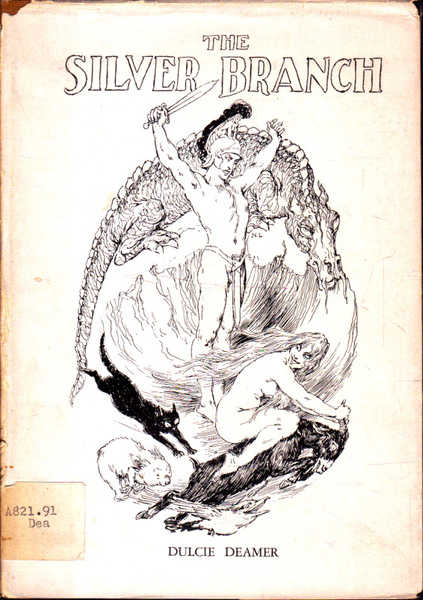
Deamer was a founder in 1929 and committee-member of the Fellowship of Australian Writers. In the 1930s she wrote plays, and a volume of mystical poetry titled Messalina (1932), while in the 1940s she another novel, Holiday (1940), another volume of mystical poetry, and The silver branch (1948). De Brune, writing in 1933, says that she was also hoping “to contribute screen stories to the newly-established Australian film industry” but it doesn’t appear that she achieved in this sphere.

In their short entry on her, Wilde, Hooton and Andrews say that her unpublished biography, The golden decade, “is informative on the literary circles of Sydney in the 1920s and 1930s”. They also say that she features in Peter Kirkpatrick’s 1992 book, The sea coast of Bohemia. Whatever we might think of her novels now, she was a lively and creative force in her time, and worth knowing about.

The piece I posted for the Australian Women Writers Challenge is titled “Fancy dress” (linked below). It provides insight into her interests in the magical and mystical and conveys something of her lively, humorous style.

Sources

  • Debra Adelaide, Australian women writers: A bibliographic guide. London, Sydney: Pandora, 1988.
  • Aidan de Brune, “Dulcie Deamer (1890-1972)” in Ten Australian Authors, by Aidan de Brune, Project Gutenberg Australia and Roy Glashan’s Library, 2017 (originally published in The West Australian, 13 May 1933) [Accessed: 21 November 2024]
  • Dulcie Deamer, “As it was in the beginning“, The Lone Hand (1 January 1908) [Accessed: 23 December 2024]
  • Dulcie Deamer, “Fancy Dress“, The Daily Mail (12 July 1924). [Accessed: 21 November 2024]
  • Dulcie Deamer“, Wikipedia [Accessed 21 November 2024]
  • Martha Rutledge, ‘Deamer, Dulcie (1890–1972)‘, Australian Dictionary of Biography, National Centre of Biography, Australian National University, 1981 [Accessed: 21 November 2024]
  • William H. Wilde, Joy Hooton and Barry Andrews, The Oxford companion to Australian literature. Melbourne, Oxford University Press, 2nd, edition, 1994

Sonya Voumard, Tremor (#BookReview)

As I’ve previously reported, Sonya Voumard’s short memoir, Tremor, is one of the two winners of this year’s Finlay Lloyd 20/40 Publishing Prize. Earlier this month, I reviewed the fiction winner, P.S. Cottier and N.G. Hartland’s novella The thirty-one legs of Vladimir Putin. Now it’s Voumard’s turn, with her book on living with a neurological movement disorder called dystonia.

While essentially a memoir, Tremor also fits within that “genre” we call creative nonfiction. The judges would agree, I think, given their comment that Tremor is “notable for its compellingly astute interweaving of the author’s personal experience with our broader societal context where people with disabilities, often far more challenging than her own, try to adapt to the implicit expectations and judgements that surround them” (back cover). The interweaving of something personal with something wider is a common feature of creative nonfiction, but what seals the deal for me is its structure. Tremor has a strong – subjective – narrative arc that propels the reader on, with more objective information providing the necessary support.

The narrative opens on December 3, 2020, the day Voumard is to undergo brain surgery for her condition. It leaves us in no doubt that what we are about to read is a very personal journey. “I am”, she writes on this first page, “a hairless head on top of a flimsy cotton gown and long compression socks”. But then, two sentences later, she opens a new paragraph with, “as I wait to be taken to the operating theatre, I channel my inner journalist. I’m on a news assignment for which I have already gathered some key facts.” And just like that, we are in journalist mode, with Voumard describing her condition and the relatively new treatment she is about to receive, followed by some facts and figures. Around 800,000 Australians, she informs us, experience tremors of the body, and about 70,000 of these have dystonia. A couple of paragraphs later we flash back to early 1960s Melbourne. Voumard is four or five years old, and her personal trajectory begins with an anecdote about dropping a bottle of milk, about being “clumsy, prone to dropping things”, but also being “a risk-taker”.

From here, the book takes us on the two journeys I’ve just intimated. There’s the mostly chronological one tracking her life with dystonia until we arrive – at the end of the book – back at the beginning with her surgery and its aftermath. And there’s her exploration of dystonia, its causes, diagnosis, and treatment. Voumard binds these two journeys together with her astute, and empathetic, reflections and analyses. She knows what it’s like to live with a disability, even if early on she didn’t recognise it as such.

So, for example, she chronicles the tactics she’d use to hide her shaking, in order to get jobs and then to demonstrate she could do them (when clearly she could). She would sit on her hands, refuse offers of drinks, self-medicate with alcohol. Whatever it took to hide her condition. She talks about navigating a medical world that is so “siloed” that diagnoses ranged from the “psychogenic” (due to “some sort of failure of womanhood, an unfulfilled yearning, a cloak for something else”) to the “purely physical” (like a sports injury or from computer use) – depending on the speciality she was dealing with – when it was something else altogether. She touches on the cost of treatment, the overall politics of medicine, the gender issues which see women’s conditions so often dismissed.

And, lest I’ve given the wrong impression, she does this not only through her own experiences, but through those of others – met personally, or found through her research – ensuring that Tremor is not a “misery memoir” but something bigger, that contributes to our understanding of how people navigate a world in which they don’t fit the norm. This navigation has a few prongs: the obvious ones relate to coping with the physical limitations, discomfort, and/or pain the condition brings; and the less visible ones concern managing your expectations and aspirations, while also dealing with how people interact with you. Voumard shares the story of a woman who had suffered for over twenty years from cervical dystonia before she got a diagnosis. While diagnosis didn’t bring a cure, “identifying her condition had helped her to live her life more calmly, to not try to do too much and to understand something of others’ suffering”.

Voumard, you’ve probably realised by now, packs a lot into the 20/40 form (that is, into 20,000 to 40,000 words). At the winners’ conversation, she said there is the assumption that to be marketable you need to write 55,000 plus words. She had the bones, and had then started filling them out, but it was just “flab”. The competition, and then Julian Davies’ editing guidance, taught her that she had a good “muscular story”. So she set about “decluttering”. The end result is interesting, because this book doesn’t have that spare feeling common to short works. Tremor feels tight – there’s little extraneous detail – but not pared back to a single core.

Voumard, in fact, covers a lot of ground. She uses the Eurydice Dixon murder case, for example, to epitomise her ongoing interest in media and reporting, particularly regarding structural disadvantage and social justice. She also contextualises the latter stages of her journey against the 2019 bushfires, the 2020-2021 pandemic and lockdowns, and the 2022 floods in NSW’s northern rivers. Why all this? The subtitle explains it. This book, this “tremor”, is not just about a movement disorder but about something bigger:

My more recent thinking about disability has strengthened my belief in the urgent need to privilege the voices of others more marginalised than mine. But I also cling to the concept of freedom of speech – not as a neoliberal, tabloid-news defender of hate speech – but as someone striving to find ways to respond to the challenges of a democratic society that is becoming more disordered.

Tremor is another beautiful, thoughtful product of the Finlay Lloyd stable. Recommended.

Read for Novellas in November, because, while not a novella, it is a short work.

Sonya Voumard
Tremor: A movement disorder in a disordered world
Braidwood: Finlay Lloyd, 2024
129pp.
ISBN: 9780645927023

Review copy courtesy Finlay Lloyd.

Shirley Hazzard, The bay of noon (#BookReview)

Shirley Hazzard’s novella, The bay of noon, has been in my sights for a long time, but finally, this Novellas-in-November year, I managed to get it out of my sights and into my hands. It’s the first of two novellas I read for the month, but the second to review. Such was my November (and we are now well into December!)

Published in 1970, The bay of noon was Hazzard’s second novel. It was one of six books nominated for the Lost Man Booker Prize in 2010. This was a special award created to, in effect, right a wrong which occurred when a change in the Booker Prize rules resulted in books published in 1970 missing out on a chance for Booker glory. The award was decided by public vote, with JG Farrell’s Troubles emerging the victor.

I’ve read three books by Hazzard before blogging, but since then I’ve just read one short story – “The picnic” – for the 1962 Club. In my post on that story, I referred to a review in The Guardian of Shirley Hazzard’s Collected stories. The reviewer Stephanie Merritt writes that “Hazzard’s recurring themes here – enlarged upon in her novels – are love, self-knowledge and disappointment”.

This is true of The bay of noon, which tells of a young Jenny, who, though born in England, had been sent to Cape Town with other young children to escape the Blitz. Post-war she was reunited with her older brother but, realising that her love for him was unhealthy, she leaves England to take up a job with NATO in Naples, bringing me to another of Hazzard’s recurring themes, that of young women leaving home to find their place. I understand from her biography that Hazzard herself worked for NATO in Naples in the timeframe this book is set, so she knows whereof she writes – which is not to say that she is writing her life. This is fiction, so while Hazzard draws on her own experiences, Jenny’s story is not hers.

Anyhow, we are in Naples, and it is some years after World War II, the mid 1950s in fact. Hazzard loved Italy, and her description of Naples at this time is imbued with a love born of knowing a place authentically, not as a sightseer. Naples is poor, and damaged both by war and a Mt Vesuvius eruption in 1944. Hazzard’s evocation of the city is a joy to read. A “through the looking-glass” city of both “apartness” and “continuity”, it also provides a moody, sometimes metaphoric, backdrop for our newcomer Jenny.

The storyline is straightforward. Knowing no-one outside of her work, Jenny follows up a letter of introduction to the charming and welcoming writer Gioconda, whose married lover, and Roman film director, Gianni, she also meets. Soon, however, through her work, Jenny also comes to know a Scotsman, Justin Tulloch, and a relationship of sorts develops between them. These relationships, and how they play out – with their mysteries and betrayals – form the nub of the story, but they are not what the novel is about. That is not so straightforward, but there are clues.

The title offers one clue, particularly, for me, the idea of “noon” as a time when the sun is at its highest, when the light is brightest, and so, perhaps representing a moment of clarity and, perhaps, also, of transition or change? Another clue is in the epigraph from Auden’s “Goodbye to the mezzogiorno” and in the opening paragraphs, both of which encompass ideas about memory and experience. The story is told first person through Jenny’s eyes, and there is a sense as the novel progresses of her working through an experience. Or, perhaps, not so much “working through” as allowing the passage of time to do its work. In the opening paragraphs, Jenny speaks of experiences building up “until you literally sink under them” but is also aware that, with the passage of time, memory, which was once “clouded with effects and what seemed to be their causes”, can become protective. As Auden concludes his poem:

… though one cannot always
Remember exactly why one has been happy,
There is no forgetting that one was.

But of course, not all memories are happy – and time can’t make them so. Gioconda, who had suffered loss, says

‘When people say of their tragedies, “I don’t often think of it now”, what they mean is it has entered permanently into their thoughts, and colours everything…’ (p. 67)

Just prior to this, she admits:

‘When I talk of it this way, now, to you, it all comes out as if there were some sequence, some logic, instead of moods, contradictions, alternatives. The design imposes itself afterwards. And is false, must be false.’ (p. 66)

It’s a curious but beguiling novel. The writing has a formal, intellectual – almost dispassionate, and sometimes elegiac – tone. It feels as though it belongs to a much earlier time, earlier in a way than the time in which it is set. This works somehow, partly because of Hazzard’s clear and measured prose, partly because the characters themselves seem to belong to an earlier time, and partly because Jenny is telling us the story from some time in the future.

As I read The bay of noon, I kept trying to place it within a wider literary tradition. It belongs, in part, to those stories about young people being taken under the wing by more experienced elders. Jenny observes the world she is drawn into, gradually becoming a more active and confident player in it. However, an Englishwoman, she remains an outsider, so retains her observer status which, over time enables her to see some realities she had missed in the first flush.

This is not a simple coming-of-age story, as it might look on the surface. Jenny is not an ingenue, but neither is she, at the start, experienced enough to understand the complex emotions and tragedies her older friends have experienced. Moreover, Hazzard has set the novel in a time that was itself complex, as Europe, and Naples specifically, was emerging from the war and – hmmm, was what? I wanted to say remaking itself, but that’s not the sense we get of Naples. It’s more one of being itself.

Towards the end, Jenny, reflecting on that past time in Naples, likens it to a

vineyard that had been left to flourish intact … among the deadly apartment buildings, not so much showing how it was as what has happened to it.

And that is the book’s ultimate meaning for me. It is not about who we are, what we hoped for, or where we have arrived, but about, in the closing words of the novel, “how we came”. Life, in other words, is a process, a journey that doesn’t always take us where we plan or expect.

Read for Novellas in November. Also read by Brona for the month. Read very late for the 1970 Year Club run by Karen (Kaggsy’s Bookish Ramblings) and Simon (Stuck in a Book)

Shirley Hazzard
The bay of noon
ISBN: 9781860494543
Virago Press, 2005 (originally published 1970)
182pp.

PS Cottier and NG Hartland, The thirty-one legs of Vladimir Putin (#BookReview)

Earlier this month, I posted on a conversation with the winners of the 2024 Finlay Lloyd 20/40 Publishing Prize, P S Cottier and N G Hartland, who wrote The thirty-one legs of Vladimir Putin, and Sonya Voumard, who wrote Tremor. On the surface, these books look very different, but conversation facilitator, Sally Pryor, found some similarities suggesting both explore ideas related to identity, one’s place in the world, and how we can be captured and defined by the systems within which we live. Having now read Cottier and Hartland’s novella, and having started Voumard’s memoir, I can see she has a point.

If you didn’t read my conversation post, you may be wondering what the heck this book with its curious title is about. Besides the fact that it’s a novella, which I love, I was attracted to it from the moment I saw it on the shortlist because the description said it “spirits us away on a comedic journey into a world where the reality and absurdity of political power are increasingly indistinguishable”. That sounded just too delicious and I was glad to see it win.

Ok, so I still haven’t told you what it’s about, but be patient, I’m getting there. The novella was inspired, said Cottier and Hartland, by the idea that there are such things as Putin “body doubles”. There is even a Wikipedia page about this “theory” so it is a thing, as they say! The titular “thirty-one legs” belong to 16 of these body doubles whose stories are told in the book. Sixteen, you ask? That doesn’t compute from 31? True, but one of the doubles only has one leg! How can that be, you might also ask, how can a “double” of two-legged Putin only have one leg? Good question, and I won’t give it away, but let’s just say that the idea epitomises the absurdity of the notion.

Now, this is a collaborative novel, and if I understood correctly from the conversation, Cottier and Hartland started by “pushing out” individual Putins. In fact, the novella reads rather like a set of interconnected short stories because each Putin stands alone, with minimal connection between them except they are all Putin doubles and most of them assume there must be others. However, there is a narrative arc to the whole. Each Putin tells us something about their recruitment and its impact on their lives, with some threads recurring through the different Putins, depending on their location and personality. Two Putins also bookend the story. Surfing Putin, Dave McDermott in Western Australia, opens the book in the Prologue and concludes it with his own story, while English Putin Samuel Chatswood starts off the stories proper, and returns with the penultimate story. Each chapter is titled with the name and location of a Putin, so we have, for example, “Maja Dahl, Oslo, Norway”, “Richie ‘The Putin’ Rogers, Cirencester, England”, “Joppe Stoepke, The Hague, Netherlands”, and “Andrei Galkin, Rostov-on-Don, Russia”.

The set-up, or plot, is simple. People from around the world who look like Putin have been recruited to act as Putin doubles should they be so needed. This recruitment has happened over twenty years, but the book is set post the Ukraine invasion, so our doubles suspect they will not be called upon to play Putin. Some are quite edgy about this, while others are more phlegmatic. For all of them, though, being paid – because paid they are, monthly, from an anonymous bank account – comes with questions, if not challenges.

Our first fully-fledged Putin, Samuel Chatswood from London, sets the scene. He tells us about his fears about being a double. Not only is he frequently teased about his resemblance to Putin and asked “why anyone would want to invade Ukraine?”, but he’s anxious because he has been increasingly getting dark looks from strangers since the Skripal poisoning. However, having recently spied another lookalike, he is “comforted” by the idea that “whatever suspicion and recriminations are possible, they are less likely to entangle me if I’m not the only Putin lookalike”. He also heralds the denouement, when he returns to find that such comfort might have been misplaced.

We meet all sorts of Putins, from the fearful, through the deluded, and the thoughtful, to the confident or more upbeat, but all ponder what being a Putin double means for them. For some their own identity gets lost in the role, and some are confused, or at least perplexed, about what’s expected of them. For others, like the resourceful Chilean, Sebastian Soto, it’s a business proposition, while several capitalise on their lookalike-ness. Steve Pinebrother in “International Waters”, for example, not only makes money, secretly, as a double but, publicly, as a performer on a cruise ship. Each one is beautifully individuated, and I find it hard to pick a favourite. There’s much humour in many of their stories, but there’s pathos too, particularly with those who get lost in – or fearful about – their roles. Life is not simple when you accept money without clarity, eh?

“the butterfly of truth does not need questions to emerge from its cocoon of facts”

So, what’s the takeaway. An obvious one is contemporary culture’s focus on appearance and its willingness to monetise looks without much substance behind it. But another is murkier. This novella, I’m tempted to say, could be read as an allegory of the changing world order. No matter where the Putins live, recent changes are unsettling them. The ground is shifting and they (we?) don’t know how to react. Do they bury their heads in the sand, believing it will be alright? Do they wait for the inevitable or, try to withdraw? Or do they take action, and if so, what action can they take? For French Putin, Hugo Fournier,

It matters not, I conclude, what is reality and what is an extravagant theory from a feverish mind. The answer of course is that I should trust no one. I am the only Putin who can, and will, look after me.

Is such isolationism the answer? Through their various Putins, Cottier and Hartland pose serious questions, including, what do we believe and what we can or should we do?

The thirty-one legs of Vladimir Putin is an audacious “what if” story. Its episodic approach works well in the novella form. Were the book much longer, the conceit would, I think, start to lose its freshness. As it is, there are enough Putins to provide a variety of stories, without becoming repetitive. The tone is light enough to be highly entertaining, but the content is informed and thoughtful enough to engage our minds. This book would make a perfect Christmas stocking stuffer, which is not to say I put it on a par with chocolates and scratchies, but that it is small in size, well-priced, physically lovely, and a thoroughly absorbing read.

Read for Novellas in November.

PS Cottier and NG Hartland
The thirty-one legs of Vladimir Putin
Braidwood: Finlay Lloyd, 2024
115pp.
ISBN: 9780645927016

Review copy courtesy Finlay Lloyd.

Marion Halligan, Wishbone (#BookReview)

My reading group’s last meeting of the year took the form of a tribute to Marion Halligan, who died earlier this year and who had generously attended our meeting when we discussed her Valley of grace (my review). We have done this once before with Helen Garner (albeit she hadn’t died) and it worked well. The process is that we choose something we want to read and share our thoughts with the group. I have read several of Halligan’s books, but I have a few on my TBR, so of course I chose one of those, Wishbone, her fourth novel, published in 1994.

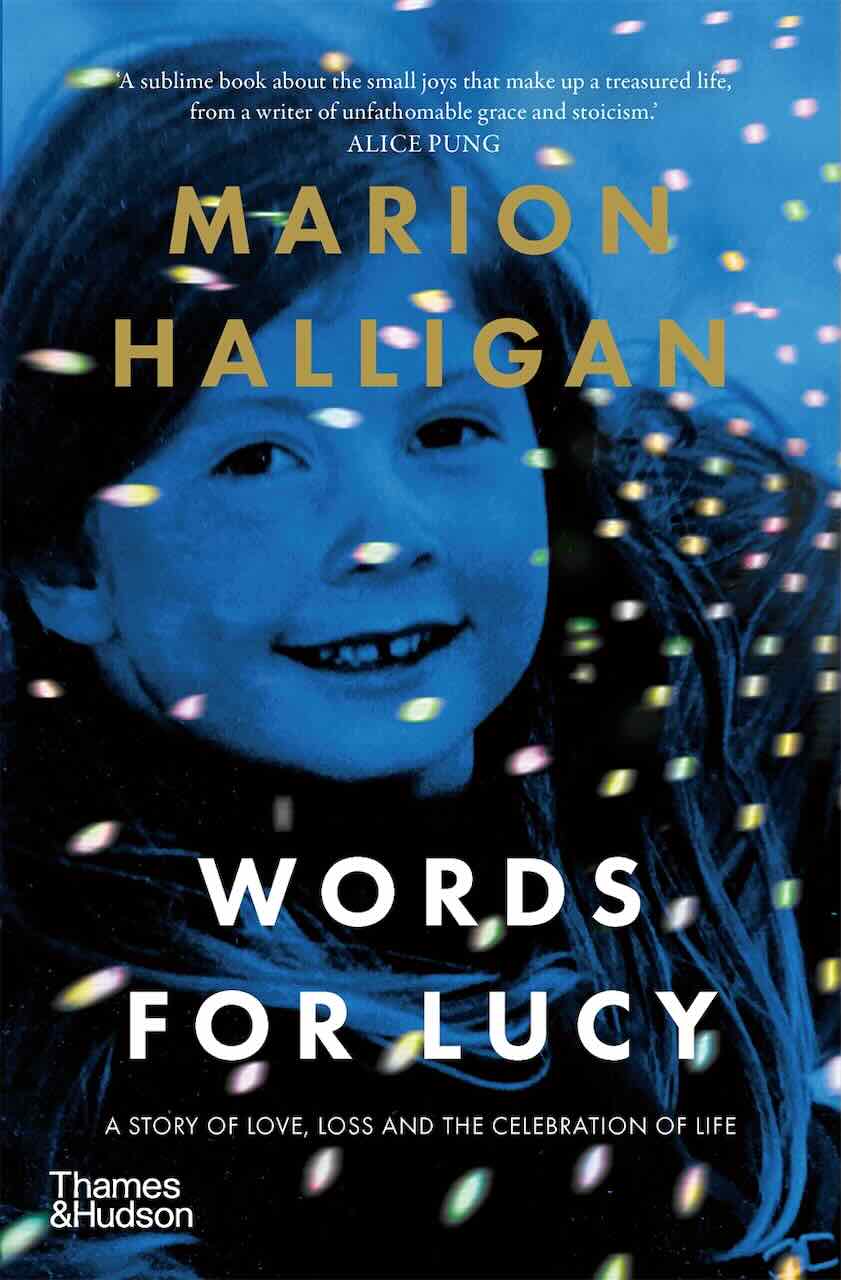
Before I share my thoughts on that, I thought you might like to know what everyone read. Ten members attended the meeting. Some read two books, while others chose a short story or article. It is, after all, a busy time of year. The novels read were, in chronological order, Wishbone (1), The golden dress (2), The fog garden (1), Valley of grace (1), Goodbye sweetheart (2). Three people read her most recent memoir, Words for Lucy, while others read selections from Canberra tales (“Most mortal enemy”), The taste of memory (the first piece), Canberra Red (“A city of mind”), and Shooting the fox (“Shooting the fox”). In other words, we read widely across her oeuvre, resulting in an enjoyable – and occasionally excitable – meeting as we teased out some of her themes and ideas, including how much of her fiction was drawn from life!

“who knows what the hell is going on”

So now, Wishbone. It tells the story of a woman, Emmanuelle, her “motley family”, and the wishes they have for themselves. The novel starts with a young, passionate Emmanuelle having an affair with a married man, but it soon jumps some years hence when she is now married (to a man named Lance), and living in well-heeled Sydney with two children, Maud and William. The rest of the novel follows a period in the lives of these four and others in their close circle – friends, family and employees. During this time, we experience a life-threatening stroke, extra-marital affairs, mistaken assumptions, and a suspicious death, all set within perfectly rendered scenes of domesticity. Halligan can make you gasp with her audaciousness.

As I was reading this novel, a light dawned for me about why I so often use Jane Austen as a benchmark for writing I love. I do like all sorts of writing, but I am particularly drawn to writing that exposes human nature with wit, irony and a generous spirit. This is what Austen does, and this is also what Halligan does. Wishbone is a generous story about messy human lives. Halligan writes with a knowingness about those deep-down thoughts, wishes, and desires we all have, but she is also forgiving about her characters’ foibles and less admirable traits and behaviours. In Wishbone, she explores the tension between our wishes – particularly regarding love – and living with what you’ve got.

There’s something of a fatalist element, here, in the sense that we think we have choice in all this, but choice proves in fact to be elusive. Things happen that we have no control over. Late in the novel, as Emmanuelle sits around the kitchen table with her two children and au pair Mel, in what looks to be a cosy domestic scene, a question – which is both literal and existential – is suddenly proffered, “who knows what the hell is going on”. Who indeed? (And who is asking the question? Emmanuelle, surely, but there’s also an omniscient voice overlaying the characters’ perspectives. At least I believe so. Wishbone slides seamlessly between voices and perspectives in a way that never loses the reader, but that ensures we see multiple sides of things.)

This brings me to style, and how Halligan does what she does. Halligan is a born short-story writer. As I started Wishbone, I almost wondered whether I was reading a book of short stories. Every chapter is gorgeously titled and most felt like they could stand on their own as little nuggets from a life. The opening chapter, The Glade, tells of Emmanuelle’s youthful affair with her married man. It starts:

The difficulty of a love affair between a young woman and a married man may be its logistics. Where can they go? He lives with his wife. She lives with her parents.

They can’t afford hotels, and anyhow it’s too risky as the town is small, but Brian knows “a good place”, a little glade under a cliff. Whenever Brian thinks of going to the glade, he whistles Handel’s tune, “Where e’er you walk”, which “always gladdened his wife’s heart, because she knew her husband was feeling cheerful”. Halligan’s discussion of this song, Brian’s behaviour, and the wife’s response is delicious in more ways than this little irony, but I will just share Halligan’s nailing the point, with “the song told her about the walking and the sitting but what she didn’t know about was the lying”. Just think of the double meaning in that last word! This writing just makes you splutter.

From here, the plot unfolds quietly but surely. Hints are dropped but aren’t heavy-handed, so we are still surprised when certain events occur, which brings me to the title, and its reference to wishes. In the third chapter, The Man in the Train, there is a mostly mundane discussion about wishes until the chapter’s titular, and unnamed, “man” asks Emmanuelle what she would wish for. Her answer?

I would wish for the gift of making dangerous choices.

As the novel progresses, various characters express their wishes. Emmanuelle’s friend Susie idly wishes she were a widow, while au pair Mel wishes she were beautiful. Emmanuelle wants more passion from her husband, while chauffeur Stuart wants money. And so on … What these characters learn, you won’t be surprised to hear, is that their seemingly ordinary, or common, wishes often carry a danger that is not expected. You know that saying, “be careful what you wish for”. But Halligan’s book is no simple moral tale. What Emmanuelle realises near the end, in fact, is that all choices can be dangerous. Susie asks her:

Have you ever wished Lance dead?
I’ve wished him different.
And did that come true?
Not in ways that I’d have chosen.

Where does this leave us? We won’t stop wishing, and we certainly can’t stop making choices, but we can think about our choices and be realistic about the outcomes, whether they are the expected or unexpected ones. In the end, Emmanuelle probably has the answer:

being alive is like reading a book. You might think you’ve got a fair idea of the plot but you don’t actually know what’s going to happen next, you’re as much a mystery to yourself as a character in a novel. Perhaps the secret is just to keep turning the pages.

Reading Wishbone has reminded me how much I enjoy Halligan. I must get back to that TBR.

Marion Halligan
Wishbone
Port Melbourne: William Heinemann Australia, 1994
235pp.
ISBN: 0855615974

Monday musings on Australian literature: Forgotten writers 8, Jessie Urquhart

While some of the forgotten writers I have shared in this series are in the category of interesting-to- know-about-but-not-necessarily-to-read, others probably are worth checking out again. Jessie Urquhart is one of these latter, though I’ve not read any of her novels, so don’t quote me!

However, there are articles for her in Wikipedia and the AustLit database, and I have mentioned her on my blog before, so this must all count for something in her favour. My reference was in a Monday Musings on Australian women writers of the 1930s in which I discussed an article by Zora Cross. She talked about, among other things, writers who had achieved success abroad without leaving home. One of those she named was Jessie Urquhart, who, she says, “will not, I think, do her best work until, like Alice Grant Rosman, she  relinquishes journalism for fiction”. I commented at the time that this was interesting from someone who, herself, combined fiction and poetry writing with journalism. I also wondered whether Urquhart needed her journalistic work to survive. (I suspect she did.)

I also wrote earlier this year about Urquhart on the Australian Women Writers (AWW) blog, as did Elizabeth Lhuede last year. This post draws from both posts and a little extra research. In my post, I shared a 1924-published short story titled “The waiting”. It is an urban story about a very patient woman. It’s not a new story, but Urquhart writes it well. … check it out at AWW. You might also like to read the story Elizabeth posted, “Hodden Grey”, which is a rural story. Like many writers of her time, Urquhart turned her head to many ideas and forms.

Jessie Urquhart

Novelist, short story writer and journalist Jessie Urquhart (1890-1948) was born in Sydney in 1890, the younger daughter of William and Elizabeth Barsby Urquhart. Her father, who was a Comptroller-General of NSW prisons, had emigrated from Scotland in 1884. She joined the Society of Women Writers and was secretary for 1932-33. She had an older sister, Eliza (1885–1968) with whom she emigrated to England in 1934 (years after Zora Cross’s article!) There is much we don’t know about her life, though her father’s obituary does say that neither of the sisters married.

In an article titled “Women in the World” in 1932, The Australian Women’s Mirror includes a paragraph on Urquhart, because they were about the serialise her story Giving Amber her chance. They say she “started writing very young, and in her teens had a novel, Wayside, published; she is now a Sydney journalist. Short stories and articles from her pen have appeared in the Mirror, her latest contribution being “The Woman Prisoner” (W.M. 8/3/32), based on her knowledge of the Long Bay women’s reformatory.”

Elizabeth’s thorough research found that Urquhart had turned to short story writing and journalism, in the 1920s, with most work published in The Sydney Mail, but she was also published in The Sydney Morning Herald, The Australian Woman’s MirrorThe Australian Women’s Weekly, The Sun and Queensland Figaro. Elizabeth read (and enjoyed) many of her stories, and wrote that they cover “a broad range of settings and topics, giving glimpses into the lives of modern Australian urban and rural women and men, encompassing the adventures of spies, adulterers, thieves and deserters; the faithful and unfaithful alike”.

According to Elizabeth, Urquhart’s first publications actually appeared when she was in her twenties, including a series of sketches titled Gum leaves which was published in The Scottish Australasian. The Goulburn Penny Post quoted the paper’s editor, who said that:

The sketches represent her initial effort, and indicate that she has the gift of vivid description and the art of storytelling in a marked degree. All the delineations show power and a creative facility which promises well. Some are indeed gems. [The author shows] promise of a successful literary career.

Her novel Wayside appeared in 1919, and is probably based on these sketches. (She was not a teen in 1919, so I’m not sure about The Australian Women’s Mirror’s facts.)

Anyhow, according to Elizabeth, Urquhart had “a year’s study abroad” sometime in the late 1920s or early 1930s, and wrote more articles on her return. She lived in Bellevue Hill, Sydney, and continued to publish what Elizabeth nicely characterises as “her quirky short fiction”. She also wrote more novels. Giving Amber a chance, serialised in 1932 in The Australian women’s mirror, was published in book form in 1934. The Hebridean was serialised in 1933, but was not published in book form though, wrote Elizabeth, it was “arguably” the better novel. She liked “its setting and its depiction of class tensions” and believes – a propos my introduction to this post – that it deserves to be more widely read.

Another novel, Maryplace: the story of three women and three men, was published in 1934, but unlike the previous novels does not appear to have been serialised. Elizabeth found a contemporary review, which she liked for the sense it gives of the debates surrounding Australian writing at this time, including a reading public “mistrustful of its own novelists”. The author of the review writes that Maryplace is

a story which takes the art of the Australian novel to a new plane of modernity of treatment and universality of appeal.

In style, in theme, and in the power of characterisation and analysis this book is far above the work of the average of our novelists. It is deserving of the highest recommendation. Despite the fact that the scenes of Maryplace, with the exception of one period, are laid in a New South Wales country town, the story will be of equal interest to any reader of novels anywhere. That, after all, is the real art of the novel, and it is one which is not so frequently cultivated by our writers that we can afford to ignore it when we encounter it.

The reviewer believes there’s been too much self-conscious talk about “an Australian story-art”, that all literature is naturally a product of the country which produces it and the life and times in which it is produced. In other words, says R.N.C.,

All stories have their roots in the soil. They will be true of a nation and be part of a national contribution to art without ceaseless striving to label them and brand them as ‘Australian’ on every page and in every paragraph.

Urquhart’s story, R.N.C continues, has the “unselfconsciousness that gives her book a real Australian atmosphere and setting” but that also “makes it a story of absorbing human interest and power so as to be a world novel for the world”. (I like R.N.C.’s thinking.)

The novel apparently deals with the class tensions, and a changing order which sees “the local butcher or grocer” no longer willing to deliver their goods to “the back door”. This is part, says R.N.C. of “any fast changing democracy, and Miss Urquhart in her Maryplace has drawn it with pitiless detachment, giving to her theme sympathy and understanding but the touch of irony and satire which it demands”.

After she went to England in 1934, Urquhart’s stories continued to appear in the Australian press, but whether she published elsewhere is not clear. She was clearly still active in writing circles in 1941, because she was chosen as Australia’s delegate to the PEN conference in London. She and her sister survived bombing during the war, and Jessie sent regular reports about life in London to The Sydney Morning Herald.

In 1944, the Herald reported that “gossip of London theatres, the Boomerang Club, books and their authors comes from Miss Jessie Urquhart, formerly of Sydney, who went to England before the outbreak of war”. It says that “during the first great blitz, she was an A.R.P. telephone worker” but was now “a reader for Hutchinson’s Publishing firm”. She and Eliza had been “staying with novelist Henrietta Leslie in Hertfordshire for the past three months”. Wikipedia tells me that Leslie was a “British suffragette, writer and pacifist”, which makes sense when you read in the next sentence that Jessie had “just been re-elected to the committee of the Free Hungarian Club Committee” which was chaired by Hungarian writer and exile, Paul Tabori.

She is an interesting woman, and would surely be a great subject for one of Australia’s literary biographers!

Anyhow, in 1945, another Sydney Morning Herald paragraph advised that Jessie and Eliza Urquhart would “probably visit Australia” again in 1946, and that they had reported that London was “beginning to recapture its old smartness”. I suspect Jessie never did get back to Australia, as she died in a nursing home in St John’s Wood, London, in April 1948. Eliza died in 1972.

Sources

Finlay Lloyd 20/40 Publishing Prize 2024 Winning Books Launch with Conversation

I mentioned the nonfiction winner of the 2024 Finlay Lloyd 20/40 Publishing Prize, in this week’s Monday Musings, but saved the full winner announcement until after I attended the launch at a conversation with the winning authors this weekend.

The participants

This year, as publisher Julian Davies had hoped, there was a prize for fiction and one for nonfiction. The winners were all present at the conversation, and were:

  • Sonya Voumard for Tremor, which the judges described as “notable for its compellingly astute interweaving of the author’s personal experience with our broader societal context where people with disabilities, often far more challenging than her own, try to adapt to the implicit expectations and judgements that surround them”.
  • P S Cottier & N G Hartland for The thirty-one legs of Vladimir Putin, which the judges said “welcomes us to a world where absurdity and reality are increasingly indistinguishable and where questions of identity dominate public discourse. The book spirits us off on a playful journey into the lives of a group of individuals whose physical attributes appear to matter more than who they may be.”

The conversation was led by Sally Pryor who has been a reporter, arts and lifestyle editor, literary editor and features editor at The Canberra Times for many years. Born in Canberra, and the daughter of a newspaper cartoonist, she has a special connection to our city and its arts world.

And of course, the publisher, Julian Davies, started the proceedings. As I wrote in last year’s launch post, he is the inspiring publisher and editor behind Finlay Lloyd, a company he runs with great heart and grace (or so it seems to me from the outside.)

The conversation

Before the conversation started proper, Julian gave some background to the prize, and managed to say something different to what he said last year. He described Finlay Lloyd as a volunteer organisation, with wonderful support from writers like John Clanchy. He reminded us that they are an independent non-profit publisher, but wryly noted that describing themselves as non-profit seems like making virtue out of something that’s inevitable! Nonetheless, he wanted to make clear that they are not a commercial publisher and aim to be “off the treadmill”. And of course he spoke of loving “concision” and the way it can inspire real focus.

As last year, the entries – all manuscripts, as this is a publishing prize – were judged blind to ensure that just the writing is judged. The judging panel, as I wrote in my shortlist post, included last year’s winners.

Then, Sally took over … and, after acknowledging country, said how much, as a journalist, she also loved concision. Short books are her thing and they are having a moment. Just look, she said, at Jessica Au’s Cold enough for snow (my review) and Claire Keegan (see my post). Their books are “exquisite”. She then briefly introduced the two books and their authors. Sonya’s Tremor is a personal history told through vignettes, but which also explores more broadly the issue of viewing differences in other. She then jokingly said that she “thinks” Nick and Penelope’s book is fiction. Seriously though, she loved the novel’s set up which concerns the lives of 16 Putin “doubles”. It’s a page-turner. The books are very different, but share some themes, including identity, one’s place in the world, and how we can be captured and defined by the systems within which we live.

On Sonya’s journey

The conversation started with Sonya talking about her journey in writing this book. She was about to have brain surgery, a stressful situation. But she’s a journalist, and what do journalists do in such situations? They get out their notebook. Her coping mechanism was to cover it as a story, one of big stories of her life.

She has had a condition called Dystonia – mainly tremor in her hands – since she was 13. She managed for many years but, as she got older, more manifestations developed, not all easily linked to the condition, and her tremor got worse. Getting it all diagnosed took some time.

Sally noted that in the book, the doctor is thrilled that he could diagnose her and have someone else to observe with this condition (which is both environmental and genetic in cause). Sonya, of course, was thrilled to have an answer.

On Nick and Penelope’s inspiration and process

It started when they were holidaying in Queensland. I’m not sure I got the exact order here, but it included Penelope’s having read about Putin doubles, and Nick having been teased about looking like Putin. Penelope said it was a delight to write in a situation where humour would not be seen as a negative. The story is about look-alikes being recruited from around the world to act as Putin doubles should they be so needed.

Sally commented that the doubles respond differently. For some, it provides purpose, while others feel they lose their identity. What’s their place in the world, what does it mean?

Putin, said Nick, is an extraordinary leader who has morphed several times through his career. They tried to capture different aspects of him, though uppermost at the moment is authoritarianism. How do we relate to that? Penelope added that it’s also about ordinary people who are caught up in politics whether we like it or not. Capitalism will monetise anything, even something genetic like your looks.

Sally wondered about whether people do use doubles. Nick and Penelope responded that it is reported that there are Putin doubles – and even if they are simply conspiracy theories, they make a good story.

Regarding their collaborative writing process, Nick started “pushing through some Putins” so Penelope wrote some too, but they edited together. Nick is better at plot, at getting a narrative arc, Penelope said.

On Sonya’s choosing short form not memoir

It was a circuitous process. There is the assumption that to be marketable you need to write 55,000 plus words. She had the bones, and then started filling it out, but it was just “flab”. The competition (and later Julian) taught her that there was a good “muscular story” in there, so she set about “decluttering”. Sally likes decluttering. The reader never knows what you left out!

“Emotional nakedness” was a challenge for her, and to some degree members of her family found it hard being exposed – even if it was positive – but they learnt things about her experience they hadn’t known. Sonya’s main wish is that her family and loved ones like what she’s written.

But, did she also have a sense of helping others? Yes! There are 800,000 Australians with some sort of movement disorder, and many like she had done, try to cover it up. (For example, she’d sit on her hands during interviews, or not accept a glass of water). Her book could be liberating for people.

Continuing this theme, Sally suggested there are two kinds of people, those who ask (often forthrightly) about someone’s obvious condition, and those who would never. She wondered how Sonya felt about the former. It varies a bit, Sonya replied, but it feels intrusive from people you don’t know well. At work it can feel like your ability is being questioned.

On Nick and Penelope’s editing process

Nick explained that their story had a natural boundary, given they had a set number of Putins. (And they didn’t kill any Putin off in the writing!) There was, however, a lot of editing in getting the voice/s right, and getting little arcs to the stories.

In terms of research, they read biographies of Putin, and researched the countries their Putins come from.

Sally wondered whether Nick and Penelope saw any legal ramifications. Not really, but they did research their Putins’ names to get them appropriate but unique, and they have a fiction disclaimer at the end (though Julian didn’t believe it necessary!)

On Sonya’s writing another book on the subject, and on negotiating with those involved

While there are leads and rabbit holes that could be followed, Sonya is done with this story (at present anyhow).

As for the family, Sonya waited until the book was finished to show them, but she also tried to avoid anything that might be hurtful or invade people’s privacy. She’s lucky to have a family which has tolerated and understood the journalistic gene. Regarding work colleagues, she did talk to those involved. It was a bit of a risk but she didn’t name those who had been negative towards her. Most people just thought her shaking was part of her, and she liked that.

Sally talked about the stress of being a daily newspaper journalist, with which Sonya agreed, and gave a little of her personal background. She started a cadetship straight out of school and was immediately thrust into accidents and court cases. It was a brutal baptism. Around the age of 30, when the tremor and other physical manifestation increased, she decided she couldn’t keep doing this work.

Were they all proud of their achievement with this format?

As a poet Penelope is comfortable with brevity, so this was an expansion (to sentences!) not a contraction. Nick was obsessed with “patterning” – with ordering, moving between light and dark, internal and external, providing an arc. Penelope added that it started with less of an arc, including no names for the Putin doubles.

Sonya paid tribute to Julian for being “such an amazing editor” who taught her about how to impose structure on chaos. Penelope added that it was an intense editing process. It was also a challenge because, being a publishing prize it’s not announced until publication so she couldn’t tell people what she was working on. But the editing process was interesting.

Q & A

There was a brief Q & A, but mostly Sally continued her questions. However, the Q&A did bring this:

Is Nick and Penelope’s book being translated into Russian and/or will it be sent to Putin: Julian said Finlay Lloyd were challenged enough getting books to Australians. Penelope, though, would love Russians having the opportunity to read it. Perhaps, said an audience member, it could be given to the Russian embassy …

Julian concluded that it had been a joy working with these authors who “put up with him”, and thanked Sally sincerely for leading the conversation.

This was a lovely warm-hearted event, which was attended by local Canberra writers (including Sara St Vincent Welch, Kaaron Warren, and John Clanchy) and readers!

These books would be great for Novellas in November. You can order them here.

The Finlay Lloyd 20/40 Publishing Prize Winning Books of 2024 Launch
Harry Hartog Booksellers, Kambri Centre, ANU
Saturday, 2 November, 12.30-1.30pm

Michael Wilding, The man of slow feeling (#Review, #1970 Club)

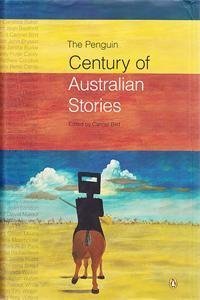
Michael Wilding’s short story, “The man of slow feeling”, is hopefully the first of two reviews I post for the 1970 Club, but we’ll see if I get the second one done. I have been making a practice of reading Australian short stories for the Year Clubs, so when the year is chosen I go to my little collection of anthologies looking for something appropriate. My favourite anthology for this purpose is The Penguin century of Australian stories, edited by Carmel Bird, because it is a large comprehensive collection and because the stories are ordered chronologically with the year of publication clearly identified. Love it!

Who is Michael Wilding?

With these later year clubs, like 1970, there’s a higher chance that the authors we read might still be alive. This, I believe, is the case with Michael Wilding. Born in England in 1942, he took up a position as lecturer at the University of Sydney from 1963 to 1967, before returning to England. However, two years later, in 1969, he returned to Australia and stayed. He was appointed Professor of English and Australian Literature at the University of Sydney in 1993, and remained in that position until he retired in 2000.

AustLit provides an excellent summary of his career. As an academic, he has, they say, had a distinguished career as a literary scholar, critic, and editor”, specialising in seventeenth and early eighteenth century English literature. Since the early 1970s, he has also “built a reputation as an important critic and scholar of Australian literature” focusing in particular on Marcus Clarke, William Lane and Christina Stead. And, he has been active as a publisher, having co-founded two presses, and at least one literary magazine.

However, he also, says AustLit, “came to prominence as creative writer in the late 1960s, when he was at the forefront of the ‘new writing’ movement which emerged in Australia in at that time”. He was part of a group of writers, editors and publishers “who were influential in promoting new and experimental writing, and in facilitating the revitalised Australian literary landscape of the late 1960s and 1970s”. AustLit doesn’t identify who was in that influential group, but I think Kerry Goldsworthy does in her introduction to Penguin’s anthology. She writes that “short fiction was the dominant literary form in Australia in the 1970s” and the most recognised practitioners were Frank Moorhouse, Peter Carey, Murray Bail and Michael Wilding. (All men, interestingly.) This writing, says Goldsworthy, was heavily influenced by European and American postmodern writing, but she doesn’t specifically reference Wilding’s story in her discussion.

Wilding has published over twenty novels and short story collections. AustLit adds that his short stories have also been published widely in anthologies, and that many have also been translated. Wikipedia provides an extensive list of his writing.

“The man with slow feeling”

“The man with slow feeling” is a third-person story about an unnamed man who, as the story opens, is in hospital after a serious accident from which he had not been expected to survive. However, he does survive. Gradually his sight and speech return, but not his sensation. That is, he can’t taste food or feel touch.

Soon though, he realises that sensation is returning, just some time after the actual experience. For example, he and his partner, Maria, make love, but he feels nothing – until some hours later. Not good! Not only is there the problem of feeling nothing, but when they are making love, he might experience some unpleasant sensation from three hours ago. Then, when he is out shopping three hours later, he experiences the orgasm. Or, regarding food, he will eat lunch but not taste it until 4pm. It is all, to say the least, disorienting. So, he sets up a system where he records his “sensate actions” so he can prepare (or “warn”) himself “after a three hours’ delay … of what he was about to feel”.

I’m sure you can see the practical problem with this. Soon, he becomes trapped in “a maze of playback and commentary and memory”, where he is trying to record the present for the future while at the same time experiencing the past. It becomes intolerable.

The tone is one of disassociation, alienation – which had me heading off down that more “modernist” path. But, the “recorder” aspect suggested that the theme involves partly, at least, exploring the conflicted role of recording versus experiencing – which is a more post-modern idea. Can you do both? Can a writer do both? Can, I remember discussing at length during my film librarian career, a documentary filmmaker record and not experience (or not affect the experience) during the act of recording? What are the bargains you make between the two?

I don’t know enough about this time in Australian literature – I haven’t read enough – to understand where Wilding’s ideas and thoughts fit into the zeitgeist. In her introduction to the anthology, Kerryn Goldsworthy says that the writing of this time incorporated “elements of fantasy, surrealism, fabulist, literary self-consciousness, and the process of storytelling itself”. She says the stories by Murray Bail and Peter Carey are concerned with “the riddles and paradoxes of representation itself”. Wilding’s story could also be read as part of this exploration.

This is a dark story in which, if I stick with my idea about the theme, Wilding suggests that the life of sensation is what it’s all about. Fair enough, but where does that leave the writer (or recorder)?

“The man with slow feeling” had me intrigued from its opening lines to its close. I’m not sure I have fully grasped all that Wilding intended by it, but this was a time of experimentation with the short fiction form and new writerly freedoms. I wish I could point you to an online version of the story.

* Read for the 1970 reading week run by Karen (Kaggsy’s Bookish Ramblings) and Simon (Stuck in a Book).

Michael Wilding
“The man with slow feeling” (orig. pub. Man: Australian Magazine for Men, July 1970)
in Carmel Bird (ed.), The Penguin century of Australian stories
Camberwell: Penguin Books, 2006 (first ed. 2000)
pp. 232-238

Stephen Orr, Shining like the sun (#BookReview)

A question that confronts many young people as they reach adulthood – in western cultures at least – is, should I go or should I stay? This is particularly so for young people in small rural towns, and is the issue at the heart of Stephen Orr’s latest novel, Shining like the sun. Wilf Healy, the oldest of three brothers, stayed in Selwyn which is now dying, while his brother Colin left for the bright lights of America, as soon as he could. Now eighty years old, the widowed Wilf is confronting the rest of his life, and he is again pondering the question, except he is not thinking of heading for the bright lights but for Louth, the island on which he grew up. The thing is, that island is empty. No-one lives there now. But this doesn’t dissuade Wilf from his dream. Meanwhile, his 17-year-old great-nephew Connor is about to lose his Mum to cancer and sees no life for himself in Selwyn.

That is the basic plot. Selwyn is a fictional wheatbelt town in South Australia – only identified because Louth Island is a real island off the coast. Selwyn has “three hundred people coming and going, dying, lost in the cracks”, plus one of those signposts pointing to far-flung places around the world. Wilf lives and works in Monk’s pub, delivers the mail (not to mention vegetables and pharmaceuticals) around the community, and drives the school bus, all because he can’t say “no” when yet another job needs doing. However, as the novel opens, he’s had enough. He wants to retire, but his plans to leave are half-hearted at best – and not just because of his sense of responsibility for his sick niece Orla and her son, the disengaged Connor. Why?

The three epigraphs provide a clue, but so of course does the story. We follow Wilf through his days, as he engages with the people of Selwyn, people whom Orr paints beautifully with a description here, a piece of dialogue there. Take young Connor, “an out-of-tune whistle that just needed a breath of air”, or Bobby, the 85-year-old vegetable grower and builder of a kit plane “who is too old to deliver vegetables, but not fly”. Take the school principal, Noah, for whom Wilf drives the school bus. He’s a weak man, who, when a certain crunch comes, cannot stand up for right. And take Wilf’s school bus passengers who are so entertainingly individuated from the opinionated Sienna to the JK Rowling-wannabe Luke, from the withdrawn Trevor to the entitled bully Darcy. The bus-rides are interspersed through the novel, providing perfectly pitched comic relief while also playing an important role in moving the narrative along. It is something that happens on the bus that triggers the novel’s main crisis.

But, Wilf and Connor provide more than two ends of the “do I leave” spectrum. Wilf’s reflections on his growing up provide a stark contrast to the lives of Connor and his peers. Wilf, of course, came from the often brutal “spare the rod, and spoil the child” era, when you did what you were told and expected little else, whilst Connor is growing up at a time when young people are not directed, but encouraged to find themselves. Orr does not judge either way, but lets his readers see and ponder how it all plays out in a life.

I opened this post on the question of staying or going, identifying it as the novel’s central issue – which it is. However, this is not the theme. Rather, it is the question which gives the theme its push. The theme, itself, is something deeper, something so fundamentally human that it could almost sound trite, except it’s not. I’m talking about the idea of community, of connection, of being where you are part of something bigger, where you can make a difference to the lives of others. This might sound schmaltzy. However, because Orr’s characters are fallibly human, and because the socio-economic challenges facing small towns (in particular) are real, connection doesn’t come easily. Shining like the sun, with its cast of authentic characters and array of specific, yet also typical situations, teases out whether this connection, this idea of community, can in fact still fly.

“the possibility of being happy” (Connor)

Orr’s intention? There is surely some political intent, some wish to convey the value and importance of these towns which are being allowed to die through neglect and poor policy (“farms flattened”, and so on). But, it is also personal in terms of exploring what sustains human beings the most – a fancy job or house? Or connections with your community? Mr Gums and I wait for the cliched “tight-knit community” which is unfailingly trotted out after whatever disaster (natural or personal) is on the day’s news. Like most cliches, however, it has an element of truth. A “real” tight-knit community is worth its weight in gold – another cliche for you. Orr knows this, so does Wilf. There is nothing romantic to this story, just real life with all its questions and toughness alongside moments of humour and mutual support in which, even Connor realises, there is “the possibility of being happy”.

Shining like the sun, then, is another special Stephen Orr novel. It is not fancy in voice or structure. That is, it is told third person – albeit a first person narrator opens the proceedings – and is told chronologically, with occasional flashbacks as Wilf remembers his past. What makes it special is the quality of the descriptive writing, the knowing characterisation, the authentic dialogue, and the serious but warm tone leavened by natural humour that comes from ordinary people going about their business.

I read this novel immediately after my return from touring outback Queensland. We saw many small country towns, most of which were variations on the theme. Orr’s story rings true to these towns. Indeed, to end on a cliche – because, why not? – Shining like the sun is a love letter to an Australia little known to its mostly urban inhabitants. It has much to offer on both political and personal levels, but, beyond that, it is just a darned good read.

Stephen Orr
Shining like the sun
Mile End: Wakefield Press, 2024
313pp.
ISBN: 9781923042278
Review copy courtesy of Wakefield Press.

Monday musings on Australian literature: Aussie Booker Prize listees

Charlotte Wood, Stone Yard Devotional

In terms of the Booker Prize, it’s been a long time between drinks for Aussie writers. By this I mean that Charlotte Wood’s shortlisting for the 2024 prize with Stone Yard devotional, breaks the longest drought Australian writers have had in terms of being listed for the prize since its commencement in 1969. It has been eight years since longlisting and a full decade since shortlisting. This is probably largely due to the widening of the playing field in 2014 to include English language novels from any nationality.

This year’s winner will be announced on 12 November, but rather than wait until then, I’ve decided to share now the Australian books which have been listed for (or won) this prize because listing for this prize is a win in itself (even if it doesn’t come with the big bucks!) As Wikipedia shows, and the Booker Prize website confirms, longlists were not published for the Prize until 2001. The Booker Prizes website – particularly the year by year highlights – is worth exploring if you are interested in the prize.

Now, the order of my listing. While an alphabetical listing by author would make it easy to quickly see whether authors/books we love were listed, and how often authors have been listed, my main point here is to show when Australian authors/books have been listed, so, chronological it is.

Book cover
  • 1970 Shortlist (Lost Man Booker Prize*): Shirley Hazzard, The bay of noon (on my TBR)
  • 1970 Shortlist (Lost Man Booker Prize*): Patrick White, The vivisector (on my TBR)
  • 1972 Shortlist: Thomas Keneally, The chant of Jimmie Blacksmith (read before blogging)
  • 1975 Shortlist: Thomas Keneally, Gossip from the forest
  • 1979 Shortlist: Thomas Keneally, Confederates
  • 1982 Winner: Thomas Keneally, Schindler’s Ark
  • 1985 Shortlist: Peter Carey, Illywhacker
  • 1988 Winner: Peter Carey, Oscar and Lucinda (read before blogging)
  • 1993 Shortlist: David Malouf, Remembering Babylon (read before blogging)
  • 1995 Shortlist: Tim Winton, The riders (read before blogging)
  • 1997 Shortlist: Madeleine St John, The essence of the thing (on my TBR)
  • 2001 Winner: Peter Carey, True history of the Kelly Gang (read before blogging)
  • 2002 Shortlist: Tim Winton, Dirt music (read before blogging)
  • 2003 Winner: DBC Pierre, Vernon God Little (read before blogging)
  • 2003 Longlist: J.M. Coetzee, Elizabeth Costello (read before blogging)
  • 2004 Longlist: Shirley Hazzard, The great fire (read before blogging)
  • 2004 Longlist: Gail Jones, Sixty lights
  • 2005 Longlist: J. M. Coetzee , Slow man
  • 2006 Shortlist: Kate Grenville, The secret river (read before blogging)
  • 2006 Longlist: Peter Carey, Theft: A love story (read before blogging)
  • 2008 Shortlist: Steve Toltz, A fraction of the whole (my review)
  • 2008 Longlist: Michelle de Kretser, The lost dog (read before blogging)
  • 2009 Shortlist: J. M. Coetzee, Summertime
  • 2010 Shortlist: Peter Carey, Parrot and Olivier in America (my review)
  • 2010 Longlist: Christos Tsiolkas, The slap (my post)
  • 2014 Winner: Richard Flanagan, The narrow road to the deep north (my review)
  • 2016 Longlist: J. M. Coetzee, The schooldays of Jesus
  • 2024 Shortlist: Charlotte Wood, Stone Yard Devotional (my review)

* The Lost Man Booker Prize was made in 2010 to retrospectively correct a 1970/1 chronological glitch.

Only 5 writers have won the award twice, and one of those is Australian, Peter Carey. J.M. Coetzee, who is now Australian, has also won twice, and has been listed for the award four times since he moved to Australia from South Africa in 2002. However, his two wins, which I have not listed above, occurred while he was a “South African” writer.

Of the many Booker Prize controversies over the years, an early one involved Thomas Keneally in 1975, when the judges deemed only two novels worth shortlisting, of which Keneally’s Gossip from the forest was one. I am familiar with much of Keneally’s oeuvre (though I’ve not read a lot) but this one is new to me! The winner was the other (Ruth Prawer Jhabvala’s Heat and dust).

The most nominated Australian writers are:

  • J.M. Coetzee (6, if we fold in those two pre-Australian resident wins)
  • Peter Carey (5)
  • Thomas Keneally (4)
  • Shirley Hazzard (2)
  • Tim Winton (2)

The Man Booker International Prize was made biennially between 2005 – 2015 to recognise one writer for their achievement in fiction, and Australian writers have been shortlisted three times:

  • 2007 Shortlist: Peter Carey
  • 2009 Shortlist: Peter Carey
  • 2011 Shortlist: David Malouf

In 2106, this award came into line with the Man Booker Prize and is now made annually for a work of translated fiction. This will rarely include Australian books given the majority of our writers write in English. However, in 2020, Shokoofeh Azar was shortlisted for The enlightenment of the greengage tree (my review).

Any thoughts?