Canberra Writers Festival 2019, Day 1, Session 1: Capital culture

It’s Canberra Writers Festival time again. The theme continues to be Power, Politics, Passion, reflecting Canberra’s specific role in Australian culture and history. I understand this. It enables the Festival organisers to carve out a particular place for itself in the crowded festival scene, but the fiction readers among us hunger for more fiction (and, for me, literary fiction) than we get. And, because the Festival is widely spread with venues on both sides of the lake, it was impossible to schedule as many of my preferred events as I’d like! Logistics had to be considered. Consequently, my choices might look a bit weird, but I think I managed to navigate the program reasonably well.

Note: There is unlikely to be a Monday Musings this Monday 26 August, as I’ll still finishing off my Festival posts!

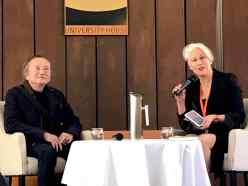
Capital Culture: Panel discussion moderated by Irma Gold

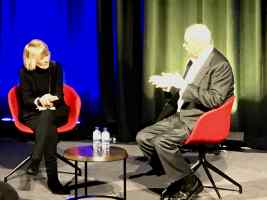
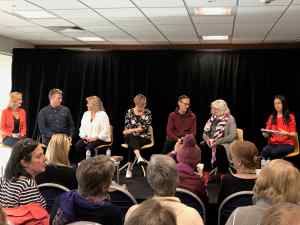
Panel pictureThe session was billed as follows: “Some of Canberra’s finest and most creative writers join forces in this irresistible ode to the national capital. Take a wild ride through a place as described by the vivid imaginations of some of this city’s best talents. Capital Culture brings stories not just of politics and power, but of ghosts and murder and mayhem, of humour and irreverence, and the rich underlying lode that makes Canberra such a fascinating city.”
You can see then why I chose this one – to support our local writing community, and to see writers on the panel who particularly interested me (like Marion Halligan, Paul Daley, and moderator Irma Gold.)

What I didn’t realise when I booked this session was that it was also a book launch. The description says ”Capital culture brings stories …” but oblivious me read that as saying the session called Capital Culture would tell us stories about the capital! The joke was on me, not that it would have affected my decision. Fortunately I discovered my mistake moments before commencement so I was prepared.

The writers were:

  • Paul Daley: journalist and author of Canberra in the Cities series.
  • Andrew Leigh: Australian Labor Party MP, but previously a Professor of Economics at the ANU, and author of several books including the wonderfully titled, Battlers and billionaires: The story of inequality in Australia.
  • Marion Halligan: award-winning Australian writer of novels, short stories, essays and other non-fiction.
  • Tracey Hawkins: award-winning author of children’s and adult non-fiction books.
  • Marg Wade: owner and operator of Canberra Secrets Personalised Tours, and author of three editions of Canberra secrets.
  • Nichole Overall: social historian and author of Queanbeyan: City of champions.

Irma Gold opened the session by referring to the Festival’s theme, Power, Politics, Passion, and saying that Canberra is more than that. This new anthology, which includes fiction, poetry and non-fiction, offers, she said, a nuanced picture of our capital. She also acknowledged country, and noted that it was a privilege to be talking about story on this land that has been full of stories for so long.

Perceptions of Canberra

The discussion started with panel members’ initial response to Canberra. It is a peculiar thing – to me, anyhow, who specifically wanted to come to Canberra – that many who come here hate it at first.

Journalist Daley and police officer Hawkins, for example, found themselves insulated within their professional communities – Parliament House journos for Daley, and police officers, not to mention criminals and dead bodies (!) for Hawkins. It was only when they married and moved into the ‘burbs that they started to enjoy Canberra community life. Daley also discovered the bush (which was something he’d never embraced before as an inner city Melbourne boy.)

Gold also came here not wanting to come, but is now a committed Canberran. Overall’s husband’s family came here in 1958 when his father, John Overall, became the first commissioner of the NCDC (National Capital Development Commission). Although her husband didn’t much like it, his father saw the city’s “unfulfilled potential” and was instrumental in building the capital we have today, including the lake and significant buildings like the National Library of Australia.

Other panelists had slightly different stories. Author Halligan quite liked Canberra when she came here as a student in 1962, but she didn’t expect to stay. Marriage changed that, and she now loves Canberra. She’s on a mission to overturn the ongoing denigration of Canberra through the use of our name as a synonym for the the Government. The whole of Australia elects it (and, in fact, right now the government is not the one Canberra voters would have brought in!) Daley said that this use of Canberra as a synonym for the Federal government is lazy jounralism. We feel abused and misrepresented much of the time, I must say!

MP Leigh talked about his love of the “bush capital”, saying it’s hard to come back from a walk in the bush and not feel good about yourself. Canberra’s bush, he said, is grounding and a leveller, something anyone can enjoy. His responses tended to be those of a politician – not shallow responses, though, but those of someone who sees the city from a certain perspective. He said that

if Canberra was a person, I like to think that it would be an egalitarian patriot, the kind who knows the past but isn’t bound by it.

Tour guide Wade said that her approach to the anthology was to do something fun, so she wrote a story inspired by Canberra’s ghosts, in particular those at the National Film and Sound Archive. She also mentioned ghosts at the Australian War Memorial (the “friendly digger” who opens and closes doors), the Hyatt ghost (who just stands and does nothing), and Sophia Campbell at Campbell House Duntroon (who is a naughty ghost)!

Gold then asked the panelists to comment on the fact that few countries in the world show as much contempt for their capital as Australians do. The term “Canberra bashing”, she said, entered the Australian dictionary in 2013, our centenary year. Of course, Gold was speaking to the converted, but the points were well made nonetheless!

Overall agreed that Canberra is underestimated by others, and that there is more to it than its obvious superficial beauty. Daley commented that Canberra has an intelligent, outward-looking populace. Canberrans are acutely aware of the symbolic nature of place, and the way it encompasses the story of Federation. It’s an egalitarian place, compared, say, to Sydney. Canberra is mostly middle-class with few shows of wealth. He also commented that creative communities can be found all through CBR.

Leigh took up the point about community noting Canberra’s “extraordinary urban design”, including its walkability and plethora of small suburban centres, which facilitates people mixing at local shops, and engaging in community activities at levels higher, apparently, than many Australian cities.

Wade talked about loving to change people’s perception of Canberra, while Hawkins commented on how often, when she travels overseas, people have never heard of Canberra, let alone know it’s Australia’s capital.

Gold asked Halligan about the idea that you shouldn’t set fiction in Canberra. Halligan said that her fiction was not political, but about ordinary people and lives. She talked about her experience of doing book tours with her novel The apricot colonel and the frequent surprised response that Canberrans were normal, just like them. Fiction, she suggested, can help change perception. Overall mentioned the success of Chris Uhlmann and Steve Lewis’ Secret city series.

It’s not all light

Finally, Gold noted that the anthology’s editor Suzanne Kiraly had described hers and Paul Daley’s piece as being the darkest in the anthology. Daley said that while Canberra is egalitarian, it’s not a great place to be poor, and so his second piece in the book is a fiction piece inspired by a young woman busker, the “violin girl”, he used to see. Leigh agreed that there’s no shortage of suffering in Canberra, but also argued that there are many civic entrepreneurs here reaching out to support or help the more vulnerable in the community.

Hawkins added that her story is a murder, that Canberra has crimes like any other community – as she discovered in her early years working here, which took her to, among other places, the old Kingston mortuary.

Gold commented early in the session that Halligan’s piece has a mournful, sorrowful tone. Halligan responded that she was “conscious of the melancholy of things that have been lost” such as the old Georgian vicarage where Glebe Park is now. Overall agreed, saying that we lose our uniqueness and distinctness, our sense of who we are, when we lose our buildings.

Q&A – and some comments

There was a short Q & A, but I’m just going to comment on the one suggesting that Canberra does not have a great depth of multiculturalism, despite our great annual Multicultural Festival. Those panelists who responded generally disagreed, and I could see their point – to a point. However, I had already noted to myself that the panel itself was not diverse. As far as I could tell none had an indigenous nor any other culturally diverse background. And, indeed, I think the whole anthology is the same. A lost opportunity to offer some different voices about our city.

However, the anthology does include contributions from some excellent writers, and I look forward to reading it. I only wish that, like most anthologies I’ve read, the table of contents included the author’s name!

Previous Canberra anthologies I’ve reviewed:

Sebastian Smee, Net loss: The inner life in the digital age (#BookReview)

Book CoverIf you’ve been reading my blog recently, you’ll already know why I am reviewing Sebastian Smee’s Quarterly Essay edition, “Net loss: The inner life in the digital age”, but to briefly recap, it’s because it inspired a member of my reading group to recommend we read Anton Chekhov’s short story, “The lady with the little dog”. What wonderful paths a reading life can take, eh?

Smee’s aim in his essay is, he says,

to dig into this idea that we all have an inner life with its own history of metamorphosis – rich, complex and often obscure, even to ourselves, but essential to who we are. It is a part of us we neglect at our peril. I am interested in it because of my sense that, as we live more and more of our lives online and attached to our phones, and as we are battered and buffeted by all the informational, corporate and political surges of contemporary life, this notion of an elusive but somehow sustaining inner self is eroding.

He commences the essay, though, by admitting that he uses social media – a lot. And not only that, he also admits that he knows that he is “handing out information about myself to people whose motives I can’t know. I feel I should be bothered by this, but I’m not, particularly.” He’s not bothered because they know only know “superficial stuff” about him, such as his phone number and age, what sports teams he supports, the music he listens to and where he does the weekly food shop. From all this, he  says, they can probably guess how he’ll vote, but, he says, and this is a big but, “they cannot know my inner life”.

This is where Chekhov’s “The lady with the little dog” comes in because Gurov discusses his inner and outer lives, making clear that the inner life is where “everything that was essential, of interest and of value to him, everything that made the kernel of his life, was hidden from other people”.

The digital age is, as Smee says, making huge incursions into our lives. Children, “from a young age, are encouraged to present performative versions of themselves online” and, for all of us, “it gets harder to be alone with ourselves or to pick up a book; harder still to stay with it”. This is true – to a degree – though there are many of us who do carve out alone-times for ourselves. For me, this includes never being plugged in when I walk. That is definitely my alone-time. As is my yoga time, and bed-time when my phone is in another room, while my book is with me!

But, what is this inner life? How do we define it? Smee says it includes “apprehensions of beauty, your intimations of death, what is going on inside you when you are in love, or when your whole being is in turmoil”. He feels that, today, “we can no longer assume that it has its own reality. To the extent that it exists at all, it seems to have no place in public discourse. Even in discussions of art, it is ignored, thwarted, factored out”. Hmm, I haven’t consciously thought about whether, when discussing the arts, we refer to our inner lives, whether we share our innermost feelings about what we see, hear or read, but I’d have thought we do. Yet, if Smee is right about what he calls “the obscurity and unknowability of our inner selves”, then have we ever?

Anyhow, Smee explores what “self” is and how various writers and artists have viewed it. Chekhov’s Gurov, for example, felt a tension between his inner and outer lives; while American filmmakers Lizzie Fitch and Ryan Trecartin, he says, portray our identity, our inner selves, as something flexible, as something messy, splintered, and defined by our relationships with each other.

Smee talks about the effect of social media, like Facebook, on our selves. Trustworthy studies, like one in the American Journal of Epidemiology, he says, “find that use of Facebook correlates with diminished wellbeing, both physical and mental”. Correlation doesn’t mean causation of course but the implication is there. Smee returns to his question about how much companies like Facebook really know about us, about how accurate their profiles are.

He talks throughout the essay about algorithms, because that is how social media software works. Their algorithms that deal “with big and disparate data sets can see patterns where they couldn’t previously be detected”. This has “proved incredibly useful in business, medicine and elsewhere”. However, these algorithms “still struggle to cope with the messiness and idiosyncrasy that inhere in individual human beings.” Can they, will they ever be able to, gain access to our inner lives? It’s hard to say, he says, because “individual reality is beyond quantification. And cause and effect are always more complex than we like to think”.

Throughout his discussion, Smee draws mostly on writers and artists, rather than on philosophers and psychologists, to explore his topic, to exemplify his arguments. And so to this question of quantifying individual reality, he turns to Cézanne, who conveys in his art that

life … is not hierarchical, like a newspaper article, or linear, like an algorithm. It is fluid and multifaceted … Instead of cause and effect, there are only clusters of interlocking circumstances which mysteriously give rise to new circumstances.

Will, I wonder, this inherent instability save us – and our inner lives?

Social media will, of course, continue to keep trying to access our selves. One way they do so is by trying to capture as much of our attention as they can. And yet, Smee goes on to argue, our inner lives, “the very things that move us the most”, are, in fact, “the hardest to share”. Chekhov knew it was hard to do. Moreover, he knew that sharing our inner selves “can also be a betrayal of the primary, inward experience.” Touché.

Smee also makes an important distinction between private and inner life. Privacy is linked to political freedom (and power), he says, “to what you do and think away from the interested, potentially controlling eyes of others”. It’s “a shallow concept”. Inner life, on the other hand, as he argues throughout the essay, “may be elusive and impossible to define”.

And yet, says Smee, it’s this inner life that can erupt into hate, as we see played out on social media, the trolling, the never-ending vindictiveness. He references Frances Bacon’s paintings, arguing that they “dramatise a tension between the psyche’s darker compulsions and a pressure felt within civilised society to conform, to stifle emotions, not to lash out.”

Do we want these inner lives unleashed? (In a way, though, we then know what people really think?!) However, the question that most interests Smee is why are these negative aspects of our inner lives being unleashed? He suggests that it’s what all the artists (the filmmakers, writers and painters) he quotes are expressing – “an apprehension that we are alone”. This is where, Smee proposes, social media comes in with a solution:

One response to this panic, it seems to me, is to disperse ourselves, by being as widely visible as possible. Social media, and the internet generally, make this feel possible, to an unprecedented degree. They allow us to lay before the world (in the hope that the world will be watching) the things we love, the things we hate, and a mediated image of our lives that can seem to rescue us from the threat of oblivion.

But, to really protect our inner lives, he believes, we need the converse: “to pay attention again to our solitude, daring to hope that we might connect that solitude to the solitude of others.”

So where does the essay leave us? Early on he argues that

Once nurtured in secret, protected by norms of discretion or a presumption of mystery, this ‘inner’ self today feels [my emph] harshly illuminated and remorselessly externalised, and at the same time flattened, constricted and quantified.

It’s easy for us to say, yes, yes, yes, this is so, but I wonder whether this too is just a feeling? And whether, in truth, our inner lives remain as obscure and unknowable as Smee describes in the essay – and therefore as rich as ever? Net loss is a fascinating essay to read – particularly for “arty” types who love allusions to writers and artists. He makes pertinent points about the way social media operates and gives us much to think about regarding the inner life, but in the end leaves us with more questions than answers – which is perfectly alright. The one immutable, however, is that whatever we think is happening, the inner life is worth protecting.

Lisa (ANZLitlovers) reviewed this, as did Amy (The Armchair Critic) who discusses it at some depth including delving into what Smee doesn’t do.

Sebastian Smee
“Net loss: The inner life in the digital age”
in Quarterly Essay, No. 72
Collingwood: Black Inc, 2018
98pp.
ISBN: 9781743820698

Vale Kerry Reed-Gilbert

Note: It is traditional in most indigenous Australian communities to avoid using the name of a deceased person, for some time after their death. And so, as is my wont regarding writing about indigenous writers, I checked out what I believed to be authoritative precedents, and found that Wiradjuri woman Kerry Reed-Gilbert’s name has been used on sites such as AIATSIS (Australian Institute of Aboriginal and Torres Strait Islander Studies). I am therefore presuming that her family (probably with her approval) is happy for her name to be used. It is in this spirit that I write this small tribute post.

Kerry Reed-Gilbert (1956-2019) died last weekend, as NAIDOC Week was coming to an end. She was, says Wikipedia, an “Australian poet, author, collector and Aboriginal rights activist”, and anyone interested in the history of Indigenous Australian writing is sure to have heard of her. She had certainly been in my ken for a long time, and has appeared in this blog several times. The first time was in 2013 when I described her as the first chairperson of FNAWN, the First Nations Australians Writers Network, which she co-founded. She appeared again in 2014 as one of the indigenous people recommending books every Australian should read. She recommended:

  • Because a white man’ll never do it, by her father, the author and activist Kevin Gilbert
  • The Macquarie PEN Anthology of Aboriginal Literature, edited by Anita Heiss and Peter Minter
  • Any book by historian Henry Reynolds, because “it’s time for people to know the truth of this country”
  • That deadman dance, by Kim Scott (my review)

Jump a couple of years to 2016, and Reed-Gilbert appeared here again, this time as a participant in the Blak and Bright Festival. And she appeared twice the next year – 2017 – first, as a contributor to the interactive book, Writing Black, and then later in my review of that work.

It was, however, not until 2018, when I attended An evening with First Nations Australia Writers session as part of the Canberra Writers Festival, that I became fully aware of the love and esteem with which this clearly amazing woman was held. Jeanine Leane, in particular, paid tribute to her for her work with FNAWN, with the Us Mob Writing Group, and in organising the Workshop for indigenous writers that coincided with the 2018 Festival. The warmth felt towards her was palpable that evening.

Us Mob Writing, Too DeadlyBut wait, there’s more! Reed-Gilbert appeared again in my blog this year, twice in fact – for her contributions to two anthologies, Growing up Aboriginal in Australia, edited by Anita Heiss (my review), and Too deadly, edited by her and two others for the Us Mob Writing group (my review). As well as being one of the editors, she had ten pieces in the anthology.

If you don’t have a sense by now of what a stalwart she was for Indigenous Australians, and particularly for Indigenous Australian writers, then maybe some info from the AustLit database will help. Reed-Gilbert was a well-recognised, high-achieving poet and editor:

  • receiving funding from the Australia Council to attend a poetry festival in the USA (2010);
  • receiving an ‘Outstanding Achievement in Poetry’ award and ‘Poet of Merit’ Award from the International Society of Poets (2006);
  • touring Aotearoa New Zealand as part of the Honouring Words 3rd International Indigenous Authors Celebration Tour (2005);
  • being awarded an International Residence from ATSIAB to attend Art Omi, New York, USA (2003); and
  • touring South Africa performing in ‘ECHOES’, a national tour of the spoken word (1997)

Her work has been translated into French, Korean, Bengali, Dutch and other languages.

You may also like to read the statement made by AIATSIS upon her death, which speaks of her role as a writer, mentor and activist, and this heartfelt one from Books + Publishing which describes her, among other things, as a literary matriarch.

Book coverNot only is it sad that we have lost such an active, successful and significant Indigenous Australian writer, but it is tragic that we have lost her so soon, as happens with too many indigenous Australians. So, vale Kerry Reed-Gilbert. We are grateful for all you have done to support and nurture Indigenous Australian writers, and for your own contributions to the body of Australian literature. May your legacy live on – and on – and on.

Meanwhile, we can all look out for her memoir, The cherry-picker’s daughter, which is being published this year by Wild Dingo Press.

Stan Grant, On identity (#BookReview)

Book coverStan Grant seems to be the indigenous-person-du-jour here in Australia. I don’t say this disrespectfully, which I fear is how it may come across given Grant’s views “on identity”, but it feels true – particularly if you watch or listen to the ABC. He pops up regularly on shows, sometimes as presenter, other times as interviewee. He therefore needs no introduction for Aussies. For everyone else, though, a brief introduction. Grant is described in the bio at the front of his book, On identity, as “a self-described Indigenous Australian who counts himself among the Wiradjuri, Kamilaroi, Dharrawal and Irish.” The bio goes on to say that “his  identities embrace all and exclude none“. He is also a Walkley Award-winning journalist (see my Monday Musings on this award), and the author of Talking to my country, which I reviewed a couple of years ago.

Grant could also be described as a (modern) Renaissance man. I say this because of the way he synthesises his wide range of reading – including philosophy, history, psychology, history, anthropology, and literature – into coherent ideas that support his arguments. He did this orally at the conversation event I attended a couple of months ago, and he does it in this long-form essay called On identity.

In my post on that event, I wrote that his main point about identity was its tendency to exclusivity. In On identity, he explores this “exclusivity”, and its ramifications, starting with those boxes we see on all sorts of forms – including the census – that asks whether you are of Aboriginal or Torres Strait Islander descent. As a person with a keen interest in the pros and cons of “labelling”, I’m aware of the obvious implication of this, that is, that it marks or separates people out. However, as Grant points out, it also, in cases where heritage is mixed (like Grant’s, like many indigenous people’s), forces them to deny other aspects of themselves, to exclude other members of their families.

And so it forces Grant, for example, to deny his Irish grandmother Ivy.

If I mark yes on that identity box, then that is who I am; definitively, there is no ambiguity. I will have made a choice that colour, race, culture, whatever these things are, they matter to me more than my grandmother.

Through her, through this conversation about ticking boxes, Grant introduces his theme of “love”, of growing up surrounded by unconditional love, and how a focus on “identity” becomes a cold substitute for what truly sustains and binds, love. Now, this might sound a bit corny, or simplistic, but bear with me …

Grant then leads us through his argument. He discusses the work and ideas of Noongar author Kim Scott, whose trajectory as an indigenous person, Grant admits, has been quite different from his own. Grant grew up knowing he was indigenous. Scott, on the other hand, was raised with very little contact with Noongar people. On discovering his ancestry and wanting to know more, he felt forced to make a choice – was he black or white? And that decision, Scott writes in his family history, Kayang & me, was a “political imperative”. There are no references to “love” in this book, writes Grant, which confirms, he says, “what I have come to believe is true: identity – exclusive identity – has no space for love”.

Grant “deeply” admires Scott, but feels sad that “in writing himself back into a Noongar identity … it isn’t love that calls him, but politics”. Scott is not oblivious to this, worrying that his decision may strand his children in “no man’s land”, making them targets from both sides of “a historical, racial fault-line”. This concern leads Grant back to his mantra that “identity does not liberate: it binds”. He talks about other writers including Jewish ones (like Kafka) and Irish (like Yeats), about their attitudes to the problematic and limiting notion of “identity”. James Joyce’s Stephen Dedalus, he says, “knows if he is to write anything he must find freedom; he must shake loose the chains of identity.”

Grant turns to other writers of colour, who have found their “identity” limiting. Toni Morrison sees that the “very serious function of racism” is to distract, preventing you “from doing your work”. Writing for her, says Grant, “has been the struggle to live free from the white gaze”. Similarly, James Baldwin sought to be “free of identity” by going to France:

Baldwin did not wish to escape being black, but he desperately wanted to be rid of other people’s ideas of blackness.

Unfortunately, Baldwin returned to the USA, and got caught up in black protest. Thus, argues Grant, the man “who had been raised in the church … had forgotten the lessons of his own childhood. He had forgotten about love”:

When Baldwin turned to politics, his words lost no power–perhaps they grew more powerful–but he made the worst bargain I think a writer can make: he swapped freedom for identity and the identity writer can only write propaganda.

Strong words, for another day, perhaps! For Grant, it is the Baldwin of France he returns to “because he taught me that a black man could have the world”.

And here, really, is the paradox that I see in Grant’s argument. It’s sophisticated, erudite, and elegantly written. He makes a strong case for his belief that identity binds rather than frees, and that in so binding, if this makes sense, it keeps people divided. But, I’m not sure that he answers for me what can be done about the division (that is, the oppression of people on the basis of race, colour, religion, gender, sexuality, etc) that has given rise to “identity” in the first place. It’s all very well to point to the limitations of and the problems inherent in the politics of identity, but what is the answer to the underlying problem?

Grant returns at the end of the essay to love. He discusses the relationship between totalitarianism and love. Antebellum America, Nazi Germany, Pol Pot’s Cambodia and other regimes, he writes, turn unity (collective identity) into totality, and “crush love because it is the surest way to crush freedom”. What he means by this is that “we banish love, when we no longer see ourselves in each other”, when “we see instead an enemy”.

So, Grant eschews any identity that would cage him, any identity that would deny any aspect of himself or that would pit himself against others. But, acknowledging at last my paradox, he does admit that there are privileges in identity – whiteness, masculinity, sexuality – which need to be called out. It’s just that they are political, and he’s not about politics*. All he’ll say is that “we find no liberation behind walls”. Amen to that!

On identity is not simple reading. Neither does it provide answers to the “identity” problem. But what I like about it is that it offers a way to think about identity that is positive not negative, that would bring us together, not divide us. Where to next?

Lisa (ANZLitLovers) and Janine (Resident Judge of Port Philip) have also posted on this book.

* What he actually says is: “I have no desire to be the writer of politics” p. 95.

BannerStan Grant
On identity (Little books on big ideas)
Carlton: Melbourne University Press, 2019
95pp.
ISBN: 9780522875522

Tony Birch, The white girl (#BookReview)

Book coverWe need more novels like Tony Birch’s The white girl and Melissa Lucashenko’s Too much lip. This is not to say that we don’t need all the wonderful Indigenous Australian literature I’ve read and reviewed here over the years, but some of the books, as excellent (and as beloved by me) as they are, can be more challenging to read. The white girl and Too much lip, on the other hand, are accessible, page-turning novels that have the capacity to reach a wide audience, but will they? I sure hope so, because the truths they tell are crucial for all Australians to know if we are to ever become a more mature and united nation.

In other words, it’s not only for their page-turning quality, that I paired these two novels. They have some other similarities, which I’ll briefly address before focusing on The white girl. Both novels are set in rural areas, though Birch’s novel also spends some time in the city, and both have female protagonists, though Birch’s Odette is a grandmother while Lucashenko’s Kerry is a 30-something, not-yet-settled woman. Most importantly, though, both reference long-term issues (the aforementioned truths) that have affected indigenous lives for generations, including, of course, the stolen generations, dispossession and powerlessness, past atrocities, and entrenched institutional discrimination.

However, beyond these, the novels are very different. For a start, Birch’s The white girl, being set in the 1960s, fits into the historical fiction genre whilst Lucashenko’s novel is contemporary. Moreover, Lucashenko’s is more complex and has more humour, albeit of the black sort, than Birch’s more straight drama, so let’s now get to it. Unlike Birch’s previous novel, Ghost river, which is set in Melbourne, The white girl, is set in a fictional town, Deane, and an unnamed city. This effectively universalises the story to suit any part of Australia, making it difficult to shrug off the issues as not relevant to our own places.

The basic plot of The white girl concerns Odette’s determination to save her grand-daughter, Sissy, from falling under the control of white authorities, because this novel is set at a time in Australia when indigenous people came under the Act, an act which meant they could not travel away from where they lived without permission. It also meant that the state was legal guardian of children like Sissy. Things come to a head for Odette and Sissy when a new and more officious policeman, Sergeant Lowe, comes to town to replace the alcoholic, and generally more laissez-faire Bill Shea. Odette feels the time is ripe to reunite Sissy with her mother, Lila, who had left soon after Sissy was born, and who, Odette realises some way into the story, had good reason to disappear.

Birch has set his novel at a time of transition. It’s well into the Menzies era, and indigenous people are becoming more actively engaged in fighting for their rights. Sergeant Lowe, though, is not impressed. When Odette approaches him for the necessary permissions to travel, he refuses, telling her (with the about-to-retire Shea also in his hearing):

‘The whole business of native welfare has been neglected in this district for many years. I will not allow it to continue. Your people need certainty, just as we do, as officers of the Crown. None of this is helped, of course, by those trouble-makers arguing for citizenship of behalf of your people.’

The divisive language (“your people”) and the assertion of absolute power (“I will not allow it to continue”) reflect classic colonial behaviours that ramp up the level of threat felt by Odette. This threat is exacerbated by the presence of a brutal white family in the district, the Kanes, comprising a father and two sons. Lowe is somewhat aware of their trouble-making, but only insofar as it affects another white person in the district, the gentle, brain-damaged Henry who owns the local junkyard. To some extent the book’s characters are stereotypical, but Birch’s story-telling is such that they don’t become – at least not unreasonably so – caricatures. This is partly because they are fleshed out with back-stories. It’s not particularly complex story-telling – the back stories, for example, are common ones – but the novel is believable, perhaps because they are common.

As Lucashenko does in Too much lip, Birch also references traditional culture and its ongoing role in people’s lives. Odette, like many indigenous people, listens to messages from birds (“a morning doesn’t pass without one of them speaking to me”) and to the “old people” from whom she believes her strength comes. Birch also beautifully conveys indigenous people’s resourcefulness in the face of a dominant white culture. For example, Odette’s father tells her, when she’s a young girl, why she should sing in the mission church even though they don’t believe in “their God”:

‘Because it’s best to keep them fellas happy, keep their meanness down.’

And Odette’s response, when asked for her “tribal name” by a patronising white woman who offers her piece-work employment as a card artist, provides a typical example of indigenous response to such self-interested nosiness:

It never failed to surprise Odette how white people were always going on about uplifting Aboriginal people, yet they would demand information about the old ways when it suited them. She looked over to the honey jar sitting on the bread board and read the label to herself. It sounded tribal enough. ‘We’re the Bilga people, ‘ she explained. ‘That’s my tribe. The Bilgas.’

What Birch shows, then, is that survival for indigenous people was (and mostly still is) quite a cat-and-mouse game. It involves “taking a chance with these white people”. This is a risk, Odette and her friends realise, but is often all they have. And that, I think, is the main message Birch wants to leave with his non-indigenous readers. The question is, can we rise to the challenge, and be trusted? Are we prepared to heed the truths being shared? So far, I’d say, the jury is still out.

Lisa (ANZLitLovers) also liked this book. Read for ANZLitLovers ILW2019.

Banner

Tony Birch
The white girl
St Lucia: UQP, 2019
265pp.
ISBN: 9780702260384

(Review copy courtesy UQP)

Chris Womersley, A lovely and terrible thing (#BookReview)

Book coverDescribed as “twenty macabre and deliciously enjoyable stories for readers of Fiona McFarlane and Lauren Groff”, Chris Womersley’s newest book – his debut collection of short stories – wasn’t necessarily a natural fit for me. I haven’t read Lauren Groff, but I have read and really liked Fiona McFarlane’s clever, memorable, The night guest (my review). However, the macabre is not something I naturally gravitate to. Still, I did like The great unknown (my review), edited by Angela Meyer, and I have been wanting to read Chris Womersley for some time, so I decided to put aside my reservations and give it a shot. I’m glad I did, because although there certainly is an element of the macabre here, the stories aren’t all so macabre that I felt the need to strap in for a shivery ride as the promos were also suggesting. This is not meant to put off those who like shivery rides, but to encourage those who don’t. It’s meant to say, in other words, that there’s something for most readers here.

The stories, in other words, do offer some variety. Most are told in first person male voices, but these voices range from children to teens to grown men, from sons and fathers, to brothers and friends, to husbands. There’s a hunchback, a junkie or two – and three stories use female voices. Despite this variety, however, there is an overall similarity in tone – somewhat melancholic, somewhat reflective. Many, in fact, are stories about something that happened in the past so they have that tone of – hmm, regret, or, if not that, of an uneasiness that has carried through to the present. Or sometimes, it’s just resignation. If you like nostalgia, this is not for you, as the first story makes clear:

My God, those suburban evenings, so full of hope and all its little victims. (“Headful of bees”)

So, what are they about? Fundamentally, and not surprisingly, they are about relationships – families, friends, neighbours, strangers, and, particularly, fathers and sons. Many relationships are under some sort of internal or external stress, or are unusual in some way. Most of these stories can be simply weird and, in some cases, even hopeful. But in other relationships, there’s power at play, and it is more often in these that the macabre, if not downright horror, ensues. In some stories, then, like the opening “Headful of bees”, a young person is mystified by the behaviour of an adult neighbour, while in others, such as the second one, “The house of special purpose”, a well-intentioned or naive person is cruelly taken advantage of by those who wield power.

The stories have been ordered in a way that manages our emotions. The truly macabre stories are interspersed with others, which reduces tension a little but also keeps us guessing. Will this story, we wonder, disturb and unnerve, or simply sadden us? There are a few truly shocking stories, and they include my favourites. Naming them, however, would spoil their impact. As one character, not from one of these stories, says:

You think you know people, but they always have something hidden away. It’s an awful lesson, corrosive … (“The age of terror”)

Fortunately, the collection ends on a story that, while containing tragedy, also offers hope about humanity. It’s not a happy story, but neither is it a complete downer, so we close the book feeling at least a little reassured that our journey has not been completely in vain.

Of course, there’s more to enjoying this book than the variety in and challenge of its stories. There’s also the writing. Womersley’s plotting and language is exquisite. I enjoyed his wordplays, and his use of metaphor. In “The middle of nowhere”, the drug-addicted protagonists are both literally and spiritually lost, and in “Growing pain”, a young adolescent girl’s grief and sense of alienation is manifested in a strange, physical way. Water features in many of the stories, as is signalled by the epigram from Moby Dick which ends with “as everybody knows meditation and water are wedded forever”. However, as everyone also knows, water is a paradoxical element – “another dimension, a netherworld” – that can both give and take. And so it is in these stories. Some of the most gruesome of them have water (or a place of water) at their core.

I said above that the stories are about relationships, which they are, but of course these relationships are explored through stories that deal with the things that confront us as humans. There are grieving parents and children, and people with regrets and failed aspirations. There are dreamers, junkies and mentally ill people. There’s birth and death, there’s deep love and desire for true connection, but there’s also revenge, child abuse and cruelty. Many of the stories explore, in some way, “the chasm that exists in all of us – between who we imagine ourselves to be and the person we truly are” (“The mare’s nest”). A character in “Dark the water, so deep the night” tells the young protagonist that “We tell stories to impose order upon the world, to give things meaning. To give us hope.” If there’s one thing we learn here, it’s that stories, on their own, can’t impose order. More often, they illuminate the chaos!

Of course, I didn’t love them all equally, and there is, as I’ve already said, some sameness to them. The tone is similar, and many are told by a narrator remembering the past. Also, many of the protagonists are young people trying to comprehend the adults around them, though there are older protagonists, including a 79-year-old woman in “The age of terror”.

However, I didn’t find one of them boring. This is not surprising because, although A lovely and terrible thing is Womersley’s first collection, he has been writing short stories for a long time. Sixteen of the twenty here, in fact, have been published before, from 2006 on, in some of the best literary magazines around, including Granta, Meanjin, The Griffith Review. Not a bad record, eh? The stories are, to be a little corny, lovely and terrible things. They take us, as another title in the collection suggests, to “the very edge of things”. What I like about them is that they do this with such control that, even when they push us to the limit, they feel true. Highly recommended.

Chris Womersley
A lovely and terrible thing: Short story collection
Sydney: Picador, 2019
270pp.
ISBN:

(Review copy courtesy Pan Macmillan Australia)

Nigel Featherstone, Bodies of men (#BookReview)

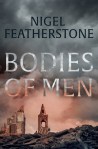
Nigel Featherstone, Bodies of menNigel Featherstone’s latest novel, Bodies of men, is a brave book – and not because it’s a World War 2 story about love between two soldiers at at time when such relationships were taboo, though there is that. No, I mean, because it’s a World War 2 story that was inspired by Featherstone’s three-month writer-in-residence stint at the Australian Defence Force Academy, in 2013. That’s not particularly brave, you are probably thinking, but wait, there’s more. What’s brave is that this novel, this story inspired by that residency, is about some darker sides of war – it’s about deserters, and violence from your own side, for a start … It’s certainly not about heroics, or, to be accurate, not the sort of heroics you’d expect. Courage, it shows, comes in many forms.

Here is what self-described pacifist Featherstone wrote in his blog two months into his residency:

I came here with the idea of exploring ‘masculinity in times of conflict’ …  Perhaps, like always, I’m being driven by that central question: what does it mean to be a good man, which, of course, is almost exactly the same as asking, what does it mean to be a good person?  But the military, especially the Australian kind of military, is all about men, isn’t it, the warrior, that iconic ‘digger’, that myth of our country, that brave saviour of everything we’re meant to stand for (whatever that is).

Those men who could do no wrong.  Except I don’t believe that for a second.

So, what did Featherstone actually write? It’s the story of two Australian soldiers from Sydney. William is from a conservative, well-to-do North Shore Sydney family, with a Member of Parliament father, while James comes from a poorer working class family, with a widowed mother who runs a shop but who’s also a socialist, a pacifist, and committed to helping homeless people. The boys had met and spent a few times together in their youth, but had lost touch for some years – until they find themselves in Egypt in 1941.

The novel opens with a reconnaissance that turns into an ambush. At an important moment, William, just off the boat, prevaricates, but James, there with a different military section, takes the initiative, and saves the day. The men vaguely recognise each other – “The officer”, thinks James, “does look familiar … but no it can’t be” – but have no opportunity to follow up, each returning immediately to their sections. From here the narrative, told third person from the alternating perspectives of William and James, follows the two men on their different paths. William, soon to be a lieutenant, is sent to manage a training camp in the desert. Believing he needs to redeem himself from that first experience of action, he sees this as an opportunity. He excels as a leader of men, finding the right balance between toughness and friendliness, but is dogged by his cold father’s voice, and worries about his ability to be the man his father expects. However, his mind is on that young man he glimpsed. Meanwhile, James goes AWOL on a military motorbike, which he crashes. Luckily, a family takes him in, a family which has its own tricky background and secrets, but James is just the right person to not rock their boat, so a warm relationship develops.

It’s not long before William works out a way of tracking James down. The story is told chronologically, but with frequent flashbacks which fill in that boyhood friendship. It was short, but intense. Both felt it, but William, in particular, struggled to understand it. It is therefore James, who, upon their renewed acquaintance, takes the lead – and the novel becomes, in part, a love story. Featherstone finds the right balance, here, conveying their tenderness and warmth, without sentimentality. We are never allowed to forget that this is war-time, and that both William and James are taking serious risks in their desire to be together.

However, this is not simply a boy-meets-boy, boy-loses-boy, boy-finds-boy again story. As mentioned above, Featherstone’s goal was to explore what it means to be a good man, against the backdrop of war. We do see some action, besides that opening scene, and there is an over-riding sense that something sinister could happen at any moment, but the main theme concerns men and their reactions to their circumstances – soldiers, men in hiding, men displaced, men in resistance. Each of these men provides the reader with a perspective on how men might choose to be. Courage and risk-taking, passion for a cause, recklessness, fear, commitment to helping others, tenderness and kindness – all of these come into play as the story progresses. And, as in all good novels, there are no simple answers. A love story this might be, but a genre romance or war-story it’s not.

How does Featherstone achieve this? Well, sometimes it’s hard to pinpoint these things, isn’t it? In a later post on his blog, Featherstone says that he wrote 38 drafts. You can tell this, and yet you can’t tell. You can tell, because you can feel the craft in the book. You can’t tell, because it also feels organic, not overworked. There’s skill in that. This skill includes the characterisation. William and James are sensitively fleshed out, well individuated, and grow through their experiences. But there are other characters too, including two strong women characters. James’ grounded, supportive mother is one, and open-minded Yetta, the woman who cares for James after his accident is another. It is she who articulates some of the novel’s main messages, including:

‘People must care for people. It’s not more complicated than that.’

There’s skill also in the narrative structure. The novel has a lightly episodic touch, with little breaks marked on the paper between “scenes”, but the story nonetheless flows. These breaks simply provide a way for the narrative to be progressed without unnecessary explication.

And, of course, there’s the writing. It’s spare, and yet perfectly evocative – of life at William’s desert camp, of the nervous busy-ness of war-time Alexandria where wells of quietness can also be found, and of William and James’ love. Here’s an example showing the edgy sort of tone Featherstone creates:

But now, something new: he was – he and James both were – sliding into the back seat of a car. They were being driven along one of Alexandria’s palm-lined boulevards; before long they were surrounded by blackness. William wound down his window and was about to yell, BUGGER THE WAR! – the night was getting away from him – but he managed to drag the words back down to where they belonged, in the pit of his gut.

Bodies of men, then, is a war novel that questions war. But, it is told with a generous touch that doesn’t undermine or betray those who choose to go. It’s a page-turner, underpinned by a fundamental understanding of humanity. It’s a very good read.

Nigel Featherstone
Bodies of men
Sydney: Hachette Australia, 2019
324pp.
ISBN: 9780733640704


Enza Gandolfo, The bridge (#Bookreview)

Book coverIf there are people I admire more than any others, it’s those who are able to empathise with, and forgive, someone who has done them great wrong. This complex question of forgiveness – of self and of others – is one of the issues explored in Enza Gandolfo’s Stella Prize short-listed novel, The bridge. However, it’s only one aspect of this intelligent, moving book.

Melburnians, and Australians of a certain age, will remember the West Gate Bridge disaster in 1970. The bridge collapsed during construction, killing 35 and injuring 18 of the 60 workers there at the time. It was, and still is I believe, Australia’s worst industrial accident, and it frames Gandolfo’s book. The novel starts in 1970, introducing us to 22-year-old Italian-born Antonello and his workmates, another Italian Sam, and Slav (whose nickname conveys his origins). Gandolfo quickly sets up the scene – the bonding between these men, and something of their lives and aspirations – before describing the collapse in the next chapter. She captures the horror of those hours in clear, descriptive, but not overblown language that perfectly captures the shock, panic and emotion of the event for all who experienced it – the workers, their families and those in the vicinity.

Antonello survives, but some of his friends don’t, and nor does his boss, Bob, who’d been “like a father” to him. Antonello, along with Bob and his mates, had started to realise that things weren’t right, but, as a rigger, he had no formal responsibility for what happened. However, guilt and trauma attach to him. His lovely relationship with his young wife Paolina survives, but is never quite the same. Gandolfo conveys so well how devastating to a life – to lives – a traumatic event can be, how life can change in a moment. You understand why, these days, counsellors are immediately sent in when tragedies occur.

The book then jumps, in Chapter 4, to 2009, and we meet 19-year-old Jo. Like Antonello she belongs to the working class. She lives in a rather dilapidated weatherboard house near the bridge, with her single supermarket worker mother, Mandy. She is in her last year of school, and has a best friend, Ashleigh, who comes from a comfortable middle-class family where the mother is a high school principal. Jo is the needier of the two, Ashleigh being more clever, more confident, and increasingly more involved with her boyfriend. Jo feels she’s losing her.

And now, here’s the challenge reviewers face. How much to give away of the story. What happens next, happens before a third of the novel is over, and you see it coming, but nonetheless it’s a shock, so I won’t give it away. (I note that some reviewers have, and some haven’t.) Let’s just say that a tragedy ensues and Jo is responsible – and, as it turns out, her friend Ashleigh is Antonello’s grand-daughter.

So, given I’ve decided not to spoil the plot, how best to discuss the rest of the novel, which still has over 250 pages to go?

Well, I could talk about the writing and characterisation. The novel is told chronologically, in third person, from multiple perspectives – from Antonello and Jo of course, but also Mandy, a legal aid lawyer Sarah, and a few others later in the novel. Gandolfo captures their feelings with such sensitivity and realism that by the time the novel is over we feel we know them. We experience their emotions, and go through their thought processes with them as they ponder what’s happened and whether they can possibly keep living in the face of their respective tragedies. It feels so true – and because of that, it breaks our hearts, more than once.

Then there’s the bridge. Its prime meaning here is literal, of course, but it is a gift to a writer because bridges can represent so many things – positive or negative, or, paradoxically both – that are reflected in this novel. They can symbolise progress, for example, but West Gate, which would bring two worlds closer together, was not seen positively by all:

“We don’t want those rich bastards coming over to the west”, was the general sentiment.

Bridges can also suggest connection and transition. In this novel, transition encompasses the idea of social mobility, which West Gate exposes, but it can also mean the transitions individuals make psychologically. It is this latter, often aided by the good connections that can occur between people, that ultimately brings some redemption in the novel.

This brings me to Gandolfo’s themes. Antonello, who has suffered from PTSD since the accident, realises late in the novel that his friend Sam, who had become a union activist, had made the more positive choice. It takes him a long time but finally he learns the lesson:

For years, the most persistent impulse was towards death; a desire to stop living … But life didn’t stop. It went on whether you lived it or not. You have to choose life. This is what he needed to tell them – if you stop living, you may as well die. If you stop living, you aren’t going to be able to love again, and everyone you know will pay for that, everyone.

Empathetic Paolina has always known this, but it’s a lesson that comes hard to the other characters. Anger, revenge, guilt – depending on their role in the events that occur – overwhelm them. And it is Antonello who is the lynchpin. He is able to help Jo, telling her that the best thing she can do is forgive herself and allow herself to live. Similarly, he encourages his own family not to succumb to the sadness, anger and bitterness which brought him such waste and pain.

Enza Gandolfo’s achievement is impressive. She presents us with a bunch of flawed – as in ordinary – characters, and she puts them in terrible but not unrealistic situations. She then has them experience all the emotions that you would expect. And she doesn’t judge. Instead, she makes us feel, confronting us to think about how we would react, and hoping that we will come to the same conclusion that Antonello does.

A character I’ve only briefly mentioned is Sarah, Jo’s legal aid lawyer. She talks about the storytelling aspect of trials:

That was the danger of a good story: you could elicit pity and empathy for even the worst sociopath … Sarah believed telling good stories, the ones people listened to and were swayed by, was a responsibility. It worried her that some people did not take it seriously enough.

It’s not a big leap, I’d say, to suggest that Gandolfo would extend this responsibility to novelists – and in The bridge, she shows what a responsible story can look like. Such a novel.

Lisa (ANZLitLovers) was also moved by this book.

AWW Challenge 2019 BadgeEnza Gandolfo
The bridge
Brunswick: Scribe, 2018
375pp.
ISBN: 9781925713015

Amanda Duthie (ed.), Kin: An extraordinary filmmaking family (#BookReview)

Book coverKin: An extraordinary filmmaking family is the second tribute book I’ve reviewed in Wakefield Press’s Don Dunstan Award series. The first, Margaret & David: 5 stars, was also edited by Amanda Duthie. Like that book, Kin contains short reflections and essays on the contribution made to Australia’s film industry and culture by Freda Glynn, her children Erica Glynn and Warwick Thornton, and her grandchildren Dylan River and Tanith Glynn-Maloney. The book also includes brief biographies of the five individuals involved, and a family tree, all of which help orient the reader.

In my review of Margaret and David, I focused on one aspect of the pieces that interested me, which was the commentary on what I called “the practice of criticism”. That made sense, because Margaret and David are critics. Freda Glynn and family are a very different awardees. They are indigenous Australians from central Australia, and they have championed and practiced Aboriginal screen story-telling for over three decades, their influence reaching way beyond Australia. Freda Glynn helped establish CAAMA (the Central Australian Aboriginal Media Association) and Imparja Television. Erica Glynn and Warwick Thornton are internationally renowned filmmakers (and more), with third generation Dylan River and Tanith Glynn-Maloney following in their filmmaking footsteps.

The pieces are written by a wide variety of indigenous and non-indigenous arts people from around the world, such as actor Deborah Mailman, authors Bruce Pascoe (whose Dark emu I’ve reviewed here) and Larissa Behrendt, critics Margaret and David (of course!), arts administrator Kim Williams, and American academic Faye Ginsburg, to name just some of the over 20 contributors.

Most of the pieces comprise personal reflections and heartfelt tributes to the various individuals in the family, but for those wanting a good overview of how it all started, Philip Batty’s longer piece, “Freda Glynn and the evolution of CAAMA: A personal reflection”, is well worth reading. Too few Australians know about our indigenous pioneers – who they are, let alone what they’ve done and the challenges they’ve faced doing it. Having worked, as most of you know by now, in the film archive/library industry most of my career, I became aware of CAAMA early in its existence, but I didn’t know half the story told by Batty – the personal and the political! He tells of CAAMA applying for money in 1988 from the Australian Bicentennial Authority:

Some city-based Aboriginal groups protested again CAAMA accepting the bicentennial ‘blood money’ and, on several occasions, Freda fronted up to these groups to argue that all government funding to Aboriginal organisations could be described as ‘blood money’. Indeed, at a particularly hostile meeting, I remember thinking back to the first time I met Freda when she was confronted by the all-white Citizens for Civilised Living [can you believe such a name!!]. On this occasion it was an all-Aboriginal crowd she confronted with the same bravery.

It’s important to note here that, as Stan Grant and so many others have stated, indigenous people are not united in their responses to how their cause should be progressed – any more than non-indigenous people are about their lives. I’m frequently astonished by how we white Australians seem to expect all other groups to be united in a way that we are not. It denies people the individual agency in their lives that we demand for ourselves.

Anyhow, rant over. I’m not going to spend a lot of time on this book. I’m unusually behind in my reviews, and this book is, in one sense, of specialist interest, though in another I’d argue that it would offer something to all Australians interested in our cultural history. It does have a political thread – of course – but that thread is unified by a single foundational idea, the idea that sits at the bottom of all that this impressive family does. I’ll let Bruce Pascoe tell you:

The real history of the country was eliminated from our curriculum, our society, our politics, our morality. If the best-educated people in the land, the mild professors and urbane historians, can fabricate a history of such blinding connivance then another tactic has to be employed if the oppressed are to receive any form of justice. And that tactic is on old one: story.

What Freda Glynn and her family have done – as this book shows – is to set up infrastructures (the CAAMA group supports music, film, television, radio, for example) that facilitate that story being told, to provide training for indigenous people in creating and producing their stories, and of course, to make stories themselves. Warwick Thornton’s films Samson and Delilah and Sweet country are just two examples of a swathe of productions members of this family have made and/or facilitated.

All I can say is may the Glynn family continue to make stories that tell us as it is! Meanwhile, I commend this book to you as an excellent introduction to all that can be done when people put their hearts and souls into something they believe in.

AWW Challenge 2019 BadgeAmanda Duthie (ed.)
Kin: An extraordinary filmmaking family
Mile End: Wakefield Press, 2018
176pp.
ISBN: 9781743056028

(Review copy courtesy Wakefield Press)

Stan Grant in conversation with Mark Kenny

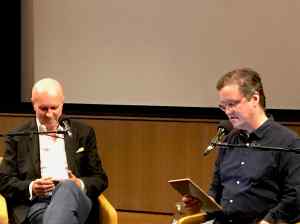
Who could resist a conversation involving Australian journalist, author and academic, Stan Grant? Not many, it seems, which is why this ANU/The Canberra Times conversation event was held in a bigger venue than usual, Llewellyn Hall, and just as well, because the audience was indeed bigger than usual. Such is the drawcard of Stan Grant – whose Talking to my country I reviewed in 2017.

Book coverThis conversation, with Australian journalist and academic Mark Kenny, coincided with the publication of Grant’s new book Australia Day and his essay On identity.

After MC Colin Steele did the usual introductions, Kenny took over, introducing himself and Grant, whom he called an “all-round truth-seeker”. Grant is an articulate, confident, erudite speaker who peppers his arguments with the ideas of many writers and philosophers. There’s no way – my not being a short-hand trained journalist – that I could record all that he said, so I’m going to focus on a few salient points, and let you read the books or research Grant for more!

On Identity

Grant’s analysis of the current “identity” situation made complete sense to Mr Gums and me. He said, essentially, that identity (of whatever sort) is problematic when it becomes exclusive, when it reduces us to those things that define a particular identity and intrudes on our common humanity. At its worst it can trap us into a toxicity which pits us against each other. This sort of identity can make the world “flammable”.

On Justice

This is a tricky one, and I could very well be layering my own values and preferences onto it, but I think Grant aligns himself with people like Desmond Tutu for whom forgiveness, leading to a “higher” peace, was the real goal rather than justice, per se. (It’s all about definitions though isn’t it?) It’s one thing, Grant suggested, to feel righteous indignation, but quite another to desire vengeance. Grant talked about inhaling oxygen into the blood, not the poison of resentment.

On Liberal democracy

The strongest message of the conversation, as I heard it anyhow, concerned Grant’s belief in the fundamental value of liberal democracy as the best system we have for organising ourselves, albeit he recognises that it’s currently under threat (and not just in Australia). In supporting liberal democracy, which came out of the Enlightenment, Grant does not minimise the hurts and losses of indigenous Australians under this system. However, he argues there are solutions within its tenets. I hope I don’t sound simplistic when I say that I found this both reassuring (because I sometimes wonder about our democracy) and encouraging (because it was good to hear some articulate so clearly why he believes liberal democracy has got what we need).

His aim in this latest book of his, Australia Day, was, he said, not to look at indigenous issues in isolation but within a broader context. The conversation spent quite a bit of time teasing out what this actually meant.

Grant made a few clear points:

  • we have a problem when a liberal democratic state refuses to recognise its own history. In Australia we are still living with the legacy of our history, and are facing the challenge of marrying this with Australia’s founding principle, the liberating idea of freedom.
  • the Uluru Statement from the Heart was, fundamentally, indigenous Australians stating that they want to be part of this nation; it conveyed an active choice to be part of a nation that had done them wrong; it represents, and this is my interpretation of what he said, a faith and trust in the nation and its liberal democratic processes. For Grant, the Statement represents the foundational idea of a liberal democracy. Grant then spent some time articulating the flawed arguments used to reject the Voice to Parliament. He argued that the rejection was more than a failure of imagination, courage, and politics. It represented a lack of understanding of the system we are founded upon.
  • the problem in Australia is that there are some extreme minorities who refuse to engage in our liberal democracy.
  • nations are not static – just ask the Balkans, he said! – they come and go. What defines them are not borders but story, a shared story. What is Australia’s story? Part of it is that we are a liberal democracy, but this democracy is being threatened, here and elsewhere, by the increase in the politics of identity which tears at the fabric of nation.
Detail of Michelangelo's Creation of Adam

Detail, Michelangelo, The creation of Adam (Public domain)

A key question he said is whether a liberal democracy can deliver on its promises. Among the many philosophers he referenced was Hegel whose idea of “becoming” Grant likes. He talked about Michelangelo’s painting of The creation of Adam on the Sistine Chapel, and the fact that the fingers don’t meet. We all live in this space, he said. It’s a powerful image. He believes that “unfettered liberalism can erode community”, and that liberalism is currently failing to deal with fruits of its own success. It works well in an homogenous state, but most states are not homogenous. Resolving this is modern liberalism’s challenge.

On Australia Day (January 26)

I have heard Grant on this before, but I enjoyed hearing it teased out more in this forum. On January 26, 1788, the idea of the Australian nation was planted, and this idea encompassed the ideas of the Enlightenment (albeit, he admitted when question by Kenny, the colony didn’t look much like it in those early days). This day, he says, holds all that we are and all that we are not. It also means something for all of us, indigenous and non-indigenous. For him, the day is about considering, recognising, exploring who we are.

He argues that changing this date would hand January 26 over to white nationalists, but he applauds that the change-the-date campaign has ensured that no-one can now come to the day without knowing the issue, without knowing the angst it encompasses. Indigenous people have changed how we see this day, and we all share deeply that first injustice.

He then asserted that our right to protest that day is a rare thing – and it’s because we are a liberal democracy. Grant argued that antagonism is the life blood of the nation, that being free “to antagonise” is the fundamental principle of liberal democracy. The challenge is to hold these antagonisms in balance.

Considering how the current impasse could be resolved, he talked about ways that the day could be imbued with new significance: wouldn’t it be good if a treaty were signed on this date, or that Australia became a republic?

Returning to the idea of identity, he believes the problem is that we think first about identity rather than policy, but, he argued, powerful communities will always look after identity. What we need is good policy to fix our socio-economic burdens. And that, on this Australian election day, seems a good place to end!

ANU/The Canberra Times Meet the Author
MC: Colin Steele
Australian National University
13 May 2019