Canberra Writers Festival 2024: 5, Your favourites: Anita Heiss

In conversation with Astrid Edwards
Astrid Edwards is a podcaster who conducted a “conversation” I attended at last year’s Festival (my post), while Wiradyuri writer Anita Heiss (my posts) has made frequent appearances on my blog. This was my second (and final) “Your favourites” session at the Festival, though there were more in the program. Here is the program’s description: 

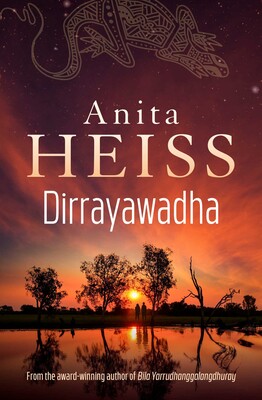
This year marks the 200th anniversary of the Bathurst Wars. Anita Heiss’s thrilling new novel, Dirrayawadha, takes its title from the Wiradyuri command ‘to rise up’ and is set during these pivotal frontier conflicts. Join Anita in conversation with Astrid Edwards (recorded for The Garret podcast).

Contrary to usual practice, it was the guest, Anita, who opened proceedings. She started by speaking in language which she then translated as acknowledging country, paying respects, honouring it, offering to be polite and gentle (I think this was it, as my note taking technology played up early in the session!)
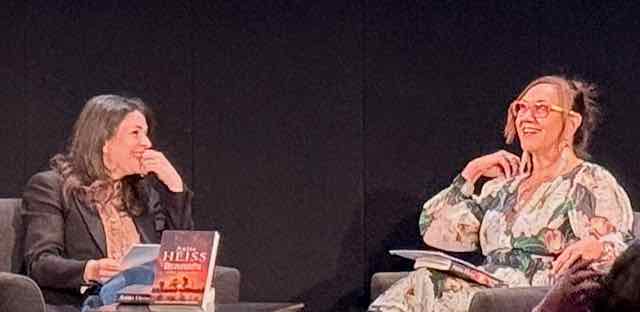
Astrid then took the lead, saying it was a privilege and honour to be on stage with Anita Heiss. She did a brief introduction, including that Anita had written over 20 books across many forms, had published the first book with language on its cover, and was now a publisher. She also said there would be no Q&A, presumably because the session was being recorded for her podcast.

The Conversation proper then started, with Anita teaching us how to say the title of her new book, but I was still playing with my technology, so will have to look for YouTube instruction later, as I did with Bila Yarrudhanggalangdhuray. She then read from the beginning of Dirrayawadha.

On choosing fiction for the story
Astrid was not the only person to ask this question, said Anita. So had some of the Bathurst elders. Her answer was that we all read differently, so stories need to be told in all forms – children’s, young adult, adult fiction, poetry, nonfiction, and so on. She talked about her first novel, Who am I? The diary of Mary Talence (2001), which was commissioned by Scholastic for young adults in their My Australian Story series. Told in diary form, it’s about a young girl’s experience of the Stolen Generation – and it made a bookseller cry. That’s the power of fiction – to make people feel. Anita wants people to feel with her characters. You can’t do that in nonfiction, she believes.

She has four points-of-view (POVs) in the novel: the land, the historical warrior Windradyne, his fictional sister Miinaa, and the fictional Irish political convict Daniel. Her original idea had been to use Baiame (the creator) as her POV, but she’s received mixed feelings about this. She thought, then, of using the land, but she found it hard to tell her love story through that POV. So, she ended up with her four POV novel!

As well as fiction’s ability to appeal to our feelings, Anita said the other power of fiction is reach. She quoted someone (whom she can’t remember) who said that if women stopped reading, the novel would die. Men rarely read fiction, she believes, particularly fiction by women. The composition of this morning’s audience didn’t contradict this! Her aim is to reach women in book clubs. This led to a brief discussion about “commercial” being seen as a dirty word, but it means reach!

On the violence

An interesting segue perhaps from the idea of encouraging women readers! But, violence is the subject of this historical novel about the 1824 Bathurst War, which was fought between the Wiradyuri people and the United Kingdom of Great Britain and Ireland. Every act of violence by the settlers brought revenge. Anita described the Proclamation of Martial Law made by Governor Brisbane which included that “Bloodshed may be stopped by the Use of Arms against the Natives beyond the ordinary Rule of Law”. While there was reference to its being a last resort, it sanctioned violence.

Anita talked a little about the history, and recommended nonfiction books for further reading, but said she wanted to translate the massacres into a palatable form for wider audiences. And, she wants people to know this story through the Wiradyuri lens. (She commented that the colonisation of Gaza is the same story. What have we learnt as human beings.) She talks about the book so people can learn but every time she does, it is re-traumatising.

On her main characters

Anita spoke about each of the characters, about the historical Windradyne, and his bravery in fighting for his people. All she had to do to fight Bolt (see Am I black enough for you?) for his racist attacks was go to court, but in Windradyne’s time people lost their lives. She created his sister Miinaa because she wants to show strong Wiradjuri women (and Suzanne, for a strong settler woman).

As for Daniel O’Dwyer, she spoke about the Irish political convicts who were transported because they fought the Britain for their sovereignty. It’s the same story. However, most of Dan’s Irish convict friends did not recognise the similarity because, once in Australia, they were fighting for their own survival, for jobs.

Anita spoke quite a bit about Dan, because he helps represent conflict or opposition within settlers about what was happening. She talked about there being long standing connections between First Nations people and the Irish because they experienced loss of sovereignty at the same time. Through Dan, we see an Irish man who is conscious of being on Wiradyuri country. There are people who put themselves on the line for the right thing (like, today, the Jews for Peace group.)

And, Anita told us something I didn’t know which is that the word “deadly” as we hear used by First Nations people comes from the Irish, who use it in a similar way. There were other similarities between the Irish experience and that of First Nations people, including not being allowed to use their language.

Ultimately though, First Nations people were measured against Eurocentric behaviour. The Wiradyuri were seen as barbaric, and the convicts, who lived in fear, did not see that the violence they experienced was a reaction to their own behaviour

Astrid said she was catching a glimpse of a what if story – or alternative history. That is, what if the Irish had sided with the Wiradyuri?

The landownder family, the Nugents, and their place Cloverdale, were based on the Suttors and Brucedale in the Bathurst region. Sutter (who sounds a bit like Tom Petrie in Lucashenko’s Edenglassie) learnt Wiradyuri and built a relationship with the people. Co-existence, in other words, can happen. Again, what if? (Anita auctioned the name of her settler family in a Go Foundation fundraiser.)

On the love story

Anita said it is difficult to write about violence, so the love story between Miinaa and Dan, gave her a reprieve from violence and heartache. Further, through all her novels – this came through strongly in her early choclit books (see my review of Paris dreaming) – she wants to show that First Nations people have all the same human emotions, to show “us as complete, whole people”. She likes humour, but it was hard to find humour in a war story. Still, she tried to find moments of distance from painful reality.

On learning her language

Anita said her aim is not to write big literary novels, but using language does make her writing more rich, powerful. However, she is still learning it. She told a funny story about posting a YouTube video on how to pronounce Bila Yarrudhanggalangdhuray. Readers practised it, messaged her and sent clips of their achievement, but then an Aunty (I think) told her that she’d got it wrong. She was distressed, until a friend told her, “you are learning what should be your first language at the age of 50”. She does, however, feel privileged to be able to learn her language in a university setting when her mother wasn’t allowed to speak it at all.

There was more on language – including the Wiradyuri words for country, love, and respect, and that Wiradyuri words are always connected to place. Country matters to Anita. She talked a little about her growing up, and her parents, about her experience of living with love and humour. Race was never an issue between her Austrian father and Wiradyuri mother.

Astrid wondered whether there had been any pushback from using language – Bila Yarrudhanggalangdhuray – for her last novel’s title, given it was groundbreaking. It was during COVID, Anita said, and a Zoom meeting with her publisher, who wanted to push boundaries. Anita suggested taking English off the over – and the publishers went with it. Anita doesn’t want the title to be a barrier, and she doesn’t want people to get upset if they get it wrong, but no-one has pushed back.

On her new role as a publisher

I have written about this initiative which involves Anita being the publisher for Simon and Schuster’s new First Nation’s imprint, Bundyi, so I won’t repeat it here. She talked about the titles I mentioned, albeit in a little more detail. She wants to produce a commercial list, including works by already published authors doing different things and by emerging writers.

The session ended with another reading from Dirrayawadha – of the novel’s only humorous scene, which has Suzanne explaining Christianity to a very puzzled Miinaa.

A friendly, relaxed session, which nonetheless added to my knowledge and understanding of Anita Heiss and of First Nations history and experience.

Canberra Writers Festival, 2024
Your favourites: Anita Heiss
The Arc Theatre, NFSA
Sunday 27 October 2024, 10-11am
Monday musings on Australian literature: Bundyi

Next week will be NAIDOC Week – with this year’s theme being “Keep the Fire Burning! Blak, Loud and Proud” – but I am jumping the gun a little with a post on a relevant publishing initiative that was announced earlier this year.

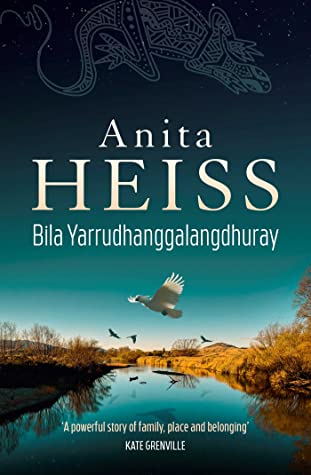
This initiative comes from publisher Simon & Schuster, and is that they have created a new First Nations imprint called Bundyi, which will be curated by Dr Anita Heiss, “a proud Wiradyuri woman and one of Australia’s most prolific and well-known authors”. Simon & Schuster published Heiss’s most recent novel, Bila Yarrudhanggalangdhuray (my review).

Bundyi is, the website says, a Wiradyuri word meaning “to share with me’” The aim is to “focus on cultivating First Nations talent in the industry by publishing First Nations authors, edited and designed by First Nations people”. Heiss, described as Publisher at Large, will be commissioning both fiction and non-fiction writing. She says that “the only way we will see First Nations people truly sovereign in this space, is to have us as publishers of our own stories”, and makes the point that Simon & Schuster understands “that the responsibility for change in the sector lies with the current mainstream publishers acting as mentors, and eventually moving over to allow us to learn, and to do what Australian publishing has needed for a long time: for us to have control over the way we are represented on the page, and in the national narrative”.

And they have started the way they mean to continue with the Bundyi logo being designed by a 100% Aboriginal-owned company, Iscariot media. The logo, which you can see at the link I’ve provided above, “represents the flow of the three rivers of Wiradyuri country – the Kilari, the Marrambidya and the Wambool – as well as the flow of creativity”.

What can we expect?

S&S’s page, linked above, says that the first titles in the imprint will be published this year, but doesn’t name them. However, in late May, through Canberra’s wonderful Meet The Author convenor, Colin Steele, who is also one of my major sources of literary news, I received a news item from Books+Publishing. It said that Bundyi had “acquired world rights to a new commercial novel by Larissa Behrendt”, and that the book was the result of a brainstorm between Behrendt and her good friend Anita Heiss. It is to be a First Nations take on Pride and prejudice!

Heiss said that “It didn’t take long for us to come up with the idea of Larissa, an Austen aficionado, writing a version of Pride and Prejudice through her lens, as a Euahlayai/Gamilaroi woman”. Behrendt added that “As a long-time friend and admirer of her work, I am beyond excited to be working with Anita on this project. I love Jane Austen, and the idea of translating the characters and story arcs through a First Nations lens is an idea that is close to my heart. Anita has been a trailblazer with new writing, and I am proud to be following in her footsteps.”

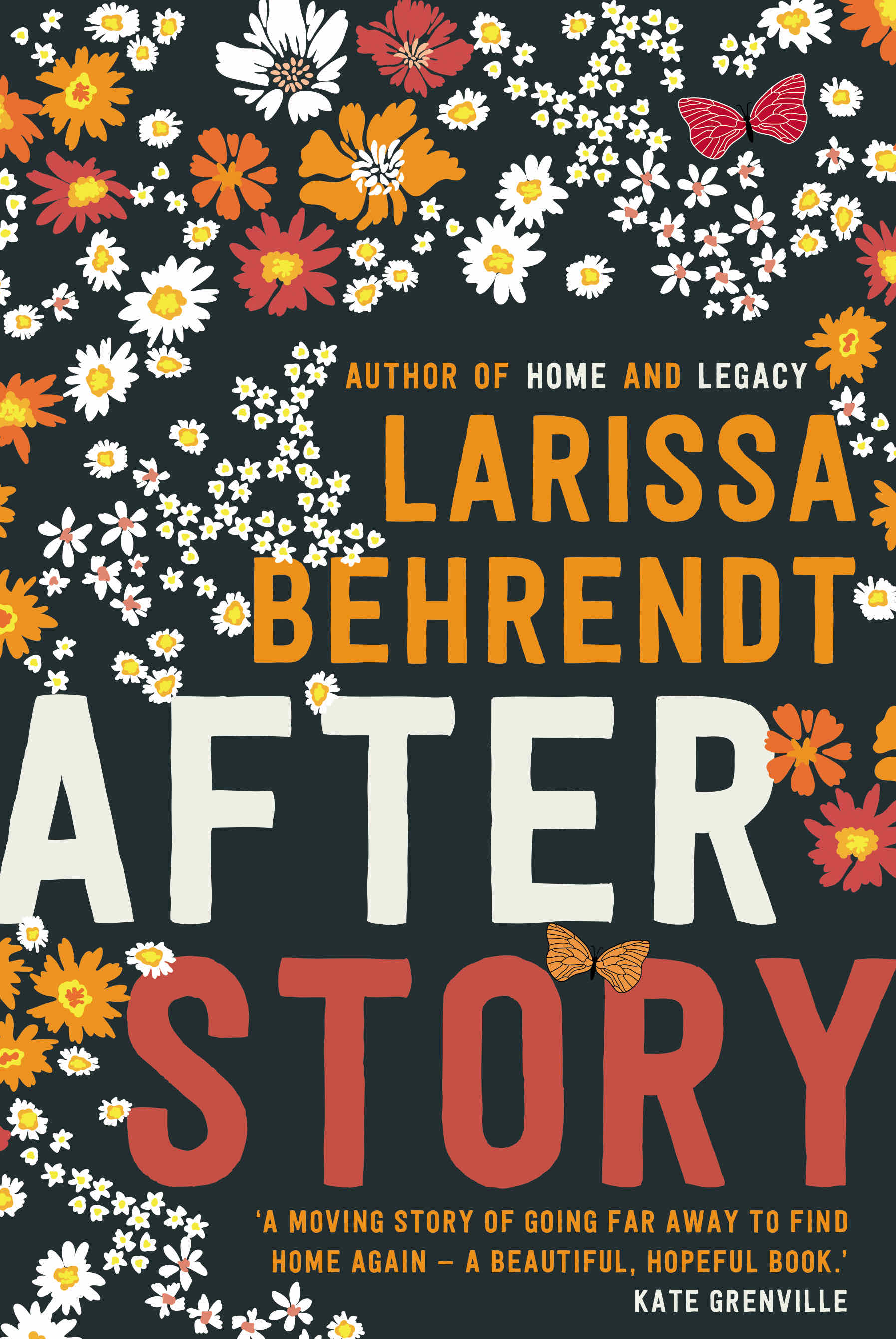
That Behrendt is a fan of Austen won’t be news to those who read her novel After story (my review) in which a woman takes her mother on a literary tour of England, so this will be interesting – even to someone like me who is not normally a fan of prequels, sequels and retellings. Behrendt has a seriously impressive cv. Not only is she an award-winning author, but she is a filmmaker and host of the program Speaking Out on ABC Radio, the Distinguished Professor at the Jumbunna Indigenous House of Learning at the University of Technology Sydney, a Fellow of the Academy of Social Sciences of Australia, a Fellow of the Australian Academy of the Humanities, a Foundation Fellow of the Australian Academy of Law – and more. We have to wait a bit for her book, though, as it’s not due to be published until 2026.

Meanwhile, Books+Publishing named two books which will be published by Bundyi before Behrendt’s – Stan Grant’s memoir Murriyang and Tasma Walton’s historical fiction novel, I am Nan’nert’garrook. These align with the imprint’s focus as listed on its homepage:

  • Non-fiction: memoir, autobiography, biography, essays
  • Commercial fiction: romance / chick lit, historical fiction, contemporary fiction.

This new imprint is exciting news for all of us interested in First Nations Australian writing. It may not, it seems, be focusing on the edgier end of town, but there is room for all, particularly if we want more Australians to read First Nations writing. If you are interested, I suggest you keep an eye on Bundyi’s homepage for further news. I plan to.

Anita Heiss, Bila Yarrudhanggalangdhuray (#BookReview)

Bila Yarrudhanggalangdhuray/River of dreams is Anita Heiss’ second work of historical fiction, her first being Barbed wire and cherry blossoms about the 1944 Cowra breakout in which she imagines a relationship between a Japanese escapee and a young First Nations Australian woman. I have not read that novel, but I have read, over the last year or so, other First Nations Australia historical novels, including Julie Janson’s Benevolence (my review) and the collaborative novel by non-Indigenous Australian Craig Cormick and First Nations writer Harold Ludwick, On a barbarous coast (my review). Long before these, though, was Kim Scott’s unforgettable The deadman dance (my review).

The value of these, and like books, to offering a First Nations perspective on the one-sided history that most of us grew up with cannot be under-estimated. Heiss, in fact, wrote in her Author’s Note and Acknowledgements, that through re-engaging with her Wiradyuri homelands in her early 50s,

I realised very quickly I had to honour those Ancestors who for millennia have lived, loved, and nurtured the land and each other. And I wanted to pay tribute to those who carry on culture, knowledge and language still today. I felt I had a responsibility as an author to write our Wiradyuri heroes – our men and women – into the Australian narrative where they had been ignored or forgotten too long.

Bila Yarrudhanggalangdhuray is her response to that realisation. It is of particular interest to me because it is set around Gundagai and Wagga Wagga, which are within three hours’ drive from where I live. Although I have been visiting the Gundagai region since the mid-1970s, it was only in recent years that I became aware of the story which is central to Heiss’ novel. This story concerns Gundagai‘s flood of 1852. As Wikipedia describes, the Murrumbidya flooded, killing at least 78 of the town’s population of 250 people. Using bark canoes, four local Aboriginal men, including Yarri, Jacky Jacky, and Long Jimmy, saved somewhere between 40 and 68 people. They were minimally recognised at the time, but, finally, in 2017 (2017!), a bronze sculpture of Yarri and Jacky Jacky, with canoe, was unveiled in Gundagai. Heiss’ novel concerns the life of a young Wiradjuri woman, Wagadhaany, the imagined daughter of Yarri.

The novel is told, like many historical novels, chronologically, and starts with a Prologue set in 1838, some 14 years before the main narrative starts. This prologue is important. It introduces Wagadhaany who, as a 4-year-old, is with her babiin, Yarri, as he tells a “White man” that the place they are standing on is “not a good place to live, Boss, too flat”, that it’s a “flood area”. Of course, the White man ignores this local knowledge and so the stage is set for 1852 when the devastating flood comes. By this time, Wagadhaany, now 18, is working as a servant for that very White man, Henry Bradley.

The flood and its immediate aftermath occupy the first five chapters of this 29-chapter novel. Only two sons of the Bradley family of six survive, along with Wagadhaany. The rest of the novel follows their lives over the next couple of decades, showing how little the White settlers learnt from the experience – practically, in terms of how to live on the land, and morally, in terms of their behaviour to the true owners of the country. Wagadhaany, who is bound, she is told, by the Master and Servants Act of 1840, has no agency in such a world.

“a witness without a voice”

Into this situation comes the young Quaker widow, Louisa, who, like the Bradley men, lost her family in the floods. I was surprised by the appearance of a Quaker, but Heiss also explains in her Note that there were Quakers in early colonial Australia, and they were interested in “the treatment of the convicts and the Aborigines”.

Louisa is an interesting character because she tries to treat Wagadhaany well. She calls her by her actual name, rather than Wilma, as James Bradley does; she works alongside her in the kitchen and garden; she gives her a bedroom in the house; and she converses with Wagadhaany as a friend. But, she has her blind-spots. She is oblivious to Wagadhaany’s lack of agency over her life, to the fact that, when the Bradleys (now including Louisa) move to Wagga Wagga, she thoughtlessly over-rides Wagadhaany’s wish to stay in the Gundagai area where her family is.

As the novel progresses, Wagadhaany’s homesickness for her family, and her country, increases. We are privy to Wagadhanny’s thoughts, to her awareness that there are limits – albeit unconscious ones – to Louisa’s concept of equality. Louisa is, after all, a product of her time and her culture – and Wagadhaany notices that, for all their “equality”, it is Wagadhaany who does the hardest, dirtiest, heaviest jobs, and that she is not paid a wage.

What the presence of Louisa does, though, is to add richness and nuance to the depiction of colonial society. She is a foil to the brutal, racist attitudes of James Bradley. She does not mitigate them but shows that his were not the only views around. Wagadhaany, on the other hand, tells it as it is from the First Nations’ perspective. In the early days after the flood, Heiss writes that Wagadhaany

feels like a witness without a voice. She was there, she lived through the horror of the flood, the fear, the physical exhaustion, the loss of those she knew. But no-one asks how she is, what she thinks or knows, or how she feels.

For all Louisa’s kindness, there is much Wagadhaany feels she can’t say, and so throughout the story she continues as a silent witness. Here she is reflecting on Louisa and work:

She wondered why Louisa had to be protected from hard work but the Wiradyuri women didn’t. And she wondered if that thought ever crossed Louisa’s mind, because that made them different, unequal …

Gradually, though, she starts to stand up for herself:

“I know I will have to work for you, I know about the masters and servants law, but you cannot keep me living here in the homestead against my will if you honestly believe I am your equal and that I should be as free as you”.

And Louisa, to her credit, “lets” her live with the river family.

Bila Yarrudhanggalangdhuray has strong characters, but it is also a genre novel with a strong plot, including of course, romance. I don’t want to spoil what is a good page-turning story, so I will leave the story here.

Heiss has several novels under her belt now. She knows how to tell a good story, and she is also very clear about her message. She uses her fiction to show what she wants the rest of us to know. In this novel, it’s the way First Nations people lived, the way they tried to work with the settlers, and the way they were gradually pushed off their land. She also, through Louisa, forces us to confront what really is being “a good White person”. So, not only does the novel tell some truths about Australia’s settler history but it is also immediately relevant to today.

In this novel, Heiss also, as First Nations writers are increasingly doing, incorporates language into the writing. There is a glossary at the back, but you rarely need it because most words are self-explanatory in context. Seeing “our” nation’s words in Australian literature is a truly exciting development.

Bila Yarrudhanggalangdhuray isn’t a perfect novel – and I struggled particularly with Louisa’s falling in love with the man she does. But this is a genre novel, and a bit of belief-stretching is allowed. The end result is a book that engages the reader with its strong protagonist in Wagadhaany, that wraps its vital messages in a compelling story, and, significantly, that ends authentically.

Lisa (ANZ LitLovers) has also recommends this book.

Anita Heiss is a Wiradyuri woman from NSW.

Anita Heiss
Bila Yarrudhanggalangdhuray
London: Simon & Schuster, 2021
393pp.
ISBN: 9781760850449

Anita Heiss (ed.), Growing up Aboriginal in Australia (#BookReview)

Anita Heiss, Growing up Aboriginal in Australia

As many others have said, including my reading group, Anita Heiss’s anthology, Growing up Aboriginal in Australia, should be required reading for all Australians. At the very least, it should be in every Australian secondary and tertiary educational institution. Why? Because it contributes to the truth-telling that is critical to real reconciliation between Indigenous and non-Indigenous Australians. Truth-telling comes in many forms. There are formal processes, as through truth-telling commissions, but there are also the informal processes that we can all engage in while we wait for the government to fiddle-diddle around deciding whether it can front up and do the right thing.

Essentially, truth-telling means all Australians acknowledging and accepting “the shared and often difficult truths of our past, so that we can move forward together”. These truths include the original colonial invasion of the country, the massacres, the Stolen Generations, and the ongoing racism that results in continued inequities and significant gaps in almost every health, educational and occupational measure you can think of. Informal truth-telling encompasses all the things we do to inform ourselves and each other of these truths. Heiss’ anthology, Growing up Aboriginal in Australia, which contains 50 stories by indigenous Australians on their experience of growing up indigenous in this so-called lucky country of ours, contributes to this informal truth-telling. Taken as a whole, the book provides a salutary lesson, for all Australians who care to listen, on the experience of being indigenous in Australia. Taken individually, each story has the potential to break your heart. If you think I’m laying it on a bit thick, then you haven’t read the book!

“a stranger in my own land”

The above line from William Russell’s story, “A story from my life”, brought me up short because it replicates a line I read in Atkinson’s book The last wild west (my review). Atkinson describes his Indigenous friend and co-worker Sno as being “an alien in his own homeland”. There is strength in this replication between books, just as there is strength in the repetition of experiences within Heiss’s book, and the strength is this, that every repetition reinforces the truth of the historical (and continuing) injustice faced by Indigenous Australians. The stronger, the more inescapable the truth becomes, the harder it must surely be to ignore.

So, what are the repeated experiences in Growing up Aboriginal in Australia? Well, there are recurring references to the Stolen Generations, to being questioned about identity (“are you really Aboriginal?”, “you look too white to be Aboriginal”), to feeling disconnected from culture, to being called racist names, to being humiliated in myriad ways too numerous to list, and to being physically attacked. These are the experiences that we’ve all heard of, but Heiss’ contributors enable us to feel them. And that’s important. I’ll share just a few quotes from a few stories:

Thankyou for your acknowledging every 26 January with such grace and humility. Thankyou for your encouragement – and advice to me – to let the past be in the past, to simply ‘get over it’ on the day my people’s land was invaded and dispossessed. (Dom Bemrose’s biting “Dear Australia”)

My father cut to the chase. ‘Olly, you can’t go telling people we’re Aboriginal … It isn’t safe’. (Katie Bryan, “Easter, 1969”)

I would paint and draw and sculpt about being Aboriginal. I would see people twitch uncomfortably and sometimes even let their ignorant thoughts out: ‘But you don’t look it’, ‘From how far back’, ‘Do you get lots of handouts?’ (Shannon Foster, “White bread dreaming”)

In Year 2 I was lined up with Aboriginal classmates to be checked for nits and, as I stood there with fingers being raked through my hair, I felt angry and embarrassed as my non-Indigenous classmates watched. I realised that … for some reason it was only supposed to be us Aboriginal kids that had nits. (Jared Thomas, “Daredevil days”)

None of us kids are allowed to go anywhere outside after dark by ourselves. We can’t ever go to the toilet at night: we gotta go in twos, and Mummy stands at the door and watches. She has a big bundi* ready in case there’s trouble … Terror is outside the door, and we can’t do anything about it. (Kerry Reed-Gilbert, “The little town on the railway track”)

It was hard selecting these quotes – not because they were hard to find but because there were so many options that it was hard to decide which ones. That’s the shame of it. And these stories come from all ages – from teenagers to those in their 70s or 80s –  and from all parts of Australia, from, as Heiss writes in her Introduction, “coastal and desert regions, cities and remote communities.” They come from “Nukuna to Noongar, Wiradjuri to Western Arrernte, Ku Ku Kalinji to Kunibídji, Gunditjamara to Gumbayanggirr and many places in between.”

The contributors include many well-known people – writers like Tony Birch and Tara June Winch, sportspeople like Patrick Johnson and Adam Goodes, performers like Deborah Cheetham and Miranda Tapsell –  but there are also lesser-known but no less significant people, many of whom are actively working for their people and communities.

Despite the devastating picture being painted, the book is not all grim. There are also positive repetitions in the book. They include deep connection to country, the importance and support of family, and particularly, the strength of mums. There’s humour in some stories: you can’t help but laugh, while you are also grimacing, at Miranda Tapsell’s story of her friends expecting her to turn up to a party as Scary Spice, but opting for Baby Spice instead (Miranda Tapsell, “Nobody puts Baby Spice in a corner”).

“two divided worlds”

One of the early stories is particularly sad because its 29-year-old author, Alice Eather, took her life before the book was published. In her person, in her story, in her life, she represents the challenge Indigenous people face in Australia today. Her story “Yúya Karrabúrra” starts with a poem. At the end of the poem she writes:

This poem is about identity, and it was a really hard thing to write in the beginning because identity is such a big issue. It’s a large thing to cover. The poem is about the struggle of being in between black and white.

Now Alice, like many in the book, had an Indigenous parent and a non-Indigenous one, but the struggle she names here is faced by every person in the book, regardless of their family backgrounds, because every one of them must contend with white society and culture, and it’s clearly darned hard.

I’m going to close on this idea of identity, because identity is the well-spring from which everything else comes. The stories are organised alphabetically by author, which I’m sure was an active decision made to not direct the conversation. Coincidentally, though, the last story – Tamika Worrell’s “The Aboriginal equation” – provides the perfect conclusion. It constitutes a strong, unambiguous statement of identity. She says:

I will not sit quietly while my identity is questioned. It doesn’t matter how many times you say you didn’t mean to be offensive, that doesn’t dictate whether or not I’m offended.

Then concludes with a hope that she

will live to see a future that is less ignorant, less racist and at least somewhat decolonised. Until then, I’ll continue to be an angry Koori woman, educating those who don’t understand and those who choose not to.

She’s not asking for the moon here is she? The least we can do is choose to understand – and we can start by reading books like this.

Lisa (ANZLitLovers) has also posted on this book, and there are several reviews for the Australian Women Writers Challenge.

* “bundi” is a Wiradjuri hitting stick I believe.

AWW Challenge 2019 Badge

Anita Heiss (ed.)
Growing up Aboriginal in Australia
Carlton: Black Inc, 2018
311pp.
ISBN: 9781863959810

Anita Heiss, Am I black enough for you (Review)

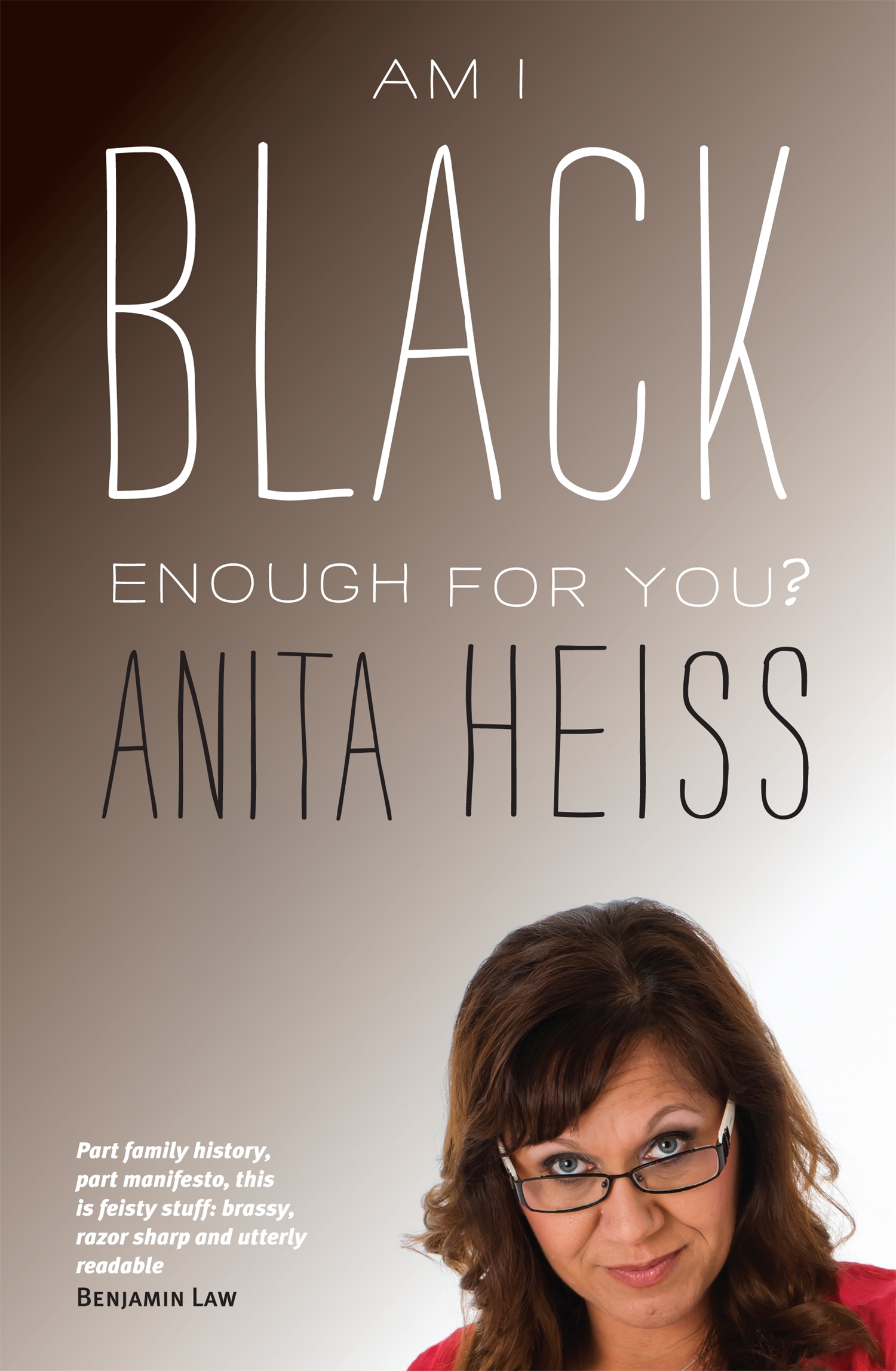
Anita Heiss, Am I black enough for you?

Courtesy: Random House

Anita Heiss‘s Am I black enough for you? is a challenge to categorise, so I’ll start with writer Benjamin Law‘s description on the cover of my edition. He calls it “part family history, part manifesto” to which I’d add “part memoir” because “family history” does not really cover the self-description aspect of the book.

For those of you who don’t know Anita Heiss, she is a Wiradjuri woman and an activist for indigenous Australians. She has a PhD in Communication and Media, focusing on Aboriginal literature and publishing, and is a writer. (I reviewed her chicklit novel, Paris dreaming, earlier this year, and reported last year on her address to the inaugural Canberra Readers’ Festival.) She co-edited the Macquarie PEN anthology of Aboriginal literature and was the guiding force behind BlackWords (the subject of this week’s Monday Musings). And this is just the start … she has been, or is currently, on many boards and committees, particularly to do with indigenous people and communications. She is an Ambassador for the Indigenous Literacy Foundation. She is, in effect, a tall poppy … which brings me to Am I black enough for you?

You see, in 2009, one of Australia’s influential shock jocks, Andrew Bolt, wrote a post titled “It’s so hip to be black” on his blog, asking readers to accept his proposition that there is “a whole new fashion in academia, the arts and professional activism to identify as Aboriginal”. He named many people, including Anita Heiss, calling them “white” or “political” Aborigines. His facts were questionable and his language emotive – such as “madness”, “trivial inflections of race”, “comic”. His argument was that these “white” Aborigines were obtaining unfair benefits from their decision to “be black”. The result was a court case brought by Anita Heiss and eight others against Bolt and his employer, The Herald and Weekly Times, for breaching the Racial Discrimination Act. Heiss and her co-defendants won the case. They did not seek damages. It was ground-breaking stuff that brought out some good discussion about the nexus between racism and free speech, about rights and responsibilities, but it also generated a lot of vituperative commentary. You can research all this pretty easily on the ‘net.

This is the background to Am I black enough for you? which, you might now have gathered, could also be described as an “identity memoir”. On the publisher’s website, Heiss writes that “I wanted to demonstrate that we as Aboriginal people have our own forms of self-identification and self-representation”. She wanted to “challenge the stereotypes” and present “alternative realities of being Aboriginal today”. This she does very well.

Heiss opens the book with her family background, Wiradjuri mother and immigrant Austrian father. She describes herself:

I’m an urban beachside Blackfella, a concrete Koori with Westfield Dreaming, and I apologise to no-one.

This is my story: it is a story about not being from the desert, not speaking my traditional language and not wearing ochre …

In the first four chapters of the book, she tells of her background – her grandmother and mother and their experiences as indigenous women, her father and his values, and her school days. Having laid that foundation, she presents in the fifth chapter, the current working definition of an Aboriginal or Torres Strait Islander person used by the Federal Government:

An Aboriginal or Torres Strait Islander is a person of Aboriginal or Torres Strait Islander descent who identifies as an Aboriginal or Torres Strait Islander and is accepted as such by the community in which he “or she” lives.

That seems pretty tight to me, though no definition is perfect. It’s better than using “a caste system defined by blood quantum (half-caste … quadroon)”.

There are a lot of “ah-so” moments for me in the book – some confirming things I’d already believed and some raising my consciousness about how easy it is to say the wrong thing without being aware of it. Heiss chronicles many instances where (mostly, I think) well-meaning whitefellas seem to get it wrong, such as the non-indigenous academics who proclaim themselves experts in “everything Aboriginal” or the critic who argued that Aboriginal literature “must” be in traditional language otherwise it’s Australian literature. It’s good to have these ideas aired publicly. It helps us test our own conceptions.

Am I black enough for you? has, like most of Heiss’s writing, a strong political and educational purpose. She is on a mission to encourage both indigenous and non-indigenous Australians to think about indigenous identity and, further, about how we relate to each other. She therefore writes in a bright, breezy, accessible style. She’s acutely aware of the power of words and language to define and to obfuscate (though she wouldn’t use such an obfuscatory word!), and frequently discusses language in the book. She makes a particular point about this in the chapter on her academic life, “Epista-what?”, when she says that using academic language, particularly to discuss indigenous issues, served “largely to alienate the very people it was talking about.”

There is much more in this book, and I hope many Australians read it. It’s well-structured, more or less chronologically but in a way that aligns with various themes – academia, the role of literature, her writing, gender – all of which link back to affirming indigenous people’s identity. She comes across as a generous woman – in her relationships with indigenous and non-indigenous people alike. She believes that optimism, rather than negativity and anger, is more likely to get results. It is possibly this optimism which underlies my small frustration with the book: several times she hints at dark times and stresses but, being the optimist, she focuses more on her strategies for overcoming them than on how they have informed her being. I’d like to understand more of that. However, Am I black enough for you? is not a misery memoir, and that’s probably a good thing!

Australian Women Writers ChallengeRead for the Australian Women Writers’ Challenge 2013ANZLitLovers Indigenous Writers Week, and Global Women of Color. Lisa (ANZLitLovers) and Marilyn (Me, You and Books) both enjoyed the book.

Anita Heiss
Am I black enough for you?
Sydney: Bantam, 2012
346pp.
ISBN: 9781742751924

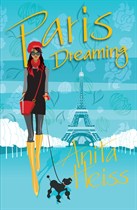
Anita Heiss, Paris dreaming (Review)

Anita Heiss Paris Dreaming

Paris Dreaming (used by permission of The Random House Group Ltd)

Late last year I wrote a post about the inaugural Canberra Readers’ Festival. One of the speakers was indigenous Australian author, academic and activist, Anita Heiss. I wrote then that I bought one of her books. It was her fourth (I think) chick lit novel, Paris dreaming. This might surprise regular readers here, as chick lit is not really my sort of thing, however …

There are reasons why I was happy to read this book. First was that my reading group chose it as part of our focus on books featuring Canberra for our city’s centenary year. Yes, I know, it’s called Paris dreaming, but the heroine starts in Canberra and Canberra is mentioned (not always positively I must say) throughout the book. The other reason is the more significant one, though, and that is Heiss’s reason for writing the book. I said in the first paragraph that she is an activist and her chick lit books, surprising though it may sound, are part of her activism. In fact, I think pretty much everything Heiss does has an activist element. In her address at the Canberra Readers’ Festival she described herself, an educated indigenous Australian, as in the top 1% of the bottom 2.5% of Australia. She feels, she said, a responsibility to put her people on the “Australian identity radar”.

Does this book do it, and if so how? Well, one of her points is that 30% or more of indigenous Australians are urban and this book, as its genre suggests, is about young urban indigenous women. Anita Heiss manages I think (though I’m not the target demographic so can’t be sure) to present characters that both young indigenous and non-indigenous women can relate to. Our heroine Libby and her friends are upwardly mobile young professionals. They care about their work; they love fashion, drink and food (this is chick lit remember!); and they wonder how to marry (ha!) their career goals and romance.

Indigenous design vase, on hall table, Governm...

Indigenous art vase, Government House, Canberra

So what’s the plot (besides the obvious chick lit formula which this book certainly follows)? At the start of the novel  30-year-old Libby, manager of the education program at the National Aboriginal Gallery, is on a man-fast. She’s been bitten one too many times and has sworn off men, much to the dismay of her tiddas (her “sisters”). She is, though, keen to develop her career and wants a new challenge – all part of the chick lit formula – and so pitches a proposal to her boss that she mount an exhibition of indigenous Australian art at the Musee du Quai Branly in Paris. Of course, her boss approves and off she goes to Paris where, following the formula, she falls for hunky, sexy Mr Wrong while Mr Right watches on, spurned (and spurned and spurned). But, of course, I don’t need to tell you how it comes out in the end do I? This is not subversive chick lit because that would not serve Heiss’s purpose …

Did I enjoy it? Yes, but not so much as a piece of literature because my reading interests lie elsewhere, but as a work written by a savvy writer with a political purpose. This purpose is not simply to show that young, urban, professional indigenous Australians exist but, as she also said in her address, to create the sort of world she’d like to live in, a world where indigenous Australians are an accepted and respected part of Australian society, not problems and not invisible. She is therefore unashamed about promoting indigenous Australian creators. She names many of them – artists, writers, filmmakers – and discusses some of their work, educating her readers as she goes. Most of the people, works and places she mentions are real but there’s an aspirational element too. The National Aboriginal Gallery does not exist but she presents it as a significant player in the Canberra cultural institution scene. Good for her!

I’ll probably not read another of Heiss’s choc lit (as she, tongue in cheek, calls it) books, but I’m glad to have read this one – and I’ll certainly look out for works by her in other genres (including her memoir Am I black enough for you?). Heiss is a woman to watch.

Anita Heiss
Paris dreaming
Sydney: Bantam, 2011
313pp.
ISBN: 9781741668933