As I wrote last week, I apologise to those of you not interested in the history of Australian literature, because yes again I am continuing my little survey of contemporary writing about Australian literature in the 1930s. This week I plan to look at some another discussion about the place of and interest in Australian literature.
So, today’s post looks at an article which asked Why is the average Australian reader, if given the choice, more likely to pick an overseas (English or American book) than an Australian one?
Australian fiction in America
In 1935, Pegasus (whoever that is) wrote an article (probably syndicated) in the Central Queensland Herald inspired by Australian readers’ apparent preference for books written overseas*, and in which s/he discusses, conversely, the growth of interest in Australian literature in America! S/he says that the Christian Science Monitor reports that “the American reading public is beginning to ‘wake up’ to the fact that worthwhile fiction is being produced in Australia”. Tell McKinnon et al, that, eh? Pegasus, in fact, says that
Australian fiction has been noticed in America is something to be put to the credit side of the ledger, when Australian authors and critics deplore the quality of Australian fiction produced to date.
 Indeed, Pegasus says that the Christian Science Monitor writer talks about the enthusiasm of the American reviewers “which is more than I can remember occurring in this country”. The book, they are particularly enthusiastic about is Henry Handel Richarson’s The fortunes of Richard Mahony. Pegasus notes that “there are many in Australia who would agree with the American critic who described this novel as ‘the most important single piece of literature ever to come out of Australia,’ [but] it has never become popular in Australia, either amongst critics or readers”!
Pegasus then shares some of the other books that were being appreciated in America. Rolfe Boldrewood’s Robbery under arms and Marcus Clarke’s For the term of his natural life are also loved here, he says, but EL Grant Watson’s Desert horizon, “has been forgotten here, if it ever received any particular attention”. Katherine Susannah Prichard’s Working bullocks was being deservedly appreciated, but, says Pegasus,
the unfortunate Coonardoo, well-written though it is, is probably better appreciated than it deserves by an American critic who can regard it as “a portrayal of the relations between the white race and the white black on a typical cattle station in north-eastern Australia.
Other books appreciated in America include G.B. Lancaster’s Pageant, M. Barnard Eldershaw’s A house is built, and Frank Dalby Davison’s Red heifer (Man shy), which “has already been accepted in America, probably to a greater extent than in Australia”. Man shy and A house is built are both well known to me, and would be regarded as classics I think, but G.B. Lancaster, whom most of us haven’t read, is mentioned once again in my blog. This is the name used by Edith Lyttleton (1873-1945). Born south of Launceston, she moved with her family to New Zealand when she was six years old, and stayed there until she moved to England in 1909. She returned to Tasmania in the 1930s, but ended up moving back to England. She wrote, among other things, thirteen novels and some 250 short stories, which, says AustLit, were “mostly narratives of romance and adventure set in the remote back country of New Zealand, Australia and Canada”. It’s probably not surprising, given she lived very little of her adult life in Australia, that she’s not particularly well-known here now. However, Pageant did win the ALS Gold Medal.
What all this says to me is that when it comes to the creative arts, there is always something for commentators to be concerned about – and then talk about – which is not necessarily a bad thing. After all, any publicity is good publicity, n’est-ce pas?
Any comments?
* Things seemed to have started to change by 1937, according to Angus and Robertson’s Mr W.G. Cousins.
 I’m a relative latecomer to Non-fiction November, but I like to take part in some way because I do like and read non-fiction. However, I don’t have the time to fully take part, so as in previous years, I plan to do a couple of concatenated posts.
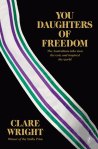


 I love this week of the Challenge, because for as long as I can remember I’ve enjoyed seeing connections between my reading. However, because I’m doing three weeks in one, I’m going to do just one pairing, and it pairs two books I’ve read this year, Clare Wright’s You daughters of freedom (
 Both these books focus on the late nineteenth and early twentieth century, though Ingleton’s ends right at the beginning of the twentieth century. Ingleton’s Dick and Moon weren’t actively involved in the suffrage movement, but they were passionate advocates of the rights of women and of women’s ability to live independent lives, and they, particularly Moon, met and associated with early Sydney leaders of the suffrage movement, like Rose Scott and Louisa Lawson, who feature in Wright’s book.

 In
In  Sue Ingleton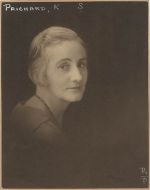
 Saturday, as you would expect, provided more detail, including about the authors chosen to represent the three countries. Saturday reports that McKinnon admitted that “we have in Australia, in its history, and in its great cities excellent material and splendid background” but were not producing literature equal to Canada and South Africa. Saturday writes, presumably reporting McKinnon, that:
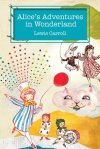 This month’s is a classic – the sort of book in fact which defines classic given its timelessness as a much loved book. It is, of course, given the post title, Lewis Carroll’s Alice’s adventures in Wonderland. And of course I have read it, though so so long ago that I really don’t recollect the actual time I read it because it’s one of those books that enters one’s consciousness isn’t it?
 For my first link, I’m going to do something that might shock those of you who know the book, because I’m linking to Charlotte Wood’s dystopian novel, The natural way of things (
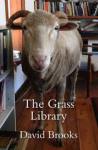 Now, not everyone approves of eating rabbits (or any animals for that matter). For Wood’s characters it was a matter of them or the rabbits, and they chose themselves. However, to be balanced about this, because, you know, we are supposed to be balanced here in Australia, my next link is to David Brooks’ animal rights reflection-cum-memoir, The grass library (
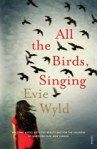 The main animals in Brooks’ book are rescue sheep – two at first, then another, and finally a fourth. Sheep that desperately needed rescuing, because they are being mysteriously attacked, appear in Evie Wyld’s Miles Franklin award winning book, All the birds, singing (
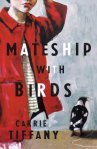 Birds of all sorts feature in All the birds, singing, as they also do in Carrie Tiffany’s Stella prize winning novel, Mateship with birds (
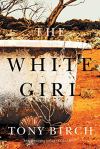 For Indigenous Australians, birds have many meanings and values, one of which is as messengers. We were introduced to this, practically, during our Arnhem Land trip last year, but birds-as-messengers feature in Tony Birch’s latest novel, The white girl (
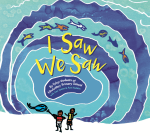 And now, because all my links to this point have involved animals, I am going to stick with animals. However, for this last link, I’m going for a double shot and am linking on indigenous author too. The book is I saw we saw written and illustrated by the Yolngu students of Nhulunbuy Primary School (
 Brent of Bin Bin: We now know this pseudonym was Miles Franklin, but it was a pretty well-kept secret at the time. Certainly,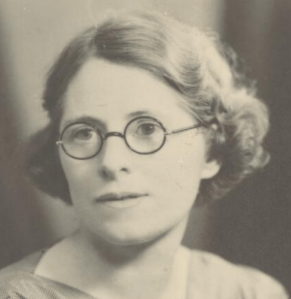
 Lafcadio Hearn
 Whispering Gums