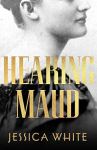
 Today’s post was inspired, of course, by my recently reading Jessica White’s memoir-biography, Hearing Maud (my review), which parallels White’s own experience of deafness with that of Maud Praed. This post will not be an exhaustive (or even comprehensive) discussion of the topic, but a broad-brush introduction to some of the ways deafness is reflected in modern Australian literary culture.
For a start, some of our best-known writers have been deaf, including Henry Lawson, who was deaf by the age of 14; Judith Wright, who started losing her hearing in her 20s; and Richard Flanagan. Flanagan was “virtually deaf” for the first six years of his life. Novelist Kirsten Krauth says “I can read this experience through all of Flanagan’s work, his ability to translate, to make us listen, his forceful prose, and his empathy for others struggling with language too.” Aljaz, the protagonist of his novel, Death of a river guide, was deaf in his early years due to pneumonia. Krauth shares this quote from the book:
He [Aljaz] now listened to the way in which words were used, the way one word could carry so many different meanings, how every word could be a tree full of fruit. But when he asked questions he was answered only with a quizzical shake of the head.
The issue of how disability (specifically, deafness) affects, positively and negatively, how a person experiences and/or responds to the world is a theme that runs through White’s book.
Quite serendipitously, I came across last week, Michael Bérubé’s essay “Autism aesthetics” in the Sydney Review of Books. The essay, obviously, is about autism, but he starts with this:
About 10 years ago, I began to get impatient with disability studies. The field was still relatively young, but it seemed devoted almost entirely to analyzing how disability was represented – in art, in culture, in politics, et cetera – especially in the case of physical disability. This, I thought, fell short of the field’s promise for literary studies. Where, I wondered, was the field’s equivalent of Epistemology of the Closet, the book in which Eve Sedgwick showed us how to ‘queer’ texts, such that we will never read a narrative silence or lacuna the same way again? Put another way: I wanted a book that showed how an understanding of disability changes the way we read.
He reviews three books which he believes do just this, which demonstrate how “autistic readers and writers can widen the range and deepen the complexity of human expression”.
This post is mostly going to do what made Bérubé impatient, but it will touch on what he’s looking for too. Regardless, though, I wanted raise the issue of how abled people “read” and “judge” literature through “abled” lenses, how we “pathologise” people with disabilities (either as creators or as characters.) As Bérubé says, “There must be no performance criteria for being human”.
However, before I get to that, another disability issue worth thinking about was raised by AWW Challenge guest poster Gail Sobott:
Disability as metaphor — blind, deaf, cripple, mad metaphors — create problems for understanding the specifics of our lived experience. The challenge is to encourage nuance and experimentation, politically-accountable uses of metaphor that make people think more deeply and enable them to imagine alternatives to what exists.
Selected recent books
The books I’m sharing here, fiction and non-fiction, by and about deaf people, have come from Jessica White’s Diversity round-ups for the Australian Women Writers challenge – so they are all by women.
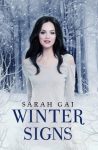 Sarah Gai’s Winter signs (young adult novel, 2017)
GoodReads reviewer Brenda, linking to the challenge, felt that Gai handled her deaf protagonist well. Brenda wrote that “deafness and everything that means for living a life is hard to comprehend for someone who has never been in that position. … I could feel Winter’s frustration when she was unable to understand non-signing people because they spoke too fast for her to lip-read.”
I know the jury is still out about the relationship between literature and empathy, but I’d argue that “feeling” a character’s emotions, and learning from this, is an important part of literature – and is particularly relevant in helping us understand lives that are very different to our own.
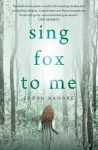 Sarah Kanake’s Sing fox to me (novel, 2016)
Kanake’s novel (my review) features a character with Down syndrome and a deaf character. Kanake’s brother has Down Syndrome, so she has some understanding of that disability. What she says in an interview about this character applies to the portrayal of all disabilities:
People with Down syndrome are often still seen as a homogenous mass, despite the fact that every person with Down syndrome is different and has their own lived experiences and understanding of the world based on those experiences.
She also said that “the best part of writing Samson was figuring out how to communicate sign language onto the page. I love the way Samson communicates and his relationship with the deaf girl, Mattie Kelly, is one of my favourite elements of the books”.
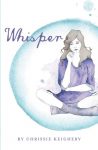 Chrissie Keighery’s Whisper (young adult novel, 2011)
Whisper’s protagonist is fourteen-year-old Demi who becomes deaf through meningitis, as did Jessica White. GoodReads (but not AWW Challenge) reviewer, CG Drews, who said she was writing her own book with a deaf character, offered this:
I loved how it talked about audism (discrimination to non-hearing people) and Deaf communities. And I loooved how it contrasted the narrator, Demi, who lives in a hearing family but is now deaf, and Stella, who is SO FIERCELY proud of her deaf heritage that she’s actually very cruel to hearing people.
She, who has clearly read a few books on the topic, said that “this is the book” for people who want to know about “Deaf culture and what it’s like to be deaf”.
 Kathryn Lomer’s Talk Under Water (young adult novel, 2015)
Lomer’s protagonist is also a deaf teenager, Summer, who develops a friendship with Will. Jessica White wrote in her round-up, that “as Will discovers how confident Summer is about her disability, his world opens up. I would have liked to have read a novel like this when I was young … it would have been an antidote to my relentless sense of strangeness and alienation”.
Summer, like many characters in this section, uses sign language.
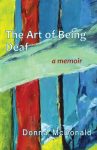 Donna McDonald’s The art of being deaf (memoir by a deaf person, 2014)
Jessica White, introducing an AWW Challenge guest post by deaf author McDonald said that in her memoir, McDonald draws “an original map of the contours of her experiences of deafness, creating a land into which other people could travel and learn of its customs”. Reviewer Jemimah-Oddfeather, who read the memoir as an introduction to her AusLan class, would agree. She described the book as “a good place to start” for those wanting to learn about Deafhood and the Deaf community. McDonlad, like White in Hearing Maud, explores “her relationship with her deafness while ‘passing’ as a hearing woman in a hearing world.”
 Anne Romer’s Thornwood House (crime fiction, 2013)
Jessica White reviewed this for the challenge. She wrote in the round-up that she liked “its positive portrayal of a deaf man, Danny”, and that Romer “took some of Danny’s characteristics, such as his attentiveness to body language and lipreading, and used them to add tension to her work.” Another AWW Challenge reviewer Rochelle, commented that the love interest uses sign language, and called that “Plus one for diversity”.
 Emma Viskic’s Caleb Zelic series (crime fiction)
Viskic now has three books in her crime series featuring deaf protagonist, Caleb Zelic – Resurrection Bay (2015), And the fire came down (2017), and Darkness for light (due in 2020). AWW Challenge reviewer Weezelle (Words and Leaves) was impressed because
it’s not ‘Caleb, the deaf investigator’, but ‘Caleb, the investigator who happens to be deaf and is also lots of other things as well’. In other words, Caleb’s deafness is one element of his character and he’s not defined by it.
Or, in other words, he is not performing his disability. Notably, he uses sign language, which immediately identifies his disability. Signing – which has been a controversial issue – was mentioned in most of the books listed here.
I’d love to hear of any books you’ve read that are by or feature deaf people … and whether you have any ideas about disability literature.
 And so we come to the last Six Degrees of Separation meme of the year, and Kate has chosen a special book (for me anyhow) as our starting book. However, first, I need to tell you that if you are new to blogging, and don’t know what this meme is about, please check host Kate’s blog – booksaremyfavouriteandbest.
 Last month’s starting book, Lewis Carroll’s Alice’s adventures in Wonderland, is of course a classic. This month’s would have been a classic I’m sure, if only the author had managed to finish it. The book is Sanditon (my review) and it was written – well, 11 chapters anyhow – by Jane Austen. Kate chose it, as you probably know, because Andrew Davies’ television adaptation (of his version of the completed story) is currently being broadcast. Of course I have read it, more than once …. making five the number of starting books I’ve read this year.
 For my first link, I’m choosing Thea Astley’s Drylands (my review) which might sound surprising, though, like Austen’s book it is set in a small (non-urban) community. However, the reason I’m linking to it is not that, but because Drylands was Astley’s last novel (albeit she managed to finish hers before she died.)
 Now, Drylands has an unusual form. It is a novel, really, but it can read like a collection of short stories, which are written by someone called Janet. Another novel that can also be described as a collection of short stories, though not quite as tricksy in form as Astley’s, is Tara June Winch’s Swallow the air (my review). Coincidentally, it is a debut novel (as opposed to Astley’s swan song one!)
 And here I’m going to change tack and move from Australia to France. Tara June Winch now lives in France, and has for some years. An Australian author who sells very well in France is, in fact, local Canberra writer, Karen Viggers. Her novel, The orchardist’s daughter (my review), has, like her previous novels, been translated into French. Its title is Le Bruissement des feuilles, which is, in English, The rustle of leaves. Hmm… I could link to another book published with a different title overseas, but we’re going to (sort of) stay in France …
 … and link to a book by an Australian writer (another Canberran in fact) that was drafted at a writer’s retreat in France and published by the people, La Muse, who are behind that retreat. The author is John Clanchy and his book, Sisters (my review).
 So far I’ve been a bit nationalistic in my French links, so next I’m linking to a book by – an English writer! Did I trick you there? However, it is about French people, Caroline Moorhead’s biography Dancing to the precipice: The life of Lucie De La Tour Du Pin, Eyewitness to an era (my review), which is set before, during and after the French Revolution.
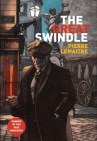 And finally, because of course I had to do it, a book actually written in France by a French writer. I’ve read a handful of French writers since I started blogging, so the choice was a bit of a challenge. However, given the flamboyance of some of the French aristocracy covered by Moorehead in her book, I thought perhaps Pierre LeMaitre’s novel,The great swindle (my review), with its damaged but flamboyant character, Édouard Péricourt, would be the best match. (These last two books could also be linked by the fact that I probably wouldn’t have read them had they not been chosen by my reading group!)
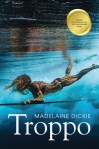 Madelaine Dickie ($4374): to research a proposed biography of Wayne Bergmann in Broome. I’ve
 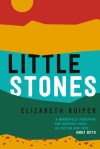 Announcing their 2019 longlist back in February (
 Elizabeth Kuiper
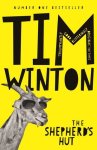 Tim Winton and Christos Tsiolkas have to be Australia’s foremost contemporary writers about men and boys, Tsiolkas doing for urban/surburban males what Winton does for small town/rural ones. Winton’s latest novel, The shepherd’s hut, continues his exploration of males in extremis. It’s strong, gritty, page-turning, and yet reflective too, which is not easy to pull-off.
 And the winner is: Anita Heiss’ Barbed wire and cherry blossoms.
 As for my


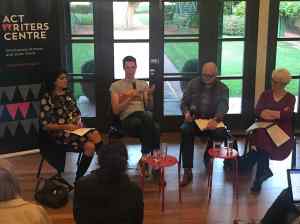 For some reason that I can’t quite explain – a sudden rush to the head methinks – I agreed to be part of a panel being organised by the ACT Writers Centre for this year’s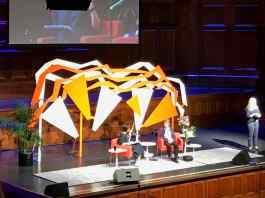
 The conversation centred around the recent release of Garner’s Yellow notebook: Diaries, Volume 1, 1978-1987, so the conversation began by discussing both diary writing and the process of preparing them for publication. Krasnostein, who asked rather long but always thoughtful questions, talked about the role and function of diaries, suggesting they exist for their own sake but are also works in themselves. Garner’s diaries, she said, contain harvested and preserved details from the world, but also show Garner’s “fearless self-scrutiny”, plus “the things one can think but not say”. Garner said that she has always loved notebooks and pens, and how as a child she loved the peace and solitude she got from writing her diaries.
 Whispering Gums