 As for my first Nonfiction November post this year, I am concatenating my last two posts, and posting them in the middle of the two weeks.
The meme is jointly hosted by Julz (Julz Reads) (Week 1), Sarah (Sarah’s Book Shelves) (Week 2), Katie (Doing Dewey) (Week 3), Leanne (ShelfAware) (Week 4) and Rennie (What’s Nonfiction) (Week 5).
Week 4: (Nov. 18 to 22) Leann (Shelf Aware) Nonfiction favourites:
What makes a book you’ve read one of your favorites. Is the topic pretty much all that matters? Are there particular ways a story can be told or particular writing styles that you love? Do you look for a light, humorous approach or do you prefer a more serious tone?
I’ll start with what I don’t look for, which is tone. That is, I don’t look for any particular tone over another. The important thing is that the tone matches the subject. I am not put off by serious, sad or confronting tones, but I can also enjoy (who doesn’t) a humorous tone. I also don’t gravitate to memoir, though I do read a select few each year. This year, for example, I’ve read Ros Collins’ Rosa: Memories with licence (my review), Anita Heiss’s anthology Growing up Aboriginal in Australia (my review), Vicki Laveau-Harris’ The erratics (my review), and Jocelyn Moorhouse’s Unconditional love (my review).
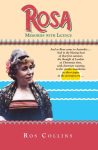

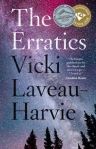

What I do look for are subject matter and author’s approach or style. My favourite subject matter would have to be literary biography (and to a slightly lesser degree, literary memoir) but none of this year’s books have been such. I like essays, of which I’ve read a few this year, some stand-alone, some in collections. And I particularly like reading authors who explore form, who don’t stick to the tried-and-true. This doesn’t mean I don’t read and enjoy the tried-and-true if it’s well-written and a topic I’m interested in. Two standout non-fiction books this year for me were:
- Maria Tumarkin’s Axiomatic (my review), which she says is not a collection of essays, though I’m not sure what else to call it. This is a humane, provocative books that forces us to rethink those axioms, those cliches that we too often resort to in an effort to not confront uncomfortable truths and situations.
- Clare Wright’s You daughters of freedom (my review) for its well-researched but highly readable history of the women’s suffrage movement in that late nineteenth to early twentieth centuries, and Australia’s significant role in it. Wright has done a wonderful job of bringing a hidden history to the fore.
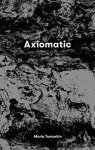
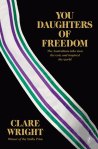
Note: I have only included books I’ve read from November 2018 to October 2019. Any read this month will be in the running for 2020’s meme!
Week 5: (Nov. 25 to 29) Rennie (What’s Nonfiction) New to my TBR:
It’s been a month full of amazing nonfiction books! Which ones have made it onto your TBR? Be sure to link back to the original blogger who posted about that book!
I’m afraid that I haven’t really had time to take note of many books posted by other meme posters, though I have read several posts. So, I’m listing here a small selection of non-fiction books I am keen to read, not just ones that have appeared via this year’s meme:
- Larissa Behrendt’s Finding Eliza: Power and colonial storytelling, which is in fact old on my TBR but which I’m going to make a concerted effort to read by next Nonfiction November.
- Peter Carey’s Wrong about Japan, because I love Japan and am interested in what Peter Carey has to say. Brona (Brona’s Books) posted about this in her Be the Expert post.
- Annie Cossins’ The baby farmers, because I’m interested in colonial Australian women’s history. Shelleyrae (Book’d Out) included this in her Be the Expert post.
- Paul Genoni and Tanya Dalziell’s Half the perfect world: Writers, dreamers and drifters on Hydra, 1955–1964, which won this year’s Prime Minister’s Literary Award for Nonfiction. It’s about the post-war international artist community on the Greek island of Hydra, which included our Aussie literary couple, Charmian Clift and George Johnston.
- Chloe Hooper’s The arsonist, which has been shortlisted for several awards and has been on my TBR most of this year. It seems an absolute must given the early start to this year’s bushfire season here down under.
And there you have it. Another Nonfiction November completed in two posts. I apologise for not giving it the attention it deserves, but I am glad I was stimulated by the meme to spend a little time thinking about nonfiction this month.
Any nonfiction favourites you’d like to share? (Not that my TBR pile needs them, mind you, but other readers might like to hear of them!)
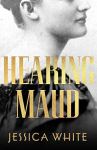 Today’s post was inspired, of course, by my recently reading Jessica White’s memoir-biography, Hearing Maud (
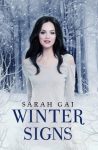 Sarah Gai’s Winter signs (young adult novel, 2017)
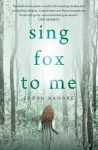 Sarah Kanake’s Sing fox to me (novel, 2016)
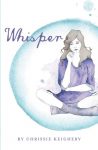 Chrissie Keighery’s Whisper (young adult novel, 2011)
 Kathryn Lomer’s Talk Under Water (young adult novel, 2015)
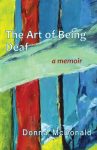 Donna McDonald’s The art of being deaf (memoir by a deaf person, 2014)
 Anne Romer’s Thornwood House (crime fiction, 2013)
 Emma Viskic’s Caleb Zelic series (crime fiction)
  Jessica White
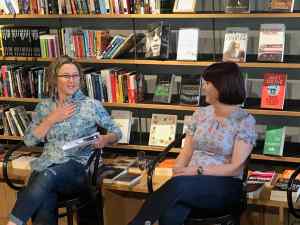
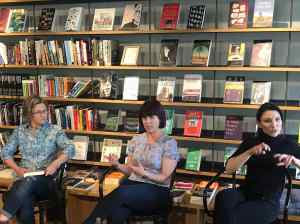
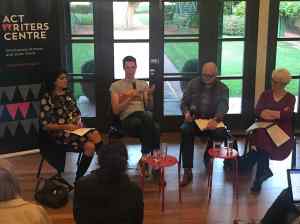 For some reason that I can’t quite explain – a sudden rush to the head methinks – I agreed to be part of a panel being organised by the ACT Writers Centre for this year’s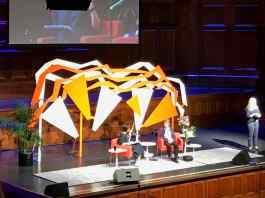
 The conversation centred around the recent release of Garner’s Yellow notebook: Diaries, Volume 1, 1978-1987, so the conversation began by discussing both diary writing and the process of preparing them for publication. Krasnostein, who asked rather long but always thoughtful questions, talked about the role and function of diaries, suggesting they exist for their own sake but are also works in themselves. Garner’s diaries, she said, contain harvested and preserved details from the world, but also show Garner’s “fearless self-scrutiny”, plus “the things one can think but not say”. Garner said that she has always loved notebooks and pens, and how as a child she loved the peace and solitude she got from writing her diaries.
 Indeed, Pegasus says that the Christian Science Monitor writer talks about the enthusiasm of the American reviewers “which is more than I can remember occurring in this country”. The book, they are particularly enthusiastic about is Henry Handel Richarson’s The fortunes of Richard Mahony. Pegasus notes that “there are many in Australia who would agree with the American critic who described this novel as ‘the most important single piece of literature ever to come out of Australia,’ [but] it has never become popular in Australia, either amongst critics or readers”!


 I love this week of the Challenge, because for as long as I can remember I’ve enjoyed seeing connections between my reading. However, because I’m doing three weeks in one, I’m going to do just one pairing, and it pairs two books I’ve read this year, Clare Wright’s You daughters of freedom (
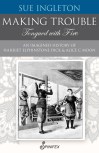
 Both these books focus on the late nineteenth and early twentieth century, though Ingleton’s ends right at the beginning of the twentieth century. Ingleton’s Dick and Moon weren’t actively involved in the suffrage movement, but they were passionate advocates of the rights of women and of women’s ability to live independent lives, and they, particularly Moon, met and associated with early Sydney leaders of the suffrage movement, like Rose Scott and Louisa Lawson, who feature in Wright’s book.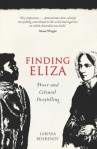

 In
In  Sue Ingleton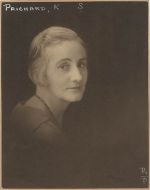
 Saturday, as you would expect, provided more detail, including about the authors chosen to represent the three countries. Saturday reports that McKinnon admitted that “we have in Australia, in its history, and in its great cities excellent material and splendid background” but were not producing literature equal to Canada and South Africa. Saturday writes, presumably reporting McKinnon, that: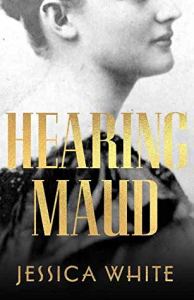
 Whispering Gums