Monday musings on Australian literature: Australian Writers’ Centre

I have written posts now on writers centres in every Australian state and territory, but there is also, would you believe, an Australian Writers’ Centre. Who are they, and where do they fit in?

It seems like they are primarily a provider of writing courses. When you click on the About link on their website, the first thing you read is:

Welcome to the Australian Writers’ Centre

We’re Australia’s leading provider of writing courses and we’re so excited that you’ve found us at last!
If you’d like to improve your writing skills or simply find your inspiration, this is the place.

They say that they offer courses in “in creative writing, freelance writing, business writing, blogging and much more”, and that people love their courses “because of their affordability, short duration and accessibility – a risk-free way to gain new writing skills in a supportive environment”.  Their courses are “created by experts who are active in the industry”. They run in-person courses (Sydney, Melbourne, Perth and Brisbane) and online ones.

Nick Earls, NoHoThey sound and look highly self-promotional, but who teaches their courses? Well, there are some well-known names there, including published (many of them internationally successful) Australian authors, such as Kate Forsyth (best-selling author of fantasy, primarily); Alison Tait (best-selling author, particularly of children’s books); Nick Earls (popular writer of books for adults, young adults and children, and who has appeared here); novelists Annabel Smith (who has also appeared here a few times) and Natasha Lester; plus others including Valerie Khoo, and various journalists and free-lance writers. I notice, for example, that Annabel Smith’s Creative Writing course that started today is sold out.

They also offer other free “resources” or activities:

So, as far as I can tell, the AWC is primarily an organisation offering courses and other resources for writers, both fee-based and free. Unlike the state-based centres it is not a member organisation, but I can’t find anything on their site, not even their FAQs, about their history or governance. (Wikipedia’s article on Valerie Khoo says she founded it in 2005.) This sort of information is not essential, of course. If they are providing a needed and appreciated service, that’s the important thing. But, I’m a librarian-archivist, and I do love it when organisations provide some history on their sites. It’s not hard to do.

A novel works its magic by putting a reader inside another person’s life. (Barbara Kingsolver, from AWC Newsletter, 6/2/20)

Exactly why I love to read (notwithstanding there are some lives I may not want to be in) … what about you? 

Writers Centres posts: ACT, New South Wales, the Northern Territory, Queensland, South Australia, Tasmania, Victoria, and Western Australia.

Australian Women Writers 2020 Challenge completed

I’m very late with my traditional completion post for the Australian Women Writer’s Challenge – it’s been a weird and difficult year all round. As always, I will continue to contribute until the year’s end, and do a final round-up then, but I do like to get the completion admin done!

I signed up, of course, for the top-level, Franklin, which involves reading 10 books and reviewing at least 6, and of course I’ve exceeded this. In fact, by June 30, my usual marker for my completion post, I’d contributed 13 reviews to the challenge,

Here’s my list in alphabetical order (by author), with the links on the titles being to my reviews:

This slideshow requires JavaScript.

Challenge logo

I don’t set myself specific reading goals, but I do keep in mind a wish to read more indigenous and diverse writers, more classics, and more from my TBR pile. As I wrote last year, these continue to be my non-goal goals. So, how did I go? Well, I read just one Indigenous Australian writer, an Iranian Australian writer, two classics (thanks to Bill’s AWW Gen 3 week), and four (Hooper, Park, Thirkell and Azar) from my TBR*. This is not too bad out of 13 books (I think!), particularly given this weird year. However, I’d like to do more. Let’s see how I go by the end of the year.

Book coverNot included in the above list is Heidi Sze’s book Nurturing your new life, which I have not specifically reviewed. However, I have read a significant proportion of it, and did write up the author event I attended.

Watch out for my 2020 AWW Challenge wrap-up post for the year’s full story!

* All books I read are, by definition, on my TBR, but in terms of my book management, I define my TBR pile as those I’ve had for more than 12 months!

Monday musings on Australian literature: Bookprint, Australian-style

Have you heard of the term or concept of bookprint? I came across it in a December 2019 article in The Conversation titled “5 Australian books that can help young people understand their place in the world”. The Conversation credits the term to African-American educator Alfred Tatum who, according to the University of Illinois’ Today website, coined it to describe “one’s memory of personally influential books”. It goes on to say that Tatum believes “most young black males need to acquire a bookprint outside their school-assigned reading”.

Claire G Coleman, Terra nulliusConsidering this concept, The Conversation authors Larissa McLean Davies, Sarah E. Truman, Jessica Gannaway and Lucy Buzacott, came up with their list of five books for young Australians. They are:

  • Clare G. Coleman’s Terra nullius (my review) – for ages 16+
  • Michael Mohammed Ahmad’s The tribe (Lisa’s review) – for ages 13+
  • Tara June Winch’s The yield (my review) – for ages 16+
  • Maxine Beneba Clarke’s Growing up African in Australia (Lisa’s review) – for ages 15+
  • Rebecca Lim and Ambelin Kwaymullina’s (ed) Meet me at the intersection – for ages 15+

To see their reasons for choosing these books, please click the link to the article in my opening paragraph. The authors make the point that “historically underrepresented people including Aboriginal writers, writers of colour, migrant writers, queers writers and writers living with disability are particularly underrepresented” in school curricula. Clearly – and with good reason – this is what they mostly address in this list.

Of course, what’s “personally influential” is, by definition, deeply personal, but this list looks to at least encourage young people to look outside their own box, to walk for a little while in the shoes of others – and that, it is presumably hoped, will develop empathy with and tolerance of others.

For me …

… the works that were “personally influential”, those I often find myself remembering, included those which confronted me with moral choices, those which helped me develop the moral code I (try to) live by. Shakespeare’s King Lear and Macbeth, and the characters in Albert Camus’ The plague (my review), for example, had big choices to make, choices that could mean life or death for them or for others, choices that involved behaving selfishly or selflessly, choices that exposed the moral codes they lived by. What Australian books would I recommend that encourage this sort of thinking, that confront students with choices about how to live?

Kim Scott’s That deadman dance (my review) could be one. While there is an overall narrator, we see several perspectives. We also see characters making choices and, sometimes, reflecting on the validity or implication of those choices. Thea Astley’s An item from the late news (my review) is another. There is meaty moral discussion to be had here, and, as in Shakespeare’s big tragedies, our protagonist is deeply flawed while also seeing what is right and wrong. In John Clanchy’s In whom we trust (my review), the protagonist has a big decision to make, one that would right poor decisions earlier in his life.

This is a topic that could go on forever – and I could certainly suggest more titles – but at this stage, having introduced the topic, I think I’ll pass it over to you, my Gummie brains trust. So …

Do you have books that were personally influential to you and/or what would you recommend for young people (and why)?

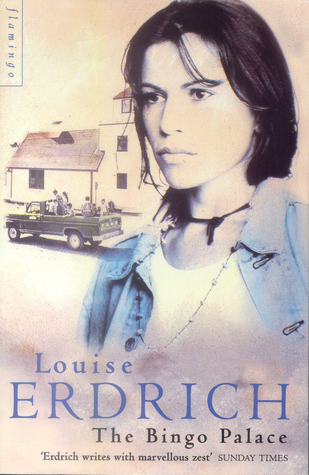
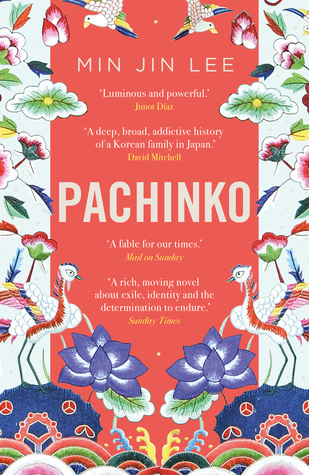
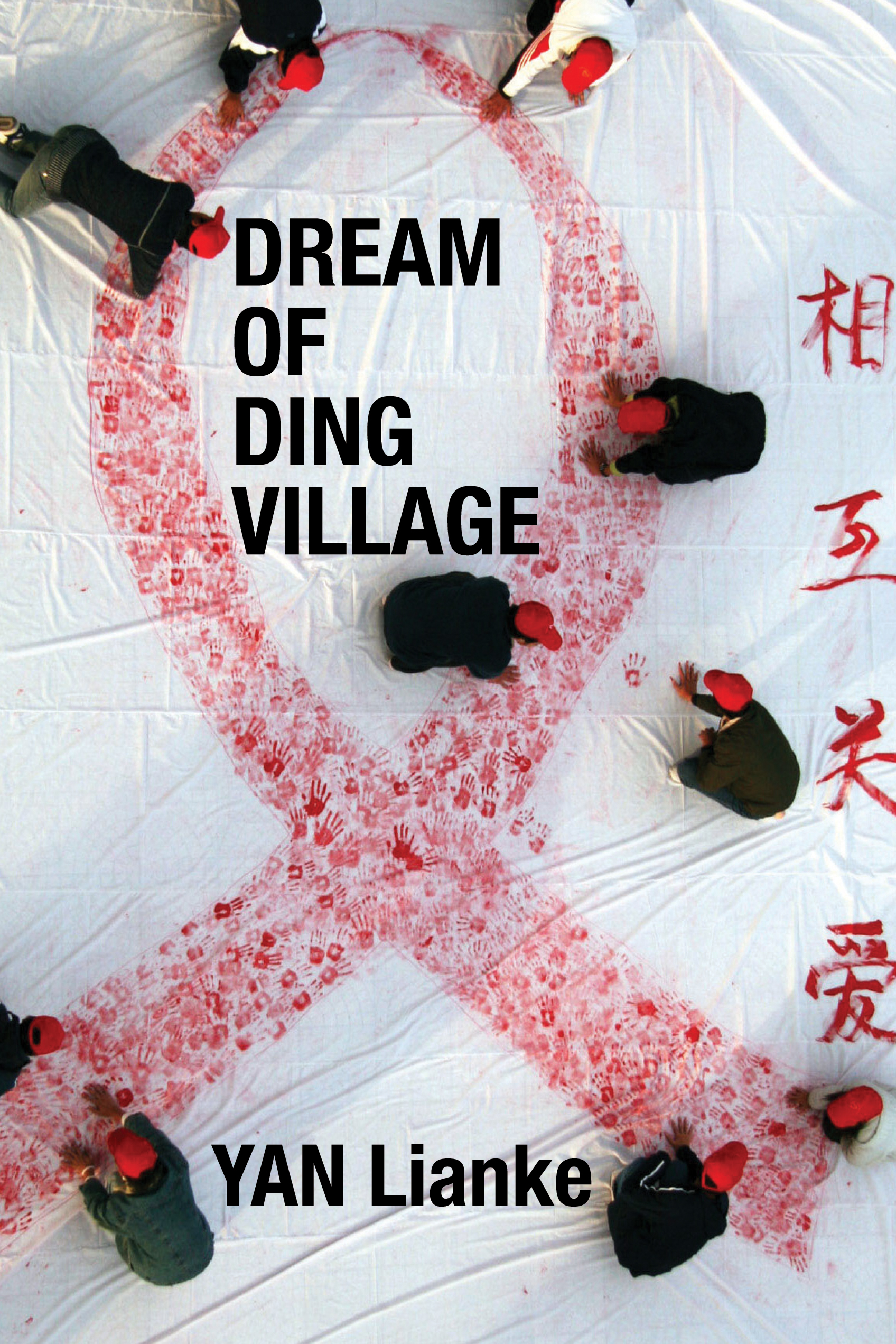
Six degrees of separation, FROM Rodham TO …

Woo hoo, it’s spring here down under, and in my street we have yellow wattles and daffodils blooming, plus pink prunus trees and white Manchurian pears. Bright spots in difficult times, and it does the heart good. However, I’m not here to talk about that but for this months Six Degrees of Separation meme.  As always, if you don’t know this meme and how it works, please check out meme host Kate’s blog – booksaremyfavouriteandbest.

Book coverOnce again, the starting book is one I haven’t read, though unlike last month’s, I have heard of the author. The book is American author Curtis Sittenfeld’s Rodham. According to GoodReads it “imagines a deeply compelling what-might-have-been: What if Hillary Rodham hadn’t married Bill Clinton?” However, this is not where I’m going to go.

Jo Baker, LongbournI said that I have heard of Curtis Sittenfeld, and the reason is because of her involvement in The Austen Project, her contribution being Eligible, a retelling of Jane Austen’s Pride and prejudice. My first link is from this to another retelling of Pride and prejudice, Jo Baker’s Longbourn (my review).

Elizabeth Harrower, In certain circlesLongbourn was, I discovered, one of many books presented in England’s BBC4’s Books at Bedtime program. I was surprised to discover that another book broadcast on this program was our own (I mean Australia’s own) Elizabeth Harrower’s In certain circles (my review). How great is that!

And now, just to mix it up a bit, I’m going to link on circles and the fact that the circle is a symbol of infinity. This brought me to John Banville’s The infinities (my review). 

Rebecca Skloot, The immortal life of Henrietta LacksTwo main characters in The infinities can be described as infinite, meaning, in part, that they are immortal – the gods Hermes and Zeus. Gods aren’t the only things that are immortal. Cells can be too, as I learnt in Rebecca Skloot’s fascinating, heartrending, The immortal life of Henrietta Lacks (my review).

Maxine Beneba Clarke, The hate raceThe story of African-American Henrietta Lacks’ cells should be a good one. After all, her cells have gone on to produce some significant medical advances. However, the way the cells were taken and used is a story of both ingrained medical arrogance and ongoing racism whereby the human behind these cells and her family were continually ignored and discounted. A closer-to-home book about the experience of racism is Maxine Beneba Clarke’s The hate race (my review).

Book coverMaxine Beneba Clarke’s heritage is mixed, her mother being Guyanese and her father Jamaican (Caribbean). Indigenous Australian author Tony Birch, like many of us, has mixed heritage. He claims a Barbadian (Caribbean) convict amongst his ancestry! I can’t resist making that my last link, though I could also link on the fact that Birch’s writing deals with racism. His most recent novel, The white girl (my review), deals very specifically with racism in contemporary rural and urban Australia.

I’ve been very narrow in my travels this month, staying in English-speaking countries, and keeping (mostly) to the last 100 years. I’ve returned to my usual gender breakdown – two men and four women. I started with what has been described as a “what if” imaginary novel, but I ended, unfortunately, with a novel that is far too real.

Now the usual: Have you read Rodham? And, regardless, what would you link to? 

Karen Jennings, Upturned earth (#BookReview)

Book coverIntroducing my review of South African writer Karen Jennings’ debut novel, Finding Soutbek, I noted that I don’t normally accept review copies from non-Australian publishers but that I will, very occasionally, make an exception if the writer or subject matter interests me. Upturned earth, Jenning’s fifth book, is set in a nineteenth century mining town. Given some general similarities between colonial South Africa and Australia, and my own, albeit youthful, experience of living in a mining town, I was intrigued to read it.

Upturned earth is set in 1886 in Namaqualand, the copper mining district of what was then Cape Colony. It’s an arid region crossing the South African-Nambian border, with its largest town being Springbok (Springbokfontein at the time of the novel). The novel commences with the arrival by boat from Cape Town of 28-year-old William Hull, who is due to take over as magistrate. On first appearances, Hull seems almost like an antihero:

Weak-willed, forgetful, Hull was a poor employee. He did as he was told, yet somehow was never able to fulfil the chores of the position with the same success as his colleagues did. He confused cases, misfiled documents, knocked over inkwells.

In fact, it seems that he is more interested in nature, than work. “He carried,” we’re told, “the droppings of animals folded in handkerchiefs, kept pink newborns warm in his hat”. However, on realising he had been given the job “because no other man would take it”, he resolves to “be firm. Punishments would be meted out. The law would be laid down.”

Unfortunately, life as Okiep’s Magistrate is not as he expects. Slowly, he learns that no-one in Okiep is independent, not even the Magistrate, because the town is unofficially run by the Cape Copper Mining Company. Its head is the Super, Mr Townsend, whose widowed daughter, Iris McBride, returns to Namaqualand on the same boat as Hull. Initially, despite hints to the contrary, he doesn’t realise the true situation, so settles down to a life of work and following his naturalist’s heart, which sees him going out in every spare moment to collect plant and animal specimens. He’s keen to contribute to scientific knowledge. But, the irony is that in “trying to understand the dead things around him”, he is overlooking the live ones.

The narrative is told through two parallel stories. Hull’s is one, the other is Noki’s. He’s a Xhosa mining labourer, one of many who come into Okiep to work and send money home to families in the surrounding regions. Noki, though, has an added concern. While he is away visiting family, his 17-year-old brother Anele is arrested for drunken and disruptive behaviour, and is imprisoned in the gaol attached to Hull’s Residence. This gaol is managed by gaoler-cum-Hull’s-manservant, Genricks. He dissuades Hull from inspecting the gaol. After all, he has it all in hand, and weak Hull, though making an attempt to do the right thing, lets himself be put off.

Given the novel is set in a colonial society, and one involving mines with white and indigenous workers overseen by an arrogant brutal man, you’ll have a picture of what this novel is about. Gradually, things come to a head and people’s true colours are exposed. It’s to his credit that Hull comes to his senses and finds a strength he didn’t know he had – but the calamity can’t all the righted, and the ending is an appropriate one. This is literary historical fiction, so it doesn’t all play out to form, opting for something a little more realistic. I’ll leave the plot at that.

The perfectly titled Upturned earth is Jennings’ third novel. Her writing is tight and expressive. She talks about indigenous workers being “broken down into acceptance”, and here is Hull’s perspective of the place after he suffers a disappointment:

… and he saw as though with new eyes what he had lived in and grown accustomed to these past months. The dull sky, the wearying streets and stained homes, the disgrace of the prison building.

Plain language, but it is all that’s needed.

Why?

The important question to ask about historical fiction is – why? The obvious answer is that there are many stories worth telling, stories that the majority of us have never heard, like, for example, Eleanor Limprecht’s Long Bay (my review) about abortionist Rebecca Sinclair who was gaoled in Long Bay in 1909, and Emma Ashmere’s The floating garden (my review) about the demolition of homes in the 1920s to make way for the Sydney Harbour Bridge.

Jennings explains her reason for writing this book in her Author’s Note and Acknowledgements. She was inspired John M. Smalberger’s book, Aspects of the history of copper mining in Namaqualand (1846-1931), in which she found magistrate William Charles Scully. From there she went to various other books, including Scully’s own reminiscences. This is fiction, however, so, says Jennings, her character Hull’s “weaknesses are all his own”. However, the brutality (and name) of gaoler Genricks are fact, though the events relating to him, the Super and others have been fictionalised. Then comes her main point: she sees her novel as being “a comment on the history of commercial mining in South Africa – the exploitation, conditions and corruption that began in the 1850s and continue to the present”.

The novel, then, is a plea for humanity, for kindness. Here is Hull, halfway through the novel, talking with Cornish miner Tregowning whom he has just met. Tregowning describes the mistreatment of the miners, and particularly the indigenous ones, but Hull can’t quite believe or accept what he is saying:

Tregowning turned to face the magistrate. ‘Are we not taught to vindicate the weak and fatherless, to help the afflicted and destitute, to rescue the feeble and needy? To deliver them out of the hands of the wicked?’

Hull looked around uneasily. His tongue felt thick as he spoke. ‘Some would call those revolutionary words.’

‘I thought they were biblical.’

Which way will our weak Mr Hull go is the question we confront as we read. But, the theme is clear from the start – man’s inhumanity to man (especially in these colonial environments) and what can be done about it. Pondering what has changed and what hasn’t is why we read historical fiction. I enjoyed this book.

Karen Jennings
Upturned earth
London: Holland Park Press, 2019
202pp.
ISBN: 9781907320910

(Review copy courtesy Holland Park Press)

Monday musings on Australian literature: Libraries and librarians in Australian fiction

I only have myself to blame! I asked for readers to suggest topics they’d like to see in Monday Musings and two suggestions came back, one from novelist Angela Savage asking for a post on libraries and librarians in Australian fiction. Her request was inspired by her recent appointment as the CEO of Public Libraries Victoria. I was interested, but it’s not an easy subject to research …

However, before I get to the post proper, I must share this article that Paula (Book Jotter) included in her Winding Up the Week post: “Since the pandemic, an Australian library called 8,000 elderly patrons just to check in”. What this Victorian public library service did is inspiring.

Now, my post … most us probably know some of the famous novels which feature libraries and/or librarians, like Umberto Eco’s The name of the rose and Carlos Luis Zafon’s The shadow of the wind, but how many of us remember libraries and librarians in Australian novels? It’s hard, but here is a selection.

Wendy Scarfe, Hunger TownIn many cases, authors refer to libraries or librarians positively, often to establish a character as thoughtful, considered, intelligent, open-minded. Craig Silvey’s Charlie in Jasper Jones (my review), for example, visits the local library early in the novel, when he is at loose ends. He’s comfortable there – like “visiting an elderly aunt” – and he knows how to use it, from genre books to newspapers.

Wendy Scarfe’s librarian, Joe Pulham in Hunger town (my review), introduces her protagonist, Judith, to the Aristotelian idea of living moderately. There is also a librarian in Christos Tsiolkas’ Barracuda (my review). His protagonist finds himself in jail, and while there becomes an avid reader. Tsiolkas, perhaps partly self-mockingly, has the prison librarian comment on Danny’s reading choices:

‘Why are you always buried in those old farts?’ Danny would accept the teasing good-naturedly for he knew it was apt. Contemporary writers annoyed him, he found their worlds insular, their style too self-conscious and ironic.

The point, though, is that Danny’s becoming a reader is a positive thing in his development as a thinking person.

Book coverIn the opening chapter of Shokoofeh Azar’s The enlightenment of the greengage tree (my review), our narrator’s brother dies in a fire started by revolutionaries in the father’s library. Here the point is that our narrator’s family comprises educated progressive thinkers, just the sort of people abhorred by the leaders of Iran’s 1979 Revolution. A more famous personal library occurs in Markus Zusak’s The book thief (my review) in which young Liesel steals books from the local mayor’s wife’s library. For Leisel, the library evokes a calm, safe place, as well as a place of words whose power, she understands, can do ill and good.

Elizabeth Jolley’s grandmother protagonist in The orchard thieves (my review) ponders, on her way home from the library, the value of libraries to people who may never have had an opportunity to use them. She thinks about intruders and muggers:

… she might be held at knife point by someone in the street. She would offer all she had in her purse, small change, pension cheque and the library-book tickets. There would be absolutely no need for the villain to either strangle or stab her in order to snatch her purse. She would hold it out to him and tell him he could have it and be off. She would tell him this in plain words. The library-book tickets might even make a changed man of him, especially if he had never had a chance to use a public lending library during a life with all the deprivation brought about by being on the run.

This is quintessential Jolley (whose husband, you may know, was a university librarian.)

Book coverJolley talks about library-book tickets, prerequisites for borrowing library books. Carmel Bird’s The Bluebird Cafe features another library based on a private collection – The Charles Dickens Library, which is classified as a “national treasure” – but there’s also reference to a library-book reading barmaid who gets “so bored” on her days off “when there’s nothing to read”. I haven’t read this novel, but the excerpts on Google Books show me it’s another delightful, cheeky Bird. Commenting on Angela’s request for this post, Carmel also mentioned her novel The white garden. GoodReads describes it as follows:

Carmel Bird’s examination of the secrets of the human mind is a chronicle of tragedy that is inadvertently revealed in the search for a lost library book.

Sometimes, authors describe library buildings. Steve Toltz does in Quicksand (my review). His character is sent by a bookshop to the local public library, which, when he gets there, is a “bland underwhelming brick building behind the train station” (though – phew – the library does come up with the goods). Later, he is taken to “an abandoned-looking prison courtyard reminiscent of a library on Sunday”. Hmmm, these images of libraries don’t posit them as inviting places, but Toltz’s novel is satirical, so perhaps it’s good that he thinks libraries are worth noticing?

Dymphna Cusack, JungfrauDymphna Cusack also mentions a library building in her debut novel Jungfrau (my review), when her young university student character passes one in a distressed state:

The palms swayed under the light like green fountains in the wind, and their shadows danced grotesquely on the walls of the Public Library.

Why choose the library in particular? Perhaps because this between-the-wars novel is about three young women enjoying new freedoms for women, something that libraries could be seen to epitomise.

I’ve only dipped my toes into this topic. There are many more libraries and librarians out there in Australian novels – David Malouf’s Johnno, for example, which I read long ago – but I hope this little discussion gets the rest of you thinking. You know what to do!

National Biography Award Winners, 2020

I’ve not posted on many awards this year, but have decided to post on the 2020 National Biography Award, partly because I attended events last year involving each of the winners.

This Award was endowed in 1996 by Geoffrey Cains, and supported for many years by Michael Crouch, who died in 2018. It is now being supported by the Nelson Meers Foundation whose key objective is “to foster innovative artistic and cultural expression, and to encourage greater engagement with the diversity, complexity and richness of our cultural sector”. They increased the prize money for the shortlisted authors, and created a new prize to commemorate Michael Crouch, all of which started last year. The current prizes are:

  • $25,000 for the winner
  • $2,000 for each of six shortlisted authors
  • $5,000 Michael Crouch Award for a first published biography by an Australian writer

The shortlist for 2020 was announced on 9 July and comprised:

  • Chloe Higgins’ The girls: A memoir of family, grief and sexuality
  • Jacqueline Kent’s Beyond words: A year with Kenneth Cook (Lisa’s review)
  • Russell McGregor’s Idling in green places: A life of Alec Chisholm
  • Patrick Mullins’ Tiberius with a telephone: The life and stories of William McMahon
  • Amra Pajalić’s Things nobody knows but me
  • Jessica White’s Hearing Maud (my review)

These were chosen from 89 entries, which, explained judge Margy Burn, ranged across classic biography, autobiography, intimate life writing and affectionate memoir. The subjects she said were equally diverse. The shortlist contains two biographies (those by McGregor and Mullins) and four works that are more autobiographical/personal life-writing in nature. This was similar to last year’s shortlist, and suggests a change – a loosening up – in our expectation and appreciation of biography and autobiography. Jessica White’s engaging Hearing Maud, for example, is what I’d call a hybrid biography-memoir.

This year’s judges were:

  • Margy Burn: librarian who has been responsible for Australian special collections at the National Library of Australia, and other state and university libraries; served on working parties for the Australian Dictionary of Biography; a foundation judge for the Kibble and Dobbie awards for life writing by a woman author and a National Biography Award judge in 2019.
  • MarkMcKenna: one of Australia’s leading historians, who has written several award-winning books, including From the edge: Australia’s Lost HistoriesAn eye for eternity: The life of Manning Clark, and Looking for Blackfellas’ Point: An Australian history of place.
  • Richard White: retired Associate Professor in Australian history from the University of Sydney in 2013, who has written or edited many books including Inventing AustraliaThe Oxford book of Australian travel writingOn holidays: A history of getting away in Australia, Symbols of Australia; has judged the Premier’s Literary Awards and other history prizes, and been involved in Australian history associations and journals.

2020 Winners

Book coverThe overall winner, announced last night, 28 August, is Patrick Mullins’ Tiberius with a telephone: The life and stories of William McMahon. I attended and posted on a panel at the 2019 Canberra Writers Festival which included Patrick Mullins. He explained that he’d done his PhD in political biography at the University of Canberra in 2014, but hadn’t written one. He looked around and Billy McMahon, he said, “was there for the taking” (with “good reason” he added!) Researching McMahon, he became intrigued by the disconnect between the reputation (the derision) and the reality (twenty plus years covering all major portfolios as well as prime minister.) In his acceptance speech for the Award, Mullins quoted historian Tom Griffiths who says that the great virtue of history is its willingness to acknowledge complexity – and McMahon, and his legacy, surely make for one complex history! The judges wrote:

Mullins’ biography demonstrates a command and surety of voice which sustains the reader’s interest. Political biography can be tedious reading. The author’s study of the genre, impressive research and masterful use of McMahon’s unpublished autobiography does much to recover McMahon’s achievements, despite his manifest flaws. This outstanding book shows there is still a place for classic biography.

Book coverThe winner of the Michael Crouch Award for a Debut Work was Jessica White’s Hearing Maud, which I have reviewed here (see link above). In her acceptance speech, White talked about how no-one listened to Maud (daughter of Australian novelist Rosa Praed) while she was alive, and that in paralleling Maud’s experience of profound deafness with her own, a century later, she wanted to show that little had changed in terms of discrimination and “the expectations that we hide our deafness.” I attended and posted on a conversation with Jessica White on this book last year. The judges wrote:

The writing, unsentimental and unobtrusive, beautifully evokes White’s life: a sunny Australian farm childhood, miserable London winters, the challenges of her journey to understand Maud. There are shrewd insights into the history of deafness and its treatments, the ideological battles between signing and oralism and sign language’s relationship to the emergence of the telegraph and the fad of automatic writing. But we are also left with a sense of exhaustion: how gruellingly hard it is to be deaf, an often invisible disability in a hearing world. This is simultaneously a contribution to the history of nineteenth-century women’s lives, a revelatory study of deafness, and a fine work of Australian life writing.

You can listen to the awards announcement, with comments from judge Margy Burn and the two winners, on YouTube:

Congratulations to the winners and, of course, the shortlisted authors. A great achievement.

Griffith Review 68: Getting on (#BookReview)

Book coverI love reading the Griffith Review, though have mostly only reviewed individual articles on this blog. It’s a meaty quarterly, with each edition being devoted to a particular theme. Edition 68’s theme, Getting on, seemed apposite for my reading group and so was our August selection. Although it was confronting at times, it was a universally approved choice, and our discussion was lively and engaged.

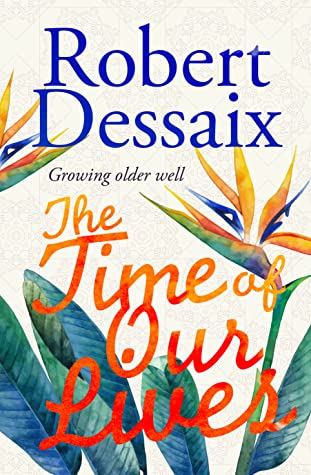
Like all Griffith Reviews, this edition contains essays, reportage, memoirs, fiction and poems, some from writers who have previously appeared on my blog (like Helen Garner, Vicki Laveau-Harvie, Kathy Marks, and Charlotte Wood); some from writers known to me but not (yet) on my blog (Melanie Cheng, Leah Kaminisky, Sam Wagan Watson among others); and some new to me. The edition opens with editor Ashley Hay’s introductory piece, “The time of our lives: Senescence, sentience and story”. She frames the volume’s overarching subject matter by saying that ageing in Australia:

has been largely framed by intersections between a Royal Commission and its revelations of institutional shortfalls and betrayals; the urgent need for reform; the conditions we place under the umbrella designation of ‘dementia’; an increasing awareness of under-reported ageism; the seemingly intractable gap in life expectancies between Indigenous and non-Indigenous Australians; the day-to-day experience of some 200,000 older Australians who live in residential-care facilities; and an emphasis on the ‘costs’ of an ageing population rather than any framing of the potential benefits of longevity.

However, while these practical and political issues underpin the volume, it also includes some more philosophical and personal reflections which provide breadth and life to the discussion. And so, the edition proper starts with established writer, 77-year-old Helen Garner (“The invisible arrow”) who provides a personal perspective on the experience of ageing, on losing hearing (necessitating hearing aids) and failing sight (requiring cataracts). It’s also about the quandary of being a writer challenged by ageing, an issue somewhat addressed, from a different angle, by Charlotte Wood (“Experiments in the art of living”).

Because my life over the last couple of decades has involved elderly people, I was particularly interested in the essays on aged care practice and policy, especially Sarah Holland-Batt’s “Magical thinking and the aged care crisis” and Beth Mohle’s “System failure”. Both these provided detailed analysis of the current failures of the system – including the multiple reviews with their multiple ignored recommendations – and offer some ideas for improvement. The problem is also taken up provocatively by Gen Xer Ingrid Burkett in “Bold rage” and more calmly but also passionately by another Gen Xer, Charlotte Wood. I did laugh, though, when Burkett suggested one of the ideas discarded by Holland-Batt as “magical thinking”, the “geriatric co-op” or, as Burkett wrote, “buying a large house or building a purpose-built dwelling where we could all live together as we age”. It’s not a new Gen X idea. My Boomer friends and I posited this idea too in our youth!

Policy discussions also take up other issues, like euthanasia and assisted dying (Andrew Stafford’s “Dying wish”) and the disturbing problem of increasing homelessness among older women (Therese Hall’s “Almost homeless”).

Then there are the pieces specifically about the science of ageing (such as Bianca Nogrady’s “Longevity, science and, about medicine and about dead” and David Sinclair’s “Live long and prosper”); about how science may help ageing and aged care in the future (Leah Kaminsky’s intriguing discussion of AI in “Killing time”); and about personal experiences of chronic illness (Mark Aarons’ “Solving my medical mystery”) and death (Gabbie Stroud on her brother’s suicide, “In an unguarded moment”). In this personal vein too is the moving poem, simply titled “Andrew”, about the family’s experience of the terminal illness and death of writer, Andrew McGahan. Niece Anna McGahan writes:

He cannot carry our projected burdens
When he still has heavy gifts
Three glorious, painful months to fill

There are, in fact, several moving pieces – some personal, some professional. Melanie Cheng writes about being an unempathetic intern and what turned her around (“The human factor”) while palliative care specialist, Frank Brennan (“Contemporary loss”), details the practice of palliation. The fiction and poems that are interspersed amongst the non-fiction pieces provide personal perspectives on the information presented. Sam Wagan Watson’s short story “The elsewheres of Charlie Bolt”, for example, powerfully illustrates the isolation and loneliness that many of the contributors identify as serious problems of ageing. The line –

The only songlines Charlie Bolt knew were in the curdling of crow gargles on the street.

– conveys the dislocation Charlie experiences from his culture, as well as from life in general.

It’s impossible to list all the pieces, so I’ll conclude by sharing a couple of my responses to this volume (besides frustration with our policy-makers’ failure to properly address aged care). One relates to the discussion of older people as elders, because this suggests a more positive understanding of ageing. It’s discussed in depth by Jane R Goodall (“Joining forces: The wrath of age meets the passion of youth”) who says “there is little or no public discussion about what it means to be an elder rather than just a senior” and teases out what being an elder might look like. It’s also part of the conversation between Ruth Ross, Jay Phillips and Mayrah Dreise about making “Acknowledgement of Country” statements more meaningful (“Listening to elders: Wisdom, knowledge, institutions and the need for change”).

My other main response concerns denial about ageing and its consequences. I’m with Ailsa Piper (“Old growth: On luck, appreciation and acceptance”) who says “I like saying I’m old”, because, as she says, many never get to. Associated with this denial are people’s claims that they won’t go into aged care, that they’ll leave their home “feet first”, that they will not give up their independence. My experience of watching people age is that the situation is less that you are forced to “give up” your independence, and more that your independence leaves you!

How we handle this situation is up to us, of course, but, as Charlotte Wood reports:

Palliative care nurses have told me people almost always die as they live. A person who has lived with acceptance and gratitude will die in gracious acceptance.

She wonders when it might be time to “change one’s default state”! She then quotes an 84-year-old aged care resident:

Ageing, writes Peter Thomson of Ivanhoe, ‘is inevitable, inexorable and interesting. AAA rating for ageing: Anticipate, Adapt, Accept’.

Now that, rather than “I won’t”, seems to me to be a better default state to take.

Getting on is informative, as you’d expect, but it is also inspirational and challenging. Recommended for adults of all ages!

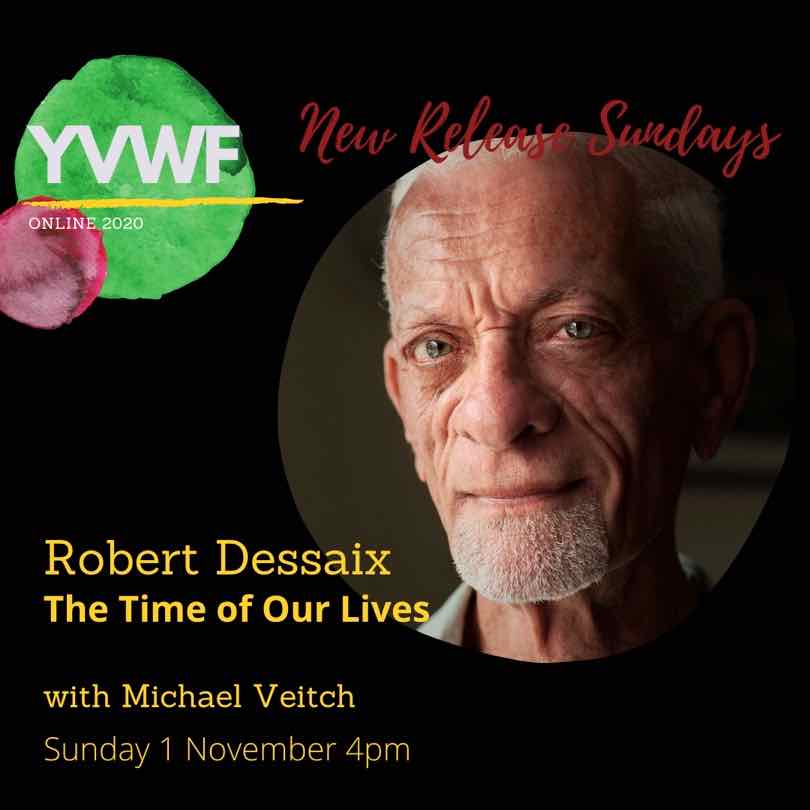
Note: Links on names are to posts in this blog on those writers. Lisa (ANZLitLovers) wrote up a panel discussion on this volume at the Yarra Valley Writers Festival.

Challenge logoGriffith Review 68: Getting on
(edited by Ashley Hay)
South Brisbane, Qld. : Griffith University in conjunction with Text Publishing, 2020
287 pp.
ISBN: 9781922212498

Monday musings on Australian literature: Australian literary dynasties

Some years ago I wrote a Monday Musings post on Australia’s literary couples. However, it recently occurred to me that we also have some literary dynasties, which could be fun to explore. This post, like many of its ilk, is a bit of a fishing exercise. I will share a few that came to me, and would love you to share ones that come to you.

By dynasty, I mean two or more generations of one family (that is, in the same line of descent.) My focus is fiction but I’m allowing some deviations from this where writing reputations are strong. So, here’s my list – in chronological order by birthyear of the oldest family member.

Charlotte Barton (1796-1867) and Louisa Atkinson (1834-1872)

Charlotte Barton and daughter Louisa Atkinson are probably the least well-known of the writers I list here, even though Charlotte is credited as having written Australia’s earliest known children’s book, A mother’s offering to her children, and Louisa as the first Australian-born woman to publish a novel in Australia, Gertrude the emigrant.

However, Atkinson had a bigger bow to her name, botany. As I wrote in Wikipedia and here, she was well-known for her fiction during her life-time, but her long-term significance rests on her botanical work. She’s regarded as a ground-breaker for Australian women in journalism and natural science, and is significant in her time for her sympathetic references to Australian Aborigines in her writings and for her encouragement of conservation.

Louisa (1848-1920) and Henry Lawson (1867-1922)

Book coverBy all accounts, Louisa Lawson was quite a force. A poet, writer and publisher, as well as a suffragist and feminist, she was fully engaged in the country’s literary and political life, but is most remembered now for the latter, particularly her feminist causes.

Louisa’s relationship with her poet-short story writer son, Henry, was fraught. However, together they edited the radical pro-federation newspaper The Republican, and, later she published his poems and stories in her own newspaper, The Dawn. She used this press to publish his first book, Short stories in prose and verse. It is Henry, then, who is most remembered for his writing. His most famous story is “The drover’s wife”, which many Aussies do (or did) at school, and his best-known collection is While the billy boils. Lawson is probably still Australia’s best known short story writer.

Bill (The Australian Legend) quotes Bertha, Henry Lawson’s wife, as saying

“If there is anything in heredity, Harry’s literary talents undoubtedly came from his mother …”

Ruth Park (1917-2010), D’Arcy Niland (1917-1967), and Deborah (b. 1950) and Kilmeny Niland (1950-2009)

Novelists (and writers of all forms) Ruth Park and D’Arcy Niland created quite a literary family, with two of their five children, twin daughters Deborah and Kilmeny, becoming successful children’s book writers and (primarily) illustrators. I have written about Ruth Park before, and need to review Niland on my blog, but when I was the mother of young children, I became very aware of Deborah and Kilmeny who collaborated on thirteen children’s books. Their best known book is an illustrated version of Banjo Paterson’s poem, Mulga Bill’s Bicycle. First published in 1973, it has never been out of print. Unfortunately, Kilmeny died in 2009.

Olga (1919-1986) and Chris  (b. 1948) Masters

Book coverBoth Olga and her son Chris Masters were journralists. Chris still is. Olga commenced work as a journalist when she was only 15 years old, but through her relatively short career, she also wrote novels, short stories and drama. Her career as a published writer of fiction was very brief, with The home girls short story collection being published in 1982 and Loving daughters, her wonderful first novel, published in 1984. It is Australian literature’s loss that she died just as her fiction career was taking off.

Son Chris is, primarily, a journalist, but he is at the top of his profession with multiple Walkley Awards to his name, and his controversial biography of a controversial radio personality, Jonestown: The power and the myth of Alan Jones, won a Queensland Premier’s Literary Award. I wonder if he’s ever thought of writing a novel?

Dorothy Hewett (1923-2002), Merv Lilley (1919-2016), Kate (b. 1960) and Rozanna Lilley (b. 1960)

Multi-awarded poet, novelist and playwright Hewett led a colourful and controversial life – some of which has come out posthumously in poet daughter Kate’s collection Tilt and daughter Rozanna’s memoir, Do oysters get bored? I don’t really want to explore that here because it’s a whole other subject, but you can read a little about it on the ABC and in my post on a Canberra Writers Festival conversation with Rozanna.

Meanwhile, and regardless, they do comprise another dynasty of writers, with, between them, a significant oeuvre.

Ann Deveson (1930-2016) and Georgia Blain (1964-2016)

Ann Deveson was well-known to Australians of my generation, because of her high profile as a social commentator and filmmaker, not to mention her role as the “Omo” lady in a famous serious of television commercials for Omo laundry detergent! She was, you’d have to say, versatile, also having been chair of the South Australian Film Corporation and Executive Director of the Australian Film, Television and Radio School. Her most famous book is, probably, her memoir-biography about her son’s schizophrenia, Tell me I’m here.

Deveson’s daughter, Georgia Blain, was also a writer, but, unlike her mother she had a substantial body of fiction to her name, as well as non-fiction. Blain won or was short or longlisted for many of Australia’s literary awards, with her most successful novel being her 8th and last, Between a wolf and a dog. Deveson and Blain tragically died within days of each other, which I wrote about at the time.

Thomas (b. 1935) and Meg Keneally (b. ca 1967)

Book coverMulti-award-winning author Thomas (Tom) Keneally has published over 40 novels, from his 1964 debut novel, The place at Whitton, to his most recent 2020 novel, The Dickens boy. He is best known for his Booker prize-winning novel, Schindler’s ark, which was adapted to the Academy Award winning film, Schindler’s list.

Amongst his 40 or so novels are four in The Monsarrat Series, which he co-wrote with his daughter Meg. Meg has gone on to publish a novel on her own, Fled, with another due out this year. Both Tom and Meg write primarily historical fiction.

In a “Two of us” article in 2016 in The Sydney Morning Herald, Tom writes

Temperamentally I could see she was very like me. I think that’s why we’re able to work together now. I find it hard to batter out 1500 words of a new draft of a novel in a day, and I was always impressed by the speed and fluency with which she could write. I thought, “Wouldn’t it be good to get her out of the maw of the corporate world and turn her into something really self-destructive, like a novelist?”

Haha, love it!

There are other dynasties, most notably families of historians, but I’ll finish here and wait for your suggestions. 

Postscript: No, I haven’t forgotten those 10th anniversary literary requests. They will be done, but they require more time than I have now, hence this post that was already in the offing!

Thea Astley, An item from the late news (#BookReview)

Book coverSet in the satirically named town of Allbut, whose nearest large town is the equally satirically named Mainchance, Thea Astley’s An item from the late news is framed by the story of a man who comes to the town, fearful of “the atom bomb”, and wanting to live a quiet – sheltered, you might say – life.

Wafer is this man, and the story is narrated, from the perspective of ten years after the events, by townswoman Gabby. Introducing the story, she tells us that she was living at the coast when he arrived for “his sad little attempt at reclusion”, and goes on to say that

I reckon now, sprawled on my day-bed guilt, that … the town wasn’t really different from anyplace else except that its final actions become more redly horrible as I think about them.

This tells us much, that the story is not going to end well, that Gabby is implicated, and that Allbut is “anyplace”. It focuses our mind less on what’s going to happen, and more on how and why things go badly. This being Astley, the answers lie in small-mindedness, cowardice, brutality – and, in this story in particular, in greed. It is greed which provides the impetus for the denouement, but along the way, we see sexism, racism, and machismo running amok, all of which lay the groundwork for the behaviour that brings about the end.

Allbut is “anyplace”, one of hundreds of towns set in “landscape skinned to the bone”. It’s a “nothing” town, or, alternatively and ironically, “a clean and decent town”, “a caring town”. It has “all” the obvious things – people, farms, cemetery, pub, war memorial, police – “but” what you really need, kindness and generosity. Into this town comes the outsider, Wafer. Hippie-like in dress and behaviour, “he smiles at children, blacks, old gummy folk. He doesn’t count his change.” Indeed, Gabby tells us, he is “too friendly with the blacks. The town hates that.” He is too kind, too generous, but is also afraid. Having seen his father blown up before his eyes during the war, and having followed the Hiroshima attack, he has come to Allbut to build a bomb shelter.

Narrator Gabby, although of the town, is also an outsider, also a misfit. She has never quite fit with normal “squatting class” expectations, couldn’t be “the daughter of their Sunday social page dreams”. An artist by trade, she’d painted “the very heart of boredom”, albeit unrecognised by her buyers. After failed relationships, institutionalisation for a mental breakdown, and overseas travel, she returns to town, still bored and looking for love. She falls for Wafer, and starts painting again – well, drawing, anyhow. But, she tells us – ominously – “this whole horrible canvas will have the detail of a Brueghel and the alarm of Goya.”

Allbut is peopled with several characters: loner Moon with “the trigger-quick temper”, Sergeant Cropper, Councillor Brim, Smiler Colley and his teen daughter Emmeline, Headmaster Rider and son Timothy, the regularly mentioned but rarely seen (of course) Indigenous woman Rosie Wonga, and Doss (with “blonde hair set in jazz age waves”) and her man Stobo. Karen Lamb, in her Astley biography Inventing the weather, writes about Astley’s use of music: “A character’s mind might be full of classical music – to show an evolved intellect – but jazz was better to bring out a character’s exuberance and refusal to follow convention”. Doss, then, is one of the positive characters in the book, though she has little power to affect the outcome.

An item from the late news is a slim volume – at 200 pages in my edition – but through irony, foreshadowing, repetition, and evocative menace-laden language, Astley builds her story painstakingly but irrevocably to its conclusion. Sexual violence – first against shop dummies, then an assault on Emmeline – sets the stage, but it’s Wafer’s gemstone which captures the attention of the men in the town. It is then that the brutality really starts to build, and we know, even if we’d hoped before, that this really will not end well.

The novel is Astley’s 8th of 15, that is, it’s slap bang in the middle of her fictional oeuvre. By the time she wrote it, her broader themes were well established. These include concern about the Americanisation of Australian culture, the negative influence of television, rabid commercialisation and development (“Sunshine of the vanished sand … the high-blood pressure of the high rise”), poverty and social inequity, not to mention racism and sexism. She fears for the “nothingness” that she sees characterising people’s lives; she rails against what Wafer calls “this blinkered world”; and she exposes her ultimate truth that, as Wafer again says, “we all fail … we fail each other”.

You could also say, though, that there is a cliche at the heart of this story, that of the woman scorned, because although it’s the men of the town who are the most brutal, it’s Gabby who fails her big moment. However, she is such a complex creation that this is not how the novel reads. Instead, by having the damaged Gabby operating as both observer and actor in the events, Astley subtly subverts that trope – and encourages us to be generous.

It was in her review of An item from the late news, that Helen Garner described Astley’s writing as “heavy-handed, layered-on, inorganic, self-conscious, hectic and distracting” and wrote that “this kind of writing drives me beserk”. If you know the writing styles of these two writers, this will make sense, but I suspect Garner, who had a long relationship with Astley, came to appreciate her work. Certainly, the language could be seen as “heavy-handed, layered-on”, but I love its evocativeness and power, the richness of her allusions, the succinct yet poetic way in which Astley can convey an idea. Even the title conveys a punch. It’s thrilling to read.

An item from the late news is quintessential Astley. It offers an unflinching look into the heart of small-minded Australia, and finds much to disturb us. And that is the value of reading literature like this.

Read for ANZLL Thea Astley Week; Lisa also reviewed the book for her week.

Challenge logoThea Astley
An item from the late news
Ringwood: Viking, 1999 (Orig. ed. 1982)
200pp.
ISBN: 978014069488