Stella Prize 2021 Longlist announced

Unfortunately, because I’m on the road, I wasn’t able to “attend” the announcement earlier this evening, but at least I have been able to get my post out on the night, as it were.

As I say every year, I think, I don’t do well at having read the Stella Prize longlist at the time of its announcement. In 2017 I’d read none; in 2018, one, and in 2019, two! Last year, I was back to one! By the end of 2020, I’d read 3.5 which is worse than previous years.

Again, as I’ve said before, I do better at reading the winners, having read Carrie Tiffany’s Mateship with birds (2013), Clare Wright’s The forgotten rebels of Eureka (2014), Emily Bitto’s The strays (2015), Charlotte Wood’s The natural way of things (2016), Heather Rose’s The museum of modern love (2017), and Vicki Laveau-Harvie’s The erratics (2019). So far, I’ve missed 2018’s winner, Alexis Wright’s Tracker, and I’m only halfway through reading last year’s winner, Jess Hill’s See what you made me do. I will finish though, as it’s a significant book I believe.

The judges are again different to last year’s with only Zoya Patel (this year’s chair), continuing on the panel: memoirist and editor Zoya Patel (Chair); playwright, author and Blak & Bright First Nations Literary Festival Director Jane Harrison; 3RRR radio producer, presenter and literary critic Elizabeth McCarthy;  production editor of The Saturday Paper Ian See; and Deputy Programme Director at Edinburgh Book Festival Tamara Zimet. As always, attention has been paid to diversity on the panel.

The longlist

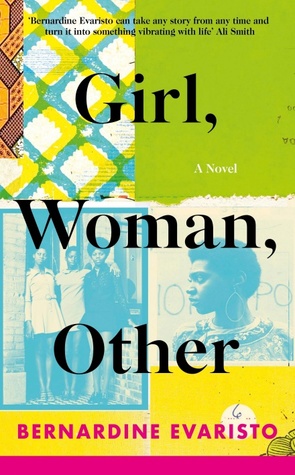
Book cover
  • Rebecca Giggs’ Fathoms: The world in the whale (non-fiction)
  • SL Lim’s Revenge (fiction) (Lisa’s review)
  • Laura Jean McKay’s The animals in that country (fiction)
  • Louise Milligan’s Witness (non-fiction)
  • Cath Moore’s Metal fish, falling snow (fiction)
  • Intan Paramaditha’s The wandering (fiction)
  • Mirandi Riwoe’s Stone sky gold mountain (fiction) (on TBR; Kate’s mini-review)
  • Ellena Savage’s Blueberries (non-fiction/essays)
  • Nardi Simpson’s Song of the crocodile (fiction) (on TBR)
  • Elizabeth Tan’s Smart ovens for lonely people (short stories) (Bill’s review and on TBR)
  • Jessie Tu’s A lonely girl is a dangerous thing (fiction) (Kim’s review)
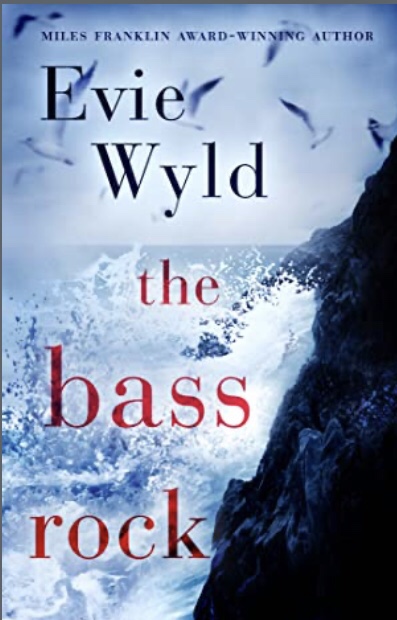
  • Evie Wyld’s The bass rock (fiction)

Well, I guessed five of these might be in the list – McKay, Riwoe, Simpson, Tan and Tu, but I also guessed some more non-fiction like Grace Karskens’ People of the river, and Jacqueline Kent’s Vida. However, as I haven’t read any of the longlist – and have not, in fact, heard of several of them – I’m not going to judge. I’ll just say, how interesting!

Oh, and for the record, I’ve read none – though I have a few on my pile!

The judges’ chair, Zoya Patel commented on the longlist:

The 2021 Stella Prize longlist demonstrates the breadth of expression present in Australian literature, and the importance of raising the profile of women and non-binary voices in celebrating this expansive talent. In reading these titles, we pondered what might be lost or overlooked should a prize such as the Stella not exist to specifically examine the output of Australian women and non-binary writers. […]

This year’s reading presented a diversity of talent and expression, with books exploring the people and animals through the lens of fiction and non-fiction, and with a common objective to reach into the heart of what it means to exist in the world today.

To read the judges on each of the longlisted books, do check out the Stella website.

Stella’s announcements are all later this year than in previous years – including this longlist which has usually been announced in February. So, the shortlist will be announced on March 25, and the winner on April 22.

Any comments?

Bill curates: Ruth Park

Bill curates is an occasional series where I delve into Sue’s vast archive, stretching back to May 2009, and choose a post for us to revisit. This is a most enjoyable project as I read every post and usually the comments too. Which is why I’m still only up to Oct. 2010. Today, because I can, I’ve chosen an AWW Gen 3 post on Ruth Park which I had previously overlooked.

______________________________

My original post titled: Monday musings on Australian literature: Ruth Park

The muddle-headed wombat by Ruth Park, book cover

For a New Zealander, Ruth Park is a very popular Australian! Not only did she write the much-loved (and studied) Harp in the south trilogy, but she also wrote the hugely popular (in its time) radio serial The muddle-headed wombat, was married to the Australian D’Arcy Niland (now deceased) who wrote The shiralee, and is mother to children’s author-illustrators Deborah and Kilmeny (now deceased) Niland. Ruth Park also won the Miles Franklin Award with her Swords and crowns and rings, and wrote two very popular autobiographies, Fence around the cuckoo and Fishing in the Styx. And this is not all – or even all of the best – that she’s produced in her long career.

Park was born in New Zealand in the early 1920s and first came to Australia in 1940 when she met D’Arcy Niland. She writes that Australian writer Eve Langley*, with whom she had a longstanding friendship, said of Niland:

‘That’s a good face … Do you know what it is saying?’
‘No, what?’
‘It says “Take me or leave me.” I like that.’

So apparently did Park. She returned to Australia in 1942 to work as a journalist, and married Niland. They worked at various jobs in rural New South Wales for some years before Park’s stories gained the attention of the Australian Broadcasting Commission (ABC) resulting in their decision to try to make a living from free-lance writing. They wrote, and wrote, and wrote – anything that would earn money. They wrote, for example, short stories, genre stories (such as romances and westerns), radio talks and radio plays, scripts for radio comics, all the while honing their skills for their more serious writing goals. And they lived during these early years in Sydney’s inner city slum, Surry Hills.

These experiences of living in rural areas and city slums are clearly evident in Swords and crowns and rings (the story of the dwarf Jackie, and his love Cushie Moy) and the Harp in the south trilogy (the story of the Darcy – ha! – family). The thing I love about these books – both of which span the first 4-5 decades of the twentieth century – is the way Park explores gritty issues like poverty, abortion, religious bigotry, unemployment and illness with a psychological and social realism that also encompasses warmth and humour. Her main characters tend to be the quintessential Aussie battlers, but their concerns transcend time and place. It’s not surprising, really, that these works keep being read, re-published, set for study, and adapted for television and film.

Realism though is not the only string to Park’s fictional bow. She wrote in several “genres” for a range of audiences, including fantasy for children. Her Muddle-headed wombat stories ran on the ABC Children’s Session from 1957 to 1971. I have to say that I never have really been one for anthropomorphism, and have read few children’s classics featuring animals (no, not even The wind in the willows) but even I would tune in for the wombat! Park also wrote a children’s time-travel fantasy Playing Beatie Bow, which is taught in schools and has been made into a film.

And yet, for all this, I’m sure she is little known outside Australia … if I am wrong, please let me know!

In the meantime, I will conclude with her description in her first autobiography, Fence around the cuckoo, of her first sighting of Australia as she arrived by boat:

What I saw were endless sandstone cliffs reflecting the sunrise. A chill ran over my skin, my ears buzzed as they had once done when I was about to experience uncertainty about something as yet unknown. The sea fled south, its malachite green changing to beaming blue; the sky was sumptuous with a sun hotter than I had ever known.

This was my first glimpse of Australia Felix, the ancient, indifferent, nonpareil continent that was to become the love of my life.

Ruth Park is not one of those ground-breaking writers who makes you go, wow!, but  she is an excellent story-teller who has an enviable ability to create and develop memorable characters who confront the real “stuff” of life. You could do far worse than read her if you want an introduction to Australian literature. If I haven’t convinced you, read Lisa at ANZLitLovers and Tony of Tony’s Bookworld on Harp in the South, and kimbofo at Reading Matters on her “Top 10 novels about Australia”.

*Park mentions Langley (whom I reviewed early in this blog) several times in Fence around the cuckoo. One concerns Park’s decision to stay with Eve to escape a Peeping Tom uncle but, when she arrived at the windmill in which she believed Eve to be living, she found no Eve but another woman who had heard of Eve but not for some years. “What had happened to that weird girl?”, the new windmill resident wondered. Poor Eve. She was indeed a bit weird and had a rather sad life, but that is another story.

___________________________

Book cover

It’s interesting for me to re-read these old posts of mine, and think about how I’d write them now! Regarding Park, my admiration has only grown for her warmth, humour and abiding sense of fairness. Check my Park posts here.

But, back to Bill. He says he’s not a fan of Park’s autobiographies but he does recommend, whenever he can, the Park/Niland memoir The Drums Go Bang, which we have both reviewed (Bill’s review) (my review). I enjoyed her autobiographies, but The drums go bang is very special.

Are you are Park fan? If so (or if not), we’d love to hear your thoughts.

Tsitsi Dangarembga, This mournable body (#BookReview)

Zimbabwean author Tsitsi Dangarembga’s This mournable body was my reading group’s February book. Shortlisted for the Booker Prize, it is Dangarembga’s third novel, and is a sequel to Nervous conditions (1988) and The book of not (2006), neither of which I’ve read. These novels are written in English, the language of Dangarembga’s schooling, though she also speaks Shona.

It is a remarkable book, for its subject matter, vivid writing and the complexity of its protagonist, Tambu (Tambudzai). Wikipedia’s article on Nervous conditions describes Tambu’s character, saying “her desire for an education and to improve herself seem strong enough to overcome just about anything. She is very hard on herself, and always strives to do her best and make the correct decisions”. This perfectly describes the character I met in This mournable body, except that by now Tambu is around 40 years old and disappointed that life has not worked out as she had hoped. Indeed, she is out of work and living in a boarding house, eking out her savings from her previous copy-writing job in order to survive. A sense of failure and an air of desperation surrounds her.

Interestingly, Dangarembga chose a second person voice to tell Tambu’s story. There are various reasons for choosing this voice. Madeleine Dickie chose it for her novel Red can origami (my review) to involve if not implicate the reader in the world she was describing. I don’t know why Dangarembga chose it, but my guess is to convey Tambu’s apparent dissociation from her self. Second person avoids both the objective insight that an omniscient third person voice can provide and the confessional immersion in a life that first person offers. Tambu is struggling; she is caught between her Western-education with its Western-style aspirations and her Zimbabwean family and culture. We see her pain, but second person keeps her and us a little remote from it, as if she and we are watching it, not fully comprehending what is happening.

The novel is set in troubled late 1990s Harare, on the cusp of the millennium. It has a three-part structure – Ebbing, Suspended, and Arriving – which chronicles the trajectory of this period in Tambu’s life. In Ebbing, we see Tambu’s hopes for a successful, secure life, ebb:

Fear, your recurrent dread that you have not made enough progress toward security and a decent living, prickles like pins and needles at the mention of “village.” You have dodged this fear for too long—all your conscious life.

We also learn some of the reasons for the state she’s in, despite having been plucked from her village by her uncle and given a good “white” education. These reasons include the fact that although having gained Independence, Zimbabwe remains a racist place where black Zimbabweans still suffer under the colonialism they “thought” they’d thrown off. Tambu had had a good job as a copywriter in an advertising agency:

you have no one but yourself to blame for leaving your copywriting position. You should have endured the white men who put their names to your taglines and rhyming couplets. You spend much time regretting digging your own grave over a matter of mere principle.

Late in Ebbing, Tambu manages to obtain a decent job as a teacher, but it doesn’t last long, largely because her insecurity – her jealousies and fears – result in her self-destructing.

Suspended starts with her having been suspended from this job and admitted to a psychiatric hospital where her life is effectively “suspended” as she struggles to regain her mental health and equanimity. This she does, with the help of her family, including cousin Nyasha who takes her in. Incomprehensibly to Western-focused Tambu, Nyasha had returned, with her German husband and two children, from an apparently successful life in Europe, to work for the community, and specifically to improve things for Zimbabwean youth.

In the final part, Arriving, Tambu finds herself working for Tracey, her white Zimbabwean nemesis who had been a schoolmate at the prestigious Young Ladies’ College of the Sacred Heart and then her boss at the copywriting agency. Tracey is setting up an eco-tourism business, Green Jacaranda, and sees potential in Tambu – and indeed, Tambu seems to start to find herself, both personally and professionally, but I will leave the plot here …

This mournable body, however, is more than just a story about Tambu. Dangarembga weaves Zimbabwean social and political history into her narrative. While Tambu hadn’t been involved in pre- and post-Independence violence, many in her family had. The impact of war – particularly on women – provides one of the running commentaries throughout the novel. One refrain concerns her sister Netsai’s loss of a leg, which works as a visible reminder of personal and national losses:

Sometimes I ask if people forgot that many people went to war. Because if they have not forgotten, these people in this country, what is going on with them? Why are they so foolish? Do they think we went for this? … This is not what we went for and stayed for without food and blankets, even clothes, without our parents or relatives. Some of us without legs. Yet now we are helpless and there is nothing we can do to remove the things we see that we didn’t go to fight for.

Independence, in other words, is not working out the way they expected. The interplay of race, gender and colonialism continues to impede the country’s growth. Through her characters, Dangarembga powerfully conveys that old mantra “the personal is the political” – even though Tambu, ironically, tries to avoid talking politics with Tracey. “I don’t believe in politics”, she naively tells Tracey.

This mournable body is a serious and often heartbreaking novel, but there is also humour, much of it in the form of irony and satire. Here’s Tracey on her new business, echoing, for different reasons, Tambu’s dislike of “village”:

Everything’s Green Jacaranda eco! And you can’t say village. … That kind of promise doesn’t work these days either. It’s got to sound like fun, not under-development, soil erosion and microfinance.”

Tracey is either oblivious to – or chooses to ignore – the truths of Zimbabwean culture, preferring to exoticise a generalised notion of “Africa” for her business. In one excruciating scene she asks Tambu to organise village women to dance bare-breasted for their tourists.

At the other end of the spectrum is Tambu’s landlady’s now late husband, a black Zimbabwean who had profited from Independence. He had experienced an horrific accident, but

His biggest blow was what happened to his BMW and his temporary relegation to a lowly Datsun Sunny. People admired the stoicism with which Manyanga put up with this.

Dangarembga’s Zimbabwe is a complex society that has been riven by internal and external conflicts over decades, conflicts that are, in part, personified in Tambu’s difficulty in separating out her own goals from the “white” ones she had been educated into. While Dangarembga provides no easy answers, she suggests there are paths of hope, paths that rest with individual people who have a firm grip on what they want for themselves and for their country. This mournable body is an excruciating read at times, but the insights and perspectives it offers, particularly to Westerners whose assumptions it questions, are worth the pain and challenge.

Lisa (ANZLitLovers) was also impressed by this book.

Tsitsi Dangarembga
This mournable body
London: Faber & Faber, 2020 (orig. ed. 2018)
288pp.
ISBN: 9780571355532 (Kindle ed.)

Bill’s literary tour of the Mallee

I love road-tripping around different parts of Australia, and for some time now have had a hankering to explore the Mallee-Wimmera region of western Victoria. This hankering has been enthusiastically supported by Bill (The Australian Legend) for whom this part of Australia was his youthful stomping ground. We have discussed the region and what might be included in a Mallee literary tour several times over the years – with Lisa joining in on occasion too.

Jenny Ackland, Little gods

We would all, I think, like to compile a list of books set in the region. I’ve reviewed a few on this blog – at least I think they are set in the Mallee, as the region’s borders are a bit confusing to me – such as Jenny Ackland’s Little gods, Charlie Archbold’s Mallee boys, and Sue Williams’ crime novel Live and let fry. Lisa recently posted a review of a new Mallee-set book, Anne Brinsden’s Wearing paper dresses, and last year, another, Bill Green’s Small town rising.

But, topping it all, is that this week, Bill has finally put fingers to keyboard and written a post on touring the Mallee which he has generously said I can post here too … He starts:

Sue/Whispering Gums a year or so BC set me the task of devising a literary tour of the Mallee – the northwest corner of Victoria, a triangle bounded by the Murray River to the north and northeast, the South Australia border to the west and let’s say to the south the 36th parallel, so a line from a bit north of Route A8 to the Murray north of Echuca. To read the rest of the tour, please check out his post. I’m sure he wouldn’t mind if you hitched a ride and took the tour too!

Thanks so much Bill … there’s a possibility we might even do a bit of this trip this month. It all depends … no glamping in Little Desert is a bit of a worry!

Monday musings on Australian literature: Mining in Australian fiction

I was inspired to write this post by Bill’s (The Australian Legend) post on Catherine Helen Spence’s novel Clara Morison whose subtitle is “a tale of South Australia during the gold fever”. Mining is one of Australia’s biggest industries. Iron, copper, coal, silver, gold, zinc, bauxite and opals have all played significant roles in Australia’s economy and thus in the lives of many Australians. But, how often has it featured in our fiction?

The funny thing is that when I think of mining in fiction, my first thoughts don’t go to Australian novels, but to books like Richard Llewellyn’s coal mining classic How green was my valley, and Wallace Stegner’s Angle of repose about white settlers in the American West. This post, then, is as much a brains-trust fishing expedition as it is an informative one, but I plan to throw a few thoughts into the mix.

Nineteenth to mid-twentieth century

Catherine Helen Spence’s Clara Morison was published in 1854, and, as Bill writes, a major stream is the mining story, including the loss of men from South Australia’s copper mine to the excitement of the Victorian goldfields.

Katharine Susannah Prichard wrote several novels about mines, mining and/or mining towns, starting with her third novel, Black opal (1921). Set in an opal mining settlement, Falling Star Ridge, it draws from New South Wales’ Lightning Ridge where she’d spent some months. Prichard biographer, Nathan Hobby, discusses it on his blog. He says that by the time she wrote this novel Prichard “had committed to communism, and the influence is evident”. For example, she “paints a picture” of the settlement as a “workers’ utopia”. Prichard’s Goldfields trilogy (The Roaring Nineties, 1946; Golden Miles, 1948; and Winged Seeds, 1950) came later. It chronicles life in Kalgoorlie from the the discovery of gold up to the early 1940s when Prichard lived there. Hobby has also written on his blog about these books, focusing particularly on the political impetus behind their writing.

Vance Palmer also wrote a mining trilogy – the Golconda trilogy: Golconda (1948), Seedtime (1957) and The big fellow (1959). They tell the story of a mining town – one I once knew well, Mount Isa – from the time it was a mountain of silver and lead through to the established town. Deborah Jordan (in the Queensland Historical Atlas) writes that the characters include Macy Donovan, who begins as an obscure union organiser in early Golconda, but ends up the premier of Queensland, and Christy who “embodies the dying prophetic vision of the socialists of the 1890s”. Palmer, she says, was apparently fascinated by political leadership, especially those leaders who emerged from the ranks.

Mid to late twentieth century

Thea Ashley, It's raining in Mango

Another author who has written more than once about mines and mining towns is Thea Astley, though not as intensively as Prichard and Palmer. An item from the late news (1982) (my review) is set in the dying town of Allbut, which was once a thriving mining centre. Mining is not the focus – indeed I don’t mention it in my review – but its aftermath, the directionless machismo simmering in the town, underpins the novel. A few years later, Astley wrote It’s raining in Mango (1987), a four-generation story set in north Queensland, which I read around the time it came out. It covers a lot of ground, but includes references to the massacre of Indigenous people by goldfield diggers in the 1860s.

I’m guessing that miners and mining feature in outback-set commercial fiction, but this is not my area my expertise. However, my research suggests, for example, that Bryce Courtenay, who had worked in mines in South Africa, has two brothers working on goldfields, among other places, in his novel, Tommo and Hawk.

Twenty-first century

Historical fiction, which has been part of most of the novels/trilogies I’ve described above, continued into the 21st century. Mirandi Riwoe’s Big sky stone mountain (2020) explores the experience of Chinese people in late nineteenth Australia, including on the Queensland goldfields. Gail Jones’ latest novel, Our shadows (2020), takes us back to Kalgoorlie. It’s apparently a three-generation story starting with the discovery of gold there in 1893. Guardian reviewer Bec Kavanagh says that “Jones tells a story of gold and greed that goes beyond myth and folklore, deep into a family trying to reconcile their past with the present”.

Book cover

However, one of the biggest contemporary issues facing mining in Australia is the right traditional owners of Aboriginal land have to make agreements with mining companies concerning use of their land. It’s encouraging to see this issue appearing in modern novels. Mining and rights is the main focus of non-Indigenous writer Madeleine Dickie’s 2019 novel, Red can origami (my review). Dickie explores the issue from multiple perspectives – indigenous, environmental, political and personal.

Book cover

But, importantly, mining is also covered by Indigenous Australian writers. Maggie Nolan, writing in Australian Literary Studies, argues that while Alexis Wright’s Carpentaria (my review) “can be, and has been, read in a range of ways, … the impacts of mining are central to any understanding” of it. She says that “few commentators have focused on the centrality of mining in the story”, to which I must hold up my hand, though when I thought of this topic, Carpentaria immediately came to mind. Mining also features in Tara June Winch’s The yield (my review). When August returns home for her grandfather “Poppy” Albert’s funeral, she discovers that a mining company is staking its claim. Ellen van Neerven, writing in the Australian Book Review argues that “The Yield is an anti-mining novel for the present day in the wake of the approval of the Adani coal mine in central Queensland”.

I’ll stop here, but I’ll just observe that politics – labour issues, environmental issues, indigenous land rights issues, for example – features in most of the fiction I’ve listed here. What does that say about Australia’s relationship with the mining upon which so much of our wealth depends?

What are your thoughts, and do you have more examples (from whichever country you come from) of mining novels?

Bill curates: Charles Dickens and Australia

Bill curates is an occasional series where I delve into Sue’s vast archive, stretching back to May 2009, and choose a post for us to revisit.

I’m such a fan of Monday Musings – I guess we wouldn’t be here if we didn’t all enjoy talking about books, and writing, and authors, and translators, and publishers – that all the posts that jump out at me, seem to be MMs. From Sept 2010 Sue discusses the Australianness of an author who was never in Australia. As Hannah Gwendoline D’Orsay Tennyson Bulwer [Last Name] wrote in Comments “I had no idea Dickens had such a connection with Australia.”

______________________________

My original post titled: Monday musings on Australian literature: Charles Dickens and Australia

Charles Dickens, c1860

Here’s something completely different for my Monday musings! Not an Australian author, not even a foreign born author who came to Australia (though, being the great traveller he was, he did consider a lecture tour), but Charles Dickens does have a couple of interesting “connections” with Australia. These connections are supported by the existence of some letters written by him at the National Library of Australia.

On convicts and migration in general

Transportation of convicts to Australia – actual, implied or threatened – features in several of his novels. These include John Edmunds in Pickwick Papers (1836-37), the Artful Dodger in Oliver Twist (1837-1839), Mr Squeers in NicholasNickleby (1838-39), Alice Marwood in Dombey and Son (1846-48), and Magwitch (probably the most famous of all) in Great expectations (1861)not to mention Jenny Wren who threatens her father with transportation in Our mutual friend (1864-65). Dickens apparently learnt quite a lot about convict life, and particularly the penal settlement on Norfolk Island, from his friend Alexander Maconochie (to whom I refer in my review of Price Warung’s Tales of the early days).

Clearly, it was this knowledge which inspired the letter he wrote to the 2nd Marquess of Normanby (George Augustus Constantine Phipps), who was Secretary of State for the Home Office . He suggests

a strong and vivid description of the terrors of Norfolk Island and such-like-places, told in a homely narrative with a great appearance of truth and reality, and circulated in some very cheap and easy form (if with the direct authority of the Government, so much the better) would have a very powerful effect on the minds of those badly disposed … I would have it on the pillow of every prisoner in England. (3 July 1840, Original in the National Library of Australia, Ms 6809)

He offers to write this narrative, gratis. As far as I know, although Dickens and the Marquess were friends, nothing ever came of this offer.

While Dickens deplored the treatment of convicts in the penal settlements, he also saw Australia as a land of opportunity. The transported Magwitch, as we know, made his fortune in Australia. Mr Micawber, debt-ridden at the end of David Copperfield, emigrates to Australia and becomes a sheepfarmer and magistrate. But, perhaps the strongest evidence of Dickens’ belief in Australia as a place where people could get ahead, is the emigation of his sons.

On his sons

Two of Dickens’ sons – Alfred D’Orsay Tennyson Dickens and Edward Bulwer Lytton Dickens* (nicknamed Plorn) – emigrated to Australia, both with their father’s encouragement.

Alfred (1845-1912) migrated to Australia in 1865. He worked on several stations/properties in Victoria and New South Wales and as a stock and station agent, before partnering with his brother in their own stock and station agency, EBL Dickens and Partners. He died in the United States in 1912, having left Australia on a lecture tour in 1910. Dickens’  youngest son, Edward (1852-1902), went to Australia in 1869. He also worked on stations before opening the stock and station agency with his brother. He later worked as a civil servant and represented Wilcannia in the New South Wales Legislative Assembly in 1889-94, but he died, debt-ridden, in 1902 at Moree. Australia did not quite turn out to be the land of opportunity for these two that Dickens had hoped, but fortunately he was not around to see it!

A couple of Dickens’ letters to his sons are held at the National Library of Australia. One was written in 1868, not long before Plorn left England, and includes some fatherly advice:

Never take a mean advantage of anyone in any transaction, and never be hard on people who are in your power …

The more we are in earnest as to feeling religion, the less we are disposed to hold forth on it. (26? September 1868, Original in National Library of Australia, Ms 2563)

One does rather wish that Dickens had taken his own advice regarding not being “hard on people who are in your power” in his treatment of his poor wife Catherine.

Eighteen days before he died in 1870, he wrote this to Alfred:

I am doubtful whether Plorn is taking to Australia. Can you find out his real mind? I note that he always writes as if his present life were the be-all and end-all of his emigration and as if I had no idea of you two becoming proprietors and aspiring to the first positions in the colony without casting off the old connexion (1870, Original in National Library of Australia, Ms 6420).

These are just two of the many letters that he wrote to (and about) his sons in Australia. More can be found in published editions of his letters. I have chosen these particular ones purely because we have them here in Canberra. It’s rather a treat to be able to see Dickens’ hand so far away from his home.

Do you enjoy close literary encounters of the handwritten kind?

Image: Dickens, c. 1860 (Presumed Public Domain, via Wikipedia)

___________________________

What an interesting choice of Bill’s but I am glad to be reminded of this post as I have been wanting to read more of Dickens’ journalistic writings. Whether I will is another thing but, you never know.

Are you a Dickens fan?

Elizabeth Harrower, The long prospect (#BookReview)

Oppression and tyranny, power and manipulation in human relationships are the stuff of Elizabeth Harrower’s writing, at least in my experience of it, and so I found it again in her second novel The long prospect. Unlike The watch tower (my review), however, which explores the more traditional domination of women by a man, The long prospect’s tyrant is narcissistic grandma Lilian who makes pre-pubescent granddaughter Emily’s life a misery. Why is a novel about a cruel, manipulative person wielding power over someone whom they should love so enjoyable? Let me try to explain …

The long prospect, which was first published in 1958, is set in postwar Ballowra, a fictionalised industrial town based on Newcastle, just a couple of hours’ drive north of Sydney. The major part of it takes place in the home of forty-seven-year-old Lilian who wields sadistic power over all who come within her purview, including but not limited to the aforesaid granddaughter Emily. The novel starts, in fact, with Lilian visiting her ex-tenant and apparent friend, thirty-something Thea, in her new apartment in another part of Ballowra. Lilian walks into the apartment, without being invited, “her eyes on swivels”, and very quickly we realise that this friendship is one in which Lilian has assumed power but is now feeling put out. Words like “disapproval”, “frowning” and “affronted” leave us in no doubt that Lilian’s visit is not the sort of generous one you’d expect from someone visiting their friend in their new home.

This controlling, self-centred, unaffectionate behaviour of Lilian’s, as I’ve said, is not limited to Thea and Emily but extends to all her relationships, including to her daughter Paula, and to the various men who populate the novel, such as the hapless “boy-friend” Rosen and the tender, thoughtful but powerless boarder Max.

At the heart of The long prospect is Emily’s desperate search for affection and attention, which she finally finds in this thirty-something Max, who had been introduced earlier, by name only, as a past lover of Thea. Max warms to the intelligent – but clearly neglected – young girl, and starts spending time with her, mentoring her intellectual and emotional development. Unfortunately, this doesn’t go unnoticed by Lilian’s self-centred and jealous entourage, and eventually insinuations are made that bring about the novel’s denouement. Before that, though, Emily’s blossoming enthusiasm for life and learning is a delight to see.

Harrower constructs her novel and builds up the tone and tension beautifully. She introduces Lilian’s character via her opening visit to Thea. She sets up Emily’s need for affection and her subsequent bond with Max through her previous attachment to Thea and her desperate crushes on teachers. Harrower’s word use is precise, from the recurring appearance of “grey”, describing people and place, to the plain spare language that pares relationships and actions down to their essence. Here’s the desperate Rosen, trailing after Lilian into the kitchen, still hoping she will keep him:

There, catching her, he chances a reproachful expression, seeing that, anyway, her grey eyes were no longer hard, but mild and blank. She had quite abandoned her fiery mood. He was reassured, and smiled at her sheepishly. Her new look must mean apology. In fact, Lilian thought about salmon sandwiches. She filled the kettle.

Catastrophic emptiness

But, now, here’s the thing folks. I finished this book, and half-wrote this post, just before my Dad died three weeks ago. I am having trouble remembering all the thoughts I had while reading it, thoughts that particularly related to Bill’s AWW Gen 3 Realism vs Modernism discussion we were having – but I’ll try. Harrower falls primarily into the Modernist tradition. She reflects the ills of the time through individual psyches, rather than exploring causes and social impacts as we find in Realist books like Mena Calthorpe’s The dyehouse (1961) (my review).

Both Emily and Max feel the psychological impacts of their environments. Early on Emily, desperate to belong, finds herself an outsider yet again:

There was a chill lack of desirability about the room she had left, and about those she might enter – a bleak and rigid lack of warmth that penetrated the future as well as the present and the past.

Max recognises that he had responded to “the catastrophic emptiness of the past few years” by settling for:

Comfortable resignation. He looked at the idea of it. It had not always been that, but the change had been slow and subtle, worked in him secretly. Now the metamorphosis was complete, surprising, disagreeable. (p. 150)

Disagreeable, particularly now that a crisis involving Emily, whom he had wanted to nurture and protect, had come:

Max fought down a sense of alienation … (p. 150)

And yet, in The long prospect there is also a subtle backdrop of the industrialisation that is one of the drivers behind Modernism’s theme of alienation and the individual. Emily’s father Harry Lawrence, on his way for a rare visit with her, considers his old home town:

After years in the country, this subjection to industry, the smoky sky, the matured deterioration immanent at the birth of such towns as Ballowra left him oppressed and indignant. He was unwilling that it should be so bad.

The overriding sense in the book – from all the characters – those we like, and those we don’t, is one of disappointed lives. Max is one of those we like, for his warmth and his capacity for mature reflection:

No external excuse, not lack of this or that fine feeling could be counted as justification. Nothing could undo the harm these casual people had done. Yet, Max argued, they were themselves and lived as they could, and had not been wisely treated either, very likely.

I like the “very likely” qualification! I also like this fundamentally non-judgemental attitude, that doesn’t then follow through to excusing poor behaviour. Max goes on: “it was too easy to exempt from responsibility those who felt no responsibility for their actions. Too easy, reductive, wrong.” In other words, understand but don’t excuse!

The long prospect is thoroughly engaging, despite its overall depressing subject matter. The perfection of Harrower’s insight into human psychology combined with the delicious precision of her writing make it, yes, a joy to read, even though Emily’s plight is heartrending. It’s no wonder, really, that Patrick White was disappointed when Harrower stopped writing. He knew a good writer when he saw one.

Read for Bill’s (The Australian Legend) AWW Gen 3 Week; also reviewed by Kim (Reading Matters).

Challenge logo

Elizabeth Harrower
The long prospect
Melbourne: Text Classics, 2012 (Orig. ed. 1958)
277pp.
ISBN: 9781922079480

Monday musings on Australian literature: World Radio Day

2021 marks the tenth anniversary of World Radio Day. Hands up if you knew that? I didn’t, even though I like listening to the radio, and do in fact listen to it most days.

Some background

An initiative, apparently, of the Spanish Radio Academy, World Radio Day was proclaimed by UNESCO in 2011, and was unanimously endorsed by the United Nations in 2012 as a UN Day. February 13 was chosen because this was the date, in 1946, that United Nations Radio was established.

The Day’s aims are to raise greater awareness among the public and the media of the importance of radio, to encourage decision-makers to establish and provide access to information through radio, and to enhance networking and international cooperation among broadcasters.

On its page for this year’s World Radio Day, UNESCO says:

Radio is a powerful medium for celebrating humanity in all its diversity and constitutes a platform for democratic discourse. At the global level, radio remains the most widely consumed medium. This unique ability to reach out the widest audience means radio can shape a society’s experience of diversity, stand as an arena for all voices to speak out, be represented and heard. Radio stations should serve diverse communities, offering a wide variety of programs, viewpoints and content, and reflect the diversity of audiences in their organizations and operations. 

2021 themes

As with most UN Days, World Radio Day is celebrated each year through specific themes. In 2020, it was Radio and Diversity, while in 2021 it is New World, New Radio – Evolution, Innovation, Connection:

  • Evolution. The world changes, radio evolves: focusing on radio’s resilience and sustainability.
  • Innovation. The world changes, radio adapts and innovates: focusing on radio’s need to adapt to new technologies to remain “the go-to medium of mobility, accessible” to everyone, everywhere.
  • Connection. The world changes, radio connects: focuses on the service radio provides, in times of, for example, natural disasters, socio-economic crises, and epidemics.

In a blog post promoting the day, Being Agency discusses the state of radio in Australia, particularly regarding the impact on radio of “the rise of on-demand audio.” It’s worth reading, if you are interested, but essentially they argue that, just as video didn’t kill radio despite all prognostications that it would, nor is podcasting and on-demand audio doing so now:

The problem with assuming that on-demand audio (like podcasts) is replacing radio, is the idea that the two formats are mutually exclusive. As a medium with more than a century of history, radio is known for evolving, innovating and adapting as the world changes, and the global shift to digital is no exception.

… radio shows are the most popular podcast category in Australia, accounting for 101.3 million downloads in 2020 out of a total 420.8 million, according to the Australian Podcast Ranker.

AktiMateMini Speaker (1 of 2), with iPod and Internet Radio

They also note that, given its ability to serve society “at times of crisis”, radio (particularly local ABC radio) was a crucial source of information during Australia’s 2019-20 bushfire season, and then through the current COVID-19 pandemic.

They discuss radio’s embracing the digital world, saying that people are listening to radio on a wide variety of devices. They have no crystal ball -“who knows what will happen tomorrow”, they say – but “the industry is definitely doing what it has done for decades and adapting in response to rapid technology changes”.

For more on radio in Australia, check out the National Film and Sound Archive’s page.

Radio and Australian literature

From its early days, radio has had a relationship with “literature”, first through radio serials and plays, and gradually also through book readings. There were also stories created especially for children, such as Ruth Park’s The muddleheaded wombat. Radio was, in its heyday, a major source of entertainment as well as of information. Jacqueline Kent, whose latest book is the biography, Vida, wrote a history of Australian radio, Out of the bakelite box (1983, revised 1990). She devotes a chapter – “You have to write your head off” – to the writers, noting that

… the people who wrote radio scripts for a living in the days of the bakelite box didn’t spend any time musing about their craft. People like Kay Keavney, Richard Lane, Peter Yeldham, Sumner Locke Elliott, Morris West, Eleanor Witcombe (see my Monday Musings), James Workman and dozens of others just put their heads down and worked at the typewriters or dictating machines. The result was that Australian radio produced some of the fastest and most professional radio script writers in the world.

I’m not sure on what she bases that final assessment but it is certainly the case that Australia produced many, many serials and plays in radio’s heyday. Many of these writers – some of them you’ll have recognised – went on to write in other forms, including novels, for the stage, and of course for television, but they told Kent that writing for radio provided an excellent training ground. Peter Yeldham comments that it taught “discipline … and the ability to create stories” while Kay Keavney said that for a writer, “radio was a marvellous medium” because it demanded so much of the imagination.

As well as providing entertainment for audiences, and work for writers, early radio also actively encouraged creativity, particularly in children. The ABC’s Argonauts program is best known for this. Kent writes

Many people who are now well known in the arts submitted their first poems, drawings, paintings or musical pieces as Argonauts. It’s a long, long list, and it includes poet and reviewer Fay Zwicky, critic and author Humphrey McQueen … Michael Dransfield, who was one of Australia’s most talented and promising young poets until his tragic death in 1973, was a senior prize-winner in the literature section of the [Argonauts’] Commonwealth Awards.

Like all media, of course, radio has had to change with the times. Gradually the serials and the plays decreased but book readings – a radio version of the audio-book – continued for some time. These days – in terms of spoken (not music) radio anyhow – information is god it seems, so now, instead of hearing plays and stories, we hear “about” them through programs like the ABC’s The Book Show, The Stage Show and Bookshelf. Instead of having opportunities to practise their craft, writers get to spruik their output! Better? Worse? Or, just different?

Finally …

I’ll end with Audrey Azoulay, UNESCO’s Director-General, who said that “More than ever, we need this universal humanist medium”. It supports the right to information and freedom of expression. Without radio, fundamental freedoms and cultural diversity “would be weakened … since community radio stations are the voices of the voiceless”. 

 What do you think? Is radio important to you? Is it living up to its potential?

Bill curates: Some Australian expat novelists

Bill curates is an occasional series where I delve into Sue’s vast archive, stretching back to May 2009, and choose a post for us to revisit. I’m a bit over seeing my name up the top here, but Sue has asked me to keep going for a little longer, and how could I possibly say no.

This one is from August 2010. My opinions on the topic are quite different from Sue’s, but I’ll save that for Comments.

______________________________

My original post titled: Monday musings on Australian literature: Some Australian expat novelists

Australia is the only country I have come across that divides its writers into residents and those who have dared to live elsewhere. Can one imagine Americans writing of Ernest Hemingway, or the Brits of Auden, thus? (Carmen Callil, Australian-born founder of Virago Press)

That answers one of my questions: that is, whether other nations talk about “expats” the way we do. Apparently they don’t. Is it the oft-quoted Australian cultural cringe? Is it envy? Perhaps I’ll just skirt the issue and say that Australians have a bit of a reputation for wanderlust, so I’m not surprised that we have our share of novelists who have gone overseas and stayed. One of those is Kate Jennings whose “fragmented autobiography”, Trouble, I reviewed last week. Kate Jennings went to New York in 1979, and has not returned (except for regular visits). In her book, she includes interviews with three other expat Aussie writers, Sumner Locke Elliott and Ray Mathew (both now deceased), and Shirley Hazzard. I thought it might be interesting to talk a little about some of our still-living novelists who reside in the USA.

But first, Ray Mathew, the least known of Jennings’ three interviewees. I hadn’t heard of him until a few years ago when he was the subject of one of the National Library of Australia’s (NLA) gorgeous little “A Celebration” books, using funds bequeathed in his name by his American friend and patron, Eva Kollsmann. The Ray Mathew and Eva Kollsmann Trust is a significant bequest which funds a number of initiatives at the NLA. One of these is the annual Ray Mathew Lecture which is to be given by “an Australian living abroad”. The first lecture was given in 2009 by Geraldine Brooks, and the second, this year, by Kate Jennings.

Shirley Hazzard
Hazzard, 2007 (Courtesy: Christopher Peterson, via Wikipedia, using CC-BY-SA 3.0)

For brevity’s sake – and because I’ve read each of these writers – I’ll just focus in this post on five Australian expat novelists based in the USA. Some of them are very well known internationally, moreso than many of our home-based writers. This is not surprising I guess: if you live in the USA and get published there your market potential is far greater than it would be at home. That said, the lure of increased fame and fortune is not the reason these writers moved overseas:

  • Geraldine Brooks: moved to New York in 1983 to study, met and married American journalist (Tony Horwitz), and now splits her time between Australia and the USA. Geraldine Brooks titled her Ray Mathew lecture, “The opportunity of distance”. She’s the youngest of these five and, perhaps, has the most uncomplicated view of her relationship with home. She has travelled widely and discussed in that lecture all the benefits that have resulted, but her final point is:

For all its opportunities, distance can still feel like a tyrant, sometimes, when a partner’s work or a kid’s schooling means we must spend more time there than here. The oscillation stalls, the roots start to dry out. It’s like a high stakes game of musical chairs. Round the world you go, and then the music stops and you have to sit down somewhere, but it’s not quite the chair you were aiming for.

  • Peter Carey: moved in 1990/91 to New York with his wife to work in their respective careers, and has remained there. Peter Carey, not surprisingly given his status, is often asked about his expat status. Here is what he said in an interview for the Paris Review:

Of course, there is a specially reserved position in Australian culture for the expatriate. The prime expatriates—people like Clive James, Germaine Greer, Robert Hughes—belong to an earlier generation than mine. When these people return to Australia, they are asked, What do you think of us? How are we doing? The expatriate is occasionally lauded and occasionally fiercely criticized for daring to come back and judge. I try to stay away from that as much as humanly possible. I don’t feel at all like an expatriate….

  • Shirley Hazzard (has died since I wrote this post back in 2010): moved to Hong Kong with her parents in 1947 when she was 16 years old, ending up in New York in 1951 where she has been mostly based since, though does spend time regularly in Capri, Italy. A webpage on Shirley Hazzard summarises her expat status in this way:

Hazzard does not reject her designation as an Australian writer but insists her temperament is not national. She only took out United States citizenship twenty-five years after she began living in New York, on the resignation of Richard Nixon. Eschewing nationalistic identifications, she does not consider herself as an expatriate, and emphasized that “to be at home in more than one place” (Gordan and Pasca). However, her novels are full of displaced Anglos in Hong Kong and Italy, or displaced Australians in London and New York.

  • Janette Turner Hospital: moved to Boston in the mid 1960s with her husband, and has lived in Canada and the USA. She now splits her time between these two countries and her home state of Queensland. In an early Griffith Review, Hospital commented on the impact of modern technology on being physically displaced, and wrote:

Place is unequivocal. But virtual communities and diaspora organizations suggest that you don’t always need to be somewhere to be a part of something. You can check the surf report, vote, play scrabble, watch the evening news, buy a car or be connected to country from the other side of the world. This new reality reflects an age-old truth: that home is where the heart is. It offers a new kind of citizenship. One we’re defining as we go.

  • Kate Jennings: as described above. She bookends Brooks nicely: not only because they gave the first two Ray Mathew lectures but because they both value travel highly but offer almost opposing conclusions. Here is Jennings from her lecture:

I have lived now in New York nearly as long as I lived in Australia. Heretical as it might seem, Australia is neither my country nor my home, as it is for Geraldine. It’s the place I started from, to paraphrase TS Eliot slightly. It shaped me, but so have my 30 years in New York city. I have, as Robert Dixon put it, ‘overlapping allegiances and multiple affiliations’.

Well, that lot provides enough to think about I reckon. I was going to talk a little about these writers’ works but I’ve taken up enough of your time for this Monday. More anon… Meanwhile, if you’ve lived away from “home” for any period of time, what do you think about all this?

___________________________

Thanks so much Bill for being willing to continue this series until I can get back to some semblance of normal reading and posting. I’m particularly pleased that he chose this one because given he has some different ideas to mine. I look forward to hearing them to seeing whether I agree, given I wrote this post over 10 years ago.

And, of course, we’d be interested to know what you think…

Monday musings on Australian literature: FAW Activities (1)

FAW, or, the Fellowship of Australian Writers, was established in Sydney in 1928. Its exact origins are uncertain but the Oxford Companion of Australian Literature believes that the poet Dame Mary Gilmore was encouraged by another poet Roderic Quinn, to hold a meeting of writers. Poet, critic and professor of literature John Le Gay Brereton became the president. I have written before about the triumvirate – Marjorie Barnard, Flora Eldershaw and Frank Dalby Davison – who were actively involved in the Fellowship in its early days. Indeed, in 1937, Davison was elected President, and Eldershaw, one of the vice-presidents.

My aim today is not to discuss the origins, but I will just share this from an early 1929 newspaper report about the Association’s early days:

it is evident, that before very long the organisation, in a numerical sense, will be remarkably representative, and in a position to increase in a practical way the popularity of Australian literature. At the present time local unattached writers, with very few exceptions, have an extremely hard row to hoe, but it is hoped that the efforts of the Fellowship, will materially alter this position and open up new avenues of hope and actual success.

Now to today’s topic which is to have a look at what events and talks FAW ran for its members over its first decade, from 1928 to 1937. I found the information in Trove, of course, mostly from announcements of coming meetings rather than reports of meetings held, so the detail is minimal.

Most of the “events” in these early years were part of their regular meetings, rather than being offered as separate events (like today’s festivals, workshops, and so on). And most were speakers, but there were also discussions, readings and performances. Below is a small selection of those I found, with the year-links being to the appropriate newspaper article.

Talks and papers

The talks and papers varied, with the most common topics being the lives of writers or other figures in the arts, the practice of writing, and the state of the Australian literary scene. I’ve listed my selection alphabetically by speaker.

  • Fred Broomfield, a journalist, on “Henry Lawson and his critics” (1930): according to the ADB “Tradition has it that Broomfield accepted Henry Lawson’s first Bulletin contribution”.
  • Jack Adrian Clapin, a solicitor, on literature and copyright laws (1929)
  • Winifred Hamilton on “Critics and Gloom” (1929)
  • Professor Le Gay Brereton on “Some Australian books” (1931)
  • Dr. G. Mackaness, President of FAW, on the progress made in the quality and quantity of Australian art and literature (I wonder what he said?) (1932)
  • Dorothy Mannix and John Longden, of Cinesound Studio, and Eric Bedford, of United Artists, on “Writing for the Talkies” (1935)
  • Sydney Elliott Napier, writer and poet, on “Books, Libraries, and Places I Have Visited.” (1930)
  • Rev. Father Eris O’Brien, “an authority on early Australian literature”, on “The Work of Dr. Ullathorne” (1930)
  • Very Rev. Dr. M. J. O’Reilly on “John O’Brien” (author of Round the Boree Log“): A report on this meeting said that “Dr. O’Reilly said that O’Brien’s poetry was not great. It provided recreation, however, and also preserved the image of the old type of Irish settler”. Is this a case of being damned with faint praise? (1931)
  • Peardon Pearce Packham on the life of past Bulletin editor, JF Archibald (1929)
  • Roderic Quinn on his associations and friendships with various Australian writers and editors (1929)
  • Steele Rudd on “How I wrote On our selection” (1929)
  • Sir Keith Smith, who, with his brother Ross, was the first to fly from England to Australia, on “The Pen and the ‘Plane” (sounds intriguing, eh?) (1931)
  • Percy Reginald Stephenson, writer, publisher and political activist, on “The Future of Literature in Australia” (1932)
  • E. M. Tildesley, honorary secretary of the British Drama League, on “The British Drama League and the Australian Dramatist” (1937)

There was an interesting report of a 1933 meeting. It’s not clear whether the meeting comprised a discussion or three papers, but it notes that:

  • Cecil Mann, journalist and short story writer, said, regarding what editors wanted that “there were no standards; it was all a matter of appropriateness. Each paper had an inner spiritual character, and every freelance writer must make an acquaintance with this if he hoped to have his articles accented”.
  • Percy Reginald Stephenson said that ‘there was no recipe for a “best seller.”‘ He said that only one book in a hundred was a good seller, and only five or six out of 15,000 published became best sellers. “To be successful, he said, books must be deliberately constructed, filled with inspiration, and polished and repolished before they were published. The public was not interested in anything not original, and the publisher was not running a correspondence course in authorship. The author must sub-edit his work, knock out about one-third of his words, “ring the bell” every five chapters, and round off a great character.” (Your heard it here!)
  • Eric Baume, journalist, novelist and radio personality, suggested there things were currently good for the freelance writers, that was “a greater call for Australian stories”, and that “Australian short stories were just as vital as those from elsewhere”.

Performances, readings, etc

Other sorts of meetings included discussions and debates. At an early 1929 meeting “an enthusiastic discussion took place on ways and means of winning the Australian public over to a practical interest in Australian literature”, and in 1936 the Fellowship debated the Sydney University Union on “That literature should be romantic rather than realistic.”‘ I would love to have been there!

There were also play readings (such as in 1930, the reading of Harry Tighe’s four-act play, Open Spaces), short story readings, poetry recitations, and even, sometimes, musical performances.

In 1931, FAW was behind a benefit concert for “distressed Australian authors”. Supporting Australian authors, particularly those who were struggling at the end of their lives, was an important FAW objective (at least from my past FAW research).

And now a question for you: Do you think literature “should be romantic rather than realistic”?