Irma Gold, The breaking (#BookReview)

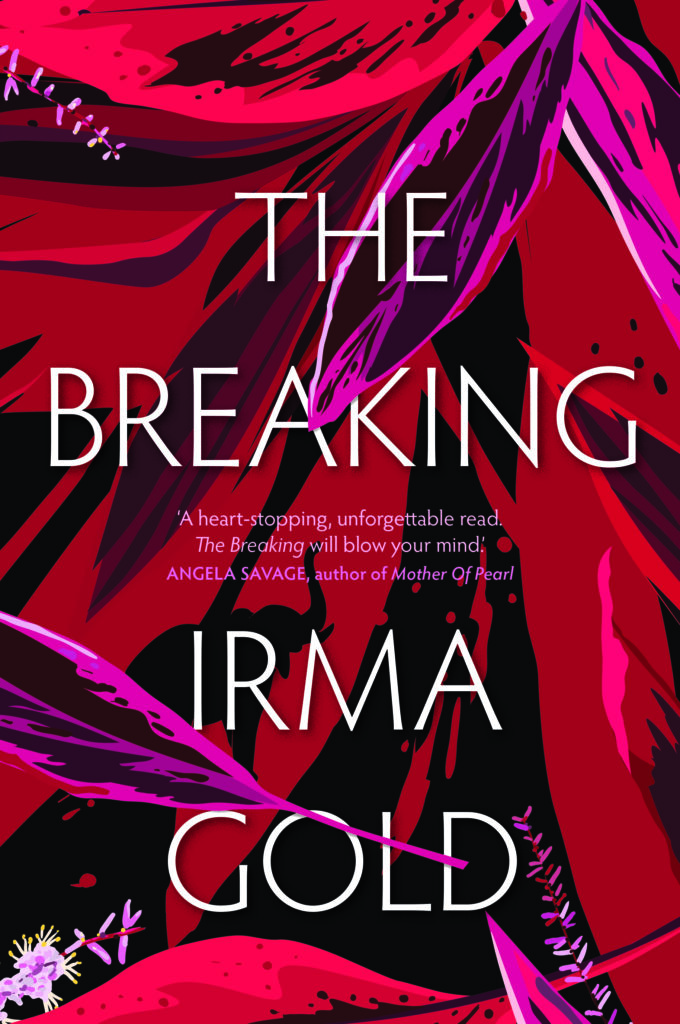
Book cover

I have broken a golden rule! That is, I am reviewing Irma Gold’s debut novel, The breaking, out of the order in which I received it for review, which is something I (almost) never do! But, I am attending an author event on this book this weekend, and I really wanted to have read it before that conversation.

The breaking is an example of a growing “genre” of literature, eco-literature. This literature encompasses cli-fi, and focuses on human activities that endanger the environment in some way. It’s a broad church, covering climate, water and the land, deforestation, animal rights, and more. Books in this genre are often inspired by their writer’s passions. They tend to have a strong plot because the author wants to engage the reader in an issue: how better to do this than with an engaging plot. However, the plot is, largely, subservient to the issue, because at heart these are political novels, often in the “personal-is-the-political” sense.

So, some examples? Heather Rose’s Bruny (my review), which is deeply concerned about the future of Tasmania, Angela Savage’s crime novel The dying beach (my review), which explores the impact of shrimp-farming on the environment, and Karen Viggers’ novels, like The orchardist’s daughter (my review) which addresses deforestation, are three. These could be called “passion project” books. Critics often find this sort of writing difficult to asses. If it sells well, if it’s popular, is it good?

I’m going to sidestep the implication of that concern, and simply say that of course something popular can be good. If it’s well-plotted, well-written, has engaging characters – and deals intelligently with something relevant or important – then it’s good.

All of this is a very long introduction to Irma Gold’s book, but relevant, I hope. So, The breaking? The title doesn’t give away its passion, though if you look carefully at the gorgeous cover you might see it. It’s the plight or exploitation of elephants in Thailand. Gold, as she explains in the Afterword – I love an Afterword – has been to Thailand, and worked with elephant rescue projects, so she knows whereof she speaks. (I hope to have more to share after the weekend!)

It’s a grim situation, as I’m sure you know, and, like many grim situations in developing nations, it’s complicated by the fight for survival. For many Thais, elephants are their bread-and-butter, both as beasts of burden and, more, for their tourist potential. Gold addresses this dilemma in her novel without being overtly didactic, by having her characters see the situation with their own eyes, discussing it with each other, and weighing up the options.

“Be brave” (Deven)

The breaking is about two young Australian women, Hannah Bird, who has just arrived in Thailand as a tourist, unsettled and insecure because she’s lost her job, and Deven, who has been living there for some time and is involved in elephant rescue projects. They meet in a hostel lobby, as tourists do, and the experienced Deven invites Hannah to go to the night markets with her. From there, a friendship – and eventually something more – develops as the somewhat naive Hannah is drawn into the more experienced and confident Deven’s passions and views of the world. It’s not long before we discover the layers in the title as Hannah is introduced to the cruel practice of phajaan.

We follow their trajectory – told in Hannah’s first person voice – as they tread an activist’s path. It starts with involvement in organised, legal rescue projects that aren’t going to change the world quickly. However, as often happens to those who stay the course, they find themselves confronted with the ultimate activist’s dilemma of “how far will you go” for the cause you believe in? Always, it is Hannah following Deven, deeper and deeper into both political and personal engagement. Deven is driven to save those elephants, while Hannah, who believes in the cause, is more cautious, but, she’s falling for Deven, so, where Deven goes … the ending is powerful, confronting us head on with what can happen if you let passion rule your brain.

“We have to change the culture” (Deven)

Throughout all this Gold takes us on a journey through Thailand, showing it through the eyes of wide-eyed oblivious tourists, like Hannah, and those of the more experienced, aware Deven, who rejects the tourist path, the ladyboy shows, the elephant rides, and so on. Gold shares the food and culture of Thailand, using local words with little attempt to translate. She addresses this in her Afterword, explaining that although it is traditional to italicise foreign words, she “made a deliberate decision not to” do so here. Italics, she says, makes it easy for readers to “skim over foreign words” but she “wanted to encourage readers to engage with Thai language in the way that the Australian characters attempt to”. Gold’s solution is deft, because we readers puzzle and feel our way along with narrator Hannah, who is guided but not spoon-fed by Deven. Deven can be tender and caring, but she doesn’t mollycoddle!

However, if I have given you the impression that Hannah is all follower and Deven all leader, then you’ll have the wrong impression. Deven, alienated from her parents, has her own demons, and Hannah is not a push-over. As the novel progresses she takes in what Deven says but processes it in her own way. She sees “it’s not that simple; it’s not that black and white”, while for Deven it is simple. The denouement suggests where Gold lies, but the question remains for each reader, where do you lie? And, beyond that, whose rights should prevail?

Irma Gold’s The breaking reminded me somewhat of Madeleine Dickie’s Troppo (my review), which also explores the experience of young Australians caught up in unfamiliar lives and cultures, and who must forge their own way, morally and ethically, in places where the usual signposts are missing. Like Troppo, The breaking is an engaging debut novel that encourages us to consider some of the critical questions of our time.
Challenge logo

Irma Gold
The breaking
Rundle Mall, MidnightSun, 2021
271pp.
ISBN: 9781925227819

(Review copy courtesy MidnightSun Publishing via Brendan Fredericks)

Monday musings on Australian literature: Nancy Cato

Book cover

Last year I posted on a book called Trailblazers: 100 inspiring South Australian women. I decided then that it could inspire some Monday Musings posts, because it includes writers among its inspiring women. The first writer to appear in this alphabetically-arranged book is Nancy Cato. She is described as “Writer and activist”, which enhances her interest.

Nancy Cato (1917-2000), who saw most of the 20th century, is best known to Australians for All the rivers run (which I have posted on) but there is much more to her than that.

Brief bio

Cato was born and raised in Glen Osmond, Adelaide. She started writing when she was 8 years old, but got her first writing job at 18, when she won a competition run by the Adelaide newspaper, News. The prize included a cadetship. However, says Trailblazers, she “bristled at sexism in the workplace”. She’d been told that when she became a journalist, she’d be treated and paid as a man, so was horrified when they assigned her to the social pages! She threatened to resign if they didn’t give her a “proper reporter” job.

The job they gave her was “the North Terrace round” which covered the art gallery, public library, museum, university and hospital. She learnt a love of art from gallery director, Louis Frederick McCubbin (son of artist Frederick McCubbin), while the public librarian introduced her to Australian writers writing about Australia. This, says Trailblazers, was “a revelation after being told by her ‘pomified’ university professor that there was no such thing as Australian literature”.

She became involved in the Jindyworobak Movement (1938-1953) which aimed to “express the Australian outback environment in terms that respected the Aboriginal resonances of the land”, though, unsurprising for the time, it was a white movement. Cato edited the 1950 Jindyworobak anthology.

Book cover

Cato married racing-car driver and inventor, Eldred Norman. Early in her marriage, before they established a home on a vineyard on Adelaide’s northern fringes, she spent time grape-picking on the Murray River, thus gaining her river knowledge. Her first book was a poetry collection published in 1950, with her first novel, All the rivers run, appearing in 1958. She went on to publish another book of poetry, many novels, and a few works of non-fiction.

Cato and her husband moved to Noosa, Queensland, for health reasons, in the 1960s. That was where she died in 2000.

Writing and activism

Her activist nature is hinted in the biography above, in her willingness to resign over the paper’s treatment of her as a woman journalist. She was clearly no pushover from a young age. Trailblazers mentions her later activism in Noosa, where she became the bane of “the white shoe brigade” by opposing high-rise coastal development. The authors say that:

In her groundbreaking 1979 environmental study on the region, she described the seaside resort town as ‘a place of ancient unspoilt beauty and instant, man-made ugliness’.

According to Wikipedia, it went into two more editions (in 1982 and 1989).

Of course, I also went to Trove to see what I could find about Cato. I wasn’t surprised to find more than I could possibly read, both writing by, as well as about, her. I’ll share just some of what I found. I didn’t find a lot more about her activist activity. However, The Canberra Times, for whom, Trailblazers tell us, Cato wrote while living in Noosa, did have some articles by her about Indigenous Australians.

She commences one article from 1971 with

QUEENSLAND’S Aboriginal and Island Affairs Department has been dragged screaming into the 20th century by the Commonwealth Government’s threat to force changes in the existing Aboriginal and Island Affairs Act, if the State Government fails to amend its “discriminatory” clauses.

She goes on to describe how the Government responded, but that “the Queensland Council for the Advancement of Aborigines and Torres Strait Islanders’ [ATSI] monthly bulletin” was “hostile and critical” with the bill’s provisions. You can read the article yourself, but my sense is that the way the article is written suggests that Cato was sympathetic to the ATSI cause. Her description of her attempt to research first-hand conditions at Palm Island is telling. Her sympathy is borne out by another article (this one from 1972) in which she talks about Indigenous Australian poet, Kath Walker’s (later Oodgeroo Noonuccal) “new Aboriginal Cultural Centre and Museum on Stradbroke Island”. Cato went across on one occasion “to give a hand”. She writes:

Far from having difficulty in attracting artists, writers and others to stay at her Aboriginal cultural “retreat”, Kath Walker will probably have a waiting list as long as your arm, and the tourist industry will be gnashing its collective teeth at having overlooked the potential of the bay side of the island.

Interestingly, one of Cato’s few non-fiction books tells the story of a missionary, Mister Maloga: Daniel Matthews and his mission, Murray River, 1864–1902, published in 1976. The mission failed, for various reasons, and I’m not sure exactly what Cato’s take was, but reviewer Leonard Ward praises the detail it contains, and says that “As an historical document Mister Maloga earns a place on the bookshelves of those who have at heart the welfare of the Aboriginal people”.

In her novels, her passion for ideas she believed in was more subtle, but definitely there. There is a brief review of her 1960 novel Green grows the vine in the Communist Party’s newspaper, Tribune. The review calls it “a slight piece about the love life of three girls who go grape picking”. However, it continues, the novel “is lifted from the mundane by the author’s … careful descriptions of the labor process. The humor, the pain, the comradeship and the joy of labor, garnished with a democratic contempt for chauvinism, snobbery and such like”.  

John Graham, writing in The Canberra Times about her 1965 novel Northwest by south is more explicit, calling Cato “a curious phenomenon in Australian literature, a feminist without a formed social outlook”.

Her major contemporaries — Eleanor Dark, Kylie Tennant, Eve Langley and Dorothy Hewett — have all expressed definite views on society through their novels. Mostly, they are militant socialist rather than purely feminist ideas, a tradition of political awareness handed down to them by Mary Gilmore and Katherine Susannah Pritchard.Nancy Cato has never been drawn into this dynasty.

She is closer to the individuality of Judith Wright and Rosemary Dobson in her poetry, much more aggressively feminist in her novels.

He argues that Delie, the Murray River trilogy’s heroine, has “all the pioneering qualities that come from one side of the feminist tradition” but is not given “a social viewpoint that might have turned her into a memorable figure”. In Northwest by south,

Lady Franklin’s feminism is of the same activist variety, but much more capable of development through her position as a Governor’s wife. She also has the virtue of reality, a considerable advantage for a writer with limited powers of character development.

(Limited character development is a common criticism of Cato’s work). The review is thoughtful, and makes good reading. Graham argues that Cato shows improvement in her “technical development”, but “has still not controlled her tendency to rush from one event to another without pausing for significance”. He notes positives about her portrayal of Jane Franklin, particularly in exploding some myths about her, but feels that Cato became “so enmeshed in the historical details that the book is not satisfactory either as a character study of an unusual woman or as an examination of Franklin’s governorship”. However, “it is an interesting and at times fascinating study of the dilemma of the intelligent woman in early Victorian, and particularly colonial, society”. 

Cato, in her time, was one of Australia’s most popular writers of historical fiction. She was also, I’ve learnt, a woman of strong social values. A worthy trailblazer, I’d say.

Have you read any Nancy Cato? If so, I’d love to hear your thoughts.

Jane Austen, Juvenilia, Volume the third (#Review)

This month my Jane Austen group completed our reading of Jane Austen’s Juvenilia. (Click the links for my thoughts on the first and second volumes.)

Volume the third is a little different to the other two, as it contains just two unfinished works:

  • Evelyn
  • Catharine, or The bower

Both were written in 1792, when she was 16 to 17 years old.

As with the other volumes, the pieces were later transcribed by her into three notebooks, but there is evidence in this volume of other handwriting. There is uncertainty about the provenance, but the thought is that they were transcribed by her nephew James Edward Austen-Leigh and his daughter Anna. Certainly, handwriting analysis suggests it is their hands, but probably not their words.

Evelyn

Evelyn is an absurd, preposterous story about the idyllic town of Evelyn. A young man comes to town and wants to live there, but every house is inhabited, due to “the sweetness of the Situation, & the purity of the Air” not to mention the fact that “neither Misery, Illhealth, or Vice are ever wafted”. Luckily for him, a family there has “a peculiar Generosity of Disposition” and, immediately on meeting him, agree to give him their house and their daughter in marriage. The laugh-out-loud ludicrousness continues from there.

This story has received very little attention, compared with most of the other juvenilia. Shawn Normandin suggests this is partly because it

seems relatively distant from feminist concerns: its protagonist is male, and its female characters lack the refreshing assertiveness that distinguishes many of the juvenilia’s heroines.

Normandin argues, however, that it is worth considering because it “attempts with extreme–and hilarious–rigour to imagine a true gift”. He discusses it in the light of Jacques Derrida’s work Given time. I’m afraid that I didn’t give this time. However, I do like the idea that Evelyn could be considered within the context of Austen’s questioning “the new Enlightenment capitalism”, as Doody suggests, because it is clear that Austen was engaged in the political ideas of her time. Anyhow, Normandin concludes that Evelyn “may be western literature’s keenest examination of the gift because, not in spite of, its absurd frivolity.”

It’s probably worth giving this article more time, but, meanwhile, one thing I did notice about Evelyn is that although the story is extreme, like the earlier juvenilia, the actual writing is a little more controlled, a little less breathless, and injected with a little more setting and description.

Catharine, or The Bower

Not only does Catharine continue – I’m assuming it was written after Evelyn – in this more controlled vein, but even more so, as it moves into the realism for which Austen’s published novels are known. Catharine, or The bower tells the story of a young woman, who, having been orphaned when very young, is being brought up lovingly but severely protectively by “a Maiden Aunt”, who fears the impact on her charge of “Young Men”. Of course, a Young Man appears!

Catharine is a little tricky to read because, while Austen had done some editing as late as 1810/11, there are confusing changes of names. Catharine is variously named Catherine and Kitty in the text, but, even trickier, is that her aunt is sometimes called Mrs Peterson and sometimes Mrs Percival!

Anyhow, for me, and for some others in our group, it contains clear hints of Northanger Abbey (which Austen first wrote around 1798/9) – of Catherine (note the name) Morland (her youthful naïveté tempered by some good sense), of Isabella Thorpe, and of the interest in young men and propriety.

Catharine also contains one of my favourite Austen quotes about reading. Catharine tells her friend Camilla:

but for my own part, if a book is well written, I always find it too short.

Some of the themes that we see in Austen’s later novels are here, including women’s education (the focus on the attainment of accomplishments versus “useful knowledge and Mental Improvement”), indulgent parenting, city versus country, the idea of women and daughters made destitute on the death of a husband/father (as happens to the Dashwoods in Sense and sensibility), thoughtless young men (like Frank Churchill in Emma). Margaret Anne Doody claims that these “early works were important companions to her during the rest of her writing career” which supports my suggestion that these works were used as sources for ideas, like writers use notebooks today.

The style, as I’ve already said, is calmer, and more formal. There is more of the sort of authorial commentary that we see in her later works. Here’s Catharine, having been easily convinced that the young man who had departed without a farewell, did really like her:

She went in high spirits to her Aunt’s apartment, without giving a Moment’s recollection on the vanity of Young Women or the unacountable conduct of Young Men.

Also, Catharine evinces, says Doody, Claudia Johnson’s argument for Austen’s engagement with politics. Certainly, our character Catharine is frustrated by Camilla’s ongoing chatter about fashion and her refusal to talk about anything else – “She found no variety in her conversation; She received no information from her but in fashions”. Catharine, on the other hand, wants to talk about books and politics.

Here is a good time to share some ideas from Doody’s Introduction to the World Classics edition of the juvenilia. She suggests that Austen, following the rejection in the 1800s of Susan (later Northanger Abbey) and First impressions (later Pride and prejudice), tamed her writing to meet the marketplace. Perhaps, but, I see Catharine as already showing some of this taming down.

Doody discusses the different ways the juvenilia can be approached, and the drawbacks to these. For example, she suggests that seeing them as pointers to later writings – which most of us do – results in our missing “their important effects”. I take her point, but only to a degree, because I’m convinced that we can see the later Austen in these early works.

However, I like that she sees the subversiveness of Austen’s early work, something that was not recognised, she says, by critics like David Cecil. GK Chesterton, on the other hand, praised the early works. In 1922, he said

she was original … naturally exuberant … she could have been a buffoon like the Wife of Bath if she chose. This is what gives an infallible force to her irony. This is what gives a stunning weight to her understatements.

Doody concludes that the mature Austen chose to write “the realistic novel of courtship”, because that was the way to publication. She “had to pretend that the world was better and its general fictions more reliable than she knew them to be”. That’s possibly true, but Austen was seen as formally innovative in her writing, which suggests that her published novels were not completely against the grain, even if they were toned down versions of what she privately felt?

References:

  • Doody, Margaret Anne. “Introduction” in Jane Austen’s Catharine and Other Writings, edited by Margaret Anne Doody and Douglas Murray. Oxford, Oxford University Press, 1998.
  • Normandin, Shawn. “Jane Austen’s “Evelyn” and the “Impossibility of the Gift”.” Criticism 60, no. 1 (2018): 27-46. (Accessed via JSTOR)

Jane Austen
“Juvenilia. Volume the third” (ed. R.W. Chapman & Brian Southam)
in The Oxford illustrated Jane Austen. Vol VI, Minor works
London: Oxford University Press, 1969 (rev. ed.)
pp. 179-242
ISBN: 19 254706 2

Jane Austen, Lesley Castle (#Review)

I mentioned in my post on the second volume of Jane Austen’s Juvenilia, that I might do a separate post on one of its longer pieces, Lesley Castle. It’s one of her three longer pieces in that volume, and is often published separately or in other compilations, so warrants some attention, methinks!

Lesley Castle

Lesley Castle is another of Austen’s epistolary pieces. According to Juliet McMaster, writing in Persuasions Online, it represented a “step forward” in epistolary novels because the writers correspond with each other, rather than to someone “off-stage”. In this piece, in fact, there are several correspondents, writing to each other, resulting in different perspectives being offered on some of the main “characters”.

Lesley Castle is essentially an unfinished collection of correspondence between various “friends” who talk mostly of marriage – and of each other. Like many of the Juvenilia pieces, it demonstrates Austen’s love of writing about wickedness. It starts with Margaret writing of her brother’s adulterous wife running off, leaving not only her husband but her 2-year-old child, and of her widowed father, “fluttering about the streets of London, gay, dissipated and thoughtless at the age of 57”. Her correspondent, Charlotte, reports back about her tragedy, the death of her sister’s fiancé from falling off his horse, but she is more interested in food than in her bereaved sister. Insensitively, she describes her distraught sister’s face being “as White as a Whipt syllabub“. Such-self-centredness is rife in Austen – and you can hear her cheeky teenage self laughing as she wrote it!

Interestingly, this story is set largely in Scotland, which Austen never visited, and rarely mentioned in her works. Why Scotland, then? One reason could be to mock the vogue at the time for things Scottish. Margaret claims that she and her sister are happy there:

But tho’ retired from almost all in the World, (for we visit no one but the M’Leods, the M’Kenzies, the M’Phersons, the M’Cartneys, the M’donalds, the M’Kinnons, the M’lellans, the M’Kays, the Macbeths and the Macduffs) we are neither dull not unhappy …

The inclusions of “the Macbeths and Macduffs” is an additional pointer to Austen’s love of nonsense. She used lists frequently in the Juvenilia, often ending them with something extra “silly” to make her point. As I said in my first Juvenilia post, subtlety was to come in her mature works!

The new Lady Lesley, the aforementioned dissipated father’s new wife, is not so taken. She is also a friend of Charlotte’s and writes to her about her new Scottish-based step-daughters:

I wish my dear Charlotte that you could but behold these Scotch giants; I am sure they would frighten you out of your wits. […] Those girls have no music, but Scotch airs, no drawings but Scotch mountains, and no books but Scotch poems–and I hate everything Scotch.

Charlotte, meanwhile, had written to Margaret about Lady Lesley whom she sees as favouring “haunts of Dissipation” (essentially, cities):

Perhaps however if she finds her health impaired by too much amusement, she may acquire fortitude sufficient to undertake a Journey to Scotland in the hope of finding it at least beneficial to her health, if not conducive to her happiness.

The piece continues in this sort of vein with the correspondents often writing at cross-purposes, and, it must be said, focusing more on self-interest than the needs of others.

Of course, Austen readers always look for hints not only of style and themes (here, self-centredness, snobbishness, sensibility, hypocrisy, country versus city, and marriage) but of characters to come. In Lesley Castle, Charlotte reminds us particularly of a few Emma characters: Mr Woodhouse and his focus on food (though his is of a very particular type), Mrs Elton and her self-centred obliviousness to the needs of others, and, even, says Heller (referenced below) of Miss Bates in her garrulousness.

Margaret is a good example of Austen’s deluded characters who see themselves one way, while showing themselves to be very different. Many of the letters open affectionately, but contain or end with cutting remarks. Margaret, for example, writes to Charlotte complaining about being admired by too “many amiable Young Men” and expressing her “Aversion to being so celebrated both in Public, in Private, in Papers, & in Printshops”. She continues:

How often have I wished that I possessed as little personal Beauty as you do; that my figure were as inelegant; my face as unlovely; and my Appearance as unpleasing as yours!

Lesley Castle is probably not for every-one. So, rather than try to convince you to read it, I’ll conclude with Zoë Heller in The Guardian. Writing about Austen’s youthful work, she says that “as always in Austen’s work, recklessness with facts and inattention to detail are the rhetorical clues to a deeper-seated, moral carelessness”. How perceptive.

Jane Austen
“Lesley Castle”
in
“Juvenilia. Volume the second” (ed. R.W. Chapman & Brian Southam)
in The Oxford illustrated Jane Austen. Vol VI, Minor works
London: Oxford University Press, 1969 (revision)
pp. 76-178
ISBN: 19 254706 2

Monday musings on Australian literature: Best Young Australian Novelists (3)

I’ve posted twice on The Sydney Morning Herald’s Best Young Australian Novelists, last year, and back in 2013. Bill, in fact, chose that 2013 post in his Bill Curates series on this blog.

The award was established in 1997 by the newspaper’s then literary editor, Susan Wyndham, making this year its 25th year. An emerging writing award, it is open to “writers aged 35 and younger” at the time their book is published. It is called a “novelists” award, but is made on the basis of a specific book, which can now include short stories. It seems that the newspaper’s Fairfax Melbourne stablemate, The Age, is involved which is why the name now seems to be, simply, Best Young Australian Novelists. I don’t know when that change occurred.

This year’s winners, as announced by Jason Steger, the current Literary Editor for The Age and The Sydney Morning Herald, are:

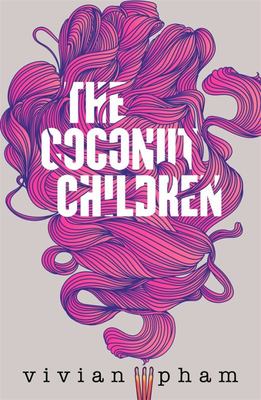
  • Vivian Pham’s The coconut children (winner, $8,000)
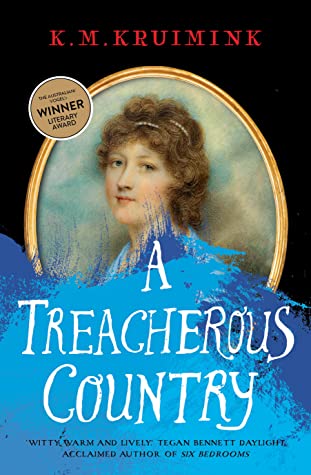
  • K.M. (Kate) Kruimink’s A treacherous country (runner-up, $1,000) (see Lisa’s review)
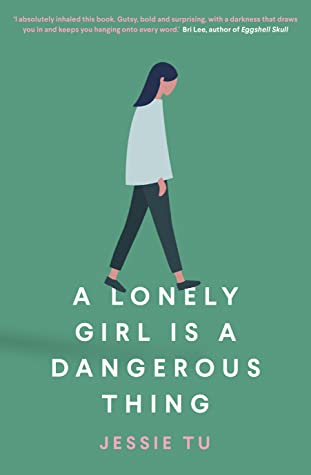
  • Jessie Tu’s A lonely girl in a dangerous thing (runner-up, $1,000) (see Kim’s review)

The judging panel always includes the papers’ literary editor, so Jason Steger, plus a previous winner, Pip Smith, and another novelist, Peggy Frew. The number of awards made varies, but this year, as last, there were three.

The winners, briefly

Vivian Pham

According to Steger, Pham was a whopping 19 years old when her novel was published last year. Not what you’d call a “late bloomer” then! Her novel is set in the Vietnamese Australian community in Sydney’s Cabramatta. Steger says that while redrafting the novel, Pham came across the idea of “second-generation trauma inherited via the stories and behaviour of the previous generation”. This idea apparently runs through the novel.

Pham says that “You want to know the people that are closest to you. You know something epic has happened to them, to make them the people that they are, and you want to know why that happened.” She agrees with Steger that that novel is “a love letter to Cabramatta”, because “she felt more connection to Vietnam there than in Vietnam, when she spends all her time at her grandmother’s home”.

One of her significant influences is James Baldwin, who apparently “got her into reading seriously and realising that it could change your world”. Her second favourite writer is P.G. Wodehouse!

The judges said that “Pham’s non-judgmental portraits of parents living with trauma, and children struggling to comprehend their parents’ choices, was nuanced and wise”.

K.M. Kruimink

Lisa, as noted above, has reviewed A treacherous country, and described it as having “a playful narrative”. She tells us, as does Steger, that this novel also won the Vogel (unpublished manuscript) Award. It has also been longlisted for the Walter Scott Prize for historical fiction.

Unlike Pham’s more contemporary work, this novel is historical fiction set in colonial Tasmania. It’s about a young man coming to Tasmania to bring a message to a young convict woman. Originally, Kruimink was writing about the woman. However, she was a new mother at the time that she decided to pick up the work again, and

Because I was in a vulnerable place, it was too emotional for me. It was a sad story and I felt like I couldn’t write about this sad young woman and I decided to write about a silly young man instead.

She thinks she will go back to the young woman’s story, though her next novel is about something very different.

She named Hilary Mantel and Kazuo Ishiguro as writers she likes to read.

The judges loved the voice, saying that she delivered “a stand-out voice – eccentric, funny and deceptively endearing. While the research behind the writing is evident, it is handled with a lightness of touch, and the language itself is truly impressive, ornate, yet controlled and deft”. 

Jessie Tu

Tu’s A lonely girl is a dangerous thing has been making a bit of a splash, having been shortlisted for Readings’ New Australian Fiction Prize and the NSW Premier’s Literary Awards Multicultural Award, as well as longlisted for the Stella Prize. 

Kim, whose review I linked above, was mightily impressed. She thought it would be another book about a millennial, but found it was much more. “Its real strength,” she writes, “lies in its perspective of an Asian-Australian trying to succeed in a closeted world dominated by the white and the privileged”.

Taiwanese-born Tu was apparently clear from the start what she was writing about, and also believes, says Steger, that “what drives a good novel … is the kind of questions it considers”. For her, loneliness is a big issue – as the title suggests. She says that:

I’ve been trying to think constantly where to seek solace for my feeling that I don’t belong in this world and what I found really comforting was reading stories about women in the past, especially female artists or female writers, and realising that they have also gone through sad, lonely lives. For me to know that helps me understand that this feeling that I have is not at all special.

The judges said that “Tu, with unswerving clarity, draws out many unsettling and compelling questions regarding race, talent, performance, perfectionism, agency and worth”. They called it “provocative” and “uncompromising”, reflecting Kim’s assessment, in fact!

Have you read any of these books?

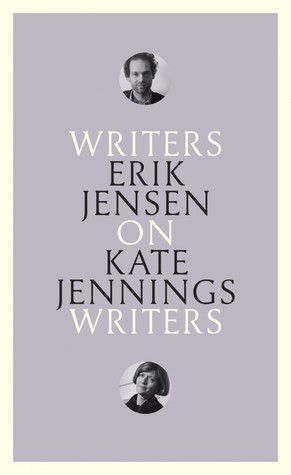
Erik Jensen, On Kate Jennings (Writers on writers) (#BookReview)

It took Kate Jennings’ death for me to finally pick up one of Black Inc’s Writers on writers books, Erik Jensen’s On Kate Jennings. The series, says Black Inc, involves leading authors reflecting “on an Australian writer who has inspired and influenced them”. It continues, “Provocative and crisp, these books start a fresh conversation between past and present, shed new light on the craft of writing, and introduce some intriguing and talented authors and their work.” Let’s see how Erik Jensen goes!

But, who is Erik Jensen? Most of the series’ writers are well-known, such as Alice Pung, Stan Grant, Michelle de Kretser and Nam Le, but a couple are less so. Jensen is a Walkley award-winning Australian journalist and author. He’s probably best known for being a founder, and still editor, of The Saturday Paper. However, in 2014, he also wrote a biography, Acute misfortune: The life and death of Adam Cullen. It won a NIB Literary Award and was shortlisted for the Victorian Literary Awards’ Nettie Palmer Prize for Non-fiction. As you’d expect for this series, then, he has some cred.

However, his writing seems to be primarily non-fiction, so why Kate Jennings? Fortunately, he answers that in the opening paragraphs:

I had looked up Kate because I was a fan of her essays – pieces about her life, mostly, ruthless in their precision.

In the next paragraph, he launches without warning into describing the opening of Snake (my review), Jennings’ autobiographical novel. You have to be familiar with Jennings and Snake to get what’s going on here, but it’s unlikely you’d be reading this, I think, if you weren’t. What follows is an introduction to Kate Jennings, realised through interweaving the content and trajectory of this novel with his interviews and communications with Jennings and, occasionally, others.

I was moved by the insights, and impressed by the richness of the portrait Jensen achieves in around 100 small-book pages. He is clearly very fond of Jennings. Indeed, he concludes his essay with

This essay is for Kate Jennings. It is a love letter to her work and to the life that produced it. As a friend and a writer, I am grateful for both. More than anything, I want to thank Kate for the generosity she has shown – in agreeing to this essay, in being so open with the material, and in how with her own work she has shown me what to do.

However, Snake is a tough book. It portrays a dysfunctional family, with a difficult and self-centred mother. Jennings tells Jensen, “I was so very lonely. And at the mercy of my mother.” To his credit, Jensen also talks to Jennings’ brother, Dare, whose perspective on the family is very different. Dare, writes Jensen, “remembers the same mother Kate does, although he remembers her differently. They had a very different relationship. It was warm, close.” Dare supports Kate, but his experience of the family was different. He was the adored son.

This brings me to that whole issue of autobiographical fiction, which is Jennings’ forte (much like her friend, Helen Garner’s.) Jensen writes that “Kate writes close to life. Not completely close, she says. She does make up things. ‘I round the corners,’ she says, ‘and make the really ghastly stuff a little better.’” She writes to work out what she thinks. She also says that “the emotions were autobiographical but not necessarily the story“. This is a significant distinction, and serves as a reminder that fiction needs to be “true” but should not be read as “factual”.

Much of this wasn’t particularly new to me, given I’ve read both Snake and her fragmented biography, Trouble. However, Jensen value adds. For example, he writes that he sees Snake as “the Great Australian novel”. He gives it to people inscribing it as such. One recipient was Ian Donaldson, a former professor of English at Cambridge and a fellow of King’s College. Jensen shares Donaldson’s reaction:

‘The great Australian novel?’ he writes the next morning. ‘Yes, I’d agree, it certainly warrants that sort of ranking, though that phrase as conventionally used conjures up a kind of laborious realism which Snake so spectacularly lacks. I loved its spareness, its brevity, its ability – like the creature it mimics – to strike without warning then vanish without trace.’

You can see why I like Snake too – its spareness! I was interested in Johnson’s comment that a GAN “conventionally … conjures up a kind of laborious realism”. Do you agree? Anyhow, Snake, “a poet’s novel” as Jensen calls it, is not that.

After spending some time on the content of the novel, Jensen also discusses its path to publication (including the rejections) and its reception. Australian reviewer Elizabeth Riddell was not particularly impressed, but in North America, Carol Shields (in The New York Times) and the Publisher’s Weekly, were highly positive. Yet, the novel was soon “lost”, or, as Jennings put it, “pretty well ignored”, largely she felt due to the feminists who “couldn’t accept the treatment she gave her mother”. Seven years later, however, it was re-released, with the Age describing it as “probably the most accomplished, realistic novel about bush life to be produced in the past decade”.

Jennings shares much of her life with Jensen, including her challenges with alcohol and depression, and her loving marriage to Bob Cato. The result is a picture of someone who was both “obstinate and fragile”, as Jensen writes in his The Saturday Paper obituary (8 May 2021), who had great successes but also faced tough challenges, and who was, above all, an uncompromising and stylish writer.

In other words, through exploring Snake, from multiple perspectives, supported by critical truths about Jennings’ life, Jensen does meet Black Inc’s stated aims. It’s intelligent and compelling. I have now bought another in the series.

Erik Jensen,
On Kate Jennings: Writers on writers
Carlton: Black Inc, 2017
112pp.
ISBN: 9781925435818

Marian Matta, Life, bound (#BookReview)

In August 2020, small independent publisher MidnightSun sent me two short story collections, Margaret Hickey’s Rural dreams (reviewed last month), and Marian Matta’s Life, bound. I enjoyed Rural dreams, as some of you may remember, for its exploration of rural lives from multiple angles and points of view. Life, bound is a very different collection. It doesn’t have a stated unifying theme but, like many short stories, it is unified by its characters being ordinary people trying to make the best of the life they have been given – or of the life that, sensibly or not, they’ve made for themselves!

The promotion accompanying the book describes it this way:

Free agents or captives of our past?

In Life, Bound, characters find themselves caught in situations not of their own making, or trapped by ingrained habits, walking in grooves carved out by past events. 

What characterises this collection, beyond this, is the varied tone, from the gothic-influenced opening story “The heart of Harvey’s Lane” to the strongly realist closing stories, “He turned up” and “A bench, a bard, a turning tide”. As with many short story collections, you never quite know what you’re going to get when you turn the page to the next story. In “The heart of Harvey’s Lane” a man becomes a famous photographer off the back of a shocking incident, but, after a while, starts to withdraw from the world, into a very strange house. As he scales down his career, he recognises that

The downward turn in my income almost exactly mirrored the upward turn in my satisfaction.

Nonetheless, the ending, when it comes is disconcerting. Covering a few decades, it’s an engrossing story about the way life can go.

Some stories are shocking, such as the second story “Climb”, about a young boy abused by his step-father, while others are cheeky, such as “Lovely apples” about a loving young couple and the suggestive “Drive my car”. In some stories, abused or overlooked characters get their own back. “Roadkill” is particularly cleverly told – with a great opening – and you have to cheer for the much-maligned Emily who’s not as stupid as they all think. But in other stories, things don’t work out, such as the devastating story about blighted hopes, “He turned up”. This title has a powerful double meaning. Titles in short stories are, I think, particularly important, because, given the form’s brevity, every word must count. Matta uses her titles well. Some are purposefully obscure, not giving anything away except perhaps the literal, as in “Climb”; others are more clearly figurative, as in “Desire lines” or “Lovely apples” or “Three-sixty”; while others are superficially descriptive but contain so much more, as in “A bench, a bard, a turning tide”.

Now, though, let’s get back to the characters “caught in situations not of their own making”. They include an abused boy, a transgender person, a woman caught in domestic violence, a homeless woman. These characters can break our hearts, but in Matta’s hands they are the characters who just might come through. I’m not naming the stories, here, because part of Matta’s skill is in slowly revealing the character’s situation, so why should I tell you here straight off?

Other characters are a mixed bunch, some “trapped by ingrained habits”, others just at a certain stage in their lives where an action has, perhaps, unintended reactions. There’s the alcoholic ex-husband who desires reconnection with his family (“Desire lines”), two sea-changers who meet in their new chosen town and become friends (“Claimed by the sea”), two people post-one-night-stand (“Summer of love”). This last one exemplifies how Matta mixes up her structure. Not all stories are simple, linear chronologies. “Summer of love” is linear, but told from the alternating points of view of the woman and the man, a perfect solution for a story about a one-night-stand.

The varied structure is one aspect of this collection that keeps the reader engaged. The above-mentioned variations in tone are another, plus, of course, the characters and stories themselves, but another is the language. Here, for example, is a character deciding that discretion is the better part of valour:

Jimmy decided not to chase that remark down to a point of clarity.

(Waterwise)

Then there are those phrases that make you laugh, such as this on entitled teenage boys being told off by their headmistress:

They shrugged, just sufficiently out of sync to appear like a music video dance troupe.

(Roadkill)

My last example is Rita – her town’s “voice of authority, the historical society’s walking catalogue” – being unusually flummoxed by a question:

A frown settles slowly on Rita’s face; her infallible memory has tripped over a corrupted file.

(Winston Mahaffey’s hat”

The stories are all, fundamentally, about humans – the things that happen to us or the messes we get into, and how, or if, we get out of them. But some of the stories also reference contemporary issues, such as climate change, domestic abuse, and homelessness.

The stories aren’t linked but this does not mean that order is not important. With a collection like this – that is, one dealing with some of life’s toughest challenges – the order in which the stories are presented, and which one is chosen for the end, can be significant. In this collection, Matta has followed the sad, bitter penultimate story with a story about homelessness in which the destitute but proud Merle slowly comes to trust the warm, generous 23-year-old Ethan. Surely this is intended to leave us with a sense that all is not lost, that there is hope if we ignore our differences and focus on our common humanities.

So, another engaging and stimulating collection of stories from Midnight Sun with – is it too shallow to end on this? – another beautiful cover.

Challenge logo

Marian Matta
Life, bound
Adelaide: MidnightSun, 2020
223pp.
ISBN: 9781925227710

(Review copy courtesy MidnightSun)

Monday musings on Australian literature: Kate Jennings (1948-2021)

Kate Jennings, Moral Hazard

Strangely, Australian writer and intellectual, Kate Jennings, has been in the air lately, even though she has lived in New York since 1979. She’s been in blogosphere because blogger Kim Forrester reviewed her novella, Moral hazard, just last month, but she’s been more broadly visible too because she features in the documentary Brazen hussies which screened in cinemas last year, and was broadcast on ABC-TV in a shortened version, this year. I saw both versions, and was inspired by Jennings’ bravery and passion in speaking for women at a 1970 Vietnam Moratorium march. This speech marks, many believe, the beginning of the second wave of feminism in Australia.

Kate Jennings, then, was quite a woman, and it’s incredibly sad that she died this weekend at the too-young age of 72. Yes, Virginia, 72 is too young.

“one of our essential writers” (David Malouf)

I’m impressed but not surprised that Australian novelist, David Malouf, described her as “one of our essential writers” in The Sydney Morning Herald’s announcement of her death. What does “essential” mean? I don’t know what Malouf means by this, but I agree with him in terms of my own meaning of the word. For me, essential, in this context, encompasses two things. First, it’s that the writer writes about important (though I don’t like this word) or significant or, perhaps even better, critical subjects. An essential writer will address the issues that are central to our being – personal, political and/or societal. But, I sense that Malouf means a little more. Certainly I do, and it’s that an essential writer doesn’t just write about, let us say, the “essential” things, but they confront us with them. They go where others don’t go – in subject matter, or form, or tone, or language, or … I’m sure you know what I mean.

Malouf thinks Jennings filled this bill, and so too, I think, does Maria Tumarkin who appeared in the first Sydney Writers Festival session I attended this weekend. A quick Google search retrieved the 2016 University of Melbourne Handbook (archived version). It includes the description of a course on The Art and Practice of the Personal Essay taught by Maria Tumarkin and Kevin Brophy. The description says “Some essayists we might read: Montaigne, Swift, A.D. Hope, Annie Dillard, Kate Jennings, Joan Didion, David Foster Wallace”. This is quite a list, and it tells us something about Jennings’ stature, and how Tumarkin and Brophy view her.

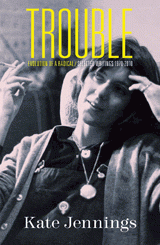
Kate Jennings, Trouble, bookcover

So, in what way was Jennings essential? I’ll start with the above-mentioned speech that brought her to the fore when she was just 22. The women in the Vietnam Moratorium movement had fought (hard) to have one of their number included among the many male speakers scheduled to speak at the march. Here is how Jennings, herself, introduces it in her “fragmented autobiography”, Trouble: Evolution of a radical: Selected writings (1970-2010) (my review).

We persisted, and eventually the organisers gave in. As the most experienced writer in our group, I was given the task of composing the speech, which we decided would be deliberately incendiary. But what I wrote was so incendiary everyone balked at giving it, me included. In the end, with a big shove and no experience of speaking in public, much less in front of a thousand or more, I walked the plank.

The reaction to her speech, she says, was immediate – much of it negative, particularly from the men in the movement – but, she writes

the confrontational language of the speech worked: we could no longer be ignored. Right tactic, right time.

It was essential, in other words. (You can read it here.)

And Jennings continued in that vein, being true and uncompromising to what she believed in. Take, for example, her introduction to the poetry anthology she edited, Mother I’m rooted. She was unapologetic about what drove her choices. She states the problem, then says what she did:

I don’t know any longer what is ‘good’ and what is ‘bad’. I have been trained to know, in a patriarchal university, on a diet of male writers. We have to go back to bedrock, and explore thoroughly that which is female and that which is male, and then perhaps we can approach androgyny, and humanity.

I have chosen the poems mainly on the grounds of women writing directly, and honestly.

(Included in Trouble)

Jane Bullen, reviewing the book in the ANU’s student newspaper Woroni (23 July 1975), picked up this point:

Perhaps it is this that is most striking about the book; the form of the poem is subordinated to the intense desire to say something, to mean something. Sometimes what is said contorts the poem, and the words are clumsy in their attempt to say it. The honesty, the urgent saying of what is meant is expressed (in the flawed structure, the not quite balanced nature of many of these poems. The effect of this is a refusal to compromise, an insistence on meaning in the face of form and a book well worth the time it takes to read it. 

My point is that Jennings saw that this poetry was different, that it may not have met the “received” style, but that it had something to say and she was darned well going to let them say it.

Her own writing broke boundaries. Her novel Snake (1996) takes the autobiographical novel to a different place with its spare style, episodic form, and mixed voice, and her Miles Franklin Award-winning novel Moral hazard (2002) is a work of that rare genre, business fiction. She wrote an essay, “Gutless fiction”, for the Australian Financial Review (26 August 2005), on the necessity for

unflinching works of fiction that engage our public and private selves, our intellect and emotions. More able to inhabit the skins of its characters, fiction can capture the ambiguity and caprice inherent in human behaviour and then give it context and causality in ways that nonfiction rarely can.

(Included in Trouble)

Erik Jensen’s book, On Kate Jennings, in the Writers on writers series, provides tender but honest insight into Jennings. Her life had many troubles. It’s worth reading, but I’m going to conclude by sharing something he tells us Jennings wrote for the back cover of her first poetry collection:

‘Kate Jennings is a feminist. She believes in what Jane Austen recommended at fifteen: “Run mad as often as you chuse; but do not faint.”’

(Jane Austen, Love and freindship)

An essential writer recognising another! Vale Kate Jennings. You gave us much to think about. A true legacy.

Lisa wrote a Vale Kate Jennings post on the weekend, and I have reviewed three of her books.

Sydney Writers Festival 2021, Live and Local (Session 2)

My second Sydney Writers Festival’s Live and Local event for 2021 was an hour after the first one. This left me time to fill in. It was disappointing that the National Library’s Bookplate Cafe was closed by then, which I think has happened in previous years. It would have been nice to sit down with a cuppa, or a cool drink. However, there was the bookshop, so I did business there instead!

Richard Flanagan and Laura Tingle: Conversation, Saturday 1 May, 4pm

If I hoped that this second session would not be as demanding on my ability to simultaneously take notes and absorb the discussion as the first, I was to be disappointed. This session featured multi-award-winning writer Richard Flanagan and the also award-winning journalist Laura Tingle, and I think I took even more notes. In fact, once again, Karen Viggers, who was also taking notes, nudged me a few times to say “get that down”! What a hoot!

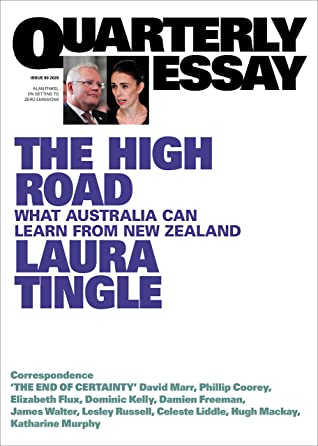
Flanagan is always entertaining, which doesn’t mask the thinking and humanity in what he says. Tingle proved, not surprisingly, to be up to the task of interviewing – conversing with – this man. The topics ranged far, but stemmed mostly from Flanagan’s latest two books, his non-fiction exposé, Toxic: The rotting underbelly of the Tasmania salmon industry, and his latest novel, The living sea of waking dreams. Flanagan also referenced Tingle’s writing, particularly her latest Quarterly Essay (#80), The high road: What Australia can learn from New Zealand. Flanagan has appeared several times on my blog.

Tingle started the traditional way by introducing Flanagan through his oeuvre. She noted its breadth of subject matter, then turned to Toxic. Read it, she said, if you want to be depressed, and horrified, and, oh yes, informed. It spoiled her breakfast, she said, wryly.

Flanagan, ever the humorist, suggested he is creating a new genre, Tasmanian non-fiction horror! Then, in one of his several compliments to Tingle, he said that in the last year Australian journalism has become stronger, better, and that this has been largely due to our women journalists, particularly Laura Tingle.

Flanagan then read, as requested, from Toxic – a particularly unappealing description of the physical matter involved in the industry – before answering Tingle’s obvious question regarding how Tasmania has responded to it.

Apparently, Toxic is “the fastest-selling book ever” in Tasmania, going to three print runs in its first week. Flanagan and his publisher had kept the project secret until the day it was placed in bookshops, without pre-publicity, with just his name and title. It has had immense support in Tasmania, but the government and salmon industry have been silent.

His plan had been to write a short article, but he just kept discovering patterns of intimidation and violence. Ultimately, he said, companies run rogue when there are no rules, and there is no proper governance in the salmon industry. There’s a lot we don’t know about the food industry, he added. He wrote the book for the public. He wants it to help people make decisions in supermarket aisles. (And, perhaps, Tingle for her breakfast!!). Responding to Tingle’s question about its impact on the state election that day, Flanagan said that exit polls were showing a stronger result for the Greens.

Tingle asked about Tasmania’s history of “f*****g up its water supplies”, about the confluence of business and bureaucracy in this. Flanagan talked of Tasmania’s particular history – the near genocide and the convictism which encompassed slavery. Many pathologies persist when you see mass trauma, he said. Most Tasmanians are the issue of the first quarter of its history. He commented on the abuse of power, and the use of silence and fear to retain power. He also quoted Chekhov:

Write about this man who, drop by dropsqueezes the slave’s blood out of himself until he wakes one day to find the blood of a real human being–not a slave’s–coursing through his veins.

Flanagan added “word by word” after “drop by drop”! (As Jim noted in his comment on my previous post, the subtitles frequently got tricky words and names wrong. I didn’t note them down, but I do remember Chekhov becoming “check cover”)

Tingle then turned to his books in general, suggesting that there are about people shaped by greater tides, people who have no control over their destinies. She was eloquent, and drew out a typical, somewhat self-deprecating Flanagan response that this “sounds plausible”.

Every writer, he said, belongs to both their birthplace and the universe of letters. Like many writers, he seeks the universal in the particular, and his particular is “this strange island”. All his books come out of the wonder of his original world in the western Tasmanian rainforests. He suggested that the history of novels is not made in the great centres. Joyce wrote in that tucked-way place of Dublin, Marquez in his fictional place, Macondo, and so on.

Tingle returned to her question, reframing it somewhat, to reference power. His characters she said are not authors of their own fate. Power doesn’t have to be at the centre of literature, he replied. Yet, in his latest book, The living sea of waking dreams, the characters are trying to control the mother. Her life is about people trying to control others.

Flanagan then made a point that made me sit up. He said there’s a potent and poisonous myth that everything is about power. He talked about how identity politics is a zero-sum game. The truth is, he said, that most things are not political. He quoted that grim poet, Larkin, who said that ”what survives of us is love”. Flanagan’s characters are about love, he said. This is the nub of what life is about. Seeing life through power is a “false compass”. This bears more thinking, though there is truth in what he says about love.

Tingle turned to time, to the linear time in European thinking versus Indigenous circular time. Does fiction free us of linear time, she asked? Flanagan talked of identifying two ideas underpinning European art: everyone is alone, and time is linear. BUT, he’d come to realise that no one is alone, that you only exist in others, and that time is circular. Stories go back and forth, in and out. Yolngu people, he said, have a tense that combines past-present-future. This is more what he grew up with.

There was more talk about Tasmania, but the next point I want to share is his idea – one Indigenous people understand – that “Bush is freedom, City is oppression”. We need our political leadership to open up to Indigenous heritage and ways of thinking.

Tingle then threw in a statement made by past conservative New Zealand PM, Jim Bolger, who, when asked “why the Waitangi Tribunal”, responded “because the country’s honour was at stake”! Imagine this from a contemporary Australian politician?

Flanagan’s response was that not thinking Bolger’s way led to “the slow corrosion of us as a just and democratic society”. He said that the “battle to be a good people and a good society matters”, but we are losing this as we continue to allow such things as Aboriginal deaths in custody. He said that the battle for the soul of nation is the battle for a nation worth living in. (Karen whispered to me, “so eloquent”!)

Then he referred to one of my all-time favourite books, Camus’ The plague (my review). The plague is always there. It’s deeply disturbing, he said, how out of their comfort zone many of our politicians are.

We then moved to Australian literature. Flanagan noted that there’s been a great surge in Indigenous and women’s writing, though he’s “annoyed” that women from the past are not getting the credit they should. Women – such as publishers Beatrice Davis and Hilary McPhee – have shaped a different literature here compared with American and Europe. He barely tipped the surface, though, of the depth of women’s contribution to Australian literature from its beginning.

Moving right along, Tingle asked Flanagan whether he was moving more into non-fiction. Not a bit of it, was, essentially, the reply. But, he did say that non-fiction gets you out of the door which is good for novelists. In the end, it’s story that’s important and fiction has a “profound spiritual aesthetic and intellectual tradition”.

The conversation then moved the challenges confronting writing stories (fiction and non-fiction), today: libel laws, not to mention the “wall of noise” and “multiple strands”, which Tingle said make it hard to pull stories together.

For Flanagan, there’s one simple story – rapidly growing inequality. He spoke of how the richest and most powerful have connections with politics, and act in ways that cloak the state’s withdrawal from where it should be, like education, health, environment. They manufacture identity wars in ways that shroud real needs.

He said his latest book looks at how words can create a wall between people rather than a bridge, and then talked about politicians lying in the morning, then again in the afternoon. This is the tactic of totalitarians. It creates a situation in which truth has no value, leaving you with opinion. When that’s all you have, “society moves into darkness”.

After all this, and a little more on politics and writing, the session ended with Flanagan reading a lovely piece from Toxic about an octopus. Flanagan said that despite it all, he’s not despairing: there’s hope in beauty and wonder.

It was hard to cut much out of this!

Sydney Writers Festival 2021, Live and Local (Session 1)

This is the third year I’ve attended Sydney Writers Festival’s Live and Local live-streamed events at the National Library of Australia.

More often than not, I attend these events alone, but I was lucky to find that one of our wonderful local authors, Karen Viggers, was also attending alone, so I had company in my note-taking and we did manage a little debrief after each session too. We had both booked two sessions – the same two. Karen has appeared a few times on my blog.

Sarah Krasnostein and Maria Tumarkin: Conversation, Saturday 1 May, 2pm

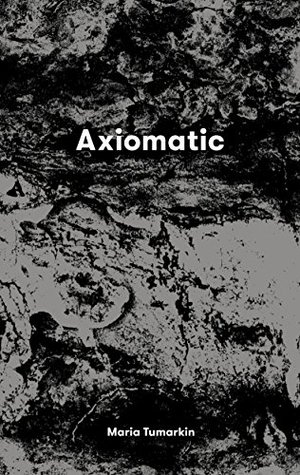
Maria Tumarkin, Axiomatic

This session was to be Sarah Krasnostein with Helen Garner. However, on Friday, an email announced that Garner was unable to attend and would be replaced by Maria Tumarkin. I was a little disappointed, of course, but I was very happy with Maria Tumarkin as replacement. I’ve read and reviewed her impressive book, Axiomatic, which won the Melbourne Prize for Literature’s Best Writing Award and was shortlisted for several other awards.

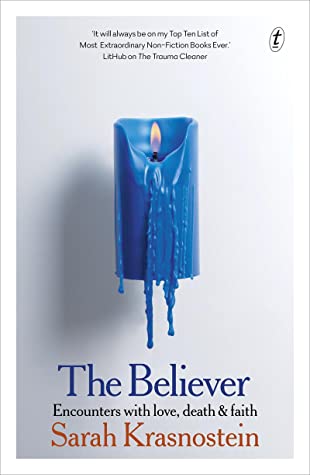
Writers festival conversations are interesting beasts. They are, formally, interviews, with one person’s role being to talk to the other about their latest work, in this case, Sarah Krasnostein and her book, The believer. But, what often happens, and what happened here, is that although it was clear that the focus was Krasnostein’s book, the session did feel more like a conversation with Tumarkin actively engaged in sharing ideas. Some of her questions were almost as long as Krasnostein’s answers. Indeed, at one point she admitted that she was taking a long time to ask her question and that “Helen would never do this”! She got a friendly laugh.

Here is how the Festival program described the session:

Sarah spent time in Australia and the US talking to six extraordinary people who held fast to a belief even though it rubbed against the grain of conventional wisdom. Her research culminated in The Believer: Encounters with Love, Death & Faith, a deeply humane and deftly drawn enquiry into the power of belief.

The program continued:

Sarah is joined by Maria Tumarkin to explore what we believe in and why – from ghosts and UFOs to God and the devil, dying with autonomy and beyond.

This is not, in fact, how it came out but, I’m not sorry, because what we got was something far more interesting. No, let me rephrase that. I don’t know how interesting the suggested topics might have been but I loved what they did talk about – because they spoke to matters that interest me.

With a nod to Helen Garner, Tumarkin started by quoting Garner who has apparently said that her first lines “come as music from some other place”. She wondered if that’s how Krasnostein’s books start.

“Not anything like that!” said Krasnostein, and she talked about her research and writing processes which topics interest me. She basically, as Tumarkin reframed it, “squirrels material without having a particular idea” about where it’s going. With The believer, Krasnostein “stumbled across the Mennonites” and went from there. She holds her material close, she said, “until it tells you what it is”. (A bit like Michelangelo finding the sculpture that’s already in the block of marble?)

Tumarkin asked what inspires Krasnostein. She replied that it’s the wonder of what she finds in a day, and telling story of that. In other words, she’s driven by curiosity, and finding the story under the surface.

Tumarkin then asked how Krasnostein fixes or anchors her stories. How she finds their core, I guess she meant. Krasnostein said it’s not about what she likes but what is “interesting”, about finding different versions of the world. She didn’t know exactly what she wanted to know about belief when she started.

However, she knew she didn’t want to write magazine pieces or a book of essays. She wanted to “articulate the commonality”, to know the stories we tell about our “interior vulnerabilities”. She talked about her book comprising a “house of unlike things”. Tumarkin liked this – because it mirrors her own way of thinking – and asked her to explain further. Krasnostein paraphrased German sociologist-philosopher-critic, Theodor Adorno, saying “that harmony in art is not achieved by forcing components into resolution but making space for dissonance”. [I hope I got that down right, Karen!]

Then she said something that interested me. She wanted to come up with a structure that would demonstrate (mirror? reflect?) what she wanted to express philosophically. I love writing in which the structure informs or reflects or enhances the meaning.

This clearly also interests Tumarkin, who feels that much Australian non-fiction is formulaic in argument and structure. This is paradoxical, perverse, she said, because books are where “very different things can live together”, where you can practise dissonance and find unlike things.

This led to voice. Krasnostein said she prefers first person but you have to balance being in there too little against too much. She argues that third person is the most narcissistic because it means acting like God. All non-fiction is subjective, involves selection; a first person voice recognises this. Regarding how and where you put yourself in, she said that sometimes it’s for ethical reasons (to provide context, say), sometimes practical (such as reporting conversations), and sometime technical (such as to move the narrative along). However, while Krasnostein prefers first person, she is “never comfortable” about putting herself in!

Krasnostein mentioned Tumarkin’s writing about memoir vs confession (such as here), saying she doesn’t like memoir so much. She thinks it’s hard to see out of one’s own life.

Tumarkin asked about her approach to developing relationships during her research, suggesting that you can’t really see or know another person’s world, but you can connect on, say, an axis of fear or wonder. (I’m reminded of EM Forster’s Howard’s End theme, “Only connect”)

Krasnostein talked about doing the research to find the “right” people. Then it’s case-by-case, and depends on each person’s physical and emotional availability. For her, duration is a dimension of the story, as people change over time. Consequently, some relationships take 2-3 years to develop. In factual writing, it’s not about friendship. She said that Janet Malcom (whom I know Garner also admires) writes about this. Her ultimate contract is with the reader.

Tumarkin teased this out, suggesting there are other ethical responsilbilities besides to the reader, including to the subject matter. She commented that people are unreliable narrators of their own lives, and asked how Krasnostein balances responsibility to the person (the subject) and the reader (who needs the truth). You know the person in front of you is an unreliable narrator but you cannot undercut them.

Krasnostein said it’s partly about context. If you unpack the context – if you show the situation the person is in, and you honour their truth – you can respect everyone’s humanity and meet your ethical obligations. (This made sense to me. I would probably use the word “respect” too: you respect their story, their truth, which writers can do, at least partly, with tone.) She referred to Dorothea Lange, and the Frances Bacon quote on her darkroom door:

The contemplation of things as they are, without error or confusion, without substitution or imposture, is in itself a nobler thing than a whole harvest of invention. 

Krasnostein said she is interested in “bearing witness”, in seeing different views of same world rather than in making judgements.

The conversation continued, with Tumarkin asking Krasnostein about whether her legal training helps her work. Krasnostein identified the positives as being the story (context, character, evidence) and the training in writing directly, boldly. It taught her to “be frank on the page”. Somehow, this led to a discussion about resolutions – about how “resolution” is for fiction and the law, but not for non-fiction. Resolution is unsatisfying, they agreed.

Interestingly, Krasnostein described herself as a “pointillist”, as someone who only sees detail, which, she said, was “good for a writer, terrifying for a person”! However, I’d say that to write what she does, she is also able to see the forest.

There was a little more, but I’ll close by sharing Tumarkin’s essay on “wildness” that Krasnostein referenced, because it shows their mutual interest in “not following formula”. Tumarkin writes that

the essay moves by sway and swagger, not always but often enough. What it never does is march toward a preordained horizon. You can never give an essay its marching orders.

I love the way these women think, so it was a real pleasure to see them both in action.