Monday musings on Australian Literature: Stilettos and Sponsors

Has that got your attention? If it has, I’m sorry if you think I’m going to talk about high society fund-raising parties. I’m afraid it’s a bit more mundane than that … but interesting I hope.

The Stilettos

I have in fact written about the Stilettos before, the Scarlet Stiletto Awards to be exact. To recap, they are Sisters in Crime Australia’s annual awards for best short crime and mystery stories by women writers. This year they are offering a record $11,910 in prizes this year. As Carmel Shute, secretary of Sisters in Crime, says

“Crime does pay – at least on the page. And writing is a lot safer than holding up your local service station, especially during a pandemic.”

Fifteen awards are offered:

  • Swinburne University Award, 1st Prize: $1500
  • Simon & Schuster Award, 2nd Prize: $1000
  • Sun Bookshop & Wild Dingo Award, 3rd Prize: $600

  • Affirm Press Award for Best Young Writer (under 19): $500
  • Monash University Award for Best Emerging Writer (19-25): $500
  • Melbourne Athenaeum Library ‘Body in the Library’ Award: $1250 (plus $750 for runner-up)
  • Booktopia Publisher Services Award for Best Environmental Mystery: $750
  • Clan Destine Press Award for Best Cross-genre Story: $750
  • Every Cloud Award for Best Mystery with History Story: $750
  • Kerry Greenwood Award for Best Malice Domestic Story: $750
  • Viliama Grakalic Art and Crime Award: $750
  • Writers Victoria Crime and Punishment Award for the Story with the Most Satisfying Retribution: $660 (Studio Residency, Old Melbourne Gaol)
  • HQ Fiction Award for Best Thriller: $500
  • ScriptWorks Award for a Great Film Idea: $500
  • Liz Navratil Award for Best Story with a Disabled Protagonist Award: $400 

There’s a lot of opportunity here, as you can see, for different sorts of stories – and past winners have included writers I’ve reviewed or mentioned here, like Angela Savage. The monetary amount isn’t huge, but it’s something, and, as Shute says:

Since the awards began 28 years ago, 3896 stories have been entered and 30 winners – including winners of the Shoe and category winners – have gone on to have books published.

The closing date for entering this year’s awards is 31 August, 2021. There is an entry fee of $25 (less for Sisters in Crime members), and stories must be 5000 words or less. More information and the entry form can be found at Sisters in Crime.

The awards will (hopefully) be presented in Melbourne in late November.

The sponsors

From the above list of awards, you’ve probably guessed the inspiration for the second part of this post – the sponsors. Most awards – literary or otherwise – are sponsored. Some, like the Prime Minister’s and various Premier’s literary awards, are funded by governments, but many are offered by individuals and organisations. The Miles Franklin Literary Award, the Barbara Jefferis Award and the Kibble Literary Awards, are all funded by bequests which identified the purpose of the award. Other awards or prizes are funded by a range of people and organisations, including philanthropic people and foundations, and like organisations (such as publishers and bookshops).

But, keeping awards funded is a challenge, and something I have planned to write more broadly on for some time. I will still do that. However, Sisters in Crime provided a good introduction to the subject in their promotion of this year’s award, because they say that only one sponsor pulled their funding “despite these financially fraught times” and “two new supporters” came on.  Excitingly for them, several sponsors not only continued their awards but increased the amount.

Watch for a future Monday Musings on this and related issues – but no promises when!

Meanwhile, any thoughts?

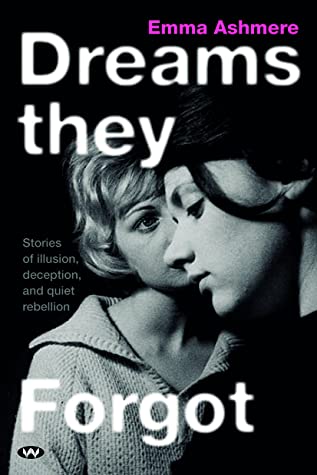
Emma Ashmere, Dreams they forgot (#BookReview)

Emma Ashmere’s short story collection, Dreams they forgot, is different again from recent short story collections I’ve read. Certainly very different from the most recent, Adam Thompson’s Born into this (my review). One of the things that makes it different is its breadth in terms of time and place. Thompson’s collection, for example, is mostly contemporary, with occasional forays into the past and a little jump into the future. It is also very definitely centred in Tasmania. Ashmere’s collection on the other hand, while having some grounding in South Australia, has stories set elsewhere in Australia as well as overseas, including London, France, Bali and even Borneo. Furthermore, a significant number of the stories are historical fiction, with some set in colonial Australia, or during the Depression, for example, or post war, or in the 1970s. This is quite unusual in my experience of short story collections.

Unusual I say, but not surprising, because Emma Ashmere’s debut book is an historical fiction novel, The floating garden (my review). It is one of those books that has stuck with me because it tells such a strong story of social injustices that occurred during the building of the Sydney Harbour Bridge.

I could, then, start my discussion with the story in this collection which concerns the Bridge during its construction (“The sketchers”), but instead I’m going to the final story, because it gave me a laugh. This story, “Fallout”, concerns the (not funny) nuclear testing at Maralinga and concludes with the narrator taking her mother to the National Film and Sound Archive (NFSA) in Canberra to show her some relevant treasures. What a great little promo for the importance of collecting institutions like the NFSA. But, that’s not what made me laugh. As some of you know, I spent most of my career at the NFSA, and this is how our narrator introduces it:

I tell her I live with my girlfriend in Canberra and work at the Film and Sound Archive with a bunch of other failed actors, part-time poets and overlooked opera singers.

I wish I could count myself as one of those, but I’m far too prosaic. However, there is probably an element of truth in what she writes. All I can say is that at least the NFSA offers gainful, and valuable, employment! This story, dealing as it does with the “fallout” from nuclear testing – great wordplay here – makes a fitting and strong end to Ashmere’s collection, which deals with all sorts of fallouts in people’s lives.

Take the first story, for example. Titled “The winter months”, it concerns a young woman who, like many young people, is uncertain about what she wants to do with her life, much to her mother’s frustration. She’s in England, and is doing a TEFL course (Teaching English as a Foreign Language) which, she believes, “is going to change everything. It will give me purpose. A goal. A life”. She meets and is attracted to a mysterious and seemingly confident young woman, Aveline, but, unbeknownst to our narrator, Aveline has her own challenges, and suddenly disappears.

“The winter months”, however, is more complex than I’ve described here. It introduces us to several types of characters and relationships which thread through the collection – uncertain young women, lepidopterists (would you believe), mothers-and-daughters, neglected wives, fledgling same-sex attractions, to name a few. The result is that, as the book progresses, some stories start to feel linked, even though in most cases the link isn’t actual. The effect though is to ground the collection because this feeling is supported by recurring concerns.

One of these is Ashmere’s concern for social justice, for overlooked people, for women in particular. “Nightfall” tells the story of a young Irishwoman who arrives in Adelaide during goldfields days:

Most of us here Behind the Wall sailed across the sea with our Billies, Jemmies or Toms. No sooner did they set their boots in the dust, they streaked off like a dog chasing a rabbit across a field, all glint and muscle and hunger and bragging about what they will become. I waited for my Billy to bring back rabbits and gold, but he didn’t come.

And so, girls like her were left behind:

It’s the same in every port for girls like us. You stand with the bones of your back pressed against the wall as sailors rope up their harpoons and aim them at your lower parts, or you go into a tavern for a drink.

She ends up working for an abortionist who is, of course, more concerned about not being caught than her health and safety … This story was shortlisted for the 2019 Commonwealth Writers Prize.

Other stories explore the impact on relationships of PTSD in times when there was no support or recognition (“Warhead” and “Seaworthiness”), and another, as already mentioned, looks at the aftermath of nuclear testing at Maralinga. Many of the more contemporary stories feature children and young adults who find themselves caught in worlds they don’t fully understand or don’t yet know how to handle. “The violin” is a carefully told story about a controlling young man and his bride-to-be.

There is a melancholic or, at least resigned, tone to many of the stories, but most are not completely depressing. While happy endings might be rare, little wins or rebellions or, in some cases, lovely acts of grace lighten the endings. As with most collections, there are stories that didn’t quite work for me, but those that did more than made up for the rest. I particularly loved “Seaworthiness” and “The violin”, but most read well.

This brings me to the title, which is not one of the stories in the collection. What does it mean? It’s certainly true that many of the characters had dreams, and it’s also true that in most cases these dreams do not come to fruition. Did they forget them? Not always, but, for better or worse, other dreams – or, at least events – replace them.

If you’d like a taste of Ashmere’s writing, you can read one of the stories, “Standing up lying down”, online at Overland. I’ll finish with a quote from it:

Apparently she’d heard Laurie’s conference paper on the omissions and silences in Australian history, how particular stories are concreted over, while others are constructed and celebrated in their place.

In Dreams they forgot, Ashmere retrieves some of these concreted over stories – those she feels able to, anyhow – and gives them a darned good airing.

Challenge logo

Emma Ashmere
Dreams they forgot
Mile End: Wakefield Press, 2020
239pp.
ISBN: 9781743057063

(Review copy courtesy Wakefield Press)

Monday musings on Australian literature: Defining the novel, in 1975?

During one of my forays into Trove, I came across an intriguing little piece by Canberra artist-educator-reviewer, Malcolm Pettigrove. Pettigrove was a regular arts reviewer in The Canberra Times through the 1970s and 1980s, but it was his article published on 31 January 1975 that particularly caught my attention.

It starts:

NO issue in the issue-filled business of literary appreciation has had as much wind and ink spent on it as The Definition of The Novel. Ironically, few issues are of less importance.

I like this, because I think definitions are fun, but ultimately unimportant. Actually, fun is not quite the right word. What I mean is that discussing definitions is a worthwhile exercise because it helps hone our ideas about form and can inform our understanding of creative works, but in the end, the important thing is the work, regardless of what category/form/type critics or reviewers slot it into.

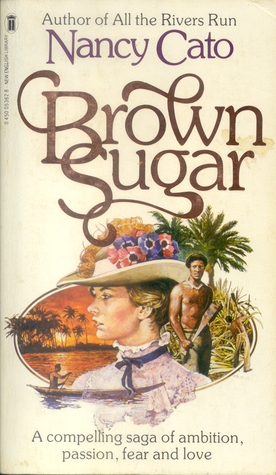
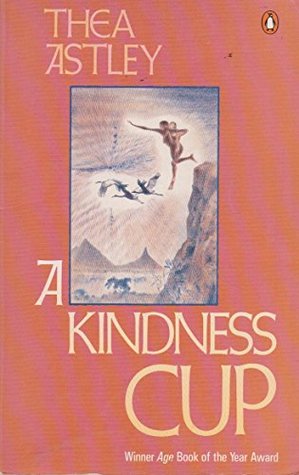
So, with that understanding, let’s look at what Malcom Pettigrove had to say – in his review of three Australian historical fiction novels, Nancy Cato’s Brown sugar; Maslyn Williams’ Florence Copley of Romney, and Thea Astley’s A kindness cup.

He starts, in fact, by saying a bit more about the novel:

Whatever theorists might make of it, the word “novel” remains in reality nothing more than a convenient label for those fictional works of narrative, descriptive, expository, dramatic, or didactic prose which no other label will fit. […] No more comprehesive [sic] definition has ever been coined, and it’s quite likely that none ever will.

Now, I’m not going to engage much more with this. Wikipedia’s writers simply describe the novel as “a relatively long work of narrative fiction, typically written in prose and published as a book”. I could check my various books, but I think I’ll find variations on this theme, so let’s move on. Pettigrove says that this says nothing about a “lack of imagination on the part of the definition-makers”. Rather, “it indicates that the novel has a life and a mind of its own and is determined not to surrender to the definition-makers until it has exhausted all the variations of form, content and style that are available to it”.

The Australian novel, he says, is no different. He writes:

Most novels, whether Australian or not, are conservative, courteous, sociable things, with established habits, moderate expectations, and only a limited inclination to experiment. The bold innovation, being rarely understood and seldom well received, is left to the adventurous minority, some of whom die in the attempt leaving the successful ones to proliferate their own image in more or less conservative, courteous and sociable offspring which are established in their habits, and given to moderating our expectations by being limited in their inclination to experiment further.

I do like this description of how innovation leads to the next “standard” – until, of course, the next innovation comes along. It happens in all the arts, doesn’t it? Of the three novels he’s reviewing, you won’t be surprised to hear that he says that Cato’s and Williams’ novels belong to the majority, while Astley’s is an “offspring of the minority”.

He then discusses the three novels. Nancy Cato has appeared in this blog a few times. Her historical fiction, Brown sugar, is a “novel” he says, and also “a foreshortened saga”, a “history of the rise and fall of the north-coast sugar empires”, and “a romantic tale”. He sees limitations in this novel, particularly in terms of depth of characterisation. The extent of her historical research is evident, he says, but “in the hands of a Martin Boyd this material would undoubtedly have given rise to characterisations of considerable depth and subtle complexity.”

Maslyn Williams’ novel, Florence Copley of Romney, he says, shares with Brown sugar, its “contrast of values”. Overall, though, this story is “pleasantly romantic” rather than offering something interesting and challenging about the Australia in which it is set.

Book cover

Then, he comes to Thea Astley’s A kindness cup (for which there are reviews by Lisa, Bill and Lou on Lisa’s Thea Astley page). Astley is described on the book’s fly-leaf, Pettigrove says, as “a prose stylist”. It’s clear he’s not a fan – or not entirely a fan – of Astley’s “prose-style”, for which he gives examples, but he writes that:

If this brief and bitter tale succeeds — and I believe it will — it will be in spite of its prose-styling, not because of it. When Miss Astley drops the prose of the stylist and begins to function simply as a writer with a tale to tell her work becomes stark, tense, and most effectively dramatic.

Astley’s writing, he says, would intrigue “the reader who enjoys examining the intricate and often unfathomable relationships between a human action, its setting and its motive”. She evokes her cane-country town setting “with potent economy” and the motives of its characters “are exposed with the precision of surgery”. Indeed, he says,

The total impact of the book is considerably greater than its brevity might suggest possible.

All three books, he concludes, discuss the nature of man in their own way – though their understanding “is wonderfully simplified when the men depicted inhabit the philosophical no man’s land that nineteenth-century rural Australia has become in the minds of so many contemporary novelists”. “Philosophical no man’s land”? A discussion for another day, perhaps?

As for defining the novel? He suggests these novels provide no answers … just, the implication is, more questions. In fact, his piece peters out in terms of its opening salvo, but I did enjoy his perspective on these three writers.

Thoughts, anyone?

Jonathan Shaw, None of us alone (#BookReview)

Some of you will know of Jonathan Shaw as the blogger at Me fail? I fly! If you read his blog, you will also know that he loves poetry: he writes it, he reviews it. None of us alone is his first commercially published collection, though he has self-published five collections and has had a number of poems published in journals like Quadrant, Going Down Swinging, and, would you believe, the European Journal of International Law. None of us alone, styled a chapbook, contains 24 poems, selected from his previous collections and published works.

I enjoy reading Jonathan’s* poetry reviews, because he takes us through the poems, sharing his thoughts as he goes. I also like the fact that though he sounds confident, he admits to not always being sure that he’s picked up the nuance or, say, understood all the “metaphorical dimensions” of a poem, so I know he’ll forgive my errors and misses here. Then again, I don’t plan to discuss particular poems in detail, the way he often does, so I may avoid big errors!

However, I will say that Jonathan plays with various forms including sonnets (which seem to be a favourite), free verse and traditional ABAB quatrains. His rhyming is confident and comfortable rather than forced, which is a great start. His allusions are accessible, and his resolutions are usually clear, with the sonnets mostly ending in a rhyming couplet, which make their point. Overall, the tone tends to be neutral or lightly melancholic, with touches of humour, even where the subject is serious. This sort of writing appeals to me.

The poems in None of us alone draw from Shaw’s life, his domestic, artistic and political interests, and so are easily relatable to Australians of a certain age and persuasions. There are gorgeous poems about dogs (“The dogs outside Orange Grove Markets”) and (“She looks out”), for example, that will speak to dog lovers. There are poems inspired by art exhibitions (“Sculpture by the sea”) or attending a play (“This is just to say”). And, most particularly, there are poems responding to the politics of the day (asylum-seekers, same-sex marriage, domestic violence, and climate change.) The first poem, in fact, is a climate change themed sonnet, “Demo”

… We
rallied, one link in a chain
of rallies all around Australia
crying out against the failure
of governments who play the role
of sycophants to Old King Coal.

I like the cheekiness of another sonnet “Unprecedented again”, which he wrote just last year. You can find it on his blog. However, while looking for it on his blog, I learnt something, which is that his favourite form is not, in fact, a sonnet, as I felt I had ascertained from this collection, but an Onegin Stanza. You’d have to be a poetry purist to know though! Anyhow, the poem plays on the idea that the “unprecedented” just keeps on coming, in one form or another, creating a fine line between the unprecedented and the precedented.

“A pronunciation lesson” – a free verse poem – is one of the poems that has been published before. It has also been read on ABC’s Poetica. I’m not surprised by its success because it lures us into a sense of calm before hitting us in the guts with a stand-alone last line. Its subject is Hiroshima, and it is followed by another free verse poem on Hiroshima, “Correspondence”, this one expressing the cynicism of one who knows how it goes. You can live too long! And indeed, there are poems here that recognise our mortality.

Before I finish, I must mention the beautiful design of this little series, with its classy front-papers, and the cover of this particular work. It features a photograph of a ceramic heart from the “Connecting Hearts Project” by potter (and Jonathan’s partner) Penny Ryan. The collection includes a poem inspired by these hearts, “2 July 2016”. The artwork and the poem address the pain experienced by asylum-seeker detainees, and the “malice” of governments refusing to open their hearts to them:

Unwrapped, this heart confronts that malice:
our beating hearts can face our fear –
Close down those camps, bring those hearts here.

And here I’ll leave it, because it’s a little book – a chapbook – and you can buy it, as I did, for $5 plus postage and handling. Check Jonathan’s post for details.

* I haven’t met Jonathan in person but have “known” him long enough in the blogosphere that I felt silly using my usual last name style, Shaw, to discuss this book of his.

Jonathan Shaw
None of us alone
Port Adelaide: Picaro Press (Ginninderra Press), 2021
28pp.
ISBN: 9781761091247

Miles Franklin Award 2021 winner announced

Nothwithstanding this week’s Monday Musings posts on literary awards, I still like the Miles Franklin – partly because of its significance in the Australian literary firmament – and so I am sharing today’s announcement of this year’s winner which I watched via You Tube.

You may remember that this years shortlist was:

  • Aravind Adiga’s Amnesty (Lisa’s review)
  • Robbie Arnott’s The rain heron
  • Daniel Davis Wood’s At the edge of the solid world
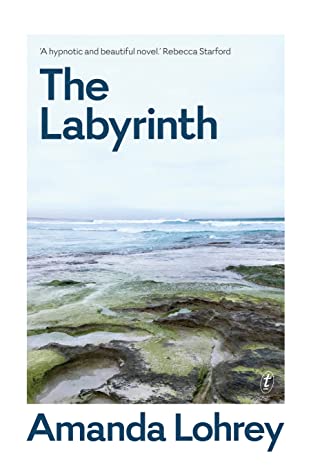
  • Amanda Lohrey’s The Labyrinth (Lisa’s review)
  • Andrew Pippos’ Lucky’s
  • Madeleine Watts’ The inland sea
Book cover

And the winner is: Amanda Lohrey’s Labyrinth

(Lisa will be pleased!)

Just to recap, from my shortlist post: Each of the shortlisted writers received $5000 from the Copyright Agency’s Cultural Fund, with the winner receiving $60,000 prize. This year’s judges comprised, as always, continuing judges and new ones, providing I think a good mix of experience and fresh ideas: Richard Neville (State Library of NSW), author and activist Sisonke Msimang, and critics Melinda Harvey, Bernadette Brennan and James Ley.

So, more on the winner …

This is Lohrey’s second listing for the Miles Franklin award, but her first win. The panel described the novel as a “profound mediation” on loss, with judging panel chair, Richard Neville commanding the “clarity” of her prose in exploring “loss at so many levels”. (Notably, Neville also mentioned the increasing cultural diversity appearing in the awards, by which I assume he meant, in the books submitted. Ninety-six titles were submitted.)

Amanda Lohrey spoke briefly, thanking various people – including family, publisher, editor, of course. She praised her publisher, the wonderful Text Publishing, for supporting “literary values” and she talked of the award’s benefactor, Miles Franklin, as “the great Australian nonconformist”. She also thanked the readers whom she described as an “indestructible tribe” in a world of Netflix (etc). She characterised the relationship between writer and readers as “an extraordinary exchange among strangers.” I like that.

Book cover

The presentation also included last year’s winner Tara June Winch congratulating Amanda Lohrey. She said that what she gained, in particular, from the award, was “a readership”. Isn’t that great to hear, because that – and the “gift of time” – is what we hope awards like this offer books and their writers.

And, finally, just for fun. Today The Sydney Morning Herald published an article on How to win the Miles Franklin: Analysing 64 years of data, by Pallavi Singhal. It looks at the usual issues like gender, origin (birth location, ethnicity), age, but also other points you may not have considered like length (“write about 400 pages”, it says), title style (“Begin your book title with ‘the’ and keep it short”) and publisher (Allen & Unwin is ahead at the moment)!

Do you have any thoughts on this year’s winner?

Monday musings on Australian literature: Talking literary awards

This Thursday will see the announcement of the winner of this year’s Miles Franklin Literary Award. It’s one of the more important days on the Australian literary calendar, but it has inspired another of those articles about the value of literary awards.

Now, we have discussed awards here before. Back in 2012, I wrote about them when the Queensland Premier’s Literary Awards were abolished by a new premier. In 2014 I wrote on Unpublished Manuscript Awards. And more recently, I wrote about the return of The Age Book of the Year Award. These posts, and others, have generated discussion about the value of awards, with both readers and writers commenting on whether they like them and why, so I won’t go there again.

Instead, I’ll share a couple of interesting ideas from the article I mentioned above. First, though, having planned this post a couple of days ago, I was surprised to find Stan Grant referring to awards in his book, On Thomas Keneally (my review). In 2016, he says, he was on a judging panel – with Thomas Keneally, in fact – for the NSW Premier’s Literary awards. They were judging the Indigenous writer category:

Ellen van Neerven, Heat and light, book cover

Keneally and a fellow judge strongly supported Pascoe, but I resisted, arguing instead for the merits of Ellen Van Neerven’s Heat and light, a dazzling work of fiction I considered of greater depth and literary worth than Dark emu. In the end we agreed that Pascoe and Van Neerven should share the prize.

I have reviewed both of these books (links on the titles), and for what it’s worth, I agree with Grant (despite the fact that, as he admits himself, “Dark emu has certainly had the greater cultural impact”).

Regardless, I’m sharing this because it beautifully introduces David Free’s article in last Friday’s The Sydney Morning Herald. Free is an Australian journalist and novelist who is not, I admit, well-known to me, but his provocatively titled article, “Judge a literary prize? No thanks, they’re all a giant waste of time”, makes some points worth sharing.

He starts anecdotally by sharing his experience of being asked to “serve on the judging panel of one of Australia’s most coveted literary prizes”, which he chooses not to identify. This doesn’t really matter in terms of what I want to share. He decides not to accept the invitation, largely because “the prospect of sitting down with a couple of strangers [the other judges] to haggle about our respective tastes in literature struck me as radically unappealing”. You can see why I started with Grant’s experience. Anyhow, he says

My literary taste is unorthodox, by current standards. I happen to think it’s sound and I do my darnedest to defend it in my criticism. But I’ve never been bold enough to imagine that my literary judgements amount to objective, provable truths.

Of course, this idea of suggesting that something is “best” dogs prizes in the arts, whether they be for books, paintings, films, whatever. We all know it, but prizes do have their benefits. Arguably, they can enhance sales, and the big money prizes do give their winners breathing space, an opportunity to devote some more time to their art.

If, however, we put these pros aside, and focus on the idea of prizes identifying works that we might like to check out, then I think Free has a couple of interesting ideas to consider.

The first one is to abolish judging panels and have “one judge only – a different person each year, chosen strictly on the strength of his or her literary expertise.” He knows the idea sounds “farcical”, that “people would denounce such awards as arbitrary”, as just an “expression of some random person’s taste”. He counter-argues, however, that the idea that panels make better decisions is a “furphy”:

It doesn’t matter how discerning each individual judge is. When human beings get together in groups, weird things happen. We feel pressured to conform – to say what we think we’re expected to say rather than what we believe. That’s why the verdicts of literary juries tend to be predictable, wholesome, obedient to the winds of trend.

I think he has a point. Do you?

It’s his other idea, though, that appeals more, because it aligns with my own use of awards. He suggests that we scrap the concept of the lone winner:

Let’s have a prize where there isn’t even a shortlist – a prize where the judges just announce their longlist of the year’s 15 best books, then split the winnings 15 ways.

This is more like it. He continues:

Admittedly this wouldn’t turbo-charge book sales the way our existing awards do, but in the long run it might promote a healthier relationship between fiction and the reading public. If diversity and inclusion are what we want, why not showcase these qualities on a longlist, instead of pretending they can somehow be embodied by a single writer? On longlists there’s room for different writers with different talents, doing all sorts of different things. There’s room for the quirky, the experimental – maybe even the humorous, once a decade or so. Sniff around a longlist for a while and you’re likely to find at least one book that floats your boat.

Isn’t this what all of us who look at longlists (and to some degree shortlists) like? It avoids the whittling down, he says, and all those arguments about which writer’s “turn” it might be, or which identity group has or hasn’t had a “fair shake already”.

Ultimately, he says, the best verdict is posterity. “Either a work lasts or it doesn’t … Crowd wisdom of that sort is very hard to argue with”. Actually, I think you can, because the “crowd” itself is often skewed, but I take his point, theoretically speaking.

Meanwhile, I will continue, as I have said elsewhere, to enjoy long- and shortlists, because that’s where many of the gems truly are.

What do you think?

Stan Grant, On Thomas Keneally (Writers on writers) (#BookReview)

Book cover for Stan Grant, On Thomas Keneally

Stan Grant’s On Thomas Keneally is the second I’ve read in Black Inc’s Writers on writers series, Erik Jensen’s On Kate Jennings (my review) being the first. As I wrote in that post, the series involves leading authors reflecting “on an Australian writer who has inspired and influenced them”. Hmm … the way Keneally inspired and influenced Grant is not perhaps what the series editors envisaged, but certainly his essay meets some of the other goals: it is “provocative” and it absolutely starts “a fresh conversation between past and present.”

Most Australians will know immediately why Grant chose Keneally, but for everyone else, it’s this. In 1972, Thomas Keneally’s The chant of Jimmie Blacksmith was published. It is historical fiction based on the life of Jimmy Governor, an Indigenous man who was executed in 1901 for murdering a white family. Keneally is on record as saying he was wrong to have written the book from an Indigenous person’s perspective, but he did, and the book is out there (along with its film adaptation by Fred Schepisi).

That’s Keneally, but what about Stan Grant? Of Wiradjuri and Irish heritage, he is no stranger to this blog. He’s an erudite, thoughtful man, always worth listening to, but, here’s the thing. I find it difficult, with this book, to be a white Australian discussing a First Nations Australian writing about a white Australian who wrote a novel about a First Nations Australian. The politics are just so complicated. I’ll do my best, but will just focus on a few ideas. At 86 pages it is a short piece so, if you are interested, I recommend you read it yourself.

If you have ever listened to Grant, you will know that his thinking is deeply informed by history and philosophy, and so it is here. He is also palpably angry, and pulls no punches. He writes, just over half way through the essay that

This entire essay is about writing back to the white gaze. I need to write back to the white author who would steal my soul. I must prove I exist before I can exist.

Grant starts his essay by reminding us of Australia’s history and how “in a generation or two, my people were nearly extinguished.” He introduces us to Jimmy Governor, who was executed just three weeks after Federation. Jimmy becomes the lynchpin for his argument, because he, “that grotesque murderer”, is also, says Grant, “the memory of a wound. He is a scar on our history that runs like a fault line between black and white.” He is “a spectre that will not let us bury our history.”

The problem is, argues Grant, that the real Jimmy is nothing like Keneally’s Jimmie:

Keneally’s caricature of a self-loathing Jim­mie Blacksmith is a lost opportunity to explore the complex ways that Aboriginal people … were pushing against a white world that would not accept them for who they were; that would not see them as equal; that, in truth, would not see them as human.

But, of course Keneally’s novel is historical fiction, and, historical fiction, as most of us realise, says as much about the time it was written as about the time in which it is set. In Keneally’s case, The chant of Jimmie Blacksmith was written in 1972, a particular time in Australian history, Grant recognises, “a time of anti-Vietnam protests, the election of the Whitlam government and the Aboriginal Tent Embassy”. Grant continues:

Keneally was writing a protest story for a protest era; he needed Jimmie Blacksmith to be the freedom fighter that Jimmy Governor never was. Jimmy was a man who wanted respect. He bridled against injustice, yes, but this was a crime of anger, not an act of war.

Grant though wants something more. He wants exploration and understanding of how history, how Australia, has negated First Nations Australians’ very beings. He refers to Jacques Derrida’s coinage of

‘hauntology’, to describe how the traces of our past – our ghosts – throw shadows on our world.

Grant believes that “the West thinks it can vanquish history; that the past can be entombed”. I don’t personally ascribe to that. It’s not rational, to me. But I can see how the course of Western “progress” does in fact manifest that way of seeing, and it leaves people – like First Nations Australians – in its wake. This, really, is the theme of Grant’s essay.

However, at times Grant lost me. He says Christos Tsiolkas is “copping out” when he says that it is not for white Australians to write “a foundation story for the first peoples of this country”. Grant suggests Tsiolkas can, and that he could “look to the First Peoples to enter our tradition; to understand that story and his place in it before he writes a single word about what it is to be an ‘Australian'”.

I’m uncertain about how a white Australian can do this right now, but that is probably my lack of imagination. Regardless, I feel that Grant is refusing to recognise the respect behind Tsiolkas’ statement. It’s a respect many of us feel when we contemplate writing about First Nations Australians. We don’t want to presume we know what we can never understand. Grant says it himself, late in the book:

No one who has not lived through our interminable loss could capture what it is to be Indigenous in Australia.

In the last part of the essay, Grant discusses other Australian writers. Besides Tsiolkas, these include Patrick White, Joan Lindsay, Randolph Stowe, from the past, and contemporary Indigenous writers like Tara June Winch and Bruce Pascoe. His thoughts are often surprising. He clearly approves Eleanor Dark who “knew that blackness hovers over everything that is written in this country”.

The final part of essay reads like a manifesto. Grant states exactly what he will and won’t do and be. But, he also says he is glad Keneally wrote his book because it has stayed with him for forty years. In it, he felt “the weight of my history”. The results weren’t always positive, but the book has, I think he’s saying, kept him thinking.

And he says this:

Like me, Thomas Keneally made his own pilgrimage to the old Darlinghurst Gaol. Standing near where the real Jimmy Governor was hanged, he said he was sorry for “assuming an aboriginal voice”. He should have sought permission, he said. “We can enter other cultures as long as we don’t rip them off, as long as we don’t loot and plunder,” he said. I don’t think we can police our imaginations. I don’t think we need to ask permission. Australian writers have never done this and, frankly, I see them in my country more clearly because of it. It is like the debate about Australia Day; why move the date if it will only hide the truth.

I will leave you with that.

(My third post for Lisa’s 2021 ILW Week.)

Stan Grant
On Thomas Keneally: Writers on writers
Carlton: Black Inc, 2021
90pp.
ISBN: 9781760642327

Adam Thompson, Born into this (#BookReview)

When my brother gave me Tasmanian author Adam Thompson’s Born into this earlier this year, I told him I’d save it for Lisa’s ILW 2021, which I did – and which means I can now thank him properly for a yet another well-chosen gift, because this is a strong, absorbing and relevant read. If you haven’t heard of Thompson, as I hadn’t, he is, says publisher UQP, “an emerging Aboriginal (pakana) writer from Tasmania”. 

Born into this is a debut collection of sixteen short stories about the state’s Palawa/Pakana people, and based primarily in Launceston and islands in the Bass Straight. It reminds me a little of Melissa Lucashenko’s novel Too much lip (my review) because, like it, these stories are punchy, honest interrogations into the experience of being Indigenous in contemporary Australia. I say contemporary Australia, because most of the stories deal with recognisably First Nations Australia concerns. However, the collection is also particularly Tasmanian – in setting and in dealing with issues and conditions specific to that place.

They may live in two worlds, but they are still mob (“The old tin mine”)

I like to think about the order in which stories in a collection are presented, although I can never be confident of the assumptions I make about the reasoning. How can I, I suppose, as I’m not in the heads of the authors and their editors. The first story here, “The old tin mine”, is an interesting choice: it introduces various issues and ideas which are picked up through the collection and it sets a sort of resigned tone. The issues include the relationship between black and white in Australia, the introduction of city Indigenous kids to country and culture, the clumsy conscientiousness of white people who want to do the right thing, the politics involved, and the world-weariness of older Indigenous people in dealing with all of this. The story is told first person through the eyes of “Uncle Ben”, the Indigenous leader on an “Aboriginal survival camp”. He is tired, and cynical, and not particularly interested in dealing with these

Aboriginal teens. City boys. Three from Launceston, three from Hobart. “Fair split, north and south”, according to the organisation that had won the black money.

But it’s a job, and these jobs are becoming less frequent, so he takes it on.

The second story, “Honey”, is told third person, and concerns the interactions between white man Sharkey, who has a honey business, and his Palawa employee, Nathan. Sharkey is arrogant, condescending and oblivious of how his behaviour might affect Nathan. He asks Nathan for the “Aboriginal word for honey” because he thinks using it to brand his honey would “be a good gimmick for selling honey … ‘specially with the tourists”. Not all stories work out this way, but in this one, Nathan has the last laugh.

“Honey” also introduces another idea that peppers the collection, which is land rights, and non-indigenous Australians’ fear of losing land. The collection, in fact, references many of the issues confronting contemporary Australia’s relationship with its First Nations peoples: land rights; Invasion Day (or “change the date”); dispossession, the loss of Indigenous culture and attempts to reclaim it; social issues like incarceration, alcoholism and suicide among Indigenous people; and the Stolen Generations, to name some of them.

Some stories, however, respond to a particular Tasmanian issue, that regarding the definition of indigenity. As I wrote in my post on Kathy Marks’ Channelling Mannalargenna, Tasmania’s history has resulted in a specific set of circumstances regarding loss of identity, which has caused, and is still causing, complications and conflict over Indigenous identification in the state. One of the stories on this subject is “Descendant” about a bright, politicised but ostracised young schoolgirl who runs her school’s ASPA (Aboriginal Students and Parents) committee. Dorothy is assiduous about who is and is not “P-A-L-A-W-A”, and has family-tree records to prove it. Aboriginality, she says, is about “being”, not “choosing”. The story provides an excellent example of Thompson’s use of imagery to underpin his themes: Dorothy’s prized mug is accidentally broken, and Cooper, the supportive (of course!) librarian, tries to repair it, but

Bold, white cracks now intersected the Aboriginal colours like a tattered spider web.

Thompson’s writing in this collection is accessible but evocative. His dialogue varies appropriately from speaker to speaker, and the imagery, particularly that regarding colour – red, blue and white, representing white Australia, versus the red, black and orange of First Nations Australia’s flag – is pointed but not overdone. Thompson clearly knows his country. His descriptions of the islands, and the plants and birdlife endemic to them, take you there (or, at the very least, teach you about them.)

I would love to write about more of the collection’s stories, but I should leave you some surprises. I will say, though, that Thompson’s wide cast of characters – from young, disaffected palawa to smart activists, from genuine white people, who want to understand, to the smug and/or rich ones (as in the incisive “The black fellas from here“) – ensures that this collection hits home. No reader, really, can hide from the truths here because they touch us all.

White makes you wary (“Aboriginal Alcatraz”)

Born into this, then, is clearly political, but it is not all bleak. Some stories end with a bang or a twist, which skewer their points home, while others are more gentle. The title story, “Born into this“, is one of the more poignant ones. It tells of Kara, who works as a receptionist at an Aboriginal housing co-op. She’s jaded. Her boss is “a tick-a-box Aboriginal” who “could never prove his identity”, and she is tired of the struggle to survive. So, deep in the forest, where she had learnt about country from her uncle, she spends her spare time working away on her own quiet, little subversive project, a project that involves

Natural survivors, like her own family, born into a hostile world and expected to thrive. She took in the surrounding devastation and thought again about her own life.

“Born into this”.

She knows she won’t make a difference, but “fulfilling some cultural obligations in her own small, secret way” keeps her sane.

It would be great to think that books like Born into this could make a difference – and I think they could, if we all not only listened to Indigenous writers like Thompson, but also took on board, really took on board, what they tell us about ourselves.

For more reviews of this novel, please click Lisa’s ILW 2021 link in this post’s opening paragraph.

Adam Thompson
Born into this
St Lucia: UQP, 2021
210pp.
ISBN: 9780702263118

Monday musings on Australian literature: Recovering Australia’s Indigenous languages (2)

2021 National NAIDOC logo.

Yesterday was the start of Lisa’s (ANZLitLovers) 2021 Indigenous Literature Week which coincides of course with NAIDOC Week, and, again, I’ve decided to contribute this week’s Monday Musings to the cause. The topic I’ve chosen, the reclamation of First Nations languages, was partly inspired by last week’s Monday Musings on Eliza Hamilton Duncan, but also follows up a post I wrote early last year on the topic.

According to academic Elizabeth Webby, Dunlop was the “first Australian poet to transcribe and translate Indigenous songs, and [w]as among the earliest to try to increase white readers’ awareness of Indigenous culture”. Dunlop also created vocabularies of the local language. Consequently, her work, like that of other colonials, is helping language reclamation projects around Australia. Of course, if settlers hadn’t stolen land and destroyed culture, and hadn’t actively suppressed language, in the first place, this arduous work would not be needed.

Each year NAIDOC week has a theme, and 2021’s is “Heal country, heal our nation” which, the website says, “calls for all of us to continue to seek greater protections for our lands, our waters, our sacred sites and our cultural heritage from exploitation, desecration, and destruction.” Given the significant role played by language in maintaining culture, a post on language reclamation is, I think, relevant to this theme.

‘The living voices of our past giving strength to our future’

This heading is the goal of a 2013-established organisation, First Languages Australia. They are working, they say, to “a future where Aboriginal language communities and Torres Strait Islander language communities have full command of their languages and can use them as much as they wish to.” This is just one organisation working on the goal.

Another is Living Languages, founded in 2004 under another name. They describe their purpose as “to support the sustainability of Indigenous languages and Indigenous peoples’ ownership of their language documentation and revitalisation.”

It is difficult to assess the magnitude of the challenge because so much is lost, but Living Languages says that some 250-400 languages were spoken across Australia, or up to 700 and 800 if you include language varieties and dialects. However, they say, Australia has been “identified as one of five language endangerment hotspots worldwide, with only around 13 languages being passed on to children today”.

As I wrote in my previous post, First Nations communities vary in their attitude to sharing language outside their communities. This statement by the Kaurna people on the University of Adelaide’s language courses webpage clearly states their position:

Kaurna language and culture is the property of the Kaurna community. Users of this site are urged to use the language with respect. This means making every effort to get the pronunciation, spelling and grammar right.

Kaurna people reserve the right to monitor the use of the language in public. Users of this site should consult with Kaurna people about use of the language in the public domain.

Random projects and activities

There’s no way I could document all the projects – big and small – that are happening around Australia, so I’m going to share three (adding to those I mentioned in last year’s post) which exemplify the sorts of things that are happening.

Eidsvold State School Wakka Wakka program

Located in Queensland’s North Burnett Region, this school has developed, says the Teach Queensland website, a “unique language program” that engages the whole school with the local community and in learning the local Aboriginal language, Wakka Wakka. The local First Nations people support this program:

After several years of planning and consultation with Traditional Owner groups, the Wakka Wakka Corporation and the community, Eidsvold State School encourages all students and staff to speak to each other in Wakka Wakka using short phrases.

Mawng Ngaralk language website

Mawng is spoken in the western part of Arnhem Land in the Northern Territory. The site tells us that Warruwi School runs a Mawng language program and supports the 2014-established Warruwi Language Centre which runs other Mawng language activities. Do check out this website, because it contains a dictionary and many, many videos in which local speakers share their knowledge in ways that both document vocabulary and pronunciation, and show how the language is used in song and dance.

Paper and Talk workshop

This was a two-week workshop held in 2019, led by Monash University, in collaboration with Living Languages and AIATSIS. Its aim was “to help revive languages from five Aboriginal communities”: Anaiwan (NSW), Wakka Wakka (QLD), Yorta Yorta (VIC), Ngunnawal (ACT) and Wergaia (VIC). The workshop gave language researchers from these communities “the opportunity and skills to access archives and transform them into usable language resources”. They were, for example, introduced to resources, like an 1800s surveyors’ notebook, in which language were documented by early settlers (like Dunlop).

What about irretrievably lost languages?

Maïa Ponsonnet, who researches Aboriginal languages, though is not Indigenous herself, makes the point that “while there are very good reasons to deplore the loss of small languages, assuming this loss condemns cultural identity may be unhelpful and reductive to those who have already shifted away from their heritage language”. In her article in The Conversation she argues that reclaiming languages is important, but that over-focus on it can be hurtful and, in some circumstances, politically damaging for those whose languages are lost. Language, her research is showing, is “plastic”. Post-colonial languages like Kriol can be “shaped by culture”, she writes. “Even when language is replaced, culture can continue”.

Thoughts, anyone?

Click here here to see all my previous ILW/NAIDOC Week-related Monday Musings.

Six degrees of separation, FROM Eats shoots and leaves TO …

Now we come to July, and we Aussies have one month of winter under our belt. Woo hoo! But, enough weather report, onto our Six Degrees of Separation meme. If you don’t know how it works, please check out meme host Kate’s blog – booksaremyfavouriteandbest.

The first rule, as most of you know, is that Kate sets our starting book – and this month it’s a book I’ve read, albeit long before blogging. It’s Lynne Truss’s Eats shoots and leaves, whose subtitle, “The zero tolerance approach to punctuation”, tells you its subject.

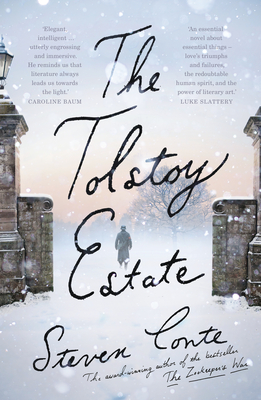
As always, I had many thoughts about where to go with this, but I couldn’t resist using Truss’s dedication, which is: “to the memory of the striking Bolshevik printers of St Petersburg who, in 1905, demanded to be paid the same rate for punctuation marks as for letters, and thereby directly precipitated the first Russian Revolution”. This gave me the opportunity to link to my latest review, Steven Conte’s The Tolstoy Estate (my review), sinceone of the main characters, Katerina, was a Bolshevik supporter of the Russian Revolutions.

Izzeldin Abuelaish, I shall not hate

I love humane people who rise above the enmities that surround them to do the right thing. Conte’s doctor, Paul Bauer, is a fictional one, but a real one is Dr Izzeldin Abulaish who, in his book, I shall not hate (my review) tells of the killing of three of his daughters by Israeli Defence Force shells in January 2009 during a 23-day attack on Gaza, and his decision to not hate but to work for harmony in Palestine and Israel.

Sara Dowse, As the lonely bly

A novel which explores the twentieth century history of Israel and Palestine, looking at the early idealism and the later failures, and arguing for empathy and humanity, is Sara Dowse’s As the lonely fly (my review).

Sara Dowse Schemetime

Now I’m going to do something I rarely do in this meme, which is to link to another book by the same author, to a book that will move us away from politics to the arts. The book is Sara Dowse’s Schemetime (my review). It’s about an Australian filmmaker who goes to LA wanting to make a career in the film industry.

Book cover

The natural link for this is Dominic Smith’s recent historical fiction, The electric hotel (my review). It is about the early decades of the film industry, when entrepreneurs were developing cinematograph technology and touting it around the world.

Cover for Amor Towles A gentleman in Moscow

The main character in Smith’s book is silent film pioneer Claude Ballard, and when the novel opens he is an old man who as been living in LA’s Knickerbocker Hotel for over thirty years. Remind you of anything? It reminded me of Amor Towles A gentleman in Moscow (my review), which is about “pre-revolutionary” Count Rostov who lives (is, technically imprisoned) for decades in Moscow’s grand hotel, Metropol.

This doesn’t link naturally back to Lynne Truss, but it does to my first link The Tolstoy Estate! Yasnaya Polyana is not a grand hotel, but it is a real place used as a setting for a novel, and Bolshevik Katerina was originally an aristocrat like our count.

So, besides that little bit of circularity, where have we been? All over the place – Russia, Israel and Palestine, America, all over the world, and back to Russia. And, reversing my usual pattern, four of my selections are by men, and two by women (the same woman, actually.)

Now, the usual: Have you read Eats shoots and leaves? And, regardless, what would you link to?