Monday musings on Australian literature: 2023 Mark and Evette Moran Nib Literary Award shortlist

Occasionally, as you know, I use my Monday Musings post to make awards announcements, particularly if the announcement is made on Monday, as this award usually is. And so it happened again today, a Monday, that the shortlist for this award was announced.

I have written about it before and so if you are interested to read about its origins and intentions please check that link. In a nutshell, it celebrates “excellence in research and writing”, and, like the Stella Prize, it is not limited by genre. However, given its research focus, nonfiction always features heavily.

The new thing, though, that is worth sharing in today’s post is that in April this year, Waverley Council which manages the award announced that the winner’s prize had doubled in value from $20,000 to $40,000, thanks, they say on their website, “to an ongoing multiyear commitment by the award’s principal sponsors, Sydney philanthropists, Mark and Evette Moran, Co-Founders/Co-CEOs of the Mark Moran Group”. This is a significant prize. The Council’s announcement also said that it had “also increased the People’s Choice Prize to $4000 and will be offering six shortlist prizes of $1,500 each”.

The Award is also supported by community partner Gertrude and Alice Bookshop and Café.

The judges for the 2023 award are Katerina Cosgrove (author), Jamie Grant (poet and editor), and Julia Carlomagno (publisher).

The 2023 shortlist

  • Alison Bashford, An intimate history of evolution: The story of the Huxley family (family biography, Allen Lane)
  • André Dao, Anam (debut novel, Hamish Hamilton) (Brona’s review)
  • Jim Davidson, Emperors in Lilliput: Clem Christesen of Meanjin and Stephen Murray-Smith of Overland (dual literary biography, The Miegunyah Press)
  • Fiona McMillian-Webster, The age of seeds: How plants hacked time and why our future depends on it (science nonfiction, Thames & Hudson Australia)
  • Ross McMullin, Life so full of promise: further biographies of Australia’s lost generation (multi-biography, Scribe)
  • Brigitta Olubas, Shirley Hazzard: A writing life (literary biography, Virago, on my TBR)

Waverley Council Mayor, Paula Masselos, said that the shortlist was chosen from more than 230 nominations, a number that, she said, reinforces “the importance and gravitas of this award”.

As commonly happens with this award, life-writing features heavily in the shortlist, with just one work of fiction. It is not as diverse as other awards are increasingly becoming, but most of these books wold interest me.

The winner of the overall prize and the People’s Choice Award will be announced on 9 November. For information on how to vote for the People’s Choice Award, check out the shortlist announcement page.

Do you know any of these books?

Six degrees of separation, FROM Wifedom TO …

Woo hoo, our house is sold (though not quite off our hands), and spring has sprung down under (just), so the Gums are feeling ready to begin the next stage of our lives. We are relieved, but, you know, it’s acceptance that we are on the downward trajectory – to put it bluntly, so let’s just get to Six Degrees. If you don’t know how this meme works, please check host Kate’s blog – booksaremyfavouriteandbest.

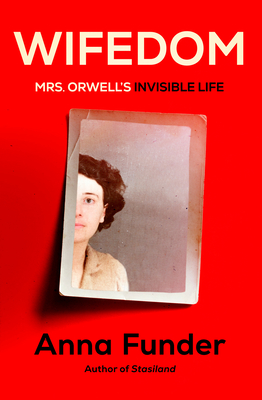
The first rule is that Kate sets our starting book. In August it’s another book I haven’t read, Anna Funder’s Wifedom: Mrs Orwell’s invisible life. It is about Eileen O’Shaughnessy who married Orwell in 1936 but has been barely mentioned in biographies of Orwell. Funder set out to discover why.

Anna Funder's Stasiland bookcover

Now, it appears that some of my links have been a bit obscure lately. So, in deference to regular commenter here, MR, who wants a fighting chance to work out my links, my first one this month is an obvious one, Stasiland (my review), which is another non-fiction work by Anna Funder.

Helen Macdonald, H is for hawk

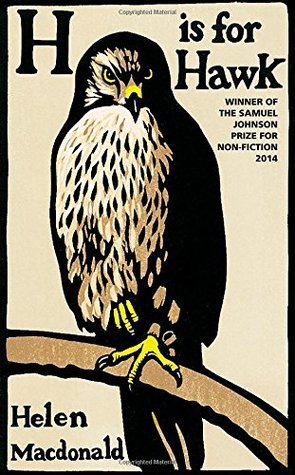
Stasiland was well-reviewed when it came out and was shortlisted for many awards. It won at least one of those, the 2004 Samuel Johnson Prize for the best non-fiction writing in the English language. Ten years later, in 2014, Helen Macdonald won the same prize for her book, H is for Hawk (my review). FYI, in 2015 this prize was renamed, the Baillie Gifford Prize for Non-Fiction.

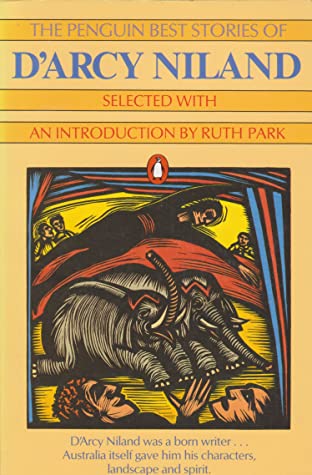
Macdonald writes about training, and hunting with, a hawk, while she works through her grief for her father who died suddenly. A very different work about a hawk is Australian writer D’Arcy Niland’s short story, “The parachutist” (my review) though we do also see the hawk in hunting mode.

Book cover

In “The parachutist”, the hawk preys upon an innocent young kitten who is oblivious to the danger of a predator from the skies. Chris Flynn‘s novel Mammoth (my review) also includes a predator from the skies, Pterodactylus, who tells the other “characters” in the novel, “I was referred to as the Reptilian Eagle, an apex predator who dominated the skies. It would have been a compliment, had it not come from the mouths of maniacs”. (The maniacs were the Nazis.)

Tracy Chevalier, Remarkable creatures

Pterodactylus, like many characters in Mammoth, is a fossil. Another historical fiction novel (if you can call Mammoth historical fiction) that deals with fossils is Tracy Chevalier’s Remarkable creatures (my review). It tells the story of the early 19th-century fossil collector, Mary Anning.

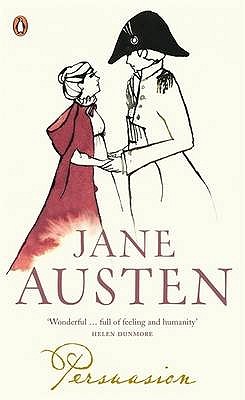
Jane Austen, Persuasion

Mary Anning’s collecting work focused on the marine fossil beds in the cliffs at Lyme Regis. Some of you, on hearing this, will immediately guess my last link, and you would be right. It is to Jane Austen’s Persuasion (my post on volume 1), in which a significant (and memorable) event occurs in the same place. 

My post this month started in England with Kate’s choice and ended there, but in between we visited Germany and Australia, and we traversed a wide expanse of time from pre-history to the 21st century. We also, unusually, spent a bit of time in the animal kingdom.

Now, the usual: Have you read Wifedom? And, regardless, what would you link to?

Monday musings on Australian literature: Masterpieces of fiction, 1910-style

A straightforward post this week, and one shared in the spirit that readers love lists of books. This list is not Australian (despite my posting it in my Monday Musings series) but it was shared in multiple Australian newspapers in 1910 which makes it part of Australia’s literary history, don’t you think?

The list was headed in most newspapers as “A short list of masterpieces of fiction” and the explanation provided was essentially this, “An American paper offers the following as an excellent though, of course, limited list of the best books for one to read”. The papers don’t value add, so we don’t know which American paper produced the list or under what circumstances. However, I thought it was a fun one to share because it’s not just a list of recommended books, but of the “best” in different categories. Here they are:

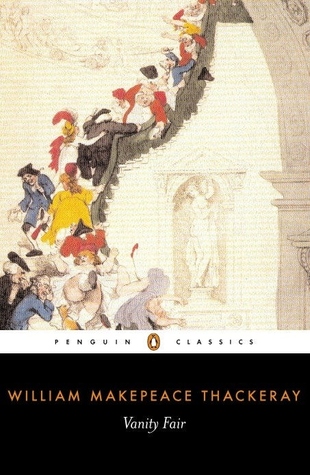
William Makepeace Thackeray, Vanity Fair
  • The best historical novel — Ivanhoe (Sir Walter Scott, Scottish) 
  • The best dramatic novel — The Count of Monte Cristo (Alexandre Dumas, French)
  • The best domestic novel — The vicar of Wakefield (Oliver Goldsmith, English)
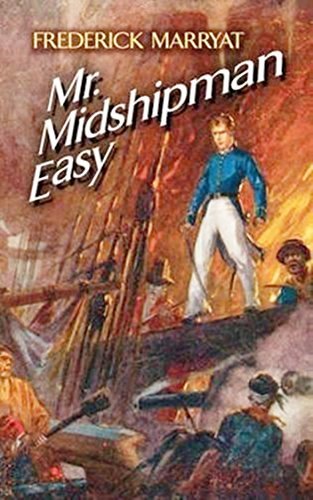
  • The best marine novel — Mr. Midshipman Easy (Frederick Marryat, English)
  • The best country life novel — Adam Bede (George Eliot, English)
  • The best military novel — Charles O’Malley (Charles Lever, Irish)
  • The best religious novel — Ben Hur (Lew Wallace, American) 
  • The best political novel — Lothair (Benjamin Disraeli, English)
  • The best novel written for a purpose — Uncle Tom’s Cabin (Harriet Beecher Stowe, American)
  • The best imaginative novel — She (H. Rider Haggard, English)
  • The best pathetic novel — The Old Curiosity Shop (Charles Dickens, English) 
  • The best humorous novel — The Pickwick Papers (Charles Dickens, English) 
  • The best Irish novel— Handy Andy (Samuel Lover, Irish) 
  • The best Scotch novel — The heart of Midlothian (Sir Walter Scott, Scottish)
  • The best English novel — Vanity Fair (William Thackeray, English)
  • The best American novel — The scarlet letter (Nathaniel Hawthorne, American)
  • The best sensational novel — The woman in white (Wilkie Collins, English) 

And:

  • The best of all — Vanity Fair (William Thackeray, English)

I was interested, and infuriated, that the authors’ names were not included in the over ten published versions I saw, so I’ve added them in parentheses. I don’t care whether readers at the time knew the names of the authors or not, the authors should be identified. It is a little soap-box issue of mine that there is often not enough recognition of the authors of the books we read. This is why I always start my review posts with the name of the author not the title of the book. It’s my little bit of literary activism!

Like all such lists, this one is interesting for what is and isn’t there. Where are Austen or the Brontes for example, while other authors like Dickens and Scott appear twice? Clearly their popularity hadn’t waned. More to the point, perhaps, why only one non-English language book? No Russians, for example? It’s also interesting to see which books have dropped off the radar. Does anyone know Mr Midshipman Easy for example? Wikipedia tells me that it’s been adapted to film twice,

The “best” categories also tell us about the interests and reading habits of the time – “best pathetic novel” anyone? Or “best religious”? Or “best novel written for a purpose”? And so on.

Anyhow, I’ll leave it there … and ask you,

Just for fun, what categories would you suggest for a similar list today?

Source: The first paper in which I saw the list was Victoria’s The Elmore Standard, 12 February 1910.

J.D. Vance, Hillbilly elegy (#BookReview)

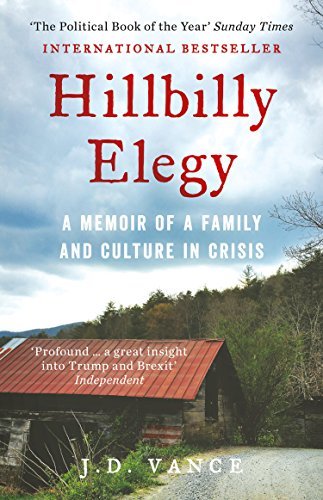
I did something recently that I haven’t done for a long time. I picked up a book from a remainder table. It was at the National Library bookshop, and I was waiting to meet a friend for lunch. The book was J.D. Vance’s memoir Hillbilly elegy: A memoir of a family and culture in crisis, and on its front cover was a review excerpt from the Independent, which said “profound … a great insight into Trump and Brexit”. I was intrigued, and embarrassed that I had not been aware of this “international bestseller” – unlike many of you I suspect.

So, I started reading while waiting for my friend and was engaged. On the first page of his Introduction, Vance tells us that the cover of the book says memoir, but he’s only thirty-one and has accomplished nothing great, nothing that would justify a complete stranger paying money to read about him. Then comes the point, he had written the book, he said, because he had achieved something quite ordinary. He had graduated school, then gone to university and Yale Law School, something that doesn’t happen to people like him, to white people who grow up poor in an Ohio Rust Belt steel town. This is the sort of socio-cultural story that interests me.

Then I hit a little block. I wrote about it to my American friend – we always share our reading – and she filled me in on Vance (born in 1984). Anti-Trump in 2016, he has since back-flipped and is now not only not anti, but actively, and visibly, pro-Trump. He is, in fact, as of 2023, a Republican Senator and Trump supporter. Hmm … well, I kept reading, though admittedly after a little pause. I’m glad I did because I learnt quite a lot – about American white working class culture, specifically Appalachian hillbilly culture, and how it can lead to the sort of thinking that can make something like Trump happen. But, the book was published in 2016, so it doesn’t necessarily explain what is happening today.

The memoir

As a memoir, Hillbilly elegy follows a typical misery (or poor-boy-done-good) memoir trajectory. Born into a dysfunctional family with an addict mother and a procession of “father” figures, Vance was headed for a life of similar struggle and little hope. He provides a colourful and warm-hearted but also clear-eyed picture of the Kentucky-based Appalachian hillbilly culture from which he’d come, and of those from it who migrated, as his family did, to the now declining factory towns of Ohio. Of all the American books I’ve read over the years, this was not a story I knew, and I found it fascinating – in both the parts that were unique and those that were universal to disadvantaged families (in western cultures anyhow), namely the poverty, the lack of opportunity, the lack, even, of awareness of what could be striven for (let alone how to do it). This lack of awareness and know-how are, in a way, the real kickers.

As is common in this genre, Vance survives with the help of others, most notably his maternal grandparents, Mamaw and Papaw to whom he dedicates his book. He credits Mamaw’s (and his mother’s, in fact) commitment to the importance of education, along with the help of others who recognised something in him, as being what got him through. It’s a common story in one sense, but the particulars of this one – to do with the hillbilly culture and his individual circumstances – make it worth reading.

At the end of the book, Vance acknowledges the help of various people in writing this book. These include someone called Charles Tyler who forced him “to hone in on a few core themes”. Those themes are evident from the beginning, and they stem from an interrogation of his cultural background, its derailment and how it operates to hold people back. It’s a believable story, and I enjoyed reading it, partly because he brings the place and the people to life and partly for the truths he shares, because there are truths there, truths that confirm some of my own sociological studies into disadvantage back in the 1970s.

The sociology

However, it’s also in the sociological analysis that I was most challenged. Vance describes in detail the problems his culture faces – the poverty and lack of opportunity, the drug addiction, the broken families, the violence, the complicated relationship to work – but the conclusions he draws are what’s interesting.

An example is his discussion of his culture’s understanding of success, which they put down to one of two factors: the luck of being born into wealthy families, or talent. As most hillbillies don’t come from the former, they ascribe success to being smart, meaning “hard work doesn’t matter as much as raw talent”. He analyses this a little, providing some nuance, but it seems that in his mind work ethic (or lack thereof) is an issue. He raises it first in his Introduction where he describes his experience of working on the floor of a tile distribution business and seeing poor work ethic firsthand. This and similar experiences (including seeing welfare gaming in operation) drove this book, which he says is about “a culture reacting to bad circumstances in the worst way possible … a culture that increasingly encourages social decay instead of counteracting it”.

My friend wrote during our discussion by correspondence that he seems to come more from the “pull yourself up by your bootstraps” mentality than one acknowledging the role of outside help, such as from the government. Vance does talk about all the help he received – indeed he says he wouldn’t be where he is now without it – but it was from family, friends, and mentors, meaning personally-based, not from the government. The message feels confused. He clearly appreciates how difficult it is for people who grew up like he did to get ahead on their own, but his analysis of the remedy feels narrowly simplistic:

Public policy can help but there is no government that can fix these problems for us.

and

I don’t know what the answer is precisely but I know it starts when we stop blaming Obama or Bush or faceless companies and ask ourselves what we can do to make things better.

These are valid points – to a point. Change does need to come from within, but that can rarely happen independently. Serious support is needed, and it needs to be systemic, and structural, from without as much as from within. Vance understands issues like lack of opportunity and ignorance. These things can’t be easily fixed from within. It doesn’t seem like Vance sees that (or, didn’t then, anyhow).

I wasn’t far into Hillbilly elegy when I was reminded of another poor-boy-done-good memoir, Rick Morton’s One hundred years of dirt (my review). However, while Vance has gone on to join his country’s ultra-right, Morton, who was also born in the mid-1980s, has gone in a very different direction. A journalist, his expertise is social justice, and he regularly calls government to account for its failings. His understanding of opportunity and social inequity feels more nuanced to me, but that may be because I agree with his way of thinking about these issues, and how they might be addressed. I could ask why these two men who came from such poverty-stricken backgrounds are so different in their thinking, but I’d only be conjecturing (albeit with some basis in fact) so let’s just leave that thought hanging.

I’m glad I read Hillbilly elegy. Vance cares deeply about his culture, and his stories of real people who are genuinely hurting engaged my heart, but he also provided insight into a way of thinking about these issues that I little understood.

J.D. Vance
Hillbilly elegy: A memoir of a family and culture in crisis
London: William Collins, 2016
264pp.
ISBN: 9780008220563

Monday musings on Australian literature: Thoughts on literature’s moral purpose

I struggled with titling this post because I don’t want it to sound like a thoroughly thought through treatise on the topic. However, I jettisoned my original plan for today’s post to respond to Angela Savage’s question on my CWF post on the Robbie Arnott interview because it seemed worth exploring.

If you haven’t read that post, the gist is that Robbie Arnott talked about why he writes fiction and what he likes to read. Responding to a question about whether fiction does something, he made clear that for him it does (or at least that he would like it to.) Fiction, he said, can expand our consciousness, can make us feel things. We come away a different person after reading it. In this way fiction shapes who we become. Later in the interview, he talked about there being a moral aspect to everything we do, which for him, includes writing. This translates into his feeling a strong responsibility, for example, to tell stories about the land in a way that improves our country. My response to this was that I loved Arnott’s absolute commitment to fiction – to its ability to change us, and to its moral (but not didactic) heft.

Enter the lovely Angela Savage, award winning novelist, former director of Writers Victoria, and current CEO of Public Libraries Victoria who comments occasionally on my blog. She commented on the post with:

Interestingly, I just read an article arguing against the premise that literature/fiction needs to be moral or change us. Would be interested in your opinion.

The article appeared in last Friday’s The Conversation, and is by Dan Dixon, Adjunct Lecturer at the University of Sydney. It’s titled “Friday essay: what do publishers’ revisions and content warnings say about the moral purpose of literature?” It was inspired by two recent issues: the controversy about the rewriting of passages from authors like Roald Dahl to remove “potentially offensive material”, and the “precautionary measure” being adopted by some publishers of adding content warnings and disclaimers to some older books.

It’s a thoughtful piece, and I recommend it to you because I only going to discuss bits of it here, the bits that relate to my answer to Angela’s question.

Dixon makes the point that the media only becomes interested in literary stories when there are “moral concerns” and that these discussions are part of a “moral battle which encourages the application of the same ethical criteria to books that might be apply to elected officials or ministers of religion.” He then suggests that writers’ festival programs demonstrate that we “struggle” to talk about books on any other terms.

Dixon looks at the economic drivers behind these controversies and how they can commodify books. He recognises that literature is affected by the marketplace but argues that it also pushes back against that. Do read his argument if you are interested. Meanwhile, I want to focus on his exploration of what literature is about.

A common question, he says, is:

is there a necessary connection between a work’s literary value and its moral quality? When we read a book do we expect a degree of moral instruction, as to how we should or should not live?

He believes this is a worthwhile question, but that it is not the only question. Literature is more than this. Indeed, he argues that limiting discussion to moral debates encourages “definitive judgements” which enables us, he says, to

avoid what Keats described as negative capability: “being in uncertainties, mysteries, doubts, without any irritable reaching after fact and reason”.

This is where I want to come in, because I am perfectly happy with what Dixon calls “the unpleasantness of irresolution” – and so, I believe, is Robbie Arnott. In Limberlost, for example, Ned’s daughters confront him with being a farmer on stolen land. Arnott believe it was important for Ned to be confronted with this fact, that to ignore the issue would not be real. But he offers no resolution, no moral closure; it just sits there, as it often does in life.

I’m not sure what Arnott meant exactly by his statements, but I think he’s right that there’s a moral aspect to everything. However, I don’t think he means, as a result, to provide the moral answers. In fact, I’m confident that he knows there aren’t necessarily any, or at least not easy ones. Rather, I understood him to mean that he is aware of the moral implications of the way we live and wants to include those in his books, because that’s real. This is subtly different from saying there must be a moral to the story (to literature, to any art).

Now, I’ll return to Dixon and some things he says about literature. First:

The best literature can be spiky, ambiguous, difficult, cruel, strange, unpredictable, hectoring and unpleasant. It is not the job of a book to ease the life of its reader. Reading a good book might mean having a terrible day, a day in which you are scared, sad, distressed. 

I can agree with this. Arnott’s point that you come away changed could work with this!

Then Dixon says:

But literature does not have an obligation to be useful; we do not have to learn anything from it. It need not produce anything except a readerly response.

I also agree with this. My belief is that, at the purest level, the only thing literature (art) needs to be is whatever its creator wants it to be. It is then up to the reader/viewer/listener (whatever the art form is) to decide whether they appreciate the art. I know this is simplistic as creators are, for a start, constrained by any mix of economic, legal, social, political and practical factors, but this is my theoretical starting point.

Returning to Dixon one more time, he says near the end of his piece that “any argument that treats literature as fundamentally therapeutic, self-improving or society-improving, risks reducing literature to self-help”. This is a bit trickier, but I think it hangs on the word “treat”. And it takes me back to my previous point. If I argue that literature doesn’t “need” to be anything, then by definition I should not “treat” it as needing to be something. I can, however, prefer literature that tries to improve or change things. A fine line perhaps but I think it’s defensible.

I therefore like Dixon’s conclusion that the best way to think about literature might be as a “conversation”. He expands this to say that conversations “can be morally nourishing or deadening … neither good nor bad”. Seeing literature this way suggests for him that “reading resembles conversation … an ongoing exchange between reader and writer”. Which brings me back to Arnott who sees novels as a two-way communication between author and reader, one in which he’d love to know whether what he feels resonates with the reader. 

I hope I’ve answered Angela’s question, and I also hope I have accurately represented Arnott in terms of the question. What do you think?

Canberra Writers Festival 2023: 4, Into the Wild

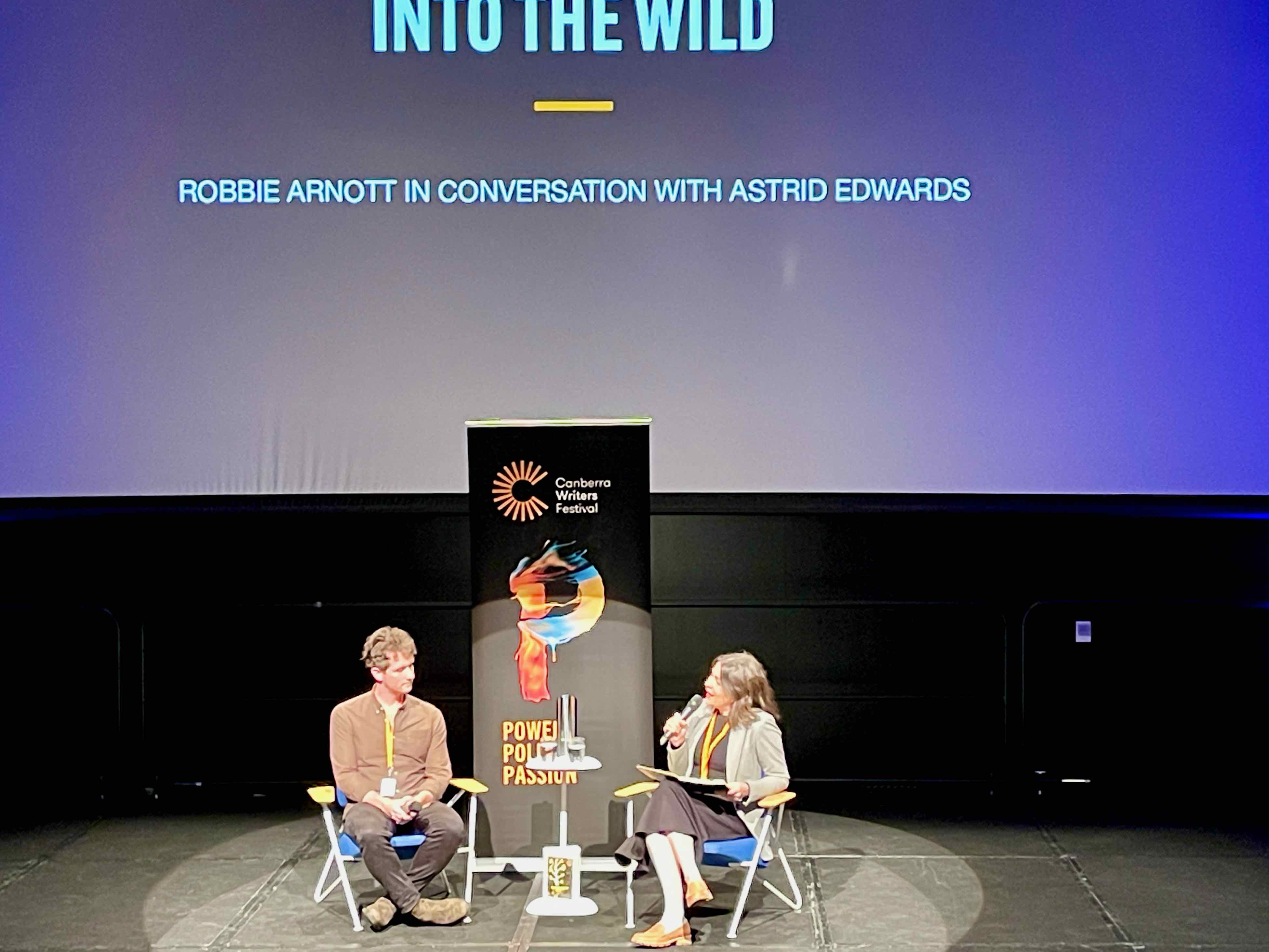
How good was it that my two sessions today involved books my reading group has done this year, Debra Dank’s We come with this place, and, in this session, Robbie Arnott’s Limberlost. The session, subtitled “Robbie Arnott in conversation with Astrid Edwards”, sounded broader in ambit:

Robbie Arnott’s fiction is steeped in the wild: women return from the dead as walking ecosystems; mythic birds circle the skies; the water calls to us. In writing these sumptuous, near-sentient landscapes, he grapples with our most wrenching and necessary questions: eco-grief, stolen land and human frailty. 

Join Robbie Arnott for this intimate discussion about his abiding love for the natural world and how he brings it to life on the page.

But, Limberlost was the focus. For those of you who don’t know the participants, Robbie Arnott is the Tasmanian-based author of three acclaimed novels (Flames, Rain heron and Limberlost), while Astrid Edwards is a bibliophile, writing teacher, literary awards judge and host of the Garrett Podcast.

The conversation

I will start by saying this felt like the perfect session on which to end my 2023 Canberra Writers Festival experience. I’ll explain at the end, in case you haven’t worked it out by then. Edwards began by saying that behind the scenes she’d gleaned that the question Arnott doesn’t get asked enough concerned “craft” so she asked him to tell us all about it. Arnott simply replied that he likes talking about craft. So Edwards pressed on – but craft was in fact a major thread of the conversation.

Meanwhile, Edwards moved to the critical success he’d had, and whether public recognition has affected how he feels when he sits down to write. He was grateful for the accolades, he said, but he lives in Tasmania away from the literary scene. The main pressure is the one he puts on himself.

Edwards took the obvious segue, and asked him what this pressure means. Arnott referred to a Garrett Podcast interview with Michelle de Kretser who said that “literature lives in the sentences”. He can’t sleep he said until he’s “messed” with a paragraph. This “messing” includes things like reading aloud; going for a walk; changing it because it’s too active and then because it’s too passive; adding commas and removing them. He has spent long conversations with his editor about a comma! Here’s a writer I can love! Seriously though, this made sense because Limberlost wowed me with the tightness of the writing, by which I mean the way Arnott conveys so much in so few words.

After a brief discussion about his first novel Flames, we got to Limberlost, with Edwards asking him to provide a “high level intro”. Arnott described it as being about a young man and a pivotal summer in his life. It is set during World War 1, and he is conflicted about his dream to buy a boat. We flash forward at times to see how that summer affected the rest of his life.

Edwards then returned to the craft issue, saying she was interested in how he handled animals, time, and place, and how he positions himself as a settler writer writing about these things.

After reading from the opening of his novel, which introduces the whale motif, Arnott turned to how he writes about animals. He is fascinated by wild animals. They “yank us out of the civilised world we know when we confront them”. Edwards pushed a bit more about this, mentioning the quoll and Ned’s relationship with it, and how he treats the natural world with respect and honour. Arnott said that all the world is important, and Ned feels respect and connection with it, even if he doesn’t always have the language to express this.

Edwards then raised the logging scene, and how he goes about creating scenes like these. Arnott’s answer was another craft one. What he does is to think about the emotion of the scene, and the atmosphere he wants to create, before he writes the description. Then, here it comes – are you ready – emotion, or feeling, is what he aims for in his writing because it’s what he reads for. This issue underpinned much of the rest of the discussion.

Moving on to the next topic she’d heralded, Edwards asked him about structure and his use of time, about how we tend not to see critical events (like the boat’s destruction) but get Ned’s feeling. Arnott replied that he can’t write action, and quoted Amanda Lorry who said “I can’t read crime because I don’t care who did it”, which is pretty much how I feel. When I read or watch crime, I rarely try to work out who did it. I’m far more interested in the relationships and the ideas being explored. Arnott basically sai the same. He’s not interested in the action but in how people feel. He doesn’t formally plot his books. He knows where he wants to go, and from there he works it all out as he “walks and types”.

What, asked Edwards next, is he trying to share? He has a strong compulsion to write, he says. He sees novels as a two-way communication between author and reader; he likes this connection. He wants to know whether what he feels resonates with the reader. What does “this strange mess” he’s offered up mean to the reader?

Edwards then turned to the craft, and asked how he managed to make Ned’s father feel whole, even though he doesn’t do much. Arnott believes its by having him seen through Ned’s eyes. The novel is 3rd person so a bit objective, but it is through Ned. He surprises Ned. Arnott is interested in masculine tenderness. Edwards turned then to the war context. Arnott said that it wasn’t a war novel, but he needed to provide a context for the story so the reader wouldn’t hit “snags” in terms of understanding what was happening.

At this point Edwards reflected on Arnott’s various references to readers, and asked him how he conceives readers. With gratitude and happiness, he responded, as most people don’t read fiction. The usual response in his social circles, from men in particular, is “Yeah, mate, I don’t read fiction. It’s made up!” But Arnott likes having his mind messed up with made-up things!

The obvious question here, of course, is why. Does he think, asked Edwards, that fiction can do something? And here again was what made this session so special … Arnott said that fiction can expand our consciousness, can make us feel things. We come away a different person after reading it. In this way fiction shapes who we become.

Edwards then raised the settler writer issue, through the scene in which Ned’s university daughters confront him about living and working on stolen land. Ned, said Arnott, is a decent person, but there’s a gaping moral hole concerning living on land not his. It was important for him to be confronted with the idea. To ignore this issue would not be real. There is no moral closure about this in the book. It just sits there, but that’s life too.

Arnott said he had received lot of feedback about that scene in particular, and it’s been split on age: older readers have told him that the daughters were horrible, while younger readers like that part of the book. (Hmm… I guess the older readers who like it haven’t thought to tell him!) This led to a question about how he thinks about himself as a writer. He said he feels a strong responsibility to tell stories about land in a way that improves our country. There is a moral aspect to everything we do, particularly those of us who benefit from colonialism.

Edwards mentioned the eco-fiction genre, and wondered how he sees it. Arnott responded that he’s fine with the idea but doesn’t think about it when he is writing. His focus is emotion. Novels work well when “they rattle around inside you, when they shake you up”. Nonetheless, he is very anxious about this coming summer, and the potential for climate disaster. He wants to write more about climate change. He wants to write the emotion of it, not the facts, which his readers know anyhow.

Q & A

  • On whether there’s a trajectory in how his three books deal the environment but with different senses of place: each book’s place is explicit and deliberate, and it depends on what best suits the story. There is no supernatural element in Limberlost for example because it was not needed.
  • On writing male vulnerability, without being sentimental: he is interested male vulnerability, though everyone is vulnerable. He fears being sentimental, so tries to avoid it by using his sharpest, clearest eye to convey feeling. He focuses on what characters do, not on writing descriptive, interior monologue.
  • On his literary influences, senses elements of Winton and Flanagan: is a fan of both those authors. Loves Flanagan, particularly Gould’s book of fish which exploded fiction at the time. He also likes Annie Proulx, and Tobias Wolff, particularly his “beautiful book” Old school. (This just crossed my path recently as a book I’d love to read.)
  • On next book: yes he’s working on one.
  • On AI’s impact on the future of writing: he is reasonably concerned, but not about the sort of books he writes. It will affect people who write “content”, and it’s terrible for them. He remains hopeful for what novels can do for the world

My wrap-up

I hope you’ve worked out by now why I thought this was the perfect final session for me? It’s Arnott’s absolute commitment to fiction – to its ability to change us, and to its moral (but not didactic) heft. Encouraging and inspiring.

Canberra Writers Festival, 2023
Into the Wild
Sunday, 20 August 2023, 2-3 pm

Canberra Writers Festival 2023: 3, A Jewel of a Book

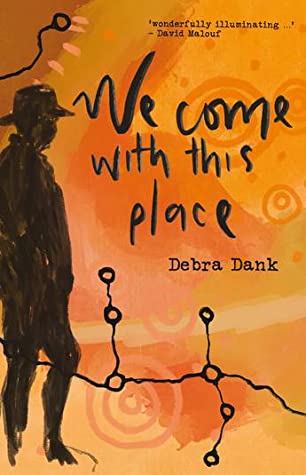
Which book you are presumably wondering? The session’s subtitle will give you a hint: Debra Dank in Conversation with Evelyn Araluen. The book, then, is Debra Dank’s We come with this place, which won a record four prizes in this year’s NSW Premier’s Literary Awards (as I described in my post).

The session description commenced with:

We come with this place is deeply personal, a profound tribute to family and the Gudanji Country to which Debra Dank belongs, but it is much more than that. Here is Australia as it has been for countless generations, land and people in effortless balance, and Australia as it became, but also Australia as it could and should be…

It described Dank as “a Gudanji/Wakaja woman” and Araluen as “born and raised on Dharug country [and] a descendant of the Bundjalung Nation”. If you read my second CWF post from yesterday, you’ll see that I have already “met” Debra Dank and Evelyn Araluen. That whetted my appetite for this more focused one-on-one session.

The conversation

Oh my, what a session this was in terms of complex ideas that challenge western world views being presented in a respectful but unapologetic way. After all, why should they be apologetic.

Araluen started by introducing Dank from the formal bio, and ending with the fact that her book had won “incredibly significant accolades”. The session’s title, she explained, had come from Tara June Winch’s description of it as “a jewel of a book”.

The session discussed several issues, but a recurring one concerned the book’s narrative style and how it reflects “Indigenous narrative practices” as Dank framed it. I was keenly interested in this because I have been aware of First Nations Australian storytelling (oral and written) as being different but identifying the difference has not been so easy!

Dank said in response to Araluen’s opening question that she hadn’t set out to write a book, so she was still developing her relationship with it “as a book”. She wrote it for her kids, and saw it as essentially a conglomeration of stories and events. Araluen picked up on this and talked about how the book comprises an interweaving of language, memory, time, and place. Critics, she said, have been trying to find a way to describe Indigenous storytelling by using words like “interweaving”. Dank saw this sort of interweaving as integral to “Indigenous narrative practices”, to Indigenous storytelling.

Araluen commented on how well Dank conveys the “embodied physicality of Indigenous experience”. This captured some of what I felt I’d gleaned from the book, though I didn’t quite have the words for it. Araluen read an excerpt from early in the book in which Dank shares a childhood memory

The sparks rose in the air and danced there – in celebration of a whole lot of things, I imagined. The deep hot red glow in the little hearts with their flaring skirts of blackened edges held my eyes. The embers twirled above our heads, in a dance on a sigh of wind barely there, and as I gazed upwards into the darkening sky, the just-appearing stars spotlighted larger ashy flakes. The bright burning cinders, exuberant and light, then faded to tiny pieces of black falling char.

Araluen loved the way Dank was able to go back into memory and narrativise that little girl.

Dank talked about how she always had access to books, but that her “childhood aesthetic” was always about country. She would do all her week’s correspondence school work on Monday morning and then “be gone with Dad”.

Araluen described the book as a “precious gift” that intricately captures experience. She commented on Dank’s interrogation of history. There is “no gratuitous, voyeuristic depiction” of what her father went through, for example, but we are conscious of the impact of history on him. She wanted to know how Dank navigated this.

It was at this point that the other main thread of the session appeared – the lack of representation of Aboriginal people, of the contribution they have made over the last 200 years (let alone the previous tens of thousands of years). It really gets up her nostrils! In historical photos, non-Aboriginal people are always identified, but never the Aboriginal workers. “We are not represented, we are not seen to exist, to be valid”, she said.

We then returned to narrative practice. The book comes, she said, from the less significant part of her PhD, so she didn’t feel bound by the conventions of literature. It wrote itself, just evolved.

The discussion then turned to language, multi-lingualism, and Dank’s research into semiotics and narrative structure, and the limitations that she observes.

Dank said that the issue of limitations motivated her. She is constantly vigilant about how language works in education, how Aboriginal students can “seem” incapable, and experience deficit in their education. She told us about discovering Umberto Eco who talked about the ways communities make sense of their surroundings. This is the basis of semiotics. Aboriginal people have their own languages, and these work differently on a semiotic level. The problem is that Aboriginal communication has been framed by, viewed through the prism of, western theories, but “we’ve been doing narrative longer than anyone else in the world” and it works because “we are still here”.

Araluen then talked about Dank’s style and structure, describing it as “eco-lyrical”, as having an environmental, seasonal underpinning. How did Dank find her writing language? Dank replied that she had always been a reader, and named her diverse influences – Funk & Wagnalls’ books, the Bible, Slim Dusty, Emily Dickinson’s poetry, Greek stoics (which fitted with the Scottish Methodist part of her heritage), and Toni Morrison. Araluen interrupted here with her description of the “bone-deep legacy of Beloved“, how it conveys the “physicality of memory”. Dank described Beloved as an unimaginable gift of a book, and that she got it. (Beloved is nowhere near my experience but I felt got it too. If ever a book could convey the injustice of slavery and racism at the deepest, most visceral level, it’s Beloved.)

Dank the said that Australian colonial authors, like Xavier Herbert, were also influences, in that they conveyed for her the “invisibilisation of a  people”. She got no sense of reality in what she was seeing. (This made sense to me. People talk about the importance of seeing themselves represented in culture – the arts, media, etc – which of course I understand, but Dank’s clarity about the implication of not seeing yourself, her sense that it’s not real to her experience, drove it home perfectly.)

Araluen talked about ecology, and how non-Aboriginal writers, going back to Lawson and Paterson, for example, have “f***ed up” representation of the land with their colonial and Gothic perspectives. Dank mentioned some “nice and convenient research” from the University of the Sunshine Coast which proves that Aboriginal stories document significant events on the land.

The conversation continued on how First Nations people understand country, on there being a “deep formal, absolute law around connection” to country, on understanding the earth and “our nonhuman kin”. Dank said that “country is not ever something I have the right to just wander casually across”. She talked about how we are “stuffing up ecosystems and habitats”, about mammal extinctions, and about fracking. Westerners do not understand how aquifers are connected, but the songlines do, she said. More Australians need to wake up to the urgency of the climate crisis. There was more, but I think you get the gist regarding the intense concern about what Araluen called “environmental violence”.

The formal part of the session ended with Dank reading from the beautiful “The business of feet” story in her book, which tells of her young son’s deep engagement with their country, and his awareness of the long history of that connection.

Q & A

  • On what sort of writer she sees herself having now published the book: she now feels like a writer; that is, the book is causing her identity to shift. She is becoming aware of the practice and process of writing, and wants to protect her non-genre writing practice. We come with this place is not a memoir. Dank added that she should thank the early colonial writers, because they made her sit up and say, “hang on, that’s not the truth”.
  • On what advice she would give to a Non-aboriginal teacher working with people from diverse linguistic backgrounds: start with the home language because that carries the student’s cultural being and it needs to be respected.
  • On what sustains Dank in the face of trauma: the real privilege of being alive, getting on with the business of living. Awful things are still happening, but there are also many things to remind her of the privilege of drawing breath. First Nations people are 4% of the population, but “this will aways be our country. It made us”, she said.
  • On what her perfect writing day would look like: a cup of Chai, and being on her own country with the aunties under a tree across the way being amazingly patient, then calling her when they think she’s written enough.

My wrap-up

This session might sound negative and critical of western culture, and it was in many ways, but Dank also admits to enjoying and drawing from both traditions. However, this book is about the culture that sustains her, the culture that she’s rightly passionate to see preserved and passed on, and that she believes can also offer something to the rest of us. This session was about how First Nations Australians are forging their own narrative practices, against a backdrop in which they have been invisible, unrepresented, for so long.

Canberra Writers Festival, 2023
A Jewel of a Book
Sunday 20 August 2023, 10.30-11.30am

Canberra Writers Festival 2023: 2, Celebrating the classics

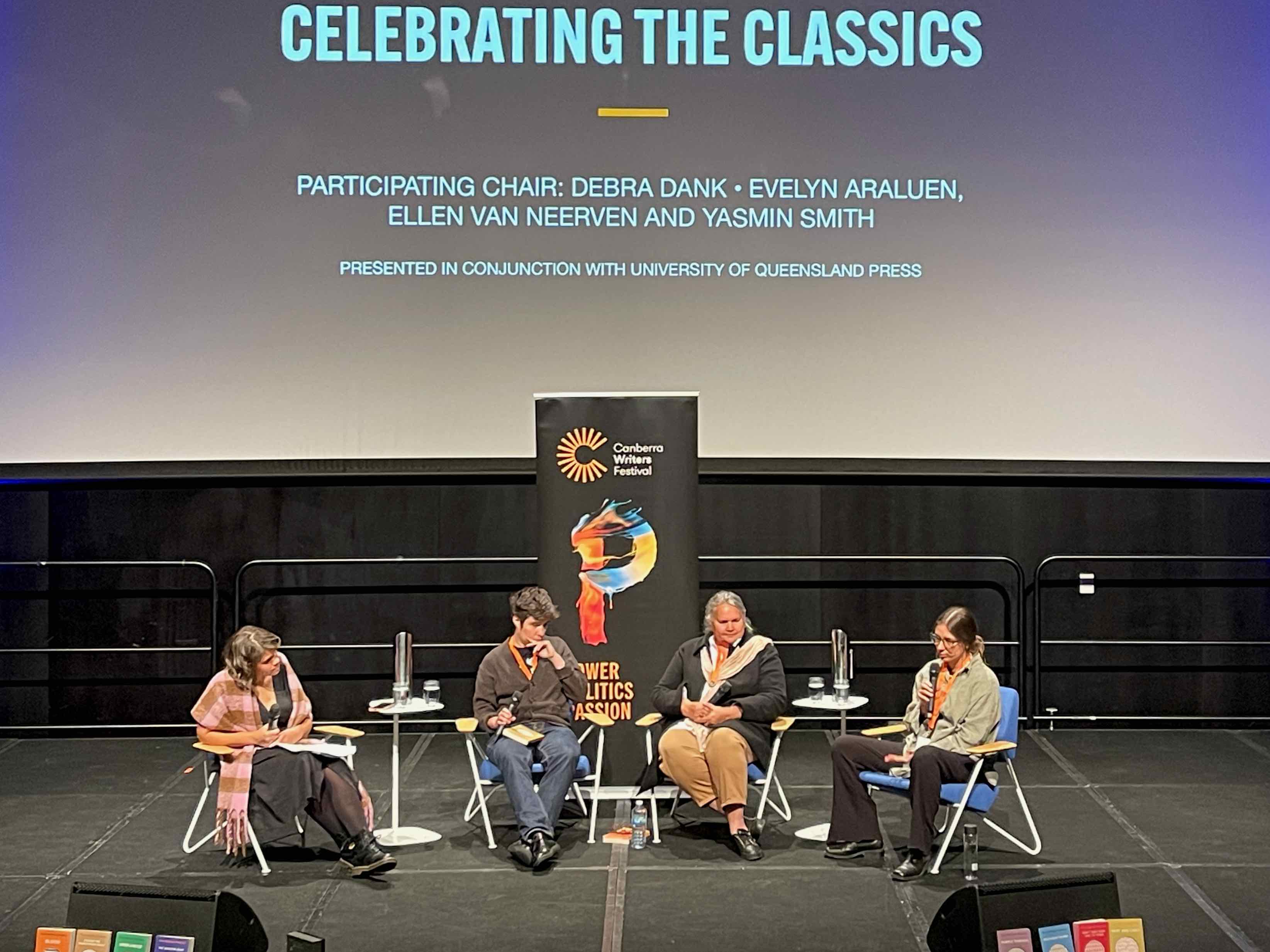
When I saw the line-up for this session – Debra Dank, Evelyn Araluen, Ellen Van Neerven and Yasmin Smith – I was in. I have read and admired writing by three of these writers and was keen to attend that rare thing, an all First Nations panel.

Its topic was described as follows:

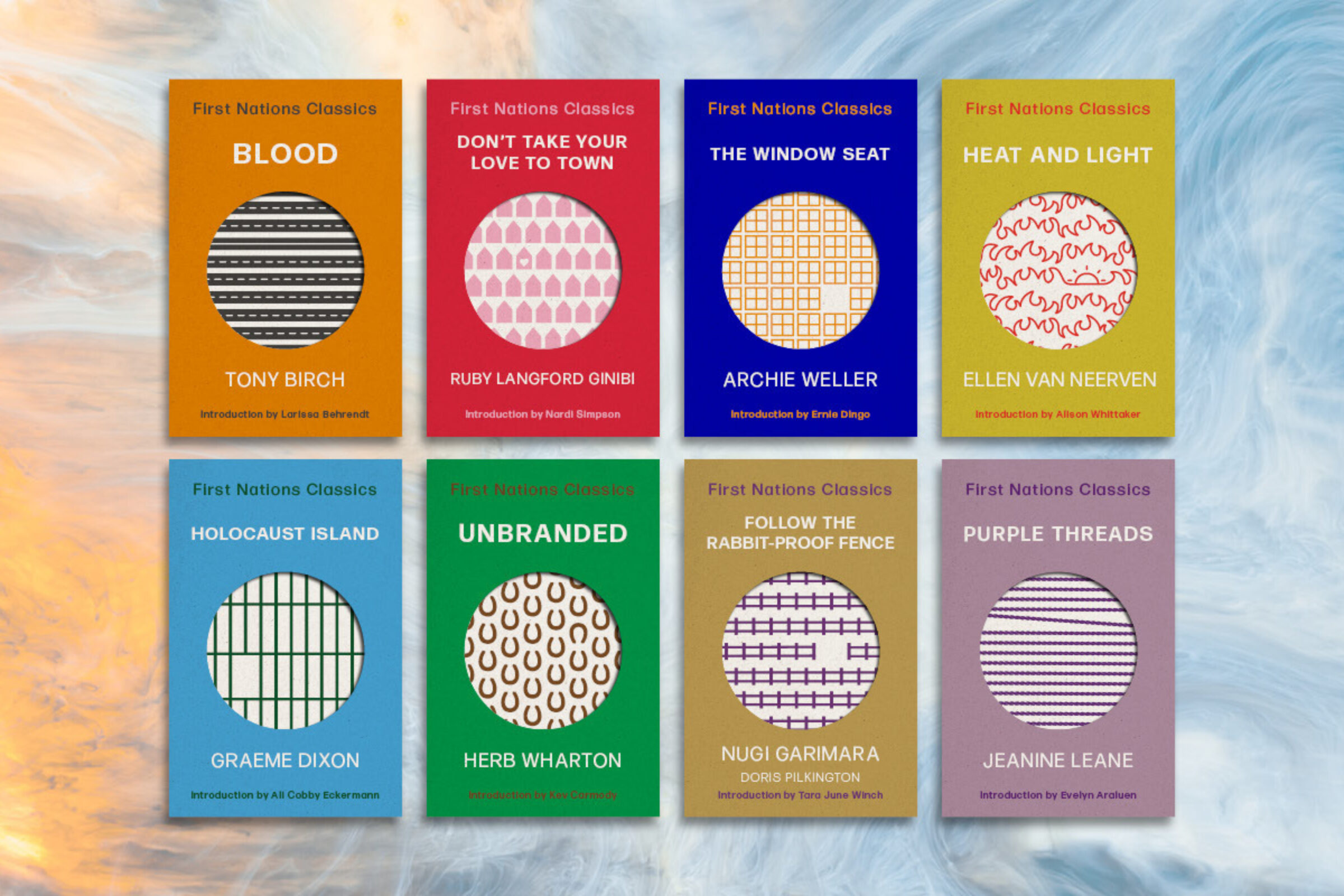
A new literary project sets out to change the way we tell the story of Australian literature. Join series editor, Yasmin Smith and a stellar panel of writers as they celebrate the first edition of First Nations Classics. Essential reading for all generations.

The discussion

The program didn’t, for some reason, identify the publisher of this new series, but it is the wonderful University of Queensland Press which, as the panelists said several times, has an excellent track record in publishing and supporting First Nations writing. I wrote about this series late last year, so loved having the opportunity to hear it discussed by those involved.

The session started with acknowledgement of country, and then with each writer briefly introducing themselves, which they did primarily by identifying the country they belong to. I love that these country names are now becoming so familiar to us all. We are all learning – almost by osmosis – the First Nations make-up of the land we live on.

Smith then talked about the inspiration for the series, about UQP’s “incredible backlist” of books across a range of forms, that are timeless and have a clear relevance now. She then asked the panelists what makes a classic. The responses to this age-old question were varied, thoughtful and provocative . Araluen commenced because, she said laughingly, the “eye contact” had come to her! I loved her response – it’s when a book shifts into a communal relationship! The idea of “classics”, she said, is related to “the cannon”, and idea which is a western concept loaded with values of the the city-state(Plato), beauty and artistry (Aristotle), and – haha – sexual innuendo (Shakespeare). For her though a classic is a book that’s ground-changing, and that people incorporate into their lives. Real classics live within communities, outside universities. They are classics because they are valued by the people they are for and from.

She also talked about the musicality of writing, such as Ruby Langford Ginibi’s Don’t take your love to town. Dank picked up this idea and talked about musicality and rhythm. These make a classic, they are the “thing that beats within all of us”.

Van Neerven talked about classics being stories that can be read and heard, and about her own early reading as a 19-year-old of writers like Oodgeroo Noonuccal, Samuel Watson, and Leonard Fogarty. These spoke to her, though they were not alway widely celebrated in their times. She talked about Jackie Huggans’ book Sister girl. Rereleased last year, it had sold more in the next two months than it had in its first 30 years. Black literature is now being read and recognised; young people are people inspired to add to the conversation; and the publishing industry is more open to black stories.

It was then suggested that classics have great characters, a strong voice, truth-telling, and good evocation of place. Araluen identified Jeanine Leane’s Purple threads (my post) as an example of great evocation of place. You can “feel its realness, authenticity”. Classics also embody a sense of honouring what came before.

Smith next asked the panelists to talk about the growth of First Nations literature since their careers began, to which Debra Dank’s laughingly said that she was surrounded by “gorgeous, youthful folk” but that she was the youngest in terms of a writing career. Her PhD was in semiotics, which is what motivated her. She believes not many non-Indigenous Australians are aware of the depth of black writing, of its amazing richness. Blackfellas tell stories differently (which I loved hearing because I have commented on it before, and hoped I wasn’t making it up!)

Smith encouraged Van Neerven to talk about her Heat and light (my post) journey. She started with her unversity days when all her reading was “so white”. She then talked about learning what she didn’t know, how to break rules, and what she wanted to say; and about being part of the black&write! program. When Heat and light, a hybrid book, was published in 2013, there was little queer representation in First Nations literature, and little satirical/futuristic/speculative writing in the black space. There has been significant change in both these areas over the decade.

Araluen talked about Purple threads, which, like much First Nations literature, doesn’t fit into a neat package. There was talk of “blackfellas evading classification”! She found it both an honour and a challenge to be invited to contribute an introduction to Leane’s book. She tried three introductions: a literary analysis on why the book doesn’t fit the usual prose categories, but this came from our impulse to name; looking at it within the framework of Leane’s life but this would tell people how to read it; and finally, a focus on the place. She drove to Gundagai (under Leane’s guidance) and immersed herself in the place. It was an immense privilege to step into someone else’s story. All the books she said come from particular contexts, but are now in conversation with each other.

At this point she made a shout out to the Festival’s Artistic Director, Beejay Silcox, for her diversity and inclusiveness this year’s programming.

Smith then noted that classics hold deep, rich history, and asked Dank if she had any favourites. Dank neatly sidestepped this (almost), saying that each book reflects different times and experiences. She did though name Herb Wharton’s cattle country book (Unbranded) and said Ruby Ginibi’s book is a classic. She’s relatively new to Van Neerven’s work which she sees as profound in a different way. She really couldn’t pick favourites, she said. they are life markers, they guide us.

Araluen wondered what the series will do for kids, and then asked Smith about her experience managing the process. Smith said it felt overwhelming, but it was all based on consultation and community. The challenge was working out who could speak to which book for the intros. It was also very hard to choose the initial 8. She was 19 years old when she first read a black writer, Tara June Winch’s Swallow the air. It gave her a sense of belonging; she could see herself. So, she wanted books “that spoke to ourselves as black writers and black readers … to community”.

Q & A

  • On a second series and the production process: There is a second series of 8, coming out next June (2024). The process was complicated: some were out of print, some pre-digital, so there was scanning, rekeying, retypesetting; there was designing the covers to make them collectible as a set; there was no editing of the works, but there was the commissioning of the intros. It takes a long time.
  • On getting the books into school curriculums: Some are already (like Heat and light) but they are trying to get them into the educator’s market. Some have teacher notes.

The panelists then asked each other questions. Araluen asked Van Neerven how she felt about Alison Whittaker writing her book’s introduction. Van Neerven said she’d been daunted by the whole process when her book first came out, but this time felt more in control. She liked how Whittaker contextualised the book from her own experience. She loved feeling her work had been cared for.

Van Neerven then asked Dank what she was working on now. Dank wasn’t sure it was wise to talk about, but she is reframing the other part of her PhD which is about black narrative, but she is having second thoughts about its form. The problem is it’s about to go to the printers! Araluen answered the same question, saying it will be some time before she tries poetry again! Her next book is from her PhD on desire, haunting and healing in literature and storytelling.

Van Neerven didn’t get to answer her own question. She was saved, she said, by “1700 [the session end time] staring at her”!

This was truly lovely panel, in which the panelists showed such respect for each other but also exuded a quiet confidence in themselves – and gave me some new things to think about. Beautiful.

Canberra Writers Festival, 2023
Celebrating the classics
Saturday 19 August 2023, 4-5 pm

Canberra Writers Festival 2023: 1, Canberra’s Biggest Book Club

A preamble

The Canberra Writers Festival is back in 2023, with a new Artistic Director, the writer and critic Beejay Silcox. The Festival’s theme continues to be “Power Politics Passion”, which, for this year’s Festival organisers,

begs big questions: What do we value? Whose stories are heard? How do we reckon with the past and imagine the future? It is our hope that CWF will provide a space to explore these questions, and to celebrate the heft and craft of Australian storytellers — a joyful collision of art-makers, big thinkers, big dreamers and readers.

I love the look of this year’s Festival program. It feels more diverse and more literary, without losing the political flavour that makes it uniquely Canberran.

Canberra’s Biggest Book Club

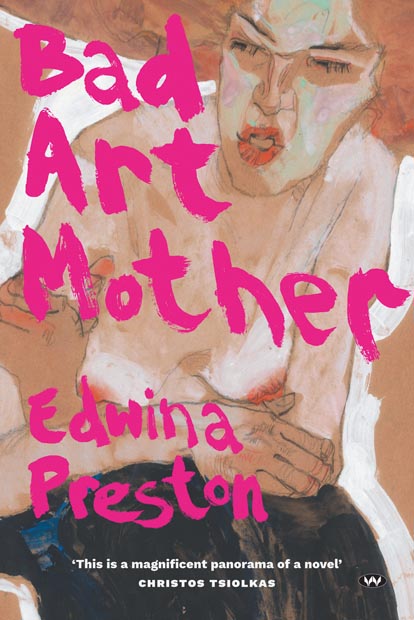
Canberra’s Biggest Book Club has been a regular Festival session, but I’ve not attended before, for various reasons, mainly to do with scheduling and location. This year, however, the stars aligned, including the fact that the featured book, Edwina Preston’s Bad art mother (my post), was one I’d read and was keen to see discussed.

The panel leading the “club” comprised Beejay Silcox, ABC’s The Bookshelf’s Kate Evans, and the author. The promotion for the session says:

There’s so much to unpick in this Stella Prize-shortlisted novel. Who gets to be an art-maker? At what cost? Whose artistic voices are valued, and whose are lost? These questions are as relevant today as they were half a century ago. That’s what makes this novel so vital and beguiling.

Because the session was framed as a “bookclub”, the format was that during the hour audience members could write questions on a piece of paper which would be collected by volunteers and handed to Beejay for inserting at intervals into the discussion.

Evans started by asking Preston for her “stuck in a lift” pitch for her book. Preston replied she wasn’t good at that but offered that it was about a female poet in the 60s coping with motherhood and a sexist culture.

Evans then asked Silcox, who had been chair of the Stella Prize panel that shortlisted this book, why this was the book she wanted us all to read. Silcox replied that the Stella books provide a core sample of the culture we are in right now, of the things we are thinking about. Bad art mother she said had urgency, and spoke to the collective history female Australian writers share. It was a YES on all levels for her – as a reader, critic and judge. I realised at this point that I like the way this woman thinks.

Evans then spoke to the point that this book had been rejected 25 times, and asked why. Preston said many reasons were offered such as it didn’t fit the “publishing cycle” (whatever that means), was likely to be commercially successful, didn’t like the voice of the child, not feminist enough …

This led to Evans to ask about her choosing a child’s voice. Preston said she had been thinking about Joy Hester and her son, and the idea of a parent giving up a child. The novel is not Sweeney’s story, but was inspired by that situation. She also thought later that a boy’s voice might offer an entry point for male readers. It also offered an opportunity to explore the sensitivity and vulnerability of male children. Silcox added that the use of the child’s point of view also provided an opportunity to explore different versions of mothering or parenting, through Owen’s perspective on all the people in his life. It’s a bit about urban family-making.

Next Evans moved to protagonist Veda’s antecedents, which included the Australian poet Gwen Harwood, whose letters Preston had read. This resulted in a fascinating discussion about Gwen Harwood, about women’s lives as artists, and about the role of correspondence in women’s lives. Preston talked about Harwood’s life, including the F*** ALL EDITORS acrostic poem scandal. Silcox talked about reading Harwood at school but knowing nothing about her radical side – and wishing she had. Harwood’s letters, we learnt, were brilliant, funny, scathing. She had a fighting, pioneer spirit, but she was also grounded by her children. Sometime around here, Harwood’s pointed poem “In the park“, was shared, including its last line, “They have eaten me alive”!

Preston talked about the challenges of being a woman artist and a mother. Veda feels she’s a bad mother while her son cuts her more slack. In Modjeska’s book Stravinsky’s lunch, said Preston, the artist Grace Cossington-Smith says that once her children left home, she had all the time but the urgency had gone. Veda faces a similar challenge when she has a weekend to herself.

Regarding her own time-management, Preston said she works best by writing in 1.5 hour blocks a few times a week. Working in short blocks means she always leaves something to work on next session. At this point we got an Audience Question, which was what surprised her most about her book. What an interesting questio. Preston’s response was not what I expected: she saw what her subconscious had created, how things she hadn’t explicitly planned had made the book work. This gave her confidence in her process. When asked for an example, she said introducing vegetarianism had opening up opportunities, like aligning meat-eating with masculine world views.

Another Audience Question concerned whose styles she admired. Preston had to think, but did say they included Jane Austen, George Eliot, Virginia Woolf and Elizabeth Harrower.

This provided a perfect segue to return to the idea of women creators, and a discussion that resonated with me. Do women, Silcox asked, need a room of their own? Preston talked about her PhD and her interest in women’s correspondence, which women tend to write in communal spaces. She contests the “room-of-one’s-own” myth. It’s a western, masculine view of art, she says. Interruptions are not a bad thing. Veda, however, subscribes to this “selfish artist” myth – as does Simone de Beauvoir. However, Preston asked, would de Beauvoir and Woolf have thought the same way had they had children? As someone who works happily in communal spaces, but has always worried about letting the sisterhood down, this spoke to me.

The panel then segued to the myth of genius, the sense that successful artists must be geniuses. Harwood was strong, but Veda is less strong, less sure, and destroyed herself. Silcox said that it was important to undermine these myths because it is hard enough “to carve a life on the page” in Australia without feeling you have to live up to these unrealistic ideas.

Evans then asked about Mr Parish, the man everyone loves to hate. Preston’s response was illuminating. He’s an archetype at the beginning, an early 20th century literary character, she said, but by the end he’s a human with fragilities and redeeming qualities.

Evans followed this by asking what the other women characters brought to the novel besides their art. They represent, was the answer, different relationships to art, and different family roles. These include the “I don’t have a creative bone in my body” Ornella who is not an artist, but is the most reliable person in the novel. All these women examine the themes from different perspectives. Silcox added that they offered “a polyphonic version of women”. She talked about the cages around us and finding ways to unlock them, about how you have to map the cage before you can break out of it. The book is so relevant, so resonant.

At this point another audience question was shared. Referencing Veda’s letters to her sister, it asked why women are so self-critical. Self-criticism is good for an artist, answered Preston.

Evans returned to the correspondence in the novel which offers a different more intimate voice. Preston talked about the role of correspondence in women’s lives, and how correspondence offers writing practice. Unlike diary writing, it involves considering the recipient, and providing details not always necessary in a diary. The letters in the novel are also, added Silcox, one-sided, which invites us to step in and wonder what Veda’s sister might have said (and how Veda might have responded to that). Good point, I certainly remember thinking about how Tilde might have responded.

The next audience question concerned the fact that all the women artists in the novel end up being successful. Had Preston considered including an unsuccessful artist. She hadn’t thought of this, she said, but the artists were, in fact, all successful later in life, and in Veda’s case, after her death.

This led to a discussion about ambition in women, and how it tends to be used pejoratively, as an insult.

Then there was an audience question about not liking Veda. Preston wondered if readers would like her. This didn’t concern her, but she knew it would be an issue for some. Silcox threw in that women being likable is another of those issues women have to deal with.

Evans, referencing a previous comment by Preston, asked her why she knew Veda had to die. Her answer was that the book needed to be a tragedy, though she also wanted to resuscitate Veda posthumously. The novel couldn’t be triumphantly feminist because everything isn’t fantastic.

This led to a discussion about Veda’s action that precipitated her downfall, and about her husband, the restaurateur and philanthropist. Again, Preston’s response was fascinating. She commented that men taking on cooking (like celebrity chefs) and public philanthropy results in their being celebrated for the things – cooking and caring – that women do invisibly.

Evans then quoted from the letter to Tilde in which Veda ponders what sort of mother she is, and whether if it came to the crunch she would sacrifice her art for her child. Is this question – Would I? – the heart of the book, she asked. Preston talked about 19th century women novelists discussing the writing-versus-babies quandary, and the “menopausal theory literary production”. She doesn’t agree it’s either-or. You can do both together, but it is a real quandary many women artists grapple with.

Finally, Silcox asked Preston to think about the writer she was before and after the book. What had it taught her? To trust herself, she said, and the workings of serendipity in her writing. What a great lesson.

And so ended another excellent writers’ festival session. I loved it for the number of ideas that went in different directions to those I expected, like the room-of-one’s-own discussion. Good stuff.

Canberra Writers Festival, 2023
Canberra’s Biggest Book Club
Saturday 19 August 2023, 2-3 pm

Jane Austen’s The Watsons in Trove: Finishing the unfinished

While searching Trove recently for my Monday Musings 1923 sub-series, I came across some articles on Jane Austen’s unfinished novel, The Watsons, and can’t resist sharing them with you.

I have written about unfinished books before, including on Jane Austen’s unfinished novels, The Watsons and Sanditon. Unfinished books aren’t to everyone’s taste but, if you love an author, you’ll read anything they wrote. Such is the case for me with Jane Austen.

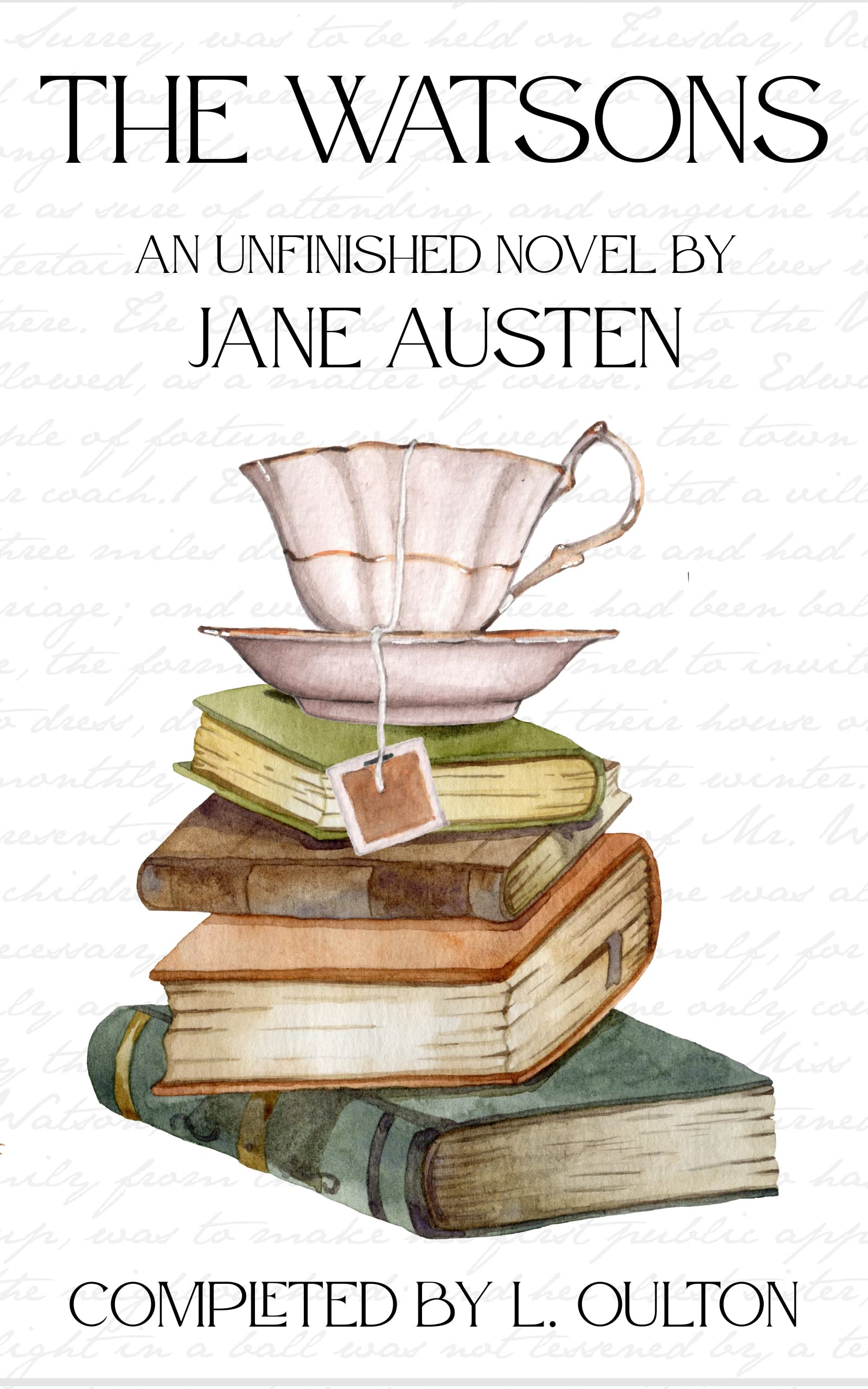
So, The Watsons. Just as writers can’t seem to stop writing sequels, prequels and multifarious other versions of Austen’s six published novels, they are also drawn to her unfinished novels. The Watsons, for example, which Austen abandoned around 1805, has been “finished” several times. The first appeared in 1850, and was not presented at the time as a continuation. Wikipedia provides a good summary, explaining that it was an “adaptation” written by Austen’s niece Catherine Hubback, who titled it The younger sister. The initial chapters were based on Austen’s writing, but Hubback did not copy her words verbatim. The first real continuation came in 1923, and was written by L. Oulton. Since then, there have been several more, including versions of Hubback’s version! And so it goes ….

You can read all about it in the Wikipedia article above. Meanwhile, I’m returning to Trove, and the two articles that inspired this post. Both appeared in May 192 – in Melbourne’s The Age (May 5) and in Sydney’s The Sun (May 13). They refer to the publication of two “editions” that year of The Watsons – an unfinished edition with, says The Age, “a pleasant and informative introduction by A. B. Walkley”, and one completed by “Miss L. Oulton”. The Sun describes these two editions:

One firm publishes this fragment with an introduction by A. B. Walkley; the other firm actually calls upon L. Oulton to finish the story! The reader is advised to read only to the place where Jane Austen threw down her pen.

Good advice, I say – but that’s because I am more interested in Austen’s writing than in what others might think were her intentions. This, however, is not why I wanted to share these pieces. What interested me were their attitudes to Austen.

The Age says:

A return to Jane Austen after a course of modern fiction is an experience. The prim dignity of her diction; her bookish, almost stilted, conversation; her expression of fine sentiments and descriptions of good manners; her special acquaintance with the somewhat narrow insular life of the well-to-do in the English provinces a century and a quarter ago; her well-bred young ladies, whose only ambition in life is to secure husbands; her shrewd insight into the human heart, and her capacity as a storyteller— the reader renews acquaintance with much pleasure.

Not surprisingly, I don’t agree with this assessment of Austen’s writing. “The prim dignity of her diction”? Good diction perhaps, but prim? Not my Jane. Her conversation does tend to be formal compared with today’s writing, but you just have to read Lydia’s slangy “Lordy” to know that Austen can capture the nuance of character through her dialogue. Further, describing her subject matter as “the somewhat narrow insular life of the well-to-do in the English provinces” is, in fact, “somewhat narrow”. Of course, I agree with “her shrewd insight into the human heart, and her capacity as a storyteller”.

It is this – “her well-bred young ladies, whose only ambition in life is to secure husbands” – that most offends. It reduces Austen’s concerns to something not worth reading, or, to something worthy only of a few hours of escapism. Her heroines do tend to be “well-bred” in terms of manners, but many are by no means “well-to-do”. Marriage is the outcome of her novels, but her themes and her heroines’ ambitions are far more complex.

The Sun was more off-handed about why we might read Austen:

The story bears all the characteristics of the author, though it does not compare with her other established works … Through this fragment, however, the modern reader may pleasantly peer at a vanished age, with a ballroom etiquette already long forgotten, sententious speeches, a slavish admiration of “the quality” in the county, love affairs that are hidden by hints and evasions, and a painful obedience to the conventions.

“Pleasantly peer at a vanished age” and “painful obedience to the conventions”? Even in the beginning of The Watsons we see Austen’s eye for superficiality versus substance in her society, and her willingness to expose it. We also see her awareness that not all women were well-to-do, as shown in this quote from the novel. In it, our not-so-well-off heroine Emma speaks to the aristocratic Lord Osborne:

‘I wonder every lady does not. – A woman never looks better than on horseback. –’
‘But every woman may not have the inclination, or the means.’
‘If they knew how much it became them, they would all have the inclination, and I fancy Miss Watson – when once they had the inclination, the means would soon follow.’
‘Your lordship thinks we always have our own way. – That is a point on which ladies and gentlemen have long disagreed. – But without pretending to decide it, I may say that there are some circumstances which even women cannot control. – Female economy will do a great deal my Lord, but it cannot turn a small income into a large one.’

Sure, Austen’s heroines were not in the poor-house, but not all were carefree either when it came to money. Indeed, several – Fanny Price and the Dashwoods, for example – rely on the kindness or generosity of others to live in reasonable comfort. And many minor characters – such as the Bateses in Emma – were identifiably poor. Marriage was a necessity not a luxury for many (Emma’s Emma notwithstanding!)

You are welcome to check my Austen posts to see my thoughts on these and other matters.

I enjoyed finding these articles, but was disappointed to find the same-old misunderstandings of Austen in vogue then as they continue to be now.