Six degrees of separation, FROM Rough guide to Japan TO …

I am back in the land of the Wurundjeri Wandoon people of the Greater Kulin Nation, that is, in my part of Melbourne, because not only was it Easter last weekend, but we wanted to take my Californian friend on a road trip through some of New South Wales and Victoria. We saw some great sights, but right now it’s time to get onto the meme … If you don’t know how the #SixDegrees meme works, please check host Kate’s blog – booksaremyfavouriteandbest.

The first rule is that Kate sets our starting book. This month she set a fun challenge: we had to choose a travel guide from our bookshelves! What fun. I chose the Rough guide to Japan, and – woo hoo – I found an image on GoodReads of the cover of my 2011 edition. That wasn’t our first visit to Japan, as we’d been twice before, but that was when we bought the guide, because … well read on …

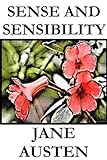
I decided not to go the obvious route – a book by a Japanese writer – because who wants to go the obvious route? Instead, I’m linking on Kindle books. The Rough guide to Japan was the second book I bought for my Kindle, thinking that an eTravelGuide would be so much easier to manage. Well, yes – and no – but that’s for another day. Meanwhile, the first eBook I bought was Jane Austen’s Sense and sensibility (one of my posts)! Yes, I already had a couple of copies of it, but you can never have too much Austen, and, anyhow, because I know it well, it was a good book on which to test using eReaders. Wouldn’t you say?

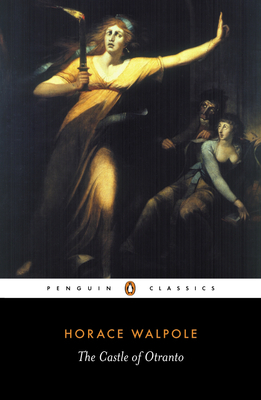
Horace Walpole, The castle of Otranto

Sticking with the Kindle theme – and a bit of personal history – the third book I bought for my Kindle was another classic, Horace Walpole’s The castle of Otranto (my review), because, also in 2011, my Jane Austen group decided to discuss a Gothic novel of our choice. (This image is not my Kindle edition.)

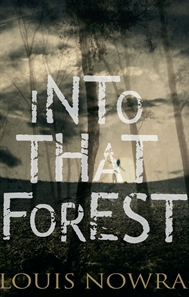
Louis Nowra, Into that forest

OK, I’ve probably bored you enough now with my Kindle history, so my next link is on Gothic novels. I’m choosing a Australian gothic novel, Louis Nowra’s Into that forest (my review), which is set in the late 19th century, and tells the story of two young girls who find themselves lost in the bush (forest), and are taken in by a Tasmanian Tiger.

Eva Hornung, Dogboy

They are, in other words, feral children. My next link is another Australian book about feral children, Eva Hornung’s Dog boy (my review), which is about a boy taken in by a dog – but in Moscow, would you believe!

Book Cover

And now I’m going to do one of those nice, clear, obvious links that MR will like because it’s on a word in the title, dog! My link is to Louis de Bernieres’ Red dog (my post on the book and movie) which was inspired by the story of a real dog which roamed the Pilbara region of Western Australia through the 1970s.

Murakami, Blind willow, sleeping woman

Finally, because we had to go there, and legend has it – at least in the film – that Red Dog did, we are going to end in Japan. I haven’t reviewed as much Japanese literature on my blog as I would like, despite its being a favourite of mine, but the first work of fiction I posted on here was Haruki Murakami’s short story collection, Blind willow, sleeping woman (my post) so that is my final link.

I do hope you enjoyed this month’s journey, because I had fun putting it together – and for once we did come full circle.

Now, (sort of) the usual: Do you have a favourite travel guide on your shelves? And, if so, what would you link to? If not, then I’d love you to comment on whatever takes your fancy!

Stella Prize 2024 Shortlist announced

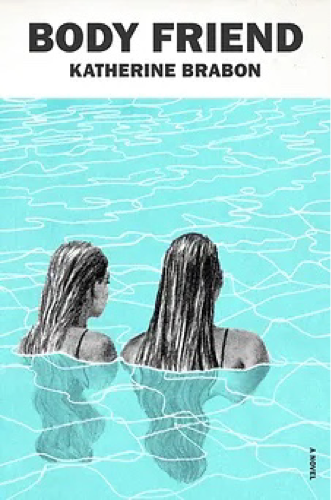
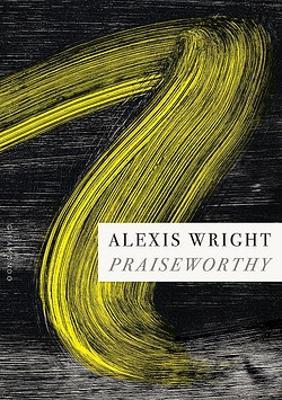
For what it’s worth, given I’ve not read any of them, here is the Stella Prize shortlist. The announcement I received via email this morning describes it as comprising:

a diverse mix, featuring novels, memoir and an essay collection. Three of these works are by debut authors, showcasing fresh voices in Australian literature. 

To summarise from my longlist announcement, this year’s judges are writer, literary critic, Artistic Director of the Canberra Writers Festival and this year’s chair, BeeJay Silcox; Filipino-Australian poet, performer, arts producer, and advocate, Eleanor Jackson; First Nations award-winning poet and arts board member, Cheryl Leavy; noveslist, occasional critic and full-time dad, Bram Presser; and writer and historian, Dr Yves Rees.

The shortlist

Here is the list, in alphabetical order by author, with brief comments from the judges (found on the Stella website’s page for each book, linked on the title):

So four novels, and two works of nonfiction. No poetry on this year’s shortlist. I have added a couple of reviews from my blogger friends, including Bill’s for Praiseworthy (which was also included in my Longlist post). Kate, as you will have seen, has managed to read two of them since the announcement. I am certainly interested in some of these.

The winner will be announced on 2 May. You can seen more details on the Stella 2024 page.

Any comments?

PS: Darn it, I copied my longlist post and then edited the title incorrectly so it was published as “Stella Prize 2023 Longlist” not “Stella Prize 2024 Shortlist!! Shows how distracted I am.

Monday musings on Australian literature: The mysterious 6×8

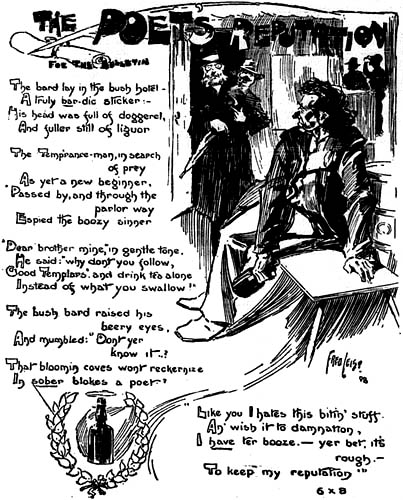
In a long past Monday Musings I mentioned the names of several people who had commented on the state of Australian literature. Many of these were pseudonyms, including the intriguingly named “6×8”. I decided to dig further, and back in 2015, I pretty quickly discovered that his “real” name was Dick Holt. (It’s not always easy to track down pseudonyms used in the newspapers.)

First published, The Bulletin, 29 October 1898, from Middlemiss

I didn’t find a lot about him back then – besides his own writings – but from what I could gather, I ascertained that Dick Holt had travelled the outback doing charcoal drawings and writing articles for the Bulletin and other journals and newspapers of the time. I presume his “6×8″ pseudonym refers to the old (non-metric) picture size of 6″ x 8”, and the fact that he included drawings in his articles. Presumably there’s a metaphorical layer to this pseudonym, too, in that his stories provided little windows on his world.

In the 1890s, according to a 1934-written reminiscence by “Stockwhip”, Holt travelled with Henry Lawson. “Stockwhip” describes him as ‘the jocular writer and “charcoal” artist, Dick Holt” and says he was “a well-known writer to the Sydney Bulletin and Western Herald of Bourke”. He had his own newspaper column “On the Wallaby”. This title references the phrase “on the wallaby track”, which is Australian slang for travelling from place to place looking for work, which is exactly what he and Lawson were doing in Stockwhip’s anecdote. His columns, at least those I’ve seen, ran anywhere from 1500 to 3000 words, and tended to comprise a collection of anecdotes.

I haven’t found a biography for him – he doesn’t appear in the Australian Dictionary of Biography, for example – but returning to my old draft post this week in order to actually post it, I found that AustLit has documented him a little more. They give him as Richard Holt (a.k.a. Dick Holt, and also writing as 6 x 8), and say that he “wrote a weekly column called ‘On the Wallaby’ in the North Queensland Register from January 1899 to August 1920″. So, over twenty years. AustLit says he was born in 1868, and died ca. 1923 in Tasmania (though a reference to him in February 1923 said he was now “living near Melbourne”.) Anyhow, this roughly accords with my research, which had uncovered that he had died by the mid 1920s. The reference came from columnist, Bill Bowyang (pseudonym of Alexander Vindex Vennard, 1884-1947), who wrote the following little anecdote about him in 1926 in his column, “On the track”:

It was the late Dick Holt (‘6×8’) of ‘On the Wallaby’ fame in the ‘N.Q. Register’ who once stated that when he visited a bush township he always gazed into the jail yard to see if there was a load of wood within. If the wood was there it was a certainty that the police would be searching for some inebriated individual to use the axe or crosscut. The sight of that wood was sufficient for Dick Holt, and without wasting any time he always passed on to another town where there was no lone wood piled up in the jail yard.

Holt was, it seems, a character – but one of his time. I’ve only read a tiny proportion of his voluminous output, much of which is in a jocular vein. (Indeed, a 1923 article, identifying Bill Bowyang as his successor, describes them as writing “racy bush yarns”.)

In the post that inspired this one, I shared that “6×8” had criticised Australian literature as being characterised by too much exaggeration of characters and incidents, to which another had replied that the problem was not this sort of exaggeration but a “diseased hankering after the abnormal”. Anyhow, “6×8” clearly didn’t think he was exaggerating character and incident – and perhaps not. But he did like to put a humorous spin on his wanderings about the bush, commenting on anything from a terrible Australian stamp design to what you can read from the newspaper in which the butcher has wrapped your meat. He also saw the poverty that often attended life in the “backblox” noting that country people didn’t like to pay newspaper subscriptions (which affected him), school masters, and parsons. He frequently makes comments like “do these people expect parsons [or whomever] to live without food and clothes?”

However, there’s a problematic side too. Given he’s an outback “wallabist”, he comes across many characters, including non-white Australians. He identifies First Nations Australians with terms like “black fellows” or “dusky brethren” or “dark son of the forest” or, even, “n****r”, and the Chinese are “chows”. In one instance, when listing people of Asian and Islander origins, he adds “and other colored abominations”. I looked for anything that suggested an awareness of the racism implicit in these terms, but I didn’t see it. This makes distressing reading, but for contemporary readers it’s instructive about the attitudes of the day to those they saw as other. Also, by mentioning these “others”, he also tells us about the people who populated Australia and something about their relationships with each other, which I’d argue is better than rendering them invisible.

You can see, perhaps, why I’ve taken a while to write this post, but in the end I thought there was value. Hope you agree …

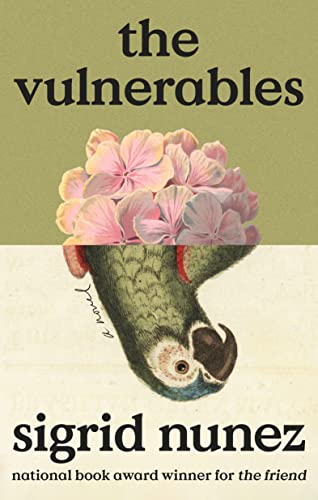
Sigrid Nunez, The vulnerables (#BookReview)

Sigrid Nunez has been on my radar for a long time. So, why now? I blame Jonathan (Me Fail? I Fly!), since it was his post on Nunez’s latest novel, The vulnerables, that captured my attention and encouraged me to make now her time. What an intriguing book! I have no idea whether it is like her other books, but it certainly captivated me.

What exactly is it, was my first question? A novel, says its subtitle. Its probably best described as autofiction, but it did feel at times like a book of essays. In fact, late in the novel, our narrator who, like Nunez herself, is a writer, refers to Virginia Woolf and her aspiration

to invent a new form. The essay-novel. Chapters of fiction alternating with nonfiction chapters, “a terrific affair” that would include, well, everything: “satire, comedy, poetry, narrative . . . And there are to be millions of ideas but no preaching—history, politics, feminism, art, literature—in short a summing up of all I know, feel, laugh at, despise, like, admire hate & so on.”

On the next page, Nunez writes of Annie Ernaux who told her diary that “Tonight, I know I have to write ‘the story of a woman’ over time and History.” And so she did, some twenty years later. Ernaux’s book, says Nunez, is “a personal narrative spanning the period between 1941 … and what was then the present day, 2006: the autobiography of a woman that was also a kind of collective autobiography of her generation”.

Both of these encapsulate, to some degree, what Nunez is doing in The vulnerables. I like essays, so I enjoyed the “essay-novel” feel of this book, including its cheeky toying with where the boundaries are in what she is doing. And, I like personal narratives, not to mention the idea of a book being “a kind of collective autobiography” of a generation.

Nunez and I are of the same broad generation, although with some significant differences given she was born in New York in 1951 to a German mother and a Chinese-Panamanian father. But, we are both women of a certain age and so were designated “vulnerable” at the start of the pandemic, which is where the novel opens – in the northern spring of 2020. It is here, early on in the pandemic, when she is “breaking the rules” by going out and about too much, that a young friend admonishes her, telling her, “You’re a vulnerable … And you need to act like one.”

There is so much to write about in this book – her exploration of our generation, and how we are seeing things in these last decades of our lives. The discussions our narrator has with her friends about gender, for example, mirror mine, as does her awareness of the changes that come with ageing. Her concern about what happened in American politics in 2016, and its ongoing implications, mirror that of many of us. As do her references to racial and social injustice, the climate crisis … and so on. All heightened, here, by the pandemic, whose uncertainties shape the book’s tone. But, I want to focus on one particular aspect, her exploration of writing.

Our narrator is, as I’ve said, of a certain age. She’s seen a lot of life, and a lot of writing, and here she ponders, though her lively stream-of-consciousness style, the role, meaning, and form of writing. She begins with the opening sentence – “It was an uncertain spring” – from Virginia Woolf’s The years. But, just a few paragraphs on we are told that one of the first rules of writing is to “never open a book with the weather”, albeit our narrator has “never understood why not”. Between the opening sentence and this statement, she admits that she remembers almost nothing about Woolf’s book, and then writes that:

Only when I was young did I believe that it was important to remember what happened in every novel I read. Now I know the truth: what matters is what you experience while reading, the states of feeling that the story evokes, the questions that rise to your mind, rather than the fictional events described.

I felt right then and there that this was going to be a book for me. I rarely remember plots, but frequently remember how books made me feel, how I reacted to them.

Why are you making things up?

The vulnerables is deceptively simple. Our narrator takes us into her confidence about what is happening to her, and what she is thinking, as she moves through those early days of spring and into lockdown stage, when she accepts the task of pet-sitting a miniature macaw named Eureka in a classy New York apartment, only to find herself sharing this role with a disaffected, but opinionated Gen Z son of friends of the apartment owner. She calls him Vetch, a prickly metaphoric contrast to the old-lady flowers, like hydrangeas, that she had previously regaled us with.

Woven through this loose plot, are our narrator’s thoughts on a range of subjects. It has a relaxed stream-of-consciousness feel, but is, nonetheless, formally stylish, using subtle repetition, metaphor, sly humour and literary allusions, to develop her ideas. It’s also erudite with frequent digressions that explore anything from the relevance (or not) of Dickens and what, say, J.M. Coetzee thinks about writing, to a discussion of My octopus teacher and of how the events of 2016 stopped speculative fiction author William Gibson in his tracks. This might feel random at the start, but the links are there, and the ideas – the questions – slowly build. It’s the sort of book that invites you to go with the flow, and if you do, you will eventually not only see the pattern, but will also have been both entertained and inspired to think.

What most inspired me was Nunez’s exploration of what sort of writing is most relevant now. She shares the thoughts and experiences of many of the great writers of the last century or so – Virginia Woolf, Annie Ernaux, Joan Didion, J.M. Coetzee, to name a few. Early in the novel she quotes Coetzee who said that what comes in late life to many writers is “an ideal of a simple, subdued, unornamented language and a concentration on questions of real import, even questions of life and death.”

Then, late in the novel, in a wry comment about the pandemic and its distinction between “essential” and other workers, she notes that of writers, the only ones deemed essential were the journalists. She seems to agree, writing that “silence all the journalists and we’d have the end of human rights”. And, more pointedly, she responds to the question of whether there is still a place for fiction, with:

Growing consensus: The traditional novel has lost its place as the major genre of our time. It may not be dead yet, but it will not long abide. No matter how well done, it seems to lack urgency. No matter how imaginative, it seems to lack originality. While still a powerful means of portraying human character and human experience, somehow, more and more, fictional storytelling is coming across as beside the point. More and more writers are having difficulty quieting a voice that says, Why are you making things up? 

There is fear about “the growing use of story as a means to distort and obscure reality”. But, in her subversive way, Nunez explores both sides. She writes of her time with Vetch, saying

… even now I sometimes find myself talking to him. But when I do he is never ‘Vetch.’ Always his real name. His sweet name.
But how could any of this have really happened? I must be making it up.

Does it matter whether she’s making it up or not?

It is a little before this, that our narrator discusses Woolf’s thoughts about creating her new form, “the essay-novel”, and then teases out what we might want now (including a funny dig at reader’s guides for book clubs). It’s not simple or straightforward – indeed, it’s paradoxical, it’s “elegy and comedy” combined – but, in the end, what she has written is a novel. A strange, or different, almost essay-novel it may be, but there, I’d say, is your answer.

Sigrid Nunez
The vulnerables: A novel
London: Virago, 2023
250pp.
ISBN: 9780349018096

Monday musings on Australian literature: Vale Yasmine Gooneratne (1935-2024)

It was through the Jane Austen Society of Australia’s (JASA) newsletter, Practicalities, that I learned of the death of Yasmine Gooneratne, a woman with whom I have crossed paths – one way or another – three times. She was an academic at Macquarie University, where I did my undergraduate degree; she wrote a novel, A change of skies (1991), which my reading group discussed back in 1996; and, she was the patron of JASA (and you know how I love Jane).

You can find quite a lot about Yasmine Gooneratne on the Internet, if you are interested, so I’m just going to focus on a few points that struck me, and I hope will interest you.

“No nonsense”

A site called The Modern Novel provides a useful potted biography, so I will start with that. It says that she was born in Sri Lanka (then Ceylon) in 1935 as Yasmine Bandaranaike, which means she was “a member of the well-to-do Ceylonese family which included Sirimavo Bandaranaike, the first woman prime minister in the world”. She studied at the University of Ceylon and Cambridge University, and in 1962, she married the doctor and environmentalist Dr Brendan Gooneratne (who died in 2021). They emigrated to Australia in 1972, where she lived for 35 years, according to Wikipedia, before returning to Sri Lanka. It was here, in her home country, that she died on 18 February this year.

AustLit provides more detail, which includes that she was founding Director of Macquarie University’s Post-Colonial Literatures and Language Research Centre from 1989-1993, and that she was awarded an AO (Order of Australia) in 1990 “for her distinguished contribution to Sri Lankan and Australian literature”. She won (or was listed for) a number of awards in Australia and elsewhere.

Gooneratne wrote over twenty books, including novels, some poetry and short story collections, as well as many works of non-fiction, but she seems little known outside academic circles (and JASA). Indeed, my initial – and general – search for this post brought up many references to her but no news items on her death. I had to search a little more specifically for that. This was interesting given that, on the several internet sites I found, she is described as widely known. DBpedia* calls her a “Sri Lankan poet, short story writer, university professor and essayist” and says that “she is recognised in Sri Lanka, Australia and throughout Europe and the U.S.A., due to her substantial creative and critical publications in the field of English and post-colonial literature”.

When I did find something about her death, I was delighted to find an obituary written by her daughter Devika Brendon. Initially posted in the Sunday Times on 18 February 2024, it has been shared on many other sites including the blog I am quoting from. It provides a loving and personal tribute to her mother, but one which I suspect also rings true to the person Gooneratne was. Devika Brendon tells us that:

Yasmine Gooneratne as a private individual left clear instructions about what she wished regarding her funeral. Her directives show a great deal about her character and her values. ‘No public notices. No public viewing. No public funeral. No memorial lectures. No fuss. No feathers. No posturing. No performativeness. No photographers. No selfies. No celebrities. No nonsense.’

I have mentioned Gooneratne a few times on this blog, including in a brief Monday Musings post I wrote in 2013 on Migrant literature. It had been a long time since I’d read A change of skies (and it’s even longer now), but I wrote that the novel was about “educated middle class migrants – like herself I presume – who work to find a balance between fitting into the new culture while at the same time preserving their Sri Lankan identity”. If you want a better flavour of this work, check out this post written in 2012 by someone called Elen on a blog called the southasiabookblog. Elen says that Gooneratne’s “portrayal of the immigrant experience is as funny and poignantly ironic as Jhumpa Lahiri’s work on a similar topic is earnest”. I wish I could remember it that well, but I read it when I was immersed in parenting and my memory is general. This description of Gooneratne’s tone, however, sounds like the writing of an Austen-lover!

I will end with another paragraph written by her daughter because, not only does it tell us a lot about Gooneratne but, if you are an Austen fan, you will love the final line:

She had great contempt for hypocrisy and cruelty. She had a great sense of humour and a lively sense of fun. As she was a person of moral integrity, the repulsive conduct of people who prey upon the vulnerable saddened her, especially as she grew older. While always choosing to believe the best in people, she found herself unable to accept the lies that are spun by opportunists and predators on a daily basis. Her good opinion, once lost, was lost forever.

* DBpedia describes itself as “a crowd-sourced community effort to extract structured content from the information created in various Wikimedia projects”

Favourite quotes: from a Musica Viva program

Back in 2015, I started a little ad hoc Favourite Quotes series but so far have only written four posts. This is not because I have a dearth of favourite quotes but because I don’t find time to share them. However, in the program for the most recent Musica Viva concert we attended, I came across a reference to a quote that intrigued me – and I just had to find who said it, which I did:

“How much do you know about Shakespeare?” I once asked a friend who has committed much of her life to studying the Bard. She replied, ”Not as much as he knows about me”. Remember this the next time someone tells you literature is useless.” (Arnold Weinstein, in The New York Times)

”Not as much as he knows about me”. Don’t you just love this understanding of how meaningful literature can be?

In the Musica Viva program, this was part of an interview question put to the performer – mezzo-soprano Anna Dowsley. I’d like to say that the question led to an engagement with this point, but it didn’t really. The interviewer didn’t include the “Remember this …” bit in her question, but asked instead, “How are you relating to these songs personally?” Dowsley went on to talk about the timelessness and relatability of the songs, rather than engage with Weinstein’s point. I’m not criticising the singer, here, because the way the question was put doesn’t seem to really invite the discussion I’d love to have heard.

However, the statement certainly spoke to me, because Shakespeare often comes to my mind at significant moments in my life, as do other writers, like Jane Austen. So, I went digging to find out who this Arnold Weinstein was. He has a Wikipedia article, which told me that he was born in 1940, and was (maybe still is) the Edna and Richard Salomon Distinguished Professor of Comparative Literature at Brown University. More usefully, I found an opinion piece in the Brown Daily Herald written by him in April 2022. It is titled “The case for studying literature at Brown”, and is a response to falling enrolments in literature courses. He discusses why students should choose to study literature. It’s brief but makes its point. He says, for example, that “it will sound loopy, but I believe we read literature to become other”, which is an idea that he knows will be rejected by current trends which favour “objectivity and distance” over “reader identification”. I like his thinking, though “reader identification” is a broad church and can be misapplied, so I do get those who are critical of focusing on this.

Anyhow, to conclude, he ends with the quote above, which is clearly a favourite anecdote of his, but he frames it this way:

What makes it [studying literature] worth doing? I’ll answer that with a question I asked a friend who had devoted her entire life to doing programs on Shakespeare. My question: How much do you know about Shakespeare? Her answer: not as much as he knows about me. Not as much as he knows about me. Chew on this a little. We go to literature, not because we’re professors or students, but because important books shine a unique beam on human behavior, thought and feeling. Reading these books adds something unique not only to our database but to our actual identity. For we’re never through discovering who we are. 

Today is World Poetry Day. How better to commemorate it than with this reference to the Bard – and with thoughts about why we read him and literature in general?

What do you think about Weinstein’s view?

Monday musings on Australian literature: Trove treasures (11), A short list of masterpieces of fiction

Today’s post is not especially Australian, but it was published in Australian newspapers as a recommended list of “masterpieces” or classics for Australians to read. It is in that sense that I am posting it in my Monday Musings series!

The list was published in 1910, with the heading “Best novels: A short list of masterpieces of fiction”. It explains that “an American paper offers the following as an excellent though, of course, limited list of the best books for one to read”. The interesting thing is that the books are categorised. See what you think.

It was replicated in many newspapers but the one I used for this post, because it needed little editing (as I recollect), is from Victoria’s Elmore Standard of 12 February (accessed 10 July 2023).

The list

I have value added with the author’s name, as this – curiously – was not included. Sure, most people probably knew the authors of these classics, but that’s not the point. The authors deserve recognition! I’ve also added first publication date, for interest.

William Makepeace Thackeray, Vanity Fair
  • The best historical novel: Ivanhoe (Sir Walter Scott, 1820)
  • The best dramatic novel: The Count of Monte Cristo (Alexandre Dumas, 1844-46 serialised)
  • The best domestic novel: The Vicar of Wakefield (Oliver Goldsmith, 1766)
  • The best marine novel: Mr. Midshipman Easy (Frederick Marryat, 1836)
  • The best country-life novel: Adam Bede (George Eliot, 1859)
  • The best military novel: Charles O’Malley (Charles James Lever, 1841)
  • The best religious novel: Ben Hur (Lew Wallace, 1880)
  • The best political novel: Lothair (Benjamin Disraeli, 1870)
  • The best novel written for a purpose: Uncle Tom’s Cabin (Harriet Beecher Stowe, 1852)
  • The best imaginative novel: She (H. Rider Haggard, 1887)
  • The best pathetic novel: The Old Curiosity Shop (Charles Dickens, 1840-41 serialised)
  • The best humorous novel: The Pickwick Papers (Charles Dickens, 1836-37 serialised)
  • The best Irish novel: Handy Andy (Samuel Lover, 1841)
  • The best Scotch novel: The Heart of Midlothian (Sir Walter Scott, 1818)
  • The best English novel: Vanity Fair (William Makepeace Thackeray, 1848)
  • The best American novel: The Scarlet Letter (Nathaniel Hawthorne, 1850)
  • The best sensational novel: The Woman in White (Wilkie Collins, 1859)
  • The best of all: Vanity Fair (William Makepeace Thackeray, 1848)

Don’t you just love these categories?

I’ve read some of these authors, but only a few of these particular books. Some I had to check who the authors were, like the author of Handy Andy. It is a male dominated list, though we do have George Eliot and Harriet Beecher Stowe, but what about Jane Austen! Ok, I’ll leave it there because my point is not to reconsider the list but share it as one reflection of the times, and what some American paper, apparently thought (though we don’t really know the provenance of the list).

All thoughts on any aspects of this list are welcome.

Jane Austen, Mansfield Park (Vol. 1)

Mansfield Park book covers

This year my Jane Austen group is doing a slow read of Mansfield Park, which involves our reading and discussing the novel, one volume at a time, over three months. This month, we did Volume 1, which, for those of you with modern editions, encompasses chapters 1 to 18. It ends with the return of the patriarch, Sir Thomas Bertram, from his plantation in Antigua.

I’ve said this before, but I’ll say it again. Every time I re-read an Austen novel, I “see” something new, something new to me that is, because I can’t imagine there’s anything really new to discover in these much loved, much pored-over books. Sometimes my “new” thing pops up because in a slow read I see things I didn’t see before while I was focusing on plot, or character, or language, or … Other times, it might arise out of where I am in my life and what experiences have been added to my life since the previous read.

I’m not sure what is behind this read’s insights, but the thing that struck me most in the first volume this time is the selfishness, or self-centredness, of most of the characters. It’s so striking that I’m wondering whether Austen is writing a commentary on the selfishness/self-centredness of the well-to-do, and how this results in poor behaviour, carelessness of the needs of others, and for some, in immorality (however we define that.)

Mansfield Park has been analysed from so many angles. These include that it is about ordination (which Austen herself said was the subject she was going to write about); that it is a “condition of England” novel; and that it is about education. In the first chapter, in fact, Mrs Norris, the aunt we all love to hate, says

Give a girl an education, and introduce her properly into the world, and ten to one but she has the means of settling well, without farther expense to anybody.

The irony of course is that the sort of education that Mrs Norris supplies to the Bertram girls does not do them any favours. That’s not exactly where I’m going now, though we could argue that poor education – or poor upbringing – is behind much of the selfishness we see in the novel. So, maybe, I will end up talking about education by the end of the novel.

For now, however, I will share why I am thinking this way. For those of you who don’t know the plot, it centres around Fanny Price who, at the age of 10, is taken in by her wealthy relations, the Bertrams of Mansfield Park, to relieve her impoverished parents of one mouth to feed. Fanny Price is the Austen heroine people love to hate, but I’m not one of those haters. I believe that if you truly look at her character and her life, within the context of her situation and times, you will see a young girl whose good values and commonsense enable her to make the best of a very difficult situation.

That it is a difficult situation is made clear in several ways, including the fact that we are told in the opening chapter that she is to be treated as a second class citizen in the family. A “distinction” must be preserved; she is not her cousins’ equal. In the second chapter, we are told

Nobody meant to be unkind, but nobody put themselves out of their way to secure her comfort.

As the novel progresses, and the characters are introduced, they are, one by one, shown to be self-centred and/or selfish in one way or another. I won’t elucidate them all, but, for example:

  • Lady Bertram (her aunt) is, from the start, lazy and careless about the needs of others. Her own comfort, and that of her pug, supersedes all.
  • Mrs Norris (another aunt) is judgemental and parsimonious, ungenerous in mind and matter in every possible way.
  • Cousins Maria and Julia show no generosity to Fanny, unless it’s something that doesn’t materially affect them; they are “entirely deficient in … self–knowledge, generosity and humility”.
  • Cousin Tom “feels born only for expense and enjoyment”, and exudes “cheerful selfishness”.
  • Visiting neighbour, Henry Crawford, is “thoughtless and selfish from prosperity and bad example” and amuses himself by trifling with the feelings of Maria and Julia who provide “an amusement to his sated mind”.
  • Henry Crawford’s sister Mary is unapologetic about her selfishness, asking Fanny to forgive her, as “selfishness must always be forgiven…because there’s no hope of a cure”. This surely takes the cake!

And so it continues … the clergyman Dr Grant is an “indolent, selfish bon vivant”; and the self-important Mr Rushworth and the self-centred Mr Yates show no interest or awareness of the needs of others.

There are, of course, some redeeming characters. Cousin Edmund, in the first flush of love, can be thoughtless at times but it is his overall kindness that keeps Fanny going, and Mrs Grant also comes across as sensible and kind.

A couple of significant events occur in this volume – the visit to Mr Rushworth’s place at Sotherton, and preparations for staging a play, Lovers’ vows. These provide ample opportunity for the characters to parade their self-centredness. You can’t miss it. Fanny certainly doesn’t, as she watches those around her jockey for position in terms of their roles in the play:

Fanny looked on and listened, not unamused to observe the selfishness which, more or less disguised, seemed to govern them all, and wondering how it would end.

Fanny, however, also questions her own motives in refusing to take part in the play: “Was it not ill-nature, selfishness, and a fear of exposing herself?” But, in fact, she is the only one who is truly alert to the dangers within.

This “selfishness” theme is not, of course, the only issue worth discussing when thinking about Mansfield Park, as other members in my group made clear with their own discoveries. It is simply the one that stood out for me, during this re-read.

Thoughts anyone?

Carmel Bird and Jace Rogers, Arabella (#BookReview)

If you have read Carmel Bird, and particularly if you have read her bibliomemoir Telltale (my review), you will know that she has a whimsical turn of mind. You will also know that she can turn her hand to most forms of writing, including children’s picture books. Her latest outing, Arabella, proves the point.

Arabella tells the story of two cats, and it starts like this:

Once in a cupboard
full of coats and old hats
lived the prettiest, sweetest
and littlest of cats.

The accompanying illustration shows the inside of a cupboard, with hats on a high shelf, coats hanging below them, and, spying from behind the boots at the bottom, a little cat. The illustrations are minimalist pen and black ink drawings with restrained, delightful touches of watercolour – just like you see on the cover.

On the next page we learn that this cat, who sleeps behind an umbrella, is named Miss Arabella. She is small, quiet and shy. Unfortunately, not only is she shy, she’s also a bit of a scaredy-cat – well, a frightened cat anyhow. She seems to be managing her life well until into it comes another cat named George. He’s confident, and he knows there’s another cat there – somewhere. How will Arabella cope? Will she cope? Well, I’m not going to tell you, but let’s just say that this is a perfect book to read to children who love animals, particularly those who love cats, and to children who are frightened or lonely, and who need a little encouragement to come out of their shell to explore the big wide world – especially with a friend.

Arabella is one of my favourite sorts of picture books, by which I mean, it’s a rhyming one. It flows along beautifully, with words that soothe and please, and with little shifts in rhyme and rhythm that alter the pace just when they ought, so that the reader is jolted out of that sing-song tone that is so easy to fall into with rhyming books. The story is charming, and the gentle, whimsical illustrations encourage engagement. The book has an old-world air but with a timelessness that speaks to now as much as to any time. It has, I believe, been successfully tested on Carmel Bird’s own grandchildren, to whom the book is dedicated.

But don’t take my word for it, see what you think. I’m sure you’ll be delighted, particularly if you have grandchildren.

About the creators:

If you read my blog regularly you will know Carmel Bird (my posts). Born in lutruwita/Tasmania, she has been a fixture on the Australian literary scene since the 1980s when her first novel, Cherry Ripe, was published. She has written over ten novels, multiple short story collections, and much more besides. In 2016, she was awarded the Patrick White Award.

You may not, however, have heard of Jace Rogers. He is an artist who lives in Castlemaine, Victoria, where Bird now resides. His Facebook Page told me more, and gave me a sense of why he would have worked well with Carmel Bird. His intro is “My work salutes the anti hero. Fragments of brain clutter drawn out, cut up and cemented in binder medium” and his email address is given as jaceartyfarty@gmail.com. Love it.

Carmel Bird (text) and Jace Rogers (illustrations)
Arabella
Castlemaine: Treasure Street Press, 2023
33pp.
ISBN: 9780646883601

(Review copy courtesy the author. This book is published by Carmel Bird’s own – new – publishing company, which might make it self-published, but then again, might not. The book is available in bookstores, like Readings, but also direct from the author: carmel@carmelbird.com, $25 plus $6 postage)

Monday musings on Australian literature: Blak and Bright, 2024

Eight years ago, I wrote a post about a new festival called Blak and Bright, which was described at the time as “the debut event of the Victorian Indigenous Literary Festival”. I am thrilled to find that eight years later, this festival is still going strong. So often festivals, and literary initiatives in general, appear on the scene, but soon falter. Not this one. Now formally named the Blak and Bright First Nations Literary Festival, it is held annually in Naarm (Melbourne). This year’s dates are March 14 to 17, making it a four-day event.

Their “mission statement”, to use my terminology, is simple and to the point:

We believe that Blak stories are for everyone.

The Festival, they say, is unique, “with over sixty First Nations artists front and centre”. It celebrates “the diverse expressions of First Nations writers and covers all genres from oral stories to epic novels and plays to poetry”. In 2024, they are offering new events, alongside favourite events from past Festivals. Most sessions are free and some will be live-streamed, so you can register to receive the link. This is why I am posting on it now – there is still time to register!

The theme for 2024 is Blak Futures Now, with the tagline reading “Stories, epics, poems, monologues, history, activism. Embrace the diversity of expression, paving the way for Blak futures now.” This year’s keynote address, State of the Nations, will be delivered on opening night by Goa-Gunggari-Wakka Wakka Murri woman from Queensland, Leah Purcell (whose versions of The drover’s wife I posted on in 2022). This session does have an admission fee, as do a few, mostly performance-oriented, sessions.

To whet your appetite, here are some of the sessions (all of them free, but bookings are essential):

  • Yung, Blak and Bold: a festival regular, this year’s session is promoted as “get a glimpse into the minds of young writers who are shaping the future of Blak literature. With John Morrissey, Stone Motherless Cold, Susie Anderson and moderated by Neika Lehman”.
  • Blak Book Club: another regular, with this year’s club discussing Melissa Lucashenko’s Edenglassie and Jane Harrison’s The visitors, moderated by Daniel Browning.
  • YA Awesome: this session is just what its name implies, that is, it’s about writing “compelling narratives that young adult readers love to read”. It will feature some writers I don’t know, which is probably not surprising given my reading interests – Gary Lonesborough, Graham Akhurst, and Melanie Saward.
  • Sistas Are Doin’ It: another regular, with this year’s women being Deborah Cheetham Fraillon, Helen Milroy, and Debra Dank (see my review of her book We come with this place). They will talk about how they write “while juggling the many roles Aboriginal women fulfil in their communities”,

These next sessions are also free but I want to list them separately because their topics cross over all the others! They are:

  • Language Lives: the program describes it as follows, “What role do First Nations languages play in Australia’s creative outputs? You might be surprised. With Kim Scott, Kirli Saunders, and moderated by Philip Morrissey”. (I have written about a lecture Kim Scott gave on recovering languages.)
  • Blak Imprints: I don’t know which imprints the participants will be discussing, but we all know how critical supportive publishers are for getting diverse/minority writers out there. In this session, Rachel Bin Salleh, Tisha Carter, and Yasmin Smith will “discuss the importance of First Nations imprints in publishing. What else is needed in the publishing ecology?”
  • Who Can Critique Blak Work: I’d especially love to be at this one. We talk a lot about “own” story-writing, but I have raised a few times here the issue of critiquing the work of cultures very different from my own. How can I do it, or, in fact should I do it? What would it mean if I didn’t? The session is described as follows, “Should only Blak critics critique Blak work? What does the Blak lens bring to the process? With Bryan Andy, Daniel Browning, Declan Fry, Tristen Harwood and moderated by Davey Thompson”.

These are just a few of many sessions being offered. There are sessions on poetry and songwriting, there are readings, and more. Check out the program at this link if you are interested. You can see the names of all the artists, and the sessions they are appearing in, at this link.

Are you likely to attend – in person, or online?