Monday musings on Australian literature: Short stories, revisited

I love short stories but, as Jason Steger, Literary Editor of The Age and The Sydney Morning Herald, wrote in one of his recent weekly emails, not everyone does. Indeed, he writes:

I know quite a lot of people – people I would consider good readers of fiction – who find them unsatisfactory. Not enough meat to them. Not as satisfying as a novel. Always leaving you wanting more.

And he admits to shifting between the like-don’t like positions himself, before going to say that, “more often than not [with good short stories] you come away knowing precisely enough; you don’t need any more after the author has ended the story with perhaps a surprise, perhaps a neat tying together, or perhaps with ambiguity”. He offers other writers’ thoughts, including English novelist Elizabeth Bowen who wrote in her introduction to The Faber book of modern stories (1937) that “Poetic tautness and clarity are so essential to it [the short story] that it may be said to stand on the edge of prose.”

Bowen, he said, is particularly relevant to what he wanted to share, which was that Tasmanian poet and novelist Kathryn Lomer had won this year’s Furphy Literary Award. Worth $15,000 to the winner, the prize is named after Joseph Furphy, the author (using the pseudonym, Tom Collins), of the Australian classic, Such is life. Lomer’s winning story, “Nothing about kissing” (read it here), is set in Hobart’s MONA, and opens with the protagonist starting her cleaning shift. Steger quotes one of the judges, Stephanie Holt, who said the winning story “unfolds as layers of assured, erudite but often plainspoken reflection. Into these, the writer drops several crucial moments with such startling aplomb you want to stand and applaud.”

Selected recent short story collections

After this introduction, Steger notes that “despite publishers frequently saying that stories are tricky to sell, they still appear”, and then he lists some, noting that collections are more often published by smaller publishers, like Spineless Wonders and Puncher and Wattman. There are others of course, including the somewhat larger, but still independent publisher, UQP.

He gives a few recent examples, which I am including here, in alphabetical order, along with a few of my own. I have limited the list to those published since 2022 to convey a sense of current activity.

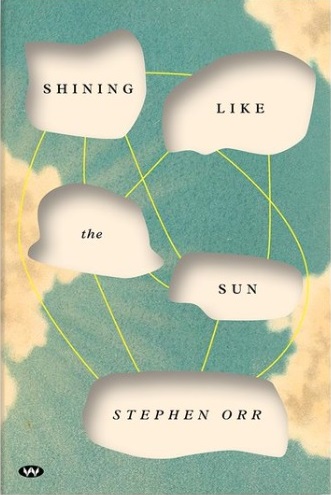
  • Tony Birch, Dark as last night (UQP)
  • Carmel Bird, Love letter to Lola (Spineless Wonders, my review)
  • Georgia Blain, We all lived in Bondi then (Scribe, Brona’s review): posthumous publication of new stories written during 2012-2015
  • Larry Buttrose, Everyone on Mars (Puncher and Wattman)
  • Ceridwen Dovey, Only the astronauts (Penguin Books Australia, Brona’s review)
  • Fiona McFarlane, Highway 13 (Brona’s review): “a suite of interlinked stories, received a rave review in this masthead” (Steger)
  • Laura Jean McKay, Gunflower (Scribe)
  • Catherine McNamara, The carnal fugues (Puncher and Wattman, on my TBR): recently shortlisted for the Prime Minister’s Literary Awards
  • John Morrissey, Firelight stories (Text Publishing): First Nations speculative fiction
  • John Richards, The Gorgon flower (UQP): Gothic-infused short stories
  • Mykaela Saunders, Always will be (UQP): First Nations speculative fiction
  • Su-May Tan, Lake Malibu (Spineless Wonders)

Anthologies are a specific type of collection, of course, in that they contain writings by different authors, but are worth including here too:

  • Suzy Garcia (ed.), New Australian fiction 2023 (Kill Your Darlings)
  • Lynette Washington (ed), Futures: Stories of futures near and far: includes a story from Carmel Bird’s Love letter to Lola (Glimmer Press)

There are two broad types of anthologies, those selected from previously published stories, and those that result from a call for submissions and contain all new stories. The two above belong to the latter.

Not always, but often, short story collections and anthologies are themed or genre-linked. So, for example, Saunders’ collection comprises First Nations speculative fiction. Speculative fiction, in fact, seems to be a popular genre for short story writers, and currently they are grappling with some of the big issues like climate change and, for First Nations writers in particular, the experience of colonialism.

Ten years ago, ABR (the Australian Book Review) asked ten Australian short story writers to name some favourite short story collections and short stories. One of the ten was Carmel Bird. She introduced her selection with the comment that “I delight in the fact that the ‘short story’ is forever elastic”. She should know, as her own stories epitomise this elasticity, but she’s right because she’s not the only one. Recent stories that I’ve read have been exciting in the degree to which they push and stretch the form, from experiments with micro fiction to trying out different voices, including inanimate. If there’s one way to keep something interesting, it’s to mix it up a bit, and our short story writers are doing that. It’s exciting and encouraging.

Do you read short story collections or anthologies? If so we’d love to hear your favourites.

Jane Austen, Lady Susan, revisited (#BookReview)

I have read Jane Austen’s Lady Susan several times, including with my local Jane Austen group in 2014 (my review). That now being ten years ago, we decided it was time to read – and consider – it again. However, as my time was tight, I decided to try an audiobook version, and found a Naxos edition in my library. Mr Gums and I listened to it on our 650+ km drive home from Melbourne, and found it excellent.

For those of you unfamiliar with Austen’s minor works, Lady Susan is, as far as we know, the first novel (novella) that Austen completed, but it was not published during her life-time, for the simple fact that she never sent it to a publisher. Written, scholars believe, in 1793/94, when she was still a teen, it was not published until 1871, decades after her death, when her nephew James Edward Austen-Leigh included it in his memoir of her. It has since been adapted to film, television, stage and book. The best known of these is probably the 2016 film, which was titled Love & friendship, a strange decision given that is the title of another work of Austen juvenilia (my post).

I gave a brief plot summary in my previous post, but will again here. Lady Susan is a bewitching, 35-year-old widow of four months, who is already on the prowl for a new, wealthy husband. The novel opens with her needing to leave Langford, where she’d been staying with the Manwarings, because she was having an affair with the married man of the house, and had seduced his daughter’s suitor, Sir James Martin. She goes to stay with her brother-in-law Charles Vernon and his wife Catherine, whom she’d done her best to dissuade him from marrying. She’s not long there before Reginald, Catherine’s brother, arrives to check her out because, from what he’s heard,

Lady Susan possesses a degree of captivating deceit which must be pleasing to witness and detect.

After all, she is “the most accomplished coquette in England”! Of course, the inevitable happens and the artful Lady Susan captivates him. Meanwhile, Lady Susan wants her shy, 16-year-old daughter, Frederica, to marry Sir James, the man she’d seduced away from Miss Manwaring – but sweet, sensible Frederica wants none of this weak “rattle” of a man. And so it continues …

Lady Susan, then, is a fairly simple tale, containing the deceits and silliness common to its 18th century genre, but also showing restraint and innovation which hint of the novelist to come – her wit and irony, her commentary on human nature, and her themes. I wrote about this too in my last post and don’t plan to repeat it here. There are many angles from which the book can be considered, and this time I’m interested in another, its form as an epistolary novel.

The epistolary novel was common in the eighteenth century. It’s something Austen tried again with Elinor and Marianne, which she wrote around 1795 to 1797, but later rewrote in her famous third person omniscient voice. Retitled Sense and sensibility, it became her first published novel in 1811. Pride and prejudice’s precursor, First impressions, may also have started as an epistolary novel. It’s interesting, then, that although she made a “fair copy” of Lady Susan in 1805 she didn’t rewrite it too. Why she didn’t is one of the many mysteries of Austen’s life. Perhaps it was the subject matter, because this is not Austen’s usual fare. Lady Susan belongs more to the 18th century tradition of wickedness, lasciviousness and adultery, forced marriages, and moralistic resolutions. Characters tend to be types rather than complex beings, and the novels are racily written, with a broad brush rather than a fine pen. This is true of Lady Susan, but there are departures. For a start it’s a novella not one of those 18th century tomes!

I might be going out on a limb here, because, while I have read a couple of 18th century epistolary novels, including Samuel Richardson’s, my memory has faded somewhat. However, Wikipedia helps me out a bit. Its article on the epistolary form says that there are three main types: monophonic (comprising the letters of only one character); dialogic (using letters of two characters); and polyphonic (which has three or more letter-writing characters). Lady Susan is an example of the last one. The main letter writers are Lady Susan (mostly to her friend Alicia Johnson in London) and her sister-in-law Catherine Vernon (mostly to her mother Lady De Courcy), but we also see some letters back from these correspondents, making four letter writers. But wait, there’s more! There are also letters – albeit just one in two cases – from others, namely Reginald De Courcy, his father Sir Reginald De Courcy, and Lady Susan’s daughter Frederica.

So, in this short book, we have 7 letter writers. But wait, there’s even more. To conclude the novel, Austen discards the epistolary-form and writes a first person denouement, which includes commentary like this:

Whether Lady Susan was or was not happy in her second Choice — I do not see how it can ever be ascertained — for who would take her assurance of it on either side of the question? The World must judge from Probability; she had nothing against her but her Husband & her Conscience.

The thing that intrigued me most as I was “reading” Lady Susan this time was the form. Austen used it for Love and Freindship, Lady Susan, Elinor and Marianne, and perhaps First impressions. But she abandoned it for the style for which she is recognised as a significant innovator – a third person narrative characterised by free indirect discourse, meaning the narrator’s voice embodies the perspectives of the characters. As John Mullan, writing primarily about Emma, explains: “Before Austen, novelists chose between first-person narrative (letting us into the mind of a character, but limiting us to his or her understanding) and third-person narrative (allowing us a God-like view of all the characters, but making them pieces in an authorial game). Austen miraculously combined the internal and the external”.

So, my thinking is that she started by using a form with which she was familiar as a reader and which was popular with readers of the day, but whose limitations she soon started to feel. Her using a relatively large number of letter writers, enabling us to see Lady Susan in particular from different perspectives, and her turning to an over-arching first person narrator for her conclusion, suggests that she understood the limitations of writing a novel-in-letters in terms of developing complex realistic characters, of managing plot, and of incorporating narratorial commentary. The rest, as they say, is history.

Thoughts anyone?

Jane Austen
Lady Susan (Classic Literature with Classic Music)
Naxos Audiobook, 2005
Duration: 2hrs 30mins

Available in e-text.

Monday musings on Australian literature: Forgotten writers 7, Grace Ethel Martyr

The forgotten writers I have been writing about vary greatly, and most will stay forgotten because, to be honest, their time has past and not all writing remains relevant. This is not to say, however, that they are not worth revisiting. They are, after all, part of our literary culture, and they paved ways, whether we are aware of it or not. Grace Ethel Martyr is an example. She is notable enough to have entries in AustLit and Wikipedia, and was interesting enough in her time to catch the attention of Zora Cross (who wrote about her for a series she did for The Australian Women’s Mirror.)

Martyr is another writer I have posted about on the Australian Women Writers (AWW) blog, but again, I am not including here the piece written by her that I published there. Titled “The blue jar”, its subject is domestic violence, though that term would not have been used then. It’s not typical of her best-known work. However, in the light of our own times, it is worth reading. It is told from the 1920s perspective that women just need to put up with brutal husbands and manage as best they can. They didn’t have much choice. But, in this story, a bit of luck comes the wife’s way … check it out at AWW.

Grace Ethel Martyr

Grace Ethel Martyr (1888-1934) was a Victorian-born poet, short story writer and journalist. She wrote under various permutations of her name – G. E. Martyr; E. Martyr; Ethel Martyr; Grace E. Martyr; and G. Ethel Martyr.

Born in Ballarat, she was the only daughter of James Kent and Grace Flora Martyr. She grew up in Maldon in central Victoria, but spent much of her working life in Bendigo. She apparently passed the University of Melbourne matriculation examination in 1906, but I haven’t found evidence that she went on to university. AustLit and Wikipedia both say she was employed by the Bank of New South Wales, for whom her father had worked, for four and a half years, but left due to ill-health. While working at the bank, she published a collection of patriotic war poems, Afterwards and other verses (1918), but she didn’t begin to write seriously until she had left the bank. Zora Cross (writing as Bernice May in The Australian Women’s Mirror) tells how this book was given to her to by Martyr’s cousin who wanted her assessment of it, and says it was she, Cross, who encouraged Martyr to leave the bank (though the ill-health part is also true, I believe).

The Sydney Morning Herald, 18 May 1918, commented on Afterwards and other verses, describing it as “unequal” (meaning “uneven”?) but also as

characterised by sincerity, depth of feeling, and a burning patriotism which redeems many shortcomings. Her technique, though not faultless, is usually correct, and at her best Miss Martyr can reach a high level of dignified expression.

Perth’s Western Mail, 31 May 1918, offers similarly qualified praise:

War has given inspiration to Miss Martyr’s muse, and if her verse does not reach the loftiest peaks, the level of its quality is rather beyond that common to such collections.

Writing about Martyr ten years later, Cross says that

So far, Miss Martyr’s best work has been done in verse. But her true vein is the child story and child-verse. I know of no Australian writer who has so beautifully caught the spirit of the child in verse as she has. And she is that rare writer, the one who never forgets that child-verse should also be poetry.

Martyr, then, wrote children’s poetry and fiction, including several stories serialised in The Australasian, but AusLit says that her principal literary output is the poetry she published in The Bulletin and The Australian Woman’s Mirror. In addition to this writing, Martyr also worked for The Bendigo Advertiser, where she edited the women’s columns and the children’s page, and she was Bendigo’s social correspondent for several Melbourne publications.

Cross praises much about her work, saying

She shows inner melody in her verse which is often of a very high standard. Her love of music and nature comes out in her poetry. Like all Australian writers her best work has appeared in the Bulletin.

Martyr won prizes at Ballarat’s South Street Literary Awards – in 1918 for best patriotic poem and in 1919 for best original poem. In 1920 she came second to David McKee Wright, from a field of 125 entries, in the Rupert Brooke Award, which was established by the Old Collegians’ Association of Melbourne’s Presbyterian Ladies’ College.

Martyr was also a pianist, and worked with musicians Margaret Sutherland and William James on various projects. In particular, she wrote stories and verses for the 3LO children’s hour, with James setting her verse to music. (William James is best known, to me anyhow, for the 15 Australian Christmas Carols he composed with lyricist John Wheeler. I wrote about them early in my blog.)

Martyr seems to be another example of a woman who managed to make a career for herself as a writer, by turning her hand to a wide variety of forms and audiences, but she also died relatively young. She was not completely forgotten, however, because five of her poems were included in Michael Sharkey’s 2018 anthology, Many such as she: Victorian women poets of World War One. An exhibition was held at Bendigo’s Soldiers Memorial Institute Military Museum in association with this book. Curator Kirsten McCay specifically mentioned Martyr, saying “Poet Grace Martyr lived locally and was a journalist for the Bendigo Advertiser. She also gave illustrated talks on famous composers at St Paul’s Cathedral, where a cross commemorates her life.”

Cross concluded her 1927 article with:

Grace Ethel Martyr’s work is always getting better, which is surely the best sign in any writer. Time, I think, will prove her to be one of the most sincere writers among us.

Six years later, at the age of 46, Martyr was dead. The report of her death, which was repeated in several Victorian newspapers, is brief but says that:

Miss Martyr’s literary gifts were apparent at an early age, and during the years that followed she established something of value to Australian literature.

I rest my case!

Sources

Willa Cather, The bookkeeper’s wife (#Review)

Willa Cather
Willa Cather, 1936 (Photo: Carl Van Vechten; Public domain, via Wikipedia)

It’s nearly two years since I posted on a Library of America (LOA) short story, and it’s over a year since they published Willa Cather’s “The bookkeeper’s wife” as their Story of the Week. However, this morning I had a quiet moment and decided to check over my little LOA TBR list. Willa Cather’s seemed just the ticket because, as I have written before, I like her “robust, somewhat terse and yet not unsubtle style”. I have read three novels by Cather, and a few short stories, starting with, “Peter”, which was first published in 1892. “The bookkeeper’s wife” was published much later, in 1916, after her first three novels were published, but before My Ántonia (1918). (You can check out my Cather posts here.)

One of the notable things about her stories is their variety. Not all are about the tough life of the pioneer, or even about midwestern landscapes, albeit these were among her favourite preoccupations. She did write about urban environments, and this story is one of those.

“The bookkeeper’s wife”

LOA’s usual introductory notes explain that in 1917, Willa Cather was working on a new book, a short story collection called Office wives. These stories would be published in Century magazine, and would then be published in book form. The book never eventuated, and only four stories were written, of which three were published. The fourth manuscript has, apparently, been lost.

LOA suggests that the proposed title for the series, Office wives

seems to have been a subtle act of provocation; of the five working women featured in Cather’s three stories—stenographers, typists, clerical workers—only Stella Bixby, “the bookkeeper’s wife,” is married … Cather explores the ways in which working women and their male supervisors mirror, in a distorted fashion, the domestic arrangements between wives and husbands. 

The stories offer a different look at the “New Woman” type which was the vogue in popular magazine fiction of the early twentieth century. These women were financially independent employees in warehouses, shops, and offices, but Cather – as was her wont – had a more realistic take on the situation. She understood the prevailing power structures in such work environments, and her stories, says LOA, “depict how the freedom and independence available to women in the workplace” were “still limited by their dependence on and subservience to men”.

Cather knew whereof she spoke, having worked herself in the business world. LOA says that she had worked “as an editor, columnist, and occasional business manager at Home Monthly in Pittsburgh; as the telegraph desk reporter and headline writer for the Pittsburg Leader, a daily newspaper; and, most significantly, as a staff member from 1906 to 1912 at McClure’s magazine, where she became the managing editor”.

Interestingly, despite the planned book title, the protagonist of the first story she wrote for it, “The bookkeeper’s wife”, is the man, the bookkeeper. But, his wife, Stella, as the title implies, is the story’s linchpin. Superficially, the plot set-up suggests something predictable. It starts with our bookkeeper, Percy Bixby, sitting at his desk at work. He’s the last one there and he is about to embezzle (sorry, “accept a loan from”) his company in order to marry Stella, a stenographer working for another company, and offer her the lifestyle she expects. He has won her over a flashier man, salesman Charlie Greengay, whom Stella knew “would go further in the world” but who didn’t have Percy’s “warm, clear, gray eyes”. We think we know where this will go, but, pleasingly, it only partly plays to expectation.

The story is told third person, mainly through the eyes of Percy, but we do have moments in Stella’s head, and in that of Percy’s similar-aged boss, Oliver Remsen Junior. What makes the story so enjoyable to read, besides its plotting, is Cather’s tight, spare writing. Her words carry weight. Look at the names for a start, the stolid Percy Bixby, the exciting Charlie Greengay, the aspirational Stella Brown, and the classy Oliver Remsen Junior. Description is minimal, but there’s just enough to layer meaning, like Percy and Stella’s “clock, as big as a coffin and with nothing but its two weights dangling in its hollow framework”, and their “false fireplace”. Five years in, the marriage is clearly “hollow”, “false”. It’s worth noting, however, that they have had a baby die, but we only hear this via Oliver, so how it has impacted the marriage is left to us to think about.

Of course, Percy is found out – part-way through the story – because he ‘fesses up, in fact. There are no histrionics, no high drama. Each character behaves in accordance with their nature as established by Cather. Percy, who like so many young men got caught up in the competition for a pretty girl with high expectations, is fundamentally honest and sensible, albeit rather ordinary. Charlie’s “dash and color and assurance” sees him win, even when he loses. Oliver, a new-style humane boss, was prepared to help Percy, but has to be realistic in the end, while the titular Stella – she of the “hair [that] had to be lived up to” – ultimately sees the fundamental difference between her and Percy. Needing excitement and show, she decides to go for it, but we are told enough to know that it is still a man’s world and that, for all her independence, things may not turn out the way she so confidently expects.

“The bookkeeper’s wife”, from its title to its ending, is so beautifully nuanced that, even today, one hundred years later, we might see that things are, perhaps, not as different as we might have expected.

Willa Cather
“The bookkeeper’s wife”
First published: in Century, May 1916. 
Available: Online at the Library of America

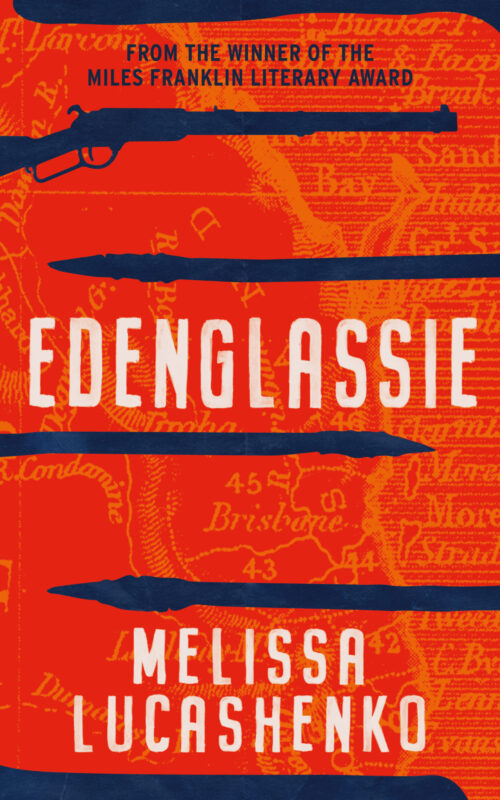
Melissa Lucashenko, Edenglassie (#BookReview)

Broadly speaking, Melissa Lucashenko’s latest novel, Edenglassie, does for southeast Queensland what Kim Scott’s That deadman dance does for Noongar country in southwest Western Australia. Both tell of the early days of their respective colonies from a First Nations perspective; both are written in a generous spirit but with absolute clarity about the dispossession that took place; and both suggest things could have been different.

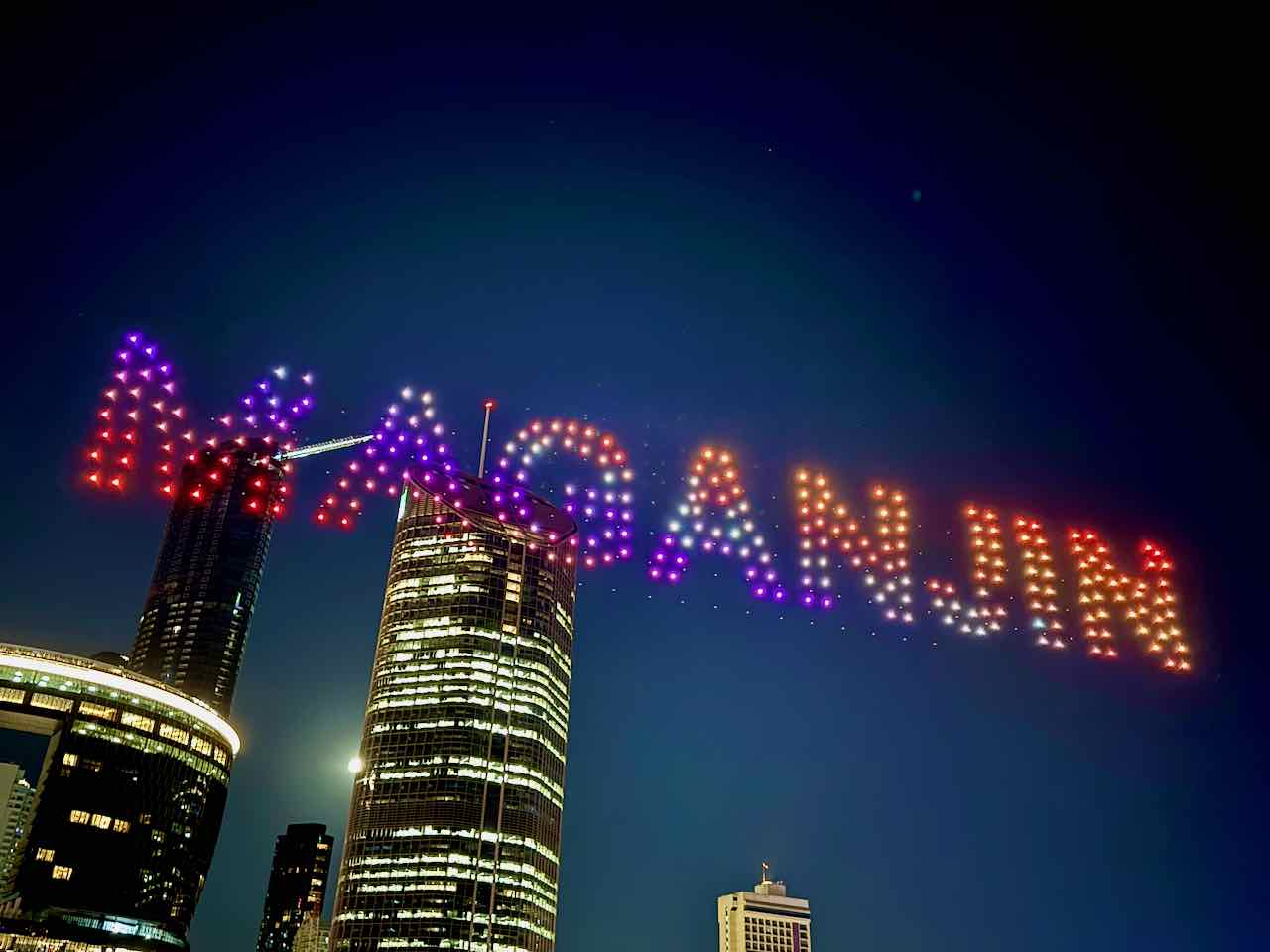
Unlike That deadman dance, however, Edenglassie, is a dual narrative story. The main storyline, featuring two young people, Mulanyin and Nita, is set around the Magandjin or Meanjin (Brisbane) region during the mid-1850s, making it just a little later than Scott’s first contact narrative. Dispossession, massacres and other brutalities from the colonisers were met with armed resistance, but there were also attempts to work together. Paralleling this historical story is a modern one, featuring Granny Eddie, Winona, and Dr Johnny, set in the same area at the time of its 2024 bicentenary. These stories, one using historical realism and the other modern humour, riff off each other to provide a complex picture of the colonial project – then and now.

Melissa Lucashenko said much that interested me in the conversation I attended for this book, but here I’ll focus on two points she made. One is that the book’s central question is “what was going through these people’s [the colonisers’] minds?” Things could have been different then, she said, and could still be now. The other point is that she wanted to counteract the trope of the dying race. This idea has been slowly changing since Mabo, she said, but is still evident. The modern storyline, with its confident and politically involved Goorie characters, ensures that we see a vibrant, living culture in action.

Realising these two ideas is a big ask, and in my reading group there were some equivocations, but I think Lucashenko pulls it off, through creating engaging characters who come alive on the page and narratives that ring true to their times. Mulanyin, the kippa (young initiated man) from the historical period, and Winona, the fiery young woman in modern times, represent the passion of youth. They are impatient and want things to happen – or change – now. Both, however, also have elders guiding them – in the Goorie way, which is to encourage people to work it out for themselves and to remedy their mistakes.

“needing to endure the unendurable” (Mulanyin)

So, what is it that these young characters must contend with? The novel starts with two pointed events. In the modern storyline, Granny Eddie trips over a jutting tree root and is ignored by passersby until two young brown faces – Malaysian students as it turns out – help her up and get her to hospital. The modern scene is set, and all is not well.

We then flash back to 1840 where members of the Goorie Federation are looking forward to the imminent departure of the dagai, only to be told that this is now unlikely. A Goorie mother wonders what

If life never returned to normal. If the rule of law was never restored. What would her son see as a man? … Would her daughters be subject to the terrors the dagai brought?

What indeed?

Having asked the question, Lucashenko then moves her historical story to 1854-1855. Mulanyin is living with his law-brother Murree north of his own saltwater Nerang/Yugambeh home. Here, he is in close contact with the colonisers, and particularly with the Petries. At this time, the Petries, particularly the young Tom Petrie, were sympathetic to, and tried in their own way to work with, the Goories on whose land they resided. Lucashenko seems to be saying that, given colonisation was happening and wasn’t going to be undone, there were ways in which it might have been made to work (or, at least, work better). Conversations between Tom, Mulanyin, and other characters, explore their differences, particularly regarding attitudes to country. Mulanyin wants to know

what goes on in the brain of an Englishman? When he arrives in another man’s country to steal his land, and water, and game, and then with a straight face, calls those he steals from thieves? Is this how it is in Scotland? Is this why your people have fled that terrible place?’

The ensuing discussion has Tom struggling to explain the English, but admitting that “in their ignorance, they don’t understand that the land here has its own Law. They think that only their British law exists”. However, he says, they “respect some boundaries still … Those that are well defended”.

What did ‘well defended’ look like, Mulanyin wondered, if not like a thousand Goories assembled at the Woolloongabba pullen pullen? If not like Dundalli, leading the warriors who had willingly assembled under him, from Dugulumba to K’gari?

Fair point, Mulanyin.

Meanwhile, the modern-day characters are living with the fall-out from the failure of the colonisers to make it work and of the colonised to succeed in their resistance. Goories are still here, yes, but life is a struggle, and Winona wants to fight back, wants “to bite em hard onetime, while we got the chance”. She can’t understand why Granny Eddie, who grew up “with a dirt floor and empty belly” doesn’t think she deserves more. Granny, though, is two things. A pragmatist who sees that “Dagai not going away! We gotta get on with them”. And she’s an elder well-versed in her culture, so when Winona takes a hardline with Dr Johnny, who claims Aboriginal heritage, Granny says

“You’re thinking like a whitefella when ya close him out. That’s not our way. We bring people in, we bring our Mob home, and we care about them. We teach them how to behave proper way…”

Further, she argues,

“We can’t be sunk in bitterness … Or stuck in the past. We need to focus on the good dagais, like Cathy and Zainab, and them Petries, and –.”

Winona, Granny Eddie and Mulanyin all make sense, but they speak from different angles. What makes Edenglassie so interesting is the way Lucashenko gives space and respect to these angles. She certainly shows what was lost – and the utter unfairness of it. But, with the generosity of spirit we keep seeing, she also shares through her characters what living with deep connection to country means. And, she encourages everyone to think about alternative ways we can do this.

Towards the end of the novel, Gaja (Aunty) Iris shares an important story with our modern protagonists, introducing it with

we all know how important our stories are … People all over the world keep their stories close. Middle Eastern people believe … that by telling a story you can change the world, and nothing is as powerful as the right story at the right time.

With ideas about truth-telling and decolonisation becoming part of modern Australian culture, now feels like the right time for stories like Edenglassie. It might be an uncomfortable time to be a settler Australian, but that’s nothing compared with what First Nations people have endured and continue to endure. The least we can do is try to understand. Books like Lucashenko’s not only help us along this path but give us a lively read at the same time.

Melissa Lucashenko
Edenglassie
St Lucia: UQP, 2023
306pp.
ISBN: 9780702266126

Monday musings on Australian literature: Poetry Month 2024

National Poetry Month – in Australia – is now four years old, and once again it is spearheaded by Red Room Poetry, which is described by ArtsHub as “Australia’s leading organisation that commissions poets and produces live poetry events nationally”. ArtsHub adds that this Month is “a festival that celebrates emerging and established writers, as well as public figures with an unexpected passion for poetry”. I don’t know how successful it is at reaching its goal of increasing “access, awareness and visibility of poetry in all its forms and for all audiences” but something must be working. I was thrilled to not only hear the month mentioned on our national ABC radio station but to hear that the ABC would be featuring poems during the month.

Red Room is running similar events and activities to those they’ve run before – their 30in30 daily writing competition with prompts from Red Room commissioned poets, poetry ambassadors, online workshops, showcases, a community calendar, and more. And this year, “more” includes something new which is that they are closing out the month with “the UK’s biggest poetry and performance festival, Contains Strong Language” in Sydney from August 28-31. 

Poetry is beyond time. It’s a way of bringing together the countless generations of humanity. It’s a means of connecting past and present. It’s a way of imagining the future~ L-Fresh the Lion (via Red Room Poetry).

National Poetry Gala … and more

This year their National Poetry Month Gala, if I read the website correctly, will happen in Sydney on 29 August at the State Library of New South Wales. It will be hosted by Chika Ikogwe (an award-winning Nigerian born actor and writer) and will feature Julia Baird, Ali Cobby Eckermann, Lorna Munro, Felicity Plunkett, Hasib Hourani, Rob Waters, Dan Hogan and Pascalle Burton, plus guests from the UK, Simon Armitage (their current Poet Laureate) and Princess Arinola Adegbite, and live music from Paul Kelly.

Contains Strong Language is a four-day festival in which local poets and spoken word artists will appear on stage alongside visiting UK poets including Simon Armitage. It’s the first time this annual broadcast festival, founded by the BBC in 2017, has left Britain. Events will be held across Gadigal and Dharug land in Greater Sydney (including one in the Blue Mountains) and will also be broadcast to Australia and around the world, through the BBC and ABC. The events include “performances, masterclasses, panels, galas, slams, live and online workshops, and international writing collaborations featuring 70+ artists”. Sounds like a real coup. The program, which includes free and paid events, can be found here.

Line Break is a new podcast from Red Room Poetry, and is presented in partnership with the Community Radio Network. It will include, over August, their daily 30in30 poetry commissions and writing prompts, plus various special series hosted by our Red Room producers. Some of Australia’s poetry-loving favourite public figures will apparently also share their ‘gateway’ poems. Who are they, and what will they share?

If you would like to know what is happening through the month – in various locations, including online – this Showcase page is a good place to start (or Red Room’s main site which I’ve linked in the opening paragraph).

And, I’ll just add that this might be a good month to check out – on your preferred music streaming service – the Hell Herons’ debut spoken word (poetry and music) album, The Wreck Event, about which I posted recently.

Musica Viva, the Choir of Kings College Cambridge, and a Poem

On Saturday night, we attended the Canberra Concert of the Kings College Choir of Cambridge’s current Musica Viva Australian tour. As regularly happens when this choir comes to Canberra, Llewellyn Hall was packed. It was a wonderful program which included some different programming decisions, but my focus here is the commissioned piece they performed*.

This piece was a setting to music of a prose-poem by, coincidentally, the Canberra-based poet and visual artist, Judith Nangala Crispin, who traces her ancestry to the Bpangerang people of North-Eastern Victoria and the NSW Riverina, as well as to Ghana, the Ivory Coast, France, Ireland and Scotland. Titled On finding Charlotte in the anthropological record, the poem won the Blake Poetry Prize in 2020 – read it online here – and was set to music by composer Daniel Barbeler. He says, in the program, that the poem captures “the real-life experiences and reflections” which came from Crispin’s “20-year search through paper records and via physical travels” to find information about her Indigenous Australian heritage. She eventually found “a solitary photograph of her great-great-grandmother, Charlotte”.

Among other things, Barbeler says his music captures the Australian landscape, specifically Lake Moodemere (pictured) in Northern Victoria where it’s likely Charlotte was born and died. Barbeler describes this part of the country as “peaceful but haunting” and, having visited this lake a few times (including earlier this year), I concur. The poem is certainly haunting, and one particular line from it – “Charlotte is a map of a Country stained by massacres: Skull Creek, Poison Well, Black Gin’s Leap” – is repeated a few times in the musical version. I wondered what these (some very) young British choristers made of it. (You can listen to the piece via music streaming services, as a single under the Choir of Kings College Cambridge.)

* A special thing about Musica Viva concerts is that they regularly commission new Australian pieces for the visiting international artists to perform in their program.

Image: I assume Red Room Poetry is happy for their Poetry Month banner to be used in articles and posts about the month.

Thinking about the Line Break program, I’d love to know if you have a “gateway” poem, and what it is.

Six degrees of separation, FROM The Museum of Modern Love TO …

It’s another new month, meaning time for another Six Degrees. Last month, in my introduction, I said that one of the things I like about doing this meme is seeing what book Kate has chosen next. Little did I know when I was writing that post, that the book she had chosen for this month was inspired by a recent post of mine on writers and artists. What a surprise, but how lovely. However, before I share what that book is, I need to do the formalities, that is, to tell you that if you don’t know how the #SixDegrees meme works, please check host Kate’s blog – booksaremyfavouriteandbest.

Heather Rose, The museum of modern love

So, the first rule is that Kate sets our starting book, and as you know for this month she selected a book from a post of mine. The book is Heather Rose’s novel, The museum of modern love (my review) and – haha – I have actually read it! In case you haven’t, it was inspired by artist Marina Abramović’s 75-day performance piece, The Artist is Present, which she performed at MoMA (the Museum of Modern Art) in 2010. From this, Rose weaves two stories, one about the real Marina Abramović and the other about a fictional musician who regularly attends the performance.

Where to from here? There were many options, but I decided to go with something fairly obvious, another novel set in a museum, this one a fictional house museum devoted to an artist and her muse, Helen Meany’s novella Every day is Gertie Day (my review). This museum, like MoMA during Abramović’s performance, attracts a lot of attention, albeit for different reasons.

Meany’s novella was co-winner of Seizure’s 2021 Viva La Novella Prize with Christine Balint’s very different book, Water music (my review). Balint’s book, unlike Meany’s contemporary-near future novel, is an historical novel set in a musical orphanage for girls in 18th century Venice.

Geoff Dyer, Jeff in Venice, death in Varanasi

So next we are going to Venice and a book I read quite early in my blogging days, Geoff Dyer’s unusual Jeff in Venice, Death in Varanasi (my review). I could almost call it a double link because this book reads more like two loosely connected novellas, than a single novel, albeit both parts are set in watery cities.

Ian McEwan Solar bookcover

My next link didn’t come naturally. Instead, it is the result of some research I did into Dyer’s book which turned up that it won the Bollinger Everyman Wodehouse Prize for Comic Fiction in 2009. Quite coincidentally, I have also read the 2010 winner, Ian McEwan’s climate-change inspired novel Solar (my review).

Ian McEwan, Nutshell

Next we go with something more obvious! That is, I’m linking on author’s name to another novel by Ian McEwan, Nutshell (my review), this one a literary mystery inspired more than a little by Hamlet.

Carmel Bird, Family skeleton

My final link is not obvious if you don’t know the books, as it is on unusual narrators. Nutshell is narrated by a foetus, while my final book, Carmel Bird’s Family skeleton (my review), is narrated by the proverbial (or is it literal) skeleton in the closet. Either way, these unusual narrators provide a perfect link between two enjoyable – and witty – novels. (And neatly, our first book, The museum of modern love, also has a different sort of narrator.)

This is a different chain to my usual because four of my six books are witty, humorous and/or satirical. I like humour but it’s not always easy to find. The author gender split is 50/50, and we have travelled in space and time from 18th century Venice to 21st Century Australia.

Now, the usual: have you read The museum of modern love and, regardless, what would you link to?

Monday musings on Australian literature: Et toi, France!

With a certain event happening in Paris, and other parts of France at the moment, I thought it would be fun to briefly explore, some literary connections between Australia and France. I say “some” because there’s no way I could know, let alone list, all the ways in which our countries have connected over the years through literature. My aim, instead, as I often do in Monday Musings, is to introduce the topic with some ideas and let you all do the rest.

Settler Australia’s connection with France starts right back at the time of the arrival of the British in 1788, when French explorer Jean François de Galaup, comte de Lapérouse, and his expedition, met Captain Phillip’s First Fleet in Botany Bay in January 1788. After spending a few weeks in the settlement, the French left, and, as Wikipedia reports, “neither he nor any members of his expedition were seen again by Europeans”. In early 1801, another French explorer, Nicholas Baudin, led an expedition to map the coast of New Holland, as Australia was called back then, not leaving until July 1803. During this time they met Matthew Flinders’ expedition which was also charting the coast. Baudin stopped in Mauritius en route home, and died there of tuberculosis.

These were just the start of many links between France and Australia over time. Some have been negative (often military in origin, like nuclear testing and a certain submarine cancellation) and some positive (mostly cultural, like the work of Alliance Française and an interesting organisation called ISFAR, or Institute for the Study of French-Australian Relations), but overall there are strong and continuing connections. After all, who can resist some French pastries with their coffee?

Now, though, my main point, literature …

Australian novels set in France

Australians being the travellers they are, it’s not surprising that our novelists sometimes set their stories in places other than Australia, like, say, France, albeit their reasons vary as greatly as their novels. War is one reason characters find themselves in France, and work is another, while for others it is travel, or study, or following lovers. Many of the novels I list here are not fully set in France, but all spend some time there – and they are almost all from this century.

  • Diana Blackwood’s Chaconne (2017, my review): starting in Cold War Paris, about a young Australian who goes to Paris for love only to find it’s not what she expected.
  • Michelle de Kretser’s The life to come (2017, my review): a big novel about contemporary social issues including emigration and personal challenges, one of its five parts is set in Paris.
  • Alan Gould’s The lake woman (2009, my review): a “romance” involving an Australian airman who parachutes into a lake in France just before D-Day.
  • Marion Halligan’s The golden dress (1988, read before blogging): multigenerational novel set in Newcastle, Paris and Sydney.
  • Marion Halligan’s Valley of Grace (2009, my review): set wholly in contemporary Paris, and about fertility, babies and children.
  • Anita Heiss’ Paris dreaming (2011, my review): one of Heiss’ “choc lit” books about professional First Nations’ women, this one about a young art curator mounting an Indigenous Australian art exhibition in Paris.
  • Mark Henshaw’s The snow kimono (2014, my review): a mystery set mainly in mid-late 20th century Paris and Japan about two men, their fractured lives, lies and memory.
  • Katherine Johnson’s Paris savages (2019): historical fiction based on the true story of three Badtjala people from Queensland’s Fraser Island, who, in 1882, were taken to European cities, including Paris, as ethnographic curiosities. 
  • Mary Rose MacColl, In falling snow (2013): historical fiction about an elderly woman in 1970s Australia reflecting on her life as a nurse in France during WW1.
  • David Malouf’s Fly away Peter (1982, read before blogging): about three very different Australians, and the impact on them of their experience of WW1 in France.
  • Alex Miller’s Lovesong (2009, my review): the love story of Sabiha and John who met in Paris, told to a writer in Melbourne, who ponders the art and responsibilities of storytelling.

There are also Australian short story collections which contain stories, sometimes just one, set in or referencing France, including Emma Ashmere’s Dreams they forgot, Irma Gold’s Two steps forward, Paddy O’Reilly’s Peripheral visions, and Tara June Winch’s After the carnage.

Australian novels written or published in France

Too many Australian novels have been translated into French over the years, so here I’m sharing some different examples of connections that can happen.

John Clanchy, Sisters

Writers’ retreats are loved by many writers for the opportunity they provide for dedicated, uninterrupted writing time, but not many Australian writers get to do so in France. This however is what John Clanchy did in 2008. His novel Sisters (2017, my review) was originally drafted at the La Muse writers retreat in southern France, and was later published by the retreat. The retreat is open to all sorts of creators, besides writers.

When it comes to translation, a highly successful contemporary Australian writer is Karen Viggers (see my posts). She is a bestselling author in France, with her novel The lightkeeper’s wife having also been awarded the Les Petits Mots de Libraires literary prize. Her latest novel (her fifth) is being translated. On why she is so popular in France, she says that they love her “big landscapes”. Most of her novels have strong environmental themes and are set in gorgeous Australian landscapes. (She has a French page on her website.)

Book cover

Then, in a different again example of Australia-France literary connections, there is Wiradjuri author Tara June Winch who moved to a French country town when, as a young woman in her 20s, she found herself caught up in the Andrew Bolt “It’s so hip to be black” discrimination case. She withdrew from the legal action taken by several First Nations Australian identities, and disappeared from view for some years, during which, living on her French farm, she wrote her award-winning novel The yield (2020, my review). As far as I know, she is still based in France.

Different again, but still relevant, is Noumea-born Jean-François Vernay, whose somewhat quirky book about Australian novels, Panorama du roman Australien, was published in France in 2009. (It was later revised and expanded, and published in Australia as A brief take on the Australian novel, on my TBR).

Finally, there is our lovely French blogger, Emma (bookaroundthecorner) who includes Australian books in her reading diet, giving our often strange idioms her very best shot.

Now, you know what to do – share your love of bookish France.

Myfanwy Jones, Cool water (#BookReview)

When I was a little girl, I was allowed to watch a limited amount of television, and what I loved – yes, you can laugh at me – were the singing cowboys, like Roy Rogers and Gene Autry. We are talking the 60s and I was constrained by what was on at the times I was allowed to watch, but still, I gave my heart and soul to these cool dudes. At least, they were to me. All this is a long way around to say I love that Myfyanwy Jones’ third novel, Cool water, features one of my favourite songs from that era, the titular “Cool water”, but I’ll return to that later.

Cool water is a strong, but thoughtful novel about fathers and sons, about what makes a good man, and, particularly, about family and what we inherit (whether we like it or not). I have read a few novels since blogging that explore manhood and fatherhood, including books by Christos Tsiolkas and Steve Toltz. This is another, and I found it absorbing. Set in tiny Tinaroo in Yidindji Country on the Atherton Tablelands of Queensland, Cool water is structured around two storylines, one, set in contemporary times, and the other set over 1955 and 1956 during the building of Tinaroo dam. Threading through these two time-frames are three men, Frank, his father Joe, and grandfather Victor.

“Life was an extreme sport” (Frank)

The novel opens with a Prologue, featuring Victor, the town butcher, appearing supremely confident at a town event. But immediately there is something a bit askew in the way he is described. Not only is he “imposing”, but he’s “horribly handsome”. We are introduced to many of the characters who will appear in the story to come, but the Prologue closes at “the end of the hall, where fatherly embrace has become stranglehold: Joe, white-faced now, wide-eyed and wheezing, as Victor Herbert uses the crook of his arm to apply an unrelenting pressure …”

From here, we jump to the present and Victor’s grandson Frank. His father, Joe, has died in the last year, and he, his wife Paula and daughter Lily have returned to Tinaroo for Lily’s wedding. But all is not well. Joe casts such a shadow over Frank that his relationship with Paula is suffering. They are drawing apart. The novel is told third person, but in the contemporary story, it is all from Frank’s perspective, whereas in the earlier story we switch between Victor, young Joe, and a woman named Evelyn who, unhappy in her marriage, catches the philandering Victor’s eye. Jones handles the storylines well, but it is Frank’s voice which carries the novel as he struggles to make sense of his complicated father and be the man, husband and father he wants to be:

… he feared all the men in his family were cursed. And that however hard he tried to be good, he would not be able to escape his shadow.

By contrast, Joe is the murkiest character. We see him as a young boy, caught in an adult drama between Victor and Evelyn that he doesn’t understand. A sensitive boy, he has promise as a human being, but is the youngest and least tough of Victor’s three sons and bears more than his share of Victor’s brutality. Unlike Victor and Frank whom we know as adults, we only know adult Joe through Frank’s eyes. This can feel frustrating because a strong sense of intergenerational trauma underpins the novel but the Joe Frank describes doesn’t match the child we’ve met. However, through seeing how his father treated him, and hearing Frank’s (and his sister’s) recollections, we gradually fill in the gaps to see a man who didn’t fully shake his father’s brutal volatility. As the story progresses, we realise that Joe’s dreams of a different life to that mapped out by his butcher father had not been realised. His death seems to Frank, “a measured suicide” through “deliberate self-neglect”. He is the saddest character in the story.

All this is told against the backdrop of the dam and its lake – first the building of the dam, and later as a drought-stricken recreational facility. This three-generation story could have been set anywhere, so why choose this? I had some ideas, but wanted to see if Jones had been interviewed about it, and I found she had, at Good Reading Magazine. Jones says that her novels “always seem to start with place”, and so it was a visit to Tinaroo Dam which inspired this novel. She says that, “in 2017, Tinaroo Dam was at 25 per cent capacity and full of blue-green algae; pieces of the old, submerged town of Kulara had begun to surface – an eerie manifestation of the ever-present past”. 

And there you can see the inspiration. The dam is a powerful place, with a complicated history worth exploring but it also works as a useful metaphor for the “ever-present past” (and thus perfect for Jones’ exploration of intergenerational trauma). Dams and lakes, too, are intrinsically paradoxical, with dam-building representing violence and a desire to control, and lakes offering opportunities for beauty, peace and recreation. Jones uses this to full effect, including well-placed references to colonialism and First Nations dispossession, starting with subtle humour in the Prologue, where we are told that a visiting magician had “come a long way by ship (that said, so had most of the crowd, one way or another). In such ways can writers both truth-tell and decolonise our literature, without telling stories that are not their own.

As for the song, “Cool water”, lines from it appear a few times in the novel, always associated with Victor and always conveying some sense of menace, but also just a little perhaps of a lost soul, a war-damaged man who has lost his way. (In case you are interested, here is the version of “Cool water“, by Frankie Laine, that was popular in 1955 when the novel is set, but there are many versions out there which convey different senses of its meaning.)

Ultimately, Cool water is a hopeful novel, one that recognises and conveys unapologetically the very real damage that can happen in families, but that also sees, as Frank hopes early on, that “a different ending was always possible”. A sensitive novel that leaves much unanswered. I like that.

Myfanwy Jones
Cool water
Sydney: Hachette Australia, 2024
296pp.
ISBN: 9780733650024

(Review copy courtesy Hachette Australia)

Monday musings on Australian literature: Forgotten writers 6, Constance Clyde

“Forgotten” is a subjective thing, as I suggested with my fifth post in this series on Lillian Pyke whose reputation as a children’s writer has survived in niche circles at least. My next subject, Constance Clyde, like Lillian Pyke, has entries in both AustLit and Wikipedia suggesting some notability, but I had not heard of her before.

Like my last three Forgotten Writers, Clyde was the subject of one of my posts on the Australian Women Writers (AWW) blog this year. Once again, I am not including here the piece written by Clyde that I published there, but it’s a little different from the more romantic stories I’ve published. Titled, “The paying back”, it references a failed romance but its subject is the relationship between a mother and her unmarried daughter … check it out at AWW.

Constance Clyde

Constance Clyde (1872-1951), born Constance Jane McAdam, is another writer who wrote under a few names, but Constance Clyde seems to be the name by which she was best known, as well as the name she mostly wrote under. However, for the record, AustLit says that she also wrote under Clyde Wright, Pen, C.C. and C. Clyde. Christopher Dawson, writing in the Inside Boggo Road Gaol blog, describes her as the “author of a novel, contributor to high-class English reviews, sometime social editress of a Christchurch (N.Z.) newspaper, and in 1906 one of Emmeline Pankhurst’s Suffragettes”. He sums her up, in his 2023 article, as “a formidably independent woman”.

Clyde was born, the 11th child in her family, on 25 Jul 1872 in Glasgow, Scotland, and died in Brisbane, Queensland, on 30 Aug 1951. The “Clyde”, both Dawson and I suspect, comes from Glasgow’s Clyde River. She moved to Dunedin, New Zealand, with her family when she was 7, and was schooled there. According to Australian writer and journalist Zora Cross (writing as Bernice May), Constance Clyde’s first poem, called “Blighted Hopes,” was published in the Otago Witness when she was twelve, and she won second prize in a story competition for adults when she was still at school.

She arrived in Sydney in 1898, where she continued her career in literature and journalism, contributing to Australian and English newspapers, including the Sydney Bulletin. Cross says that Clyde was one of the first women to contribute to the Bulletin regularly, and that it was the Bulletin that gave her “the idea that one can and should write from the soul”. She also says that “Possessed of a rippling sense of humor, a pen as strong and vigorous as a man’s at times, it is because she does write with her soul that this writer has so many admirers.” Cross, adds later that Clyde

thoroughly mastered the tense, compressed drama the pink-covered weekly [The Bulletin] favored, and her work earned the admiration of the reader and the envy of the aspiring writer of the day.

Meanwhile, Dawson says New Zealand academic Kirstine Moffatt describes Clyde’s subject matter as encompassing “social, feminist and literary questions”. Wikipedia says that, in an essay entitled “The Literary Woman”, Clyde urged women to continue “to make brilliant discoveries in the realm of the emotions”.

In 1903, Clyde went to London to pursue a literary career, and her only novel, A pagan’s love, was published there in 1905. Anti-Puritan, it apparently explored ideas about women’s dependence, which included the heroine considering an extra-marital relationship with a man. Cross writes that while in London, Clyde met leading writers like HG Wells and Bernard Shaw.

In 1907, she was imprisoned in Holloway Prison as one of the suffragettes who ’caused a disturbance’ in the House of Commons. She wrote about this experience – which I found in Hobart’s The Mercury (June 24 1907) – from how she went about ensuring that she was arrested through to her release after thirteen days incarceration. It’s worth reading, not only for its firsthand experience but for its insight into who she was, but I’ll just share this little reference to Australia and Australian literature. She says one visitor was not allowed to give her a rose, but another was

permitted to leave a book. It is Tom Collins’s “Such is Life,” and she had previously reviewed it as a volume “suitable for reading in a desert, island, or gaol.” I find its acid philosophy, flavoured by eucalyptus, thoroughly refreshing!

Some time later, she returned to New Zealand, and in 1925 co-authored a travel book with journalist Alan Mulgan. In 1928, while living in Auckland, she was described by Sydney’s Smith’s Weekly as “one of the most brilliant and versatile of Australasian women journalists”. The article explains that:

In order to understand officialdom, Miss Clyde in recent years accepted appointments in New Zealand institutions, being on the staff of a backward school, sub-matron of a women’s gaol, and attendant at a mental asylum of 1500 inmates. She is strongly opposed to the new N.Z. Child Welfare Act, which she contends gives the official too much power over family life. Her great desire is to have proper Montessori teachers in New Zealand for such backward children as do come into the hands of the State.

In 1931, she was ejected from the New Zealand Parliament for protesting against the 1925 Child Welfare Act. She was a true activist, in other words.

Sometime after this, in the early 1930s, she returned to Australia, to Brisbane, where she was again imprisoned in 1935, this time for refusing to pay a fine for fortune-telling using tea-leaves. Dawson reports that, when in court for this offence, she said, “I thought that I could do some good in this depression by sympathy, kindness and advice, and especially by telling people that there is nothing wrong with this world except the monetary system.” As Dawson added, “even reading tea leaves could become a political platform” for Constance Clyde. Somehow, in between all this she wrote prolifically, with AustLit listing over 130 works by her, most of them short stories, the latest dated 1938.

Sadly, as Dawson chronicles, her life ended quietly, petering out “in the mundane concerns of suburbia after such an ambitious foray into the bohemian literary circles of turn-of-the-century Sydney and London”. There was no obituary. Forgotten already it seems!

Sources

  • Bernice May (aka Zora Cross), “Constance Clyde“, Constance Clyde”, The Australian woman’s mirror, 3 July 1928 (Accessed: 22 July 2024[
  • Christopher Dawson, Constance Clyde of Dutton Park: Author and Suffragette, 16 May 2023 [Accessed 22 June 2024]
  • Christopher Dawson, “A Suffragette Recalls Boggo Road Gaol“, Inside Boggo Road blog, 17 June 2018 [Accessed: 22 June 2024]
  • Constance Clyde, Wikipedia (citing several sources) [Accesed; 21 June 2024]
  • Constance McAdam, AustLit (sourced from A. G. Stephens, ed., Australian Autobiographies, vol.2) [Accessed 21 June 2024]

Image: Constance Clyde in her suffragette days, circa 1914, from Australian Women’s Mirror 1928. Public Domain from Wikipedia.