Madeleine St John and the right thing

There were many ideas I wanted to discuss or share in my review of Helen Trinca’s biography, Madeleine: A life of Madeleine St John, but it was starting to get too long … so I thought I’d save some points for another post or two.

Madeleine St John it seems had some very strong ideas about how to live one’s life – in both the more superficial areas, such as manners and customs, and in those areas to do with values, with morals and ethics. In terms of the former, Trinca writes at one point, when describing how Madeleine churned through friends:

It was ‘so very easy to do the wrong thing around Madeleine’. Her taste was perfect and her manners were sublime, but she felt no shame in making others feel ill-at-ease about their own behaviour.

I must say that my view of manners is that the first mark of good manners is making the other person feel comfortable, but, there you go, I’m not a member of the upper class so what would I know! Trinca provides many examples of the erratic way Madeleine treated her friends and family – and there are too many examples from a wide variety of sources for us not to believe them. She would cut them off and then want them back. And back they usually came because, as one, David Bambridge, said, she was “quite cutting and prickly … rather grand at times, but also kind, generous and funny”.

With all this in mind, I was fascinated by the excerpt Trinca provides from the obituary written by Christopher Potter, her publisher at Fourth Estate which published her last three novels. He wrote:

Language and a questioning of faith are the two poles of St John’s created world, as may also have been true of her domestic world … Beneath the sly and witty veneer of her writing, she explores questions that are basically theological: we must do the right thing, but how can we tell what the right thing is? This question is at the heart of all her novels … She lived by a strict moral code, the rules of which were only truly clear to herself.

All I can say is, curiouser and curiouser. She was one interesting woman … and I look forward to testing this proposition when I read the next book of hers in my pile.

Monday musings on Australian literature: AWW Challenge 2013 First Quarter Progress Report

Regular readers here know that while I generally do not do challenges I am taking part in the Australian Women Writers’ Challenge – because it’s what I like to read anyhow. The challenge, which began last year, was so successful that the initiator Elizabeth Lhuede, decided to continue it this year – and called on other bloggers to help. I am one of those bloggers and have responsibility for overseeing the Literary (fiction and non-fiction) area. We have now completed the first quarter of 2013 – how can that be, by the way (!) – and I thought it might be interesting to produce a bit of a report card.

Australian Women Writers ChallengeBefore I continue, I need to explain that the “Literary” category isn’t easy to define. The Challenge’s policy is that reviewers allocate the category/ies to the books they review, though the AWW Blog Team does do the occasional editing or tweaking where there are glaring errors. Given that proviso, on with my quarterly report – and I’ll start by providing some perspective. In 2012 some 1526 reviews were logged for the challenge. So far, in the first quarter of 2013, 614 reviews have been logged. Clearly, the challenge is gaining momentum, which is really exciting. These reviews cover the whole gamut of women’s writing – all genres, non-fiction, poetry, short stories, and even some self-published works.

Kate Grenville - Cambridge - January 2012

Kate Grenville, Cambridge, January 2012 (Photo credit: Chris Boland, via Wikipedia)

In the “literary” area, which for the purposes of my survey here includes “Classics”, 112 reviews (or more) were logged in the first quarter, representing over 20% of the reviews posted. These reviews cover 71 authors, which means of course that several authors have been reviewed multiple times. The most frequently reviewed authors are:

  • Kate Forsyth whom I must admit I don’t know: Six reviews for her novel The wild girl
  • Karen Foxlee whose Anatomy of wings I read before I started blogging: Six reviews, including five for her current novel The midnight dress
  • Miles Franklin, of course: Five reviews ranging across her work, including one for her diaries
  • Kate Grenville whose The lieutenant I reviewed last year: Three reviews
  • Lisa Jacobson whose The sunlit zone has been shortlisted for the inaugural Stella Prize: Three reviews for The sunlit zone.
  • Dorothy Porter, whose The bee hut I’ve reviewed: Three reviews for two of her works
  • Madeleine St John, the subject of Helen Trinca’s biography which I’ve just reviewed: Three reviews for The women in black
  • ML Stedman whose debut novel The light between oceans is winning or being shortlisted for many awards: Four reviews for The light between oceans
  • Amy Witting, a late bloomer: Three reviews ranging across her work

Besides these, there are also reviews for well-known writers like Helen Garner, Anna Funder and Ruth Park and for writers not known to me. There are reviews for poetry, including verse novels by Lisa Jacobson and Dorothy Porter, and poetry collections by Amy Witting and Suzanne Edgar. There are of course gaps, but overall it’s encouraging to see such a diverse range of Aussie women writers brought together in one place. It can only be good for them, and for Australian literature in general, to be so clearly identified.

While the challenge is about reviewing women writers, this does not mean the reviewers have to be women. It’s encouraging to see several men actively contributing to the challenge. Some men are clearly not averse to reading books written by women!

If you are interested in the challenge and would like to take part – it’s never too late – or would like to check out some of the reviews, click here for the challenge site and have a look around. I’d be surprised if you didn’t find something to interest you. And, if you see any major discrepancies in categorisation, please let us know.

Are you taking part in the Challenge? And if so, is it changing what you read?

Helen Trinca, Madeleine: A life of Madeleine St John (Review)

Trinca, Madeleine
Madeleine (Courtesy: Text Publishing)

I wanted to read Helen Trinca’s biography Madeleine for several reasons. First, of course, being a reader, I’m interested in biographies and autobiographies of writers. Secondly, Madeleine St John belongs to that group of Australians, half a generation or so older than I am, that has made quite a mark on the literary and arts world. Her friends and acquaintances included Sydney University peers Clive James, Bruce Beresford, Robert Hughes, Richard Walsh, most of whom lived ex-pat lives like she did. Thirdly, her father Edward St John, was a controversial conservative politician (and then barrister) who fought injustice and whom Justice Michael Kirby described as “a contradictory, restless, reforming spirit”. And finally, I was hoping to find out more about what happened to Bruce Beresford’s plan to film her first novel, The women in black. Trinca covers all these bases and more in her biography.

Madeleine was – as Trinca ably, but fairly it seems, demonstrates – a complicated and difficult woman. She could be called a tragic figure if we define that as a person brought down by a flaw in their character or make-up. Trinca’s Madeleine, though, would probably not agree with that assessment. As far as she was concerned, her troubled life was solely caused by her father, “the ghastly Ted”. More on that anon. First I’d like to quote from a letter Madeleine wrote as she was trying to write her first novel:

I somehow feel (not for quite the first time) that life is beyond my capacities … meanwhile am trying to write some fiction, which is abominably difficult & and therefore terrific – but horrifying.

This quote says a lot about St John – about how hard she found life, and about the heightened way she lived it.

Madeleine was born in 1941 to Edward St John (Ted) and his lively, sophisticated wife Sylvette. Sylvette did not, for several reasons carefully explored by Trinca, adjust well to the life of wife and mother. She became an alcoholic and mentally unstable, to the point that Ted, apparently in order to protect his two daughters, placed them in boarding school in 1953. They didn’t understand, and were miserable. The next year their mother took her life, a fact which was not made clear to the girls at the time and which Madeleine never accepted. Ted remarried the next year a women ten years his junior, 27-year-old Val Winslow. Madeleine never accepted this either and at the age of 18 was told to leave home. While she saw and communicated with her family, on and off, for the rest of her life she never reconciled with them and believed to the end that they were the architects of all that was wrong with her life. We will never know the truth of course, and many records have been destroyed. However, while mistakes were made, partly due to individual personalities and family dynamics and partly as a consequence of the childrearing practices and patriarchal attitudes of the time, Ted and Val, Trinca argues, did their best to support Madeleine but she never gave them an inch, never saw things from any other perspective but her own. Tragic, really, however you define it …

… and making her, I think, a tricky subject to write about. Madeleine was, and there is documentation from a variety of sources to support this, a controlling and emotionally erratic friend who would, as one said, “just destroy everything, destroy a relationship”. She was, as we’d say now, high maintenance, and wanted, needed, to call the shots. And yet, people stuck with her, because she was witty, intelligent company, and also because people saw her need. Trinca handles this minefield with a clear, even-handed but sensitive eye, enabling us to feel Madeleine’s pain while being frustrated at her inability to lift herself out of it.

St John moved to London in the 1960s, leaving, more or less by mutual agreement, her first and only husband behind in the USA, and eventually took out English citizenship. She was horrified when, on being shortlisted for the Booker Prize in 1997 for her novel The essence of the thing, she was hailed as an Australian writer. She didn’t want to be aligned with the place, but she was the first Australian woman to be shortlisted for the Booker, so no wonder she was hailed that way.

Trinca’s biography is a traditional, chronologically told one. It’s tight, with little superfluous detail but enough examples to provide a good picture of Madeleine and her life. I particularly enjoyed the chapters covering the writing and publication of her novels. The book is very well documented, using clear but unobtrusive numbers linked to extensive notes at the end. In her acknowledgements, Trinca details what records she had available and where the gaps are. In addition to the oral history St John recorded (covering the first couple of decades of her life), Trinca had access to letters by and to Madeleine (though many were destroyed) and other documentation such as wills, and obituaries written by those who knew her. Trinca also interviewed many of the significant people in her life. I was intrigued to discover names familiar to me in other contexts, such as filmmaker Martha Ansara. The older we get, it seems, the more we discover our paths have crossed in interesting ways with others.

If you need any proof that Madeleine is worth reading, Clive James’ statement made in 2006, the year she died of emphysema, may convince you:

Sometimes, when I’m reading one of the marvelous little novels of Madeleine St John, part of whose genius was for avoiding publicity, I think the only lasting fame for any of the rest of us will reside in the fact that we once knew her. (quoted by Trinca from his memoir North Face of Soho)

A slight exaggeration perhaps, given who the “us” are, but James clearly believed that this complex late bloomer who produced four novels in six years deserved more recognition than she was getting. Thanks to Text Publishing, all four of her novels are back in print and we have this thorough and highly readable biography. All we need now is to see The women in black in film!

Helen Trinca
Madeleine: A life of Madeleine St John
Melbourne: Text Publishing, 2013
280pp
ISBN: 9781921922848

(Review copy supplied by Text Publishing)

The Griffyn Ensemble explores Water with the Swïne

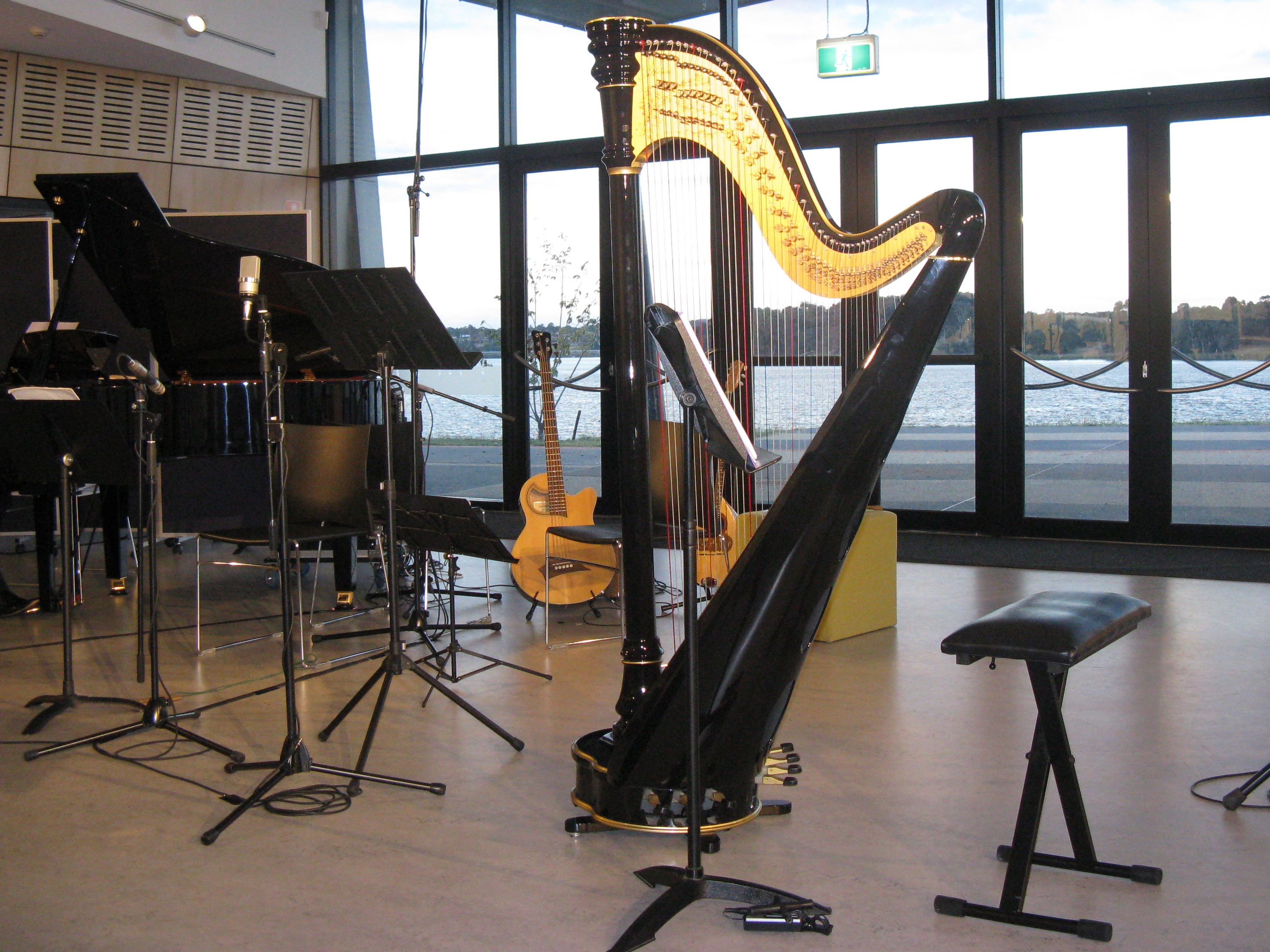
Griffyn Ensemble set up, Belconnen Arts Centre

Before the concert, at the Belconnen Arts Centre

Water, water, everywhere,
And all the boards did shrink
(from The rime of the ancient mariner by Samuel Taylor Coleridge)

I suppose it could be seen as clichéd to hear these words in a concert called “Water” but when the performers are the Griffyn Ensemble, cliché would be the furthest word from your mind.

“Water” was the last performance in the Water into Swine Festival, 28 March to 5 April, which was the result of an “exchange” between Canberra’s Griffyn Ensemble and Sweden’s Peärls Before Swïne Experience. The Swïne (“The Peärls are the music”, they say) specialise in performing new music and are consequently a good match for the Griffyns with their eclectic and open-minded approach to music.

This concert was a little different to previous Griffyn concerts we’ve attended. Firstly, of course, the Griffyn performers were supplemented by four Swedes; and secondly, the concert programming, perhaps because of the exchange, was a little looser. There was a theme – water – but the connections were, let us say, more fluid! And the program was, I think, a little less diverse, a little less eclectic. I love that they dare to program, as they did in Behind Bars, Johnny Cash next to Theodorakis next to Messaien next to new or lesser-known composers.

This is not to say that I didn’t enjoy “Water” – because I certainly did – or that it wasn’t eclectic – because it was. It just felt less so!

One of the things I enjoy about the Griffyn Ensemble that I may not have mentioned before is the balance they strike between formal professionalism and something more informal and intimate. Their performances mimic how I think chamber music was originally performed:

Because of its intimate nature, chamber music has been described as “the music of friends.” For more than 200 years, chamber music was played primarily by amateur musicians in their homes, and even today, when most chamber music performance has migrated from the home to the concert hall, many musicians, amateur and professional, still play chamber music for their own pleasure. Playing chamber music requires special skills, both musical and social, that differ from the skills required for playing solo or symphonic works. (from Wikipedia)

This, a sense of intimacy and joy, is what the Griffyn Ensemble manages to achieve – and it is special to be part of it. So, for example, “Water” incorporated a piece – Sloop John B – which was sung by five young boys led by soprano Susan Ellis and featuring young William (Will) Duff (from Behind Bars) who confidently held a second part against, at times, not only the main part sung by the other boys but other instrumental activity behind him. Also, we were addressed, naturally, conversationally, by Australian sailor Kanga Birtles who has circumnavigated the world solo. He spoke of the perils and joys of sailing, of trade winds and being on the water. His words supported the concert’s loosely defined motif which was to do with the old windjammers sailing from Europe to Australia. This motif was conveyed through Swedish pieces played by the Swïne, and pieces from Madagascar (courtesy Ravel), West Indies, Australia and the United States, played by various combinations of the two groups.

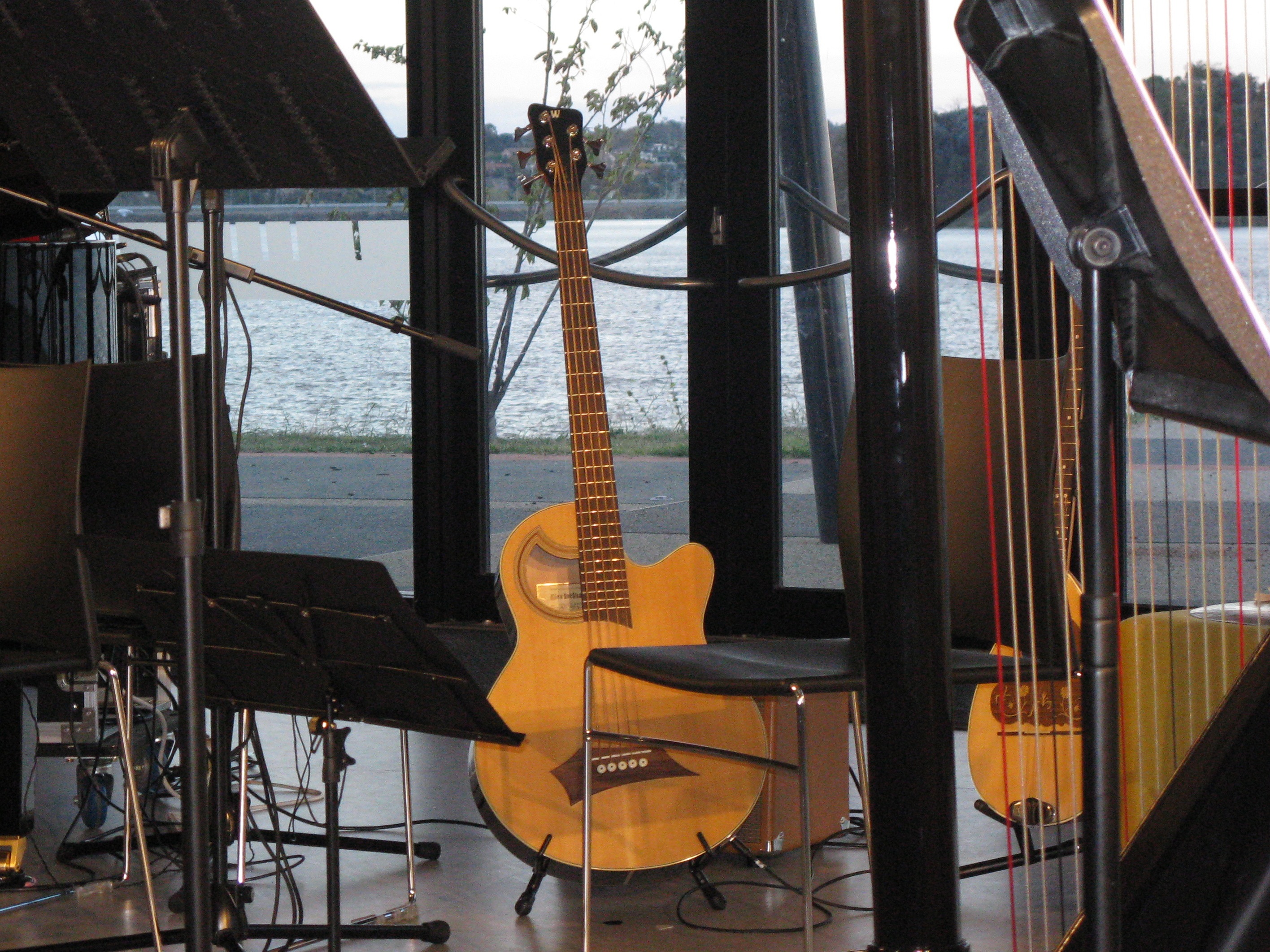
Griffyn Ensemble, Belconnen Arts Centre

Before the concert, Belconnen Arts Centre

The most powerful piece of the first half was Robert Erickson‘s Pacific Sirens performed by the full ensemble (piano, flute, harp, violin, cello, guitar, mandolin, percussion, voice – with recorded sound effects). It was an evocative and eerie piece that confirmed my preference for terra firma! I also enjoyed the world premiere of Australian composer Marián Budoš’ Clepsydra which, apparently, means water-clock. It’s a lovely piece with some jazzy elements to it.

While the first half focused primarily on the sea, the second half looked at water from various angles. One piece was the first movement of New Zealand composer Gareth Farr’s Taheke, which is Maori for waterfall. It was performed gorgeously by Kiri Sollis (flute) and Meriel Owen (harp). Flute and harp is a combination I usually enjoy. This half also featured the world premiere of Griffyn Ensemble director Michael Sollis’ Water into swine. Played by the Swïne (violin, cello, piano, flute), it also included vocalisations representing the dripping of water. As violinist George Kentros suggested, “there’s a hole in the bucket”. Playing their instruments while simultaneously vocalising (except for the flautist of course) looked pretty tricky but the players achieved it with a good deal of aplomb!

The Birtles family reappeared in the second half via a reading, by Susan Ellis, of some excerpts from Kanga’s mother (and Kiri Sollis’ grandmother) Dora Birtles’ journal Northwest by North about the trip she did in 1932 in a cutter from Sydney via New Guinea to Singapore. The reading was illustrated by Michael Sollis’ piece, Scenes from Ballad of a Highlands Man, which was performed surround-sound style with Michael and Kiri Sollis playing a traditional flute-like instrument from behind the audience.

I’ve mentioned only a few pieces played during the evening. We also saw Susan Ellis finger-clickin’ and barefootin’ around the “stage” to Alec Wilder‘s Sea Fugue Mama and heard, interspersed through the concert, the three movements of Swedish composer Klas Torstensson‘s Pocket size Violin Concerto, which challenged us with its mix of discordant and lyrical sounds and which was performed with confidence and enthusiasm by the group for which it was written.

Once again I thoroughly enjoyed the Griffyns. They always manage to put on a concert which appeals to a concert-goer like me, that is, one who is a reader-who-likes-music, who likes to think about what the music means, the stories it is telling, the emotions it is conveying. This concert, with its many watery atmospheres, gave me plenty to think about.

Other versions of some of the pieces:

Monday musings on Australian literature: The little Aussie battler

Australian public intellectual and ethicist, Clive Hamilton, wrote in his 2005 book Affluenza (excerpted in The invisible thread) that

Politicians love to identify with the Aussie battler, that stoic, resilient character who has little and complains less. Fifty years ago Australia was full of battlers, people hardened by the rigours of depression and war and, if not proud of their penury, certainly not ashamed of it. The Aussie battler is the central icon of Australian political folklore, and the image persists despite the fact that, as a result of sustained economic growth in the past five decades, the number of people who truly struggle has shrunk to a small proportion of the population.

My plan here, though, is not to discuss the political use (about which Hamilton makes a lot of sense) but the literary one, because reading this excerpt of course made me think about what part this “motif” or “myth” has played in Australian literature. I’ve written a few Monday musings to date on “themes” (such as the lost child, the beach, the gum tree, even sheep). The little Aussie battler is worthy, I think, of similar, albeit introductory, exploration. Is this icon (or stereotype) that is so popular with politicians, also reflected in Australian literature?

Who then is the “little Aussie battler”? My understanding of the term is that it refers to men (or more broadly families) who are working class, urban or rural, who struggle (battle) to make a living.  Historically, they had few pretensions to upward mobility, except perhaps for their children. There’s a discussion of the word’s meaning on the Australian National University website, which includes the following definition of the “battler” as:

the person with few natural advantages, who works doggedly and with little reward, who struggles hard for a livelihood, and who displays enormous courage in so doing.

The notion of “the battler” probably originates in Australia’s convict heritage of the late 18th century and the battle to survive, but the early “battlers” in Australian literature were the itinerants and the struggling rural workers of the late 19th century, as glorified by writers like Banjo Paterson and Henry Lawson. They could be employed, irregularly employed, or unemployed. By the early to mid twentieth century, the “battlers” were often urban, though the country battler survived.

In fact, the iconic “battlers” of early 20th century literature were Steele Rudd‘s Dad and Dave, the struggling settler farmers who are often described as “the original Aussie battlers”. The first Dad and Dave book, On our Selection, was written in 1899, but the characters and their struggles became popularly known through plays, film and radio in the first decades of the 20th century. My favourite battlers, though, are those of Ruth Park. Her Harp in the south trilogy and her Miles Franklin Award winning Swords and crowns and rings are quintessential battler stories. New Zealand born Park got down pat the mid-twentieth century battler, the often flawed characters with big hearts and a desire to provide for their families and care for their mates. George Johnston’s My brother Jack is another example of a great battler of Aussie literature, as is Kylie Tennant‘s unfortunately lesser known novel The battlers. These mid-20th century battlers had usually experienced the Great Depression and/or the world wars. Life was difficult.

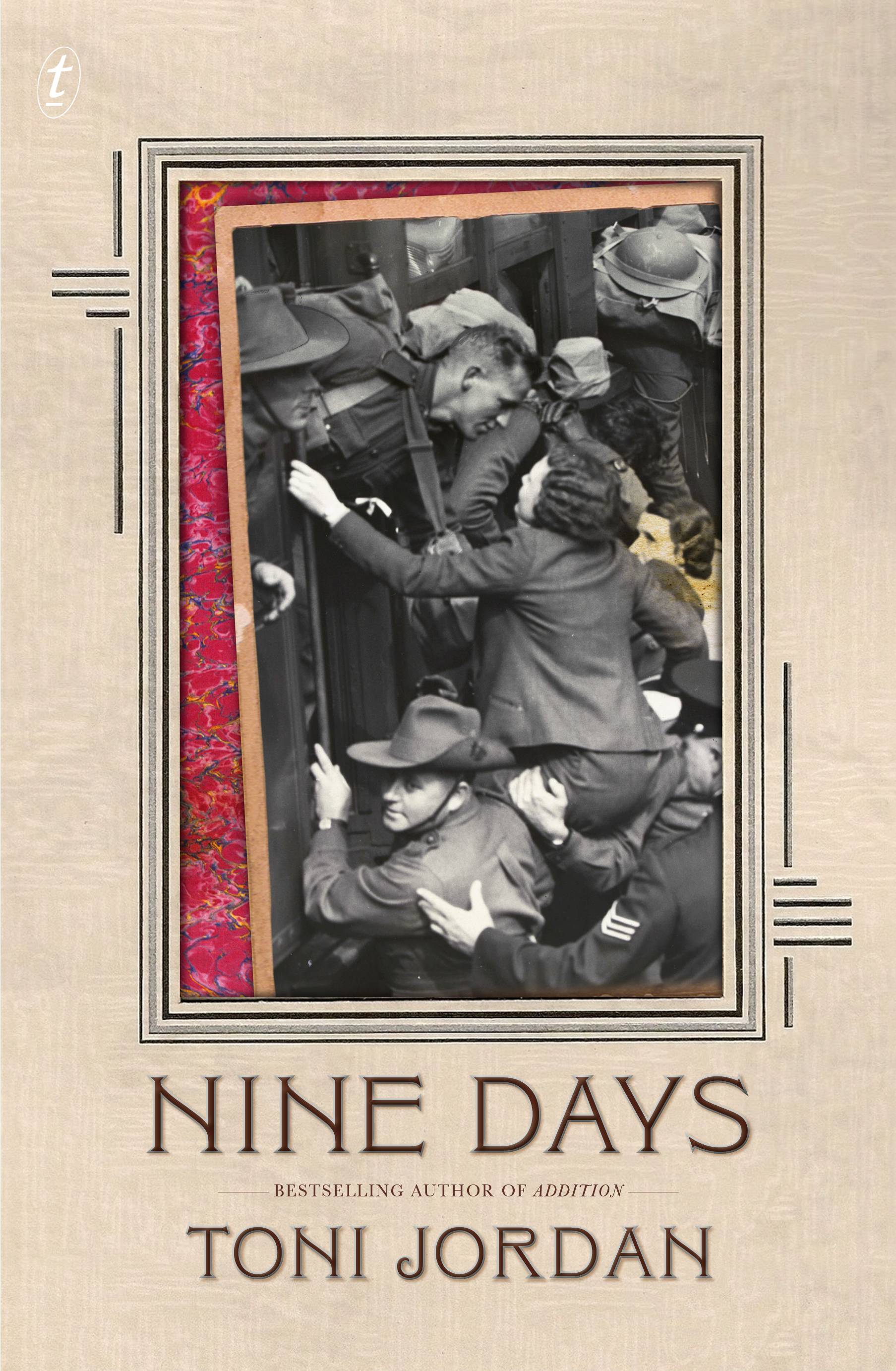
Jordan's Nine Days

Book cover (Courtesy: Text Publising)

Current writers like Joan London (Gilgamesh) and Toni Jordan (Nine days) have also written about these historic battlers, as has, most famously, Tim Winton in Cloudstreet. What does it say, I wonder, that the book which most often wins surveys seeking our favourite or best Australian novel is this one about Aussie battlers?

But what about late 20th or early 21st century battlers? Do they still exist (outside the politicians’ minds?). Are Tim Winton’s more contemporary-focused books, like The turning, also about “Aussie battlers”? If they are, they are written with a more realistic, less affectionate eye, I think, than the earlier books I’ve mentioned. Is the old definition of “battler” – essentially, a working class white Australian male – still reflective of contemporary Australian society, with its multicultural and increasingly middle-class make-up? Certainly, when I think about recent Australian literature that is set in current times, the “battler” theme, or even character really, does not come to the fore – and yet, if I Google, “aussie battler”, the idea is alive and well. It seems, perhaps, that literature has turned its eye to more complex notions of the Australian character while politicians and the media stick to a romanticised version of “the battler”. I’d love to know what other readers of Aussie literature think.

If you like puns …

Puns make me laugh … and living in Canberra, as I do, I’m regularly confronted by them. How, do you ask? Well, via a local lawn/turf business called Canturf, a family business which started in 1966. They have, for many years now, been promoting their product – even, and it must have been hard, throughout our recent long drought that saw stringent water restrictions result in many a dead lawn – through signs based on puns.

The puns keep changing, so much so that I have often wondered whether they can keep it up, but it seems they can. Do they have a wonderful ad agency? Or is it their own staff? The answer is on the FAQ page. The answer to “Who thinks of your funny signs?” is: “You do. If you come up with an original saying and think it would be a good Canturf sign, send it in to us via email or fax along with your contact details. If your idea is original and gets used you will be paid $250 for your efforts.” Now, there’s a challenge!

Anyhow, today, as we were driving into the country for our annual Easter Sunday lunch, we saw a couple of their latest:

  • It’s been nice mowing you

and

  • It’s a lawn way to the top if you want a grassy knoll.

Honestly! How can you drive past signs like that and not smile. (You certainly don’t forget the name of the company behind them!)

Previous signs have included:

  • Looks good mown eh Lisa
  • Lawngerie modelled here
  • We’re easy to get a lawn with
  • Fifty shades of green
  • It’s sexy and you grow it
  • It’s greener than brown

This last is a political pun probably only understood by Aussies. It’s a little daring for a business to use but I suppose it can be read in multiple ways. And, anyhow, this is Canberra, and we have a reputation for being Green.

I’m sorry that I haven’t photographed these signs but, you know, we’ve always been going places at the time …

And, since we are talking about puns, I’d like to give a plug here for a young ensemble I heard this weekend at the National Folk Festival. Calling themselves the Miss Chiefs they admitted loving puns. Their name, they said, gives it away. Just one year old, this group first performed at the 2012 festival’s Infinite Song Contest for which performers present their version of a song relating to the year’s contest theme. Last year’s theme was Leonard Cohen, and the just-formed trio performed “Hallelujah”. Here is a You Tube recording of that event:

The lead singer, Vendulka Wichta is 14 (at the time of the recording!), and she’s accompanied by Laura Zarb (24) and Amelia Gibson (17). From what I saw this year, one year on from the above performance, the Miss Chiefs is a group to watch.

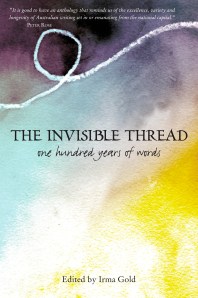
Irma Gold (ed), The invisible thread (Review)

The invisible thread, by Irma Gold

Cover (Courtesy: Irma Gold and Halstead Press)

I even get nervous when I open a book, you know, for the first time. It’s the same thing, isn’t it. You never know what you’ll find, do you? Each person, each book, is like a new world … (from Mark Henshaw’s Out of the line of fire, in The invisible thread)

At last, you may be thinking, she’s going to review the whole book. At least, I hope that’s what you’re thinking, because this book deserves a dedicated review rather than the scattered posts I’ve done to date. The book I’m talking about is, of course, Canberra’s centenary anthology The invisible thread.

The aim of the anthology is a little different to that of Meanjin‘s special Canberra issue, which I recently reviewed. While its editor, Sanders, wanted to offer “a taste of Canberra”, Gold’s aim was to present “literature of excellence” from writers, past and present, who have had a significant relationship with Canberra. For her, Canberra is “not the headline act” but provides “the invisible thread” linking the writers to each other and to the rest of Australia. In her foreword, Robyn Archer, the centenary’s Creative Director, puts it this way:

Many of the pieces are not about Canberra, but they reveal a diversity of interest and style among writers in this region, and thus reflect the unique nature of a city which is located rurally, but positioned nationally.

In other words, The invisible thread is not a parochial apologia for Canberra but an intelligent presentation of the city’s and thence the nation’s cultural, political, social and interpersonal life. The nation’s concerns are Canberra’s concerns – at both the macro (war, indigenous-non indigenous relationships, the environment, and so on) and the micro (birth, marriage, death, and everything in between) levels. You would be hard-pressed as an Australian, or even as an international citizen, not to find something in this book to interest and move you.

Reviewing an anthology is tricky though, and this is particularly so with The invisible thread because it comprises highly diverse pieces – poems, short stories, essays, and excerpts of novels and non-fiction works.  The pieces are not grouped by form, like the Meanjin issue, but in a more organic way intended to take us on a journey in which, editor Irma Gold writes in her Preface, “each work is allowed to converse with those beside it”. And so, in preparation for my reading group’s discussion, I went back to the start and read the book in the order presented. What a pleasure that turned out to be because I did indeed discover added meanings that weren’t necessarily apparent from the dipping-in-and-out approach I had been using.

Let me give an example. The anthology opens with an excerpt from war historian CEW Bean’s Anzac to Amiens, itself a condensation of his Official history of the first world war. I knew of Bean but had not read his history. I was surprised by his use of imagery, such as this:

And out on every beautiful fresh morning of spring come the butterflies of modern warfare – two or three of our own planes, low down …

After another war-related non-fiction piece, the anthology segues to a short story (“The Good Shoppers”) by Lesley Lebkowicz, which is about her refugee parents, now old and shopping in the supermarket but still affected by the Holocaust, and then to two poems about age (Judith Wright‘s “Counting in sevens” and AD Hope‘s “Meditation on a Bone”). The “conversation” encouraged by this sequence is complex and, I expect, different for each reader. For me, the juxtaposition suggests an irony: “war” steals “age” from many of the youths sent to it. This is just one small example of the sorts of “conversations” Gold has set up in the anthology. Considering them as I read the book added another layer to an enjoyable reading experience. I like reading that challenges my brain on multiple levels.

Compiling an anthology involves, obviously, selecting what to include. It must be hard enough to choose poems, short stories and essays, but what about writers who are best (or only) known for novels or non-fiction books? They can only be represented through excerpts, but there is the risk that these cut-down pieces will be less satisfying to read. Alternatively, of course, they might encourage us to locate the full work and read it. The Bean example above is an excerpt. There are many others, including those from Kate Grenville’s Sarah Thornhill, Jack Heath‘s Third transmission, and Roger McDonald‘s When colts ran. I have noted many to follow-up, which tells you how I found the excerpts overall!

A trickier challenge, probably, is that of representing diversity – not just regarding chronology, subject-matter, tone, and form or genre, but in terms of the writers themselves, such as their gender, or whether they are of indigenous, migrant or other minority background. What emphasis should be given to these in the selection process? And, anyhow, should the writer’s background be highlighted? I’m not sure what Gold and her committee decided about this but the anthology, while primarily representative of the majority culture, is not exclusively so and probably reflects the writing community it drew from.

This is not the last you’ll hear from me on the anthology. It is much too delicious, much too rich, much too full of “luminous moments”* for me not to continue to draw from it. I’m possibly – probably? – biased, but I believe this book should be on every Australian bookshelf and, without disrespecting Irma Gold’s hard work, I’d say it doesn’t really matter whether you read it in its original order or just dip into it as the spirit moves you. What would matter would be to not read any of  it at all.

Irma Gold (ed)
The invisible thread: One hundred years of words
Braddon: Halstead Press, 2012
256pp.
ISBN: 9781920831967

* from Marion Halligan’s essay “Luminous moments” which concludes the book.
Monday musings on Australian literature: Inaugural First Nations Australia Writers Workshop

I had planned another topic for today’s Monday Musings, but when I heard via AustLit News about the inaugural First Nations Australia Writers Workshop to be held in May this year, I decided to write about it sooner rather than later …

The workshop aims to bring together established and emerging writers of Aboriginal and Torres Strait Islander backgrounds with a view to further developing indigenous arts practice. It is being presented by the First Nations Australia Writers Network (FNAWN) and is to be held at the State Library of Queensland, in Brisbane, from 9th-10th May, 2013. The Network was apparently established last year and its Chairperson is Canberra-based Wiradjuri poet, writer, activist Kerry Reed-Gilbert.

The workshop has an impressive line-up of presenters, including writers I have reviewed here:

  • Alexis Wright whose Carpentaria (see my review) won the Miles Franklin Award in 2007. It has been published in many countries and been translated into multiple languages. She has written several other works, and has a new novel coming out this year.
  • Melissa Lucashenko who won the Dobbie award for her first novel Steam pigs. Her latest novel is Mullumbimby (2013). (See my review for her short story “The silent majority).
  • Anita Heiss about whom I’ve written several times on this blog. Her most recent book is her memoir, Am I black enough for you?, which I plan to read and review in a couple of months. Heiss also co-edited The Macquarie PEN Anthology of Aboriginal Literature. (See my review of her Paris dreaming.)
  • Kim Scott whose novel That deadman dance (see my review) won multiple awards including the Miles Franklin Award in 2011. Like Wright, Scott has had several novels and short stories published.
  • Marie Munkara whose Every secret thing (see my review) won the David Unaipon Award in 2008 and whose next novel will be published this year.

Exciting list, eh? Other presenters are Kerry Reed-Gilbert, Bruce Pascoe, Sam Wagan Watson and more, including some new names to me. AustLit News also mentions Tony Birch whose novel Blood was shortlisted for the Miles Franklin Award last year, but I can’t find him on the Workshop’s website. Sharon Shorty, a Canadian First Nation writer, will also be presenting.

The program is broad-ranging with an emphasis on practical issues – copyright, preparing your manuscript, the future of the book, “writing our stories” – which is what you’d expect for a workshop. Creative Partnerships Australia puts it this way:

With the rapid and seemingly constant changes in the publishing and literary sectors it is imperative that Australia’s Indigenous writers embrace the knowledge, technology and global context for the sustainable development of their livelihoods and their art.

If you would like to keep in touch with the Workshop:

Tax-deductible (for Australians anyhow) donations are welcome to support attendance, particularly by writers from remote areas. Click this link if you are able to help.

Goddess (Movie review)

Will I, won’t I, will I, won’t I, has been running around my head over the last week since I saw the recent Australian movie Goddess. In the end I’ve decided, obviously, that I will – will, that is, write a post on it because I do like to raise a little awareness about Australia’s film industry.

Cradle Mountain

Beautiful Tasmania

Whether you like Goddess depends a bit, I think, on your expectations. If you expect a fun romcom you are likely to enjoy it. If, however, you expect a sociological analysis of celebrity culture in the 21st century, as I half-expected based on the line or two advance summary that I’d read, you may not like it. Fortunately for me, my expectations changed to the “right” ones in the opening scene. The film opens with an homage to the film version of The Sound of Music with our heroine standing, arms spread wide, on a high green hill surrounded by mountains in gorgeous Tasmania and ready, we think, to burst into song. She appears to think so too, except she suddenly spies her toddler twins, halfway down the hill, about to chomp into a cowpat  … all thoughts of singing immediately fly out of her head and the film’s tone is established!

Goddess is both romcom and musical comedy. It was adapted from a stage play titled Sinksongs which was written and performed by Joanna Weinberg. The plot concerns a young couple – Elspeth and James – who have moved to Tasmania with their twin toddler sons so that James can follow his dream of protecting and researching whales. The couple have a deal. James will follow his dream until the boys start school, and then he will take over prime childcare while Elspeth has a go at her career which is singing. The trouble is that Elspeth finds life in rural Tasmania with demanding (albeit cute) toddlers and a mostly absent husband a harder “deal” than she’d expected. She receives no support from the local mums (played by comedian Corinne Grant, Pia Miranda, and two others) who do not welcome her into their group. To assuage Elspeth’s loneliness, James buys her a webcam suggesting they can stay in contact that way. Unfortunately, probably due to poor reception out there in the southern Pacific (!), Elspeth can’t raise James but, she suddenly realises, she can put the webcam to another use. She can sing her life to a cybercrowd – and so begin her “sinksongs” performed, yep, from the kitchen sink. The inevitable happens of course. She becomes famous around the world. We see people everywhere tuning in to watch her sing, including, eventually, the local mums. I won’t detail the plot further as you can probably guess its course … one requiring her, in the end, to work out her fame-family priorities.

What makes this movie delightful is not the predictable plot (it is, after all, what it is) but the performances and the music, which ranges from pop to jazz to blues to country to tango. It’s all there as Elspeth is one talented young singing mum. Elspeth is played by someone unknown to me, the English actress Laura Michelle Kelly. She is, not surprisingly, more active in theatre than film. It’s a cliched thing to say, I know, but she lit up the screen with her expressive face, her warmth and her singing-dancing ability. She managed to hit just the right note between vamp and mum, between confidence and uncertainty. James is played sympathetically by Irish pop idol Ronan Keating. Australian comedian Magda Szubanski was entertaining as the “Corporate bitch” Cassandra, while relative newcomer Hugo Johnstone-Burt, from the Miss Fisher’s Murder Mysteries television series, convinced as her nervously keen but ultimately sensitive right-hand man.

The plot was a little forced in places and there was the odd slapstick moment that made me cringe. There were also picture-perfect shots of Sydney  – the Bridge and the Opera House – that worked, I suppose, for immigrant Elspeth’s visit to the big smoke but that also seemed rather carefully placed to attract foreign audiences. These, though, were minor aberrations in a movie that saw us leaving the cinema smiling.

I seem to have been writing about romance more than usual lately, which is a bit weird as it’s not really my zone of interest, but I’m not sorry. A little break from the usual never does you any harm does it? If you’d like a change from your usual fare and Goddess comes to a theatre near you, give it a go. It may not be the best movie you see this year, but its joie de vivre is infectious.

Goddess
Dir. Mark Lamprell
Prod. The Film Company and Wildheart Films, 2013

The Stella Prize shortlist, 2013

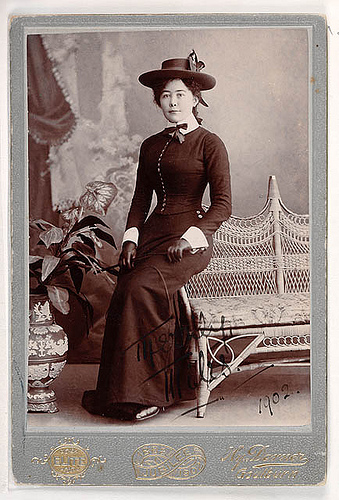
Miles Franklin, 1902

Miles Franklin, 1902, by H.Y. Dorner (Presumed Public Domain)

Woo hoo … The Stella Prize shortlist has been announced.

I posted the longlist a few weeks ago before, but just to recap, the Stella Prize is a new award on the Australian literary scene. It is named for Miles Franklin and is “for the best work of literature (fiction and non-fiction) published in 2012 (for this inaugural one) by an Australian woman”. The prize of $50,000 will go to one author.

I like the look of the shortlist. It includes authors I’ve read and enjoyed before (de Kretser, Kennedy and Tiffany) and the authors I picked out as particularly interesting (to me, anyhow) from the shortlist:

  • Courtney Collins, The burial (Allen & Unwin): a debut historical crime novel which reimagines the life of  Australia’s ‘lady bushranger’, Jessie Hickman. I’m not a crime reader, but this one intrigues me.
  • Michelle de Kretser, Questions of travel (Allen & Unwin): the fourth novel by this award-winning writer.
  • Lisa Jacobson, The sunlit zone (Five Islands Press): a verse novel which has been reviewed several times already for the Australian Women Writers Challenge. (See my roundup over there. The reviews I read while writing that round-up have increased my interest in this book).
  • Cate Kennedy, Like a house on fire (Scribe): a collection of short stories by one of Australia’s best short story writers.
  • Margo Lanagan, Sea hearts (Allen & Unwin): a fantasy or speculative-fiction novel about selkies and the like that I believe also appeals to non-genre readers. Lanagan has a reputation for lovely prose, so I’d be interested to check her out some time.
  • Carrie Tiffany, Mateship with birds (Picador): the second novel by the author of the truly splendiferous Everyman’s rules for scientific living.

It’s all fiction, but there’s “genre” writing here, as well as traditional “literary” fiction, poetry and short stories. It’s rather sad that only one can win but let’s hope the longlisting and shortlisting will raise the profile of these authors – and others along with them – because that is the prime goal of the award. (For the winner, though, the prize purse of $50K will be an important outcome!)

And, it looks like the Australian independent publisher Allen & Unwin has scooped the pool with three of the six shortlisted books! Congratulations to them.

The first winner of the Stella Prize will be awarded in Melbourne on the evening of Tuesday 16 April. I’ll keep you informed.

PS Is it the 2013 prize for books published in 2012, or is it the 2012 prize awarded in 2013?