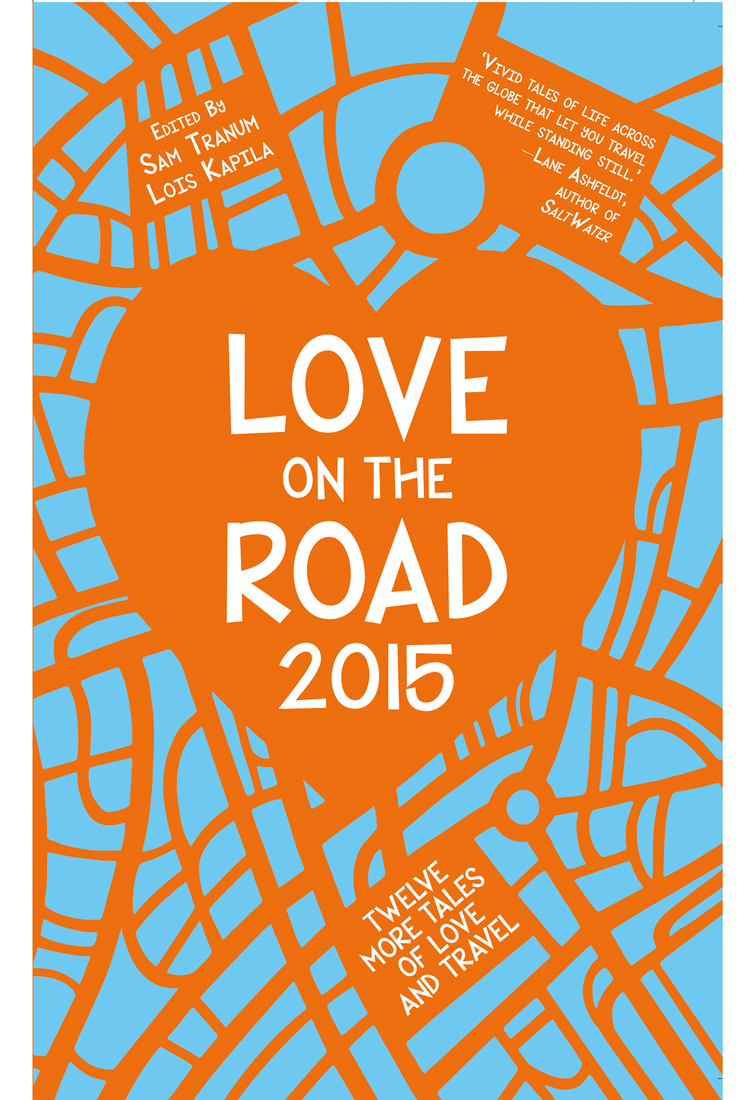
Sam Tranum and Lois Kapila, Love on the road 2015 (Review)

Love on the road 2015, book coverRules, they say, are made to be broken, and so it was that I broke my rule* of not accepting overseas publications for review and said yes to a short story anthology from Ireland, Love on the road 2015: Twelve more tales of love and travel. I’m not exactly sure, in fact, why an Irish publisher offered me this book for review. Perhaps it’s because I’ve reviewed a collection, Pelt and other stories, by expat Australian Catherine McNamara who is included in this anthology. Whatever the reason, it didn’t take me long to break my rule on this occasion because I love short stories, because it includes an Australian (woman) author and, perhaps most importantly, because it’s an international collection and so offered me a perfect opportunity to diversify my reading.

The collection opens with a brief Foreword by the husband-and-wife editors. They explain that this is the second Love on the road collection, the first published in 2013. The collections are the end-product of a contest in which the editors called for submission from authors around the world “to send us their tales of love and travel, true or imagined”. In this second volume, one is true, the rest are fiction, and they are set all over the world, from Iran to the Philippines, from Zimbabwe to Costa Rica, from New Zealand to the USA.

Eight of the twelve stories are by women, and one of these is the true story. Written in second person by New Zealand writer Nod Ghosh, “Janus: A path to the future” tells of her husband’s decision, after thirty years together, to transition to female and describes their trip to Belgium for the first surgical procedure in the transition, facial feminisation. It’s a warm story about a strong love that transcends gender. Several of the stories are health-related. Catherine McNamara’s story, “Enfolded”, is about a woman visiting a past lover at his request, after an accident has left him, wheel-chair bound, with paralysed legs. The language is tighter and more restrained than many of the stories I’ve read by McNamara, but it perfectly matches the tension between the couple’s playful, no-strings-attached past and what future, if any, they might forge.

American writer Marlene Olin’s “Sunrise over Sausalito” is also health related, but its tone is upbeat. Indeed there’s a lovely variety in tone in this collection, which is something I like in anthologies. Anyhow, in this story an elderly widower has checked himself into a nursing home. He figures that since he’d checked himself in, he can also check himself out, which he does in a very special way (and no, I don’t mean by the usual way people check out of nursing homes!) It’s a warm, engaging story about how it’s never too late to fulfil your dreams.

Not all the stories are about positive relationships, though. American writer Shirley Fengenson’s “Not a finger more”, set mostly in Costa Rica, is a chilling first person story in which a wife describes her life with a physically abusing, emotionally controlling husband. Fergenson handles her first person narrator with confidence and compassion – and makes it all too real.

The four stories I’ve mentioned demonstrate the diverse ways in which the writers interpreted the theme, but it doesn’t stop there. And here’s the thing. Given the theme, I wasn’t really expecting the degree to which political issues would feature in the collection. It started with the first story, “The queue”, by Zimbabwean novelist Tendai Huchu. It was rather strange to be reading this story as we were hearing about Greek people queuing at ATM machines during their current crisis, because this story is about people lining up at the post office for their monthly pay cheques, though they need first to make sure that they are in the right queue – not the bread one, for example. It’s a story about attitude: are you or are you not able to make the best of a frustrating situation? This story’s tone of wry but hopeful resignation made it a perfect opener for this wide-ranging collection.

Other stories were more hard-hitting, such as Malawian writer Stanley Kennai’s “We will dance in Lampedusa” about a pair of hopeful young asylum-seekers trying to get from Tripoli to Italy by boat. Again, a timely story that might open a few eyes, if it ever got to the right ones. Even harder-hitting, though, is Tendayi Bloom’s cleverly titled “Manila envelope”. Bloom is an English political scientist specialising in migration policy. She has lived in the Philippines, though is currently based in Spain. Her story is a heart-sinking one about a naive Filipina teenager and the nefarious practices by which young women in poor countries are lured into foreign exploitative employment arrangements. This was a powerful story indeed, and is probably the one I’ll most remember.

Well, I think that’s half the stories. I can’t write about them all, but I did enjoy them all. The mother of the main character in “Sunrise over Sausalito” tells him that “Life … sends you detours”. And that’s what this book is about – the detours (or turning points) that we all face, and the way that love, of some sort, whether it be genuine and supportive, or exploitative and abusive, is usually behind those changes. Every story offers a different perspective, with a resolution to match. The editors have done an excellent job.

I must say I did chuckle over the front cover blurb written by Lane Ashfeldt, an Irish writer unknown to me. She describes the collection as “Vivid tales of life across the globe that let you travel while standing still”. I chuckled because at the conference on Emma I attended last weekend, we made fun of Mrs Elton’s complaint at the Box Hill picnic that she was “really tired of exploring so long on one spot”! In the case of this book, though, I’m with Ashfeldt. I was way too engaged to even notice that I had stayed on one spot – while my mind had flown around the world!

Sam Tranum and Lois Kapila (ed)
Love on the road 2015: Twelve more tales of love and travel
Dublin: Liberties Press, 2015
208pp.
ISBN: 9781909718586

(Review copy supplied by Liberties Press)

* This rule is a pragmatic one. I just have to keep a lid on review copies to enable me to have some input into what I read!

Emma: 200 years of perfection: Pt 1, The capacious Emma

This year is the 200th anniversary of the publication of Jane Austen’s Emma, so it was natural that the Jane Austen Society of Australia’s (JASA) biennial weekend conference, held last weekend, would be devoted to the novel. It was a fascinating and inspiring conference, and one I felt well-prepared for having just re-read Emma earlier this year.

There were eight papers, presented by five speakers. I’m not going to summarise the papers in detail – they will be published in JASA’s peer-reviewed journal Sensibilities later this year – but I’d love to share, over a couple of posts, a few thoughts and ideas that came out of the weekend for me.

First, though, I will name the speakers:

  • Susannah Fullerton, President of JASA, author, lecturer, and literary tour leader
  • Sayre Greenfield, Professor of English, University of Pittsburgh (Greensburg), USA (and married to Troost)
  • David Norton, Emeritus Professor of English, Victoria University of Wellington, NZ
  • Barbara Seeber, Professor of English, Brock University, St Catharine’s, Canada
  • Linda Troost, Professor of English, Washington & Jefferson College, Pennsylvania, USA (see Greenfield!)

We all knew it, but just to make it perfectly clear, Seeber commented that Jane Austen’s novels are “capacious”, meaning that they accommodate multiple views which comprehend individual experiences and biases. This is why Austen aficionados can argue so passionately for particular readings of the novels and be right (or, more accurately, be able to justify their reading). Seeber, in fact, quoted Virginia Woolf’s argument that we do not have to provide a final reading of a work, but show how we have arrived at our particular reading. We bloggers know that – but it is nice having the likes of Virginia Woolf support us!

The capacious Emma

What is Emma about? Well this is where its capaciousness is particularly evident because it seems that almost every reader has a different opinion. In my last read I saw a major theme as being about Emma’s search for a “true friend”, and about the definition of what true friendship means and how it relates to marriage. Other themes include social status, social change, and the restricted lives of women. They are all valid.

Another theme was proposed at the conference. It came from David Norton who suggested that the book is about:

What it means to be human, and why it matters (or, how) to be humane

He argued, for example, that while the word “truth” appears many times in the novel, being humane is its cornerstone. When Emma makes her big blunder by insulting Miss Bates at Box Hill, Mr Knightley chastises her not on the grounds of “truth” because, after all, what she said was true, but for being “unfeeling”. He tells Emma that Miss Bates deserves her “compassion”.

Another way we could view this theme, I think, is that it’s about the importance of “civility” in our relationships with each other, that in fact, sometimes, to quote Frank Churchill, “civil falsehoods” are better than “a disagreeable truth”. As Sayre Greenfield commented, Highbury heals itself at the end, but is not a perfect place. There will still be Mrs Elton to cope with! And that will demand, I fear, all the civility that Emma can muster!

Miss Bates, I shall be sure to say three dully things (Illustration by CE Brock, 1909,  from solitary elegance.com)

I shall be sure to say three dull things (Miss Bates) (Illustration by CE Brock, 1909, from solitary elegance.com)

Another area where Emma is capacious is in our reactions to the characters. Jane Austen herself is famous for her statement that “I am going to take a heroine whom no one but myself will much like”. Emma’s likability has engaged readers ever since – but she’s not the only character in the book to engender fierce discussions. Frank Churchill is another. Not all characters cause significant dissent, though. Most readers, for example, see Miss Bates as a silly old maid, and Mr Woodhouse as a fussy, selfish old woman of a man – see how both negatives involve gender terms! – but our speakers had some different views.

Here, however, I’m just going to share some ideas presented by by the speakers on two characters:

  • Miss Bates. Norton and Greenfield, in particular, spoke about Miss Bates and both viewed her in positive terms. Greenfield argued that although Miss Bates fits the popular contemporary image of old maids (more on that in another post), she is the most socially intelligent character in the novel. She knows what’s going on, and she understands the complexity of her community. Norton demonstrated how Miss Bates is “the great revealer” in the novel, and argued that if you listen to her (skip her speeches at your peril, in other words), you will know what is really going on.
  • Frank Churchill. If Emma has a villain, it is Frank Churchill, but over the years I’ve noticed that it is in our reactions to Austen’s main characters that we most demonstrate our personal prejudices and biases (particularly in relation to the so-called “bad boys”). I find it most fascinating, and illuminating! Linda Troost devoted a paper to the question of whether Frank is a good guy or “a jerk”, and argued convincingly (to me anyhow) that he’s more good than bad. Drawing from both a close analysis of the text and an understanding of human psychology, she suggested that much of Frank’s behaviour arrives out of his invidious situation than from any real “badness” in his character. (She also argued that much of Mr Knightley’s criticism of Frank stemmed from – or was at least aggravated by – his jealousy).

These are just a few of the ideas that inspired me from the conference, but I’ll leave it there. In the next post, I want to talk about something completely different – literary research.

Monday musings on Australian literature: NAIDOC Week 2015

Australians will be aware that this week, July 5 to 12, is NAIDOC Week. NAIDOC originally stood for National Aborigines and Islanders Day Observance Committee, the committee that was once responsible for organising national activities during NAIDOC Week. However, this acronym has now become the name of the week, which suggests just how significant, and well-accepted, this week is now on Australia’s calendar.

The Week aims, as you would expect, “to celebrate the history, culture and achievements of Aboriginal and Torres Strait Islander peoples”, and in doing so, to encourage all Australians to recognise and better understand indigenous Australians. Each year the week has a theme, and this year it is We all Stand on Sacred Ground: Learn, Respect and Celebrate.

This theme, according to the NAIDOC website

highlights Aboriginal and Torres Strait Islander peoples’ strong spiritual and cultural connection to land and sea. The theme is an opportunity to pay respects to country; honour those who work tirelessly on preserving land, sea and culture and to share the stories of many sites of significance or sacred places with the nation.

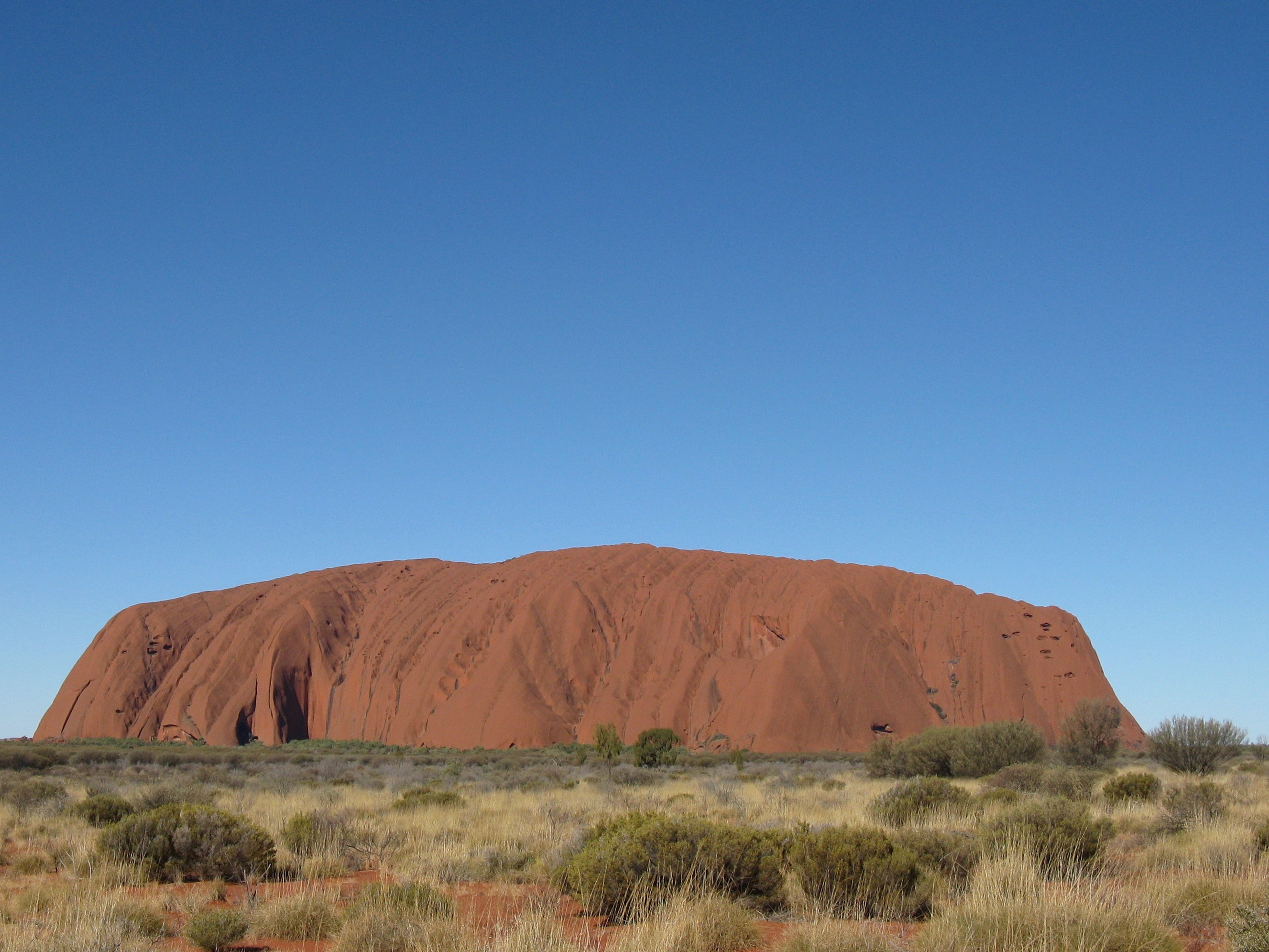
Uluru

Uluru, taken August 2009

The site also tells us that this theme was particularly chosen this year “to highlight and celebrate the  anniversary of the ‘Handback’ of Uluru, one of these sacred sites, to its traditional owners on 26 October 30 years ago”. To that I say, wonderful, as I am visiting Uluru for my third time later this month.

I know my ways of celebrating and supporting indigenous Australian culture are pretty tokenistic in the scheme of things, but in the spirit of this week I thought I’d share with you some of the rather eclectic things I do throughout the year as the opportunities arise:

  • engage with local indigenous culture when I travel, mostly through tours led by indigenous Australians;
  • attend exhibitions featuring indigenous Australian art and culture, ancient, traditional and contemporary;
  • donate to the Indigenous Literacy Foundation;
  • attend performances by the Bangarra Dance Theatre; and,
  • read Indigenous Australian literature (though I don’t seem to read anywhere near as much as I’d like to).

It’s this last way, of course, that is most appropriate to my blog, so to mark this NAIDOC Week, I’m sharing links to posts written by me, and, with her permission, Lisa Hill (ANZLitLovers), on Indigenous Australian literature:

Some of you will know that Lisa has for the last few years run an Indigenous Literature Week during NAIDOC week but, as she wrote recently, this year she plans to run it to coincide with the First Nations Australia Writers’ Network Workshop which will be held in Melbourne next month. Watch out for that.

Meanwhile, Lisa and I hope our links help you discover more about Indigenous Australian culture through literature.

Jane Austen, Northanger Abbey (Review)

Although I’ve titled this a review, as I do when I write about a book, this post on my latest read, Jane Austen’s Northanger Abbey, is not really going to be a review. Like all her novels, it’s been intensively written about from multiple angles, and in fact there are many themes and ideas I’d love to write about, but for this post I am going to focus on one aspect that particularly struck me this time. This aspect is not exactly new to me, but it came together this read in a particular way – and it is this …

Northerner Abbey illus br Brock

From Chapter 9, illus. by CE Brock (Presumed Public Domain, from solitaryelegance.com)

Northanger Abbey is often seen as a spoof or satire of gothic novels. And it certainly does make fun of these novels, but it does so largely through satirising readers of these novels, particularly (young) suggestible readers. Northanger Abbey is also famous for its defence of the novel, on which I’ve posted before. However, the thing which stood out this read was how much Austen comments on the art or practice of writing novels. The novel opens with:

No one who had ever seen Catherine Morland in her infancy would have supposed her born to be an heroine.

Now this partly sets up the whole Gothic novel thread, the idea that heroines of Gothic novels are certain sorts of people, and that certain sorts of things happen to them, but on this read I was very conscious that there was more going on here between Austen and her reader (in this case, me). Before I explore this a little more, it’s probably worth outlining the novel’s publishing history. Initially called Susan, it was written around 1798–99, when Austen was 23-24 years old. She revised it in 1803, and it was sold to a bookseller, who never published it. In 1816, the year before Austen died, her brother Henry Austen bought it back. Austen revised it a little more, including changing the name of the heroine, and of the novel, to Catherine, but died before putting it out for publication again. In the end Henry organised for it to be published as Northanger Abbey, along with Persuasion, in 1817.

So, it was the first novel she finalised for publication (even though she had previously started on the books that later became Sense and sensibility and Pride and prejudice) but was the last published. The interesting thing about this essentially “first” novel is that the voice, or point-of-view, is a little different from the other five novels which are written more consistently in third-person omniscient voice. In Northanger Abbey however, the author-narrator frequently intrudes into the story to address the reader – sometimes, though not always, using first person – and in so doing tends to draw attention to the making of the fiction.

For example, she introduces the Thorpe family with a brief background, then writes:

This brief account of the family is intended to supersede the necessity of a long and minute detail from Mrs. Thorpe herself, of her past adventures and sufferings, which might otherwise be expected to occupy the three or four following chapters; in which the worthlessness of lords and attornies might be set forth, and conversations, which had passed twenty years before, be minutely repeated.

There is an element here of satirising Gothic novels which tended to be long and detailed and to deal with nobility, but it is also, as I see it, part of Austen’s novelist’s manifesto. She’s telling us that for the purposes of her story we don’t need long digressions into irrelevant, albeit possibly exciting, pasts.

Her frequent references to Catherine and whether or not she is a heroine sets up the reader for a traditional Gothic romance while at the same time teases us to think about what fiction might really be about. We know, from a letter to her niece, that this is, for her, “Three or four families in a country village”. So, on the one hand Austen tells us that Catherine has been “in training for a heroine” and “that if adventures will not befall a young lady in her own village, she must seek them abroad”, and then on the other hand, she returns us to reality with statements like:

she felt more obliged to the two young men for this simple praise [that she was “a pretty girl”] than a true-quality heroine would have been for fifteen sonnets in celebration of her charms.

Austen plays with us like this throughout, comparing the concerns and expectations of a Gothic novel heroine with those of a more “realistic” one.

Towards the end, the two threads – the Gothic and the natural or realistic – come together. Having discovered that all her wild imaginings of murder and mayhem at the Abbey were just that, wild imaginings, Catherine does have to confront a very real crisis when the General suddenly turfs her out of the Abbey, his home, with no explanation:

Yet how different now the source of her inquietude from what it had been then—how mournfully superior in reality and substance! Her anxiety had foundation in fact, her fears in probability; and with a mind so occupied in the contemplation of actual and natural evil, the solitude of her situation, the darkness of her chamber, the antiquity of the building, were felt and considered without the smallest emotion; and though the wind was high, and often produced strange and sudden noises throughout the house, she heard it all as she lay awake, hour after hour, without curiosity or terror.

This is one of the narrator’s third person pronouncements, but Austen, the author, intrudes in first person again at the end, with two statements that refer directly to the making of fiction. One alludes to the final resolution of the romance:

The anxiety, which in this state of their attachment must be the portion of Henry and Catherine, and of all who loved either, as to its final event, can hardly extend, I fear, to the bosom of my readers, who will see in the tell-tale compression of the pages before them, that we are all hastening together to perfect felicity.

The other refers to the introduction of a new character in the last chapter who helps bring about the above “perfect felicity”:

… I have only to add—aware that the rules of composition forbid the introduction of a character not connected with my fable—that this was the very gentleman whose negligent servant left behind him that collection of washing-bills, resulting from a long visit at Northanger, by which my heroine was involved in one of her most alarming adventures.

I love this aspect of Northanger Abbey – that is, I love Austen’s cheeky, inventive voice. She’s not scared to talk to us, to tell us what she’s doing and what she thinks. It’s a fresh, bright novel that beautifully bridges her juvenilia pieces with her more, let’s say, controlled works. We see here the lively intelligence of a young writer who is thinking, perhaps, about imagination and reality, and certainly about what she likes to read and what she wants to write.

This has been pretty brief, and may not have argued my point as coherently as I would have liked, but at least it documents for me the ideas that this reading brought to the fore. I hope it’s given you something to think about too.

Jane Austen
Northanger Abbey
Digireads.com, 2011
ISBN: 9781596251144 (ebook)

Emma Ashmere, The floating garden (Review)

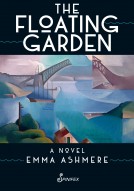
Emma Ashmere, The floating gardenI had a little chuckle when, fairly early in Emma Ashmere’s novel, The floating garden, we discover that our main character, Ellis Gilbey, writes a gardening column under the name Scribbly Gum! Good name, I thought. If it hadn’t been for my school song inspiration, this would have been the name for me!

There’s another synchronicity for me, though, and it relates to the setting of this story. Last week I did a presentation on old Australian ads for an organisation I’m involved in. One of those ads was The charmed cup*. It was made in 1929, runs for around 8 minutes (can you believe it?), and is for Bushells tea. It also, coincidentally, contains footage of the Sydney Harbour Bridge mid-construction. It’s this construction which sets the scene for Ashmere’s story … so now, let’s get to it.

The floating garden is set in Sydney in 1926 when construction on the Sydney Harbour Bridge had started and houses in Milson’s Point on the north of the harbour were being  demolished with little or no compensation to the residents of those homes. One of those residents is middle-aged Ellis Gilbey, who has run a boarding house for over twenty years. At the novel’s opening the last of her boarders has left and she, with other residents in the street, is hoping against hope that some compensation will be offered. Meanwhile, in a well-to-do part of Sydney, south of the harbour, is 30-something Rennie Howarth, a young English artist who had “taken the outstretched arm of an Australian man she hardly knew and had sailed from everything cold, sad and stale”. Unfortunately that Australian man, Lloyd, who had brought her to a life of luxury, was also abusive.

Part 1 of the novel alternates the story of these two women, with more of the chapters devoted to Ellis. Whether these two women are connected, or are going to be connected, we don’t discover until Part 2 of this three-part novel. While we are wondering about this, Ashmere is busy drawing some parallels between the women – both have experienced brutal men in their lives, Ellis her father and then an employee in a house where she’d lived as a young woman, and of course Rennie her husband; both had toyed with theosophy; and both find themselves house hunting. Another parallel occurs within Ellis’s life when, destitute, she is taken in by an older woman, and then, when that doesn’t work out, destitute again, she is taken in by another older, but this time kinder, woman. These parallels are not laboured, but provide a subtle foundation to the story being told, and help hold it together.

Ashmere’s main focus is Ellis. In her story, we shift between past and present, while Rennie’s story is focused on her present. Ellis, we discover, had run away from her farm home, when she was a teen, after her mother died, and had found herself, rather by accident, in the home of theosophist, Minerva Stranks, aka Strankenstein, around the turn of the century. It was out of the frying pan and into the fire for Ellis, as Minerva is a cruel taskmaster and a charlatan, to boot. Ellis is sexually attracted to Minerva’s other protégé, the pretty Kitty Tate. Her belief that Kitty cares for her helps her survive her time in the house until … well, I won’t give this away, but by the novel’s opening, Ellis had been carrying guilt and regret for twenty-seven years.

We are not given the same depth of background for Rennie’s life before the present, but we learn that she’d had a couple of exhibitions in London before fleeing to Australia with Lloyd, and that she’d been a lively, fun woman before her marriage to a man who physically abused and emotionally manipulated her. In Australia her art changes from “polite English watercolours” to “bolder, flatter, earthier colours” that are all-round too confronting for Lloyd. She represents, as Ashmere explained in an interview on ABC’s Books and Arts Daily, the new modernist art movement, a movement which rejected tradition for something bolder. That’s certainly Rennie.

So, despite the parallels in their lives, Rennie works largely as a foil for Ellis, not only because of their class difference, but because she’s lively and risk-taking against Ellis’ more cautious approach to life, which is understandable given her greater age and particular experiences. If I have a frustration with the novel, it would be that Rennie’s story is not as developed as Ellis’s and that perhaps her main role is to be this foil or plot-device to move Ellis on rather than a character in her own right. This is more observation, though, than complaint, because overall the writing is evocative without being overdone, and the characters are engaging,

What I particularly enjoyed about the novel is that Ashmere does for the underprivileged of 1920s Sydney what Ruth Park did for the 1950s in Harp in the south. They are very different books in terms of their narratives and themes, but both exude warmth and sympathy for their motley crew of marginalised characters, and both are valuable for their social history. In The floating garden this includes evoking the about-to-be dispossessed Milson’s Point community, the charlatan fringe of theosophy, the colour of Paddy’s Markets, the energy of the artistic/bohemian community, and the opening up of land in the rural outskirts of Sydney, in Lane Cove.

The novel’s overall theme has to do with memories, guilt and grief, with the idea that you really can’t move on if you haven’t resolved your past. Late in the novel, as Ellis starts to understand the truth of what had happened all those years ago, Ashmere writes:

She’d grown used to her memories for all these years and now her grief – her guilt – had grown around them in the same way a tree’s trunk grew around a rock until both the rock and the tree risked mutual destruction if prised apart.

But sometimes, there can only be progress if they are prised apart – and prised apart they eventually are, of course.

The floating garden is a very enjoyable book. It deals with real issues honestly but gently, and it brings to life a past world in a way that enhances our understanding of the present.

awwchallenge2015Emma Ashmere
The floating garden
North Melbourne: Spinifex Press, 2015
243pp.
ISBN: 9781742199368

(Review copy supplied by Spinifex Press)

* Unfortunately, the ad is broken into three clips on this page. Clip 2 contains the Bridge footage.

Monday musings on Australian literature: Black Inc’s Best 100 Poems

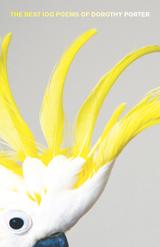
I’ve been feeling rather guilty about a book sent to me in late 2013 by Black Inc. I’m usually very conscientious about reading and reviewing books that I’ve accepted for review – not so much for those sent to me “on spec” – but I slipped up with Black Inc’s The best 100 poems of Dorothy Porter. As I recollect, it came just after a major overseas trip and got caught up in the run-up to Christmas. I did read much of it, but just didn’t bring it to conclusion in order to review. So, I thought I’d talk about it “right here, right now”, to use some current vernacular.

The bee hut, by Dorothy Porter

Cover image (Courtesy: Black Inc)

Black Inc, which won ABIA’s Small Publisher of the Year award this year, is a small publisher that actively supports Australian poetry. Not only have they now produced three “best 100 poems” volumes, but they have published the annual Best Australian poems volumes for several years, as well as individual poetry collections like Les Murray’s Waiting for the past, Robert Gray’s Coast road, and Dorothy Porter’s The bee hut (which I reviewed a few years ago now). All these books, as far as I can tell, are published in print and electronic format.

Now, the topic in hand. Here are the three “best 100 poems” volumes published to date, listed in order of publication.

The best 100 poems of Les Murray (2012)

I bought the e-version of this after hearing Murray (b. 1938) speak last year at Poetry at the Gods. As the only living poet of the three, Murray made his own selection. Unlike the Porter collection, in which the poems are grouped in some way, Murray’s selection is simply (though some thought is sure to have gone into the order) a list of 100 poems with no reference to their original context. Murray’s oeuvre is huge – his career has been very long – so without extensive research I don’t know where every poem comes from or how each fits into his career. As you would expect from a “best 100” they  are diverse in subject and style.

The first poem is “Driving through sawmill towns”, from the 1990s I think. Read it and see what you think. I like its understanding of human behaviour – the “tall youths look away” while “it is the older men who/come out in blue singlets and talk softly to you”. Meanwhile, “all day in calendared kitchens, women listen/for cars on the road/lost children in the bush,/a cry from the mill, a footstep -/nothing happens”. I like the sense of resignation in the inhabitants, but no judgement from driver driving through. A later poem, “Mirrorball”, from 2010, describes travellers on a bus riding up the Hume Highway through old towns full of history, but when the driver sets off again “half his earplugged sitters wear/the look of deserted towns”. Oh dear. Not all Murray’s poems are about country towns, but rural life is one of his ongoing subjects.

I’m not sure I really like reading poems in e-format, in which I bought this book, but the upside is that you can carry some poetry with you wherever you go.

The best 100 poems of Dorothy Porter (2013)

PorterBest100BlackIncThis is a posthumous collection selected by Porter’s (1954-2008) partner, the novelist Andrea Goldsmith. It includes a small selection of poems from her verse novel The monkey’s mask which I’m ashamed to say I’ve never read. (Having now read the few poems Goldsmith included here, I’m inspired to rectify this.) It also contains poems from her verse novels El Dorado and Akhenaton, as well as from various other collections of her rather extensive oeuvre. The poems range, for me, from beautiful, heart-rending, funny, and/or wicked to rather obscure. But that’s probably the nature of poetry. Those that draw on classics and mythology sometimes lose me, I have to admit, with their erudition, but her heart, her imagery and the way she can cheekily play with rhyme and rhythm are what I love about Porter.

I’ll just share one of Porter’s poems. It’s called “Circular Quay” and expresses discomfort with perfection, because experience has taught her so: “This perfect day/makes me uneasy … I breathe easier/spying some scum/floating/on a lovely green wave./Nothing’s perfect”. In the middle of this short tight poem she is reminded of the past. It’s the sort of poem that makes me write “Oh, yes” in the margins.

I’m tempted to suggest that Murray writes more of People while Porter’s poetry is more about the Personal. This is a rather coarse generalisation I know. These poets are highly diverse, but it’s how their writing, such as I’ve read in recent years, strikes me.

The best 100 poems of Gwen Harwood (2014)

Gwen Harwood (1920-1995) is the oldest of the three, and is the one I know least, so I won’t say much. I’ve heard her described as one of Australia’s finest poets, and readers I respect speak positively of her, but I really only discovered her when I started researching Australian poets for Wikipedia a few years ago. Why is this? I certainly didn’t study her at school or university, and since then, I must admit, my poetry reading has been very erratic. This selection was made by her son, John Harwood, who is also a writer. Her recurring themes, according to Wikipedia, include motherhood and the “stifled role of women”. Music, the Tasmanian landscape and Aboriginal dispossession also recur in her work.

From the compilers of these collections – the poet himself, the partner, the son – it appears that Black Inc has aimed to make these “best 100” volumes personal rather than academic in flavour, which is lovely I think.

Given these three volumes were published in the last three Novembers, I’m presuming another will be published this November. I wonder who it will be? Meanwhile, I’ll close by saying that these are gorgeously produced books – with lovely covers. They would suit those wanting an introduction to the specific poets as well as their fans.


Delicious descriptions: Kate Llewellyn on Aussie authors

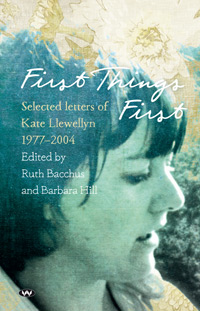
Ruth Bacchus and Barbara Hill, First things firstSince I couldn’t cover everything in my review of Kate Llewellyn’s lettersFirst things first, edited by Ruth Bacchus and Barbara Hill, I decided that a follow-up Delicious Descriptions on a specific aspect of the book, her discussion of her reading, would be in order. I’m making the assumption that, like me, you’re interested in what writers think about the work of other writers.

Llewellyn mentions many writers – poets and novelists – in her letters, and is generally positive. I can’t (and shouldn’t) share them all, of course, so have selected a few that particularly interested me.

Christina Stead

I was tickled to find myself reading Llewellyn’s letters in which she was reading Christina Stead’s. It twas in a letter dated 19 June 1992, so I think she was reading R.G. Geering’s Christina Stead, a life in letters, which was published in 1991/1992. Llewellyn writes – all the three-dot sets are hers (and not my ellipses):

I have three books, Angela Carter’s last … and C. Stead’s Letters … really, a wonderful book … she is a wizard … so queer, mad, right, sweet, hopeless … not unlike Jean Rhys in some ways … you know, the hopeless, feckless, blighted genius who good things avoid in spite of her almost starving … but gracious, always gracious … a bed-sitter, no money … Basically, Christina is a woman who married her father and who was mad, mad as you know, who had a funny kind of genius to boot … cruel to women … feminist and scathing of that same thing … fawning to men in a way that is quite painful to read in the letters … but generous, encyclopaedic, lusty and full of paradoxes … her husband Bill Blake was in the fur business for a time … can you believe it … and she left money to the conservation foundation … plus had a white ermine coat … Basically, Bill was a wonderful loving brilliant man whose books did not sell and who had a wife and child for thirty years of their life (his and Christina’s) together while she longed to marry … sound familiar …

Well, that’s rather a breathless flow, but it captures quite a lot about what Llewellyn gleaned about Stead from the letters, about Llewellyn’s reaction to that, and about Llewellyn herself. In another letter, in 1993, she comments on a negative drawing of Stead in The Australian which described Stead as “monstrum extremum”. Llewellyn’s response to that was a “4,000 word piece on Stead and the way Australia treats its artists”. Go Llewellyn, eh?

Elizabeth Jolley

Elizabeth Jolley (Photo: Courtesy Fremantle Press)

Elizabeth Jolley (Photo: Courtesy Fremantle Press)

Llewellyn clearly admires Jolley, as I do. On 3 July 1992, she writes:

I read Cabin Fever at 3am and felt like you … I like this strange book … I wrack my brains to trace how it is done … but I am lost … I need a writing class … I long for one …

Besides the fact that she so loved a Jolley book, I was fascinated to read about a writer admiring another writer so much she wanted to do a writing class to improve her own writing. It reminded me that we never stop learning or wanting to hone our skills.

Robert Drewe

I haven’t reviewed Drewe here, though I have a book of his short stories next to my bed, The body surfers, that I love. I like his writing, but I was fascinated by the strength of Llewellyn’s comment (in a letter on 7 July 1992):

I am reading R. Drewe’s A Cry in the Jungle Bar (Picador). I am not mad about this book but will read anything of his to see how he arrived at Our Sunshine … We had a talk at the book fair and I told him how sorry I was he did not get any of the prizes (the Banjo was announced that day) for Our Sunshine. He said he needed the money … When he is dead the country with laud him to the skies and sell his book by the thousands and make a film of it and maybe his son will benefit … but until then, it is slim pickings for him.

Our Sunshine is Drewe’s novel about Ned Kelly, and is a book I’m keen to read. The 2003 Ned Kelly film was based on it, but it wasn’t exactly an adaptation. Anyhow, here again is the issue of writers struggling to survive. I know there are those who are uncomfortable about literary awards but they clearly have practical value to many writers.

Marion Halligan

Halligan is the recipient of some of the letters in the book, including the one I’m going to quote from, written on 5 August 1992. Halligan also wrote the Foreword to the book. I tell you this, because it suggests a relationship between the two. I don’t, however, think this undermines the validity of Llewellyn’s admiration of Halligan’s writing. In this letter she talks of Lover’s knots, which was my first Halligan (and which inspired me to read more):

Really, Marion, you know I admire your writing because the thing has a will of its own … […] … because long before I ever met you, I said so in print … and you just get a firmer and firmer grip on your style and wide range … no, range wider and wider … also your quite encyclopaedic knowledge is impressive, but not just that, as that would be a bore if it was only that, but it is illuminating and lovely to read and I learn and that’s a real pleasure … mictouricious (?) or some such word … from micturition … the verb to pee … no micturate is the verb I suppose … I barely went to school and it constantly shows … music and spelling were on the days I didn’t go.

How better to end this post than on praise of our wonderful local writer, Halligan, that is written with such generosity and self-deprecating humour. I’m sure you can see why I enjoyed reading this book.

Monday musings on Australian literature: The Conversation’s Writing History

This is the post I planned for last week, when Jessica White hijacked me. Like that post, this one too was inspired by another person, this time my historian brother who sent me a link to an article in a new series by The Conversation called Writing History. This series aims to “examine the links, problems and dynamics of writing, recording and recreating history, whether in fiction or non-fiction”. A topic, as regular readers here will know, of interest to me.

I’m not sure how many articles are planned for the series, but here are the five that have been published to date:

I haven’t read them all yet, but I have read the first two, and dipped into another. In the first one, Nelson and de Matos explain that the series draws from essays that were published in a special issue of TEXT, an open-access academic journal. The issue is titled Fictional Histories and Historical Fictions, and its aim is to “get beyond … the often acrimonious exchanges between writers and historians that have been such a characteristic of the History Wars of the last ten years, with its boundary-riding rhetoric.”

The secret River cover

Now, if you are an Australian interested in this subject, you won’t be surprised to hear that both articles I’ve read refer to the conflict between historians and novelists inspired by Kate Grenville’s award-winning, best-selling novel The secret river – or, to be honest, by comments Grenville made about history in relation to her novel. Nelson and de Matos write that the question of who should interpret and write about the past and how the past should be taught or written about has been around for centuries but it was “made palpable” in the tussle over The secret river.

Nelson and de Matos discuss the accessibility of history – and the fact that historians can write accessible history, as proved by writers like Clare Wright in her award-winning The forgotten rebels of Eureka (my review). And they talk about the politicisation of history, referring to comments by politicians like Christopher Pyne bemoaning “the ostensible disappearance of western civilisation from the curriculum” and John Howard’s critiquing of “the black armband view of history”. While political interference is not a good thing, they suggest that in a sense, all history – in its relationship to debates about democracy, identity and social justice – is public history. It makes it even more critical, then, doesn’t it, that we understand what we are talking about and the grounds upon which we are doing it.

In the second article, Tom Griffiths tackles the intertwining of fiction and history. He argues that it was Eleanor Dark, a novelist, who confronted the complacent imperial view of history in Australia’s sesquicentenary, a view that ignored the place of “Aborigines, convicts and women”. She led the way in rethinking our history. Paradoxically, the poet Judith Wright, a few decades later, wrote a history, Cry for the dead, which “gave a secure scholarly foundation to the political campaign of the Aboriginal Treaty committee”. His point is that both writers chose the form that best suited their needs at the time. “Like Eleanor Dark”, he writes, “Judith Wright carefully set about becoming a historian”.

By 1990s, the idea of “frontier conflict” was an accepted part of our historiography but there was a conservative backlash which tried to discredit research by arguing detail such as the number of people who died “as if it decided the ethics of the issue”. It was into this “moral vacuum”, Griffiths writes, that books like Inga Clendinnen’s history Dancing with strangers (2003) and Kate Grenville’s novel The secret river (2005) appeared.

Unfortunately, Grenville’s comments on the value of fiction to history –

The voice of debate might stimulate the brain, the dry voice of ‘facts’ might make us comfortable, even relaxed. It takes the voice of fiction to get the feet walking in a new direction.

– got her involved in the wrong debates, in discussions about history and fiction rather than the topic she wanted, frontier violence. Griffiths suggested this occurred partly because of the timing, because the conservatives were interested, at that time, in debating the “precise, grounded, evidenced truths of history”. To debate on that ground you needed “time, place and specificity”. Grenville, in other words, “found herself at the centre of a debate that goes to the heart of the discipline of history”. I like this explanation. It explains for me some of the reactions to Grenville that never completely made sense, it explains why historians I admired came out so strongly against Grenville, whose story seemed to make a valid contribution to the discussion.

Griffiths concludes that history and fiction are “a tag team” in the study of the past, “sometimes taking turns, sometimes working in tandem”. “History doesn’t own the truth”, he writes, “and fiction doesn’t own the imagination”. We need to understand the distinctions and how they play out, but we shouldn’t see this discussion as “defending territory”.

I look forward to reading the other articles. But for now, I’ll close on a quote my brother also sent me last week. It’s from Jose Saramago’s The Elephant’s Journey (2008):

… that is how it’s set down in history, as an incontrovertible, documented fact, supported by historians and confirmed by the novelist, who must be forgiven for taking certain liberties with names, not only because it is his right to invent, but also because he had to fill in certain gaps so that the sacred coherence of the story was not lost. It must be said that history is always selective, and discriminatory too, selecting from life only what society deems to be historical and scorning the rest, which is precisely where we might find the true explanation of facts, of things, of wretched reality itself. In truth, I say to you, it is better to be a novelist, a fiction writer, a liar.

And so the discussion continues …

Bacchus, Ruth & Hill, Barbara, First things first: Selected letters of Kate Llewellyn 1977-2004 (Review)

Ruth Bacchus and Barbara Hill, First things firstIt might look like I’ve suddenly hired myself as author Jessica White’s PR Consultant as this is the second post in a row that I’ve opened with her, but the coincidence was too great for me not to. You see, this week, White posted on her Facebook Author Page that she’d received funding for a novel from the Australia Council for the Arts, and exulted that “I’m so happy that I can a) afford to eat for the next 6 months …”. One of the several threads running through Kate Llewellyn’s letters in First things first is her struggle to survive financially as a writer. More on that anon …

First, how do you review a book of letters? Yes, I know I’ve done it before for Jane Austen’s letters, but that’s different. Jane Austen is long gone, and was long gone when her letters were first published. Kate Llewellyn is still, fortunately I might add, with us, so, as well as reviewing a book about a living author, which of course bloggers/reviewers do frequently, I’m reviewing something very personal, a book of her letters. She didn’t put this selection together – Charles Sturt University academics Ruth Bacchus and Barbara Hill did – but she allowed her letters to be published, “trusting us”, the editors say in their preface, “with the contents of her life”. And that, I think, is a brave thing to do. But then again, you have to be brave to be a writer, don’t you?

Some of you, particularly if you’re not Australian, may not know Kate Llewellyn, but she’s an Australian poet and prose writer. Her prose includes travel writing, autobiography, and what the editors describe as “a hybrid blend she has made her own and perhaps pioneered in Australian women’s writing – a sensuous journal, studded with poetry, laced with recipes and concerned with ‘the weather, domesticity, love, art, gardening, the names of plants, a woman’s simple daily tasks and her heart’s thoughts’*”. She also co-edited The Penguin book of Australian women poets, which I own and often refer to.

Now, back to my question of reviewing a book of letters. Late-ish in the book, Llewellyn writes in a letter to Ianesco (artist Ian North) about reading John Cheever’s journals:

I did not know at times if I should be reading them, it seemed even prurient. But I had to keep on reading … and to think he wasn’t even trying … just did it for himself … […] … sizzling honesty.

“Prurience” isn’t the word you’d use for reading Llewellyn’s letters, and these are letters so written for someone besides herself, but they were, initially anyhow, private and they contain a rawness and honesty, together with a poetic beauty, that struck me much the way it seems that Cheever struck her. This rawness and honesty is most apparent when she writes about her relationships with others (romantic and otherwise) and her struggle to survive as a writer. It’s this latter of course that Jessica White’s Facebook post struck a chord with.

“I wouldn’t want not to be vulnerable”

As a reader, I’m interested in how writers do it. How do they manage to write and live? Some, of course, produce bestsellers but they are few. Some have significant others who support them. But most, it seems, scrabble around putting together projects, applying for grants, undertaking speaking and teaching engagements to keep going. It is this, among other things, that Llewellyn conveys with fearless clarity through her letters. She details the challenges of co-editing the poetry anthology with Susan Hampton, and of the difficulty of finding a publisher when the first one fell through. She describes unsatisfying, if not downright unpleasant, experiences of some (though not all) writers’ retreats. She tells of sending pieces off to numerous magazines and editors and of writing applications for grants or positions as writer-in-residence, and shares the emotional and financial pain of rejection, alongside the occasional joy of success. She describes cobbling together projects, such as one which didn’t come to fruition with friend Marion Halligan. She loses confidence in writing poetry, and wants to change her prose style. She writes of “the spite and derangement of the literary world” and of the mismanagement of distribution. She wonders why certain poets don’t like her, questions why some reviewers feel the need to be cruel, and is aware that there are people on boards who “do not wish me well”. It’s an uncertain life, and yet, with her get-up-and-go spirit she writes:

I think there’s a lot to be said for perplexity and bewilderment. Certainty is not all it’s cracked up to be. (to Ianesco, 13 January, 1995)

So, I learnt quite a lot about the life of a working writer. I realise that, like Tolstoy’s unhappy families, every writer’s life is different, and that each is likely to respond differently to the challenges, but experience tells me there’s a significant core in Llewellyn’s experience that’s true for many writers. What, though, did I learn about Llewellyn, herself?

Well, here is the challenge of course, because not only is a volume of letters, like this, one-sided, but these letters are a selection (and a selection, at that, of a period of her life). What letters weren’t included and how might they have affected our view of Llewellyn? Not much I think, because Llewellyn is so honest with her friends – and these letters are all to friends, many of whom are artists, writers and musicians – that you get a clear picture of her. She’s funny, vulnerable, emotional, warm-hearted, generous of spirit, depressed and lonely at times, subversive and yet a little conservative too. She can also, she’s aware, be rather full-on (high-maintenance, perhaps): “when I meet people I’m attracted to and with whom I feel great sympathy … I leap in”. She’s intelligent and, of course, creative.

One of the delights of the book, besides its various insights, is her writing. Funny that! It’s almost impossible to find one good example, but I’ll try. How about this description of a couple met at a dinner:

The former was a thin 50 year-old woman with husband to match … it was like talking to an oyster … a khaki woollen frock, grey hair, no colour anywhere, no lipstick … cold, grey, elegant, been everywhere, smoking, khaki skin, eyes like cold stones … I felt so defeated in my scarlet outfit I decided to try to get some reaction … (to Jerry Rogers, 19 June 1992)

Llewellyn, you have probably gathered, likes colour and life, and she likes “ardour … perhaps more than anything else in life”. Anyhow, I can’t leave it at one example, so will share a few more:

In fact, I think this town [Sofala] where not one building stands erect, but leans like a person into the wind, has only goats and tourists for income. (to Marion Halligan, 11 April 1994).

And

I swam in and out of it [Adelaide Writers’ Week] like a fish and took what came my way, be it seaweed or krill, but no bait, I hope. (to Marion Halligan, 11 April 1994).

And

… she [friend Jerry Rogers’ teen granddaughter] has been a real joy here … laughing like a gutter full of fresh rain after a drought, it is the loveliest laugh I ever heard. (to Ianesco and Mirna, 8 July 1996).

I will write another post or maybe two on this book – to share some of her thoughts on Australian writers, and a little of her humour. But, I don’t want to give the whole book away … which brings me to the question of whether I’d recommend it. Well, yes I would, but with, I suppose, a little qualification. This is a book of letters, and letters aren’t for everyone. With the best editing in the world, they can’t help but be disjointed. However, for me, Llewellyn’s voice is so compelling, her persona so open, and her writing so frequently funny, that I thoroughly enjoyed the time I spent in her head.

awwchallenge2015Bacchus, Ruth & Hill, Barbara
First things first: Selected letters of Kate Llewellyn, 1977-2004
Mile End SA, Wakefield Press, 2015
299pp.
ISBN: 9781743053645

(Review copy supplied by Wakefield Press)

* Llewellyn’s own description of her best-selling book in this genre, The Waterlily, in a letter to Bob Boynes and Mandy Martin, 20 July 1987.

Monday musings on Australian literature: On what women write about

I had planned another topic for today, but a tweet from Australian novelist Jessica White this morning sharing a link from The Conversation changed my mind. The link was to an article by Natalie Kon-yu, a lecturer in Creative Writing and Gender Studies at Victoria University. This article explores Nicola Griffith’s statement that “when women win literary awards for fiction it’s usually for writing from a male perspective and/or about men”. Griffith, a British-American novelist based in Seattle, surveyed the winners of multiple awards, including the Pulitzer Prize and the Man Booker Prize, from 2000 to 2015. Kon-yu says that Griffith’s findings accord with her own. She writes:

It is, sadly, unsurprising that male writers win more prestigious literary awards than female writers, but what is interesting is that when women do win these awards, it is typically because they write about male characters, or “masculine” topics.

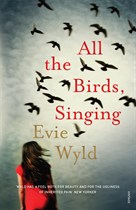
Evie Wyld, All the birds, singing

Courtesy: Random House Australia

The “because” is a bit of an assumption, I suppose, but is an assumption based on a strong correlation noticed by these researchers. Kon-yu then gives examples, which you can read in the article I’ve linked to above.

Now, before you say “but, but…”, it’s true that women have won literary awards here in Australia over the last decade, and in fact have done comparatively well in the last couple of years, but Kon-yu asks us to look at what they’ve written about. Many of our women winners of the Miles Franklin award in the last 20 years, she suggests – Anna Funder, Alexis Wright, Shirley Hazzard and Helen Demidenko – “focus almost exclusively on capital-H ‘History'”. Other wins, like those by Evie Wyld and Thea Astley, were for books set in “the rugged landscape of the Australian bush”. The situation is particularly stark when you look at the Man Booker and the subject matter of recent women winners, Hilary Mantel and Eleanor Catton. Kon-Yu’s conclusion? Well,

It seems that, as a culture, we are still predominantly concerned with the lives of men or in themes that we view as “masculine” or “wordly”. We still relegate women’s work to the domestic, the interior, the personal.

You’ve probably heard VS Naipaul’s statement a couple of years ago that he couldn’t see any woman writer, even Jane Austen (what!?), being his literary equal. He “couldn’t possibly share her [Austen’s] sentimental ambitions, her sentimental sense of the world”. You may also have heard commentary* about schools, co-educational ones anyhow, tending to choose “set” books on the basis of what boys will read, because girls will read widely while boys will only read within a narrow range.

Kon-yu looks into the recent past, the 1970s to 1980s, and finds that a greater percentage of the books by women which won awards then (Man Booker, Miles Franklin, in particular) did focus on female characters. Two Miles Franklin winners in this period, for example, were by Jessica Anderson, Tirra Lirra by the River (1978) and The impersonators (1980). Both are set domestically and deal with family relationships. Around this time, too, writers like Elizabeth Jolley (here) and Anita Brookner (in the UK) were focusing closely on women’s experience and were receiving significant recognition. Kon-Yu reminds us that this was the period when feminist criticism was gaining ground, and publishers like Virago and The Woman’s Press were being established. A coincidence? Not likely.

Anyhow, back in the present, Kon-Yu’s conclusion is that:

It’s not enough to publish books by women, we need to focus more on telling women’s stories.

Kon-Yu, perhaps for reasons of space, doesn’t explore in detail what she means by telling “women’s stories”, but she does quote male American writer, Pankaj Mishra, as saying that:

Novels about suburban families are more likely to be greeted as microcosmic explorations of the human condition if they are by male writers; their female counterparts are rarely allowed to transcend the category of domestic fiction.

The overall point, of course, is not that women can’t, or shouldn’t, write about anything. They sure can – and clearly do. No, it’s more complex. It’s that writing on the domestic, and on the “interior” of women, particularly if it’s by women, does not receive adequate literary recognition; it’s the too-frequent assumption that this is the only sort of writing women can do; and/or it’s the belief that this sort of writing is only of interest, and value, to women. Such tosh! A healthy, vibrant culture needs to hear, and respect, diverse views on diverse subjects. We are, I believe, making gains across the whole diversity spectrum, but we have a way to go yet.

* Sorry that I can’t find a source for this now, so argue with me if you will.