Monday musings on Australian literature: Final thoughts on Canberra Writers Festival 2024

In 2019, I wrote a detailed wrap-up of that year’s Canberra Writers Festival, and I thought to do one this year, though I didn’t have the fascinating stats I had in 2019. However, with this year’s festival bumping up against November, which is a very busy month in the blogosphere, I’ve decided to scale down my plans and just share some ideas which caught my attention, mainly because they popped up more than once in the six sessions I attended.

Many of the ideas related to the ideas that drive the authors or that affects their writing lives.

  • Who are the decisionmakers, how are things being decided: Rodney Hall and Catherine McKinnon, in slightly different ways, indicated that these questions drive much of what they write. Hall said “we don’t know when the things that affect our lives are hatched”, and that too often we react (and act) without asking “why” things have happened. Similarly, McKinnon is interested in understanding our governments and the decisions they make, in thinking about who we are trusting to make decisions. 
  • Writing about the self: While autofiction and writing about the self are a strong trend of modern writing, they don’t appeal to all writers. Not surprisingly, the self-described classicist Rodney Hall is one of these. He sees his classicism as being out of step with his peers, whom he admires but who are interested in more personalised expression, because people “want the dirt of what you are yourself”. Robbie Arnott was more forthright. He sees the modern focus on writing on the self as raising mundanity to art. (I can enjoy both – it’s all about degree!)
  • Writing to encourage feeling in readers: Robbie Arnott and Anita Heiss were both very clear about wanting to make people feel. Heiss wants readers to feel with her characters. She see this as the power of fiction. (In fact, she suggested this differentiated fiction from nonfiction, which I can’t agree with. I know I’m not the only one who has been powerfully moved by nonfiction. As a blog-reader wrote to me, what about Anne Frank’s diary, for a start?) Arnott was also vey clear about his goals in this regard. For him, the aim of fiction is not to render the world as it is but how it feels. He starts by looking for the emotion.
  • Historical fiction, and looking at what it is about NOW that the past can illuminate: Once upon a time I avoided historical fiction, but that time has long gone, because I’ve learnt that historical fiction can explore ideas that speak to me. Catherine McKinnon and Emily Maguire both talked about the relevance of historical fiction to now. First, there’s the issue of retrieving history that has been lost (the role played by women, for example, or queer lives), because it didn’t meet the prevailing (often patriarchal) mindset. But McKinnon also talked about how you look for the story you want to tell now – at what it is about now that you want to speak to, at what it is about humans that is interesting to us now. So, the 2005 Oppenheimer-biography, American Prometheus was, she felt, about how people could be picked up and then dropped, but she was interested in decisionmaking (and how it can be petty).
  • On living in our loud, noisy, controlling, egotistical world: Charlotte Wood and Robbie Arnott both referred to this (but would have covered it more in the session I couldn’t attend due to a clash, The power of quiet): Wood said she understands the appeal of asceticism in our “you-can-have-everything world”, bur recognises that the idea of “obedience” (versus wanting to argue) is a challenge for the ego in our egotistical world. Arnott’s quietness is based in his focus on landscape and nature. Both, at least as I heard them, see value in withdrawing (at least for a while) from the noise that can get in the way of being.

Some ideas, not surprisingly, related more to their craft.

  • The craft: What I heard was writers knowing (or learning) how much the craft of writing does the job they want, rather than focusing on plot or character, for example. A good structure, the right voice, sentences that do something – these are what makes writing come alive, what makes their stories work. Structure, for example, is fundamental to what Rodney Hall does. Arnott talked about crafting his books sentence-by-sentence. Maguire and Wood talked about “propulsion” in their narratives coming from the language, the sentences, the voice. “If the voice is strong”, said Wood, “the reader will follow along. It’s propulsive. That’s the key.”
  • Writing as a vocation, that is, as something you must do, kept coming through, and was specifically mentioned by Charlotte Wood, Emily Maguire, and Robbie Arnott. It’s their sacred place.

None of this is mind-shatteringly new, I suppose, but these ideas interested me for different reasons – usually related to the context in which they were explored, or the slant or angle they were given. I hope you find something of interest here.

So, does anything here speak to you?


Finlay Lloyd 20/40 Publishing Prize 2024 Winning Books Launch with Conversation

I mentioned the nonfiction winner of the 2024 Finlay Lloyd 20/40 Publishing Prize, in this week’s Monday Musings, but saved the full winner announcement until after I attended the launch at a conversation with the winning authors this weekend.

The participants

This year, as publisher Julian Davies had hoped, there was a prize for fiction and one for nonfiction. The winners were all present at the conversation, and were:

  • Sonya Voumard for Tremor, which the judges described as “notable for its compellingly astute interweaving of the author’s personal experience with our broader societal context where people with disabilities, often far more challenging than her own, try to adapt to the implicit expectations and judgements that surround them”.
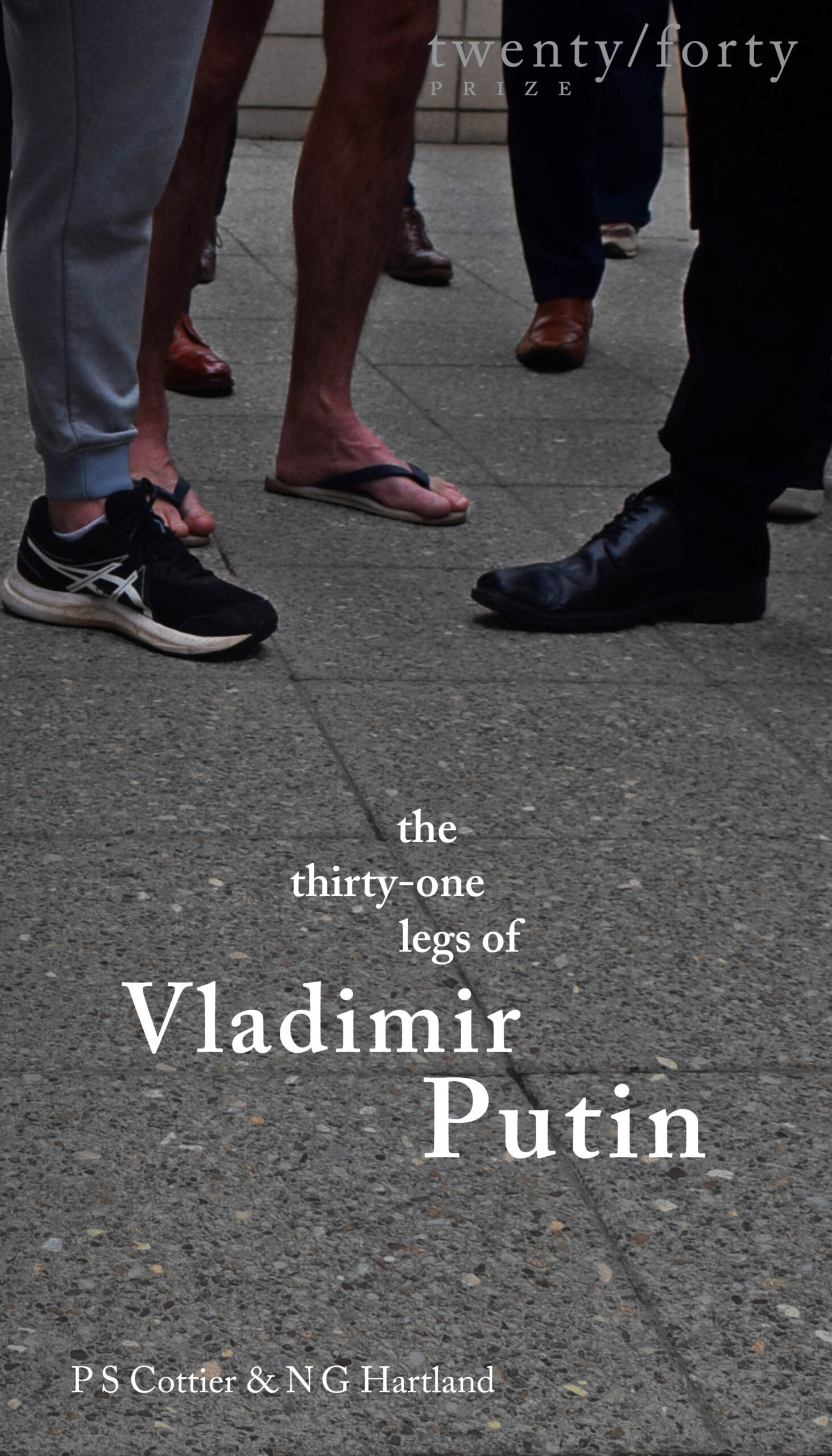
  • P S Cottier & N G Hartland for The thirty-one legs of Vladimir Putin, which the judges said “welcomes us to a world where absurdity and reality are increasingly indistinguishable and where questions of identity dominate public discourse. The book spirits us off on a playful journey into the lives of a group of individuals whose physical attributes appear to matter more than who they may be.”

The conversation was led by Sally Pryor who has been a reporter, arts and lifestyle editor, literary editor and features editor at The Canberra Times for many years. Born in Canberra, and the daughter of a newspaper cartoonist, she has a special connection to our city and its arts world.

And of course, the publisher, Julian Davies, started the proceedings. As I wrote in last year’s launch post, he is the inspiring publisher and editor behind Finlay Lloyd, a company he runs with great heart and grace (or so it seems to me from the outside.)

The conversation

Before the conversation started proper, Julian gave some background to the prize, and managed to say something different to what he said last year. He described Finlay Lloyd as a volunteer organisation, with wonderful support from writers like John Clanchy. He reminded us that they are an independent non-profit publisher, but wryly noted that describing themselves as non-profit seems like making virtue out of something that’s inevitable! Nonetheless, he wanted to make clear that they are not a commercial publisher and aim to be “off the treadmill”. And of course he spoke of loving “concision” and the way it can inspire real focus.

As last year, the entries – all manuscripts, as this is a publishing prize – were judged blind to ensure that just the writing is judged. The judging panel, as I wrote in my shortlist post, included last year’s winners.

Then, Sally took over … and, after acknowledging country, said how much, as a journalist, she also loved concision. Short books are her thing and they are having a moment. Just look, she said, at Jessica Au’s Cold enough for snow (my review) and Claire Keegan (see my post). Their books are “exquisite”. She then briefly introduced the two books and their authors. Sonya’s Tremor is a personal history told through vignettes, but which also explores more broadly the issue of viewing differences in other. She then jokingly said that she “thinks” Nick and Penelope’s book is fiction. Seriously though, she loved the novel’s set up which concerns the lives of 16 Putin “doubles”. It’s a page-turner. The books are very different, but share some themes, including identity, one’s place in the world, and how we can be captured and defined by the systems within which we live.

On Sonya’s journey

The conversation started with Sonya talking about her journey in writing this book. She was about to have brain surgery, a stressful situation. But she’s a journalist, and what do journalists do in such situations? They get out their notebook. Her coping mechanism was to cover it as a story, one of big stories of her life.

She has had a condition called Dystonia – mainly tremor in her hands – since she was 13. She managed for many years but, as she got older, more manifestations developed, not all easily linked to the condition, and her tremor got worse. Getting it all diagnosed took some time.

Sally noted that in the book, the doctor is thrilled that he could diagnose her and have someone else to observe with this condition (which is both environmental and genetic in cause). Sonya, of course, was thrilled to have an answer.

On Nick and Penelope’s inspiration and process

It started when they were holidaying in Queensland. I’m not sure I got the exact order here, but it included Penelope’s having read about Putin doubles, and Nick having been teased about looking like Putin. Penelope said it was a delight to write in a situation where humour would not be seen as a negative. The story is about look-alikes being recruited from around the world to act as Putin doubles should they be so needed.

Sally commented that the doubles respond differently. For some, it provides purpose, while others feel they lose their identity. What’s their place in the world, what does it mean?

Putin, said Nick, is an extraordinary leader who has morphed several times through his career. They tried to capture different aspects of him, though uppermost at the moment is authoritarianism. How do we relate to that? Penelope added that it’s also about ordinary people who are caught up in politics whether we like it or not. Capitalism will monetise anything, even something genetic like your looks.

Sally wondered about whether people do use doubles. Nick and Penelope responded that it is reported that there are Putin doubles – and even if they are simply conspiracy theories, they make a good story.

Regarding their collaborative writing process, Nick started “pushing through some Putins” so Penelope wrote some too, but they edited together. Nick is better at plot, at getting a narrative arc, Penelope said.

On Sonya’s choosing short form not memoir

It was a circuitous process. There is the assumption that to be marketable you need to write 55,000 plus words. She had the bones, and then started filling it out, but it was just “flab”. The competition (and later Julian) taught her that there was a good “muscular story” in there, so she set about “decluttering”. Sally likes decluttering. The reader never knows what you left out!

“Emotional nakedness” was a challenge for her, and to some degree members of her family found it hard being exposed – even if it was positive – but they learnt things about her experience they hadn’t known. Sonya’s main wish is that her family and loved ones like what she’s written.

But, did she also have a sense of helping others? Yes! There are 800,000 Australians with some sort of movement disorder, and many like she had done, try to cover it up. (For example, she’d sit on her hands during interviews, or not accept a glass of water). Her book could be liberating for people.

Continuing this theme, Sally suggested there are two kinds of people, those who ask (often forthrightly) about someone’s obvious condition, and those who would never. She wondered how Sonya felt about the former. It varies a bit, Sonya replied, but it feels intrusive from people you don’t know well. At work it can feel like your ability is being questioned.

On Nick and Penelope’s editing process

Nick explained that their story had a natural boundary, given they had a set number of Putins. (And they didn’t kill any Putin off in the writing!) There was, however, a lot of editing in getting the voice/s right, and getting little arcs to the stories.

In terms of research, they read biographies of Putin, and researched the countries their Putins come from.

Sally wondered whether Nick and Penelope saw any legal ramifications. Not really, but they did research their Putins’ names to get them appropriate but unique, and they have a fiction disclaimer at the end (though Julian didn’t believe it necessary!)

On Sonya’s writing another book on the subject, and on negotiating with those involved

While there are leads and rabbit holes that could be followed, Sonya is done with this story (at present anyhow).

As for the family, Sonya waited until the book was finished to show them, but she also tried to avoid anything that might be hurtful or invade people’s privacy. She’s lucky to have a family which has tolerated and understood the journalistic gene. Regarding work colleagues, she did talk to those involved. It was a bit of a risk but she didn’t name those who had been negative towards her. Most people just thought her shaking was part of her, and she liked that.

Sally talked about the stress of being a daily newspaper journalist, with which Sonya agreed, and gave a little of her personal background. She started a cadetship straight out of school and was immediately thrust into accidents and court cases. It was a brutal baptism. Around the age of 30, when the tremor and other physical manifestation increased, she decided she couldn’t keep doing this work.

Were they all proud of their achievement with this format?

As a poet Penelope is comfortable with brevity, so this was an expansion (to sentences!) not a contraction. Nick was obsessed with “patterning” – with ordering, moving between light and dark, internal and external, providing an arc. Penelope added that it started with less of an arc, including no names for the Putin doubles.

Sonya paid tribute to Julian for being “such an amazing editor” who taught her about how to impose structure on chaos. Penelope added that it was an intense editing process. It was also a challenge because, being a publishing prize it’s not announced until publication so she couldn’t tell people what she was working on. But the editing process was interesting.

Q & A

There was a brief Q & A, but mostly Sally continued her questions. However, the Q&A did bring this:

Is Nick and Penelope’s book being translated into Russian and/or will it be sent to Putin: Julian said Finlay Lloyd were challenged enough getting books to Australians. Penelope, though, would love Russians having the opportunity to read it. Perhaps, said an audience member, it could be given to the Russian embassy …

Julian concluded that it had been a joy working with these authors who “put up with him”, and thanked Sally sincerely for leading the conversation.

This was a lovely warm-hearted event, which was attended by local Canberra writers (including Sara St Vincent Welch, Kaaron Warren, and John Clanchy) and readers!

These books would be great for Novellas in November. You can order them here.

The Finlay Lloyd 20/40 Publishing Prize Winning Books of 2024 Launch
Harry Hartog Booksellers, Kambri Centre, ANU
Saturday, 2 November, 12.30-1.30pm

Six degrees of separation, FROM Intermezzo TO …

For the last two Six Degrees I was away from home – first in outback Queensland and then in Melbourne – but this month we are back in our little apartment enjoying Canberra’s spring. And, I’m rarin’ to go with this month’s Six Degrees. If you don’t know how the #SixDegrees meme works, please check host Kate’s blog – booksaremyfavouriteandbest.

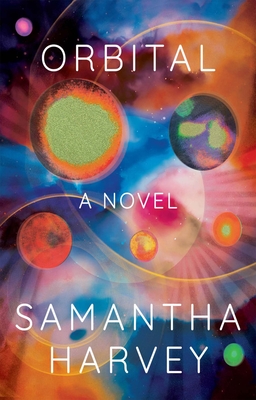
The first rule is that Kate sets our starting book. This month, again, it’s one I haven’t read. Indeed – sorry Bill – but I haven’t yet read any of this author’s books. I’m talking Sally Rooney, and her latest novel, Intermezzo.

Kazuo Ishiguro, Nocturnes

The word Intermezzo refers to a particular type of music, so for my first link I’m choosing a book titled for another type of music, Kazuo Ishiguro’s Nocturnes (my review). It’s a collection of somewhat connected short stories, and music features strongly in the stories.

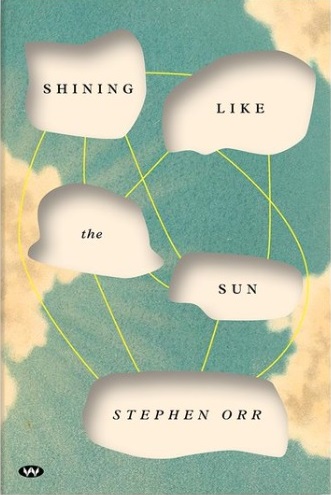
Book cover

I have decided, in fact, to stick with a music theme for this chain. My next link also has a type of music in the title, but, in addition each of the book’s chapters is titled with a piece of music, starting with Nocturne for Chapter 1! The book is Julie Thorndyke’s Mrs Rickaby’s lullaby cosy mystery, (my review) which is set in a retirement village.

My next link has of course a music theme, as I said all my links would, but it also links to Thorndyke’s novel because it is set in a specific sort of community,. The book is Christine Balint’s Water music (my review), an historical novel set in the 18th century in one of Venice’s musical orphanages for girls. (And, in a little shout out to Novellas in November, Water music is a novella, having co-won the 2021 Seizure Viva La Novella prize.)

Emma Ayres, Cadence

My next book has a musical term in the title and the word “music” in its subtitle. It is Emma Ayres‘ (now Ed Le Brocq) travel memoir, Cadence: Travels with music (my review). And, with a little six-degrees licence, I’m going to lay claim to another link, which is that Ayres’ next memoir, Danger music, is partly about his working in the Afghanistan National Institute of Music which was created primarily to teach music to disadvantaged children. (The book also chronicles Ayres decision to come out as a transgender man.)

Book cover

Staying with memoirs (and the word “music” in the subtitle, my next link is an another musician’s memoir, this one by singer-songwriter and Aboriginal activist, Archie Roach. His book is Tell me why: The story of my life and my music (my review).

Virgil Thomson portrait, 1947
Virgil Thomson, 1947 (Public Domain, Library of Congress via Wikipedia)

My last link is not a book but an article written by the American composer and critic, Virgil Thomson. Titled “Taste in music” (my review), it was published in 1945 in The musical scene, a book containing a collection of his articles and reviews. I loved this article because Virgil Thomson had composed the music for two wonderful, classic documentaries, The plow that broke the plains (1936) and The river (1938), and because he had some interesting things to say about reviewing/criticism. What he says, I realise now, is similar to what James Jiang said in the CWF session I attended on critics (my post). He said that “in order to be a reviewer, you have to forget whether you liked it or not and tell your reader what it was like”. As I wrote on my Thomson post, and again on the CWF session, this approach is for me. I prefer reviews/criticism that focus on analysing what the work is like, what makes it tick, more than whether the reviewer/critic liked it.

So, we started with Sally Rooney in contemporary Dublin, and moved to contemporary England and Australia, before time-travelling to 18th century Venice. Back in more contemporary times we went on the road from England to Hong Kong with Ed Le Brocq (as Emma Ayres), and experienced Archie Roach’s moving journey from Stolen Generation child to successful musician. We ended in mid-20th century America with a composer who also had some interesting things to say about developing our taste in music (or, by extension, any art form I think).

Now, the usual: have you read Intermezzo and, regardless, what would you link to?

    Monday musings on Australian literature: Nonfiction awards 2024

    It’s been a very busy weekend, and I have a few posts waiting to do, plus a reading group book to finish for tomorrow, so this post is a quick one. Phew, you are probably saying if you stuck with me over the weekend!

    Today’s topic recognises that our litblogosphere’s annual Nonfiction November event, currently coordinated by Liz Dexter, starts today. I don’t usually write a Monday Musings for this event, but I thought it might be interesting to look at what Australian works of nonfiction won awards this year. Most of the awards are specific nonfiction awards, but some are more general awards which can be won by fiction or nonfiction (like the Stella, albeit was won by fiction this year.)

    I’ll list the awards alphabetically by title of award:

    • ABIA Biography Book of the Year: Anna Funder, Wifedom: Mrs Orwell’s invisible life (biography) (my review)
    • ABIA General Non-Fiction Book of the Year: Thomas Mayo and Kerry O’Brien, The Voice to Parliament handbook (handbook)
    • ACT Literary Awards, Nonfiction: Kate Fullagar, Bennelong & Phillip: A history unravelled (history)
    • Finlay Lloyd 20/40 Prize, Nonfiction Winner: Sonya Voumard, Tremor (I’ll be reporting more on this prize and the Fiction winner next weekend) (memoir/essay)
    • Indie Awards Book of the Year Non-fiction: David Marr, Killing for country: A family story (history)(Jonathan’s post)
    • Magarey Medal for Biography: Ann-Marie Priest, My tongue is my own: A life of Gwen Harwood (biography)
    • Mark and Evette Moran Nib Literary Award: to be announced on 27 November, but 5 of the 6 shortlisted titles are nonfiction
    • National Biography Award: Lamisse Hamouda, The shape of dust (memoir)
    • NSW Premier’s History Prize, Australian History: Alecia Simmonds, Courting: An intimate history of love and the law (history)
    • NSW Premier’s Literary Awards, Douglas Stewart Prize for Non-fiction: Christine Kenneally, Ghosts of the orphanage (history) (Janine’s review)
    • Northern Territory Literary Awards, Charles Darwin University Creative Non-Fiction Award: Dave Clark, Remember (creative nonfiction about truthtelling)
    • Prime Minister’s Literary Award, Australian History: Ryan Cropp, Donald Horne: A life in the lucky country (biography) (Lisa’s review)
    • Queensland Literary Awards, The University of Queensland Non-Fiction Book Award: Abbas El-Zein, Bullet, paper, rock: A memoir of words and wars (memoir)
    • Victorian Premier’s Literary Awards, Prize for Non-fiction: Ellen van Neerven, Personal score: Sport, culture, identity (memoir and polemic)

    So 14 awards here, and life writing (biography and memoir) is by far the most represented “genre”, partly because some of the awards are specifically for biography (life writing). History is second, and again, this is partly because there are specific history prizes (some of which are won by biography!) It is noteworthy, however, that other genres – nature writing and eco-nonfiction, for example – rarely get a look-in in these sorts of awards. And yet, there is some excellent writing in these genres being published (by Upswell, for example).

    And a little survey

    Do you write nonfiction or non-fiction? In my admittedly minimal research, I have read that Americans are more likely to drop the hyphen, and this seems to play out in American versus English dictionaries.

    I note that:

    • Liz has nonfiction in her banner, which is how I first titled this post
    • the above Australian awards vary in their usage – some using the hyphen and some not, but the hyphenated form seems to be winning.

    I am tending to go with not, just as during my lifetime (or is it life-time!!) we’ve dropped the hyphen from tomorrow and today. (Hmm, a little research into these revealed that Chaucer for example had “tomorrow” – in his form “tomorwe” – unhyphenated. It was then later hyphenated and later again, re-unhyphenated – and I think I really need the hyphen there! Actually, it’s not as simple as this because through much of time the two forms have coexisted!)

    What do you do?

    Canberra Writers Festival 2024: 6, The case for critics

    Presented in partnership with Sydney Review of Books and Radio National’s The Bookshelf 

    This was my final session of the festival, and it felt the perfect choice after five sessions focussing on authors and their novels. The program described it this way:

    Derided, disparaged and cursed to the heavens, book critics are depicted as literature’s grand villains – as frustrated creators and gleeful wreckers. But what do critics really do? And why are they necessary for a healthy literary ecosystem? James Jiang, Beejay Silcox and Christos Tsiolkas – a trio of Aussie critics – make the case for criticism. In conversation with Kate Evans and Cassie McCullagh (recorded for Radio National’s The Bookshelf).

    Again there was no Q&A, because it was being recorded.

    The session was conducted jointly by Kate Evans and Cassie McCullagh though the participants didn’t need much guidance as this was a topic they cared deeply about.

    Cassie did the acknowledgment of country. The participants were introduced – author Christos Tsiolkas (who has appeared several times on my blog), Editor of the Sydney Review of Books James Jiang, and critic and Canberra Writers Festival Artistic Director Beejay Silcox. Then the discussion commenced. I considered using my usual headings approach but the discussion was so engaged and free flowing, that I decided breaking it up would lose some of the connections. So, I’ve bolded a few ideas here and there as a guide. And, I’ve put my own reflections in parentheses.

    Kate leapt right with a question to Beejay about what happens when she “sees the whites of the eyes” of someone she has critiqued. This indeed had happened, Beejay responded, as she had loved one book by Christos and not another! But, if she can’t be honest she shouldn’t be doing the job. She doesn’t feel uncomfortable facing people if she has done her job properly, thoughtfully, respectfully.

    Christos admitted that it can be difficult to receive criticism, but he also writes criticism. However, it’s film criticism, because as an Australian novelist he feels he can’t be objective about other Australian novelists. He has critiqued novelists no longer with us, such as Patrick White.

    Beejay had been writing criticism out of Australia for seven years before she appeared on the scene, so she didn’t have that issue of being known. (In fact, some thought her name was a pseudonym being used by an author, and Christos was one of the suggestions for that author!)

    James, who is ex-academia, believes reviewing living authors offers a “massive opportunity” because you can guide the development of the art into the future. Critical thought, in other words, gets sucked up into the culture at large.

    Kate and Cassie, who use reviewers on their radio program, were interested in how you choose who reviews what. Debut authors can sometimes want to make a name for themselves and, for example, love to attack the sacred cows. So, their practice is to give these authors books from other countries to review. They are also conscious of hidden agendas they’d like to avoid, like friends or lovers who had fallen out! (I suspect that working for a national broadcaster that people love to criticise requires a different mindset.)

    James, on the other hand, doesn’t mind a gung-ho critic. But he feels that increasingly in Australian letters there is the official story and the backroom chat, with the latter often not appearing in social media. He would like transparency, and wants these informal ideas to make their way into formal criticism.

    Christos took this idea up, arguing that criticism is a conversation, an argument, but he likes to know the perspective of the critic, where they are coming from. He thinks Australians are scared of having the debate. He also thinks that to be a good reviewer you need to be a good writer. This came up a few times through the discussion, the idea that good criticism is a work in its own right.

    Picking up the idea that Australians are scared of the debate, Beejay suggested that we are a comfortable country but criticism is inherently uncomfortable. She’s been told she is brave, but she’s not. She knows what bravery is and it’s not her. Rather, she is being honest. She worries for our culture if what she does is seen as “brave”. Criticism should open doors, but it is often mistaken for closing things down. (Thinking about bravery versus honesty, I wonder if it’s more about confidence. Confidence in what you think, confidence that you can present it clearly, and confidence that you can defend it.)

    Christos talked about loving the American film critic Pauline Kael. She starts by asking what is the work doing, and how is it doing it. But, she has criticised – negatively – films that he loves. So, immediately he is in a conversation with her about why he loves the work, perhaps even despite her criticisms.

    Writing schools, Christos said, should teach criticism and how to deal with criticism, because there is a sting to a critical review. He quoted Hemingway’s advice to young writers – don’t compare yourself to the present because you don’t know what will hold, compare yourself to the past. (This is probably good advice for critics too! So many works we read now won’t hold, for reasons that, admittedly, aren’t always due to quality.)

    At this point, Kate asked what is good criticism. For her it is not about guiding her on whether to read a book or not. In fact, she said, let’s define criticism!

    James suggested that criticism was ultimately a form of ekphrasis. The most interesting reviews are those that “recreate the object of scrutiny”, that “conjure the object”, for the reader. In other words, criticism explores the work itself rather than whether it is better or worse than some other work. So, probed Cassie, it’s not about evaluation but context? Not in a discrete way, James said, but you are evaluating all along. Every process of description contains evaluation. But it’s not plonking some assessment at the beginning or end. (I wrote YES! here, because I often worry that I don’t pronounce enough on my feelings about a book. Today’s session has encouraged me to continue with my preference for trying to work out what a book is doing, rather than focusing on whether I like it.)

    Christos suggested that the best way to show you care about the art is to ask why it doesn’t work.

    Kate then got to the nub of the word “criticism” which people tend to understand as something negative rather than something more analytical. Beejay took this up, saying that people want to ask about the negative, the “bloody”, but she also looks for awe. It’s about opening a book and being prepared to be drawn in, of watching a mind at work. (This is what most intrigues me when I’m reading: What is the mind behind this doing? Where is it going? Why is it doing this?) Her greatest fear is that she will lose the capacity for awe, to be amazed.

    Christos said that it can be hard to write about what gives you the awe. (It can be hard to write about the opposite too, though, methinks?) Beejay suggested that the best critics bring doubt, not certainty. They offer “a (their) theory” about the work.

    Christos talked about having trust in the critic (and he gave an example of a music critic he trusts, who works in an area he knows little about).

    Asked about bringing in expertise, James made the interesting statement that he wants to estrange experts from their expertise. He talked about the difficulties of public writing – and used The Conversation as an example. Experts tend to dilute their writing for the public so that it ends up being “high advertising” for the university. He wants to get away from that. Good public writing might change the style – from academic – to make it interesting, to engage the reader, but shouldn’t dilute the content. SRB will accept essays from 3000 to 10000 words. He gave the example of a 10000-word essay by a poet on the poetics of videogames. There was a mismatch between the subject (video games) and perspective (a poet) but the the result was something good.

    On this expertise issue, Beejay commented that many feel they need to have read everything relevant to be able to comment, but she doesn’t believe that’s so. Christos suggested it was partly generational, and came out of the post-modern era. He had to wash it all off when he left university. (I understand this.)

    Beejay on the other hand was a lawyer, not an academic. She left the law, and thought academia was solipsistic, not willing to have conversation. She found criticism by accident. Books saved her life, and now she’s giving back to them. She’s jaded about academia.

    James, however, grew up with working class parents, and was looking for where he could go to have the conversations he wanted. He found it in an English seminar. The classroom environment taught him to edit his own writing. (Kate commented that Michelle de Kretser’s latest novel, Theory and practice, feeds well into this discussion.)

    The conversation then moved on to the focus on the latest thing, and how to not be “just recent”. Christos said the best festival panels for him are those where they discuss influences and books loved. We need to find space for this because there is the danger that some of what we focus on is just fashion, and that we are being influenced by the language around us. He wishes there were more spaces for reflective pieces. (Being involved in the Australian Women Writers blog, and a Jane Austen group, I don’t disagree with any of this!)

    Beejay loves reading favourite writers on how they became who they are. She criticises Australia because she loves it, but we are anglophone and protestant. We have an incredible critical legacy and we forget it. Rodney Hall, for example, has a large body of work but only one book, besides his latest, can be bought in bookshops. Critics can keep older work alive, and the more alive our discourse, the more alive our culture.

    Christos agreed, and talked about a community radio session that focuses on the things we love. (The damage done by academia is that there’s no love.)

    Cassie wondered about pulling punches, and talked about being told to pull one. Beejay had never pulled punches, but she knows which punches she wants to make. James offered a different angle, suggesting that some things are interestingly bad, whereas others can be good but dull. There’s much good but dull publishing he suggested. Christos talked about being told he should have pulled a punch when reviewing a promising young woman because what she was doing was important. What he’d written was “fair but not right”!

    Returning, it seemed, to the idea of evaluation, Kate grapples with “stars”. She’s not good with binaries, but if you’re not binary, are you being nuanced or wishy-washy. (I feel her pain!) Beejay suggested that how she feels is almost irrelevant to the reader, it’s how she thinks that’s important. Feeling can impact thinking, but she has written positive reviews about things she didn’t care for.

    Cassie then asked about spoilers. For Christos, to do justice to a work, to get to a conversation about it, he assumes you are interested in the whole, in how it works. James gave the example of classical tragedies. We all know how they are going to end. But then, he said, he is more of a voice and style rather than a plot person. (Yes!) Criticism is an ethical activity, and you need to be brave about owning your idea. (I think I might have missed how this related to spoilers.) Beejay talked about having the trust of her reader and working out when to share what. Criticism is the tip of the iceberg. There is a lot of effort and care beneath it. (This discussion of spoilers missed a significant point that wasn’t addressed at all during the discussion which is whether there is a different between Review and Criticism. I feel there is, and that in reviews spoilers are generally not what readers want, whereas with criticism it’s as Christos said, it’s about the whole and you can’t do that without talking about the end.)

    And that was that … have you made it to the end? If so, do you have any thoughts to share?

    Canberra Writers Festival, 2024
    The case for critics
    The Arc Theatre, NFSA
    Sunday 27 October 2024, 12-1pm

    Canberra Writers Festival 2024: 5, Your favourites: Anita Heiss

    In conversation with Astrid Edwards

    Astrid Edwards is a podcaster who conducted a “conversation” I attended at last year’s Festival (my post), while Wiradyuri writer Anita Heiss (my posts) has made frequent appearances on my blog. This was my second (and final) “Your favourites” session at the Festival, though there were more in the program. Here is the program’s description: 

    This year marks the 200th anniversary of the Bathurst Wars. Anita Heiss’s thrilling new novel, Dirrayawadha, takes its title from the Wiradyuri command ‘to rise up’ and is set during these pivotal frontier conflicts. Join Anita in conversation with Astrid Edwards (recorded for The Garret podcast).

    Contrary to usual practice, it was the guest, Anita, who opened proceedings. She started by speaking in language which she then translated as acknowledging country, paying respects, honouring it, offering to be polite and gentle (I think this was it, as my note taking technology played up early in the session!)

    Astrid then took the lead, saying it was a privilege and honour to be on stage with Anita Heiss. She did a brief introduction, including that Anita had written over 20 books across many forms, had published the first book with language on its cover, and was now a publisher. She also said there would be no Q&A, presumably because the session was being recorded for her podcast.

    The Conversation proper then started, with Anita teaching us how to say the title of her new book, but I was still playing with my technology, so will have to look for YouTube instruction later, as I did with Bila Yarrudhanggalangdhuray. She then read from the beginning of Dirrayawadha.

    On choosing fiction for the story

    Astrid was not the only person to ask this question, said Anita. So had some of the Bathurst elders. Her answer was that we all read differently, so stories need to be told in all forms – children’s, young adult, adult fiction, poetry, nonfiction, and so on. She talked about her first novel, Who am I? The diary of Mary Talence (2001), which was commissioned by Scholastic for young adults in their My Australian Story series. Told in diary form, it’s about a young girl’s experience of the Stolen Generation – and it made a bookseller cry. That’s the power of fiction – to make people feel. Anita wants people to feel with her characters. You can’t do that in nonfiction, she believes.

    She has four points-of-view (POVs) in the novel: the land, the historical warrior Windradyne, his fictional sister Miinaa, and the fictional Irish political convict Daniel. Her original idea had been to use Baiame (the creator) as her POV, but she’s received mixed feelings about this. She thought, then, of using the land, but she found it hard to tell her love story through that POV. So, she ended up with her four POV novel!

    As well as fiction’s ability to appeal to our feelings, Anita said the other power of fiction is reach. She quoted someone (whom she can’t remember) who said that if women stopped reading, the novel would die. Men rarely read fiction, she believes, particularly fiction by women. The composition of this morning’s audience didn’t contradict this! Her aim is to reach women in book clubs. This led to a brief discussion about “commercial” being seen as a dirty word, but it means reach!

    On the violence

    An interesting segue perhaps from the idea of encouraging women readers! But, violence is the subject of this historical novel about the 1824 Bathurst War, which was fought between the Wiradyuri people and the United Kingdom of Great Britain and Ireland. Every act of violence by the settlers brought revenge. Anita described the Proclamation of Martial Law made by Governor Brisbane which included that “Bloodshed may be stopped by the Use of Arms against the Natives beyond the ordinary Rule of Law”. While there was reference to its being a last resort, it sanctioned violence.

    Anita talked a little about the history, and recommended nonfiction books for further reading, but said she wanted to translate the massacres into a palatable form for wider audiences. And, she wants people to know this story through the Wiradyuri lens. (She commented that the colonisation of Gaza is the same story. What have we learnt as human beings.) She talks about the book so people can learn but every time she does, it is re-traumatising.

    On her main characters

    Anita spoke about each of the characters, about the historical Windradyne, and his bravery in fighting for his people. All she had to do to fight Bolt (see Am I black enough for you?) for his racist attacks was go to court, but in Windradyne’s time people lost their lives. She created his sister Miinaa because she wants to show strong Wiradjuri women (and Suzanne, for a strong settler woman).

    As for Daniel O’Dwyer, she spoke about the Irish political convicts who were transported because they fought the Britain for their sovereignty. It’s the same story. However, most of Dan’s Irish convict friends did not recognise the similarity because, once in Australia, they were fighting for their own survival, for jobs.

    Anita spoke quite a bit about Dan, because he helps represent conflict or opposition within settlers about what was happening. She talked about there being long standing connections between First Nations people and the Irish because they experienced loss of sovereignty at the same time. Through Dan, we see an Irish man who is conscious of being on Wiradyuri country. There are people who put themselves on the line for the right thing (like, today, the Jews for Peace group.)

    And, Anita told us something I didn’t know which is that the word “deadly” as we hear used by First Nations people comes from the Irish, who use it in a similar way. There were other similarities between the Irish experience and that of First Nations people, including not being allowed to use their language.

    Ultimately though, First Nations people were measured against Eurocentric behaviour. The Wiradyuri were seen as barbaric, and the convicts, who lived in fear, did not see that the violence they experienced was a reaction to their own behaviour

    Astrid said she was catching a glimpse of a what if story – or alternative history. That is, what if the Irish had sided with the Wiradyuri?

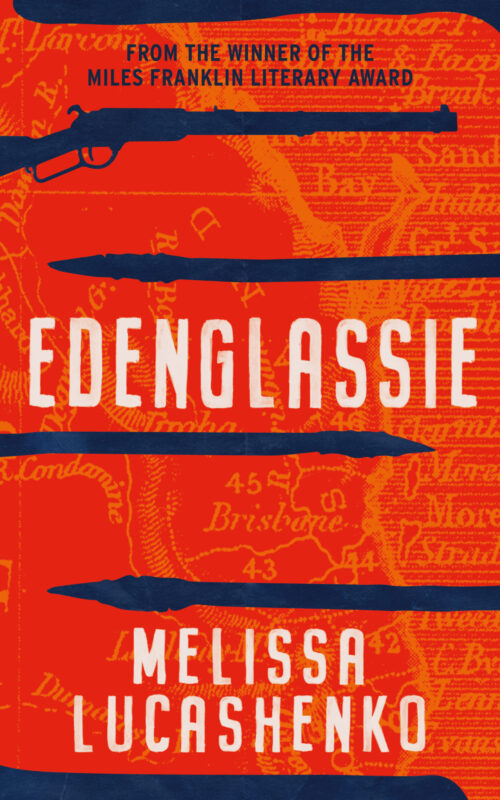
    The landownder family, the Nugents, and their place Cloverdale, were based on the Suttors and Brucedale in the Bathurst region. Sutter (who sounds a bit like Tom Petrie in Lucashenko’s Edenglassie) learnt Wiradyuri and built a relationship with the people. Co-existence, in other words, can happen. Again, what if? (Anita auctioned the name of her settler family in a Go Foundation fundraiser.)

    On the love story

    Anita said it is difficult to write about violence, so the love story between Miinaa and Dan, gave her a reprieve from violence and heartache. Further, through all her novels – this came through strongly in her early choclit books (see my review of Paris dreaming) – she wants to show that First Nations people have all the same human emotions, to show “us as complete, whole people”. She likes humour, but it was hard to find humour in a war story. Still, she tried to find moments of distance from painful reality.

    On learning her language

    Anita said her aim is not to write big literary novels, but using language does make her writing more rich, powerful. However, she is still learning it. She told a funny story about posting a YouTube video on how to pronounce Bila Yarrudhanggalangdhuray. Readers practised it, messaged her and sent clips of their achievement, but then an Aunty (I think) told her that she’d got it wrong. She was distressed, until a friend told her, “you are learning what should be your first language at the age of 50”. She does, however, feel privileged to be able to learn her language in a university setting when her mother wasn’t allowed to speak it at all.

    There was more on language – including the Wiradyuri words for country, love, and respect, and that Wiradyuri words are always connected to place. Country matters to Anita. She talked a little about her growing up, and her parents, about her experience of living with love and humour. Race was never an issue between her Austrian father and Wiradyuri mother.

    Astrid wondered whether there had been any pushback from using language – Bila Yarrudhanggalangdhuray – for her last novel’s title, given it was groundbreaking. It was during COVID, Anita said, and a Zoom meeting with her publisher, who wanted to push boundaries. Anita suggested taking English off the over – and the publishers went with it. Anita doesn’t want the title to be a barrier, and she doesn’t want people to get upset if they get it wrong, but no-one has pushed back.

    On her new role as a publisher

    I have written about this initiative which involves Anita being the publisher for Simon and Schuster’s new First Nation’s imprint, Bundyi, so I won’t repeat it here. She talked about the titles I mentioned, albeit in a little more detail. She wants to produce a commercial list, including works by already published authors doing different things and by emerging writers.

    The session ended with another reading from Dirrayawadha – of the novel’s only humorous scene, which has Suzanne explaining Christianity to a very puzzled Miinaa.

    A friendly, relaxed session, which nonetheless added to my knowledge and understanding of Anita Heiss and of First Nations history and experience.

    Canberra Writers Festival, 2024
    Your favourites: Anita Heiss
    The Arc Theatre, NFSA
    Sunday 27 October 2024, 10-11am

    Canberra Writers Festival 2024: 4, Your favourites: Robbie Arnott

    In conversation with Karen Viggers

    Karen Viggers is no stranger to this blog (my posts), and I have read Robbie Arnott’s previous novel, Limberlost (my review). One of several “Your favourites” sessions with loved authors, this one was described as

    Robbie Arnott’s fiction is steeped in the wild: women return from the dead as walking ecosystems; mythic birds circle the skies; the water calls to us. In writing these sumptuous, near-sentient landscapes, he grapples with our most wrenching and necessary questions: eco-grief, stolen land and human frailty. He joins local author Karen Viggers to talk about his new novel, Dusk, a tale of a feral creature loose in the Tasmanian highlands.  

    Karen commenced by acknowledging the Ngunnawal people, their generosity and their stories, and spoke with passion about the importance of stories in our lives.

    She then introduced herself, explaining that as an animal and landscape person, she relates to Robbie’s books and was keen to conduct this conversation for the Festival. She then introduced Robbie, his four books to date, and his many awards – Flames (2018), Rain heron (2020), Limberlost (2022), and Dusk (2024). Wildness and landscapes feature in all his work.

    This was a fascinating but sometimes somewhat anarchic discussion in which Robbie didn’t always quite answer the question being asked, or, perhaps, not in the expected way. But Karen is an expert at going with the flow, so we got great insights into Robbie and his approach to writing – which is what it’s all about.

    On how the accolades make him feel and their effect on his writing

    It’s nice to be acknowledged, but living in Tasmania, away from the literary scene, they don’t make much difference to his daily life. Career-wise they’re good, but they don’t affect his writing. He is all about his work, to the detriment of his other responsibilities.

    On the novel’s origin

    Dusk is about twins Iris and Floyd joining the hunt for a feral puma, the titular Dusk, because a bounty has been offered. Karen described it as a story of wildness, freedom, connections, relationships, and asked about its origin. Robbie said it goes back to his childhood, and times in the bush when they would see feral deer which shouldn’t be there. He wanted to write this story.

    On the siblings and their relationship to their parents

    Iris and Floyd are 37-year-old twins whose parents had been convicts, then bushrangers, and had dragged their children through their life of crime. Now these children want to live straight. They need the bounty cash, but they have no idea about what they are doing.

    He wanted two protagonists who have a close relationship, like siblings do. He didn’t make them twins for any particular twin-connection idea, but because he wanted a flatness of hierarchy between them. However, Karen felt that the sort of connection twins have comes through.

    Karen wondered about the twins’ outsiderness, and whether it comes from within himself. Robbie, though – and this was reiterated throughout the interview – said he had no idea about himself. He hasn’t had therapy! They are outsiders because we live in colonial landscape. The other characters – except for some near the end (First Nations I’m guessing) – are outsiders too, but don’t realise it.

    Later, Robbie talked about the deep trust Iris and Floyd have in each other. They are committed completely to each other, they rely on each other, despite frequently irritating each other.

    On Dusk the puma, and wild beast myths

    Dusk was not inspired by big cat stories but people are more scared of cats. They are terrifying, and play into our idea of wild landscapes. He is interested in outsiders tracking outsiders, in the strangeness of the colonial landscape. Colonists would bring things to new countries to hunt, also to rid other pests, so he had the idea that someone might bring a cat over to get rid of deer. But his pumas were more interested in easier animals than deer, like sheep. Like the cane toads brought over to eat cane beetles, but which ended up eating other things. (And, to extend this example, before the cane toads, the sugar cane itself was introduced, which then led to blackbirding.)

    As for the name, Dusk, he didn’t choose it for any metaphorical meaning, but liked it as a name for a creature which appears at a liminal time of day.

    Robbie doesn’t seek metaphor when he’s writing. It feels more like cleverness than openness. Karen suggested that a joy for writers is when readers see things that the writer doesn’t see. Robbie agreed, sharing Richard Flanagan’s advice that the least interesting thing in a novel is the writer’s intention. Flanagan, we learnt, is a friend and writing mentor for Robbie.

    Despite this, readers did, said Karen, think about metaphorical meaning of Dusk!

    On the wild and dangerous creatures in his novels, their source, relevance, meaning

    Robbie has had no therapy, he reiterated, so can’t explain why! But, currently there is a focus in writing on the self and raising mundanity to art. However, he is interested in the world outside humanity. In stories, wild animals are often the impetus for change, but animals don’t work like that. They just are, going about their lives.

    The discussion then turned to savagery and brutality. Humans can be as savage and brutal as wild animals, but in urban societies we fear wildness and savagery, and try to keep it at bay. However, we keep bumping up against the edges of it. Robbie has had publishers and readers complain about brutality in his novels, though it’s drawn from reality. For example, Iris and Floyd slaughtering bobby calves with sledgehammers comes from a friend’s experience in 2012. In another novel, his publisher tried to talk him out of a scene involving the skinning of rabbits. Where do they think meat comes from, Robbie asked. Savagery and brutality are part of us.

    We have become separated from the bush. We say we love it but is our attitude to it essentially about power and control? For Robbie, taming the wilderness is ridiculous. He shared a scene from Richard Powers’ beautiful novel, Overstory, in which people suggested removing sticks and natural debris from the forest floor.

    Staying with the idea of animals, Karen spoke of Iris and Floyd living in a savage world but taking such exquisite care of their horses. She asked Robbie about his thoughts on the human-animal bond. He wanted to show the intensity of the relationship, that it was an unquestioned one, and a necessity.

    On what landscape means to him, and how he writes it

    Robbie always starts with the landscape, not plot or character, and then thinks about who would be there. Landscape moves him. It offers the greatest way to feel small, the most beautiful form of insignificance. To write about landscape with feeling, the first thing he does is to free it of baggage, like the idea that the forest is green. He describes it as it is, which is not green, and then focuses on emotional reactions to it. For him, the aim of fiction is not to render the world as it is but how it feels.

    To write freshly about landscape he gets out into it, and draws on his memory (memory is critical). He searches for the “atmosphere”. He most enjoys a book when he has slid into its atmosphere.

    Staying with the idea of feelings, Karen asked him about the feelings he wanted for Dusk, who is omnipresent from the beginning. Robbie said that it wasn’t quite menace but a “hauntedness”. She’s not vengeful. He wanted her to feel alive.

    On his novel as Western (and more!)

    Robbie has described the novel as being something like a western, in that it is framed like a western, like a quest. It is also a journey novel, which makes it fun to write and enjoyable for the reader.

    The discussion got into other aspects of his writing, such as his blurring of the line between realism and the magical in most of his books. It’s about, he said, conveying how the world feels. The magical wasn’t needed in Limberlost which was inspired by his grandfather. He edits a lot out, because it must feel real.

    Karen loves the opening of Rain heron, and suggested that cutting out is an art. Robbie doesn’t want to waste anyone’s time. He wants to keep his books vivid, vibrant, alive. He doesn’t write drafts, but writes sentence by sentence, crafting each one carefully as he goes, so that by the end he has his book.

    On Iris

    Is Iris looking for belonging? Robbie said Iris feels connection to the landscape, and realises she doesn’t want to leave but she also recognises that she has no cultural connection to the place. Does she have a right to stay? This is the unanswered question – for Iris and for us. She does her best but the question is never resolved.

    This point, this, above all else, makes me keen to read Dusk.

    Q & A

    On his becoming a writer, and his influences: He was a bookworm from the start (as soon as he learnt his sister got to stay up later because she could read!) He started writing when he was 11 or 12. There was never a decision, he just started writing. His literary influences are many, but he loves Annie Proulx for her amazing descriptions of the world; he loves Denis Johnston “at the sentence level”. He thinks Kevin Barry’s new novel is excellent, and later he mentioned David Mitchell and Claire Keegan.

    On his thoughts about relationships between humans and wild animals (like the seal and fisherman in Flames): He agrees with ecologists who advocate staying away, but narratively he is pulled to these relationships.

    On how he manages to keep his unique, glorious style: He can tell when he Is writing like himself, and when he “is wearing his influences too heavily”. When this happens, he writes a description of something he knows – not necessarily related to his current project – to get back to his own style.

    On other art forms that influence or inspire his writing: Photography; poetry for its imagery; oh, and when he is writing he often puts on moving image of salmon leaping and grizzly bears trying (and usually failing) to catch them. This live and unscripted action inspires him.

    Karen concluded by simply saying that Robbie’s writing is magical. This conversation would surely have convinced anyone not already in agreement.

    Canberra Writers Festival, 2024
    Your favourites: Robbie Arnott
    The Arc Theatre, NFSA
    Saturday 26 October 2024, 2-3pm

    Canberra Writers Festival 2024: 3, Get thee to the nunnery

    Emily Maguire and Charlotte Wood with Kate Mildenhall

    I chose this session primarily because of Charlotte Wood, given I’d seen Emily Maguire the day before, but her presence was plus, as was having author Kate Mildenhall conduct the conversation. Here is the session’s description in the program:

    Emily Maguire and Charlotte Wood have both written novels of cloisters – of monks and nuns and clerical power-broking. What is it about these reclusive places that makes for such potent and irresistible storytelling? In conversation with Kate Mildenhall.

    Kate did a lovely acknowledgement of country, starting by saying we were honoured to be on this land. She thanked the Ngunnawal people for their care and recognised that the country always was and always will be theirs. 

    She then said that BeeJay Silcox deserved an A+ for the title of this session “Get thee to the Nunnery”, and did the usual introduction to the authors, Emily Maguire (and Rapture) and Charlotte Wood (and Stone Yard devotional), listing their books and achievements, which includes, of course, Charlotte being listed for this year’s Booker prize.

    Kate introduced the conversation by saying that the two books were set more than 1000 years apart but both involved women – one young, one middle-aged – seeking monastic life albeit for different reasons, the former to live a life of the intellect and the latter to retreat from the world. 

    On their characters

    Emily explained that Agnes starts as child in Mainz, living with a widowed father who makes the shocking-for-the-time decision to keep his daughter. She consequently grows up listening to men. As a child of the era, she believes in God and constantly looks for signs of God.

    Charlotte’s character, on the other hand, is unnamed and about Charlotte’s age. Charlotte liked a reader’s description that her character had “unsubscribed from her life”. She had hit an unspecified “wall of despair” so leaves her life as an environmental activist, and goes to a convent to rest. There is also a sort of “homing instinct” because she returns to the region where she had grown up. She initially finds the nuns’ lives embarrassing, all this singing and praying, until she realises that this is the work. After a narrative gap, we turn the page and find she’s been living there for a few years.

    On “the heat” or seed for their books

    Emily was inspired a decade ago by the legend of a female pope, which was believed through the high Middle Ages. The story thrilled her. It is a great trickster narrative, and she is personally interested in the early church and early Christianity. She started the novel 10 years ago but didn’t have the skills to write it then.

    Charlotte can’t remember the beginning, but she was interested in why would a contemporary woman become a Catholic nun. She shared some of her personal background with Catholicism. She had skedaddled from it as a young woman, for all the obvious reasons, but has remained interested. As she thought about her question regarding modern women becoming nuns, she came across the idea of retreat and she got that, the idea of leaving a chaotic world for one of order. Then the pandemic happened. It pulled the rug from under her. The 2019 fires and the pandemic felt like a biblical wave of catastrophe and made her realise that our certainties about our lives were a complete delusion. She had driven through the Monaro – where she had grown up – during pandemic. “Old stuff came up” and “brought unlike things together”, so she invented a nunnery on the Monaro.

    On wrestling about faith, religion, church when writing these books

    Emily had to buy wholeheartedly into Agnes’ world in which God is the answer to everything, the good and bad. She also plugged into her childhood when Jesus was her best friend. It was easy, but also complicated, to sink into that. She boiled her thinking down to one idea: What does personal faith have to do with organised religion? As Agnes gets entrenched into the life, she starts to question what are her wants versus God’s?

    Charlotte doesn’t believe in God but also doesn’t sneer at people who do. She can’t make the step to believe, but dislikes the fundamentalist atheist’s view. Also, as a young person, she loved spectacle of the Catholic Church, the language, rhythm, poetry, metaphor, the imaginative world of Bible, the stories of saints (horror fiction, and crime, interjected Emily!)

    On the suffering of women (physical, spiritual, emotional)

    Charlotte referred to the church’s idea of the mortification of the flesh. In our you-can-have-everything world, she understands the appeal of asceticism as conveyed in Emily’s novel.

    Emily spoke of the saints’ stories involving harm to women’s bodies. But women can also feel that the body is what they have control over, and can accept (or do) harm to it, because it’s the “last site of resistance”. Religion can see women’s bodies as bad, dirty but there are also ideas about cleansing. It’s not either-or.

    On deep reading, the idea of “lectio divina” in both works

    Charlotte described its use in her book – read, think, read the same again, think, then say what comes up – and Sister Bonaventure’s advice that if you don’t understand something hand it over to God. This idea of handing one’s confusion to God is both disturbing and a relief to her narrator.

    Emily said there’s been a long tradition of this practice, which is not Bible study but repetitive reading and thinking. It surprises Agnes. Does this “copying”, as she sees it, this not questioning, mean anything? She is shut down when she tries to argue, but if God made her mind one that could argue isn’t that what she’s supposed to do? Yet, sometimes sitting with ideas offers clarity.

    Charlotte suggested that this idea of obedience (versus wanting to argue) is a challenge for the ego in our egotistical world. Emily added that she loved the lectio divina section in Charlotte’s book. She had turned hardline atheist, after her deeply believing youth, but now she is more “I don’t know”.

    On research

    Charlotte talked about being asked to speak at a conference in Melbourne on “communicating monasticism” run by nuns and priests. She was very nervous, because she didn’t research nuns, didn’t even interview any. It’s all imagined. But the conference attendees were very warm because they saw that she was respectful about their chosen life. And, they asked incredible questions.

    Kate commented on the freedom writers of fiction have in this regard, but said there was evidence of extraordinary research in Emily’s book, though it’s held lightly. Emily explained that to make Agnes’ world and choices real she needed to do the research, including very basic levels, such as what is a chair, were there roads, and bigger questions like why didn’t Agnes choose a convent and would she have done this. She talked about how the modesty in monasteries – versus in ordinary Middle Ages life – was a gift to her plot of a woman presenting herself as a man.

    On plotting, whether it comes naturally or has to be worked at

    For Charlotte the plot alleviates the boredom, provides a change in the rhythm. She wanted quietude, stillness, but also needed an energy spike. She told us about asking a still-life artist friend about how she gets her very still pictures to shimmer. The answer was that she breaks up surface, the texture of paint, making it a bit unstable, though the image remains static. Charlotte said using the diary form gave some narrative movement to her story, but then she included the mouse plague, and the return of the wild-child nun with the bones.

    Emily used the journey taken Agnes by Brother Randolph, but also, the legend has built into it the risk of being uncovered. She has learnt that propulsion is in the craft – the language, the sentences. Every sentence must do something. Charlotte added that the voice is likewise critical. If the voice is strong, the reader will follow along. It’s propulsive. That’s the key.

    On “devotion” being part of the artistic life

    Emily said that you lean into your writing, you just do it (like religion), and constantly check whether you are getting the answer you expected. There is devotion to the art, a communion with the page.

    Charlotte agreed saying most writers feel a sense of sacredness when doing their work. For her it’s a vocation, a calling, not a job. (It doesn’t pay like a job!) It taps into something bigger than the self, connects with something outside self. At times you can feel it’s coming through you. Not from God for her, but the unconscious, perhaps. She said that when you leave Catholicism there’s a big hole, a yearning. Writing, for her, fills that.

    Q & A

    On Rapture not looking down on women, while the character in Stone Yard devotional does: Emily described Agnes as a “pick-me” girl, an imposter. It’s a power move to keep women separate, but Agnes, who separates herself, also feels a loss. Charlotte agreed that her character is an outsider and “judgey”, feels separate. She has ego, but respects Sister Simone, who has rigour, versus the other women whom she sees as embarrassing little girls. Simone picks her as someone who finds obedience hard. Charlotte realises she often writes about women who have disagreements. She’s interested in power dynamics.

    On whether Charlotte has a name for her character in her mind: No, partly because the character is partly Charlotte herself. She wanted to risk showing part of her real self (her feelings about her mother, her memories of the town). Also the form of book. Starting as a diary means she’s not going to name herself. Charlotte likes the interiority of that.

    On Emily’s relationship with Agnes: yes, she misses her!

    There was also a question to Charlotte from a Cooma person whose family had connections with Charlotte’s. They had all read the book, including the men, and found it real. She wanted to know how men had responded. Charlotte said there’d been intense responses, though fewer in number than she’d had for The weekend. People, both men and women, had particularly shared their feelings of grief.

    Kate concluded by asking what Charlotte and Emily do when the touring is done, what they retreat to for contemplation: Emily said writing is meditation, it stills the internal chatter, and Charlotte agreed, saying “writing time is home”.

    This was another engaging session, topped off by my having a great chat afterwards with Karen Viggers (my posts), who was also in the audience, about our favourite reads of the year.

    Canberra Writers Festival, 2024
    Get thee to the nunnery
    The Arc Theatre, NFSA
    Saturday 26 October 2024, 10-11am

    Canberra Writers Festival 2024: 2, History repeating

    Another preamble

    What I didn’t say in my first post on this year’s festival is that the venue where I attended the sessions today is a favourite of mine – and not only because it’s where I spent most of my working career. This year, some strands of the festival are being held at the National Film and Sound Archive, which has two beautiful theatres – the big Arc theatre and the gorgeous, cosy Theatrette. I love the Theatrette, which was carefully refurbished around a decade ago to meet modern needs but retain its heritage art deco style and fittings.

    History repeating

    I chose this session because it featured two authors I have read, and was about historical fiction which – I’m going to say it – in its more literary form, interests me greatly. The session was described in the program as:

    Catherine McKinnon has woven her new book around Robert Oppenheimer and his wife Kitty – the ultimate nuclear family; Emily Maguire’s new novel is an audacious portrait of an audacious woman – a mystery from the Middle Ages. Rebecca Harkins-Cross joins these dauntless storytellers to discuss the narrative lure of historical legends, and what the past can tell us about our present.  

    I have read Catherine McKinnon’s clever Storyland (my review) which took us from the early days of the Australian colony far into a dystopian future, and Emily Maguire’s not-quite crime fiction, An isolated incident (my review). (Interestingly, my 2022 post on an essay by Emily on Elizabeth Harrower’s short story, “The fun of the fair”, is among my most popular posts this year.)

    Anyhow, Rebecca Harkins-Cross commenced by acknowledging the traditional owners of the land on which we were meeting, then shared a quote from McKinnon’s book:

    When Robert [Oppenheimer] works, there is seemingly no intrusion from the past into the present. But this, he knows, is illusory. The past shapes the present, creates the future. If thoughts are a trinity of past, present and future, losing the past means obscuring the future. (p 21)*

    On its own, this idea is not especially new or dramatic, but it nicely framed the discussion we were about to have.

    She then went on to briefly summarise Emily Maguire’s and Catherine McKinnon’s new books, Rapture and To sing of war. Rapture is set in the ninth century and tells the story of a young girl who, at the age of 18, to avoid the usual life for a woman as wife or nun, enlists the help of a lovesick Benedictine monk to disguise herself as a man and secure a place at a monastery. This story was inspired by Pope Joan.

    To sing of war, on the other hand, is a polyphonic story set in December 1944 – in New Guinea, with a young Australian nurse who meets her first love, Virgil Nicholson; in Los Alamos, with two young physicists Mim Carver and Fred Johnson who join Robert Oppenheimer and his team “to build a weapon that will stop all war”; and in Miyajima, with Hiroko Narushima who helps her husband’s grandmother run a ryokan.

    These two novels are set far apart in place and time but they have, said Rebecca, some unexpected parallels – plucky women confronting a patriarchal society, an interest in the natural world and the sustenance it can offer, and the lives of ordinary people.

    She then asked her first question which concerned the idea that with every novel writers often say they have to start anew. Is this how Emily and Catherine felt?

    Emily said yes, because her previous novels are contemporary, so while she wanted to write this story it was a challenge. Her method was to stop thinking about it as historical fiction but to focus on the main character and her experience – because she is living in her “now” – and then sort out the necessary details.

    Catherine also said yes, that with every new project you feel like a baby again. She looked to Pat Barker’s Regeneration trilogy, not because it’s the same subject, but for how Barker made her era feel like now.

    This led Rebecca to ask Emily whether any historical fiction writers were a guiding light for her? Hilary Mantel looms large, she said, and she loves her work, but she wanted to write something shorter, tighter, something pacy. She turned most to Angela Carter, not an historical fiction writer, for how she handles this and for the carnality of her language. She also looked to Danielle Dutton’s Margaret the First, not for her language but for her pacing.

    On why their topics

    Rebecca, who mixed her questions up for the different authors, then asked Catherine why she’d chosen her particular period and those series of events. Catherine was interested in understanding our governments and the decisions they make. Also in what happens to the land we are on. In World War II, a global war, who were we trusting to make decisions? (This reminded me of Rodney Hall in the morning session and his point about what was being hatched that would affect us later.) She was also interested in who became leaders, in the decisions being made by young people, in the bomb and its impact on the land – and more. Her interest is cultural.

    Turning then to Emily, Rebecca wanted to know why she’d chosen the story of the female pope which is now accepted as apocryphal. Emily had come across the story due to her interest in early Christianity, and how it had grown from a small desert cult to a big power. She was interested in this story which most people believed from 1200 to 1600 until the Reformation protestants started questioning Roman Catholicism and its promotion of this story.

    But, continued Rebecca, why this particular story? It’s a trickster story, said Emily, and she’s interested in Christianity and the idea of belief vs faith. Her Agnes is a genuine believer. Emily is interested in people’s own beliefs regardless of what the institution is telling them, and in Agnes being in a position where she had to either deny her faith or her femaleness.

    At this point Emily did a reading, from early on when Agnes recognises the “bloody service [aka breeding] required of girls”. (This reminded me of Jane Austen who, centuries later, shows, in her letters, acute awareness of what motherhood means for women, including death. She was not impressed or keen!) Emily talked about how she got into Agnes’ character, which included trying to read what she would have been reading – things like the lives of saints. Many of these were violent, including that of her namesake, St Agnes, whose body and purity were deemed more important than her life.

    On research

    Back to Catherine, Rebecca about her research. She did the common thing – too much! And started by including too much in her book. She went to New Guinea, and spoke to people whose families experienced the war, and researched the botany. She went to Japan – to Hiroshima and the Peace Park and Museum, and to Nagasaki. She read and spoke to people there. She went to America, where she followed the Oppenheimers’ life, and then specifically to Los Alamos and Alamogordo, looking at the desert landscape. She wanted to connect the horror of war with the beauty of the landscape.

    She then did a reading, from the opening of the novel.

    Rebecca asked Emily how she’d approached research as a novelist, that is, how she balanced doing enough research while leaving space for the imagination.

    Emily’s challenge was needing to balance the myth and history surrounding her origin story – Pope Joan. She managed it by keeping tightly focused on the character, on what kind of person is she. She also kept in her head Elie Weisel’s comment that there’s a difference between a book that is 200 pages at the beginning and one that starts at 800 pages and ends up at 200. She started with a much longer draft, which had a lot of scaffolding which she gradually tore down as it was no longer needed. When the novel was well along, she gave it to her first reader, and asked whether there were bits that didn’t make sense because she’d taken too much out, and, conversely, if there was information still in that wasn’t needed.

    On their writing choices

    Asked about finding Agnes’ voice, Emily said she’d started first person, but it felt right when she turned to “deep third person”. She tried to keep the language to words with Germanic and Latin origins, and she was careful about concepts, metaphors, similes. Something can’t feel “electric”, or can’t “evolve”, for example, in the ninth century!

    One choosing her polyphonic structure, Catherine said that the polyphonic or braided novel has been around for a long time. Look at Chaucer’s Canterbury tales. Certain stories call for it, like her interest in small lives in a global world. She wanted a young woman in Los Alamos. She wanted to retrieve New Guinean history because at the time the people were not named. And so on. Her challenge was to find a way to keep the reader interested while jumping from story to story.

    And, on history

    This led to a question about history and revisionism. What had been written out of the history books that they wanted to return? Emily wanted to show that women could be intellectual forces, be present, be visible, that, just like the present, different women could have different interests and ideas. She wanted to imagine these women into being. I appreciated this response because readers often see such individuals is anachronistic, but I’m with Emily. Intellectual women, feminist women, and so on, don’t pop out of thin air. They have just been hidden.

    Similarly, Catherine wanted to bring woman to the fore as thinkers, as scientists, etc, not only as nurses. She wanted to tell of ordinary people, to share queer stories. In other words, she likes finding the hidden stories, and searching out what is kept secret (in societies, and personally). What are the inner emotions, drivers, experiences that frame actions?

    Q & A

    On Catherine’s inspirations for her characters: Mim was based on a few women who were chemists and mathematicians; Fred was based on a real person called Ted Hall, who worried about America having a monopoly on bomb after war.

    On negotiating telling one’s story against big presences like Hilary Mantel’s grand, involving historical novels, and Prometheus Unbound (which was adapted into the film Oppenheimer):

    • Catherine didn’t know the film was coming out, but she did use American Prometheus in her research. However, you look for the story you want to tell now – at what is it about now that you want to speak to, at what is it about humans that is interesting to us now. American Prometheus , she felt, was about how people could be picked up and then dropped, but she is interested, for example, in how decisionmaking can be petty. Writers have control over what they see, over their version of it.
    • Emily said that “anxiety of influence” is part of being an author, but she has a set of touchstones – such as Angela Carter for this book – of things you admire but that aren’t doing what you are doing. Other Pope Joan stories, for example, have “truth” agendas, but that wasn’t her interest/angle.

    I enjoy hearing historical fiction writers talking about what they do because it’s a challenging but, worthwhile, endeavour. This thoughtful session was capped off by my having a delightful private chat with author Robyn Cadwallader (my posts), who had also been in the audience, about some of her historical fiction writing experiences.

    * Thanks to Robyn for providing this quote.

    Canberra Writers Festival, 2024
    History repeating
    Friday 25 October 2024, 12:30-1:30pm

    Canberra Writers Festival 2024: 1, The most interesting man in OzLit

    A preamble

    The Canberra Writers Festival is back in 2024, with last year’s wonderful Artistic Director, the writer and critic Beejay Silcox. The Festival’s theme continues to be “Power Politics Passion”, although that tagline is not quite so visible on the website. This is good – to my mind at least. Last year, under Beejay Silcox, there was a clear shift in programming away from the heavy political flavour we’d been experiencing to something more diverse and literary. That must have been successful, as this year’s programming has continued this trend, so it has lot to offer the likes of me! So much so that more difficult decisions than usual had to be made about what to attend. Wah! But, that’s better than struggling to find appealing sessions.

    The most interesting man in OzLit

    Before I tell you WHO this “most interesting man in OzLit” is, I must share that attending this session involved one of those difficult decisions, because overlapping this session was one titled “The power of quiet”. It featured Robbie Arnott and Charlotte Wood discussing “their favourite hushed and gentle books, and the art of less is more”. I am a big believer in “less is more” so would love to have attended this session, but “the most interesting man in OzLit” called, and I will be seeing Arnott and Wood in their own dedicated sessions elsewhere in the festival.

    So, who is this “most interesting” man? Well, it’s Rodney Hall. The session was described as follows:

    Rodney Hall has stories to tell: he walked across Europe, harboured Salman Rushdie during the fatwa years, and has won the Miles Franklin Literary Award – twice. At 89, Rodney has a new novel to share, Vortex, and it just might be his best. Join Rodney and his devoted publisher, Geordie Williamson, as they discuss his magnificent life on and off the page.

    Rodney Hall, A stolen season

    To my shame, I have only read three of Hall’s novels, Just relations, The day we had Hitler home, and, since blogging, A stolen season (my review), but – here comes the reader’s plaint – I have always intended to read more. He is one of those writers who, despite a significant body of work, seems to be under the radar, and I really wanted to hear him in person.

    The conversation

    There was something different about the audience for this session – at least in my experience of festival attendance. First, over 50% were male, and the median age seemed higher than usual too. This clearly says something about the subject of the session.

    Geordie commenced by suggesting that with the small audience (though it was larger than the afternoon session I attended) this could be a bespoke session. And, I think this is how it turned out because it seemed to flow naturally in reaction to Hall’s “stories”. Geordie clearly had ideas about what they’d explore, but he handled it with lovely fluidity. Before introducing “the most interesting man”, Geordie apologised to Peter Goldsworthy, another “interesting man”, who was in the audience!

    Geordie then did the usual author introduction, listing Hall’s output (which includes 14 novels, poetry, short fiction, two biographies, political polemics, plays, and librettos), his literary achievements (award wins and short listings), literary roles (including on the Australia Council) and political activism (in issues like the Republican movement and Indigenous Land Rights). Rodney – I have been using first names for author events for a while now so will continue – has been a very busy man.

    I’m not going to do my more usual blow-by-blow account of this discussion because it seemed to revolve around a couple of main themes. In fact, I’m going to suggest that the way the session went might mirror somewhat Hall’s latest novel, Vortex, which he described as having the structure of a rondo, meaning it keeps returning to the same statement.

    The point that kept recurring through the conversation was that Hall sees himself as a classicist. For him, this means that structure is fundamental to what he does, and this structure tends to be musically based. That is, he thinks in musical forms, and these provide the spine for his work. (Music, he said later, speaks to the divine, which doesn’t mean “God” so much as something more generally spiritual, inspirational.) Interestingly, and perhaps contradictorily – on the surface at least – he described himself as a “pantser” not a “planner”, though he didn’t use such informal terms. He spoke, for example, about his good friend Murray Bail who plans his work out meticulously, while Rodney described his writing projects as putting himself “in the way of a blundering machine”. He starts from some sort of interest and sees where it goes, which is sometimes nowhere.

    It might be for this reason – for this “classicist”, structural, approach to his work – that Beejay Silcox recently told Rodney that he was “not political but ethical”.

    And now, because I have departed from the structure of the conversation, I have to work out where to go next! But, let me see … Geordie started by trying obtain some sort of “origin myth” from Rodney, who had once told Geordie that his memoir was “rubbish”. But we didn’t get there in any straightforward way.

    Responding to the idea of an “origin myth” and Geordie’s asking him to talk about his troublemaker mother and their experience of the blitz, Rodney shared a little of his background but then said that he is “deeply suspicious of the notion of stories” because they are “never true”. They leave out “the other bits”, the real or, I guess, true bits. 

    He then talked a bit about his approach to writing. He doesn’t, for example, model his books on people he knows. This he feels is an intrusion on their privacy. Later, he talked about Vortex, which was inspired by some portraits he’d written of real people. They were in a book that was nearly published but he pulled it. Then, on reflection – I think I got this right – he felt he could pull out the “material” from these portraits, and us it in another work, without forensically analysing his friends.

    Geordie reflected that what Rodney writes is the opposite of the current flavour of the month, autofiction, with which Rodney agreed. His classicism he said is out of step with his colleagues – whom he, nevertheless, likes and admires. They are interested in more personalised expression, because people “want the dirt of what you are yourself”. He, on the other hand, doesn’t seem to write what people want to read. Geordie commented on the sort of experimentation that Rodney likes to do, and asked whether he was conscious that people weren’t reading him!

    It was probably around now that we got some of the aforementioned “origin story”. Rodney, who arrived in Australia (Brisbane) postwar, had to leave school at 16. So, unlike his peers, he never did “literary studies” but read what caught his attention. Caribbean literature, for example. He didn’t read Bleak house but did read Wilson Harris’ Palace of the peacock.

    So, wondered Geordie, is autodidacticism the key to understanding him as a writer? And the conversation moved on to his formative influences, which included Caribbean literature; the 18th century Italian philosopher Giambattista Vico (and his book The New Science which teased out the differences between “myths” and “legends”); and Robert Graves. Each of these influences were formative in different ways, but Rodney spoke most about Graves, and a two-hour conversation he had had with him when he was a young man.

    In fact, Robert Graves came up several times throughout the conversation, but I’ll try to bring it all together here. In 2011 (I think), Rodney lost his house in a fire – and with it went 30 to 40 unfinished novels, and his correspondence with people like Robert Graves and Judith Wright. (As a librarian-archivist I am aghast at what the literary community – let alone Rodney himself – lost through this.)

    Geordie asked Rodney to name the book that was dearest to him, that he would save if he could save only one, and Rodney replied Just relations because in it he found what Robert Graves said was there to find. I take this to mean a sort of essence of things. (My words, not his.) He had a 2-hour meeting with Graves – after landing, uninvited, on his doorstep in Mallorca, and nearly being sent away by his wife. It sounds like Graves was generous with his advice. He talked to Rodney about writing being about “what don’t you know that you need to know”, about tapping into the “collective unconscious”, about finding the “inexplicable thing”. Graves recommended, when writing historical fiction, to write first (to find out what you need to know) and research later (to make sure people believe you). Graves, said Rodney, “was my university”.

    There was much more to this session, more anecdotes – including a lovely one about labyrinths – but I’ll conclude with a few things about Vortex. It is set in 1954, the year of the Queen’s first visit, the Petrov scandal, Menzies (who had many years besides this one!) The underlying question for Rodney is that “we don’t know when the things that affect our lives are hatched”. You can call him a conspiracy theorist he said, because he believes there usually is one.

    Geordie, who published the novel, believes Vortex is one of great contemporary Australian novels. It offers a long view. It is bookended by Royal Visits (being published just as we’ve just had another), and the nuclear issue is being raised again. Not much has changed, in other words – though maybe one thing has. In a discussion about students being radicalised in the late 1960s and early 1970s by the Vietnam War, and whether the same was happening now with Gaza and the October 7 attack, Rodney wasn’t sure. He said, back then, we knew what was being done in our name, but the news is so poor now we cannot be so sure of what we know. He also commented on the fact that no-one asks “why” things happen. When young First Nations people create havoc in Darwin, for example, they are locked up. No-one asks why they are angry.

    Geordie shared an anecdote about Rodney pitching Vortex to him as a set of individual chapters that could be infinitely shuffle-able! But Geordie, self-deprecatingly calling himself “an agent of the industrialisation of art” looked horrified, so Rodney changed it!

    There was more, including a short Q&A but it essentially built on what we’d heard rather than introducing anything new so, this post being long enough as it is, I’ll leave it here. I am so glad to have seen Rodney Hall in person. He is indeed most interesting!

    Canberra Writers Festival, 2024
    The most interesting man in OzLit
    Friday 25 October 2024, 10:30-11:30am