Yuri Herrera, Signs preceding the end of the world (#BookReview)

Yuri Herrera, Signs preceding the end of the worldWhile I was travelling in the USA last month, I wanted to read at least one book relating to the regions we were visiting. I started by looking for a novel set in/about the northwest, but then Yuri Herrera’s Signs preceding the end of the world, set in the southwest, popped out at me, and I knew I had my book.

When you live in the southwest, as we did in the 1990s, you can’t help but be aware of the issue of migration, “illegal” or otherwise, across the border from Mexico. I’d seen the film El Norte (about two Guatemalan youths fleeing to the US via Mexico) and read T. Coraghessan Boyle’s The tortilla curtain, but I hadn’t read a Mexican author on the subject – until now.

Signs preceding the end of the world tells the story of Makina, who is sent to “the other side” by her mother to carry a message to her brother who’d gone and not returned. To obtain the help she needs to make the crossing, she also agrees to take a message from Mexican gangster, Mr Aitch. This synopsis would suggest to most readers an adventure story – a thriller perhaps – or at least some sort of plot-driven drama, but that’s not what this is at all. Yes, it follows a traditional linear journey narrative, but the tone is more mythical, which means that it works on two levels, the literal Mexican-American border story and something more universal about crossings and transitions.

Herrera achieves this by keeping details to a minimum. Places aren’t named, but just described. Chapter titles like “The place where the hills meet” and “The place where people’s hearts are eaten” exemplify this beautifully. Most people aren’t named, either, and, where they are, the names are minimal (such as Chucho who helps her cross the border) or enigmatic (such as the alphabetical three, Mr Double-U, Mr Aitch and Mr Q!) It is in this shadowy context that Makina makes her journey.

He also achieves it by starting the novel with a surprising scene that isn’t critical to the literal plot, but which provides a thematic or symbolic link to the ending. We meet Makina walking in the street, when, suddenly, a sinkhole opens up and a man is swallowed up. Makina manages to pull herself back and survive, but we learn in the opening paragraph the tenuousness of life and, perhaps, that Makina is either lucky or has good survival instincts. Meanwhile, the sinkhole itself, while a literal geographic phenomenon, also conjures up the underworld, the murky sub-legal world that Makina must traverse to make it to, and survive in, “the other side”.

Herrera evokes the dangers of the journey vividly, but having already set up Makina as a resourceful young woman, he convinces us of her ability to survive the crossing – and she does, despite being accosted by a young thug, nearly drowning in the river, being shot at near a mountain pass. She locates her brother too, even though the information she has regarding his whereabouts is minimal.

What really makes this book, though, besides the strength and heart of Makina, is Herrera’s language (albeit in translation). It’s written in the sort of spare language I like. Here’s Makina’s experience of the city:

The city was an edgy arrangement of cement particles and yellow paint. Signs prohibiting things thronged the streets, leading citizens to see themselves as ever protected, safe, friendly, innocent, proud, and intermittently bewildered, blithe, and buoyant; salt of the only earth worth knowing. They flourished in supermarkets, cornucopias where you could have more than everyone or something different or a new brand or a loaf of bread a little bigger than everyone else’s. Makina just dented cans and sniffed bottles and thought it best to verse …

Yes, “verse”. Dillman in her translator’s note discusses the challenges of translating the book, which she says is about “bridging cultures and languages”. One way Herrera conveys this theme is to use neologisms, signifying the idea of a new language for the potentially new people forged out of migration. One of his neologisms is “jachar” which he uses to mean “to leave”. Dillman needed to create/choose an English word that would play the same role, and came up with “to verse”, because it refers to poetry and is also part of “several verbs involving motion and communication (traverse, reverse, converse) as well as the ‘end’ of uni-verse”.

As I implied earlier, this is a road novel, a journey to another place as well as to the self. Here’s Makina looking for her brother:

It had taken everything she had just to pronounce the eight tundras. To cleave her way through the cold on her own, sustained by nothing but an ember inside; to go from one street to another without seeing a difference; to encounter barricades that held people back for the benefit of cars. Or to encounter people who spoke none of the tongues she knew: whole barrios of clans from other frontiers, who questioned her with words that seemed traced in the air. The weariness she felt at the monuments of another history. The disdain. The suspicious looks. And again, the cold, getting colder, burrowing into her with insolence.

And when she arrived and saw what she’d come to find it was sheer emptiness.

Here and elsewhere, Mexican-born Herrera, who now lives in the USA, is clear about the materialistic, insular reality of “the other side”.

As I read this book, I was reminded of other journeys and crossings, specifically crossing the Styx (it’s no accident I’m sure that the first chapter is titled, simply, “The earth”), Dante’s journey to hell, and even Alice’s fall down the rabbit-hole. Herrera, though, while invoking these journeys in Signs preceding the end of the world, has created his own, one that addresses the politics of borders and boundaries (and dare I say “walls) between countries, while exposing the personal, psychological and spiritual implications of traversing these borders. Its ending is unsettling – but perfect for all that.

Yuri Herrera
Signs preceding the end of the world
(Trans. by Lisa Dillman)
London: And Other Stories, 2015 (Orig. lang. ed. 2009)
114pp.
ISBN: 9781908276421

Monday musings on Australian literature: Road novels

Having just returned from the madness of LA’s freeways to the calm of Canberra’s roads, I found myself thinking about road novels! Road movies are often talked about, but not so much road fiction, particularly in Australia – so today I’m going to have a go.

Defining the term

I’ve labelled this post “road novels” rather than “road literature” or “road narratives” because I want to focus on fiction rather than on travel, and other non-fiction, in which “road” stories abound.

But, how to define the “road novel”? I turned to Google of course, and found some discussion of a “road genre”.

WorldCat provides a basic, brief definition, noting the “picaresque” as a related genre:

Used for works in which a journey, as a life-changing experience, is a central part of the action.

Blackwell Reference, a subscription site, is more expansive (but I would have had to subscribe to get their full discussion):

The road novel is the automotive version of the journey narrative, borrowing elements from its two major variants: the romance or noble quest and the picaresque with its chance encounters and roguish characters. American automobilists recall pioneer figures like Leatherstocking and Huck Finn who seek to escape civilization by “lighting out for the Territory”; they also follow in the footsteps of the peripatetic speaker in Whitman’s “Song of the Open Road” who finds freedom, companionship, and insight on the highway. Sinclair Lewis’s Free Air ( 1919 ), the first road novel, draws on these traditions in establishing the defining theme of the genre: the technologized escape from the constraints of civilization to the freedom of the open road. This flight is also the central paradox of the genre since drivers, in their dependence on automotive technology, bring with them the civilization they flee. The road novel became a popular genre in the 1950s, when growing affluence made it possible for the majority of Americans to own automobiles and President Eisenhower backed the largest freewaybuilding project in history. The most famous example is Jack Kerouac’s On the Road (1957), which adapts Huck’s “lighting out” to the Beat philosophy of “dropping out.” Kerouac’s journey inspired road trips by a number of literary dropouts, including Ken Kesey, Tom Wolfe, Hunter S. Thompson …

British author and journalist, Tim Lott, wrote in The Guardian:

No, it needn’t involve a road, but probably will. Yes, it is pretty much an American form. Yes, it is essentially 20th-century, with exceptions. And yes, it does have to be a novel (which disqualifies The Electric Kool-Aid Acid Test). By this definition, a road novel would still include, say, The Grapes of Wrath, which nevertheless somehow doesn’t quite fit – mainly because it is a novel about desperation and escape rather than exploration and adventure, which to my mind are the quintessence of the road novel.

Three definitions, but they differ in emphasis. WorldCat focuses on the idea of “journey” and “personal growth”, whilst Blackwell and Tim Lott focus more on “adventure” and “freedom”. I wonder if this difference relates to their different cultural frameworks, that is, WorldCat is probably providing a more international definition whilst Blackwell and Tim Lott see the genre as primarily an American one and define it in terms of the “big” American examples, On the road, Fear and loathing in Las Vegas, et al. Blackwell adds the “car” as a critical component, which would exclude books like Cormac McCarthy’s The road. (But then, they and Lott would probably exclude it anyhow, given it’s about “survival” rather than “adventure” and “freedom”)

So, what about Australia? Do we have road novels, and if so, do they meet these definitions or do we have our own version (or variation)?

The Australian road novel?

Tara June Winch, Swallow the airI’d say we do have road novels. Here are some suggestions (in chronological order):

  • Eve Langley’s The pea pickers, 1942 (my review), about two sisters seeking agricultural work in Victoria’s Gippsland and other rural areas
  • D’Arcy Niland’s The shiralee, 1955, about a father tramping the country roads of NSW with his daughter, his swag/shiralee/burden, working itinerantly
  • Ruth Park’s Swords and crowns and rings, 1977 (my review), in which a step-father and son seek work in country NSW during the Depression
  • Tim Winton’s Dirt music, 2001, in which a man travels to NW Australia to escape a confrontation (and find his own peace)
  • Tara June Winch’s Swallow the air, 2006 (my review), about a young indigenous woman seeking her heritage

Some of these books are primarily about “the road” while in others, particularly Swords and crowns and rings, and Dirt music, the road forms one part of a bigger story. Looking at them in terms of our definitions, we could say that:

  • None are primarily about “adventure” and “freedom”, though there is an element of these in The pea pickers – and they can be natural by-products of being “on the road”.
  • Two have a strong “quest” element, particularly The pea pickers (with the girls seeking a spiritual connection with, or at least an understanding of, their mother’s home land) and Swallow the air with the protagonist seeking to understand her heritage and therefore he identity.
  • Most are about survival – either physical or spiritual or both.
  • Two – The pea pickers and Swallow the air – have autobiographical elements, which is a feature of the classic American road novels.
  • None are specifically “automotive” journeys, though the car is used as a form of transport in some.

So, I’d say, from this small sample, that Australian road novels:

  • meet the broad WorldCat definition because, whether or not “life-changing” is the goal of the journey, that does tend to be the outcome; and
  • are not universally characterised by the “freedom” and “adventure” goal that is seen to be critical to the American road novel.

There is more that could be teased out – including the possibility of gender differences. For example, the two novels that I suggest have autobiographical and stronger quest elements are the two by women authors. Too small a sample I know, but it’s an idea to explore.

I’d love to know whether you like road novels, what you think characterises or defines them. Or, do you think it is a specifically American genre, and that the books I’ve listed are not road novels?

[Please excuse the lazy dot-pointing in this post.]

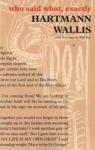
Hartmann Wallis, Who said what, exactly (#BookReview)

Hartmann Wallis, Who said what exactlyNever mind Hartmann Wallis’ question Who said what, exactly, I want to know who Hartmann Wallis is, exactly! You would think the author bio at the front of the book might tell you, now wouldn’t you? But, no. Well, not exactly. There is an author bio, and it does tell you stuff – truthful stuff such as the titles of two previous books he had written – but at the end of it I was none the wiser. I was starting to think that it was all part of a big joke …

And, in a way it is, but more on that anon. First, I can tell you that I did suss out who Hartmann Wallis is – it’s Robin Wallace-Crabbe who has also written under another pseudonym, Robert Wallace. You can read all about him – them – in Wikipedia which describes him “as a curator of exhibitions, literary reviewer, cartoonist, illustrator, book designer, publisher and a commenter on art”. That “cv” goes someway towards explaining Who said what, exactly. 

Now, when Finlay Lloyd sent me this book, a year ago – I’m so embarrassed – publisher Julian Davies wrote “not sure if this strange little book will engage you, but here it is for you to take a look”. Well, it did engage me – from the beginning. However, I am (almost) lost for words on how to write about it, but will give it my best shot.

Davies opens his letter by describing the book as containing “playful, punchy, iconoclastic poetry”. It is that, but I would also add “clever” and “erudite”, although those words could put people off giving it a go. That would be a shame, because you don’t have to understand all the allusions, all the references, to enjoy or even understand the poems. They are best read as playfully as they have been presented – and if you do that, you get the gist, and sometimes get deeper meanings too!

The poems start on the book’s cover, with one called “Left side of the temple of sorrow”. It opens:

‘Think about it God is dead and has left
The intellectual property rights relating to
Just about everything to a bunch of American
Corporations. Way to go He reckoned they said.

The poem then turns to “real” property, and has digs at religious organisations and banks. The opening poem in the book itself mocks – well – poetry (or readers of poetry, or both):

They don’t make poems like they used to anymore,
I’m thinking about poems with stories, the sort of thing
To excite teenagers, to make men languishing in jail
Feel better about their potential …
(from “At the end of the rainbow there’s a pot of gold”)

It then goes on to suggest the sort of “heroic” story that would appeal to “People out here in ‘don’t-give-us-any-more-poetry-land'”, a story, perhaps, about a man who steals from an old man who has fallen over in the street. Are you getting the drift now?

The poems tackle all sorts of subjects, from the dullness of suburbia to the pretensions of art (in its widest meaning); from the smugness of modern life, its sense of entitlement, its concern for doing things the approved way, to the ills (and cruelties) of our world. Take this, for example:

Kids barricaded among, haha, educational toys
With buttons to press, lead free etc., and books
Encoded, decoded to colour in; why not to burn?
(from “Of birds and these”)

And this, on reading

… an anthology
Of 1971 and earlier poetry;
Couldn’t believe the classical references,
The ‘I’m going to grant you
A look into my mind’.
[…]
In the anthology no reference to war raging in Vietnam.
(from “Anthology”)

There is joy in wordplay; there are strange segues; there’s dialogue, characters, and narratives; there are allusions to history, religion, art; there’s pathos, even. These poems keep you on your toes, but they also make you laugh (or grimace).

The poems are supported by illustrations by Phil Day, whom you’ve met before in this blog in my review of Crow mellow. The drawings are black and white, sometimes child-like, sometimes not, sometimes representational, sometimes not, sometimes complete, but mostly more unfinished-looking. In other words, they are a bit wild, and thus support the poetry beautifully, whether or not the link between text and image is clear.

Is this “good” poetry? I’m not sure I’m qualified to tell – and anyhow it’s not really even the point – but I did enjoy the poems. I liked their irreverence, and the heart (and intellect) behind it all.

Hartmann Wallis
(with drawings by Phil Day)
Who said what, exactly
Braidwood: Finlay Lloyd, 2016
??pp. [no pagination provided and I’m not going to count them!]
ISBN: 9780994516510

(Review copy courtesy Finlay Lloyd)

Six degrees of separation, FROM Pride and prejudice TO Northanger Abbey

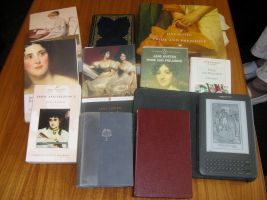
Pride and prejudice book covers

Just a few editions of Pride and Prejudice

I’m only one day back from California and it’s Six Degrees of Separation time againbut I absolutely couldn’t miss this one as our host Kate (booksaremyfavouriteandbest) nominated Jane Austen’s Pride and prejudice as the starting book. It’s a particularly special choice because last month we commemorated the 200th anniversary of Austen’s death. This meme, as you know, requires us players to create a chain of six more books, linking one from the other on whatever basis we like. I don’t think I need tell you that I’ve read Pride and prejudice, which Austen called “my darling child”, but I’ll confirm that, as always, I have also read all the books in my chain. Moreover, because of Austen’s importance to me and to this year, I’m going to try to make every book in this chain relate to her in some way …

Jo Baker, LongbournI’ll start with an example of the sort of book I rarely read – that is, spin-offs and sequels – and nominate Jo Baker’s Longbourn (my review). Longbourn, as the Austen fans among you will know, is the name of Elizabeth Bennet’s family home, and Baker’s novel focuses on the lives of its servants. I read this for my Jane Austen group, and while most of us found the plot rather far-fetched, as is not unusual with this “genre”, we thought Baker’s research into the lives of servants of the time made the book a worthwhile read.

Elizabeth Jolley, The newspaper of Claremont StreetFrom here, I’m going to nominate a book I read long before I started blogging, but which Guy (of His Futile Preoccupations) reviewed recently, Elizabeth Jolley’s The newspaper of Claremont Street (Guy’s review). I could have linked to a Jolley I’ve reviewed here, as one of the reasons I’ve chosen Jolley is because I sometimes call her my antipodean Austen, but I want to nominate Newspaper because she’s a cleaner, in other words, essentially a servant.

Jane Austen, Lady Susan, Watsons, SanditonMy next link is a cheeky one, Jane Austen’s Lady Susan (my review), the book which marks the transition between her juvenilia and mature novels. It’s a cheeky link because the recently widowed Lady Susan, described by another character in the book as “the most accomplished coquette in England”, is poor. She’s desperate to marry well so that she can be kept in the manner to which she had become accustomed, but as the book opens she can’t afford her own house, let alone servants! By the way, this book contains one of those quotes you often find in those “wit and wisdom” or “favourite quotes” of Jane Austen books: “where there is a disposition to dislike a motive will never be wanting”. Love it.

jane Austen, Love and FreindshipI’m going to continue being cheeky, and name another juvenilia work for my next link, Jane Austen’s Love and freindship (sic) (my review). It wouldn’t be cheeky, actually, if I linked it on the juvenilia theme, but, as some of you will know, the recent film adaptation of Lady Susan (starring Kate Beckinsale) was titled (somewhat irritatingly to Austen fans), Love and friendship. What were they thinking? Anyhow, Love and freindship (yes, she spelt it with an “ei” not “ie”) is an epistolary novel written when she was 15 years old. Its humour is broad, but you can see in it the writer she was to become.

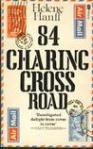
Helene Hanff, 84 Charing Cross RoadAnother epistolary book that I’ve enjoyed, though it’s not a novel, is Helen Hanff’s 84 Charing Cross Road (my review). This is such a classic now that I’m sure you’ll know it but, just in case you don’t, it comprises the delightful correspondence that took place in the middle of the twentieth century between American writer and bibliophile, Helene Hanff, and Frank Doel of Marks & Co, a London secondhand and antiquarian bookshop. It’s the sort of book that booklovers, like me, adore – and I adore it even more because during the correspondence Hanff fell in love with Pride and prejudice and asked Frank to find her a copy. She wrote:

“You’ll be fascinated to learn (from me that hates novels) that I finally got round to Jane Austen and went out of my mind for Pride and Prejudice which I can’t bring myself to take back to the library till you find me a copy of my own.”

Jane Austen, Northanger AbbeySo now, what to choose for my final book? It has to be one of Austen’s, and I’m going to make it Northanger Abbey (my review), not only because it is 200 years old this year, but because it is the one that contains her famous defence of the novel. I’ve mentioned it so many times before, but I’ll quote it again:

… there seems almost a general wish of decrying the capacity and undervaluing the labour of the novelist, and of slighting the performances which have only genius, wit, and taste to recommend them. “I am no novel–reader — I seldom look into novels — Do not imagine that I often read novels — It is really very well for a novel.” Such is the common cant. “And what are you reading, Miss — ?” “Oh! It is only a novel!” replies the young lady, while she lays down her book with affected indifference, or momentary shame. “It is only Cecilia, or Camilla, or Belinda”; or, in short, only some work in which the greatest powers of the mind are displayed, in which the most thorough knowledge of human nature, the happiest delineation of its varieties, the liveliest effusions of wit and humour, are conveyed to the world in the best–chosen language.

How better to end this post than on such a gorgeous description of the novel!

So, I think I’ve done what I set out to do and made this all about Austen, albeit we have dipped our toes briefly in Australia and the USA along the way. I hope it hasn’t been too boring …

Have you read Pride and prejudice (dare you admit you haven’t)? Whether or not you have, what would you link to? 

Monday musings on Australian literature: Australian writers and Hollywood

This will be my last Monday Musings posted from the USA, so I figure I should do at least one post inspired by where we’ve been. I’ve put it together pretty quickly though, as time for blogging is pretty limited, so please forgive all the gaps!

Since this is a litblog, my focus here is the relationship between Australian writers and Hollywood, and I’m narrowing it to the last couple of decades. (This connection, in fact, goes back to the silent movie days, but that would make for an essay rather than the brief post I have time for here.) I should also explain that I am using “Hollywood” to stand for America (a common synechdoche for which I should perhaps apologise, but it suits my California-holiday-post purpose, and is probably pretty accurate anyhow.)

I guess there are political issues that could be discussed here – brain drain, and all that – but I’m not going there. And, anyhow, besides the fact that obtaining enough work can be difficult in Australia, many Australians do seem to keep their feet in both hemispheres.

There are two angles from which this topic can be tackled – Aussie scriptwriters in Hollywood, and Australian writers whose stories have been optioned for film adaptation by Hollywood – and I plan to briefly do them both.

Aussie scriptwriters & Hollywood

Many scriptwriters well-known in Australia have also written for American productions – usually having been identified because of their Australian success. Laura Jones and Andrew Bovell are two such. Laura Jones, for example, worked on Portrait of lady (1996) and Possession (2002). She also wrote for Oscar and Lucinda (a 1997 British-American production of an, admittedly, Australian novel, directed by an Australian, so this is not particularly surprising!). These are all adaptations of novels, in fact, but only one is Australian.

Andrew Bovell, known in Australia for films like Strictly Ballroom (1992) and Lantana (2001), was also scriptwriter on the more recent American-British-German co-production of A Most Wanted Man (2014). Bovell said he was approached for about six or seven projects, via his American agent, after the American release of Lantana. He chose one, set to star Benicio de Toro, but, like many film projects, it doesn’t seem to have eventuated.

Less surprising in this group, perhaps, is Craig Pearce who has worked on many Baz Luhrmann films, including the recent Australian-American co-production, The Great Gatsby (2013). It is worth mentioning, nonetheless, because the film (obviously!) is an adaptation of a major American classic.

One of the most recent Australian writers to make his name as a scriptwriter in Hollywood is poet, novelist, scriptwriter Luke Davies. He was scriptwriter on the co-production, Life (2015), about a Life Magazine photographer and James Dean. He has really established himself, though, for his work on last year’s, Lion, for which he received an Oscar nomination for Best Adapted Screenplay. (He won the BAFTA.) Sure, it’s a British-Australian-American co-production and is an Indian-Australian story, but this must put him on the map in Hollywood. And, in fact, he is now working on an American production, Beautiful boy, which is another adaptation of a memoir (two, in fact, one by a father and one by his son).

Another Australian making his mark in Hollywood – as an actor, director and writer – is Joel Edgerton who wrote and directed the critically-well-regarded film, The Gift (2015). He is now working on another film – as director and writer. It’s titled Boy Erased, and is due for release in 2018. His path is clearly different to that of the preceding names here, with his coming via his acting career rather than a writing background.

While researching this, I discovered an organisation called Australians in Film, which describes itself as “The Industry Association for Australian Filmmakers and Performers in the U.S.” It was founded in 2001, and says that it “supports and promotes Australian screen talent and culture in the United States.” One of its several programs is Gateway LA Script Development which was created in 2015 by its President. The aim is to give Australian screenwriters “the chance to have their script seen by top industry professionals” and it has apparently been successful in achieving that. There were 8 finalists this year, with the winners being a duo, Penelope Chai and Matteo R. Bernardini, whose script explores the Cinderalla myth/fantasy.

Australian novelists & Hollywood

I was going to head this section “Australian stories”, but decided that that’s not quite right, as you’ll see. Of course, Australian novels have been adapted for films in America for the longest time – like, to pick a quick obvious example, British-born Australian novelist Nevil Shute’s On the beach (1959) which was produced and directed by Stanley Kramer.

Hannah Kent, Burial Rites bookcover

Courtesy: Picador

Recently though, it seems that books by Aussie novelists are attracting a lot of attention. I’ll name just a few, which were discussed in The Australian:

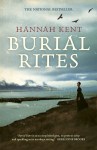
  • Hannah Kent’s Burial rites, a debut novel (my review) which is currently “in development” with Jennifer Lawrence signed on to star. It’s set in Iceland, hence my qualification regarding “Australian stories”.
  • Liane Moriarty’s Truly, madly, guilty and The husband’s secret have been announced or are in pre-production. Her Big little lies has already been made into a mini-series in the USA (2017), starring, among others, Nicole Kidman and Reese Witherspoon. A Los Angeles literary agent, quoted in The Australian (link above), says that “People are just so enamoured of the worlds she creates — she’s captured the zeitgeist of suburbia”.
  • Anna Snoekstra’s Only daughter, a debut novel just published last year and set in my home-city, has been optioned by Working Title, a partner of Universal Pictures.
  • ML Stedman’s The light between oceans was released in cinemas in 2016 (as British-New Zealand-American co-production).
  • Marcus Zusak’s The book thief (my review) was released in 2013 (as a German-American co-production).

Not a particularly original post, I’m afraid, but I didn’t want to miss a Monday Musings. I hope it’s been of some value, even if not particularly edifying.

I’d love to hear from readers here who can add names to this brief discussion!

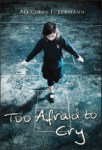
Ali Cobby Eckermann, Too afraid to cry (#BookReview)

ANZ Lit Lovers Indigenous Literature Week bannerHaving reviewed Yankunytjatjara/Kokatha woman Ali Cobby Eckermann’s poetry collection, Inside my mother (my review) for Lisa’s ANZlitLovers Indigenous Literature Week, 2017, I decided to also read her 2012 memoir, Too afraid to cry. It filled in a lot of gaps, which is not necessary to appreciate or comprehend the poetry but which does deepen the understanding.

The memoir’s dedication starts with the lines:

this is a poetic memoir
a story of healing
not burdened by blame

And that is pretty well what it is. It’s not an angry book, so much as a sorrowful one. Sorrow about the abuses and losses that affected her childhood and early adulthood, in particular. The sorrow starts early, when she’s young, and abused. She writes of her uncle rubbing her leg inappropriately, and progressing to assault, though she doesn’t say that because she’s only 7 years old. However, while she may not have the language to analyse what was happening to her, she does have the language to describe the feelings:

I felt the icy wind inside my head begin to blow. I could not move. The icy wind is very dangerous.

This “icy wind” becomes a metaphor throughout the book for the abuse, for her memory of it, and for its impact on her psyche until she can no longer cry – “the ice block had turned to stone, and now there was no moisture left inside me”. Hence the title of the memoir.

So, to summarise the book before I delve any further, Too afraid to cry is the story of a young indigenous baby adopted by a non-indigenous family. It’s a good loving family, with parents who, unable to have children, adopted four – two from the mission – and fostered another. But this family, as loving as it is, is a deeply religious one which does not understand the pain experienced by children from a different culture to its own. The result is that Eckermann is left to contend with racism and abuse that she, too, does not initially understand. Here, for example, is a schoolyard experience:

[I] didn’t notice that they had begun to form a circle around me, but I did notice that the icy wind was blowing inside my head and was starting to freeze my guts. Someone held me while other hands pulled my underpants down. There was a strange noise in my ears, like a faraway scream, but I could still hear the sounds of those doing the laughing and teasing. They said they wanted to know if I was the same as other girls. Someone laughed, saying they didn’t know if ‘boongs’ were different. I was frozen with the icy wind roaring through my body. I didn’t want to know what a ‘boong’ was.

Note the “icy wind” again. As childhood turns to adolescence, Eckermann, who had been an excellent student, begins to withdraw from her family and turns instead to alcohol and drugs to cope with the pain and sense of disconnect. It’s not a surprising story, but it’s a useful one for those who don’t understand what disconnection from one’s own culture can do, particularly in a society where difference is not tolerated. Eckermann learns much later, apparently, of the ridicule her adoptive mother had faced for having aboriginal children.

Anyhow, gradually, after many experiences, painful ones, risky ones and some more positive, Eckermann finds her way to her own culture, and healing begins:

Slowly the stone inside me turned to ice and then the ice began to melt. I felt real tears on my face for the first time in my adult life.

What’s remarkable about the memoir – something you may have guessed from what I’ve written – is her ability to get into her head at the time, to write from the point of view of the age and person she was when the things she describes happened, rather writing them as memory that she is now reflecting and commenting on. Of course the telling of the experience, the choosing of which experiences to tell, is a form of commentary, but I’m sure you get my point.

The memoir is remarkable for other reasons too. It’s told in 92 short anecdotal chapters, which are divided into four parts. The style is spare, with short, simple sentences. This is a book which shows rather than tells. Much of the commentary is conveyed through poems inserted between some of the chapters, such as “Heroin” between Chapters 45 and 46. It’s a short poem, like most of hers, and uses repetition and powerful wordplay on the word “arms”, to invoke prostitution, loving and heroin. The last stanza reads:

in their arms
they survive
a modern world.

Some of the poems appear again – the same or sometimes changed* – in Inside my mother.

Another aspect of the memoir, which adds to its sense of almost mythic universality, though is probably also done to protect individuals, is her minimal use of actual names. Her siblings, for example, include Big brother, Foster brother, and some relations are Aunty and Uncle. She does though name her mothers.

Too afraid to cry is an innovative and evocative memoir, which manages to convey hurt and pain, truthfully, but with a generosity that is humbling.

aww2017 badgeAli Cobby Eckermann
Too afraid to cry
Elsternwick: Ilura Press, 2012
224pp.
ISSN: 978-1-921325-29-8 (eBook)

* Changed, I think. I’m writing this in California, and my copy of Inside my mother is back in Australia.

Monday musings on Australian literature: ACT Litbloggers under way

A few weeks ago I posted on the ACT Litblogging program for which I am a mentor. But, I’ll just recap in case you missed that post. Titled ACT Lit-bloggers of the Future, this is a collaborative program between the ACT Writers Centre and the National Library of Australia (NLA). It provides for two emerging ACT-region writers to attend events at the National Library of Australia and post their experience on the Writers Centre’s Capital Letters blog, as well as for that mentorship from me.

The two bloggers, playwright and performance maker Emma Gibson, and blogger/podcaster and writer Angharad (Tinted Edges), are now well underway. They have posted on three events, and more posts, I know, are scheduled for the next month. The posts to date reveal the variety of programs offered by the National Library, an impressive variety really, when you know that the bloggers, due to their work and other life commitments, have not been able to attend every event available.

Here are the posts published to date:

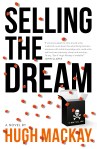
  • Hugh Mackay, Selling the dreamAuthor talk with social commentator and prolific writer Hugh Mackay, held on 6 June, and posted by Angharad. The book was Selling the dream, on the advertising industry, and Angharad, who loves attending author talks – as most keen readers do – enjoyed both the overall experience and what she learnt about advertising, including its increasing role in political campaigns. As you usually do at author talks, she bought the book and had it signed!
  • Presentation on the life and death of botanical illustrator Dorothy English Paty by curator Nat Williams, on 28 June, and posted by Emma. Emma, who has always liked botanical illustration, was throughly engaged by this introduction to Paty (1805-1836), a little-known early Australian amateur artist. The Library has two of her Newcastle sketchbooks in its Nan Kivell Collection and this talk focused on presenter Williams’ research. As Emma says, although there are many gaps in our knowledge about her, the survival of these notebooks, together with research by people like Williams, will ensure that she (and the contributions she made) are not lost to us.
  • NAIDOC 2017 week collection talk titled Our voice, presented by librarian Ryan Stoker on 6 July, and posted by Emma. Described as a collection talk, this event involved Stoker highlighting “a variety of interviews, social histories and folklore recordings” that the Library has collected from Aboriginal and Torres Strait Islanders. As a playwright, Emma is attuned to things aural, and takes her own audio recordings when travelling. Not surprisingly then, she found the talk illuminating, particularly in relation to how this collection at the NLA might help keep indigenous languages alive.

More posts, as I said in my introduction, are coming, including one from Angharad on an author talk by the popular and successful Australian fantasy and historical fiction writer Kate Forsyth. Look for that, and others by our two bloggers, on the Capital Letters blog. You can subscribe to it via the box in the right sidebar.

Meanwhile, our two bloggers would love it if you read these current posts and left them a comment!

You are very likely to hear more about this program later in the year, but I did want to share what’s been done to date – and give a little heads up to the good work being done by the NLA, ACT Writers Centre, and our two bloggers.

A short post today, but I’m sure you won’t complain about that!

Australian Women Writers 2017 Challenge completed

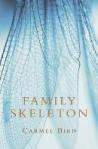
Carmel Bird, Family skeletonI usually write my completion post for the Australian Women Writer’s Challenge, around the middle of the year, even though I plan to take part until the year’s end. As in previous years, I signed up for the top-level, Franklin, which involves reading 10 books and reviewing at least 6, and as in previous years I’ve exceeded this. However, it’s good to get the completion post out of the way before the end of year madness begins!

I have, so far this year, contributed 16 reviews to the challenge, two more than for last year’s completion post.

Here’s my list in alphabetical order (by woman author), with the links on the titles being to my reviews:

Unlike last year’s half-way list, I did review one classic and a book by an indigenous woman author this year. There are other differences too. Last year I’d read just three memoirs (with two of those being hybrid biography-memoirs) while this year I’ve reviewed five memoirs to date. The fiction-nonfiction ratio, though, is still roughly the same.

aww2017 badgeLast year, I ended the post on plans for the rest of the year – and said that they would include reading at least one indigenous woman, Ali Cobby Eckermann, which indeed I did (her Ruby Moonlight). This year, however, I’m not setting out any plans. I do know I’ll be reading Heather Rose’s Stella Prize winner, The museum of modern love, as my reading group is doing that. (We will be reading a couple of other women writers, but they are not Australian.) As for the rest of my reading plans for the year, they are undefined – which means I could very well be as surprised as you by what turns up!

Vale Jane Austen: on the 200th anniversary of her death

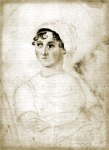
Jane Austen by sister Cassandra

Today, July 18, marks the 200th anniversary of Jane Austen’s death. Unfortunately, because I am travelling I am unable to join my local Jane Austen group’s wake to commemorate her, but I had to do something of course, so I’ve decided to write a post on Austen biographies. I’m partly drawing from my group’s recent discussion of Austen biographies.

Now, if you are not an Austen aficionado and you’ve looked at my list below, you would probably be surprised to hear that very little, really, is known about Austen, and that what is known is not very exciting. Amazon’s entry on Spence’s book includes a quote from a Booklist review which says that “Jane Austen’s quiet life is not very rewarding biographical material.” And Tomalin, writer of probably the most authoritative biography, concludes that Austen “is as elusive as a cloud in the night sky”.

Yet, the biographies keep coming – and if you look (again) at my list below you will see that the number has increased in recent decades. Has any writer had as many biographies written about them than Austen? When my Austen group discussed them, we decided there were different types of biographies: the straightforward (chronological, womb-to-tomb style); those taking a more thematic approach (like Paula Byrne’s The real Jane Austen: A life in small things); and those wishing to explore specific perspectives/angles (like Helena Kelly’s Jane Austen: The secret radical).

Claire Tomalin, Jane AustenStill, we wondered how many of these biographies really have something new to say, or are most simply jumping on the Jane Austen bandwagon – because the fact is that there are many gaps in what is known about her. That’s largely why she’s so “elusive” as Tomalin says. And it’s why most biographies fill out with a lot of context. They either spend a lot of time on her books (some of which you would naturally expect in a literary biography), or they spend a lot of time talking about her times and/or the lives of members of her family. (And there are some dramatic stories there.)

Of course, there’s always the possibility of new information coming to light. Midorikawa and Sweeney’s work on the literary friendship between Austen and Anne Sharp that I reviewed recently, drew heavily on the unpublished diaries and letters of Jane’s niece, Fanny Knight, which they said had not been seriously mined by scholars. They did admit though that they had to “read between the lines of Fanny’s childish scrawl to decipher the obscured truths”.

And if you expected all this life-of-Austen industry to be as meek and mild as many think Austen was, you’d better think again. Austenites (I’ll refrain from using the more loaded Janeite) can be fiery, as the recent contretemps over the new biography by Lucy Worsley and its alleged similarities to Paula Byrne’s 2013 one.

Who knows the real story here, but there is one truth we can universally acknowledge, and that’s that in this anniversary year of Austen’s death, more books will come out about her.

The not-quite-complete list

  • Amy, Helen. Jane Austen (2013)
  • Auerbach, Emily. Searching for Jane Austen (2004)
  • Austen-Leigh, James Edward. A memoir of Jane Austen (1869)
  • Byrne, Paula. The real Jane Austen: A life in small things (2013)
  • Cecil, David. A portrait of Jane Austen (1979)
  • Grosvenor Myer, Valerie. Jane Austen, obstinate heart: A Biography (1997)
  • Honan, Park. Jane Austen: Her Life (1987)
  • Jenkins, Elizabeth. Jane Austen: A biography (1938)
  • Kelly, Helena. Jane Austen: The secret radical (2016)
  • Le Faye, Deirdre. Jane Austen (British Library Writers’ Lives Series) (1998)
  • Lefroy, Helen. Jane Austen (1997)
  • Midorikawa, Emily and Emma Claire Sweeney. A secret sisterhood. Part 1: Jane Austen and Anne Sharp (2017)
  • Nokes, David. Jane Austen: A life (1998)
  • Shields, Carol. Jane Austen: A life (2001)
  • Spence, Jon. Becoming Jane Austen (2007)
  • Tomalin, Claire. Jane Austen: A life (1997)
  • Worsley, Lucy. Jane Austen at home: A biography (2017)

Monday musings on Australian literature: Mid-year awards round-up

As is my wont, I have not been posting this year on all the awards that have been announced  – on their longlists, shortlists or even their winners – though I have done some. It can become a bit overwhelming. Instead, I’ve decided that a mid-year recap might be a useful way to go – so, since we have now passed the year’s halfway mark, that time has come. I’ll mention the awards I’ve chosen to do, in chronological order of their announcement.

Stella Prize

Heather Rose, The museum of modern loveThe Stella Prize is now one of the first awards to be announced in the year, and I did post on the longlist.  From this longlist, a shortlist of six books were chosen:

  • Between a wolf and a dog, by Georgia Blain
  • The hate race, by Maxine Beneba Clarke (my review)
  • Poum and Alexandre, by Catherine de Saint Phalle
  • An isolated incident, by Emily Maguire (my review)
  • The museum of modern love, by Heather Rose
  • Dying: A memoir, by Cory Taylor

And the winner, announced in early March, was Heather Rose’s The museum of modern love, which I will be reading with my reading group later this year.

Indie Book Awards

Helen Garner, Everywhere I lookThe winners of these awards, which are run by Australian independent booksellers, were announced in late March. Several awards are made, which you can check out on their site but those most relevant to my blog are:

  • FictionThe last painting of Sarah De Vos, by Dominic Smith
  • Non-fiction: Everywhere I look, by Helen Garner (my review)

The New South Wales Premier’s Literary Awards

These awards are multipronged and far too complex for me to report on in detail here. You can see the full list of winners, which were announced in late May, on Wikipedia. However, those of most relevance to me were:

  • Christina Stead Prize for FictionThe museum of modern love, by Heather Rose
  • UTS Glenda Adams Award for New Writing: Letter to Pessoa, by Michelle Cahill

ABIA, or the Australian Book Industry Awards

These awards, announced in late May, only a few days after the NSW Premier’s awards, are also multipronged. You can read the full list on the ABIA website, so again I’ll just share the most-reelvant-to-me award here, the  Literary fiction of the year award, which went to The last painting of Sarah De Vos, by Dominic Smith.

I should add that the hugely popular bestselling Australian author Di Morrissey was inducted into the ABIA Hall of Fame, and also that, for the first time this year, an award was made for Audiobook of the year, which nicely recognises the popularity and value of this form of “reading”.

Oh, and interestingly, the overall winner, Jane Harper’s The dry, was also the overall winner at the Indie Book Awards earlier in the year. So, the overall winner and the literary winner of both these awards were the same. The shortlists at both are judged by independent panels.

Miles Franklin Shortlist

While the Miles Franklin Award won’t be announced until later this year, it’s such a significant award in Australia that I’m going to share the shortlist here which was announced in June. The shortlist is:

  • Emily McGuire’s An isolated incident (Picador) (my review)
  • Mark O’Flynn’s The last Days of Ava Langdon (UQP)
  • Ryan O’Neill’s Their brilliant careers (Black Inc Books)
  • Philip Salom’s Waiting (Puncher and Wattman)
  • Josephine Wilson’s Extinctions (UWAP)

Nice to see a gender mix, and good representation from smaller publishers, including two university presses!