Jane Austen, Sanditon (Unfinished) (#Review)

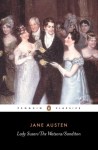
Jane Austen, Lady Susan, The Watsons, Sanditon

I first read Jane Austen’s unfinished novel, Sanditon, in the early 1970s, when I was deep into my love of Austen and had to read everything she wrote. This meant reading her two unfinished novels (the other being The Watsons which I’ve written about here twice before) and her Juvenilia, parts of which I’ve also discussed here. A little later I read the Sanditon completion “by Jane Austen and Another Lady” that was published in 1975. Since then I’ve read Sanditon again, but before I started this blog.

Austen started Sanditon in January 1817, and wrote 12 chapters before leaving it in mid-March, presumably because of her ill-health. She died in July of that year. Like The Watsons, it tantalises Austen fans – even moreso in a way, because we have no information about how she planned to finish it. Here’s what we have …

The novel is set in Sanditon, which Mr Parker and his partner, Lady Denman, are developing into a seaside resort. Due to a carriage accident at the novel’s opening, Mr and Mrs Parker stay at the home of the Heywoods in the country some distance from Sanditon. When they return to Sanditon two weeks later, they bring the Heywoods’ eldest unmarried daughter, the 22-year-old Charlotte, with them. Much of the rest of the novel is seen through her eyes as she meets the various residents of, and visitors to, Sanditon. Like all of Austen’s novels, it is set in a small place and focuses on a few families. But, was it moving in new directions?

The book’s subject is the new fascination with health, and the associated belief in the value of sea-bathing. Some of the fragment’s best comedy comes from descriptions of Mr Parker’s two sisters and brother, Susan, Diana and Arthur, and their various ailments, most, if not all, of which seem imaginary. Indeed, sensible Charlotte suspects “a good deal of fancy” in their “extraordinary state of health.” In her opinion, the number of their “disorders and recoveries” that are “so very much out of the common way, seemed more like the amusement of eager minds in want of employment than of actual afflictions and relief”. She suspects most of their sufferings were

from fancy, the love of distinction and the love of the wonderful. – They had charitable hearts and many amiable feelings – but a spirit of restless activity.

They are kind, and well-intentioned, but she feels

there was vanity in all they did, as well as in all they endured.

Seekers of information about early 19th century health attitudes and practices can learn something from these few chapters.

But there’s more to Sanditon than this health and hypochondria theme, and it relates to money. Of course, money features in Austen’s previous books, but mostly in association with marriage prospects, as it does also in Sanditon. But there’s something new in this novel, something broader about how money operates – about the making of money, and  consumerism. Mr Parker’s sisters are actively involved in finding people to go to Sanditon to take advantage of its health benefits. Mr Parker is thrilled to see cottages in the village “smartened up with a white curtain and ‘Lodgings to let’” signs, but Lady Denman is concerned that lodgings are “underlet”. She is therefore pleased to hear about the possibility of more people coming, through the exertions of Mr Parker’s siblings: “That sounds well”, she says. “That will bring money”. These people include West Indians, who are known to have “full purses” and to “spend more freely.” Lady Denman knows, however, that ensuring stable economics is not simple:

But then, they who scatter their money so freely, never think of whether they may not be doing mischief of raising the price of things – and I have heard that’s very much the case with your West-injines – and if they come among us to raise the price of our necessaries of life, we shall not much thank them Mr Parker.’

Before this, just after Mr Parker had enthused about Sanditon, Mr Heywood had said:

‘Yes – I have heard of Sanditon,’ replied Mr Heywood. – ‘Every five years, one hears of some new place or other starting up by the sea, and growing the fashion. – How they can half of them be filled, is the wonder! Where people can be found with money or time to go to them! – Bad things for a country; – sure to raise the price of provisions and make the poor good for nothing – …’

All this suggests Austen was aware of the changes coming to post-war England. What a shame, she didn’t get to show us what she was thinking.

I’m not going to explore this idea further, nor the tantalising appearance in Chapter 12 of “half-mulatto” Miss Lambe, but move on to a couple of delicious “bits”. One that intrigued me this read is a passing reference to something that’s often discussed, now, regarding the degree to which we separate art from the artist where the artist’s values or behaviour contradict our own. In Sanditon, the man we expect to be the villain, Sir Edward, praises poet Robert Burns. However, our sensible commentator Charlotte is more measured:

‘I have read several of Burns’ poems with great delight,’ said Charlotte as soon as she had time to speak, ‘but I am not poetic enough to separate a man’s poetry entirely from his character; – and poor Burns’s known Irregularities, greatly interrupt my enjoyment of his Lines.

If Charlotte is Austen’s mouthpiece and our guide to life in Sanditon, as she seems to be, this could also be Austen’s condemnation – but with so little of the novel finished, I wouldn’t want to say definitively. However, I love that she raises this contentious issue.

Another “bit” I want to share relates to Austen’s awareness of “modern” expressions. Here she is on the introduction of two sister to Sanditon society:

… the Miss Beauforts were soon satisfied with ‘the circle in which they moved in Sanditon’ to use a proper phrase, for everybody must now ‘move in a circle’, – to the prevalence of which rotatory motion, is perhaps to be attributed the giddiness and false steps of many.

This is pure Austen, complete with a sting in the tail.

I’ll finish here by saying that although Sanditon comprises an early draft of just 12 chapters, and we don’t know where Austen was going, there’s much to enjoy in it – and to ponder, particularly regarding her writing direction – if you love Austen’s work.

Jane Austen
“Sanditon”
in Lady Susan, The Watsons, Sanditon
London: Penguin Books, 1974
ISBN: 9780141907901 (eBook)
Kate Chopin, Her letters (#Review)

Kate Chopin

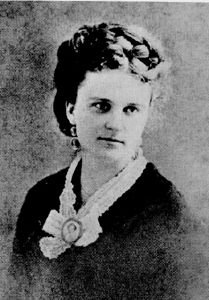
Kate Chopin (Public domain, via Wikipedia)

There are a few American authors who, when they pop up as a Library of America (LOA) Story of the Week, I try to read. These include Edith Wharton, Willa Cather and Kate Chopin. I don’t always manage to read them, but I have read the latest Kate Chopin story they’ve published, “Her letters”. And my, what a powerful one it is. Yes, I know, most of her stories are powerful, but this is certainly up there.

The story is pretty simple, plot-wise, though I shall avoid spoiling it as you may wish to read it from the link below. It starts with a woman, sitting by a “generous wood fire … in an ample fireplace” though outside is “a leaden sky in which there was no gleam, so rift, no promise”. She’s decided that she needs to destroy some letters that, we soon realise, relate to an adulterous affair. She’s been meaning to do this for four years in fact, but they’ve “sustained her … kept her spirit from perishing utterly”. However, she believes her days are numbered and, like many diary-writers and letter-owners, she fears their impact on those left behind, particularly on one “near to her, and whose tenderness and years of devotion had made him, in a manner, dear to her.” Her husband, in other words. The “in a manner” here is telling, isn’t it?

But, she can’t do it. Chopin’s description of her pain at the idea of losing them is visceral. What should she do? She lights on a solution, which is to leave them “in charge of the very one who, above all, should be spared knowledge of their contents.” So, she ties them back up, and leaves them with this note:

“I leave this package to the care of my husband. With perfect faith in his loyalty and his love, I ask him to destroy it unopened.”

Of course, she does die first, and he finds the bundle of letters with the note. (On a day much like that day we’d met her: “The day was much like that day a year ago when the leaves were falling and rain pouring steadily from a leaden sky which held no gleam, no promise.”) What do you think he does?

It’s another powerful story from Chopin, about love, passion, adultery – and also honour and trust. It is a story of its time, but there’s a universality to it too. What is so good about it, though, is the controlled way Chopin unravels the plot, and her language. It’s a little full-blown to our ears, perhaps, but she sustains melancholic tones so well, while at the same time conveying character and emotion.

Without spoiling the ending, I’ll share another excerpt. When the husband finds the bundle of letters, he guesses, of course, that they contain a secret, one that may unlock to him something about this wife whom he’d known “to have been cold and passionless, but true, and watchful of his comfort and his happiness.” He’s affected, but he ponders:

… she had embodied herself with terrible significance in an intangible wish, uttered when life still coursed through her veins; knowing that it would reach him when the annihilation of death was between them, but uttered with all confidence in its power and potency. He was moved by the splendid daring of the act, which at the same time exalted him and lifted him above the head of common mortals.

The conclusion is predictable when you get there, but Chopin leads you carefully along with the husband as he works through the problem. The story has no simple answer, and certainly no condemnation, which is Chopin’s way. She doesn’t judge or pontificate. Rather, she leaves it open for (or, forces!) the reader to consider the ways in which our actions affect others, not to mention the issue of love, passion and marriage, and the accommodations we do or don’t make.

As with other stories by her – including “Fedora”, the last one I reviewed – Chopin didn’t immediately find a publisher for “Her letters”. LOA says:

When she finished the story in December 1894, Chopin sent it off to The Century, which had published several of her previous submissions. By this time Chopin was a well-known and respected writer, but the story was rejected—almost surely because it dealt with a woman’s adulterous affair. The magazine’s editor, Richard Watson Gilder, “felt that fiction should be pleasant and avoid the horrifying, the indelicate, or the immoral,” as Chopin scholar Per Seyersted puts it.

Vogue, though, had no such compunctions – and published it as they had other previously rejected stories of hers. One day I’ll read a biography of her …

Let me know what you think, if you read it (just 8 pages) at the link below.

Note: My other Kate Chopin reviews are A pair of silk stockings, After the winterA respectable womanDésirée’s baby, Morning walk and Fedora.

Kate Chopin
“Her letters”
First published: Vogue, April 11 and 18, 1895
Available: Online at the Library of America

Monday musings on Australian literature: Literary awards’ judging panels

Alexis Wright, TrackerIn my Stella Awards post last week, I shared an excerpt from winner Alexis Wright’s acceptance speech in which she applauded the diversity in this year’s shortlist, noting that it included “Indonesia, Iran and Sri Lanka, as well as two Aboriginal writers.” In that post, I also quoted Stella’s Executive Director, Aviva Tuffield, as saying Stella still has work to do “in terms of diversity”. That’s true – for all of us – but Stella has made a good start.

Now, I’m not going to do thorough research here of the achievements regarding diversity in our recent awards. For a start, just defining diversity is tricky enough. There’s gender, sexual identity, ethnicity and indigeneity, disabilities (or different abilities) of all sorts, and much more to consider. Then, there’s the issue of measurement. An easy measure would be percentage of representation in the population versus percentage of being listed for or winning awards. With gender, we know that women are roughly half the population, so you would think that they should comprise, over a reasonable time period, roughly half the listed and winning authors for awards. But, is this the most appropriate measure, and can we easily measure it for all diversities?

Regardless, we would accept, I think, that diversity, however we measure it, still has a way to go. What methods, then, can we use to improve it. Special awards, like the Stella, is one approach – and there are many others – but in this post, I’d like to consider the composition of the judging panels. First though, I need to clarify that I recognise that while we want to increase diversity, the downside is that to do this we need to label – and not everyone wants to be labelled. So, I won’t get my discussion here completely right I think, and further, I apologise if I offend anyone. It’s not my intention to do so.

Now, to look at some panels …

The Stella Prize does a reasonable job. Because it is an award for women writers, its five-person judging panels tend to be dominated by women with, admittedly, anglo-women tending to predominate. But in 2018 there was a man, critic James Ley, and the women included an Australian-born woman of Chinese-Malaysian heritage, Julie Koh, and a gay indigenous writer, Ellen van Neerven. In 2017, the man was, author and broadcaster, Benjamin Law, who happens to also be gay and of Malaysian background, and the women included an indigenous woman, the academic and editor, Sandra Phillips. Similarly in 2016, the panel included a man, critic Georgie Williamson, a woman Alice Pung, whose parents were Cambodian refugees, and another woman, Suzy Wilson, not indigenous as far as I know, but the founder of the Indigenous Literacy Foundation.

By contrast, the 2017 Fiction and Poetry panel for the Prime Minister’s Literary Awards looks all anglo to me, albeit the five-person panel was strong on women members, with four women and one man. Their previous panels are similar, except the gender balance has favoured men. Similarly the 2018 Miles Franklin Literary Award’s five-person panel looks all anglo too, with two men and three women, albeit of diverse professions – academics, a journalist, a bookseller and the mandated Mitchell Library librarian!

On the other hand, there’s the panel for the 2018 New South Wales Premier’s Literary Awards. It’s a large one comprising 16 people. Presumably subsets of these judge different categories of the awards, so it’s difficult to identify who will judge the Christina Stead Award for Fiction which, for comparative purposes, is the one I’m interested in. However, let’s just look at the 16. It includes seven men and nine women. Of the men, at least one is indigenous, the journalist and broadcaster Daniel Browning, and the others include a man from an Indian background, and a Muslim. Of the women, at least one is indigenous, the author Melissa Lucashenko, and another is the Singaporean-born poet Eileen Chong. So, some attempt at diversity here.

The page for the 2018 Victorian Premier’s Literary Awards, which have already been announced, provides panel breakdowns for the main categories. The fiction panel comprised four people, all women, and included the indigenous author, Jeanine Leane, and reviewer Thuy On whose name suggests an Asian background, but I don’t know for a fact.

So, overall, looking at these very few recent examples, women are certainly well represented on the panels, but from the information I have (as bios aren’t readily available for all judges and where they are they don’t always provide the “labelling” information needed for my post), other “sorts” of diversity is more hit-and-miss.

This is, obviously, a very brief and patchy survey. There’s a major research project here, looking at panel composition, comparing them against their choices, and so on – but this is not something I can commit to. My aim is simply to raise the issue, than argue a definitive case. I don’t want to denigrate all the hard-working judges out there – a job I, for one, would hate. But, we do need to consider that no matter how qualified the judges are, no matter how fair they try to be, diversity of background and experience is needed to mitigate the problem (or appearance, even) of unconscious bias. I would, therefore, love to see more diversity on the panels.

Interestingly, I didn’t, in my brief research, find a lot of commentary about the composition of judging panels, from a diversity point of view. However, I did find one, regarding the ages of the judges, from the ABC’s Books and Arts Daily on last year’s Miles Franklin shortlist. Another diversity issue to consider:

The book is beautifully written. Its emotional terrain will register most effectively with older readers. A younger judging panel would look elsewhere for a winner. But this is a judging panel in which four of the five judges are over 50.

So grumpy Fred is in with a chance.

Just for the record, Grumpy Fred (Josephine Wilson’s Extinctions) did indeed win.

Do you have any experience or knowledge you can add to the discussion – and, anyhow, what do you think? Is this issue important?

Charlie Archbold, Mallee boys (#BookReview)

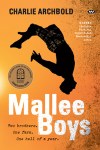
Charlie Archbold, Mallee boysReading synchronicities strike again. Both my last read, John Clanchy’s Sisters, and this one, Charlie Archbold’s Mallee boys, are family stories with a guilt about the death of a family member at their centre. Both, too, are set in non-urban areas, Clanchy’s in coastal New South Wales and Archbold’s in the dry Mallee region of western Victoria. Here, though, the similarities end. Clanchy’s book chronicles a month in the lives of three late-middle-aged sisters, and the person who died was their four-year-old baby brother – a long time ago. Also, Clanchy is a male writer, writing about women, in third person voice. Archbold, on the other hand, is a female writer writing about men. Her subjects are farmer, Tom, and his two sons, Sandy and Red, 15 and 18 at the beginning. The death they are dealing with is their wife and mother, who died just a year before the book opens. This novel, which spans a year, is told in the alternating first person voices of the two brothers.

Mallee boys, however, also reminds me of another book about a farming father and two sons whose wife and mother had died, Stephen Orr’s The hands (my review), but while Orr’s book sits squarely in the literary adult fiction fold, Mallee boys is Young Adult fiction. Its concerns are, therefore, a little different, but it is worth looking at. It won the 2016 Adelaide Festival Unpublished Manuscript Award, and has now been shortlisted for the Children’s Book Council of Australia Book of the Year for Older Readers Award.

Now, that was a long intro – even for me – but I have managed, I think, to include in it a fair introduction to book and its main storyline. I’ll add that while the story is told in the alternating voices of Sandy and Red, the main protagonist is Sandy. He starts and ends the story, and he is presented as the more thoughtful, more reflective, of the two boys. Also, he is not the one carrying the guilt. This is his brother, who was with his mother when she, a pedestrian, was hit by a car.

Like Clanchy with his women characters, Archbold captures the voices of the boys and their father well, their tensions, their squabbles, and most of all the challenges they face in running their home without a mother’s touch! “Chops” for dinner again tonight says it all. Late in the novel, the father Tom admits to being lonely, but his pain is not the focus, this being a YA novel. Sandy is in Year 10, and as a rural boy, is at schooling cross-roads. Their farm can’t afford to send him to boarding school in the city, but can he get a scholarship? Red, on the other hand, is not the scholastic type. He has left school and works the farm with his father, with the usual father-son tensions. Added to this are the boys’ relationships with their friends – not all of whom are “suitable” but Red, in particular, can’t be told and needs to learn the hard way. And, of course, there are girls.

This is all told naturally, neither sensationalised nor sentimentalised, but with enough drama, and humour, to keep readers, particularly the intended audience, interested. I wouldn’t call this a crossover novel exactly, but I did enjoy the read despite its YA intent.

Underpinning the narrative, the plot, is the setting, and this also the London-born Archbold, who has lived and worked as a teacher in the area, evokes beautifully. The setting is the Mallee, which borders the riverland area in which Laguna’s The choke (my review) is set. It’s a dry area, known for sheep and dryland crops like wheat. Farming is tough here, but communities are close. This comes through too, with locals helping each other out, in the natural way people do, something which is surely good for young readers to see and relate to. I do love to see good – but realistic – role modelling in media!

In addition to this, there’s the language. I enjoyed the descriptions of the Mallee, such as Sandy’s of Lake Bonney:

When the river runs low, the water in the lake huddles to the middle, leaving it fringed with smelly sticky mud. It’s a strange place. Because of the drought a lot of the trees around the edge have died. Bony old river red gums stick in the ground like a perching cafe for pelicans and kookaburras.

Tom, the father, tells Red what’s kept him going, despite his loneliness:

“I know it’s the rhythms of nature that have kept me going. This isn’t a glamorous landscape, but it’s in my veins.”

And I enjoyed how the boys describe feelings. Here’s Sandy describing his brother Red:

He acts hard because it gives him control but I know he’s all mushed up inside. Like a beetle with soft guts crammed in under the shell.

And here’s Red, just after his girl has suddenly broken up with him without explaining why:

And so she’s left me hanging, like a daggy bit of wool caught on a fence. Knotted in with no way to break free.

As you’d expect in a coming-of-age story, lessons are learnt, wisdom gained. Sandy says near the end, and this is surely one of the novel’s themes:

… because time doesn’t heal all wounds, like Dad once told me, but it does scab over them.

It sure does. And every now and then those scabs break off and have to re-form, n’est-ce pas? An effective metaphor I think.

Mallee boys, then, is an engaging book about growing up, about facing some of the hardest challenges, and most of all about being male. It’s a book that has something to offer both rural and urban young Australians, and I hope it gets widely read.

AWW Badge 2018Charlie Archbold
Mallee boys 
Mile End: Wakefield Press, 2017
285pp.
ISBN: 9781743055007

(Review copy courtesy Wakefield Press)

Stella Prize 2018 Winner – and how the Stella is tracking (pun alert!)

I don’t always write announcement posts here – even when I write short and or longlist posts, because the news is usually so immediately known. What can I add? However, I’ve decided to post on last night’s Stella Prize announcement for a couple of reasons, one being the significance of the winner and the other being a statement released by Aviva Tuffield, the Prize’s Executive Director.

First, the winner. If you haven’t already heard, it’s Alexis Wright’s Tracker. This is the second time a non-fiction work has won since the award started in 2013. The first non-fiction winner was Clare Wright’s wonderful The forgotten rebels of Eureka (my review). For a full report of the announcement, check Stella’s page which contains Wright’s acceptance speech, the judge’s comments and an introduction to the book itself. I’ll just share a few highlights.

Alexis Wright, TrackerIn her speech, Wright commented on the diversity in this year’s shortlist:

The great celebration today is that we have many exciting, diverse voices in the world of Australian letters. We encompass the world right here in our literature. And even in this shortlist that has been judged as being some of the very best of women’s literature published in the past year, we demonstrate our remarkable diversity, internationalism, and maturity as people of many backgrounds, and here including Indonesia, Iran and Sri Lanka, as well as two Aboriginal writers. A literary dialogue that allows us to have greater knowledge and understanding of each other, and acceptance of difference, and respect for each other in our diversity, is what will make Australian literature truly marvelous, relevant, and far stronger than it has ever been.

Well said … I have so far read the book set in Indonesia (Riwoe’s The fish girl), and one of the two Aboriginal writers (Coleman’s Terra nullius). I plan to read more, because it’s an exciting list.

One of the things that interests me about this book, besides its being indigenous literature, is that Wright – not surprisingly once you know her work – plays with form, in this case what I’d call the biography-memoir (or vice versa) or what is formally being called “a collective memoir”. Wright said this in her speech, after explaining the significance of her subject, Tracker Tilmouth:

I thought very deeply about how to develop this book about him by using our own storytelling principle of consensus. I was not always sure that my approach would work as I continued on a long journey of six years from conception to finish, and gathering a mountain of material, but I was sure collaborative storytelling was the right way, and that it did work in the end is what matters. I am grateful for the storytelling skills of our culture and carried them into the book, which allowed, as Tracker himself wanted, everyone to speak for themselves, to tell their own part in the story.

I love this description, not only because it articulates what she was trying to do, but because she alludes specifically to “the storytelling skills of our culture” which is something I have mentioned in posts in the past, but a little hesitantly for fear of sounding like I was “exoticising” indigenous people. The thing is that when I read indigenous Australian stories, or hear indigenous Australians tell stories, I am frequently conscious of a very specific, and lively, storytelling culture.

In her statement announcing the winner (out of 170 submissions), judges’ chair, Fiona Stager said:

The winning book is unique in the history of Australian letters and it artfully fulfils all the Stella Prize’s criteria: it is excellent, engaging and original. We invite all readers to immerse themselves in a history, a landscape, a time and a story that is heartbreaking, poignant and humorous. […]

… the judges wish to acknowledge the craft of the author and pay tribute to the richness of the memories shared by the many people she interviewed. This book will enrich and change the understanding of readers. A man like Tracker Tilmouth could change our world. It takes a writer like Alexis Wright to change the world of Australian letters.

Stella Prize’s page on the book provides more information, including the judges report, an interview with Wright and a book extract.

In her speech, Stager also paid tribute to Aviva Tuffield. It was largely Tuffield’s statement about the Prize, released the day before the announcement, that committed me to this post. In it, Tuffield articulates what the Prize has achieved since its inception in 2012.  She reiterates why the Prize was established in the first place: “hard data had proved that women writers were underrepresented in three key areas:

  • as winners of the major literary prizes;
  • as authors of the books that received the most review and media coverage; and
  • as authors of the books on the school curriculum.”

She said those founding the prize appreciated that “much of this inequality arose from unconscious bias”, as evidenced by data showing that “‘blind’ orchestra auditions and CV assessments yield such different results to what happens when faces and names are attached.” However, whether conscious or unconscious, the impact is the same, and it’s serious because it “sends clear messages about whose voices, whose stories and whose experiences are most important.” Hence, the prize …

And, six years on, she says, the effects are clear (for the details, please check her statement at the link above):

  • women are now winning more prizes generally, and being increasingly shortlisted, across all major prizes.
  • more women writers are being added to school curricula. Victoria’s English curriculum now has gender parity in terms of authors listed, as opposed to being just over 30% of the list in 2014.
  • the ‘kinds’ of books that are now being considered of the ‘highest literary merit’ has shifted, with “novels focusing on contemporary family life or relationships – using those as microcosms for society at large – and often with female and even child protagonists” now being recognised.
  • general awareness of the breadth and quality of Australian women writers has increased. She says that “When Stella started many people told me that they didn’t realise there were so many good women writers in Australia – and especially writers of nonfiction (as Stella is for fiction and nonfiction books)”. She argues that Stella’s longlists and shortlists have raised awareness of the breadth of women’s writing, and that this awareness has spread beyond these lists to other writers who have said their work is being taken more seriously.
  • the ripple effect created when people see more women writers being recognised. “The landscape”, she writes, “changes: role models are provided, unconscious bias is dismantled, stereotype threats are banished.”

Now, some of this is more anecdotal than “proven” and not all of it is only due to the Stella, but the Stella Prize is, I’d say, making a significant contribution. And it will continue to do so because Stella’s job is not done. More is needed, she says, “in terms of diversity and extending Stella’s benefits to all women writers” and more also, as the #metoo movement has proved, “to shift the power structures of our patriarchal society” to ensure that women are heard. Finally, as we’ve seen before – and as is evidenced in other spheres like the gender pay gap – “things can slip back very quickly.”

So, I say thanks to Aviva Tuffield and the Stella Team. I am proud to count myself as a Stella Spark.

John Clanchy, Sisters (#BookReview)

John Clanchy, SistersLocal writer John Clanchy has appeared a couple of times in this blog – as the author of the short story collection, Six: New tales (my review), and as the person launching Stephanie Buckle’s collection, Habits of silence (my review) – but never for one of his novels, until now. Sisters has an interesting history: it was originally drafted at the La Muse writers retreat in southern France in 2008, and has now been published by the retreat publisher, La Muse Books.

Given I introduced the versatile, and too little known, Clanchy in my review of Six, I’ll turn straight to discussing this latest novel of his. Briefly, Sisters tells the story of three late middle-aged sisters and the month they spend together at the family home on the north-central coast of New South Wales where the eldest, Sarah, now lives. The other two sisters, Grace and Rose, are twins. There is a mystery about why Sarah has asked them to come, though Grace is pretty sure she knows why, and we readers are pretty sure we know what it is that Grace believes she knows! It is, however, a little more complex than that – as you would expect. So, the first thing to say is that there is a plot.

The next thing to say is the obvious one – this is a book about sisters. There are, in fact, very few men, and I wondered how Clanchy had managed to capture women so well, because the book succeeds or fails on the basis of his ability to convince us with his women. Well, I had forgotten his dedication, which is “To my sisters Mary, Helen, and Elizabeth / and to Brigid, as ever”. (Brigid is his partner, I believe). I don’t know whether he has brothers too, but clearly he has spent a lot a lot of time with women. No wonder he writes them so well – and with such sensitivity.

So, pretty quickly their individual characters are established. Sarah, as the oldest, is the bossy planner who expects to control their time together. Indeed, she’s orchestrated this month because she has “thinks to discuss … things … to tell.” Grace, the older twin by 49 minutes (!), is widowed and has had breast cancer. She’s a counselor and is seen as the empathetic, reliable one. Rose, by contrast, has had a few husbands and even now is pining for her latest lover back in the city. She can be flighty and a bit oblivious, but can surprise Grace with her perception nonetheless. Clanchy captures the shifting alignments and allegiances between the three beautifully – Sarah’s separation from the twins, Sarah and Grace’s protectiveness towards Rose, Rose and Grace’s natural connection, and so on.

Gradually, Clanchy develops his plot, interweaving the sisters’ time together with stories of their childhood. While they were relatively happy, their growing up was not without drama, recalling Tolstoy’s famous opening to Anna Karenina. Their disabled four-year-old brother drowned in a cave at the beach while under their care, and their father left home for France to live with his mistress. How and why all this happened, what they made of these events as young people and now as adults, and who knew and knows what, underpins the plot. Mystery and secrecy rule. The end, when it comes, is fairly predictable, but then this is not unusual in a well-constructed story. It’s the journey to that point, and the little details in the telling, that make most books worth reading. Here, it’s also the warmth and generosity in the tone that make it such an engaging read – particularly if you are of a certain age!

Of course, Sisters is about more than its plot of unfolding secrets – and the epigraph provides a clue. It comes from TS Eliot’s Four quartets: “We are born with the dead: / See, they return, and bring us with them.” Besides the fact that an old death drives the plot, there is the bigger issue of mortality. The sisters are in their mid-to-late sixties, and one has already had cancer. Rose believes, in fact, that Sarah wants them there to talk about wills. She doesn’t, but mortality is behind her request for them to come – and awareness of mortality imbues much of the sisters’ thoughts and communications over the month. Early on, in Chapter 3, Sarah shows them the work she’s done to restore their (appropriately named) Grandfather Forrest’s orchard:

‘I had to rip the old one out,’ Sarah said without turning her head. ‘It was done for. Over sixty – and over the hill,’ she added. Reminding each of them of a personal fact.

Supporting the plot and theme is Clanchy’s writing. It flows easily from description to dialogue and its various, sometimes funny, set scenes, all supported by evocative turns of phrase. Here’s lively Rose “within whose house of memory window after window was now flying open of its own accord”. And this is thoughtful Grace:

The past was another kind of train journey. One undertaken with only random glimpses of the landscape outside to anchor or trouble the memory …

Memory is, of course, part of the picture – what we remember, how we remember, when we remember, and who remembers what.

There are a few other characters who make brief appearances – those from the past via the sisters’ memories and two policemen, particularly the young, uncomfortable Constable Demko who first visits the sisters to check on neighbours’ reports of nightly activity in the orchard, “Music, people running about, loud voices, laughter …”. It is, of course, the sisters enjoying their summer evenings, “the original Bacchantes” as Sarah tells him.

And here I’ll leave it. Sisters is a gentle, thoughtful novel – sad, but realistically wise. It’s about life and death, regrets and missed opportunities, secrets and guilt, and most of all about love and forgiveness. On the surface, it seems simple – it’s certainly an easy read and it could feel clichéd with its family-secrets-driven plot – but in fact it’s a philosophical book from an older writer reflecting on how we make sense of our lives. His conclusion, I’d say, is that the answer is in the quality of the relationships we forge, and the generosity with which we maintain them. This is the stuff of life.

John Clanchy
Sisters
Labastide Esparbairenque: La Muse Books, 2017
259pp.
ISBN: 9791097233006 (eBook)

(Review copy courtesy La Muse Books)

Monday musings on Australian literature: #8wordstory

Do you like writing challenges?

Last year I started a Monday Musings sub-series on Australia’s state writers centres. So far I’ve written on four, and I should be getting on with it. However, I can’t resist returning, today, to the Queensland Writers’ Centre (previous post) to share a wonderful campaign they ran late last year. Called #8wordstory, it asked participants to pen a story in 8 words. The response was astonishing.

#8wordstory ran, officially, from 30 October to 26 November last year, and, as they say on their About page, involved asking “everyone, young or old, writer and non-writer alike, to share a story …”. The project was a partnership with three companies, but most significantly with goa.com, a large Queensland billboard and signage company, who have a Community Partnership Program. Are you getting the picture? Because what happened was that each week 20 8-word-stories were selected by the judge – author Nick Earls – and displayed on digital billboards around Brisbane, and via QWC’s social media, such as Twitter (which is where I discovered it, and add it to my list of ideas for Monday Musings.)

In a Books + Publishing report on 27 November – the day after the campaign ended – the QWC is quoted as saying that it “surpassed all expectations with over 10,000 entries submitted”. This report goes on to say that the entrants included “the entrants were New York Times bestselling authors, Australian award-winning writers, Australian and international publishing houses, the Queensland Police Service and hundreds of school children.” Wow, eh?

So, why 8 words? QWC explains this on the above-mentioned About page. They say that “a billboard gives you a few seconds to read, register, and understand. And 8 words gives you just enough canvas to make an impact. It is the perfect number where storytelling and advertising meet.” They provided Tips for people to help them get started, tips which look generally useful as well as to the goal of writing a story in 8 words. The tips are (and they are further elaborated on their page):

  • Start with a simple idea: this and the next tip, in particular, make me think of haiku
  • One thing should happen
  • Don’t use too many characters: haha, sounds sensible to me, otherwise your story might be all people and no action.
  • Find an emotional tone
  • Use all your senses
  • Write long first, then take out unnecessary words: sounds like my blog post writing! Except I don’t take out enough words, I know.
  • Punctuate or perish: all I can say to this is Yes, Yes, Yes!
  • Make every word count: well, yes.

They also had a special page of advice and resources for schools.

And, of course, they have a page listing ALL the stories, though when I say page, I actually mean 83 of them, presented in reverse order of submission. The stories apparently had to be written to one of four themes – Home, Love, Change, Play. There is a search box at the bottom of each story page, though it doesn’t work as well as I’d like it to.

I’m not sure about copyright, but I’ll share just a few assuming that it’s OK as long as I don’t share them all!

Surrounded by complete idiots. Damn those mirrored walls. (Donny Hawthorne, Change)

I woke with wings, stolen in a dream. (Isobelle Carmody, Change)

Once upon a time there was the earth … (@julescdr, Home)

Holding her fractured cheek she said “I’m sorry”. (Rebecca Hafner, Home)

In the pages, another world is my home. (JWilliams, Home)

You shouldn’t confuse ‘Don’t! Stop!’ with ‘Don’t stop’. (Lynne Lumsden Green, Love)

Your letters in the compost. The roses blooming. (Nike Sulway, Love)

He complimented her smile and then erased it. (jessicalim, Love)

Words can inspire and words can destroy. Choose. (Byron, 12, Love)

Can we all fit in the band wagon? (Jane Meehan, Play)

All seven numbers! Panicked, she swallowed the form. (@KrissyKneen, Play)

With confidence he plays the cards he’s dealt. (@VacenTaylor, Play)

Some are by published authors known to me – Isobelle Carmody, Nike Sulway and Krissy Kneen  – but the others I chose because they attracted my attention in my random browse and offer some variety in terms of tone and intent.

Author Jessica White (whose Entitlement I’ve reviewed here) blogged about her #8wordstory, which was selected for a billboard. Check it out to see the inspiration and how it looked. And Queensland crime author, MT Ellis, also blogged her billboarded story.

If you’d like to make your comment an 8wordstory, I’d love it. But if, like me, you suffer from verbal diarrhoea, don’t let that stop you commenting. I’d love to hear your thoughts regardless …

Six degrees of separation, FROM Memoirs of a geisha TO …

Last month I complained about the start of autumn because although I love autumn, I hate winter. This month, another nail went in the warm-weather coffin, with the ending of daylight savings. Oh dear … The good news for me, though, is that I have actually read April’s starting book for the Six Degrees of Separation meme, which is currently hosted by Kate (booksaremyfavouriteandbest). Please click the link on Kate’s blog-name for her explanation of how it works. Meanwhile, I’ll get on with the meme, which starts with Arthur Golden’s Memoirs of a geisha. As always, I’ve read all the linked books.

Arthur Golden, Memoirs of a geishaI’m guessing many of you – unless perhaps you are millennials – will have read Memoirs of a geisha. It was quite the book when it came out. It’s an historical fiction novel, set in Japan before, during and after World War 2. Golden, an American writer, wrote it first person in the voice of a geisha. It was controversial at the time because he had based his story on a geisha whom he’d interviewed. He had promised her anonymity but then included her as a source in his acknowledgements.

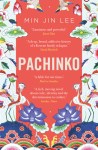
Min Jin Lee, PachinkoAnother historical fiction novel set in Japan by a non-Japanese author is Min Jin Lee’s Pachinko (my review). There is a slight difference here, though, in that American-based Min Jin Lee was born in South Korea, and her novel’s focus is the experience of Koreans in Japan. Wikipedia, quoting a PBS report, says that it’s “the first novel written for an adult English-speaking audience about Japanese Korean culture.” I certainly found it fascinating.

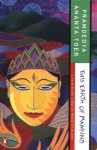
Pramoedya Ananta Toer, This earth of mankindNow, I should probably showcase my reading of Japanese literature here, as I’ve read a fair variety over the years, but instead I’m going to do something different, and choose a book by another author with a three-part name, Indonesian writer Pramoedya Ananta Toer and the first of his Buru quartet, This earth of mankind (my review). The book presents his idea of nationalism, in response to the long colonisation of his country.

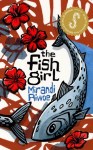
Mirandi Riwoe, The fish girlAnd now you might guess where I’m going … it’s to the recent book I’ve read that was set in Indonesia, and which also, in a different way, responds to the impact of colonialism on the country. In this case, however, the emphasis is on its impact on a particularly powerless part of the Indonesian community, the women. The book is Mirandi Riwoe’s The fish girl (my review).

Jo Baker, LongbournAnother interesting thing about Mirandi Riwoe’s book is that it’s a response to another piece of fiction, in her case to W. Somerset Maugham’s “The four Dutchmen”. So that aspect is going to be my next linking point. The book is Jo Baker’s Longbourn (my review) which retells Jane Austen’s Pride and prejudice from the point of view of the servants. While there were plot elements I didn’t like, the historical research underpinning it made it a good read.

Roslyn Russell, Maria Returns Barbados to Mansfield ParkI’m going to stick with the retelling idea here, and link to another retelling of a Jane Austen novel, Roslyn Russell’s Maria returns: Barbados to Mansfield (my review). Like Baker, Russell underpins her novel with research, but in her case it’s the history of Barbados, and particularly of slavery there. Our disgraced heroine is redeemed by supporting the abolitionist movement.

David Mitchell, The thousand autumns of Jacob de PoetThis brings us to the final link and it’s a bit spurious – but it’s neat so I’m going to stick with it. It’s spurious because, whilst slaves are mentioned, they are not the focus of the book. It’s neat because it’s another historical fiction book set in Japan by a non-Japanese writer, this time an English one. The book is David Mitchell’s The thousand autumns of Jacob de Zoet (my review).

Well, I’m proud of myself this month, because after travelling very conservatively the last two months, this time we’ve spread our wings. True, we’ve spent a bit of time in Japan, but we’ve also been to England, Indonesia and Barbados! We’ve also traversed time from the late 1700s to the late 1900s, and we’ve read two male authors amongst our six. On the negative side, we’ve stayed pretty much with historical fiction. There’s always something to improve …

And now, my usual ending question: Have you read Memoirs of a geisha? And whether or not you have, what would you link to? 

Claire G. Coleman, Terra nullius (#BookReview)

Claire G Coleman, Terra nulliusClaire G. Coleman’s debut novel, Terra nullius, was my reading group’s third book for this year. The first two – An unnecessary woman (my review) and The sympathizer (my review) were well liked – but not so Coleman’s book. In fact that I was the only one who liked it. So, instead of my usual review, I’ve decided to tease out some of the issues my group had with the book, and see where I end up. I didn’t take notes at the meeting, so I’m relying on my memory. I may not have got all the issues down, or down correctly, but I’ll give it my best shot. In doing so, I’ll also draw on GoodReads because its users tend to be general readers, like you finding reading groups.

First though, a brief introduction for those who don’t know the book. Terra nullius starts off reading like an historical fiction novel about the colonial settlement of Australia and the concurrent dispossession of our indigenous people. Coleman’s world of Settlers and Natives, of Troopers and Trackers, of Missions to which stolen children are taken for education, of a Department for the Protection of Natives, and so on, mimics colonial Western Australia in particular, but it’s not long before hints start to appear that all is not as we’ve assumed. Before halfway, all is revealed, and we realise we are not reading historical fiction, but speculative fiction set in some near future. It is, as a result, not about indigenous Australians versus white colonists, but about colonised people of all races versus settler-colonists (“grey fellas”) from somewhere else. This realisation is unsettling, and clever, because it forces non-indigenous readers to switch identification from the colonisers to the colonised.

Now to my reading group’s response. The over-riding criticism was that it was repetitive and tedious. This is the criticism I could most understand, because partway through the novel’s second half I felt the momentum flag a little, which I put down to the structure. It’s multi-stranded, with the stories of different people or groups running parallel for a significant portion of the book. The strands include Native Jacky who is on the run; Settler Sister Bagra who runs a Mission; Settler Sergeant Rohan who leads the posse which is hunting Jacky; Esperance and her camp of free, renegade Natives; and deserter-Settler Johnny Star who is taken in by some rebel Natives. Fortunately, just as I wondered whether the separate groups – the separate strands – were ever going to come together, two things happened. A new character, Father Grark, appeared, and the strands did start to coalesce. These, along with other factors including the writing itself, were enough to prevent the book’s becoming tedious for me.

However, my reading group friends weren’t alone in their criticism. One GoodReads reviewer described it as “gratingly repetitive” and another overall positive reviewer had “some minor quibbles”, of which the main one was that “some elements of the story were repetitive”.

Another criticism made by some of my group was that they weren’t interested in any of the characters. Some GoodReads reviewers concurred. One didn’t “connect with any of the characters” and another said that “the characters, the individuals, are basic, with no complex motivations, no desires”. This surprised me, because I was interested in several of the characters, and I looked forward to their next appearance. One was Esperance, the young woman living with that renegade camp of Natives. Another was Jacky, who is the first character we meet and who, for over half the novel, struggles on alone, trying to survive and keep one step ahead of his pursuers. There are, though, a lot of characters, and I can see the argument that many of them have “no complex motivations”. However, I’m not sure that deep characterisation is always essential for speculative, dystopian fiction, such as this book is. Anyhow, regardless of this point, I can’t accept the argument that none have desires. Esperance and Jacky, for example, certainly have desires. Survival is one, and for Jacky, returning to his home, his country, is a major driving force.

One of the positive GoodReads writers said, and it reflects my response, that “importantly, Coleman’s more ‘extreme’ characters – such as Sister Bagra, in charge of a Native ‘orphanage’ – are frighteningly familiar, and it [is] these elements of the story that will linger.” She is not, in other words, a particularly complex character, but given what I know of colonial history, she is believable. I’d argue that that’s sufficient.

Then there were arguments that the book was too heavy-handed, too obvious, not nuanced enough. Again, there were GoodReads reviewers who agreed, one saying the “messaging was much too overt” and another that it could have been more subtle. However, I’m not sure that I’ve read much dystopian fiction that is subtle. On GoodReads I found a perfect example of how differently we “read” books. One criticised the chapter epigraphs, which come from various fictional “sources”, saying that “the book could have been done much more subtly without the chapter-starters explicitly comparing the colonisation to the colonisation of Australia”, while another said that Coleman’s “use of ‘archival documents’ at the beginning of each chapter gave the book rich perspective.” Again, I concur with the latter, and some in my group agreed that this feature of Coleman’s book was effective and worth exploring further.

It seems that those who are well-versed in speculative fiction’s colonisation stories – in my reading group and on GoodReads – felt that Coleman’s book didn’t offer anything new. A member in my group felt that it was so clearly Western Australia’s story that Coleman may as well have made it Western Australia. I agree that the “facts” aligned closely with the Western Australian experience, but I didn’t see that spoiling its speculative layer. In a way, it increased its effectiveness because, using the GoodReads quote above, it felt “frighteningly familiar”. There is an argument to be had, I suppose, about how “familiar” speculative fiction can be before it’s no longer speculative, but for me it worked.

Other concerns were raised in my group, but there were positives too, particularly regarding the quality of Coleman’s descriptive writing. She knows the landscape well and captures the heat and light, not to mention the weirdness of Australian desert vegetation beautifully:

He [Sergeant Rohan] did not relish another night under the alien trees, the twisted limbs, the hanging bark, the wrong colour: their waxy grey-green leaves too hard, almost glassy.

There’s more to like about the writing than this, however. From the first page when we meet Jacky on the run, I loved Coleman’s voice. It’s direct but evocative, it’s serious but peppered with a light, cheeky touch that uses throwaway lines and afterthoughts to great effect:

Dinner was a disappointment: sure the meat was fresh but it was tough and tasted like all the other Native meats – quite unappetising, only to be relished by the desperate. Good thing they were desperate then.

So, I was impressed by this book. My heart engaged with the characters who were struggling to survive their nightmarish world, while my mind was intrigued by what Coleman was doing, by her layering of historical experience within an imaginative framework, by her grounding us in a familiar story, and then overturning it to force us to see it from a different perspective. I’m not sure I followed all her intellectual twists and turns but I certainly got the point about invasion – and about the cruelty people inflict on each other in its name.

He [Johnny Star] had learned, through his friends, that the bent, broken drugged and drunk state of those surviving near the Settlements was not the habitual state of Natives. The truth was, it was a sort of depression brought on by what they had lost, brought on by being dominated and controlled by another people. Who could not be depressed, being treated like animals in a land that had once been theirs alone.

Without giving away the details, the ending is generally what you’d expect from a dystopian scenario, but it’s not without hope, without defiance too. A great read … at least, I thought so!

Lisa (Anzlitlovers) loved the book, as did Bill (The Australian Legend).

Note: I haven’t cited the individual GoodReads reviewers, but they can be found at the site’s page for the book.

AWW Badge 2018Claire G. Coleman
Terra nullius
Sydney: Hachette Australia, 2017
294pp.
ISBN: 9780733638312

Monday musings on Australian literature: Novels retelling other literary works

Mirandi Riwoe, The fish girlThose who read my blog regularly will guess what inspired this post – Mirandi Riwoe’s The fish girl (my review), which is her response to W. Somerset Maugham’s short story “The four fat Dutchmen” (my review). It got me thinking about how many other Australian novelists have done this sort of thing …

However, when you start researching this topic, my what a rabbit-hole you find! Firstly, what do you search under? Do you use words like “tribute” or “homage”. Well, no, because I wasn’t necessarily seeking novels which celebrate the original in that positive sense. Other search terms I tried were “responding to” (but even though I entered “novels responding to novels”, I mostly got hits about how readers respond to literature), “retelling”, “reworking”, and “riffing”. All these retrieved a variety of hits that contributed something, although when I added the term “Australian” into the mix, the results petered out somewhat. I also scouted around Wikipedia thinking surely there was something there to help me. I found various “list” pages, such as List of modernized adaptations of old literature and List of books based on works, but these were limited in their value, partly because they weren’t very comprehensive. However, during my Wikipedia travels, I did find a new term which is pretty perfect, I think, Parallel novels. One of the sources given for this article was from the West Milford Township Library, which defines the parallel novel:

A parallel novel owes its basic structure to a work by a different author. It can borrow a character and fill in his story, mirror an “old” plot or blend the characters of one book with those of another.

There is also, of course, the term “fan-fiction” but it’s somewhat tangential to what I was looking for – and is, to my mind, a separate group, albeit with some overlapping.

So, what was I looking for? Something more one-off, like, say, Lloyd Jones’ Mr Pip (Great expectations), Jane Smiley’s One thousand acres (King Lear), Jean Rhys’ The wide Sargasso Sea (Jane Eyre), or Margaret Atwood’s The penelopiad (Homer’s Odyssey) (my review), all of which I’ve read and enjoyed. In other words, I wasn’t looking for novelists who had jumped on the bandwagon of a famous name (like Jane Austen, for example) or who wanted to continue a story they loved just because they loved the story or its characters. No, I was looking for novelists who wanted to explore a story from a different angle, often with some political or philosophical intent, though not necessarily so. There is, of course, a fine line in all this, and I certainly don’t want to offend authors who engage in the more popular style of “retellings”. After all, they’ve written a novel, which is more than I’ve done!

A few Australian parallel novels

I have read all the (few) books I list below, but some before blogging. If there’s a link on the book title, it’s to my review.

Geraldine Brooks’ March (Louisa May Alcott’s Little women): Brooks answers the question of what was the sisters’ father, Mr March, doing while he was away from home at the Civil War? It enabled Brooks, who is married to Civil War tragic Horowitz, to look at the Civil War from the point of view of an idealistic minister. He confronts the cruelty of war, not to mention his own failings, and learns that there are no simple answers to the rights and wrongs of war.

Peter Carey’s Jack Maggs (Charles Dickens’ Great expectations): As Brooks does in March, Carey fills in the story of a largely absent character in the original, the convict Magwitch. By having him return from the penal colony as a successful man, Carey forces readers to question issues like class, success and the power of money.

David Malouf Ransom

UK edition cover

David Malouf’s Ransom (section of the Iliad Books 22-24): Now, I have to admit that while I loved this book because Malouf writes so beautifully and so compassionately, I did wonder a little why he decided to write it. This is because, unlike the previous two books I’ve listed, he does not, as far as I can tell, retell the story in any major way, though he does flesh it out more, and in so doing, I suppose, he gives it a new slant. He also introduces a new character, Somax the cart driver, who provides an opportunity for Malouf to further develop Priam’s character. In the end, I decided that the book is about daring to dream – regardless of whether you are successful or not – and about the power (importance) of stories.

Mirandi Riwoe’s The fish girl (W. Somerset Maugham’s “The four fat Dutchmen”): As I wrote in my very recent review, Riwoe tells the story of the Maugham’s nameless, mistreated Malay girl, from the girl’s perspective. Although Riwoe tells her story third person – as against Maugham’s observational first person narrator – she gets into Mina’s head and creates in her a lively, resilient but ultimately naive and, more importantly, powerless young woman who is no match for the men who control the colonial and traditional worlds in which she lives.

Roslyn Russell, Maria Returns Barbados to Mansfield ParkRoslyn Russell’s Maria returns: Barbados to Mansfield Park (Jane Austen’s Mansfield Park): Russell’s book falls to some degree in the fan-fiction category, but it also works as parallel literature because it picks up the story of the disgraced Maria Bertram and imagines what might have happened to her. Could she redeem herself? Russell uses Maria as an excuse to explore the slavery issue, which is tantalisingly referred to in Mansfield Park but not explored. It’s a point of ongoing (some might say endless) fascination for readers and critics of this intriguing Austen novel!

There is a question germane to all this, which is whether you need to have read the original before you read the retelling. I’d argue that the work must stand on its own, as I think the above novels do. Knowing the original should surely enhance the read – besides that little fillip of pride when you recognise an allusion! – but it shouldn’t make the read.

What do you think? And, while we’re at it, are you interested in parallel novels? If you are, I’d love to hear your favourites.