Monday musings on Australian literature: War-time reading tastes, World War 2

Continuing last week’s brief survey of war-time reading habits…

World War 2

And then we come to the Second World War. Here’s The West Australian again, this time in July 1940, less than a year after the war had started (a bit like our 1915 World War 1 report last week.) The article is headed, “Light Reading Popular. Perth’s Wartime Tastes.” It says that:

Wartime readers prefer light humour and detective novels to political works or discussions of international affairs. This was the verdict of a Perth book-seller and librarian when asked whether the public reading taste had changed since the beginning of the war. For a long time before the war, it was stated, books on international affairs were first favourites but this was no longer so. There had been a remarkable increase among library subscribers in the demand for detective fiction.
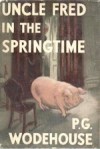
PG Wodehouse, Uncle Fred in the Dreamtime

And yet, it continues, “the unexpurgated edition of Hitler’s Mein Kampf (royalties in which go to the Red Cross) had sold well.” Did you know that about the royalties? Anyhow, it goes on to say that booksellers in the east of the country report similar interests, with A. P. Herbert’s General cargo and P. G. Wodehouse’s Uncle Fred in the springtime being best sellers, and “historical novels and light travel books dealing with countries outside the political maelstrom” also selling well.

Another July 1940 newspaper report on wartime reading tastes comes from Launceston’s Examiner. It starts by saying that people are sick of reading about Hitler, and that one male library visitor pronounced that “All he wanted to read about Hitler now was his obituary!”

The article says that most of the Launceston public library’s users “demand ‘light’ reading” but that “that does not necessarily mean fiction.” People are also interested in “non-fiction that is easy to read, such as short autobiographies and travel”, particularly for “travel books descriptive of countries affected by the war” (which counteracts somewhat the Perth report above about travel book preferences.) As for autobiographies, it says that “those about Royalty of any country are always widely read.” Interesting!

The article says that

most readers say that with the war over-shadowing most things, they seek books that will be purely a distraction from serious thoughts, necessitating the least possible concentration. For that reason, fiction is in greater demand than ever and detective stories the most popular of all the many classes of literature handled at the library to meet varied tastes.
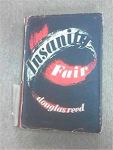
Douglas Reed, Insanity FairThere is an exception to the disinclination for “the ‘heavier’ political type of book” – Douglas Reed’s Insanity fair. It “is still one of the most sought books of all types. There is always a waiting list for it.” I had not heard of him or it, but Wikipedia says that “Insanity Fair (1938) was one of the most influential in publicising the state of Europe and the megalomania of Adolf Hitler before the Second World War.” (You can download it for free from archive.org.) Another exception, this time for books “avoided because of great length”, is Gone with the wind. Since being published in 1937, it apparently “has never rested on the library shelves.”

Also in July 1940 – were these journalists feeding off each other? – was an article in Melbourne’s The Age titled “Reading in wartime. Escape Books”, with the by-line Investigator. It’s a long article – around 1000 words. It poses a number of questions: have tastes changed; should in fact people be reading at all given the “mighty effort” being undertaken “to overcome the foe”; and, if people do continue to read “what kind of books do wise and well-balanced minds recommend to thoughtful Australians?” Don’t you love the idea of “wise and well-balanced minds”?

The article then briefly mentions the challenges faced by readers, including the reduced output from publishers, irregular supply, and “the natural indisposition to spend money on expensive books.” However, Investigator says, “literate homo sapiens must be intellectually fed.” Indeed, s/he quotes Poet Laureate John Masefield, who advised that

While we must, of necessity, be deeply interested in all that is written and broadcast concerning the war, let us keep reading some quiet book to steady our minds. In other words, to preserve our poise, our cheerfulness and sanity, have on hand some quiet, absorbingly interesting book, divorced from politics, warfare, national culture and Ideologies, east or west.
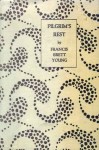
Francis Brett Young, Pilgrim's restWith this advice in mind, Investigator then gives a suggested reading list from “one experimenter.” It comprises “literature of release, diversion and escape from which the experimenter had derived real refreshment since the war began to press heavily upon heart and mind.” The list is diverse, but includes:

  • Such is life, by Tom Collins (aka Joseph Furphy), the new edition with an introduction by Vance Palmer.
  • On the Barrier Reef, by S. Elliott Napier: seems like a non-fiction book about the Barrier Reef. Napier was a banker, solicitor, journalist, and author, among other things.
  • Two of J. B. Priestley’s and Angela Thirkell’s latest novels.
  • Pastoral Symphony, by Aldyth Williams: a gentle memoir, I’m guessing, given its subtitle is “a recollection of country life”.
  • Pilgrim’s rest, by Francis Brett Young: described in GoodReads as “tale of gold lust, gentle romance and the violent industrial unrest which shook the Rand in 1913.” Clearly escapist.

Our “experimenter” also lists books of essays and sketches (one described as containing “pleasant writings”), books of Australian verse, some biographies, and “the three last numbers of the Cornhill Magazine — killed by the war in December, 1939, after 80 years of placid life.” Oh dear, poor Cornhill!

Investigator goes on to say that this list may not represent Australian readers overall, because the “experimenter” has “a sensitive mind, needing release from mental strain”. In fact, Investigator says, data from two different libraries in Melbourne shows that there is “no marked swing in the direction of the literature of escape.”

Nearly two years later, however, in February 1942, Adelaide’s The mail has an article titled “Reading tastes change under war conditions”. This article too quotes a librarian’s experience, Mr CM Reid of the Adelaide Circulating Library. He says that in times of peace Adelaide readers “prefer well reviewed novels, books on current affairs, and a moderate ration of ‘thrillers'”, but that

War time, however, brings a revival of interest in spiritualism, and all kinds of books on mediumism which have never been taken down for years, except to be dusted, are asked for at the counters.

He also notes “a much greater interest in Biblical prophecy since the war began.” The writer suggests that this interest in prophecy, astrology and the occult, “seemed to indicate that some people’s minds were troubled and confused, and that they were seeking comfort rather than information.”

These readers, though, are apparently not “the more serious readers” who, Mr Reid says,

seem to be reading both better books and lighter books since war began. On the one hand they are anxious to be well informed, and all good new books on world affairs and on other countries are sought after; but the same subscribers are also reading many more thrillers, as if for relaxation and escape from world problems.’

And finally, from Ipswich’s Queensland Times in January 1943 comes a report on “people’s tastes” from a librarian. He (it is a he) said that

reading was definitely on the increase in Ipswich, and in addition there was an increase in the demand for the better class of books. More than ever inquiries were for good travel books, biographies, and the historical novel, while anything on sociology and international affairs also was readily taken.

He did admit, though, that “the demand for light fiction remained keen.”

However, supplying this increased interest in reading was a challenge because the war was affecting the output and availability of books. Normally, he would add around 250 new books a month to his library, he said, but he was now lucky to “obtain 40 to 50”, most of which came “from abroad.”

So there we have it, a view of what Australians were reading during World War 2 – from Perth across to Adelaide, then down to Launceston, back over the seas to Melbourne and finally up to Ipswich.

Did anything interest or surprise you?
My literary week (13), it’s (mostly) all about Aussies

This last week or so we’ve been on the road again, severely cutting into my reading time, but literary things have been happening, nonetheless.

National Bookshop Day, 2018

Readings Kids, Carlton

Readings Kids, Carlton

Yesterday, August 10th, was, as many of you know, National Bookshop Day and I did, in fact, visit a bookshop, Readings in Carlton, Melbourne. I bought Gerald Murnane’s Border districts, which brings me one step closer to reading this Miles Franklin shortlisted book. Daughter Gums and I also visited, next door, the Readings Kids bookshop, where she bought Alison Lester’s Rosie sips Spiders for a baby shower she was attending this weekend.

It was so hard not to buy more, but you all know how behind I am in my reading so you’ll understand my abstemiousness!

I’d love to hear what you did – if you are an Aussie – to support the day?

Alison Lester Gallery

A couple of days before National Bookshop Day we were driving to Melbourne from Canberra via one of the long routes, in this case via Cann River. It was an interesting drive that took us through some quite dramatic landscapes – from the shimmering yellow-white colours of the Monaro in drought to the lush green of south-east Victoria which is not!

Alison Lester GalleryOn Day Two we overnighted at Foster, in order to visit Wilson’s Promontory, before driving on to Melbourne the next day via Fish Creek. Now, Fish Creek is a very pretty little town that also happens to be the home of the Alison Lester Gallery – yes, the Alison Lester who wrote (and illustrated) the book Rosie sips spiders mentioned above. Fish Creek is a lovely little town, and is in the region where Lester was born, grew up and still lives. We bought books here for our new Grandson Gums. The Gallery sells Lester’s books plus numbered prints of her beautiful book illustrations. It also has a little library nook where you can read her books before you decide to buy them. Unfortunately Lester wasn’t there, but you can organise to have your books signed if you want to (and don’t mind waiting for your books!)

BTW Alison Lester was one of Australia’s Inaugural Children’s Laureate from 2011 to 2013, which I wrote about back then.

The Wife and RBG

One of our Melbourne traditions is to have a meal and see a movie with Daughter Gums. We usually go to Cinema Nova (across the road from Readings Bookshop.) It’s a big complex, but not at all like those big impersonal suburban multiplexes. The cinemas are mostly small, and many have rather idiosyncratic layouts, but the movie selection is wonderful. We decided to see The wife, starring Glenn Close and Jonathan Pryce, and adapted from Meg Wolitzer’s novel, that I haven’t read. It focuses on the responses and feelings of the wife of an author who is told he has won the Novel Prize for Literature. If you don’t know the story, I don’t want to spoil it, but it is a great film for booklovers, and, particularly, for women booklovers! I enjoyed seeing Glenn Close again in a meaty role. The story is full of issues to chew over about gender, morality, pride, vocation, relationships over the long haul, and about how a door chosen can have unexpected ramifications down the line.

Ruth Bader Ginsburg

Ruth Bader Ginsburg, by Supreme Court of the United States (Supreme Court of the United States (Source 2)) [Public domain], via Wikimedia Commons

Then, suddenly finding ourselves with some extra free time, Mr Gums and I took the opportunity to also see the documentary RBG about the US Supreme Court justice, Ruth Bader Ginsburg. As documentaries go, this takes a pretty standard form – a combination of archival footage, contemporary footage, interviews with Ginsburg and with friends, family and colleagues. Wikipedia quotes film reviewer Leslie Felperin who says:

…there is something deeply soothing about RBG, a documentary that, like its subject, Supreme Court Justice Ruth Bader Ginsburg, is eminently sober, well-mannered, highly intelligent, scrupulous and just a teeny-weeny bit reassuringly dull.

As I said, traditional in form, but the subject is so intelligent and her contributions to thinking about women’s rights so relevant beyond the USA, that the film kept us engaged from beginning to end. She is a fascinating woman with an inspiring capacity for clarifying the complex.

Bangarra Dance Theatre’s Dark Emu

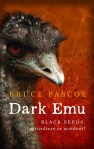
Bruce Pasco, Dark emuNow, we didn’t quite see Bangarra Dance Theatre’s performance of Dark Emu this week but we did see it very recently so I’m sneaking it in here. This is Bangarra’s interpretation of Bruce Pascoe’s book Dark emu (my review) in which he argues that indigenous Australians were not hunter-gatherers but had an agricultural practice, a practice that better proves, in legal terms apparently, their sovereignty or ownership of the land.

I wondered how they would balance the abstraction of dance with the literalness of the theory Pascoe presents (a theory that requires evidence of all sorts of agricultural practices) without, somehow, being prosaic. The dance, the props (which helped convey activities such a corralling animals, damming water, storing food), the lighting, and the music (which mixed traditional sounds with more suggestive modern ones) kept the audience on track with the story being told, although I understand Canberra reviewer Michelle Potter’s point that we didn’t always comprehend the “meaning” of what we were seeing in terms of the theoretical argument. For Mr Gums and me, though, these concerns were not strong enough to spoil the spectacle of Bangarra’s dancing. The moves, the shapes, the energy – we can never get enough of them and we did “get” the main threads of the narrative. (And, I suspect a second viewing would make a big difference. It is sometimes tricky to separate out spectacle from meaning first time around.)

Canberra Writers Festival and the Griffith Review 60: First things first

Yesterday (9 August) was, as you probably know, the UN’s International Day of the World’s Indigenous Peoples. I had planned to get this post completed by then, but, being on the road (again), it didn’t happen. I don’t think that matters a lot, though, as we should be caring about Indigenous Peoples every day until the disparities between us are removed, n’est-ce pas?

So now, my post. The title may look a bit strange. It’s because this post was partly inspired by my wanting to mention the Canberra Writers Festival. This year is its third under its current iteration, and the theme has remained the same: Power, Politics and Passion. Now, some of us literary types, are a little disappointed by the Festival because of this focus. We want more literature, as in literary fiction, but what we get is quite  lot politics. I understand this. We are Canberra, the national capital, and this is a way of positioning our Festival as something different from others around the nation. Fair enough I suppose – it’s just not what I would prefer.

However, there are sessions that I’m very interested in, and two of these relate to indigenous Australian literature and culture. They are:

  • GR60: First Things First: A panel discussion inspired by the recent Griffith Review, the one numbered 60 and titled First Things First. It was inspired by the Uluru Statement from the Heart, and the panel comprises some of the contributors to that edition, Dr. Sana Nakata, Shireen Morris, Paul Daley and Melissa Lucashenko. It is moderated by Dr Sandra Phillips.
  • An Evening with First Nations Australia Writers: Comprises poetry readings by Ellen van Neerven, Yvette Holt, Jeanine Leane and Charmaine Papertalk Green, followed by a panel discussion titled Sovereign People – Sovereign Stories, involving Kim Scott, Melissa Lucashenko, and Alexis Wright, and moderated by Cathy Craigie.

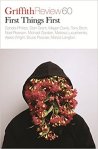
Griffith Review No. 60Now, I’m not always very good at doing homework for writers’ festivals, but I have started reading the Griffith Review in preparation for that panel. I haven’t got very far, having only read editor Julianne Schultz’s introduction “Whispering in our hearts”, indigenous constitution lawyer Megan Davis’ piece “The long road to Uluru”, and Alexis Wright’s poem “Hey ancestor!”

For this brief introductory post, I’m just going to focus on Davis’ piece. Griffith Review’s bio for her says she is “a constitutional law professor and Pro-Vice Chancellor Indigenous at the University of NSW. In 2011 she was appointed to the Prime Minister’s Expert Panel on Recognising Aboriginal and Torres Strait Islander Peoples in the Constitution, and in 2015 she was appointed to the Referendum Council and designed the council’s deliberative constitutional dialogue process.”

This process – the First Nations Constitutional Dialogues – is the one that resulted in the Uluru Statement from the Heart. It was a rigorously defined and executed process that was, she writes, “quite different to the usual tick-the-box consultation.” It had to be, given the diversity of the groups involved, the importance of the work they were doing and the significance of the outcomes they desired – which was essentially to advise the government on a process for recognising the sovereignty of Aboriginal and Torres Strait Islander peoples in the Australian Constitution. Davis writes that

A concrete model of recognition was needed to focus the nation’s attention and move the project forward. Uluru eventually provided the model.

In this article, she describes clearly, and in detail, the recent political history of “the progress toward recognition”, and then the development of a dialogue process aimed at ensuring that the results would be valid and authentic. It involved a Civics education module, so that the participants would understand the western democratic system within which they were working. This is an important point I think. We are not talking revolution here but a willingness to work with the wider Australian people and the government to resolve the ongoing issue concerning constitutional recognition of indigenous Australians – and all that that entails.

The article is excellent, and makes some significant points, including:

  • that recognition of indigenous Australians in the constitution must be more than symbolic – it must be substantive.
  • the importance of truth and justice, of the fact that the truth must be told and understood before justice can be achieved. She reported that “There was an overwhelming view in the dialogues that a nation cannot recognise people they do not know or understand. The Aboriginal experience in Australian history is critical to recognition.” A valid point – and one on which progress is being made but not fast enough.
  • why the Voice to Parliament is so important – which includes that it “could provide a front-end political limit on the parliament’s power to make laws for Indigenous peoples.” In other words, it could head problems off at the pass, avoiding the current situation where inappropriate or ineffective or, worse, discriminatory legislation is enacted, which then costs money and time to challenge.

Indeed, in terms of priorities, she writes:

The First Nations Regional Dialogues ranked the Voice to Parliament as the primary reform priority. The next priority was treaty or agreement-making. The third was truth-telling.

How gut-wrenching then for this priority to have been dismissed so summarily by Prime Minister Turnbull, as it was within four months of the announcement. Many of us are still shaking our heads.

I could say more because this is a rich essay – but this seems to be a good point on which to finish for the moment. I’m sure I’ll be saying more after I attend the session at the end of August.

Monday musings on Australian literature: War-time reading tastes, World War 1

Rudyard Kipling, Sea warfare

First pub. 1916

For the longest time I’ve understood that during war-time people turn to lighter forms of entertainment, to musicals in film, for example, or to escapist books in their reading. However, the truth – of course – is more complex, as I discovered in Trove’s digitised newspapers. I was fascinated by how often the matter was, in fact, discussed in papers of the say – and so am sharing a very small selection of those discussions here, with you. Because …

I have, I admit, only done a brief search of Trove. There’s a lot of material there. However, I hope what I’ve found is representative of how it went … I have, at least, managed to represent the continent, reasonably well.

World War 1

During the war

In Melbourne’s The Argus in July 1915, the writer says that

Since the war begin the taste of the reading public has changed considerably and less attention is now given to works of fiction than formerly.

The evidence for this comes from “the annual report of the trustees of the Public Library, Museums, and National Gallery of Victoria”. This report said that “the demand for newspapers and periodicals dealing largely with war questions has been very great and several files of newspapers have had to be duplicated” but that there was, overall, a decrease in the number of borrowers and of books read, particularly in fiction. That puts paid to the entertainment theory doesn’t it – though this was early in the war. Perhaps things change when wars drag on?

Perhaps it did, because in February 1916, the Newcastle Morning Herald and Miners’ Advocate, reported on reading stats from Melbourne’s Athenaeum, a public institution that included a subscription library. They found a significant increase in fiction borrowing in the previous year, while borrowing in “geography, voyages, travels, and descriptive works” was nearly halved – “a rather remarkable falling off”, the paper said – and there was a similar, near-halving, in “biography, speeches, and correspondence.”

Post-war

Ten years after the war, that is in January 1928, The Brisbane Courier had a short piece titled “Literary tastes”. It referred to wartime tastes, stating that “During the tragic years of warfare there was a “run” on light and breezy books evidently to distract the mind of the reader from the sterner realities of life.” In other words, tastes did seem to change when the war wasn’t over in a year!

Anyhow, after that, they say, tastes changed, turning to “books of a philosophical character” and then a little later again, to “books on travel.” However, in the Christmas just past, with “the poignancy of war privations having to some extent become atrophied through time’s healing influence”, there was a demand for “novels with a war-time background.”

Then, the next year, in June 1929, The West Australian had an article titled “Reading Tastes”. Booksellers, it said, were noticing that the public was moving a little away from novels to “general literature”, and particularly to “biographies and works of travel”. They reported three reasons that had been “advanced” for this change, the first being increased advertising for those types of works, and the third being changed pricing policies by publishers in which, reasonably soon after publishing “a substantial work … at a substantial price”, they issued it “at a popular price”. But, the second reason was,

the huge increase, in the size of the reading public following the war. Hundreds of thousands of men in the trenches, who in prewar days had taken little or no interest in literature, had received books from home, and had read them. What was at first merely a means of relieving the monotony of trench life had developed into a definite taste for reading. The habit contracted in time of war, remained when peace had come, and it was only natural that a considerable proportion of this vastly increased reading public should have an inclination for various kinds of literature besides fiction.

No evidence is provided for this, so it’s impossible to say whether it’s anecdotal from booksellers, or based on some sort of collected data, but there’s probably some truth to it. That said, I did like the fact that some of the reports I read, including some of those above, did use library borrowing data to support their claims …

I’d love to have spent more time exploring Trove, but even retired people seem to be time poor these days!

Hmm…

I initially intended to discuss both the World Wars in this post, but it started to get rather long, so you’ll have to wait until next week’s riveting instalment to find out about readers’ behaviour in World War 2. Were they different? Come back next week to see!

Meanwhile, any thoughts – or anecdotes of your own?

Vale Jill Ker Conway

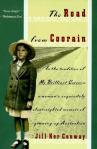
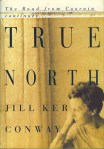
Jill Ker Conway, The road from CoorainJust before Mr Gums and I set off for our Arnhem Land holiday in early July, I came across an obituary for the Australian-born academic, educator and writer Jill Ker Conway (1934-2018). She had died on June 1, but I hadn’t heard. Why not? Her first memoir, The road from Coorain, was a best-seller, and I think her second one, True north, was also well received. I’ve read, and enjoyed, them both, but long, long before blogging. Her final memoir, A woman’s education, a slimmer volume, is on my TBR.

Those who know Jill Ker Conway will know why her passing didn’t make big news here. It’s because she made her name in the USA … added to which she was a woman. Or, am I being too paranoid?

So, who was Jill Ker Conway? Well, for a start she was born on a sheep station her parents named Coorain (Aboriginal for “windy place”) in outback New South Wales. Although more often hot, dry and dusty than not, Ker Conway loved it, as she shares in her first memoir.

Now, though, I’ll quickly summarise her career. She was, says Wikipedia, “an Australian-American scholar and author”. She was “well-known” for her autobiographies/memoirs, particularly for The Road from Coorain, but she also made history by becoming the prestigious Smith College‘s first woman president (1975-1985). She made history, of course, because she was its first woman president, but it’s fascinating to me that she was also Australian. She was 40 when appointed to this role, and in her first year was named Time magazine’s “woman of the year”. That’s impressive.

She was, later, a visiting professor at the Massachusetts Institute of Technology. In 2004, she was named a Women’s History Month Honoree by the National Women’s History Project, and in 2013 she was awarded the National Humanities Medal by President Barack Obama. She was, in other words, a bit of a mover-and-shaker!

I have, though, exaggerated the lack of news of her death here. There were some reports, including two in The Sydney Morning Herald. To give you a sense of how she was viewed, here are some of the titles of her obituaries:

Did you notice the odd one out? Yes, the SMH Business section report which identifies her as “chairman and trailblazer”. Chairman? Apparently, in addition to being an educator, academic, author and historian, she was a “business woman”. She was, in fact, “the first female chairman of global property group, Lendlease”. The Sydney Morning Herald says of her business career:

Dr Conway served on the boards of businesses including Merrill Lynch, Nike, Colgate-Palmolive and Lendlease. She was also a former chairman of the American Antiquarian Society.

In 2000 she was appointed as chair of Lendlease at a time when the company needed a firm hand.

Interesting woman eh? For an excellent obituary, do read the SMH National Section one.

She was also one of that wave of Australian intellectuals who left our shores in the 1960s and never really returned, mostly because of the stultifying academic lives they found here. Others included Germaine Greer (1939-), Robert Hughes (1938-2012), Clive James (1939-), not to mention writers like Randolph Stow (1935-2010). They went to England, while Ker Conway made the USA her home.

Ker Conway chronicles exactly why she left Australia in her first two autobiographies/memoirs. It was because she was regularly overlooked for significant jobs – or any job – in favour of men, and because she could not find the sort of intellectual enquiry she sought. Here she is, near the end of The road from Coorain, describing Sydney’s academic circles around 1959, and the group she thought most interesting because they were “iconoclasts, cultural rebels, and radical critics of Australian society”:

When I rejected the inevitable sexual advances, I was looked at with pained tolerance, told to overcome my father fixation, and urged to become less bourgeois. It was a bore to have to spend my time with this group rebuffing people’s sexual propositions when what I really wanted to do was explore new ideas and to clarify my thoughts by explaining them to others. I didn’t know then that I was encountering the standard Australian left view of women, but I could see that the so-called sexual revolution had asymmetrical results.

By the end of True north, she had her Harvard degree in history, and was living with her husband in Toronto when the Smith College job came up. She writes:

I’d been pushed out of Australia by family circumstances [all chronicled in the first memoir], the experience of discrimination, frustration with the culture I was born in. Nothing was pushing me out of this wonderful setting but a cause, and the hope to serve it.

Jill Ker ConwayAnd what was that cause? Well, as she also writes in True north, her main consideration when choosing whether or not to accept Smith College’s offer was “where my work would have the greatest impact on women’s education”. That “impact”, she explains, was not just about numbers. It was about proving that a woman’s institution was not only valid but valid and relevant in a modern world, and about the potential for making it “an intellectual centre for research on women’s lives and women’s issues, research that could have influence far beyond Smith’s lyrical New England campus”. She was there for 10 years, and made her mark.

Ker Conway was, then, a significant woman whose achievements I’ve only touched on. Check the Wikipedia article linked above for more, including a list of her books. Meanwhile, I’m ending with her final words in The road from Coorain, as she’s departing Australia:

Where I wondered would by bones come to rest? It pained me to think of them not fertilising Australian soil. Then I comforted myself with the notion that wherever on the earth was my final resting place, my body would return to the restless red dust of the western plains. I could see how it would blow about and get in people’s eyes, and I was content with that.

The Sydney Morning Herald’s (National section) obituary concludes:

Her love for her two worlds was reflected in her final wishes. Half her ashes will rest in a small private cemetery with John’s, near their beloved house and garden in Massachusetts. The other half are to be scattered by the big tree beside the roadway into the house at Coorain.

How good is that?

Six degrees of separation, FROM Atonement TO …

It’s August and the last official month of winter. I’m happy, happy, happy. I’m also happy that it’s time again for Six Degrees of Separation. How quickly it comes around. And, like last month, I’ve read the starting book. First though, the formalities. Six Degrees of Separation is a meme that is currently hosted by Kate (booksaremyfavouriteandbest). Clicking on the link on her blog-name will take you to her explanation of how it works.

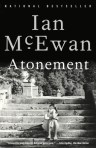
Ian McEwan, AtonementSo now, the meme. The book Kate has chosen for August is Ian McEwan’s Atonement. I love this choice, not just because I’ve read it, but because I like Ian McEwan, and I liked this book. Also, it offers so many options for linking, including one that I considered, which was good film adaptations. I loved the clever soundtrack, for a start.

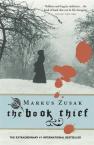
Markus Zusah, The book thiefHowever, I decided on a different tack, and I hope this isn’t a spoiler. I don’t think it is. My linking point is that it’s a metafictional work, that is, it self-consciously lets the reader know that it is a work of fiction. Another metafictional novel that contains stories within stories is Markus Zusak’s The book thief (my review). If you’ve read it, you’ll know that Death reminds us regularly that he is telling us a story.

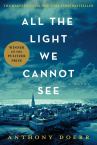
Anthony Doerr, All the light we cannot seeBesides being metafictional, The book thief tells the story of young people, particularly Liesel the titular book thief, and their experience of World War 2. Another book set in World War 2 whose protagonists are young is Anthony Doerr’s All the light we cannot see (my review). A moving book, that won America’s Pulitzer Prize.

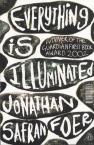
Jonathan Safran Foer, Everything is illuminatedSo far I’ve linked on technique and protagonists, but now I’m moving to title. Another novel about World War 2 (and that, coincidentally, also has metafictional elements) is Jonathan Safran Foer’s Everything is illuminated (my review). My linking point though is the reference to light in the title!

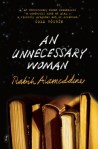
Rabih Alameddine, An unnecessary womanNow, one of the main characters in Foer’s novel is a translator. Another book with a translator as the protagonist is Rabih Alameddine’s An unnecessary woman (my review). She’s not a professional translator, but has done it in her spare time for much of her adult life. I loved reading, among other things, about her technique for translating.

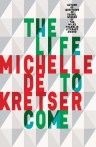
Michelle de Kretser, The life to comeMichelle de Kretser’s The life to come (my review) is a book in five parts. The protagonist of Part 3 is Céleste. She is also a translator. She describes her technique for translating too – though unlike Alameddine’s translator, she does it for a living.

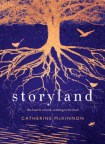
Catherine McKinnon, StorylandAnd now, all too soon, we’ve come to the end. The life to come is one of six books shortlisted for this year’s Miles Franklin Award. I’ve only read two, so far, from the shortlist, so I’ve decided to make my final link the other one, Catherine McKinnon’s Storyland (my review). I have, however, an ulterior motive for linking to this book, which is that I don’t think it’s getting enough notice so I’d like to give it another plug. It’s an intriguingly structured book, and tells a provocative story about Australia.

Well, this month we started our journey in England, and then moved to Germany, France and Ukraine, all of these trips involving, in some way or another, World War 2. We then hopped over to Lebanon in the Middle East, before arriving in Australia with de Kretser, though she did take us on brief forays to Paris and Sri Lanka. Finally, we landed back in Australia where we traversed a thousand years from the late 1700s to 2717. As for gender balance, four of my six books are by men. A major departure from the usual proportion in my Six Degrees posts, but that’s okay every now and then!

And now, my usual question: Have you read Atonement? And regardless, what would you link to? 

Michelle de Kretser, The life to come (#BookReview)

Michelle de Kretser, The life to comeMichelle de Kretser’s Miles Franklin shortlisted novel, The life to come, makes for great reading but difficult blogging because, like her Miles Franklin Award winner, Questions of travel (my review), it is big, and covers a lot of ground. Where to start is the problem. However, I’ll give it my best shot, starting with its form.

The novel comprises five distinct, almost standalone, parts, except that one character, the Australian novelist Pippa, appears in each one, providing a continuing narrative thread for the whole. She is introduced as a rather naive student in the Part 1 (“The Fictive Self”). We then move through Part 2 (“The Ashfield Tamil”) about Ash and Cassie, Part 3 (“The museum of romantic life”) about Céleste in Paris, and Part 4 (“Pippa Passes”) about Pippa and her in-laws, to end with Part 5 (“Olly Faithful”) about Christabel and Bunty. These characters are Australian, French, British and Sri Lankan.

But something intrigued me. The title of Part 4, “Pippa Passes”, rang a bell, of Robert Browning’s poem “Pippa Passes”. I don’t recollect much about the poem, but its form, interestingly, is similar to de Kretser’s novel. “Pippa Passes” is also the origin of the famous lines “God’s in his heaven/All’s right in the world”. However, while Pippa in the poem acts as a positive force, our Pippa does not. She thinks she’s a “good person”. As Céleste says, “Pippa would always need to demonstrate her solidarity with the oppressed – Indigenous people or battery hens, it scarcely mattered.” In fact, though, she regularly tramples on others, not necessarily intentionally, causing them pain. Presumably de Kretser intended this ironic allusion to Browning’s Pippa. I also wonder whether Christabel alludes to Coleridge’s poem Christabel, which explores the relationship between two women. Hmmm … I may be drawing long bows here as I don’t think Bunty is anything like Coleridge’s Geraldine. Still …

Anyhow, moving right along, I’m going to divide my remaining comments into two main strands – the personal and the, for want of a better word, sociocultural.

The personal

The novel’s title, The life to come, comes from Samuel Beckett’s Endgame, as quoted in the epigraph. It provides a clue to the novel’s main theme. It’s the theme that most touches our hearts, because it’s about the hope for or belief in “the life to come”. It’s about the search for meaning, for transformation, for a full life.

Cassie, for example, realises that her relationship with Ash is about trying to work out “How was she to live?”. She thinks, self-centredly, that “the two Sri Lankans”, Ash and the Spice Market man, “had entered her life to change its course”. Paris-based Céleste, who is fifty-something, single, and having an affair with thirty-something Sabine, is confronting ageing. “Is this all there is?” she wonders, as she sees her future shrinking “to a single point of solitary, penny-pinching old-age.” Pippa, our ongoing character, imagines a glorious future for herself as a writer: “her future was as vast as the light beating its wings in clifftop parks.” Céleste, though, sees something quite different in Pippa; she sees “Excess so far in excess of achievement.” Finally, single, Sri Lankan immigrant Christabel, looks, from the beginning, for that moment of transformation when her real life will begin. At 34, “she had believed, briefly, that her life could be joyful.” She keeps on hoping, however, and even when she accepts, “humbly, that it might never exist for her (“I am ordinary”) … she needed to know it was there“.

De Kretser provides her characters with life’s reality check, that gap between what you imagine and what you achieve. Best to learn it sooner rather than later!

The sociocultural

While that personal strand touches our hearts, the other one provides more of the laughs, albeit rueful ones, because many of them are turned on us. The life to come, in other words, contains a healthy dose of satire, skewering our assumptions and pretentious. When I say our, I’m particularly referring to us left-oriented middle-class earnest do-gooders. Like all good satire, it makes you think …

Eva, Pippa’s mother-in-law, is a good example. She “likes rescuing things”. For example, she employs refugees from a “not-for-profit catering group” to serve food at her parties, while wearing “garments stiffened with embroidery and beads. At throat and wrists she wore silver set with gems, some the colour of butter, others the colour of blood. These tribal ornaments lit Eva’s face, and proclaimed her solidarity with the wretched of the earth.”

In another example, her osteopath Rashida, who also happens to be a Muslim Indian immigrant, dines with Eva and her family. They quiz her about her background:

‘My parents thought that India wasn’t the best place for Muslims,’ said Rashida. ‘I love these potato pancakes, Eva. Could I have the recipe?’

‘Were you persecuted for your faith?’ Eva asked, hushed and hopeful.

‘Not really.’

Keith [Eva’s husband] said, ‘So you were privileged migrants.’

Rashida said nothing. She seemed to be turning the sentence over in her mind, trying to work out its shape.

De Kretser skewers Australians’ naiveté and blindness again and again, particularly regarding the horrors experienced by others, offsetting actual history against the idea of stories. Cassie, who is “postmodernly tutored”, thinks history is “just a set of competing stories” but Ash, born of a Scottish mother and Sir Lankan father, knows the difference between history and story, and understands exactly “the historical sequence that … brought a Tamil civil servant to the counter of a shop in the west of Sydney.” Cassie, Ash sees, “clung to an idea of Australia as a place where kindness prevailed over expediency”, her face denying “the existence of evil, the possibility of despair”. Ash, however, gobsmacked by her lack of awareness, wonders

What is wrong with you Australians? You eat curries without rice, a barbarism. You fear being attacked by people you’ve killed. You stole their land for animals that you slaughter in their millions, when you don’t leave them to die by the side of the road.

Pippa is no better than Cassie. She “saw Europe, momentous and world-historical, magnifying eventless Australia”, oblivious, clearly, to the barbarism enacted on our own shores. After all, as Ash is told when taken to his friend’s country home, “there’s no actual historical [my emphasis] record of a massacre.”

There are lighter, though no less satiric touches, such as Pippa’s telling Christabel about dining out with her literary agent:

We went to this amazing new Asian place at Darling Harbour. It’s been quite controversial because they do live sashimi. But Gloria and I talked about it, the cruelty aspect, and we decided it was Japanese cultural tradition so it was OK.

Where do we draw a line on cultural relativism?

The life to come is an uncomfortable book, particularly for Australians, because it suggests we are generally naive, and blundering, in our assumptions about and behaviour towards others, no matter how hard we try to be “good”. It’s also uncomfortable for us all as humans, because it exposes the gaps between our dreams and hopes for large lives and the reality that more often than not confronts us. The result is something that’s touching but also a bit pitiful.

Is this a Miles Franklin winner? I’m not sure. It may in fact try to do too much. But, is it a great read? Absolutely. I’d recommend it to anyone.

Lisa (ANZLitLovers) also enjoyed the book. And, for a non-Australian blogger, check out Guy’s post at His futile preoccupations.

PS I read this with my reading group.

AWW Badge 2018Michelle de Kretser
The life to come
North Sydney: Allen & Unwin, 2017
375pp.
ISBN: 9781760296568

Monday musings on Australian literature: Melbourne Centenary literary competitions, 1934

I came across a reference to the 1934/35 Melbourne Centenary literary competitions quite by accident, but they intrigued me so I decided to investigate further. Here’s what I found …

Melbourne Centenary

According to an article in the La Trobe Journal (no. 34, October 1984), there was much discussion about whether to celebrate the centenary in a major way or not, but it was eventually decided to go ahead because of its importance, and because visitors “would circulate money and create jobs”. A valid reason, given, as the article says, that “Australia was slowly recovering from the world-wide depression”.  Unemployment was falling, it says, but was “still at a serious level.”

So, a celebration was planned, to span last six months, starting with a Henty celebration at Portland in October 1934 and finishing with “the anniversary of the Batman and Fawkner settlements at Port Phillip in 1935.” The celebrations included, among other things, several competitions including the MacRobertson Centenary Air Race and the Melbourne Centenary Grand Prix.

The article also mentions that the Centenary Council sponsored The Centenary gift book. Edited by Frances Fraser and Nettie Palmer (who has appeared here before), it was, apparently, entirely written and illustrated by women. The things you learn.

Literary Competitions

There were four literary competitions – for a poem, short story, novel and war-novel. Before I discuss them, though, I’d like to share a comment about the competition which I found in the notes accompanying a 2007 exhibition mounted from the Monday University Library’s Rare Book Collection, Australian Women Writers 1900-1950. The comment comes from writer Marjorie Barnard (who has also appeared here before):

Marjorie Barnard pointed out to Leslie Rees with some irony that the 1934 Victorian Centenary literary competition was worth £200, while the golf championship attracted five times that amount.

Plus ça change, eh?

Poetry

The first prize awarded was for the Poem, announced in August 1934. It was worth £50, and there were 179 entries. The winner was Furnley Maurice, pseudonym of Frank Wilmot who apparently founded the Melbourne Literary Club in 1916. His winning poem was ”Melbourne and memory”.  Ninety-six lines long, it was described by the judges – W. F. Wannon, Nettie Palmer, and Enid Derham – as “a work of beauty and permanence.” The announcement in Adelaide’s The Advertiser (11 August) says it “consists of irregular but cadenced and rhymed verse”, and describes its theme as “the impact of Melbourne today upon a sensitive observer.” I like the “sensitive observer” bit!

Commentators describe it as “an early attempt to capture the everyday life of a city through references to familiar places.” It opens Maurice’s collection, Melbourne odes. The Oxford companion to Australian literature says that the odes overall “deal with places and events familiar in the life of the city: the Victoria Markets, the annual agricultural show and orchestral concerts in the Melbourne Town Hall”. One, “Upon a row of old boots and shoes in a pawn-broker’s window”, describes the plight of the unemployed, and is, the Companion says, “a powerful radical commentary on the economic misery and injustice of the time.”

Short story

The Short Story prize, also worth £50, was announced next, in September. For the short story and novel prizes, entries had to be submitted under a pen-name, to ensure blind judging. The announcement in the West Australian (29 September) said the winner was “‘Caspar Dean’ for the story entitled ‘Sea Hawk.'” ‘Caspar Dean’, they then divulge, was none other than novelist Vance Palmer (whom you’ve also met here). There were 119 entries.

Brisbane’s columnist, “The Bookman”, in The Courier Mail (6 October) is more expansive:

In the writing of a short story, many attempt but few succeed. It is an art that requires both study and practice, for a good short story is the concentrated essence of incident and character, dovetailed in a manner that carries conviction. Mr. Vance Palmer is the present-day master of the short story in Australia, so it is not surprising that he won the prize for the best story in the Melbourne Centenary Short Story Competition. It is said that Henry Lawson’s outstanding success as a writer of short stories was that he hung a lamp on every place that he wrote about. Vance Palmer has many of the characteristics of Lawson, but he is less dramatic; he has a far greater vocabulary, a more polished style, and a better knowledge of the world. Sincerity is his strong suit in novels, stories, plays, or poetry.

Fiction

In November, it was the Novel’s turn, and the result was more surprising. Firstly, there were joint winners, and secondly one of the winners was unknown. The prize, donated by “Mrs James Dyer”, the sister of Melbourne’s Lord Mayor, was worth £200. There were 153 entries, and the judges were, said Melbourne’s The Age (24 November), Enid Derham (senior lecturer in English at the University of Melbourne), H. W. Allen (Vice-master of Ormond College) and Frank Wilmot (Furnley Maurice who won the Poetry prize). The winners were ‘Redhead’ (Frederick Sydney Hibble) with his novel Karangi, and ‘Ivan Power’ (Vance Palmer) with The Swayne family. Sydney-based Hibble set his novel in country New South Wales, while Palmer’s was set in Melbourne.

The Age’s report says – somewhat politically incorrectly now – that:

… Mr. Hibble was overjoyed. He said he had written the book hurriedly, having spent only four weeks on it. Mr Hibble is a cripple, and in receipt of an invalid pension. Mr. Hibble has written a number of short stories, and had his book sub-edited by a Sydney woman journalist.

Hibble apparently became disabled in 1919 “after suffering an illness during the flu epidemic.”

Now, I’ve never heard of FS Hibble, but “Pegasus”, writing in the Book Talk column in Rockhampton’s Morning Bulletin (26 January 1935), is highly impressed:

The Swayne Family, by Vance Palmer, which I dealt with a few weeks ago, was an outstanding novel of its kind, and Karangi, by F. S. Hibble … which I have just read, is as fine a piece of well-balanced realism as has appeared in the history of the Australian novel … the beauty of both books, to a great extent, lies in the fact that the setting is not emphasised, as has been the tendency in many Australian books, but just taken for granted, as it should be, and treated as a strictly subordinate part in the creation of a work of art. Both take their vitality from the vividness of their characterisation, and the deft working out of relations between these characters; but, whereas The Swayne Family depends for its interest for the wide sweep which it takes over the various members of three generations, Karangi is a much more detailed study of the working out of one particular character upon the background provided by scarcely more than a dozen characters in all.

S/he goes on to say that while both are “outstanding” novels,

I think “Karangi” by far the finer achievement. If the writer’s hand appears to lack the mature experience of Vance Palmer, the depth of his insight into human nature might appear to be greater, his capacity to make the very ordinary people he has chosen for his characters appear unique, his handling of the development of the character through pressure of the emotions, and his sense of the dramatic in his presentation of the tale betoken an author who will yet go very far.

And yet, as happens surprisingly often, this was Hibble’s only book, though he had several short stories published.

War novel

Finally, the War Novel. This prize, also worth £200, was made by the Victorian branch of the Returned Sailors’ and Soldiers’ Imperial League as its contribution to the Centenary. The conditions, according to Hobart’s The Mercury (March 1934), were that:

Candidates must be persons who served abroad during the war as members of the Australian Imperial Force, the Royal Australian Navy, or the Australian Nursing Service. The novel must deal with the life of the Australian soldier in the war, and his reaction to the various conditions, environments, and the experiences through which he passed. The sequence of the story and the descriptive matter must be accurate historically and geographically, a condition which certainly will distinguish any war novel from any other one has read.

Hmm, so a Nurse could enter but the subject had to be a “he”, “the Australian soldier”?

JP McKinney, CrucibleThe winners were announced in Melbourne’s The Age on, appropriately, Anzac Day in 1935. I say winners because first (£150) and second (£50) prizes were awarded. The first went to Over the top by ‘Sar-Major’ (pen-name for JP McKinney, Surfers Paradise, Queensland), with the second going to Summer campaign, by ‘Roger Walters’ (C.W.W. Webster, Melbourne). There were over 50 entries, with the judges being Sir Keith Murdoch, Sir Harry Chauvel, and Mr. Phillips (a Melbourne barrister). A note in Miles Franklin’s papers at the State Library of NSW, states that her novel All that swagger “was entered in the Melbourne Centenary Prize Competition in 1934”.

Over the top was published by Angus and Robertson as Crucible.

But, JP McKinney of Surfers Paradise rang a bell. The newspaper reports didn’t help, though, because the reason I recognised his name came later. Yes, he’s the man who became the husband of one of Australia’s most famous poets, Judith Wright. The things you learn, as I said before!

Marie Munkara, Of ashes and rivers that run to the sea (#BookReview)

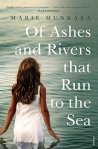
Marie Munkara, Of ashes and rivers than run to the sea

The stories keep on coming, the stories, I mean, of indigenous children stolen from their families and what happened to them afterwards. I’ve posted on Carmel Bird’s compilation of stories from the Bringing them home report, The stolen children: Their stories, and also on Ali Cobby Eckermann’s memoir Too afraid to cry. Now it’s Marie Munkara’s turn with her excruciatingly honest, but also frequently laugh-out-loud-funny memoir, Of ashes and rivers that run to the sea.

Late in her memoir, Munkara learns that she was born “under a tree on the banks of the Mainoru River in Western Arnhem Land.” But, what she writes next is shocking

‘Too white,’ my Nanna Clara said as they checked me out by the camp-fire light, and everyone knew what that meant. Back in those days any coloured babies in my family were given to the crocs because dealing with these things right away saved a lot of suffering later on. It was better that we die in our own piece of country than be taken by the authorities and lost to our families forever.

Does that remind you of anything? It did me – of Toni Morrison’s novel Beloved, and the slave mother’s decision there. Anyhow, knowing what we know now about the lives of many stolen children, we can surely understand her indigenous family’s actions. Luckily, though, for Munkara – and us – Nanna Clara saw something “special” in her, and she was kept. That was in 1960. Three years later, now living on the Tiwi Islands, the inevitable happened and she was taken from home one day when her mother was at work at the mission laundry. Her mother begged for her to be returned, to no avail.

All this, however, we learn near the end of the book. Munkara starts the book when, at the age of 28 and quite by accident, she came across her baptismal card tucked in a book in her parents’ library. It told her that she was born in Mainoru in Arnhem Land. “In the space of an instant,” she writes, “excitement was replaced with mortification as old geography lessons began to resurface” about a “wild and untamed place where Aborigines hunted kangaroos and walked around butt-naked.” However, she decides to find out more, and soon discovers that her mother was still alive and still living in the Tiwi Islands. She decides to go meet her, with no advance notice.

To say that she was shocked by what she found is an understatement. “This is not the tropical island I had imagined,” she writes, “with luscious vegetation and cute little palm-frond houses. It is a dump.” She tries hard to enjoy her time there, but hates it and three days later returns home. However, it’s not long before she realises that she has to return. This ends Part 1 of the four-part book. In Part 2, she goes back in time and tells of her life as the foster child of two unhappy but highly religious people. Her mother was strict, and cruel, but her father was worse. He molested her for many years. A sad, sad upbringing but Munkara, as she admits herself, is a survivor:

But aren’t human beings amazing creatures and even at an early age we can choose to let the bad things in life devour us and we sink or we can make the most of the good bits and swim. … I chose to swim.

Part 2, then, makes for hard reading, but Munkara’s sense of humour, her ability to believe that things will work out, and her independent mind bring her, and us, through. She’s a great story-teller, which makes this section more manageable than you might expect – but it still leaves you angry!

And then we come to Part 3 in which she tells of her return to Bathurst Island. This is where the real interest of the book lies because it is here that Munkara takes us on her journey into another culture. She is us – to a degree. She has been brought up white – albeit “a dusky maiden” version – and her expectations and initial reactions are very much as ours would be. She describes how she tries to apply her whitefella ways to her new life with her Aboriginal family. She expects privacy, cleanliness, order and, most of all, respect for her possessions. None of these sit well with traditional Indigenous values as she found them on Tiwi, but she’s determined nonetheless. We can feel her horror and frustration – but she’s telling this story long after the events, and imbues them with a light touch of self-deprecation and a warmth for her family which encourages acceptance rather than judgement (in herself and us).

Some examples:

I spend the day scrubbing the kitchen and neatly place all my things by themselves on a shelf so everyone can see they belong to me, and then I have a well-earnt nap. I sleep soundly and wake up to the smells of cooking. Stretching and yawning I make my way to the kitchen to put on the billy for tea only to stop at the doorway in horror, my mouth still open from the yawn. The room in an absolute shithole of a mess. My stuff is strewn everywhere […] Everyone tiptoes around me now they know I’m in a bad mood and I’m fine with that, maybe they’ll learn not to touch things that they shouldn’t.

and

They are instantly awake when they see that I’m only dressed in my bra and underpants. Thankfully my underwear is matching…

Haha, as if they’d care! And,

… after going to the footy on the weekend with my family for protection I’ve gotten over my fear of big crowds of black people. I now feel quite foolish for thinking they could be harmful to me and reckon I must have gotten this irrational fear from my white parents.

So much of this section resonated with me because it reflected many of the things Mr Gums and I were learning and experiencing as I was reading it. I’ve already posted on the cars, but there’s also the mess, the confusing kinship (including her having to call various dogs her brother, her son, her uncle and so on), the trust in spirits, the lack of concern for possessions, all of which can result in decisions and behaviours mystifying to us whitefellas.

But Munkara also learnt more seriously confronting things, such as that her mother’s damaged leg was caused by leprosy, something she’d thought only happened in the Bible and poor countries:

I slide my ill-informed thoughts into the rubbish bin and slam the lid down tight, angry that our First World country can live in ignorant bliss of our Third World problems. … I bet there wouldn’t be too many white people afflicted with leprosy in Australia because if there were it would be front-page news.

However, while the memoir is, for us, an eye-opening, necessary journey into another culture, it is, ultimately for Munkara, a journey to her self. By the end of Part 3, she has come to a better understanding of who she is:

But they don’t realise that there is no stolen and there is no lost, there is no black and there is no white. There is just me. And I am perfect the way I am. And I know now that I have to leave this place because I’ve learnt all I can for the time being and this lesson is over now.

She only leaves as far as Darwin, however, so she can remain in contact with her family. And so it is that, late in the book, Munkara writes about her (biological) mother’s dying:

When I asked her if she had any regrets she said there were no words in any of our family languages for regret. To regret something was a waste of time so why make a word for something that you didn’t need.

Munkara’s mother’s comment that her language doesn’t have a word for “regret” encapsulates for me the value of reading this book, which is its chronicling of the meeting of two opposing cultures. I thoroughly recommend the book, because understanding what divides us is critical to reconciliation – and because it is a darned good read. She can tell a story, that one!

ANZLitLovers ILW 2018

Lisa (ANZLitLovers) has reviewed this book, as has French blogger Emma (Book around the corner) and the Resident Judge. Read for Lisa’s (ANZLitLovers) Indigenous Literature Week.

AWW Badge 2018

Marie Munkara
Of ashes and rivers that run to the sea
North Sydney: Penguin Random House, 2016
179pp. (print version)
ISBN: 9780857987280 (eBook)

Monday Musings on Australian literature: Three Top End explorers

Well, folks, I’m back on the grid, but still in the Top End holidaying, so I’m going to make this one as short and sweet as I can.

As we traveled through Arnhem Land we learnt about various early 19th century explorers in this region, particularly Phillip Parker King (who makes an appearance, if I remember correctly but can’t check here, in Michelle Scott Tucker’s Elizabeth Macarthur: A life at the edge the world) and Ludwig Leichhardt (who inspired Patrick White’s Voss). Journals of these two, plus of Matthew Flinders, are available at Project Gutenberg Australia, and this is what I’m sharing today (for my benefit as much as yours, as I plan to come back to them!)

Matthew Flinders (1774-1814)

A Voyage to Terra Australis undertaken for the purpose of completing the discovery of that vast country, and persecuted in the years 1801, 1802 and 1803, in His Majesty’s ship The Investigator, and subsequently in the armed vessel Porpoise and Cumberland schooner. With an account of the shipwreck of the Porpoise, arrival of the Cumberland at Mauritius, and imprisonment of the commander during six years and a half in that island. By Matthew Flinders Commander of The Investigator. In 2 volumes with an atlas. London: Printed by W. Bulmer and Co. Cleveland Row, and published by G. and W. Nicol, booksellers to His Majesty, Pall-Mall, 1814.

Whew. They wrote long title pages, some of these explorers.

Anyhow, it is in Vol. 2 Ch IX, that Flinders writes of this region, and it is 1803. He describes the landscape, the plants, sightings of indigenous people. This description which seems to refer to Melville Island (part of the Tiwi Islands) particularly appealed because of our own experiences:

No inhabitants were perceived, nor any fresh traces of them; but as dogs were seen twice, it is probable the natives were watching us at no great distance; they had visited all the places where I landed, and should therefore seem to possess canoes. Traces of the same strangers, of whom mention has been so often made, were found here; and amongst others were partitions of frame work and part of a large earthen jar. Kangaroos appeared to be rather numerous in the woods, brown doves and large white pigeons were tolerably plentiful, and a bird nearly black, of the size and appearance of a hen, was shot; there were also cockatoos, both black and white, and a beautiful species of paroquet not known at Port Jackson. The aquatic birds were blue and white cranes, sea-pies, and sand-larks. Besides fish, our seine usually brought on shore many of the grey slugs or sea cucumbers, but not so abundantly as in Caledon Bay.

Australian Green Ant Gin and Tonic

Australian Green Ant G&T

We were not here pestered so much with the black flies as before; but the musketoes and sand flies were numerous and fierce. Most of the bushes contained nests made by a small green ant; and if the bush were disturbed, these resentful little animals came out in squadrons, and never ceased to pursue till the disturber was out of sight. In forcing our way amongst the underwood, we sometimes got our hair and clothes filled with them; and as their bite is very sharp, and their vengeance never satisfied, there was no other resource than stripping as expeditiously as possible.

We, too, were pestered by mosquitoes in the Top End, but what Flinders didn’t know is that those Green Ants make good bush food and medicine. I tried a gin and tonic made with Australian Green Ant Gin, and ate a fresh green ant off the real rocks as well! Can’t believe I did that, actually, but when in Arnhem Land …

Phillip Parker King (1791-1856)

Narrative of a survey of the intertropical and western coasts of Australia. Performed between the years 1818 and 1822. By Captain Phillip P King, R.N., F.R.S., F.L.S., and Member of the Royal Asiatic Society of London. With an Appendix, containing various subjects relating to hydrography and natural history. In Two Volumes.

Phillip (two “ll”) Parker King was the son of the Australian colony’s second governor, Philip (one “l”) Gidley King.

Anyhow, in Vol. 1 Ch 2, for example, we are in April 1818, and King discusses Port Essington which he named for a “lamented” friend. This later became the short-lived settlement of Victoria, 1838 to 1849, partly on the basis of his recommendation:

During our examination of Port Essington, we found no fresh water, but our search for it did not extend beyond the precincts of the sea-beach, since we were not in want of that article, having so lately completed our stock at Goulburn Island; but from the number of natives seen by us, and the frequency of their traces, which were encountered at every step we took, there must be fresh water; and had we dug holes, we should doubtless have succeeded in finding some, particularly in the vicinity of the cliffs.

Wood is abundant and convenient for embarking, but the trees are generally small: the waters are well stocked with fish.

As a harbour, Port Essington is equal, if not superior, to any I ever saw; and from its proximity to the Moluccas and New Guinea, and its being in the direct line of communication between Port Jackson and India, as well as from its commanding situation with respect to the passage through Torres Strait, it must, at no very distant period, become a place of great trade, and of very considerable importance.

Victoria Settlement

Victoria Settlement

We toured the ruins of Victoria, and were shown the plants that indigenous Australians use to find fresh water!

In this chapter King refers to altercations with “natives” in which he and his men used muskets to scare them off. I need to read more regarding King’s experiences with “the natives”, but perhaps if he hadn’t been so fearful he may have found some water.

Ludwig Leichhardt (1813-1848)

Journal of an overland expedition in Australia: from Moreton Bay to Port Essington, a distance of upwards of 3000 miles, during the years 1844-1845 by Ludwig Leichhardt (1813-1848).

Leichhardt’s Ch 15 covers his arrival at Port Essington. I’ve only dipped into it, but it seems to confirm our tour guide’s comment that Leichhardt was known to speak well of indigenous Australians (and was not popular for it). Leichhardt was also keen to document local plants, which is also evident (though all the explorers did this to some degree I think.)

Anyhow, here is a description of a meeting with “natives” on 2 December 1845, 15 days before he reached Port Essington:

The natives were remarkably kind and attentive, and offered us the rind of the rose-coloured Eugenia apple, the cabbage of the Seaforthia palm, a fruit which I did not know, and the nut-like swelling of the rhizoma of either a grass or a sedge. The last had a sweet taste, was very mealy and nourishing, and the best article of the food of the natives we had yet tasted.

I’d love to share more of these journals – and of how they relate to the experiences we’ve had and the knowledge we’ve gained, but time is short. Who knows, I may explore them in a little more depth in the future.