Monday musings on Australian literature: Women science fiction writers

This year’s National Science Week finished yesterday, 19 August, but I figured no-one would mind if I wrote a Science-Week-dedicated post a day late. In past years I’ve written Science Week posts on novels about scientists (2015), science-based non-fiction (2015), and science writing (2016). I didn’t write a post last year. So, what to do this one? I’ve decided, given my Australian Women Writers Challenge involvement that I’d share some of Australia’s popular women science fiction writers. This is not, I admit right now, my area of expertise. but I’ll give it a go.

My first challenge is, as you might expect, definition of the genre. Wikipedia lists, in chronological order, over 30 definitions, starting with someone called Hugo Gernsback in 1926. I don’t want to get embroiled in this, and I want, for my purposes here, to take a rather narrow definition. Here are two, in Wikipedia, from well-known science-fiction writers:

  • Isaac Asimov (1990) “‘[H]ard science fiction’ [is] stories that feature authentic scientific knowledge and depend upon it for plot development and plot resolution.”
  • Arthur C. Clarke (2000) “Science fiction is something that could happen—but you usually wouldn’t want it to. Fantasy is something that couldn’t happen—though you often only wish that it could.”

So, I’m going to focus on women writers who, I believe, write (more or less) within these definitions. I’ll be on thin ground I know, but will welcome debate!

I decided that a good source for me to separate out science fiction from other forms of speculative fiction would be Australia’s Aurealis Awards which offers prizes in specific categories, one being “Science Fiction” (but even there, some of the books overlap into other sub-genres, like dystopian fiction, which I want to leave aside here.) Indeed, the more I looked into “my” topic, the harder I found it to locate relevant authors. It seems, as AWW Challenge Speculative Fiction expert Tsana Dolchiva said in a post for the challenge, “Australia hasn’t been the most fertile ground for science fiction — for whatever reason, the planets didn’t quite align for it the way they did for fantasy.” I wonder why this is? Any ideas? Anyhow, I don’t feel so bad now about the paucity of my knowledge.

Marianne de Pierres, Dark spaceSo, here goes with a few names – all Australian women of course:

  • Cally Black: New Zealand-born, Melbourne-based Black is a new writer in the YA science fiction arena. Her debut novel, In the dark spaces, won the Aurealis Award for Best Young Adult Novel. It is a sci-fi thriller about a 14-year-old orphan who is taken in by her aunt who happens to be a cook on a space freighter.
  • Amanda Bridgeman: The Western Australian-based Bridgeman has, so far, written the Aurora space opera series, and an apocalyptic novel, The time of stripes. The Aurora series comprises 6 books set in and around a spaceship named “Aurora”. The third in the series, Aurora: Meridian, was nominated for an Aurealis Award.
  • Marianne de Pierres: Tsana writes that you “can’t talk about science fiction in Australia without mentioning Marianne de Pierres” which makes sense to me because even I have heard of her! De Pierres writes across a wide range of speculative fiction genres, including in this more “pure” science fiction area that I’m focusing on here. An example is her space opera series, the Sentients of Orion. Its four books – Dark space, Chaos space, Mirror space and Transformation space – were all shortlisted for Aurealis Awards, with the last one winning Best Science Fiction Novel in 2010. The novels are set on an “arid mining planet” called Araldis. She lives in Brisbane, and writes crime under a different name, Marianne Delacourt.
  • Anna Hackett: Hackett is, her website says, a USA Today bestselling author, but she grew up in Western Australia and describes her childhood as “running around in the sunny weather, chasing my brother and turning my mother’s outdoor furniture into spaceships.” She writes action romance, some of which take us into space, such as her Galactic Gladiators series.
  • Amie Kaufman & Jay Kristoff, IlluminaeAmie Kaufman: Tsana describes Kaufman as “one of the most notable Australian authors writing science fiction today”. She is, her website says, “a New York Times and internationally bestselling author of science fiction and fantasy for young (and not so young) adults.” She seems to mostly write collaboratively. Her debut novel, These broken stars, was co-authored with US writer Meagan Spooner, as is her latest book published this year, Unearthed. It’s novel is about an alien culture that has advanced technology which may be able to undo environmental damage. She has also collaborated with Australian writer Jay Kristoff, such as on their YA series, the Illuminae Files. The first in the series, Illuminae, is set in 2575 and “two rival megacorporations are at war over a planet that’s little more than an ice-covered speck at the edge of the universe.”

So, that’s five, and, until today, I’d only heard of one of them. So many genres, so many authors. I tried to see if I could identify any consistent themes running through these books, but I don’t think there are – not, at least, the way there are in the dystopian sub-genre. It does, though, seem that more writing is happening in the YA area than specifically for adults, which is interesting.

But now, have you read these authors – or, if not, who are your favourite sci-fi authors?

(PS I might explore other speculative fiction genres in future National Science Week posts.)

The Griffyns inspire us in Science Week

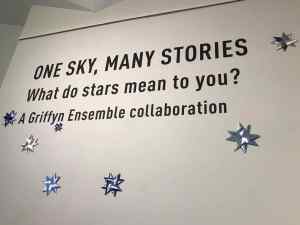
Griffyn Ensemble One Sky Many StoriesIt’s been two years since I last wrote about the Griffyn Ensemble. In that post I reported that they were not returning with their usual season in 2017. Wah, I wrote. They did, in fact, perform in 2017 – presenting a special Music Festival – but I didn’t write that up, because I was unwell and barely made the concerts. They’ve returned again this year, this time with a concert designed to coincide with National Science Week. And what a concert it was, because it was much more than “just” a science inspired concert. As you’d expect.

One Sky, Many Stories

Now, when the Griffyns “do” science, more likely than not it will involve astronomy. They have collaborated with composers and scientists in the past to create programs focused on the skies. In 2012 and 2013 they performed Estonian composer Umas Sisask’s Southern Sky composition, which he created in the 1990s after visiting Australia, and in which he incorporated his response to indigenous Australians’ ideas about astronomy. Those Griffyn performances included astronomer and science communicator Fred Watson introducing each movement, describing the constellations and stars referenced by the music. In 2015, they presented director Michael Sollis’ response to Sisask’s work, Northern Lights, which he composed after visiting the Northern Lights on a tour with the aforementioned Fred Watson.

And now, three years later, they’ve produced a new show titled One Sky, Many Stories. To create it, Michael Sollis and past-Griffyn Wyana O’Keeffe went to Tennant Creek in the Northern Territory to work with indigenous performer-composer Warren H Williams and other local musicians. Their aim was “to discover and create some more stories and songs about the stars” and the end result was last night’s event which combined “music, film, and astronomy to explore Western and indigenous conceptions of the night sky.” The music combined a selection of reworked movements from Sisask’s “Southern Sky” with new pieces composed by Warren Williams and themselves. Once again, Fred Watson was present to guide us through the program, linking the music to the science and the stories.

There was no printed program so I don’t have a list of the pieces played, but the music was eclectic in style, which is a hallmark of Griffyn concerts. You never know what you are going to get. In this show, ballads, jigs and country-rock style pieces were interspersed with new chamber music. I was impressed by how well soprano Susan Ellis’ classically trained voice blended with Warren Williams’ more country-music-mellow style. In some pieces, the versatile Ellis backed Williams’ words with haunting, mystical sounds, but on one occasion she sang a “Southern Sky” piece in its original Eesti while Williams sang his part in Western Arrernte. (I must say I love that we are more frequently hearing indigenous languages spoken/sung these days.)

Wyana O’Keeffe’s percussion playing – on a range of instruments from vibraphone to hand-struck wooden drum (a cajon?) – drove much of the concert. It was clear she loved being involved in the project. It’s one of the great things about Griffyn Ensemble performances, in fact, the enthusiasm with which they share their music and engage with their audience – and the way they balance serious musicianship with a more relaxed informality.

Culture meets science

But it was about more than music. It was about ideas, and how we think about the stars, ourselves and the universe. And so, interspersed with the music were Fred Watson’s introductions – to the various constellations represented in the music, including Sagittarius, Oktans and Reticulum – and video clips of Tennant Creek residents from all ages and various cultural backgrounds speaking about what sky and stars mean to them. Some of these meanings were philosophical or spiritual, some wishful, and some self-deprecatingly humorous. They were an engaging, but also integral, part of the whole: they encouraged us, the audience, to consider our own responses to the sky and stars and conveyed the diversity of responses different people and cultures have. It was unfortunate, however, that we couldn’t always hear all the words (perhaps due to the room’s acoustics.)

Anyhow, I loved one person’s story that he had always believed he heard the stars twinkling until he was told it was the crickets! Other people talked about stars representing people who passed away, and another how separated lovers use stars to feel together across space. Some talked about how the sky informs them about bush tucker and the seasons. And some struggled, like I would, to find the words to explain exactly how they felt. One lad got quite mixed up with his stars and galaxies and constellations and how they all fitted togehter and decided that they were all just “one big dimensional plane.” I felt his pain!

But, check out this YouTube teaser. It will tell you more than my words ever could.

It was a different line-up from the usual Griffyn Ensemble, as you’ll see in the list at the end of the post, but the combination resulted in an engaging, sometimes toe-tapping, concert that entertained while also giving us plenty to think about. I liked the idea suggested by Fred Watson near the end that maybe not everything’s measurable, that the point may be less about what happens to the universe and more about the universe happening to us.

The concert ended with us, the audience members, being invited to pin our own written wishes-upon-a-star onto Comet Bryn Leon (named for Michael and Kiri Sollis’ brand new baby boy) on the wall. I do hope they share those wishes on their website sometime in the future – perhaps when they are no longer waking up through the night sharing the stars with Bryn!

Meanwhile, a big thanks to Michael Sollis and the Griffyns for their ongoing commitment – and contribution – to the Canberra music scene. They are to be treasured.

Griffyn Ensemble (and Friends): Michael Sollis (director and mandolin), Susan Ellis (soprano), past member Wyana O’Keeffe (percussion), Alex Castle (flute, filling in for Kiri Sollis who had just had a baby), with special guests Warren H. Williams (keyboard, guitar and voice), Rachel Pelser (electric guitar), and Fred Watson (astronomer).

Tania McCartney and Christina Booth, The Gum Family finds home (#BookReview)

As many of you know, I recently became a grandmother – and if you know anything about becoming a grandparent you’ll know that THE critical question is “what are you going to be called?” Well, I would like to be called Gummie – the name given me here by one of my favourite bloggers Guy (His Futile Preoccupations.) However, the family is looking at me a bit askance, given other images conjured by the word, particularly in relation to, let us say, older people. I haven’t given up yet, though …

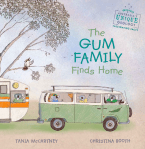
Tania McCartney and Christina Booth, The Gum Family finds home

And my cause received a fillip last night when a friend gave me the gorgeous children’s picture book, The Gum Family finds home, written by local author Tania McCartney and illustrated by Christina Booth, because surely a Gum Family would think Gummie a perfectly good Grandma name, don’t you think?

Anyhow, I was intrigued by the book for other reasons too. For example, there’s the author, Tania McCartney. I hadn’t heard of her until the last couple of years when she started popping up in my social media feeds with another children’s author, Irma Gold, who has appeared several times on my blog. McCartney is currently an ambassador for our (ACT) Chief Minister’s Reading Challenge. She was also, back in 2012, an ambassador for the National Year of Reading. In other words she’s more than “just” an author-illustrator. She’s an active proponent of reading and literacy – and in my city – so well worth getting to know

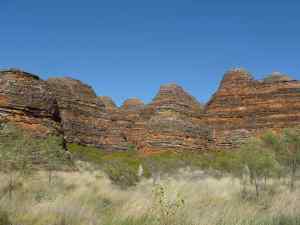
Domes in the Picaninny Gorge area, Purnululu
Decorative Bungle Bungles

But now, let’s get to the book. The cover provides a hint that it’s more than a story. It includes, it says, “fascinating facts” about “Australia’s unique geology” and this becomes immediately clear when you open the book and find, on the front (and back) endpapers, illustrations of places in Australia, each one with dot points. Pretty soon I was laughing because these dot points read like a house-hunter’s list of pros for a new home. So, for example, the points for Butterfly Gorge near Katherine include “on-site security (crocs!)”; for The Bungle Bungle Range there’s “decorative silica and lichen features” and “close to gorges, pools and walking tracks”; and for the Nullarbor Plain “lots of space” and “very private”. Haha, love it.

The endpapers, then, got me in before I even started the book. The narrative is straightforward, befitting the child audience it is geared to. It is about a family of koalas, the Gum Family, who decide that they need a safer, more “rock solid” home than their gum tree. So, they hitch up a caravan, pack some “gum leaf sandwiches and eucalyptus juice”, and set off around Australia to see what they can find. The story is told with lovely humour, as place after place doesn’t quite suit their needs, such as the Twelve Apostles:

Over the years, these limestone stacks will tumble into the sea. Mum is looking for something a bit more stable.

This trip, then, provides an excuse for McCartney and Booth to introduce their readers to, as McCartney’s website says, “the sheer variety and imposing grandeur of the Australian geological landscape, from Uluru to King’s Canyon, from gorges and limestone pillars to precariously placed boulders and sweeping plains.” There are two main themes – or ideas – here. One is this showcasing of Australia’s landscape, as McCartney explains on the National Library’s blog:

As a land of enormous geographical distance, enjoying these sites firsthand can be difficult for many children, so featuring them in children’s books is a wonderful way to encourage kids to learn about these sites and inspire them to visit.

The other is a more personal one about home, about the fact that home is where you feel most comfortable, where you can live with the people you love in the way that best suits you. For the koalas, this is, of course … but, no, I’m not going to spoil the ending!

The book ends with a lovely value-add – eight pages of basic facts about “Australia’s unique geology.” These facts comprise a photograph or two of the place, and a paragraph giving information about its formation and history. These are kept simple to suit an early primary-school-age audience, but they made the geology nicely comprehensible to me too. (I do find geologic time scales almost impossible to get my head around.) I can imagine a teacher suggesting students choose one of the places to research further, and do a project on or write their own story about … In other words, it’s a book that doesn’t really end when you finish reading it.

I do, however, have one little query. It concerns nomenclature. In some cases, the creators have used the now-agreed indigenous Australian names for the places, such as Uluru and Kata Tjuta, but in others, such as Kings Canyon (now Watarrka) and the Bungle Bungles (now Purnululu) they don’t. I’m assuming they are making some fine distinctions here between the landform and the name of the national park in which they sit, but it would have been good, at least, to include the indigenous name in the facts at the back, as they do for Katherine Gorge (or Nitmiluk.) This is a little quibble, and one, I’m sure, that they discussed thoroughly, but still …

The Gum Family finds home was, I understand, just published this month. I do hope it sells well as the story is delightfully told and the information engagingly presented. I look forward to reading it to Grandson Gums one day.

Meanwhile, though, what do you think about my grandma name?

AWW Badge 2018

Tania McCartney and Christina Booth
The Gum Family finds home 
Canberra, National Library Publishing, 2018
ISBN: 9780642279255

Monday musings on Australian literature: War-time reading tastes, World War 2

Continuing last week’s brief survey of war-time reading habits…

World War 2

And then we come to the Second World War. Here’s The West Australian again, this time in July 1940, less than a year after the war had started (a bit like our 1915 World War 1 report last week.) The article is headed, “Light Reading Popular. Perth’s Wartime Tastes.” It says that:

Wartime readers prefer light humour and detective novels to political works or discussions of international affairs. This was the verdict of a Perth book-seller and librarian when asked whether the public reading taste had changed since the beginning of the war. For a long time before the war, it was stated, books on international affairs were first favourites but this was no longer so. There had been a remarkable increase among library subscribers in the demand for detective fiction.

PG Wodehouse, Uncle Fred in the Dreamtime

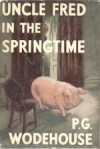
And yet, it continues, “the unexpurgated edition of Hitler’s Mein Kampf (royalties in which go to the Red Cross) had sold well.” Did you know that about the royalties? Anyhow, it goes on to say that booksellers in the east of the country report similar interests, with A. P. Herbert’s General cargo and P. G. Wodehouse’s Uncle Fred in the springtime being best sellers, and “historical novels and light travel books dealing with countries outside the political maelstrom” also selling well.

Another July 1940 newspaper report on wartime reading tastes comes from Launceston’s Examiner. It starts by saying that people are sick of reading about Hitler, and that one male library visitor pronounced that “All he wanted to read about Hitler now was his obituary!”

The article says that most of the Launceston public library’s users “demand ‘light’ reading” but that “that does not necessarily mean fiction.” People are also interested in “non-fiction that is easy to read, such as short autobiographies and travel”, particularly for “travel books descriptive of countries affected by the war” (which counteracts somewhat the Perth report above about travel book preferences.) As for autobiographies, it says that “those about Royalty of any country are always widely read.” Interesting!

The article says that

most readers say that with the war over-shadowing most things, they seek books that will be purely a distraction from serious thoughts, necessitating the least possible concentration. For that reason, fiction is in greater demand than ever and detective stories the most popular of all the many classes of literature handled at the library to meet varied tastes.

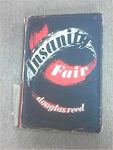
Douglas Reed, Insanity FairThere is an exception to the disinclination for “the ‘heavier’ political type of book” – Douglas Reed’s Insanity fair. It “is still one of the most sought books of all types. There is always a waiting list for it.” I had not heard of him or it, but Wikipedia says that “Insanity Fair (1938) was one of the most influential in publicising the state of Europe and the megalomania of Adolf Hitler before the Second World War.” (You can download it for free from archive.org.) Another exception, this time for books “avoided because of great length”, is Gone with the wind. Since being published in 1937, it apparently “has never rested on the library shelves.”

Also in July 1940 – were these journalists feeding off each other? – was an article in Melbourne’s The Age titled “Reading in wartime. Escape Books”, with the by-line Investigator. It’s a long article – around 1000 words. It poses a number of questions: have tastes changed; should in fact people be reading at all given the “mighty effort” being undertaken “to overcome the foe”; and, if people do continue to read “what kind of books do wise and well-balanced minds recommend to thoughtful Australians?” Don’t you love the idea of “wise and well-balanced minds”?

The article then briefly mentions the challenges faced by readers, including the reduced output from publishers, irregular supply, and “the natural indisposition to spend money on expensive books.” However, Investigator says, “literate homo sapiens must be intellectually fed.” Indeed, s/he quotes Poet Laureate John Masefield, who advised that

While we must, of necessity, be deeply interested in all that is written and broadcast concerning the war, let us keep reading some quiet book to steady our minds. In other words, to preserve our poise, our cheerfulness and sanity, have on hand some quiet, absorbingly interesting book, divorced from politics, warfare, national culture and Ideologies, east or west.

Francis Brett Young, Pilgrim's restWith this advice in mind, Investigator then gives a suggested reading list from “one experimenter.” It comprises “literature of release, diversion and escape from which the experimenter had derived real refreshment since the war began to press heavily upon heart and mind.” The list is diverse, but includes:

  • Such is life, by Tom Collins (aka Joseph Furphy), the new edition with an introduction by Vance Palmer.
  • On the Barrier Reef, by S. Elliott Napier: seems like a non-fiction book about the Barrier Reef. Napier was a banker, solicitor, journalist, and author, among other things.
  • Two of J. B. Priestley’s and Angela Thirkell’s latest novels.
  • Pastoral Symphony, by Aldyth Williams: a gentle memoir, I’m guessing, given its subtitle is “a recollection of country life”.
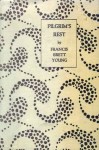
  • Pilgrim’s rest, by Francis Brett Young: described in GoodReads as “tale of gold lust, gentle romance and the violent industrial unrest which shook the Rand in 1913.” Clearly escapist.

Our “experimenter” also lists books of essays and sketches (one described as containing “pleasant writings”), books of Australian verse, some biographies, and “the three last numbers of the Cornhill Magazine — killed by the war in December, 1939, after 80 years of placid life.” Oh dear, poor Cornhill!

Investigator goes on to say that this list may not represent Australian readers overall, because the “experimenter” has “a sensitive mind, needing release from mental strain”. In fact, Investigator says, data from two different libraries in Melbourne shows that there is “no marked swing in the direction of the literature of escape.”

Nearly two years later, however, in February 1942, Adelaide’s The mail has an article titled “Reading tastes change under war conditions”. This article too quotes a librarian’s experience, Mr CM Reid of the Adelaide Circulating Library. He says that in times of peace Adelaide readers “prefer well reviewed novels, books on current affairs, and a moderate ration of ‘thrillers'”, but that

War time, however, brings a revival of interest in spiritualism, and all kinds of books on mediumism which have never been taken down for years, except to be dusted, are asked for at the counters.

He also notes “a much greater interest in Biblical prophecy since the war began.” The writer suggests that this interest in prophecy, astrology and the occult, “seemed to indicate that some people’s minds were troubled and confused, and that they were seeking comfort rather than information.”

These readers, though, are apparently not “the more serious readers” who, Mr Reid says,

seem to be reading both better books and lighter books since war began. On the one hand they are anxious to be well informed, and all good new books on world affairs and on other countries are sought after; but the same subscribers are also reading many more thrillers, as if for relaxation and escape from world problems.’

And finally, from Ipswich’s Queensland Times in January 1943 comes a report on “people’s tastes” from a librarian. He (it is a he) said that

reading was definitely on the increase in Ipswich, and in addition there was an increase in the demand for the better class of books. More than ever inquiries were for good travel books, biographies, and the historical novel, while anything on sociology and international affairs also was readily taken.

He did admit, though, that “the demand for light fiction remained keen.”

However, supplying this increased interest in reading was a challenge because the war was affecting the output and availability of books. Normally, he would add around 250 new books a month to his library, he said, but he was now lucky to “obtain 40 to 50”, most of which came “from abroad.”

So there we have it, a view of what Australians were reading during World War 2 – from Perth across to Adelaide, then down to Launceston, back over the seas to Melbourne and finally up to Ipswich.

Did anything interest or surprise you?

My literary week (13), it’s (mostly) all about Aussies

This last week or so we’ve been on the road again, severely cutting into my reading time, but literary things have been happening, nonetheless.

National Bookshop Day, 2018

Readings Kids, Carlton

Readings Kids, Carlton

Yesterday, August 10th, was, as many of you know, National Bookshop Day and I did, in fact, visit a bookshop, Readings in Carlton, Melbourne. I bought Gerald Murnane’s Border districts, which brings me one step closer to reading this Miles Franklin shortlisted book. Daughter Gums and I also visited, next door, the Readings Kids bookshop, where she bought Alison Lester’s Rosie sips Spiders for a baby shower she was attending this weekend.

It was so hard not to buy more, but you all know how behind I am in my reading so you’ll understand my abstemiousness!

I’d love to hear what you did – if you are an Aussie – to support the day?

Alison Lester Gallery

A couple of days before National Bookshop Day we were driving to Melbourne from Canberra via one of the long routes, in this case via Cann River. It was an interesting drive that took us through some quite dramatic landscapes – from the shimmering yellow-white colours of the Monaro in drought to the lush green of south-east Victoria which is not!

Alison Lester GalleryOn Day Two we overnighted at Foster, in order to visit Wilson’s Promontory, before driving on to Melbourne the next day via Fish Creek. Now, Fish Creek is a very pretty little town that also happens to be the home of the Alison Lester Gallery – yes, the Alison Lester who wrote (and illustrated) the book Rosie sips spiders mentioned above. Fish Creek is a lovely little town, and is in the region where Lester was born, grew up and still lives. We bought books here for our new Grandson Gums. The Gallery sells Lester’s books plus numbered prints of her beautiful book illustrations. It also has a little library nook where you can read her books before you decide to buy them. Unfortunately Lester wasn’t there, but you can organise to have your books signed if you want to (and don’t mind waiting for your books!)

BTW Alison Lester was one of Australia’s Inaugural Children’s Laureate from 2011 to 2013, which I wrote about back then.

The Wife and RBG

One of our Melbourne traditions is to have a meal and see a movie with Daughter Gums. We usually go to Cinema Nova (across the road from Readings Bookshop.) It’s a big complex, but not at all like those big impersonal suburban multiplexes. The cinemas are mostly small, and many have rather idiosyncratic layouts, but the movie selection is wonderful. We decided to see The wife, starring Glenn Close and Jonathan Pryce, and adapted from Meg Wolitzer’s novel, that I haven’t read. It focuses on the responses and feelings of the wife of an author who is told he has won the Novel Prize for Literature. If you don’t know the story, I don’t want to spoil it, but it is a great film for booklovers, and, particularly, for women booklovers! I enjoyed seeing Glenn Close again in a meaty role. The story is full of issues to chew over about gender, morality, pride, vocation, relationships over the long haul, and about how a door chosen can have unexpected ramifications down the line.

Ruth Bader Ginsburg

Ruth Bader Ginsburg, by Supreme Court of the United States (Supreme Court of the United States (Source 2)) [Public domain], via Wikimedia Commons

Then, suddenly finding ourselves with some extra free time, Mr Gums and I took the opportunity to also see the documentary RBG about the US Supreme Court justice, Ruth Bader Ginsburg. As documentaries go, this takes a pretty standard form – a combination of archival footage, contemporary footage, interviews with Ginsburg and with friends, family and colleagues. Wikipedia quotes film reviewer Leslie Felperin who says:

…there is something deeply soothing about RBG, a documentary that, like its subject, Supreme Court Justice Ruth Bader Ginsburg, is eminently sober, well-mannered, highly intelligent, scrupulous and just a teeny-weeny bit reassuringly dull.

As I said, traditional in form, but the subject is so intelligent and her contributions to thinking about women’s rights so relevant beyond the USA, that the film kept us engaged from beginning to end. She is a fascinating woman with an inspiring capacity for clarifying the complex.

Bangarra Dance Theatre’s Dark Emu

Bruce Pasco, Dark emuNow, we didn’t quite see Bangarra Dance Theatre’s performance of Dark Emu this week but we did see it very recently so I’m sneaking it in here. This is Bangarra’s interpretation of Bruce Pascoe’s book Dark emu (my review) in which he argues that indigenous Australians were not hunter-gatherers but had an agricultural practice, a practice that better proves, in legal terms apparently, their sovereignty or ownership of the land.

I wondered how they would balance the abstraction of dance with the literalness of the theory Pascoe presents (a theory that requires evidence of all sorts of agricultural practices) without, somehow, being prosaic. The dance, the props (which helped convey activities such a corralling animals, damming water, storing food), the lighting, and the music (which mixed traditional sounds with more suggestive modern ones) kept the audience on track with the story being told, although I understand Canberra reviewer Michelle Potter’s point that we didn’t always comprehend the “meaning” of what we were seeing in terms of the theoretical argument. For Mr Gums and me, though, these concerns were not strong enough to spoil the spectacle of Bangarra’s dancing. The moves, the shapes, the energy – we can never get enough of them and we did “get” the main threads of the narrative. (And, I suspect a second viewing would make a big difference. It is sometimes tricky to separate out spectacle from meaning first time around.)

Canberra Writers Festival and the Griffith Review 60: First things first

Yesterday (9 August) was, as you probably know, the UN’s International Day of the World’s Indigenous Peoples. I had planned to get this post completed by then, but, being on the road (again), it didn’t happen. I don’t think that matters a lot, though, as we should be caring about Indigenous Peoples every day until the disparities between us are removed, n’est-ce pas?

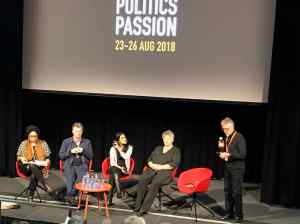
So now, my post. The title may look a bit strange. It’s because this post was partly inspired by my wanting to mention the Canberra Writers Festival. This year is its third under its current iteration, and the theme has remained the same: Power, Politics and Passion. Now, some of us literary types, are a little disappointed by the Festival because of this focus. We want more literature, as in literary fiction, but what we get is quite  lot politics. I understand this. We are Canberra, the national capital, and this is a way of positioning our Festival as something different from others around the nation. Fair enough I suppose – it’s just not what I would prefer.

However, there are sessions that I’m very interested in, and two of these relate to indigenous Australian literature and culture. They are:

  • GR60: First Things First: A panel discussion inspired by the recent Griffith Review, the one numbered 60 and titled First Things First. It was inspired by the Uluru Statement from the Heart, and the panel comprises some of the contributors to that edition, Dr. Sana Nakata, Shireen Morris, Paul Daley and Melissa Lucashenko. It is moderated by Dr Sandra Phillips.
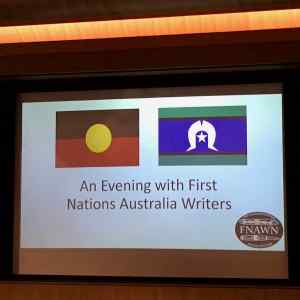
  • An Evening with First Nations Australia Writers: Comprises poetry readings by Ellen van Neerven, Yvette Holt, Jeanine Leane and Charmaine Papertalk Green, followed by a panel discussion titled Sovereign People – Sovereign Stories, involving Kim Scott, Melissa Lucashenko, and Alexis Wright, and moderated by Cathy Craigie.

Griffith Review No. 60Now, I’m not always very good at doing homework for writers’ festivals, but I have started reading the Griffith Review in preparation for that panel. I haven’t got very far, having only read editor Julianne Schultz’s introduction “Whispering in our hearts”, indigenous constitution lawyer Megan Davis’ piece “The long road to Uluru”, and Alexis Wright’s poem “Hey ancestor!”

For this brief introductory post, I’m just going to focus on Davis’ piece. Griffith Review’s bio for her says she is “a constitutional law professor and Pro-Vice Chancellor Indigenous at the University of NSW. In 2011 she was appointed to the Prime Minister’s Expert Panel on Recognising Aboriginal and Torres Strait Islander Peoples in the Constitution, and in 2015 she was appointed to the Referendum Council and designed the council’s deliberative constitutional dialogue process.”

This process – the First Nations Constitutional Dialogues – is the one that resulted in the Uluru Statement from the Heart. It was a rigorously defined and executed process that was, she writes, “quite different to the usual tick-the-box consultation.” It had to be, given the diversity of the groups involved, the importance of the work they were doing and the significance of the outcomes they desired – which was essentially to advise the government on a process for recognising the sovereignty of Aboriginal and Torres Strait Islander peoples in the Australian Constitution. Davis writes that

A concrete model of recognition was needed to focus the nation’s attention and move the project forward. Uluru eventually provided the model.

In this article, she describes clearly, and in detail, the recent political history of “the progress toward recognition”, and then the development of a dialogue process aimed at ensuring that the results would be valid and authentic. It involved a Civics education module, so that the participants would understand the western democratic system within which they were working. This is an important point I think. We are not talking revolution here but a willingness to work with the wider Australian people and the government to resolve the ongoing issue concerning constitutional recognition of indigenous Australians – and all that that entails.

The article is excellent, and makes some significant points, including:

  • that recognition of indigenous Australians in the constitution must be more than symbolic – it must be substantive.
  • the importance of truth and justice, of the fact that the truth must be told and understood before justice can be achieved. She reported that “There was an overwhelming view in the dialogues that a nation cannot recognise people they do not know or understand. The Aboriginal experience in Australian history is critical to recognition.” A valid point – and one on which progress is being made but not fast enough.
  • why the Voice to Parliament is so important – which includes that it “could provide a front-end political limit on the parliament’s power to make laws for Indigenous peoples.” In other words, it could head problems off at the pass, avoiding the current situation where inappropriate or ineffective or, worse, discriminatory legislation is enacted, which then costs money and time to challenge.

Indeed, in terms of priorities, she writes:

The First Nations Regional Dialogues ranked the Voice to Parliament as the primary reform priority. The next priority was treaty or agreement-making. The third was truth-telling.

How gut-wrenching then for this priority to have been dismissed so summarily by Prime Minister Turnbull, as it was within four months of the announcement. Many of us are still shaking our heads.

I could say more because this is a rich essay – but this seems to be a good point on which to finish for the moment. I’m sure I’ll be saying more after I attend the session at the end of August.

Monday musings on Australian literature: War-time reading tastes, World War 1

Rudyard Kipling, Sea warfare

First pub. 1916

For the longest time I’ve understood that during war-time people turn to lighter forms of entertainment, to musicals in film, for example, or to escapist books in their reading. However, the truth – of course – is more complex, as I discovered in Trove’s digitised newspapers. I was fascinated by how often the matter was, in fact, discussed in papers of the say – and so am sharing a very small selection of those discussions here, with you. Because …

I have, I admit, only done a brief search of Trove. There’s a lot of material there. However, I hope what I’ve found is representative of how it went … I have, at least, managed to represent the continent, reasonably well.

World War 1

During the war

In Melbourne’s The Argus in July 1915, the writer says that

Since the war begin the taste of the reading public has changed considerably and less attention is now given to works of fiction than formerly.

The evidence for this comes from “the annual report of the trustees of the Public Library, Museums, and National Gallery of Victoria”. This report said that “the demand for newspapers and periodicals dealing largely with war questions has been very great and several files of newspapers have had to be duplicated” but that there was, overall, a decrease in the number of borrowers and of books read, particularly in fiction. That puts paid to the entertainment theory doesn’t it – though this was early in the war. Perhaps things change when wars drag on?

Perhaps it did, because in February 1916, the Newcastle Morning Herald and Miners’ Advocate, reported on reading stats from Melbourne’s Athenaeum, a public institution that included a subscription library. They found a significant increase in fiction borrowing in the previous year, while borrowing in “geography, voyages, travels, and descriptive works” was nearly halved – “a rather remarkable falling off”, the paper said – and there was a similar, near-halving, in “biography, speeches, and correspondence.”

Post-war

Ten years after the war, that is in January 1928, The Brisbane Courier had a short piece titled “Literary tastes”. It referred to wartime tastes, stating that “During the tragic years of warfare there was a “run” on light and breezy books evidently to distract the mind of the reader from the sterner realities of life.” In other words, tastes did seem to change when the war wasn’t over in a year!

Anyhow, after that, they say, tastes changed, turning to “books of a philosophical character” and then a little later again, to “books on travel.” However, in the Christmas just past, with “the poignancy of war privations having to some extent become atrophied through time’s healing influence”, there was a demand for “novels with a war-time background.”

Then, the next year, in June 1929, The West Australian had an article titled “Reading Tastes”. Booksellers, it said, were noticing that the public was moving a little away from novels to “general literature”, and particularly to “biographies and works of travel”. They reported three reasons that had been “advanced” for this change, the first being increased advertising for those types of works, and the third being changed pricing policies by publishers in which, reasonably soon after publishing “a substantial work … at a substantial price”, they issued it “at a popular price”. But, the second reason was,

the huge increase, in the size of the reading public following the war. Hundreds of thousands of men in the trenches, who in prewar days had taken little or no interest in literature, had received books from home, and had read them. What was at first merely a means of relieving the monotony of trench life had developed into a definite taste for reading. The habit contracted in time of war, remained when peace had come, and it was only natural that a considerable proportion of this vastly increased reading public should have an inclination for various kinds of literature besides fiction.

No evidence is provided for this, so it’s impossible to say whether it’s anecdotal from booksellers, or based on some sort of collected data, but there’s probably some truth to it. That said, I did like the fact that some of the reports I read, including some of those above, did use library borrowing data to support their claims …

I’d love to have spent more time exploring Trove, but even retired people seem to be time poor these days!

Hmm…

I initially intended to discuss both the World Wars in this post, but it started to get rather long, so you’ll have to wait until next week’s riveting instalment to find out about readers’ behaviour in World War 2. Were they different? Come back next week to see!

Meanwhile, any thoughts – or anecdotes of your own?

Vale Jill Ker Conway

Jill Ker Conway, The road from CoorainJust before Mr Gums and I set off for our Arnhem Land holiday in early July, I came across an obituary for the Australian-born academic, educator and writer Jill Ker Conway (1934-2018). She had died on June 1, but I hadn’t heard. Why not? Her first memoir, The road from Coorain, was a best-seller, and I think her second one, True north, was also well received. I’ve read, and enjoyed, them both, but long, long before blogging. Her final memoir, A woman’s education, a slimmer volume, is on my TBR.

Those who know Jill Ker Conway will know why her passing didn’t make big news here. It’s because she made her name in the USA … added to which she was a woman. Or, am I being too paranoid?

So, who was Jill Ker Conway? Well, for a start she was born on a sheep station her parents named Coorain (Aboriginal for “windy place”) in outback New South Wales. Although more often hot, dry and dusty than not, Ker Conway loved it, as she shares in her first memoir.

Now, though, I’ll quickly summarise her career. She was, says Wikipedia, “an Australian-American scholar and author”. She was “well-known” for her autobiographies/memoirs, particularly for The Road from Coorain, but she also made history by becoming the prestigious Smith College‘s first woman president (1975-1985). She made history, of course, because she was its first woman president, but it’s fascinating to me that she was also Australian. She was 40 when appointed to this role, and in her first year was named Time magazine’s “woman of the year”. That’s impressive.

She was, later, a visiting professor at the Massachusetts Institute of Technology. In 2004, she was named a Women’s History Month Honoree by the National Women’s History Project, and in 2013 she was awarded the National Humanities Medal by President Barack Obama. She was, in other words, a bit of a mover-and-shaker!

I have, though, exaggerated the lack of news of her death here. There were some reports, including two in The Sydney Morning Herald. To give you a sense of how she was viewed, here are some of the titles of her obituaries:

Did you notice the odd one out? Yes, the SMH Business section report which identifies her as “chairman and trailblazer”. Chairman? Apparently, in addition to being an educator, academic, author and historian, she was a “business woman”. She was, in fact, “the first female chairman of global property group, Lendlease”. The Sydney Morning Herald says of her business career:

Dr Conway served on the boards of businesses including Merrill Lynch, Nike, Colgate-Palmolive and Lendlease. She was also a former chairman of the American Antiquarian Society.

In 2000 she was appointed as chair of Lendlease at a time when the company needed a firm hand.

Interesting woman eh? For an excellent obituary, do read the SMH National Section one.

She was also one of that wave of Australian intellectuals who left our shores in the 1960s and never really returned, mostly because of the stultifying academic lives they found here. Others included Germaine Greer (1939-), Robert Hughes (1938-2012), Clive James (1939-), not to mention writers like Randolph Stow (1935-2010). They went to England, while Ker Conway made the USA her home.

Ker Conway chronicles exactly why she left Australia in her first two autobiographies/memoirs. It was because she was regularly overlooked for significant jobs – or any job – in favour of men, and because she could not find the sort of intellectual enquiry she sought. Here she is, near the end of The road from Coorain, describing Sydney’s academic circles around 1959, and the group she thought most interesting because they were “iconoclasts, cultural rebels, and radical critics of Australian society”:

When I rejected the inevitable sexual advances, I was looked at with pained tolerance, told to overcome my father fixation, and urged to become less bourgeois. It was a bore to have to spend my time with this group rebuffing people’s sexual propositions when what I really wanted to do was explore new ideas and to clarify my thoughts by explaining them to others. I didn’t know then that I was encountering the standard Australian left view of women, but I could see that the so-called sexual revolution had asymmetrical results.

By the end of True north, she had her Harvard degree in history, and was living with her husband in Toronto when the Smith College job came up. She writes:

I’d been pushed out of Australia by family circumstances [all chronicled in the first memoir], the experience of discrimination, frustration with the culture I was born in. Nothing was pushing me out of this wonderful setting but a cause, and the hope to serve it.

Jill Ker ConwayAnd what was that cause? Well, as she also writes in True north, her main consideration when choosing whether or not to accept Smith College’s offer was “where my work would have the greatest impact on women’s education”. That “impact”, she explains, was not just about numbers. It was about proving that a woman’s institution was not only valid but valid and relevant in a modern world, and about the potential for making it “an intellectual centre for research on women’s lives and women’s issues, research that could have influence far beyond Smith’s lyrical New England campus”. She was there for 10 years, and made her mark.

Ker Conway was, then, a significant woman whose achievements I’ve only touched on. Check the Wikipedia article linked above for more, including a list of her books. Meanwhile, I’m ending with her final words in The road from Coorain, as she’s departing Australia:

Where I wondered would by bones come to rest? It pained me to think of them not fertilising Australian soil. Then I comforted myself with the notion that wherever on the earth was my final resting place, my body would return to the restless red dust of the western plains. I could see how it would blow about and get in people’s eyes, and I was content with that.

The Sydney Morning Herald’s (National section) obituary concludes:

Her love for her two worlds was reflected in her final wishes. Half her ashes will rest in a small private cemetery with John’s, near their beloved house and garden in Massachusetts. The other half are to be scattered by the big tree beside the roadway into the house at Coorain.

How good is that?

Six degrees of separation, FROM Atonement TO …

It’s August and the last official month of winter. I’m happy, happy, happy. I’m also happy that it’s time again for Six Degrees of Separation. How quickly it comes around. And, like last month, I’ve read the starting book. First though, the formalities. Six Degrees of Separation is a meme that is currently hosted by Kate (booksaremyfavouriteandbest). Clicking on the link on her blog-name will take you to her explanation of how it works.

Ian McEwan, AtonementSo now, the meme. The book Kate has chosen for August is Ian McEwan’s Atonement. I love this choice, not just because I’ve read it, but because I like Ian McEwan, and I liked this book. Also, it offers so many options for linking, including one that I considered, which was good film adaptations. I loved the clever soundtrack, for a start.

Markus Zusah, The book thiefHowever, I decided on a different tack, and I hope this isn’t a spoiler. I don’t think it is. My linking point is that it’s a metafictional work, that is, it self-consciously lets the reader know that it is a work of fiction. Another metafictional novel that contains stories within stories is Markus Zusak’s The book thief (my review). If you’ve read it, you’ll know that Death reminds us regularly that he is telling us a story.

Anthony Doerr, All the light we cannot seeBesides being metafictional, The book thief tells the story of young people, particularly Liesel the titular book thief, and their experience of World War 2. Another book set in World War 2 whose protagonists are young is Anthony Doerr’s All the light we cannot see (my review). A moving book, that won America’s Pulitzer Prize.

Jonathan Safran Foer, Everything is illuminatedSo far I’ve linked on technique and protagonists, but now I’m moving to title. Another novel about World War 2 (and that, coincidentally, also has metafictional elements) is Jonathan Safran Foer’s Everything is illuminated (my review). My linking point though is the reference to light in the title!

Rabih Alameddine, An unnecessary womanNow, one of the main characters in Foer’s novel is a translator. Another book with a translator as the protagonist is Rabih Alameddine’s An unnecessary woman (my review). She’s not a professional translator, but has done it in her spare time for much of her adult life. I loved reading, among other things, about her technique for translating.

Michelle de Kretser, The life to comeMichelle de Kretser’s The life to come (my review) is a book in five parts. The protagonist of Part 3 is Céleste. She is also a translator. She describes her technique for translating too – though unlike Alameddine’s translator, she does it for a living.

Catherine McKinnon, StorylandAnd now, all too soon, we’ve come to the end. The life to come is one of six books shortlisted for this year’s Miles Franklin Award. I’ve only read two, so far, from the shortlist, so I’ve decided to make my final link the other one, Catherine McKinnon’s Storyland (my review). I have, however, an ulterior motive for linking to this book, which is that I don’t think it’s getting enough notice so I’d like to give it another plug. It’s an intriguingly structured book, and tells a provocative story about Australia.

Well, this month we started our journey in England, and then moved to Germany, France and Ukraine, all of these trips involving, in some way or another, World War 2. We then hopped over to Lebanon in the Middle East, before arriving in Australia with de Kretser, though she did take us on brief forays to Paris and Sri Lanka. Finally, we landed back in Australia where we traversed a thousand years from the late 1700s to 2717. As for gender balance, four of my six books are by men. A major departure from the usual proportion in my Six Degrees posts, but that’s okay every now and then!

And now, my usual question: Have you read Atonement? And regardless, what would you link to? 

Michelle de Kretser, The life to come (#BookReview)

Michelle de Kretser, The life to comeMichelle de Kretser’s Miles Franklin shortlisted novel, The life to come, makes for great reading but difficult blogging because, like her Miles Franklin Award winner, Questions of travel (my review), it is big, and covers a lot of ground. Where to start is the problem. However, I’ll give it my best shot, starting with its form.

The novel comprises five distinct, almost standalone, parts, except that one character, the Australian novelist Pippa, appears in each one, providing a continuing narrative thread for the whole. She is introduced as a rather naive student in the Part 1 (“The Fictive Self”). We then move through Part 2 (“The Ashfield Tamil”) about Ash and Cassie, Part 3 (“The museum of romantic life”) about Céleste in Paris, and Part 4 (“Pippa Passes”) about Pippa and her in-laws, to end with Part 5 (“Olly Faithful”) about Christabel and Bunty. These characters are Australian, French, British and Sri Lankan.

But something intrigued me. The title of Part 4, “Pippa Passes”, rang a bell, of Robert Browning’s poem “Pippa Passes”. I don’t recollect much about the poem, but its form, interestingly, is similar to de Kretser’s novel. “Pippa Passes” is also the origin of the famous lines “God’s in his heaven/All’s right in the world”. However, while Pippa in the poem acts as a positive force, our Pippa does not. She thinks she’s a “good person”. As Céleste says, “Pippa would always need to demonstrate her solidarity with the oppressed – Indigenous people or battery hens, it scarcely mattered.” In fact, though, she regularly tramples on others, not necessarily intentionally, causing them pain. Presumably de Kretser intended this ironic allusion to Browning’s Pippa. I also wonder whether Christabel alludes to Coleridge’s poem Christabel, which explores the relationship between two women. Hmmm … I may be drawing long bows here as I don’t think Bunty is anything like Coleridge’s Geraldine. Still …

Anyhow, moving right along, I’m going to divide my remaining comments into two main strands – the personal and the, for want of a better word, sociocultural.

The personal

The novel’s title, The life to come, comes from Samuel Beckett’s Endgame, as quoted in the epigraph. It provides a clue to the novel’s main theme. It’s the theme that most touches our hearts, because it’s about the hope for or belief in “the life to come”. It’s about the search for meaning, for transformation, for a full life.

Cassie, for example, realises that her relationship with Ash is about trying to work out “How was she to live?”. She thinks, self-centredly, that “the two Sri Lankans”, Ash and the Spice Market man, “had entered her life to change its course”. Paris-based Céleste, who is fifty-something, single, and having an affair with thirty-something Sabine, is confronting ageing. “Is this all there is?” she wonders, as she sees her future shrinking “to a single point of solitary, penny-pinching old-age.” Pippa, our ongoing character, imagines a glorious future for herself as a writer: “her future was as vast as the light beating its wings in clifftop parks.” Céleste, though, sees something quite different in Pippa; she sees “Excess so far in excess of achievement.” Finally, single, Sri Lankan immigrant Christabel, looks, from the beginning, for that moment of transformation when her real life will begin. At 34, “she had believed, briefly, that her life could be joyful.” She keeps on hoping, however, and even when she accepts, “humbly, that it might never exist for her (“I am ordinary”) … she needed to know it was there“.

De Kretser provides her characters with life’s reality check, that gap between what you imagine and what you achieve. Best to learn it sooner rather than later!

The sociocultural

While that personal strand touches our hearts, the other one provides more of the laughs, albeit rueful ones, because many of them are turned on us. The life to come, in other words, contains a healthy dose of satire, skewering our assumptions and pretentious. When I say our, I’m particularly referring to us left-oriented middle-class earnest do-gooders. Like all good satire, it makes you think …

Eva, Pippa’s mother-in-law, is a good example. She “likes rescuing things”. For example, she employs refugees from a “not-for-profit catering group” to serve food at her parties, while wearing “garments stiffened with embroidery and beads. At throat and wrists she wore silver set with gems, some the colour of butter, others the colour of blood. These tribal ornaments lit Eva’s face, and proclaimed her solidarity with the wretched of the earth.”

In another example, her osteopath Rashida, who also happens to be a Muslim Indian immigrant, dines with Eva and her family. They quiz her about her background:

‘My parents thought that India wasn’t the best place for Muslims,’ said Rashida. ‘I love these potato pancakes, Eva. Could I have the recipe?’

‘Were you persecuted for your faith?’ Eva asked, hushed and hopeful.

‘Not really.’

Keith [Eva’s husband] said, ‘So you were privileged migrants.’

Rashida said nothing. She seemed to be turning the sentence over in her mind, trying to work out its shape.

De Kretser skewers Australians’ naiveté and blindness again and again, particularly regarding the horrors experienced by others, offsetting actual history against the idea of stories. Cassie, who is “postmodernly tutored”, thinks history is “just a set of competing stories” but Ash, born of a Scottish mother and Sir Lankan father, knows the difference between history and story, and understands exactly “the historical sequence that … brought a Tamil civil servant to the counter of a shop in the west of Sydney.” Cassie, Ash sees, “clung to an idea of Australia as a place where kindness prevailed over expediency”, her face denying “the existence of evil, the possibility of despair”. Ash, however, gobsmacked by her lack of awareness, wonders

What is wrong with you Australians? You eat curries without rice, a barbarism. You fear being attacked by people you’ve killed. You stole their land for animals that you slaughter in their millions, when you don’t leave them to die by the side of the road.

Pippa is no better than Cassie. She “saw Europe, momentous and world-historical, magnifying eventless Australia”, oblivious, clearly, to the barbarism enacted on our own shores. After all, as Ash is told when taken to his friend’s country home, “there’s no actual historical [my emphasis] record of a massacre.”

There are lighter, though no less satiric touches, such as Pippa’s telling Christabel about dining out with her literary agent:

We went to this amazing new Asian place at Darling Harbour. It’s been quite controversial because they do live sashimi. But Gloria and I talked about it, the cruelty aspect, and we decided it was Japanese cultural tradition so it was OK.

Where do we draw a line on cultural relativism?

The life to come is an uncomfortable book, particularly for Australians, because it suggests we are generally naive, and blundering, in our assumptions about and behaviour towards others, no matter how hard we try to be “good”. It’s also uncomfortable for us all as humans, because it exposes the gaps between our dreams and hopes for large lives and the reality that more often than not confronts us. The result is something that’s touching but also a bit pitiful.

Is this a Miles Franklin winner? I’m not sure. It may in fact try to do too much. But, is it a great read? Absolutely. I’d recommend it to anyone.

Lisa (ANZLitLovers) also enjoyed the book. And, for a non-Australian blogger, check out Guy’s post at His futile preoccupations.

PS I read this with my reading group.

AWW Badge 2018Michelle de Kretser
The life to come
North Sydney: Allen & Unwin, 2017
375pp.
ISBN: 9781760296568