Last week I reported on the longlist for this year’s Stella Prize, and shared an excerpt from the judge’s comments. For today’s Monday Musings, I’m reiterating most of that – for us to think about and discuss:
Reading for the Stella Prize … [is] a sample of the zeitgeist, a look at what is informing our thinking right now …
It feels like a big year for fiction, and our longlist reflects this. … Family relations and the persistence of the past in the present continue to inspire writers, and several books were concerned with the aftermath of trauma, especially sexual violence. Realism continues to dominate Australian fiction, with a few standout departures into other modes.
We wished for more representations of otherness and diversity from publishers: narratives from outside Australia, from and featuring women of colour, LGBTQIA stories, Indigenous stories, more subversion, more difference.
I’m not aiming here to get into a beat-up about their choices – because we all know that judging in the arts is such a subjective thing – but they did raise the issue, so I thought we could have a little think …
Starting with what they say is dominating contemporary fiction:
- family relations
- impact (“persistence”) of the past in the present
- aftermath of trauma (particularly sexual violence)
- realism
And then, looking at what they felt they didn’t see much of, which was “otherness and diversity”. They defined this as narratives that:
- are not based in Australia
- come from and feature women of colour, LGBTQIA people, Indigenous people (and, presumably, other “differences”, such as people with “disabilities”)
- are subversive
- are different
There are a several ways we can look at this. Firstly, do we agree with their assessment of Australian fiction, specifically, of course, that written by women – recognising that they are talking about trends, not exceptions as there will always be those. My sense is that they are right. Certainly, several books in their longlist are about family relationships – particularly fathers and daughters/parents and children – and about how the past continues to impact present behaviours and lives.
Secondly, if we agree with the judges’ assessment, does it matter? I’d say it does, because it suggests that we are not being introduced to the breadth and depth of Australian experience but to a subset of it.
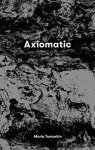
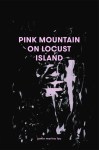 Thirdly, if we agree it does matter, why is it so? Is it because this is what publishers think readers want to read? It’s interesting, for example, that the most subversive books in the longlist are probably the two from the small independent publisher, Brow Books (Lau’s Purple mountain on Locust Island, and Tumarkin’s Axiomatic), and that the indigenous work in the list (Lucashenkos’ Too much lip) is published by UQP, a university press which has a history of supporting indigenous writing.
Anyhow, what I’m going to do is share here some books written by women and published last year that I think offer “otherness and diversity”, not, as I said, to say that I think these should have been shortlisted – because I haven’t read all the books the judges did, and I don’t know which ones were submitted anyhow – but just to offer some ideas and to have you offer some back!
- Glenda Guest’s A week in the life of Cassandra Aberline (Text) (my review), which could be seen to largely fit the zeitgeist/trends the judges identified – family relations, the impact of the past on the present – but it is also about “otherness”, in that the main character is an older woman who has been diagnosed with dementia.
- Krissy Kneen’s Wintering (Text), which I haven’t read but Kneen does tend to be subversive. Is this book so – or is it simply a variation on Tasmanian Gothic?
- Margaret Merrilees’ story about lesbians, Big rough stones (Wakefield Press) (my review)
- Angela Meyer’s dystopian-tending-realism-departing story, A superior spectre (Ventura Press) (my review).
This isn’t what you’d call a lot! I did find a few more by men, but. We see stories all the time about “other” experiences, about the many challenges we are facing as a society – on the news, for a start. Where are they in our fiction?
Now, over to you – and if you’re not Australian, I would of course love to hear what you have to say about “otherness and diversity” in your neck of the woods.
(PS This may not publish, as scheduled, on Monday night AEDST as we are out in the wilds of NE Victoria where internet connection is flakey.)





 Whispering Gums