Duane Niatum, Crow’s sun (#Review)

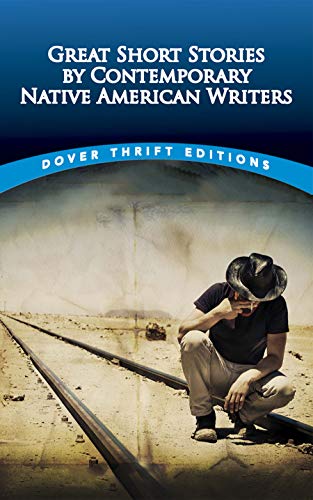
Duane Niatum’s “Crow’s sun” is the tenth story of fourteen in the anthology, Great short stories by contemporary Native American writers, and moves us into the 1990s, where we will remain for the next two stories before ending up in the early 2000s.

Duane Niatum

Anthology editor Bob Blaisdell provides more information about Niatum than he does for some of the writers, but I am supplementing that with information from Wikipedia and the Poetry Foundation. Variously described as a poet, fiction writer, playwright, essayist and editor, Niatum was born in 1938 in Seattle, Washington, to a Klallam (Salish) mother and Italian-American father. After his parents divorced when he was just 4, he spent a lot of time with his maternal Klallam grandfather, from whom he learnt tribal ways and oral traditions. He is an enrolled member of the Klallam Tribe (Jamestown Band).

At 17, Niatum enlisted in the United States Navy, and served in Japan. On leaving the Navy, he did his B.A. in English, at the University of Washington, studying with poets, Theodore Roethke and Elizabeth Bishop. He then earned his M.A. at Johns Hopkins University, and a Ph.D. in American culture from the University of Michigan.

Poetry was his main love, it seems. Wikipedia states that he “established himself as one of the most influential promoters of Native American poetry”. He edited a Native American author series at Harper & Row Publishers, producing two “influential anthologies”. He has published essays on Native American literature, and his poetry has been translated into many languages.

The Poetry Foundation says that his “writing is deeply connected with the Northwest coast landscape, its mountains, forests, water and creatures” and that “the legends and traditions of his ancestors help shape and animate his poetry”. However, it is a short story, of course, that Blaisdell has chosen for his anthology.

“Crow’s sun”

I’ve now read a couple of Niatum’s poems at Poetry Foundation, but none that specifically illuminate this story. “Crow’s sun” presumably draws from his experience in the Navy as it deals with a young sailor named Thomas sentenced to 30-days in the brig. I’m not saying that the story is autobiographical. It may be – I don’t know – but my point is that his Naval experience, and its treatment of people of colour, is sure to have informed the story.

The narrative takes place over one day. It starts with Thomas, just one year into his service, waiting to be taken to the brig and ends with him behind bars. Not a lot of action, in other words, but a lot goes on. This is a story about systemic racism. Thomas, we learn, had let his mother and step-father talk him into enlisting under-age, a common story for youths of colour with limited opportunities. In his case, he’d already been kicked out of home after he’d “stopped his step-father from beating up his mother in a drunken brawl”.

Once in the Navy, things don’t go well. Thomas “cannot fathom why sailors 17 to 70 live in some dream of future glory, which is the oldest myth of the military”. We are not told what Thomas has done, but it appears, from Shore Patrolman Cook’s advice as he delivers Thomas to the brig, that Thomas has been treated harshly:

“This hole’ll be your home for thirty days, Thomas. And buddy, you’d better watch your mouth in this joint. Do your time with your trap shut, until you’re running free. Don’t act the wise-guy. I don’t like your face, Thomas, but I don’t think those hicks from the base were right. You’re a punk, but who isn’t at your age. They went too far. I believe burning a man at the stake’s too much like what like what I left in Alabama.”

This surprises Thomas, because Cook, who “is a spit and polish sailor married to the idea that blind obedience to orders is the only law”, has never really liked him. His advice, then, means something, and Thomas thanks him for it. The rest of the story tells of his admission interview with the Brig Warden – and we get the full measure of the racism he is likely to experience. The Warden aggressively violently enforces his will. He calls Thomas, insultingly and erroneously at that, a “wetback”. He ridicules Thomas’ name insisting it should be “Pancho Villa or Willy Garcia”. I don’t need to continue because you’ve surely seen or read enough scenes like this to get the gist.

What makes this story is how Thomas handles the situation, which is to call on the wisdom of his grandfather. At the first sign of the Warden’s aggression:

The muscles in Thomas’ face tighten; his eyes thicken; narrow into tiny moons peering from behind a shield of fern. He sways slightly; stiffens his whole body, not sure what to expect from the man closing in. Grandson to Cedar Crow, Thomas feels his fingers change to claws, to a wing of thrashing spirit flying wildly inside his ear. (Be calm and steady now. This man could be your enemy. Know his every move. Break him like a twig if he tries to harm you. Be the Thunderbird of our song. I am Crow, your father.)

From here on, Thomas draws on his grandfather’s wisdom to assess and manage the situation. There is violence but he sees death is not on the cards. We learn that many Klallam people had lost faith in their beliefs and practices, but not Thomas. His late grandfather, “the quiet man of family, sea and forest had counselled him well”. From here to the end, where we leave Thomas standing in his cell, we observe him watching and responding to the Warden and drawing on his spirit wisdom.

It’s a strong story about the power and value of knowing your culture.

Duane Niatum
“Crow’s sun” (orig. pub. 1991)
in Bob Blaisdell (ed.), Great short stories by contemporary Native American writers
Garden City: Dover Publications, 2014
pp. 75-83
ISBN: 9780486490953

Barbara Kingsolver, Demon Copperhead (#BookReview)

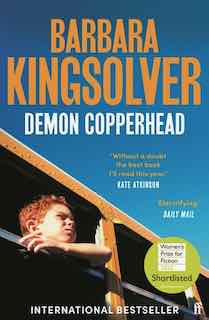
Barbara Kingsolver’s latest – and multi-award winning – novel, Demon Copperhead, was inspired, as I’m sure most of you know, by Charles Dickens’ autobiographical novel, David Copperfield. Indeed, Demon Copperhead opens with an epigraph from that novel:

“It’s in vain to recall the past, unless it works some influence upon the present.”

This could be an argument for writing historical fiction, and is certainly relevant to Kingsolver’s political intent, but for the novel’s protagonist it’s far more personal. Several times through the novel Demon refers to the point at which things changed – usually for the worse – but it’s two-thirds through where he makes it clear

Where does the road to ruin start? That’s the point of getting all this down, I’m told. To get the handle on some choice you made. Or was made for you. […]

In my time I’ve learned surprising things about the powers stacked against us before we’re born. But the way of my people is to go on using the words they’ve always given us: Ignorant bastard. Shit happens.

But, I’m jumping ahead here … so let’s back up a bit. I started by referencing the fact that the novel was inspired by David Copperfield, and it was inspired by it for one very good reason, which Kingsolver explains in her Acknowledgements:

I’m grateful to Charles Dickens for writing David Copperfield, his impassioned critique of institutional poverty and its damaging effects on children in his society. Those problems are still with us. In adapting his novel to my own place and time, working for years with his outrage, inventiveness, and empathy at my elbow, I’ve come to think of him as my genius friend.

So there you have it. Kingsolver has transferred Charles Dickens’ London of the early to mid-nineteenth century to Lee County Virginia from around 1990 to 2004 or so. While Demon struggles to make something of his life against all odds, not recognising or accepting until later that those odds were stacked against him from the start, Kingsolver, like Dickens, is a reformer doing her best to ensure that we will see from that start just how stacked those odds are at every level. I was expecting the book to be primarily about the OxyContin/opioid addiction crisis but it is much broader than that. It’s about poverty and the intergenerational trauma that this engenders – and how this helps lay the foundation for something like OxyContin to take hold.

“What matters in a story is the heart of its hero” (Demon)

I admit that I was not initially keen to read this novel. Not only is it very long, but I’ve read (and, yes, enjoyed) Barbara Kingsolver before, and I have higher priority books on my TBR. However, it was my reading group’s first read of the year, so of course I read it. It’s not a perfect novel, but Demon’s voice was so engaging and the translation of Dickens to Appalachian America is so pertinent to contemporary politics, that I’m glad I read it.

I can see, though, why it’s one of those divisive novels that engenders strong feelings one way or another. For a start, translating Dickens to contemporary times is risky. Dickens’ novel, being published in serial form, is long and episodic, with a large cast of characters, a touch of melodrama, and a lot of detail. A big, baggy, monster in other words. This style does not necessarily suit contemporary readers, but this is what you get with Demon Copperhead.

Like Dickens’ novel, Demon Copperhead wears its heart on its sleeves, meaning it’s not subtle. It can be didactic at times, as in Mr Armstrong’s lessons on capitalism and coal mining companies and Tommy’s discussion of historical truths. Its large cast of characters aren’t quite stereotypes but many are clearly typified by their behaviour – the bad characters who manipulate and use others (like stepfather Stoner, foster-father Crickson, and anti-hero Fast Forward), the weak characters who are well intentioned but can do more harm than good (like Coach), the kind hearts who pick Demon up when he’s down but can’t properly guide him (like the Peggotts), and the shining lights who try to set him on the right path but know he has to decide for himself (namely June and Angus).

In other words, Demon Copperhead is an in-your-face novel, which could be alienating. However, what kept me engaged was the character of Demon himself. Born to a junkie mother and orphaned at 11 when she ODs on oxy, he has a vivacity, an openness, and a heart that you want to see survive, despite setback after setback after setback. He’s “resilient”, a survivor, which is something those around him see early on. This is not to say, though, that he will survive, because even survivors need a hand, and this is what Demon sometimes gets, sometimes doesn’t, and, distressingly, sometimes eschews because he is determined not to be helped, to make his own decisions, to be his own man.

Regardless, once Demon had me, I was in. I have lived in Virginia (albeit very middle-class northern Virginia) and I have driven through various parts of Appalachia. I am interested in the culture, and, having recently read JD Vance’s Hillbilly elegy (my review), I am interested in how it is playing out in contemporary America. Kingsolver explores the role played by big pharma in targeting poor Appalachian regions with their painkillers, at a time when the region was suffering from the callous withdrawal of coal companies*. She shows how socioeconomic factors like these, combined with systemic failures in child welfare, not to mention poor educational opportunity, and the ongoing ostracism of “hillbillies”, contribute to the rise of MAGA politics in the USA.

She also shows the opposite, because while Demon is aware of the factors that work against him, he also sees what can sustain – good people offering the right support, the best parts of rural traditions, and nature, whose benefits are both spiritual and practical. The question is, are these enough? Or, what is needed to make them enough?

You have probably noticed by now, that I am not doing my usual sort of review here. This is partly because, being a multi-award winning Barbara Kingsolver novel, Demon Copperhead has already been written about ad infinitum, and partly because I wanted to tease out my own feelings about such a polarising novel. Yes, I can see – even agree with – some of the criticisms. It’s long and detailed, is didactic in places, and is not what you’d call subtle – rather like Dickens, in fact. However, the power of the story and its accompanying messages, combined with Demon’s utterly captivating voice, got me over the line. Kingsolver, I’d say, does her epigraph proud, whichever way you read it.

* One of my reading group members share an article about this very issue in a January 28 article in The Guardian.

* For a more traditional review of the novel, do check out Brona’s.

Barbara Kingsolver
Demon Copperhead
London: Faber & Faber, 2022
644pp.
ISBN: 9780571376490 (eBook)

Al Campbell, The keepers (#BookReview)

Al Campbell’s debut novel, The keepers, is a complex and ambitious novel about parenting, specifically about parenting children who are deemed too difficult by society, leaving their mothers, or carers, to survive, or not, as best they can. It’s confronting but, unfortunately, all too real.

That this is its theme is obvious from the novel’s opening page, which is titled “Scrapbook #12”, and comprises a news report from abc.net.au, 23 April 2018 (original here). The lead sentence reads, “special needs group pays tribute to 11yo boy with autism killed by train after escaping from respite care”. I remember this case.

We are then launched into the main storyline, which concerns Jay, a mother and full-time carer for her twin autistic sons, Frank and Teddy, and features a cast of other characters, some real, like her unsupportive husband Jerrik, and some imaginary, mainly her childhood “friend”, Keep (short for Keeper). Alternated with this storyline, which is told chronologically through time-stamped sections (like “Monday 2:06am” and, later, “4 days till extubation”), is the story of Jay’s childhood, in which she had experienced abuse and neglect at the hands of a grandfather and her dysfunctional mother. These sections are also time-stamped (such as “10 years old, autumn). Interspersed with these are scrapbook entries, like the one opening the novel. They are compiled by Jay, who clips and shares stories about the neglect and, even, murder of children with disabilities. As I said, complex and ambitious.

There is so much to like about this novel, starting with Campbell’s characterisation of Jay and her sons. It’s vivid and empathetic, which is not surprising given her own life experience. Write what you know, authors are told. These people are not her and her sons, but she knows them intimately, and the scenes featuring them shine off the page, even non-verbal Teddy who communicates via iPad, and especially patient, stuttering Frank. I’d love to share some of the interactions between Jay and her sons, because the warmth, the humour, the patience, the imagination make for some great reading and convey some of the joys in their relationship, but I’m not sure they’d work out of context, so you’ll just have to take my word for it.

Meanwhile, another strength of the novel is Campbell’s energetic, evocative writing. It starts with a bang and rarely lets up. The language is often breathtaking in its ability to capture a moment, a feeling. On the first page after the scrapbook entry, Jay refers to it as “the horror on the page a thing of thorns in my hands” and on the next page, the unsettled night outside is conveyed through a “lone plucky lamppost mooned by wanton whacks of lightning”. She’s talking in these opening pages to the mysterious and shape-shifting Keep, whose “latest incarnation” is “bald as bone and mouthless. No breath of course. Without ears … Some ancient mica, colourless and brittle? … His appearance is rarely the same”. The reader is immediately introduced to one of the meanings of the title, Jay’s “keeper”. Described later as her “poultice and protector, destroyer of others”, Keep has been with her since her difficult childhood. Another meaning is that her two sons, despite what the system might think or suggest, are “keepers” – at least until she is no longer around. What then? This question underpins all that Jay does and feels, and lies just beneath some of the uglier scrapbook items.

But, Campbell, does ask a lot of her readers. The structure is complex, which, on its own, would not be a problem, multiple storylines, after all, not being new. But, there is a lot going on. The exciting but idiosyncratic style, the switches in voice, the sudden appearances of Keep and later “the Other Things”, the shifts in storylines from mother-Jay to youthful-Jay, demand a level of attention that can sometimes get in the way of the story. I’m not convinced, in fact, that Jay’s childhood story – readable and interesting though it is – adds enough. Is it intended as another example of how the system lets children down? If so, I don’t think it’s needed, as Jay’s story with her sons, is powerful enough. Is it intended to contrast her own style of mothering with that of her mother, or to introduce the idea of child abuse? If so, these seem like different stories, and ones that potentially weaken what seems to be her intention to highlight the desperate situation families with special needs children find themselves in.

In other words, Campbell’s main story, as I see it, is a mother’s “warrior” style love for her “different” children, and the system that lets them – the children and the parent/carer – down, again and again. She tells of doctors who refuse to listen or heed, of the social welfare bureaucracy (through the NDIS) with its irrational rules, of schools which can be inflexible, of people in parks and shops who would rather not see her children – and so on. If it’s infuriating for the reader, imagine what it’s like for the parents.

Overall, The keepers is a powerful story that wants us all to understand the life of the carer, the very difficult questions confronting them as they and their children age, and the way the system all too often treats them as lesser or as too hard or as “types” to be slotted into rules and regulations. For Campbell, the personal is the political, and vice versa in fact. She would like to believe there is real truth and commitment to the idea that it takes a village to raise a child, but “some village we turned out to be”, she says to Keep at one point. And right there it occurred to me that this book, despite its flaws, is the sort of thing that should be selected for the Prime Minister’s Summer reading list.

Al Campbell
The keepers
St Lucia: UQP, 2022
336pp.
ISBN: 9780702265488

Nell Stevens, Mrs Gaskell and me: To women, two love stories, two centuries apart (#BookReview)

It’s a bit of a stretch, I admit, to submit Nell Stevens’ strange hybrid biography-memoir, Mrs Gaskell and me, as my second contribution to Bill’s (The Australian Legend) Gen 0. But, having read Elizabeth Gaskell’s two novellas, Lizzie Leigh and Cousin Phillis, for the week, and having had Stevens’ book on my TBR for a few years, I decided it was now or never to get it off the shelf. After all, as I wrote in my Two Novellas post, Mrs (Elizabeth) Gaskell (1810-1865) is a good example of a nineteenth century independent woman because, despite being a wife and mother, she managed to forge a career for herself as a writer.

So, let’s leap in. The reason this book is a bit of a stretch for inclusion in Bill’s week is not only because it is one of those hybrid biography-memoirs or bibliomemoirs, but because of Stevens’ statement in her disclaimer at the beginning of her book:

I have changed names, scenes, details, motivations and personalities. Every word has been filtered through the distortions of my memory, bias and efforts to tell a story. This is as true of the historical material as it is of the sections about my own life: studies, letters and texts excerpted here are not always faithfully quoted. This is a work of imagination.

So, it’s a work of imagination that tells two alternating stories. In first person, we have Stevens’ own story, which goes from 2013 to 2017, and encompasses her love affair with an American and the writing of her PhD on Mrs Gaskell. This is the memoir bit. In second person is Stevens’ story of Mrs Gaskell primarily covering the years 1855 to 1865 which encompass her three-months-long trip to Rome in 1857 and its aftermath. This is the biography bit.

Now, regular readers know my attitude to the fiction versus nonfiction question. I am more interested in truths than I am in facts. Facts on their own don’t always tell us a lot, and when we are talking a person’s life, they can be limiting. Knowing when a person married, for example, is far less relevant or interesting than how they felt about their marriage and the person they married, but, it is hard to get facts about those feelings. Even if the subject wrote letters and/or diaries, how truthful were they? And, did what they wrote one day in a fit of passion (positive or negative) reflect the truth of the relationship as a whole? And so on. All this is to say that I am happy to accept Mrs Gaskell and me as an imaginative bibliomemoir, but if you’re not, this book will not appeal to you.

Because of the reason I chose to read this book now, I’m not going to write the usual sort of review. There are several out there, if you are interested. Instead, I am going to focus on how it fits into Bill’s Independent Woman thesis, which is to look at non-Australian writers “whose work influenced, predated or paralleled the first wave feminists of AWW Gen 1”. This means, to me, that we can look at the works of these women writers and at their lives, and Mrs Gaskell had an interesting life.

“all of a sudden you had a career” (Stevens)

It was also, I think, though I haven’t read a true biography of her, a divided life. There was the traditional “Mrs Gaskell”, the well-brought up and educated wife and mother, but there was also this:

“Nature intended me for a gypsy-bachelor; that I am sure of. Not an old maid, for they are particular and fidgety, and tidy, and punctual – but a gypsy-bachelor.”

Gaskell wrote this in a letter in 1854. I checked its accuracy, given Stevens’ disclaimer, and it is, I believe, a true quote. Stevens goes on to write that Gaskell “played the role of wife and mother so very well, and so lovingly, but she was a ‘gypsy bachelor’ nonetheless”. So, while she was not one of those nineteenth century adventurers, like Isabella Bird and Flora Tristan, she was nonetheless independent. In her writing, this came through her “industrial” or “social novels” or what Stevens calls her “philanthropically motivated condition-of-England novels”. In these, she identified and questioned some of the significant social and moral issues of her era: in North and South, for example, she was among the first to explore conflict between employers and workers, and in Ruth (see Bill’s review), she preached compassion for “fallen” women. (I have read both of these, but before blogging.)

However, she also exhibited a level of independence in her personal life, despite its conventional trappings – and this is something that Stevens conveys (albeit with different motivations) in her bibliomemoir. Early in the book, Stevens writes, using her second person voice,

“You were always lucky, Mrs Gaskell; you were always grateful for what you had, and yet, all the same, you were restless” [my emph].

She then briefly chronicles Gaskell’s career trajectory from writing for herself, to sending articles and then short stories to magazines, to, finally, writing her first novel, Mary Barton, in 1853. Stevens writes that it “became the sort of book that people bought and reviewed and talked about, and all of a sudden you had a career”.

This is the background, but Stevens’ focus is Gaskell’s visit to Rome in 1857, when she was 46 years old, and what it meant to her. She went to escape, says Stevens, the potential fallout (of which there was plenty) from her Charlotte Brontë biography*. She found an energising community of artists (authors, poets, sculptors, painters, musicians) and met the seventeen years younger American author and critic, Charles Eliot Norton. They saw each other constantly, and remained in contact afterwards. It was, we believe, an unconsummated relationship, and not all agree it was a romance, though Stevens argues so. Whatever it was, it was clearly intense and significant, and given the (documented) ongoing years of contact that followed, it satisfied some of Gaskell’s intellectual yearnings and fed into her subsequent writing. Beyond this, Rome was, overall, argues Stevens, “transformative for her, to meet Norton, to be in Rome, to be treated as an equal by other artists”.

The other point I’d like to make is Stevens’ story that, at the end of her life, Gaskell bought and renovated a house in Hampshire without telling her husband. Sounds independent to me.

The Nell parts of the book, which chronicle Stevens’ own love affair and her struggles to write her PhD, mostly engaged me, particularly the academic life satire, but, I’m leaving it here because Mrs Gaskell was my theme. It’s an unusual book, but I’m glad I read it. I may not remember the details, which is fine given they may not all be exact, but I will remember how Stevens successfully transformed this intriguing author from her “Mrs Gaskell” persona to a living, feeling, independent woman.

* Wikipedia reports that in 2017 The Guardian named The life of Charlotte Brontë one of the 100 best nonfiction books of all time.

Nell Stevens
Mrs Gaskell and me: Two women, two love stories, two centuries apart
[Published in the USA as The Victorian and the romantic]
London: Picador , 2018 (e-Edition, 2019)
256pp.
ISBN: 978-1-5098-6819-3

Elizabeth Gaskell, Lizzie Leigh AND Cousin Phillis (#BookReviews)

This year, Bill (The Australian Legend) has framed his usual January “Gen” (short for generation) week, as Gen 0. Zero? How can that be? Well, let’s get it from the horse’s mouth. Bill says, “I am using ‘Gen 0’ as a designation for those writers – necessarily not Australian – whose work influenced, predated or paralleled the first wave feminists of AWW Gen 1”. In other words, we are looking at mostly 19th century writers – like Charlotte Bronte, Elizabeth Gaskell, and Charlotte Perkins Gilman.

Bill’s list is just a start. I would add Kate Chopin in there too, but more discussion and expansion of Bill’s list will presumably happen over the week, so I’ll get on to Mrs – or Elizabeth – Gaskell.

My Gaskell journey started in my teens when my mother, seeing my enthusiasm for Jane Austen, suggested I read Mrs (as she was on the book) Gaskell’s Cranford. From there I read North and south, Wives and daughters, and Ruth – all before blogging. I had hoped to read her first novel, Mary Barton, for this week, but when I saw how tight my reading schedule was this month, I decided to go for a novella (in the end, two novellas) instead. As it turned out, Bill has already posted on one of them, Cousin Phillis.

The Independent Woman

Bill’s AWW Gen weeks, which started back in 2018, draw from his thesis that “a case can be made for a parallel myth” to that of historian Russell Ward’s male-dominated Lone Hand. It features “the Independent Woman, who makes her way without, and often despite, men”. He is talking Australian women, of course, but for Gen 0 we are looking at what was happening elsewhere that may have affected, or simply parallel, what was happening in Australia. Elizabeth Gaskell is a perfect example, because, despite being a wife and mother of four daughters, she managed to forge a career for herself as a writer of novels, short stories, and biography.

She could do this for a few reasons, including the fact that the church she belonged to, and married into, was the dissenting, non-conformist Unitarian church, and that her minister husband William Gaskell was himself a writer and poet. He was also, according to Wikipedia, “a charity worker and pioneer in education of the working class”. It’s no surprise, then, that Gaskell’s themes, as Bill succinctly puts in it his post on Cousin Phillis, encompassed “dissenting religion and the plight of the poor, as well as strong women characters”, are all important themes in her work.”

Her fiction falls broadly into to main strands – the “ghost” stories, and the “social novel“. It is into the latter that Lizzie Leigh and Cousin Phillis fall.

Lizzie Leigh

Lizzie Leigh, published in 1855, is the simpler, shorter, of the two novellas, and its themes remind me of the 1853-published Ruth. It starts with the death of the “hard, stern, and inflexible” husband and father, James Leigh, who says to his wife on his deathbed “‘I forgive her, Anne! May God forgive me!’” We soon learn that the “her” being forgiven is their fallen daughter “Lizzie” whom he’d disinherited.

With her husband gone, Anne decides to rent out the farm for a year and go to Manchester with her two sons, the 21-year-old responsible Will who sees things his father’s way and the much younger Tom. She wants to find Lizzie.

The rest of the novella concerns her search for Lizzie, and the difference of opinion between her idea of religion – a forgiving, New Testament-based one – and Will’s. He is prepared to support his mother, for a year anyhow, but he believes Lizzie is dead and, further, that her sin brings shame on the family. When he meets an angelic young woman, he’s convinced that her knowing about Lizzie will spoil his chances with her. But things are not as he sees them, and his mother, who had been a submissive wife, starts to express her own beliefs, and commands him to listen to her on tolerance and forgiveness:

She stood, no longer, as the meek, imploring, gentle mother, but firm and dignified, as if the interpreter of God’s will.

So, two independent women here – Gaskell the writer and Anne Leigh the character.

Cousin Phillis

This novella, originally serialised in The Cornell Magazine (1863-64), is briefly introduced in my Delphi edition with “many critics agree that Cousin Phillis is Gaskell’s crowning achievement in short fiction”. It is a longer, somewhat more complex tale, and is, essentially, a coming-of-age story in which 19-year-old Paul, and his 17-year-old second cousin, Phillis – both only children – learn some tough lessons.

The story is told first person by Paul, who speaks from later in his life about when, as a young man, he had obtained a job in a country town working to an engineer in a railway building company. He begins visiting some previously unknown relations, the aforementioned Phillis and her Nonconformist clergyman-farmer father and plain-thinking mother. You might be expecting a romance to develop between these two, but quite early on Paul decides that Phillis is not for him. Not only is she still, strangely, wearing a childish pinafore, but she is taller and, like her father, bookish, which makes him feel inferior. This will not do, so they quickly fall into a sibling-like relationship, and Paul slots comfortably into their lives whenever he can. Well and good.

However, there is another man in the story, Paul’s supervisor, Mr Holdsworth, whom he hero-worships. Paul describes him as “really a fine fellow in a good number of ways”, adding that “I might have fallen into much worse hands”, which of course makes us wonder whether this is an ironic hint. As it turns out, yes and no. Heartbreak does ensue, and Paul, with well-intentioned naïveté, plays a role in bringing this about. But, he should not shoulder the full blame because we, like guilt-ridden Paul and sensible servant Betty, have seen how much her parents have babied Phillis: ‘”the child” is always their name for her when they talk on her between themselves’, says Betty.

Most of the action takes place on Phillis’ family farm, with Gaskell beautifully rendering rural life, while also introducing readers to the increasing industrialisation, bringing hints of the social change she portrayed with more depth in North and south‘s exploration of rural tradition versus modern values.

Gaskell also conveys some of her progressive views on religion. Early on, Mr Holdsworth asks Paul about his cousins:

How do preaching and farming seem to get on together? If the minister turns out to be practical as well as reverend, I shall begin to respect him.

Towards the end of the story, when Phillis is critically ill, her father is visited by some local ministers who preach their punitive religion to him, suggesting he consider “what sins” had brought this trial upon him, and

whether you may not have been too much given up to your farm and your cattle; whether this world’s learning has not puffed you up to vain conceit and neglect of the things of God; whether you have not made an idol of your daughter?’

Our minister will have none of it. He will confess his sins to God, but, he says

‘I hold with Christ that afflictions are not sent by God in wrath as penalties for sin.
‘Is that orthodox, Brother Robinson?’ asked the third minister, in a deferential tone of inquiry.

The ending, while not tragic, is open, which works well for me, though according to Wikipedia, she had considered adding two more parts to this four-part story. All up, another good read from the independent Mrs Gaskell!

Elizabeth Gaskell
Lizzie Leigh (1855) and Cousin Phillis (1864, available online)
in Complete works of Elizabeth Gaskell (illustrated)
Hastings (UK): Delphi Classics, 2015 (Version 5)

Rebecca Campbell, Arboreality (#BookReview)

Arboreality, by Canadian writer Rebecca Campbell, won the 2023 Ursula K. Le Guin Prize. However, not being much of a speculative fiction reader, I didn’t discover this book through this award. Fortunately, some bloggers I follow, like Bill (The Australian Legend), do follow this genre, and his review convinced me that this climate change dystopian work fits into the sort of speculative fiction that does interest me.

Before I talk about the book, however, a little about the prize. It was established in 2022, in honor of Ursula K. Le Guin, and is currently worth $25,000. It has some specific criteria: it’s an English-language award for a single work of “imaginative fiction”, and intends to honour authors who “can imagine real grounds for hope and see alternatives to how we live now”. This last bit is interesting – “real grounds for hope”. It reminds me of the Barbara Jefferis Award, which now seems to be in abeyance, but which was controversial because it stipulated that the winning work had to depict “women and girls in a positive way [my emph] or otherwise empowers the status of women and girls in society”. I don’t believe literature must offer hope or be positive, but I have no problem with awards sponsors making such stipulations.

So now, that out of the way, the book. It is set on Vancouver Island, a beautiful part of the world that I have visited. It’s novella in size, but, structurally, is best described as a collection of six inter-connected short stories:

  • “Special collections”
  • “Controlled burn”
  • “An important failure”
  • “Scion and root stocks”
  • “Pub food”
  • “Cathedral arboreal”

These stories are presented more or less chronologically, starting with the first two stories being set in the very near future (up to around 2050) with the last encompassing 2100. They are linked in various ways – by location; by characters (encompassing family and friends, ancestors and descendants, over time); and, as you’d expect, given the title, by trees, particularly but not exclusively, the arbutus and its mutant version, the golden arbutus. Each story focuses on a specific issue or idea and plays it out through personal stories, such as an academic saving books from a “crumbling” library (“Special collections”); a suburbanite trying to revive a devastated garden with local plants, as one-by-one his neighbours leave (“Controlled burn”); a luthier hunting for seasoned tonewood, via the black market if necessary, to make a Cremona-worthy violin (“An important failure”). These highly personalised stories are placed in context, through the addition of another voice – an omniscient narrator, in italicised sections – which conveys the wider ecological, economic and political picture. We see the land change through fire and rising sealevels; we hear of space colonisation; we learn of pandemics. It’s cleverly done, and although it requires concentration, I was more than willing to go with it because the vision Campbell presents is compelling in its awful believability. That, I think, is what telling a near-future story can achieve. It’s hard to pretend it won’t happen.

“What are we going to do?”

What makes this book so beautiful, however, is the way Campbell manages convey both absolute horror alongside a sense of hope born of human ingenuity, resilience, and sheer doggedness. Jude and Berenice, fighting a losing battle in their mission to save books, must constantly downgrade their expectations, which means becoming more and more selective about what is saved (and therefore also what is lost to human knowledge), but they don’t give up, and these books are seen in 2100. Similarly, Bernard, in his now empty suburb where gardens have died due to a watering ban, doggedly works to find plants that will live in his and neighbouring gardens, which we see, a few generations later in “Cathedral Arboreal”, has become a forest. And Mason’s “secret history” violin also appears in this last story in another generation. These people will not let go even though they are very aware of what has been lost, of what they have lost.

We’ve lived here for ten thousand years. Someone survived everything history threw at them, the fires and tsunamis, the earthquakes, the smallpox, the settlers. Empire. Capitalism. Someone’s going to survive this. (Benno, c. 2071, in “Scions and Root Stocks”)

The ecological story Campbell tells, alongside the human one, is fascinating, albeit probably more challenging to those of us who don’t know the plants of the region and their significance – the garry oak, the arbutus, the camas (lily), fireweed, Douglas fir, and so on. I know some of the plants she names, but I don’t know their particular role in the culture, their horticultural essence and value, or their symbolic meaning (if any any). Some I looked up, and some I didn’t, but certainly Campbell’s story is rich with interconnections here too, between past, present and future, and between Indigenous and non-Indigenous practices.

One of the meanings of “arboreality” is “of, relating to, or resembling a tree” which makes it a good literal title for a book in which trees stand for so much that is important to life – ecologically, culturally, and psychologically. But Campbell is also, perhaps, playing with the “sheltering” notion implied in “arbor” and “reality”.

The Ursula K. LeGuin Prize’s selection panel wrote:

Arboreality is a eulogy for the world as we know it. Rebecca Campbell’s extraordinary, deeply felt book explores the difficulties of the long hard project of survival. There are no heroes or villains here—only people making brave, difficult choices, out of hope and love for their community, for art, knowledge, and beauty. Arboreality imagines things that we haven’t yet considered about what can and will go wrong with our gardens, libraries, and archives if we don’t act now (maybe even if we do). In her masterful and profoundly ethical stories, Campbell asks us what might be saved, what must be saved, and what it will take to do so. 

‘What are we going to do?” asks Jude in the opening story, “Special collections”. Well might he ask. Arboreality is an astonishing book because of the way it imagines the dire, with all its attendant griefs, side-by-side with survival (and its attendant, hope). This makes it a bit discombobulating because we are constantly surprised by what happens next. The world is not beautiful, and life is tough, but people are surviving and working their way through what life has thrown at them. I don’t imagine Campbell intends us to think, “it’s alright then, let’s continue along our merry, destructive ways” but more that when (because we are, it seems, past “if”) we are confronted with the worst, humans can, and hopefully will, find ways through. The question is: is this the future we want?

Rebecca Campbell
Arboreality
Hamilton, Ca: Stelliform Press, 2022
128pp.
ISBN: 9781777682330 (eBook)

Claire Keegan, So late in the day (#BookReview)

In her final Novellas in November post, Cathy (746 Books) wrote about Claire Keegan’s short story “So late in the day”, and included an online link to the story. Having not read any of Keegan’s writing, to that point, and feeling the lack, I pounced – and was not disappointed.

“So late in the day” is a beautifully observed story told through the eyes of a man named Cathal. In it, he reflects on his relationship with a woman, Sabine, whom we come to realise is no longer around. Why? The story starts by encouraging us to empathise with him. His work colleagues seem worried about him, and his boss encourages him to go home early. The opening paragraph contains hints of things being a little awry or disturbed. It’s gloriously subtle. Every word carries weight, which makes the reading pure pleasure as you ponder just what the straightforward-sounding words and sentences are really signifying.

Life is clearly discombobulated for Cathal. For example, as he makes his way home, we are told:

For no particular reason, a part of him doubted whether the bus would come that day, but it soon came up Westland Row and pulled in, as usual.

The “for no particular reason” is telling, because there is a reason he feels uncertain, albeit we don’t know it yet, and his unawareness of why he feels this way is part of the issue.

So, the bus comes, and he finds himself sitting next to a woman who seems to want to talk. Hmm… he’s not happy. Soon, however, she turns to her book, The woman who walked into doors. Now, it’s a rare writer who inserts books into their stories randomly, but I didn’t know this book, so off I went to the internet and very quickly found that it is by Roddy Doyle. The Guardian quotes him on why he wrote this book which features a pre-existing character of his: “I had to give Paula a chance to explain why: why she married this man in the first place, and why she stayed with him.”

Gradually, then, the penny drops, but oh so slowly, because Keegan’s story is told from a man’s point of view, and this man is so woebegone, so clueless.

This is the sort of writing I like, writing that challenges the reader to work a bit, to read between the lines and not jump to simplistic responses. Cathal is an unreliable narrator. He does not see the whole truth, but Keegan draws out, from his own mouth, exactly what has happened, so that it all becomes clear to us, the reader, while he remains locked in his cluelessness.

There’s another challenge for the reader, though, besides sussing out what has happened, and it’s to do with how we feel. We start by feeling sympathy for him. He’s sad and lonely. But, as he talks about Sabine, a picture builds up. He is the more passive one in the relationship, but more than that, he is the taker. She organises the outings. She cooks, though he does grudgingly clean up, resenting the mess she makes. She’s generous, doesn’t “mind the cost” of nice food, spending “freely” at the markets, while he either tots up costs or, when he’s paying, makes mean choices. When he proposes to her, it’s devoid of romance. Is he emotionally repressed, and should we continue to feel for him, or is something else going on?

Quite late in the story, in a telling flashback, he remembers an occasion from his childhood. His brother had played a nasty trick at the dinner table on their nearly sixty-year-old mother, and instead of remonstrating with him the father joins the laughter. In this anecdote, and his reaction to it, we see the depth of his disconnect in how to relate to a woman, which adds to our growing awareness of an ungenerous, self-centredness in him. He doesn’t know how to give. There are occasional glimmers of awareness, but by the end, when we know exactly why he is so sad, why this day is so hard for him, we are left wondering what to think about him. Can he change? Or, more to the point, does he realise he needs to change? Does he fully comprehend the depth of his failure?

The French-translated title for this story is Misogynie, which makes no bones about its over-riding theme, but I like the subtlety, the multi-layered meanings behind “So late in the day”. To tease that out here, however, really would spoil the story for any of you wanting to read it.

Meanwhile, I’ll share this from early in the story. As Cathal is leaving work, we are told

He would ordinarily have taken out his mobile then, to check his messages, but found that he wasn’t ready—then wondered if anyone ever was ready for what was difficult.

Good question, but it doesn’t augur well for our narrator’s development does it?

An absolute gem of a story.

Claire (Word By Word) also liked it.

Claire Keegan
“So late in the day”
in The New Yorker, 28/2/2022

Available online at The New Yorker.

Holly Throsby, Clarke (#BookReview)

My reading group’s last book of the year, Holly Throsby’s third novel, Clarke, was a popular end-of-year choice. It’s a straightforward but compelling read that was inspired by a story we were all across, the Lynette Dawson story. Inspired, though, is the operative word, as Clarke is not Lynette Dawson’s story.

For a start, while Clarke’s missing woman disappears in the same decade as Lynette, the 1980s, Throsby’s story is set in a different location (a regional town not a capital city) with a different sort of husband (a physiotherapist, not a teacher). Further, there is some sort of resolution a few years, not forty years, later. This was a wise choice by Throsby. It decouples the story from Lynette Dawson, which encourages us to see it as part of a bigger story. And, setting it in a smaller environment lets Throsby explore regional town life. This latter is one of the strengths of the book.

The novel opens with fifty-something Barney being visited by the police at the house he is renting. They have a warrant to excavate the backyard as the result of their having received new information concerning the disappearance of Ginny Lawson five years previously. Clarke tracks this new police investigation through the eyes of the neighbourhood, primarily Barney, his next-door neighbour Leonie, and Dorrie and Clive across the road. Leonie, Dorrie and Clive all knew Ginny and believe her husband Lou, now living in Queensland, is implicated. They have wanted this investigation ever since Ginny disappeared, but the police at the time weren’t much interested in missing women.

The main joy in reading the novel comes from Throsby’s handling of the relationships between her characters, and the way she conveys how neighbours and communities chat or gossip about and try to second-guess situations like these. They phone each other, visit each other, talk over the fence, and discuss it with their workmates. It’s so realistic, you can hear yourself doing the same over similar scenarios.

It’s a fundamentally tough story – a disappeared wife with its hints of domestic abuse, among other griefs – but Throsby handles it with a light touch, including occasional black humour. Here, for example is Leonie talking to her workmates about some concrete in Barney’s backyard that the police are now excavating. It’s clear that it had been a topic of conversation at the time of the disappearance:

The suspicious concrete’, said Varden.
‘Yes, because that’s what you do when your wife and the mother of your child has just disappeared’, said Leonie. ‘You landscape.’

There is also some subtle wordplay. For example, Ginny’s husband Lou’s “disturbing the dirt and who knows what else” in his back yard after his wife’s disappearance mirrors the disturbance felt by the neighbours. And there are some wonderful descriptions, like Leonie’s on her tricky relationship with her mother: “Leonie remembered the warmth of her mother as a heady storm that blew in fast but never stayed long”. Or on sad Barney: “His skin was kind of grey and rough and reminded Leonie of an egg carton”.

“It would be fantastic to be able to choose one’s memories. It would make life so much more bearable.” (Barney)

There are, as I hinted above, other layers to the the narrative besides the disappeared-Ginny plot line. Barney is no longer living with his wife Deb (but why?) and Leonie has her four-year-old nephew Joe living with her (why too?). Both people, it’s clear, are dealing with some sort of grief. Throsby drip-feeds us their backstories as we get to know them, and as they get to know each other. Dorrie, across the road, provides a voice of reason for Leonie, while also engaging in the neighbourhood speculations about Ginny.

I’ll leave the narrative there, and move onto the form. Clarke is fundamentally a crime story or mystery, but it doesn’t fit those genre expectations. It’s a cold case, but the criminal investigation occurs in the background. There is no protagonist detective, and we only meet the police through their interactions with the main characters. There is, admittedly, an element of the amateur-sleuth cosy-mystery going on. Our main characters do a little of their own “amateur surveillance”, as Barney calls it, and we would, of course, like to know what happened to Ginny. But, the main focus is on what is going on for Barney and Leonie, personally, and whether they will resolve the griefs in their lives that are holding them back. It reminded me of that idea that if you scratch just beneath the surface of most people’s lives you will find a sadness or tragedy.

So, my overall assessment? I thoroughly enjoyed the read. Throsby’s language, excellent characterisation, and authentic evocation of suburban 80s-90s Australia made it a compelling read. However, the twist near the end felt a bit forced, and the ending is a bit neat, albeit there was some restraint. Generally, I prefer edgier books, books that keep me thinking about where they are going. With Clarke, I wondered about what happened to Ginny, whether we’d find out, and whether a relationship would develop between Leonie and Barney, but it didn’t, for example, delve deeply into the fundamental issues that brought about the situation in the first place. As a result, it called more on my emotions than my mind, and I do like both.

Nonetheless, Clarke is an enjoyable read – and I’d happily recommend it to readers looking for generous stories about real people grappling with life’s challenges.

Holly Throsby
Clarke
Crows Nest: Allen & Unwin, 2022
346pp.
eISBN: 9781761185540

Margaret Atwood, The Labrador fiasco (#Review)

Although I am an Atwood fan from way back, I haven’t, to date, taken part in Marcie’s (Buried in Print) MARM (Margaret Atwood Reading Month) event. But I promised her I would this month, albeit with just one little short story probably, this one. I have had The Labrador fiasco on my “little book” TBR shelf since it was produced as a Bloomsbury Quid back in the 1996. I have no idea why I have not read all my little books, but, there you go!

Most of you will know Margaret Atwood (b. 1939). I read several of her books before blogging – including her dystopian novel, The handmaid’s tale; her historical fiction novels, Alias Grace and The blind assassin; and her more contemporary novels Cat’s eye and The robber bride – and I have more on my TBR. But, I have only reviewed her twice here, her novella, The Penelopiad (my review), and her recent poetry collection, Dearly (my review). Now, I bring you a short story. This woman is versatile.

As far as I can tell, “The Labrador fiasco” was first published in this edition. Many of my “little books” comprise previously published short prose works, but this doesn’t seem to be the case here. I have three other Bloomsbury Quids, two of which were previously published, with the other, Nadine Gordimer’s Harald, Claudia and the son Duncan (my review), also seeming to have been first published as a Quid. Interesting, but not relevant to my discussion of Atwood’s story, so let’s move on. The Quids, though, are gorgeous little books.

“The Labrador fiasco” is a “story-within-a-story” story. (Ha!) The framing story concerns the narrator and her aging father and mother. (The narrator’s sex is not provided, but let’s go with female as Atwood is female.) The father, in particular, is declining, having experienced a stroke six years before the story’s opening. It is told first person by the daughter, who regularly visits her parents.

The story within comes from Dillon Wallace’s The lure of the Labrador wild, published in 1905. Wallace was, says Wikipedia, “an American lawyer, outdoorsman, author of non-fiction, fiction and magazine articles” and this, his first book, was a bestseller. It tells of an exploratory trip through Labrador undertaken by Wallace and a man called Leonidas Hubbard, with their Cree Indian guide, George. The Cree bit is important as the Cree are not from the region they were travelling in. Anyhow, the aim was to explore a part of Labrador that hadn’t been explored by Europeans, with Hubbard wanting to “make his name”. However, as Wikipedia (and Atwood’s story) explains, they took the wrong river from the start, with tragic consequences.

Atwood’s story opens with:

It’s October; but which October? One of those Octobers, with quick intensities of light, their diminuendos, their red and orange leaves. My father is sitting in his armchair by the fire. He has on his black and white checked dressing gown, over his other clothes, and his old leather slippers, with his feet, propped up on a hassock. Therefore it must be evening.

There’s so much going on here, besides the gorgeously structure sentences. We are immediately put on the back foot with “which October”, and “it must be evening”, but at least the father is very much present. The uncertainty suggests that the story is being told from a later time. Whichever October it is, however, it is autumn – or fall – and that means the season of decline. Within a couple of paragraphs, we learn of the father’s stroke, and know he is declining. But, the question, “which October”, also hints at the October in the Wallace-Hubbard story when things have really started to sour – because not only is it cold of course, but our explorers have taken the wrong route and are running out of supplies.

This is the set up. As the story progresses, the narrator’s father, who was an experienced outdoorsman himself in his day, provides a running commentary on the explorers, with the narrator adding her own layer. “They took the wrong supplies”, the father says, pleased because he would have known what to take. However, our narrator wonders “what supplies could they have taken other than the wrong ones” … “No freeze-drying then” or “nylon vests”, for example.

“harsh and unmarked and jumbled”

What Margaret Atwood does in this story, then, is parallel the deterioration in the condition of the explorers as their expedition goes awry, with the narrator’s father’s decline as he ages. The explorers leave things behind, their feet suffer because they don’t have effective footwear. The father leaves hobbies behind, and says his feet are too sore to walk. The father thinks he would have done the expedition better, but he faces his own “forest” and in fact, like the explorers, he and his supporters are not fully equipped to deal with it.

And so it goes. In under 40 (very small) pages, Atwood combines commentary on a failed (colonial) expedition, conveying the poor planning and hubris of those involved, with a tender family story of an adult child and mother coping with a failing father. To do this she calls on her obvious love and knowledge of Canada’s history and “wilderness” (a contested term now, I know), and her keen interest in humans and how our lives play out.

We are all explorers, I think Atwood is saying, and the way, at least some of the time, can be “harsh and unmarked and jumbled”. It takes all our energy to traverse it. Good planning and the help of others can ease the way, but in the end, we each have to do it on our own. A clear-eyed, clever and tight story with an ending that encompasses genuine warmth with an acceptance of life’s realities. Beautiful.

Read for MARM 2023

Margaret Atwood
“The Labrador fiasco”
London: Bloomsbury, 1996 (A Bloomsbury Quid)
64pp.
ISBN: 9780747528890
Available online at Independent, 1996

Kim Kelly, Ladies’ Rest and Writing Room (#BookReview)

Early in the month I reviewed the first of the two winners of Finlay Lloyd’s inaugural 20/40 Publishing Prize, Rebecca Burton’s Ravenous girls (my review). It was set in Sydney in the 1980s. Now, as promised, I bring you the other winner, Kim Kelly’s Ladies’ Rest and Writing Room. It is also set in Sydney, but in the early 1920s. Some of you will know Kim Kelly, as she has published around 12 novels, mostly historical fiction. Not only that but she was longlisted for the ARA Historical Novel Prize 2022 and shortlisted for the Viva La Novella 2021 prize with her novella, The rat catcher: A love story.

So, she has written novellas, before. A check on her GoodReads page revealed others, including what I think is her best known book, Wild chicory. So, she, like Rebecca Burton, is comfortable with the novella form (or length).

Finlay Lloyd describes the book on their website like this:

Two young women, brought up to expect conventional lives, are thrown together in unexpected circumstances. Each has suffered a devastating loss that challenges their belief in life and themselves. It’s rare to come across a work of deep psychological insight conveyed with such verve and lightness of touch.

As I said in my opening paragraph, Ladies’ Rest and Writing Room is set in 1920s Sydney. The title is explained in the first of two epigraphs. It comes from an advertisement in the Sydney Morning Herald, in 1922, for the Ladies’ Rest and Writing Room in Farmer’s department store. This “artistic room” was intended as a place of respite for busy shopping ladies. It was also where they could also write any “urgent notes” for “the very next mail”. Writing facilities were provided for the purpose. The room was, of course, intended for the well-heeled, as you paid a “nominal charge of 8d.” to avail yourself of its charming “rose shades”. The second epigraph comes from Sappho, which might or might not tell you something!

The story is told in from alternating third person perspectives of two young women. One is the apparently entitled Dotty, who comes from a wealthy business family and who uses the Room in the opening chapter. She is introduced, however, on the street outside where she plays chicken with a tram every Tuesday on her way to Farmer’s and its titular room. Why does she do this? We soon come to understand the pain this young woman, who seems on the outside to have it all, is dealing with. And it’s to do with World War 1, if you haven’t already guessed from the time setting.

The other young woman is down-on-her-luck Clarinda, who has just started work as the Room’s attendant. She went to school with Dotty, but Dotty, in her grief, doesn’t notice her, which doesn’t surprise Clarinda after her shooldays’ experiences with Dotty. Clarinda has her own sadness, partly stemming from losses in the War, but also from the fact that due to her father’s tragic death she and her mother are now on the proverbial hard times.

The narrative takes place over a few weeks encompassing Christmas, and comes to a head when Dotty’s pain becomes too much for her, resulting in a crisis in the Corset Salon (next door to the Ladies Rest and Writing Room). Clarinda steps in to protect Dotty, and, through what ensues, both young women grow. Clarinda treats Dotty with compassion and forgiveness, while Dotty wakes up to sadnesses in others.

What I most enjoyed about the book is its evocation of post WW1 1920s Sydney. Kim Kelly knows the place and the time well, and, despite the shortness of the novella form, she vividly captures a city and people in flux – the grief of wartime loss, the changing workforce as men return home after the war, the increasing migration, the excitement of change in the air, but with old social values and class structures still in place.

Clarinda, for example, was grateful for having finally landed a decently paid job:

It certainly beat unreliable casual waitressing at three shillings a luncheon, or three and six per dinner service, or sixty hours per week as a shop assistant at considerably less than two pounds, both of which she’d done, piecing together a living. All the better paying more respectable clerical positions for which she was qualified, were being given to returned soldiers, and that was fair enough, except that nothing fair had happened for Clarinda since her brothers were ripped from this life and …

So much is told in these words.

Kelly is also adept at characterisation, creating two well-differentiated characters in Dotty and Clarinda. They immediately come to life on the page, which is particularly important in a novella where there’s no time to waste. We care about them both, because we are privy to what’s going on for them, and thus to their isolation, even if those around them aren’t.

The writing and plotting are assured. Kelly is clearly experienced in writing historical fiction where description and rhetorical language are used to create the sort of atmosphere and tone needed to drive a plot forward. Kelly does this very well, and I quickly became engrossed in these two girls’ lives. It’s a novella that wears its heart on its sleeves, and I wondered at times whether some pulling back might have challenged us readers to delve into more of the complexities, and maybe leave us with more questions than answers. But, that would have been a different book. As it is, Ladies’ Rest and Writing Room is beautifully accessible and will hopefully attract more people to the novella form. It and Ravenous Girls would make excellent stocking stuffers for busy readers in your lives. And I don’t mean this condescendingly! I am referring to their perfect stocking-stuffer size!

As with all Finlay Lloyd books, the design is gorgeous, with an appealing monochromatic cover featuring a woman’s hands writing a letter. Very different to your usual historical fiction cover.

Ladies Rest and Writing Room is a good read about a significant and complicated time in our history. Like Ravenous girls, it is a compassionate book, this one about navigating deep loss and the grief that attends it, and, even more, about the importance of generosity in dealing with others. I wish these two books well and thank Finlay Lloyd for sponsoring such an appealing, targeted prize.

Read for Novellas in November. Lisa (ANZ Litlovers) and Theresa (Theresa Smith Writes) have reviewed both winners in one post, but I have done them separately.

Kim Kelly
Ladies’ Rest and Writing Room
Braidwood: Finlay Lloyd, 2023
122pp.
ISBN: 9780994516596