Susan Varga, Heddy and me (Review)

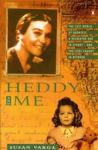
Susan Varga, Heddy and me Book cover

Penguin edition

Susan Varga’s biography-cum-memoir, Heddy and me, was first published back in 1994, so why am I reading it now? By a rather circuitous route, as it happens. Lesley Lebkowicz, whose The Petrov poems I’ve reviewed, read my post on Anna Rosner Blay’s Sister, sister, and suggested to Susan Varga that she might like to send me her book to review. Varga apparently liked the idea and consequently I received an email from her personal assistant offering it to me. I had heard of it, and am interested in the subject matter, so I said yes. That was, embarrassingly, over four months ago, for which I apologise, but eventually its time came and here, finally, is my review.

I’ll start with the judges’ comment when they chose the book to win the 1994 Christina Stead Award for Biography, Autobiography or Memoir*. They described it as “the front rank of autobiographical writing in this country”. That’s a big call but, having read it, I agree, because it is an engrossing book which intelligently negotiates two usually opposing forms, biography and autobiography/memoir. In it, Varga tells the story of her Hungarian Jewish mother Heddy – her life in Hungary, her experience of World War 2, and her subsequent emigration with her extended family to Australia. But, in telling this story, Varga, as the title conveys, also tells her own. She was born, mid-war, in 1943 and was just 5 when the family migrated. Hers was a complicated growing up in which she struggled to find self. She finally realised, late in her research, that she straddles two generations: the first (those who migrated) and the second (the children of those migrants).

Now, I can see why Lebkowicz thought I might be interested in this book, because both books involve a daughter not only telling the Holocaust-survival-and-migration story of a mother, but also working through her understanding of and relationship with that mother. Like Blay after her, Varga captured much of her mother’s story via tape recorder:

… the room itself is imposing, with its long oak table and chairs covered in embossed velvet. Imposing but not unfriendly, which is very much Mother’s style.

I switch on the tape-recorder. She talks, I listen. She [unlike Blay’s mother] doesn’t need much prompting; she’s telling me her life story, which she knows will be raw material for a book. In the past when people have said to her, ‘Heddy, you should tell your life story,’ she has said, ‘I’m waiting for Susan.’

I’ve told her it won’t be her life story, not properly. It will be filtered through my reactions and thoughts, my second generation eyes.

And Varga’s eyes are complicated, sometimes testy ones, as she strives to comprehend her strong-willed mother. So, like Blay’s book, Heddy and me is an amalgam of biography and autobiography, thereby neatly sidestepping David Marr’s injunction for biographers to get out of their story! Like Blay’s book, too, Heddy and me is a story of survival – of a peculiar combination of luck, resourcefulness and judgment – and it’s a story of the lasting impacts of the war. For both families, one of those impacts is an ongoing sense of fear:

… the fear of impermanence, the readiness to flee, takes the form, among others, of a deep conservatism running through the older generation, as if any change at all could result in their lives being uprooted again. They are over-protective, still prone to buy their children a diamond, something portable, just in case.

And we children feel a pervasive fear that we do not know how to express. Impermanence and insecurity lurk in the shadows behind this all-Australian red-brick security.

I found this analysis, this explanation of conservatism, enlightening – and helpful.

However, despite similarities with Blay’s book, Varga’s is different. For a start there are the obvious departures. Varga’s family is Hungarian to Blay’s Polish one, and Varga’s mother was married with a young child when the war started while Blay’s mother was still a teenager. Moreover, Varga’s mother managed to avoid, through various subterfuges, being sent to a concentration camp. She didn’t suffer the ghetto and concentration camp terrors and depredations of Blay’s mother, but Heddy and her colourful mother Kató, whose story is also told here, did suffer, including being raped multiple times by their Russian liberators. There are deeper differences too, speaking to the different psychologies of the two families, their individual wartime experiences, and how these subsequently played out in their post-war lives. And there’s the structure. Varga interweaves her own story and her reactions to her mother’s story within the one narrative flow, while Blay carefully differentiates her voice from her mother’s and aunt’s.

A particularly fascinating part of Varga’s book is the picture she paints of Hungarian society before, during and after the war. I learnt a lot, for example, about Budapest – its vibrant pre-war culture and life, albeit a life that, for its Jewish inhabitants, had its paradoxes. They lived, writes Varga, an outwardly normal life, “clinging to continuity while awaiting upheaval”. Varga chronicles the trajectory of anti-Semitism, from pre-war to the out-of-the-frying-pan-into-the-fire situation in which Hungary’s Jews found themselves post-war, when Nazism was replaced by Communism. Indeed, having survived the war, Heddy, Kató and family were prepared to stay in Budapest until it became clear to Heddy “that the noose was tightening again, like Hitler, except then it was against the Jews, now against everyone.” So, Heddy, ever attuned it seems to the political nuances around her, worked on her family until they agreed to move to “the New World”. Later, as part of research for her book, Varga returns to Hungary with her mother, and becomes aware of the increasing (or, really, continuing) anti-Semitism:

As I begin to grasp the subtleties of political life in the post-Communist world, I find it awful that the Jews should once again need friends and protectors, I think of 1943, when Hungary’s Jews still thought themselves safe because Kállay, or some other prominent politician, was their friend.

Once again, I am astonished, though I suppose by now I shouldn’t be, at how deeply anti-Semitism seems to run, particularly in Europe.

And here, I’m going to insert some personal connections with Varga’s story. I mentioned in my review of Sister, sister that I’d spent some time in my Sydney youth with Jewish people – eastern European Jews – who were business friends of my father’s. Blay’s and now Varga’s books consequently ring true for me, Varga’s particularly, because her parents did exactly what many of these people did – they set up business in the rag trade, and then handbags. I still have some handbags to prove it! But, my connections with Varga are more than this, because I went to the same high school she did, albeit a decade later. Unfortunately, Varga’s experience was not as positive as mine, partly due to her increasing sense of disconnection with her family and partly to the fact that by my time in the mid-to-late 1960s society was becoming less rigid (even in strict government girls’ schools). It was at that school that my understanding of civil rights – particularly, then, relating to racism and anti-Semitism – was honed. This is rather ironic given Varga found it “a school of endless strictures and platitudes”.

Anyhow, enough about me, and back to the book. Heddy and me was, I suspect, groundbreaking when it was first published, not so much for its portrayal of personal experience of the Holocaust, because such stories started appearing soon after the war, but for Varga’s intensely personal exploration of women’s experience and identity across three generations, before, during and after the war. Since then, similar stories have been written – Blay’s, for example, and another I’ve reviewed, Halina Rubin’s Journeys with my mother. However, these later books don’t minimise the power of Heddy and me, which not only illuminates the personal and familial costs of the Holocaust, but also provides an historical perspective on that mysterious thing we call human behaviour. This book deserves a continued life.

AWW Logo 2016Susan Varga
Heddy and me
Abbotsford: Bruce Sims Books, 2000 (2nd ed.; Orig. ed. Penguin, 1994)
304pp.
ISBN: 9780957780033

(Source: Susan Varga)

* Unfortunately FAW’s awards website only goes back to 1999. This comment is on the front cover of my edition, and is credited to “Christina Stead Award”.
Josephine Rowe, A loving, faithful animal (Review)

Josephine Rowe, A loving faithful animal

How many novels have you read featuring the Vietnam War? I’ve not read many I must say, but last year I did review Charles Hall’s Summer’s gone, and now this year I’ve read Josephine Rowe’s A loving, faithful animal. It’s a debut novel but, from its form, you can tell that Rowe is an accomplished short story writer. I have in fact read one of her short stories – from her collection, Tarcutta Wake. Unusually for me, I didn’t review it at the time. I think this is because I planned to read the whole collection, but that hasn’t happened (yet, anyhow), which is clearly my loss.

So, before I discuss the content of this novel, I should explain what I mean by my comment regarding short stories and its form. For a start, it’s a multi-voice novel. On its own, this is not unusual, but here the voices are also in different persons, which is not unheard of either, really. However, added to this is the fact that the chapters (or “stories”), particularly “Breakwall”, could be read as stand-alone pieces. To make the novel out of these pieces, they are linked via character, and there’s an overall chronological narrative arc to them, but they also remain little jewels in themselves. There’s real skill here, in the way Rowe juggles her voices, perspectives, stories to create a very satisfying whole.

Now, to discuss the novel itself. It comprises six stories, starting in second person with Ruby, whom we come to realise is the younger daughter of the book’s central family. It then progresses through four stories told from different third person limited perspectives – Ruby’s mother Evelyn, her father Jack, her uncle and father’s brother Les or Tetch, and her sister Lani – before returning to Ruby’s second person voice to conclude. The story is one of a family broken by the father’s ongoing trauma (PTSD) following his Vietnam War experience. It’s a devastating story showing how such trauma can play out, resulting in domestic violence, dividing loyalties and causing splits in families.

… she did not drive away …

The novel opens on New Year’s Eve, around 1990. The family has struggled on for some time. Jack has been unable to retain good employment, going in and out of rehab, with Evelyn always drawing him back, wanting their relationship and the family to work. But, every time she takes him back, she loses something too, particularly in terms of the respect of her elder daughter. As the novel opens, it’s New Year’s Eve, and Jack has gone, for good this time it seems, after something unspeakably brutal – the full details are never, fortunately, given – has happened to the family’s pet dog, Belle, the titular “loving faithful animal”. Except, as you’d expect, there’s more to the title than this. Evelyn, too, is “a loving faithful animal”, as in her way is Ruby and, perhaps we could also argue, Jack’s half-brother, Les/Tetch. He had escaped the war by “getting rid of his own fingers” and now hovers on the edge of the family, wanting to keep an eye on them, wanting his brother to be okay, but wanting too some family for himself.

What I enjoyed most about this book, besides its tackling this important subject, is its empathetic but unsentimental portrayal of its characters. Evelyn’s loyalty (her faithfulness) is shown to be both admirable and stupid. We see the catch-22, damned-if-you-do-damned-if-you-don’t nature of her situation, with the added element of a young girl having made her bed, that is, having married against her parents’ advice, and now having to lie in it:

But she could never quite bring herself to. Run out on him like that. And it was never as simple as money. It was never as simple as pride, because she’s not sure she’s never had much of that either. Or if she does, it hasn’t turned out to be worth much, not when it comes right down to it. (II “The Coastal Years”)

Life is cruel, particularly when stubbornness and lack of forgiveness face off against each other. Anyhow, we also ache for Jack who can’t escape his past, and nor “get a handle on” the future, so leaves rather than inflict more cruelty. We see and understand Lani’s decision to reject it all and escape into a future on her own, while Ruby stays determinedly loyal. Every decision though comes at a cost.

It’s not an easy book to read, and not just because of the subject matter. Rowe is not the sort of writer who wants to tell a simple narrative. She wants to convey emotions, psychology, motivations, not just actions, because these are the stuff of life. And this requires a particular sort of writing which, for Rowe here, is a sort of minimalist, sometimes disjointed, sometimes lyrical style:

This is Exhibit A in the Museum of Possible Futures, the life that might have rolled out smooth as a bolt of satin, if she had just swung her slender legs up into that beautiful car and driven as fast as she could in the opposite direction, leaving the man with the camera far behind. Your father, he could keep the photograph.

But she did not drive away. Instead she sold the car and spent every night of her life trying to lead your father out of the jungle, out of the mud, away from the cracks of invisible rifles, strange lights through the trees. (I “A Loving, Faithful Animal”)

There’s more of course – isn’t there always? – including little running motifs involving cicadas and panthers, and Tetch whom I’ve barely mentioned, but I’ll close here. This is the sort of book that I’d love to see in next year’s awards shortlists, for its writing and for its fierce, authentic evocation of the lasting effects of war. I wonder if I will.

Lisa (ANZLitLovers) was also impressed by the book.

AWW Logo 2016

Josephine Rowe
A loving, faithful animal
St Lucia: UQP, 2016
200pp.
ISBN: 9780702253966

Monday musings on Australian literature: Women writers on the outback

After I posted my completion of the AWW Bingo Card yesterday a discussion ensued on Lisa’s ANZLitLovers blog regarding her comment on the dearth of books written by women “set in the outback”. That got me thinking … and it seemed like a good topic to play with in a Monday Musings.

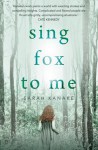
Sarah Kanake, Sing Fox to meThere’s a question to resolve first, that of defining “outback”. What do we mean by it? In my post, I said that I tended to see “the outback” as Australia’s dry remote regions, but for the Bingo I used Sarah Kanake’s Sing fox to me (my review) which is set in a remote mountainous area of Tasmania. Meanwhile, over at Lisa’s blog, a commenter suggested that Lucy Treloar’s Salt Creek is set in the outback (I’ll drop the inverted commas from now on!), to which Lisa replied that she “did think of Salt Creek (because I loved it) but it’s on the coast down on the Coorong, not the outback.”

So, what – or where – is this Outback?

I did some research. Online dictionaries offer broad definitions – “the back country or remote settlements; the bush (usually preceded by the)” (dictionary.com) and “the remote bush country of Australia” (The Free Dictionary). The Advanced English Dictionary, quoted by the Collins Dictionary, has it as “The parts of Australia that are far away from towns are referred to as the outback.”

However, perhaps the best definition for our purposes is that offered by The Oxford Companion to Australian Literature (2nd ed.):

‘Outback’ denotes the remote and sparsely settled inland districts of Australia but does not indicate such extreme remoteness as implied in a similar expression, the ‘Never-Never’.

It goes on to say that the term was used in the latter part of the 19th century, but became more common in the 20th century, so much so that “the original semi-colloquial expression is now an orthodox term”. It also says that while the outback was romanticised, particularly by bush balladists like Banjo Paterson, Henry Lawson “forcibly” presented the other side in his Some popular Australian mistakes where he wishes “that Australian writers would leave off trying to make a paradise out of the Outback Hell”.

I’ve read elsewhere* that the outback is the region “past” the bush. So “past” the bush but not as far as the “Never-Never”! Now, as a librarian, I’m into categorising, but I also recognise that categories need to be loose and flexible. So, I’m going to accept any area that is sparsely populated and that has a challenging or forbidding environment to live in. This means, I’d argue, that mountainous Tasmania could qualify, but that the Coorong is borderline. It’s only 150kms from Adelaide and it is coastal rather than inland (which is where we tend to see the outback), but it does have a rather challenging environment.

Outback literature – past

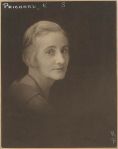
Katharine Susannah Prichard

Prichard, 1927/8 (Courtesy: State Library of NSW, via Wikimedia Commons)

I’m not going to write a deeply researched thesis on this, but write primarily from “the top of my head”. Generally – and I am generalising – much late 19th to early 20th century literature set in the outback tended to be about nationalism, identity and the pioneering spirit. There were novels by women about farmers and pioneers (such as Katharine Susannah Prichard’s The pioneers, my review). Miles Franklin wrote her autobiographical novel, My brilliant career, about a grazier’s daughter who wanted a different life from that being mapped out for her, and then of course there’s the remarkable Barbara Baynton whose short stories in Bush studies (my reviews) certainly didn’t “make paradise” of the outback. Life for her characters, particularly women, was hellish. Baynton and Franklin were realists who didn’t buy into the romance of the bush.

Their realism, and that of some of their peers, was picked up through the middle of the twentieth century by writers like Ruth Park (Swords and crowns and rings, which I’ve reviewed and which is set partly in rural areas before moving to Sydney), Kylie Tennant (The battlers) and Eve Langley’s The pea pickers (my review). But, it’s a huge subject and I really want to get to what inspired this post, contemporary women’s writing about the outback. (The Bingo challenge itself though, I should add, didn’t specify contemporary writing.)

Outback literature – current

In the discussion on Lisa’s post, she suggested that today’s outback novels deal with issues like inheritance and indigenous ownership, to which I added climate change and environmental issues. Before continuing, I should mention that there’s a whole genre of writing that I’m not including here, rural romance, because my focus today is literary fiction.

Alice Robinson, Anchor PointAnd in this area, contemporary women writers have been contributing some provocative books. Gillian Mears’ historical novel, Foal’s bread (my review), is about hard country life, about conservatism and snobbery which refuses to see substance. Jessica White’s contemporary novel Entitlement (my review), on the other hand, explores issues relating farming succession and indigenous connection to land. Cli-fi, fiction about climate change, can be set anywhere, but not surprisingly a subset is set on farms, which is where Alice Robinson’s Anchor point (my review) sits. She also touches on indigenous ownership issues.

And then, of course, there’s Thea Astley who I’d argue is still “contemporary” given she only died in 2004. Most of her books are set in remote places, including her last novel, published in 1999, Drylands (my review). It is set in “a God-forgotten tree-stump of a town” which is “being outmanoeuvred by the weather. As simple as that. Drought. Dying stock.” Drylands moves us into the dystopian vein and brings me to a book which probably wouldn’t immediately be thought of as an outback novel. I’m talking Charlotte Wood’s The natural way of things (my review), which is set in a remote, isolated place that is critical to the way the plot plays out.

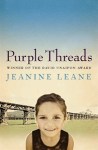
Jeanine Leane's Purple threads

Finally, in this very brief survey, I must mention Indigenous writing. Ali Cobby Eckermann’s Ruby Moonlight (my review) is an historical verse novel exploring early contact between indigenous and non-Indigenous people in remote South Australia. Jeanine Leane’s Purple threads (my review) tells of a mostly-female indigenous family living on a small piece of land in the Gundagai area of New South Wales in the 1950s to 1960s. It explores the experience of being indigenous, being lesser, in a rural community. And Alexis Wright’s Carpentaria (my review) is set in a fictional town called Desperance in northwest Queensland. It depicts conflict between different indigenous groups and with the local multinational mining company, and exposes the psychological, spiritual and physical impact of colonisation on indigenous people.

Note: Bill (Australian Legend) has reminded me in his Bingo post that “the Outback” is a white construct. Mea culpa, he’s right, but I’m going to stick with my paragraph above, because I don’t want to ignore indigenous writing. How hard it is, sometimes, to get out of our own world-view.

So, it’s now very clear to me that women are still writing books set in the outback (by my definition). It’s also clear that the issues they are addressing have moved on – not surprisingly – from those of a century ago.

I’d like to know what you think. Do you accept that these books are “outback” novels? And have they reminded you of other novels by women set in the outback? Now that I’ve started, I could certainly go on …

If you are not Aussie, do you have anything equivalent in your national literature?

* Albeit in Wikipedia, with no citation.

AWW Bingo 2016 Challenge Completed

For a blogger of more than 7-years standing who doesn’t take part in memes and challenges, I’m doing a good job this month. First it was 6 degrees of separation earlier this month, and now it’s a bingo game. I have good reasons for these exceptions, but I don’t expect you really want to know those, so let’s just get on with it.

AWW Logo 2016Back in April, Kelly from Orange Pekoe Reviews created two Bingo cards for the AWW Challenge and posted them on the blog. The date for completion was set as 31 October. A couple of days ago, AWW participant Christy Collins became the first person to post that she’d completed the challenge. Now, my life has been so busy these last 6 months or so that I’ve not actively pursued the challenge. However, I’ve kept the cards next to my work area and have checked them every now and then. After Christy posted her completion, I had another look and blow me down but I’d complete one! Now, that’s the sort of challenge I like as you know, one that’s not a challenge!

So, here’s my post recording that I completed Card One:

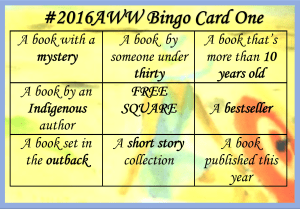
2016 Bingo Card One

  • A book with a mystery: Not being a big reader of crime/mystery books, I was initially glad that this didn’t say “a mystery book”, because it meant I could choose any book which contained a mystery. However, as it turned out, I did read a crime mystery this year, Dorothy Johnston’s engaging Through a camel’s eye: A sea-change mystery (my review). It’s first in her new series set around where she lives on the southern Victorian coast.
  • A book by someone under 30: I really thought this would be the stumbling block for me. I  read quite a few books by young women writers, but which ones are under thirty and which are just over? It’s not always easy to find out. Fortunately, I was saved by Leah A who titled her book perfectly for my purpose, Ten silly poems by a ten year old (my review). Can’t be clearer than that. Thanks Leah! And thanks for your delightful book too.
  • A book that’s more than ten years old: I haven’t read as many classics this year, but I did read Kate Jennings’ autobiographical novel Moral hazard (my review), which was first published in 2002. Not only did it help me meet this challenge but it introduced me to the existence of “business novels”.
  • A book by an indigenous author: I’ve read a few indigenous authors this year, but the one I want to choose here is Ali Cobby Eckermann’s mesmeric verse novel Ruby Moonlight (my review). If I’d been going to do Card 2, I would have saved it for that, because it would have satisfied that card’s “book with poems” category”.
  • My choice (Free square): Oh dear, what to choose here? It’s a toss-up between two collections of essays, Garner’s Everywhere I look and Fiona Wright’s Small acts of disappearance, and Julie Proudfoot’s award-winning novella, The neighbour. But, for her honest handling of such a difficult subject, the experience of an eating disorder, I’ll choose Wright’s book (my review).
  • A bestseller: Fortunately, the challenge didn’t define what it meant by “bestseller”, otherwise I might have had a challenge here, but Charlotte Wood’s The natural way of things (my review) was listed a few times in Melbourne bookshop Readings’ Top Ten sellers of the week. I think that qualifies, don’t you?
  • A book set in the outback: I tend mostly to think of “the outback” as Australia’s dry remote regions, but for this category I’m submitting Sarah Kanake’s debut novel Sing fox to me (my review) set in a remote mountainous area of Tasmania.
  • A short story collection: Now, in this category I have a few excellent choices, including books by Tegan Bennett Daylight and Cassie Flanagan Wilanski, but I’m going to choose Elizabeth Harrower’s A few days in the country, and other stories (my review). That woman can so write, and I’m determined that now re-discovered she’s not going to disappear again.
  • A book published this year: Again, I could choose from several books, but for her wonderful turns of phrase and exploration of mental illness, I’m choosing Anna Spargo-Ryan’s The paper house (my review)

Now, that wasn’t too hard … I rather enjoyed looking at this year’s reading from a different angle, and being reminded of some very fine reading I’ve done.

If you had done this challenge, what books would you have chosen in any of these categories. (Unlike us challenge participants, you don’t have to limit yourself to Australian women!)

Anna Spargo-Ryan, The paper house (Review)

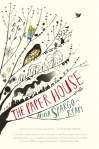
Anna Spargo-Ryan, The paper-houseI hadn’t heard of Anna Spargo-Ryan’s novel, The paper-house, when it was sent to me for review, which is not surprising given it’s a debut novel. However, I loved the cover – designed by one of Australia’s top book designers, Sandy Cull – and so was more than willing to give it a go. It traverses some familiar ground, grief and loss, and  mental illness, but it did so differently enough to keep me well engaged.

The novel starts with a young couple, Heather and Dave, in a strong, happy relationship. They decide to have a child and that this means buying a house to accommodate their new family. They see one south of Melbourne and immediately know that’s it. And already here, by page 4, as she describes the end of their house-hunting, we have garnered a good sense Spargo-Ryan’s clear but evocative writing:

After six weeks of looking and imagining, we ate teacakes on the western side of the peninsula and our hearts stayed behind when we left.

So simply said – no florid adjectives – but so arresting in its clarity. And it also encompasses two motifs which feature strongly in the novel, hearts and imaginings. Indeed the book opens with the line “My heart fell out on a spring morning”. We know, right then, that this is going to be a story about feelings – not to mention, also, that our writer has a wonderful turn of phrase!

Another strong thread in the novel is that of gardens. Their new house, of course, has a garden:

And the garden: a maze of established trees and crouching shrubs and flowers with bees on them and the faint trickle of water. A garden in which to wander, in which to get lost. For picnics and parties. It breathed in time with me and spat me out into the afternoon air, where the sea caught on the updraft and shot through the corridors. I watched it heave and change as it became night.

It’s a big garden, one which disappears from view behind a “row of pittosporums with their straight backs”, one with “good solid pittos … [which] keep the neighbours out of your business”. These pittosporums become a sort of reference point in the novel for her experience of the garden and, in a way, for her mental state, because this is a story about mental states. It’s about suffering a deep, deep loss, and how this new loss brings back a similarly deep past loss that has remained unresolved.

But now, I don’t want to give away this loss, though perhaps if you’ve heard of the book you already know. The story is told chronologically but, interspersed with this main narrative which chronicles around 6 months in the couple’s lives, are flashbacks in which Heather remembers life with her mentally ill mother Shelley, with her father and her older sister Fleur, and with her Gran. It was clearly a loving family but one under immense stress which each member handled in slightly different ways. As the contemporary story exposes Heather’s increasingly unstable state, we are also inexorably led to the tragedy that occurred in Heather’s teenage life. The resolution has a certain predictability to it, but Spargo-Ryan builds it so well that it doesn’t feel clichéd.

One of the pleasures in reading this sad but ultimately hopeful book lies in the characters around Heather. Her sister and father, and elderly neighbours Sylvia and Ashok, in particular, are colourful but human, and they create a warm, engaging but not sickly-sweet community which tries to shore up Heather. There’s husband Dave too, but he is a little more shadowy, off working as a teacher during the day when much of the action takes place.

The story is told first person by Heather, and as her mental state worsens we find ourselves a little destabilised, uncertain about what is real and what isn’t. She’s reliable only in the sense that she’s telling us what she is seeing and believing, but what she sees and believes is not always “real”. This is where the garden becomes significant. Initially the focus of her dreams for her little family, it becomes escape and refuge:

I threw myself from the bed and into the air. Nightlife moved in silhouette and shadow: the broad wings of a fruit bat against the sky, the low call of the boobook owl that always spoke in couplets – mopoke, mopoke. In the garden the pittosporums stood to attention and the moon pooled at their feet.

Shhh, said my body, folding around me.

But gradually it enables her imagination to run amok – and it plays an important role in the resolution.

The book is beautifully produced – creatively presenting text and white space to mirror and convey the disarray of Heather’s mind. However, what I most liked about it is the way it conveys the impact of mental illness on family members, the way it explores how family members, neighbours and friends can work together to nurture an ill person, and, importantly, the way it shows how carers can get lost in the focus on the ill person. It’s all done through language that shines and shows, rather than didactically tells and exhorts. By the end I had real tears in my eyes, and that doesn’t happen often.

AWW Logo 2016Anna Spargo-Ryan
The paper house
Sydney: Picador, 2016
295pp.
ISBN: 9781743535202

(Review copy courtesy Picador Australia)

Monday musings on Australian literature: Patrick White (Literary) Award

I was thrilled to hear on the radio this morning that Carmel Bird had won this year’s Patrick White (Literary) Award. Bird is such a worthy winner for this award, but more on that anon.

The Patrick White Award* is named, obviously, for one of Australia’s most significant writers and only, to date, Nobel Laureate in Literature. But, more than this, it was established by the man himself, using the proceeds of his Nobel prize money. White, for all his famed grumpiness, was a principled and generous person. Having won two Miles Franklin Awards, among others, he stopped entering his work for awards in 1967 to provide more opportunity for other less-supported writers. His award, established a few years later, continues this desire to support his fellow writers. David Carter, writing in the Australian Book Review, says this about it:

White was no friend to literary prizes and, in some ways, no friend to Australian literature, but he proved himself a friend to Australian writers. The ‘Patrick White’ is in many ways a writer’s award, created by a writer for other writers, and highly valued by them even if it hits the headlines less than the Miles Franklin.

The Canberra Times reported on the creation of this award in October 1973, stating:

Professor Geoffrey Blainey, of the University of Melbourne, said in a statement yesterday that the prize would be awarded annually to “a distinguished Australian writer — preferably an older writer whose life’s writings have not received adequate recognition or reward”.

David Foster, who won the award in 2010, said that White had intended it as ”as a kind of literary loser’s compo”! I guess it’s all a matter of perspective, of how you define “loser”, but it is good to have an award which goes to those writers who, though I wouldn’t call them losers, have fallen into the gaps. Carmel Bird is one of these.

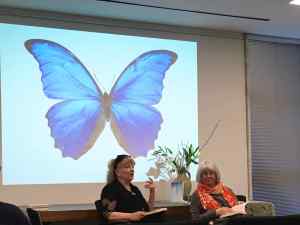
Carmel Bird and Marion Halligan

Carmel Bird and Marion Halligan at the NLA

Before I talk about Bird, though, I’d like to share a little anecdote from Patrick White’s memoir/autobiography, Flaws in the glass. It is about a dinner party he was giving for the second winner of his award, the poet David Campbell:

It was again the evening of a dinner party, this time in honour of David Campbell the poet, who had won the award I set up with the money from my Nobel Prize. I was drudging away in the kitchen about five o’clock when I switched on the radio hoping for distraction from the boredom brought on by chopping and stirring. Like a stream of lava, out poured the news of what was happening in Canberra: that the Governor-General [Sir John Kerr] has dismissed the Government elected by the Australian people …

White goes on to say that he then rejected the Order of Australia that Kerr had recently persuaded him to accept, despite his professed antipathy to such awards, by saying his refusing it “would ruin everything”. Awards, then, are tricky beasts, and I know there are readers of this blog who are not keen on them. I understand their reasons, but I also understand that for many writers the money, regardless of any kudos that may or may not accrue, is very important.

(BTW Note the timing. White wanted his annual Award announced in the week following the Melbourne Cup, which occurs on the first Tuesday in November, “to give literature a brief chance of ousting sport from the nation’s mind”. The dismissal occurred on 11 November, suggesting that in 1975 the David Campbell announcement had been made in White’s time-frame. However, given this year’s announcement date of mid-October, White’s wish seems to have fallen by the way-side.

POSTSCRIPT: This point re timing has caused some discussion in comments and behind the scenes. I have now received in writing from the Trustee’s PR that “Perpetual as Trustee of The Patrick White Literary Award confirms that there is no stipulation in the Trust Deed in regards to the timing of the announcement of the winner.” It seems like it may have been something White talked about but never actually enshrined, which is good really. I believe that the fewer restrictions the better. Times change and donors can never be sure that what they stipulate in their times will have the desired result in later times.)

So now, Carmel Bird. Her Wikipedia article provides an excellent list of her literary output – her novels, her short story collections, the anthologies she’s edited, her non-fiction, and so on. It’s an impressive output ranging across a wide variety of forms and styles, over a long period of time. And yet, under the list of awards and nominations, you’ll see that she’s been shortlisted several times but hasn’t won any of Australia’s major literary awards. Now, at last, she has!

I last saw Bird at the Canberra Writers Festival when Marion Halligan launched her latest novel Family skeleton. On the back of my copy is a quote from the Australian literary critic, Peter Craven:

Carmel Bird is a literary artist to her fingertips … She writes prose that has the precision of poetry and that uncanny quality poetry has of making the inner life speak.

I agree, but the thing that I really like about Bird is the way her mind works. At the risk of sounding cliched, which she never is, she is fresh, original, unafraid to follow the connections her mind makes and certainly unafraid to depart from the expected. You just have to attend a live event involving her to realise this. I mean, this is an author who creates characters who then take on lives of their own, like Virginia O’Day who writes letters of advice to authors in Dear writer. And this is the author who creates a writer, Carrillo Mean, whose work she then uses as epigraphs for her novels! Have you got all that? I wasn’t surprised, therefore, to read that another idiosyncratic writer on the recognition-fringe of Australia’s literary firmament, Gerald Murnane, has described one of her books, The woodpecker toy fact, as “my kind of book”.

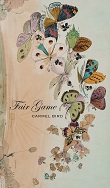
FL Smalls 7: Carmel Bird's Fair Game

FL Smalls 7: Carmel Bird’s Fair Game

I’ve reviewed here her cheeky fl small Fair game: A Tasmanian memoir, and I’ve read other work of hers before blogging. I also have the revised ebook edition of her book on writing, Dear writer revisited (featuring the aforesaid Virginia O’Day)I’m not a writer – that is, I have no ambitions to write fiction – but I often dip into this book because the advice is applicable to all writers.

For example, Letter Two discusses “the use of adverbs and adjectives”. Although she is referring to a piece of fiction, Bird’s advice works for any sort of writing. This, for example:

Perhaps you thought that you, as the writer, were the one who had to do all the imagining, and that the reader was to get every detail of the picture from your words. The reader of fiction takes pleasure in doing some of the work, and will more readily believe you and trust you if there is work to do. Strangely enough, the strength of fiction seems to lie as much in what is left out as in what is included, as much in the spaces between the words as in the words. This is one of strange powers at the heart of good writing. The writer’s skill likes perhaps as much in creating the spaces as in finding the words to put down.

Now, when I write my posts I regularly bother about adjectives. I seem to feel that I need them but I rarely like the ones I use. Perhaps I don’t need them at all! The other reason I like to check this book out is for the examples and advice she includes from other writers – from the likes of Helen Garner and Fay Weldon, David Foster Wallace and Frank Moorhouse, to name just a few.

She also quotes Ernest Hemingway:

There is nothing to writing. All you do is sit down at the typewriter and bleed.

Oh dear. This is from Letter Fifteen, “Writers are different”. I think they are – but too often we take them for granted and do not give them the recognition they deserve for the ways they enrich our lives. I’m so glad Bird has received this award and I sure hope she is too.

* I am not sure what this award is called. In some places, including Wikipedia, it is the Patrick White Award, while in others it is the Patrick White Literary Award. Take your pick it seems.

Willa Cather, The enchanted bluff (#Review)

I’ve reviewed a few Willa Cather stories on this blog now, as well as her gorgeous novel, My Antonia, but as I love her stories, I can’t resist reviewing the latest to have been shared by the Library of America (LOA), albeit that was a couple of months ago now. The story is titled “The enchanted bluff” and was published in 1909, making it the latest of the stories I’ve reviewed to date. Between the previous latest story, “A Wagner matinee” published in 1904, and this one, Cather had moved to New York and started working for, writes LOA, “the notoriously difficult” editor, S.S. McClure, at the eponymously named McClure’s.

LOA explains that her years working there were “both rewarding and gruelling”, but that she “proved a perfect foil to her boss’s temperament and was even ghostwriter of his 1914 autobiography. McClure praised her as “the best magazine executive I know”. However, the downside was that she had little time left for her own writing. A common author-problem eh? The work you do to keep you alive takes you away from the work for which you live!

Enchanted Mesa
Enchanted Mesa, By Ethan (orig. posted to Flickr as Enchanted Mesa) using CC BY-SA 2.0, via Wikimedia Commons

She did though manage to write several short stories, of which “The enchanted bluff” is regarded the best. It appealed to me, not just because it is a Cather story and is imbued with her wonderful description of place and landscape, but because its focus is the legend of the lost tribe of the Enchanted mesa, a high sandstone butte in New Mexico. LOA tells us that “like the boys in her story, Cather had been fascinated by the legend” since childhood but had never been there (at least not by the time she wrote this story). Now, I’ve been to New Mexico and fell in love with its culture and landscape, so reading this story took me back to a most enjoyable time in my life …

“Enchanted bluff” feels a bit different from many of Cather’s stories. It has the nostalgic or melancholic tone common to many, and it has what I’ve described before as “her evocative, careful use of landscape and nature”, but it is more reflection than even a character-driven story. This however didn’t bother me because it does what I most like: it presents a bunch of ordinary people (in this case 6 boys and young men) going about their ordinary lives (in this case a last summer camping trip before they all head back to school.)

Camping trip, do I hear you say? Surely something dramatic happens there? Well, no, not really. The six boys, ranging in age from around 10 to 17, swim, cook their supper, and sit around the campfire talking. There’s an “angry” moon, and the loud “scream” of a whooping-crane, but nothing untoward happens. However, there is a point, to which I’ll come soon.

Cather starts her story by setting a rather idyllic scene. It’s Nebraska, where many of her stories are set, and the “brown and sluggish river”, contains little sand islands created during spring turbulence:

It was on such an island, in the third summer of its yellow green, that we built our watch-fire; not in the thicket of dancing willow wands, but on the level terrace of fine sand which had been added that spring; a little new bit of world, beautifully ridged with ripple marks, and strewn with the tiny skeletons of turtles and fish, all as white and dry as if they had been expertly cured. We had been careful not to mar the freshness of the place, although we often swam out to it on summer evenings and lay on the sand to rest.

You can feel the boys’ love of and joy in the place can’t you?

Anyhow, having set the scene, Cather then describes the boys – brothers Fritz and Otto, sons of the German tailor, and the youngest in the group at 10 and 12; fat Percy Pound who loved to read detective novels; hard-working Tip Smith, the “buffoon” in their games; tall 17-year-old Arthur Adams whose “fine hazel eyes … were almost too reflective and sympathetic for a boy”; and our narrator who would soon be leaving “to teach my first country school in the Norwegian district”. Quite a diverse group, but this is common perhaps in small country towns.

Having set the physical scene, and described her boys, Cather then shares their conversation. We soon realise that this is a story – as many of Cather’s are – being told about the past. Our narrator, in other words, is reminiscing about this last summer camp. And here is where the point starts to become apparent, because after general talk, including discussing the mystery of where the river goes after leaving their area, they start to talk about where they’d like to go. Tip tells them about Enchanted Bluff. They are all fascinated by its “dolorous legend” and discuss, as boys do, various possibilities. All are intrigued and would like to visit it, so agree that whoever “gets to the Bluff first” must tell the rest “exactly what he finds”. The summer ends, the following Christmas the boys catch up and renew their resolution, and then it’s twenty years later, from when the narrator is telling this story. None of them, he tells us, had climbed the Enchanted Bluff. Instead …

It’s a beautifully rendered story about the dreams of youth and the reality of adulthood. There’s a nostalgic glow, a sense of “enchanted youth”, but it’s offset by the reality of what happened to the boys. And this is supported by the language in which warmth and beauty are counterpointed by hints of other forces, not malevolent ones but ones which remind us that few things are as they seem or turn out the way we might dream. A good read.

Willa Cather
“The enchanted bluff”
First published: Harper’s Magazine, April 1909.
Available: Online at the Library of America

Cassie Flanagan Willanski, Here where we live (Review)

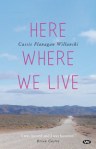
Cassie Flanagan Willanski, Here where we live“Write what you know” is the advice commonly given to new authors – and it’s something Cassie Flanagan Willanski, author of Here where we live, seems to accept. Set in South Australia, where Willanski lives, this debut collection of short stories reflects her two main interests, creative writing and the environment. The book won Wakefield Press’s Unpublished Manuscript Award a couple of years ago, and I can see why.

I wasn’t sure what to expect when I opened the book. Adelaide author and creative writing teacher Brian Castro is quoted on the front cover as saying “I was moved and I was haunted” and on the back “Her stories are as spare and understated as the harsh landscape she describes…” I’d concur. Her stories are not your typical short story. That is, they don’t have tight little plots, nor do they have shock (or even just surprising) endings. They are more like slices-of-life, or like chapters of a novel, in the way they tease out moments in people’s lives that you can imagine continuing into a larger story. And yet, they are complete in themselves and absolutely satisfying.

However, there is more to these stories than “just” slices of life. Willanski writes in her author’s note that they were written as part of her Master of Arts degree, in which she explored “the ways white Australians have written about (and for) Indigenous people in the twentieth and twenty-first centuries”. She introduces the notion of “Indigenous invisibility” which she describes as “ignoring Indigenous Australian people’s current existence, and mourning them as extinct”. She then talks about the issue we’ve discussed here before noting that as white writers became aware of this “Indigenous invisibility” they started to “write about them as characters in their books”. She says she has tried to reflect in her stories the various attitudes she found in her research. I found them authentic and sensitive, but the real judges of whether she’s been successful are indigenous people, aren’t they? There’s a reference to indigenous elder and activist Sue Haseldine in her acknowledgements, which may suggest some acceptance?

There are nine stories in the collection, three told first person, and the rest third person, except for the last and longest story which has two alternating voices, one third, the other second. Her protagonists include a young girl, a young male teacher, a 70-something woman, and a woman grieving for her late female partner. A few stories are connected, but this is not critical to appreciating the collection. Several of the stories, Willanski says in her author’s note, were inspired by real events but in each her imagination has created something new and fictional. Some of these real events are matters of history, such as the Hindmarsh Island Bridge controversy and the Maria shipwreck, while others draw from personal experiences.

Despite the historical inspiration behind some stories, they are all set in contemporary South Australia. The first two are told first person: “This is my daughter’s country” opens the first (“My good thing”) and “The night my husband told me he was going to leave me we were in the middle of a heatwave” starts the second (“Drought core”). Straightaway we are introduced to Willanski’s nicely controlled, pensive tone, and her ongoing themes: family relationships, indigenous issues, the environment and climate change.

The first story is told in the voice of a white woman who has an indigenous husband and a daughter. They are going back to country to clean rockholes. No-one is named – “this is my daughter”, “this is my husband”, “my daughter’s grandmother” – which gives the story a universal, almost mythical sense. There are hints of challenges – subtle references to the Stolen Generations and to environmentally destructive tourism – but it’s a short, warmhearted story about the drive to connect with land and people, and sets up the collection nicely.

I can’t describe every story so I’ll jump to the fourth one, “Stuff white people like”. It is lightly, self-mockingly satirical. It tells the story of a young couple, Oliver and Clay, visiting Ceduna where Oliver is considering a job as a “Nature School Teacher”. They are both earnest, Oliver particularly so, in wanting to understand and relate to indigenous people, so they decide to attend a “healing ceremony” for “‘Maralinga, climate change, feral animals, you name it,’ said the principal vaguely.” It’s an uncomfortable experience, and Oliver doesn’t know how to react to the event which isn’t what he expected. He doesn’t want to be “like the other white people” but how should he be? Clay is able to go with the flow a bit, but not Oliver. Later, on their trip home, she is able to laugh, and take the jokes in the book Stuff white people like, while Oliver is “crippled with self-awareness”. He can’t quite match Clay’s insight. She reads from the book about white people “knowing what’s best” for others:

“Do you think I’m like that?”
“‘Cos you’re excited to get to work with Aboriginal  kids? No!” She stopped for a minute, trying to piece together her thoughts. “Well, I mean–” she said and stopped again.
“What?” said Oliver.
“Well it’s just that Aboriginal people already know about having school outside.”
“I know,” said Oliver. “What’s your point?”
Clay looked at him again, then said, almost irritably, “Well, you’re taking something they’ve been doing for thousands of years and putting the white seal of approval on it.”
“But the missionaries took it away,” said Oliver.
He didn’t say it, but it was implied, and they didn’t know what to do with the implication. Oliver would be giving it back.

I love this on so many grounds – the personal and the political, the desire and the discomfort, the sincerity and uncertainty. These underpin the collection.

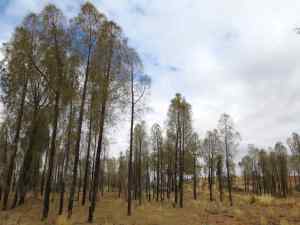
Desert oaks

Desert Oaks, Centralia

There’s only one story in which Willanski speaks “for” or “in the voice of” indigenous people, “Oak trees in the desert”. It’s about the First International Woman Against Radioactive Racism Conference, held in Monument Valley, Utah. This is a fictional conference, but “radioactive racism” is “real” and the aforementioned Sue Haseldine is active in this area.

Willanski opens the story with an indigenous Australian woman introducing herself at the conference. It’s a strong story, with the first-person voices of various First Nation conference attendees interspersed with the third-person story of white Australian woman, 76-year-old Bev, whose late husband had worked at Maralinga and had contracted cancer. There’s also a young white woman activist-organiser providing, again, a light satirical touch. Like many of the stories, it’s very personal but also has a big political message. (I also enjoyed it because I love Australia’s desert oaks, and I’ve driven in the stunning Monument Valley.)

This is getting long so I’ll end with the last story, “Some yellow flowers”, which contrasts a mature love, through the grieving Jean whose partner Nancy has died, with the young love of two teenagers, Loretta and Jackson. This story brings together several of the collection’s themes, including developing and maintaining loving relationships, climate change and caring for the environment, and indigenous-settler relationships. There is a big storm – one of those one-hundred-years storms that are occurring more frequently these days:

The roof shrieks and the sea spray pelts against the front verandah. The separation between land and water, sea and sky, past and present and living and dead becomes more obviously a figment of daytime imagination.

Dreams are had, stories are told, relationships are resolved – not simplistically, but with a sense of continuum.

This is the sort of writing I like: undramatic, understated, reflective stories about ordinary people coping with breakups, death, new relationships, but overlaid with a strong set of values and contemporary concerns, in this case encompassing the intertwined issue of respecting indigenous people and caring for our country. While not always comfortable reading, it’s a hopeful book – and I like that too.

awwchallenge2016Cassie Flanagan Willanski
Here where we live
Mile End: Wakefield Press, 2016
146pp.
ISBN: 9781743054031

(Review copy courtesy Wakefield Press)

Ariella Van Luyn, Treading air (Review)

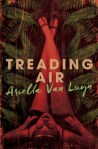
Arielle Van Luyn, Treading air

It wasn’t until I reached the end of Ariella Van Luyn’s debut novel, Treading air, that I discovered it was loosely based on the life of a real person. I’m glad it happened that way. I like introductions, but I always read them last because I like to come to my reading as unencumbered as possible – and totally unencumbered I was with this one. Even the title gives nothing away.

So, I was pleasantly surprised to find the first page labelled “Brisbane 1945”, because I spent some of my formative years in Brisbane, albeit rather later than 1945. I was even more surprised, a couple of chapters in, to find a section labelled “Townsville 1922”, because my Mum was born in Townsville at the end of that decade, and I visited it a few times in my youth. There, see how I’ve sneakily given you the historical setting –  and implied the structure – without specifically saying so?

Now, let’s get to the story. As Van Luyn explains in her acknowledgements at the end of the novel, it concerns Elizabeth (Lizzie) O’Dea, aka Betty Knight/O’Brian/Stewart/Johnson, who was born in Brisbane around the turn of the 20th century*. She married Joe O’Dea and moved to Townsville in 1922 where Joe was promised a job. However, as Van Luyn tells it, Joe soon loses that job, and Lizzie, with few work skills, becomes a prostitute, which she sees as far more lucrative, and yes, less demeaning, than the domestic work her mother had done. From there, life becomes increasingly challenging … but, I’ll leave the plot here, because there are other things to discuss.

The novel opens in Brisbane’s lock hospital where Lizzie’s been sent by a magistrate. This opening set-up gives me a great opportunity to discuss how Van Luyn uses fiction and history to construct her character and story. Brisbane’s Courier Mail and the Townsville Daily Bulletin both report on a case at that time: Lizzie is accused of “attempting to steal £20” which brings about a “bond” (deferred) sentence on 8 May 1945. The Courier-Mail writes

“It is rather remarkable,” said Mr. Wilson, “that in this long list of stealing convictions she has never been given a chance to see if she could reform. “We will just try it for an experiment. …” Mr. Wilson ordered O’Dea to enter into a bond to come up for sentence if called upon within six months. “We will both thank you, sir,” said the woman as she left the dock.

Mr Wilson’s “experiment” idea resulted from O’Dea arguing that she wanted a chance to be there for her husband Joe’s imminent release from his 20-year prison sentence.

However, the “crime” Van Luyn uses in the opening of her novel is Lizzie’s stealing “tins of bully beef and some US army blankets”. This crime actually occurred in 1944 and the court case in October of that year resulted in a fine of £5. Here is Van Luyn’s story of the court case in her opening chapter:

At first, in the police court, surrounded by dark wood, she couldn’t make sense of what Mr Wilson was saying about Joe. In a wig that hung down his cheeks, he looked at her medical report and decided to be generous: only six weeks in the lock hospital to recover [because she’d been found to have “the clap”]. He said when Joe got out a few days after she had, they could start a new life together. “We’ll try it for an experiment,” Wilson said, and Lizzie wanted to stick her fingers in his eyeballs. She isn’t a bloody lab rat.

My marginalia here is: “feisty, independent”. So, I have two points to make. One is that Van Luyn shifts a crime of which Lizzie was accused to a different time because, presumably, it’s a more interesting time, narratively speaking. And the other is that, instead of having Lizzie thank Mr Wilson, Van Luyn has her responding (internally, anyhow) in a feisty manner to establish Lizzie as an independent woman, a survivor. For an historian, these “plays” with the facts would be unforgivable, but for Van Luyn, they enable her to engage the reader in the story and quickly establish the sort of person she believes, from her research, that Lizzie was. In other words, Van Luyn plays with the “facts” to create her “truth”. As she is writing fiction, I have no problem with that! Do you?

The other main point I want to make about this book draws from Sulari Gentill’s comments at the Canberra Writers Festival. She said she likes to find interesting but forgotten people. I understood this to mean working class people and minorities, that is, the “little” people, the women, and those disadvantaged by culture, race, and so on. This is certainly what Van Luyn does here. In addition to Lizzie, a working class woman, she also has Chinese and indigenous characters in Townsville. In this focus on the “forgotten people”, her book reminds me of others I’ve reviewed recently, including Eleanor Limprecht’s Long Bay (my review) about abortionist Rebecca Sinclair, and Emma Ashmere’s The floating garden (my review), which uses fictional people to tell the story of a real situation, the removal of marginalised people from their Milson’s point community to make way for the Sydney Harbour Bridge.

“Her life has twisted away from her”

Back to the story. It’s told third person, but from Lizzie’s perspective, and alternates between the 1920s and the mid 1940s, so we know at the beginning that Lizzie’s been “on the game” and is a survivor. Several dramas occur during the novel – including a murder, a shooting, an attempted suicide  – and all these can be found in court records of the time. Van Luyn doesn’t over-sensationalise these, any more than she does Lizzie’s life as a prostitute. She is, though, explicit in her descriptions, giving us a picture of a lusty, resourceful young woman who’s determined to survive. Life is tough going, however. Lizzie, like Townsville, is “unformed”, but Joe, she comes to realise, “can’t look after her” as she’d hoped, so “she has to look after herself”. Moreover, although prostitution is more lucrative than domestic work, she’s not very good at saving – not surprisingly, given her upbringing – so the gap between the dream of an independent future and the reality stays wide for much of the novel.

It’s to Van Luyn’s credit that she has managed to create out of a scrappy historical record a character who, petty criminal though she is, not only comes alive but engages us fully. This is not a sentimental story, but it nonetheless reminds us that not everyone gets a lucky start in life. There are Lizzies still amongst us today. This is the sort of historical fiction I enjoy.

awwchallenge2016

Ariella Van Luyn
Treading air
South Melbourne: Affirm Press, 2016
282pp.
ISBN: 9781925344011

(Review copy courtesy Affirm Press)

* Researching Trove, I found several court reports in which her age wanders around wildly, suggesting birthdates anywhere between 1893 to 1902.

Bianca Nogrady (ed), The best Australian science writing 2015

Bianca Nogrady, The best Australian science writing 2015It was one of the more science-minded members of my reading group who tentatively suggested we add The best Australian science writing 2015 anthology to this year’s schedule. I’m not sure why she was uncertain because we’ve shown ourselves to be pretty open readers. Our main question when someone suggests a book is “Will there be something to talk about?” I can’t imagine a book like this lacking in things to talk about. And so we scheduled it.

Five editions of this anthology have been published, each with a different editor, so I was tickled to find that our edition’s editor was Bianca Nogrady whose thoughtful book about death and dying, The end, I reviewed a couple of years ago.

Now, an anthology like this can be read in different ways. You can read it sequentially, as I did because I know editors put thought into ordering their content. Nogrady did a careful job here, not butting articles on similar topics up against each other, but ordering them in a way that built on our understanding. Alternatively, you can pick and choose depending on your interests, though the titles don’t always give away their contents. What are science writers doing getting creative with their titling! Or, in this case, you could meander through the anthology by following the links to “like” articles provided at the end of each article. Presumably your perambulations would get you through them all at the end! This approach might be a fun (and enlightening) way to read it, but I was on a deadline, so …

I started at the engaging Foreword by Adam Spencer, the Australian comedian and radio presenter with a special interest in science and maths, and read on. I was quickly engaged and read it almost like a page-turner. Truly! Of course, there was the odd article that didn’t really grab me, and some grabbed me so much that I’ll not forget them in a hurry, but overall it was an enjoyable, stimulating read.

In her Introduction, Nogrady analyses the content. She says that while the 2014 anthology featured several articles “on our changing climate and its repercussions, this year there were an overwhelming number of submissions about our vanishing biodiversity, and what could be or is being done about it”. She argues that this “suggests a shift away from the big picture catastrophe of climate change – in the face of which many of us feel utterly powerless – towards a more specific and manageable concern”. She also notes that there were “a number of articles exploring the rapidly evolving field of robotics and artificial intelligence” and observes that “despite being a relatively small nation, we have long held our own in the global science and technology arena”. This is certainly borne out by the articles in the anthology. I’d add a third thread – medical issues. We probably don’t need an explanation for this one. Who is not interested in health and medicine!

Entrants for the annual Bragg UNSW Prize for Science Writing, named for the father and son who were Australia’s first Nobel laureates, form the core of the anthology. The 2015 winner was Christine Kenneally’s “The past may not make you feel better”. Excerpted from her Stella prize-winning book The Invisible History of the Human Race, it explores, from multiple angles, DNA testing and genomic counselling, using Huntington’s chorea as its reference point. The runners-up were Idan Ben-Barak’s “Why aren’t we dead yet”, a wonderfully lucid and surprisingly entertaining description of pathogens and the immune system, and Trent Dalton’s “Beating the odds” about the driven Australian man who has developed an artificial heart.

There are several reasons why I enjoyed the read, and I’ll dot point them to keep it simple:

  • subject matter: although I’m not at all scientifically inclined, I recognise the significant role science (or STEM) plays in our lives – in health, the environment, our buildings and transport, for a start. These essays, selected for their ability to communicate scientific issues well, were just what I needed to bring me up to speed, particularly in those areas I’m pretty ignorant in, such as robotics. James Mitchell Crow’s  prize-shortlisted article “Robots on a roll”, for example, introduced me to “big” robots working on the Brisbane docks and in Pilbara mines.
  • radical ideas: some articles challenged current thinking or practices. These included Brodie Smith’s “Playing God” on the idea that we should use triaging to manage the problem of vanishing species and Michael Sleaze’s also prize-shortlisted article, “Aliens versus predators: the toxic toad invasion”, which argues that this invasion, while not a good thing, is not the disaster we’ve believed it to be.
  • esoteric topics: by this I mean articles on topics I would never have known about had I not read the anthology. Lauren Fuge’s “The women who fell through the cracks of the universe” delves into late 19th to early 20th century astronomy to tell us about “Pickering’s harem“, the mostly unsung women (or “human computers”) who contributed hugely to “the first Henry Draper Catalogue, a catalogue of more than 10 000 stars classified according to spectrum, published by Pickering in 1890”. Of course, I loved that this article was as much about history as about science!
  • style: the articles varied in style and tone. There was even a poem or two. There were some written in first person, giving a personal perspective. In “How I rescued my brain”, David Roland took us on his journey of diagnosis, treatment and eventual recovery from his stroke. And there were some written with a light, humorous touch. Ian Lunt’s “Field guide to the future”, for example, provides a delightful comparison between traditional printed field-guides (I particularly love wildflower ones) and the new digital ones.

But here’s the common problem with anthologies and collections – how to do the book justice without naming every contribution. I think I’ll just share a few quotes, to give you a flavour, starting with Slezak on the toads:

The toads are spreading further and faster than anyone expected, and they do have a devastating impact when they first arrive in a region. But most animals are adapting to their presence surprisingly quickly, and some even benefit.

‘If you’re a frog, the toad is your superhero,’ says Shine. ‘You’ve got its picture up on the wall. This guy is coming in, he looks like a frog and is killing everything that attacks frogs. If you’re a green tree frog, what more could you hope for in life?’

[…] ‘I’ve gone to thinking it’s a good-news story about the resilience of ecosystem. (from “”Aliens versus predators: the toxic toad invasion”)

Here is Ian Lunt on the fact that printed field guides must use words (not audio) to describe bird calls:

With a budget for paint – one illustration per species – but none for sound, cheerful ornithologists turned to onomatopoeia: ‘Pee-pee-pee-peeooo, Wee-willy-weet-weet, It-wooa-weet-sip, Zzzt zzzt zzzt. Cher-cher-cherry-cherry, Wah-i-wah-i-wah-oo, Twitchy tweedle, Kupa-ko-ko, Lik-lik-lik’. Less cheerful colleagues followed suit: ‘Chop-chop, Four o’clock, Wide-a-wake, Walk to work. Want a whip? It’s for teacher. Tweet-your-juice, Sweet pretty creature’. (All real calls, I assure you.) (from “Field guide to the future”)

And thirdly, here is Idan Ben-Barak on the human immune system:

And so, an immune system must correctly identify a diverse array of harmful creatures and react to each one in its own special way. Oh, and you know what would be very helpful? If it could remember the pathogens it’s encountered before and store this information on file, somehow, so that it could make short work of them the next time they pop in. And it needs to be prepared for new invaders it’s never encountered before, because life is like that. And it needs to be prepared for completely new invaders nobody has ever encountered before in the history of humankind, because pathogens evolve over time. And it needs to be economical, so the body can keep it operational. And it needs to be fairly unobtrusive, so the body can keep functioning normally. And it needs to do it all very quickly, every time, or the body will be overrun, because pathogens multiply like the devil. (from “Why aren’t we dead yet”)

Hopefully by now, I’ve convinced you that this is a great read – and if I haven’t, well, you’re probably a lost cause! Either way I’ll leave it here.

awwchallenge2016Bianca Nogrady (ed)
The best Australian science writing 2015
Sydney: NewSouth Publishing, 2015
ISBN: 9781742242231 (ebook)