Monday musings on Australian literature: Capel Boake

This week Bill (The Australian Legend) is following up last January’s Australian Women Writers Gen 1 Week with a Gen 2 Week, this one highlighting Australian women writers from 1890 to 1918. He takes his inspiration from HM Green’s A history of Australian literature, which characterises 1890-1923 as a period of “Self-conscious Nationalism”, the time of “bush realism”.

Anyhow, I will, of course, be contributing a review for this, but later in the week. In the meantime, as I did last year, I’m devoting a Monday Musings to a writer of the period, though unlike last year, not for the writer I’m reviewing. That’s because she, Louise Mack, already has a Monday Musings to her name. Today’s featured writer, then, is the unusually named Capel Boake.

Who was Capel Boake?

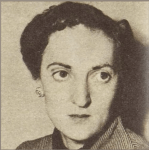
Capel Boake, no date, presumed public domainLike last year’s Tasma, Capel Boake is a pseudonym. Her real name was Doris Boake Kerr. She was born in Sydney in 1889, to Australian-born parents, and died in Victoria in 1944. She wrote under two pseudonyms, Capel Boake and Stephen Grey (the latter for collaborative works with poet, Bernard Cronin).

Although born in Sydney, she apparently spent most of her life – including most of her childhood – in Melbourne. She left school early, and worked as a shop assistant, secretary, librarian and book-keeper. Arnold in the Australian dictionary of biography, quotes Boake as saying that she was “self-educated at the Prahran Public Library”.

Her uncle was the respected poet, Barcroft Boake, who committed suicide in 1892 at the age of 26. His father, and Boake’s grandfather, was Barcroft Capel Boake, the Capel apparently reflecting their Welsh heritage.

Boake never married, and lived in the family home in Caulfield. The Australasian article, cited under Sources below, says that she liked swimming, fires and grilled chops on the beach, billy tea, and gardening.

Most relevant to us though is that, as another article says, she was “well-known in literary circles.” This included being active in P.E.N. International, the Fellowship of Australian Writers, and a foundation member of the Society of Australian Authors. She worked at one stage as a secretary to J. K. Moir about whom I’ve written before: he founded Melbourne’s Bread and Cheese Club, and was an impressive book-collector who created “one of the finest private libraries of Australian literature ever assembled”.

What did she write?

There is far less written about Boake, than there was about last year’s Tasma, but I did find some info in Trove, particularly in The Australasian’s Australian Writers Series (cited below). It reports that

Writing has always been in her blood, and from her earliest years she has felt the urge to express herself through the written word. But she remembers her first published story, which appeared in “The Australasian” in 1917. From then on she wrote a number of stories and poems for “The Australasian.”

So, she wrote short stories, poetry, and articles, but her favourite medium was apparently the novel. Her first, Painted clay, brought her “definite recognition as a serious writer”. Yet, she only wrote four novels, one of which was published posthumously:

  • Painted clay (1917, reprinted by Virago, 1986)
  • The Romany mark (1923)
  • The dark thread (1936)
  • The twig is bent (Sydney, 1946, posthumous)

Wikipedia says that her “subject matter included the options available to women in the early twentieth century, circus life, and early Melbourne history.” What Wikipedia doesn’t say, but The Australasian does, is that The dark thread 

tells of the growth of Jewish national feeling in a boy, the son of a Jewish father and Christian mother, who, living in Australia but going to the war and later learning of the establishment of the Jews in Palestine, felt the urge to go there as a unit of the Jewish nation. The idea of the theme came to Capel Boake when staying in the country, in hearing from a Jewish hawker some of his hopes and aspirations.

Interesting, huh?

Painted clay

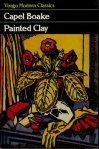
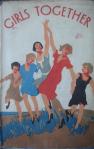
Capel Boake, Painted clayGiven Painted clay is the only novel that officially falls within Bill’s Gen 2 period, I’ll conclude with two contemporary comments on it. The Western Mail describes it thus:

It is a sex story created on conventional lines. If there be still a demand for this type of fiction, this new nation under the Southern Cross may as well make its contribution. This is a story of city life, every word of which might well be true. It is original only in the sense that every individual life is original, and a bringing together of a number of lives in a novel may be done without either much originality or imagination. Neither of these qualities are conspicuous, yet the story is well written and suggests talent for better things. Helen is a really fine character, and capable of better things than the author gave her to do.

Positive, but not completely so. Interestingly, the article seems to pretty much tell the whole story. No worries about spoilers then?

The Australasian’s reviewer was a little more expansive, albeit also noting faults. S/he starts, however, by mentioning that the novel is wholly a product of Australia and says that its typography and format are “a credit to its publishers”. S/he then continues:

As might be expected in a first effort of the kind, the story is not free from certain crudities of thought and occasional lapses in craftsmanship, but it has, on the other hand, decided merits which raise it far above the average of Australian novels, and justify one in expecting much from Miss Boake in the days to come. It is a real attempt to present a faithful picture of life in a Melbourne setting. The authoress has not made the mistake, very common with our writers, of painting in the “local colour” so heavily that the human element in the picture is lost in what we may call a superficial provincialism of incident and characterisation. [my emphasis] In other words, while rightly choosing for her story a setting with which she is familiar, she uses the setting merely as a medium for explaining general truths of the interaction of human nature and life experiences as she understands them. It follows, therefore, that the interest of her story does not lie in sensational happenings or in the surface peculiarities of habits or manners on this continent or any particular part of it, but in the quality of her characters and the manner in which they react to their environment. The defects in her work are obviously the result of her own as yet somewhat restricted experience of life, and not of wrong method of attack, or misguided imagination, or a striving after meretricious effects. Their cause is consequently one that time should cure.

Such a lovely detailed analysis.

Anyhow, it sounds like Boake is worth checking out. How great that Virago reissued her, choosing this novel, I presume, because, as ADB’s John Arnold writes, it’s about “a shop assistant’s fight for independence in a period when menial work or marriage were the only choices for a majority of young women.” Not all Gen 2 writers were about “bush realism” it seems.

Sources

Arnold, John. ‘Kerr, Doris Boake (1889–1944)’, Australian Dictionary of Biography, National Centre of Biography, Australian National University, 2000.

‘Australian Writers Series: Doris Kerr, as “Capel Boake,” adds lustre to a name already known in literature’, The Australasian, 27 May 1939.

Maria Tumarkin, Axiomatic (#BookReview)

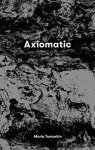
Maria Tumarkin, Axiomatic

A couple of weeks ago, I posted a guest post by Amanda for Maria Tumarkin’s book of essays, Axiomatic. At the time that post was negotiated, I had no immediate plans to read the book myself, but that changed when Brother Gums and family gave me a copy for Christmas …

Now, if you are a regular reader here, you may remember that Amanda had mixed feelings about the book. She liked the writing, and found the analysis was “at its best in the first three sections when dealing with complex social issues”. But, she found the book “unrelenting”, “not balanced or fair”, and ultimately nihilistic in not offering hope or, to put it simply, ways forward. She concluded by asking what Tumarkin wanted to achieve with the book. Having now read the book, all of these comments make sense to me, but my response is more positive. Perhaps it’s because this Ukrainian-born Australian Tumarkin reminds me of Helen Garner whose bold, clear-eyed writing about tricky subjects I greatly appreciate. Indeed, Garner is quoted on the back of my edition, describing Tumarkin as charging “headlong into the worst and best of us, with an iron refusal to soften or decorate…” That’s Garner, and that’s Tumarkin.

Axiomatic comprises five long essays, each interrogating an axiom:

  • time heals all wounds
  • those who forget the past are condemned to re–––––
  • history repeats itself
  • give me a child before the age of seven and I will show you the woman
  • you can’t enter the same river twice

As you’ve probably worked out by now, Tumarkin doesn’t unquestionably accept these axioms, showing them instead to be simplistic or misguided, if not, false.

In the first essay, she explores the notion that “Time heals all wounds” through the prism of teenage suicide. At one point she references psychologist Erminia Colucci’s study of “attitudes to suicide and suicidal thoughts among young people in Italy, Australia, India”, and adds, in parentheses:

(There are intellectually rigorous reasons for her choice of countries. There are lovely simple ones too: ‘I am Italian. I love Australia. I am fascinated by India.’)

This description could also be applied to Tumarkin’s rather idiosyncratic approach to her book. There is intellectual rigour – at least to the best of my knowledge and experience – but it also frequently feels personal, subjective, drawing on stories that interest her, that relate to her experiences, and that may not, initially anyhow, seem the most obvious choices. A lot of names – like Colucci’s, for example – are given, but this is not a foot-noted academic book, so you need to use your search engine if you want to check out the authorities she invokes. All this suggests that the book belongs to the creative non-fiction genre, one for which Garner, too, is well recognised. Amanda described Tumarkin’s writing as “a powerful composite of investigative journalism, analytical thinking and literary technique”. I’d agree, and add “personal reflection”.

But, now, how to discuss this complicated, rather slippery book? Discuss each of the essays, teasing out the ideas Tumarkin explores? Choose just one essay, and use it to discuss Tumarkin’s approach? Or, just focus on some specific aspects of the book that stood out for me? I’m opting for the latter.

What most appealed to me is the iconoclastic way Tumarkin thinks, the way she looks behind the assumptions we make, confronting the platitudes, or the way she asks questions from different (but often logical) angles. Regarding adolescent suicide in “Time heals all wounds”, for example, she identifies the nature of adolescence itself:

… one of adolescence’s constants is not knowing what’s happening inside you. And by extension not knowing what you’re capable of.

How do schools, society, handle this inherently unstable nature of adolescence? Then there’s the current “untreated depression” model of suicide causation, an explanation more common, Colucci tells her, in Australia than in Italy and India. What are the implications of this? This is a powerful essay – offering no resolution or answers. Just questions. I’d argue, though, that there’s value in that. Without asking the right questions, there can be no answers?

In “History repeats itself”, Tumarkin applies her pen to the justice system and the way it treats “offenders”, the way it assumes that they’ll re-offend, and then behaves, treats them, accordingly. It’s devastating – and certainly discomforts those of us, including herself she admits, living “cushy middle-class” lives.

Tumarkin discusses how offenders fall through the cracks. For example, she writes:

It’s a real issue, how to keep people real. And not make them into catchphrases for banners, appendixes to principles … Many of those who advocate on behalf of others don’t want a connection with those they are advocating for.

And yet, there are paradoxes, she sees, in connecting. Beware what you start if you can’t see it through. What, for example, does giving up drugs do to a person whose whole life is bound up in that community? What indeed? Do you have an answer?

(An aside: I can’t resist mentioning here that the idea of “connecting” recurs several times in the book, reminding me of EM Forster’s Howards End and its theme, “only connect”.)

Then there’s the notion of “knowing [my emphasis] your life is precious” and the assumption that that is “the default state of the human psyche”. But

How about all those people for whom their life does not feel precious? Why not is often the easy bit to get [and she then catalogues the reasons why not]. A harder question is can the feeling your life’s worth shit be fixed, whether from outside in, or inside out? Can it? All the services offering legal aid, food, counselling, employment (tedious employment), shelter, they cannot get close to this worth-shit feeling … I mean this feeling’s impervious to being messed with, it is too deep and diffused … And when this feeling is there it skews the survival instinct  …

“History repeats itself” also provides examples of another feature of the book – its writing. There are perfect (often gut-wrenching) descriptions like this:

Perhaps one way of putting it is that many of Vanda’s [her main “guide” in this essay] clients live their lives on a highway where they are repeatedly hit by passing trucks. As they are bandaging their wounds, cleaning them out with rainwater, putting bones back into sockets, another truck’s coming.

Beyond this, the writing is varied, and rather eccentric, slipping from formal perfection, dialogue and narrative, to, at times, idiosyncratic syntax and punctuation that stop you in your tracks, forcing you to think about what she is saying. Compounding this are digressions and odd juxtapositions which also keep the grey matter exercised.

There is so much more to say about the content, style, thought processes, and inspirations for the book, not to mention the ‘yes’ moments – so many of those – but I’ll close with what I see as a unifying idea running through the five essays – the past. How the past affects us, how we perceive and deal with it. I’m not sure I fully grasped her meaning on one reading – and maybe there is no one meaning. But I sense she’s saying that although the past is significant, although it doesn’t “disappear”, we are not – to quote one of her contacts – “all sum totals of our histories.” That idea is too simplistic – and yet is the way it is too often viewed, which limits us, repeatedly, in our interactions with each other, personally, politically and systemically.

Axiomatic is, for me, a compassionate work. While Amanda sees it as lacking hope, I see it as realistic. True, it doesn’t offer answers. As Vanda says, “there are no fairytale endings.” Why not, Tumarkin asks. “Because,” replies Vanda, “people are people.” And that, I’d say, is the fundamental humanity of this slippery, uncomfortable, provocative book.

AWW Challenge 2019 Badge

Maria Tumarkin
Axiomatic
Brow Books, 2018
201pp.
ISBN: 9781925704051

Maria Tumarkin, Axiomatic (Guest post by Amanda) (#BookReview)

I am thrilled to host this post by Amanda who responded to my call on the Australian Women Writers Challenge for a review of Maria Tumarkin’s Axiomatic, which won the Best Writing Award in this year’s Melbourne Prize for Literature awards. However, Amanda does not have a place to post reviews on-line, so we agreed that I would post it here so it can then be added to the AWW database. Thanks very much Amanda!

Amanda notes that Tumarkin has her own web page, and that Axiomatic has also been shortlisted for the Victorian Premier’s Literary Awards to be announced at the end of Jan 2019.

Amanda’s review

Maria Tumarkin, AxiomaticHaving lived outside Australia for several decades I had not heard of Tumarkin.  A professor in Creative Writing at Melbourne University, she is the author of several non-fiction titles, Axiomatic being her 4th and her first with Brow Books publishing – an independent, not-for-profit publisher dedicated to innovative writing at about marginalised topics.

At the time of this review, Axiomatic had won the Melbourne Prize for Literature’s 2018 Best Writing Award. And Axiomatic is great writing but it is also flawed.

More like a compilation of long essays, the title is derived from 5 axioms which are the themes driving each section of the book. The writer then goes on through the essays to dispel the axiom through a collection of real life case studies and experiences.

She opens with her strongest and most heart-wrenching piece “Time Heals All Wounds” about teenage suicide in Australia. Tumarkin’s writing is a powerful composite of investigative journalism, analytical thinking and literary technique. Brutal and unflinching – delivering a  punch to the gut – Tumarkin is able to conjure in the mind’s eye all the complexities and nuances of grief, love and survival  through snippets of conversation and quotidian details. She includes numerous references to contemporary writers, classical literature, Greek mythology and philosophers, deftly combining both fiction and non-fiction.

In terms of critiques – and there are a few – the writing never lets up. There is no pause, no distraction, no break in the narrative for the reader apart from what is self-imposed. Sentences have been meticulously crafted and her writing sings, but it’s hard to appreciate it all because Axiomatic is so unrelenting.

Tumarkin’s arguments are also often convoluted. She veers off on tangents at the slightest provocation and then expands these into auxiliary sections. Her analysis is at its best in the first three sections when dealing with complex social issues, and is less effective and more self-indulgent when focusing on her personal friendships and relationships. (The last section – “You Can’t Enter the Same River” – seems out of place). The book is uneven in quality.

Axiomatic is not balanced nor fair in its judgments. Some would question Tumarkin’s right to take a position on any of these subject but, as she states herself, this has never stopped her in the past, and it certainly doesn’t now. She likes “to kick the floorboards out from under her readers”, so are the shock techniques of her writing her key selling points? If so, she is selling short the stories of these survivors.

Reasoning aside, what Axiomatic lacks from a visceral perspective is hope. Fictitious happy endings are overrated, but hope is not. Tumarkin puts forth unattainable Utopian standards both for society and its participants in order to fix its ills, and therefore Axiomatic is ultimately nihilistic.

As a reader, the one question I have is – what does Tumarkin wish to achieve with this book? She paints in grim detail an Australian society bereft with failings. The unsung heroes rallying against the system and circumstances are alone. But these problems of teenage suicide, poverty, abuse ,corruption and inadequate systems are perennial and  can be made about many countries.

There are no easy solutions to these problems. Tumarkin does not have the answers. Most readers will be both devastated and frustrated with the pieces – is it meant to serve as a rally cry for the rest of us to do more to rectify these issues? You can’t read Axiomatic and not be moved – but then what do you do with this awareness?

If you’ve read Axiomatic, Amanda and I would love to know what you think about it, and Tumarkin’s intentions?

AWW Badge 2018Maria Tumarkin
Axiomatic
Brow Books, 2018
201pp.
ISBN: 9781925704051

Clare Wright, You daughters of freedom (#BookReview)

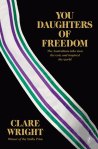
Clare Wright, You daughters of freedomWell, that was a tome and a half! And in saying this I’m referring less to the length of Clare Wright’s new history, You daughters of freedom: The Australians who won the vote and inspired the world, than to its depth and richness. There are, in fact, two main stories going on here – the story of women’s suffrage in Australia and England, and that of Australia’s leadership in the world, at the time, in terms of progressive politics, of forward-thinking social legislation. They were heady, optimistic times, and the suffragists (being those men and women who advocated for women’s enfranchisement) were part of it all.

Clare Wright frames her history of this period in Australia’s nationhood through the story of five suffragists – Vida Goldstein (1869-1949), Dora Montefiore (1851-1933), Nellie Martel (1855-1940), Dora Meeson Coates (1869-1955), and Muriel Matters (1877-1969). These women should – like that famous suffragette Emmeline Pankhurst is – be household words. Indeed Pankhurst knew and used most of them in her long battle for women’s suffrage in England. Why are they not? Why, for example, asked Clare Wright at the lecture I attended, is there no statue to Vida Goldstein in Victoria? (There is, she tells us in her Epilogue, a memorial park bench in her hometown of Portland, Vic! A park bench!!)

Well, lest we think they are not well-known because achieving suffrage was oh-so easy in Australia, Vida told otherwise to a US Senate Select Committee on US Suffrage during her 1902 USA tour:

Vida wished the senators to know, too, that this was the result of years of hard fighting–in case they also subscribe to the ‘one fine day if just happened’ school of political progress.

In other words, our five women (and all the other Australian fighters for the cause) may not have had to chain themselves to a grille like Muriel Matters did in England in the Suffragette cause, nor refuse to pay taxes as Dora Montefiore also did in England for the same cause, but they had lobbied their case hard. Indeed, while South Australia granted suffrage to its women in 1894, and the new federal government to women in 1902, it took until 1908 for the last state in Australia, Victoria, to do so.

I should clarify here that, although Australia was a leader in women’s suffrage by being the first nation to legislate suffrage for all white adult Australian women, without property qualifications, and to enable those women to stand for parliament, it was just for white women. As Wright says, “it was now race, not gender, that defined the limits of Australian citizenship.”

Writing history

You daughters of freedom is, then, a good read, because the story it tells is fascinating. The five significant women are all wonderful subjects in their own right:

  • Vida Goldstein, the private school girl who “developed a passionate commitment to the underprivileged” and a “zeal for social reform”, and stood for parliament several times to pave the way for others;
  • Dora Montefiore, the committed socialist whose practice of non-violent civil disobedience was observed by a young Gandhi;
  • Nellie Martel, the elocutionist whose militant activism resulted in her being arrested in England and spurned by papers at home;
  • Dora Meeson Coates, the artist whose “Trust the women” banner is now on permanent display in Parliament House; and
  • Muriel Matters, the actor who led the grille protest in the House of Commons, flew in a “Votes for Women” labelled airship over London, and undertook a popular, successful lecture tour on English suffrage in Australia.

I’m not going to share their stories, because you can find them in reviews (like Lisa’s, in the link below), in the Australian Dictionary of Biography (on which their names above are linked), and most importantly in Clare Wright’s book. Each of these women played critical roles in the suffrage fight both home and in England where limited women’s suffrage wasn’t achieved until 1918.

No, what I want to write about is the style, because no matter how interesting or important history is, few (besides the academics and die-hards) will read it if it it’s not written in a way that engages. And this is where Wright shines. It’s a hefty tome, at nearly 500 pages. It’s a complex one which juggles the stories of five quite disparate women, from the late nineteenth century to the second decade of the twentieth. And it is extensively researched, with each page containing not one but several quotes from mostly primary sources (such as newspapers, speeches, and documents from personal papers.) A daunting work for researcher and reader alike.

In my admittedly limited knowledge of historical writing – so I might be barking up the wrong tree – Clare Wright’s approach reminded me somewhat of Thomas Carlyle’s in his three-volume The French Revolution. It’s a few decades since I read Carlyle, but that history could be written with such verve and colour made a big impression on me. Like Carlyle, though perhaps not quite so flamboyantly, Wright is not afraid to use bold rhetorical tools to tell her story. Explaining why 1911 didn’t turn out to be the golden year England’s suffragettes hoped, Wright writes:

Truth be told, the writing was on the wall well before that. The summer of 1911 continued in a national pantomime of over-the-top pageantry and under-the-surface tension with the King and his court centre stage. But the audience should have been shouting, ‘Over there! Look over there!’

Over there  … to Bermondesy […]

Over there … to Ireland […]

And further over there–to Germany […]

The glorious late summer of Edwardian England was about to shatter like a cheap vase.

There is nothing inaccurate in what she says – to my knowledge, anyhow – but the way she says it is fresh, compelling, and devoid of dry or, worse, obfuscating academese. I could pull out example after example of writing that captures our attention, but I think I’ve made my point.

Wright is also careful to make clear where the historical record is lacking. Why did Nellie, for example, suddenly disappear from public life? Wright explains that there are no clear answers, but follows up to discuss the “few clues”.

And, then, almost best of all, there’s the extensive use of contemporary newspaper reportage – surely made so much easier for modern researchers by the wonderful Trove. Wright draws on conservative and progressive newspapers from around Australia to reflect what people – as represented by editors and journalists – were thinking at the time. When Nellie, say, or Vida, were active in England, the Australian papers were watching closely and reporting. Not only does this flesh out our understanding of the suffrage question, but it fleshes out the wider social history.

The book is chronologically told, with evocatively titled chapters, such as, for example, Chapter 28’s “Homecoming Queen, Australia, winter 1910”, which chronicles Muriel Matters’ return home for her lecture tour. However, despite this signposting, readers do have to be on their mettle to keep track of our five suffragettes, to know where they are at any one time, and which of the many political organisations, if any, they’re aligned with. It’s a complicated story that Wright aims to tell – and following it requires attention.

They were heady days …

So, You daughters of freedom, is an engrossing read – but, I have to admit that, as I read it, I became sadder and sadder. This was mainly because of that thread that I mentioned in my opening paragraph, the one to do with Australia’s leadership in terms of progressive politics. What happened to us – us Australians I mean? There we were, at the turn of the century, leading the world, not only in women’s suffrage but in a whole raft of social reform measures, relating to working conditions, conditions for women and children, and, even, Maternity Allowance. We were also the first nation to elect a socialist or Labor government, when Andrew Fisher was swept into power in 1910.

Well, what happened, says Wright, was World War 1, which completely changed the nation’s narrative. But that is another story. Meanwhile, I highly recommend You daughters of freedom, and look forward to Wright’s third book in her planned trilogy on Australian democracy.

Lisa (ANZLitLovers) has also reviewed this book. She liked it too.

AWW Badge 2018Clare Wright
You daughters of freedom: The Australians who won the vote and inspired the world
Melbourne: Text Publishing, 2018
553pp.
ISBN: 9781925603934

Monday musings on Australian literature: Eleanor Witcombe

Eleanor Witcombe

Eleanor Witcombe, 1950 from Australian Women’s Weekly (Presumed Public Domain)

Eleanor Witcombe, who died in October at the venerable age of 95, is not exactly a household name in Australia – but some of her work is, because she’s associated with the renaissance of Australian film in the late 1970s. She wrote the screenplays for The getting of wisdom and My brilliant careerHowever, her writing career long preceded that work.

Growing up

Eleanor Witcombe, then, was a playwright and screenwriter. She was born in 1923 in Yorketown, South Australia, where she went to Yorketown Higher Primary School until 1939 when her family moved to Brisbane. There she attended Brisbane Girls’ Grammar School. I was entertained to find, via Trove, all sorts of references to her schooldays because in those days, particularly in country towns, the papers reported on school doings. Yorketown’s The Pioneer regularly included “Honor Lists” in which the young Eleanor would appear, such as in 1931 for “Arithmetic” and “Mental”, or, in 1935, as winning a prize for “Schoolwork” in the Yorketown Show. In 1932 the paper reported on the formation of Yorketown’s first Brownie pack, and listed Eleanor and her sister among its first members, and in 1938, it reported that she had earned Honours in her Grade VI Music Theory exam. She was clearly a diligent girl …

… and she liked writing. The Sydney Morning Herald, in its obituary, says that her English teachers at Brisbane Grammar School encouraged her talent. She wrote her first play, “Omlet”, a skit on Shakespeare’s Hamlet, for a school concert.

Early working years

In 1941, the family moved to Sydney, and by mid-20s, she was living in Cremorne, Sydney. She went to art school where she knew Margaret Olley (also born in 1923.) This connection also popped up in Trove, this time in The Daily Telegraph of 23 January 1949 which reports on William Dobell controversially winning the Archibald Prize with his portrait of Olley. The report writes that of the 50 people viewing the portrait only two recognised “buxom, attractive 25-year-old Miss Olley”, and one of these was Witcombe. The report continues that:

Miss Witcombe attended East Sydney Technical College art school with Miss Olley. She said: “From some angles the portrait resembles Margaret. “There is a certain something about the whole thing that is Margaret. “I think it is glorious. I think it glows. It jumps out of the wall and really gets you. “But no one who does not ‘know’ Margaret would recognise it as a portrait of her.”

However, by this time, Witcombe had moved from art to writing and the theatre. In 1945, her short story “The Knife” was one of 43 out of over 2000 entries chosen for publication by the Sunday Telegraph in its short story competition, though I suspect she wasn’t among the final winners. Her story is available on-line.

It was drama though that captured her interest. Her biography at AustLit records that she enrolled in Peter Finch’s Mercury Theatre School, and that between 1948 and 1950 she was commissioned by the Mosman Children’s Theatre Club to write three plays for children: Pirates at the BarnThe Bushranger, and Smugglers Beware. Searches on Trove find many, many references to these plays – over a long period of time, and in England as well as Australia. According to AustLit, Smugglers, Beware became the first Australian children’s play professionally produced in London.

In 1950, The Australian Women’s Weekly included her in an article on Interesting People. She was 27, and had written and had performed those three children’s plays. The article concludes with

Miss Witcombe has been writing plays since she was seven, likes action and says “fairies are only for adults.”

Throughout the early 1950s, she appears frequently in the newspapers, with her plays being performed all over Australia – in remote places like Bourke as well as the cities. She started writing for radio, and talks in interviews about original versus adapted works.

However, she also spent part of the 1950s abroad, going to London in 1952 where she worked and studied for 5 years, not returning to Sydney until 1957.

Television years, and beyond

On her return, she wrote for the ABC and commercial radio – including many one-hour drama adaptations of plays, books, and stories – as well as for the theatre. She initiated the Australian Theatre for Young People in 1963, and was a foundation member, in 1962, of the Australian Writers Guild. We have a picture, in fact, of an active successful writer – of both original and adapted works.

When television appeared on the scene, Witcombe turned her hand to that medium too, writing for sketch comedy series The Mavis Bramston Show and, for three years, for the television soap opera Number 96, both of which, for different reasons, are important parts of Australian television history. She adapted children’s novels for television: Pastures of the blue crane (1969), which is one of the first miniseries I recollect seeing, and Seven little Australians (1973).

And, just to show her complete versatility, she adapted Norman Lindsay’s The magic pudding for the Marionette Theatre of Australia, a show that was performed at Expo 70 in Japan. When this show was revised in 1980 for new puppets, the Australian Women’s Weekly reported that

The script for the new production is by screen writer Eleanor Witcombe. Richard [the Theatre’s artistic director Richard Bradshaw] believes she’s the best.

“Eleanor used great huge chunks of the original book but we had to develop Pudding’s part. Her additional dialogue is perfectly in character.”

Meanwhile, of course, there were those films, The getting of wisdom (1977) and My brilliant career (1979). Both were adaptations of Australian classics, and both earned Witcombe AFI Awards for Best Adapted Screenplay.

I found a lot more in my research that I’d love to share, but will just tell this, before concluding. Around 1976, Witcombe was invited by Sir Robert Helpmann to research Daisy Bates for a film in which Katharine Hepburn wanted to star! Who knew! It was Witcombe, apparently, who uncovered that Bates had once been married to “Breaker” Morant.

After her death, the National Film and Sound Archive posted an excerpt from a 1998 oral history interview with her by Stuart Glover. In the excerpt she discusses writing adaptations, and the need to find the wood amongst the trees, the essence of the story. The excerpt ends with Glover suggesting she’d had a good career and asking her whether she’d enjoyed it. She replied:

No, I’m disappointed in myself. Because I don’t think I’ve – I haven’t adapted myself well. [Laughs] I haven’t found my centre enough and quickly and solidly and surely enough, to be able to go for that centre, y’know? I haven’t looked at me like a book and said, ‘This is what this book is about, and that is where the centre is.’

Sounds to me like an artist – never happy with her work – because, if you ask me, she had a brilliant career.

Have you heard of Eleanor Witcombe, or seen any of her plays or films?

Rebecca Skloot, The immortal life of Henrietta Lacks (#BookReview)

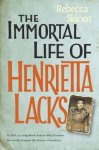
Rebecca Skloot, The immortal life of Henrietta LacksIn her extensive acknowledgements at the end of her book, The immortal life of Henrietta Lacks, Rebecca Skloot thanks “Heather at The Book Store, who tracked down every good novel she could find with a disjointed structure, all of which I devoured while trying to figure out the structure of this book.” Interesting that she looked at novels, particularly given our recent discussion regarding non-fiction that reads like fiction, but more on that later …

Many of you will have heard of the book, or, if not, of Henrietta Lacks, or of her HeLa cells? It’s a sort of hybrid biography-cum-science book about an African-American woman named Henrietta Lacks who died in 1951, and the immortal HeLa cell line that was and continues to be cultured from her cervical cancer cells. As Skloot writes, “these cells have transformed modern medicine.” The book was published in the USA in 2010. It won multiple awards, including, says Wikipedia, the National Academies Communication Award for “best creative work that helps the public understanding of topics in science, engineering or medicine”. In addition, the paperback edition was on the New York Times Bestseller List for 75 weeks.

I’ve described the book as hybrid, because the story (or biography) of Henrietta Lacks is just one of its threads. It also interrogates the complex intersection between race, class and ethics in medical research as well as broader ethical ramifications of issues like “informed consent” and the commercialisation of human tissue. Skloot, herself, says early in the book,

The Lackses challenged everything I thought I knew about faith, science, journalism, and race. Ultimately, this book is the result. It’s not only the story of HeLa cells and Henrietta Lacks, but of Henrietta’s family—particularly Deborah—and their lifelong struggle to make peace with the existence of those cells, and the science that made them possible.

If you haven’t guessed it by now, then, this book is another example of those non-fiction books that I like so much in which authors author takes us on their journey of discovery, in this case to understand the people and the science, the ethics and the law, behind this astonishing story. Skloot wasn’t the first so tell it, however – something she makes clear during our journey. Earlier stories include Michael Rogers’ 1976 article in Rolling Stone, and the 1997 BBC documentary, The way of all flesh, which you can watch on YouTube. I’m not going to spend a lot of time on the story of the cells, so if you want to know about them – read the book and/or watch this video.

Skloot explains her own fascination with Henrietta, from being introduced to her cells in high school, through those HeLa cells being “omnipresent” throughout her biology degree, to when she was in graduate school studying writing “and became fixated on the idea of someday telling Henrietta’s story”. It’s not surprising then that this book has been extensively researched – as evidenced by the Notes and Acknowledgements. (These two chapters make great reading in themselves.) It took around 10 years to write, not just because of this extensive research. A major issue which Skloot had to confront was the understandable suspicion and anger of the Lacks’ family, whose help she needed if she were to tell this story properly and with integrity. Their story is bound up in a long invidious history of research carried out on African-Americans, which is also detailed in the book.

“What do you mean, ‘everybody else’?!”

So, the structure. The book is divided into three parts – Life, Death, Immortality. In the first two parts, the story is told in two roughly alternating, chronological threads – one telling the story of Henrietta Lacks, her cells, and her family, from 1920 to 1973; the other tracking the early days of Skloot’s research from 1999 to 2000. In the third part, the two tracks coalesce into one chronological thread, starting from 1973 when the late Henrietta’s daughter-in-law, Bobbette, discovers quite accidentally via a friend’s brother-in-law, that Henrietta’s cells were being used in scientific research and had been since 1951. Until that point, no-one in the family had known that Henrietta’s cells were still “alive” and being used in research all over the world:

“What?!” Bobbette yelled, jumping up from her chair. “What you mean you got her cells in your lab?”

He held his hands up, like Whoa, wait a minute. “I ordered them from a supplier just like everybody else.”

“What do you mean, ‘everybody else’?!” Bobbette snapped. “What supplier? Who’s got cells from my mother-in-law?”

She is, to put it mildly, horrified – and rushes to tell her husband and thence the family.

Here, though, I’m going to return to the issue of writing non-fiction like fiction. There’s the use of narrative structure, of plot lines, to create some sort of tension for the reader – in this case it largely revolves around the lives and reactions of the family, particularly Deborah – while we are also learning drier “stuff” about the history and ethics of cell culture and medical research. The dialogue I’ve just shared is part of the main plot line concerning the family’s discovery of what had been happening to Henrietta’s cells.

Then there’s the use of evocative, descriptive language. Skloot doesn’t overdo this, staying, in the main, direct and focused – but there are enough little flourishes to keep the writing interesting, like “HeLa grew like crabgrass” or “tufts of hair like overgrown cotton sprouted from his head”. The imagery draws from the area in which it is set. And, there’s the use of dialogue. Skloot did carry out a lot of interviews over her decade-long research and often makes clear when she’s quoting from those – but not all dialogue comes from that research. Some is imagined – or what critics call “representative”. No-one, for example, would have recorded Henrietta’s exact words when she visited her gynecologist, but Skloot writes:

“I got a knot on my womb,” she told the receptionist. “The doctor need to have a look”.

How much more interesting that is to read than, say, “Henrietta visited her gynaecologist, telling the receptionist that she had pain in her womb that needed to be investigated.” I know what I’d rather read. Not only is dialogue more engaging, but if the writer gets the voice right it enhances our understanding of the character. One of the delights of this book, in fact, is our getting to “know” members of Henrietta’s family, and the dialogue plays a significant role in this. Not non-fiction readers, however, approve of this approach.

As I’ve already said, I’m not going to write a lot about the content of this book, fascinating though it is. It has been written about extensively; there are interviews with Skloot on the web; and for background there’s that BBC documentary. The book is now nearly a decade old. Cell research has moved on, but the story of the intersection of race and class with science and ethics is still relevant. Moreover, this is a book of history – the history of medicine. Close to home for me, for example, was learning that HeLa cells were involved in identifying the connection between the HPV virus and cervical cancer, and thence the development of the vaccine with which my reading group’s daughters were among the first in the world to be vaccinated.

All this makes the book well worth reading. There were, admittedly, times when the cell science got the better of me (and other non-scientific members of my reading group) but not enough to turn us off. Skloot’s courage, warmth and empathy with people out of her ken, the trust those initially fearful, angry people came to place in her, and her ability to tread the fine line between judgement and analysis when discussing actions of the past make this a special read. No-one in my reading group regretted this choice for our schedule. A fine way to end the year.

Rebecca Skloot
The immortal life of Henrietta Lacks
Sydney: Picador, 2010
ISBN: 9781742626260 (ePub)

Katharine Susannah Prichard, Christmas tree (#Review)

Katharine Susannah Prichard

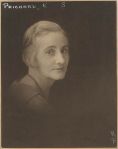
Prichard, by May Moore (Presumed Public Domain, State Library of NSW)

Commenting on my recent post on Katharine Susannah Prichard’s short story “The bridge”, Prichard biographer Nathan Hobby, pointed us to an online version in Trove of her short story, “Christmas Tree”, which he describes as the best of her early work. It’s about farmers, droughts and banks. Seemed very appropriate (to us in Australia right now, anyhow) so of course I checked it out. (And I corrected the OCR-introduced errors while doing so – hope I caught them all.)

So, “Christmas tree”. Published in The Australasian in 1919, it was, according to writer Glen Phillips, the first of Prichard’s stories to be translated – into Chinese in the 1920s! Fascinating eh? It would be interesting to know who read it and what they made of it.

“Christmas tree” tells the story of Western Australian wheatbelt famers Jinny and George Gillard, and is told third person, primarily through the eyes of Jinny who, at the start, is standing at her back door, reminiscing about their thirty years on the farm. The story starts:

Against the dim blue of the summer sky the Christmas trees had thrown their blossoming crests; they lay along the horizon like a drift of clouds, fluted and curled, pure gold.

The trees stood irregularly in the dry, scrubby land of the plain beyond Gillard’s fences to the north of Laughing Lakes homestead. Their trunks were not visible from the backdoor of the house to where Jinny Gillard stood, her eyes on that distant line of yellow blossom. But she was not thinking of the dark, heavy trees which put on an appearance of such opulent beauty at Christmas time. Her thoughts glanced from them and wandered listlessly, ravelling and unravellin, fretted, anxious, thoughts, old hopes, despairs, bitter, weary, and faint, sweet memories.

This year’s crops were, in fact, better than they had been for years, but it’s all too late – it is not they who will be benefiting from this year’s wheat but the bank.

It’s a sad story, but realistic rather than melodramatic. It’s about hard work and bad luck. Jinny knows they are not the only ones who have struggled. Some have had better luck than George who had sown “lightly when a good season happened along, or heavily when the rain kept off, and so had lost both ways” but some are also in George and Jinny’s predicament. The second part of the story concerns a Christmas party underwritten by one Christopher Tregear, who was chairman of the Great Western’s board of directors and “supposed to be one of the wealthiest men in the State”. Many farmers did business with Great Western, “thinking Tregear’s position in it would guarantee them from harsh treatment. But it had not.” Not for George, not for many others, and yet, here they all are, sees Jinny, dancing and singing with him, though “he was not a good friend of theirs.” Of course, we don’t get Tregear’s point of view, but there’s a sense that with the good season coming, compromises could have been reached.

This story is enjoyable on several fronts. Its realism means it conveys the facts without the histrionics that can sometimes distance readers. The realism also makes more effective the underlying theme that with more loyalty and less greed from the men with money, more farmers could survive the bad seasons. But it’s also enjoyable because of the tight, focused writing – from the sly irony behind the parasitic Christmas trees, and the names of the Gillards’ properties, Laughing Lakes and Everlasting, through the evocative descriptive writing, to the pointed repetition of the Gillards’ mantra “Crack hardy … I’m crackin'”.

“Christmas tree” is a story that hasn’t dated. It’s as relevant now as it was 100 years ago when it was first published – stoicism and dignity never go out of date, and we are still challenged by the role capitalist structures play in people’s lives and livelihoods. Another good read from Prichard – but that’s not surprising.

AWW Badge 2018Katharine Susannah Prichard
“Christmas tree”
First published: The Australasian, 20 December 1919
Also published in Potch and colour, Angus & Robertson, 1944
Available: Online at Trove

Apology: I posted this an hour or so ago with the wrong short story title, so have deleted that post, and republished with the right title, otherwise we’ll all get confused (including Google!)

Katharine Susannah Prichard, The bridge (#Review)

Time for another post on a short story available online, but not, this time, from the Library of America. Indeed, it’s not even American, but one of our own – Katharine Susannah Prichard’s (KSP) “The bridge”. As far as I can tell it has been published at least three times: in 1917 in the Weekly Times Annual; in 1940 in The ABC Weekly, which is where I found it; and in 1944 in a collection titled Potch and colour, about which Prichard biographer Nathan Hobby has posted.

Writing about Potch and colour, Hobby says that

Katharine wrote some incredible short stories. I would go as far as to say that I think the form suited her better than the novel, even if she is not as remembered for it. This collection mainly includes stories originally published in journals after her first collection, Kiss On the Lips (1932), but the first appearance of some of them still needs to be established. One story, at least, is quite early – “The Bridge”; I found a newspaper copy of it on Trove from 1917 (unfortunately, it’s not one of her “incredible” stories…).

Hobby then identifies three short stories from the collection as particularly worth commenting on. The first is titled “The siren on Sandy’s Gap” and Hobby says it “manages to be both humorous and an astute critique of marriage.” It’s about Susan – the siren – and her refusal to do “what they [men] say.” The second, “Flight”, is about the forced removal of mixed-race Aboriginal children from their homes, and the third, “The Christmas tree”, is about banks failing wheatfarmers during the Depression.

Now, before I get to “The bridge” a little from KSP herself. In 1967, Angus and Robertson published Happiness: Selected short stories by Katharine Susannah Prichard. It includes two of Hobby’s favourite stories from Potch and colour, but not “The bridge”. Most interesting, though, is Prichard’s Foreword. She talks of her various inspirations, including Thomas Carlyle, and says that Guy de Maupassant’s “Contes Normands” gave her “the short story technique, which, more or less unconsciously” influenced her story telling.

Defending herself against a criticism of her “loose and slipshod English”, she says that she purposefully used “the living speech of our people … making the context of a sentence give the meaning of an unusual word or phrase.” She quotes a Professor Holme who praises her style as responding to the need of her characters, and Nettie Palmer’s statement that her writing “made us remember that there was nothing so well worth writing about as the loves, conflicts, and sufferings of our own people”. Including all this in her short Foreword suggests that she felt the need to defend herself. Anyhow, she concludes with:

All the stories were inspired by an intimate sympathy with men and women in the comedy and tragedy of their lives.

So, “The bridge.” It’s not, perhaps, “incredible”, but it is moving – and reminds me, a little, of some stories by Kate Chopin and Edith Wharton. It’s a brief story about the building of a bridge in southeast Victoria by a young man called Bryant and his off-sider Charley. The main action concerns the opening of the bridge, and the wedding that takes place immediately afterwards.

The story commences with Bryant and Charley reminiscing about some of the challenges they faced in building the bridge. It had taken a year to build, and without any loss of life:

“They’ve got a notion in some parts of the world, a life’s got to go into a bridge if she’s to going to wear,” he [Bryant] mused. “I’m mighty glad no one’s been killed or hurt on our bridge, Charley … and she’s a good bridge … as good a little wooden bridge as there is in the country.”

However, a flood crisis had threatened the bridge. To save it, Bryant needed horses but local farmer Joe Gaines would not help out – until Bryant tried a bit of psychology involving a pretty young woman working in Gaines’ kitchen. He got his horses, but at a great cost to that young woman, unbeknownst to him but discovered by Charley later at the wedding.

It’s a tight little story – about single-minded ambition and sexual jealousy set against female generosity and sacrifice – with a sting in the tail that ironically comments on Bryant’s belief about his bridge. I can see the influence of Guy de Maupassant here – and Prichard’s interest in the lives of women. You can read it at the link below.

AWW Badge 2018Katharine Susannah Prichard
“The bridge”
First published: Weekly Times Annual, 3 November 1917
Also published in The ABC Weekly, 24 August 1940, and in the collection,
Potch and colour, Angus & Robertson, 1944
Available: Online at Trove

Emily O’Grady, The yellow house (#BookReview)

Emily O'Grady, The yellow house

Although Emily O’Grady’s debut novel The yellow house won this year’s prestigious The Australian/Vogel’s Literary Award for unpublished manuscripts by authors under 35, I wasn’t sure at first that I was going to like it. I think this was because I was feeling I’d read a surfeit of books this year about young people living challenging lives in rural settings – Charlie Archbold’s Mallee boys (my review), Jenny Ackland’s Little gods (my review) and Sofie Laguna’s The choke (my review). I wasn’t sure this was going to have anything new to offer.

However, it wasn’t long before ten-year-old Cub’s voice got me in and I realised that this book had a different spin again, which is that it explores how families of violent or sociopathic criminals, like serial killers, cope in the long years after it all comes to light. It’s a coming-of-age story, in a way, but a very different one. Cub, then, is our narrator. She lives on a “lonely property bordering an abandoned cattle farm and knackery” (back blurb) with her twin bother Wally, her 17-year-old brother Cassie whom she adores, and her parents, Colin and Christine. Within sight of their home is “the yellow house” in which her maternal grandfather, Les, had lived. He had died two years before the Cub and Wally were born – and in the prologue we learn that he had been a serial murderer of young women. The prologue closes with a now wiser Cub telling us:

Now, I know everything he did trickled down and created us all, because it turned out he was the god of all our lives.

So we know at the beginning something that Cub doesn’t know when the narrative “really” starts. Why does O’Grady take this approach? I’m guessing it’s to focus us less on that plot. We know what Cub doesn’t know – or at least enough of it. We can therefore focus on how a family lives with this knowledge rather than on trying to work out, as Cub has to do, what the secret is. It makes Cub a perfect naive narrator: she has the curiosity and loyalty of a child but lacks the wisdom necessary to make the right calls. There’s an added complexity to Cub’s situation which increases her isolation: everyone else in the family knows, including her twin brother. Cub wasn’t told because she’s a girl. It’s no coincidence that she, Coralie, has a baby-ish nickname, while her twin brother doesn’t.

The novel proper starts when Cub is approaching 11 years old, and her aunt, Helena, and 11-and-a-half-year-old cousin, Tilly, move into the yellow house. Tilly’s father, Dermott, we’ve already been told, had driven his car into the dam some time ago and died. It is Helena and Tilly’s appearance which sparks the events that play out in the rest of the novel, events that are “driven” by that violent forbear whose “rotten blood” is in their veins, whose legacy they struggle to shake off.

It’s a horrifying novel. We realise early on that the family is ostracised by the community in which they live, and is struggling emotionally. Cub’s Dad does his best to keep them together but is ill-equipped for the challenge he faces, while her Mum also does her best in her own way, but regularly takes to her bed, with various malaises, many depression-based presumably. Cub and Wally have no other friends at school, something Cub doesn’t fully cotton on to, but we do:

The kids at school were strange; Wally and I played by ourselves at lunchtime, always paired up when we did partner work.

Cub is consequently desperate to make Tilly, so close in age, her friend:

I tried to think of something else to say. I knew we had one chance to make a good impression and I didn’t want to waste it. But the silence felt as deep as the dam, impossible to swim out of. I was annoyed at myself for not practising with the girls at school. I should’ve been prepared.

But, it never quite works. Tilly, dangerously – she’s too much like her mother, Cub’s Mum hints at one stage – is more interested in boys. And, there are boys – besides Wally. There’s Cassie, and his creepy friend Ian. Tilly, like Cub, doesn’t know the story of the “yellow house” and her mother is determined to keep it that way.

The story develops slowly, chillingly, and, it feels, inevitably, as the secrets, parental inadequacy, community prejudice and cold opportunism combine to result in … I’d like to say more, but perhaps should not spoil the plot.

This is not a novel in which everything is explained – as can be typical of naive narrator stories – but there seems to be a specific intention here. At least, I’d say that O’Grady’s aim is not to tease out all the possibilities and permutations of the situation, nor to follow the more usual crime fiction path of restoring order out of chaos. Instead, it’s to encourages us, at each point, to consider what might be happening, why it might be happening, and what might make (or have made) it happen differently. That gives the book a power that those more traditional crime novels don’t have.

Besides this open-endedness which kept me engaged and pondering throughout, there’s O’Grady’s writing. It’s not tricky. There’s quite a bit of dialogue and simple description of what’s going on, as you’d expect, rather than a lot of reflection, but O’Grady has some lovely turns of phrase. At one point Cub is near Cassie’s friend Ian:

Now that I was right up close to him I didn’t know what to do; it was like my brain was wrapped in sticky tape and I couldn’t think properly.

The language and imagery, as this example shows, are appropriate for Cub’s age. And there’s the “yellow house” itself. Yellow has so many connotations. It can suggest something warm, bright, cheery, hopeful, but is also the colour of cowardice and deceit, and can convey sickness. The contrast between these positive and negative meanings of the title underpin the novel’s horror.

Why read this novel? There’s the obvious reason that it explores a subject that many of us must wonder about when we hear of violent crimes – how does the wider family cope, what happens to them? And there’s the associated reason that in so doing it might encourage us to think more empathetically if we found such a family in our midst. But, besides that, it’s an engaging debut novel by a new young writer from whom we will hopefully hear more. It’s always exciting to be in there at the start.

Lisa (ANZLitLovers) also liked this book.

AWW Badge 2018

Emily O’Grady
The yellow house
Crows Nest: Allen & Unwin, 2018
314pp.
ISBN: 9781760632854

(Review copy courtesy Allen & Unwin)

Margaret Merrilees, Big rough stones (#BookReview)

Margaret Merrilees, Big rough stonesIn her latest novel Big rough stones, Margaret Merrilees seems to have done for Australian lesbians what Armistead Maupin did for the American gay community in his Tales of the city series. It is the story, spanning roughly three decades from around 1970s on, of a character named Ro and her lesbian sisterhood in Adelaide. In so doing, it also encompasses some of the feminist activism and sociopolitical concerns of those decades.

Now, Merrilees has appeared here before – with her debut novel The first week (my review) and in my post on her essay about non-indigenous writers writing about indigenous people. I’ll return to this point later …

The novel’s title comes from Miriel Lenore’s poem, “the walls of lesbos”, which is quoted at the beginning of the book. It starts:

to build a lesbian wall
take big rough stones

don’t cut to fit

The poem concludes with the idea that the strength of the wall lies in the combination of the places where the stones touch and the gaps between. This idea perfectly encapsulates the relationships in Big rough stones, because there’s a real sense of a bunch of different individuals who support each other for the long haul. There are points at which they meet. They share political beliefs, for a start, and they share their lives (sometimes as lovers, sometimes in share houses, sometimes in work). But there are also the gaps, those individual differences that either make a community stronger or break it apart. Here, they make it stronger.

Ro, we soon realise, is not the easiest person to live with, not always the most responsible or reliable person, but she’s “sturdy and energetic, descended from a Welsh pit pony and a dour Scot.” She’s idealistic, passionate, and will give things a go. She’s our focal point. The novel is told third person but mostly through her perspective. However, we also get to know several of her friends and lovers, sometimes through her eyes, but sometimes we pop into their heads for a brief while too.

Besides this occasionally shifting third-person point of view, the novel also has an interesting, almost circular, 4-part structure: Now, A while ago, A long time ago, Now. At the novel’s opening – in Now – Ro is in her 60s and learns that she has terminal cancer (so, no spoiler here). We also learn that, at this stage in her life, she wishes she still had someone called Gerry in it. We then move back in her life, eventually reaching “a long time ago” where we meet Gerry and discover why she is no longer in Ro’s life. It’s a sad story. In the final “Now”, Ro is in the terminal stages of her cancer, being cared for by her friends. We see just how strongly that wall has been built. The story reminded me just a bit of Helen Garner’s The spare room – not that Ro tries ineffective alternative medicine, but in the challenges her friends face in caring for a seriously ill person. It isn’t easy.

So, the book is about relationships – lesbian ones, yes, but there’s much that’s universal here too. However, it is also about the times – about political ideals and feminist activism, about the environment and climate change. Several of the women, including Ro, work in a Shelter for abused women. They work as a collective, and we share in some of the struggles of making such arrangements work. We sit in on a collective meeting, after Ro has missed a shift without calling in. There’s discussion and dissension about Ro’s commitment, with one member suggesting this might not be the job for her. Lovely, loyal Maddie speaks up:

I don’t like this. We’ve never been into sacking people or any of that sort of patriarchal shit.’

‘Maybe that’s our problem,’ said Tilda. ‘The place would run a lot more efficiently if we were.’

But this was going a bit too far for the others.

‘No, that’s completely against what we value,’ said the oldest member. ‘People always come first, and that includes workers. It’s up to us to honour Ro’s strengths and figure out how to work with her.’

Ro herself was struck by Tilda’s echo of her own thought. We should have a few more rules, she wanted to say.

She doesn’t say it, though. Instead, she concedes that she was wrong, and offers to work on her relationship with Tilda. An uneasy truce is achieved!

Another quote from the novel that has been used in its promotion provides a good sense of what Ro and her friends were about:

‘You thought feminism would stop violence against women,’ said Julia. ‘And that would stop war. And stop people trashing the Earth. You tried.’

‘Not alone,’ said Ro modestly. ‘I had help.’

Truth-telling

I want to end, however, with Merrilees’ concern about representing indigenous Australians in our stories. Here’s something I quoted from her in my previous post:

To write about Australia, particularly rural Australia, without mentioning the Aboriginal presence (current or historical) is to distort reality, to perpetuate the terra nullius lie. However, for a non-Aboriginal writer to write about Aboriginal people is to run the risk of “appropriating” Aboriginal experience; speaking on behalf of … There’s been too much of that already.

This, as I see it, relates to the issue of truth-telling. There’s the formal truth-telling – via, say, a truth-telling and reconciliation commission – but there’s also the more informal truth-telling that we can all do. Truth-telling is about all Australians coming to a “shared understanding of our history”, which includes “the acceptance of mass killings, incarceration, forced removal from land and forced removal of Aboriginal and Torres Strait Islander children from their families”. The now standard welcome or acknowledgement of country statements are part of this.

So, in Big rough stones, Merrilees has taken a sensitive approach. She does not, here, as she did in The first week, have an indigenous character, but she acknowledges indigenous Australians by showing her characters being aware of the “truths”. For example, Alby, one of Ro’s friends gets a job at a mine. Ro is horrified, and says:

‘Shit, Alby. How could you? Mining. Probably on Aboriginal land.’

‘Certainly on Aboriginal land. The whole country is Aboriginal land. This pub is on Aboriginal land.’

True! On another occasion, after a protest in Alice Springs against Pine Gap, Ro ends up in gaol for a night. The cells are disgusting and Ro finds it hard to engage in the political debate about the US base:

The walls were covered in graffiti. The misery and degradation of the previous occupants hung in the air, a miasma, shockingly brutal. The protest about the US base lost its urgency. Here was racism, fundamental, elemental, an Australian truth most of them had never seen before. Not close up. This they should protest about.

She realises that:

She and the others had privilege that no Aboriginal prisoner ever had. They could give up their resistance and walk away any time. And eventually they did.

I think she has hit on a way of not continuing terra nullius but, at the same time, also not appropriating indigenous experience. It may not work in all situations, but here, with politically aware characters, it does.

Fundamentally, Big rough stones is a straightforward, accessible story with a lot of dialogue that keeps the story moving along – but this is not all it is. Like Tales of the city, it offers a realistic, but warm-hearted portrayal of a time and place, with all the attendant personal and political messiness. An engaging read.

Lisa (ANZLitLovers) also liked this novel.

AWW Badge 2018Margaret Merrilees
Big rough stones
Mile End: Wakefield Press, 2018
278pp.
ISBN: 9781743055526

(Review copy courtesy Wakefield Press.)