Anita Heiss (ed.), Growing up Aboriginal in Australia (#BookReview)

Anita Heiss, Growing up Aboriginal in Australia

As many others have said, including my reading group, Anita Heiss’s anthology, Growing up Aboriginal in Australia, should be required reading for all Australians. At the very least, it should be in every Australian secondary and tertiary educational institution. Why? Because it contributes to the truth-telling that is critical to real reconciliation between Indigenous and non-Indigenous Australians. Truth-telling comes in many forms. There are formal processes, as through truth-telling commissions, but there are also the informal processes that we can all engage in while we wait for the government to fiddle-diddle around deciding whether it can front up and do the right thing.

Essentially, truth-telling means all Australians acknowledging and accepting “the shared and often difficult truths of our past, so that we can move forward together”. These truths include the original colonial invasion of the country, the massacres, the Stolen Generations, and the ongoing racism that results in continued inequities and significant gaps in almost every health, educational and occupational measure you can think of. Informal truth-telling encompasses all the things we do to inform ourselves and each other of these truths. Heiss’ anthology, Growing up Aboriginal in Australia, which contains 50 stories by indigenous Australians on their experience of growing up indigenous in this so-called lucky country of ours, contributes to this informal truth-telling. Taken as a whole, the book provides a salutary lesson, for all Australians who care to listen, on the experience of being indigenous in Australia. Taken individually, each story has the potential to break your heart. If you think I’m laying it on a bit thick, then you haven’t read the book!

“a stranger in my own land”

The above line from William Russell’s story, “A story from my life”, brought me up short because it replicates a line I read in Atkinson’s book The last wild west (my review). Atkinson describes his Indigenous friend and co-worker Sno as being “an alien in his own homeland”. There is strength in this replication between books, just as there is strength in the repetition of experiences within Heiss’s book, and the strength is this, that every repetition reinforces the truth of the historical (and continuing) injustice faced by Indigenous Australians. The stronger, the more inescapable the truth becomes, the harder it must surely be to ignore.

So, what are the repeated experiences in Growing up Aboriginal in Australia? Well, there are recurring references to the Stolen Generations, to being questioned about identity (“are you really Aboriginal?”, “you look too white to be Aboriginal”), to feeling disconnected from culture, to being called racist names, to being humiliated in myriad ways too numerous to list, and to being physically attacked. These are the experiences that we’ve all heard of, but Heiss’ contributors enable us to feel them. And that’s important. I’ll share just a few quotes from a few stories:

Thankyou for your acknowledging every 26 January with such grace and humility. Thankyou for your encouragement – and advice to me – to let the past be in the past, to simply ‘get over it’ on the day my people’s land was invaded and dispossessed. (Dom Bemrose’s biting “Dear Australia”)

My father cut to the chase. ‘Olly, you can’t go telling people we’re Aboriginal … It isn’t safe’. (Katie Bryan, “Easter, 1969”)

I would paint and draw and sculpt about being Aboriginal. I would see people twitch uncomfortably and sometimes even let their ignorant thoughts out: ‘But you don’t look it’, ‘From how far back’, ‘Do you get lots of handouts?’ (Shannon Foster, “White bread dreaming”)

In Year 2 I was lined up with Aboriginal classmates to be checked for nits and, as I stood there with fingers being raked through my hair, I felt angry and embarrassed as my non-Indigenous classmates watched. I realised that … for some reason it was only supposed to be us Aboriginal kids that had nits. (Jared Thomas, “Daredevil days”)

None of us kids are allowed to go anywhere outside after dark by ourselves. We can’t ever go to the toilet at night: we gotta go in twos, and Mummy stands at the door and watches. She has a big bundi* ready in case there’s trouble … Terror is outside the door, and we can’t do anything about it. (Kerry Reed-Gilbert, “The little town on the railway track”)

It was hard selecting these quotes – not because they were hard to find but because there were so many options that it was hard to decide which ones. That’s the shame of it. And these stories come from all ages – from teenagers to those in their 70s or 80s –  and from all parts of Australia, from, as Heiss writes in her Introduction, “coastal and desert regions, cities and remote communities.” They come from “Nukuna to Noongar, Wiradjuri to Western Arrernte, Ku Ku Kalinji to Kunibídji, Gunditjamara to Gumbayanggirr and many places in between.”

The contributors include many well-known people – writers like Tony Birch and Tara June Winch, sportspeople like Patrick Johnson and Adam Goodes, performers like Deborah Cheetham and Miranda Tapsell –  but there are also lesser-known but no less significant people, many of whom are actively working for their people and communities.

Despite the devastating picture being painted, the book is not all grim. There are also positive repetitions in the book. They include deep connection to country, the importance and support of family, and particularly, the strength of mums. There’s humour in some stories: you can’t help but laugh, while you are also grimacing, at Miranda Tapsell’s story of her friends expecting her to turn up to a party as Scary Spice, but opting for Baby Spice instead (Miranda Tapsell, “Nobody puts Baby Spice in a corner”).

“two divided worlds”

One of the early stories is particularly sad because its 29-year-old author, Alice Eather, took her life before the book was published. In her person, in her story, in her life, she represents the challenge Indigenous people face in Australia today. Her story “Yúya Karrabúrra” starts with a poem. At the end of the poem she writes:

This poem is about identity, and it was a really hard thing to write in the beginning because identity is such a big issue. It’s a large thing to cover. The poem is about the struggle of being in between black and white.

Now Alice, like many in the book, had an Indigenous parent and a non-Indigenous one, but the struggle she names here is faced by every person in the book, regardless of their family backgrounds, because every one of them must contend with white society and culture, and it’s clearly darned hard.

I’m going to close on this idea of identity, because identity is the well-spring from which everything else comes. The stories are organised alphabetically by author, which I’m sure was an active decision made to not direct the conversation. Coincidentally, though, the last story – Tamika Worrell’s “The Aboriginal equation” – provides the perfect conclusion. It constitutes a strong, unambiguous statement of identity. She says:

I will not sit quietly while my identity is questioned. It doesn’t matter how many times you say you didn’t mean to be offensive, that doesn’t dictate whether or not I’m offended.

Then concludes with a hope that she

will live to see a future that is less ignorant, less racist and at least somewhat decolonised. Until then, I’ll continue to be an angry Koori woman, educating those who don’t understand and those who choose not to.

She’s not asking for the moon here is she? The least we can do is choose to understand – and we can start by reading books like this.

Lisa (ANZLitLovers) has also posted on this book, and there are several reviews for the Australian Women Writers Challenge.

* “bundi” is a Wiradjuri hitting stick I believe.

AWW Challenge 2019 Badge

Anita Heiss (ed.)
Growing up Aboriginal in Australia
Carlton: Black Inc, 2018
311pp.
ISBN: 9781863959810
Jane Caro in conversation with Alex Sloan

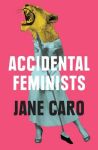
It was to the ANU’s brand new Kambri Cultural Centre that we went for this week’s ANU/The Canberra Times Meet the Author event with Jane Caro, who is doing a book tour with her new book Accidental feminists. Kambri is not as cosy as the old venue but is bigger, more flexible, and offers a cash bar! What’s not to like? Oh, and to add to the enjoyment, there is, on the lecture theatre’s side wall, an impressive 20-metre-long Sidney Nolan mural, The Eureka Stockade, which was donated to the University by the Reserve Bank of Australia, for whom it was originally created in 1966.

Anyhow, as always MC Colin Steele started the evening off with some housekeeping and then introduced Jane Caro (who needed no introduction) and her interlocutor Alex Sloan (who needed no introduction – in Canberra, anyhow). And then we were  off …

With no beating about the bush, Sloan got stuck right in by sharing the Walkley Award judges’ comment that Caro was “an invaluable warrior for women’s rights”, and then referring to Caro’s comment on the morning’s TV show Sunrise regarding the renewed asylum-seeker/people smuggler debate. Caro said that “Australia needs to find its moral compass again” and that the scare campaigns being waged against “people who are in tragic circumstances” means we “have reached a new low in this country.” Sloan asked Caro to comment on this, particularly regarding the reactions to it.

Say what you think

It was the perfect question for Caro to explain her modus operandi. She’s not “going to play the stupid game” and hide from unpleasantness, she said. This is about morality, and she believes that “If you say what you think, and mean it genuinely, nothing bad happens.” I like this faith!

The problem, she says, is that we worry too much about what we say, and how we look. She learnt – with, she wasn’t afraid to admit, the help of therapy – that she can’t control how people respond to her, so she now just says what she wants. She’s not here, she said, to be liked or approved of. Confidence, she believes, comes from recognising this, and from realising that there is no magic formula, that risk is a reality.

Jane Caro, Accidental feministsThe conversation then moved to the main reason we were there, her book Accidental feminists. It was inspired by her discovery that women aged over 50 comprise the fastest growing group of homeless people. She was shocked because this was her age-group, a group she’d believed revolutionary because they were the first cohort to earn their own money for most of their lives. Why were they ending up in this situation?

At this point the conversation turned historical, to how things were in the 1950s to 70s:

  • many girls were discouraged from continuing their education because they’d only be working for a while and then getting married.
  • many women were suspicious of/didn’t support Women’s Libbers (Feminists today), feeling that their lives were being criticised rather than that they were being “offered new horizons.”
  • women were brought up with a sense of inferiority, of feeling lesser, something which continues today. (For example, women are still less likely to speak up in public gatherings.)

Caro quoted Hugh Mackay’s definition of feminism from his book What makes us tick?:

Feminism is the fight by one half of the human race to be taken seriously by the other half.

Sloan asked Caro, how, then, had these “accidental feminists” come about. Caro identified a few causes, which were obvious to those of us who lived through this time:

  • the Pill which “unshackled women from their reproductive system” providing them with choices never available before
  • the Whitlam government’s provision of free tertiary education, which saw more young (and in fact middle-aged middle-class) women go to university.

What about the men?

Next Sloan moved onto the role of men, quoting ACT feminist Virginia Haussegger’s suggestion that men should be seen as crucial part of the solution, not the problem. Caro agreed, suggesting that feminism, in fact, offers men, too, the opportunity to live broader, freer lives. She also said that men are starting to defend women. Hmmm, my immediate reaction was why should women need to be defended by men, but Caro second-guessed that when she went on to explain that male champions are important because they put people on notice that it’s all about being human.

A brief reference was made to the #metoo movement whose main benefit Caro suggested is that it is shattering the silence, because silence puts the vulnerable at risk.

From here the conversation covered a variety of topics. One concerned “dutiful daughters” and the fact that women tend to take on the major caring roles – for children, for parents – which interrupts their working lives. She reported Betty Friedan’s criticism of the anti-feminist group, “Women Who Want to be Woman”. Friedan pointed out that such women “are one bread-winner away from the poverty line”. Caro discussed this in some detail in the Australian context – particularly regarding women’s inability to get jobs when they are older, the gap between when they are no longer employed and are able to access the pension. She somewhat jokingly suggested that the most important financial advice for women is to “work on your marriage!” Hmmm, perhaps that’s what the “women who want to be women” think they are doing, but my, they are taking a risk.

I have just given the bare bones here. The actual conversation included several anecdotes, not to mention facts and figures, to support Caro’s arguments, but you’ll just have to take these as read I’m afraid. That sort of detail is hard to capture while trying to enjoy yourself as well!

Q & A

There was a Q&A but the session was recorded so if you are interested, do Google the event in a couple of days. Meanwhile I’ll just share a couple of the points that were made:

  • Caro hates the term “work-life” balance because she doesn’t see them as separate things. Work is part of life. Now this could lead to a whole new conversation and what “work” is and how we “value” it, and it was clear than Caro has a raft of arguments to support her view.
  • Reference was made to Julia Baird’s recent article about politicians, merit and quotas. Worth reading if you haven’t seen it.
  • Caro argue that there’s nothing wrong with preaching to the converted. If you don’t keep them on-side someone else may convert them! Further, “the converted” have a sphere of influence which they can impact if they are kept informed and on-side.
  • Caro critiqued women taking their husband’s names. Women, she said, argue they’re assertive at work but then take on a “placatory” attitude at home. Yes! I truly cannot understand why contemporary young women are regressing in this regard. It’s a small thing in one sense, but in another it feels indicative.

Finally, when asked what advice she’d give young girls, Caro said:

Look to your Super. You are not here to make someone else’s life brilliant. You do not have to perform a role. Your job is to become as fully yourself as you can.

An interesting, inspiring and, yes, entertaining conversation, that was nicely managed by Sloan who, with the professionalism she’s known for, went with the flow while also ensuring the main issues were covered.

ANU/The Canberra Times Meet the Author
MC: Colin Steele
Australian National University
18 February 2019

Annabel Smith, Whiskey and Charlie (#BookReview)

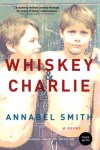
Annabel Smith, Whiskey and CharlieSome explanations first. Western Australian author Annabel Smith’s novel Whiskey & Charlie was first published in Australia back in 2012 as Whisky Charlie Foxtrot, which immediately brings to mind the two-way alphabet (or, as I knew it, the alphabet used by the police on The Bill for communication. The things you learn via TV!) However, as happens, the book was, excitingly and successfully, published in America in 2014, and its title was changed to the less evocative Whiskey & Charlie. What I read – heard, actually – was the audiobook that I won in a Readers’ Pack draw last year. Mr Gums and I listened to it on our recent road trip to Melbourne. It passed the time beautifully.

But, another thing, before I talk about that. I’m not a huge fan of audiobooks as I explained earlier in this blog. I really like to see the text; I don’t like to miss visual clues; and I rarely like readers acting out the voices. All these were challenges with Whiskey & Charlie, particularly the last one. The reader, Gildart Jackson, is English. He did the English accents well, but, oh dear, his Australian accent sounded disconcertingly American. I assume this audio, with its American title, was made for an American audience, but, regardless … I prefer reading!

So now the book itself which, really, is what this is all about isn’t it? It tells the story of two identical twins, Whiskey (born William) and Charlie. It is all told, however, through Charlie’s eyes, as the novel starts after Whiskey has had a freak accident and is lying in hospital in a coma. They are 32 years old, and the trouble is that they have been estranged for some time. Charlie has no idea what music, for example, Whiskey would want played at his funeral should he not awaken. He’s distressed. A procastinator who avoids confrontations, he’d always believed there’d be time to sort it all out. The novel progresses from this point, with the family taking turns waiting by Whiskey’s bedside, while Charlie remembers the past and how they’d got to the point they’re at. As he does so, he gradually comes to some realisations about himself and their relationship that enable him to – finally – mature, to see that it hadn’t all been as one-sided as he’d rather smugly assumed. This could be seen in fact as a coming-of-age novel. Perhaps all novels are, in a way; perhaps none of us stop coming of age until we, well, stop?

Anyhow, what makes this book particularly intriguing, besides the thoroughly engrossing story of an ordinary family with all its ups and downs – emigration from England to Australia, parental divorce, and so on – is its structure. And this is where the two-way alphabet comes in. We learn early on that when they were 9 years old, the then close twins been given a walkie-talkie set, and, to help with communication, they learnt this alphabet. William was disappointed that Charlie’s name was in the alphabet, while his was not. Charlie dubs him Whiskey, which becomes his name from then on. Smith structures the narrative around the alphabet, with each chapter titled according to the words – Alpha, Bravo, Charlie, Delta and so on right through to Zulu – and with each of these words linking to some part of its chapter’s content.

This – and the fact that the flashbacks aren’t completely chronological – gives the novel a somewhat episodic structure, but it doesn’t feel forced. Instead, the story is revealed in the backwards-forwards sort of way, for example, that we gradually get to know new friends while the friendship itself is moving forward. (A not uncommon structure. What makes this one a bit different is being organised by the alphabet.)

I’m not going to write my usual sort of review, mainly because having listened to it, I don’t have the same sort of notes, or the same easy access to check details or find quotes. So, I’ll just make a few comments. It’s quite a page-turner, with the main plot, as you’d expect, turning on whether Whiskey will come out of his coma, and if he does what state will he be in. The secondary plot relates to Charlie’s mental state, and his understanding of himself and his relationship with his brother (not to mention with his long-suffering, angelically patient partner, Juliet). He has always felt inferior – the one who came second, the one who didn’t get the girls or the fancy jobs – but he also felt in the right when it came to their estrangement. However, were things really how he saw them? This is something he has to work out for himself. For this reason, the third person limited voice is a good choice for the novel. It enables us to feel with Charlie, while also providing that little bit of distance which enables us to see that Charlie’s perspective may be just a little skewed.

One of the lovely things about Smith’s plotting is that there’s no melodrama, or over-blown emotionalism here. Sure, drama occurs, and there are some surprises, but it’s all within the realm of possibility. There’s some lovely humour too, particularly in the stories of the boys growing up. One particularly funny section has Charlie describing the “bases” in petting with a girl. There were times, though, when I felt Charlie was too angry, too irrational, particularly towards the end when it seemed he was on the road to growth, but that’s minor and didn’t affect his overall trajectory.

Binding all this together is the description of Whiskey’s medical condition. Smith obviously did quite a bit of research – or already knew – just how extended comas play out. While I knew some of it, there were details that I didn’t, and that I found fascinating. Smith also covers such issues as grief and end-of-life decisions.

Finally, I like the title. At first I wondered why Whiskey’s name was first when Charlie was telling the story, particularly given Charlie also comes first in the alphabet. But, of course, it’s polite to put the other person first, and it also reflects Charlie’s sense of who was first in their relationship.

Whiskey & Charlie (or Whisky Charlie Foxtrot) has been out for a few years now, but it’s still worth reading if you come across it in a library or bookshop. Or, have you read it already? If you have, let me know what you thought.

Lisa (ANZLitLovers) also liked and reviewed this – but way back when it came out!

AWW Challenge 2019 BadgeAnnabel Smith
Whiskey & Charlie (Audio)
(Read by Gildart Jackson)
Blackstone Audio, 2015 (Orig. pub. 2012)
10H30M on 9CDs (Unabridged)
ISBN: 9781504608268


Josephine Wilson, Extinctions (Guest post by Amanda) (#BookReview)

I am very pleased to bring you another guest post by Amanda, for a book I’ve not managed to read yet, much as I’d like to: Josephine Wilson’s Miles Franklin Award winning novel, Extinctions.

Amanda’s review

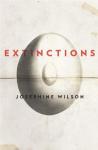
Josephine Wilson. ExtinctionsI loved this book. I was really sorry when it ended. It’s the kind of novel you press into the hands of a good friend. If we lived in the same town I would drive over and lend it to you. [Thanks, Amanda, I wish you could!]

It comes with impressive credentials – Winner of the 2017 Miles Franklin Literary Award and the 2015 Dorothy Hewett Award for an Unpublished Manuscript. I would never judge a book based on its awards – and putting those aside, Wilson has created an intelligent sensitive story, combining the personal and political with poignant and endearing characters.

I’ll give you a brief synopsis of the plot and a mention of some unique touches Wilson employs. Some reviews out there give away too much, which ruins the book’s unfolding narrative.

As implied by the title – the book deals with extinctions of all sorts – racial, national, natural and personal. Our protagonist is retired engineering professor Fred Lothian, father to Caroline and Callum, reluctant resident of St Sylvan retirement village, neighbour to Jan and desperately missing his deceased wife Martha. The first couple of chapters are a bit slow moving as we are introduced to Fred and in retrospect to Martha. But it picks up the pace quickly and indeed the ending did seem a bit rushed. The story is told mainly through balancing the present with Fred’s memories.

Wilson uses photos and drawings throughout the book to emphasise a point, which works very well. The photos are unique enough to create interest and have sufficient detail for a reader to divine meaning in addition to the narrative. She also likes quoting large paragraphs from other literature, ranging from Shakespeare to Wind in the willows. That I liked less, they seemed overdone and distracting.  Some engineering terms are used as metaphors in numerous chapter titles.

Wilson is a master story-teller. She is excellent at creating suspense. She deftly manages humour and even in this poignant, serious tale it never seems out of place. You’ll find the most entertaining first date in literature in this book. Some writers let their characters meander aimlessly in the story, but Wilson was having none of that. She works her characters like draught horses. They are constantly flung at each other to challenge, chide, ameliorate and alleviate each other. She has a great ear for dialogue and parent-child dynamics. However, this is a political book and sometimes her characters’ conversations can seem didactic – with each taking an opposing view to prove that there is no absolute right or wrong in most matters. Also occasionally Wilson needs to stretch the plot twist to fit the story and even Fred admits that some events were highly coincidental.

Extinctions is full of beautiful sentences – there is a whole paragraph about the early years of educating a child. It’s too long to quote here, but you will recognise it when you get to it. With great writing I often wonder how much is autobiographical. I note in the afterword that both of Wilson’s parents and a mother–in-law passed away during the writing of the book. Also her father was an engineer.

What I liked most is Wilson’s message of hope – that before we all grow old and become extinct, it is never too late to make amends and make the world a better place for the ones we love.

Lisa (ANZLitLovers) reviewed it of course when it came out.

AWW Challenge 2019 BadgeJosephine Wilson
Extinctions
UWAP, 2016
ISBN: 97817425888988

Angela Meyer, A superior spectre (#BookReview)

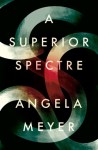
Angela Meyer, A superior spectreA superior spectre may be Angela Meyer’s first novel, but her already significant writing credentials, including being the author of the short/flash style fiction collection Captives (my review), and the editor of the anthology The great unknown (my review), ensure this is a confident debut. And it needed to be, because Meyer took big risks in this book – structurally, genre-wise, and with her characters.

Let’s start, however, with the title. It hints at genre, doesn’t it? And yes, this book does owe much to genre, but more to genre-bending than to simple genre. It has two storylines – which is part of the risky structure – one set in mid 19th-century Scotland, drawing on historical fiction, and the other also set in Scotland, but in 2024, making it more speculative fiction. There is also a touch of the Gothic here, with visitations, hidden rooms and madhouses, with dark thoughts and hints of perversion. But, the novel is more complex, more sophisticated than that suggested by this idea of two interwoven storylines from the past and the future. The two epigraphs that introduce the novel clue us into this complexity. The first epigraph is from Emily Dickinson and suggests that the “superior spectre” is not “external”, or “material”, but something “interior”, or “more near”, while the second, from Kafka, hints at the dark side of love and human nature.

These ideas are explored through the two main characters: Leonora, a young farm girl from the Scottish Highlands, and Jeff, a dying man who has “escaped” Australia (something that is difficult to do in his chip-controlled futuristic world) to die alone in Scotland. Leonora is poor, but well-read and resourceful; she’s a hard-worker and loves her father; she’s sensual, sexual, but not afraid to express it; and she has a mind of her own, but is independent rather than wilful. She is, in other words, easy to like and wish well for. Jeff, on the other hand, is more ambiguous, and thus a challenge for us readers. Not only does he admit to some questionable sexual proclivities, but his behaviour in Scotland, particularly towards Leonora, becomes increasingly selfish. He knows it, but in the end puts his needs and desires ahead of hers. How, though, given their different eras?

Well, let’s now turn to the structure. Meyer sets us up at the beginning with a comfortable, predictable structure in which third-person Leonora’s story alternates with first-person Jeff’s. There’s nothing particularly remarkable in this, but it doesn’t last. In Part 2 (of this four-part novel), Leonora’s story also becomes first-person. It happens because, as the back cover blurb has told us, Jeff is using some experimental technology (a “tab”) that enables him to inhabit Leonora’s mind, and at the end of Part 1 he decides to change how he brings her to us. His aim, he says, is to enable us to “partly inhabit her as well” though in so doing, he warns us, our thoughts too, like Leonora’s, may be “infected” by him. I like books in which the structure itself underpins the meaning of the work. In this case, the structure unsettles us – as in, where are we now, who are we with – and mirrors the discord being experienced by Leonora, who wonders

about how powerful our thoughts can be. We might think we are sick when we truly have no ailment. But if we present the symptoms, and believe them, are we not sick anyway? . . . I wonder if a person could learn to be aware of when the mind is influencing a bodily reaction, and also when an instinct is overruling the mind.

So, in A superior spectre, we have a destabilising structure, a slippery character in Jeff who knows he doesn’t deserve our sympathy but wants to justify himself nonetheless, and a creative intertwining of genres – but to what purpose? There are several, I think, some personal, some sociopolitical. The latter is obvious. For Leonora there are the gender expectations which limit what a young girl of her class and background can do: she cannot study at university as some young women she meets are doing; she cannot marry the Laird for whom she falls; and she cannot protect herself from being deemed mad when she admits to strange visions of flying machines and horseless carriages. For Jeff, whether we like him or not, there is the lack of personal freedom that comes with living in a so-called technologically-advanced (dystopian) society. It’s not completely coincidental that Meyer wrote her final draft of this book on Jura, where George Orwell finished 1984.

But, it’s the personal – particularly the grappling with one’s inner demons or “spectres” – that gives the book its greatest power. Jeff’s selfishness, his poor self-control and yet desire to explain himself to us, recall characters like Nabokov’s Humbert Humbert. It’s hard to completely hate a character who is so open about his self-disgust even while he does nothing about it, and who engenders at least some sympathy from his Scottish landlady. She doesn’t approve, but she doesn’t reject either. In the end, Jeff is more pathetic than hateful, partly because his “spectres” are plain to see.

Leonora’s “spectres” come from her challenge in matching her sensual nature with the life she finds herself in, from her desire to find that freedom espoused by John Stuart Mill:

It is difficult for me to read about freedom and tyranny without relating these words to my own situation. Mill’s number one basic liberty is a freedom of thought and emotion. The individual being sovereign over his own body and mind. But what if your thoughts are being suppressed not just from the outside, but from some inner tyrant also?

She knows her aunt wants the best for her, a “good” marriage, but fears this would mean

suppressing the thoughts and emotions I have? It is the opposite of liberty; it is to put myself potentially in the hands of another tyrant. I feel I am pressing at walls all around.

Jeff’s “infection” of her (his tyranny), then, can have multiple readings: not only is it a manifestation of his selfish disregard of others, but it represents her own inner spectres, and symbolises the male control she rejects.

A suitable spectre is not an easy book to pin down, but this just makes it more enjoyable. And if that’s not a good enough reason for you, how about that it offers an intelligent interrogation of past and future, of inner conflicts and outer challenges, through two vividly drawn, not-easy-to-forget characters?

Lisa (ANZLitLovers) also liked this book.

AWW Challenge 2019 BadgeAngela Meyer
A superior spectre
Edgecliff: Ventura Press, 2018
270pp.
ISBN: 9781925183917

(Review copy courtesy Ventura Press)

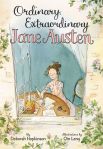
Deborah Hopkinson, Ordinary, extraordinary Jane Austen (#BookReview)

Deborah Hopkinson, Ordinary, extraordinary Jane AustenWriting biographies for young children – like, for example, Deborah Hopkinson and Qin Leng’s Ordinary, extraordinary Jane Austen – is an interesting concept. Interesting, but not new. So, when I was given this gorgeous Jane Austen one for Christmas, I decided to research the topic – and what I discovered is that the picture book biography is a well-recognised genre. I shouldn’t have been surprised, I suppose, given the number I bought for the young Gums way back when.

Still, it got me thinking. A quick search of the ‘net retrieved a few interesting articles (mostly including lists of recommended books). In 2016, The Guardian writer Amy Coles wrote how “picture book biographies peel back history and bring to life the true stories of iconic figures for a younger generation of readers”. An obvious aim, I suppose, but there’s more to it than just knowing these people’s stories, as Coles continues:

there is a lot to be learnt from the trailblazing achievements of history’s most renowned and respected figures. But how did these inspirational figures reach their goals and what prompted them to act the ways they did?

Coles provides a list of ten books that cross “nationalities, careers and cultures”, books about well-known people like the inspiring young Malala Yousafzai and Nelson Mandela, and lesser-known ones (to me, anyhow) like Wangari Maathai, who is “credited with planting over 30 million trees in Kenya”.

I love the idea of these non-fiction picture books, but how popular are they, really? Well, it just so happens that they have quite a wide readership.

Writers Rumpus is the website and blog of a group of children’s book writers and illustrators from the Boston area. Their blog began with “a lively, opinionated, humongous rumpus of a critique group” that (still I gather) meets monthly in a library. Back in May last year, they wrote this (as an introduction to a list of new releases from the previous year):

We live in a most exciting time, one of abundant picture book biographies! At my library, patrons of all ages check out these books. One adult recently told me he found it an excellent way to learn about famous people—past and present—without spending precious time reading a full biography on each person. With their lavish illustrations and informative back matter, this is no surprise. Authors and illustrators of picture book biographies put in a lot of research time to make sure their facts are correct, recorded, and shared in an entertaining manner.

The list is appealing – and includes books about the composer Bach, the “father of children’s literature” John Newbery whose name now graces a significant American children’s literature award, the black woman ex-slave-cum-anti-slavery-activist Harriet Tubman, the Mexican artist Frida Kahlo, not to mention a whole raft of scientists, sports people and creators of all sorts.

Julie Just, writing in The New York Times last November, also praised picture-book biographies, stating that modern publishers are producing

beautifully illustrated and closely researched nonfiction books about unsung heroes as well as heroes we can’t read enough about. Best of all, if you like true stories, they include superbly detailed endnotes and suggestions for further reading.

And this brings me to the Ordinary, extraordinary Jane Austen, which is just such a book. The front cover flap describes the book as a “gorgeous tribute to an independent thinker who turned ordinary life into extraordinary stories”.

The book’s epigraph from Pride and prejudice – “For what do we live but to make sport for our neighbours and laugh at them in return” – will probably not make sense to its 4 to 8-year-old intended audience, but should give its adult readers a wry laugh. The book proper opens – not totally originally (!) – with

It is a truth universally acknowledged
that Jane Austen is one of our greatest writers.
But it might surprise you to know that
Jane lived a simple life.
She wasn’t rich
or even very famous in her time.

This would, I think, push the young reader a bit. How many would even have heard of Jane Austen to wonder whether she was rich or famous? Still, from the opening page they learn some basic facts about her. This first-page text is accompanied by a lovely sketch-illustration of our Jane writing at her famous little round writing table. The book goes on to provide the important facts of her biography. It gives a sense of Austen’s personality, including her love of humour, particularly at the “foolish things people sometimes did and said”. It tells us about the life of her times, including how people entertained themselves, which of course would interest children. It also explains how Austen wanted to write more realistic stories about the ordinary world, representing a significant break from the popular novels of the time – adventures and romances. Its conclusion, suggesting that Austen may have stood in her father’s library one day and thought to herself, “I can do this”, is nicely aspirational (as Coles suggests these books can be.)

The book concludes, as Julie Just notes many such books do, with some useful end matter: a basic but detailed enough timeline; a description of each of her novels including when it was published, and some “famous quotes”; some Internet sources to research; and a few books about Austen that the author used in her research.

You won’t be surprised to learn that this book didn’t teach me anything new, but as the friends who gave it to me know, I love adding to my Jane Austen collection of books, videos, CDs and other merch!

Do you have any favourite picture book biographies?

PS I should note that the annual Children’s Book Council of Australia Awards includes the Eve Pownall Award for Information Books, which would include picture-book biographies in its purview.

Deborah Hopkinson
illus. Qin Leng
Ordinary, extraordinary Jane Austen: The story of six novels, three notebooks, a writing box and one clever girl
New York: Balzer + Bray, 2018
ISBN: 9780062373304

Jennifer Down, Pulse points (Guest post by Amanda) (#BookReview)

Amanda is on a roll, reading several Aussie women writers, so when she offered me a review of Jennifer Down’s collection of short stories, Pulse points, of course I said yes. I love her opening explanation of why she loves short stories – I couldn’t have said it better myself.

Amanda’s review

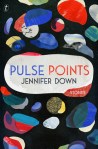
Jennifer Downs, Pulse pointsI love short stories. They can be an introduction to literature, restore your faith in fiction and inspire awe in a mere few pages.  The good ones shed light on the human condition – who we are, what we do and why we do it. The great ones perceive and portray human complexity in original and vivid colours.

Pulse Points is a collection of 14 short stories by Jennifer Down, pulse points being the metaphor for emotional life changing moments. The stories are of varying quality. At best Down has a keen ear for dialogue, well-rounded characterisation and with sensitive depiction of issues. The stories are not plot driven, they do not deal with large macro political issues, no biting satire, no morphing magical realism and no laugh out loud moments. That is not a bad thing. That is just not Down’s style.

Instead the stories are focused on brief periods, sometime even moments, of the characters’ lives which are used to explore universal themes: loss, mourning, the treatment of women, rural isolation, disfranchisement and childhood neglect appear several times. These are stories about humanity.

Down utilises a traditional treatment of the short story form, the timeframe is largely linear with some flashbacks. The voices are polyphonic, switching between first and third person.

For my tastes, there were too many discordant stories and the linkage between the main title and the stories was too loose. I have been influenced by the style of Elizabeth Strout where characters in her short stories (Olive Kitteridge and Anything is possible) not only appear consistently though the novel linking one story to another but also providing an alternate prospective. Similarly, Jhumpa Lahiri (Interpreter of maladies) can write distinct, unconnected short stories but her ability to stick to an overarching theme is more disciplined.

As such Pulse points is best treated as a “pick and mix” rather than being read as a whole in one sitting.

In an interview with the Sydney Morning Herald, Down is quoted as saying “If I’m trying to bring attention to a particular moment, a point of tension or an image, you need to let it have a bit of space, to let it breathe. So, for me, having a more economical approach to language is one way of trying to achieve that.” Pulse points is populated with pared-down prose, but that is different from narrative restraint.

To that end, I prefer the stories in the collection that do not rely on melodramatic plot devices, sudden improbable violence or tragedy to propel the narrative. In some cases, the violent event jars the pacing of the story and interrupts the crescendo, distracting the reader and making one question the focus of the story (the eponymous “Pulse points” and “Vaseline”). For deft pacing and the seamless use of fictional violence (or the threat of) – George Saunders (Victory lap) and Flannery O’Connor come to mind.

Down’s strongest pieces are gentle, subtle explorations of profound themes using quotidian details and sound so authentic, they could be autobiographical:  in “Convalescence” dealing with the imbalance in a relationship, the sifting power balance and the sacrifice both partners endure. In “Pressure okay, Down manages to convey the gently mourning of the loss of a spouse who served as the conduit for an endearing father to understand his feisty adult daughter. “Turncoat” similarly explores the slow burn of mid-life crisis. Like most readers, I love recognising myself in characters, creating empathy and the sense of being understood.

She is at her best when dealing with sensitive, analytical, educated characters; less so when she tries to portray the mindless rage and violence of teenage boys in “Dogs” (the weakest piece). The narrative is too brief and too horrific to allow any three-dimensional view of the characters or their motivation.

Similarly, those stories set in Australia or dealing with Australians aboard (“Convalescence” and “Aokigaraha“) resonate more than pieces set in the US (“Vaseline” and “Eternal father”) where Down does not have the vernacular or familiarity to make the characters sound genuine. As a reader I was grappling for place names or dialogue to try to identify which country the story was taking part in to give the mind a sense of location and what to expect of the characters.

Some of her writing is wholly original, comparing the contents of a women’s handbag to the movements at the bottom of the seabed and at other times – “she dyed her hair the colour of sunshine” – her writing is more prosaic. Frequently, her stories end too abruptly, another paragraph or two even in a vignette could provide direction and closure for the reader.

A reader can tell that a lot of work has gone into crafting and refining these stories and it shows. But Down is still a very young writer and compared to more assured short story collections this falls short. This is Down’s second publication. Her first, the Magic hour is a widely acclaimed novel. I look forward to her future works.

AWW Challenge 2019 BadgeJennifer Down
Pulse points
Melbourne: Text Publishing, 2017
240pp.
ISBN: 9781925355970

Capel Boake: Three short stories

Capel Boake, no date, presumed public domainHaving written about Capel Boake in my last Monday Musings, I couldn’t resist checking out some of her short stories. Bill’s AWW Gen 2 Week concluded yesterday, but I hope he’ll accept this post as a contribution.

Boake’s stories are easily accessible in Trove. In fact, I was spoilt for choice, so just picked three at random. By the time I’d edited three – that is, corrected the multiple OCR errors* – I felt I’d done my bit for a while and so stopped there. I can’t say whether my three chosen stories are representative of her whole output – she wrote many short stories and poems – but I’m assuming they are. All appear in newspapers – in the days when newspapers published short stories – and most were syndicated. This means the version I edited is not necessarily the original publication, but I decided not to spend time identifying this.

AWW Challenge 2019 BadgeThe three stories (linked to their newspaper text) are:

  • The brothers (Canowindra Star and Eugowra News, 9 January 1920): a brother returns from the war, under a cloud, having been accused by his father, before leaving, of stealing money from the family farm business. He hadn’t, but he’s not going to dob in who did.
  • The necessary third (The Australasian, 28 August 1926): a wealthy young man meets, on a steamship trip from South Africa to Melbourne, a not so well-heeled young woman, and her mother, who is ambitious for a good marriage for her daughter.
  • Jenny (Weekly Times, 21 June 1930): a poorer young woman, “a State child”, is helped by a young man to make her career as a world-famous dancer.

A propos my point above re syndication, “The brothers”, for example, was first published, according to the subscriber-only AustLit database, in The Australasian in 1919.

These are generally straightforward stories, which is not surprising given they were published in newspapers and therefore intended for a broad audience. They lack the punch of, say, Barbara Baynton’s turn-of-the-century stories, but they make interesting reading nonetheless.

Two of them are romances – or, what the Western Mail reviewer I quoted in Monday Musings called “sex stor[ies] created on conventional lines”. They draw on traditional tropes – the poor young woman with the pushy mother, and the poor young woman who becomes a star thought the assistance of a young man who loves her. And yet, these young women are not pawns, and they do exercise some agency. Paula (“The necessary third”) takes things into her own hands to protect her self-respect, while Jenny (“Jenny”) takes action to ensure that she gets what she really wants (even if what she really wants is traditional!)

The stories also provide some insight into the times. I was particularly intrigued by this comment in “Jenny”. It’s told through the eyes of the young man, and here he is watching her, now a world-renowned star, dance on her home stage:

Glancing at the absorbed faces around him, their parted lips and shining eyes, he saw she had the same effect on them. Release . . . release . . . their spirits were free for once from the tyranny of the mechanised age that had gripped the world with relentless fingers.

This, then, is not “bush realism”, but a commentary on the modern urban world. However, it was also written in 1930 – Capel Boake straddling Bill’s Gen 2 and Gen 3 periods.

A neglected woman writer

Capel Boake has been identified as one of three neglected women writers of the 1930s by Gavin De Lacy in the La Trobe Journal (vol. 83, 2009), the other two being Jean Campbell and ‘Georgia Rivers’ (pseudonym for Marjorie Clark). De Lacy says that while they were all prominent in the Melbourne literary scene in the 1930s, they have been, with the odd exception, overlooked in significant studies of Australian literature. (He’s right. I found little about Boake in my little collection of books.)

Unfortunately, for whatever reason, Boake did not write many novels. Painted clay (1917) was highly praised, but only two more novels were published in her lifetime – The Romany mark in 1923 and, 13 years later in 1936, The dark thread. De Lacy quotes a contemporary critic as saying The dark thread had some shortcomings which “constant practice in the novelist’s art might have been expected to overcome.” Another critic, Frank Wilmot (writing as Furnley Maurice), compared it with Dreiser’s An American tragedy. Nettie Palmer, however, said that it wasn’t “quite a Dreiser, as Furnley suggested … but it’s very respectable.” More interesting to us, though, is contemporary critic Susan Sheridan who argued that it

provides a salutary corrective to the bourgeois family sagas of the period.

Another reason for revisiting Boake in Gen 3!

De Lacy notes that Boake, Campbell and Clarke haven’t been revived as “forgotten authors despite the recent interest in Australian women writers”. Not only are most of their books long out of print, but are “virtually unprocurable in second-hand bookshops”. An option for Text Publishing perhaps”?

He offers various reasons for this, including publishing practices at the times, but he also says that the 1930s was a “radical literary and political decade” and these three women’s novels don’t quite fit “the prevailing orthodoxy and literary preoccupations and myths of the ’30s.” Also, he says, the writers who have been remembered were mostly Sydney-oriented and associated with the New South Wales section of the Fellowship of Australia Writers. Kerr, Campbell, and Clark belong to the same period, but they

were Melbourne authors, setting their novels in that city. They were among the earliest prewar Australian writers to fictionalise an urban environment, ignoring the bush as a theme, and preceding most of their better known contemporaries in writing about the city.

Including them in our study of the era would, as he says, deepen our understanding of the history of women writers (and, thence, I’d argue, of Australian literature.) Gen 3, here we come.

* The original image of “The brothers” is so bad that I was unable to fix all the errors – that happens sometimes in Trove, newsprint not being the best quality medium for preservation.

Louise Mack, Girls together (#BookReview)

Louise Mack, Girls togetherWell, that was, surprisingly, genuinely enjoyable. Louise Mack’s Girls together is a sequel to her novel Teens (see Bill’s review), and features protagonist Lennie (Elinor) Leighton. It shouldn’t have been a surprise, given I know something about Mack, through my Monday Musings on her and my review of her debut novel The world is round, but it was, because …

The novel starts with this paragraph:

Square and solid as ever, stood the old brown school, with the fig-trees standing in its playground. The wooded staircase was as firm as even under the rush and onslaught of hurrying feet; the sturdy gate still bore with patience the cruel slammings of girls, big and little, rushing in late when the bell had finished ringing, or hastening homewards before half the school had left the classrooms.

It goes on to describe the chaos and disorganisation attending Lennie who is running late for her train home, and has, besides, lost her ticket. I thought that I was in for a pretty traditional school story. School stories were my favourite stories when I was a young reader, but now, of course, my interests are very different. I was prepared to persevere, however, because I was reading the book for Bill’s AWW Gen 2 Week and because this is a classic written in 1898 by a too-little known Australian woman writer. (You may wonder why I specifically chose it, but it was a serendipitous decision, being one of the books I found in my late aunt’s house when I was managing her estate. Bill’s week proved the perfect opportunity to read it.)

As it turned out, the book is not a traditional school story. School is part of it, but the focus is 16-year-old Lennie at a point of transition in her life – and her relationship with her 18-year-old friend Mabel, who returns in the opening chapters from Paris and is training to be an artist. Now, Lennie belongs to the tradition of some other famous sisters – like Judy in Ethel Turner’s Seven little Australians, Jo in Little women, and even, in a way, Elizabeth in Pride and prejudice. She’s impulsive more than sensible, but is loyal and generous of heart to those whom she loves. She lives with her parents (the Mother and the Doctor), her big brother Bert who is at University, and her little sisters, sensible Floss, gentle obedient Mary and the youngest, 11-year-old Brenda, who is observant, quick and a bit naughty. I’m sure you can recognise some of these “types”.

There is a marriage plot – but not for Lennie. This is more a coming-of-age book than a romance: it’s about Lennie’s transition from self-focused girlhood to adulthood and its associated more mature world-view. This, Mack handles nicely. Her characters may be recognisable types – but they are also individualised. Mack captures how girls feel, how they relate to each other authentically. Here is Lennie meeting her friend Mabel after two years’ separation:

You see they merely hovered on the outskirts of all they meant to say, touching things lightly, with the shyness of their reunion still lingering around lips and eyes. But as the twilight deepened, and darkness came softly into the bedroom, laughs grew more and more frequent with them.

But, there are many writers who capture relationships and communication well. What makes this book particularly interesting to read for us, now – and here I’m repeating the point made by Bill – is the social history, the picture Mack paints of 1890s Sydney, including a reference to the Banking Crisis of 1893.  The reference is brief, but it is used as a plot point in the trajectory of Lennie’s life.

More interesting, though, is the discussion of gender. Louise Mack was not, I understand, an activist in the Australian suffrage movement but she was part of the “women-oriented culture” which was becoming increasingly visible from the 1890s. Gender issues, sometimes directly, sometimes indirectly, underpin much of what happens in Girls together. Indirectly, it’s there, for example, in an assumption that “girls” can go to university. Whether they should or shouldn’t isn’t even discussed. It’s just assumed that they can. Direct references, though, abound. Mabel’s art teacher in Paris tells her:

‘When you go back to Australia, Mees, you just take care you do not marry, for eef you marry you will never paint better than you do now.’

And the girls themselves frequently discuss gender issues, sometimes with Lennie’s brother Bert. There’s a discussion about ambition where Bert suggests that Mabel and Lennie talk about it constantly while men, he says, never do. Does this reflect women’s increasing awareness that they can have goals beyond the domestic? There’s a reference to Lennie’s mother’s anxiety about the potential for girls failing in their push for “public” careers, and, being a woman of her times, she “would have kept them back from success rather than let them face the chance of failure.” All this is told naturally, not melodramatically, giving a realistic sense of a normal family facing changing times. We see parents having their thoughts and concerns, but supporting their children, rather than opposing them.

Nonetheless, this is a book of the 1890s. So, when Lennie is told by Mabel’s art teacher – a character respected in the novel – that “It’s better to be a good woman than a great one, little girl … unless you can be both”, I wondered what Mack really saw as options for her heroine.

All I can say is that the novel has an open ending. This may be because Mack planned to write more about the family – and she did write a third novel, Teens triumphant, in 1933 – but perhaps it also reflects an awareness that girls’ lives aren’t complete at the age of 17 or so, and that Lennie still has a chance at greatness!

Finally, there are lovely descriptions of Sydney, but again this is not overdone. In this week’s Monday Musings, I quoted a reviewer writing in 1917 that Capel Boake had “not made the mistake, very common with our writers, of painting in the ‘local colour’ so heavily that the human element in the picture is lost in what we may call a superficial provincialism of incident and characterisation.” Well, neither did Mack make this mistake, some twenty years earlier. The colour is there and is lovely, but is used sparingly to set the scene – and perhaps convey some attendant emotions:

The year was at September, when suddenly Summer came stepping down from her niche among the seasons, and ousted Spring before her time was well begun. The hot winds from the great inland plains of New South Wales blew down over the mountains to this city at the Harbour’s edge, and suddenly everyone woke from their winter cosiness, and furs and fires, and delightful nights, to find that the time for sleeping was over, and the restless nights and long, trying days of the Australian summer-time had come again, long before their time was due.

Girls together is an entertaining, refreshingly written story that clearly draws on Mack’s own experiences and concerns. It also reflects the social consciousness for which the period is well-known and, as an urban novel, it offers an antidote to the “bush realism” school which largely typifies Bill’s Gen 2 period. Well worth reading if you get the opportunity.

AWW Challenge 2019 BadgeLouise Mack
Girls together
London: The Pilgrim Press [n.d]
[first pub. 1898]
220pp.

Jamie Marina Lau, Pink Mountain on Locust Island (Guest post by Amanda) (#BookReview)

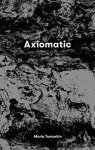
Late last year I hosted a review of Maria Tumarkin’s Axiomatic by Amanda who had responded to my call on the Australian Women Writers Challenge for reviews of it and Jamie Marina Lau’s Pink Mountain on Locust Island, which won the 2018 Melbourne Prize for Literature’s Readings Residency Award, and was shortlisted for the Readings Prize for New Australian Fiction.  Amanda offered to write reviews of both, and so, as with Axiomatic, I am hosting Amanda’s review, so that it can then be added to the AWW database. Thanks very much – again – Amanda!

Synopsis of Pink Mountain on Lotus Island

From publisher The Lifted Brow’s website:

“Monk lives in Chinatown with her washed-up painter father. When Santa Coy—possible boyfriend, potential accomplice—enters their lives, an intoxicating hunger consumes their home. So begins a heady descent into art, casino resorts, drugs, vacant swimming pools, religion, pixelated tutorial videos, and senseless violence.”

Amanda’s review

Jamie Marina Lau, Pink Mountain on Lotus IslandTwenty-year-old Lau’s debut novel is simultaneously innovative, surreal, disjointed and funny. At her best she writes like a stand-up routine; at her worst, though, she veers into the bizarre and nonsensical: “cardigan metropolis and a hushed voice millennia”; “he was in a creme brulee mood”. I don’t get it either. The chapters are divided into numerous short vignettes and sequences, some only a sentence long and follow a linear timeline. It’s a book for the social media and internet age – perhaps written for those just getting used to reading serious prose after the word limits on Twitter.

Its protagonist Monk is 15, and living with her Xanax-addicted former Art lecturer Dad after the departure of her Mum. It could be set in any urban metropolis with a bustling Chinatown. Along comes the love interest Santa Coy (also a developing artist) and then things get complicated.

There is a narrative though that can be followed, and it is cinematic so you can visually follow her discussions around what makes Art and what people will sacrifice for it, the difficulties of human relationships, and cross cultural complexities.

Food is another obsession – its preparation, consumption, description of, e.g. Yum Cha – and some bizarre discussions. What is the difference physically and philosophically between turnips and yams? Turnips are lively and yams are brooding. Obviously, if you didn’t know this you have to visit the same supermarkets as Monk does. [Haha, love this Amanda.]

Some plot twists are unbelievable and her non-traditional use of metaphors and language often fall flat. Lau (who also makes music under the pseudonym ZK King, hence the musical references in the novel) stated in an interview that she often has several browsers open while writing – reading articles, listening to music etc – and this multimedia multi-tasking is what comes across in her writing and original use of language.

Lau described Monk as the most sincere female character she had created – and that is the strength of this novel, Lau’s authentic portrayal of her teenage Monk as a composite of angst, joy, confusion, curiosity and strength. You just need to get through some bizarre distractions to discover this.

AWW Challenge 2019 BadgeJamie Marina Lau
Pink Mountain on Locust Island
Brow Books, 2018
244pp.
ISBN: 9780994606884