Michelle de Kretser, Theory & practice (#BookReview)

Michelle de Kretser’s latest novel, Theory & practice, is a perfect example of why I should follow my own reading advice, which is that as soon as I finish a book I should go back and read the opening paragraphs, if not pages. I like to do this because there often lies clues to what the book is really about. It certainly is with Theory & practice.

Theory & practice starts like a typical novel, whatever that is. We are in Switzerland in 1957, with an unnamed 23-year-old Australian geologist who is waiting for a bus to go up the mountain. Meanwhile, back in Australia “rivers of Southern Europeans are pouring into Sydney”. The story continues, with a flashback to his living in the country with his grandmother when he was six years old. During this time he steals her precious ring, and lets her blame her “native” worker Pearlie. The story, told third person, returns to 1957 and a potential tragedy when, writes the narrator, “the novel I was writing stalled”. And, just like that, we switch to first person.

I wrote to my American friend after I finished it, that I needed to do a bit of thinking. I saw an underlying thread concerning colonialism, I wrote, but how does that tie in with the idea of “theory and practice”, and with my glimmer of something about the messiness of life and how it can be represented in art. And, to make things more complicated – in this rather slim book – the narrator is writing a thesis on Virginia Woolf’s The waves, in which Woolf attempted to play with the novel form, calling her novel a “playpoem”. In Theory & practice, de Kretser also plays with the form, but by using fiction, essay and memoir in a way that nods a little to autofiction, but that feels more intensely focused on ideas than narrative.

So, here goes … With the jump to first person, our narrator introduces us to an essay titled “Tunnel vision”, by the British-Israeli architect Eyal Weizman, that she read in the London Review of Books. In this essay Weizman discusses what de Kretser characterises as “the application of Situationist theory to colonising practice”. She kept finding herself returning to the idea of “theory and practice” and her recognition that “the smooth little word ‘and’ makes the transition from theory to practice seem effortless” when she knew was not the case. She knew all about “the messy gap between the two”. Her novel had stalled because it wasn’t what she needed to write. What she needed to write about was the “breakdowns between theory and practice”.

We then shift gear again, and flash back to when the narrator is a child and learning the piano, learning both musical theory and piano practice. The relationship between the two might have been obvious to her teacher but it wasn’t to her.

“messy human truths” (p. 38)

Are you getting the drift? I thought I was, but the novel shifted gear again to 1986 when the narrator, at the age of 24, moves from Sydney to Melbourne to undertake an MA in English. Her topic is to be Virginia Woolf and gender, drawing on feminist theory. She soon uncovers a confronting thread of racism in Woolf’s diaries – a reference to “a poor little mahogany coloured wretch”. This was E.W. Perera, a Ceylonese barrister, politician and freedom-fighter man who, according to Woolf, had only two subjects, “the character of the Government, & the sins of the Colonial Office”. He made Woolf uncomfortable, though husband Leonard sympathised. The problem for our “mahogany-coloured” narrator is that Woolf’s discomfort makes her uncomfortable, but her thesis supervisor, Paula, won’t agree to her changing direction to explore racism. Our narrator’s solution, on the advice of an artist friend, is to “write back to Woolf”, to find or create her own truth in Woolf’s story.

Throughout the novel various parallels are drawn which illuminate the theme, even if they don’t resolve the mess. In her personal life, the narrator’s “practice” – a love affair with a man attached to another woman he claims to love – keeps butting up against her understanding of feminist theory and its key idea of supporting the sisterhood. Desire and obsession, she was finding, trumps theory every time. How to reconcile this? We are thrown into academia, with its politics and jealousies, and St Kilda’s colourful bohemian life, as she reaches for answers to questions both academic and personal.

Concurrently, there is the mother-parallel, one in which regular phone calls from her mother offering practical help and advice interrupt the text and narrative flow, and contrast with the Woolfmother whose abstract presence continues to complicate our narrator’s research and understanding. On the one hand, says our narrator, Woolf said ‘”Imagine” and opened the doors to our minds’, but on the other, she was “a snob and a racist and an antisemite”. Both are as complicated – “messy”, dare I say – as any mother-daughter relationship.

All this is told in prose that is captivating with its changing rhythms from the tersely poetic – “the evening felt jumpy, spoiling for a fight” – to realistic description, and natural dialogue.

Eventually our narrator manages to squish her “ideas about Woolf’s novels into the corset of Theory”, but, perhaps recalling her earlier awareness that “theory taught us … to notice what was unimportant”, it does not fill her with pride. It does, however, fulfil the university’s requirements and she can move on.

And so does the novel, making another leap to the end of the twentieth century, and on into the 21st century. She has more to say about the ways humans abuse others – as she’d been abused as a child, as Woolf and her sister had been abused, and as Donald Friend, in an interesting late discussion in the novel, abused young Balinese boys. Such is the legacy of sexism, racism and colonialism.

Now, how does this short but invigorating novel bring all this together? By reminding us, as the novel has done all the way through, that life is messy, that neither art (including the novel) nor theory can provide the answer, though they might provide insights. This is why, I’d say, de Kretser continues to play with the novel form, to find ways to convey the reality (not the realism) of life. I will end with a Woolf quote shared by de Kretser two-thirds through the novel, because I think she would apply it to herself:

“I will go on adventuring, changing, opening my mind & my eyes, refusing to be stamped & stereotyped.”

Kimbofo also loved this book.

Michelle de Kretser
Theory & practice
Melbourne: Text Publishing, 2024
184pp.
ISBN: 9781923058149

(Review copy courtesy Text Publishing)

Jane Austen, Mansfield Park (Vol. 3)

Mansfield Park book covers

A year ago, my Jane Austen group did a slow read of Mansfield Park, meaning we read and discussed it, one volume at a time, over three months. I posted my thoughts on volume 1 (chapters 1 to 30), and volume 2 (chapters 19 to 31), but I missed the third meeting, and never wrote up the final volume (chapters 32 to 48). However, this year my reading group scheduled Mansfield Park for our Classic read, so I’m taking the opportunity to share my thoughts on that last volume.

But first, a brief intro. The reading group member who recommended we read Mansfield Park did so because she wanted to see whether she would better like this, her least favourite Austen, on another read. She didn’t. I understand this. Mansfield Park is regularly identified as Austen’s hardest book to like. It feels prudish to modern eyes; its protagonist Fanny isn’t exciting nor is her romance; and it is more serious and certainly less sparkling than its predecessor, Pride and prejudice. Re this latter point, Jane Austen collected opinions on the novel from friends, family and others, and reported that one Mrs Bramstone “preferred it to either of the others — but imagined that might be her want of Taste — as she does not understand Wit.”

Now, my thoughts …

Volume 3 starts the day after Fanny has rejected Henry Crawford’s proposal. As someone in my reading group said, all the novel’s action takes place in the final chapters, and I mostly agree, although significant events do take place in the previous volumes, including the visit to Sotherton and the plan to put on the play, Lovers vows.

I wrote in my first two posts that what was striking me most was the selfishness, or self-centredness, of most of the characters. It suggested to me that Austen was critiquing the selfishness/self-centredness of the well-to-do, and how this results in poor behaviour, carelessness of the needs of others, and for some, in immoral behaviour. (I think we could equate these ideas with today’s concerns about “entitlement”.) This thread continued in volume 3. Indeed, here is where it all comes home to roost, confirming my sense that Mansfield Park is fundamentally about morality.

Fanny is clearly the novel’s moral centre. She quietly observes, and reflects on, what goes on around her. As one of my reading group members said, it is through her eyes, her thoughts, that we see the novel’s world. In the first chapter of volume 3, Sir Thomas speaks to Fanny about Henry’s proposal, explaining why she should accept him. Henry is

a young man … with everything to recommend him: not merely situation in life, fortune, and character, but with more than common agreeableness, with address and conversation pleasing to everybody.

Then he adds pressure. She owes Henry gratitude for his role in obtaining advancement for her brother in the navy, and marrying Henry is her duty to her family as such a marriage can only help them. Sir Thomas is therefore perplexed and shocked at Fanny’s ongoing refusal – despite these persuasions – to consider Henry. He asks:

“Have you any reason, child, to think ill of Mr. Crawford’s temper?”
“No, sir.”
She longed to add, “But of his principles I have” …

However, she feels that to tell Sir Thomas of her observations of Henry’s unprincipled behaviour towards Julia and the engaged Maria would betray them – so, she’s caught and says nothing. She hoped Sir Thomas – “so discerning, so honourable, so good” – would accept her “dislike” as sufficient reason. Unfortunately, not only can he not accept it, but he accuses her of wilfulness and ingratitude. It’s mortifying.

To his credit, however, Sir Thomas backs off, planning to let nature take its course, and, with a little judicious encouragement from the sidelines, he believes Henry will win her round. So Henry continues to press his suit, and Fanny continues to hold steady, reflecting at one point on “his want of delicacy and regard for others”. A few chapters on, Mary Crawford also presses her brother’s suit, but Fanny – she who is called wimpy by many modern readers – pushes back, telling Mary,

I had not, Miss Crawford, been an inattentive observer of what was passing between him and some part of this family in the summer and autumn. I was quiet, but I was not blind. I could not but see that Mr. Crawford amused himself in gallantries which did mean nothing.

While Fanny is coping with this, Edmund is moving forward with his plans to win Mary Crawford’s hand, despite her rather telling hatred of his chosen profession as a clergyman. Fanny – not altogether disinterested it has to be admitted – had observed Mary’s poor values, but it takes Edmund a long time to see her for what she is, for her lack of “principle”, her “blunted delicacy and a corrupted, vitiated mind”. Edmund is convinced that Mary had been corrupted by the influence of others. He talks of “how excellent she would have been, had she fallen into good hands earlier” (instead of those poor influences she had in London. City versus country values is another thread running through this novel.)

I could expand more on this selfishness-leading-to-poor-behaviour-or-immorality theme because examples abound in the volume, but my aim here is to just share some ideas. And, I want to share another one…

I also mentioned another developing theme in my post on volume 1, the education of Sir Thomas. Interestingly, this is related to something I am observing in my current slow read of Austen’s next novel Emma, that of the quality of guidance given to young people and what happens when that guidance is faulty, misguided and/or not grounded in good moral teaching. It’s not a new theme for Austen, as you can see in Edmund’s comments above about Mary Crawford. But, it’s Sir Thomas’s learnings as one of those who does the guiding that I want to focus on.

Like many of Austen’s characters, in fact, Sir Thomas engenders a variety of reactions from readers. Some see him as harsh and uncompromising. It’s easy to argue this when you see the way his children – and niece – fear him. But others, and I am one, see him as a father trying to bring up his children as best he can, with little help from the indolent Lady Bertram. Fanny, our moral centre, talks of his “parental solicitude”. We see hints of his kindness in volumes 1 and 2, but it is in volume 3 that we see what he is really made of. He’s a man of his times, of course, but one who had his children’s best interests at heart and who realised too late that his raising of them had been misguided.

Now, before I continue, I want to make a little comment about style and structure. For most of the book, though there are departures, we are in Fanny’s head, seeing what she sees, thinking what she thinks, but in the book’s final chapter, Austen breaks the fourth wall and talks to us directly. It opens with a favourite quote:

Let other pens dwell on guilt and misery. I quit such odious subjects as soon as I can, impatient to restore everybody, not greatly in fault themselves, to tolerable comfort, and to have done with all the rest.

“I quit”, she says, drawing attention to the fact that she is telling us a story, and she continues this way:

My Fanny, indeed, at this very time, I have the satisfaction of knowing, must have been happy in spite of everything…

The rest of the chapter wraps up the novel and her characters. She devotes a few pages to “poor Sir Thomas”, telling us that he “was the longest to suffer” due to “the anguish arising from the conviction of his own errors in the education of his daughters”. He reflected on the negative impact on Maria and Julia of the “totally opposite treatment” they had lived under

where the excessive indulgence and flattery of their aunt had been continually contrasted with his own severity. […]

Here had been grievous mismanagement; but, bad as it was, he gradually grew to feel that it had not been the most direful mistake in his plan of education. Something must have been wanting within, or time would have worn away much of its ill effect. He feared that principle, active principle, had been wanting; that they had never been properly taught to govern their inclinations and tempers by that sense of duty which can alone suffice. They had been instructed theoretically in their religion, but never required to bring it into daily practice. To be distinguished for elegance and accomplishments, the authorised object of their youth, could have had no useful influence that way, no moral effect on the mind. He had meant them to be good, but his cares had been directed to the understanding and manners, not the disposition; and of the necessity of self-denial and humility, he feared they had never heard from any lips that could profit them.

Just look at those last few sentences … there, I think, is Austen’s driver for this novel. Maria and Julia had been allowed to focus on “elegance and accomplishments” with no attention paid to “the moral effect on the mind”. Mary Crawford is similarly misguided.

Jane Austen, as we know, could be witty and acerbic with the best of them, but in this most serious novel of hers she may have shared the moral and social values dearest to her heart.

Thoughts?

Jane Austen, Emma (Vol. 1, redux 2025)

EmmaCovers

As long-time readers here will know, my Jane Austen group did a slow read of Austen’s novels over several years, starting in 2011. In 2022, we decided it was time to repeat the exercise, and are again reading them chronologically, one each year, making 2025 Emma’s turn.

Our slow reads involve reading and discussing the chosen novel, a volume at a time. We “try” to read as though we don’t know what happens next, to help us focus closely on what we think Austen is doing. Of course, we can’t read like a first-time reader, but it’s a useful discipline.

We always wonder whether this time, after so many reads, we will see anything new or fresh. But, we always do. Just the march of time, with its impact on our knowledge, experience and tastes, means we see the books differently. Take Emma, for example …

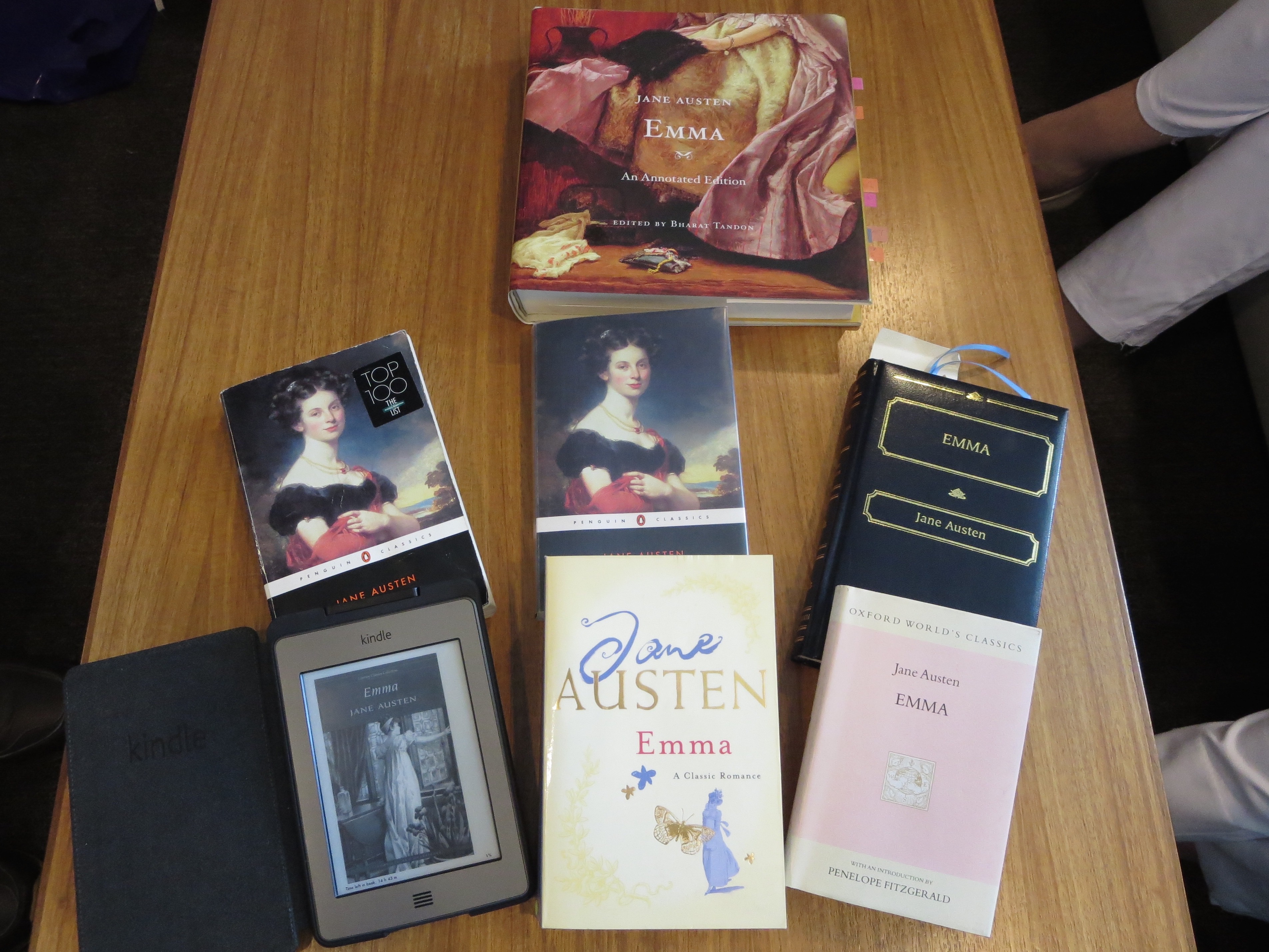
Jane Austen, Emma, Penguin

A few re-reads ago, what stood out for me was its beautiful plotting. There’s barely a word or action that doesn’t imply or lead to something telling, even if we are unaware at the time. From my last major re-read, in 2015, I noticed how often the word “friend” or the notion of “friendship” was appearing. The novel starts with Emma losing her governess-then-companion Miss Taylor to marriage. They’ll remain friends but Emma is left alone with her gentle but fussy father. So, she nurtures a friendship with the 17-year-old Harriet. In my post on rereading Volume 1, I explored the idea of friendship, and then watched in Volumes 2 and 3 to see whether the idea continued. It did. This is not to say that what we might identify in a slow read will overtake previous ideas, but that these re-reads enable us to tease out more of the details, which usually results in a deeper understanding of the whole.

So, what would I find this time? I did consider choosing something to look for, like the role of letters or music in the novel, but decided to just see what played out. Sure enough, something popped up, the idea of young people lacking guidance. It relates to issues like character development and to themes like parenting. And, I found it all there in the first few chapters.

The novel begins:

Emma Woodhouse, handsome, clever, and rich, with a comfortable home and happy disposition, seemed to unite some of the best blessings of existence; and had lived nearly twenty-one years in the world with very little to distress or vex her.

This can be teased out in many ways, but, remembering that “very little to distress or vex her”, I’m focusing on where Austen goes next. As explained above, the novel opens with Emma’s governess-then-companion Miss Taylor having just married, so Emma, who lost her mother when she was very young, is left alone with her “valetudinarian” father, “a nervous man, easily depressed”. She indulges him, as only a devoted daughter can, but otherwise, she is untrammelled. Austen describes her life, to this point, in the third and fourth paragraphs:

Emma doing just what she liked; highly esteeming Miss Taylor’s judgment, but directed chiefly by her own.

The real evils indeed of Emma’s situation were the power of having rather too much of her own way, and a disposition to think a little too well of herself.

And there it is, “directed chiefly by her own [judgement]”. Neither Emma’s “nervous” father nor the mildly-tempered Miss Taylor/Mrs Weston question or guide her. However, in the same chapter, we learn that there is one who does, her brother-in-law Mr Knightley, “a sensible man about seven or eight and twenty”. Austen writes that:

Mr. Knightley, in fact, was one of the few people who could see faults in Emma Woodhouse, and the only one who ever told her of them …

We see several examples of his chiding her in Volume 1, including about her interference in Harriet’s response to a marriage proposal. We also see him discussing Emma with Mrs Weston, telling her that she had been a good companion to Emma but had also been better at submitting her will to Emma than in giving Emma the “complete education” he thinks she needed.

Now, moving on to Chapter 2, we hear of another young person, the three or four and twenty, Frank Churchill. His mother, too, had died when he was very young, and, for a number of reasons, he

was given up to the care and the wealth of the Churchills [aunt and uncle], and he had only his own comfort to seek, and his own situation to improve as he could.

The implication here is that he too had been left to his own devices with little guidance other than “his own comfort”. It occurred to me, during this reading, that he is being set up as a parallel and perhaps eventual foil to Emma. But, hold that thought, because Frank does not physically appear in Volume 1. There is, however, a telling discussion at the end of the Volume about his not coming to Highbury to meet his father’s new wife, Mrs Weston. Mr Knightley – note, it’s him again – argues that while Frank’s aunt and uncle are given as the reason:

There is one thing, Emma, which a man can always do, if he chooses, and that is, his duty.

Frank simply needed to use the “tone of decision becoming a man”, and there would have been “no opposition”.

Finally, there is a third example, the aforementioned Harriet Smith, who is introduced in Chapter 4. She

certainly was not clever, but she had a sweet, docile, grateful disposition; was totally free from conceit; and only desiring to be guided by any one she looked up to.

The natural child of an unknown person who had paid for her schooling and now for her boarding at that school, Harriet has no parent to guide her, only school teachers – and now, the flawed Emma. By the end of Volume 1, it is not going well for Harriet, who has lost one real and one imagined suitor due to Emma’s guidance.

So, as Volume 1 progresses through its 18 chapters, we see some of the fallout of Emma’s being a law unto herself and ignoring the wisdom of others. I look forward to seeing if this idea is followed through in Volume 2. Is it important to Austen’s world view? Watch this space …

Irma Gold, Shift (#BookReview)

If Australian writer Irma Gold suffered from Second Book Syndrome while writing her second novel, it certainly doesn’t show. Her debut novel, The breaking (my review), is well-written and a great read. However, in Shift, I sense a writer who has reached another level of confidence in fusing her writing, story-telling, and the ideals and beliefs the drive her. She is passionate about her subject matter, as she was in The breaking, but in Shift she ups the ante to encompass wider themes about art. The result is a strong read that offers much for its readers to think about.

Shift is not the first novel I’ve reviewed about post-apartheid South Africa, but it is my first by an Australian author. Published, says MidnightSun (linked below), in the 70th anniversary year of the Freedom Charter, which outlined the principles of democracy and freedom in South Africa, Shift is set in Kliptown, where this charter was signed. Protagonist, Arlie, is a thirty-something art photographer who has just sold his first work to a significant gallery. It’s potentially career-changing and he should be happy, but he can’t “get his shit together”. He can’t keep girlfriends and while he gets on well with his happily established brother, his relationship with his parents is fraught. He feels his successful architect father has expectations he can’t (or doesn’t want to) meet, and his mother refuses to talk about her South African upbringing. But, Arlie wants to know.

So, after yet another relationship break-up, Arlie decides to go to South Africa, and ends up in Kliptown, in Soweto. He becomes immersed in its life, mixing with visionary choirmaster Rufaro, singer Glory and her younger brother Samson, and other locals such as his favourite photographic subject, the 80-something, “sassy as hell” Queenie. Can he create an exhibition out of his experience? Rufaro would like that …

“sold a dream”

The bulk of the novel comprises Arlie’s experiences in Kliptown, where he is the only white person. Through his eyes, we see the dire situation the people find themselves in. Early in the novel, he goes on a date with Glory to a spoken word evening at Soweto Theatre, where he hears some truths:

The people here had been sold a dream and yet more than two decades on they found themselves still in the same relentless poverty. Mandela was the broker of broken freedom.

Which is not, necessarily, to say that Mandela achieved nothing, but that life is far more complex than a “god”, as Mandela was to Arlie’s mother, can ever be. What Arlie sees, then, is poverty, drug addiction, violence and hopelessness. He sees young people, like Samson, not believing there’s any point to school. He sees a settlement without proper sewerage, electricity, or running water to their homes, not to mention with “asbestos sheeting everywhere”. However, on the flip side, he also sees community, hard work and hope.

So, back to my opening claim about Gold and her second novel. Taking the writing and the storytelling first, the writing is tight. It has the confidence of an editor, which Gold is, but mostly of one who is passionate about her material. The descriptions are fresh and vivid. We can visualise the place, with, for example, its “ramshackle tapestry of shacks constructed from discarded materials, each one rippling into the next”. The characters – who are drawn from Gold’s travels to the region (see here) – feel authentic. They are not stereotypes, but breathe life into the story with their thoughts, worries, fears and hopes. Arlie questions his actions, are they that of “a white saviour”? The colourful Glory, with her orange hair and fake orange nails, doesn’t “try to please”. She has her own views, and “plays her own game … take it or leave it”. The visionary Rufaro is passionate about the power of singing. It shows everyone, he says, who they are, that “we will be more … we are more”. Samson is a boy on the cusp of manhood, exuding bravado one moment, begging to play soccer the next.

The novel, too, is well structured. It opens with a shocking event to which we return at the end, and then follows a chronological arc from Arlie’s personal crisis and his decision to go to South Africa, through his time there, to his ultimate return home. There is drama along the way. Arlie’s father Harris visits, and Gold perfectly captures the discomfort between them alongside their unspoken love for each other. There is no simple resolution, just, perhaps, another step along the way to understanding. There is also love, violence and tragedy, but I won’t spoil those.

“make the invisible visible”

Shift is a story about a forgotten, if not betrayed, community, but one that survives all the same. It’s about a man who cannot keep a girlfriend, who is at odds with his father and distanced from his troubled mother, but who wants better relationships. It is a multi-layered love story – to a community and its people, and between Arlie and the people he cares for. But, most of all, it is a story about the power of art – or, if not that, at least about hope for art’s power. From first meeting Arlie, Rufaro has a dream that he will create “an exhibition that will show the world the truth about Kliptown”. He tells his choristers that Arlie

is going to expose what the government is doing here. That they have forgotten us. The pressure must come from outside, because our government does not listen to us.

Arlie, Gold writes later in the novel, “had always believed that art could change minds, that if enough minds were changed then the world changed” but, when it comes to it, he wonders “what could his photos possible achieve?” Can he “make the invisible visible”?

This brings me back to my opening paragraph and Gold’s wider themes. Shift is a strong, moving novel about a struggling community that has been left behind, for all the promises of freedom. However, it is also a novel that believes art can expose truths and, through that, shift our thinking and thus nudge the world towards being a better place. Gold has written her heart out in this novel to “make the invisible visible” – and to make room for hope. The next move is ours.

Irma Gold
Shift
Rundle Mall, SA: MidnightSun, 2025
269pp.
ISBN: 9781922858566

(Review copy courtesy MidnightSun Publishing)

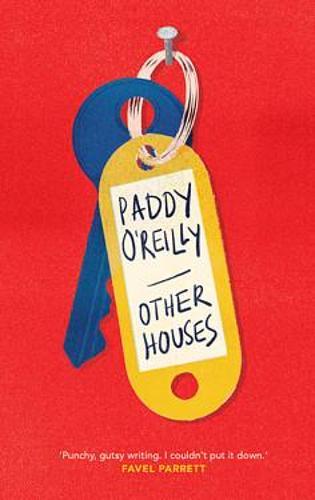
Paddy O’Reilly, Other houses (#BookReview)

It’s not totally coincidental that this week’s Monday Musings post was about a publisher of realist or social novels, that is, of novels which aim to explore social problems of their time. My reading group’s March book, Paddy O’Reilly’s Other houses, belongs to this tradition. I have been wanting to read it since it was published in 2022.

Searches of the Internet, including of Wikipedia, retrieve various definitions of the social novel (also called social problem or social protest or social justice novel), but they essentially agree that these are works of fiction which tackle some sort of inequality, prejudice, or injustice, through the experiences of their characters, and that their intention is to encourage social change. In Other houses, O’Reilly interrogates the idea of social mobility. Her protagonists, Lily and Janks, are “battlers“, working class people who struggle payday to payday, but they want more for their now 15-year-old daughter, Jewelee, who had started to run wild, heading down the path of delinquency.

“Good people live here” (Lily)

So, they move from their working class suburb to one they “could barely afford”, and enrol Jewelee in “a good school”. Jewelee might now behave as though she’s “too good” for her “bogan” parents, but they believe it was worth it. The problem is, Janks, now working in a food-factory, has mysteriously disappeared. The novel opens with Lily driving through her old neighbourhood at night, hoping to find Janks there. “Good people live here”, she says. “They try”.

From here the novel is told in the alternating first person voices of Lily and Janks, with Lily’s story occupying the greater part of the narrative. Having worked as a supermarket cashier in her old home, she is now a cleaner, which is where the title comes in. The novel is beautifully constructed around the cleaning jobs Lily does with her cleaning partner, the older, and wearing out, Shannon. While they clean houses, Lily reflects on her current and past lives, on the “entitled” Jewelee, on the lives and aspirations of the people they clean for, all the while worrying about Janks, and trying to find him. She prints “have you seen” leaflets and scours all the places he might possibly be. She does not believe he has deserted her willingly.

And, we know that he hasn’t. Having borrowed money from a bikie gang, he’d been “snatched” off the street, and coerced into paying off the loan by doing a job for them. The novel’s plot comes from this: will Janks get the job done, without being caught, and be allowed to return safely to the life they are building? Many of us in the group called this book a page-turner, but some disagreed. The plot is too straightforward, they said. It doesn’t have the breath-catching twists and turns of a thriller. Others of us, however, define page-turners differently. Ours don’t require an edge-of-the-seat plot. Rather, they are books that compel us on, because of the characters, or the writing, or the ideas, or the plot, or any combination of these. What do you think?

“Things, world, wrong” (Shannon)

Anyhow, there is a plot – whether you see it as a page-turning one or not – and there is also lightness, despite the seriousness of the protagonists’ plight. Much of the lightness comes from the house-cleaning scenes. Lily and Shannon name the houses they clean, such as the House of Hands (with its profusion of chrome dirtied by sticky hands), the House of Doom (whose owners see the world as “blighted”), Horror House (inhabited by a hoarder), and Lily’s favourite, the House of Light (which lets the sun shine in). They share their thoughts about the inhabitants and the lives they know (or think) they lead. If anyone knows how we live, it’s likely to be cleaners, eh? Lily’s and Shannon’s perspectives – their observations, opinions and reflections on how others live – are what gives this book its real heart.

Lily speaks with the dignity of a worker, when she says:

We know things no one else knows about our clients. I sometimes pick up objects in the places we clean – a vase, a notebook, a scarf … I give them attention, these things that I believe hold meaning for someone … It’s my moment of saying what I can’t say to their faces. I respect what you hold dear, even when you’re rude to me or barely acknowledge I exist. (p. 30)

Meanwhile, the older Shannon has her own mantra for how things are going, says Lily:

Something has gone wrong in the world … Shannon uses it about the eating habits for the population, the number of appliances in the kitchens we clean, leaf blowers, hair straighteners, so-called superfoods, weird weather events, toilets that wash your bottom, plastic wrapping on fruit that already has its own natural wrapping, quiz shows where she disagrees with the answers, tap water sold in plastic bottles and so much more. (p. 29)

Most definitions of the social novel say “through the experiences of their characters”, and this is true here. Telling her story through the experiences of Lily, Shannon and Janks enables O’Reilly to show what she wants to explore, without being didactic. Through these authentic characters we come to see just what the much-touted upward social mobility really is, means, and feels like. We see Lily and Janks recognising that the poverty faced daily in their old working class suburb results in lives that are lived on the edge with little opportunity to improve one’s chances, but we also see that it’s not easy to simply transplant yourselves into a different life and, essentially, culture:

Tonight my water-stained ceiling and the creeping draught taunt me that although we’ve adjusted to living here, it might be because we brought things with us when we crossed: rental damp and rot, clothes that fall apart, bank accounts that bounce between payday and zero. (p. 74)

For Lily, Broadie feels like “home” and it’s where she returns to find a solution to the problem of the missing Janks.

Other houses is a slim and accessible book, but it offers no simple answers. Rather than support the comfortable view that upward social mobility is the answer to the problems posed by socioeconomic inequity, it asks us to consider instead, how do we overcome the problems caused by inequity – indeed, how do we remove inequity – without expecting people to give up everything they hold dear about where they come from? It’s a quietly provocative novel that speaks to one of the most urgent issues of our time.

Paddy O’Reilly
Other houses
South Melbourne: Affirm Press, 2022
245pp.
ISBN: 9781922626950

Sun Jung, My name is Gucci (#BookReview)

Some reading synchronicities – those coincidental connections that happen between books we read in a short period of time – are zeitgeist-related. For example, grief is not my go-to, but it is a common theme in contemporary writing so it’s not entirely remarkable that I have written three reviews since January about books focused on grief. What is remarkable is that, in the same period, I have read two books, written nearly 80 years apart, which are told from the perspective of dogs. This surely takes synchronicity to a whole new level – wouldn’t you agree?

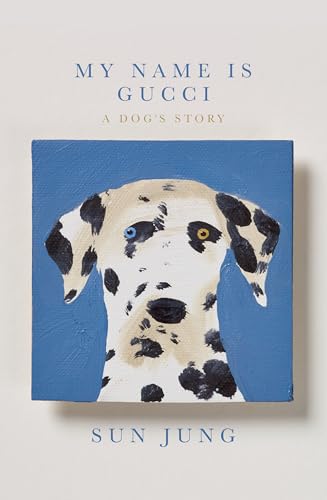
A canine perspective is, however, where the synchronicity ends, because Dusty (my review) is told third person through two main voices, Dusty’s and his owner’s, and Dusty is very much a dog. He has no knowledge beyond what he knows as a dog. Gucci, in Sun Jung’s My name is Gucci, is something very different. Not only is he the novel’s sole first person narrator, but he has been reincarnated many times, so has a wealth of knowledge and experience way beyond that of a typical dog. Indeed, as he tells us, he is a “sage”, and an erudite one at that. Now, before you click away, thinking non-human narrators and ideas of reincarnation are not for you, do read on, because Jung makes this work, creating a story that is not only charming and often delightfully humorous, but also thoughtful about life and the connections we make.

Gucci is a Dalmation-like bitzer. At the book’s opening, he is five-years-old and living in a Singaporean animal shelter. He’d given up ever being rescued, when, seemingly out of the blue, “she” appears, and whisks him off to Sydney. Is this destiny? This never-named she, it turns out, has been connected to Gucci, in earlier lives, through their inyeon. Inyeon, the book’s glossary explains, is “Karmic relation or destiny”, but in fact our two are connected through the rarer form of “perpetual-inyeon”. This is “a persistently recurring Karmic relation between two beings through their numerous past lives”, one built on the understanding that “interactions must be mutually beneficial”. Gucci tells us:

I have been reborn three times during her present life; interestingly, and quite unusually, all three rebirth were dogs and all had one absolute karmic duty – to help her to collect and rekindle the shattered smithereens of inyeon that she had long lost.

Notwithstanding this idea of inyeon, the obvious question is, of course, why choose a dog as narrator. Telling a story through a non-human character is not only not easy, it’s a risk, so why? I don’t know Jung’s reasons, but the driver must surely be that unusual narrators have something useful to offer – tone, maybe, or experience or a different way of thinking. Gucci meets all of these. He has some painful things to share about her life, but does so in a lighter tone, which feels more acceptable from a non-human character. Further, as a dog who has experienced the world differently from humans, he can offer different insights into her experiences, not to mention those of humans in general. And, finally, he can illuminate important things about human-animal relationships.

“nothing is absurd”

My name is Gucci is not a hard read, but it does require concentration because we move back and forth in time, in her life, as it intersects with Gucci’s lives – as Nari, the Jindo dog, who dies in an accident when she is 9; as General, the Sapsal-cross dog, who was forced to work as a fighting dog, and is euthanased when she is 13; and of course as Gucci in her present life, now helping her confront and perhaps reconcile the traumas of her past. She had a difficult childhood in Korea, which is where Nari and General know her. The product of an adulterous union between a married man and a melancholic young woman (jageun umma), she is removed from this birth mother when she is 4 years old to live with her father’s wife (keun umma). Keun umma accepts her, with kindness and love, but not so keun umma’s mother, the “old hyena”, who is cruel to this “filthy child” brought into her home.

The time shifting, then, occurs between her past life in Korea, with Nari and General, and her current life in Sydney’s Kings Cross and Darlinghurst, where she is married to an Irishman, but haunted by her past. It’s no surprise to Gucci that she is a “horror novelist … [of] … spinechilling and gory urban mythologies”. In telling his and her story, Gucci is often insouciant if not downright playful, but he is also wise and philosophical, as he guides her and us through the challenges of coping with past experiences which threaten to undermine the present.

Closely associated with this idea of past and present is that of “destiny”. It is a constant thread in the book, and it discomforted me a little, perhaps because as a Westerner, the idea of destiny doesn’t sit easily with my world view. However, if we reframe it to encompass the way past experiences impact present and future actions, then it works – for me, and for the book, where the idea of fate/destiny/luck is variously respected, or upended or foiled, or treated sceptically by her Irish husband. There’s no one answer – just perspective and tolerance for difference.

Much of this story is serious. Bad things happened to her in her childhood, and Gucci reflects on the hows and whys. Early on, she is ostracised at school because of her “impure heritage”. Thinking back to their Seoul home in the suburb of Itaewon, which means “village of strangers”, Gucci wonders “what is being strange or different? Different to what?” Why do humans demonise, or make fun of, those who are different? My name is Gucci is full of good questions and wise ideas, but they are not laboured. Instead, Gucci keeps the story moving forward, with warmth and compassion, leavened by humour that is, at times, lightly satirical. There is a delightful scene when she takes her young Irish boyfriend to Korea, and, after a boozy night they go out for a “hangover cure” breakfast:

Bleary-eyed and with a severe hangover, he could not believe his misfortune as he stared at the abalone congee bowl.

Finally, there are the stories about human-animal relationships. Some of the funniest scenes in the book come from these, such as the Kings Cross apartment dog-wars, between dog-lovers and dog-haters. But there are tough stories too, like the sport of dog-fighting which destroys General’s life. This book pays tribute to the importance of our relationships with our animals.

Early on, Gucci forestalls our potential scepticism about his story by claiming that “if you look at everything in the world as connected by the complex web of inyeon, nothing is absurd”. Well, I have a high tolerance for the absurd, anyhow, but even if I didn’t, Gucci is such a delightful guide that I was in for the duration. If you want to read something that’s meaningful but doesn’t weigh you down, try this one.

Sun Jung
My name is Gucci: A dog’s story
Melbourne: Transit Lounge, 2024
254pp.
ISBN: 9781923023178

(Review copy courtesy Transit Lounge, via Scott Eathorne, Quikmark Media)

Lisa Kenway, All you took from me (#GuestThoughts)

With my Review TBR pile teetering on the brink, I decided to call in a favour from Mr Gums, and handed him Lisa Kenway’s debut novel, All you took from me, thinking it might be up his alley.

Now, a word about Mr Gums. He is an engineer by training, and not the world’s biggest reader. When he does read – in the past at least – his go-to has been Jane Austen (whose books he has read multiple times, including more than once in German) and other classics. However, with more time at his disposal since retirement, he has started reading a little more broadly. He likes to be “entertained”, not overly challenged in his reading. (Apparently, reading Mansfield Park in German is not challenging!) Life is challenging enough, he says. So, crime fiction seemed to be a good fit, and he’s been trying out several authors with varying success. Chris Hammer is a big hit. Garry Disher goes down pretty well too. Peter Temple not so much. He has also read non-Australian crime writers – English, and others, including, recently, a Japanese author (thanks to JacquiWine). As you can tell from his Austen love, he is more than happy to read women writers, and has crime by Dervla McTiernan and Shelley Burr, and recently, Dinuka McKenzie’s first novel. So, why not Lisa Kenway?

So, Lisa Kenway. According to the media release that came with my review copy, she is an Australian writer and anaesthetist. This debut novel, All you took from me, was “inspired by her longstanding fascination with memory and consciousness”. An earlier manuscript version was longlisted for Hachette’s Richell Prize for Emerging Writers in 2020 (out of over 800 submissions). That must have given her confidence to keep working on it, because here it is, published by Transit Lounge in 2024.

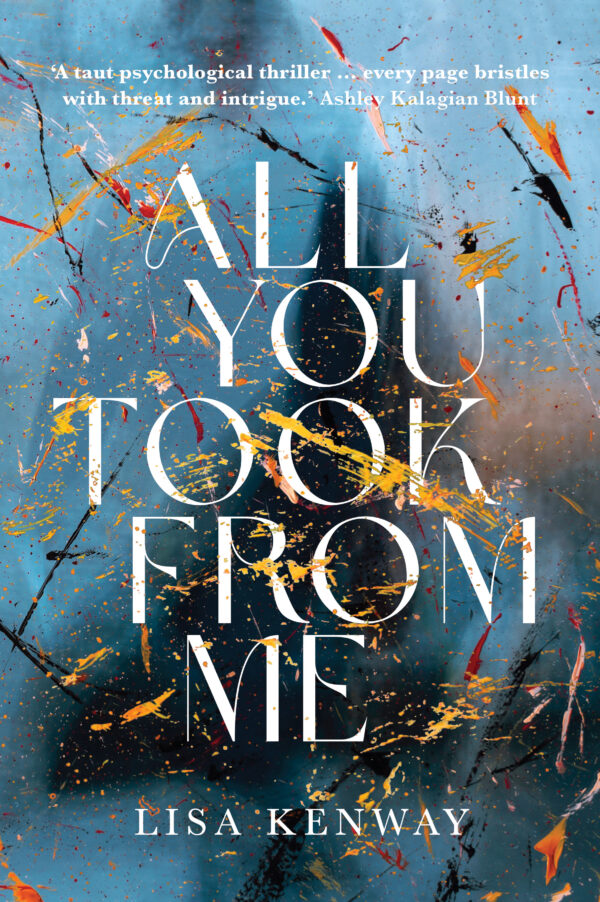
Anyhow, the novel is set in two places – the Blue Mountains (which I love) and Sydney. The protagonist, Clare Carpenter, is an anaesthetist – write what you know! – whose husband has died in a single-vehicle car accident which also caused her to lose her memory. Soon after, she senses she is being followed by a stranger. Why? Finding the answer becomes her mission, but it is hampered by her loss of memory. Can she reverse that? Of course nothing is simple, and the risks and threats mount. This novel is not Mr Gums’ (nor my) preferred type of crime, which is the police procedural. It is, instead, as the blurbs say, a psychological thriller.

Mr Gums was intrigued by this debut, but he had reservations. He particularly liked the set up – the protagonist as anaesthetist. It was different, and an interesting idea. He enjoyed reading the technical details about anaesthesia, and liked the attention paid to details in those parts of the story. (Like me, he enjoys it when novels teach him about a world he doesn’t know much about.) However, this is also where his main reservation came, because, scientifically trained himself, he found Clare’s behaviour hard to believe. The risks she took, her foray into unscientific ideas, lost him. Mr Gums, though, has not been in the position Clare found herself in. Perhaps, in the same desperate circumstances, he might try anything too?

All you took from me is told first person, and the voice rings true. Clare is articulate and intelligent, and honest, as she starts to uncover less pleasant things about herself. The novel opens in the hospital a month after the accident, with Clare starting to return to her – new – consciousness. From here, the plot picks up, becoming increasing dramatic and sensational, as you’d expect for its genre, with Clare’s shaky memory, and her attempts to recover it, underpinning much of the intrigue. There are the usual red herrings and misleading threads, which kept Mr Gums challenged as he tried to work out what was true and what wasn’t.

Overall, Kenway’s novel is not Mr Gums’ preferred crime genre. He prefers more dogged analysis in his crime to the stress and tension of a thriller. However, he did conclude that All you took from me was “strangely entertaining”, which suggests to me that Kenway’s debut should not be the last novel she writes. I’d love to know if anyone else has read it?

Lisa Kenway
All you took from me
Melbourne: Transit Lounge, 2024
328pp.
ISBN: 9781923023123

[Review copy courtesy Transit Lounge (via Scott Eathorne of Quikmark Media)]

Melanie Cheng, The burrow (#BookReview)

You may have heard the announcement by Sean Manning, of Simon & Schuster’s flagship imprint in the US, that he will “no longer require authors to obtain blurbs for their books”. Australian media academic Julian Novitz discussed the decision in The Conversation in a piece titled “Brilliant, moving, thought-provoking! Simon & Schuster is dispensing with book blurbs – will it make any difference?” I considered writing a post on this, asking for your thoughts on these blurbs. Do they influence you in any way? But I didn’t. Instead, I am using it to introduce Australian author, Melanie Cheng’s latest novel, The burrow.

As you can see from the cover of my edition, it is beautifully spare, but it does have two blurbs. At the top is Christos Tsiolkas’ “stupendously good” and at the bottom, Helen Garner’s “how rare this delicacy – this calm, sweet, desolated wisdom”. Tsiolkas and Garner are respected, robust writers who don’t flinch from uncomfortable truths, so their commendation carries some weight with me. However, there are readers who don’t like these authors. Will that turn them away from the novel? I’d be interested to know. Meanwhile, I’ll get onto the book, which, at 184 well-spaced pages, is surely a novella.

The back cover tells me that it’s about a family confronting “long-buried secrets”, and that it “tells an unforgettable story about grief and hope”. Oh, and that the family buys a pet rabbit. There’s not a lot to go on here besides the usual cliches about secrets, grief and hope, but I was interested because I have had Melanie Cheng in my sights for some time, and it has just been shortlisted for this year’s Victorian Premier’s Literary Award.

It does seem, however, that grief is following me around this year, as the heart of this novel concerns the drowning death of a six-month-old baby girl some four years before the novel starts. The family – parents Amy and Jin Lee, and their remaining daughter, 10-year-old Lucie – is surviving intact, but only just. The novel is set in Melbourne during the pandemic, just as lockdown restrictions are being relaxed, so the family is needing to confront the outside world a little more. Reminding me somewhat of Charlotte Wood’s Stone Yard devotional (my review), our threesome is disturbed by two new additions, the pet rabbit bought for Lucie, and Amy’s mother Pauline who has broken her wrist and cannot live alone for a while. These two, along with the relaxing of lockdown, offer potential catalysts for change. Will it be for the good or will the family implode?

Cheng tells her story through the alternating third-person perspectives of the characters. The writing is beautifully spare, but also engaging and moving. Having experienced a devastating death in my own family – my sister, not my child – I am interested in how people traverse such grief, particularly when there is potential for blame and guilt. Every situation is different, but there are, I think, some universals – love, generosity, and communication (or lack thereof). The Lee family has some of each of these, but not enough, and hence the just-surviving-but-not-really-living state they find themselves in. It’s realistic, believable.

I am always impressed by writers who can unfold a story slowly, but in few words, and Cheng is one of these writers. What exactly happened is divulged gradually in such a way as to make us think about how it affected – and is still affecting – the person whose perspective we are reading. It lets us feel the different ways grief can stall us. It also gives us time to get to know the characters, and to understand and relate to them. For these reasons, the story is tricky to talk about because if I explain what happened, I undermine all Cheng’s good work, so I’ll leave the story here and get back to the two additions.

As actors in the story, the rabbit and Pauline are opposite ends of the spectrum. The rabbit is a quiet, largely passive presence which interacts minimally with the family but provides a focal point for their thoughts. He brings a “sparkle” back to Lucie’s eyes that had been missing for some time. However, as a prey animal he also reminds them of the fragility of life. A rabbit is an interesting choice, one that kept me thinking about in terms of his significance. The novel is titled “The burrow”, but it’s not a simple literal reference to the rabbit. A burrow is also referenced in the epigraph from Franz Kafka’s short story “The burrow”:

The most beautiful thing about my burrow is the stillness. Of course, that is deceptive. At any moment it may be shattered and then all will be over.

How are we to read this? The family has already been shattered, and at the opening of the novel it does feel as though all is over, that they are mainly going through the motions of living. But of course it’s not all over. Sure, they are not doing very well. They are isolated from others (and not just because of the lockdown which had given them “a reprieve”, excuses to not engage). But they are still together, and they haven’t completely given up. They buy the rabbit for Lucie when she shows interest in something; they invite Pauline back into their lives when it appears she needs them.

And this brings me to Pauline. She sweeps in, injecting much needed energy, whether they want it or not. She can’t help herself, and for death-focused Lucie it’s energising, “a good thing”. However, it’s also clear that Pauline is involved in Ruby’s death in some way, that it’s not only the pandemic that has separated her from the family for four years. Now, though, she might make the difference.

But, there’s no guarantee. The family suffers several setbacks, literal and metaphorical, on their journey – sickness, an intruder, conflict, and more. Their journey reflects that in Richard Adams’ classic, Watershed Down, which Pauline reads to Lucie and which she characterises as “the epic story of an odd group of rabbits and their quest to establish a thriving warren”.

There is so much to like about this book, and it starts with the characters. With almost as few brushstrokes as artist Phil Day used for the cover rabbit, Cheng has created characters who represent some big ideas and thoughts, who embody the humanity of unspeakable grief, but who are yet so very individual. It’s a great read, with an ending that captures hope and fragility at the same time.

Melanie Cheng
The burrow
Melbourne: Text Publishing, 2024
185pp.
ISBN: 9781922790941

Review copy courtesy Text Publishing

Andrew O’Hagan, Caledonian Road (#BookReview)

When my reading group started back in 1988, most of us were time-poor mothers so we had a rule-of-thumb that our books could not be longer than 350 pages. Those days, however, are long gone, and some time ago we agreed that our January (aka summer) read could be a BIG book. Last year, for example, it was Demon Copperhead (my review). This year, some were keen to read Andrew O’Hagan’s Caledonian Road, so that’s what we scheduled.

My problem is that while it’s summer, January is also tennis season. I don’t watch much sport, but I do love the tennis. Reading a big book while trying to keep up with the tennis is always a challenge. As is the fact that, as most of you know, I love short books. Give me a novella and I’m (usually) happy. However, I also love my reading group, and so I gave myself extra time and got stuck in. I was immediately engaged. The protagonist, fifty-two year old Campbell Flynn, art historian, writer and academic, captured me. There was a certain Jane Austen tone to the opening:

Tall and sharp at fifty-two, Campbell Flynn was a tinderbox in a Savile Row suit, a man who believed his childhood was so far behind him that all its threats had vanished.

Ha! He certainly was a tinderbox, as he was about to slowly implode. Further, as we soon discover, his childhood was not at all behind him, and is implicated in his unravelling. The first paragraph ends with some foreshadowing telling us that the first of his “huge mistakes” was not to “take people half as seriously as they took themselves”, with the second being “the proof copy” he had in his briefcase.

It is Thursday 20 May 2021, so the first wave of the pandemic is over but its long shadow provides a quiet background to the novel which is told over five parts, from Spring 2021 to Winter 2022, concluding around the time of the invasion of Ukraine in February 2022.

Now, back to my reading journey. I was interested, but as I read on, following the ups and increasing downs of Campbell’s life, along with those of an ever-growing cast of characters, there was a point where I started to baulk. It felt like a long wallowing in the ills of the modern western world. Did I need 640 pages of it? And then it clicked. I realised I was reading a modern take on the 19th century “condition-of-England” novel. These novels, as the The Victorian Web explains, “sought to engage directly with the contemporary social and political issues with a focus on the representation of class, gender, and labour relations, as well as on social unrest and the growing antagonism between the rich and the poor in England”. We’re talking Dickens’ “big” novels, Elizabeth Gaskell’s North and south and Mary Barton, and so on. I loved them.

“a deep dive into the era’s shallows” (Campbell)

These novels have to be big, because a nation’s “condition” does not comprise one issue but a network of them, and this is what O’Hagan pulls apart in Caledonian Road. Through a cast of around 60 characters, O’Hagan explores a grab bag of the various ills we read about every day, with a British spin. All the big issues are here, including toxic masculinity; intergenerational wars; racism; modern technology with its related concerns like security, privacy, hacking, and digital identity; disruption as activist action; financial corruption and malfeasance; foreign interference; and human trafficking. Grab bag these might sound, but they are overlaid and connected by the traditional biggies – class, entitlement and privilege, economic inequality, and now, globalisation.

There’s a lot going on, but O’Hagan’s characters are vividly drawn, the plot is compelling if complicated, it is satirical in tone, and the language is so captivating that I enjoyed reading it after all. It is, necessarily, a disjointed read with the narrative constantly switching between the different storylines that make the whole, but I found I didn’t need the cast of characters helpfully provided at the beginning because the context always made clear who they were.

Before I return to the subject matter, I must share a couple of perfect character descriptions. First is Milo, a person whom Campbell doesn’t take seriously enough, and second is Candy, Campbell’s sister-in-law, the fey do-gooder wife of the egregious Duke of Kendal:

The young man had edges and they often glinted on the blade of his charm. (p. 76)
and
Candy stood like an emaciated meerkat looking out for an opportunity to enthuse. (p. 262)

So now, back to the “condition-of-England” idea. The characters range across the breadth of British society, from twenty-somethings to eighty-somethings, and include MPs, aristocrats, academics, journalists, business people, actors, criminals, activists, do-gooders, hackers, landowners, renters, gang members, migrants, factory workers, and lorry drivers. But, what most of them have in common is an idea of what England is. The most poignant comes from the migrants, like Polish Mrs Krupa and her son’s undocumented employee, also Polish, Jakub. As Jakub’s life, under the control of human-traffickers-cum-drug-lords, starts looking different to what he expected, he begins “to wonder if England was anything like the myth he … had bought into”.

O’Hagan, then, explores with clarity and a healthy sense of irony, today’s England (or Britain). The flawed but self-questioning Campbell – increasingly conflicted by his middle-class success and working-class origins – is our guide through a story in which hope, promise and sincerity are set against hypocrisy, greed and hatred. Desperate to remain relevant to the times, and to be a decent person, Campbell lets his guard down, allowing the driven, idealistic Milo into his life. Both are complex characters, who test our moral compass. Others not so much, like the aristocratic Duke of Kendal and Lord Scullion, the Russian oligarch Aleksandr Bykov, the corrupt billionaire William Byre, and the criminal Bozydar, all of whom, indirectly or directly, slash and burn those around them. In between are the decent, including women like Campbell’s wife Elizabeth and sister Moira, and the powerless, like rapper Travis and undocumented migrant worker Jakub.

Towards the end of the novel, the unravelling Campbell, who has become “lost in the sprawling web of it all”, inverts my favourite EM Forster quote when he reflects to himself, “only disconnect”. It’s a paradox. Campbell’s survival will depend on disconnecting from all that is wrong in his world (technologically and personally), while hanging tight – keeping connected, in other words – to all that is good. Ultimately, while O’Hagan paints a grim picture of what is wrong – the superficial, the hypocritical, the greedy and the cruel – in England, he also leaves us with a glimmer of hope. There are good people and they can prevail – but, will they, is the question we are left with.

PS Caledonian Road, being a big book, invites multiple responses. You can read those by Brona and Jonathan, who approached it from different angles and perspectives.

Andrew O’Hagan
Caledonian Road
London: Faber & Faber, 2024
642pp.
ISBN: 9780571381388 (Kindle edition.)

Marion Halligan, Wishbone (#BookReview)

My reading group’s last meeting of the year took the form of a tribute to Marion Halligan, who died earlier this year and who had generously attended our meeting when we discussed her Valley of grace (my review). We have done this once before with Helen Garner (albeit she hadn’t died) and it worked well. The process is that we choose something we want to read and share our thoughts with the group. I have read several of Halligan’s books, but I have a few on my TBR, so of course I chose one of those, Wishbone, her fourth novel, published in 1994.

Before I share my thoughts on that, I thought you might like to know what everyone read. Ten members attended the meeting. Some read two books, while others chose a short story or article. It is, after all, a busy time of year. The novels read were, in chronological order, Wishbone (1), The golden dress (2), The fog garden (1), Valley of grace (1), Goodbye sweetheart (2). Three people read her most recent memoir, Words for Lucy, while others read selections from Canberra tales (“Most mortal enemy”), The taste of memory (the first piece), Canberra Red (“A city of mind”), and Shooting the fox (“Shooting the fox”). In other words, we read widely across her oeuvre, resulting in an enjoyable – and occasionally excitable – meeting as we teased out some of her themes and ideas, including how much of her fiction was drawn from life!

“who knows what the hell is going on”

So now, Wishbone. It tells the story of a woman, Emmanuelle, her “motley family”, and the wishes they have for themselves. The novel starts with a young, passionate Emmanuelle having an affair with a married man, but it soon jumps some years hence when she is now married (to a man named Lance), and living in well-heeled Sydney with two children, Maud and William. The rest of the novel follows a period in the lives of these four and others in their close circle – friends, family and employees. During this time, we experience a life-threatening stroke, extra-marital affairs, mistaken assumptions, and a suspicious death, all set within perfectly rendered scenes of domesticity. Halligan can make you gasp with her audaciousness.

As I was reading this novel, a light dawned for me about why I so often use Jane Austen as a benchmark for writing I love. I do like all sorts of writing, but I am particularly drawn to writing that exposes human nature with wit, irony and a generous spirit. This is what Austen does, and this is also what Halligan does. Wishbone is a generous story about messy human lives. Halligan writes with a knowingness about those deep-down thoughts, wishes, and desires we all have, but she is also forgiving about her characters’ foibles and less admirable traits and behaviours. In Wishbone, she explores the tension between our wishes – particularly regarding love – and living with what you’ve got.

There’s something of a fatalist element, here, in the sense that we think we have choice in all this, but choice proves in fact to be elusive. Things happen that we have no control over. Late in the novel, as Emmanuelle sits around the kitchen table with her two children and au pair Mel, in what looks to be a cosy domestic scene, a question – which is both literal and existential – is suddenly proffered, “who knows what the hell is going on”. Who indeed? (And who is asking the question? Emmanuelle, surely, but there’s also an omniscient voice overlaying the characters’ perspectives. At least I believe so. Wishbone slides seamlessly between voices and perspectives in a way that never loses the reader, but that ensures we see multiple sides of things.)

This brings me to style, and how Halligan does what she does. Halligan is a born short-story writer. As I started Wishbone, I almost wondered whether I was reading a book of short stories. Every chapter is gorgeously titled and most felt like they could stand on their own as little nuggets from a life. The opening chapter, The Glade, tells of Emmanuelle’s youthful affair with her married man. It starts:

The difficulty of a love affair between a young woman and a married man may be its logistics. Where can they go? He lives with his wife. She lives with her parents.

They can’t afford hotels, and anyhow it’s too risky as the town is small, but Brian knows “a good place”, a little glade under a cliff. Whenever Brian thinks of going to the glade, he whistles Handel’s tune, “Where e’er you walk”, which “always gladdened his wife’s heart, because she knew her husband was feeling cheerful”. Halligan’s discussion of this song, Brian’s behaviour, and the wife’s response is delicious in more ways than this little irony, but I will just share Halligan’s nailing the point, with “the song told her about the walking and the sitting but what she didn’t know about was the lying”. Just think of the double meaning in that last word! This writing just makes you splutter.

From here, the plot unfolds quietly but surely. Hints are dropped but aren’t heavy-handed, so we are still surprised when certain events occur, which brings me to the title, and its reference to wishes. In the third chapter, The Man in the Train, there is a mostly mundane discussion about wishes until the chapter’s titular, and unnamed, “man” asks Emmanuelle what she would wish for. Her answer?

I would wish for the gift of making dangerous choices.

As the novel progresses, various characters express their wishes. Emmanuelle’s friend Susie idly wishes she were a widow, while au pair Mel wishes she were beautiful. Emmanuelle wants more passion from her husband, while chauffeur Stuart wants money. And so on … What these characters learn, you won’t be surprised to hear, is that their seemingly ordinary, or common, wishes often carry a danger that is not expected. You know that saying, “be careful what you wish for”. But Halligan’s book is no simple moral tale. What Emmanuelle realises near the end, in fact, is that all choices can be dangerous. Susie asks her:

Have you ever wished Lance dead?
I’ve wished him different.
And did that come true?
Not in ways that I’d have chosen.

Where does this leave us? We won’t stop wishing, and we certainly can’t stop making choices, but we can think about our choices and be realistic about the outcomes, whether they are the expected or unexpected ones. In the end, Emmanuelle probably has the answer:

being alive is like reading a book. You might think you’ve got a fair idea of the plot but you don’t actually know what’s going to happen next, you’re as much a mystery to yourself as a character in a novel. Perhaps the secret is just to keep turning the pages.

Reading Wishbone has reminded me how much I enjoy Halligan. I must get back to that TBR.

Marion Halligan
Wishbone
Port Melbourne: William Heinemann Australia, 1994
235pp.
ISBN: 0855615974