Marie Younan with Jill Sanguinetti, A different kind of seeing: My journey (#BookReview)

In many ways, Marie Younan’s A different kind of seeing: My journey is a standard memoir about a person overcoming the limitations of her disability which, in this case, is blindness. It’s told first person, chronologically, from her grandparents’ lives through her birth in Syria to the present when she is in her late 60s and living in Melbourne. However, there are aspects of her story which add particular interest, and separate it, in a way, from the crowd.

One of these aspects is that Younan’s story is not only a story about blindness, but about migration and cultural difference. Younan is Assyrian, and was born, the seventh of 12 children, in the small village of Tel Wardiyat in northeast Syria. Her maternal and paternal grandparents moved, variously, through Turkey, Iran, Russia, Greece and Kurdistan escaping genocide and persecution before they all ended up in Tel Wardiyat. In her own life, Younan’s family moved to Beirut, but with some of the family having already migrated to Melbourne and with civil unrest increasing in Lebanon, more of the family applied to migrate to Australia. Younan herself was initially rejected because of her blindness, so, while her parents left for Melbourne in 1975, she returned to Syria, before moving to Athens to an older sister. Finally, in 1978, and now in her mid-20s, she was granted a visa for Australia joined her parents and family. (What a kind nation we are!)

If this wasn’t enough challenge, Younan’s life was also affected by her conservative upbringing. The book starts with a little prologue chapter describing how, at the age of 7, she came to properly understand her difference, that she is blind:

it dawned on me that there was a ‘thing’ called seeing that everyone else could do except me […]

It was the day my life as a blind person began.

We gradually come to realise that Younan was, as a child, doubly disadvantaged, because while she was brought up lovingly, nurtured by parents and siblings, she was excluded from so much that could have helped her develop as a person. She was not allowed to go to school; she was not allowed to go to big family events like weddings; and when a doctor suggested a corneal transplant for her when she was 10, her grandmother and father refused, because they didn’t believe such a thing was possible. Further, when she was 12, a relative offered to take her to a boarding school for blind girls – so she could “learn something and grow up with knowledge” – but her grandmother and father again opposed it. Her father said,

‘I’ve got 12 children, and I’m not sending one to boarding school, especially if she’s disabled.’

She was heartbroken, asking her mother why not. She didn’t “know anything about the world, or about life”, and badly wanted to. Yet, she expresses no bitterness in the book towards her family. Indeed, she dearly loves and respects them.

Anyhow, she arrives in Australia, highly dependent on her family and functionally illiterate.

I have spend a lot of time on this first part of the book because not only is her early life so interesting in its difference from my own life, but because it lays the groundwork for the astonishing changes she made in her life, with the help and inspiration of others, after her arrival here. I’m not going to detail all that. I’ll simply say that, largely through the mentorship of a man called Ben Hewitt (to whom the book is dedicated), she was introduced to various services, organisations and people that resulted in her learning to read; learning Braille; studying psychology and later interpreting; travelling around Victoria speaking on behalf of the Royal Victorian Institute for the Blind; and working as an interpreter, including for refugees through Foundation House. It’s an amazing trajectory – and one told quietly, and with humility and respect for her family and for all who helped her on the way.

It’s not surprising that she’s been described as “Ben’s biggest challenge and his best success story”. His role in encouraging her, in turning around her thinking from “I can’t” to “I can” cannot be underestimated, because, by the time she met him, Younan had a desire to learn but very little confidence in her ability to do so.

For all its straightforwardness, though, her story does have a little mystery. Younan was not born blind, but became blind when she was a few months old. Just what caused her blindness is a little question that runs through the book, and I’ll leave it to you to discover, but well-intended actions by a much-loved grandmother were involved. It’s a heartbreaking story of mistakes, accidents and missed opportunities, but Younan, if she resents any of it, has the grace to focus on what she has, not what she hasn’t or what might have been.

Now, you may have noticed that this book was written “with” Jill Sanguinetti, who has appeared here before with her own memoir. Younan met Sanguinetti around 1988 at the Migrant Women’s Learning Centre, when she joined sighted migrant women in a Return to Learning class. Sanguinetti was the teacher, and explains in the her Introduction to the book how she and Younan had stayed in touch after the class finished. Some years later, they “decided to work together to write the story of Younan’s life and educational journey”. Younan is, she writers, a “mesmeric storyteller”, but with one thing and another, it took 8 years to finalise the book. There were “many cycles of telling and writing, re-telling and re-writing”, and it shows in the end product, which is tight and keeps focused on the main theme of Younan’s journey from a dependent, innocent young girl to the independent achiever she is today.

A good – and relevant – read.
Challenge logo

Marie Younan with Jill Sanguinetti
A different kind of seeing: My journey
Melbourne: Scribe, 2020
214pp.
ISBN: 9781922310256

(Review copy courtesy Scribe.)
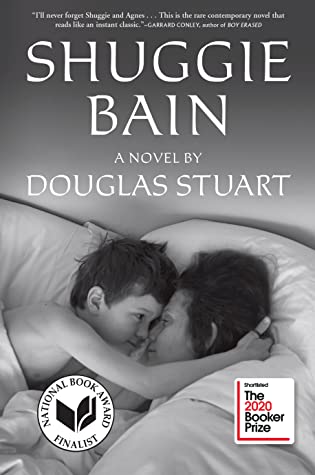
Douglas Stuart, Shuggie Bain (#BookReview)

How to write about a book that has made such a big splash that it has already been extensively reviewed. What more can one say? This is what I’m facing with Douglas Stuart’s debut and Booker Prize-winning novel, Shuggie Bain.

I haven’t, in fact, read much about it, because I prefer to come to books fresh, but I have heard an interview with Stuart, and I can imagine what has been written about his book. I have also discussed it with my reading group. All I can do is just launch in, and write what I would normally write, but I fear it won’t add anything fresh to the discussion. It will, however, record, for me, my thoughts and feelings.

The story

For those of you who haven’t yet read Shuggie Bain, it tells the story of its eponymous protagonist growing up in public housing in 1980s industrial Glasgow. This was the time of Thatcher, a time when mines, shipyards, railyards closed, resulting in significant unemployment and the usual fallout when men can’t work and women and children end up on welfare:

Whole housing estates of young men who were promised the working trades of their fathers had no future now. Men were losing their very masculinity.

This is important, but it is also just the backdrop for the personal story of Shuggie and his mother Agnes. There are other characters, but these two are the book’s core.

The story starts in 1992 with Shuggie, nearly 16, living on his own in a boarding house in Southside Glasgow. He is clearly pitied by the people around him, so the question for us is why is he there alone, how did he get there? We then go back to 1981, where we meet Shuggie’s family, thirty-nine-year-old Agnes, her second husband Shug, and Shuggie’s two older siblings, Catherine and Leek, who were born to Agnes’ first husband. It is not a happy situation. They are all living in a flat with Agnes’ parents, Wullie and Lizzie, and Agnes feels a failure.

When Shug does take his family away, it’s a cruel action, and Agnes and her three children soon find themselves alone, living on welfare payments in the desolate Pithead – a housing scheme which had “the plainest, unhappiest-looking homes Agnes had ever seen”. She knew Shug was “a selfish animal”, but she wasn’t expecting this. From here, their lives are a struggle, though Agnes – now drinking heavily – tries her darnedest to maintain appearances amongst women who reject her and her airs.

The characters

Agnes’ airs! Stuart has an impressive ability to create vivid, real characters. Even the villains of the piece – like Shug – are recognisable as people beyond the “type”, in his case a macho, violent, womaniser, they represent. This is no mean feat. However, it’s Agnes, Shuggie and, to a degree, Leek, who are our focus.

Agnes is a woman with aspirations. She’s resourceful, when sober, and wants more than the life she’s been dealt. But, she is unable to find a way out, largely because, for women of her time and place, it seems that a man is the answer. Her first husband Brendan tries to buy her happiness, but he’s boring. Then the flashy Shug comes along. For all his failings, and they abound, he too tries to buy her happiness, but tires of all her “wanting”.

Unfortunately, one of the things Agnes wants is “to take a good drink”. Her drinking, which was already evident when they lived at her “mammy’s”, becomes a serious problem at Pithead. Life, for her children, becomes insufferable. Catherine skedaddles into an early marriage as soon as she can, while the sensitive, artistic Leek withdraws into himself, leaving the young Shuggie to be the main watcher over his mother. And this is where this novel’s credentials as autofiction come into play, because the evocation of the child-addict parent relationship reads so authentically. We can’t help admiring Agnes’ gallus, while also despairing for her and her children.

So, it’s a heartbreaking story. Not only does Shuggie struggle with his addicted mother – loving her, caring for her in ways that a child should never have to – but he must cope with his own outsiderness that he doesn’t understand. From a very young age his way of talking, dressing and walking, not to mention his disinterest in typical boy things, are ridiculed. He’s called names, beaten up, ostracised, and he doesn’t know why. At 10 years old, aware he’s “no right”, he asks his mother, “What’s wrong with me, Mammy?” If she knows, she doesn’t tell him, but a few years later, he realises that Leek, who had tried to teach him to toughen up, had known all along.

Leek is the support act, figuratively and literally, to Shuggie and his mother. He quietly provides support in the background, even after he eventually leaves home. He’s resentful of the impact on his own ambitions to become an artist, but he sticks around, taking labouring work, because he is needed. In many ways, he’s the hero of the novel, and my heart went out to him as much as to Shuggie. This, I think, says it all:

he looked like a half-shut penknife, a thing that should be sharp and useful, that was instead closed and waiting and rusting.

The writing

It also gives you a flavour of the book’s expressive writing. One of the first things you might notice is that Stuart loves a simile. The book is full of them, but they are so good, like

“The auld man’s face crumpled like a dropped towel.”

and

“The unwelcome presence of a man was like a school bell.”

and so many of Agnes, such this when Shug leaves her

“Agnes, sparkling and fluffy, was lying like a party dress that had been dropped on the floor”.

The book is also well structured, opening in 1992, which immediately tells us that whatever happens Shuggie is going to survive, and ending back in 1992, this time on a note of hope, albeit a tentative one.

Stuart uses vernacular extensively, resulting in much unfamiliar-to-me vocabulary – boak, hauch, gallus, to name a few – but they are understandable from the context, and essential to setting the scene. The novel is not at all hard to read. Indeed it’s beautiful – and easier to understand than some spoken Scottish can be!

Moreover, for all its bleakness, the novel has a good smattering of humour. Here’s Shuggie defending his mother, drunk and over-dressed, marching into the hospital to see her dying father,

Shuggie heard the nurse say to a male attendant that she thought for sure Agnes was a working girl.

“She is not,” said Shuggie, quite proudly. “My mother has never worked a day in her life. She’s far too good-looking for that.” 

What it all means

The novel is, as I’ve said, autobiographical, but that doesn’t mean that Stuart simply sat down and wrote his life. Shuggie Bain reads as a considered piece of fiction that has some things to tell – about dashed dreams, the powerlessness of women in a male-dominated world, poverty, addiction and outsiderness. It’s both political and personal about what happens to lives when the ground beneath is taken away. And yet, for all that, it’s also about love – child-to-mother, brother-to-brother, friend-to-friend – that survives in places you barely expect it to. No-one in my reading group was sorry we scheduled it.

Douglas Stuart
Shuggie Bain
London: Picador, 2020 (2021 eBook)
355pp.
ISBN: 9781529019308

Sara Dowse, West Block (#BookReview)

The decision to republish, last year, Sara Dowse’s pioneering 1983 novel, West Block, was prescient. Think about this. In last weekend’s The Saturday Paper (14 August 2021), journalist Karen Middleton wrote about an issue involving the Department of Prime Minister and Cabinet. In her article, she shares some comments made about this Department by law professor Anne Twomey. Twomey, Middleton writes, called

the department “disorganised, shambolic and disrespectful of the legal process”.

“In days gone by, the department was full of extremely competent people – the traditional mandarins,” she says. “Look what’s coming out of it now.”

Now, this is the Department Sara Dowse worked in during the 1970s. It was housed in a wonderful old Canberra building called West Block, and it’s this building, and Dowse’s work there, which inspired her eponymous novel. I read it back in the 1980s, and loved it, but have always wanted to read it again. How would it stack up – as a novel, and as a document about Canberra and the public service – decades later? Having now reread it, I think it stacks up very well, and clearly so did For Pity Sake Publishing.

This new edition is prefaced by an Author’s Note, in which Dowse provides a background to the novel, including her career trajectory which inspired it. Dowse headed up the Whitlam government’s new Women’s Affairs Section, from 1974 to 1977. Dowse resigned partly in protest at the section’s removal from the Department by the Fraser Government, but partly also because what she really wanted to do was write.

But, what to write about? She was American-born, living in Australia at a time when Australian women’s writing was flowering – with Australian stories. Although she’d been in Australia since 1958, it was her experience working in West Block, that gave her such a story:

The building itself galvanised me. The minute I walked into it, I wanted to write its story, but now that I was in a position to, I was up against the prejudice against Canberra, most particularly, Canberra’s public service.

As a Canberran and a public servant myself – albeit a librarian/archivist rather than a bureaucrat – I know whereof she speaks.

‘Nuff said, so I’ll return to my opening description of the novel as “pioneering”. Some of you may have wondered about that call. First, few novels had been set, to then anyhow, in Canberra. There’d been some, like M. Barnard Eldershaw’s Plaque with laurel, but not many. That has changed, since, due partly in fact to Canberra’s group of Seven Writers, of which Dowse was a member. Second, not many novels had been written about the workings of the public service, particularly Australia’s. And finally, Dowse’s writing, particularly the structure she used for her novel, was innovative. Dowse said in the book’s zoom launch I attended last year, that one of her inspirations was John Dos Passos, and how he can tell a big story through overlapping individual stories.

All this makes West Block an excellent and meaningful read, not just for Canberrans, but for Australians and readers of thoughtful novels anywhere.

Servants of a nation (Harland)

With that long preamble, let’s now get to the book. Set in 1977, it tells the intersecting stories of five public servants: conservative, “sober-faced” bureaucrat George Harland; passionate, progressive Henry Beeker; socially conscious, dedicated but lonely Catherine Duffy; young, up and coming economist Jonathan Roe; and the femocrat, Women’s Equality Branch head, Cassie Armstrong, whose story bookends the novel, making her its main and unifying character. While each character’s story occupies a separate chapter, giving each centre stage in turn, they do occasionally appear in each other’s stories, and they all work in West Block to Departmental head, Deasey.

Through these characters we see the workings of government, and here, as a plus, we also gain insight into the issues of the time which, besides women’s affairs, included Australia’s uranium policy and Vietnam. Dowse uses these big issues to show what happens behind the scenes – trips overseas to negotiate with other governments, the IDCs (interdepartmental committees) and argy-bargying between departments as public servants try to find compromise between their various political masters, relationships between politicians and bureaucrats. Underpinning these is the daily life of public servants as they navigate the ethics of public service and their career ambitions alongside their jobs. We see tensions between different perspectives on and approaches to service – the sober conservatives like Harland versus the crusading progressives like Beeker. Dowse gives both their due.

This sounds dry, but it’s not because Dowse infuses her story with humanity. Her characters are not just public servants, but human beings with lives, and feelings. At the launch I attended, interviewer Seminara said she loved the characters for their commitment to public interest and because they are “admirable as characters, flawed as people.” Harland struggles to understand his daughter who has left her husband and children; Catherine confronts the ethics of personal relationships that intrude into work life; and Jonathan reacts poorly to his girlfriend’s unplanned pregnancy, for example.

Cassie, the main character, is not Dowse but is clearly inspired by her. The angst is palpable as she and her staff struggle to get their voices heard and women’s agenda on the table. There is a telling scene with Deasey that says it all. She presents him with her Branch’s thorough report into women’s needs cross-government. He’s not impressed:

‘Seriously now. We’ve had enough of your fingers poking in every pie. Causes no end of trouble. I can’t allow it, do you hear? It’s no way to run a department. So, be a reasonable girl. Pick out one, two, maybe three things to concentrate on.’ He stopped for breath. ‘Discrimination legislation, for instance.

“Girl” eh! Would he have said to Harland, “be a sensible boy”? I reckon not.

There are two more crucial characters in this novel, Canberra and West Block. They breathe life into and enrich the read immensely, but this is getting long, so watch for a Delicious Descriptions in a couple of days.

While West Block’s style and structure is not as unusual as it was in the 1980s, it will likely still challenge those who like straightforward chronological narratives with deeply interacting characters. For me, though, there is a overarching narrative arc concerning Cassie’s devastated realisation that she is not going to effect the change for women she’d envisaged – and I enjoyed every beautifully-delineated character.

Ultimately, West Block pays tribute to the public servants who understand that their role is to be “servants of a nation” not of their political masters. This is the role of the public service, no matter how much its political masters would like to make it otherwise. Unfortunately, this fundamental principle has been increasingly tarnished over recent decades, which makes re-publication of this novel now, all the more relevant and, dare I say, necessary.

Challenge logo

Sara Dowse
West Block
Book designer: Barbie Robinson
For Pity Sake Publishing, 2020 (New Edition, Orig. ed. 1983)
348pp.
ISBN: 9780648565789

Review copy courtesy For Pity Sake Publishing and the author

Claudine Jacques, The Blue Cross/La Croix bleue (#Review, #WITmonth)

I haven’t taken part in Women in Translation month (#WITmonth) before but decided to dip my toes in this year with a translated short story. I hoped to find one online and I did, “The Blue Cross” (or, in its original French, “La Croix bleue”) by New Caledonian writer Claudine Jacques. Coincidentally, I found it was translated by Patricia Worth who now, apparently, lives in Canberra. She translated it as part of her Master of Translation Studies. It was published in The AALITRA* Review, with the English presented alongside the French.

I didn’t know Claudine Jacques, but Worth provides some information on her website. Jacques was born in Belfort, France, moving to New Caledonia as a sixteen-year-old with her parents. She’s lived there ever since. She ran a vocational training centre, before establishing a publishing company, but she now, says Worth,”devotes herself almost exclusively to writing”. She and other authors founded the Association des Écrivains de la Nouvelle-Calédonie (New Caledonian Society of Authors) in 1997.

Literary Bureau Trames adds that Jacques lives “in the bush”, and has run the local village library for 20 years. She also runs the Boulouparis comic strip festival, is involved in writing workshops for schoolchildren and in an initiative of the Association Écrire en Océanie (Writing in Oceania) which has identified talent in young Caledonians.

Worth says she finds Jacques’ writing “compelling” and is particularly interested in “the social problems laid out in her stories”. She “was surprised to find numerous similarities between the histories of Australia and New Caledonia”. Her favourite Jacques novel is Cœurs barbelés, which is about the “painful experiences of white Caledonians and the indigenous Kanak people trying to live harmoniously on an island”.

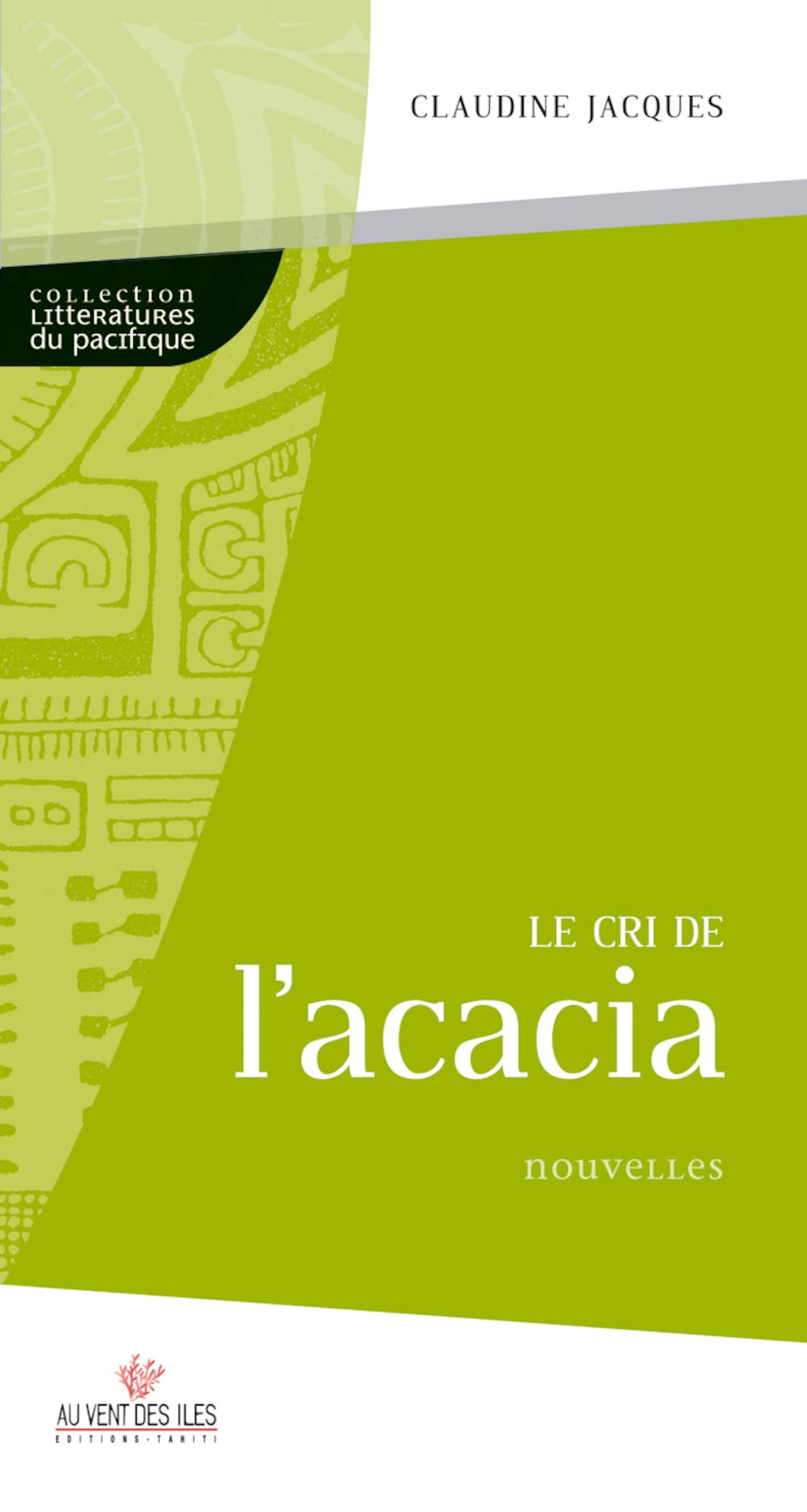
Worth has translated several of Jacques’ short stories, with three available online. “The Blue Cross” is the first I found. It comes from a collection, Le cri de l’acacia. Google translate summarised the description I found: “The cry of the acacia or all those cries that you can’t hear! Because they would be too strong, too present, too throbbing … hear the life that endures in banal tragedies or squeaky comedies, universal deep down in the intimate and the tiny, the grandiose and the derisory. All these crumpled fates are those of everyday heroes” who are the “valiant men and intrepid women with extraordinary courage … in the face of violence, alcohol, pornography and the addiction of their own lives”.

“The Blue Cross”** certainly fits this description. Its story is one of those universal, banal, domestic tragedies, one with alcohol at its centre, and a courageous woman who does the right thing. Jéhovana, the woman and wife at the centre of the story, is married to an alcoholic who is no longer fully employed due to his drinking. She has tried to maintain appearances:

She wasn’t used to making certain judgements and, out of decency, put them off. What would the neighbours and the family say, seeing her speaking and acting for him? Yet at the last family meeting it was to her that they spoke; she had given her opinion while stating plainly that it was for both of them and that she was doing it under her husband’s control, but it seemed to her that no one had been fooled.

She’s behaving as a widow would and wonders if she’d be better off if it were true

freed from all these constraints, this waiting, this shouting, these beatings, this fetid washing stinking of vomit and alcohol, and especially from the shame that she and her children bore! 

For his part, he is conflicted. She is no longer interested in him, “had banished him” from her bed.

Now and then he forced himself on her, he had the right, she was his wife, but he had less and less strength and his desire for her had softened with time. And then he didn’t like to see her sad preoccupied look; she was so happy at the beginning of their marriage but now would often cry. How could he continue to desire a woman who cries?

It all comes to a head at their son’s Communion celebration. She begged him to not drink, but, well, of course he’s an alcoholic and is unable to keep his promise. What happens next is not particularly surprising, but the resolution is, perhaps, though, then again, perhaps not. The story certainly conveys, without telling, the complexity of situations like this – particularly for women.

It’s hard to comment on the writing, given I’m reading a translation, but I enjoyed reading the story. It is told well, giving us just enough information for us to get a sense of the two main protagonists, and just enough description to set the scene for us. The most interesting thing about the choices the author has made is to name the woman, Jéhovana, but not the man. Does this suggest that he stands for all such men, while Jéhovana’s situation and decisions are individual? And Jéhovana’s name? I don’t know it, but it does bring to mind the God, Jehovah. Does this give us a hint regarding her character?

In all, an interesting story. I can see why Worth likes Jacques’ work.

Notes on the translation

Worth prefaces her transaction with some comments. She says that she left in the text “culture-specific expressions – from New Caledonian-French, Wallisian and Polynesian languages – whose meanings were clear, feeling this added “richness to the story in the way Jacques allowed them to enrich her French”. That makes sense. She includes a glossary, as Jacques did. In some cases, however, she expanded where a French expression has a specific cultural meaning in New Caledonia.

I can’t really comment on the quality of the translation, as my French isn’t up to that, but I did notice that Worth changed some of Jacques’ punctuation. For example, there’s one long sentence in French, with just commas separating the different parts, that Worth breaks into two sentences, and uses a semi-colon. It looks sensible to me, but I wonder if it says something about French style versus English style. Does anyone have any ideas on that?

* AALITRA: The Australian Association for Literary Translation.

** The Blue Cross: an international organisation “engaged in the prevention, treatment and after care of problems related to alcohol and other drugs”.

Claudine Jacques
“The Blue Cross” (“La Croix blue”) from Le cri de l’acacia (2007)
(trans. Patricia Worth)
in The AALITRA Review Vol. 0 No. 2 (2010)

Avalailable online at LaTrobe University’s Open Journal Systems site.

Bill curates: Mary Church Terrell’s What it means to be coloured …

Bill Curates is an occasional series where I delve into Sue’s vast archive, stretching back to May 2009, and choose a post for us to revisit. In 2011, when today’s post was first published, Barack Obama was in his first term as President and then Senate Majority Leader, Republican Mitch McConnell, was pursuing a scorched earth policy of refusing to even allow Democrat legislation to be debated, with the stated aim of making Obama a one-termer. Obama got a second term, but then there was Trump, and racism in America seemed to take a giant step back into the light, giving new relevance to this talk from 1907.

This is the last Bill Curates post he sent me a few months ago. I intended to publish it then, but life, reading and blogging got busy, and I tucked this away in my drafts folder for another time. I think now is the time to post it and to thank Bill for the wonderful support he gave my blog through my dark year. It was so appreciated. Thank you Bill, you helped save my sanity.

______________________________

My original post titled: Mary Church Terrell, What it means to be colored in the capital of the United States

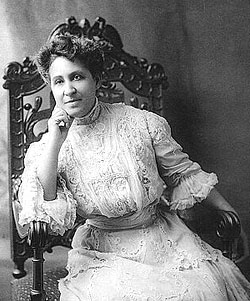
Mary Church Terrell. Public Domain, National Parks Service, via Wikipedia

I heard a radio interview this week with Jane Elliott of the brown-eye-blue-eye experiment fame, and she suggested that racism is still an issue  in the USA (through the efforts of a vocal minority) and is best demonstrated by the determination in certain quarters that Barack Obama will not win a second term*. It’s therefore apposite (perhaps) that my first Library of America post this year be on last week’s offering, “What it means to be colored in the capital of the United States” by Mary Church Terrell (1863-1954). This essay originated, according to LOA’s introductory notes, in a talk Terrell gave at a Washington women’s club in 1906. It was then published anonymously, LOA says, in The Independent, in 1907.

Now, I’d never heard of Terrell, but she sounds like one amazing woman. Not only did she live an impressive-for-the-times long life, but she had significant achievements, including being, it is believed, the first black woman to be appointed to a Board of Education (in 1895). She also helped found the National Association of Colored Women. On a slightly different tack, she was a long-time friend of H.G. Wells. Interesting woman, eh?

I have a few reasons for being interested in this essay, besides Jane Elliott’s comment. I lived in the DC area – in Northern Virginia – for two years in the early-mid 1980s and was surprised by some of my own experiences regarding race there. And, as a teen in the 1960s and early 1970s, I was aware of and fascinated by the Civil Rights movement in the USA. I was surprised but thrilled to hear, late last year, an audio version of John Howard Griffin‘s book, Black like me, that I read and loved back in those days.

But enough background. To the essay… I’ll start by saying that I’m not surprised that it began as a talk, because it seemed to ramble a bit. However, as I read on, some structure did start to appear. She starts by listing the various areas in which she, as a black woman, was (or would have been if she’d tried) discriminated against in the national capital. These include finding a boarding house and a place to eat, being able to use public transport, finding non-menial employment, being able to attend the theatre or a white church, and gaining an education. She introduces her section on transport as follows:

As a colored woman I cannot visit the tomb of the Father of this country, which owns its very existence to the love of freedom in the human heart and which stands for equal opportunity for all, without being forced to sit in the Jim Crow section of an electric car …

The irony here is not subtle – but she’s in the business of education where subtlety would not get her far!

She then returns to many of these issues – and this is where I started to wonder about her structure – but what she does is move from introducing the issues by using herself as an example to exploring each one using real examples of people she knows or has heard of. She describes, for example, how employers might be willing to employ a skilled black person, but are lobbied by other staff and threatened with boycotts by clients and so take the easy path of firing (or not hiring) the black person in favour of a white person. In one case the employer is  a Jew,

… and I felt that it was particularly cruel, unnatural and cold-blooded for the representative of one oppressed and persecuted race to deal so harshly and unjustly with a member of another.

You can guess why, in 1907, this was published anonymously!

Anyhow, I won’t repeat all the examples she provides to demonstrate the extent of prejudice at play, because you can read the essay yourself. I will simply end with her conclusion:

… surely nowhere in the world do oppression and persecution based solely on the color of the skin appear more hateful and hideous than in the capital of the United States, because the chasm between the principles upon which this Government was founded, in which it still professes to believe, and those which are daily practiced under the protection of the flag, yawns so wide and deep.

Some 100 or so years later, the US sees itself as the leader of the free world and yet it seems that this chasm is still rather wide. What are the chances that it will completely close one day?

* Please note that this is not a holier-than-thou post. We Aussies have our own problems with racism and prejudice, and so I am not about to throw stones at anyone else.

___________________________

I love that Bill decided to choose a non-Australian post for this BC. It’s so depressing to think that no improvements seem to have been made in the decade since I wrote this – there, or I fear in most countries. Certainly, statistics coming out here in Australia are showing no improvement in important measures, like life expectancy and incarceration. Indeed there’s been some sliding. This is not good enough.

Thoughts?

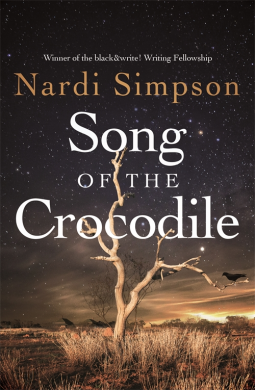
Nardi Simpson, Song of the crocodile (#BookReview)

Nardi Simpson’s Song of the crocodile is a tight multi-generational saga set in the fictional town of Darnmoor over the last decades of the twentieth century. It tells the story of the people of the Campgrounds, who are ostracised, exploited and abused by the white townspeople. Between the Campgrounds and the town proper, with its ironically named Grace and Hope Streets, is the tip, which was created by knocking down “strangely scratched gums” on the old bora grounds. The road to the tip, and on to the Campgrounds, is Old Black Road. The stage is set …

“trespassers on their own country”

The story is told in three parts which span three generations of the Billymil family – Celie, her daughter Mili, and Mili’s eldest son Paddy. Celie’s part starts, however, with her mother, Margaret. Margaret not only runs the town hospital’s laundry, but also undertakes the major load of nursing the hospital’s First Nations patients. They are housed on “the back verandah” and are mostly ignored by the hospital’s medical staff. In this way, very early in the novel, we get the picture loud and clear about how the town’s Indigenous people are treated. The racism, the omniscient narrator tells us, is “hidden yet glaring. It’s the Darnmoor way”.

But there is a parallel story going on here, too, that of the spirits and ancestors, the “knowledge keepers”, who reside among the stars. They “wait for their loved ones to arrive” but they also introduce an important idea underlying this story – the “connectedness” of “all living or once lived things”. This connection is symbolised in the novel by threads and ropes that join sky and earth through birds and trees to the roots underground. I loved that Simpson shared this, that she trusted her readers to respect a worldview that’s foreign to many of us.

Intrinsic to this connectedness, of course, is the land. Some of the book’s most lyrical writing comes from descriptions of the country – rivers, trees, birds – in which it is set. This country is the freshwater plains of northwest New South Wales, the traditional lands of Simpson’s Yuwaalaraay heritage. In her novel its main feature is the Mangamanga River, “known by some as the wide-bodied, liquid boss of the plains.” It is to this river that Mili and/or members of her family go to refresh their spirits, but the men of Darnmoor want to control it, and protect themselves, by building a levee between the town and the Campgrounds.

Essentially, then, Song of the crocodile is the story of people who are made to feel “trespassers in their own land”. But, it’s also the story of strong, resilient women who forge a community on the Campgrounds. With guts and confidence, Celie turns her mother’s laundry skills into a business called the Blue Shed, providing work for herself and the other women. These women are a joy to read about, but they and their families are barely tolerated by the town, which ensures they know their place. When Mili’s bright young friend Trilpa wins a mathematics prize she is disqualified on trumped-up grounds, and when Mili, herself, applies for permission – permission, would you believe – to continue school past the age of 15, she too is brought down, by Mayor Mick Murphy, in the worst way.

“threads of broken lore”

Needless to say, it’s a difficult story. Too many people, people we’ve come to love, “pass” too young. As the oppression of those left behind builds, creating “hopelessness and grief”, the beast – Garriya, our titular crocodile – starts to stir. Regular hints of his rumbling imbue the novel with a sense of foreboding.

The crocodile is apparently a creator being in Yuwaalaraay country, but his evocation in this novel, as Garriya, is unleashed by the evil that has been visited upon the Campground people, evil that has broken the country’s lore. We feel him coming, and Mili’s alienated son Paddy is the conduit. Desperate to counteract this, spirit songman Jakybird wants to reconnect the “threads of broken lore”. He prepares his spirit “choir” for one last, powerful song, Garriya’s cycle. The climax is shocking, but the ending is cheekily open.

All this sounds grim, but I didn’t find it hopeless. There is delightful warmth and humour in the interactions between the Campground women, and there is humour and hope in the spirit world. Through these, Simpson gives us a complex story of oppression and survival. For all the misery suffered by the Billymils and their community, there is hope in their resilience, in their ongoing connection to country, and in their determination to keep passing on culture. Early in the novel, laundry worker Joyce addresses the parcels for delivery, using drawings that convey “a belonging, a knowledge, a truth of the place on which they walked and worked”:

In most cases the recipients failed to notice the mark, tearing the paper off and crushing it into a ball. It didn’t matter that eventually it was taken to the tip and returned to the earth. What mattered were the boys on the bikes that delivered them, that read the symbols then read the land. The drawings and the washing restored old journeys, countrymen walking on places they knew.

Simpson also, as First Nations writers are increasingly doing, uses Yuwaalaraay language throughout. She doesn’t directly translate it and there is no glossary. This bothered some of my reading group, while others of us felt the meaning was always clear – or clear enough. Here, for example, is Margaret in Chapter 1:

“Yaama. Dhii ngaya gaagilanha. Who wants a cuppa?” Margaret pushed open the door to the hospital’s back verandah, its hingers squealing as she entered. “How are we all today?”

Song of the crocodile was my reading group’s July book, and it resulted in one of our liveliest discussions this year, as we defended our diverse responses to its ideas, style, characters and tone.

For me it was an absorbing read. It is uncompromising in its portrayal of the insidious racism that First Nations Australians confront and the devastating impact of that on the spirit, but it also shows resilience in the face of that, and it affirms that culture is strong. That has to be a positive thing?

For Lisa’s and other blog reviews, check her ILW Fiction Reading List.

Challenge logo

Nardi Simpson
Song of the crocodile
Sydney: Hachette Australia, 2020
401pp.
ISBN: 9780733643743

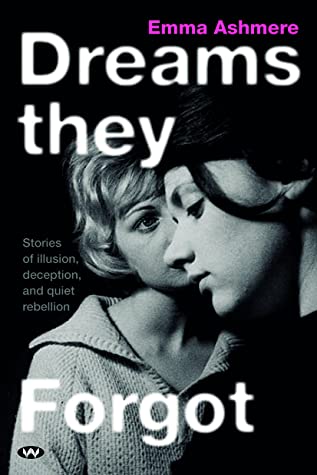
Emma Ashmere, Dreams they forgot (#BookReview)

Emma Ashmere’s short story collection, Dreams they forgot, is different again from recent short story collections I’ve read. Certainly very different from the most recent, Adam Thompson’s Born into this (my review). One of the things that makes it different is its breadth in terms of time and place. Thompson’s collection, for example, is mostly contemporary, with occasional forays into the past and a little jump into the future. It is also very definitely centred in Tasmania. Ashmere’s collection on the other hand, while having some grounding in South Australia, has stories set elsewhere in Australia as well as overseas, including London, France, Bali and even Borneo. Furthermore, a significant number of the stories are historical fiction, with some set in colonial Australia, or during the Depression, for example, or post war, or in the 1970s. This is quite unusual in my experience of short story collections.

Unusual I say, but not surprising, because Emma Ashmere’s debut book is an historical fiction novel, The floating garden (my review). It is one of those books that has stuck with me because it tells such a strong story of social injustices that occurred during the building of the Sydney Harbour Bridge.

I could, then, start my discussion with the story in this collection which concerns the Bridge during its construction (“The sketchers”), but instead I’m going to the final story, because it gave me a laugh. This story, “Fallout”, concerns the (not funny) nuclear testing at Maralinga and concludes with the narrator taking her mother to the National Film and Sound Archive (NFSA) in Canberra to show her some relevant treasures. What a great little promo for the importance of collecting institutions like the NFSA. But, that’s not what made me laugh. As some of you know, I spent most of my career at the NFSA, and this is how our narrator introduces it:

I tell her I live with my girlfriend in Canberra and work at the Film and Sound Archive with a bunch of other failed actors, part-time poets and overlooked opera singers.

I wish I could count myself as one of those, but I’m far too prosaic. However, there is probably an element of truth in what she writes. All I can say is that at least the NFSA offers gainful, and valuable, employment! This story, dealing as it does with the “fallout” from nuclear testing – great wordplay here – makes a fitting and strong end to Ashmere’s collection, which deals with all sorts of fallouts in people’s lives.

Take the first story, for example. Titled “The winter months”, it concerns a young woman who, like many young people, is uncertain about what she wants to do with her life, much to her mother’s frustration. She’s in England, and is doing a TEFL course (Teaching English as a Foreign Language) which, she believes, “is going to change everything. It will give me purpose. A goal. A life”. She meets and is attracted to a mysterious and seemingly confident young woman, Aveline, but, unbeknownst to our narrator, Aveline has her own challenges, and suddenly disappears.

“The winter months”, however, is more complex than I’ve described here. It introduces us to several types of characters and relationships which thread through the collection – uncertain young women, lepidopterists (would you believe), mothers-and-daughters, neglected wives, fledgling same-sex attractions, to name a few. The result is that, as the book progresses, some stories start to feel linked, even though in most cases the link isn’t actual. The effect though is to ground the collection because this feeling is supported by recurring concerns.

One of these is Ashmere’s concern for social justice, for overlooked people, for women in particular. “Nightfall” tells the story of a young Irishwoman who arrives in Adelaide during goldfields days:

Most of us here Behind the Wall sailed across the sea with our Billies, Jemmies or Toms. No sooner did they set their boots in the dust, they streaked off like a dog chasing a rabbit across a field, all glint and muscle and hunger and bragging about what they will become. I waited for my Billy to bring back rabbits and gold, but he didn’t come.

And so, girls like her were left behind:

It’s the same in every port for girls like us. You stand with the bones of your back pressed against the wall as sailors rope up their harpoons and aim them at your lower parts, or you go into a tavern for a drink.

She ends up working for an abortionist who is, of course, more concerned about not being caught than her health and safety … This story was shortlisted for the 2019 Commonwealth Writers Prize.

Other stories explore the impact on relationships of PTSD in times when there was no support or recognition (“Warhead” and “Seaworthiness”), and another, as already mentioned, looks at the aftermath of nuclear testing at Maralinga. Many of the more contemporary stories feature children and young adults who find themselves caught in worlds they don’t fully understand or don’t yet know how to handle. “The violin” is a carefully told story about a controlling young man and his bride-to-be.

There is a melancholic or, at least resigned, tone to many of the stories, but most are not completely depressing. While happy endings might be rare, little wins or rebellions or, in some cases, lovely acts of grace lighten the endings. As with most collections, there are stories that didn’t quite work for me, but those that did more than made up for the rest. I particularly loved “Seaworthiness” and “The violin”, but most read well.

This brings me to the title, which is not one of the stories in the collection. What does it mean? It’s certainly true that many of the characters had dreams, and it’s also true that in most cases these dreams do not come to fruition. Did they forget them? Not always, but, for better or worse, other dreams – or, at least events – replace them.

If you’d like a taste of Ashmere’s writing, you can read one of the stories, “Standing up lying down”, online at Overland. I’ll finish with a quote from it:

Apparently she’d heard Laurie’s conference paper on the omissions and silences in Australian history, how particular stories are concreted over, while others are constructed and celebrated in their place.

In Dreams they forgot, Ashmere retrieves some of these concreted over stories – those she feels able to, anyhow – and gives them a darned good airing.

Challenge logo

Emma Ashmere
Dreams they forgot
Mile End: Wakefield Press, 2020
239pp.
ISBN: 9781743057063

(Review copy courtesy Wakefield Press)

Jonathan Shaw, None of us alone (#BookReview)

Some of you will know of Jonathan Shaw as the blogger at Me fail? I fly! If you read his blog, you will also know that he loves poetry: he writes it, he reviews it. None of us alone is his first commercially published collection, though he has self-published five collections and has had a number of poems published in journals like Quadrant, Going Down Swinging, and, would you believe, the European Journal of International Law. None of us alone, styled a chapbook, contains 24 poems, selected from his previous collections and published works.

I enjoy reading Jonathan’s* poetry reviews, because he takes us through the poems, sharing his thoughts as he goes. I also like the fact that though he sounds confident, he admits to not always being sure that he’s picked up the nuance or, say, understood all the “metaphorical dimensions” of a poem, so I know he’ll forgive my errors and misses here. Then again, I don’t plan to discuss particular poems in detail, the way he often does, so I may avoid big errors!

However, I will say that Jonathan plays with various forms including sonnets (which seem to be a favourite), free verse and traditional ABAB quatrains. His rhyming is confident and comfortable rather than forced, which is a great start. His allusions are accessible, and his resolutions are usually clear, with the sonnets mostly ending in a rhyming couplet, which make their point. Overall, the tone tends to be neutral or lightly melancholic, with touches of humour, even where the subject is serious. This sort of writing appeals to me.

The poems in None of us alone draw from Shaw’s life, his domestic, artistic and political interests, and so are easily relatable to Australians of a certain age and persuasions. There are gorgeous poems about dogs (“The dogs outside Orange Grove Markets”) and (“She looks out”), for example, that will speak to dog lovers. There are poems inspired by art exhibitions (“Sculpture by the sea”) or attending a play (“This is just to say”). And, most particularly, there are poems responding to the politics of the day (asylum-seekers, same-sex marriage, domestic violence, and climate change.) The first poem, in fact, is a climate change themed sonnet, “Demo”

… We
rallied, one link in a chain
of rallies all around Australia
crying out against the failure
of governments who play the role
of sycophants to Old King Coal.

I like the cheekiness of another sonnet “Unprecedented again”, which he wrote just last year. You can find it on his blog. However, while looking for it on his blog, I learnt something, which is that his favourite form is not, in fact, a sonnet, as I felt I had ascertained from this collection, but an Onegin Stanza. You’d have to be a poetry purist to know though! Anyhow, the poem plays on the idea that the “unprecedented” just keeps on coming, in one form or another, creating a fine line between the unprecedented and the precedented.

“A pronunciation lesson” – a free verse poem – is one of the poems that has been published before. It has also been read on ABC’s Poetica. I’m not surprised by its success because it lures us into a sense of calm before hitting us in the guts with a stand-alone last line. Its subject is Hiroshima, and it is followed by another free verse poem on Hiroshima, “Correspondence”, this one expressing the cynicism of one who knows how it goes. You can live too long! And indeed, there are poems here that recognise our mortality.

Before I finish, I must mention the beautiful design of this little series, with its classy front-papers, and the cover of this particular work. It features a photograph of a ceramic heart from the “Connecting Hearts Project” by potter (and Jonathan’s partner) Penny Ryan. The collection includes a poem inspired by these hearts, “2 July 2016”. The artwork and the poem address the pain experienced by asylum-seeker detainees, and the “malice” of governments refusing to open their hearts to them:

Unwrapped, this heart confronts that malice:
our beating hearts can face our fear –
Close down those camps, bring those hearts here.

And here I’ll leave it, because it’s a little book – a chapbook – and you can buy it, as I did, for $5 plus postage and handling. Check Jonathan’s post for details.

* I haven’t met Jonathan in person but have “known” him long enough in the blogosphere that I felt silly using my usual last name style, Shaw, to discuss this book of his.

Jonathan Shaw
None of us alone
Port Adelaide: Picaro Press (Ginninderra Press), 2021
28pp.
ISBN: 9781761091247

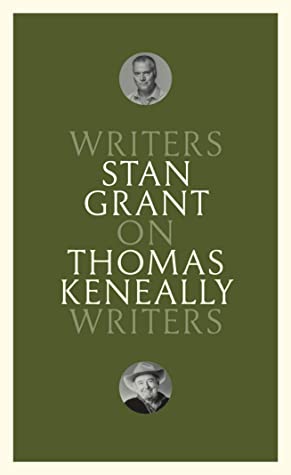
Stan Grant, On Thomas Keneally (Writers on writers) (#BookReview)

Book cover for Stan Grant, On Thomas Keneally

Stan Grant’s On Thomas Keneally is the second I’ve read in Black Inc’s Writers on writers series, Erik Jensen’s On Kate Jennings (my review) being the first. As I wrote in that post, the series involves leading authors reflecting “on an Australian writer who has inspired and influenced them”. Hmm … the way Keneally inspired and influenced Grant is not perhaps what the series editors envisaged, but certainly his essay meets some of the other goals: it is “provocative” and it absolutely starts “a fresh conversation between past and present.”

Most Australians will know immediately why Grant chose Keneally, but for everyone else, it’s this. In 1972, Thomas Keneally’s The chant of Jimmie Blacksmith was published. It is historical fiction based on the life of Jimmy Governor, an Indigenous man who was executed in 1901 for murdering a white family. Keneally is on record as saying he was wrong to have written the book from an Indigenous person’s perspective, but he did, and the book is out there (along with its film adaptation by Fred Schepisi).

That’s Keneally, but what about Stan Grant? Of Wiradjuri and Irish heritage, he is no stranger to this blog. He’s an erudite, thoughtful man, always worth listening to, but, here’s the thing. I find it difficult, with this book, to be a white Australian discussing a First Nations Australian writing about a white Australian who wrote a novel about a First Nations Australian. The politics are just so complicated. I’ll do my best, but will just focus on a few ideas. At 86 pages it is a short piece so, if you are interested, I recommend you read it yourself.

If you have ever listened to Grant, you will know that his thinking is deeply informed by history and philosophy, and so it is here. He is also palpably angry, and pulls no punches. He writes, just over half way through the essay that

This entire essay is about writing back to the white gaze. I need to write back to the white author who would steal my soul. I must prove I exist before I can exist.

Grant starts his essay by reminding us of Australia’s history and how “in a generation or two, my people were nearly extinguished.” He introduces us to Jimmy Governor, who was executed just three weeks after Federation. Jimmy becomes the lynchpin for his argument, because he, “that grotesque murderer”, is also, says Grant, “the memory of a wound. He is a scar on our history that runs like a fault line between black and white.” He is “a spectre that will not let us bury our history.”

The problem is, argues Grant, that the real Jimmy is nothing like Keneally’s Jimmie:

Keneally’s caricature of a self-loathing Jim­mie Blacksmith is a lost opportunity to explore the complex ways that Aboriginal people … were pushing against a white world that would not accept them for who they were; that would not see them as equal; that, in truth, would not see them as human.

But, of course Keneally’s novel is historical fiction, and, historical fiction, as most of us realise, says as much about the time it was written as about the time in which it is set. In Keneally’s case, The chant of Jimmie Blacksmith was written in 1972, a particular time in Australian history, Grant recognises, “a time of anti-Vietnam protests, the election of the Whitlam government and the Aboriginal Tent Embassy”. Grant continues:

Keneally was writing a protest story for a protest era; he needed Jimmie Blacksmith to be the freedom fighter that Jimmy Governor never was. Jimmy was a man who wanted respect. He bridled against injustice, yes, but this was a crime of anger, not an act of war.

Grant though wants something more. He wants exploration and understanding of how history, how Australia, has negated First Nations Australians’ very beings. He refers to Jacques Derrida’s coinage of

‘hauntology’, to describe how the traces of our past – our ghosts – throw shadows on our world.

Grant believes that “the West thinks it can vanquish history; that the past can be entombed”. I don’t personally ascribe to that. It’s not rational, to me. But I can see how the course of Western “progress” does in fact manifest that way of seeing, and it leaves people – like First Nations Australians – in its wake. This, really, is the theme of Grant’s essay.

However, at times Grant lost me. He says Christos Tsiolkas is “copping out” when he says that it is not for white Australians to write “a foundation story for the first peoples of this country”. Grant suggests Tsiolkas can, and that he could “look to the First Peoples to enter our tradition; to understand that story and his place in it before he writes a single word about what it is to be an ‘Australian'”.

I’m uncertain about how a white Australian can do this right now, but that is probably my lack of imagination. Regardless, I feel that Grant is refusing to recognise the respect behind Tsiolkas’ statement. It’s a respect many of us feel when we contemplate writing about First Nations Australians. We don’t want to presume we know what we can never understand. Grant says it himself, late in the book:

No one who has not lived through our interminable loss could capture what it is to be Indigenous in Australia.

In the last part of the essay, Grant discusses other Australian writers. Besides Tsiolkas, these include Patrick White, Joan Lindsay, Randolph Stowe, from the past, and contemporary Indigenous writers like Tara June Winch and Bruce Pascoe. His thoughts are often surprising. He clearly approves Eleanor Dark who “knew that blackness hovers over everything that is written in this country”.

The final part of essay reads like a manifesto. Grant states exactly what he will and won’t do and be. But, he also says he is glad Keneally wrote his book because it has stayed with him for forty years. In it, he felt “the weight of my history”. The results weren’t always positive, but the book has, I think he’s saying, kept him thinking.

And he says this:

Like me, Thomas Keneally made his own pilgrimage to the old Darlinghurst Gaol. Standing near where the real Jimmy Governor was hanged, he said he was sorry for “assuming an aboriginal voice”. He should have sought permission, he said. “We can enter other cultures as long as we don’t rip them off, as long as we don’t loot and plunder,” he said. I don’t think we can police our imaginations. I don’t think we need to ask permission. Australian writers have never done this and, frankly, I see them in my country more clearly because of it. It is like the debate about Australia Day; why move the date if it will only hide the truth.

I will leave you with that.

(My third post for Lisa’s 2021 ILW Week.)

Stan Grant
On Thomas Keneally: Writers on writers
Carlton: Black Inc, 2021
90pp.
ISBN: 9781760642327

Adam Thompson, Born into this (#BookReview)

When my brother gave me Tasmanian author Adam Thompson’s Born into this earlier this year, I told him I’d save it for Lisa’s ILW 2021, which I did – and which means I can now thank him properly for a yet another well-chosen gift, because this is a strong, absorbing and relevant read. If you haven’t heard of Thompson, as I hadn’t, he is, says publisher UQP, “an emerging Aboriginal (pakana) writer from Tasmania”. 

Born into this is a debut collection of sixteen short stories about the state’s Palawa/Pakana people, and based primarily in Launceston and islands in the Bass Straight. It reminds me a little of Melissa Lucashenko’s novel Too much lip (my review) because, like it, these stories are punchy, honest interrogations into the experience of being Indigenous in contemporary Australia. I say contemporary Australia, because most of the stories deal with recognisably First Nations Australia concerns. However, the collection is also particularly Tasmanian – in setting and in dealing with issues and conditions specific to that place.

They may live in two worlds, but they are still mob (“The old tin mine”)

I like to think about the order in which stories in a collection are presented, although I can never be confident of the assumptions I make about the reasoning. How can I, I suppose, as I’m not in the heads of the authors and their editors. The first story here, “The old tin mine”, is an interesting choice: it introduces various issues and ideas which are picked up through the collection and it sets a sort of resigned tone. The issues include the relationship between black and white in Australia, the introduction of city Indigenous kids to country and culture, the clumsy conscientiousness of white people who want to do the right thing, the politics involved, and the world-weariness of older Indigenous people in dealing with all of this. The story is told first person through the eyes of “Uncle Ben”, the Indigenous leader on an “Aboriginal survival camp”. He is tired, and cynical, and not particularly interested in dealing with these

Aboriginal teens. City boys. Three from Launceston, three from Hobart. “Fair split, north and south”, according to the organisation that had won the black money.

But it’s a job, and these jobs are becoming less frequent, so he takes it on.

The second story, “Honey”, is told third person, and concerns the interactions between white man Sharkey, who has a honey business, and his Palawa employee, Nathan. Sharkey is arrogant, condescending and oblivious of how his behaviour might affect Nathan. He asks Nathan for the “Aboriginal word for honey” because he thinks using it to brand his honey would “be a good gimmick for selling honey … ‘specially with the tourists”. Not all stories work out this way, but in this one, Nathan has the last laugh.

“Honey” also introduces another idea that peppers the collection, which is land rights, and non-indigenous Australians’ fear of losing land. The collection, in fact, references many of the issues confronting contemporary Australia’s relationship with its First Nations peoples: land rights; Invasion Day (or “change the date”); dispossession, the loss of Indigenous culture and attempts to reclaim it; social issues like incarceration, alcoholism and suicide among Indigenous people; and the Stolen Generations, to name some of them.

Some stories, however, respond to a particular Tasmanian issue, that regarding the definition of indigenity. As I wrote in my post on Kathy Marks’ Channelling Mannalargenna, Tasmania’s history has resulted in a specific set of circumstances regarding loss of identity, which has caused, and is still causing, complications and conflict over Indigenous identification in the state. One of the stories on this subject is “Descendant” about a bright, politicised but ostracised young schoolgirl who runs her school’s ASPA (Aboriginal Students and Parents) committee. Dorothy is assiduous about who is and is not “P-A-L-A-W-A”, and has family-tree records to prove it. Aboriginality, she says, is about “being”, not “choosing”. The story provides an excellent example of Thompson’s use of imagery to underpin his themes: Dorothy’s prized mug is accidentally broken, and Cooper, the supportive (of course!) librarian, tries to repair it, but

Bold, white cracks now intersected the Aboriginal colours like a tattered spider web.

Thompson’s writing in this collection is accessible but evocative. His dialogue varies appropriately from speaker to speaker, and the imagery, particularly that regarding colour – red, blue and white, representing white Australia, versus the red, black and orange of First Nations Australia’s flag – is pointed but not overdone. Thompson clearly knows his country. His descriptions of the islands, and the plants and birdlife endemic to them, take you there (or, at the very least, teach you about them.)

I would love to write about more of the collection’s stories, but I should leave you some surprises. I will say, though, that Thompson’s wide cast of characters – from young, disaffected palawa to smart activists, from genuine white people, who want to understand, to the smug and/or rich ones (as in the incisive “The black fellas from here“) – ensures that this collection hits home. No reader, really, can hide from the truths here because they touch us all.

White makes you wary (“Aboriginal Alcatraz”)

Born into this, then, is clearly political, but it is not all bleak. Some stories end with a bang or a twist, which skewer their points home, while others are more gentle. The title story, “Born into this“, is one of the more poignant ones. It tells of Kara, who works as a receptionist at an Aboriginal housing co-op. She’s jaded. Her boss is “a tick-a-box Aboriginal” who “could never prove his identity”, and she is tired of the struggle to survive. So, deep in the forest, where she had learnt about country from her uncle, she spends her spare time working away on her own quiet, little subversive project, a project that involves

Natural survivors, like her own family, born into a hostile world and expected to thrive. She took in the surrounding devastation and thought again about her own life.

“Born into this”.

She knows she won’t make a difference, but “fulfilling some cultural obligations in her own small, secret way” keeps her sane.

It would be great to think that books like Born into this could make a difference – and I think they could, if we all not only listened to Indigenous writers like Thompson, but also took on board, really took on board, what they tell us about ourselves.

For more reviews of this novel, please click Lisa’s ILW 2021 link in this post’s opening paragraph.

Adam Thompson
Born into this
St Lucia: UQP, 2021
210pp.
ISBN: 9780702263118