Anita Heiss, Bila Yarrudhanggalangdhuray (#BookReview)

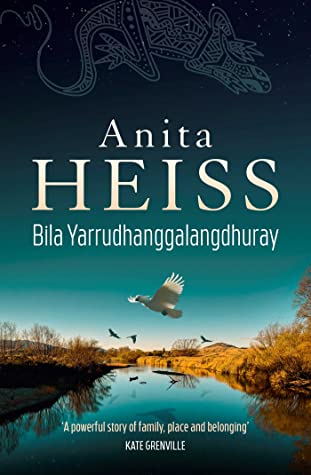
Bila Yarrudhanggalangdhuray/River of dreams is Anita Heiss’ second work of historical fiction, her first being Barbed wire and cherry blossoms about the 1944 Cowra breakout in which she imagines a relationship between a Japanese escapee and a young First Nations Australian woman. I have not read that novel, but I have read, over the last year or so, other First Nations Australia historical novels, including Julie Janson’s Benevolence (my review) and the collaborative novel by non-Indigenous Australian Craig Cormick and First Nations writer Harold Ludwick, On a barbarous coast (my review). Long before these, though, was Kim Scott’s unforgettable The deadman dance (my review).

The value of these, and like books, to offering a First Nations perspective on the one-sided history that most of us grew up with cannot be under-estimated. Heiss, in fact, wrote in her Author’s Note and Acknowledgements, that through re-engaging with her Wiradyuri homelands in her early 50s,

I realised very quickly I had to honour those Ancestors who for millennia have lived, loved, and nurtured the land and each other. And I wanted to pay tribute to those who carry on culture, knowledge and language still today. I felt I had a responsibility as an author to write our Wiradyuri heroes – our men and women – into the Australian narrative where they had been ignored or forgotten too long.

Bila Yarrudhanggalangdhuray is her response to that realisation. It is of particular interest to me because it is set around Gundagai and Wagga Wagga, which are within three hours’ drive from where I live. Although I have been visiting the Gundagai region since the mid-1970s, it was only in recent years that I became aware of the story which is central to Heiss’ novel. This story concerns Gundagai‘s flood of 1852. As Wikipedia describes, the Murrumbidya flooded, killing at least 78 of the town’s population of 250 people. Using bark canoes, four local Aboriginal men, including Yarri, Jacky Jacky, and Long Jimmy, saved somewhere between 40 and 68 people. They were minimally recognised at the time, but, finally, in 2017 (2017!), a bronze sculpture of Yarri and Jacky Jacky, with canoe, was unveiled in Gundagai. Heiss’ novel concerns the life of a young Wiradjuri woman, Wagadhaany, the imagined daughter of Yarri.

The novel is told, like many historical novels, chronologically, and starts with a Prologue set in 1838, some 14 years before the main narrative starts. This prologue is important. It introduces Wagadhaany who, as a 4-year-old, is with her babiin, Yarri, as he tells a “White man” that the place they are standing on is “not a good place to live, Boss, too flat”, that it’s a “flood area”. Of course, the White man ignores this local knowledge and so the stage is set for 1852 when the devastating flood comes. By this time, Wagadhaany, now 18, is working as a servant for that very White man, Henry Bradley.

The flood and its immediate aftermath occupy the first five chapters of this 29-chapter novel. Only two sons of the Bradley family of six survive, along with Wagadhaany. The rest of the novel follows their lives over the next couple of decades, showing how little the White settlers learnt from the experience – practically, in terms of how to live on the land, and morally, in terms of their behaviour to the true owners of the country. Wagadhaany, who is bound, she is told, by the Master and Servants Act of 1840, has no agency in such a world.

“a witness without a voice”

Into this situation comes the young Quaker widow, Louisa, who, like the Bradley men, lost her family in the floods. I was surprised by the appearance of a Quaker, but Heiss also explains in her Note that there were Quakers in early colonial Australia, and they were interested in “the treatment of the convicts and the Aborigines”.

Louisa is an interesting character because she tries to treat Wagadhaany well. She calls her by her actual name, rather than Wilma, as James Bradley does; she works alongside her in the kitchen and garden; she gives her a bedroom in the house; and she converses with Wagadhaany as a friend. But, she has her blind-spots. She is oblivious to Wagadhaany’s lack of agency over her life, to the fact that, when the Bradleys (now including Louisa) move to Wagga Wagga, she thoughtlessly over-rides Wagadhaany’s wish to stay in the Gundagai area where her family is.

As the novel progresses, Wagadhaany’s homesickness for her family, and her country, increases. We are privy to Wagadhanny’s thoughts, to her awareness that there are limits – albeit unconscious ones – to Louisa’s concept of equality. Louisa is, after all, a product of her time and her culture – and Wagadhaany notices that, for all their “equality”, it is Wagadhaany who does the hardest, dirtiest, heaviest jobs, and that she is not paid a wage.

What the presence of Louisa does, though, is to add richness and nuance to the depiction of colonial society. She is a foil to the brutal, racist attitudes of James Bradley. She does not mitigate them but shows that his were not the only views around. Wagadhaany, on the other hand, tells it as it is from the First Nations’ perspective. In the early days after the flood, Heiss writes that Wagadhaany

feels like a witness without a voice. She was there, she lived through the horror of the flood, the fear, the physical exhaustion, the loss of those she knew. But no-one asks how she is, what she thinks or knows, or how she feels.

For all Louisa’s kindness, there is much Wagadhaany feels she can’t say, and so throughout the story she continues as a silent witness. Here she is reflecting on Louisa and work:

She wondered why Louisa had to be protected from hard work but the Wiradyuri women didn’t. And she wondered if that thought ever crossed Louisa’s mind, because that made them different, unequal …

Gradually, though, she starts to stand up for herself:

“I know I will have to work for you, I know about the masters and servants law, but you cannot keep me living here in the homestead against my will if you honestly believe I am your equal and that I should be as free as you”.

And Louisa, to her credit, “lets” her live with the river family.

Bila Yarrudhanggalangdhuray has strong characters, but it is also a genre novel with a strong plot, including of course, romance. I don’t want to spoil what is a good page-turning story, so I will leave the story here.

Heiss has several novels under her belt now. She knows how to tell a good story, and she is also very clear about her message. She uses her fiction to show what she wants the rest of us to know. In this novel, it’s the way First Nations people lived, the way they tried to work with the settlers, and the way they were gradually pushed off their land. She also, through Louisa, forces us to confront what really is being “a good White person”. So, not only does the novel tell some truths about Australia’s settler history but it is also immediately relevant to today.

In this novel, Heiss also, as First Nations writers are increasingly doing, incorporates language into the writing. There is a glossary at the back, but you rarely need it because most words are self-explanatory in context. Seeing “our” nation’s words in Australian literature is a truly exciting development.

Bila Yarrudhanggalangdhuray isn’t a perfect novel – and I struggled particularly with Louisa’s falling in love with the man she does. But this is a genre novel, and a bit of belief-stretching is allowed. The end result is a book that engages the reader with its strong protagonist in Wagadhaany, that wraps its vital messages in a compelling story, and, significantly, that ends authentically.

Lisa (ANZ LitLovers) has also recommends this book.

Anita Heiss is a Wiradyuri woman from NSW.

Anita Heiss
Bila Yarrudhanggalangdhuray
London: Simon & Schuster, 2021
393pp.
ISBN: 9781760850449

Larissa Behrendt, After story (#BookReview)

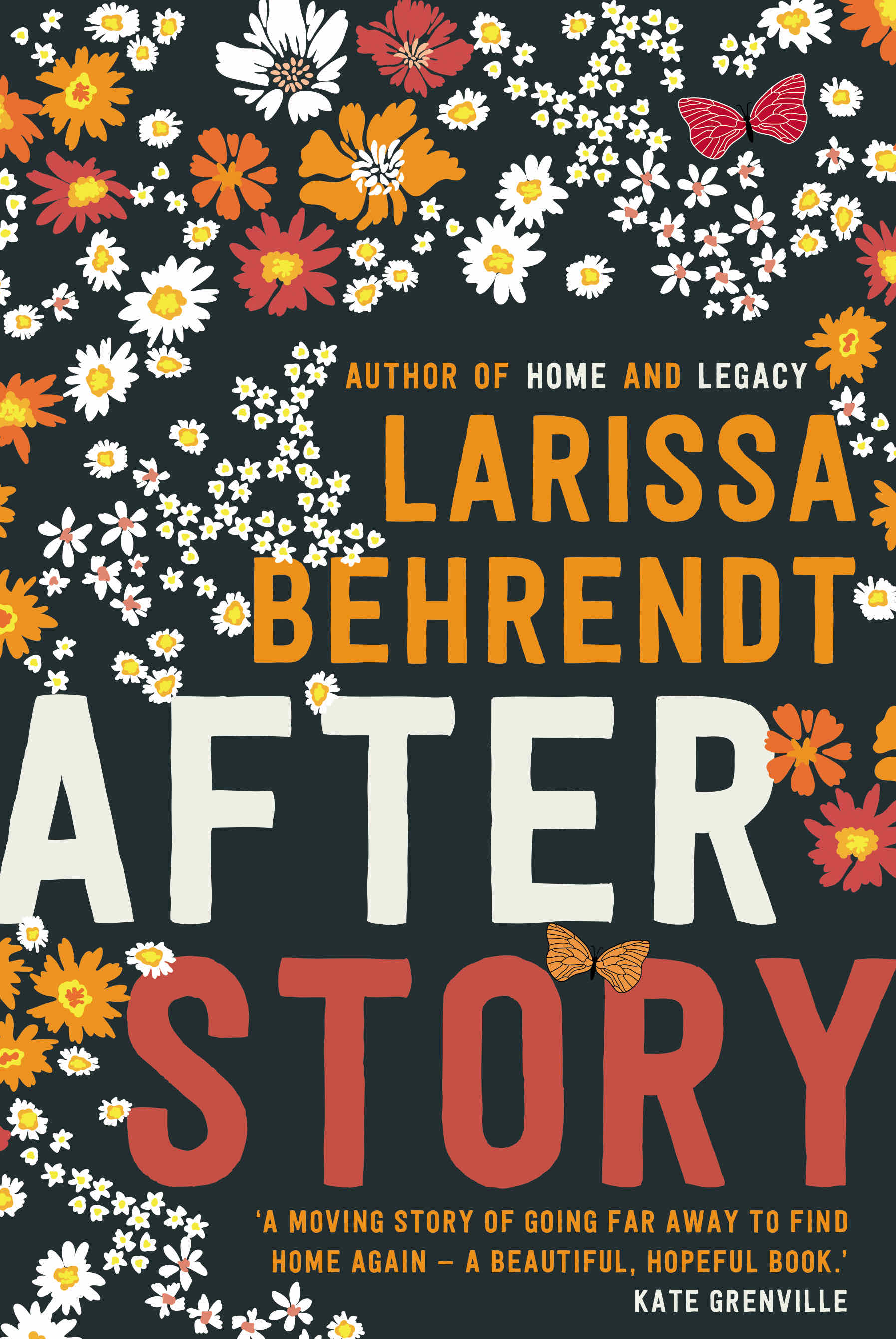
Larissa Behrendt’s latest novel After story has been on my wishlist since it came out last year, so I was thrilled when my reading group chose it as our 2022 NAIDOC-Week read. What self-respecting reader, after all, doesn’t like a literary tour?

After story, for those who haven’t caught up with it yet, is framed around a ten-day literary tour of England that is undertaken by a First Nations Australian mother and daughter, Della and Jasmine, whose relationship is fraught. Through this plot device, Behrendt marries her two storytelling loves – English literature and Indigenous Australian storytelling. In doing so, she draws comparisons between them, and explores ways in which both can reflect on and enhance our lives. She also shows how travel can be an engine of change for people.

Although it contains some very dark matter concerning grief and abuse, After story is a gentle and generous read – for two reasons. First, there’s the characters. Della and Jasmine, are strong, thoughtful and, importantly, real. Both have made mistakes in managing the challenges in their lives, but both genuinely want to have better relationships with those they love. Della, the less educated and more naive of the two, is particularly engaging for her honesty and lack of pretension, for her open-mindedness, and for the rawness of her pain. The other reason is the novel’s tone. It is clear and passionate about the wrongs done to Australia’s First Nations peoples but it is not angry. This is not to say that anger doesn’t have its place – it certainly does – but it’s not the only approach to telling the story of dispossession and dislocation.

What is particularly striking about this book is its structure and voice. After a prologue in Della’s voice telling of the disappearance twenty-five years ago of her 7-year-old daughter Brittany, the novel is structured by the tour, with each day being told, in first person, by Della and then Jasmine, until Day 8, when Della’s built-up grief overcomes her. After that, the order changes and Jasmine goes first. This change marks a turning point in their relationship – albeit not an immediate, epiphanic one. It also jolts the narrative out of a pattern that had risked becoming a little too rigorous. Like a coda, it makes the reader sit up and wonder what will happen next?

What does happen, however, as I’ve already implied, is not particularly dramatic. Rather, this book emulates something Virginia Woolf said, as Jasmine shares:

The great revelation perhaps never did come. Instead, there were little daily miracles, illuminations, matches struck unexpectedly in the dark.

Like life.

But, back to the structure. After story is one of those books in which the structure mirrors or supports its intention – and Jasmine, again, explains it well. Talking about Jane Eyre and Jean Rhys’ response to it in Wide Sargasso Sea, she says, “it’s compelling, the uncovering of the other side of the story”. “Uncovering the other side of the story” is the nub of this novel – personally, in terms of Della, Jasmine, and their relationship with each other and the rest of their family, and politically, in terms of the conflicting views and experiences of the colonisers and colonised. What Behrendt aims for in this novel, I believe, is to bring people together through improved mutual understanding.

Lest this sound too earnest, though, let me reiterate my earlier comment that this novel has a light touch. To balance the heavy material, which includes a number of losses including those related to abandoned and lost children, Behrendt creates a cast of typical tour participants. There’s the white male know-it-all professor and his seemingly mouse-like wife; the feminist young lesbian couple willing to take him on at every turn; the recently retired, educated middle-class couple; the bossy woman and her down-trodden sister; Della and Jasmine; and of course Lionel, the long-suffering tour guide, and bus-driver Brett. Behrendt handles these almost-stereotypical characters well, so that, by the end, even the arrogant Professor Finn is softened for us.

There is much humour in the telling, such as this, for example, from Della as she enters the British Museum, which, she has just discovered, still holds Aboriginal remains:

As we walked into the imposing white building there was a big glass bowl with money in it and a sign asking for donations.
“We already gave,” I said to the guard who was standing next to it.

Comments and asides like this are used throughout the novel to draw our attention to the truths we may not otherwise see. Truth, in fact, is a recurring idea in the novel – the withholding and the sharing. Della, reflecting on Thomas Hardy’s first wife being written out of history, remembers stories of erasure told by her community’s elder Aunty Elaine, and thinks “Sometimes the truth matters and you shouldn’t try to hide the facts”. A little later, Jasmine is also reminded of Aunty Elaine’s wisdom:

Aunty Elaine would remind me that there is more than one way to tell a story; there can sometimes be more than one truth. ‘The silences are as important as the words,’ she’d often say. There is what’s not in the archive, not in the history books – those things that have been excluded hidden overlooked.

Throughout the novel, Aunty Elaine’s stories and wisdom, shared through the memories of Della and Jasmine, provide the First Nations’ foil to the literary tour, sometimes enhancing, sometimes counteracting the messages and lessons of English literature.

I did, however, have one issue with the novel, one shared by a few in my reading group. This concerned its occasional didactic tone. Frequently, for example, the characters tell us what they’d learnt at various sites, such as about Jane Austen’s life or Virginia Woolf’s death. While we could see the point, the way the information was imparted did feel teachy at times. Fortunately, this tone did not extend to the novel’s underpinning ideas which are conveyed through the narrative rather than “told”.

In a Sydney Writers’ Festival panel, Behrendt said something that appeals to me, which is that the goal of being a great writer is to say something important. In After story, she has written an engaging, accessible novel, that also says important things – some subtle, some more overt, but all stemming, ultimately, from the traumas First Nations people have suffered, and continue to suffer, at the hands of the settlers.

Jasmine comes to a significant realisation near the end:

Suddenly I found the museum stuffy. When Aunty Elaine would talk about it, our culture felt alive – the sewing of possum cloaks … the gift of telling stories. They were living and breathing, not relics of the past, frozen in time. Looking at the artefacts surrounding me, I couldn’t help but feel I missed an opportunity with Aunty Elaine to capture her knowledge.

She had, she continues, “rightly valued education” but she had also “taken Aunty Elaine and her knowledge for granted”.

This is the call Behrendt makes in her novel. She wants both cultures given equal respect for what they can offer us. She knows the value of stories in bringing people together. Wouldn’t it be great if her story here achieved just that?

Larissa Behrendt is a Eualeyai/Kamillaroi woman

This book has been reviewed by several bloggers including Lisa, Brona and Kimbofo.

Larissa Behrendt
After story
St Lucia: UQP, 2021
307pp.
ISBN: 9780702263316

Jeanne Griggs, Postcard poems (#BookReview)

If you love travel, you would enjoy Jeanne Griggs’ poetry collection, Postcard poems, which comprises postcard-sized poems ostensibly sent from locations around the USA, and further afield. Like all good travel writing, though, these poems offer more than just simple travel.

However, before I discuss them, I should introduce the poet. Some of you will already know her, because Jeanne Griggs is the blogger behind the wonderfully titled Necromancy Never Pays … and other truths we learn from literature. How could a reader not love this? You can read about her and her blog’s name on the blog, so I’ll just add that at the back of the collection we are told that besides writing her blog she directs the Writing Centre at Kenyon College, and plays violin in the Knox County Symphony.

So, the collection. It’s divided into three parts, and each poem occupies a page – on the left of the page is the poem and on the right is the addressee (like “To Allen/Crystal Lake, IL”) plus that little rectangular box you get on postcards for the stamp. It’s a clear, simple layout, which maintains our focus on the poems’ context. The titles of the individual poems ground us further, with each referencing its subject, such as “Note on a postcard of Cypress Gardens” or “A postcard of Antelope Canyon” or “A postcard with ornamental pear tree”. There is also an epigraph, and I’ll share it because it’s perfect. It’s from Tennyson’s Ulysses: “I am a part of all that I have met; / Yet all experience is an arch wherethro’ / Gleams that untravell’d world whose margin fades / For ever and forever when I move.”

Regarding the trigger for this collection, besides the obvious travel that is, Griggs wrote on GoodReads that “I was writing poems and fitting them onto the back of actual postcards and then sometimes I would send them to my friends and family. Very soon it became clear that this was a collection, that together the poems told a kind of story”.

Now, all this might sound a little cute, but the idea has not resulted in something formulaic or overly structured. Indeed, the poems roam through place and time, and encompass a variety of holidays and trips, some overseas to, say, the Alhambra in Spain (“Note on a postcard of the Alhambra”), and others closer to home, like visiting a child at college (“Note on a postcard of Wellington, Ohio”).

What captures the attention, however, is that alongside the expected description of a place, most poems contain more. There are reflections, some delightfully wry and some pointedly ironic, on the experience of travel – the joys and challenges, the misses and triumphs, the surprises and the ordinary – and their impact on the traveller. I enjoyed, for example, poems about attending festivals, like:

We’ve come to hear about books,
drink bourbon, and eat crawfish,
casting aside our inhibitions
like layers of clothing, extraneous
in the bloodworm Louisianna night.

(from “Note on a postcard of the St Francisville Inn”)

There are also the personal stories that made these trips worth writing about, such as memories of family holidays followed later by cards to children now grown up. There’s the mother remembering her own mother, only to recognise the pattern is repeating:

and thinking about my mother
how she would take me
to fancyhotels and
sit, saying she was content
with the view, watching me
disappearing over the horizon,
like my daughter, now.

(from “Note on a postcard from the El Tovar hotel”)

Letting go isn’t as easy when it’s you doing the letting go!

… so it was the first trip
we took without you. I missed you,
loosing my regret out of earshot,
drowned out by water roaring,
wishing I could watch you
see this …

(from “Notes on a postcard of Niagara Falls”)

The Contents list, in which a poem on Santa Monica Pier, for example, is followed by one containing a piece of the Berlin Wall followed by one from Waikiki, might suggest, on the surface, something quite random. However, reading the poems reveals subtle segues in nearby poems, from simple things like mentions of cereals (Froot Loops and Cheerios anyone?) to concepts like growing older. Books feature too. Few are named, but keen readers will spy the likes of Tolkien and Shakespeare within these pages.

There’s also some politics. One, “Note on a postcard of the Mount Vernon public square”, documents weeks of protesting, of wanting neighbours to realise that their congressman “is voting against / their health benefits, our water supply”, while another, “Note on a postcard of the Marie Laveau Voodoo Museum”, shares how a human skeleton brings to mind “desperate people feeling / no control over their lives, / the deck stacked against them”.

A couple of the poems particularly resonated with me – in addition to those dealing with family, ageing and children growing up. “Notes on a postcard of Mesa Verde”, for example, captured my own wonder about that amazing place and the people who lived there, while the opening poem, “A postcard of a mirrored room”, makes that poignant (there’s no other word for it) point about

… all the places
we’ve been, until
we get to the last one
and who will know
where that is until after
we reach a final destination.

The last poem, “A postcard from the Getty Museum”, offers a different sort of finality – the arrival of the pandemic. It’s not named, but when Griggs writes of not thinking about the crowds until “After, when the press of all / those people became unimaginable” followed by “all future plans suspended”, we know what she means.

Postcard poems is an engaging and accessible collection that uses something as relatable as writing postcards to explore things that matter. It’s nicely crafted, but also accessible. Well worth reading.

Jeanne Griggs
Postcard poems
Frankfort, KY: Broadstone, 2021
56pp.
ISBN: 9781937968885

(Review copy courtesy the author)

Jane Austen, Sense and sensibility (Vol. 3, redux)

Jane Austen, Sense and sensibility

I’ve called this post “Vol. 3, redux”, although it is my first post on volume 3. The reason is that for my Jane Austen group’s 2011 slow read of Sense and sensibility, I wrote posts on volumes 1 and 2, but not on volume 3 as I missed the meeting, and never did write up my own thoughts. This slow read, I have written up volume 1 (as “redux”), but I missed volume 2’s discussion, and again didn’t write up my thoughts. However, I did get to the volume 3 meeting and am naming my thoughts “redux” to match them up with the right re-read!

Now, a quick recap … In my recent volume 1 post, I discussed various ideas that had captured my attention, such as the novel’s autobiographical aspects, “fond” mothers, and appearance. Most of these had fallen away for me by the time I got to volume 3, but one idea that I mentioned – goodness, compassion and kindness – did not…

Triumph of kindness and generosity

From the novel’s beginning, the virtues of kindness, benevolence, generosity, charity are pitted against greed and self-interest. It starts with the sisters’ brother, John Dashwood, doing essentially nothing for his sisters while a distant cousin, Sir John Middleton, offers them a home at a good rental and supports them in any way he can. The theme continues through volumes 2 and into volume 3 where even characters who had been seen, initially, as somewhat silly if not vulgar, like Mrs Jennings and Charlotte Palmer, show kindness and compassion. They show up favourably against the greed and self-interest of Fanny and John Dashwood, Lucy Steele, and Willoughby.

Colonel Brandon is one of the characters whose kindness is evident from the start. Indeed, Elinor says to her mother near the end, that “his character does not rest … on one act of kindness”. A telling moment occurs when, in volume 3, he offers Edward Ferrars “a living”, after Edward’s own mother had disinherited him. The aforementioned John Dashwood finds this behaviour “improvident” and “astonishing” – and wonders why. Elinor responds, simply, that Colonel Brandon wanted “to be of use to Mr Ferrars”. That phrase, “to be of use”, conveys a sense of humility, of not wanting anything back, in his generosity.

It’s surely ironic when a page later, John Dashwood accuses sister Elinor of “ignorance of human nature”.

Mrs Jennings, too, who is described in the opening volume as “rather vulgar”, proves herself to be thoughtful and generous to Elinor and Marianne during their stay in her home in London. And when, in volume 3, Marianne falls seriously ill en-route home, Mrs Jennings

with a kindness of heart which made Elinor really love her, declared her resolution of not during from Cleveland as long as Marianne remained ill, and of endeavouring by her own attentive care, to supply to her the place of the mother she had taken her from.

Money is the root of …?

Money is another idea that threads through the novel from beginning to end: it is the death of Mr Dashwood which results in Mrs Dashwood and her daughters finding themselves homeless and impecunious. As the novel progresses, characters are defined by their attitude to money. There are well-off characters who are avaricious, like the aforementioned John Dashwoods and Mrs Ferrars, and well-off characters who are generous, like Sir John Middleton, Colonel Brandon and Mrs Jennings.

There are many in the novel, in fact, for whom money is so important they will sacrifice values like integrity and sincerity. Willoughby, in his confession to Elinor in Volume 3, admits

My affection for Marianne, my thorough conviction of her attachment to me–it was all insufficient to outweigh that dread of poverty, or get the better of those false ideas of the necessity of riches …

Of his rich fiancee, he says, “her money was necessary to me”.

Lucy Steele is, of course, the epitome of someone who schemes and manipulates for money, with little regard for the feelings of others. In the end, despite all her protestations of love, she is not willing to settle for the secure, if not rich, life that Elinor eventually has.

But what is it really all about?

As with all of Austen’s novels, what Sense and sensibility is about has been discussed and analysed and critiqued from literary, socioeconomic, feminist, historical, you-name-it perspectives. And, really, there is no one thing it is about. That is the joy and value of Austen. What she writes about, fundamentally, is people, and how we read her changes with our own experiences of life.

So here is where I am today. When I first read Sense and sensibility in my teens, I loved it. It was so romantic. Elinor gets her man, and is happy to live the life of an honest but not particularly well-off minister’s wife. Her sweet but overly romantic, emotional sister, gets the rich man. While that never seemed quite fair to me, as happily-ever-after stories go, I accepted it because it just showed what a person of integrity Elinor truly was. Love and esteem for an honest man were what made her happy.

And yet … what is Austen saying to us? Why do some of her heroines end up with less than dashing heroes? Well, I think it is partly because she was an early, if not the first, great novelist of realism. From this, her very first novel, she provides us with a microcosm of humanity. Like her later novels, Sense and sensibility is populated with flawed characters who represent complex humanity, unlike her Gothic and Sentimental novelist predecessors who tended to present the world in more morally absolutist, black-and-white terms. Not so Austen. Mrs Jennings might be “rather vulgar”, and a bit of an interfering gossip, but her heart is large and she’s generous. Mr Palmer, who seems cold and distant when first met away from home, shows himself to be kind and generous when a crisis occurs. And so on. Even Willoughby, despite his “selfish vanity”, is redeemed a little by his confession, and Austen allows him a reasonable life after all. I now see this confession as not being “clunky” as I’d once thought, but as important to Austen’s mission of portraying life.

But, back to Marianne. There was something that I noticed on this read that I’d never noticed before, and that concerned Marianne and her marriage to Colonel Brandon. One of the reasons I have always loved Sense and sensibility is for this quote:

Marianne Dashwood was born to an extraordinary fate. She was born to discover the falsehood of her own opinions, and to counteract, by her conduct, her most favourite maxims.

I so related to this – to the idea of proclaiming opinions before experience teaches us otherwise – that I hadn’t really seen the preceding paragraph, which concerns Marianne’s mother explicitly matchmaking Marianne with Colonel Brandon:

It was now her darling object. Precious as was the company of her daughter to her, she desired nothing so much as to give up its constant enjoyment to her valued friend; and to see Marianne settled at the mansion-house was equally the wish of Edward and Elinor. They each felt his sorrows, and their own obligations, and Marianne, by general consent, was to be the reward of all.

“The reward of all”. This sounds a bit suss! Austen continues …

With such a confederacy against her–with a knowledge so intimate of his goodness–with a conviction of his fond attachment to herself, which at last, though long after it was observable to everybody else–burst on her–what could she do?

And so, Marianne does come around to loving this good, kind man as Austen makes clearer a couple of paragraphs further on:

Marianne could never love by halves; and her whole heart became, in time, as much devoted to her husband, as it had once been to Willoughby.

The point, then, is that Sense and sensibility is not Romance with a capital-R, but a story about love – Elinor’s, from the start, and Marianne’s, eventually – that is based on genuine feeling combined with appreciation of the personal values that make a person worth loving.

There is so much more to this book but I’ll leave it here because I feel that, for now, I understand what it really is about!

Nigel Featherstone, My heart is a little wild thing (#BookReview)

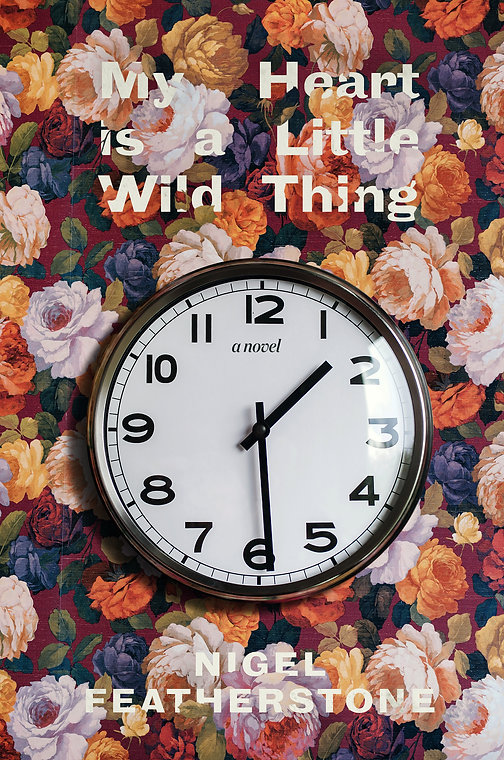
In late May, I reported on the Canberra launch of Nigel Featherstone’s latest novel, My heart is a little wild thing – and now I bring you my thoughts on this finely-observed book about a man’s reaching for his own life.

I’m going to start with a reflection on a question authors of books like this commonly get, which is, is the book autobiographical? In his launch, Nigel said that the book is not about him, but that things in his life – particularly the death of his mother – did inspire him. The book’s protagonist Patrick is clearly not Nigel, as those who have followed Nigel through his various social media accounts will know. Nigel, unlike the semi-closeted Patrick, has been in a committed relationship for over two decades, and Nigel, unlike Patrick, broke away from home and did forge his own life. At the launch, Nigel said that this book explores what his life might have looked like had he “obeyed his mother”, who didn’t want him to be a writer or to love men.

This novel then, is not his life, but it nonetheless draws on much from his life. For example, like Patrick, Nigel grew up in upper North Shore Sydney and frequented that city’s northern beaches. I enjoyed this because I spent my teen years in the same area, albeit a decade or so ahead of Nigel. I am also familiar with the other two main settings in the novel, the Southern Highlands and the Monaro, and am drawn to both, as I know Nigel is. Like Nigel’s Patrick, I do not really know why I so love the Monaro except, perhaps, because the favourite landscapes of my childhood were those wide open plains of outback Queensland. There is something captivating about them, even though, as Patrick, somewhat prophetically, writes of the Monaro,

It was all wide-screen barrenness, the only embellishment the fence lines, which cut across the tussocky landscape like tripwires.

Patrick shares other interests with Nigel, particularly music. Again, if you follow Nigel, you will know how important it is to him. He has, in fact, composed his own song-cycle. So, when he describes the music created by Lewis, the man Patrick meets, these descriptions, too, feel authentic.

But, despite all these similarities which ground the book so well in lived experience, Patrick is clearly not Nigel. As I listened to Nigel speak at the launch, and as I read the book, I was reminded of a favourite quote from Marion Halligan’s wise novel, Fog garden. The narrator writes about her character Clare:

She isn’t me. She’s a character in fiction. And like all such characters she makes her way through the real world which her author invents for her. She tells the truth as she sees it, but may not always be right.

And this, too, is Patrick.

“a fence I had crossed”

My heart is a little wild thing starts dramatically with Patrick heading off from Bundanoon to the Monaro in a distressed state the day after he’d “tried to kill his mother”. The actuality isn’t quite as bad as it sounds but Patrick, in his mid-40s, had been pushed to the limit by his demanding mother for whom, of her three children, he had pretty much sole responsibility. He needed out, a break, and so after the incident referred to in the opening paragraph, he drives to a steading (or barn) on a place called Jimenbuen, where he had spent many happy family holidays as a child.

Nigel explained at the launch that Jimenbuen is based on a little heritage-listed barn in Bobundra, on the Monaro near the foothills of the Snowy Mountains. It was when staying there that Nigel’s book finally took shape, and it is at Jimenbuen that Patrick finally takes a step towards a new life, when he decides to offer to help a man he has spied planting trees on the other side of the fence. That man is Lewis, and the rest, as they say, is history – except, of course, it’s not quite as simple as all that, because the course of true love rarely runs smooth, in fiction or in life.

However, we follow Patrick as he experiences real love for the first time in his life, and we continue to watch as Lewis returns to his life in Ireland while Patrick returns to his mother. How will it all resolve? That is not for me to share here.

The novel is about many things, but an overriding idea is that of freedom. It is signalled on the third page of the novel when, en route to Jimenbuen, Patrick describes the “odd choices” he’d made of CDs for the trip. “Perhaps”, he wonders, “they reminded me of a time when I felt free”. Three pages further on, Patrick explains that, prior to the incident, he had been planning a short getaway to Sydney, because it was a place where he “could be free”. The idea of freedom recurs throughout the novel. Nearly two-thirds through, he remembers a past conversation with his father, who had told him, “We must live our own lives”. Patrick, at the time, doesn’t fully understand this, fearing it’s “selfish”. And yet, intriguingly, near the end of the novel, Lewis tells Patrick about having seen him, when they were still boys, at a waterhole. Given how Patrick’s life had proceeded, it’s ironic, but Lewis says:

I saw you as neither male nor female, just someone who looked free. I can’t think of anyone more attractive than a person who knows how to be free, and who’s taken risks to be free.

Related to this idea of freedom are those of happiness and living life fully, all of which are encompassed in the novel’s epigraph, Verlaine’s “To live again, undying”. Through Patrick, Nigel explores just what this means – the balances, compromises, and the lines we need to draw every day to live good but true lives.

The novel explores other ideas too, including ageing, and the responsibility of children for caring for ageing parents. Nigel makes clear that this is not a one-way street. Parents need to meet their children half-way. They need to recognise that no matter how loving or dutiful their child is, that child also deserves respect and to be able to live their lives. A balance must be struck. Patrick, we see, gives and gives and gives to his mother, and receives little in return.

Ultimately though, the book is about the power of love and friendship, something that is subtly underpinned by references to a favourite novel that Patrick rediscovers at Jimenbuen. The novel is – and some of you will also surely know and love it – Paul Gallico’s The Snow Goose, about a damaged man and the love he finds and expresses.

During the book’s launch, Nigel talked about the value of fearless writing, which he also wrote about in his essay on Christos Tsiolkas (my post). It’s about being audacious and true – to yourself, your characters and your writing. Nigel has achieved that here, particularly in the way he explores, explicitly but sensitively, the complicated relationship between sensuality and sexuality, love and desire as Patrick reaches for the life that will sustain him.

My heart is a little wild thing is another of Nigel’s warm-hearted, character-focused books that deal with the complexity of family and relationships, and how we live our lives. The heart might be a little wild thing, but this book is a little beautiful thing – and not so little at that.

Nigel Featherstone
My heart is a little wild thing
Gadigal Country/Ultimo: Ultimo Press, 2022
282pp.
ISBN: 9781761150135

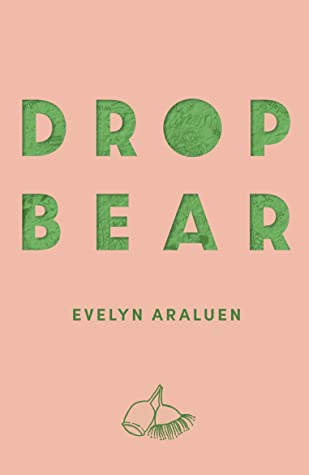
Evelyn Araluen, Dropbear (#BookReview)

The final line of “Gather”, the opening poem in Evelyn Araluen’s collection Dropbear, announces her intention – “got something for you to swallow”. Well, I can tell you now, if you haven’t already read the book, she sure has.

Dropbear, self-described by Araluen as a “strange little book”, won this year’s Stella Prize, the first year, in fact, that poetry was included as an eligible form for the prize. It has also been highly commended or shortlisted for several other significant Australian literary awards. I can see why. It is a fiercely intelligent, confronting and discomforting read that tells truths we all need to hear – and feel. It is also, however, a literary feast, replete with allusions to Australian literature from May Gibbs to Kate Grenville, from Banjo Paterson to Peter Carey, and more. There is a reason for this as Araluen explains in her Notes at the end. Dropbear should, she writes,

be read with the understanding that the material and political reality of the colonial past which Indigenous peoples inherit is also a literary one. Our resistance, therefore, must also be literary.

In other words, you fight fire with fire! What this means is that in this collection, Araluen, from her Notes again, “riff[s] off and respond[s] to popular tropes, icons and texts of Australian national culture”. In doing so, she upends prevailing attitudes, challenging the colonial project and making it very clear that it’s still in play. This all starts with the title which comprehends the myths and dishonesties at the core of Australia’s settler culture.

In the collection’s second piece, “The ghost gum sequence”, she revisits Australia’s early colonial history, concluding with

Tench’s gaze is still there – but so is ours staring back.

Simply said, powerful in impact. Araluen, and her peers, are no shrinking violets.

However, she also recognises (as does Larissa Behrendt in After story), that she too was brought up on these same texts she uses in her resistance. Hence

the entanglement: none of this is innocent and while I seek to rupture I usually just rearrange. I arrange the colonial complexes and impulses which structure these texts but it doesn’t change the fact that I was raised on these books too. (“To the parents”)

“To the parents” is one of the more autobiographical pieces in the collection. In it she reconciles her younger self’s frustration. She had seen her “parents as easy victims of the colonial condition, and not agential selves who had sacrificed everything” for their children, whereas in fact:

While my siblings and I consumed those stories, we were never taught to settle for them. My parents never pretended these books could truly know country or culture or me – but they had both come from circumstances in which literacy and the access it affords was never a given. They just wanted me to be able to read.

The resourcefulness of First Nations people is palpable in experiences like this. For Araluen, there is challenge in teasing out the “entanglement” of her own “black and convict ancestors” (“The Ghost Gum Sequence”). This includes that hard “yakker” of connecting with black heritage lost through generations of dispossession: “It is hard to unlearn a language / to unspeak the empire” (“Learning Bundjalung on Tharawal”).

Another autobiographical piece is “Breath” in which she writes of being overseas with J when the 2019-2020 bushfires hit and the pandemic starts. She is confronted by her personal dreams in dystopian times:

We came to talk about temporality, about literature, about the necessity of art in the time of crisis … We spent our youths imagining this kind of life, dreaming of ourselves as writers and thinkers who travel the world to tell stories. Being here tastes sour and hollow – it feels like relic-making. What use is a poem in a museum of extinct things, where the Anthopocene display is half-finished? … What use is witness at the end of worlds.

And yet, she doesn’t give up. In poem after poem she witnesses and shares what she sees. It’s exhilarating to read, if that’s not too positive a spin on tough content. “The trope speaks” addresses the many ways in which settler literature has usurped place, ignorantly and arrogantly:

The trope feels a ghostly spectre haunting the land, but smothers it with fence and field and church

The trope thinks every tree is a ghost gum

Later, in “Appendix Australia”, which comprises bitingly funny footnotes, this latter point is referenced again in “37. sic: not a fucking ghost gum, ibid”, reminding us yet again how little we settlers really do know country, as we muddle, if not stomp, our way around it.

The collection is divided into three parts – Gather, Spectre and Debris – which reflect a thematic and narrative trajectory that takes us from historical imperatives in Gather, through more personal reflections in Spectre, to marrying present and past in Debris, though I am making this sound more clear-cut than it really is, because the connections are more organic than formal.

The pieces vary significantly in form and style, and include prose poems, upper-case poems, a redacted poem, and memoir, but there is a coherence that transcends this difference. This coherence lies in the book’s overall unrelenting exposé of the workings of a colonial-settler society that still avoids the truth, and it is supported by recurring ideas and multilayered images, like banksia men and gumnut babies, ghosts/spectres, smoke/ash, and haunting/hunting. Each of these contain opposing ideas that jolt the reader into stopping to consider the meaning and argument being presented. It’s not easy reading, but it is worth persevering.

The final piece in Gather is “The Last Endeavour”, which tells the Cook story. It’s a prose poem that makes no bones about what these “ghosts” were doing: “we have the promise of history, the order to bring light to the dark”. It’s dramatic, ironic and, like most of the collection, satiric.

Immediately preceding this is the telling “Dropbear Poetics” which concludes with:

you do wrong        you get wrong
you get
gobbled up

Can’t say plainer than that.

The book, then, conveys ongoing loss, and critiques how deeply settler-driven history and literature is implicated in that, but it is also a hymn to country. Araluen is Bundjalung-born and raised in Dharug country, and her descriptions of the birds, trees and rivers of these coastal-riverine places are paradoxically beautiful when set against the overall narrative.

Dropbear is an impossible book to review, because every time I pick it up to consider how to end this post, I see something else I want to share. I must finish it, but I must also mention the irony and wit to be found in the collection. Poems like “Acknowledgement of cuntery” and “Appendix Australis”, for example, are breathtaking in their use of humour to skewer settler hypocrisy and obliviousness.

In a final act of deconstruction and, perhaps, reconstruction, Araluen ends her book with the defiant poem, “THE LAST BUSH BALLAD”, that sees the Banksia Men, the Bunyip, and the Dropbear defeated. It concludes on a reminder of the opening poem:

I told you I was prepared to swallow.

Araluen’s Dropbear might be a “strange” book, but it is certainly not little. It’s audacious, erudite and unsettling (pun intended), and warrants every bit of the time and attention I gave it – and more. Recommended.

Brona (Brona’s Books) has also posted on this book. However, I don’t think she will be offended if I say that Jeanine Leane’s First Nations analysis in the Sydney Review of Books comprehends and explains this work far better than we ever could.

Evelyn Araluen
Dropbear
St Lucia: University of Queensland Press, 2021
104pp.
ISBN: 9780702263187

Written for Lisa’s First Nations Reading Week

W.E.B. Du Bois, “Strivings of the Negro People” (#Review)

W.E.B. Du Bois by James E. Purdy, 1907, gelatin silver print, National Portrait Gallery, which has released this digital image under the CC0 license

While I knew of W.E.B. Du Bois (1868-1963), it wasn’t until I read Nella Larsen’s Passing earlier this year that I was inspired to read something by him. Americans will probably know him well, but Wikipedia (linked on his name) describes him as a “sociologist, socialist, historian and Pan-Africanist civil rights activist”.

He grew up, continues Wikipedia, in “a relatively tolerant and integrated community” in Massachusetts, and from quite early on was involved in the equal rights movement for African Americans. In 1909, he was one of the founders of the National Association for the Advancement of Colored People (NAACP). Wikipedia writes that:

Du Bois insisted on full civil rights and increased political representation, which he believed would be brought about by the African-American intellectual elite. He referred to this group as the Talented Tenth, a concept under the umbrella of racial uplift, and believed that African Americans needed the chances for advanced education to develop its leadership.

Du Bois and Larsen were both involved in the Harlem Renaissance of the 1920s. Du Bois, says Wikipedia, wrote that “a black artist is first of all a black artist.” While I love art with meaning, I don’t necessarily like prescription in the arts. However, when a group is so powerless, I completely understand the desire to expect all who can to put their shoulder to the wheel. We are certainly seeing a lot of it here in First Nations writing, and I’m loving (and learning from) the truths being told.

I am still in Melbourne so don’t have my copy of Passing, with its excellent introduction, but the idea of “racial uplift” underpins much of the novel. It is supported by its main female protagonist Irene who belongs to the new Black bourgeoisie and is committed to the “uplifting the brother” project. But Larsen also explores through this novel, Du Bois’ theory concerning “double consciousness”, which, originally, says Wikipedia, referred to the

psychological challenge African Americans experienced of “always looking at one’s self through the eyes” of a racist white society and “measuring oneself by the means of a nation that looked back in contempt”. The term also referred to Du Bois’s experiences of reconciling his African heritage with an upbringing in a European-dominated society.

In other words, he’s saying that African-Americans have this two-ness or split whereby they are always conscious of how they view themselves and of how others view them. I don’t think things have changed much for people of colour. It must be exhausting, this being conscious, whether you like it or not, of how others view you (and then worrying about what behaviour that might bring).

Strivings of the Negro People

So, now Du Bois’ piece. The Atlantic published “Strivings of the Negro People” in August 1897. It is still available via their site. They introduce the article with a quote from within it:

“It dawned upon me with a certain suddenness that I was different from the others; or like, mayhap, in heart and life and longing, but shut out from their world by a vast veil.”

This refers to the moment when, still a young boy, Du Bois realises that although he is just like everyone else (“like … in heart and life and longing”), he is excluded from the white world by “a vast veil”. The piece explores what this means. It’s a plea and a treatise on the treatment of African-Americans, a reasoned argument on the value to both “races” of recognising and appreciating each other. It’s also an analysis of the failure of the hope and promise of emancipation over the three decades between 1865 and the writing of the article in 1897.

I found the analysis telling. He explores the trajectory of hope and action decade by decade, pinpointing the failures. But, he starts with the observation that no matter how hard a black person might study and work, might even do better than their white peers, “he” always faced a wall that was “relentlessly narrow, tall and unscalable to sons of night”.

Then, comes the plea:

He does not wish to Africanize America, for America has too much to teach the world and Africa; he does not wish to bleach his Negro blood in a flood of white Americanism, for he believes—foolishly, perhaps, but fervently—that Negro blood has yet a message for the world. He simply wishes to make it possible for a man to be both a Negro and an American without being cursed and spit upon by his fellows, without losing the opportunity of self-development.

Then he turns to emancipation which had taken place thirty years before, and observes that “the freedman has not yet found freedom in his promised land”. In the first decade there was “merely a prolongation of the vain search for freedom”, but as the second decade dawned there was an awareness of another possibility, the ballot. With enthusiasm, black men “started with renewed zeal to vote themselves into the kingdom” but “the decade fled away” bringing nothing but “suppressed votes, stuffed ballot-boxes, and election outrages that nullified his vaunted right of suffrage”. (You get the gist, I’m sure, given recent history.)

However, another idea also raised its head in this second decade, ‘the ideal of “book-learning”’ (education). Again, he resorts to biblical language (though apparently he was agnostic, if not atheist):

Here at last seemed to have been discovered the mountain path to Canaan; longer than the highway of emancipation and law, steep and rugged, but straight, leading to heights high enough to overlook life.

It might take longer, but … and so, he writes,

Up the new path the advance guard toiled, slowly, heavily, doggedly; only those who have watched and guided the faltering feet, the misty minds, the dull understandings, of the dark pupils of these schools know how faithfully, how piteously, this people strove to learn. It was weary work.

It didn’t achieve the desired goal, but it did something, “it changed the child of emancipation to the youth with dawning self-consciousness, self-realization, self-respect”. People started to understand and analyse their burden. And what did they find? Poverty, yes – “to be a poor man is hard, but to be a poor race in a land of dollars is the very bottom of hardships”. And ignorance. But also “the red stain of bastardy, which two centuries of systematic legal defilement of Negro women had stamped upon his race”. This meant, he writes, “not only the loss of ancient African chastity, but also the hereditary weight of a mass of filth from white whoremongers and adulterers, threatening almost the obliteration of the Negro home”. A social and moral degradation.

At this point, Du Bois turns to discuss the “shadow of a vast despair”, the shadow being “prejudice”. It’s interesting, because he suggests that prejudice is ‘the natural defense of culture against barbarism, learning against ignorance, purity against crime, the “higher” against the “lower” races’. “The Negro” would support, he continues, “this strange prejudice as is founded on just homage to civilization, culture, righteousness, and progress”. BUT, the black man is

helpless, dismayed, and well-nigh speechless; before that personal disrespect and mockery, the ridicule and systematic humiliation, the distortion of fact and wanton license of fancy … the all-pervading desire to inculcated disdain for everything black.

Still, they press on with hope – not for “nauseating patronage” but for ‘a higher synthesis of civilization and humanity, a true progress, with … the chorus “Peace, good will to men.”’

So, he gets to the third decade suggesting the attempts and strivings of the first two were of “a credulous race childhood”. The ballot, education and freedom (“of life and limb”… “to work and think”) are still needed, but through “work, culture and liberty” must be fostered the “traits and talents of the Negro, not in opposition to, but in conformity with, the greater ideals of the American republic, in order that some day, on American soil, two world races may give each to each those characteristics which both so sadly lack”. His arguments become somewhat idealised but his point is valid – that African Americans had much to offer the nation.

Interestingly, his Wikipedia article tells how his 1935 history of Reconstruction which argued for the active and constructive role played by black people in this period ran counter to the “orthodox interpretation” of white historians (surprised?). It was virtually ignored until the late 1960s when it ‘ignited a “revisionist” trend’ in Reconstruction historiography. By the 21st century, his book had become a foundational text in these studies!

A very interesting man, whose legacy continues for his forward, clear thinking about the social and psychological mechanisms of race.

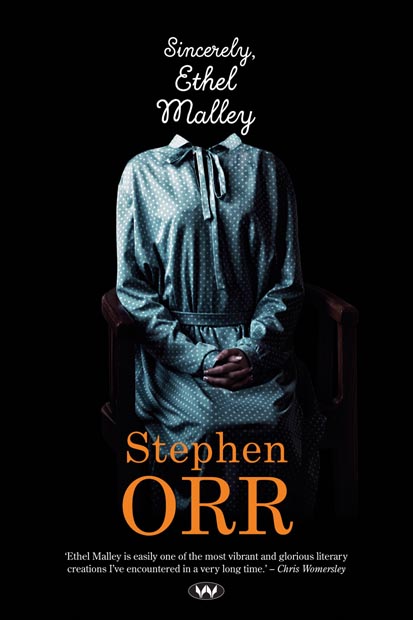
Stephen Orr, Sincerely, Ethel Malley (#bookreview)

Like Lisa, I’m a Stephen Orr fan, but for some reason it took me forever to finish his latest book, Sincerely, Ethel Malley, partly I think because while its characters are engaging, it’s a novel that deserves concentration which I seem to have in shorter supply this year. This is not meant to discourage readers, because it’s a fascinating, and wryly humorous read that explores a range of issues, to do with art and society, against a backdrop of war-time 1940s Australia.

As those who know the story will have guessed, Orr’s novel takes as its starting point the infamous Ern Malley literary hoax. To summarise Wikipedia, this hoax was perpetrated by two conservative writers, James McAuley and Harold Stewart, who created modernist-style poetry in the name of a fictitious poet, Ern Malley. They wrote the poems using random words from various reference books and rhyming dictionaries, and, in 1943 sent them, in the name of Ern’s sister Ethel, to Max Harris, editor of Angry Penguins, the journal of a modernist art and literary movement. This movement included some of the leading lights of the Heide art group, which was the inspiration for Emilly Bitto’s novel, The strays (my review). They were modern, confident, and prepared to tackle head on conservative Australia. It wasn’t long before the hoax was exposed, but that wasn’t the end of it, because Max Harris was then tried for publishing the poems, on the grounds of obscene content.

I have written about literary hoaxes earlier in this blog, and made some points about what hoaxes tell us. Among these are that they raise some fundamental issues for readers and critics about the nature of literature, about what we mean by authenticity and how we define quality. Is a work, for example, somehow less “authentic” and of less literary quality because the author isn’t who we believe s/he is? In other words, is the work the thing? These are some of the issues Orr explores in Sincerely, Ethel Malley.

The novel’s intent is also suggested by the four epigraphs, the first of which – with its own in-joke – is “ascribed” to Aeschylus. It suggests that Prometheus is the source of “every art possessed by man”, so, perhaps, why worry about anything but the art? Then there’s Frederick R. Ewing’s suggestion that the problem occurs from a misunderstanding over where “the truth left off and imagination began” – which, in a way, is the idea underpinning this book. The third comes from Max Harris arguing, essentially, against “playing god”. And finally, there’s Donald Crowhurst’s “it is the mercy”. I’ve never heard of Crowhurst but, according to Wikipedia, he was an amateur sailor who disappeared during a race. Wikipedia says that this statement, which he left behind “is obscure, [but] most commentators have accepted that it signifies his relief that, at last, he is leaving an unbearable situation”.

All this will tell you that Stephen Orr has big ideas in his sights. Fortunately for us, they are wrapped up in the engaging character of Ethel. She carries the novel. It starts in 1981, with her death, and then flashes back to 1943, which begins the main body of the novel and tells the story of Ern and his poems from Ethel’s (first-person) point-of-view. The novel’s last chapter returns to 1981, with Max hearing about Ethel’s death. Ethel (and Ern) are Sydney-based – which is where McAuley and Stewart were based – but most of the action takes place in Adelaide, where Max Harris was based.

In the 1970s, Adelaide was a beacon of progressive thought in Australia, but back in the 1940s it was a very different place. Orr is South Australian and captures the ambience of the place and time beautifully, as our Sydney-suburban housewife, Ethel, makes her way between the iconoclastic Max, the lively bookseller Mary Martin, and Adelaide’s conservative establishment.

I thoroughly enjoyed the explorations – many of them done with wit if not downright cheek – about truth and authenticity, about poetry not being meant to be understood but to be “interpreted”, and about the art versus the artist. It’s subversive in self-consciously confronting some of the things we say and think about art and literature. It tackles conservatism, our resistance to innovation – “Originality. If your writing’s worthwhile, most people will hate it”, Max tells Ethel. Early in the novel is a discussion within Harris’ theatre group about what play they will perform, one by Shaw or one by Cocteau. Most of the players argue that people won’t come to Cocteau, because they “want a story”. For boundary-pushing Max, “that’s their problem”. He wants to do something “modern” (hence, also, his interest in Ern). This dilemma is not confined to 1940s Adelaide, but is one arts communities grapple with constantly. What will audiences tolerate?

Orr’s skill is in presenting his “big” issues through “authentic”, engaging characters and strong narratives which draw us into their reality. Orr’s characters are always warm and authentic (even when fictionalising an already made-up person like Ethel) and his dialogue is so natural. The story of Ethel as she struggles to prove that Ern is real, and his poetry not obscene, is entertaining – particularly when people start questioning her existence too. It can get mind-bending some times, and quite rollicking other times, as Ethel flips between present and past, but it works.

All of this is in the service of issues Orr thinks are worth thinking about, but it’s the thinking and the questions that are, in the end, more important than the answers, with Ethel, of course, being our guide. Early on, she’s never heard of Sid Nolan, but by the end she can hold her own with the best of them as she struggles to defend herself, Ern and his art against those who question. It’s both heartfelt and funny.

There is a lot to this book, but fundamentally, I see it as being about conservatism. In addition to the whole modernist poetry debate, Orr makes pointed comments along the way about the press and academia, not to mention Australians themselves. Ethel tells Sid Nolan, she’s learnt that “Australians hate anyone who claims to be creative”. In Sincerely, Ethel Malley, Orr is teasing us, goading us even, into being open to new ways of seeing, just as Max Harris wanted to do in the 1940s – and he has done so with his usual skill combined with a good dose of fun.

Lisa (ANZLitLovers) loved this book and covered its essence very well.

Stephen Orr
Sincerely, Ethel Malley
Mile End: Wakefield Press, 2021
441pp.
ISBN: 9781743058084

Review copy courtesy Wakefield Press.

Leah Purcell’s The drover’s wife (#filmreview)

We have been talking about decolonising over at Lisa’s blog, and it just so happens that last week I went to see actor-writer-director Leah Purcell’s feature film The drover’s wife: The legend of Molly Johnson. If you are Australian, or are knowledgeable about Australian literature, you will immediately guess that this would have been inspired by Henry Lawson’s classic Australian short story of the same name. And, if you know Leah Purcell, you will know that she’s a First Nations Australian and will realise that the inspiration has taken a specific First Nations perspective. (Check out her Wikipedia page to see just how active she is, and has been, in the Australian cultural scene.)

The film is based on Purcell’s book of the same name, which Lisa has reviewed. I have been interested in Purcell for a couple of decades now, as, well before blogging, I read her 2002 book Black chicks talking. It comprises interviews she did with nine First Nations women, in which she asked them to tell their stories. It was excellent – and, of course, mind-opening – reading. In it, I met other women whose work I have been interested in since, such as Frances Rings, the newly appointed artistic director of Bangarra Dance Theatre; actor Deborah Mailman; and filmmaker Rachel Perkins.

Purcell knows how to re-package her ideas and creations for different purposes and audiences. She did it with Black chicks talking, for example, and she’s done it with this story. ABC News explains that Purcell, a Goa, Gunggari, Wakka Wakka Murri woman, “first reimagined” Henry Lawson’s short story as an award-winning play, which premiered in the Belvoir St theatre in 2016. Then, in 2019, she turned it into what became a bestselling novel, before producing this movie in 2021. However, as ABC News says,

the journey really began when her mother read Lawson’s short story to her as a five-year-old growing up in Murgon in rural Queensland.

“I was starting to use my imagination and I put myself in that story,” Purcell said. “I was that little boy who was his mother’s protector.”

You can read Lawson’s original story online. It is a classic Aussie bush story of white settler loneliness and courage. But Purcell isn’t the first to have questioned this bush myth. Published in 1896, just four years after Lawson’s story, was Barbara Baynton’s “The chosen vessel” (my review). It also features an unnamed bushwoman, struggling to survive with a young child and a frequently absent shearer husband. Unlike Lawson’s wife, however, Baynton’s does not come off well. Baynton’s focus is less the terrors of the bush, and more the issue of male violence. There have been other riffs and reimaginings over the years of Lawson’s story, but let’s now cue Leah Purcell’s which not only picks up the issue of male violence, but also the invisibility of First Nations Australians in our colonial settler literature.

I didn’t see the play, and I haven’t read the novel, so all I can comment on is the film, which she not only wrote, directed and co-produced but also plays the titular role of Molly. It’s a powerful movie that confronts us on multiple levels. Its main characters are Molly, her 12-year-old son Danny, Yadaka, an Aboriginal man on the run from police, and two idealistic English newcomers, Nate Clintoff, who is to be the police officer in the area, and his wife Louisa who is keen to improve the lot of women. Purcell astutely plays with the tropes of the Western genre she grounds her film in, together with the bush pioneer myth and settler society stereotypes, to tell a complex story about, as Lisa says, “domestic violence and rape; the Stolen Generations; frontier violence; and the hidden Black ancestry of many White Australians”. (I couldn’t have said it better myself, so why not quote Lisa!) These issues are explored against the backdrop of settler society ideas of justice, religious righteousness, and a nascent sense of injustice (as reflected through Louisa’s writings and her discussions with Nate).

I was engrossed from the beginning – emotionally by the plight of the woman, and intellectually by what I was watching Purcell doing. She takes the conventions of the Western film and of the bush myth, in which good and bad are simple concepts based on colonial ideas of law and justice, and spins them to tell a very different story in which justice is never simple, particularly when there is inequity in power, between white and black, and between man and woman. Molly is the nexus for both these dichotomies. It’s a lot for one character to carry but it works. Molly is strong, but also vulnerable, and so, while there’s much she can control living out there in the bush, in the end she can’t keep the world in which she lives at bay.

In Yadaka (Rob Collins), Purcell brings to the fore the “stray blackfellow” from Lawson’s original. Not only is he significant in correcting the absence or “othering” of the original inhabitants in settler literature, but, without spoiling too much, he plays a pivotal role in Molly’s development and self-knowledge.

The film is set in the Snowy Mountains, an area I know and love so much. It opens with a dramatic landscape shot dominated by distorted and somewhat grotesque gum trees, which sets the movie’s unsettled tone. We return to this shot later, to mark our return to that point in the narrative. The cinematography is strong with several close low angle shots of Molly conveying her strength and power, and those expansive shots of big skies and wide, spare landscapes so typical of the Western. It’s not subtle, and at times it felt a bit heavy-handed, but overall it did justice to Purcell’s conception.

A strength of the movie is its music. It’s edgy, in a modern way, reflecting Purcell’s modern revisioning, but it includes strains of folk and western music, reminding us of the world in which it is set and the conventions being drawn on.

There was a misstep for me, though, in the handling of Louisa’s crusade against battered women. While there was awareness of the issue – Barbara Baynton, after all, exposed it in her work – Purcell’s handling, including reference to that “whose story is it to tell” issue, felt anachronistic.

However, it is so good seeing Australia’s colonial past being revisited and presented from perspectives that were so silenced at the time. Leah Purcell’s The drover’s wife is one of many such stories appearing now. Australia has had a love affair with its past, but that past has, until now, been viewed through distorted lenses. Finally, those lenses are being questioned …

Tessa Wooldridge has also reviewed Purcell’s work.

The Drover’s Wife: The Legend of Molly Johnson
Dir: Leah Purcell
Prod: Bunya Productions and Oombarra Productions, 2021

Damon Galgut, The promise (#BookReview)

Damon Galgut’s Booker Prize winning novel, The promise, is one of those novels that grabbed me intellectually and emotionally from its opening pages. The plot, itself, is straighforward. It concerns a White South African family’s promise to give a house on their property to their Black maid, whom their grandfather had acquired “along with the land”. The narrative tracks just how hard it is for the family to honour this promise. What makes the novel a Booker-Prize winner is the quality of the writing and how Galgut uses his story to create a potted history of South African life and politics in the post-Apartheid decades.

The novel is set between 1986 and 2018, and centres on the family, and their farm outside Pretoria. The family comprises Ma, Pa, and their three children, Astrid, Anton and Amor. In the opening pages, the youngest family member, Amor, overhears her dying Jewish mother extract the aforementioned promise from her Afrikaner father to give the house to Salome. Amor wants this promise honoured but achieving it turns out to be much harder than she expected.

The promise was my reading group’s May read and, somewhat unusually for us, it was universally enjoyed. Our ex-South African member used words like sharp, clever, funny, vicious, and said that Galgut nails the South Africa she knew and had experienced.

“something out of true at its centre”

There is so much to say about this book, that it’s hard to know where to start, but the writing is an excellent place, because it truly carries the novel. Particularly effective is the slippery voice (or point-of-view) which shifts perspective and person, sometimes mid-sentence. The effect, among other things, is to implicate us readers in the narrative. It prevents us distancing ourselves from the choices, decisions and behaviours we see. Here, for example, we shift from third to first in a paragraph:

For there is nothing unusual or remarkable about the Swart family  … We sound no different from the other voices, we sound the same and we tell the same stories, in an accent squashed underfoot, all the consonants decapitated and the vowels stove in. Something rusted and rain-stained and dented in the soul, and it comes through in the voice.

And here is a mid-sentence shift from third to second person:

But in truth he’s bored by this man, by his ordinary life and his ordinary wife, just as he’s bored by almost everything these days, all significance leaked away by now, and it doesn’t feel wrong to wait till he’s gone, then get up and wander out into the night, as if you’ve been drinking on your own. You probably have.

Alongside the voice is Galgut’s wordplay, his recognition of the power of words to clarify or obfuscate. Take the irony of the white family’s name, Swart, which means black. But it doesn’t stop there because it is also an archaic word for “baneful, malignant”. Take also the narrator’s frequent self-corrections that always nail home a point, like:

“So Salome has gone back to her own house instead, beg your pardon, to the Lombard place.” (Which reminds us that the promise has not been enacted.)

“He no longer calls himself dominee, he’s a pastoor these days, peddling a softer line in salvation to his customers, ahem, that is to say, his flock, so that everyone benefits.” (Which tells us something about this man of the church’s real motivations.)

Then there’s the idea of promise itself. What a loaded word that is. While this is the story of a family, The promise is ultimately a political novel, so Galgut deftly plays with the idea of “promise” in more ways than one. The novel opens and closes with false promises, related to the historical realities of 1986 and 2018, as well as to the family’s inaction. It also teases us with the idea that the end of Apartheid would bring the promise of a new South Africa, but it shows that ideal foundering. The failure of the country to live up to its promise is paralleled in the character of Anton who, at the beginning of the novel, is “full of promise”, as he describes himself in his unfinished autobiographical novel, but who, by the end, admits that he has not lived up to it:

He’s still stunned by the simple realisation that’s just struck. It’s true, I’ve wasted my life. Fifty years old, half a century, and he’s never going to do any of the things he was once certain he would do … Not ever going to do much of anything.

(Note the slip from third to first to third person, here!) There are many failed promises in the novel, including a minister’s failure to keep a confession.

Other motifs threading through the novel include the four funerals in four different religions/belief systems that shape the narrative’s four parts, and the fact that the Swart’s family business is a (failing) Reptile Park. How telling is that! Just think of all the allusions.

The characters are another compelling aspect of the novel. As an epigraph-lover, I can’t resist sharing Galgut’s from Frederico Fellini:

This morning I met a woman with a golden nose. She was riding in a Cadillac with a monkey in her arms. Her driver stopped and she asked me, ‘Are you Fellini?’ With this metallic voice she continued, ‘Why is it that in your movies, there is not even one normal person?’

What a hoot, and what a great epigraph choice. It immediately challenges us to consider what is “normal”, if such exists, and puts us on the alert about notions of normality. Galgut’s characters – even the minor ones like Lexington the driver (who “brings the Triumph to the front steps”), the homeless man (“as he keeps obsessively singing the first line to Blowin’ in the wind, let’s call him Bob”), and the various funeral workers – are carefully differentiated, and add depth to the picture being painted of a family and country in crisis. The irony is, I think, that each is disconcertingly normal – in their own way!

Early in the novel, the narrator describes the recently departed Ma’s spirit lingering around the house:

She looks real, which is to say, ordinary. How would you know she is a ghost? Many of the living are vague and adrift too, it’s not a failing unique to the departed.

“Vague and adrift” perfectly describes Astrid, Anton and Amor, none of whom have it together. The “quiet and attentive” Amor, however, is at least empathetic, and therefore the most sympathetic. She constantly shows heart, but, having little power in the family, her solution is to disappear at every opportunity, and live a spartan life, working as a nurse among the most needy. Could she have done more sooner?, is the question worth asking.

So, what is the takeaway from this novel? My reading group was unanimous in feeling that the novel is underpinned by the idea that when one group has an unhealthy position of power over another, both are diminished, if not destroyed. It is to Galgut’s credit, however, that he explores this without didacticism. We are never told what to think. Instead, he presents his characters’ thoughts, actions and decisions, and leaves us to consider what it all means.

We are also given this:

No truthful answers without cold questions. And no knowledge without truth.

The wonder of this book is that such a strong and serious story can be so exciting to read.

Lisa also loved it.

Damon Galgut
The promise
Vintage, 2021
295pp.
ISBN: 9781473584464 (Kindle ed.)