William Trevor, The dressmaker’s child (#Review)

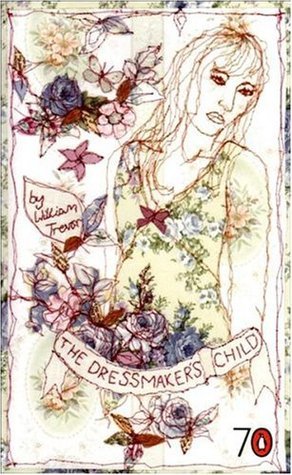
I knew, when Kim (Reading Matters) and Cathy (746 Books) announced their “A year with William Trevor” project, that I had a little book containing some William Trevor short stories but, could I find it? Nope. It was a little book after all. And then, voilà, just the other day while I was doing my book decluttering and packing, I came across it. It’s Pocket Penguin 22 from Penguin’s 70 Years celebration, and is called The dressmaker’s child, but it contains three short stories, so these will be my (very willing) contribution to the project. Two of the stories were chosen by the author from previous collections, but for the titular story this is its first appearance in book form.

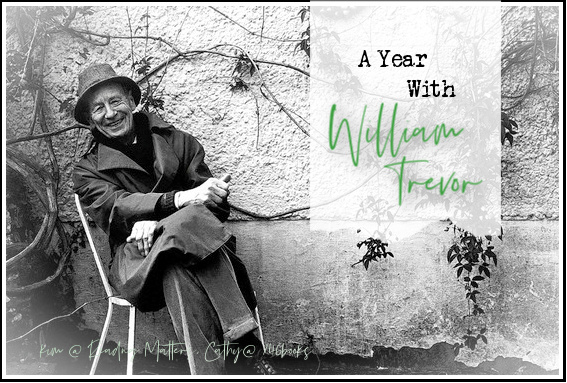
Most of you will know of Trevor (1928-2016) but, in a nutshell, he’s an Irish writer of novels and novellas, short stories and plays. He won many literary awards in his life, and was particularly well regarded as a short story writer – making him right up my alley. In fact I have read one of his short stories before, early in this blog.

In her most recent Trevor review (of a novel titled The children of Dynmouth) kimbofo writes that it didn’t take her long to feel that she was in “familiar William Trevor turf in which he takes a seemingly ordinary character with eccentric traits and lets them loose in a confined setting”. This could apply to the short story, “The dressmaker’s child”, as it is about a young nineteen-year-old motor mechanic, Cahal, working for his father in a small town. He’s the only son in a family of girls – all of whom have left – and he is “scrawny” with a “long face usually unsmiling”. The story opens on him applying WD-40 “to the only bolt his spanner wouldn’t shift”, which sets a tone that perhaps other things are, or might be, locked up for our protagonist.

As he continues to work on the car, a young Spanish couple appears, wanting to be driven out to see the Sacred Virgin (Our Lady of Tears) who they believed – that is, they had been told so by a barman – would bless their marriage. Now Cahal knows the statue’s special spiritual status had been disproved and thus rejected by the church, but with a 50-euros job in the offing, he doesn’t actively dissuade them from their mission.

Trevor describes the trip, complete with hints of self-delusions, until on the way home Cahal’s car hits a child – the dressmaker’s child – who is known to run at cars and who, up till then at least, had never been hurt. With the Spanish couple kissing in the back of the car, and choosing avoidance over action, Cahal continues driving despite being aware of “something white lying” on the road behind him. Back in town, nothing is said about the dressmaker’s daughter for a few days, but Cahal remains uncertain. It affects his relationship with his young woman, and when the dressmaker herself starts to appear in town at his side, hinting that she knows what had happened, but is not reporting him, his fears and uncertainty increase.

This is not a thriller, but there is a plot and an ending (of course) so I will leave the story here. It’s nightmarish stuff, but very real too.

Trevor’s writing, his unfolding of story and character, is a pleasure to read. Take Cahal’s character, for example. From the stuck bolt (albeit does start to loosen, hinting at possibilities), he is depicted as rather gormless, bowling along, taking opportunities as they come without a lot of consideration – and somewhat different to his father who, during a conversation about the Swedish couple, shakes his head “as if he doubted his son, which he often did and usually with reason.”

This brings me to the point of the story which, as we are slowly brought to see, is the impact on Cahal of what he did or didn’t do – and the almost catatonic fear it engenders:

Continuing his familiar daily routine of repairs and servicing and answering the petrol bell, Cahal found himself unable to dismiss the connection between them that the dressmaker had made him aware of when she’d walked behind him in the night, and knew that the roots it came from spread and gathered strength and were nurtured, in himself, by fear. Cahal was afraid without knowing what he was afraid of, and when he tried to work this out he was bewildered. 

It changes his life – not in the way we might expect but in a way that shows with absolute clarity how avoidance and inaction can be as potent as anything else. Trevor, like my favourite short story writers, is less about drama and more about the complex realities of human interaction in which accommodations rather than simple resolutions are more often the go. I look forward to the next story.

William Trevor
“The dressmaker’s child”
in William Trevor, The dressmaker’s child
London: Penguin Books, 2005
pp. 1-20
ISBN: 9780141022536
(First published in The New Yorker magazine, October 4, 2004: available online)

Maggie O’Farrell, The marriage portrait (#BookReview)

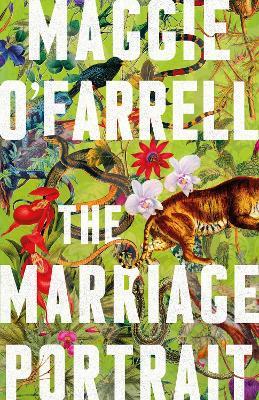
I have mentioned Author’s Notes a few times recently, because I have read a few works of historical fiction. Maggie O’Farrell’s latest novel, The marriage portrait, is another historical novel and so here I am again talking Author’s Notes. The marriage portrait, as you probably already know, is based on the life of Lucrezia de’ Medici, who lived from 1545 to 1561. Her death was ascribed at the time to “putrid fever” (or pulmonary tuberculosis). However, very soon after she died, rumours started that she had been poisoned by order of her husband, Alfonso II, Duke of Ferrara. That suspicion inspired English poet Robert Browning to write his dramatic monologue, “My Last Duchess“. It was this poem and a portrait of Lucrezia that inspired the novel.

O’Farrell writes in her Author’s Note that “I have tried to use what little is known about her short life but I have made a few alterations, in the name of fiction” and goes on to explain some of those alternations and why she made them. I have always argued that historical fiction is just that, fiction. We should not read it as history, that is, we should not rely on it for the facts. However, good historical fiction will provide some truths, and we do find some in O’Farrell’s novel.

The marriage portrait is told in two alternating chronological strands, one starting with Lucrezia’s conception in 1544, and the other a day or so before her death in 1561. In these two strands we are given the whole of Lucrezia’s life. We see her growing up as a resourceful, intelligent but needy middle child in a large family where she felt different from her younger and older siblings. Presumably this is O’Farrell’s invention to enhance her isolation. And we see the last year of her marriage: its deterioration as she fails to bear an heir (to a man who went on to marry twice more without issue) and her realisation that he means to kill her. Not surprisingly, we quickly become engaged in Lucrezia and her plight. O’Farrell knows how to tug our heart strings.

“The ladies . . . are forced to follow the whims …” (Boccaccio)

When I read novels, I believe in reading everything, which here included some matter before the story starts. First is a small paragraph headed Historical Note, telling us of Lucrezia’s death and the rumours concerning it. This is followed by two epigraphs, one from Browning’s poem referring to the portrait, and one from Boccaccio’s The decameron which commences with “The ladies . . . are forced to follow the whims, fancies and dictates of their fathers, mothers, brothers and husbands …” Hence some of the aforementioned truths.

I’m not going to spend a lot of time on the novel but, overall, I found it a readable and immersive story about what was a brutal time period, particularly for women and the serving classes. (I use “serving” rather than “servant” to encompass a wider group of people.) There’s nothing particularly new here, but O’Farrell shows very clearly how women and the serving classes were pawns in the political power plays of the time, with little or nothing to protect them except, sometimes, luck – or the courage of another.

There is more, though, to the novel, than politics and power, gender and class. O’Farrell also looks at that aspect of Renaissance life that we all love, art and artists. Admittedly, politics and class have a hand here too, but Lucrezia herself (the fictional one, anyhow) is depicted as a skilled artist, and her work, materials and technique are described in loving detail. It is through her art that Lucrezia most often can assert herself, albeit that assertion must be hidden from others.

I could argue, too, that the novel suggests the way politics and power can destroy love, loyalty and affection between, in this case, marriage partners and siblings. This could be a modern reading of the situation, but I’m not completely averse to us “moderns” understanding the past through our own lens.

As for the writing itself, it’s gorgeously lush, though verges on the overdone at times. Cosimo’s tigress is described as moving “like honey dropping from a spoon”; she doesn’t “so much pace as pour herself, as if her very essence was molten, simmering, like the ooze from a volcano”. Lucrezia’s husband Alfonso is depicted as “an aquatic creature, half man, half fish, crawling up out of the shores of a river, silvered tail glistening in moonlight”. However, despite this, the rich, descriptive writing seemed appropriate for the opulence of the period. And, there is some more restrained, to-the-point writing, such as this introduction of the man whom those versed in historical fiction will recognise as the likely villain:

The man emerges, shoulder first from the branches, the papers still clutched in his hand. He makes his way through the garden but, unlike Alfonso, he doesn’t pick his way along the paths: he walks through the flowerbeds as if they aren’t there, striding over the low green hedges, through the blooms, scattering bees and petals in his wake. Here is a man, Lucrezia thinks, as she eyes his progress, who waits on no one, who lets nothing get in his way.

His name is Leonello, and Lucrezia recognises him for what he is.

O’Farrell is an experienced writer, so the novel is carefully plotted and structured. I enjoyed her use of parallels to foreshadow later actions. The strangling of the guard Contrari, for example, heralds a later strangling, and our tigress is described by Lucrezia as “a creature captured against its will, a creature whose desires have all been disregarded”, which mirrors her own experience later.

The marriage portrait is not a subtle novel, and it does play somewhat with the historical record, as discussed in the Author’s Note. It’s also excruciatingly brutal at times. But, I did become engrossed in the era and invested in Lucrezia’s plight. A moving read. 

Note: This book was my reading group’s April selection, but due to a COVID-risk I did not attend the meeting.

Maggie O’Farrell
The marriage portrait
London: Tinder Press, 2022
438pp.
eISBN: 9781472223869

D’Arcy McNickle, Train time (#Review)

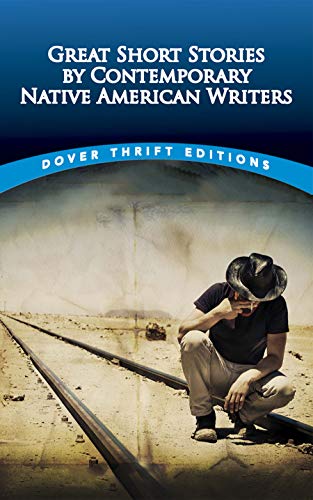
Continuing my reading from Great short stories by contemporary Native American writers, we now jump a decade from John M. Oskison’s 1925-published “The singing bird” to D’Arcy McNickle’s “Train time” which was published in 1936 .

D’Arcy McNickle

As before, I’m using both anthology editor Bob Blaisdell’s brief intro and Wikipedia’s article to introduce this author. D’Arcy McNickle (1904-1977) was, like the previous authors, of mixed parentage. He was born on the Flathead Reservation in Montana to an Irish father and a Cree-Métis mother, and was an enrolled member of the Salish Kootenai nation. He attended schools on and off the reservation, then went to the University of Montana, before studying at Oxford University and the University of Grenoble.

He wrote a few novels, but is probably best known for his first, The surrounded, which was published in 1936, the same year as the piece I’m reviewing here. From the summary I’ve read, it sounds like it draws from his own life, like so many first novels. However, that same year, 1936, McNickle started working at the Bureau of Indian Affairs, a US federal agency. He worked under John Collier, Commissioner of Indian Affairs, who encouraged self-government for Native Americans. McNickle became knowledgable about Native American policies, and in 1944, helped found the National Congress of American Indians in 1944. By 1950, he was publishing non-fiction works on Native American history, cultures, and governmental policies. Later, he worked in academia as an anthropologist.

Of his short stories, Blaisdell writes that “his quiet and intense stories seem to have been informed by a deep experience of Chekhov’s and Hemingway’s short fiction”. “Train time” is certainly quiet and, depending on your perspective, intense – with an ending that leaves many questions hanging.

“Train time”

“Train time” takes place on a train station, where twenty-five Native American (“Indian”) children from the local Reservation are waiting for a train to take them to an off-reservation boarding school. This has been organised by the local white Indian agent, Major Miles, who believes he is doing a good thing. He is, we are told, “a man of conscience. Whatever he did, he did earnestly”.

The trouble with earnest people – as I know a bit too well – is that they can lack imagination. He is thinking about these children who are about to leave the Reservation “and get a new start. Life would change. They ought to realise it, somehow-” It’s hot and stifling, the children are restless, and he is stiff and soldier-like. Not a recipe for the sort of inspirational words the situation needs. Then, he spies a young boy, “little Eneas”.

The Major remembers the moment, six months earlier in the depths of winter, when he had visited Eneas’ home to find out why his grandfather had not started the wood-cutting job he’d been employed to do. Turns out the grandfather and grandmother were no longer capable of such work. Not only that, they seemed ill, and the Major felt trapped. He feared catching pneumonia; he felt unable to help personally out of his salary, as where would it stop; and government resources were limited. Then, he had spied “little Eneas” who was doing his best to help the old people. Eneas’ “uncomplaining wordlessness”, his “loyalty to the old people”, had got the Major thinking. Here was “a boy of quality”. Surely he’d be “shirking his duty” if he failed to help him. So, he had come up with a plan to have the old people cared for and send Eneas off to boarding school. The trouble was that Eneas didn’t like the plan.

But, our Major was not to be dissuaded (so much so that “against his own principles” he had even bought “a week’s worth of groceries” for the old people):

Whether the boy understood what was good for him or not, he meant to see to it that the right thing was done…

You can imagine what that right thing was. The story concludes with our returning to the Major and the children on the railway station, and the Major trying to find those words to inspire the children. The Major knew that “none had wanted to go”, so he wanted to make them see “what this moment of going away meant”. What it meant of course, in the well-meaning Major’s mind, was a bright future.

There is no epiphany for the Major but the powerful imagery in the closing paragraphs, in which “a white plume flew upward” while the “flying locomotive loomed blacker and larger” conveys what the author thinks.

McNickle does a great job of evoking the Major. We see his good intentions, but we also see his stiffness and his obliviousness to the humanity of those he wants to help. This sort of well-meaning paternalism was pretty rife amongst those who wanted to do “the right thing” wasn’t it? I’d love to know how the story was received at the time. Did stories like this get the message across?

D’Arcy McNickle
“Train time” (orig. pub. Indians at work 3, from the Bureau of Indian Affairs, March 15, 1936)
in Bob Blaisdell (ed.), Great short stories by contemporary Native American writers
Garden City: Dover Publications, 2014
pp. 40-45
ISBN: 9780486490953

Myra Morris, The inspiration (#Review, #1940 Club)

As I have done for some previous “year” reading weeks*, I decided for 1940 to read a short story by an Australian author. After a bit of searching I settled on Myra Morris, and her story “Inspiration”, because … let me explain.

My last two Australian contributions for these reading weeks were works by men – Bernard Cronin and Frederic Manning – so this time I wanted to choose one of our women writers. I found a few in Trove, but the one that caught my eye was by Myra Morris, because she was already known to me: in my Monday Musings for the 1929 year, and back in 2012 in another Monday Musings where she was listed by Colin Roderick in his Twenty Australian novelists. She also has an entry in the ADB. Clearly she had some sort of career at least, even if she is not well remembered now.

Who was Myra Morris?

ADB‘s article, written by D.J. Jordan in 1986, gives her dates as 1893 to 1966. She was born in the Mallee town of Boort, in western Victoria, to an English father and Australian mother. Her literary abilities were encouraged by her mother and an English teacher at Rochester Brigidine Convent, and she had verse published in the Bulletin. From 1930 she was part of Melbourne’s literary, journalistic and artistic circles, and “was active in founding and organising the Melbourne branch of P.E.N. International”. Her circle of friends, it appears, included Katharine Susannah Prichard.

While she wrote book reviews, novels and essays, her favourite form was, apparently, short stories. She was published in newspapers, and her short stories have been anthologised, but there is only one published collection of her stories, The township (1947). Translations of her work were published in Germany, Austria and Switzerland.

Jordan writes that she:

has been acclaimed as one of Australia’s best short-story writers. Her clear pictures of life in country and town contain a wide range of characters and reveal her tolerance and understanding of humanity in its struggles. Like her novels, her stories combine earthy realism, poetic imagery and a broad humour. Sometimes her plots are marred by the demands of the popular market, but her often beaten-down and defeated people always contrast with her lyrical evocation of landscapes. 

“The inspiration”

I picked “The inspiration” primarily because it was by Myra Morris, but I was also attracted to it because it’s set in Melbourne and its protagonist is a musician. Both of these interest me. The plot centres on violinist, Toni Pellagrini, who, as you can tell by his name, is of Italian background. Every afternoon, he plays in a 5-piece ensemble in the cafe at “Howie’s emporium”. It’s when he is happiest, we are told. When he is playing, he is “a different creature entirely from the little dark, harassed person who at other times sorted out vegetables in his father’s fruit shop”. You sense the immigrant life. Indeed, at one point Toni realises that without his music he could be seen as “a fat, oily little Dago”.

Toni is ambitious. He wants to play somewhere better than the cafe, in Kirchner’s Orchestra for example. At the cafe, however, the customers are “indifferent”, and offer only “inconsequential applause”. They are more interested in their chatter, in being seen, than in the music. You know the scene. Toni’s distress starts to affect his playing, so much that the other players notice, until one day a young girl appears. She provides him with the needed inspiration (hence the title). She listens with an “absorbed gaze” and breaks into “furious clapping” when the music ends. Toni has his mojo back. Then, they hear that the famous Kirchner is looking for players and is at the cafe. But, as they begin to play, the girl is not there, and Toni is unable play well anymore without her, his inspiration …

What happens next is largely predictable – except that Morris adds a delightful little twist that doesn’t spoil the expected ending but adds an unexpected layer.

Like Jordan, the Oxford companion to Australian literature particularly praises Morris’ short stories, saying that “her talent for domestic realism and naturalistic description, especially of rural environments, is best suited to the short story”. “The inspiration” is not one of these stories – it is urban set, and is not domestic – but its immigrant milieu (both in Toni’s family and the gypsy-inspired ensemble in which he plays) and its resolution suggest a writer interested in capturing the breadth of Australian life as she saw it.

* Read for the 1940 reading week run by Karen (Kaggsy’s Bookish Rambling) and Simon (Stuck in a Book). This week’s Monday Musings was devoted to the year.

Myra Morris
“Inspiration”
Published in Weekly Times (2 March 1940)
Available online via Trove

Robert Drewe, Nimblefoot (#BookReview)

Nimblefoot is Robert Drewe’s eight novel, but is the first of his that my reading group has done. Drewe is a prolific and versatile writer, having written memoir and other nonfiction, as well as short stories and novels, both. contemporary-set and historical. In other words, he is not easy to compartmentalise. He has appeared before in my blog, with his 2015 Seymour Biography Lecture and in a Monday Musings Spotlight post in 2019, and now, finally, he comes in a review.

Nimblefoot is historical fiction. It was inspired by the story of Johnny Day (1856-1885), who is described by the book’s promotion as Australia’s first international sports hero. He was a “pedestrian” (the fore-runner of racewalking) and, as a 9- and 10-year-old, he won several races, becoming World Champion. But this wasn’t Johnny’s only sporting claim to fame. In 1870, at the age of 14 and by then an apprentice jockey, he won the Melbourne Cup on a horse named Nimblefoot (which was surely a “give” of a title for Drewe, considering Day’s speed-walking career as well!)

Anyhow, here was another situation where I was keen for an author’s Afterword. Drewe explains his inspiration, saying that “several years ago Nat Williams, Treasures curator at the National Library of Australia, and Dr Sarah Engledow, senior historian at the National Portrait Gallery, showed me a portrait of a small boy named Johnny Day”. They clearly knew the reason for this portrait, but continues Drewe, “research into his life after his Melbourne Cup victory proved fruitless”. He thought it strange “that the famous walker and rider had left no cultural footprint”. Hence, his decision to imagine what might have become of him. A member of my reading group pointed out that Wikipedia does complete Johnny Day’s story. However, that page was written in late 2022, after the publication of this novel. Information on Johnny Day is now findable through Trove, but this letter to the editor of Sportsman after his death suggests that there really wasn’t much written about him. Further, Drewe took many years to write this novel so it’s likely that, when he started at least, Trove did not have the content it does now.

So now, that out of the way, on with the post … except that I will say one more thing about Trove. It looks like Robert Drewe loves Trove as much as I do, because Nimblefoot is full of delicious anecdotes from the period – mid-1860s to around 1880 – in which the novel is set. They were so delicious that I checked a couple – including one about the explorer John Horrocks being shot by his camel. Sure enough, there they were. Indeed, if I have a criticism of the novel, it’s that at times it felt like Drewe let his research – let these delicious little stories – get in the way of his own story, resulting in not so quite as tight a novel as, say, Eleanor Limprecht’s The Coast.

However, I did thoroughly enjoy the novel. Nimblefoot, like much of Drewe’s work, is an evocative read about “colourful” (euphemistically-speaking) time in Australian history. Drewe mixes real personages of the time, like Prince Alfred and the Chief Commissioner of Police Frederick Standish, with fictional characters, and takes our hero, Johnny Day, from his home in Ballarat and Melbourne to Perth and southwest Western Australia where he goes on the run after some seedy happenings involving the aforesaid Prince Alfred and Standish put him in danger. Along the way, we glean much social history, particularly about life on the land and in small town Australia, where Johnny takes on many jobs, including yardman, ostler and swamper. It was in some of these sections that I felt Drewe digressed somewhat from his centre, but the picture he built engaged me, nonetheless.

It engaged me not just because of the character of Johnny, whom you can’t help liking and wanting to keep safe, and not just because of his depiction of the times, but also because of his writing (laced, I must say, with wry humour). From his earliest books, Drewe has been able to capture the essence of a place beautifully. Here is a Pedestrian race-day:

It’s a cloudless February afternoon, so still the air’s vibrating. One of those windless country afternoons with cicadas buzzing and crows gagging and whiffs of dead things in the bushes. (“This hot, humming afternoon”)

How can you not “feel” that? In this chapter, Drewe also makes all sorts of social commentary, but subtly, so that you are just aware of it as you pass through:

And around they go. Past the first billboard. Pears Soap. A black kid sitting in a tin bath, while a white boy in a sailor suit, all blond and curls and dimples, scrubs the blackness off him.

What were they thinking? We know, don’t we?

Anyhow, moving on. In the first third of the novel, the scene is set, with Drewe setting us up for Johnny’s life after winning the Melbourne Cup. It’s a story of exploitation (at best) and corruption (at worst) with Johnny being used and abused for the benefit of others, including his father who makes money on his races, Nimblefoot’s owner who manages to not pay him his jockey winner’s fee, and Prince Albert (and his cronies, including Standish) who take him like a trophy to Melbourne’s seamy and seed sites, the bars and brothels frequented by the powerful. It is after this night, when Johnny witnesses violence and murder, that he goes on the run, ending up in Western Australia.

Nimblefoot is many novels in one. It’s an adventure story with a picaresque element, which we takes to many locations and introduces many characters. It’s a man-hunt thriller. It’s a coming-of-age story in which Johnny experiences love and gains wisdom: “Never seen my father looking helpless and weak before. It’s him in another different light. The older I get, the more different lights there are”. And it’s a social history …

But why, besides the inspiration to imagine Johnny Day’s life, did Drewe write this novel? In my Monday Musings Spotlight on him, I refer to a 2009 interview with Drewe which discusses his interest in writing both novels and short stories. He essentially said that in novels he’s “interested in ideas” while short stories are easier for “relationships … and conflicts between people”. So, what are the ideas Drewe explores here? My sense is that it has something to do with exposing Australian society of the period. Larrkinism would be a generous way of putting it, but Drewe delves deeper, showing the way power, masculine power, to be precise, so easily bends to exploitation, corruption and lawlessness. Along the way, references are made to the roles played by women (in brothels, hospitals, and on properties), to Nyoongar history and culture, and to “better” men. It’s a realistic picture and one that feels authentic to the milieu in which the novel is set.

Nimblefoot is not the most perfect novel I’ve read. Besides the many historical digressions, there is also a curious switching between third and first person voices throughout the novel. They surprised at times, but they did give freshness and reality to Johnny’s experience. Overall, Nimblefoot proved to be a good read that managed to keep me engaged from its opening words to its end, despite the moving stress I was under. Not all books would have achieved that.

Lisa has also reviewed this novel.

Robert Drewe
Nimblefoot
Hamish Hamilton, 2022
315pp.
ISBN: 9781760143749 (eBook)

Eleanor Limprecht, The Coast (#BookReview)

I love to read Author’s Notes, Afterwords, or whatever they are called, at the end of novels, and particularly so when the novel is historical fiction. This is because these notes will often explain the author’s thought process, the line they have drawn between fiction and fact, the sources used, the level and type of research undertaken, and so on. It helps me understand “how” to read the book, if that makes sense. I was consequently pleased that Eleanor Limprecht had provided such information at the end of her fourth novel, The Coast, which is set in the former Coast Hospital lazaret in Little Bay, Sydney. This hospital was established in the 1880s for the treatment of infectious diseases, including small pox, tuberculosis, and the subject of this novel, leprosy (or Hansen’s Disease).

The Coast is set primarily in the first three decades of the twentieth century, and focuses on the story of Hilda/Alice who is nine when she is brought to the lazaret. However, while she provides the novel’s narrative and emotional centre, hers is not the only story told. We hear about other members of her family, including her mother Nellie/Clea who is at the Coast when she arrives. We also hear about one of the Hospital’s doctors, Will Stenger, who takes special interest in his lazaret patients. And, we have a story that somewhat parallels Alice’s, that of Jack/Guy, a Yuwaalaraay man, who also ends up at the lazaret, though not until he is an adult. I should explain here the dual names: leprosy patients would be given (or choose) a new name when they entered the hospital because, as Alice’s mother tells her, it’s better for their family if they disappear, “it’s better that no-one can find us”. Leprosy, at the time, was a reviled disease and sufferers were secluded under the Leprosy Act of 1890.

What author afterwords tell us

So, Limprecht’s words. I wanted them because I wanted to know whether she would address her First Nations character and, of course, being the thorough historical fiction writer she is, she does indeed discuss the issue. She had advice and feedback from Yuwaalaraay reader Nardi Simpson (whose Song of the crocodile I’ve reviewed) and Gamilaraay and Yuwaalaraay reader Frances Peters. She visited Angledool, Jack’s home, with the help of local First Nations people, and was shown around the Goondee Keeping Place at Lightning Ridge by First Nations people there. Her manuscript was also read by First Nations people associated with the La Perouse Aboriginal Land Council. All this supports my sense that she has rightly and respectfully included First Nations experience in her story.

Limprecht’s words provide other insights too, but I’ll mention just two of them. One is that she acknowledges various grants, including the Neilma Sydney Literary Travel Grant (see my post), which helped her visit another lazaret location, Peel Island. The other is that she acknowledges the History of Medicine Library at the Royal Australasian College of Physicians where she “found the records that inspired this story”. This interested me because the story contains many details about the lives of the patients at the lazaret, details that were so specific that I felt (and hoped) they were based on documented records – on reports, letters, and so on. This suggests that they were.

“nothing to look forward to” (Alice)

Limprecht also tells us in her words that she got the idea for this novel while researching her second novel, Long Bay (my review), making it before 2015. However, she also tells us that she finished writing it during the pandemic, which helped her “consider the continuing repercussions of stigmatising illness and the long-term effects of isolation”.

So now, the novel itself. The story is told in first person and third person voices – Alice’s in her voice, with the stories of the other three in third person. These four stories are interspersed with each other, and are told chronologically, but each starts at a different point in time, beginning with Jack (1905), then Alice (1910), Nellie (1892) and Will (1910), until they coalesce in 1926. Jack’s story encompasses his experiences as a stolen child and a soldier in the Middle East in World War 1. Through him, Limprecht ensures that First Nations’ lives are part of the life of the time she’s chronicling, something that many of our majority-culture-written histories and historical fiction have consistently omitted.

Jack’s story – of being taken from his family, returning to it, going to war and returning as an amputee who soon after ends up at Peel Island – conveys not just these facts, but the emotional impact of being stolen, of displacement, of racism (albeit his injured returned soldier status sometimes earned him begrudging recognition.) By sending him to Peel Island, Limprecht also documents the differential treatment at that lazaret between “white” and “others” (or, the “coloured camp”). This is a difference that he does not experience at The Coast under the more humane Dr Will.

Alice’s story follows, presumably, a typical trajectory of those who were isolated at a young age and spent the rest of their lives that way. (It’s a coming-of-age story as moving and as tragic as that of Anne Frank’s real one). As quarantine places go, The Coast lazarets – men’s and women’s – are humane. The patients live in cottages, they have access to a beach where they can swim and fish, and they can socialise with each other (though the women’s lazaret does not have a communal cottage like the men’s has!) But, “it’s no place to grow up”. Alice is an intelligent young woman, who quickly engages us with her warmth and honesty, but she also articulates the physical and emotional experience of this disease. Told first person, her story of resilience and resignation carries the novel.

Nellie’s and Will’s stories add additional depth and breadth to the lazaret community and thus the history. Both appear in the epilogue dated 1967. It didn’t feel narratively necessary to me, but historically it rounds out how leprosy treatment progressed and what happened to the Coast lazaret.

The coast is the sort of historical fiction I like, a well-researched, expressively-written story about an historical time and place I know little about, one that is worth knowing. It reminds us how far we have, or haven’t, come in our management of feared diseases, like AIDS, like COVID-19. It evokes with warmth and clarity the costs of ostracism and isolation. And, it puts First Nations people into the historical frame – naturally. A good read.

Lisa (ANZLitLovers) also liked this novel.

Eleanor Limprecht
The Coast
Sydney: Allen & Unwin, 2022
319pp.
ISBN: 9781760879402

(Review copy courtesy Allen & Unwin)

John M. Oskison, The singing bird (#Review)

From Zitkala-Ša’s 1901-published “The soft-hearted Sioux”, Great short stories by contemporary Native American writers jumps a quarter of a century to 1925, and John M. Oskison’s “The singing bird”.

John M. Oskison

Again, anthology editor Bob Blaisdell provides a brief intro to the author, but it’s Wikipedia that is able to provide more detail. John M(ilton) Oskison (1874-1937) was, like our two previous authors, of mixed parentage. He was born in Cherokee Nation to an English father and part-Cherokee mother. He went to Stanford University (where my friend who gave me the anthology went, in fact!) and was president of the Stanford Literary Society. Wikipedia says he was Stanford’s first Native American graduate. He apparently went to Harvard for graduate school but he left to become a professional writer after he won a short story competition.

By his death he had published novels, short stories and many pieces of journalism. A novel titled The singing bird was found in his papers in 2007 and subsequently published. Timothy Powell, writing about this novel, suggests it is “quite possibly the first historical novel written by a Cherokee”, and argues that it offers “an interpretation of indigenous history that stresses survival and empowerment over removal and despair”. It is set in the 1840s-50s, after the Cherokees had been removed to Indian Territory, and in it, Powell says, Oskison ‘skilfully blends fiction and reality, thoughtfully demonstrating how literature can rewrite the master narrative of “history” and bring to life moments in the past that remain outside the scope of the written records maintained by the dominant white society’. This sounds like the sort of historical fiction that is starting to appear in Australia, like Julie Janson’s Benevolence (my review) and Anita Heiss’s Bila Yarrudhanggalangdhuray (my review), novels that correct the colonial historical perspective that has been prevailed for too long. Oskison was, like our previous two authors, an activist.

Blaisdell focuses more on the story. He describes it as an “exciting, densely plotted story” but suggests the reader needs to “hold tight” because it is “dotted with odd, struggling phrasings that make it seem as if Oskison were translating it”. The title, he explains, refers to “cuckolding”, with “singing bird” being a term used by “full-bloods” for a “deceiving wife”. He suggests that ‘the issue of “full-bloods” versus half-breeds” is a messier theme’.

“The singing bird”

Powell says that it is not known when Oskison started writing his novel The singing bird. However, he does mention that this story was published in 1925 and wonders whether Oskison began to formulate the novel around this time. From Powell’s description of the novel, the characters names are different, it has a multilayered narrative structure unlike the story, and the narrative is very different, so let’s leave the novel there.

Wikipedia says of Oskison that “his fiction focused on the culture clash that mixed-bloods like himself faced”. “The singing bird” is interesting in this regard because, as Blaisdell suggests, a significant issue in the story concerns “full-bloods and half-breeds”. The story opens with Big Jim (Jim Blind-Wolfe) sending his wife Jennie away because it is time for the men to talk. They make up “the inner, unofficial council of the Kee-too-wah* organisation” and they are “self-charged with the duty of carrying out the ancient command to maintain amongst the Cherokees the full-blood inheritance of race purity and race ideals”.

This “council” is concerned about the “alarming late growth of outlawry in the tribe, an increase in crime due to idleness, drink and certain disturbing white men who had established themselves in the hills”. As they discuss this serious business, Oskison writes that “paradoxically … They would pass a jug of honest moonshine – but they would drink from it discreetly, lightly, as full blood gentleman should!” Nice touch!

Meanwhile, the ousted wife Jennie, takes herself to the “out cabin” with its “inviting pine-log room”. Here she awaits, we are told, Lovely Daniel who has already been introduced to us by the men, as their “wild half-breed neighbour”. Jennie, though, is expecting to “know shivery terror, the illicit thrill of the singing bird”. And so in the first two pages, the story is set up: Big Jim has sent his wife to the out cabin so that his little council can talk men’s business about half-breeds and white men, and that wife is waiting for one of those half-breeds to visit her in the cabin. Simple story of a dominating husband and unfaithful wife? Sounds it, but all is not as it seems. Oskison unfolds the plot well. We flash back to how Jennie and Lovely Daniel had come to know each other (including the development of his “wonderful plan, a credit to his half-breed shrewdness, if not to his name”), and to how enmity had developed between Big Jim and Lovely Daniel, before returning to the main narrative. There is a revenge theme to the story, one involving Lovely Daniel wishing to avenge having nearly been killed by Big Jim after a political altercation that had turned violent.

So if it’s not a simple unfaithful wife story, what is it? Well, it’s political. There is tension between the full-blood Kee-too-wahs and the half-breeds over whites, and the issue of leasing land to them. The full-bloods (through Big Jim) see leasing land as the thin end of the wedge, while the half-breeds (through Lovely Daniel) see the white man coming as inevitable anyhow. Big Jim, then, represents the Cherokees’ fight for their land, their fight “against “race deterioration and the decay of morale in the long years of contact with the White in Georgia and Tennessee”, while Daniel is the bad, wild man. As Blaisdell says, the theme of “full-bloods” versus half-breeds” is messy, particularly given Oskison was himself of mixed-descent. Perhaps we are intended to see this story – this conflict – more in terms of symbolism than realism, as a story about the primacy of protecting land and culture. (This suggests it’s an anti-assimilation story, though I believe there’s much discussion about Oskison’s attitude to assimilation.)

I found the writing a bit heavy-handed at times, but it also has an interesting tone. There is a sense in Oskison’s language, for example, that the full-blood Kee-too-wah men are not the whole answer either (as they sit “like remote, secret gods, in judgment on the conduct of a community”). And, although Jennie takes significant agency in the story, she is still expected, when it’s all over, to make breakfast for the men!

“The singing bird” is an intriguing story. It’s one that seems to raise as many questions as it answers, particularly when seen within the context of Oskison himself, of his oeuvre, and of course of his times – times I know little about.

* See Wikipedia.

John M. Oskison
“The singing bird” (orig. pub. Sunset Magazine, March 1925)
in Bob Blaisdell (ed.), Great short stories by contemporary Native American writers
Garden City: Dover Publications, 2014
pp. 25-39
ISBN: 9780486490953

Zitkala-Sa, The soft-hearted Sioux (#Review)

Zitkala-Ša’s “The soft-hearted Sioux” is the second story in the anthology, Great short stories by contemporary Native American writers, sent to me by my American friend. I posted on the first one, Pauline Johnson’s “A red girl’s reasoning”, a couple of weeks ago.

Zitkala-Ša

As he does for all the stories, anthology editor Bob Blaisdell provides a brief intro to Zitkala-Ša and her story. Also known by her married name, Gertrude Simmons Bonnin, Zitkala-Ša (1876-1938) was born at the Yankton Sioux Reservation in South Dakota. She was educated at a Quaker missionary school and then, because she wanted to be more than the presumed-for-girls job of housekeeper, she went to the Quaker-run liberal arts school, Earlham College. She went on the teach at the Carlisle Indian Industrial School. As with Johnson, Wikipedia fleshes out the details. It tells us that she hated being stripped of her culture at the Quaker missionary school, that she learnt piano and violin there, and that when she graduated from it in June 1895, “she gave a speech on the inequality of women’s rights”.

Wikipedia chronicles her life well, so do read it if you are interested. I’ll just add here that, it introduces her work with: “She wrote several works chronicling her struggles with cultural identity, and the pull between the majority culture in which she was educated, and the Dakota culture into which she was born and raised. Her later books were among the first works to bring traditional Native American stories to a widespread white English-speaking readership”. And it concludes that her “legacy lives on as one of the most influential Native American activists of the 20th century”.

Regarding “The soft-hearted Sioux”, Blaisdell explains that “it is narrated by a young Christianised man who returns to his Sioux reservation as a missionary” at which time his father says to him that “your soft heart has unfitted you for everything”. In this story, in other words, Zitkala-Ša exposes some of the iniquities of colonialism.

“The soft-hearted Sioux”

According to Wikipedia, Zitkala-Ša had a fruitful writing career, with two major periods, the first being 1900 to 1904, during which our story was published. In this period, she published legends from Native American culture – which she apparently started collecting while she was at Earlham – and autobiographical narratives. “The soft-hearted Sioux” has an autobiographical element, I guess. The protagonist is male, and I don’t believe she returned from college a missionary, but she did go to a Christian school. Other stories published in this time were clearly more autobiographical: “An Indian teacher among Indians”, “Impressions of an Indian childhood”, and “School days of an Indian girl” (all in 1900).

The story is told first person. At the opening, our narrator is in his “sixteenth year” and is sitting in the family’s teepee with his parents on either side of him, and his maternal grandmother in front. The grandmother is smoking a “red stone pipe” and it is passed around as they provide him with advice. It is time for him to find a woman, to learn to hunt and bring home meat, to become a warrior. We then jump nine years. He had not, he tells us, grown up to be “the warrior huntsman, and husband” expected of him. Instead, the mission school had taught him that killing was wrong. For “nine winters” he had “hunted for the soft heart of Christ, and prayed for the huntsman who chased the buffalo on the plains.” In the tenth year, he is sent back to his tribe

to preach Christianity to them with the white man’s Bible in my hand and a white man’s tender heart in my breast.

He no longer wears the buckskin clothes and blanket on his shoulders as he does at the opening. Now, “wearing a foreigner’s dress”, he walks “a stranger” into his father’s village.

The story then is about the impact and implications of assimilation, the dislocation it causes for both individuals and society. Our young man, thoroughly inculcated with Christian thought, arrives home to find his father ill, and being tended by the “medicine-man … the sorcerer of the plains”. He is disturbed about his father’s “unsaved soul” and tries to banish the “sorcerer”. So begins his life as a missionary. He knows it will be hard, but is confident he will succeed. I’ll leave the story there, as you can read it online (link below) but, knowing who is writing this story and why, you won’t be surprised to discover that he doesn’t succeed. The story is sentimentally told, in the style of the time, but its subject-matter is strong and emotive. Zitkala-Ša uses the motifs of the opposing Native American and Christian cultures well – the dress and customs, the knife of the brave versus the soft heart of the Christian, with softness here, equating less with gentleness than with weakness – to make her points.

Zitkala-Ša, herself, of course, was Christian-educated like her protagonist, but she went on to use the tools of that education to fight for the rights of First Nations people. She did that in various ways, including through politically activism. She was involved with the Society of American Indians (SAI) which, says Wikipedia,”was dedicated to preserving the Native American way of life while lobbying for the right to full American citizenship” and went on to found, with her husband, the National Council of American Indians. She also actively promoted women’s rights, through a grassroots organisation for women, the General Federation of Women’s Clubs.

But, an important part of her activism was through her writing. By publishing stories like “The soft-hearted Sioux” in majority-culture journals, like Harper’s Monthly and Atlantic Monthly, she hoped, I believe, to educate that culture in its impact on her people. The story is still worth reading today. Its style is dated, lacking some of the subtlety and nuance we are used to, but it nonetheless conveys truths that still stand and it provides us with a window on how long this fight has been going on. I’m loving being introduced to new-to-me writers and activists, like Pauline Johnson and Zitkala-Ša, through this book. They are women well worth knowing about.

Zitkala-Ša
“The soft-hearted Sioux” (orig. pub. Harper’s Monthly, March 1901)
in Bob Blaisdell (ed.), Great short stories by contemporary Native American writers
Garden City: Dover Publications, 2014
pp. 17-24
ISBN: 9780486490953
Available online at upenn

Pauline Johnson, A red girl’s reasoning (#Review)

As some of you know, I have a close American friend, Carolyn, with whom I correspond weekly. We met in the early 1990s when I was living in California. During that time we started a reading group, so you won’t be surprised that our correspondence always includes reference to what we are – or are not – reading. What we recently realised is that we are not reading Native American literature. I was consequently thrilled to find Great short stories by contemporary Native American writers in my last Christmas parcel from her. I have now read the first three stories but today’s post is on the first one, “A red girl’s reasoning” by Pauline Johnson.

Pauline Johnson

The anthology’s editor, Bob Blaisdell, in his brief intro to the story, writes that Emily Pauline Johnson (1861-1913) was born on Six Nations Reserve near Brantford, Ontario. Her father, he says, was a Mohawk chief, and she was related to the American novelist, William Dean Howells, on her mother’s side. Wikipedia expands on this. It describes her as a Canadian poet, author, and performer. Regarding her parents, it says that “her father was a hereditary Mohawk chief of mixed ancestry and her mother was an English immigrant”.

Blaisdell says that Johnson started writing fiction after her father died to support the family, but Wikipedia again tells us more, focusing on her significance. It says that her poetry was published in Canada, the United States, and Great Britain, and that she was “among a generation of widely-read writers who began to define Canadian literature. She was a key figure … and has made an indelible mark on Indigenous women’s writing and performance as a whole”. Unfortunately, as so often happens, her literary reputation declined after her death, but, Wikipedia says, there has been renewed interest in her since the late 20th century.

If you are interested in her, do read the Wikipedia article because it’s reasonably thorough. Meanwhile, I will move on to …

“A red girl’s reasoning”

CanLit (where you can read the text online at the link below) says that “Red Girl’s Reasoning” was first published in Montreal’s Dominion Illustrated, in February 1893, and then, later that month, as “A Sweet Wild Flower” in Toronto’s Evening Star. Interestingly, CanLit’s online text, and the version in my anthology, both give it as “A red girl’s reasoning”. CanLit gives the author as E. Pauline Johnson. All details perhaps, but they do raise questions.

So, what’s our red girl’s reasoning? The story concerns the marriage between Christine, who is mixed-race (our ‘red girl”), and Charlie, a young white man. It starts with Christine’s white father counselling his “brand new son-in-law” to “Be pretty good to her, Charlie, my boy, or she’ll balk sure as shooting”. Charlie, as any new husband should, reassures him that of course he will, “there’s no danger of much else”. And all goes smoothly – for a while. She’s an asset to him … but, hold this thought because I want to digress to something else Pauline Johnson wrote, an essay titled “A strong race opinion: On the Indian girl in modern fiction”. It was published the year before this story, in 1892 (and is also available online).

In this essay, Johnson argues that people do not equate with their race, even though there are racial characteristics. “The American book heroine”, she writes, is allowed to be an individual. She does not have to have “American-coloured eyes” or an “American mode of dying”. She is allowed “an individuality ungoverned by nationalism”. This is not the case for “the Indian girl in modern fiction”. In an aside, she makes the point re “Indian”, that “there seems to be an impression amongst authors that such a thing as tribal distinction does not exist among the North American aborigines”. She continues:

The term “Indian” signifies about as much as the term “European,” but I cannot recall ever having read a story where the heroine was describes as “a European.” The Indian girl we meet in cold type, however, is rarely distressed by having to belong
to any tribe, or to reflect any band existing between the Mic Macs of Gaspé and the Kwaw-Kewlths of British Columbia…

She wrote this back in 1892 – how much has changed? Anyhow, her point is well-made. Johnson then details the stereotyping of “the Indian Girl” in fiction. She is always “Winona” or a name that ‘has a “Winona” sound to it’; she never has a surname; and her father is always a chief (like, in fact, Johnson’s father.) Further, this “Winona” is often suicidal, even though “suicide is an evil positively unknown among Indians”. She is always in love with “the young white hero”, and will betray her own people, but he “never marries her”. There’s more, but I think you’ve got the gist. (She does provide an exception, Charles Mair’s Tecumseh, in which the Indian Girl Iena “is the one book Indian Girl that has Indian life, Indian character, Indian beauty” – but, like her stereotyped sisters, she is not allowed to live.)

Needless to say, Johnson’s “red girl” does not have a Winona-sounding name and her white hero does marry her. Not only that, she stands up for herself when … but, I get ahead of myself. Before this, there is the wedding, which, Johnson writes, was not much, but fortunately groom Charlie didn’t mind:

in his heart he was deeply thankful to escape the flower-pelting, white gloves, rice-throwing, and ponderous stupidity of a breakfast, and indeed all the regulation gimcracks of the usual marriage celebrations …

This is significant to what follows, because the crisis, when it comes, is about Indian versus Canadian (western) marriage customs. Christine’s parents were married the “Indian” way, that is, there was a feast, but no other ritual. Charlie is aghast because he suddenly realises he has married someone “illegally born”! Her response – her “reasoning” – is that if he can’t accept that her parents are married by her mother’s customs, then she can’t accept that she and Charlie are married by his. And so the rift is wrought.

The story’s progression from here is fairly typical of nineteenth century short stories, but to say more would spoil the plot. I will say, though, that Christine does not die!

Blaisdell concludes his intro to the story that “while stagy” it “achieves some degree of pathos and delivers a strong comeuppance to Christian prejudices”. Yes, it is “stagy” (or, melodramatic, as I wrote in my margin) – but that’s fairly typical of its time. And it does deliver that comeuppance. But there is more to it. There is, for example, satire of white pretentious and superiority, a mockery of white storytelling even, in the way she uses the tropes of western rich man-poor girl stories:

She was “all the rage” that winter at the provincial capital. The men called her a “deuced fine little woman.” The ladies said she was “just the sweetest wildflower.” Whereas she was really but an ordinary, pale, dark girl who spoke slowly and with a strong accent, who danced fairly well, sang acceptably, and never stirred outside the door without her husband.

You can see the tongue firmly planted in Johnson’s cheek here.

Johnson’s story made a great opening to the anthology. It is somewhat dated in style and terminology, but its core concern, cultural clash, still holds true, and it is told with a light touch and a warmth towards its characters that engaged me.

Pauline Johnson
“A red girl’s reasoning” (1893)
in Bob Blaisdell (ed.), Great short stories by contemporary Native American writers
Garden City: Dover Publications, 2014
pp. 1-16
ISBN: 9780486490953
Available online at canlit

Gwendolyn Brooks, Maud Martha (#BookReview)

I came across Gwendolyn Brooks’ 1953-published novella, Maud Martha, on JacquiWine’s blog last year, and was confident it was a book for me – so I bought the e-Book version and read it slowly on my phone and iPad whenever I was out and about. This sort of reading doesn’t work for all books, but it did for Maud Martha because it is told in short vignettes (or “tiny stories” as Brooks’ called them) which cover the protagonist’s life from her childhood to motherhood. Her voice is so fresh, so honest, so real that I was completely captivated.

Gwendolyn Brooks (1917-2000) is a new author for me, perhaps because she was primarily a poet. In fact, Maud Martha is her only novel. She was the first African American to win the Pulitzer Prize (1950) and the first African American woman to be inducted into the American Academy of Arts and Letters (1976), but these are just two from an honours-filled career.

My edition of Maud Martha has an excellent introduction by the American critic and academic, Margo Jefferson. She ponders the novel’s disappearance from view, and posits that “it sank beneath the weighty canonical force of first novels by two of Brooks’s Black male peers”. Ralph Ellison’s Invisible man appeared in 1952, and James Baldwin’s Go tell it on the mountain in 1953, the same year as Maud Martha. By comparison, Maud Martha “looks” slim but, in real weight, it is anything but. Jefferson quotes from Brooks’ memoir in which she discusses the autobiographical element of the novel: ‘It is true that much in the “story” was taken out of my own life, and twisted, highlighted, or dulled, dressed up or down.’ I read this as meaning that what she describes is “true” though not necessarily factual. It’s “a novel”, says Jefferson, “by a Black woman about working-class Black life in the twenties, thirties and forties”.

“But dandelions were what she chiefly saw”

The book opens with an exquisite description of seven-year-old Maud Martha. It introduces us to a young girl who has dreams but also has her feet on the ground:

She would have liked a lotus, or China asters or the Japanese Iris, or meadow lilies—yes, she would have liked meadow lilies, because the very word meadow made her breathe more deeply, and either fling her arms or want to fling her arms, depending on who was by, rapturously up to whatever was watching in the sky. But dandelions were what she chiefly saw.

And, she was happy with them, those “yellow jewels for everyday”:

She liked their demure prettiness second to their everydayness; for in that latter quality she thought she saw a picture of herself, and it was comforting to find that what was common could also be a flower. And could be cherished! 

These opening paragraphs are telling: we learn a lot about Maud Martha – as you can see – and we are introduced to Brooks spare, poetic style. It is because of language like this that Brooks can tell Maud’s story from the early 1920s to the 1940s in barely 100 pages. Jefferson describes Brooks’ style as “like a sonnet sequence, each story delights in sensory and emotional details and each reveals another aspect of Maud Martha. Poets take liberties with prose notions of a story arc”.

So, through the stories Maud Martha grows up, questioning the real world while dreaming of New York, which is “a symbol” for her of “what she felt life ought to be. Jeweled. Polished. Smiling. Poised. Calmly rushing! Straight up and down, yet graceful enough”. She knows it’s a dream, but she stands by her right to dream. And, anyhow, “who could safely swear that she would never be able to make her dream come true for herself? Not altogether, then!—but slightly?—in some part?” This is a young woman, in other words, still with her feet on the ground but with imagination as well. 

Meanwhile, life goes on. She marries Paul who is fairer than she, enabling him to “pass” among whites or, at least, be more easily accepted by them. She knows her darkness pulls him back, “makes him mad”, but she’s not cowed. She knows who she is and what she can offer.

What she wanted was to donate to the world a good Maud Martha. That was the offering, the bit of art, that could not come from any other. She would polish and hone that.

And so she soldiers on through the bright moments and the disappointments, like settling for a kitchenette with a shared toilet when she marries Paul. Moments like these are universal. Other moments, though, are less so, because, of course, she faces racism – again and again – at the movies, while shopping for a hat, at a beauty parlour. A particularly painful occasion occurs when Santa Claus treats her little daughter Paulette differently from the white girls – and Paulette notices.

Another occasion concerns Maud Martha’s taking work as household help, because Paul is out of work. However, the way her employer and employer’s mother-in-law assume her inferiority causes her to understand “for the first time … what Paul endured daily … as his boss looked at Paul, so these people looked at her. As though she were a child, a ridiculous one, and one that ought to be given a little shaking …”. She decides to leave the job. Her employer won’t understand, but that doesn’t matter. What matters is that she’s “a human being” too, and she will not be treated otherwise if she can help it.

What makes Maud Martha special then is her – to use a cliche – resilience. No, it’s more than that, it’s her level-headed sense of self and a willingness to call what she sees. What’s remarkable in Brooks’ telling is the humanity and, often humour, with which she does it. Take, for example, Maud Martha’s description of her first beau:

He was decorated inside and out. He did things, said things, with a flourish. That was what he was. He was a flourish.

She was desperate to have a boyfriend, but not that desperate.

Maud Martha is just delicious to read. It is deeply, distressingly insightful about Black American experience in all the horrific ordinariness of ingrained, oblivious, white superiority, but the combination of intelligence, dignity and humour with which Brooks tells her story takes your breath away.

Gwendolyn Brooks
Maud Martha
London: Faber & Faber, 2022 (orig. pub. 1953)
126pp.
ISBN: 9780571373260 (e-Book)