Kim Kelly, Ladies’ Rest and Writing Room (#BookReview)

Early in the month I reviewed the first of the two winners of Finlay Lloyd’s inaugural 20/40 Publishing Prize, Rebecca Burton’s Ravenous girls (my review). It was set in Sydney in the 1980s. Now, as promised, I bring you the other winner, Kim Kelly’s Ladies’ Rest and Writing Room. It is also set in Sydney, but in the early 1920s. Some of you will know Kim Kelly, as she has published around 12 novels, mostly historical fiction. Not only that but she was longlisted for the ARA Historical Novel Prize 2022 and shortlisted for the Viva La Novella 2021 prize with her novella, The rat catcher: A love story.

So, she has written novellas, before. A check on her GoodReads page revealed others, including what I think is her best known book, Wild chicory. So, she, like Rebecca Burton, is comfortable with the novella form (or length).

Finlay Lloyd describes the book on their website like this:

Two young women, brought up to expect conventional lives, are thrown together in unexpected circumstances. Each has suffered a devastating loss that challenges their belief in life and themselves. It’s rare to come across a work of deep psychological insight conveyed with such verve and lightness of touch.

As I said in my opening paragraph, Ladies’ Rest and Writing Room is set in 1920s Sydney. The title is explained in the first of two epigraphs. It comes from an advertisement in the Sydney Morning Herald, in 1922, for the Ladies’ Rest and Writing Room in Farmer’s department store. This “artistic room” was intended as a place of respite for busy shopping ladies. It was also where they could also write any “urgent notes” for “the very next mail”. Writing facilities were provided for the purpose. The room was, of course, intended for the well-heeled, as you paid a “nominal charge of 8d.” to avail yourself of its charming “rose shades”. The second epigraph comes from Sappho, which might or might not tell you something!

The story is told in from alternating third person perspectives of two young women. One is the apparently entitled Dotty, who comes from a wealthy business family and who uses the Room in the opening chapter. She is introduced, however, on the street outside where she plays chicken with a tram every Tuesday on her way to Farmer’s and its titular room. Why does she do this? We soon come to understand the pain this young woman, who seems on the outside to have it all, is dealing with. And it’s to do with World War 1, if you haven’t already guessed from the time setting.

The other young woman is down-on-her-luck Clarinda, who has just started work as the Room’s attendant. She went to school with Dotty, but Dotty, in her grief, doesn’t notice her, which doesn’t surprise Clarinda after her shooldays’ experiences with Dotty. Clarinda has her own sadness, partly stemming from losses in the War, but also from the fact that due to her father’s tragic death she and her mother are now on the proverbial hard times.

The narrative takes place over a few weeks encompassing Christmas, and comes to a head when Dotty’s pain becomes too much for her, resulting in a crisis in the Corset Salon (next door to the Ladies Rest and Writing Room). Clarinda steps in to protect Dotty, and, through what ensues, both young women grow. Clarinda treats Dotty with compassion and forgiveness, while Dotty wakes up to sadnesses in others.

What I most enjoyed about the book is its evocation of post WW1 1920s Sydney. Kim Kelly knows the place and the time well, and, despite the shortness of the novella form, she vividly captures a city and people in flux – the grief of wartime loss, the changing workforce as men return home after the war, the increasing migration, the excitement of change in the air, but with old social values and class structures still in place.

Clarinda, for example, was grateful for having finally landed a decently paid job:

It certainly beat unreliable casual waitressing at three shillings a luncheon, or three and six per dinner service, or sixty hours per week as a shop assistant at considerably less than two pounds, both of which she’d done, piecing together a living. All the better paying more respectable clerical positions for which she was qualified, were being given to returned soldiers, and that was fair enough, except that nothing fair had happened for Clarinda since her brothers were ripped from this life and …

So much is told in these words.

Kelly is also adept at characterisation, creating two well-differentiated characters in Dotty and Clarinda. They immediately come to life on the page, which is particularly important in a novella where there’s no time to waste. We care about them both, because we are privy to what’s going on for them, and thus to their isolation, even if those around them aren’t.

The writing and plotting are assured. Kelly is clearly experienced in writing historical fiction where description and rhetorical language are used to create the sort of atmosphere and tone needed to drive a plot forward. Kelly does this very well, and I quickly became engrossed in these two girls’ lives. It’s a novella that wears its heart on its sleeves, and I wondered at times whether some pulling back might have challenged us readers to delve into more of the complexities, and maybe leave us with more questions than answers. But, that would have been a different book. As it is, Ladies’ Rest and Writing Room is beautifully accessible and will hopefully attract more people to the novella form. It and Ravenous Girls would make excellent stocking stuffers for busy readers in your lives. And I don’t mean this condescendingly! I am referring to their perfect stocking-stuffer size!

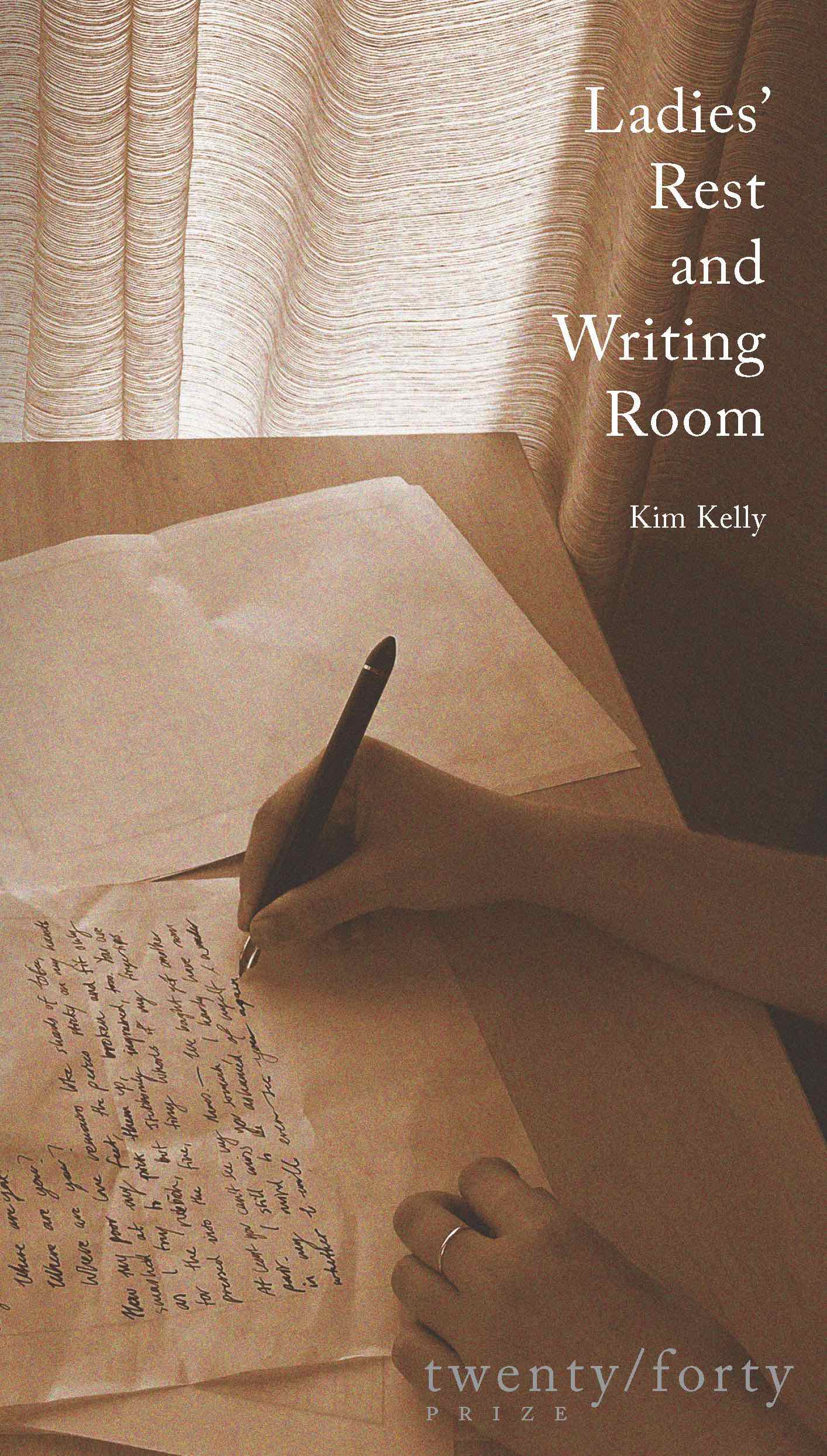
As with all Finlay Lloyd books, the design is gorgeous, with an appealing monochromatic cover featuring a woman’s hands writing a letter. Very different to your usual historical fiction cover.

Ladies Rest and Writing Room is a good read about a significant and complicated time in our history. Like Ravenous girls, it is a compassionate book, this one about navigating deep loss and the grief that attends it, and, even more, about the importance of generosity in dealing with others. I wish these two books well and thank Finlay Lloyd for sponsoring such an appealing, targeted prize.

Read for Novellas in November. Lisa (ANZ Litlovers) and Theresa (Theresa Smith Writes) have reviewed both winners in one post, but I have done them separately.

Kim Kelly
Ladies’ Rest and Writing Room
Braidwood: Finlay Lloyd, 2023
122pp.
ISBN: 9780994516596

Patrick Modiano, Sundays in August (#BookReview)

Disappointingly, I ended up missing my bookgroup’s discussion of the book I had encouraged us to read, Sundays in August by 2014 Nobel prize-winner Patrick Modiano. I have no-one else to blame but myself, since I did the schedule and should have remembered that I was going to be in Hobart for my brother’s exhibition. C’est la vie.

I recommended this book for a couple of reasons, one being high praise from Kim (Reading Matters) and the other being to include translated fiction in our reading diet. Also, the book intrigued me. Kim described it as a “jewel heist”, albeit qualified by “with a difference”. That seemed unusual subject matter for a Nobel prize-winner. Having now read it, however, I see that he is a skilful writer. I loved reading it. But the subject matter?

According to Wikipedia, Modiano (b. 1945) is “a noted writer of autofiction, the blend of autobiography and historical fiction”. He has published over 40 books, and in them, Wikipedia continues, has “used his fascination with the human experience of World War II in France to examine individual and collective identities, responsibilities, loyalties, memory, and loss. Because of his obsession with the past, he was sometimes compared to Marcel Proust”. I’m not sure about the “was” here, as he is still alive. Anyhow, it is this obsession with the past, with its associated exploration of memory and loss, that made Sundays in August (Dimanches d’août) so fascinating. I am drawn to stories about the past that are told in well-controlled melancholy tones, stories that involve a later reflection on what had happened and the implications for the protagonist’s present. (By the way, this does not appear to be one of Modiano’s autofiction works.)

The novella is set in Nice, and starts with a first person narrator (identified partway through the book as Jean) spotting someone he’d known seven years ago. The man is Villecourt, and he is selling leather goods in the market. Neither man, in fact, has done well in the years since they’d met. Both are alone, and not living the apparently secure lives they had been. We quickly realise that this is not a case of old acquaintances happily re-uniting. Instead, there is palpable tension. After they meet for a drink, Jean makes clear he wants nothing more to do with Villecourt, while Villecourt tries to keep the contact going. He does little to ingratiate himself, however, reminding Jean that he, Villecourt, was the only man someone called Sylvia had loved. He also says that he and Sylvia had not been married. Why had she lied to him about that, Jean thinks to himself?

In this way, in the first few pages, we are drawn into a mystery involving these three. Soon after, the aforementioned jewel – a diamond, with a “long and bloody history”, called the Southern Cross – is introduced, and we learn that Jean and Sylvia had been on a mission to sell it. Then, a little further down the track we meet the mysterious Neals, who seem to live in a grand home named Château Azur, and who all too soon offer to buy the diamond.

It sounds like a simple story involving a love triangle and a heist, but in fact, it is a complex crime story in which it behoves readers to attend carefully for hints and clues about what’s really going on. These are conveyed through the narrative, as Jean tries to “rejoin the invisible threads”, and through gorgeously written imagery that creates an oppressive, foreboding atmosphere, occasionally lightened by the Riviera’s bright sun, and blue skies and water.

“blurred … dissolving”

As we read, the ground constantly shifts beneath our feet. People appear and disappear, and sometimes shapeshift. Virgil Neal, for example, sounds American, then he doesn’t, then he does again, before finally turning out to be someone else. Cars and buildings, too, aren’t always what they seem. Nonetheless, through cleverly managed flashbacks and foreshadowings, we gradually start to see – or, think we see – the set-up. It is all complicated, however, by that tricky beast, memory. Jean writes:

I don’t know anymore whether we met the Neals before or after Villecourt arrived in Nice. I have searched my memory, looking for points of reference, but am unable to sort out the two events. Anyway, there’s no such thing as “events.” Ever. It’s a false term, suggesting something definitive, spectacular, brutal. In fact it all happened gently, imperceptibly, like the slow weaving of a design into a carpet…

Soon after this reference to meeting the Neals, Jean says

The word “meet” doesn’t apply, any more than “event.” We didn’t meet the Neals. They slipped into our net.

Who slipped into whose net is the question. And how many nets were there? Jean will probably never know it all, but by the end he’d learnt that “our anxiety didn’t come from our contact with that cold stone with glints of blue – it came from life itself”.

Typical for a novella, the book is tightly written. Every word counts, and is worth noticing. I loved, for example, that Jean was a photographer who now can’t seem to remember the necessary details, and that Sylvia’s last name is (ironically?) Heureux. These little details aren’t casual, and make us readers think and question at every step, as we are alternately unsettled then proffered glimmers of light.

Sundays in August is an accessible, noir-ish tale about loss and the emptiness that accompanies it. It explores life’s shadows and uncertainties, shows how innocence can be so easily taken advantage of, and it doesn’t wrap everything up neatly, leaving us to ponder the possibilities. I won’t spoil the ending, but it is spot on, and explains, at last, the title, leaving us on a little up despite it all. I’ll be reading more Modiano, if I can.

POSTSCRIPT: I believe we know the main culprit in it all, but the question is, who else was in on it and who else was taken in. It would take more reads to work through that, but in the end I think we can’t ever know it all because we can only know what Jean saw and tells us.

Read for Novellas in November.

Patrick Modiano
Sundays in August
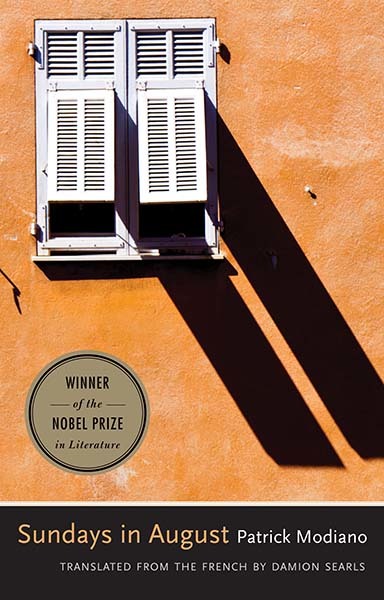
Translated from the French by Damion Searls
New Haven & London: Yale University Press, 2017 (Orig. French pub. 1986)
156pp.
ISBN: 9780300223330 (Read on Kindle)

Hal Porter, Francis Silver (#Review, #1962 Club)

Introducing my first review for the 1962 Year Club – Shirley Hazzard’s “The picnic” – I said I had read two short stories and might post on the second one. I am doing so now but, stupidly, I left the book back in Canberra and here I am in Melbourne, so my post will be limited, and without the usual quotes to convey Porter’s writing style. But, it was this, or not at all, because by the time we return home, I will be onto other things. I am cross though, because Kerryn Goldsworthy did write a useful introduction, which, if I remember correctly, placed Porter as part of a change in short story writing from the more realist school that had held on strongly since Lawson.

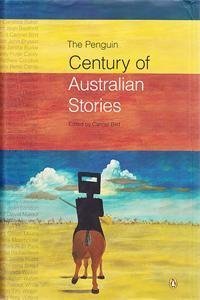
Like Hazzard’s story, “Francis Silver” appears in the Carmel Bird edited anthology, The Penguin century of Australian stories.

Who was Hal Porter?

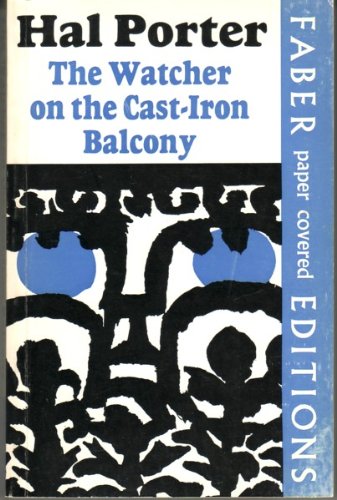
Porter (1911-1984) was an Australian novelist, playwright, poet and short story writer. His first autobiography, The watcher on the cast-iron balcony (1963), is regarded as a classic.

The Wikipedia article, linked on his name, is relatively brief, but there is a more thorough biographical entry for him in the Australian dictionary of biography (ADB). Written by literary critic and academic, Peter Pierce, it tells us that he had many occupations, including teaching (on-and-off at many schools), librarian, and shorter term jobs like window-dresser and sheep-station cook. But, cutting to the chase, it also reveals Porter as a problematic figure, because of his pederast behaviour. Peter Pierce writes, for example, that, around 1940, he had “an affair” with a male student at the school where he taught, “an indiscretion that went unpunished”. Those were the days, I suppose. This “affair” – should we grace it with that description? – is apparently fictionalised in his short story “The dream”.

Pierce also writes that, in her 1993 book, Hal Porter: Man of many parts, Porter’s biographer, Mary Lord was, “even-handed in judging an old friend and sensational in revealing Porter’s paedophilia, in particular his sexual relations with one of her sons.” Hard to understand. Moreover, Pierce says that Porter’s third autobiography, The extra (1975),

ventilated many of Porter’s prejudices — against Jews, ‘foreigners’ and Aborigines. The counterpart of Porter’s grace, charm and cultivation was an intense snobbery that, for instance, saw him elevate his father’s occupation from engine-driver to engineer. His facility at winning friends was matched by ceaseless demands on their patience.

So, a difficult man, and one I thought twice about sharing here. However, I read the story, liked it, and as it doesn’t smell of these difficult issues, I am covering it in the uncomfortable spirit of separating the work from its creator. Peter Pierce described him in his 2012 ADB entry as “one of the finest of all Australia’s authors of short stories and a pioneer of the first flowering of autobiographical writing in this country”. (This piece by the late academic Noel Rowe explores the Porter issue in depth.)

“Francis Silver”

“Francis Silver” is a first-person story in which an older man tells of fulfilling a deathbed request from his mother who had died at the age of 41 when he was 18. All through his childhood, he had heard about a man called Francis Silver, who, his mother had implied, had been not only a beau, but an alternative potential husband to the country-living man she did marry, the narrator’s seemingly long-suffering father.

Through our narrator’s childhood, his mother had shared with him an album of postcards sent to her by Francis Silver. Along with sharing this album, she had told stories about this man which suggested he was a worldly, debonair man, who loved the theatre. Her wish was for him to give the postcard album to Silver – but, on no account, was he to also give the lock of her hair that she had kept in an envelope with Francis Silver’s name on it. He was to burn that.

Francis Silver, his mother told him, had worked in a picture-framing shop, and that is where our narrator finds him – but what he finds doesn’t gel at all with the stories his mother had told. The story, then, is about memory, illusion and reality, and the boy’s recognition of the difference. In his own romantic fantasy, he had decided to ignore his mother’s second request and give Francis Silver (whose name works as a mantra in the story, hence my using it in full for each reference here) the lock of hair too. But, as he confronts reality, he changes his mind. The closing sentence vividly conveys his decision in an act that encompasses layers of meaning and feeling.

The father is a less developed figure, because the son was in his lively mother’s thrall, but the sense we get is of a man who loves his wife, and who tolerates her flights of fancy, feeling comfortable, it seems, that she chose – and remains with – him. He seems to recognise (or trust) that Francis Silver is one of those escape fantasies people have to help them cope with the tedium of life, the fantasy that, should it get too hard, there were, or perhaps even are, other options. The narrator, as a boy, doesn’t understand these nuances.

There was a strong autobiographical element, I understand, to Porter’s writing. From the little I read for this post, I am aware that there are such elements in this story. For example, Porter’s beloved mother died when he was 18 years old, as does the narrator’s mother in this story. How much else might be autobiographical though, I don’t know.

Anyhow, just to finish … in the end, the narrator resolves the differences he confronts and is generous to his father for whom Francis Silver had seemed an imagined (if not, as it turns out, real) rival. Our narrator has also learned something about the imagined, illusory past, and its relationship to present realities. A tight, neat, engrossing story.

* Read for the 1962 reading week run by Karen (Kaggsy’s Bookish Rambling) and Simon (Stuck in a Book).

Hal Porter
“Francis Silver” (orig. pub. in Hal Porter, A bachelor’s children, 1962)
in Carmel Bird (ed.), The Penguin century of Australian stories
Camberwell: Penguin Books, 2006 (first ed. 2000)
pp. 186-197

Shirley Hazzard, The picnic (#Review, #1962 Club)

As I have done for most “year” reading weeks*, I decided for 1962 to read a short story by an Australian author. I read two, in fact, and may post on the second one later.

Today’s story, though, is Shirley Hazzard’s “The picnic” which I found in an anthology edited by Carmel Bird, The Penguin century of Australian stories. It was my mother’s book, which Daughter (or Granddaughter to her) Gums gave her for Christmas 2006. I’m glad she kept it when she downsized. Shirley Hazzard is a writer I’ve loved. I have read three of her books, including the novels, Transit of Venus and The great fire, but all of this was long before blogging. I have mentioned her on the blog many times for different reasons, but an early one was in my Monday Musings on expat novelists back in 2010.

Who was Shirley Hazzard?

Hazzard (1931-2016) is difficult to pin down, and can hardly be called Australian given she left Australia in 1947 when she 16, returned here briefly, but left here for good when she was 20. Wikipedia calls her an Australian-born American novelist. As I wrote in my expat post, Hazzard didn’t like to be thought of in terms of nationality. However, she did set some of her writing in Australia, and did win the Miles Franklin Award in 2004 with her novel The great fire, against some stiff competition.

According to Wikipedia, she wrote her first short story, “Woollahra Road”, in 1960, while she was living in Italy, and it was published by The New Yorker magazine the following year. This means, of course, that “The picnic”, first published in 1962, comes from early in her writing career. Her first book, Cliffs of fall, was published in 1963. It was a collection of previously published stories, including this one. Her first novel, The evening of the holiday, was published in 1966, and her second, The bay of noon, was published in 1970, but it was her third novel, The transit of Venus, published in 1980, that established her.

She is known for the quality, particularly the clarity, of her prose, which, it has been suggested, was partly due to her love of poetry

“The picnic”

It didn’t take long for me to discover that “The picnic” is the second story of a linked pair, which were both published in The New Yorker in 1962. Together they tell of an affair between the married Clem and a younger woman, Nettie, his wife May’s cousin. The first story, “A place in the country”, concerns the end of the affair, while in “The picnic” the ex-lovers meet again, eight years later. They are left alone by May, probably deliberately thinks Clem, while she plays with their youngest son down the hillside.

This is a character-driven slice-of-life story in which not a lot happens in terms of action but which offers much insight into human nature – and into that grandest passion of all, love.

In 2020, The Guardian ran a review of Shirley Hazzard’s Collected stories, edited by Hazzard biographer Brigitta Olubas. Reviewer Stephanie Merritt writes that “Hazzard’s recurring themes here – enlarged upon in her novels – are love, self-knowledge and disappointment”. From my memory of Transit of Venus in particular, this rings true. And, it is certainly played out in “The picnic”.

So, love, albeit a failed love, is presumably played out in the first story, but in this story it is still present in its complicated messiness. The two ex-lovers look at each other uncomfortably. Self-knowledge is part of it, but it’s not easily achieved for Clem for whom self-deception has also powerful sway. There’s resignation about love – “an indignity, a reducing thing” which he sees can be a “form of insanity” – and about marriage, which involves “a sort of perseverance, and persistent understanding”. There’s also a male arrogance. He didn’t, he realises, “know much about her [Nettie’s] life these past few years – which alone showed there couldn’t be much to learn”. By the end of his reverie, he comes to some self-understanding, despite earlier denials, about his true feelings and about the decision he’d made. Whether the reader agrees or not, he feels he has “grown”.

Nettie’s reveries tread a roughly similar path. There’s not a lot of regret to start with. She sees he is nearly fifty, and with “a fretful, touchy air”. She sees his self-deceptions, and his caution, and yet her feelings, like his, are conflicted. For her, too, love is a complicated thing:

… one couldn’t cope with love. (In her experience, at any rate, it always got out of hand).

What I haven’t conveyed here, because you have to read it all to see and enjoy it, is the delicious way Hazzard conveys their internal to-ing and fro-ing, through irony and other contradictions. They say nothing to each other, but in their thoughts and observations, while they rationalise what happened and why it was right, they reveal their true feelings. Love and disappointment or disillusion live side by side, never quite resolved.

The story is told third person but from shifting perspectives. First Clem, followed by Nettie, reflect on their situation at some length. Then, in a surprise switch, the short last paragraph moves to May, whose feelings neither of them had seriously considered in all their internal ponderings. But Hazzard makes sure we see them. This technique reminded me of Kevin Brophy’s very different short story “Hillside” which does a similarly powerful switch of perspective in the last paragraph. In both cases, concluding with the perspective of someone who is both outsider but very much affected by the situation just nails it.

Not only did I enjoy this story, but I’m very glad to finally have Hazzard reviewed on my blog.

* Read for the 1962 reading week run by Karen (Kaggsy’s Bookish Rambling) and Simon (Stuck in a Book). This week’s Monday Musings was devoted to the year.

Shirley Hazzard
“The picnic” (orig. pub. The New Yorker, 16 June 1962)
in Carmel Bird (ed.), The Penguin century of Australian short stories
Camberwell: Penguin Books, 2006 (first ed. 2000)
pp. 178-185

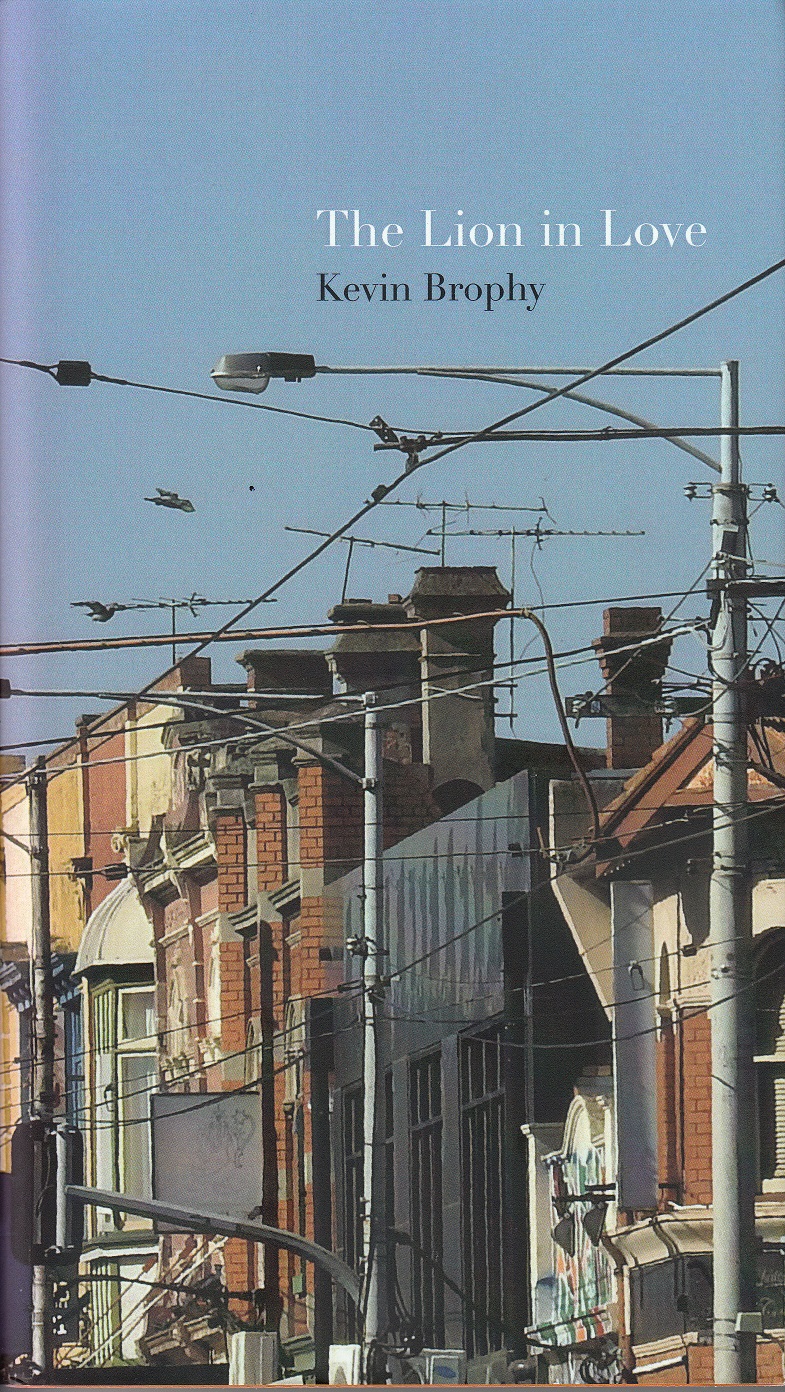
Kevin Brophy, The lion in love (#BookReview)

This year has been, for me, the year of the short story, partly because short stories have fitted in with the sort of year I’ve had, but also because short stories – individually, in anthologies, and in collections – have been coming my way in great number. This is fine, because I love a good short story. Fortunately, this latest collection, The lion in love by Kevin Brophy, contains good short stories.

The lion in love is Brophy’s second collection, but I’ve not read him before. He worked in many jobs, but his last job was teaching creative writing at the University of Melbourne, where he is now an Emeritus Professor. According to the university’s page for him, he has twenty books of poetry, fiction and essays to his name. Finlay Lloyd’s page lists some of his awards and other accolades, and adds that “as a writer he has chronicled urban Melbourne, especially the street life of his heartland, Brunswick”. This focus is evident in The lion in love, but not exclusively so, as several stories are set in other places. The opening story, “The lesson”, for example, is set in England, while “Apartment with balcony” is mostly set in Amsterdam, and the tight little “Experience” is set in Spain, to name some. I loved those set in Melbourne and Victoria – because these are places I’m getting to know – but the inclusion of these more exotic settings gave the book a richness I wasn’t expecting.

What also gives this book its richness is the variety in voice, tone and form present in the collection. Some stories are first person, and some third; some are realistic, while others, like “The googly” and the titular “The lion in love”, are more fable-like; some are dark, some a little melancholy, and some contain humour while others offer little slices of a time in a life. They range in length from the single-page “A child’s tale” to the 16-page “Apartment with balcony”. Despite the variety, however, every story feels carefully observed.

What, then, are they observing? Good question! The answer, to put it simply, is human beings – old ones, young ones, male ones, female ones, the seekers and questioners, the sad, the curious, the certain, the uncertain, and so on. Take for example, “Apartment with balcony”, in which the unnamed third person narrator tells the story of his youthful friendship – from school days to young adulthood – with rich boy, Herman. It starts in Melbourne, but mostly takes place in Amsterdam where they have been given the opportunity to apartment-sit. The apparently “ugly” Herman is sure of himself, while our narrator is far less so, with his thoughts frequently turning to death – but he is willing to watch and learn. The boys are interested in girls, and Herman talks about them a lot:

He was a dreamer, I guess. I admired that, because it meant he might one day dream about more serious things, more ambitious things, once we got the talking-about-girls thing out of the way. And he would be okay, we both knew that, because he was from a wealthy-enough family of well-educated parents, uncles, aunts and cousins. When he was ready for it, the right girl would hook up with him, we both knew that without having to say it.  Whether I would find a girl eventually was a more difficult question.

There’s a familiar sensible-poor-boy-accompanies-more-reckless-rich-boy trope here, and the ending won’t greatly surprise, but there’s much to enjoy and think about in the telling.

Now, though, let’s go back to the beginning, to “The lesson”, an English-set realist story about a young boy living with his recently separated mother. Like “Apartment with balcony”, this is a coming-of-age story. Our third person narrator is on the cusp. He’s interested in girls, and experiences his first kiss, but more significantly, he’s trying to work out who he is and how life works. Insecure, uncertain, but imaginative, he peppers his mother with “what if” questions, but she’s too mired in her own grief to engage.

This story perfectly exemplifies the subtle way Brophy conveys meaning. It starts with our protagonist in a tumble-down church cemetery where “tombstones lean at all sorts of angles”, but it is spring with jonquils and bluebells growing “any-which-way”. Already a contrast is established between dark chaos and a more lively one. The opening paragraph ends at the church gate, where the sombre meets the mundane, with one sign “listing the names of local men who died in the First World War” and another “asking people to take away their rubbish when they leave”. Such is the stuff of life where big things jostle against the everyday. Without spoiling anything, the story ends with the boy holding “an ice cream in one hand and a grey sea stone in the other hand, a stone, not much smaller than his boy’s heart”.

Closing the collection is the more surreal titular story, “The lion in love”, whose first person narrator is an older, experienced woman. It’s set in a Melbourne street – in Brunswick, presumably, given the referenced proximity to the zoo – during the pandemic. As people’s hair grows longer and wilder during Melbourne’s long lockdown, our protagonist’s neighbour across the road looks increasingly like a lion, and starts to behave like one, at least in the eyes of our narrator whose imagination runs amok. In a very different way, this story, which traverses that fine line between the wild and the civilised, also jostles the everyday with bigger questions about “love and pain”.

In between these two are fifteen other stories. In many, the characters aren’t named, creating a detached tone that encourages us to observe and think, rather than be emotionally led through identifying with characters. It works well, particularly in the stories that are more fairy-tale or fable-like, such as “The googly” which is about the middle of three brothers. It riffs, surely, on the traditional “three bears” story, but in this case the “middle” one is not necessarily “just right”, though neither is he the opposite. He is just another being working his way through life’s ups and downs:

He knew now that the difference between fiction and living is that in living there are no shapely endings, there can only be endurance.

“Hillside” is one of the shorter stories, and tells of an ageing couple who visit their son’s grave. The third person perspective subtly shifts between the husband, wife, and an omniscient narrator, as the couple contemplate life, death, grief and ageing:

They bend over their son, close together, their heads so close they might be looking down over a bassinet. She says something. He nods because whatever it is she is saying he knows he would agree with her. He notices some clay has splashed across the lettering on the plaque in one corner, so he takes out his handkerchief and bends down to wipe it. This cleaning is something he can do even if he cannot weep or pray or say words his heart should be composing.

Look at that spare precision. Soon after, the husband and wife topple over, and must wait for a cemetery worker to help them up. The next day the wife tells their daughter what had happened. Upon that, in the last sentence, the perspective suddenly shifts to the daughter’s, and we see a whole other element to this story.

The lion in love is full of characters who engage us with their quiet sincerity. Whether they know it or not, they offer us wisdoms that are worth heeding, because they are like us. I’m going to leave you with a couple of my favourite takeaways. The first comes from “The lesson” and refers to the arrival of the Vikings on the English coast. Our young narrator considers their impact:

Those mad pagan Vikings taught the men of Beeston how to make the boats that would make them famous, so you can’t know, can you, whether what you see coming out of the water in front of you is a dog of doom or an angel of salvation?

No, you can’t – but you can always be open to possibility. The other is from one of the few stories with named characters, “But if she did”. This is another observer story, and is a little reminiscent of “Apartment with balcony” except it traverses a longer period of time and thus of life. Our observer, watching his rich friend struggle with grief, notes that

There are no true endings, only pauses for one thing to stop and another thing to start.

I, however, need to end this post. I’m not sure I’ve done this collection justice, but I hope I’ve conveyed enough of its subtle beauty and quiet truths to encourage you to give it a try.

Lisa reviewed this in a far more timely fashion than I, but I offer this, now, to Brona for her 2023 AusReading Month.

Kevin Brophy
The lion in love
Braidwood: Finlay Lloyd, 2022
173pp.
ISBN: 9780994516572

(Review copy courtesy Finlay Lloyd)

Susan Glaspell, A jury of her peers (#Review)

One of my retirement activities is to co-ordinate a little band of volunteer indexers at the National Film and Sound Archive. Not only do we do useful work for the Archive, but we get to socialise a little with our peers, meaning we talk about what we are watching, listening to, and reading. Recently, one of the team sent me a short story to read. He “raved” about it, he wrote in the accompanying email. Well, I have now read it and I’m mighty impressed too. It’s by an American writer and appeared in one of the those annual best short stories volumes, this one for 1917.

Susan Glaspell

The author of the story, as you will have worked out from the post title, is Susan Glaspell (1876-1948). I had never heard of her, but fortunately she has a decent-sized Wikipedia page which you can read, but I’ll give a brief summary here. She was a playwright, novelist, journalist and actress. Indeed, she and her husband founded America’s first modern theatre company, the Provincetown Players. Wikipedia then says, and I’ll quote because why try to paraphrase it:

First known for her short stories (fifty were published), Glaspell also wrote nine novels, fifteen plays, and a biography. Often set in her native Midwest, these semi-autobiographical tales typically explore contemporary social issues, such as gender, ethics, and dissent, while featuring deep, sympathetic characters who make principled stands. Her 1930 play Alison’s House earned her the Pulitzer Prize for Drama.

Wikipedia has much more to say but essentially, like many women writers, her star faded, partly Wikipedia says, because her “strong and independent female protagonists were less popular in the post-war era, which stressed female domesticity”. However, from the 1970s on – we all know about this revival don’t we – she started to regain traction. Now, she is recognised as a “pioneering feminist writer and America’s first important modern female playwright”.

All this might clue you in to why I so enjoyed her story.

“A jury of her peers”

Kindle ed.

“A jury of her peers” is quite a long short story, but it engrosses from the beginning because of how Glaspell slowly unfolds the story, incisively developing, as she goes, a number of ideas that still speak to us today. We readers work out fairly quickly what has likely gone on, but our fascination lies in how the two women protagonists come to their understanding of the matter, how they try to resist what they have intuitively guessed, and what they decide to do about it. Overlaying this are the assumptions made about them (and about women in general) by the men involved, which adds a social dimension to the moral one. It’s a wonderfully complex story. It’s no accident that the main action takes place in that women’s domain, the humble kitchen.

The story, according to Wikipedia again, was loosely based on the 1900 murder of a man called John Hossack which Glaspell covered while working as a journalist. She originally wrote it in 1916 as a one-act play, Trifles, for the Provincetown Players, before turning it into a short story. Later, it was adapted for an episode of that 1950s TV series, Alfred Hitchcock Presents, and into a 30-minute film by Sally Heckel in 1980.

The plot is simple. A farmer, John Wright, has been murdered, and his wife, the diminutively named Minnie, taken into custody, the day before the story’s action takes place. The story opens with Sheriff Peters and the county attorney Mr Henderson picking up the Wrights’ neighbour, farmer Mr Hale, who had called in the death the day before. Their aim is to visit the scene to look for evidence that might explain what had happened, that might provide a motive. In the buggy is the sheriff’s wife Mrs Peters who is coming along to collect some clothes for Minnie. At the last minute, Mrs Hale is asked to join them, at the request of Mrs Peters who appears to need some support in her sad task.

So, this band of five arrive at the Wrights’ “lonesome-looking place” and, while the men go in search of their evidence, the women remain in the kitchen-living area to get those items Minnie had asked for. As they do, they start to notice things around them – providing insight into Minnie’s life and state of mind – and slowly they piece together an understanding of what had happened. These two women don’t know each other well, so they are cautious with each other, sometimes moving “closer together” in solidarity, particularly when the men appear at intervals and invariably belittle women’s skills and knowledge, but other times drawing apart, uncertainly feeling each other out as they simultaneously feel out their own thoughts and feelings.

The practical farmer’s wife Mrs Hale increasingly senses what sort of life Minnie had led, and feels guilty, criminal even, about never having visited her, but she is uncertain about how the timid-seeming, law-abiding Sheriff’s wife is reacting. However, every now and then she catches in Mrs Peters “a look of seeing into things, of seeing through a thing to something else”. Eventually, they connect, “in a steady burning look in which there was no evasion, no flinching”.

It is so beautifully done, with barely a wasted word or description, with every interaction carrying weight, with perfect use of metaphor (involving birds, cages, and knots) and irony. It reminded me, just a little, of Pat Barker’s The women of Troy (my review), another story in which men underestimate women, to their detriment (though they may not always know it). And so, in this story, a number of issues are explored, including morality and natural justice versus the law; gender and men’s superior, condescending dismissal of women’s skills and knowledge; neighbourliness and guilt; and female solidarity.

“A jury of her peers” is a subversive crime story, one that wowed me, for its subject matter, particularly given the time it was written, and for its sure, unflinching writing. I’m impressed that it was chosen for an annual best anthology by a man – but perhaps that’s me being condescending now. Whatever! I would love to read more Glaspell.

Susan Glaspell
“A jury of her peers” (orig. pub. in Every Week, 5 March 1917)
in Edward J. O’Brien (ed.), The best short stories of 1917 and The yearbook of the American short story
Boston: Small, Maynard and Company, 2014
pp. 256-282
Available online at Hathitrust

Carmel Bird, Love letter to Lola (#BookReview)

In her prose piece, “Ocean of story” (my post), Christina Stead wrote that

It is only when the short story is written to a rigid plan, or done as an imitation, that it dies. It dies when it is pinned down, but not elsewhere. It is the million drops of water that are the looking-glasses of all our lives.

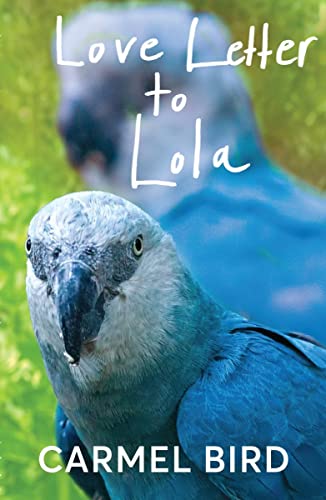
The stories in Carmel Bird’s latest collection, Love letter to Lola, could never be accused of being written to a rigid plan – and if you know Carmel Bird, you would never expect them to. What I so enjoy about Bird is the subversive way she plays with form and tone, while never losing sight of the things she wants to say – but more on that later. Love letter to Lola contains eighteen short stories, the majority of which have been published elsewhere, but mostly in niche or themed journals and collections. However, “The tale of the last unicorn” appeared in The dead aviatrix (my review), as did the titular “Love letter to Lola”, except that here Spixi’s letter earns response.

This new collection is divided into two main sections – Animals, comprising twelve stories, and Human and Angels, the other six. These are followed by a Reflection in which Bird discusses the inspirations for the stories, and much more besides, including, if you read it carefully, her thoughts on stories, writing and fiction. Ignore it at your peril! She tells us, in this last piece, that while the collection has “no primary overall topic … there is a fairly consistent kind of slant on life in general, and a distinct recurrence of themes, motifs, and propositions”. That there is, and in big picture terms, it involves “peering at life and death from different angles, in varying moods”, with a particular interest in “the wild and weird things humans do to undermine the safety of the planet”.

“inklings and threads” (“Two thirds of the truth”)

So, let’s start with the first section, Animals. The twelve stores are told in the voices of different animals, reminding me a little of Chris Flynn‘s Here be leviathans (my review). The animals, their locations and habitats, and their eras vary, but the subject matter all relates in some way to death, and, in several cases to a very particular type of death – extinction. Consequently, we have stories from, or about, a Spix’s macaw (“Love letter to Lola”), a passenger pigeon (“Resurrecting Martha”); a dodo (“The comeback or a pond of dreams”); and a thylacine (“Fertile and faithful”). In these stories, Bird plays with, among other things, plans by the “scientificators” to clone and return animals to existence, but in each one there is a different spin, drawn from the facts. Overall, there is a valid incredulity about the whole business, but the way Bird writes it through her various creatures is gloriously entertaining. Just read Dodo’s story to see what I mean.

“Fertile and faithful” is a good example of Bird’s playing with form and voice. It a distinct biblical look and tone to it, but the bite and wordplay are ever-present. She writes of plans by “delirious and magical scientists” to “grow a shiny new version of the great stripy animal within the being of a tiny little browny grey Sminthopsis, known as a dunnart”:

CHAPTER 3

8. And in the almost fullness of time the scientists became gods.

At the other end of the spectrum – hmm, is it the other end? – are the pathogenic creatures capable of playing havoc with the human race, like mosquitoes (“It’s a mosquito thing”), flies (“Surveillance”) and rats (“Completing the 1080 project”), not to mention that most reviled of creepy-crawlies, the cockroach (“The affair at the Ritz”). Then, there is the sad story of a spider, “Margaret Orb-Weaver, The Interview, 19 September 1922”, inspired by the small green spider seen crawling across a white card on Queen Elizabeth II’s coffin. This story takes the form of an interview with Margaret just before she descends into the vault on the coffin. In her brief moment of fame, Margaret manages to pass on a few truths. In this and other stories, like “The cockatoo’s question”, Bird, whose imagination runs rife while simultaneously being grounded in reality, reminds us of our contemporary ills, like the spectre of fake news, or our faith in money.

The second section, Humans and Angels, picks up more of Bird’s fascinations, fascinations that won’t be new if you’ve read other work by her, and particularly if you’ve read her bibliomemoir Telltale (my review). Through her love of fantasy and magic, and of weaving fact through her imagination, she further explores and shares her thoughts about the weird and disturbing things that humans do – and with the same sophisticated wit that we experience in Animals.

I loved “Yes my darling daughter” with its cheeky, pointed playing with the idea of wolves and sharks, and the dangers confronting young women. The chatty tone, as in so many of the stories, belies the message, but if you miss it, the “helpful quotations” at the end should see you straight.

Our last speaker is Beau, the Recording Angel (“Recording Angel”) who leads us on a merry dance (or, danse macabre, perhaps) through the island of Nevermind, referencing, presumably, humans’ general apathy. As he does so, he tells various stories including those of two young historical figures, “Walter’n’Matilda”, who suffer tragic deaths but find true love in Nevermind. If, as our angel instructs, you put their two names together quickly, you might catch a hint of a popular Australian song – and thereby catch some of the workings of Carmel Bird’s mind.

The delight of reading Carmel Bird is also the challenge. The delight comes from the playful way she digresses, the way she can allude to, or reference, anything from a children’s picture book to a Greek philosopher to the latest work of scientists, or even to her own characters and works. The challenge is how many of these we pick up because Bird‘s mind is not our mind and her reading is not our reading. But it doesn’t really matter because we are sure to pick up enough of the inklings and threads woven throughout to recognise the things Bird would like us to think about – seriously but with hope in our hearts too.

But again, if you are struggling, there are the four epigraphs which provide the perfect guide to how to approach her stories and what we should expect as we read them. Pure gold.

If you haven’t realised by now, I love reading Carmel Bird. Her “endless search for meaning”, as she describes it, is wrapped in the sort of darkly entertaining writing that I can’t resist. It is the sort of writing I can happily read again and again – with the same expectation that I read Jane Austen. That is, both writers can make me laugh and squirm at the same time, which for me is just right.

(Review copy courtesy the author, but copies are available from Spineless Wonders. Yes, Carmel Bird herself sent me this book, but that is not why I loved it. It made me do that all by itself.)

Carmel Bird
Love letter to Lola
Strawberry Hills: Spineless Wonders, 2023
223pp.
ISBN: 9781925052961

Mary TallMountain, Snatched away (#Review)

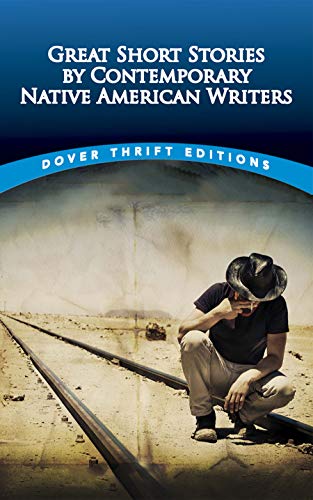
Mary TallMountain’s “Snatched away” is the ninth story of fourteen in the anthology, Great short stories by contemporary Native American writers, that I’ve been working through this year. It, like the previous three, was published in the 1980s, in 1988 in this case.

Mary TallMountain

Anthology editor Bob Blaisdell provides minimal information about her. He gives her heritage as Athabascan, Koyukan and Russian on her mother’s side, and tells us she was born Mary Demoski in Alaska in 1918, and died in 1994. Wikipedia’s article on her describes her as “a poet and storyteller of mixed Scotch-Irish and Koyukon ancestry” (Koyukon being Alaska Native Athabascan). Later in the article Wikipedia also mentions her Russian heritage.

Wikipedia provides more background, though not as much as on some of the other writers I’ve read in this anthology. She didn’t start writing until she was in her 50s, which means the 1970s , and she was part of the Native American Renaissance. However, the works listed seem to be primarily poetry, and there’s no discussion of her prose writing. It describes her main themes as being Native and Christian spirituality, including a connection to nature. It also tells us that she was given up for adoption when she was 6, by her tubercular mother, who knew “she would inevitably die” from the disease. It was not a happy experience for TallMountain. Her step-father was abusive, and she was forcefully dislocated from her culture.

TallMountain’s whole life was a challenge – from the unsurprising alcoholism, given her difficult childhood, to serious health problems, including cancer and a stroke.

“Snatched away”

“Snatched away” is told through the eyes of a white man, Clem, who has an Athabascan partner, Mary-Joe, and two children, though this is only slowly revealed. The framing story takes place over a day, in the 1920s, as Clem manoeuvres his way down the Yukon river, meeting rivermen and reflecting on his life. Through him, TallMountain tells of the culture of Athabascan river people whose survival depends on their river, fishing and hunting skills:

Quick dark silhouettes against the greens of alder and cottonwood, the Indians were part of sky, river, earth itself: they wove their dories through tumbling water, poled schools of darting salmon, strode like lumberjacks. Born rivermen, Clem thought with respect. Still, the river was a tough customer. In the seven years he’d been here, ten men and boys had downed between Nulato and Kaltag.

The river might be tough, but it is nature, and its spirit and theirs are entwined. The more problematical thing is the impact on their lives and culture of the arrival of white people, particularly with their diseases like small-pox and tuberculosis.

TallMountain doesn’t gloss over or romanticise life, before or after the arrival of the whites. Rather, she tells it as it is. Early in the story is a scene, told in flashback, in which Clem spends an afternoon on the riverbank with locals, young Andy, who had later drowned, and Little Jim. They see a bundle rolling fast down the river and, on his asking what it is, Clem is told it’s a “Baby. Throwed away”. A common practice in the “old time” for imperfect babies, with a “bum leg” maybe, or “head mashed”, it happened less now, but women will still do it, he’s told, if the baby is “too bad”.

Death pervades the story, actual or intimated – from the babies and the drownings to the aforementioned diseases – but its handling is unsentimental.

From the opening paragraph describing the Yukon as being in a “fierce, frowning mood” to the end when Clem’s “words are snatched away by the wind”, it is the river that controls the story. Its power and potential to both sustain with fish and birds and to kill, and its associated spirituality, are evoked through the people Clem interacts with on his journey – like the consumptive Floyd out hunting mallard and Willy the fisherman who “looked as if he had always been there” and who tells Clem “you got to watch that river” – and through Clem’s physical struggle to keep his boat upright and on course. The river is a living thing, and should never be underrated. Nor perhaps, should be the Woodsman, an Athabascan bad spirit about which Clem asks Willy. It’s a joking reference, but with a tinge of something else all the same, given soon after this Clem senses “something besides fish alive, out there in the river”.

There is clearly an autobiographical element to the story, with Clem’s partner, like TallMountain’s mother, contracting tuberculosis and the local doctor offering to adopt the children, just as Tallmountain had been. Clem is bothered, but philosophically believes “it will all work out in the wash”. Will it? Much is left open in this story.

Like many of the stories in the anthology, “Snatched away” is at least partly about the intersection of cultures. TallMountain, like many of the authors, is of mixed heritage, and in the little I’ve found about her on the Internet, she was comfortable with that. In fact I found an Interview with her in which she describes herself as an “inbetween”*, by which she means having “a connection between two different cultures” to which must be done justice. As Clem fights his way down the river, he thinks about his own heritage and background, as well as of the Athabascan people. As he tires, he sees the faces of his wife and children “wavering” in the mist. But, his specific pronouncement about “Indianness” just after this – “what difference now, how much the blood is mixed” – felt sudden and a bit out of the blue.

It may be that TallMountain was more poet than storywriter, but I did still enjoy the story, even if more for its gorgeous writing about the river and its people than for its narrative coherence. And it has been anthologised more than once, which says something.

* Joseph W. Bruchac III, “We are the inbetweens: An interview with Mary Tallmountain”, Studies in American Indian Literatures, Series 2, Vol. 1, No. 1 (Summer 1989), pp. 13-21

Mary TallMountain
“Snatched away” (orig. pub. 1988)
in Bob Blaisdell (ed.), Great short stories by contemporary Native American writers
Garden City: Dover Publications, 2014
pp. 65-74
ISBN: 9780486490953

Shelley Burr, Ripper (#BookReview)

When I started reading Ripper, Shelley Burr’s follow-up novel to her bestselling award-winning debut novel Wake (my review), I thought about crime novels, about how they are often written in series and how I am not a big series fan. Ripper looked to me like a stand-alone novel – and it is, somewhat! I say somewhat, because a few chapters in we come across one Lane Holland.

The plot thickens…

Lane Holland, I thought. I know that name. Sure enough, Lane Holland is the private investigator protagonist of the aforementioned Wake. However, he is not the prime investigator in this novel, because he is in prison as a result of his previous investigation. (You’ll need to read Wake to find out more!) The result is an intriguing crime novel in which we have our prime, self-appointed amateur investigator, Gemma, plus the police working away in the background, and Lane who is pulled into the investigation by his prison governor, Patton Carver. Yes, you’ve guessed right, the plot thickens – except I haven’t really told you about the plot yet.

Ripper is set in a fictional town called Rainier, which, as Burr confirms in her acknowledgements, is partly based on the town of Tarcutta. Seventeen years before the novel opens, three murders had occurred in this little country town, the last one outside the door of Gemma’s little teashop. She – and the town – have never fully recovered from these events. The town has stagnated under its black reputation, and Gemma herself suffers PTSD from what she had experienced. Now a tour company has arrived wanting to run a true crime or dark tourism walking tour of the Rainier Ripper’s murderous path, but Rainier’s residents have mixed feelings about the idea. On the eve of the trial tour aimed at garnering their support, the tour operator is killed in what looks like a copycat murder. It has to be copycat because the Rainier Ripper is in prison, the same prison as Lane Holland. As I said, the plot thickens, and part of the thickening springs from why prison governor Carver is interested.

Once again, I enjoyed Burr’s story, because once again it is more than a crime story, exploring issues like the impact on a small town of having a reputation for violence, the impact on people who have been close to a violent crime, the idea of dark tourism, and the murky world of police investigations and the ways in which confessions are elicited. I am not an expert but Burr’s research into the relevant issues, including prison life, felt thorough but lightly applied.

I also enjoyed Burr’s characterisation. Gemma and Lane are well-evoked. Other characters are necessarily more sketchy, but they are individualised enough to lift them above pure stereotype, to make them feel true. There is an engaging exploration, through Gemma’s daughter and her friends, of how teenagers cope with a complex adult world. There are some truly “tangled” family relationships in the town. There is some diversity, including a non-binary teen and a Wiradjuri woman, which Burr introduces without trying to appropriate other experiences. There are farmers, business people, pub owners, and doctors whose lives are entwined through marriage and murders. It’s a lot to convey, and there are plenty of names, but I rarely got lost!

Ripper has some similarities with Wake, in addition to also belonging to the rural noir sub-genre. It’s told through roughly alternating third person voices (Gemma and Lane); the protagonist is privately investigating; and it deals with a cold case, which involves a missing person. But it is significantly different, too, including the fact that Gemma is an amateur unlike Wake‘s Lane, and that it is set in a different place with different issues to confront. This means that it is not formulaic, which keeps us readers on our toes. We can’t assume anything about where Burr is going.

Now, I am not a big plot-follower, by which I mean I don’t put serious brainpower into trying to work out who dunnit. Rather, I read crime like I read most books, that is, with a focus on the characters and the issues being explored. But of course, I can’t help following the actual plot, particularly when the characters have engaged me and I want them to fare well. In Ripper, I worked out one of the plot twists, but it had several – like those Christie and Christie-like TV shows I watch – and they left me for dead. They did make sense, though, which is the important thing.

On the basis of her manuscript for Wake, Burr won a two-book deal with Hachette, and Ripper is the second book. I do hope she is offered more book deals because, while there is absolute closure on this book’s crimes, there is also a clear hint at the end about where a next book might go – and I’m intrigued. Burr is a clever writer, with her wits about her. Ripper’s readers will guess the main investigation Burr plans for her next novel, but what will the context be this time? What will be the issues? Time will hopefully tell.

Shelley Burr
Ripper
Sydney: Hachette Australia, 2023
346pp.
ISBN: 9780733647857

(Review copy courtesy Hachette Australia)

Pat Barker, The women of Troy (#BookReview)

I shocked my reading group last week when I announced during our discussion of Pat Barker’s novel, The women of Troy, that I was tiring of feminist re-imaginings of historical women. This is not to say that I didn’t enjoy the novel, and it is definitely not to say that I am not interested in novels addressing feminist issues and concerns. It is simply to say that mining the past for the wrongs of the past, while perfectly valid, is starting to feel a bit repetitive, and consequently, also perhaps a bit reductive.

In the last couple of decades, the Classics seem to have been particularly popular for authors to revisit. I can point, in my own reading, to Margaret Atwood’s The Penelopiad (my review), and more recently to authors I haven’t read like Madeline Miller and Natalie Haynes. These authors have all re-imagined women’s roles from the Greek classics. A somewhat different, because non-feminist, re-imagining is one that relates closely to Barker’s novel, David Malouf’s Ransom (my review). In it, Malouf explores the visit Priam makes to Achilles to beg for the body of his son Hector. This event occurs before Barker’s novel starts, but it – particularly how the characters interpret it – underpins Barker’s plot.

So, let’s get to Barker’s novel. It starts with the fall of Troy but it mostly occupies the time during which the victorious Greeks, eager to return home with their spoils of war, which include the titular women of Troy, are unable to leave because they need the right weather to sail. However, it’s not coming because the gods are offended. The Trojan King Priam’s body has been brutalised and left unburied – by the now-dead-Achilles’ son Pyrrhus, who is emulating his father’s treatment of Priam’s son Hector.

Barker evokes the scene well, detailing life at the encampment along the bay, which includes the households of Greek heroes and kings – like Agamemnon and Odysseus – and the women’s quarters where the captive Trojan women are being kept. The warriors, who are fine when they are fighting, are restive, while the women are trying to survive this nightmare. Three voices carry the story, the main one being the first-person voice of Briseis, who had been Achilles’ “prize of honour” but is now married to his trusted companion Alcimus. She tells her story from 50 years hence. Her voice is occasionally interrupted by one of two third-person male voices who speak from their present, the aforementioned Pyrrhus, and the out-of-favour seer, Calchas. In fact, it is Pyrrhus who opens the novel.

“nobody would believe a girl capable of doing it” (Briseis)

Barker knows how to tell a compelling tale. She unfolds the plot at a steady pace, building up the tension in the encampment through strong imagery and tight description. I particularly loved her use of birds to both convey tone and further the themes. Chief among these were the ever-present crows who, Briseis tells us partway through the story,

were everywhere now, and they seemed so arrogant, so prosperous … Almost as if they were taking over.

Above all, though, it’s Barker’s characterisation that engaged me, her ability to invest her characters with humanity – including the brutal Pyrrhus who at 16 years old is young, unconfident and struggling to live up to the reputation of his father Achilles. Briseis, the spoil of a previous war and now carrying Achilles’ child, is more privileged than the newly captured Trojan women, but she needs all her wits if she is to keep them as safe as she’d like, particularly the independent Amina who is determined to defy Pyrrhus and give Priam the burial he deserves.

One of the ways Barker creates these relatable characters is to use contemporary and often highly colloquial language, which I admit I initially found off-putting. I don’t usually bother much about anachronism in historical fiction, so it tickled me that our reading group member who tends to be the most critical of anachronism was the main defender on this occasion. She argued that the language of The Iliad, for example, is poetic, rather than realistic, and that, given we don’t know the language of the time, Barker’s earthy approach – with its expressions like “poor cow”, “as you would”, and “fat lot of good” – is valid. Fair enough – and, in fact, I did find myself able to go with the flow, once I’d attuned myself.

There were other moments, too, though, where the language felt a bit clunky, but they were not enough to spoil what was a page-turning read about the politics of war, of enslavement and of genocide, a story in which the victors take the women for their own and aim to kill all surviving Trojan males:

They weren’t just intent on killing individual men; they meant to erase an entire people.

It’s a grim and brutal world. As Briseis tells us near the beginning, “the only thing, the only thing, that mattered in this camp was power – and that meant, ultimately, the power to kill”. 

But, there are some things that the victors, for all their swaggering physical power, overlook or can’t control. One is the greater power of the gods, and the other is the women. Barker shows how women, in being so ignored, so underestimated, so under the radar, can in fact exert some agency exactly because of this. It’s not an ideal way to be, but when needs must you do what you have in your arsenal.

You don’t need to have read the first book in the trilogy to appreciate this novel. I hadn’t. And, while the kernel of a sequel can be seen in its ending, The women of Troy has enough closure to make it work as a stand-alone novel. I wouldn’t call it a must read, but for those interested in looking at Greek myths from a different angle, there is much to “enjoy” here.

Pat Barker
The women of Troy (Troy trilogy #2)
Penguin Books, 2021 (Kindle ed.)
309pp.
ISBN: 9780241988343