Richard Flanagan, First person (#BookReview)

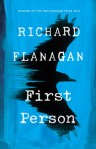
Richard Flanagan, First PersonRichard Flanagan’s latest novel First person, which I did with my reading group, is a challenge to read. By this I don’t mean it’s “hard” to read but that it requires careful attention to pin down. On the surface, its subject is straightforward. It’s the story of struggling as-yet-unpublished writer, Kif Kehlmann, who accepts the job of ghost-writing a memoir for a con-man, Siegried Heidl. It’s autobiographically-based in that Richard Flanagan himself did just this for the fraudster or imposter John Friedrich, who headed the National Safety Council of Australia. However, the novel takes off in directions far removed from Flanagan’s life. At least, so I believe, though as Kif very quickly learns, how do we know what to believe! Who to trust!?

Anyhow, why write this now, 25 or more years after the events? Well, the title might give you a hint, as well as the subject matter … but, it is a tricksy book, starting from its very nature as a pseudo-memoir about a ghost-written memoir. If you know Flanagan, you’ll know he’s setting himself – and us – up for quite a ride. It’s a complicated ride, and perhaps got a little sidetracked at times, but is nonetheless fascinating …

“ceaselessly self-making”

The story describes, in Kif’s first person (ha!) voice, his experience of ghostwriting Heidl’s memoir and its aftermath. The ghostwriting task doesn’t go well, with Heidl evading Kif’s attempts to obtain the information he needs. Flanagan describes this with the wonderfully evocative language that we love reading him for. “I may as well have used a pair of scissors to pick up spilt mercury”, he writes of his early attempts to get some facts. He tries a different method: ask some direct questions, write up his understanding of the answers, and then check his version with Heidl:

The more outlandish, the less related my story was to the few, vague facts he had outlined, the more ludicrous I was, the more pleased Heidl seemed, and the more he would claim that it accorded exactly with his own memory.

After which, apparently, Heidl would contact 60 Minutes or some other program or newspaper, to line up “paid interviews about himself on the basis of such inventions.”

You can perhaps see where this is going in terms of my Why now question. It’s that Heidl (Friedrich) was continuously reinventing himself. Sound familiar? Heidl lived “in a constant state of transformation”. The end result, as Kif sees it, is that Heidl, “the great story maker … was everywhere present in his creations but nowhere visible”. He was not, as Kif tells it, “so much a self-made man as a man ceaselessly self-making”. This narcissism, this solipsistic way of being in the world, this mania for self-invention, makes this book relevant now.

“Trust is the oil that greases the machine of the world”

The other main issue relating to the Why Now question concerns trust. Heidl was a con-man, which means of course that he played on people’s trust. And my, he did it with bells on. He managed to defraud banks of $700 million by, for example, convincing them that he had a fleet of shipping containers (CIRILs) full of the technology and equipment required for responding to disasters. Heidl says, continuing the heading quote above:

Even people we hate we trust. That’s how it is. And, amazingly, mostly it works. The bankers trusted that the CIRILs were real, that ASO was real, until finally it was real. Like you trust the mechanic did service the car or that the bank is honest; like you trust that the people who run the world know what they’re doing …

Every day now, every single day it seems, we are confronted with organisations and individuals failing to live up to our trust – the churches, the banks, the police, the politicians. This is why, it’s patently obvious, Flanagan wrote this story now.

The novel, then, is about what happens when we buy into this world of make-believe. And it’s not pretty. In the book it is most vividly exposed, at the personal level anyhow, through what happens to Kif during and after his writing of the book. The more time he spends with Heidl, the more he finds himself, against his will, being drawn into Heidl’s world and starting to “think like Heidl”, until finally “all that divided him from me evaporated.” You’ll have to read the book yourself, if you haven’t already, to see how this plays out.

“The novel is dead”

The book is also an apologia for fiction. Like Flanagan, Kif was a struggling novelist when he accepted the ghost-writing job. It’s something that Heidl regularly throws back in his face, whenever Kif questions his truths. Why is a fiction writer, Heidl asks him, concerned about truth and facts when what he does in fact is lie? Hmm … I’d tell him there’s lying and there’s story, and that the former obfuscates while the latter illuminates, but he probably wouldn’t believe me!

Near the end, an entertaining (there’s much humour in the book in fact) but significant set piece occurs when, visiting New York decades later, Kif meets a young writer. She’s in her late twenties and has just published the third volume of her autobiography. The novel, she says, “as a mode of narrative“, is dead:

It’s fake, inventing stories as if they explain things … Just the thought of a fabricated character doing fabricated things in a fabricated story makes me want to gag […] Everyone wants to be the first person. Autobiography is all we have.

Kif says he doesn’t agree … and nor does Flanagan, which he demonstrates most obviously through the very act of writing this story as a novel not a memoir. Fiction, he shows, facilitates the exploration of alternatives, the asking of questions.

Overall, I loved Flanagan’s exploration of our current mania for self and of the issues surrounding truth and our desire (need, even) to trust. I also enjoyed Flanagan’s language. But when I got to the end, I couldn’t make it fully cohere. This is partly to do with the breadth of targets and topics, of which I’ve only touched the surface here. It felt at times that Flanagan had a few points to make – scores to settle even – regarding, for example, publishing and writing in Australia. These confused the main thrust a little – though maybe I have conflated Kif with his author! Finally, the second part of the novel, post Heidl’s death, could have been tighter. Kif’s life diverges significantly from that of his model, Flanagan, and is explored at some length. It’s perfectly logically developed, but the “message” started to feel a little laboured.

Nonetheless, First person is well worth reading – for its (novelistic) insight into that time in Flanagan’s life not to mention into a fascinating episode in Australia’s history; for its intelligent exploration of some critical issues that don’t seem to be going away; and for Flanagan’s marvellous prose. I should probably read it again.

Lisa (ANZLitLovers) loved this book.

Richard Flanagan
First person
North Sydney: Knopf, 2017
392pp.
ISBN: 9780143787242

Monday musings on Australian literature: My reading group does Garner

You are never too old to try something new – and so it was that my 30-year-old reading group tried something new for our April meeting. The idea was that we would all read Garner, but our individual choice of Garner. We’ve discussed five Garners over the years, and many had read other Garners besides those, so we thought it might be fun for us to all read what we like – from her large oeuvre of novels, short stories, screenplays, essays and other short non-fiction, and longform non-fiction – and then see what conclusions we might draw.

It worked well – I think. At least, the discussion was lively and engaged.

So, what did we read?

(Listed in publication order, with links to my reviews where I’ve reviewed them here.)

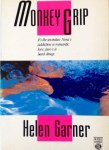
  • Monkey grip (1977) (x2)
  • The children’s Bach (1984) (x2) (my review)
  • The last days of chez nous and Two friends (1992) (my review)
  • The feel of steel (2001)
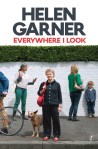
  • Everywhere I look (2016) (x2) (my review)
  • True stories (2017)
  • A writing life: Helen Garner and her work, by Bernadette Brennan (2017) (my review)

A good spread in some senses but not in others. It includes two of her five novels, her two screenplays, three collections of her short non-fiction (essays and the like), and the not-a-biography-literary-portrait. It does not include any of her short fiction (like Postcards from Surfers) (my review) or her longform non-fiction (like This house of grief) (my review). It was pretty clear, I’d say, that most didn’t want to confront the unpleasantness of books like Joe Cinque’s consolation and This house of grief, though we did discuss Joe when it came out.

Helen Garner, The children BachThe reasons we chose our books were diverse. Some of us, including me who did the screenplays, chose books we already owned. Some chose books they’d read and wanted to reassess (like Monkey Grip), while another chose Monkey Grip because she hadn’t read it and felt it was now “part of our culture.” One music-lover chose The children’s Bach because it was short and referenced music, while another chose The feel of steel because there were only two options at her secondhand books source and she didn’t want to read the other (Joe Cinque’s consolation.) One chose the 2017 compilation True stories because it represents 50 years of Garner’s short non-fiction writing. And one chose the literary portrait because she’d read a lot of Garner, and wanted to find out more about her.

What common threads did we find?

It wasn’t hard to find common threads in Garner – which is not to suggest that we think reading her is boring!

The overriding thread was that she draws heavily from her life, even for works that aren’t autobiographical. We agreed that she’s present, one way or another, in most of her writing, including her longform non-fiction works, such as Joe Cinque’s consolation.

Another thread was that she is “searingly honest”, “will have a go at everything”, “is not afraid of looking an idiot”.  This honesty, we felt, applies both to the topics she chooses and to her way of exploring them. If you’ve been reading my blog for a while, you’ll know that I’ve regularly made this “honest” comment about Garner.

The third main thread that most of us commented on was her writing. We agreed that she’s a wonderful stylist, but beautifully spare too. Spare, though, doesn’t mean plain. One put it perfectly when she praised Garner’s “word pictures”.

Over the course of the evening, excerpts were read – to show her writing skill and/or her ability to capture life (not to mention her sense of humour).

Helen Garner, Everywhere I lookHere are some that were shared:

The waiter had a face like an unchipped statue. (The children’s Bach)

He waltzed the car from lane to lane with big flourishes of the steering wheel. (The children’s Bach)

Everyone looks at her, surprised. She has quietly dropped her bundle. (The last days of chez nous)

I knew I couldn’t be the only person in the world who’s capable of forgetting the contents of a novel only minutes after having closed it. (from The feel of steel)

And long live the Lydias of this world, the slack molls who provide the grit in the engine of the marriage plot; for without them it would run so smoothly that the rest of us would fall into despair. (referencing Pride and prejudice, in “How to marry your daughters”, from Everywhere I look)

Our conclusion

Our discussion ranged rather widely, but we did try to draw it all together at the end, particularly regarding her relevance and longevity.
Questions we considered included: Is she too Melbourne-focused? Does she only appeal to people around our age? Will she still be relevant for future readers? One member reported that her daughter, who’s a keen reader, couldn’t get into Everywhere I look. The Melbournites loved her ability to describe Melbourne, but wondered if that limited her appeal.
We concluded that Garner has carved out a niche that’s unlike anyone else, and that despite her focused setting, her subject matter is universal. And, overlaying this is her writing. It’s worth reading for itself.
So, it wasn’t a contentious meeting, as sometimes discussions of Garner can be … instead it was full of delight and discovery. We’ll probably all read more Garner as we follow in her tracks, a decade or so behind her.

Helen Garner, The last days of chez nous, and Two friends (#BookReview)

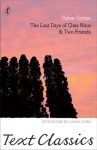
Helen Garner, Last days of chez house & Two friendsHelen Garner must have loved prize-winning book designer WH Chong’s cheeky cypress-dominated cover for the Text Classics edition of her two screenplays, The last days of chez nous and Two friends. You’d only realise this, though, after reading her Preface, in which she explains that she had incorporated cypresses into her screenplay for their “freight of meaning”, but that, because an appropriate location could not be found, they were replaced by a spire! For the published screenplay, however, Garner says she’d taken “the liberty of removing the spire and putting the cypress trees back in.” Love it.

I enjoyed reading this book much more than I expected. I’ve seen and enjoyed both films – a long time ago, as they were made in 1992 and 1986, respectively – but reading screenplays didn’t seem very appealing. How wrong I was. I’m glad, therefore, that Text decided to republish this volume in its Text Classics series. As always, they’ve value-added by commissioning an expert to write a commentary, which, in this case, given there was already an author’s Preface from the original 1992 edition, they appended an Afterword. It’s by well-regarded Australian scriptwriter, Laura Jones (who, coincidentally, is the daughter of the late Australian writer, Jessica Anderson.)

Both the Preface and the Afterword are informative and engaging, but I’ll start by discussing the plays. They are presented in the book in reverse chronological order of their writing, which means The last days of chez nous comes first. Both stories chronicle relationship breakdowns. This is common fare for Garner, but here as in all her work I’ve read, it’s not boring. Her skill lies in the intelligent, clear-sighted way she explores these situations, and in her ability to inject both humour and warmth. She’s never maudlin, and she never judges.

So, in The last days of chez nous, the breakdown is the marriage of Beth and her French husband JP, while in Two friends it’s the friendship between two 14-year-old girls, Louise and Kelly. Both, as is Garner’s wont, draw from her life. She was married to a Frenchman, the marriage did break up, and her husband did fall in love with and eventually marry her sister, most of which happens in the play. In Two friendsBernadette Brennan reports, she drew on a friendship her daughter had had, but, when she saw the film, she realised that it was “really, in a funny sort of way, about me.” And the “me” character was not the sensible daughter, based on her own daughter, but the friend from the troubled background.

In her Preface, Garner tells how the impetus to write her first play, Two friends, was money. She needed it at the time, so when the idea was put to her:

I rushed home and rummaged in my folder of unexamined ideas. Out of it stepped Kelly and Louise, the young girls who became Two friends.

She continues that, although money had been the initial driver, she found, as she got down to it, the writing was “powered by the same drives as fiction” – curiosity, technical fascination, and “the same old need to shape life’s mess into a seizable story.”

This latter point is important, not only because it confirms her lifelong subject matter, “life’s mess” aka relationships, but because it answers those criticisms that she “just” presents her journals. She doesn’t, she “shapes” what she’s experienced (and seen) into “a seizable story”. She also shares in the Preface some of the things she learnt from film writing, including the challenge of working collaboratively which is something writers don’t usually have to do, the “priceless art of the apparently dumb question”, and that she was “forced to learn and relearn the stern law of structure.” She explains, using Last days of chez nous, how her “perfectly smooth narrative curve” was turned into “a little Himalaya of mini-climaxes”.

This is a good place, though, to talk about the structure of Two friends which chronicles the girls’ relationship breakdown in reverse. That is, we start at the point where it appears to have broken down and move back through the months to the peak of their togetherness. Experienced scriptwriter Laura Jones discusses this in her Afterword:

The story … is daringly told in the present tense, backwards, although each of the five parts is told in the present tense, forwards. We hold these two storytelling modes in our minds at once, the forwards momentum and the backwards knowledge […] Such deft playing with time–elegant, formal and musical–offers great storytelling pleasure, as we move from dark to light, from the painful separation of two adolescent girls to the rapturous closeness of ten months earlier.

She’s right, it’s clever because the end is bittersweet – we love the close friendship but we know what’s coming.

Now I want to share some of the experience of reading these plays. Here is an example from early in Two friends when Matthew, Louise’s wannabe boyfriend, tells her he’s seen Kelly:

LOUISE: What did she look like?
MATTHEW: All right.

He shrugs; like many boys he is not good at the kind of detail Louise is after.

These instructions to the actor about his character also enliven the reading. It’s the sort of sentiment you’d find in a Garner novel, though perhaps expressed a little more creatively.

And here’s some scene-setting in the next part, where Louise, Matthew and Kelly are together:

Kelly plays up to Matthew–almost as if she can’t help it. (Kelly will become one of those women who, when there’s a man in the room, unconsciously channel all their attention towards him.)

Similarly, in Last days of chez nous. Here is a scene where Beth has eaten some French cheese that JP has been storing carefully until it reaches maturation. He’s very upset, and eventually Beth senses the importance to him:

Beth is silent. They stand looking at each other. She has not quite succumbed, but for once he has her full attention–and this is so rare that he does not know what to do with it …

All this is probably what always happens in scripts, but Garner’s way of describing the situations and characters certainly made the screenplays more than just readable. They were engrossing.

Of course, I read Shakespeare’s (and other) plays at school – but that was school and, although I enjoyed them, I haven’t really gravitated to reading plays/scripts since. I won’t be quite so cautious in future.

Do you read them?

AWW Badge 2018Helen Garner
The last days of chez nous and Two friends
Melbourne: Text Publishing, 2016
243pp.
ISBN: 9781925355635

(Review copy courtesy Text Publishing)

Claire G. Coleman, Terra nullius (#BookReview)

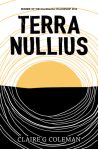
Claire G Coleman, Terra nulliusClaire G. Coleman’s debut novel, Terra nullius, was my reading group’s third book for this year. The first two – An unnecessary woman (my review) and The sympathizer (my review) were well liked – but not so Coleman’s book. In fact that I was the only one who liked it. So, instead of my usual review, I’ve decided to tease out some of the issues my group had with the book, and see where I end up. I didn’t take notes at the meeting, so I’m relying on my memory. I may not have got all the issues down, or down correctly, but I’ll give it my best shot. In doing so, I’ll also draw on GoodReads because its users tend to be general readers, like you finding reading groups.

First though, a brief introduction for those who don’t know the book. Terra nullius starts off reading like an historical fiction novel about the colonial settlement of Australia and the concurrent dispossession of our indigenous people. Coleman’s world of Settlers and Natives, of Troopers and Trackers, of Missions to which stolen children are taken for education, of a Department for the Protection of Natives, and so on, mimics colonial Western Australia in particular, but it’s not long before hints start to appear that all is not as we’ve assumed. Before halfway, all is revealed, and we realise we are not reading historical fiction, but speculative fiction set in some near future. It is, as a result, not about indigenous Australians versus white colonists, but about colonised people of all races versus settler-colonists (“grey fellas”) from somewhere else. This realisation is unsettling, and clever, because it forces non-indigenous readers to switch identification from the colonisers to the colonised.

Now to my reading group’s response. The over-riding criticism was that it was repetitive and tedious. This is the criticism I could most understand, because partway through the novel’s second half I felt the momentum flag a little, which I put down to the structure. It’s multi-stranded, with the stories of different people or groups running parallel for a significant portion of the book. The strands include Native Jacky who is on the run; Settler Sister Bagra who runs a Mission; Settler Sergeant Rohan who leads the posse which is hunting Jacky; Esperance and her camp of free, renegade Natives; and deserter-Settler Johnny Star who is taken in by some rebel Natives. Fortunately, just as I wondered whether the separate groups – the separate strands – were ever going to come together, two things happened. A new character, Father Grark, appeared, and the strands did start to coalesce. These, along with other factors including the writing itself, were enough to prevent the book’s becoming tedious for me.

However, my reading group friends weren’t alone in their criticism. One GoodReads reviewer described it as “gratingly repetitive” and another overall positive reviewer had “some minor quibbles”, of which the main one was that “some elements of the story were repetitive”.

Another criticism made by some of my group was that they weren’t interested in any of the characters. Some GoodReads reviewers concurred. One didn’t “connect with any of the characters” and another said that “the characters, the individuals, are basic, with no complex motivations, no desires”. This surprised me, because I was interested in several of the characters, and I looked forward to their next appearance. One was Esperance, the young woman living with that renegade camp of Natives. Another was Jacky, who is the first character we meet and who, for over half the novel, struggles on alone, trying to survive and keep one step ahead of his pursuers. There are, though, a lot of characters, and I can see the argument that many of them have “no complex motivations”. However, I’m not sure that deep characterisation is always essential for speculative, dystopian fiction, such as this book is. Anyhow, regardless of this point, I can’t accept the argument that none have desires. Esperance and Jacky, for example, certainly have desires. Survival is one, and for Jacky, returning to his home, his country, is a major driving force.

One of the positive GoodReads writers said, and it reflects my response, that “importantly, Coleman’s more ‘extreme’ characters – such as Sister Bagra, in charge of a Native ‘orphanage’ – are frighteningly familiar, and it [is] these elements of the story that will linger.” She is not, in other words, a particularly complex character, but given what I know of colonial history, she is believable. I’d argue that that’s sufficient.

Then there were arguments that the book was too heavy-handed, too obvious, not nuanced enough. Again, there were GoodReads reviewers who agreed, one saying the “messaging was much too overt” and another that it could have been more subtle. However, I’m not sure that I’ve read much dystopian fiction that is subtle. On GoodReads I found a perfect example of how differently we “read” books. One criticised the chapter epigraphs, which come from various fictional “sources”, saying that “the book could have been done much more subtly without the chapter-starters explicitly comparing the colonisation to the colonisation of Australia”, while another said that Coleman’s “use of ‘archival documents’ at the beginning of each chapter gave the book rich perspective.” Again, I concur with the latter, and some in my group agreed that this feature of Coleman’s book was effective and worth exploring further.

It seems that those who are well-versed in speculative fiction’s colonisation stories – in my reading group and on GoodReads – felt that Coleman’s book didn’t offer anything new. A member in my group felt that it was so clearly Western Australia’s story that Coleman may as well have made it Western Australia. I agree that the “facts” aligned closely with the Western Australian experience, but I didn’t see that spoiling its speculative layer. In a way, it increased its effectiveness because, using the GoodReads quote above, it felt “frighteningly familiar”. There is an argument to be had, I suppose, about how “familiar” speculative fiction can be before it’s no longer speculative, but for me it worked.

Other concerns were raised in my group, but there were positives too, particularly regarding the quality of Coleman’s descriptive writing. She knows the landscape well and captures the heat and light, not to mention the weirdness of Australian desert vegetation beautifully:

He [Sergeant Rohan] did not relish another night under the alien trees, the twisted limbs, the hanging bark, the wrong colour: their waxy grey-green leaves too hard, almost glassy.

There’s more to like about the writing than this, however. From the first page when we meet Jacky on the run, I loved Coleman’s voice. It’s direct but evocative, it’s serious but peppered with a light, cheeky touch that uses throwaway lines and afterthoughts to great effect:

Dinner was a disappointment: sure the meat was fresh but it was tough and tasted like all the other Native meats – quite unappetising, only to be relished by the desperate. Good thing they were desperate then.

So, I was impressed by this book. My heart engaged with the characters who were struggling to survive their nightmarish world, while my mind was intrigued by what Coleman was doing, by her layering of historical experience within an imaginative framework, by her grounding us in a familiar story, and then overturning it to force us to see it from a different perspective. I’m not sure I followed all her intellectual twists and turns but I certainly got the point about invasion – and about the cruelty people inflict on each other in its name.

He [Johnny Star] had learned, through his friends, that the bent, broken drugged and drunk state of those surviving near the Settlements was not the habitual state of Natives. The truth was, it was a sort of depression brought on by what they had lost, brought on by being dominated and controlled by another people. Who could not be depressed, being treated like animals in a land that had once been theirs alone.

Without giving away the details, the ending is generally what you’d expect from a dystopian scenario, but it’s not without hope, without defiance too. A great read … at least, I thought so!

Lisa (Anzlitlovers) loved the book, as did Bill (The Australian Legend).

Note: I haven’t cited the individual GoodReads reviewers, but they can be found at the site’s page for the book.

AWW Badge 2018Claire G. Coleman
Terra nullius
Sydney: Hachette Australia, 2017
294pp.
ISBN: 9780733638312

Rabih Alameddine, An unnecessary woman (#BookReview)

Rabih Alameddine, An unnecessary womanLebanese-born American writer Rabih Alameddine’s novel, An unnecessary woman, is tailor-made for readers. It was fittingly, therefore, my reading group’s first book for 2018. The novel is told first person in the voice of 72-year-old childless, divorced Aaliya Saleh, who lives alone and spends her time reading and translating books. Set in an apartment in Beirut in the 2000s, it has a minimal plot, focusing more on the thoughts and ideas of this reclusive woman who describes herself as her “family’s appendix, its unnecessary appendage”.

However, before I tell you more about the subject-matter and why I so enjoyed this book, a little warning. This is the quintessential literary novel. It is packed with literary references and allusions, not to mention references to musicians and artists. One of Aaliya’s favourite authors is the also-reclusive “connoisseur of alienation”, Portuguese poet Fernando Pessoa, and he appears regularly, but she also mentions, in no particular order, WG Sebald, Fyodor Dostoevsky, Patrick White (whom she adores), Helen Garner, Marguerite Youcenar, JM Coetzee, António Lobo Antunes, Ernest Hemingway, Albert Camus, Shakespeare, and many, many, many more. While I know the authors I’ve named here, I certainly don’t know all those she mentions – but it doesn’t matter. Well, it might, in that more knowledge might add all sorts of nuances to the book’s meaning, but all I can say is that I enjoyed it with what I do know.

But now the subject-matter. Where to start? The book covers a lot of ground. It’s about living in a war-torn city and country; it’s about relationships, gender and women’s lives in a patriarchal society in which her “half brothers, like so many men and boys, have the impatience of the entitled”; it’s about aloneness and loneliness; and, best of all, it’s about books and reading. It’s this last one I want to focus on, partly because it’s the one that gave me the most chuckles.

These chuckles aren’t of the belly-laugh variety. They’re more subtle, coming particularly from allusions and irony. Take for example this comment, a bit over halfway through the book:

Most of the books published these days consist of a series of whines followed by an epiphany. I call these memoirs and confessional novels happy tragedies. We shall overcome and all that. I find them sentimental and boring.

This comment made me laugh because her story is, essentially, “a series of whines followed by an epiphany”, for all her dislike of epiphanies. “Enough”, she says, “have pity on readers who reach the end of real-life conflict in confusion and don’t experience a false sense of temporary enlightenment”. This book is, you might be seeing now, also about the intersection between reading and life. To what extent do they inform each other?

Another of her dislikes, in life and in literature, is the idea of “causality”. Alain Robbe-Grillet, she says, “wrote that the worst thing to happen to the novel was the arrival of psychology”, meaning, she believes, “that now we all expect to understand the motivation behind each character’s actions, as if that’s possible, as if life works that way”. So literature, in other words, needs to reflect life. She writes:

I’ve read so many recent novels, particularly those published in the Anglo world, that are dull and trite because I’m always supposed to infer causality. For example, the reason a protagonist can’t experience love is that she was physically abused, or the hero constantly searches for validation because his father paid little attention to him as a child. This, of course, ignores the fact that many others have experienced the same things but do not behave in the same manner, though that’s a minor point compared to the real loss in fulfilling the desire for explanation: the loss of mystery. Causation extraction makes Jack a dull reader.

Interesting point, this “loss of mystery”, this sense that life cannot be so easily explained. She gives an example from “life” of a woman killed, during the civil war, while driving home from work. People proposed all sorts of reasons why it happened. She was a spy, or was a bank courier carrying a large amount of money, or was wearing a flashy diamond, whereas in fact she was just unlucky. “A stray bullet killed her”.

For Aaliyah there is something fundamentally wrong with this cause-focused approach to reading, and to living. She writes:

If you read these pages and think I’m the way I am because I lived through a civil war, you can’t feel my pain. If you believe you’re not like me because one woman, and only one, Hannah, chose to be my friend, then you’re unable to empathize.

This idea that finding causes for what happens to others enables us to distance ourselves from responsibility and to feel safe, has, says Aaliya, been explored by philosophers, such as the “ponderous and portentous” Sartre! Aaliyah, you see, is not cowed by big names and reputations. Nonetheless, she admits that, while she’s trained herself “not to keep inferring or expecting causality in literature”, she constantly wants explanations in life “where none exist”. “Uncertainty”, she says later, “is unsettling”!

I enjoyed Aaliya’s cheeky, somewhat self-mocking voice, the way, for example, her commentary is peppered with allusions – particularly, pointedly, from Macbeth – that tease the reader. But it’s not all light. There’s seriousness – pathos – too. For all her enjoyment of reading and translating (which is another whole topic I could write about), Aaliya is not as happy as she seems. She’s aware of ageing – and refers to Helen Garner’s belief “that all women over sixty instinctively learn to pass by a mirror without looking”- and she is lonely in her chosen aloneness:

It is the loneliness, the abject isolation. Hannah reappears in my memories to remind me of how alone I am, how utterly inconsequential my life has become, how sad.

It is partly in regard to this theme – and to the role of the “three witches” in her building – that Aaliyah has her “damn epiphany” at the end!

Besides the discussion of books and reading, the description of life in Beirut, and the analysis of the outsider’s life, An unnecessary woman has much more to offer, including its small but colourful cast of characters and some gorgeous language. This description of a saucer, for example, is surely also a metaphor for Aaliyah:

The rim of the saucer’s depression is lightly discoloured – a dusting of rust and red and brown, remnants of teas gone by that did not wish to be washed away, refused to be forgotten, the age rings of a small plate.

By her actions, Aaliya, despite her “age rings”, shows that she does “not wish to be washed away”, that she refuses “to be forgotten”. She will not, in other words, accept being “unnecessary”.

I have barely scratched the surface of this thoughtful yet playful book that teases us with an idea and then, more often than not, turns it on its head. It is this mixing of the playful with the serious, in Aailya’s compelling voice, that makes this largely plotless novel such an involving read.

Rabih Alameddine
An unnecessary woman
Melbourne: Text Publishing, 2014
291pp.
ISBN: 9781922148292 (eBook)

My reading group’s top picks for 2017

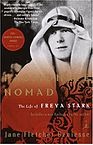
Jane Fletcher Geniesse, Passionate nomad, book coverThis year was my reading group’s 30th year, and for the first time ever we decided to vote on our top picks for the year. Will it become a tradition? Who knows? Anyhow, in the spirit of end-of-year lists, I thought you might be interested to see the result, because you will know some of these books.

First, though, here’s what we read in the order we read them (with links to my reviews). I missed one when I was travelling – unfortunately:

And now, the winners …

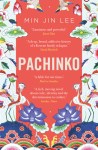
Min Jin Lee, PachinkoAll eleven of our currently active members voted. We had to name our top three picks, which resulted in 32 votes being cast (as one member only voted for two books). The top vote-getters are:

  1. Pachinko, by Min Jin Lee (7 votes)
  2. The museum of modern love, by Heather Rose (6 votes)
  3. Black rock white city, by AS Patrić (5 votes)

Highly commended were Nutshell by Ian McEwan (3 votes), and Our souls at night by Kent Haruf (3 votes). In other words, five books received 24 of the 32 votes cast, which is pretty decisive, don’t you think?

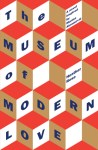
Heather Rose, The museum of modern loveBut of course, this is not a scientific survey. Votes were all given equal weight, even where people indicated an order of preference, and not everyone read every book, which means different people voted from different “pools”. If all had read every book Pachinko may have had even more votes (because my memory tells me that every one, or almost everyone, who read it voted for it.)

A few, including yours truly, tried to sneak in some extra “votes” but these were rejected by the returning officer (who happened to be yours truly!) These “extras” were for Stan Grant’s Talking to my country, Kent Haruf’s Our souls at night, Kim Mahood’s Position doubtful and AS Patrić’s Black rock white city.
 
AS Patric, Black rock white cityInterestingly, a few commented that there wasn’t one book in our schedule that they didn’t enjoy. Now, that’s an achievement! Of course, sometimes disagreement can engender the best discussions, but this year’s selection contained such meaty and/or “big” books that there always seemed to be issues to tease out.
Selected comments (accompanying the votes)
  • PACHINKO: Most members who commented on this one liked it for the cultural history it provides about Koreans in Japan, something which few us knew much about. One member added that  “the story was told so very well without pathos but with sympathy for the victims.”
  • THE MUSEUM OF MODERN LOVE: Comments on this included that it was revealing about “Abramovic the artist and the relationship with her audience”, with one member saying  “it was almost perfect. It satisfied on so many levels”.
  • BLACK ROCK WHITE CITY: Two members were uncertain about this to start with, one saying “I wasn’t really expecting to enjoy it but found I was totally absorbed very quickly” and another that “I started with low expectations and his beautiful writing won me over.” In the end, all who voted for it agreed, I’d say, with the member who called it “a fabulous and quirky story related to the migrant experience .”
  • NUTSHELL: The two members who commented on this one wrote “beautiful writing and a very innovative theme, makes me look at foetuses in a different way” and “clever, quirky and a lot of fun.”
  • OUR SOULS AT NIGHT: As for this one, if you’ve read Haruf you won’t be surprised at comments describing it as “a real gem”, as “deceptively simple with big themes and big heart.”

And next year, do I hear you ask?

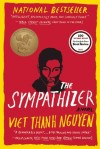
Viet Thanh Nguyen, The sympathizerWe choose our schedule twice a year, so here are our books for the first half of 2018:
  • Rabih Alameddine’s An unnecessary woman
  • Viet Thanh Nguyen’s The sympathizer (which most of you know I’ve already read)
  • Claire Coleman’s Terra nullius 
  • Helen Garner night: read any from Garner’s oeuvre (an experiment. We’ve done poetry nights where we bring a poem or two to share, but never something like this.)
  • Richard Flanagan’s First person
  • Randolph Stow’s The merry-go-round in the sea (our classic, because we always like to do at least one)

If you are in a reading group – face-to-face or online – I’d love to hear your highlights and/or what you plan to read in 2018.

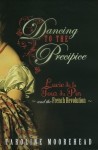
Caroline Moorehead, Dancing to the precipice (#BookReview)

Unusually, my reading group read two biographies about non-Austrian women this year, Jane Fletcher Geniesse’s book on Freya Stark (my review) in January and now, this month, Caroline Moorehead’s book Dancing to the precipice: Lucie de la Tour du Pin and the French Revolution on the French aristocrat Henriette-Lucy, Marquise de La Tour-du-Pin-Gouvernet. Interestingly, Moorehead has also written a biography of Freya Stark. Moreover, while Caroline Moorehead is an English writer, it turns out that her father was the Australian war correspondent and historian Alan Moorehead. How tangled is all this!

But now the book itself. Dancing to the precipice chronicles the life of French-born aristocrat Lucie, from her birth in 1770 to her death in 1853, a period which, you’ll realise, covers some of Europe’s and, in particular, France’s most tumultuous times. Lucie de la Tour du Pin, as Moorehead calls her, saw most of it up close and personal, but somehow managed to survive. The evocative title conveys a sense of how tenuous that survival could be. It comes from Lucie’s own words written just before the storming of the Bastille. She wrote:

Amid all these pleasures we were laughing and dancing our way to the precipice.

Lucie, Moorehead tells us, went on to say that while this blindness was pardonable among the young, it was “inexplicable in men of the world, in Ministers and above all, in the King”. She wasn’t wrong – and the rest of the book tells us how often throughout their lives they nearly went over the precipice.

Dancing to the precipice is a thorough work, thorough in its description of Lucie’s life, and thorough in the research carried out by Moorehead. The biography is footnoted (though not intrusively) and contains an extensive list of sources at the end. It is also well-indexed. All of these are important – to me, anyhow! The reason the book is able to be so thorough – without Moorehead ever needing to resort to gap-filling – is because her life is so well documented, by herself primarily.

Lucie, in fact, has been described as the Pepys of her generation because of the memoir she started writing when she was 49. Titled Journal d’une femme de 50 ans, it was published posthumously and covers her life through the Ancien Régime, the French Revolution, to the time of Napoleon, until March 1815 when he returned from exile on Elba. In her Afterword, Moorehead explains that in addition to this memoir, which apparently has never been out of print, she had access to an extensive collection of letters written by Lucie to a god-daughter and many others, and the papers and correspondence of her husband. A wealth of resources that I suspect many biographers would die for.

Except, it’s perhaps this wealth that has caused my one little criticism of what is, really, an excellent biography. My criticism, as you’ve probably guessed, concerns the amount of detail in the book. There were times when I wondered whether I really needed to know as much as she gave, for example, about the wedding of a half-sister or the love-life of her friend. In terms of social history, perhaps yes, but there were times I wanted a tighter focus, and to not be inundated with quite so much information about so many people. That said, Dancing to the precipice is a fascinating story about an astonishing period of history and an engaging and resilient woman.

There were many aspects of the book I enjoyed, starting with refreshing my old high school and university history studies in the French Revolution. As Moorehead revealed each new phase in that tortuous process by which France moved from the ancien regime to the final republic, I remembered. I loved the description of Lucie and her husband’s time as émigrés in Albany, NY, in America, and the resourceful way they fit into the life there, despite their aristocratic training. I also loved the descriptions of fashion and food in Paris, and of the salons, and the role played by women in encouraging intellectual discussion and debate. Every time the émigrés felt it was safe to return to Paris, the salons started up again (until, eventually, they didnt!) Moorehead draws a stark comparison between the engagement of women in public debate in France versus that of their English counterparts:

Englishwomen remained, to the surprise and annoyance of their French guests, firmly in their segregated and inferior places, expected to withdraw after dinner to allow the men to talk literature and politics. In England, a visitor smugly remarked, women were ‘the momentary toy of passion’, while in France they were companions ‘in the hours of reason and conversation’. As Jane Austen put it, ‘Imbecility in females is a great enhancement of their personal charms’, something that Lucie, brought up to talk intelligently, would find extraordinary. (Loc 4713)

What most retained my interest in the book, though, was Lucie herself. Always the aristocrat but also believing in the need for change, her resilience and resourcefulness in the face of blow after blow was inspiring. Besides the escapes from France and the returns, only to have to escape again, there was the loss of her children. Only one from her ten pregnancies outlived her, something Moorehead argues was extreme, even accounting for the times. Lucie was also unusual for a more positive feat, that of having a successful, loving marriage for 50 years. She and Frédéric were, it appears, true partners.

So, there was more to enjoy about the biography than to criticise, and I’m very glad I read it. I’ll conclude with a quote from the book describing Frédéric’s last days, and his statements about the importance of studying history:

He now spent much of his time in his room, reading and writing to [grandson] Hadelin, long letters mulling over his own life and urging the young man to study, to think on serious matters, to develop a taste for reflection. He should turn, he wrote, towards ‘the vast questions of humanity: there you will find true riches’. […]  It was in history, he told Hadelin, that he should seek to find ways of understanding the world, and to learn how to make his mark on it; for it was to history that ‘one must look to discover motives and judgements, the source of ideas, the proof of theories too often imaginary and vague’. Reflection, he added, was ‘the intellectual crutch on which the traveller must lean on his road to knowledge’.

It’s astonishing that this couple who, Moorehead writes, stood out “for the reckless ease with which they challenged political decisions they considered to be lacking in morality or common sense”, regardless of who was in power, survived into their old ages. It says, I suspect, something about both the respect with which they were held and their ability to judge when it was time to skedaddle. A most interesting read.

Caroline Moorehead
Dancing to the precipice: Lucie de la Tour du Pin and the French Revolution
London: Vintage, 2010
ISBN: 9781409088929 (ePub)

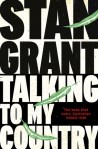
Stan Grant, Talking to my country (#BookReview)

Stan Grant, Talking to my countryHistory is, in a way, the main subject of my reading group’s October book, Stan Grant’s Talking to my country. I’m consequently somewhat nervous about writing this post, because discussions of history in Australia are apt to generate more emotion than rational discussion. I will, though, discuss it – through my interested lay historian’s eyes.

However, before we get to that, I’d like to briefly discuss the book’s form. Firstly, it’s a hybrid book, that is, it combines forms and/or genres. In the non-fiction arena, this often involves combining elements of memoir with something else, like biography, as in Gabrielle Carey’s Moving among strangers (my review). In Grant’s case, he combines memoir with something more polemical – an interrogation of Australian history, and how the stories we tell about our past inform who we are and how we relate to each other.

Secondly, and probably because it’s not a straight memoir – Grant wrote his memoir, The tears of strangers, in 2002 – the book is structured more thematically than chronologically, though a loose chronology underlies it. For example, his discussion of the lives of his grandparents and parents doesn’t happen until Part 3, and then in Part 4 he discusses the government’s policies for handling “the ‘Aboriginal problem'”, particularly that of assimilation (or, more accurately, “absorption”.) This structure enables him to focus the narrative on his theme, so let’s now get to that.

The book opens with an introductory chapter titled, simply, My country: Australia. In it, Grant sets out why he wrote the book, which is to convey to non-indigenous Australians just what life is like for indigenous people, to explain that although history is largely ignored it still “plagues” indigenous people, and to tell us that the impetus for him to finally write the book was the booing of indigenous football player Adam Goodes in 2015. And here, in very simple terms, Grant states his thesis:

This wasn’t about sport; this was about our shared history and our failure to recognise it.

He goes on to explain that while some tried to deny or excuse it, his people knew where that booing came from. From my point of view, it’s pretty clear too.

“the gulf of our history”

Now, I’m not going to summarise all his arguments – or the stories of his and other indigenous people’s experiences – but I do want to share some of his comments about history. As Grant is clearly aware – and what Australian isn’t – history is politicised, sometimes consciously, sometimes unconsciously. My generation, the baby-boomers, grew up learning that Captain Cook discovered Australia and that Governor Phillip established the first settlement. If Aboriginal people were mentioned, it tended to be in passing. They were merely a side-bar to the main story. We may have learnt about the missions (and the “great” work they were doing) and we may have learnt in later years of schooling that many indigenous people lived in poverty, but we weren’t told about the massacres and violence that occurred, and nor was it ever suggested that we* had invaded an already occupied land. However, as we now know, these things we weren’t told are incontrovertible facts, supported by evidence.

Some, unfortunately, still ignore these facts and some try to interpret them differently, while the rest of us accept them but feel helpless about how to proceed. And this leads directly to Grant’s underpinning point, which is that we – black and white Australians – meet across “the contested space of our shared past”. Elsewhere he states it a little less strongly as “the gulf of our history”. I love the clarity of these phrases. They explain perfectly why discourse in Australia regarding indigenous Australians can be so contentious and so often futile. Grant’s point is that we can’t progress as a unified nation until this space is no longer contested, until the gulf is closed or bridged.

Grant puts forward a strong case based on experience, anecdote and hard facts (such as the terrible, the embarrassing, statistics regarding indigenous Australians’ health outcomes, incarceration rates, etc) to encourage all Australians, “my country” as the title says, to understand why, for example, when we sing the national anthem – “Australians all, let us rejoice” – indigenous people don’t feel much like joining in. What do they have to rejoice about? Where is their “wealth for toil”.

Suffice it to say that I found this a powerful book. While in one sense, it didn’t teach me anything new, in another it conceptualised the current state of play for me in a different way, a way that has given me new language with which to frame my own thoughts.

By now, if you haven’t read the book, you’ll be thinking that it’s a completely negative rant. But this is not so. It’s certainly “in your face” but Grant’s tone is, despite his admitting to anger, more generous. His aim is to encourage us white Australians to walk for a while in the shoes of our indigenous compatriots and thus understand for ourselves what our history, to date, has created. He believes that good relationships do exist, that there is generosity and goodwill but that, as the Adam Goodes episode made clear, bigotry and racism still divide us.

Late in the book Grant discusses the obvious fact that this land is now home to us all, that many of us have been here for generations and “can be from nowhere else”. Rather than rejecting “our” claims to love this place, he writes that this should make it easier for us to understand indigenous people’s profound connection to country. He writes:

I would like to think that with a sense of place comes a sense of history; an acceptance that what has happened here has happened to us all and that to turn from it or hide from it diminishes us.

And so, rather than telling indigenous people that “the past is past” and “to get over it”, it would be far better, far more honest, far more helpful, for us non-indigenous people to say, “Yes, we accept what we did and understand its consequences. Now, how should we proceed?” Is this really too hard?

Stan Grant
Talking to my country
Sydney: HarperCollinsPublishers, 2016
230pp.
ISBN: 9781460751978

* And by “we”, I mean, as Robert Manne explains it, not “we” as individuals, but as the nation.

Heather Rose, The museum of modern love (#BookReview)

Heather Rose, The museum of modern loveAs I neared the end of Heather Rose’s Stella Prize-winning novel The museum of modern love, I slowed down. I wanted, of course, to know how it was going to resolve, but I wanted to savour it too. It doesn’t seem right to rush the end of thoughtful books like this.

But, I have to admit that I was initially hesitant about reading the book, as I am about any book inspired by a person or work I don’t know. I fear missing something important. However, I did want to read it and my reading group scheduled it. The die was cast. Then, as I was about to start reading, Brother Gums sent me a link to the documentary Marina Abramović: The artist is present about her and the performance piece which inspired this novel. I was set! As it turned out, I think Rose’s writing is evocative enough that it wasn’t necessary to have seen the film, but it did add a layer to the experience.

So, what is The museum of modern love about – besides love, that is? Its centre is performance artist Marina Abramović’s 75-day piece, The Artist is Present, which she performed at MoMA in the spring of 2010, to accompany a large retrospective exhibition of her work. The piece involved her sitting, still, quiet, at a table all day, 6 days a week (MoMA is closed Tuesdays), with gallery attendees invited to take turns to sit opposite her and share a gaze. It was an astonishing success, with, by the end, people camping out overnight to get the chance to sit. Many attended for days just to watch, creating, as Rose describes it, quite a community of spectators. In the end, over 850,000 people attended, with 1,545 people sitting (including Rose). (All are recorded at flickr.)

Anyhow, from this premise, Rose weaves an engaging, thoughtful story about art and love. It has two main narrative strands, telling the real Marina Abramović’s story and that of an attendee, the fictional musician Arky Levin, whose life is stalling, partly due to a restraining order made by his now-unresponsive terminally-ill wife that he not visit her. Interspersed with these, enriching the exploration of the themes, are smaller stories of other attendees, and family and/or friends of the protagonists. It’s narrated by a mysterious third person voice, who starts the novel with

He was not my first musician, Arky Levin. Nor my least successful. Mostly by his age potential is squandered or realised. But this is not a story of potential. It is a story of convergence.

This is a very particular omniscient narrator, some sort of artist’s muse who self-describes late in the novel as a “good spirit, whim … House elf to the artists of paint, music, body, voice, form, word”, one whose job is sometimes just “to wake things up”. This could be cutesy or forced, but it isn’t because Rose doesn’t overdo it. Mostly the story progresses without the intrusion of this narrator, so that when s/he appears we pay attention.

The moral conundrum at the novel’s heart is – is art enough or is love more important? It’s explored primarily through Levin, whose friends suggest he should appeal Lydia’s court order.

I know you’re going to say that she wanted you to do this; she wanted you to make music. But is that enough?

Music, it sounded feeble suddenly in the face of the yawning gap between life before Christmas and life these past four months. (p. 158)

So what does Levin do? Continue to live his increasingly lonely life making music, or follow his heart?

Levin’s story is off-set against other stories, notably that of Jane Miller, a friendly, recently widowed art teacher visiting New York from Georgia. She is lonely, like Levin, missing her husband “achingly, gapingly, excruciatingly. Her body hadn’t regulated itself to solitude.” She becomes one of the mesmerised watchers, but she also connects with others in the crowd, including Levin and Brittika, a PhD student from the Netherlands who is writing her thesis on Marina. Jane forms a natural link between the two themes of love and art.

What, then, is art?

The first time Jane attends the performance, she overhears people in the crowd questioning what the show is about, asking what is art, in fact. There are, of course, the naysayers, the ones who say that “art is irrelevant. If everything goes to crap, it won’t be art that saves us”. But Jane thinks differently, and turns to the man next to her who is, you guessed it, Levin, and says

I think art saves people all the time … I know art has saved me on several occasions.

As the novel progresses, various claims are made for art. Our muse, speaking particularly for artists, believes that “pain is the stone that art sharpens itself on time after time” and that “artists run their fingers over the fabric of eternity”. Marina’s art teacher says to her 16-year-old self that  “Art will wake you up. Art will break your heart”, which causes Marina to consider that “Art … could be something unimaginable”. At one point Marina is reported as saying “I am only interested in art that can change the ideology of society”.

Jane, the viewer, though, has her own epiphany:

And maybe this was art, she thought, having spent years trying to define it and pin it to the line like a shirt on a windy day. There you are, art! You capture moments at the heart of life.

But, I think it is art critic Healayas who makes the clearest, simplest point when she says during a discussion about Marina’s performance:

She simply invites us to participate … It may be therapeutic and spiritual, but it is also social and political. It is multi-layered. It is why we love art, why we study art, why we invest ourselves in art.

… and what has love got to do with it?

Everything, if art, as all this suggests, is about humanity.

Let’s look specifically at Levin. It would be easy to criticise him, as his friends and daughter gently do, for being passive. But, we do get the sense that Lydia encouraged his passivity in their life together, that she liked to be in control, not in a control-freak way but in that way that super-competent people can do. Moreover, Lydia made her order out of love for him, to let him continue creating his art, rather than look after her which she didn’t believe was in him. So, what’s Levin to do? How does he reconcile his love against hers?

The resolution when it comes is triggered by art, by Marina’s performance. And this, as Jane believes art can do, probably saves him. I say probably because Rose, clever writer that she is, leaves the ending uncertain. As she and Levin realise,

the best ideas come from a place with a sign on the door saying I don’t know.

This is an inspired and inspiring book that leaves you pondering. I’ve only touched the surface.

Lisa (ANZLitLovers) also liked the novel.

aww2017 badgeHeather Rose
The museum of modern love
Sydney: Allen & Unwin, 2016
284pp.
ISBN: 9781760291860

Min Jin Lee, Pachinko (#BookReview)

Min Jin Lee, PachinkoIf you are looking for a big, engrossing read that takes you into a little-known world, then I offer you Korean-American author Min Jin Lee’s Pachinko. It tells a story about the Korean diaspora in Japan over a period of 80 years, and was my reading group’s pick for August. There wasn’t a bored person in the room.

Interestingly though, several in the group had no idea what Pachinko was, so in case that’s the same for you, let’s get that out of the way first. It’s a sort of pinball-arcade game that is hugely popular in Japan. It’s a gambling game – a bit like our poker or slot machines – except that gambling is illegal in Japan so there is a complicated system of winning “prizes” which can be sold at a separate business for money! Pachinko parlours, which are highly visible in the entertainment districts of big cities, are dominated by Koreans – that is, their management and/or ownership is – which is where the title for Min Jin Lee’s book comes in.

Lee starts her novel in a small fishing village, Yeongdo in Busan, on the South Korean peninsula. It’s 1910, and a match is being made between Hoonie the cleft-palated, club-footed only son of a fisherman and his wife, and Yangjin, the 15-year-old daughter of a struggling family. A recipe for disaster you might expect, given the way historical sagas often go, except that Hoonie is a decent, loving man and Yangjin a hardworking, appreciative and loving young woman. They produce one daughter, Sunja, and it is her story – together with that of her family and friends – which forms the basis of Lee’s novel, until it closes in 1989.

The date 1910 was specifically chosen for the start of her novel because this is the year Japan annexed Korea, changing Koreans’ lives forever. With Koreans effectively belonging to Japan, many made the physical move there, believing their economic chances would be better, but most ended up in ghettos, living in poverty, and with minimal rights. Being Korean was, essentially, a passport to a second-class life, but they survived and this book chronicles their lives and spirit.

The first thing to say about Pachinko is that it’s a ripping read, covering four generations juggling life in a hostile land. We quickly become engaged in the lives of Sunja and her husband Isak as they move to Japan to live with his brother, Yoseb, and sister-in-law Kyunghee. Two children come, Isak is arrested (for preaching Christianity), and Sunja and Kyunghee join other Korean women selling kimchi and candy in an open market to help the family survive. Lee tells her story in straightforward, matter-of-fact language, with very few descriptive flourishes, which keeps the narrative moving without holding the reader up with extensive scene-setting. This description of Sunja’s second son, Mozasu, is a perfect example of Lee’s clear no-nonsense writing:

Mozasu had grown noticeably more attractive. He had his father’s purposeful gaze and welcoming smile. He liked to laugh, and this was one of the reasons why Goro liked the boy so much. Mozasu was enthusiastic, not prone to moodiness.

The rhythm is almost staccato at times, but never stilted. On occasion though, Lee will break out with something that is more evocative, and it can leave you breathless, such as this description of yakuza Hansu’s money-collector, Kim:

Hansu preferred Kim to do the collection because Kim was effective and unfailingly polite; he was the clean wrapper for a filthy deed.

The other interesting thing about Lee’s writing is that most of the big emotional events – marriages, births, and particularly deaths of which there are some awfully tragic ones – happen off-camera, and are reported to us in the same tone as the rest of the story. This is not the sort of storytelling you usually find in big family sagas, which love to squeeze out every emotional drop they can. I’d say this is because Lee’s goal is not to engage her readers in those sorts of emotions but to demonstrate the resilience and gutsiness of the people …

…. Because Koreans in Japan have had to be gutsy to survive in the face of being ostracised as aliens, of being treated as illiterate and filthy people, of being prevented from accessing higher level jobs. We, like the Koreans, are never allowed to forget their lack of status and, as a result, their reduced choices and opportunities.

It’s not surprising then that one of the themes is parents wanting education for their children, seeing that as a passport for a better future. Sunja’s son Noa wants to go to university, and later Noa’s brother Mozasu, himself not keen on schooling, sees education as a path out, preferably to America, for his son, Solomon. It’s not easy though. Korean children are bullied and ostracised at school, and are not encouraged to go to university. Only the dedicated make it through. The rest – like Mozasu – have to find work, which Mozasu does, luckily, albeit in a Pachinko Parlour. This, to his brother Noa’s disgust, becomes his career, but he becomes a wealthy man. Wealthy perhaps, but still Korean! He says to his friend Haruki:

In Seoul, people like me get called Japanese bastards, and in Japan, I’m just another dirty Korean no matter how much money I make or how nice I am.

And this brings me to my next theme, that of home. Lee provides three epigraphs in the novel, one for each of its parts, and the first one comes from Dickens: “Home is a name, a word, it is a strong one; stronger than magician ever spoke, or spirit answered to, in strongest conjuration”. It’s clear throughout the novel that our Koreans in Japan are homeless – reviled in Japan, they also no longer belong in Korea, particularly the succeeding generations that were born in Japan. As our omniscient narrator says at one point:

There was always talk of Koreans going back home, but in a way, all of them had lost the home in their minds for good.

And so, in this book, characters need to find their own sense of “home” which is, in most cases, family. It is in this context – and I think I can say this without spoiling anything – that we might understand Solomon’s decision at the end and Noa’s tragedy.

The third theme is perhaps the most obvious one, as it relates to the title, which clearly has metaphorical as well as literal readings. I’ll let Mozasu explain it:

Mozasu believed that life was like this game where the player could adjust the dials yet also expect the uncertainty of factors he couldn’t control. He understood why his customers wanted to play something that looked fixed but which also left room for randomness and hope.

However, here’s the thing. This is such a big, baggy monster that every reader is going to come up with different themes, different emphases. Lee herself, in an interview included with my edition, talks about her themes as “forgiveness, loss, desire, aspiration, failure, duty, and faith”. And, of course, all those are there too!

So, to sum up, Pachinko is a wonderful read about an engaging cast of characters. It provides a broad historical sweep of a region many of us could know more about, and it exposes the situation faced for a century or more by alien Koreans in Japan. It is also a book about human beings, one that never quite plays to type, that doesn’t opt for the easy marks. Instead, it is suffused with a clear-eyed humanity which encompasses the best and worst in people, and lets the reader make his or her own assessment. As I said, a thoroughly engrossing read.

Min Jin Lee
Pachinko
Head of Zeus, 2017
ISBN: 9781786691347 (e-Book)