Monday musings on Australian literature: Trove treasures (1), Reading novels

During my Trove searches for specific topics, I come across – serendipitously – other articles that are interesting and worth sharing. So, I have decided to create an occasional sub-series called Trove Treasures. My first group comprises some random little pieces, particularly jokes, that I’ve come across about reading novels.

Humorous snippets

Woman reading with cushion

The interesting thing about all these is what the humour tells us about the values of their time particularly regarding novel reading … see what you think. The ones I’m sharing here all relate to women reading novels, and the dangers that may or may not ensue!

From 21 December 1892, in Townsville’s The North Queensland Register, comes this one titled “Worse than novels”:

Father (impatiently): Where is your mother?
Little pet: Upstairs, reading.
‘Hush! Reading novels, I suppose, when she ought to be–‘
‘No. She’s readin’ a perfumed letter she found in your inside vest-pocket.’
‘Hem! Tell her I’ve gone out to buy her some new novels.’

My next one comes from 27 May 1905 in Sydney’s The World’s News. It’s titled “Silly fellow” (though I also found it in an earlier paper, Melbourne’s Leader of 26 December 1903, titled “Unpardonable”):

He: So the engagement is broken off?
She: Yes; he told her he thought she should stop reading novels and read something more substantial—something that would improve her.
He: Well?
She: Well, the idea of a man intimating to his fiancee that she could be improved in any way!

Then, there’s this one that particularly made me laugh from 4 February 1909 in Melbourne’s Table Talk. It’s a cartoon caption, and is titled “The Cause of the Trouble“:

Mistress (entering suddenly): Mary, how is it I find you reading novels instead of doing your work?
Mary: Oh, it’s ‘cos you wear them sand shoes, mum.

I’m interested in Mary’s “mum” not “ma’am” for her Mistress?

Finally comes this one from 19 March 1926 in Hurstville’s The propeller. It is headed “Flapperism” with a subheading, “Reading novels”:

He: Do you read all the popular novels of the day!
She: Gracious, no! I have only just time to see how they end.

In a future Trove Treasure, I plan to share a piece about impatiently reading endings!

A little more serious

On 2 April 1928, Perth’s The West Australian ran a paragraph headed “Reading novels!” with the subheading “Admiral’s calmness“. The same story was run in two Kalgoorlie papers, Kalgoorlie Miner on 5 April 1928, and the Western Argus on 10 April 1928. Here is the text from The West Australian:

GIBRALTAR, March 31.— Before the court-martial opened the calmest figure seemed to be Rear-Admiral Collard, who, clad in flannels, spent hours in reading novels in hotel lounges. Commander Daniel and Flag-Captain Dewar spent yesterday conferring with their counsel aboard the warship Valiant, which is moored off-shore, preparing a reply to the charges. Meanwhile their wives show plain evidence of the strain.

I found an article in Trove about this far-flung event written before the court-martial – in Brisbane’s Daily Standard of 28 March 1928. It provides some background. (I have not fully edited it, so it’s quite messy to read.) There are a few articles about the court-martial, including this one that I have edited from The Sydney Morning Herald on 6 April 1928. Read them if you are interested in naval history – my interest is in the Admiral’s novel reading!

My next Trove Treasures post might be one on novel reading and men.

Meanwhile, do any of these grab your attention?

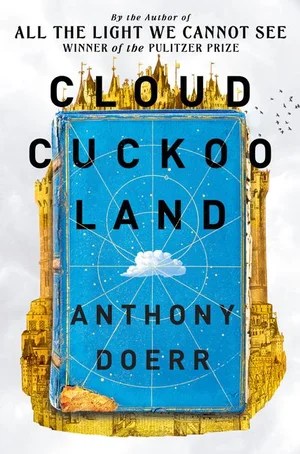
    Anthony Doerr, Cloud Cuckoo Land (#BookReview)

    There was a collective cheer from the four librarians in my reading group when one of our members read Anthony Doerr’s dedication for his latest novel, Cloud Cuckoo Land. It goes like this “For the librarians then, now, and in the years to come”. Thank you Anthony! Cloud Cuckoo Land, at over 600 pages, is a big book and, like most big books, is about a lot of things, but threading through it is the idea of the book – and of the role played by librarians in fostering knowledge and reading. Indeed, the central event of the book takes place in a public library.

    Those of you who have read the novel will know what I’m talking about, but for the rest of you I’ll take a step back. Anthony Doerr, from my limited experience of two novels, seems to like two things – multiple-points-of-view and young protagonists. All the light we cannot see (my review) has two protagonists from the same era, but Cloud Cuckoo Land takes it to another level with five protagonists spanning multiple centuries.

    “It’s like we’re about to walk into the book” (Alex, fifth-grader)

    The critical thing about these five characters is that they are outsiders – subversives, even – each confronting the received wisdom of their times. All live precarious lives. In the fifteenth century, in the Rhodope Mountains of Bulgaria, Omeir is born with a cleft palate. Those were superstitious times, so he, his siblings, mother and grandfather are ostracised and find themselves living in a ravine miles from their village. Omeir “imagines the adventures that might lie beyond”. Over the way, in Constantinople, is Anna, a poor orphan, living with her sister in a great embroidery house where they sew for a living. She daydreams about a better life than this, and, as Constantinople falls, sets about achieving it. Meanwhile, in 20th century Idaho, Zeno is born – in 1934, to be exact. He, too, is ostracised, an “undersized orphan with foreigners blood and a weirdo name. Ahead is what?” In the same state, born early in the 21st century is Seymour, living with his impoverished, hard-working, single mother. From birth he is difficult – fussy about food, textures and sounds – suffering, the school decides, from some sort of “disorder” or “combination thereof”. Nature is his sanctuary, “amazing … Big. Alive. Ongoing”. Out there, inspired by the great grey owl he calls Trustyfriend, “lifelong knots deep inside the boy loosen”. Finally, some time into the future, on the spaceship Argos, is Konstance, stuck in a life not of her choosing, and condemned to live all of it on board. She’s imaginative and suffers for it, mystifying her mother who believed their “imaginative faculties” had been “suppressed”.

    Threading through each of their stories is a fictional codex from the real Ancient Greek author, Diogenes. It features Aethon, who, having all his life “longed to see more”, wants to become “a fierce eagle or a bright strong owl” and fly to the “city in the clouds”, the titular “Cloud Cuckoo Land, where no one wants for anything”. This codex plays different roles in the lives of our protagonists but for all of them it represents, at some time, hope, dreams and the value of books.

    I’ve focused a lot on these characters, but that’s because they are the book. From these introductions you can see that Doerr has chosen young people who have little agency over what happens to them. The novel explores what they do to survive and make meaningful – authentic – lives for themselves in an imperfect world. What does it take to cope?

    Fundamentally, the book is about challenge and change. For Aethon, our unifying character, the journey is not simple, and he is changed into undesirable creatures like a donkey and a “humble crow”. For our other characters, life also does not go to plan, with each surprised by what it dishes up to them. There are tricks in store for them – as well as for the reader – including in the codex itself which, in the course of its journey from Ancient Greece to the future, becomes jumbled, so its true ending is lost. However, in 2020, 86-year-old Zeno’s fifth-graders, who are rehearsing his translated and dramatised version in the public library, decide on an end, one that encompasses life’s reality.

    Cloud Cuckoo Land, then, is also about books, but they too are vulnerable, as the scholar Licinius tells Anna:

    “… books, like people, die. They die in fires or floods or in the mouths of worms or at the whims of tyrants. If they are not safeguarded, they go out of the world. And when a book goes out of the world, the memory dies a second death.”

    Fortunately, though, Doerr clearly believes enough of us will safeguard them, and the novel ends way into the future with Aethon’s book being read to a young boy:

    “And the tale I have to tell is so ludicrous, so incredible, that you’ll never believe a word of it, and yet”—she taps the end of his nose—“it’s true.”

    As many of you will know, I love this.

    Now, I’ll return to the title. “Cloud Cuckoo Land” is, literally, the name of an idyllic place in a real Ancient Greek play, Aristophanes’ The Birds, the place Aethon seeks in our codex. But, for me, the title also encompasses some interesting imagery. Cuckoos are birds, and all sorts of birds feature throughout the novel, representing nature, and freedom, amongst other things. Cuckoos, themselves, are sacred in some cultures, but some species, as we know, lay their eggs in other bird’s nests forcing, we could argue, those young to be resourceful outsiders. Then there are the “clouds”. As I read this book I couldn’t get the Joni Mitchell song “Both sides now” out of my head, with its line “it’s clouds illusions I recall .. I really don’t know clouds at all”, progressing to “life’s illusions … I really don’t know life at all”.

    These two ideas – resourceful outsiders and life’s illusions – encapsulate for me this truly engaging book. Doerr presents for us life’s challenges – historic, economic, climatic – but he also offers the dreams and resourcefulness of humans in confronting these challenges. Zeno’s friend Rex describes the codex as “part fairy tale, part fool’s errand, part science fiction, part utopian satire”. This could also describe Doerr’s novel, but it is more too. Rich, complex, and highly readable, it contains multiple treasures and connections for engaged readers to find and make on their journey. I have barely skimmed its surface. It was a very popular start to my reading group’s year.

    Anthony Doerr
    Cloud Cuckoo Land
    London: 4th Estate, 2021
    627pp.
    ISBN: 9780008478308 (e-Book)

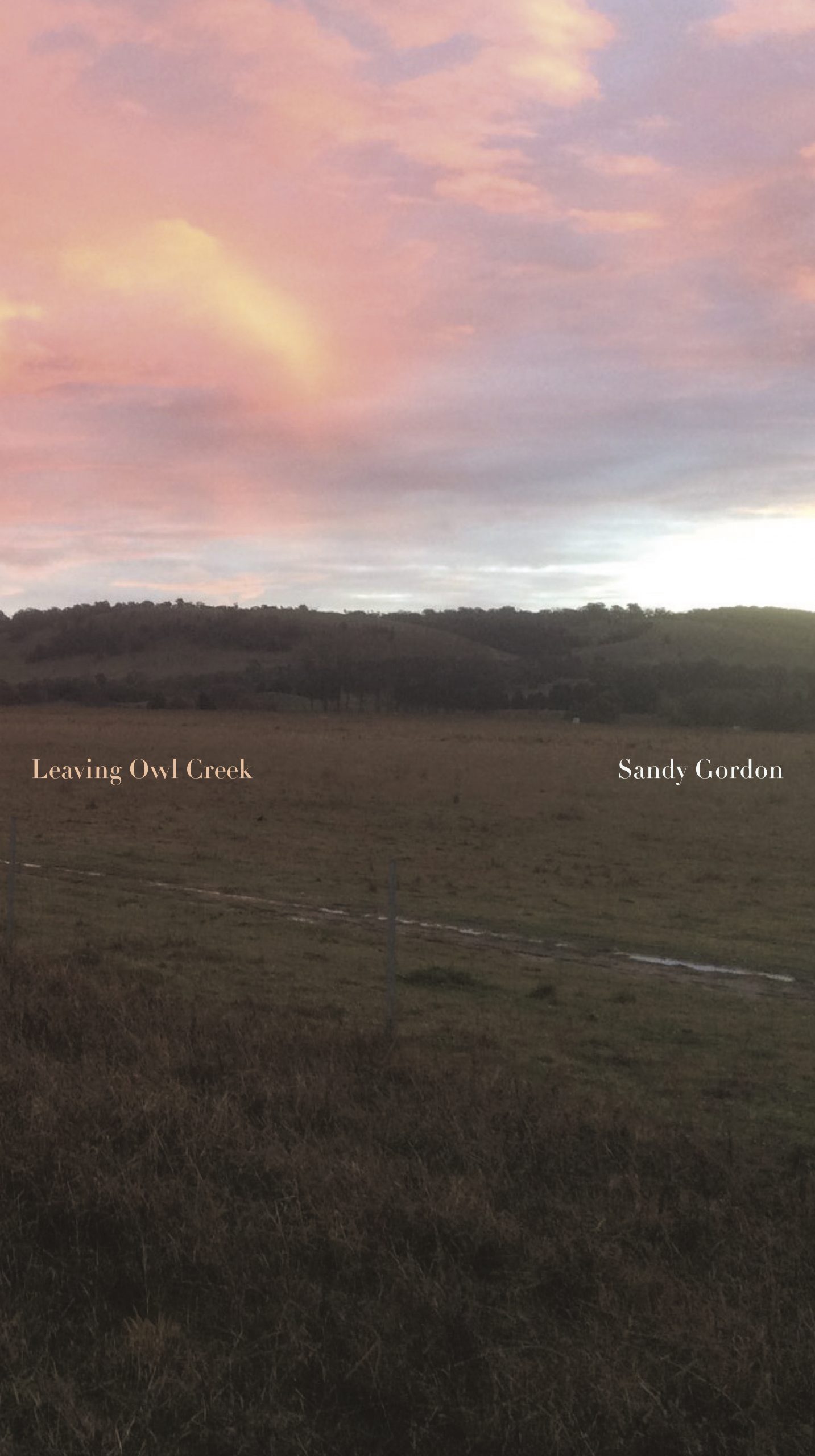
    Sandy Gordon, Leaving Owl Creek (#BookReview)

    I do enjoy receiving books from non-profit independent publisher, Finlay Lloyd. Their books are physically distinctive, being longer and narrower than the norm, and they have a stylish, minimalist, design, which makes them lovely to look at and hold. They also appeal content-wise because Finlay Lloyd consciously, it seems to me, publishes books that regardless of form or genre interrogate prevailing values and attitudes, books that contribute to the conversation. Sandy Gordon’s Leaving Owl Creek is another such book.

    Sandy Gordon could be included in my late bloomer category, meaning he’s an older first time novelist. A grandfather now, he is, however, not a late bloomer in terms of achievement because, as the book’s front-matter explains, he has had a significant academic and public service career, especially in the areas of intelligence and national security. The notes say that “when he finished his last academic book in 2014, he vowed never to write another footnote – hence the novel”. Lucky us.

    Leaving Owl Creek is a dual narrative story, alternating between the first person diary of Nicholas (Nick) MacLean, who has been captured by the Mujahideen in Kashmir, and the third person story of his life which begins on the family property of Owl Creek. It’s not just his story, though, as also at Owl Creek are his sister Lilly, and Richard and Kate Connolly whose family has worked for the MacLeans for generations. The novel takes place over several decades covering the second half of the twentieth century, a time of significant social, cultural and political change. Two fundamental issues of change are introduced in the first chapter, one relating to class and status, and the other to gender, and particularly to masculinity.

    However, the novel opens not with this chapter, but with Nick’s diary. He reports playing chess with his main captor, the Mujahid, and their discussing Nick’s western versus the Mujahid’s Islamic values. It is clear that Nick’s survival very likely depends on the Mujahid. This provides the main narrative tension for the novel, but it’s not the main interest, albeit I cared deeply about what might happen to Nick. (Gordon knows whereof he speaks, having written a nonfiction work about the region, India’s rise as an Asian power: Nation, neighborhood, and region.)

    What I enjoyed about the novel was its portrayal of those issues I’ve mentioned. Nick and Lilly were born into the squattocracy, Protestant of course. They are privileged – materially, anyhow. In other ways, not so, because the expectations are not only high but they are conservative, which means, for example, that Nick is expected to live up to the traditional idea of manhood, an idea that focuses more on “honour” than on feelings. This does not sit well with Nick who is cut of a more sensitive and artistic cloth. He’s interested in art and poetry, which to his father are “not sound in a man”. Richard, the son of Catholic station workers, is closer to Mr MacLean’s idea of a man. This difference creates another tension in the novel as we watch Nick and Richard (named, ironically, for Richard Wright, but often more pointedly referred to as Dick) grow from boys to men. We do also have their sisters, who are each attracted to the other’s brother, but Leaving Owl Creek is not a cliched family drama. While these sisters’ roles are important to fleshing out the main themes, their relationships do not play out in the standard rural romance way – because, this is not rural romance. It’s a novel written by a man primarily about men.

    “man of affairs” to “affairs of men”

    So it is this that I’d like to tease out a little more. The second half of the twentieth century, and into the present, has been a difficult time for men. As women have found their place (albeit this has not yet translated into full equality) men have had to work out how their place fits in. For Richard, his Catholicism and working class background mean he starts with a handicap, but he’s a hard worker, a real “man”, and he gets opportunities as a result. He takes them and becomes a confident, successful, and powerful man, a politician in fact, but in the process he manipulates and betrays others, and loses his self. He talks big about a “man of affairs” being a humanist, but in the end, “the affairs of men” comes to encompass for him the ends justifying the means.

    Nick, on the other hand, grows up with everything except what he wants most, the freedom to follow his own path. His struggle is great. He is sent to a prestigious boarding school, where his artistic preferences are not supported. On leaving school, he goes to university and gets caught up in the Push (about which I wrote early in this blog), and other leftist intellectual groups. It’s the 60s, and unsettled Nick falls prey to substance abuse. He fails his father’s expectations, and ultimately ends up in India where he finds a place for himself – until his capture. Nick too reflects on what it means to be a man but is less concerned with “manhood” than with what human beings are. In a fraught conversation with some leftist intellectuals, he sees the issue in terms of “moral choice”.

    Politics provides the backdrop to the novel, and Gordon presents us with a broad sweep from Richard’s mother’s statement that their family had come out from Ireland for “political” reasons, through various wars, to our contemporary concerns with Indigenous dispossession and the increasing conflict between Eastern and Western values. But, threaded through this historical expanse is a recurring issue, the role of men, and the importance of “duty” and “honour”. Nick’s refusal of his Vietnam War call-up is the last straw for his father, and he is disinherited. From his father’s point of view:

    ‘If your country says it needs you … that has to be good enough. Beyond that it’s a question of honour …’

    In the closing pages of the novel, Nick, still a captive of the Mujahideen, returns to these ideas:

    The Mujahid. The thing is, he likes me, perhaps even loves me. Why then is it not enough? Why is it never enough?

    Because duty, as he sees it, trumps liking, even love. Duty, honour, loyalty, death – these four ride side by side over the blistered landscape and will do so for as long as we humans occupy the planet.

    Leaving Owl Creek is a highly readable and deeply thoughtful novel that tackles some complex issues, intelligently and generously. We feel for each of the characters at different points in their lives. We see the pressures they face – social, political, psychological – and we are encouraged to understand why they are who they are, and, beyond that, to consider how on earth we might all be better. Like Lisa, I recommend this book.

    Sandy Gordon
    Leaving Owl Creek
    Braidwood: Finlay Lloyd, 2021
    358pp.
    ISBN: 9780994516565

    (Review copy courtesy Finlay Lloyd)

    Reading highlights for 2022

    Regular readers of my blog will know two things about my end of year reading highlights post, but I’ll reiterate them here: I always do my list right at the end of the year when I have read (even if not reviewed) all the books I’m going to; and I do not do a list of “best” or even, really, “favourite” books. Instead, I do a sort of overview of the year through highlights which I think reflect my reading year. I also like to include literary highlights, that is, reading related activities which enhance my reading interests and knowledge. All being well, tomorrow I will share my blogging highlights.

    Literary highlights

    My literary highlights, aka literary events, saw a return to more live events this year, though the pandemic has taught us that there are opportunities to be had by also continuing online experiences – so this year like last I enjoyed a bit of both

    Reading highlights

    I don’t have specific reading goals, just some “rules of thumb” which include reducing the TBR pile, increasing my reading of First Nations authors, and reading some non-anglo literature. While I didn’t make great inroads into these, I did make some, and, regardless, I had many reading highlights. Last year, I framed this post around my reading preferences, but this year I’m returning to my practice of pulling out random observations that epitomise my year’s reading.

    • Re-find of the year: Elizabeth von Arnim was an author I loved back in the 1990s, and I managed to finally revisit her again this year, via not one but two novels – Vera and Expiation – which reminded me why I enjoy her so much. She is sharply observant about men and women but also witty. I also read this year one of the three biographies recently published about her, Gabrielle Carey’s Only happiness here.
    • Retelling of the year: Retellings can be hit or miss for me but I was greatly moved by Tom Gauld’s graphic novel, Goliath.
    • Topic of the year (1): Mothers and daughters featured heavily in this year’s reading, through Jane Sinclair’s memoir Shy love smiles and acid drops, Elisa Shua Dusapin’s Winter in Sokcho, Lucy Neave’s Believe in me, Nell Pierce’s A place near Eden, Jessica Au’s Cold enough for snow not to mention that absolute classic, and a reread for me, Jane Austen’s Sense and sensibility.
    • Topic of the year (2): Colonialism and racism are issues that many of us read about in order to educate ourselves, and this year I read some magnificent explorations, from Damon Galgut’s The promise and Audrey Magee’s The colony to several works by people of colour, including Nella Larsen’s classic 1929 novel Passing, Julie Koh’s astonishing Portable curiosities, Evelyn Araluen’s Stella winner Dropbear, and Anita Heiss’s historical novel Bila Yarrudhanggalangdhuray.
    • New nationality (for me): I love to add new nationalities to my reading diet, and this year it was Uruguayan, via Ida Vitale’s intriguing Byobu.
    • New genre: Bibliomemoirs are not new, but the term for them is relatively so! Besides Gabrielle Carey’s Only happiness here (mentioned above), I read Carmel Bird’s thoughtful and engaging Telltale.
    • Totemic critters: Every year something interesting pops out from my reading. An odd narrator, perhaps – like a skeleton. This year, it was totemic critters with a few books featuring a lurking critter, such as Nigel Featherstone’s quoll (My heart is a little wild thing) and Lucy Neave’s fox (Believe in me).
    • The locals have it: I like to support local authors, and this year I have read more than usual – Nigel Featherstone’s My heart is a little wild thing, Shelley Burr’s debut rural noir Wake, Lucy Neave’s Believe in me, Nell Pierce’s A place near Eden, and (then resident) Margaret Barbalet’s Blood in the rain, plus two nonfiction works, Mark McKenna’s Return to Uluru and Biff Ward’s memoir-of-sorts, The third chopstick. I also read, but didn’t review several books by local picture book creators. For a little region, we achieve a lot!

    These are just some of 2022’s highlights…

    Some stats …

    I don’t read to achieve specific stats, but I do have some reading preferences which I like to track to keep me honest to myself! This year I was closer to my preferred ratios in most of the categories than I have been for years – without specifically trying. It just happened:

    My preferences are …

    • to read mostly fiction: 74% of my reading was fiction (meaning, everything not non-fiction, so novels, short stories, and poetry). This is close to my plucked-out-of-the-air 75% rule of thumb, and I’m pleased with that.
    • to give precedence to women: 64% of this year’s reading was by women writers, which is similar to last year’s 65%, and around my preferred two-thirds proportion.
    • to read non-Australian as well as Australian writers: 32% of this year’s reading was by non-Australian writers, which is close to my goal of around one-third non-Australian, two-thirds Australian.
    • to read older books: 34% of the works I read were published before 2000, which is more than in recent years. I did say last year that I wanted to increase this, because I love checking out older works.
    • to support new releases: 19% of this year’s reads were published in 2022, which is rather less than last year’s 25% for that year’s releases, but I’m fine with that – even if my to-be-reviewed pile isn’t.
    • to tackle the TBR, which for me means books I’ve had for over 12 months: This year I read just 5, which is similar to the last few years. I’d really love to lift this number because I have so many good (older) books there waiting to be read!

    Overall, it was a perfectly fine reading year but I didn’t read as much as I was hoping, mainly because Mr Gums and I are travelling more often to Melbourne to visit family. This is a good thing so I’m not complaining, but still, I’d like to have read more. 2023 is going to be a challenging year with a downsizing move in the offing, as well as our trips to Melbourne. Watch this space!

    Meanwhile, a huge thanks to all of you who read my posts, engage in discussion, recommend more books and, generally, be thoughtful and fun people. Our little community is special, to me!

    I wish you all an excellent 2023, and thank you once again for hanging in this year.

    What were your 2022 reading or literary highlights?

    My reading group’s favourites for 2022

    As I’ve done for a few years now, I am sharing my reading group’s top picks of 2022. This is, after all, the season of lists, but also, I know that some people, besides me, enjoy hearing about other reading groups.

    I’ll start, though, by sharing what we read in the order we read them (with links on titles to my reviews):

    • Amy Witting, Isobel on the way to the corner shop: novel, Australian author
    • Ida Vitale, Byobu: novel, Uruguayan author
    • Elizabeth von Arnim. Vera: classic, British author
    • Mark McKenna, Return to Uluru: nonfiction, Australian author
    • Damon Galgut, The promise: novel, South African author
    • Marion Frith, Here in the after: novel, Australian author (I was in Melbourne, with COVID, and didn’t manage to read this)
    • Larissa Behrendt, After story: novel, Australian First Nations author
    • Audrey Magee, The colony: novel, Irish author
    • Julian Barnes, Elizabeth Finch: novel, British author
    • Biff Ward, The third chopstick: nonfiction/part-memoir, Australian author
    • Nell Pierce, A place near Eden: novel, Australian debut author (review coming)

    This year’s schedule was reasonably diverse. Our overriding interest is Australian women writers but not exclusively. We also like to challenge and broaden our tastes. So, this year’s list included a classic (or two, if you include Amy Witting’s 1999 novel); a translated novel from Uruguay; a First Nations novel; five non-Australian books; two works of nonfiction; and three by male authors. Politics and social justice featured strongly in both the fiction and nonfiction, looking at such issues as coercive control, racism and dispossession, colonialism, war and PTSD.

    The winners …

    This year only 10 of our twelve active members managed to vote – one was travelling and one moving house, so their excuses were accepted! The rules were the same. We had to name our three favourite works, and all were given equal weighting. It’s interesting how the years vary. In 2020, we had a runaway winner, while last year our favourites were more bunched, with the winning book receiving 8 votes, the second 7 votes, the third 6 and so on down to fifth with 4 votes. This year, however, we returned to the runaway winner mode, with 5 more books, a few votes behind, vying for 2nd and 3rd spots.

    1. The promise by Damon Galgut (8 votes)
    2. Vera by Elizabeth von Arnim and Return to Uluru by Mark McKenna (4 votes each)
    3. Here in the after by Marion Frith, The colony by Audrey Magee and The third chopstick by Biff Ward (3 votes each)

    Interestingly, two years ago, all three of the nonfiction titles on our list featured among our favourites, while last year, neither of our two nonfiction works received any votes at all. This year, both nonfiction works appeared among the favourites. I’m not sure this tells you (or us) anything.

    Anyhow, if you want to know my three picks, they were Damon Galgut’s The promise, Elizabeth von Arnim’s Vera and Audrey Magee’s The colony. But, it was a great year and I found it truly hard to choose. In the end, although I greatly enjoyed the two nonfiction works, I stuck with my main love, fiction, for my choices. I really wanted to include Byobu, but something had to give!

    Selected comments (accompanying the votes)

    Not everyone included comments with their votes, and not all books received comments, but here is a selection of what members said about the most liked:

    • The promise: Commenters used descriptions like “insightful”, “compelling”, and “enlightening”.
    • Vera: Comments included “a truly chilling tale”, with a few noting how relevant this 1921 book still is.
    • Return to Uluru: Commenters saw it as a “timely and interesting attempt to balance the record of a sad episode in Australian history”, “a terrific uncovering of history and treatment of First Nations Australians”.
    • Here in the after: One called it “insightful”, while another noted its “many social comments”.
    • The colony: Commenters used terms like “multilayered”, and “subversive, acerbic”. Its sense of place was also mentioned.
    • The third chopstick: One called it “a moving journey” while another focused on the author’s “talent for delving” into a painful time in Australian history.

    And, a bonus again

    As in 2019 and 2021, a good friend (from my library school days over 45 years ago and who lives on the outskirts of Canberra) sent me her reading group’s schedule for the year:

    • Jock Serong, Preservation (on my TBR)
    • Amor Towles, A gentleman in Moscow
    • Xinran, Buy me the sky
    • Bri Lee, Eggshell skull
    • Don Watson, The bush (on my TBR)
    • Joshua Hammer, The bad-ass librarians of Timbuktu (never heard of this one)
    • John Grogan, Marley and me
    • John Clanchy, Vincenzo’s garden (love John Clanchy but haven’t read this)
    • Amanda Lohrey, The labyrinth (on my TBR)
    • Jane Harper, Force of nature
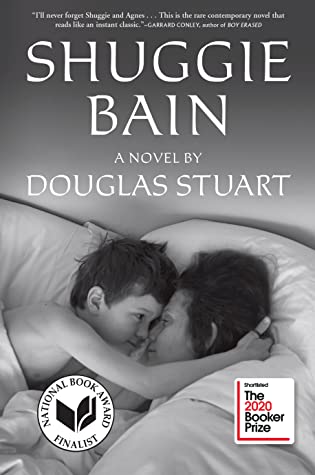
    • Douglas Stuart, Shuggie Bain
    • Geraldine Brooks, Horse

    Links are to my reviews where I’ve read the book too. The two I’ve read are, coincidentally, ones I read with my reading group in previous years. In fact, Shuggie Bain was our top pick last year.

    I’d love to hear your thoughts, particularly if you were in a reading group this year. What did your group read and love?

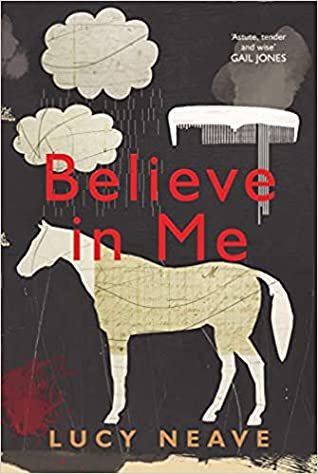
    Lucy Neave, Believe in me (#BookReview)

    Mother-daughter stories – in fiction and nonfiction – seem to have been particularly popular in recent years. Lucy Neave’s second novel Believe in me is one of these, but just this year I’ve read several others, including Larissa Behrendt’s novel After story and Jane Sinclair’s hybrid biography-memoir Shy love smiles and acid drops.

    Their trajectories can vary, but in novels the most common one concerns a fractured relationship. More often than not, they are written from the point of view of the daughter (though in After story, Behrendt alternates the perspective between the two). Believe in me is one of those written from the daughter’s perspective, but in an interesting voice which switches between extended third person telling of her mother’s life and her first person telling of her own. The narrative starts around a year before Bet is born, out of wedlock in 1970s Sydney, to her 19-year-old American mother, Sarah. Why in Sydney and how Sarah became pregnant occupies the first quarter of the book.

    However, the novel itself commences in 2004 with Bet telling us:

    I would like to write down the portions of my mother’s story that I know, but I’m not exactly sure what happened to her in the year before I was born. At times, the anecdotes she told about her life make sense. At others, I traverse a tightrope high above the ground and have to fill the empty air beneath so that I can move from one place and time to another.

    She is doing this because, she says, “if I can inhabit her consciousness, even a little, it might help me see who I am”. Immediately, then, we are clued into a problem, presumably the book’s key problem, that of Bet wanting to understand herself. She’s stalled it seems, but she needs, she continues, “to walk towards the future without always looking back”. Consequently, she tells her mother’s story by drawing on her mother’s scrapbooks “which are filled with overlapping memories and souvenirs and notes” and her own memory.

    Sarah’s story is a sad and frustrating one. Bet introduces her in that first chapter as a naive, trusting 18-year-old from Poughkeepsie, New York. She’s being sent away by her mother, and the religious community to which they belong, on a three-month mission to Idaho with their preacher Isaiah. Well, the inevitable happens and Sarah finds herself unbelieved, pregnant and despatched to Sydney, far away from home, to have the baby. Sarah is expected to give her baby up for adoption – to a childless aunt and uncle who show her no warmth. However, with the help of midwife Dora, she manages to escape, and thence begins her new life as a single mother in a strange country. The Whitlam government is in, and things are changing, but life is still not easy for a single mother, particularly one as unprepared for life, and as unsupported, as Sarah was.

    While the focus of the novel is Sarah, it is told through the eyes of Bet, and in Bet’s eyes her mother rarely measures up. She frequently describes her as weak, when Bet really wants her mother to be “unbroken, robust”. The child’s eyes, however, seem to be at odds with the reality. For example, one-third into the novel, Sarah realises that her own mother back home is never going to help her:

    Sarah had thought that in the end her mom would understand what she needed … Now she understands her longings have always been irrelevant. She’s meant to accept all that she receives. Only sometimes, like now, she can’t. In any case, she’s someone else now, different to the core.

    This idea of “acceptance” is an important mantra for Sarah. Religious in origin – accept what God gives you – it often frames her choices, but in fact, she doesn’t always “accept”. Indeed, she flees several men when she realises they are not right for her:

    Some things, she realises – and why did it take her so long to work this out – should never be accepted. Some things turn out not to have come from heaven.

    Nevertheless, a few pages later, Bet continues with the weakness theme, “a part of her was still weak, the way it had always been”. The story here is one of the child never fully knowing the parent. It’s ironic, in fact, that Bet sees Sarah as naive, which she was, because for much of the novel, so is Bet in terms of understanding the pressures Sarah was under. The result is an uncomfortable but very real tension between these two who both love each other but struggle to make that love work.

    The idea of “acceptance” is one motif that runs through the novel, but another involves animals. Sarah becomes a wildlife carer – particularly for injured wildlife – and Bet, a vet, which reflects their mutual desire to nurture. More curious though is the fox motif which threads through the story. A baby fox, back in her American childhood, is the first wildlife Sarah rescues and cares for. She eventually releases him, but “foxes will always be with you” becomes a bit of a grounding talisman for her. The clue to it lies in her mother Greta’s advice when she sends Sarah off: “Don’t worry about us. Be as free as a bird, as a fox”. In the tradition of mothers and daughters, Greta wants more for Sarah than she had, just as Sarah in her turn wants more for Bet – and yet, in their turn, the daughters don’t understand and so don’t appreciate this in their mothers.

    I did find one aspect of the novel somewhat challenging, and this relates to its “interesting voice”. I love “interesting voices”, but there were times when Bet’s telling of Sarah’s story felt awkward. How did Bet know this? Was it from the scrapbooks, from conversations, from Sarah’s own confidences, or Bet’s imagining? The uncertainty this occasionally engendered affected my ability to properly engage with Bet’s perspective. However, I did enjoy the novel, particularly the way Neave weaves through it many of the social issues affecting women in the decades she traverses. There’s a political element to this personal story.

    So, how to end? Or, more to the point, what does it all mean? When I’m in doubt, there are three things I turn to – the opening paragraphs, the title, and, where it exists, the epigraph. I’ve already mentioned the opening which explains that Bet is writing Sarah’s story in order to understand herself better. This, I’d say, she achieves (but to say how would give too much away).

    Believe in me does have an epigraph, and it’s appropriate for a book about fraught mother-daughter love. It’s from Eudora Welty’s The optimist’s daughter, “… any life, she had to believe, was nothing but the continuity of its love”. I’ve read some Welty, but not this one. However, this idea seems perfect for a daughter to take from her mother’s life.

    And finally, there’s the title. It’s a little trickier. As I was reading the novel, I wondered who was saying “Believe in me”? Sarah? Bet? God (whom she’s supposed to accept)? The egregious Isaiah who tried to convince Sarah to lie for him? Probably all of these, conveying the challenge we all face regarding who to believe and trust. It’s only through hard experience that we come to really know whom we can believe. Lucy Neave’s Believe in me, with its perceptive exploration of complex relationships, is one of those reads that makes you think, and for that I enjoyed it.

    Lisa also reviewed and enjoyed this book.

    (Review copy courtesy UQP)

    Lucy Neave
    Believe in me
    St Lucia: UQP, 2021
    312pp.
    ISBN: 9780702263361

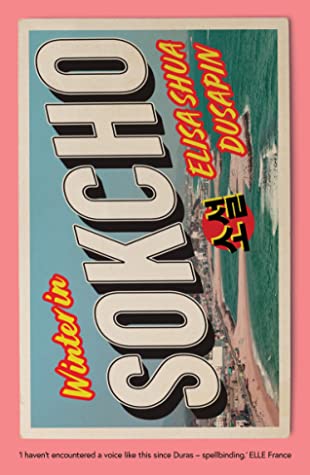
    Elisa Shua Dusapin, Winter in Sokcho (#BookReview)

    French Korean writer Elisa Shua Dusapin’s award-winning debut novella, Winter in Sokcho, was published when she was just 22 years old. As the title conveys, it is set in Sokcho, a tourist town in the Republic of Korea near the border between the two Koreas. In fact, when the Korean peninsula was divided into two countries following World War II, Sokcho was on the Northern side, but became part of the South after the 1953 Korean War armistice 1953. I suspect Sokcho was chosen as the setting partly for its “divided” history, this being in-between, neither one thing or the other,

    But, more on that later. The novel’s unnamed first person narrator is a 24-year-old French Korean woman who works in a struggling guesthouse. She seems to do everything – reception, cooking, cleaning – but with little enthusiasm. The novel opens with the arrival of an unexpected guest, the 40-something French graphic novelist, Yan Kerrand. The two are drawn to each other in some way, but, at least from Kerrand’s point-of-view, it doesn’t seem to be romantically driven. For our protagonist, the situation is a little more complex. She has a boyfriend – Jun-Oh – but it’s not a satisfactory relationship from her perspective. However, her fish-market worker mother is expecting an engagement any day. The situation is ripe for something different to happen in her life, but will it – and what, anyhow, does she want? She seems betwixt and between.

    Winter in Sokcho has many of the features I like in a novella, starting with spare expressive prose, a tightly contained storyline, and a confined setting. There’s also a small cast of characters, with little or no digression into backstories. All we have is what’s happening now.

    And, what is happening now is that the stranger’s appearance has affected our narrator. In the second paragraph, while registering him as a guest, she says

    I felt compelled for the first time since I’d started at the guest house, to make excuses for myself. I wasn’t responsible for the run-down state of the place. I’d only been working there a month.

    We then move to her visiting her mother, and another thread begins to appear, that of body image. We’ve already been told that one of the guesthouse guests is “seeking refuge from the city while she recovered from plastic surgery to her face”, and now we are introduced to our narrator’s mother’s concern about her appearance. She’s too thin, her mother says. Our narrator rejects this, but soon after, in a photograph her boyfriend has taken of her, she sees “a wasteland of ribs and shoulder blades receding into the distance … her bones sticking out” and is “surprised at how much”. When she’s with her mother, she binges on the food her mother makes, only to feel “sick” and later repelled by her “misshapen body”. There is a tension between this single mother and her daughter that pervades the novel. We sense that our narrator would like to leave Sokcho. Indeed, there’s a reference early on to the “literary world” suggesting she has aspirations in that area, but she feels she cannot leave her mother. Betwixt and between.

    Throughout the novella, there’s an atmosphere of things being out of kilter or not quite right. Early on, the narrator describes Sokcho’s beach:

    I loved this coastline, scarred as it was by the line of electrified barbed wire fencing along the shore.

    This is not your typically loveable beach view, but she herself bears a physical scar on her thigh to which she often refers. It’s unexplained but there are hints later of self-harming. Meanwhile, later in the book, Kerrand tells her that he prefers the beaches of Normandy to those in southern France, because they are

    Colder, emptier. With their own scars from the war.

    And so the novella progresses, in this clipped spare prose, with a sort of wary dance going on between the narrator and Kerrand. He’s there for inspiration for the last book in his series about “a globe-trotting archaeologist … A lone figure. With a striking resemblance to the author.” She is intrigued by him. She offers to show him some local sights – the border region, with its checkpoint “No Laughing” rule, and the nearby national park, with its snowy mountains and waterfalls. She watches him, surreptitiously, as he draws by night, but always the drawings are destroyed by morning, because they are imperfect.

    What does Kerrand see in her, what is he looking for? This being a first person narrative, we see it all through her eyes. She is as reliable a narrator as she can be, but like any first person narrator her viewpoint is limited by her perspective.

    Winter in Sokcho does not have a simple resolution, but I’ll return to that idea of Sokcho being chosen as the setting. Its divided history mirrors our narrator who is also divided – in her French Korean heritage and her torn sense of self. Further, Sokcho is described as “always waiting”, as it seems also is our narrator, though for what, even she doesn’t really know.

    How much is this a personal story and how much political? Two-thirds through, as she and Kerrand discuss their scarred beaches, she tells him (and just look at this writing):

    Our beaches are still waiting for the end of the war that’s been going on for so long people have stopped believing it’s real. They build hotels, put up neon signs, but it’s all fake, we’re on a knife edge, it could all give way any moment. We’re living in limbo. In winter that never ends.

    There can be no neat ending to such a story, but without spoiling anything, I’ll share something she sees in Kerrand’s final drawing:

    A place, but not a place. A place taking shape in a moment of conception and then dissolving. A threshold, a passage …

    Does this suggest hope, albeit tenuous – for both the narrator and her Korea? I’m reading it that way. As for the closing lines … they are glorious.

    Read for Novellas in November, Week 2: Novellas in Translation.

    Elisa Shua Dusapin
    Winter in Sokcho
    Translated from the French by Aneesa Abbas-Higgins
    Melbourne: Scribe, 2021 (Orig. pub. 2016)
    154pp.
    ISBN: 9781922585011

    (Review copy courtesy Scribe)

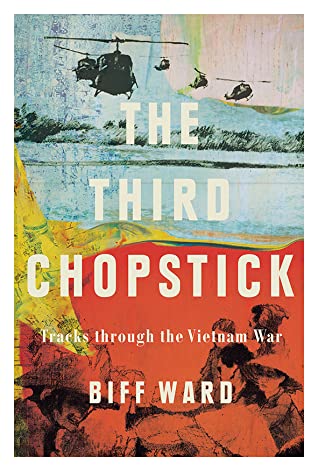
    Biff Ward, The third chopstick: Tracks through the Vietnam War (#BookReview)

    Biff Ward’s The third chopstick was my reading group’s October selection. It’s the second book by Ward that we’ve done, the first being her memoir, In my mother’s hands (my review), about growing up with her academic father, the historian Russel Ward, and her mentally ill mother, at a time when mental illness was shameful and to be hidden. It was a moving book that engendered an engaged and wide-ranging discussion. Biff Ward, in fact, attended that meeting.

    The third chopstick is another personal book, but one that’s not so easy to classify. I would describe it as hybrid memoir-creative nonfiction. Memoir, because it’s about her experience as an anti-Vietnam war protester who later chose to meet Vietnam veterans and listen to their stories. And creative nonfiction, because, although nonfiction, it uses some of the devices of fiction to engage its readers. These include hinging her story around one particular vet, Ray, whom she describes as her “muse”, her “archetypal veteran”, her conduit, perhaps, to “the missing piece”. His story, combined with his powerful presence, gives the book its compelling, narrative drive.

    The implication of what I’m saying here is that while The third chopstick is historical it is not an academic history. Although Ward did the historian thing, and conducted recorded interviews with vets, she does not attempt to present an “authoritative” analysis of protesters or of vets, but a thoughtful, personal quest. It has no footnotes, although there is a selected reading list at the end, and there’s no index. This is not to say, however, that it doesn’t add to our understanding of history, because it certainly does.

    The book has a logical, and more or less chronological, structure, though there is criss-crossing of timelines where appropriate. It has three main parts – Protest, Veterans, Vietnam – which are bookended by a Prologue and Epilogue. In Protest, Ward describes her life as a protester, and introduces us to her ongoing interest in Vietnam long after the war ended. In Veterans, she introduces us to the veterans she met and interviewed, shares their stories and experiences, and reflects on these. Finally, in Vietnam, she discusses post-war Vietnam, including how Vietnamese people have processed, and live with, what happened. She has visited the country many times – as a sole tourist, on war-themed tours, and as a tour leader herself. On some of those visits, she either accompanied or met vets. Through these postwar connections, she starts to bring together her central questions concerning how we Australians got caught up in this, and what it did to us – as a nation, as individuals – though, of course, there are no simple answers.

    “a scrambled snarl”

    A bit over halfway through the book, while interviewing Nick, an SAS veteran of the war, Ward confronts the issue of “killing”. Nick’s story causes her to think about that and, thence, her stance as a pacifist. She realises she’d never really grappled with it. She had, she writes, a ‘”natural” antipathy to killing, a generalised kind of pacifism which yearns for peace’ but she also believed that, if needed, she would strive as hard as she could to defend “me and mine”. Her pacifism was “a scrambled snarl of thoughts and feelings”. She doesn’t explore this further, as it’s not the subject of the book, but …

    … I liked this expression because what her book does is explore just what “a scrambled snarl” war is, whichever way you look at it. I particularly liked her various reflections on war. She makes the point early on that it is well known that war takes years to recover from. Vet Graham tells her that medieval knights “used to go into a monastery after being on a crusade”. He himself had, after leaving the army, been ill; he’d been in hospital and at a health farm, before spending “thirteen years, mostly alone, making music, keeping quiet”. By the time Ward met him, he was working with the Federation for Vietnam veterans.

    Throughout the book, then, Ward reflects on war in general, but I’ll just share a couple that captured my attention, both resulting from her reading of Ray’s journal, where he expresses the trauma he experienced. It leads Ward to suggest “that the truth of all war is only these depthless oceans of grief”. A few pages later, she discusses “moral injury”, which “refers to an injury to the soul, to morality, to what can happen when a soldier has to do something against his own sense of what is right and wrong.” The injury done to Ray is immense.

    Ward may not have intended this, but her book also functions, at least a little, as a cautionary tale, because she shows how easy it is to believe you are doing the right thing when you protest for a humane cause, and be oblivious to the potential for unintended consequences. The anti-Vietnam War protesters’ beef was with the government and its policies, but the result, as we all know now, was that the soldiers who went to Vietnam were vilified – not so much by the core protesters but by others who took their ideas on without understanding the politics. Ward shares some of the facts and myths about how it played out.

    Ward also discusses those other two big fall-outs from this particular war – Agent Orange and its ongoing impact on the health of both soldiers and Vietnamese people, and PTSD, which she describes as the Vietnam vets’ gift to the world.

    What makes this book a particularly good read, besides all this subject matter, is the language, which mixes journalistic-style reportage with more evocative writing. There’s too much to share, but here’s one describing her experience of transcribing Ray’s journal:

    As I transferred his words from the page to pixels on my screen, they sometimes spiralled off and pranced about the room like leering pixies.

    (This sometimes necessitated her needing to take a break!)

    Here’s an appropriate point to explain the title, because it came from Ray, as she explains in Chapter 2. While in a restaurant, he places two chopsticks in parallel lines, about two centimetres apart, across a bowl, and names the space between the two as “normal life … where people get born and grow up …” etc. Then, he takes another chopstick (“the third chopstick”), places it parallel to the others, the same distance apart, and says

    The veteran lives here, alongside but separate, see? He can see this life, he pointed back to the first space. He can see what other people are doing, but he can’t join in. He doesn’t know the rules anymore. It might look like like garbage to him. It’s got no connection to what’s happening inside him, see?

    The secret, Ray continues, is for the veteran to be able to handle both “his own stuff” and join in. There’s a little more to it but that’s the gist.

      Lest you be thinking so, The third chopstick is not just relevant to those who lived through the Vietnam War era. As I read this book, I couldn’t help thinking about a war that is happening right now. Near the end, Ward writes:

      So even today, for the People of the Bag*, the mountains and the rivers, the land and the water and their interconnectedness are concepts integral to the way Vietnamese conceive of themselves. And, I chucke to myself, those men in Washington and Canberra thought they could somehow beat them, that the People of the Bag would eventually give up? Really?

      Given its origins in a leftie anti-Vietnam war protester who went on to engage openly and genuinely with soldiers involved in that very war, The third chopstick is quite an astonishing book. For anyone interested in the complex experience of war, it makes excellent reading. All eleven who attended my reading group agreed.

      * The Vietnamese, from their Creation Myth

      Biff Ward
      The third chopstick: Tracks through the Vietnam War
      Penrith: IndieMosh, 2022
      313pp.
      ISBN: 9781922812025

      Julian Barnes, Elizabeth Finch (#BookReview)

      Julian Barnes’ Elizabeth Finch is a curious book. It’s my fourth Julian Barnes, and the third I’ve read with my reading group. In 1995 we read A history of the world in 10 1/2 chapters, and in 2012 it was his Booker Prize winning The sense of an ending (my review). (I have also read his curious but enjoyable Pedant in the kitchen.) All have intrigued me, for different reasons.

      Elizabeth Finch tells the story of a man’s fascination with an inspirational teacher, the eponymous Elizabeth Finch, who taught an adult education class on Culture and Civilisation. This man is Neil, our first person narrator, and he maintains a friendship with EF (as he refers to her), through semi-regular lunches, until her death some two decades later. Through Neil’s memories of the class and his reading of EF’s papers that she’d bequeathed him, Barnes explores various ideas, including how we live our lives (particularly in terms of friendship and love), and the impact and thrust of history (primarily through considering the so-called last pagan emperor, Julian the Apostate). (Interestingly, the protagonist in The sense of an ending is also bequeathed personal writing.)

      The novel, while told chronologically, is quirky in form. Part One comprises Neil’s introduction to EF, up to her death; Part Two contains Neil’s “essay” on Julian the Apostate (who was significant to EF’s ideas); and Part Three returns to Neil, now focusing on trying to understand EF with a view to possibly writing a memoir/biography. Here, he also catches up with old student friend, and ex-lover, Anna, who does enliven the book. In a sense, the novel reminded me a little of J.M. Coetzee’s tricksy books, like Elizabeth Costello and Diary of a bad year (my review), because they also tread this strange fiction/nonfiction, novel/philosophy ground.

      At this point, I’m going to depart a little from my usual approach, and share some of my reading group’s discussion, because the book book engendered widely divergent reactions. They fell into three groups. One member loved it, describing it as a dense, compact novel which takes readers down interesting paths. She enjoyed thinking about Julian the Apostate, and what might have happened had he prevailed, and she enjoyed reading about the wide range of thinkers who have pondered Julian over time. A couple actively disliked it or were “very disappointed”. They felt the novel had some interesting threads but found it simplistic, repetitive, disjointed. They didn’t like the EF character, and one described the novel as “an ordinary study of a crush on an ordinary woman”. The rest of us, including me, had mixed feelings. Our reactions varied but we all found things to like (or be intrigued by) as well as dislike (or be mystified by). I won’t share all our ideas, but a couple of us felt that the book read like something that Barnes wanted to “get off his chest” at this stage in his life. (He’s 76). A couple of us particularly enjoyed the discussions of Epictetus and of history.

      The book’s narrator, Neil, was problematic for some, but I rather liked his self-deprecatory tone, the sense of bumbling along as a middle-aged British male. Neil is not Barnes, but I wondered if he reflects Barnes’ self-assessment or, at least, a recognition of how he and his peers are viewed in the current age. It is tempting, actually, to see an autobiographical element to the novel, because EF was apparently inspired by the late British novelist Anita Brookner. She had beaten Barnes in the 1984 Booker Prize, but they had subsequently become friends and had lunched semi-regularly after that. I have read (and enjoyed) several of Brookner’s novels and can imagine her being somewhat like EF, who was “high-minded, self-sufficient, European” and “whose vocabulary was drawn from the same word-box she used for both writing and general conversation”. (Brookner’s books aways send me to the dictionary!)

      What might Barnes have wanted to get off his chest? This is where I came unstuck a little. As I started reading the book, it felt like the elder Barnes wanting to work through long-pondered ideas, but what exactly were they? As the novel progressed, I felt less certain. Is Barnes – ironically perhaps – emulating EF, and throwing out seemingly random ideas for us all to consider. However, there are, actually, recurrent threads. One concerns whether the world might have been better had “history” fallen out differently. This is where Julian the Apostate comes in, because early in the novel EF poses the idea that Julian’s defeat in 363 was “the moment when European history and civilisation took a calamitous wrong turn” (p. 31), it being the moment when Christianity defeated paganism/Hellenism. I wondered if the novel was going to be an anti-Christianity treatise, but it’s not exactly. EF raises many questions – but she also draws some long bows. I think Barnes challenges us to think about this.

      Anyhow, history is one of the book’s central concerns, which is not surprising, given Barnes’ age and the ideas that have underpinned his writing to date. I have only read three of his novels but from those, I’ve gathered that he likes to interrogate, often playfully, the slipperiness of life and relationships, culture and history. So, in this novel, he explores what we believe and who we rely on, when it comes to history (and that related field, biography). In his Julian essay, which some in my group found lifeless, Neil describes how perspectives on Julian’s role and significance varied over time. He’s been either completely ignored, or seen as the cause of all ills, or held up as a model for good thinking.

      History, in other words, is “fallible”. It’s “for the long haul … not inert and comatose … [but] active, effervescent, at times volcanic”. This is not new, but worth repeating all the same.

      EF also shares with the class an idea she attributes to Ernest Renan, which is that “getting its history wrong is part of being a nation” (p. 33). Renan, she points out, does not say part of “becoming” a nation. This point was appreciated by my reading group, given where Australian “history” is right now. I’m guessing it may also reflect Barnes’ own reflections on British history.

      Another recurrent thread in the novel is EF’s interest in the Greek Stoic Epictetus‘ statement that

      Some things are up to us and some are not up to us. Our opinions are up to us, and our impulses, desires aversions – in short, whatever is our own doing. Our bodies are not up to us, nor are our possessions, our reputations, or our public offices, or, that is, whatever is not our doing. (p. 21)

      Epictetus’ point, as Anna clarifies with the often obtuse Neil in Part 3, is that learning to distinguish between the two, and understanding that we can’t do anything about what is not up to us, “leads to a proper philosophical understanding of life”. My reading group discussed this, with one member suggesting that “a proper philosophical understanding of life” means “not being neurotic”, that is, “not expending energy on the things you can’t influence”. Made sense to us!

      The novel does meander a bit, but that’s not all bad if you find the ideas you are meandering through interesting. Ultimately, I’d say that Elizabeth Finch is part homage to the people who inspire us, part a discussion of the business of living, and part an exploration of the fallibility of history and biography. It is not Barnes’ most exciting book, but I found it compelling enough all the same.

      Lisa (ANZLitLovers) also enjoyed this book, which in fact she generously sent me. Thanks so much Lisa. Her post commences with an interesting discussion of its cover.

      Julian Barnes
      Elizabeth Finch
      London: Jonathan Cape, 2022
      181 pp.
      ISBN: 9781787333932

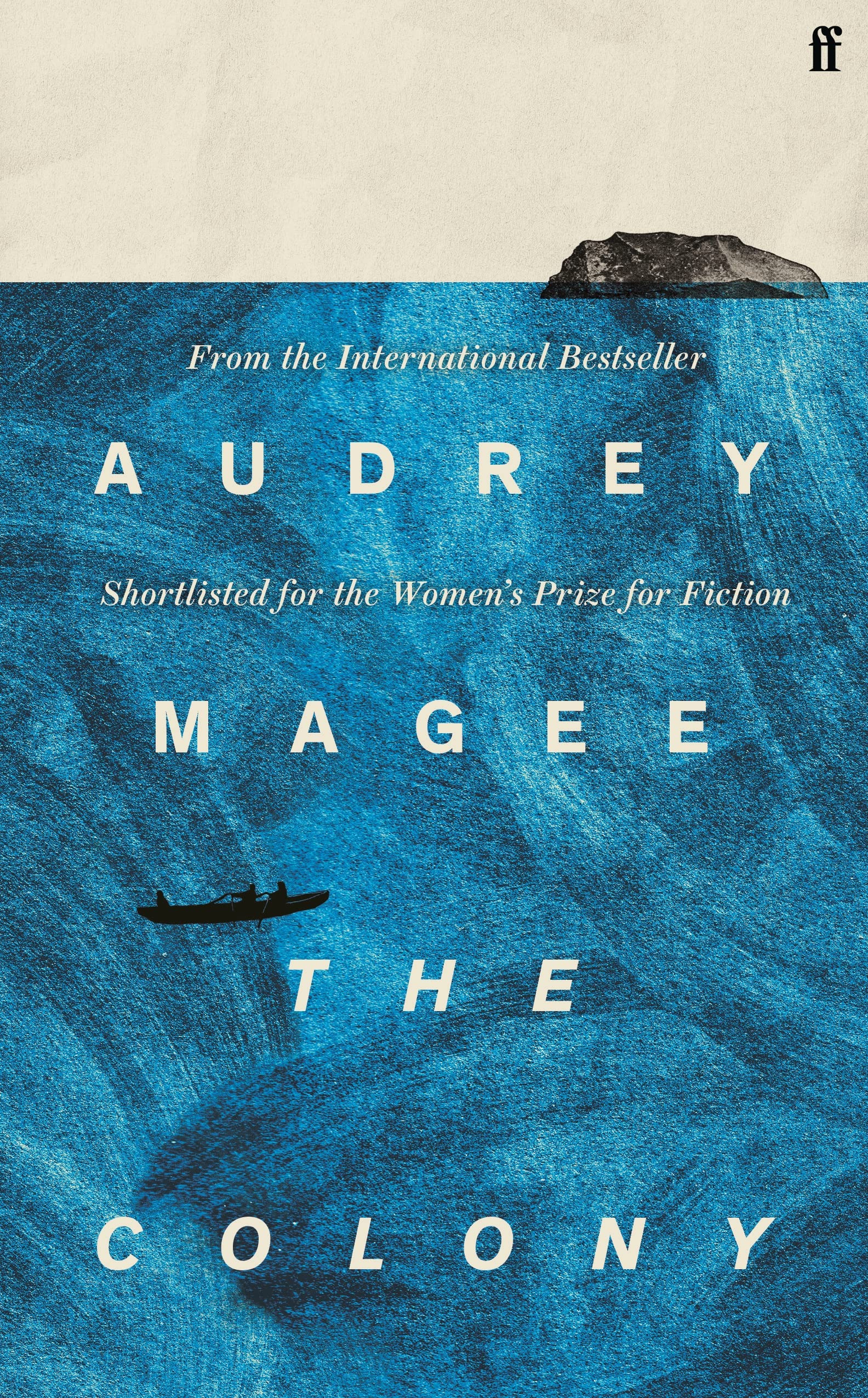
      Audrey Magee, The colony (#BookReview)

      Irish novelist Audrey Magee’s second novel, The colony, was my reading group’s August book, and it proved an excellent choice. Literary and highly readable, with vivid characters and a sophisticated exploration of its subject matter, The colony engaged us on all levels. It was longlisted for the 2022 Booker Prize (and may yet be shortlisted. We will know next week.)

      The novel’s overall subject is, as the title implies, colonisation – and Magee teases out its personal, cultural and political ramifications through a small island colony off the west coast of the Republic of Ireland. The word colony, like much in this book, is multi-layered. The novel is set over the summer of 1979, easily dated for readers by reporting of the assassination of Louis Mountbatten in August 1979.

      “the battle of the colonisers”

      The colony is carefully structured, with chapters about what’s happening on the island alternated with reports of sectarian killings from the Troubles in the north. These reports are brief, stark, and devastating, and serve as a constant reminder of what colonisation can do. But these reports are just one of the layers in the novel, which starts with the arrival of the ambitious British artist Lloyd (whose name is not random. He has plenty of money!)

      Lloyd is coming to the island to make his name. He is a modern colonialist in the way he assumes he can buy what he needs, and manipulate others, to achieve his goal. He promises, for example, to respect the islanders’ wishes that he not paint them, but this doesn’t last. The way Magee unfolds his role is clever and subtle, because the islanders, whose numbers have dwindled to twelve families, want and need his money to survive. His perspective is told through terse, poetic language.

      Arriving soon after Lloyd is the French linguist, JP Masson. He has been visiting this Gaelic-speaking island for years, undertaking a longitudinal study of the island’s linguistic patterns for his PhD. JP is fierce about the need for the islanders’ language to preserved as is. He resents the infiltration of any English into the island, so Lloyd’s appearance is the last straw. It will, he believes, force a “sudden and violent ” shift to English, instead of the slow “linguistic evolution” to bilingualism that was under way:

      The Irish here was almost pure, Lloyd, tainted only by the schoolchildren learning English, by the intermittent visits of emigrants returning from Boston and London with their sophisticated otherness, and by mercenaries in linguistic mediation, men like [islander] Micheál who want only to communicate, indifferent to the medium or its need for protection  …

      JP’s perspective is told through the carefully thought prose of a writer, though when he is writing his paper on colonisation and language, I found it a bit heavy-handed, a bit too much of the telling not showing.

      However, this issue of maintaining language – and its relationship to the colonial project – is intelligently explored. JP argues uncompromisingly for preserving the language, because it “carries their history, their thinking, their being”, and resists the fact that languages change. He rides roughshod over the islanders, insisting that they must use their language. Lloyd, on the other hand, wipes his hands of the issue, “not my concern” he says. Meanwhile, the islanders go about their business, continuing to speak their language with each other, while being willing to use English where it benefits them. They are no fools, for all JP’s exhortations:

      What do you think, Micheál? said Masson. Are you less Irish when you speak English?
      I don’t talk politics, Masson. You know that.
      We’re talking about language, Micheál.
      Same thing

      Just this topic alone, and how Magee uses it to expose colonialism’s short, medium and long tail, could take up a whole review.

      Throughout the novel, the islanders are caught in the middle, but maintain a healthy perspective:

      Imagine that, said Mairéad. A Frenchman and an Englishman squabbling over our turf. 
      They’ve been squabbling over our turf for centuries, said Francis. 

      There is a wonderful, dry humour in this novel. And much of it comes from the islanders, who have their own way of dealing with things. But they, too, are not united. The matriarch, 89-year-old Bean Uí Fhloinn supports the old ways, and is a perfect subject for JP’s research, while her granddaughter Mairéad tends to be the voice of humane or sometimes just resigned reason. Her son James sees Lloyd as his way out. He doesn’t want to be a fisherman, as all the men before him have been (including his drowned father, grandfather and uncle). He shows real talent as an artist, and believes Lloyd’s promise to take him back to England at the end of summer.

      And so, as summer progresses, tensions increase, between Lloyd and JP (who both come from colonising nations, for all JPs attempts to ignore his own complicated origins), but also between the islanders as they respond to what’s happening on the island and up north. They comment on the violence in the news reports. In one telling moment, Mairéad and her brother-in-law Francis discuss the Mountbatten assassination in which two teenage boys were also killed. For Mairéad this is wrong, whilst for Francis it’s “collateral damage”:

      Where does this end, Francis?
      In a united Ireland, Mairéad. One free of British rule.
      And you’ll blow up innocent children to get it. Mairéad swallowed the last of her whiskey. You’re pathetic, Francis Gillan.

      Violence is a constant presence in the book, from the relentless news reports to young James’ brutal killing of rabbits for food. Francis hangs over the novel ominously. What does he do on the mainland? What will he do to “get” Mairéad, for whom, she knows, he is “Waiting. In the long grass. Waiting for me to fall flat on my face so that he can pick me up and make me his.”

      I am interested in this issue of violence and how it permeates society. It’s what I think Tsiolkas was on about in The slap (my review). When people are confronted with violence on a regular basis, how do they respond? How should they respond?

      Another issue Magee explores is art. While Lloyd hides away, painting his magnum opus – which draws inspiration from Gauguin (another artist who worked in a colonial, exploitative environment) – the islanders discuss whether they should be worried. Is it “just” art, or something else?

      James clearly understands that art has meaning, and recognises the message in Lloyd’s final painting:

      It’s me as you want me to be seen, Mr Lloyd. As you want me to be interpreted.

      It’s certainly not James as he wants to be seen. It’s a cruel scene, particularly given Lloyd’s earlier lofty dreams of showing “that art is greater than politics. Art as peacemaker, as bridge builder.”

      Truly, The colony is, to use a favourite word of the islanders, a “grand” book. The writing is expressive, with various motifs running through it – like rabbits, apples, smells – and refrains, like “young widow island woman”. There are gorgeous descriptions of landscape and nature, and of daily life. There’s rhythmic variation, finely evoking different characters and tones. And there’s the shifting of perspectives, sometimes within paragraphs, which brought to mind Damon Galgut’s The promise (my review).

      The colony recognises some of the fundamental ironies in the situation the islanders find themselves in. Both JP and Lloyd, who look like they might (or, at least could) do good, are ultimately there for their own aggrandisement. The little island colony, to which they come, functions then as a perfect microcosm of the colonised. With dwindling numbers, those remaining need to do what they can to survive, but the odds are stacked against them. It’s an all too common story, and Magee tells it skilfully, giving her novel an ending which makes its point without going for the high drama I half expected. It’s all the more powerful for that.

      Coincidentally, Lisa and Jacqui (JacquiWine’sJournal) both reviewed this book last month, and both are worth reading.

      Audrey Magee
      The colony
      London: Faber & Faber, 2022
      376pp.
      ISBN: 9780571367627 (Kindle ed.)