Jane Caro, The mother (#BookReview)

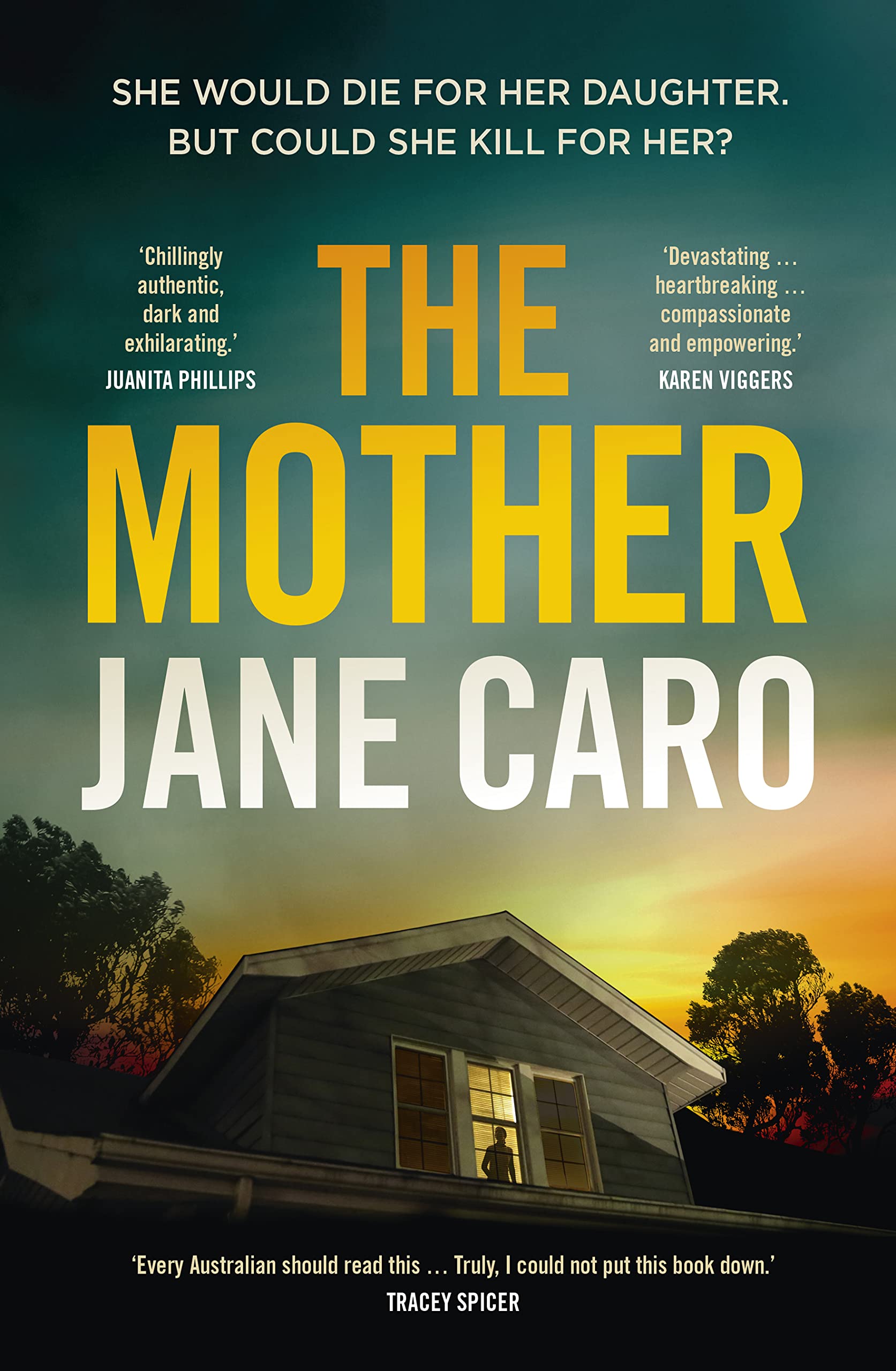
When my reading group scheduled Jane Caro’s debut novel, The mother, I was, I admit, not exactly enthusiastic, because my sense was that it was not going to be the sort of, shall I say, subtle writing I prefer. My sense was right, but I am not sorry I read it – partly because of the engaged discussion we had and partly for Caro’s intention.

The mother, then, is not a literary award-winner – the writing is fine but not exciting or breath-taking in the way I like – but, and it is a big but, it is an accessible, fictional exposé of the main points Jess Hill makes in her Stella Prize-winning See what you made me do: Power, control and domestic violence (my review). Hill explores family and domestic violence from every angle, but the most shocking and enlightening part for me concerned children, particularly the Family Court’s inability or refusal to see the risks to children from its parent access orders, even when the children themselves express fear. This point is powerfully made by Caro in her novel*.

But, let me step back a bit. The mother tells the story of 60-something middle-class Miriam Duffy who, widowed early in the novel, is pleased – and indeed grateful – when her emotional daughter, with whom she has had a tricky relationship, marries a perfect-seeming man. Gradually, however, little niggles about this relationship become bigger until one day they are confirmed when Ally returns home with two little children in tow, having left her husband. From here the situation deteriorates as the husband Nick escalates his bullying, predatory behaviour, and Miriam and Ally realise that the law is unable to protect them. The novel is described as a thriller, so I’ll give you just one more piece of information. It opens with a Prologue in which Miriam buys a handgun.

This brings me to the structure. After this Prologue, the novel is divided into two parts. In Part 1, Ally marries and soon after, Miriam is widowed. There is also a second, older, daughter who is in a stable marriage and has two children. During this part, Caro slowly drips out many of the flags that constitute coercive control, but that on their own don’t initially look like it or can be explained away – things like isolation from family and friends, use of a (demeaning) pet-name, jealousy, charm that is turned on and off at will, and surveillance, moving into sexual violence and gaslighting. This part ends with Ally’s return home. Part 2 commences four years later, and we are reminded of the Prologue, because Miriam is researching where she can buy a gun. Miriam and Ally have been systematically intimidated by Nick, and have reported his transgressions against Ally’s AVO (Apprehended Violence Order) again and again, but

Eventually they had stopped going to the police. It wasn’t that the cops weren’t sympathetic; it was just that they could not do anything.

In this part, Caro ratchets up the sense of helplessness (and hopelessness) the two women feel as Nick finds new ways to harass and terrify them. As I read it, I couldn’t help but think about all the news stories of recent years about murdered women and children. Nor could Miriam and Ally, but they turned the TV off the minute these stories came on. They were too close to home!

Like many issue-driven books, The mother did, as many in my reading group commented, feel didactic at times, and it is somewhat predictable. Some of us also felt that it was a little laboured in places. However, offsetting this is the novel’s characterisation and understanding of human nature. Caro conveys the complex human emotions we all experience under stress. She explores the lines and balance between what is acceptable in relationships and what is not, the fears about when to speak up, the justifications we try to find when things feel awry, and the feelings of guilt (particularly in mothers).

The mother is unapologetically a novel with a cause. With its compelling storyline and believable characters, it has a chance of reaching those who do not understand what coercive control is, and who do not realise that it crosses all demographics. Nick, for example, is a vet and Ally a PhD candidate. Miriam, a successful businesswoman, lives in comfortable North Shore Sydney.

This novel is being promoted primarily as a thriller, but I’m more inclined to see it as belonging to that long tradition of social problem novels. It may not be as sophisticated as the best of them, but its intention is clear, to drive social change. I hope it succeeds. I don’t imagine Jane Caro, or Jess Hill for that matter, will let matters lie until we see real, sustained change happening – and nor should we.

* This month there has been news about changes in family law in Australia, including removing the presumption of equal shared care, putting a focus on prioritising children’s best interests, and revamping the role of independent children’s lawyers. Time will tell what difference this makes in practice.

Jane Caro
The mother
Allen & Unwin, 2022
368pp.
ISBN: 9781761063893 
ASIN: B09MQ3PN1W

Kurt Vonnegut, Slaughterhouse-Five (#BookReview)

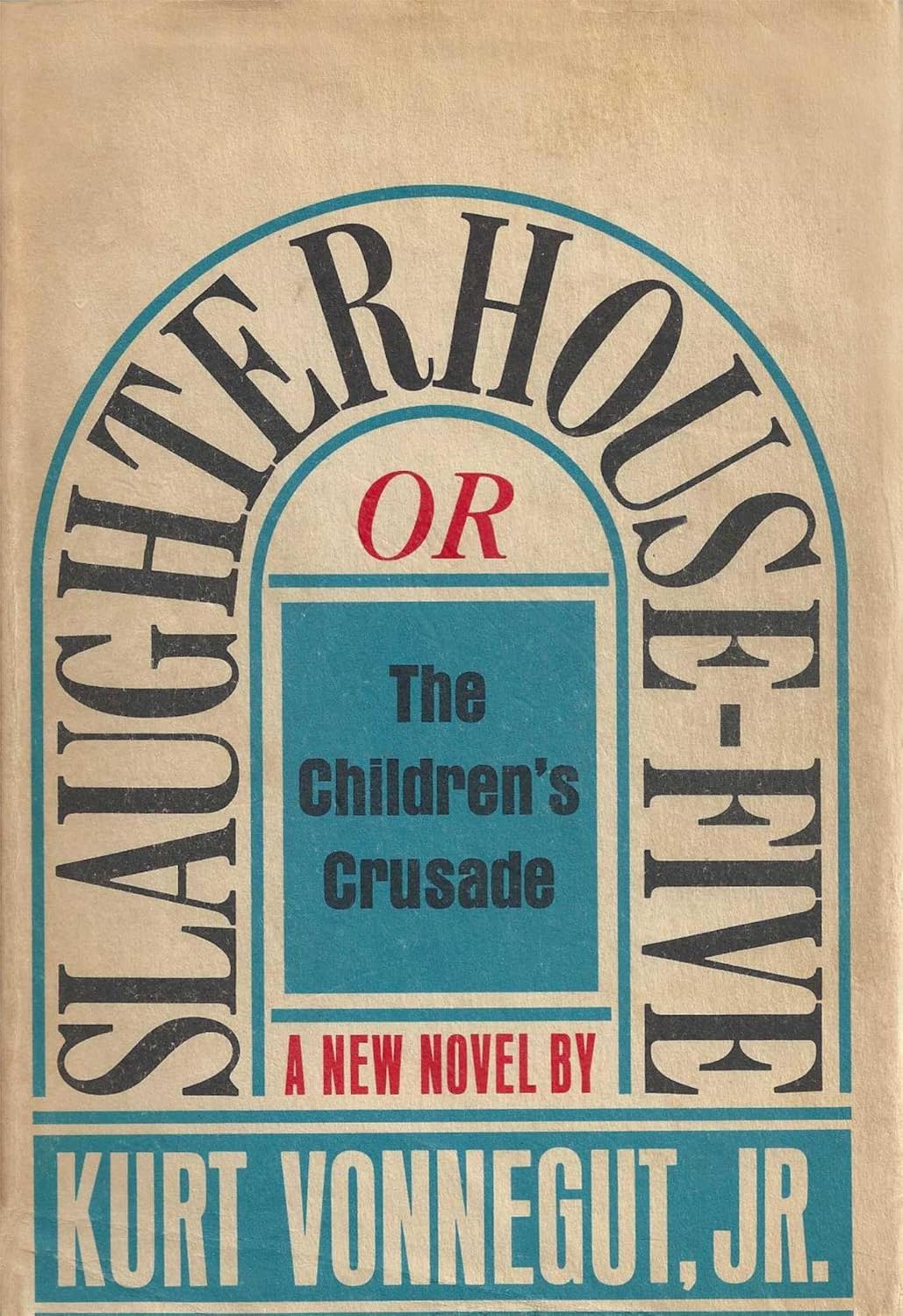
While my reading group’s main reading fare has, from the start, been contemporary fiction, we also mix it up a bit. We do non-fiction, for example, and most years we try to do a classic. Over the years we’ve done Jane Austen, Elizabeth von Arnim, Anton Chekhov, EM Forster, and Randolph Stow, to name a few. This year we turned to Kurt Vonnegut, and, because we couldn’t decide which book to do, we narrowed it to two – Cat’s cradle and Slaughterhouse-Five – and let members decide. You can tell from the post title which one I chose. This was because I have read Cat’s cradle, albeit decades ago. Most of the group, however, read Cat’s cradle, because they’d read Slaughterhouse-Five before.

So, Slaughterhouse-Five it is then – and I’m confronted by the old challenge of what to say about a classic, and a cult classic at that. This book has been analysed ad infinitum, and been found, as the decades have trundled by, to retain its relevance to new generations. However, before I say more, let me give a very brief synopsis, just in case there’s someone out there who doesn’t know the story.

“jumbled and jangled”

Ha, did I say brief synopsis? Easier said than done, but I’ll give it a try. Slaughterhouse-Five tells the story of Billy Pilgrim, from his early years, through his time as an American soldier during World War II including being in Dresden when it was bombed, to the post-war years. During his life, Billy is also abducted by flying saucer and taken to the planet of Tralfamadore, where he is displayed in a zoo. The critical issue underpinning all this is that Billy was damaged by his wartime experiences, something we now recognise as PTSD. Vonnegut conveys – and represents – Billy’s discombobulation, his trauma, through a complex non-linear, non-chronological narrative, in which Billy, who “has come unstuck in time”, travels not only back and forth through time, but also back and forth between Earth and Tralfamadore. 

Slaughterhouse-Five is, as a result, a challenging, sometimes mystifying read, but it is also an exhilarating one, because Vonnegut tells his story through satire and absurdity, both of which I love. In the first chapter, the narrator, who is Vonnegut, tells us about writing the book we are now reading. As he hands his finished book to the publisher, he says

It is so short and jumbled and jangled, Sam, because there is nothing intelligent to say about a massacre.

Alongside the occasional appearance of this first-person narrator, we have the unsuccessful science fiction writer Kilgore Trout, who can also be read as a version – caricature – of Vonnegut. His “unpopularity was deserved”, the narrator tells us. “His prose was frightful. Only his ideas were good”. But, Billy loves him. We first meet Trout when Billy is introduced to him by Rosewater, another patient in the hospital to which Billy had committed himself when he feels he is “going crazy”:

Rosewater was twice as smart as Billy, but he and Billy were dealing with similar crises in similar ways. They had both found life meaningless, partly because of what they had seen in war. Rosewater, for instance, had shot a fourteen-year-old fireman, mistaking him for a German soldier. So it goes. And Billy had seen the greatest massacre in European history, which was the fire-bombing of Dresden. So it goes.

If you’ve read the novel, you will know that “so it goes” is its over-riding refrain. Used over 100 times, at moments of murder, death, and other disasters, it functions as a motif, one that both underlines and undermines the horror, by drawing attention to it, then passing it off. The constant opposition, in the novel, of the serious with the offhand keeps the reader unsettled, which is part of the point.

The occasional self-conscious appearance of the author/Vonnegut and the references to Kilgore Trout, along with its story-within-a-story framework, its wild playing with time and place, its fragmentary approach to storytelling, and its unapologetic undermining of “reality”, make this book a postmodern work, if that interests you. By this I mean what sort of work it is doesn’t matter, really. It’s what the work says or makes you feel that really counts. However, it’s these features and techniques which enable Vonnegut to convey what he wants to say in such a powerful way. The how of it is inseparable from the meaning of it.

Slaughterhouse-Five is said to be about many things, including war and pacifism, fate and free will, our experience of time. I could discuss each of these in turn, but the academics already have. I’ll simply say that my primary takeaway is that it’s about the absurdity and incomprehensibility of life and, by example, about how our everyman Billy Pilgrim copes (or doesn’t) with such life.

Slaughterhouse-Five was published at the height of the Vietnam War and the anti-war movement. It was, it seems, the right novel at the right time. Although Vonnegut had had some success before, this was the novel that apparently established him. I can see why. With wars just keeping on coming – and being just as horrific and absurd as the ones that came before them, I can also see why this novel continues to speak to new generations of readers. I mean, how can you not laugh at Billy on display in Tralfamadore:

Then he did exercises he had learned in the Army—straddle jumps, deep knee bends, sit-ups and push-ups. Most Tralfamadorians had no way of knowing Billy’s body and face were not beautiful. They supposed that he was a splendid specimen. This had a pleasant effect on Billy, who began to enjoy his body for the first time.

And, you know what? I’m going to leave you right here, because if this doesn’t convey why this book is such a complex, funny, humane read, I don’t know what will.

Kurt Vonnegut
Slaughterhouse-Five, or, The children’s crusade
Horizon Ridge Publishing, 2024 (Orig. pub. 1969)
199pp.
ASIN: ‎ B0D9SKLL68

Melissa Lucashenko, Edenglassie (#BookReview)

Broadly speaking, Melissa Lucashenko’s latest novel, Edenglassie, does for southeast Queensland what Kim Scott’s That deadman dance does for Noongar country in southwest Western Australia. Both tell of the early days of their respective colonies from a First Nations perspective; both are written in a generous spirit but with absolute clarity about the dispossession that took place; and both suggest things could have been different.

Unlike That deadman dance, however, Edenglassie, is a dual narrative story. The main storyline, featuring two young people, Mulanyin and Nita, is set around the Magandjin or Meanjin (Brisbane) region during the mid-1850s, making it just a little later than Scott’s first contact narrative. Dispossession, massacres and other brutalities from the colonisers were met with armed resistance, but there were also attempts to work together. Paralleling this historical story is a modern one, featuring Granny Eddie, Winona, and Dr Johnny, set in the same area at the time of its 2024 bicentenary. These stories, one using historical realism and the other modern humour, riff off each other to provide a complex picture of the colonial project – then and now.

Melissa Lucashenko said much that interested me in the conversation I attended for this book, but here I’ll focus on two points she made. One is that the book’s central question is “what was going through these people’s [the colonisers’] minds?” Things could have been different then, she said, and could still be now. The other point is that she wanted to counteract the trope of the dying race. This idea has been slowly changing since Mabo, she said, but is still evident. The modern storyline, with its confident and politically involved Goorie characters, ensures that we see a vibrant, living culture in action.

Realising these two ideas is a big ask, and in my reading group there were some equivocations, but I think Lucashenko pulls it off, through creating engaging characters who come alive on the page and narratives that ring true to their times. Mulanyin, the kippa (young initiated man) from the historical period, and Winona, the fiery young woman in modern times, represent the passion of youth. They are impatient and want things to happen – or change – now. Both, however, also have elders guiding them – in the Goorie way, which is to encourage people to work it out for themselves and to remedy their mistakes.

“needing to endure the unendurable” (Mulanyin)

So, what is it that these young characters must contend with? The novel starts with two pointed events. In the modern storyline, Granny Eddie trips over a jutting tree root and is ignored by passersby until two young brown faces – Malaysian students as it turns out – help her up and get her to hospital. The modern scene is set, and all is not well.

We then flash back to 1840 where members of the Goorie Federation are looking forward to the imminent departure of the dagai, only to be told that this is now unlikely. A Goorie mother wonders what

If life never returned to normal. If the rule of law was never restored. What would her son see as a man? … Would her daughters be subject to the terrors the dagai brought?

What indeed?

Having asked the question, Lucashenko then moves her historical story to 1854-1855. Mulanyin is living with his law-brother Murree north of his own saltwater Nerang/Yugambeh home. Here, he is in close contact with the colonisers, and particularly with the Petries. At this time, the Petries, particularly the young Tom Petrie, were sympathetic to, and tried in their own way to work with, the Goories on whose land they resided. Lucashenko seems to be saying that, given colonisation was happening and wasn’t going to be undone, there were ways in which it might have been made to work (or, at least, work better). Conversations between Tom, Mulanyin, and other characters, explore their differences, particularly regarding attitudes to country. Mulanyin wants to know

what goes on in the brain of an Englishman? When he arrives in another man’s country to steal his land, and water, and game, and then with a straight face, calls those he steals from thieves? Is this how it is in Scotland? Is this why your people have fled that terrible place?’

The ensuing discussion has Tom struggling to explain the English, but admitting that “in their ignorance, they don’t understand that the land here has its own Law. They think that only their British law exists”. However, he says, they “respect some boundaries still … Those that are well defended”.

What did ‘well defended’ look like, Mulanyin wondered, if not like a thousand Goories assembled at the Woolloongabba pullen pullen? If not like Dundalli, leading the warriors who had willingly assembled under him, from Dugulumba to K’gari?

Fair point, Mulanyin.

Meanwhile, the modern-day characters are living with the fall-out from the failure of the colonisers to make it work and of the colonised to succeed in their resistance. Goories are still here, yes, but life is a struggle, and Winona wants to fight back, wants “to bite em hard onetime, while we got the chance”. She can’t understand why Granny Eddie, who grew up “with a dirt floor and empty belly” doesn’t think she deserves more. Granny, though, is two things. A pragmatist who sees that “Dagai not going away! We gotta get on with them”. And she’s an elder well-versed in her culture, so when Winona takes a hardline with Dr Johnny, who claims Aboriginal heritage, Granny says

“You’re thinking like a whitefella when ya close him out. That’s not our way. We bring people in, we bring our Mob home, and we care about them. We teach them how to behave proper way…”

Further, she argues,

“We can’t be sunk in bitterness … Or stuck in the past. We need to focus on the good dagais, like Cathy and Zainab, and them Petries, and –.”

Winona, Granny Eddie and Mulanyin all make sense, but they speak from different angles. What makes Edenglassie so interesting is the way Lucashenko gives space and respect to these angles. She certainly shows what was lost – and the utter unfairness of it. But, with the generosity of spirit we keep seeing, she also shares through her characters what living with deep connection to country means. And, she encourages everyone to think about alternative ways we can do this.

Towards the end of the novel, Gaja (Aunty) Iris shares an important story with our modern protagonists, introducing it with

we all know how important our stories are … People all over the world keep their stories close. Middle Eastern people believe … that by telling a story you can change the world, and nothing is as powerful as the right story at the right time.

With ideas about truth-telling and decolonisation becoming part of modern Australian culture, now feels like the right time for stories like Edenglassie. It might be an uncomfortable time to be a settler Australian, but that’s nothing compared with what First Nations people have endured and continue to endure. The least we can do is try to understand. Books like Lucashenko’s not only help us along this path but give us a lively read at the same time.

Melissa Lucashenko
Edenglassie
St Lucia: UQP, 2023
306pp.
ISBN: 9780702266126

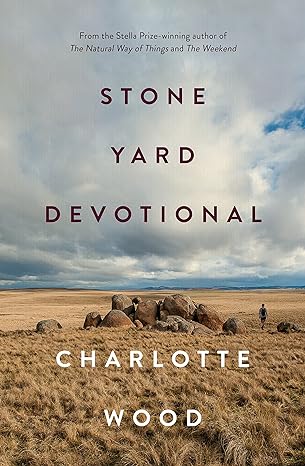
Charlotte Wood, Stone Yard devotional (#BookReview)

Charlotte Wood’s most recent novel, Stone Yard devotional, is set in the Monaro, a region just south of where I live. It’s a landscape that is much loved by many of us, including Nigel Featherstone, whose My heart is a little wild thing (my review) is also set there. The Monaro is expansive country, a dry, golden-brown plateau, characterised by rocky outcrops here and there, much as the cover shows. There are also hills in the distance, and big skies. Perfect country for contemplation, I’d say, which is exactly what Wood’s unnamed protagonist is doing there. (In fact, it’s also what Featherstone’s protagonist went there to do, for a very different reason – although, coincidentally, both books have something to do with mothers).

Stone Yard devotional is a quiet and warm-hearted read, one that asks its readers to not rush ahead looking for a plot, but to think about the deeper things that confront us all at one time or another. These things are hinted at by the two epigraphs, one being Australian musician Nick Cave’s “I felt chastened by the world”, and the other American writer Elizabeth Hardwick‘s “This is what I have decided to do with my life just now. I will do this work of transformed and even distorted memory and lead this life, the one I am leading today”. Add these to the title – with its hardscrabble sounding “Stone Yard” set against the gentle, inwardness of “devotional” – and you have a sense of the intensity to be found within.

“a place of industry, not recreation”

While this is not a plot-driven novel, there is a definite narrative arc. Taking the form of undated journal entries, the novel covers a period in the life of a middle-aged woman who has left her city life – her husband, her job in threatened species conservation, and her friends – to live in an abbey on the Monaro. It starts with a five-day stay, which is followed by more stays until the time comes when she arrives and doesn’t leave. Why she does this is not explicitly explained but through her contemplations we come to see that there’s unresolved grief in her life over the death of her parents some three decades earlier and, alongside this, a level of existential despair which has built up over time.

This is the set up. The narrative arc comes from three “visitations” to the abbey – a mouse plague which ramps up as the novel progresses, and the celebrity “environmental activist nun” Helen Parry, who accompanies the bones of the murdered Sister Jenny who had left the abbey decades ago to work among poor women in Thailand. These three events, both real and metaphoric in import, present practical and moral challenges, “a rupture” but also “a frisson of change”, for our narrator, and for all at the abbey.

So, we follow Wood’s narrator as she settles into life at the abbey, taking on the role of cooking for the group, and, as their non-religious member, the shopping and other errands that need to be done. Much industry is required to keep the place running when there is no financial help from the church, but the main industry is emotional and spiritual (in its wider meaning). Early on, our narrator recognises that prayer and contemplation “is the work … is the doing”. For her, as an atheist, this is not religious in origin or intent, but nonetheless contemplation is the real work she does while living at the abbey.

Much of this contemplation is invoked by flashbacks to and memories of events from the past, some experienced by her and others that happened around her (like the suicide of a farmer). Many involve her beloved and humane mother, who, like nuns Helen and Jenny, was an “unconventional”, determined to continue along her path despite what others thought. Such contemplation is hard, and our narrator is tested by the “visitations”, particularly Helen Parry with whom she has history involving bullying at school. Our narrator wishes to apologise but, as she comes to see, the hard work is in coming to that point of apology, not in having the apology accepted. But, forgiveness and atonement are only part of the bigger questions posed in this novel. Grief, despair and, ultimately, how to live are also part of its ambit – and are set against the shadow of climate change and its implications for our lives and choices.

This sort of exploration, however, can only work if we like the telling, and I found it thoroughly compelling. Stone Yard devotional is delicious for its details about life in an abbey on the “high, dry, Monaro plains, far from anywhere”, and for its insights into the women living there. No character is fully developed, but each, from the “business-like but soft-looking” leader Sister Simone to the distressed Sister Bonaventure, feels real in the role she’s been given in the narrative. While there’s not a lot of dialogue, our narrator reports on interactions between the women, and these contribute to her contemplations about life. She is not perfect and admits to moments of pettiness and poor judgement in her dealings with her co-habitants. Contrasting this little community is local farmer Richard Gittens, who supports the abbey in many practical ways and who represents, as our narrator recognises, “decency”.

All this is told in spare but expressive writing that maintains a tone which is serious and reflective, but which never becomes bleak.

There is no single, final enlightenment, but rather, as the narrator says earlier in the novel, “an incomplete, unhurried emergence of understanding, [a] sitting with questions that are sometimes never answered”. This is the sort of writing I love to read. In some fundamental way, it reminded me of my favourite Wallace Stegner quote. In Angle of repose, he wrote that “civilisations grow by agreements and accommodations and accretions, not by repudiations”. Through living this life in retreat, Wood’s narrator comes to know herself better. In so doing, she is able to lay some of her demons to rest, not through any major crisis but through quiet contemplation. The abbey does, indeed, turn out to be a “place of refuge, of steadiness. Not agitation”.

Interestingly, and perhaps pointedly, the novel ends on an anecdote about the narrator’s mother and her “reverence for the earth itself”. Ultimately, Wood invites us, without exhortation, to not be “chastened by the world” but to do the hard work of thinking about what is really important. A compassionate, and gently provocative, book.

Kimbofo (Reading Matters) also liked this book.

Charlotte Wood
Stone Yard devotional
Crows Nest: Allen & Unwin, 2023
297pp.
ISBN: 9781761069499

Gail Jones, Salonika burning (#BookReview)

Australian author Gail Jones’ ninth novel, Salonika burning, is a curious but beautiful novel, curious because she fictionalises four real people for whom she has no evidence that they met or knew each other, and beautiful because of her writing and the themes she explores. The novel is set during World War 1, but its focus is firmly on the interior rather than the grand stage of battle.

It opens dramatically with the burning of the city of Salonika (Thessaloniki). This is another curious thing, because this destructive event was caused not by an act of war but an accidental kitchen fire. Also, the novel is not set in Salonika but some 90 miles off, in and around “the field of tents that comprised the Scottish Women’s Hospital”, on the shores of Lake Ostrovo in Macedonia. It is 1917, and the novel’s narrative centre is this hospital and those working in and around it. Here, not Salonika, is where our four main characters are based — Stella, an assistant cook/hospital orderly; Olive, an ambulance driver; surgeon Grace; and Stanley, an orderly with the Royal Army Medical Corps. They are based on the Australians, writer Miles Franklin and adventurer Olive King, and the British painters, Grace Pailthorpe and Stanley Spencer. In her Author’s Note, Jones makes clear that she has fictionalised these characters, and that while all are known to have worked in the vicinity, there is no evidence that they met or even knew each other. It is “a novel which takes many liberties and is not intended to be read as a history”. This is fine with me. After all, a novel, by definition, is not history. The novel follows these characters over a few months after the burning of Salonika.

“everything was coming apart”

So, why Salonika? I see a few reasons. For a start, its burning sets the novel’s tone. On the first page we are presented with opposing ideas. The sight of the burning city is described as “strangely beautiful” but, on the other hand, “alarm, instant fear, the sufferings of others … were no match for excitement at a safe distance”. As the fire died, “excitement left and in its place was a murky lugging of spirit”. Throughout the novel, Salonika represents these contradictions, this tension between what is ugly, what is beautiful; between what is random, what is not; and in how to respond to, or feel about, what is being experienced.

The Salonika fire also encompasses the idea of witness and representation. In the opening scene, Jones describes a painting made of the fire by William T. Wood. It is a “morning-after scene, brightly calm, with a floaty view from the heavens” done in his “signature pastels, remote as a child’s dream and thinly decorative”. Those who saw this painting later, she writes, “saw the pretty lies of art”, whereas “former residents and soldiers said, No, it wasn’t like that”. This tension too is played out in the characters as they think about how they might represent their experience.

The burning of Salonika, then, embodies several ideas that are followed through in the novel. But, Salonika is also relevant to the plot. The novel’s narrative arc lies mainly in the characters and their emotional reactions to what is happening as the months wear on. Not only is there the war with its injured and dying soldiers, but malaria is rife, and the privations they experience, professionally and personally, are exacerbated by the burning of Salonika and the attendant shortage of essential provisions – food, petrol, medical supplies. However, a plot also unfolds, and it is something that happens on the way to Salonika, well into the story, which sets the novel’s final drama in motion.

Salonika burning traverses themes that are the stuff of the best war literature – themes that expose the “idiocy of this war, of all wars” and its impact on those caught up in it – but it offers its own take. The telling feels disjointed, particularly at the start, with its constant switching between the perspectives of the four characters who interact very little with each other until well into the novel – and even then it’s often uneasy, as befits their temperaments. And yet, the novel is compelling to read, primarily because of these characters. They are beautifully individuated, so flawed, so human, so real.

Olive, who is the first character we meet, and the one who closes the novel, is confident, tough and practical. Grace, too, is tough, doing her “duty” with a “dull vacancy”. Stella, at 38, the oldest of the four, is “cranky and wanting more”, more excitement to write about, but she believes in “chin-up and perseverance”, while the youngest, 26-year-old Stanley, is “ill-fitted … to this life of rough cynical men”.

These are “intolerable” times, and we are privy to their struggle to maintain their sanity. Olive resorts to her German grammar to escape the emotional load, while Stanley has his mules and favourite painters, his “Holy Rhymers”. Stella, “writing jolly accounts in her diary”, thinks about what stories she will tell, while Grace has her favourite brother to think about and write to. The disjointed structure mirrors, I think, their sense of isolation. Contact and the potential for friendship is there, but Matron discourages emotional engagement. There’s “no room for emotion”, she says, just “duty”. Olive, who seems to represent the novel’s moral centre, thinks otherwise:

It seemed another kind of duty, not to forget. Olive wanted to speak of what she had seen and known, though she suffered too much remembrance.

This could neatly segue to that issue of representation, and the post-war work done by Stella, Grace and Stanley, but instead, I want to conclude with another idea. On a supply trip to Salonika, Olive, “driving in her safe foreign aura”, had been indulging in a dose of self-pity, but is suddenly confronted by the loss Salonika’s burning represented for its residents, “and only now understood that it was the woe of others that claimed importance”. Likewise, Stanley, Grace and Stella are confronted with the woes of others through the novel’s closing drama, and must decide where their humanity lies.

I started this post noting some curious things about Jones’ approach to her story, but these didn’t spoil the read. Rather, they added to my interest as I read it. Ultimately, Salonika burning is a true and tenderly written novel that captures the essence of war’s inhumanity, and then goes about extracting the humanity out of it. A worthy winner of the 2023 ARA Historical Novel Prize.

Lisa and Brona also read and enjoyed this book.

Further reading

Gail Jones
Salonika Burning
Melbourne: Text Publishing, 2022
249pp.
ISBN: 9781922458834

Anna Funder, Wifedom (#BookReview)

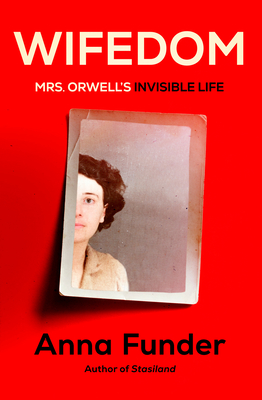
Anna Funder’s Wifedom: Mrs Orwell’s invisible life is a book with a mission, a mission that is implied in its full title. That mission is to examine the notion of “wifedom”, and the way patriarchy works to construct it, through the example of the invisible – or, as Funder also calls it, erased – life of George Orwell’s wife, Eileen O’Shaughnessy.

To do this, she wrangles Eileen out of the shadows of history to produce an intelligent, funny, warm-hearted, loyal and hard-working woman who, observed novelist Lettice Cooper, loved George “deeply, but with a tender amusement”. It’s an engrossing story, well-told. However, it’s a challenging read too.

Funder explains early in the book that her interest in Eileen came from reading something Orwell wrote about women and wives – after Eileen had died. It’s astonishingly misogynistic, and made her wonder who Eileen was and what she might have thought. Funder set about reading six Orwell biographies written between 1972 and 2003, but she found them unhelpful when it came to Eileen. Indeed, she says, they gave so little that they “started to seem like fictions of omission”. Funder then, logically, went to these biographers’ sources. She found some more bits and pieces about Eileen, but it wasn’t enough. All she had was “a life in facts, a woman in pieces”, so she “considered writing a novel – a counterfiction to the one in the biographies”. But, she was fascinated “by the sly ways” in which Eileen had been hidden, and she felt a novel couldn’t effectively explore this. Then she “found the letters”.

These were six letters that Eileen had written to her good friend Norah from just after her marriage in 1936 until 1944, but they had not been discovered until 2005. These letters gave her Eileen’s voice – and this voice was “electrifying”. Funder believed she could no longer write a novel. She writes,

I wanted to make her live, and at the same time to reveal the wicked magic trick that had erased her, and that still holds sway today. I thought of it as writing a fiction of inclusion.

“it’s hard … for history to find you”

This is where the book gets tricky, because, while I found Wifedom a fascinating read, it raised questions too, and they are intrinsic to what Funder is trying to achieve, and how she goes about achieving it. The book is divided into five parts, with the first part titled “Wifedom, A Counterfiction”. What does this mean? She doesn’t immediately explain what I have described above. Instead, she opens her book on a scene in which she imagines Eileen writing a letter to Norah – and she includes excerpts from that letter. This throws us readers in at the deep end. As we get into the book, we come to recognise these imagined sections, because they are identified by indentation, and opening and closing graphical symbols, but at the beginning it’s a bit mystifying, albeit an engaging way to capture our interest.

Early in the read, then, it becomes apparent that Wifedom comprises a complex mixture of processes and forms. The imagined sections are interspersed throughout the book between more traditional biographical writing about Eileen and George’s life. And interspersed between these are reflections from Funder’s own life, because one of her points is that the patriarchy, the “patri-magic”, which erased Eileen’s life from George’s biography, still exists and is evident in her own life as a wife and mother, despite her supportive husband and “egalitarian” marriage. I’m not going to focus on this aspect of the book, though, because it seems to fade away somewhat as Eileen and George’s story picks up, and is not, anyhow, where I want to go in this post.

Instead, I want to tease out the process. Early on Funder writes that

Looking for Eileen involved the pleasure of reading Orwell on how power works. Finding her held the possibility of revealing how it works on women: how a woman can be buried first by domesticity and then by history.

This is not particularly new. Anyone interested in feminism is aware of how women have been lost in (and thus to) history. However, Funder’s book is enlightening in this regard. She does an excellent job of interrogating how it can happen. It happens when biographers ignore or play down the role of women in their subjects’ lives. Through cross-matching her sources she finds example after example of Eileen’s contributions being downplayed or omitted. She shows how the use of passive voice and terms like “wife” rather than Eileen’s name work to make her disappear. (Orwell does it himself in Homage to Catalonia.) She finds examples where biographers, disconcerted by some of George’s behaviour, excuse it (how often are men excused!), or, uncertain about evidence, will rephrase it. For example, Funder writes that Eileen

noted his extraordinary political simplicity – which seems to have worried one of the biographers, who rewrote her words to give him an ‘extraordinary political sympathy’.

Eileen’s words come from a 1938 letter to Marjorie Dakin. The biographer is Crick. (Another of the textual clues to readers in this book is that Eileen’s words are conveyed in italics, while the words of others are enclosed in quotation marks.)

But here’s the challenge – interpretation. Funder writes early in her book that,

As serendipity would have it, in 2020 Sylvia Topp published Eileen: The Making of George Orwell, which contained much material I hadn’t found, and was thrilled to read, though we interpret it differently, and so build differing portraits of Eileen.

She does not explain what she means here, but in the very thorough Notes at the end of the book, Funder elaborates on Topp’s approach to Eileen. Put simply, Topp, Funder says, sees Eileen as one of those celebrated people’s partners who devoted their lives “joyfully to assisting the talented partners in all their various needs knowing all along that they would be under-appreciated, and often ignored, and yet never faltering in their dedication, or in their willingness to submerge their own personal talents into their partners’ success.” Topp, then, sees Eileen as a “helpmeet of genius” while Funder is interested, as she writes in these Notes, “in examining what it took, perhaps, to be in that marriage, and that dream”.

So, what we have here is interpretation. Topp had the same sources that Funder did. Indeed, she added some to Funder’s arsenal. But, she interprets them differently. As a feminist, I easily aligned with Funder’s interpretation, but as I read I also had this little niggle that Funder was interpreting her sources – from the perspective of her times, values and gender – just as other biographers had before her.

Wifedom was my reading group’s April book. Our conversation focused mainly on the biographical content – on Eileen’s life, on George Orwell and his books, and on the impact of patriarchy on Eileen. We were horrified by the life led by Eileen, as Funder tells it – and the facts seem inarguable. Their relationship appeared to us to have been so one-sided. Eileen did all the domestic work, and it was hard work given the primitive rural cottage that they called home. She was, often, the main breadwinner, and she did his typing, as well as offering editorial comment. She was necessary to him. Meanwhile, he focused on his writing and, we gathered, chasing other women. And yet, Eileen stayed with George. Why, we wondered?

We didn’t delve into the interpretation issue, albeit I would have loved to, but I needed more time to collect my thoughts. We did, however, discuss why we thought Eileen stayed with George which, I guess, was us interpreting what we’d read! Various ideas were put forward, including that Eileen might have been a “rescuer”, or that she knew she was unlikely to have been published herself (in a patriarchal world) and so channelled her energies through George, or, simply, that she loved him and, much like Topp argued, willingly helped him in any way she could.

So, there you have it! History, biography, it’s all a matter of the facts you have, and the way you see them. I don’t mean to devalue the biographer’s art by that statement, but simply to recognise that even the most formal, most rigorously documented biography will, necessarily, be affected by the biographer and their times. For this reason, I found Wifedom an absorbing and provocative read, though perhaps only partly in the way Funder intended.

Anna Funder
Wifedom: Mrs Orwell’s invisible life
Hamish Hamilton, 2023
511pp.
ISBN: 9781760143787

Jane Austen, Mansfield Park (Vol. 2)

Mansfield Park book covers

As I wrote last month, my Jane Austen group is doing a slow read of Mansfield Park this year, meaning we are reading and discussing the novel, one volume at a time, over three months. This month was Volume 2 (that is, chapters 19 to 31). It starts with the return of the patriarch, Sir Thomas Bertram, from his plantation in Antigua, and ends with Fanny rejecting Henry Crawford’s proposal.

Last month, I said that the thing that struck me most in volume 1 was the selfishness, or self-centredness, of most of the characters. I wondered whether Austen was writing a commentary on the selfishness/self-centredness of the well-to-do, and how this results in poor behaviour, carelessness of the needs of others, and for some, in immorality (however we define that). Having now read volume 2, I’m still on this path – together with a couple of other, somewhat related ideas, education, which I also mentioned last month, and parenting.

But first, the selfishness and self-centredness continues. In this volume, Maria marries and she and Julia leave Mansfield Park, leaving Fanny the only young woman at the Park. Mary Crawford, over in the parsonage, no longer has a young female friend to entertain her, so her sister Mrs Grant thinks Fanny would suffice:

Mrs. Grant, really eager to get any change for her sister, could, by the easiest self-deceit, persuade herself that she was doing the kindest thing by Fanny, and giving her the most important opportunities of improvement in pressing her frequent calls. 

Here is one of the reasons I love Austen. She knows exactly how we justify our actions to ourselves.

Anyhow, as a result, Fanny spends more time with Mary, as a favour to others, resulting in, Austen writes,

an intimacy resulting principally from Miss Crawford’s desire of something new, and which had little reality in Fanny’s feelings.

Examples like this pepper the volume. Lady Bertram doesn’t want Fanny to accept a dinner invitation because it would affect her “evening’s comfort”. After all, as Austen writes, “Lady Bertram never thought of being useful to anybody”. Late in the volume, Lady Bertram rises to the occasion, or thinks she does. She sends her maid to help Fanny dress for her first ball, and says so during the ball when Fanny’s appearance is complimented. “Chapman helped her to dress. I sent Chapman to her.” Yes, she did, but only after she was dressed and too late to help Fanny who was already dressed! Austen adds:

Not but that she was really pleased to have Fanny admired; but she was so much more struck with her own kindness in sending Chapman to her, that she could not get it out of her head.

Mrs Grant, Mary and Lady Bertram aren’t the only selfish, self-centred people in this volume. There’s the egregious Henry Crawford who had played, in volume 1, with the feelings of Maria and Julia, and then leaves Mansfield, in volume 2, with nary a word to either of them:

Henry Crawford was gone, gone from the house, and within two hours afterwards from the parish; and so ended all the hopes his selfish vanity had raised in Maria and Julia Bertram.

That’s not the end of Henry, though, because he’s soon back, telling his sister Mary, “my plan is to make Fanny Price in love with me”. In my Jane Austen group, we discussed that as his frivolous flirtation moved to something more serious – as he started to truly see, we believe, Fanny’s value – he gives no thought to whether Fanny will love him. That’s a given! He’s a catch!

There’s more I could say on this theme – I haven’t even mentioned Mrs Norris – but there are other ideas to talk about. I started to see in volume 2 that Mansfield Park is also about parenting, and, relating to this, I’d argue that in this volume we see the beginning of the education of Sir Thomas.

However, Sir Thomas is a controversial character in my group. Some detest him, rather like Mr Yates who had never seen a father so “unintelligibly moral, so infamously tyrannical” as Sir Thomas. But, along with some others, I see Sir Thomas differently.  Sure, he’s formal, but he loves his children – and he has no support in that wife of his. When he realises how silly Maria’s fiancé is, he wants to give her an out. Unfortunately, Maria wants to escape home and its restraints, so doesn’t take it. Sir Thomas is – admittedly – relieved because it suits his wish “to secure a marriage which would bring him such an addition of respectability and influence”. An example of new money, he’s a product of his times, and a “good” marriage can only help! However, as the volume progresses, Sir Thomas looks out for Fanny, wanting to give her opportunities, despite Mrs Norris’ attempts to keep puttng Fanny down.

For me, a recurring theme in Austen’s novels, in fact, is parenting. Lady Bertram is completely hands-off, letting Mrs Norris (as I mentioned in volume 1) have too big a hand in her daughters’ upbringing, to their detriment. Sir Thomas, on the other hand, is strict and – well, let’s talk about how it all plays out in volume 3. Here, though, he is kind to Fanny and wants well for her.

I have more to say on this, but I’ll leave it here as there are two ideas I’d like to share from my group’s discussion.

One of our members talked about the Australian critic John Wiltshire’s discussion of the disempowerment of women in his book Jane Austen and the body. He argues that caring for servants and the working class is a traditional role for genteel but otherwise disempowered woman, but that “this benevolence has a Janus face” because it replicates the inferior-superior social relationships that characterise the wider society. Mrs Norris, Wiltshire argues, “punishes others for her own dependency and frustration, whilst being able to hide this from herself in the guise of generosity to the recipients and loyal service to the system”.

Similarly, all at Mansfield Park have, through their adoption of poor Fanny Price “basked in the pleasure of benevolence”. But this has let Fanny become Mrs Norris’ victim. Both Fanny and Mrs Norris, says Wiltshire, are outsiders, “fringe-dwellers”; both are single, defenceless females who are “not part of the family except by courtesy. The one lives in the small White House, on the edge of the estate, the other in the little white attic at the top of the house”. Wiltshire argues that Fanny becomes the scapegoat upon whom Mrs Norris can “exercise her frustrations and baffled energies”. By scolding and punishing Fanny, she can “appease her own sense of functionless dependency and reaffirm the strictness of the social hierarchy which gives meaning to her life”. An interesting idea which I plan to think more about. It doesn’t excuse Mrs Norris, but it might explain her!

The other idea I want to share came from a young American visitor to our meeting. While she had read Austen and other classic authors, she said that her main reading, currently, is romance and general fiction. So, as she was reading Mansfield Park, she looked for tropes common to the romance genre. And, she found two significant ones, which could cement Austen’s reputation as the mother of the romance genre! The first trope is the idea of friends (or, here, cousins) becoming lovers, and the other is the romantic heroine’s belief that she’s “not like other girls”. She’s not as pretty, not as outgoing, and so on, as her rivals. Fanny makes this sort of observation in a discussion with Edmund about how she likes hearing Sir Thomas talk about the West Indies. She says she is “graver than other people” and concludes:

… but then I am unlike other people, I dare say.

I loved this insight from a first-time reader of the novel.

So much more to say … but there will be more opportunities to talk Austen, I dare say! Meanwhile, thoughts?

Shankari Chandran, Chai time at Cinnamon Gardens (#BookReview)

Shankari Chandran’s Miles Franklin Award winning novel, Chai time at Cinnamon Gardens, was my reading group’s March book. Unfortunately I was out of town at the time of the meeting, but of course I wanted to read it – and I did, finally!

Like many people, I think, when I first saw the book, I assumed it was one of those cosy crime novels set in a nursing home or retirement village. The title and the pretty cover certainly suggest that. Only a fraction of this first impression was right, though. It is set in a nursing home, and crimes do occur, but it is not a crime novel and nor is it cosy. Instead, it is a serious, thoughtful and immersive novel that covers many issues confronting modern multicultural Australia, but that also has one main driving idea – which I’ll get to soon.

First, though, I want to clear up another assumption I had, which was that Chandran is a Sri Lankan-Australian writer. Wikipedia told me otherwise. It describes her as a British-Australian writer, who was born in London to Tamil refugees from Sri Lanka. She grew up in Canberra, and studied law at the University of New South Wales, before working as a human rights lawyer in London for a decade. She now lives in Sydney. Chai time at Cinnamon Gardens is her third novel. GoodReads describes her first novel, Song of the Sun God (2017), as being “about three generations of Australian Tamil women and the choices they make to survive Sri Lanka’s civil war“. I don’t know what that novel’s overarching idea is, but Chai time at Cinnamon Gardens also draws from its main characters’ experiences during that civil war, and I do have a view on what drives it, so let’s get to the novel.

It is set in the Cinnamon Gardens Nursing Home in a fictional Sydney suburb called Westgrove, which situates it in Sydney’s multicultural western suburbs. The home is taken over in the early 1980s by Sri Lankan migrants, Cedric, Zakhir, and his wife Maya who wants to transform it to a place “where people will be valued”. The novel is told through multiple alternating voices, but starts with a Prologue which describes the home and which, if you read carefully, also prepares us for what’s to come:

Arabian jasmine climbs the wooden trellises staked in the garden beds. They are bold travellers, dark vines carrying white stars up the two-storey walls and around the windows of the residence. The plant grows obediently in the quiet suburb of Westgrove, Sydney, but its tropical ancestors are a wild breed, a vine that grows rampant in the villages of Sri Lanka, a home more familiar to many of the residents.

“Bold travellers”, “dark vines”, and “white stars” together with words like “obediently” and “wild” suggest a tension that we are going to explore.

We then start the narrative proper. It’s 2020, and Maya is now old and living as a resident in the home – albeit one who still holds many strings. Ruben is attending her, and we become aware that he bears fresh and old scars on his body. As the narrative progresses, we learn that the fresh scars come from recent racist attacks on him in the vicinity of the home, while the old scars relate to his experiences in Sri Lanka during the war. These scars more literally embody the tensions that pervade the novel.

From here, the rest of our narrators, all third person, are gradually introduced – Ruben; Maya’s daughter Anjali (Anji), who now manages the home; Anji’s old schoolfriend Nikki, who is the home’s geriatrician; and Nikki’s husband Gareth, who is white-Australian and a local councillor. There are other characters, including, most significantly, Anji’s also white-Australian husband, Nathan, and Maya’s aforementioned husband, Zakhir who disappeared, now presumed dead, ten years before the novel’s opening.

A strength of the novel is the way these characters inveigle their way into our hearts and minds so that we care about them, even the unappealing Gareth who, blinded by self-pity, rashly but unintentionally unleashes the dreadful drama that unfolds. It all hinges on racism. Chandran exposes the awful truth of how endemic racism is in Australian society and how, as a result, things can so quickly get out of hand. Interspersed with this present-day storyline are Maya’s, Ruben’s and Zakhir’s backstories, which explain why they had come to Australia – personally, in terms of what they had experienced during the civil war, and politically, in terms of their Tamil heritage and what that civil war was about.

I said at the beginning that the novel covers many issues which confront modern Australia, but that it also has one main driving idea. The issues include racism, colonialism, and multiculturalism; trauma, loss and grief; friendship, family and community; and the role played by the media, including social media, in fuelling emotions rather than encouraging reason. Underpinning these issues is the idea that drives the narrative – storytelling, and “the most powerful” of all stories, history. By framing her story within the Sri Lankan civil war and its battle over contested histories, Chandran makes her novel relevant to all cultures and societies where history has been used to oppress minorities resulting in violence, disempowerment and oppression, where distortion produces misinformation and confusion that can be manipulated to serve personal and political ends.

As grim and confronting as much of it is, Chai time at Cinnamon Gardens is not without hope. Alongside Chandran’s exploration of the misuse of history is a commitment to the positive value of story. To this end Maya, from the beginning, interviews all residents of the home, capturing their lives and their dreams in order to properly know and care for them. This provides the book with another underlying tension, that between histories that erase and stories that “must not be erased”.

Does it all work? Chandran holds a lot of balls in the air. Early on I felt caught in an awkward amalgam of a contemporary novel about middle class angst (husband versus wife, daughter versus mother, and so on) and one exploring critical political ideas. Also, there’s constant moving backwards and forwards in place and time, the plot felt a little contrived in places, and the main themes are hammered home. However, Chandran balances the tone well, mixing light humour and satire with sadness and tragedy, and the characters are vividly and sympathetically drawn. The end result is a book that reveals our essence, and asks us to consider how we might live together in respectful community. Consequently, despite some unevenness, I greatly enjoyed the read.

Shankari Chandran
Chai time at Cinnamon Gardens
Ultimo: Ultimo Press, 2022
360pp.
ISBN: 9781761151408

Favourite quotes: from a Musica Viva program

Back in 2015, I started a little ad hoc Favourite Quotes series but so far have only written four posts. This is not because I have a dearth of favourite quotes but because I don’t find time to share them. However, in the program for the most recent Musica Viva concert we attended, I came across a reference to a quote that intrigued me – and I just had to find who said it, which I did:

“How much do you know about Shakespeare?” I once asked a friend who has committed much of her life to studying the Bard. She replied, ”Not as much as he knows about me”. Remember this the next time someone tells you literature is useless.” (Arnold Weinstein, in The New York Times)

”Not as much as he knows about me”. Don’t you just love this understanding of how meaningful literature can be?

In the Musica Viva program, this was part of an interview question put to the performer – mezzo-soprano Anna Dowsley. I’d like to say that the question led to an engagement with this point, but it didn’t really. The interviewer didn’t include the “Remember this …” bit in her question, but asked instead, “How are you relating to these songs personally?” Dowsley went on to talk about the timelessness and relatability of the songs, rather than engage with Weinstein’s point. I’m not criticising the singer, here, because the way the question was put doesn’t seem to really invite the discussion I’d love to have heard.

However, the statement certainly spoke to me, because Shakespeare often comes to my mind at significant moments in my life, as do other writers, like Jane Austen. So, I went digging to find out who this Arnold Weinstein was. He has a Wikipedia article, which told me that he was born in 1940, and was (maybe still is) the Edna and Richard Salomon Distinguished Professor of Comparative Literature at Brown University. More usefully, I found an opinion piece in the Brown Daily Herald written by him in April 2022. It is titled “The case for studying literature at Brown”, and is a response to falling enrolments in literature courses. He discusses why students should choose to study literature. It’s brief but makes its point. He says, for example, that “it will sound loopy, but I believe we read literature to become other”, which is an idea that he knows will be rejected by current trends which favour “objectivity and distance” over “reader identification”. I like his thinking, though “reader identification” is a broad church and can be misapplied, so I do get those who are critical of focusing on this.

Anyhow, to conclude, he ends with the quote above, which is clearly a favourite anecdote of his, but he frames it this way:

What makes it [studying literature] worth doing? I’ll answer that with a question I asked a friend who had devoted her entire life to doing programs on Shakespeare. My question: How much do you know about Shakespeare? Her answer: not as much as he knows about me. Not as much as he knows about me. Chew on this a little. We go to literature, not because we’re professors or students, but because important books shine a unique beam on human behavior, thought and feeling. Reading these books adds something unique not only to our database but to our actual identity. For we’re never through discovering who we are. 

Today is World Poetry Day. How better to commemorate it than with this reference to the Bard – and with thoughts about why we read him and literature in general?

What do you think about Weinstein’s view?

Jane Austen, Mansfield Park (Vol. 1)

Mansfield Park book covers

This year my Jane Austen group is doing a slow read of Mansfield Park, which involves our reading and discussing the novel, one volume at a time, over three months. This month, we did Volume 1, which, for those of you with modern editions, encompasses chapters 1 to 18. It ends with the return of the patriarch, Sir Thomas Bertram, from his plantation in Antigua.

I’ve said this before, but I’ll say it again. Every time I re-read an Austen novel, I “see” something new, something new to me that is, because I can’t imagine there’s anything really new to discover in these much loved, much pored-over books. Sometimes my “new” thing pops up because in a slow read I see things I didn’t see before while I was focusing on plot, or character, or language, or … Other times, it might arise out of where I am in my life and what experiences have been added to my life since the previous read.

I’m not sure what is behind this read’s insights, but the thing that struck me most in the first volume this time is the selfishness, or self-centredness, of most of the characters. It’s so striking that I’m wondering whether Austen is writing a commentary on the selfishness/self-centredness of the well-to-do, and how this results in poor behaviour, carelessness of the needs of others, and for some, in immorality (however we define that.)

Mansfield Park has been analysed from so many angles. These include that it is about ordination (which Austen herself said was the subject she was going to write about); that it is a “condition of England” novel; and that it is about education. In the first chapter, in fact, Mrs Norris, the aunt we all love to hate, says

Give a girl an education, and introduce her properly into the world, and ten to one but she has the means of settling well, without farther expense to anybody.

The irony of course is that the sort of education that Mrs Norris supplies to the Bertram girls does not do them any favours. That’s not exactly where I’m going now, though we could argue that poor education – or poor upbringing – is behind much of the selfishness we see in the novel. So, maybe, I will end up talking about education by the end of the novel.

For now, however, I will share why I am thinking this way. For those of you who don’t know the plot, it centres around Fanny Price who, at the age of 10, is taken in by her wealthy relations, the Bertrams of Mansfield Park, to relieve her impoverished parents of one mouth to feed. Fanny Price is the Austen heroine people love to hate, but I’m not one of those haters. I believe that if you truly look at her character and her life, within the context of her situation and times, you will see a young girl whose good values and commonsense enable her to make the best of a very difficult situation.

That it is a difficult situation is made clear in several ways, including the fact that we are told in the opening chapter that she is to be treated as a second class citizen in the family. A “distinction” must be preserved; she is not her cousins’ equal. In the second chapter, we are told

Nobody meant to be unkind, but nobody put themselves out of their way to secure her comfort.

As the novel progresses, and the characters are introduced, they are, one by one, shown to be self-centred and/or selfish in one way or another. I won’t elucidate them all, but, for example:

  • Lady Bertram (her aunt) is, from the start, lazy and careless about the needs of others. Her own comfort, and that of her pug, supersedes all.
  • Mrs Norris (another aunt) is judgemental and parsimonious, ungenerous in mind and matter in every possible way.
  • Cousins Maria and Julia show no generosity to Fanny, unless it’s something that doesn’t materially affect them; they are “entirely deficient in … self–knowledge, generosity and humility”.
  • Cousin Tom “feels born only for expense and enjoyment”, and exudes “cheerful selfishness”.
  • Visiting neighbour, Henry Crawford, is “thoughtless and selfish from prosperity and bad example” and amuses himself by trifling with the feelings of Maria and Julia who provide “an amusement to his sated mind”.
  • Henry Crawford’s sister Mary is unapologetic about her selfishness, asking Fanny to forgive her, as “selfishness must always be forgiven…because there’s no hope of a cure”. This surely takes the cake!

And so it continues … the clergyman Dr Grant is an “indolent, selfish bon vivant”; and the self-important Mr Rushworth and the self-centred Mr Yates show no interest or awareness of the needs of others.

There are, of course, some redeeming characters. Cousin Edmund, in the first flush of love, can be thoughtless at times but it is his overall kindness that keeps Fanny going, and Mrs Grant also comes across as sensible and kind.

A couple of significant events occur in this volume – the visit to Mr Rushworth’s place at Sotherton, and preparations for staging a play, Lovers’ vows. These provide ample opportunity for the characters to parade their self-centredness. You can’t miss it. Fanny certainly doesn’t, as she watches those around her jockey for position in terms of their roles in the play:

Fanny looked on and listened, not unamused to observe the selfishness which, more or less disguised, seemed to govern them all, and wondering how it would end.

Fanny, however, also questions her own motives in refusing to take part in the play: “Was it not ill-nature, selfishness, and a fear of exposing herself?” But, in fact, she is the only one who is truly alert to the dangers within.

This “selfishness” theme is not, of course, the only issue worth discussing when thinking about Mansfield Park, as other members in my group made clear with their own discoveries. It is simply the one that stood out for me, during this re-read.

Thoughts anyone?