Monday musings on Australian literature: Bookswapping

Old books

Old books (Courtesy: OCAL @ clker.com)

Last week I wrote a Monday Musings about bookselling for/by charities. As I was writing it, I realised that there was another way of acquiring books that is worth writing about – book swap arrangements. Not surprisingly, it came up in comments on that post, so is clearly something of interest to many readers. It’s an area that I’m aware of – how could you not be – but not one I use with any regularity, so I’ve enjoyed researching it beyond my limited knowledge. I’m sure commenters will add even more information, for which I thank you in advance!

Book swapping as an informal activity is practised by most readers in some form or another. We share books – sometimes lending them to be returned, other times asking for the book to be passed on. It may not always be exactly one-to-one, but something more informal where we press loved books on each other as we read them. A little bit more formal is that practice in places like youth hostels where travellers leave a book behind that they’ve read, in a communal bookcase, and take one in its place. I still have a book that I picked up that way back in the 1970s. It’s Mordecai Richler’s Shovelling trouble. I love it – and the memories it carries.

In other words, book swapping as I’m describing it here is a pretty loose activity. It happens in multitudinous ways, ranging from the highly informal to the very controlled, from sharing books locally (in just a street, for example) to sharing across and between nations. Some swapping is simply about ensuring we always have something to read – what I’d call reader-to-reader sharing – while other schemes have bigger literary and social justice goals. These aims and styles aren’t always mutually exclusive, but the emphasis tends to fall more into one camp than another, if that makes sense. The activities I list here all fall into the somewhat organised end of the spectrum.

BookCrossing

BookCrossing is the first big “organised” system that I came across – and that was back in the early 2000s when I found a book in my workplace cafe. Wikipedia describes it as “the practice of leaving a book in a public place to be picked up and read by others, who then do likewise.” It started in the USA but has become a huge international community, supported by a website and social media platforms.
Markus Zusah, The book thiefAustralia is 7th on the list of the world’s top 10 bookcrossing country according to the BookCrossing website, which is not bad given our size (unless that was measured per capita).   (If you are interested, the top three countries are USA, Germany, United Kingdom.) I won’t say more about this, but if you’ve never heard of it do check out their website. It’s rather fun to see the list of recently released, recently caught, most travelled and most wished for books. I loved seeing, when I checked, that the top book in “the most wished for” list was Markus Zusak’s The book thief (my review).

The Great Book Swap

Coordinated by the Indigenous Literacy Foundation, the Great Book Swap is a very different kettle of fish. Its aim is to raise money for the Foundation. The idea is for organisations – workplaces, schools, any group at all – to host a book swap, which this year was on Wednesday 6 September. (But, really, you could do it any time. The ILF won’t reject your money). The principle is that people swap books for a gold coin donation. That is, participants bring a book (or books along) and for the right to take a book or book/s away, pay a gold coin donation. So, you get a book to read and the Foundation gets some money. In 2016, the ILF raised $160,000. The money is used to buy books to send to remote indigenous communities.

ILF Ambassador, children’s author Andy Griffiths, describes it thus:

The Great Book Swap is a win-win. Not only does it help raise money to improve literacy levels in remote communities, but the excitement and fun…helps improve literacy levels in your community or organisation…

The Little Big Book Swap

Another literacy focused event is the Little Big Book Swap run by The Little Big Book Club at Raising Literacy Australia. It runs along the same lines as the Great Book Swap, with money going “to support literacy programs and resources for SA families”. Raising Literacy Australia seems to be an Australia-wide organisation, with its vision being “Enriching Australian lives and building communities through literacy”, but this Little Big Book Swap, currently anyhow, says the money is for South Australian families. Hmm … maybe this is just a start of a program they plan to expand.

Street Libraries/Little Free Libraries

You’ve all heard, I’m sure, about street libraries. They are neighborhood book exchanges where passers-by can take a book to read or leave a book for others to find. The Little Free Library is one manifestation of these. It started in the USA in 2009. According to Wikipedia, there were 50,000 registered libraries world-wide. I bet there are many more that are not registered. In Australia, we have an organisation called streetlibrary.org.au . I love their description of what they do:

Street Libraries are a beautiful home for books, planted in your front yard. They are accessible from the street, and are an invitation to share the joys of reading with your neighbours.

Street Libraries are a window into the mind of a community; books come and go; no-one needs to check them in or out. People can simply reach in and take what interests them; when they are done, they can return them to the Street Library network, or pass them on to friends.

If anyone has a book or two that they think others would enjoy, they can just pop it into any Street Library they happen to be walking past.

They are a symbol of trust and hope – a tiny vestibule of literary happiness.

“A tiny vestibule of literary happiness”. I mean, what more could you want? You can register your library on the site, which enables others to find you. You can build your own little library, or you can buy a kit from the website. According to the website, there are 9 in my city. (I should have gone out and photographed one today, shouldn’t I?) The one closest to me is Books for the World (and it just so happens that one of my ACT-litblogger mentees is involved in it!) Another is the Mighty Fine Book Swap in Brisbane. Click on these links to see gorgeous pics, and read about them.

Other

These are some of the “big” initiatives, but I know there are all sorts of book swap arrangements around (including the hostel ones I mentioned in my introduction). Commenter Jeanne on last week’s Monday Musings wrote that

Recently Mildura Library has started a new venture: provide a book swap at Mildura Airport: http://milduraairport.com.au/books-on-the-fly/. Are there any other airports that have something similar?

Are there? Anyhow, what a lovely initiative. It’s called, delightfully, Books on the Fly. Being a small regional airport, Mildura Airport does not, I’m guessing, have a bookshop in the terminal, so this provides a lovely service for air-travellers.

Do you use – or contribute to – any book swap arrangements? I’d love to hear about them, whether or not I’ve mentioned them here already. 
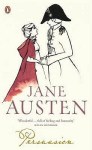
Jane Austen’s Persuasion, Vol. 1

Jane Austen, Persuasion

My Jane Austen group is reading Persuasion – eleven years since we last did it – because 2017 is the 200th anniversary of its publication. Of course I’ve read it several times, so, as you’ll know from my other Austen re-reads, my aim here is to focus on reflections from this read rather than to write a traditional review.

You’ll probably also know that my group often does slow reads of her novels, a volume at a time. Persuasion was published in two volumes, so last month we read Volume One. It finishes at Chapter 12, just after Louisa Musgrove has her fall at Lyme. This post is about this volume.

But first, I want to say something my relationship with Persuasion. I first read it in 1972 when the second TV miniseries was screened in Australia. I was reading it in tandem with the screening, and the night the last episode screened I sat up late to finish the last chapters. I’ll never forget my emotional response to it. I can’t remember whether the miniseries was a good one, but I sure thought the book was. Why?

Persuasion doesn’t have the sparkle of Pride and prejudice, nor the  young spoofy humour of Northanger Abbey, nor even the heroine we love to laugh at in Emma, but it is quiet, emotional and deeply felt. Its heroine Anne, at 27 years old, is Austen’s oldest. She’s caring, intelligent, but put upon by her unappreciative family – and yet we don’t feel she’s a pushover. The novel’s romance, when it comes, feels right and well-earned. No-one ever says that Austen should not have married Anne to her man the way some do about some of her other heroines such as Marianne in Sense and sensibility, and Fanny in Mansfield Park. No, when it comes to Persuasion, Austen fans are generally in agreement: it’s a lovely book in which the hero and heroine belong together. But, it’s about so much more too …

I’m not going to provide a summary, so if you need to refresh yourselves on the plot and characters please check Wikipedia.

A specific setting

I’m not sure why it is, but on this my nth (i.e. too many to count) reading of Persuasion, I suddenly noticed that it was the only book, really, that gives us a very specific date and that is set pretty much exactly contemporaneous with when Austen was writing it. It starts in “this present time, (the summer of 1814)” and ends in the first quarter of 1815. This period pretty much covers the hiatus in the Napoleonic Wars when Napoleon was exiled to Elba – and is why Naval Officers are out and about, on land and available for appearing in Persuasion! Sir Walter’s friend and advisor, Mr Shepherd tells him:

This peace will be turning all our rich Navy Officers ashore. They will all be wanting a home.

It is the appearance of the Navy and Austen’s contrasting the substance of naval officers with the superficiality of the aristocracy that gives Persuasion its particular interest – beyond its lovely story, I mean. It is very much a book about social change. (I should say, here, that Austen was partial to the Navy, having two successful Naval brothers)

Two themes

Anyhow, this idea and that relating to persuasion are developed in Volume 1 through various themes, two of which I’ll discuss here.

Appearance and Social status

That social status is a major concern is heralded on the book’s first page when we are told about Sir Walter’s favourite book: “he was a man who, for his own amusement, never took up any book but the Baronetage”. The narrator tells us soon after that:

Vanity was the beginning and the end of Sir Walter Elliot’s character; vanity of person and of situation.

However, he has not been sensible with his money, and needs to rent out his home Kellynch-hall, hence my earlier quote. But, Sir Walter doesn’t like the Navy, and his reasons convey two of the novel’s themes – the focus on status and the cult of appearance. His response to the idea of renting his home to a Naval officer is:

Yes; it is in two points offensive to me; I have two strong grounds of objection to it. First, as being the means of bringing persons of obscure birth into undue distinction, and raising men to honours which their fathers and grandfathers never dreamt of; and secondly, as it cuts up a man’s youth and vigour most horribly; a sailor grows old sooner than any other man …

This is of course ironic, because the naval officer, Admiral Croft, to whom he eventually agrees to rent the place is a thoroughly decent man (who removes Sir Walter’s myriad “looking glasses” when he takes residence). Croft also, Anne “fears”, looks after the Kellynch estate and its people far better than her family did. However, for Sir Walter, the only thing that matters is status.

As the novel progresses, the difference between the Navy and the aristocracy is further developed, but more on that anon.

Anne’s sister Mary is highly aware of her status as a Baronet’s daughter, and the “precedence” due to her. That she stands on this demonstrates her superficiality and lack of decent human feeling. She complains when she goes to her in-laws’ home that her mother-in-law does not always give her precedence. One of her sisters-in-law complains to Anne:

I wish any body could give Mary a hint that it would be a great deal better if she were not so very tenacious; especially, if she would not be always putting herself forward to take place of mamma. Nobody doubts her right to have precedence of mamma, but it would be more becoming in her not to be always insisting on it.

Later, after Louisa’s fall at Lyme, when it is suggested that calm, capable Anne remain behind to care for Louisa, Mary objects:

When the plan was made known to Mary, however, there was an end of all peace in it. She was so wretched, and so vehement, complained so much of injustice in being expected to go away, instead of Anne;—Anne, who was nothing to Louisa, while she was her sister …

Here again is Mary’s misplaced sense of “precedence”. It is also a lovely example of Austen’s plotting, because only a few chapters earlier Mary had refused to stay home from a family party to look after her own injured little boy, preferring Anne do it. Austen had set us up nicely to see the superficiality of Mary’s desire to care for her sister-in-law. The more you read Austen, as I’ve said before, the more you see how fine her plotting is.

Strength of character versus Persuasion (or the influence of others)

Another ongoing issue in the novel concerns strength of character. Captain Wentworth reflects on Anne’s lack thereof in refusing their engagement when she was 19:

He had not forgiven Anne Elliot. She had used him ill; deserted and disappointed him; and worse, she had shewn a feebleness of character in doing so, which his own decided, confident temper could not endure. She had given him up to oblige others. It had been the effect of over-persuasion. It had been weakness and timidity.

A little later, he praises Louisa Musgrove’s strength of mind, but we, the reader, realise her pronouncements are theoretical. She had not been put to the test. She says:

What!—would I be turned back from doing a thing that I had determined to do, and that I knew to be right, by the airs and interference of such a person?—or, of any person I may say. No,—I have no idea of being so easily persuaded. When I have made up my mind, I have made it.

Meanwhile, Louisa shares gossip about Anne, suggesting that Lady Russell, who had discouraged Anne from marrying Captain Wentworth, had also discouraged her from marrying Charles Musgrove (which of course reinforces for Wentworth the idea of Anne’s weakness of character).

… and papa and mamma always think it was her great friend Lady Russell’s doing, that she did not.—They think Charles might not be learned and bookish enough to please Lady Russell, and that therefore, she persuaded Anne to refuse him.

In this case, though, the decision was all the then 22-year-old Anne’s – but Wentworth only hears the gossip.

Henrietta adds to the chorus about Lady Russell’s persuasive power:

I wish Lady Russell lived at Uppercross, and were intimate with Dr. Shirley. I have always heard of Lady Russell, as a woman of the greatest influence with every body! I always look upon her as able to persuade a person to any thing!

You can see Austen building up the plot here, leading us to see Wentworth as unlikely to be interested in Anne again.

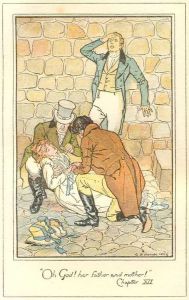
Persuasion, Lyme fall, CE Brock
Oh God! her father and mother (CE Brock, 1893?)

Anne, though, sees that firmness of character can go too far, that Louisa’s wilfulness against the advice of others had resulted in her potentially life-threatening fall. She wonders

whether it ever occurred to him now, to question the justness of his own previous opinion as to the universal felicity and advantage of firmness of character; and whether it might not strike him, that, like all other qualities of the mind, it should have its proportions and limits. She thought it could scarcely escape him to feel, that a persuadable temper might sometimes be as much in favour of happiness, as a very resolute character.

Will he see it her way? We’ll have to read Volume 2 to find out!

There’s a lot more I could say, but I think I’ve said enough. Next post I plan to take up the Navy issue a bit more …

Monday musings on Australian literature: Bookshops, 2017

It’s been sometime since I’ve talked about bookshops. I missed this year’s National Bookshop Day (now called Love Your Bookshop Day). However, I have been thinking about bookshops. After a flurry of closures, particularly of bookshop chains, in our town, things seem to have settled down. My local mall, in fact, went from losing its two stores, several years ago, to now having two stores again. And, our independent stores around town seem to be holding their own. Is this indicative of something positive happening?

Well, I came across a recent article in The Conversation which suggested that things aren’t as desperate as we were feeling a decade ago. The article, by Nathan Hollier, the Director of Monash Publishing, is titled “Love of bookshops in a time of Amazon and populism”. It opens with the following sentence:

There was genuine positivity at this year’s Australian Booksellers’ Association Conference in Melbourne in June. The mood was one of camaraderie and optimism at the sharing of good news.

How nice, eh?

I’ll come back to the article, but of course I wanted to find out more about this year’s Australian Bookseller’s Conference. I didn’t find a lot of substance – in my brief Google search – but I did find some advance notification which listed some of the topics to be discussed:

a session on strategies for sustainability; the launch of National Bookshop Day 2017; a session on how small and independent publishers can work with bookstores to offer customers ‘something different’; a panel on children’s bookselling; and sessions on the state of the industry, ‘analogue marketing’, stock mix, and issues affecting small businesses.

Interesting, particularly given Hollier’s statement that children’s booksales are doing particularly well. He also says that “store numbers have steadied in recent years and, as was reported at the conference, both independent and chain or franchise booksellers are expanding”. Hmm … the number of stores is stable but these stores are expanding.

Book Stack

(Courtesy: OCAL, from clker.com)

However, as Hollier points out, there’s a new threat on the horizon, Amazon, which, as most Australian readers probably already know, has bought a big distribution site just outside of Melbourne. Local booksellers, says Hollier, will need to adjust (once again) in an environment “in which Amazon will likely reduce its delivery time and charges significantly. This will place downward pressure on book prices, and thus booksellers’ margins and capacity to survive.”

In the face of a megastore which can carry huge stock, local booksellers need, as they always have done, to carefully curate their holdings. They will also need to beef up extra services. “Community building will be the order of the day,” says Hollier. However, this curating is harder at a time when review pages in broadsheet newspapers are reducing, because these pages provide booksellers with “a degree of consensus as to what is important and valuable to read.” Certainly, in the heyday of newspaper review pages, our local bookshop would be inundated with requests for books which had been reviewed, particularly in the weekend lift-outs.

Hollier also discusses the challenge of lower prices, saying that:

The Productivity Commission doesn’t accept arguments in favour of maintaining price levels for some products in order to keep the costs of others down. But regulatory bodies have special challenges when confronted with large, diverse conglomerates, such as Amazon. It has the capacity to drop prices for products in one category (such as books) to maximise competitiveness, while the overall bottom line is propped up by more profitable parts of the business (such as Amazon Web Services).

He goes on to talk about the challenges for regulation when large firms follow “determined strategies of tax minimisation, aggressive use of IP and patent law, and sustained intransigence towards its workforce’s self-organisation and unionisation”.

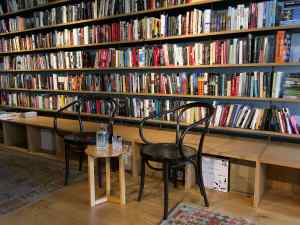
Muse bookshop

Muse bookshop (before an event)

So, what can local booksellers do? Well, mainly it must be to continue that age-old strategy of customer service. They can stock the books their readers want, “curate” their collections (with new release shelves, local author shelves, genre highlight shelves, and so on), and, as I’m seeing increasingly in my area, offer more author events and talks. While for some readers, the cheapest book is all that matters, for others of us (and perhaps we are the lucky ones who can afford it), the experience of browsing beautiful bookshelves and talking with the owner (or staff) is worth the extra few dollars the books might cost. It feels good to support a bricks-and-mortar shop.

Anyhow, Hollier says that the bottom line is for people to have the desire and time (oh yes) to read. This desire, he says,

rests most powerfully on the belief that what one knows and says matters; that democracy, its public sphere, and reason, evidence and logic are the driving forces of one’s society.

Oh boy, isn’t this true! In this sense, he concludes, we get “the books and bookshops we deserve”. If this is so, then it seems that readers are turning things around, are showing that it is real bookshops that we want. May the current apparently positive state-of-play continue and grow, eh?

Have you noticed changes in the bookshop landscape in your neck of the woods?

Min Jin Lee, Pachinko (#BookReview)

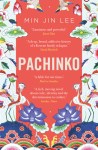
Min Jin Lee, PachinkoIf you are looking for a big, engrossing read that takes you into a little-known world, then I offer you Korean-American author Min Jin Lee’s Pachinko. It tells a story about the Korean diaspora in Japan over a period of 80 years, and was my reading group’s pick for August. There wasn’t a bored person in the room.

Interestingly though, several in the group had no idea what Pachinko was, so in case that’s the same for you, let’s get that out of the way first. It’s a sort of pinball-arcade game that is hugely popular in Japan. It’s a gambling game – a bit like our poker or slot machines – except that gambling is illegal in Japan so there is a complicated system of winning “prizes” which can be sold at a separate business for money! Pachinko parlours, which are highly visible in the entertainment districts of big cities, are dominated by Koreans – that is, their management and/or ownership is – which is where the title for Min Jin Lee’s book comes in.

Lee starts her novel in a small fishing village, Yeongdo in Busan, on the South Korean peninsula. It’s 1910, and a match is being made between Hoonie the cleft-palated, club-footed only son of a fisherman and his wife, and Yangjin, the 15-year-old daughter of a struggling family. A recipe for disaster you might expect, given the way historical sagas often go, except that Hoonie is a decent, loving man and Yangjin a hardworking, appreciative and loving young woman. They produce one daughter, Sunja, and it is her story – together with that of her family and friends – which forms the basis of Lee’s novel, until it closes in 1989.

The date 1910 was specifically chosen for the start of her novel because this is the year Japan annexed Korea, changing Koreans’ lives forever. With Koreans effectively belonging to Japan, many made the physical move there, believing their economic chances would be better, but most ended up in ghettos, living in poverty, and with minimal rights. Being Korean was, essentially, a passport to a second-class life, but they survived and this book chronicles their lives and spirit.

The first thing to say about Pachinko is that it’s a ripping read, covering four generations juggling life in a hostile land. We quickly become engaged in the lives of Sunja and her husband Isak as they move to Japan to live with his brother, Yoseb, and sister-in-law Kyunghee. Two children come, Isak is arrested (for preaching Christianity), and Sunja and Kyunghee join other Korean women selling kimchi and candy in an open market to help the family survive. Lee tells her story in straightforward, matter-of-fact language, with very few descriptive flourishes, which keeps the narrative moving without holding the reader up with extensive scene-setting. This description of Sunja’s second son, Mozasu, is a perfect example of Lee’s clear no-nonsense writing:

Mozasu had grown noticeably more attractive. He had his father’s purposeful gaze and welcoming smile. He liked to laugh, and this was one of the reasons why Goro liked the boy so much. Mozasu was enthusiastic, not prone to moodiness.

The rhythm is almost staccato at times, but never stilted. On occasion though, Lee will break out with something that is more evocative, and it can leave you breathless, such as this description of yakuza Hansu’s money-collector, Kim:

Hansu preferred Kim to do the collection because Kim was effective and unfailingly polite; he was the clean wrapper for a filthy deed.

The other interesting thing about Lee’s writing is that most of the big emotional events – marriages, births, and particularly deaths of which there are some awfully tragic ones – happen off-camera, and are reported to us in the same tone as the rest of the story. This is not the sort of storytelling you usually find in big family sagas, which love to squeeze out every emotional drop they can. I’d say this is because Lee’s goal is not to engage her readers in those sorts of emotions but to demonstrate the resilience and gutsiness of the people …

…. Because Koreans in Japan have had to be gutsy to survive in the face of being ostracised as aliens, of being treated as illiterate and filthy people, of being prevented from accessing higher level jobs. We, like the Koreans, are never allowed to forget their lack of status and, as a result, their reduced choices and opportunities.

It’s not surprising then that one of the themes is parents wanting education for their children, seeing that as a passport for a better future. Sunja’s son Noa wants to go to university, and later Noa’s brother Mozasu, himself not keen on schooling, sees education as a path out, preferably to America, for his son, Solomon. It’s not easy though. Korean children are bullied and ostracised at school, and are not encouraged to go to university. Only the dedicated make it through. The rest – like Mozasu – have to find work, which Mozasu does, luckily, albeit in a Pachinko Parlour. This, to his brother Noa’s disgust, becomes his career, but he becomes a wealthy man. Wealthy perhaps, but still Korean! He says to his friend Haruki:

In Seoul, people like me get called Japanese bastards, and in Japan, I’m just another dirty Korean no matter how much money I make or how nice I am.

And this brings me to my next theme, that of home. Lee provides three epigraphs in the novel, one for each of its parts, and the first one comes from Dickens: “Home is a name, a word, it is a strong one; stronger than magician ever spoke, or spirit answered to, in strongest conjuration”. It’s clear throughout the novel that our Koreans in Japan are homeless – reviled in Japan, they also no longer belong in Korea, particularly the succeeding generations that were born in Japan. As our omniscient narrator says at one point:

There was always talk of Koreans going back home, but in a way, all of them had lost the home in their minds for good.

And so, in this book, characters need to find their own sense of “home” which is, in most cases, family. It is in this context – and I think I can say this without spoiling anything – that we might understand Solomon’s decision at the end and Noa’s tragedy.

The third theme is perhaps the most obvious one, as it relates to the title, which clearly has metaphorical as well as literal readings. I’ll let Mozasu explain it:

Mozasu believed that life was like this game where the player could adjust the dials yet also expect the uncertainty of factors he couldn’t control. He understood why his customers wanted to play something that looked fixed but which also left room for randomness and hope.

However, here’s the thing. This is such a big, baggy monster that every reader is going to come up with different themes, different emphases. Lee herself, in an interview included with my edition, talks about her themes as “forgiveness, loss, desire, aspiration, failure, duty, and faith”. And, of course, all those are there too!

So, to sum up, Pachinko is a wonderful read about an engaging cast of characters. It provides a broad historical sweep of a region many of us could know more about, and it exposes the situation faced for a century or more by alien Koreans in Japan. It is also a book about human beings, one that never quite plays to type, that doesn’t opt for the easy marks. Instead, it is suffused with a clear-eyed humanity which encompasses the best and worst in people, and lets the reader make his or her own assessment. As I said, a thoroughly engrossing read.

Min Jin Lee
Pachinko
Head of Zeus, 2017
ISBN: 9781786691347 (e-Book)

Monday musings on Australian literature: Reading indigenous literature

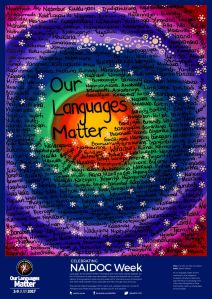
2017 National NAIDOC Poster (used under Creative Commons licence, CC BY-NC-N4 4.0)

Each July, as well as contributing at least one review to Lisa’s ANZLitLovers Indigenous Literature Week, I try to write a Monday Musings post related in some way to NAIDOC week which, as Aussies will know, is a week, usually the first full week in July, during which activities are planned to “to celebrate the history, culture and achievements of Aboriginal and Torres Strait Islander peoples”. Each year there is a theme, and this year it’s a good one, Our languages matter.

I have for as long as I can remember – since high school anyhow – been interested in social justice and civil rights (as we called it in the 1960s & 1970s). I read a lot back then about indigenous Australians and African-Americans in particular, such books as Douglas Lockwood’s I, the Aboriginal and Katharine Susannah Prichard’s Coonardoo. These books helped fire my feelings about injustice: they showed me some of the impacts of the inequities stemming from racism and of course they touched my emotions.

However, the only indigenous Australian writer I remember reading was Kath Walker as she was known then (or Oodgeroo Noonuccal as she became), until I read Sally Morgan’s My place in 1988. These writers started to help me see and feel, under the skin, the experience of being indigenous in Australia.

Now, if you keep up with discussions about the value of reading, you are sure to have read the various arguments for, or theories about, how reading can improve empathy. There was a Scientific American article in 2013 which reported that “Researchers [Emanuele Castano, a social psychologist, and PhD candidate David Kidd] in New York City have found evidence that literary fiction improves a reader’s capacity to understand what others are thinking and feeling.” Another article in The Washington Post in 2016 reported on cognitive psychologist Robert Oatley’s research of over a decade and his conclusion “that engaging with stories about other people can improve empathy and theory of mind”, resulting in improved “social ability”.

There are the naysayers to these arguments, of course, and I don’t know if reading fiction has increased my ability to empathise or not, but I can’t help agreeing with novelist Joyce Carol Oates’ statement that “Reading is the sole means by which we slip, involuntarily, often helplessly, into another’s skin.” “Sole” may be pushing it too far, but otherwise here’s my experience … and I fear I’m a bit clumsy in putting it but hope it makes sense!

I have become aware in recent years that my understanding and awareness of indigenous lives has deepened beyond the intellect and simple empathy, to a level of “knowing”.  In other words, I knew about – and could empathise with – the sense of loss, anger, disempowerment that those earlier, mostly non-indigenous writers described, but now that empathy is increasingly underpinned by knowledge of how dispossession plays out. I can never know what such historic dispossession does to a person’s psyche from personal experience but reading writers like Kim Scott, Alexis Wright, Jeanine Leane, Marie Munkara and many others, has given me the next best thing.

To labour it a little more: because I “know” my white anglo culture, I can can more quickly understand the context for a story about a gay man or an abused wife even though I’m neither of these. The leap to real empathy, which I’m arguing requires a thorough understanding of the underlying culture, is not a big one when people come from my own world. When they don’t, I can empathise at a human level – at the level any of us can when we see someone else in pain, struggling, angry, triumphant, and so on – but I sense that it’s a shallow empathy that doesn’t comprehend the forces behind that pain (etc). How do you get to comprehend those forces?

Well, Jeanine Leane, as I wrote in a recent post, says you need to immerse yourself in the “other’s” culture, in her case, indigenous Australian culture. For most of us, however, this is very difficult, if not impossible, but Leane argues that reading indigenous literature, that is writings by indigenous people about indigenous people’s lives, is a way in which we can engage with the culture. In her book, Position doubtful, which I reviewed recently, Mahood talks about the moments she waits for when, in a sense, a lightbulb turns on, when she experiences “a cognitive shift”. It’s that cognitive shift that I feel happening as I read more and more indigenous authors (of both fiction and non-fiction, particularly memoirs). It manifests in the fact that I don’t have to recalibrate my bearings so much when I open a book by an indigenous author. Certain things are givens – such as the original dispossession, the stolen generations, relationship to country. I don’t have to work to understand these, as I read, they’re there.

I hope this doesn’t repeat too much what I’ve written before, and I hope that it doesn’t sound arrogant, because it’s not meant to. I certainly know that I have much more to learn and understand. However, while I read and listen to commentaries in papers, on television, via the radio, it is through the indigenous writers I’ve read that what once felt more like information is now becoming a truth. I think that’s a powerful thing – and is why I’d argue that more Australians need to read more indigenous authors.

Monday musings on Australian literature: Changing literary tastes (2)

My last Monday Musings post was on Changing literary tastes from the 1920s to 1940s, using newspaper articles I’d found in the National Library of Australia’s Trove. Today’s post draws on just one article from the 1950s. I’m choosing just one because it, unusually in my experience, has a by-line – for a person worth introducing – and because the article is so delightful.

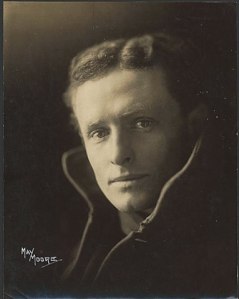
Leon Gellert, 1920s, by May Moore (Presumed public domain, nla.gov.au/nla.pic-an11253492, via Wikipedia)

So, the by-line. It is Leon Gellert (1892-1977), but I can’t resist telling you that when I first heard his name all I could think of was a tragic epic poem I read as a child about the dog Gelert (sometimes Gellert). Being a dog lover, that tale of a faithful dog has dogged me (sorry!) so powerfully ever since that whenever I heard the name Leon Gellert I couldn’t get past the dog – until now.

Why now? Because the article I found in Trove titled “The decline of the bookcase” was so entertaining that I decided to shake off my childish memory and check the man out. I found him in the Australian Dictionary of Biography (ADB). Biographer Gavin Souter describes him as “soldier, poet and journalist”. Gellert was born in South Australia, and taught briefly before he enlisted with the AIF. He ended up at Gallipoli on 25 April 1915, was injured, and repatriated home in 1916 after which he returned to teaching. He wrote poetry during and after the war. Souter describes him as “Australia’s closest approximation to a Brooke or Sassoon”. His short, powerful poem, “The jester in the trench”, appears in Jamie Grant’s 100 Australian poems you need to know.

According to Souter his early promise was not sustained and he turned to journalism. In 1942 he became The Sydney Morning Herald‘s literary editor “and wrote a graceful column, ‘Something Personal’, for the Saturday book pages”. The article I found is one of these, so let’s look at it.

Published on 16 June 1951, it captured my attention because it starts off talking about bookcases, and what reader isn’t interested in them! He starts

RECENTLY I roamed the city in search of some ready-made bookshelves. It was an almost fruitless search. The few that came within the bounds of my requirements were pitifully stunted little things obviously designed by craftsmen who had never read a book in their lives. The top-most compartment reached no higher than a man’s waist and the lowest could be approached only by crawling on all fours.

I was confident I would enjoy reading this. He then talks about

glass-fronted book-cupboards; ungainly remnants from late Victorian days now raised to the peerage with the dubious rank of “antique.” These, doubtless, once held their stern leather-bound arrays of Scott and Thackeray and Carlyle, close-corseted in the gloom against casual and curious hands. But they were too prohibitive in price for my pocket and too full of shadows for my purpose. There is so much unlatching and probing to be undertaken that the extraction of a volume is like an obstetrical operation.

Hmm, we Gums rather like glass-fronted bookcases because of the dust factor – but we only have a couple (recently inherited), and he is right about the “unlatching and probing”. He continues in a similarly entertaining vein, pronouncing his preference for bookcases “of open countenance that smile their invitation across the whole length of a room.” This is the type we mostly have – floor to (nearly) ceiling, most double-stacked. Very convenient, but pretty dusty too! What are your favourite types of bookcases?

He progresses from describing various bookcases to discussing their dearth in contemporary homes. He says where once they had a place in every small home, now they are viewed with suspicion:

How often have I admitted a guest to hear him exclaim, with a tincture of mistrust, as he crossed the threshold for the first time, “Ah, I see you are a reader,” and that mark you, with no more evidence to guide him than a meagre rack of books in what is referred to with sweeping hyperbole, as the entrance hall!

Hands up if, like Gellert and us, your first of many bookcases is in your entrance “hall”.

And then he gets on to WHAT people are reading …

He says that in the past people all read the same sort of material – a wide mix encompassing the likes of Henry James, H. G. Wells, Thomas Hardy, Eden Phillpots and Stanley Weyman (who was also known, says Wikipedia, as “the Prince of Romance”). “Those beyond the pale”, he writes, “read Mr. Garvice“. I had to look him up too! He was a very popular writer of romance in the early twentieth century.

However, now, he says, readers are dividing into two groups, “those who read, let us say, Virginia Woolf, E. M. Forster, Graham Greene and Joyce Cary, and the vast mass who read what I believe are called ‘Westerners’.” What’s more, he suggests, these groups are contemptuous of each other. This is interesting. Is he right that this divide, one that still largely exists today, only started around the 1950s?

Anyhow, then, having mentioned “westerners”, which, according to the writers in my first post, were their way out, he moves on to detective novels. He wonders if they are the cause of the impermanence he’s identified. The detective fiction craze has been going for forty years he says. When will it stop? One of their attractions, he thinks, is that they are a game that can be played in private, like patience, and they have “something in common with the crossword puzzle”. He quite likes detective novels himself, but is concerned that, having lasted more than thirty years – his marker for “the most obstinate vogue in history” –  detective fiction will “establish itself as a durable department of literature.”

He trots out, too, a concern about what it means to love detective fiction. We deride melodrama, he says, but “the most outrageous complexity of treachery, murder, torture and rape is regarded, by the intellectual and the illiterate, as legitimate fun”. Is it really the harmless game people think, he asks? He then tells us that detective fiction is popular with world leaders. Hitler loved them, as do “the most distinguished statesmen in the English-speaking” world and “the most scholarly writers and the most immaculate ministers of religion”. They all “squander countless hours in company with M. Poirot and Lord Peter Wimsy”. And yet, he says, when people worry about child delinquency, it’s cinema and radio they blame!

He concludes by wondering whether the time could come when detective fiction is banned. He doesn’t really want to see that, but at least it could “help to reestablish our pride in the permanent companionship of good books”.

We now know that detective fiction has indeed become “a durable department of literature”, but I’d argue that we have also reestablished our “pride in the permanent companionship of good books” (if he was right that it had been lost). Putting aside for a moment economic issues, the interesting question here is how important to literary culture is “the permanent companionship of good books” – meaning ownership and storage in personal bookcases – versus the fact that people are reading (as he says people were in his time).

Monday musings on Australian literature: Reading the reader (Survey)

Late last month, the Australia Council of the Arts released the results of a survey they conducted with Macquarie University. It is, the introduction to their final summary says, “the third stage of a major study of Australia’s changing book industry, by the Australian Research Council and Macquarie University.” The project, according to the Macquarie University website aimed to investigate:

  1. Authors and their responses to changing circumstances;
  2. Book publishers and the ways in which they contribute economic, social and cultural value; and
  3. Practices of contemporary book readers.

They say they are looking into extending the research into other parts of the “Australian book industry”. Today, I’m going to focus on the readers, which is the only part in which the Australia Council was apparently involved but, having discovered the whole project, I just might delve a little more into it in future posts.

The summary document’s subtitle is “A survey of Australian reading habits”. What ho! I wish they’d asked me!

So, who did they study?

There were three parts of the research:

  • A series of focus groups: with Year 8 students at Ryde Secondary College, and with different groups at Parramatta Library (both book clubs that meet at the library and the general public)
  • An online survey of Australians aged 14 years and over undertaken by Roy Morgan Research in October 2016. The final sample of 2,944 was, they say, “nationally representative in terms of age, gender, geographic location, income and ethnicity”.
  • A seminar with masters degree students at Macquarie University.
Their research found, overall, “a strong culture of books and reading in Australia”. It appears that “although developments in digital technology have radically changed many daily habits and pastimes, reading books is one of the nation’s favourite leisure activities, ahead of browsing the internet and watching television.” How fascinating. I’m a little surprised, but pleased. They did say their sample was nationally representative, but would an online survey of just under 3,000 people really catch a representative sample of all Australians? I admit to a little scepticism (is that fair?) but still, the findings are interesting.

Overall, they found that

Australians:
  • value and enjoy reading, and would like to do more of it. Apparently we spend more TIME “browsing the internet and watching television” but are more likely to rank reading books as our favourite leisure activity over these activities. The most common reason we read for pleasure is “to relax and release stress”. This probably explains what we most like to read – see a couple of points below!
  • mix up digital forms with more traditional ways of reading. The majority of us apparently still read print, but over half of us mix this with e-reading, and 12% use audiobooks.
  • read more books than book sales suggest, which is not surprising, I would have thought, given the use of libraries, lending between friends etc (and this is what they found). When we buy books, the major chains are our main source, followed by online bookstores, and then secondhand shops with independent local bookshops a close fourth.
  • like crime/ thrillers/mysteries best! I am fascinated, really, that these “relax” people, but I know this is so (and not just from the survey). The main reason I read is not “to relax and release stress”, and “thrillers and mysteries” are not my favourite reads, so I’m out of step here. You can probably guess the most popular non-fiction category? Yes, autobiography/biography/memoir. Interestingly, the survey found that “around half (51%) of all Australians (including those who are currently non-book readers) are interested in reading the types of books that may be eligible for literary prizes such as the Man Booker and the Miles Franklin and 45% enjoy literary classics. A similar number (48%) are interested in literary fiction by Australian writers past and present.” What they say, and what they do, though, seems a little different.
  • value Australian books and the Australian book industry. I’ll just quote the first paragraph here which is that “The majority of Australians (65%) like to read fiction by Australian authors and 59% like to read non-fiction by Australians. Readers aged 50 and over are the most likely to consciously choose Australian-authored books, while younger readers tend to like Australian books without thinking about the nationality of the author. There is a strong level of interest (42%) in books and writing about Indigenous Australia.”

The report goes on to provide breakdowns of the numbers, including these points regarding interest in reading Australian writers, Australian literary fiction and indigenous writers. There tended to be some gap, in these areas, in terms of people’s interest and what they are actually reading. The report also notes that the most frequent readers – and this is no surprise – are female, over 30 years old and tertiary-educated.

You can read all the detail at the report I’ve linked to above, and that report provides a link to the more academic data provided by Macquarie University. I didn’t go there, I’m afraid. Life is a bit too busy.

Playing with the data

I did, though, have a play with the fun interactive dashboard of the data, which enables users to interrogate the data a little via various parameters. For example:
  • 10% of all readers (all genders and ages) who use online sources to find out about books, use book blogs/bloggers. But if you change the parameters to Frequent Readers who are Female and aged 30-39, then 19% use book blogs/bloggers, while only 7% of Frequent Female Readers who are 60-69 do. Funnily (!), Occasional Male readers aged 14-19 seem not to have ever heard of book blogs/bloggers, whereas their Female counterparts have! Overall, book blogs/bloggers are fourth in terms of online sources of information after online booksellers, Facebook and GoodReads. Other sources include online literary journals, Instagram, Twitter and YouTube. It’s really interesting to see the difference here between different permutations of readers.
  • Regarding physical sources, only 5% of all readers (all genders and ages) obtain information from face-to-face bookclubs, but change that to Frequent Readers who are Female, and the percentage jumps to 10%. The most popular physical source is “word of mouth”, at 60% plus for most of the possible permutations.
  • 42% of All Australians (all genders and ages) agree that “books and writing about indigenous Australians are of interest to me“, but if you change the parameters to Frequent Readers who are Female and All ages, the percentage jumps to 56%. Further refine that to Female Frequent Readers who are 60-69 and it jumps a bit more to 60%. By contrast, the percentage for Male Frequent Readers in the same age group (60-69) is just 45%.

Help Books Clker.com

(Courtesy OCAL, via clker.com)

There’s a whole lot of fun to be had exploring the factors people consider when choosing books to read – such as topic/subject/setting/style, or liking the author, or reader reviews, or the cover. There are eighteen reasons, and they can be explored by the same permutations – Frequent, Occasional or All readers; Female/Male or All genders; and age breakdowns or All ages. Interestingly, in all the permutations I checked, Reader Reviews ranked higher than Professional Reviews. Hmm … how much of that is due to the dearth of professional reviews available these days. The top reason though, that people base their choice on what to read, is “topic, subject, setting or style”.

The interesting thing, now, is to see what, if anything, is done with this research. For example, if people are interested in reading Australian writers or indigenous writers, but don’t, why is that? Is it that there’s not enough specific promotion of these books in the places most people go to? Or?

Any comments?

Ian McEwan, Nutshell (#bookreview)

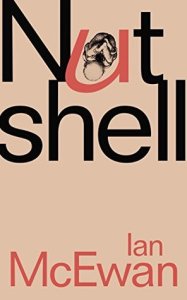
Ian McEwan, NutshellLike Carmel Bird’s Family skeleton, which I reviewed recently, Ian McEwan’s Nutshell has a narrator who won’t appeal to those who don’t like devices like skeletons in cupboards or babies in wombs. However, repeating what I said in my review of Bird’s book, it all depends on the writer’s skill, and McEwan, like Bird, is a skilful writer. Consequently, when the novel opened with “So here I am, upside down in a woman. Arms patiently crossed, waiting, waiting, waiting and wondering who I’m in, what I’m in for”, I relegated my disbelief to the pillion and set off for the ride.

As you’ll have guessed from that opening quote (if you didn’t already know), our narrator is a foetus. In my experience, McEwan writes strong, attention-grabbing first chapters, and Nutshell delivers here too. Our foetus-narrator, close to being born, is forced to be party to, or at least cognisant of, a plot concocted by his mother, Trudy, and uncle, Claude, to kill his father. Ring any bells? Yes, he (and it is a “he”) is a Hamlet in the wings. This is a clever modern riff on Hamlet, exploring many of the same issues, such as revenge, action versus inaction, corruption. It’s also a commentary on what we could grandly call the modern condition – on our world which is “too complicated and dangerous for our quarrelsome natures to manage”.

SORT OF SPOILER (so miss this paragraph if you wish)

If you know your Hamlet what I say next won’t be a spoiler, and if you don’t know your Hamlet, the part I’m giving away happens slap-bang in the middle of the book, hence is not, I’d suggest, a spoiler? So, with that fair warning, here goes. Nutshell is a tight, murder-mystery. For the first half of the book, the question is “will they do it?”, while in the second half, it’s “will they get away with it?” We are privy to most of the plotting and planning because our foetus goes, of course, wherever his mother does. However, this is as much an ideas-driven book as a plot-driven one so, I’m going to move onto some of the ideas the novel teases out.

McEwan is clear about what he sees as the “rotten state” (one of the many allusions in the novel to Hamlet) the world is in. There are references to world powers out of control. Europe  is “in existential crisis, fractious and weak”, while China, “too big for friends or counsel” is “cynically probing its neighbours’ shores”. “Muslim-majority countries” are “plagued by religious puritanism” and “foe-of-convenience” America, now “barely the hope of the world” is “guilty of torture”. There’s also the nuclear threat, climate change “driving millions from their homes”, the “urinous tsunami of the burgeoning old”, and our increasing loss of liberty in the service of security. For our foetus, though,

Pessimism is too easy, even delicious, the badge and plume of intellectuals everywhere. It absolves the thinking classes of solutions. We excite ourselves with dark thoughts in plays, poems, novels, movies. And now in commentaries. Why trust this account when humanity has never been so rich, so healthy, so long-lived.

It’s an attitude I like – and is what makes Nutshell not the bleak book it could be.

How does McEwan get away with all this?

The book, though, is not without its awkwardness. Sometimes the “rants” are a little too much, providing a virtual grab-bag of the world’s ills, from the loss of the Enlightenment’s rationality to the threat of North Korea. And sometimes our foetus-narrator is a little too knowing. Most of the time, McEwan makes clear why his narrator knows what he knows, including the limits to his knowledge, but sometimes our imaginations are stretched just a little too far. This is a very-knowing, very smart, highly articulate foetus, one who is not above giving his mother a kick:

In the middle of a long, quiet night I might give my mother a sharp kick. She’ll wake, become insomniac, reach for the radio. Cruel sport, I know, but we are better informed by the morning.

It is his “one morsel of agency” (and he uses it, giving, perhaps, Hamlet a lesson!) It is through these radio talks that our foetus learns most of what he knows about the world. Overall, McEwan maintained the conceit well, and I enjoyed the foetus-narrator’s view on the world he expects soon to join. Fortunately, my disbelief stayed on the pillion!

Besides this, the book is fun to read. There are allusions galore – not only to Hamlet but to a wide range of literary works. I would have missed many but I enjoyed spotting others, such as Jane Austen’s “two inches of ivory”, Julian Barnes’ “sense of an ending” and of course Hamlet’s “rotten state” and “a piece of work”. There is probably a bit of McEwan showing off here – flexing his literary credentials – but spotting allusions gave me little fillips of pleasure! There are also many funny scenes, including several involving descriptions of the lovemaking of the adulterous schemers:

I brace myself against the uterine walls. This turbulence would shake the wings off a Boeing. My mother goads her lover, whips him on with her fairground shrieks. Wall of Death! On each occasion, on every piston stroke, I dread that he’ll break through and shaft my soft-boned skull and seed my thoughts with his essence, with the teeming cream of his banality.

The question of course has to be asked: why choose such a narrator? I’m sure there’s more than one answer to this question. I have no idea what McEwan has said so I could be way off here, but early on our narrator describes himself as “an innocent”, “a free spirit”, a “blank slate”, albeit becoming less blank by the day. Is he the perfect naive (but certainly not unreliable) narrator, able to comment, “unburdened by allegiances and obligations” on the murky world, or is McEwan suggesting there’s no such thing as innocence? Or, is his function to answer that question of whether we should bring children into the world. In the end, I think that McEwan’s message – or one of them anyhow – is that the world is worth hanging around for. It is “Beautiful. Loving. Murderous”, like Trudy, and our foetus wants to live it, hoping he will find meaning. An engaging read.

Ian McEwan
Nutshell
London: Vintage, 2016
ISBN: 9781473547131 (ePub)

(A reading group read)

AS Patrić, Black rock white city (Review)

AS Patric, Black rock white cityWith that extended conflict known as the Yugoslav Wars (1991-2001) now over for more than a decade, we are starting to see books written about them. I’ve reviewed two on this blog to date, Aminatta Forna’s novel The hired man (2013) (my review) on the Croatian War of Independence, and Olivera Simić’s memoir Surviving peace (2014) (my review) on the Bosnian War. AS Patrić’s Miles Franklin Award winning novel, Black rock white city, (2016), which also draws from the Bosnian War, now makes three.

Like The hired man, Black rock white city explores the aftermath of war, but unlike Forna’s book, which is set within the war-torn country, Patrić’s book is set in Australia, and tells of refugees, Jovan and his wife Suzana. The novel starts about four years after their arrival and, although both were academics in Sarajevo, they, like so many refugees, work in their new country as cleaners and carers. It soon becomes clear that they have not recovered from their war experience. Gradually, over the course of the book, Patrić reveals the horrors of their experience. We learn that, like so many who suddenly find their country at war, they had to face that awful question, “should I stay or should I go”. As it turned out, they stayed too long, and Jovan feels he failed his wife by not going early. When we meet them, their relationship is stressed, and they seem unable to provide each other the love and emotional support they so badly need. It’s excruciating to read, because it’s so real, so believable.

I found this book particularly enlightening because I worked with a woman who was damaged by this war. Like Patrić’s two protagonists, she was Bosnian Serb, but unlike them she left early. However, the impact on her of this forced loss of her country, her culture, was immense.

But, I digress … back to the book. It opens with hospital cleaner Jovan cleaning graffiti in an examination room. We soon discover that the hospital is experiencing a bout of graffiti-writing, and that Jovan is the graffiti cleaning expert. No-one knows who is creating the graffiti, which becomes increasingly bizarre. It appears on all sorts of surfaces (such as a corpse’s back, a menu blackboard, the optometrists’ charts) and comprises a variety of seemingly random, though often pointed, words and phrases (such as “The/Trojan/Flea”, “Obliteration”, “Dog Eat Dog” and “Masters of Destiny Victims of Fate”), which Jovan starts to read as messages to him. The graffiti artist is dubbed Dr Graffito. This storyline gives the book the patina of a mystery or even, perhaps, a thriller.

However, while the graffiti provides a plot-line for the novel, the main narrative concerns Jovan and Suzana, their relationship with each other and with other people, including a lover (for Jovan, because Suzana, in her pain, has withdrawn sex), work colleagues, friends and neighbours. Underpinning this narrative is the ongoing trauma of war. Jovan, for example, is frequently dogged by “the black crow”. He “feels as though he uses a rail for a pillow – always listening to the vague rumblings of oncoming annihilation”. Once, Suzana remembers, he could

turn almost anything over to a new perspective, see something deeper, redeeming, more beautiful even if painful. It was what made him such a superb poet back in Yugoslavia … He doesn’t write anymore and it’s as though he never did.

There is poetry in his head though – including a mantra that gets him through his days: “Maroochydore and Mooloolaba, Noosa and Coolum”. Language – the loss of his own, his inability (or is it refusal?) to speak proper English, not to mention the disturbing graffiti – functions as a metaphor for his sense of displacement.

Meanwhile, Suzana, notes Jovan,

is spending more of her time scribbling into her notebooks. The only place safe for her in the time since Bosnia, was somewhere buried underground. Coming to the surface isn’t going to be easy.

Patrić crafts the story skilfully. It’s a debut novel, but Patrić has published two short story collections and is a teacher of creative writing. It shows. The story is told third person, initially from Jovan’s perspective, but later Suzana’s is alternated with his, which fleshes out our understanding of Suzana, while keeping the perspective tightly focused on their experience. The plot unfolds stealthily, as we shift between two questions: will the graffiti artist be discovered, and can Jovan and Suzana pull through? By the end, the strands come together – so cleverly, so shockingly. And then there’s the sure, controlled writing. The pacing, the wordplay and touches of humour, the imagery, the dialogue, and the changing rhythms, make it delicious to read, even while the content confronts and distresses.

Late in the novel, Suzana suggests to Jovan that Dr Graffito is “putting his pain into someone else”, and that seeing his “madness in someone else might make it feel more bearable”. I don’t want to spoil the novel, but Suzana seems to be right, until the end where Dr Graffito’s actions force a confrontation that bring it all to a head.

What is Patrić’s motive for writing this? Early in the novel, Jovan finds one of the many notes Suzana loves to leave around, a quote from her favourite author, Nobel-prize winner, Ivo Andrić:

You should not be afraid of human beings. I am not, only of what is inhuman in them.

Jovan, on the other hand, says that “so much of what happens, shouldn’t happen”. These two ideas form the crux of the book. We have a cast of human beings, who are all real, all flawed in some way. They muddle on, some better than others, some needing a bit of “moral flossing”, some a bit of “ethical cleansing” (and what a clever wordplay that is, keeping war’s horrors close to our minds.) We see what happens, during and after war, when people let hate get the better of themselves and release the “inhuman” within, thereby wreaking what “shouldn’t happen” on others. This is a big book, for all its mere 250 pages, because it tackles the fundamental question of how are we imperfect humans to live alongside each other.

Fiction, Suzana says, is writing for the soul. If that is so, Black rock white city is one soul-full book – and a worthy winner of the Miles Franklin.

Lisa (ANZLitLovers) was also impressed by this book, as was Bill (the Australian Legend).

AS Patrić,
Black rock white city
Melbourne: Transit Lounge, 2015
248pp.
ISBN: 9781921924835

Madelaine Dickie, Troppo (Review)

Madelaine Dickie, Troppo“Write what you know” is the advice commonly given to writers, and this is exactly what Madelaine Dickie has done in her debut novel, Troppo, which won the City of Fremantle TAG Hungerford Award. For readers, on the other hand, the opposite could be true, as in “read what you don’t know.” This is certainly what I’ve done by reading Dickie’s novel because I’ve barely travelled in southeast Asia, where the novel is set, and all I know about that risky business of surfing, which frames the novel, comes from Tim Winton’s Breath (my review).

So, where to start? Well, to begin with, it’s a while since I’ve read what I might call a “youth culture” novel. I’ve read novels by young authors, such as Hannah Kent’s Burial rites (my review), Brooke Davis’ Lost & found (my review) and Tara June Winch’s Swallow the air (my review), but these novels have different drivers. One is historical fiction, one was inspired by grief over a mother’s death, and the other explores indigenous identity issues. The closest to Troppo that I can recollect reading is Andrew O’Connor’s The Australian/Vogel Award-winning Tuvalu, about a young Australian teaching English in Japan, but I read that long before blogging.

I say all this to give Troppo a context – a sort of sub-genre, if you will – of young writers writing about a young person’s experience of the world, an experience that is post-coming-of-age but encompasses a degree of uncertainty about one’s place. I don’t intend this to mean, though, that the novel is autobiographical. While it obviously draws on Dickie’s knowledge of southeast Asia and surfing, for example, I wouldn’t presume to say protagonist Penny is she. Indeed, in an interview on the publisher’s website, Dickie says that:

Some of the anecdotes are almost true, certainly stemming from my own experiences as a traveller and surfer … The texture of Troppo is also very true, the intoxicating smell of kretek cigarettes, the nights bleary on Bintang beer, and the way the call to prayer from the mosques drift down through mountain valleys.

Further, “the characters are entirely fictional”, she says, as is the setting, Batu Batur.

But now, preamble done, let’s get to the book. Set in southwest coastal Sumatra, it starts a couple of months after the bombing of the Australian Embassy in Jakarta in September 2004 and ends just after the tsunami hit Aceh on 26 December 2004. Penny, around 22 years old, had lived in Indonesia as a teen, but is returning to have “a break” from her significantly older boyfriend Josh. She has lined up a job on a surfing resort run by expat Shane, but arrives early to have a holiday. That’s the set up. The novel then explores the personal and political relationships that develop (or pre-exist) between the locals and the expat community, and within the expat community itself, in a tense situation where corruption and bullying is rife, and fundamentalist Islam is on the rise, threatening a culture that has traditionally accommodated different values and beliefs.

Troppo is a good read that gets you in quickly. Its fresh, lively but also reflective, first-person voice is engaging, and the various supporting characters are well-drawn. They include Ibu Ayu, the manager of the tourist bungalows where Penny stays in the beginning; young Cahyati, her niece; Penny’s soon-to-be-boss, Shane; and the “hot” but somewhat mysterious expat Matt. We soon sense mystery, with the locals not liking Shane, and the expats suggesting he won’t be around much longer. There’s a thriller element to the novel, but it’s not “just” thriller.

The novel’s over-riding concern is Penny’s uncertainty about her life. She’s not sure, exactly, why she’s fled Josh (except that his routine stultifies her), or why she’s “always jerked along by whim and the conviction there’s something better just ahead”. And yet, we readers know why, just as Belle in Disney’s (original and recently remade) Beauty and the Beast does!

I want much more than this provincial life,
I want adventure in the great wide somewhere.
(lyrics by Howard Ashman)

It’s not our culture (Matt)

In addition to the personal, however, the novel also explores social and political themes. One concerns tourists and cultural differences, expats and First World guilt. Penny sees “men whose bodies are halved over new rice” and “old women buckled under bundles of sticks” while she and friends are “off to surf, off to play and play and play, for months if we want.” It’s two-edged of course: the tourists bring money but their lives can inspire resentment.

Another theme concerns changing politics in Indonesia. When asked in the interview (linked above) about the novel’s timing, Dickie responded that:

Troppo is set two years after the Bali bombings, a year after the bombing outside the JW Marriott Hotel, and two months after the bombing of the Australian embassy in Jakarta. This context is important for Troppo, as some of the themes explored are the rise of fundamental Islam and the coexistence of Islam and traditional beliefs. … I was also aware of the two dimensional depictions of Islam in the media, and wanted to create rounded characters and discussions based on some of the stickier topics I liked to discuss with my Muslim friends. Has the relationship changed? Of course, things are always in a state of flux. However, our news media is now less concerned with Jemaah Islamiyah, and more concerned with the rise of Islamic State, which no one had heard of ten years ago. So the shape of fundamental Islam has also changed.

This theme pervades the novel through a growing sense of menace, not only against the corrupt expat, Shane, but against the “bule” (foreigner) in general. Moreover, Marika, a young New Zealander who runs an internet cafe, tells Penny that “the vibe has changed”, Matt tells her “there are bigger issues at play”, and locals in a bar tell her of imams “only wanting mosques, not churches”. Dickie handles this well. Suspense builds slowly – in fits and starts – and the plotting is sure. The crisis, when it comes, is swift but believable because the groundwork has been done.

Overall, in fact, Dickie proves to be a skilled writer. The novel feels tight and honed. Sometimes first-time novelists can overdo imagery, but Dickie keeps it under control, mixing up evocative descriptions with dialogue and action. It’s the lovely little descriptions that pop out of nowhere which delight the most, like this of a middle-aged expat’s hands being “like sea-creatures that have been left out on the sand. Dried out and peppered with sunspots”. Or this, “The night is young. The mozzie coil has only just begun its inward inch.”

Dickie also handles well that challenge of writing a story about a place whose language is different from her own. Her strategy is to sometimes translate Indonesian words and phrases, but other times to let the context make it clear. This can be an effective approach, and Dickie makes it work, using enough local language to convey place, but not enough to stall our reading.

Partway through the book, Penny says that “Risk always makes things sharper, throws into contrast the highs and lows, gives clarity”. Troppo, in the end, is about this. Yes, it comments on tourist and expat life, and yes, it exposes the beginnings of a dark political underbelly in the region, but the main point, really, is the personal. Penny recognises by the end that she is “living, by choice, on a fault line”. She finds living in “extreme places, among extreme people”, “intoxicating”. The challenge, I’d say, is how to live such a life authentically and respectfully. I’d love to see Dickie explore this theme further.

aww2017 badge

Madelaine Dickie
Troppo
Fremantle: Fremantle Press, 2016
263pp.
ISBN: 9781925163803

DISCLOSURE: I have not met Madelaine Dickie, but her fiancé is the son of one of the founding members of my bookgroup (not to mention of my now long-past playgroup and babysitting groups).