Rabih Alameddine, An unnecessary woman (#BookReview)

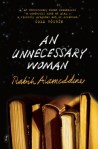
Rabih Alameddine, An unnecessary womanLebanese-born American writer Rabih Alameddine’s novel, An unnecessary woman, is tailor-made for readers. It was fittingly, therefore, my reading group’s first book for 2018. The novel is told first person in the voice of 72-year-old childless, divorced Aaliya Saleh, who lives alone and spends her time reading and translating books. Set in an apartment in Beirut in the 2000s, it has a minimal plot, focusing more on the thoughts and ideas of this reclusive woman who describes herself as her “family’s appendix, its unnecessary appendage”.

However, before I tell you more about the subject-matter and why I so enjoyed this book, a little warning. This is the quintessential literary novel. It is packed with literary references and allusions, not to mention references to musicians and artists. One of Aaliya’s favourite authors is the also-reclusive “connoisseur of alienation”, Portuguese poet Fernando Pessoa, and he appears regularly, but she also mentions, in no particular order, WG Sebald, Fyodor Dostoevsky, Patrick White (whom she adores), Helen Garner, Marguerite Youcenar, JM Coetzee, António Lobo Antunes, Ernest Hemingway, Albert Camus, Shakespeare, and many, many, many more. While I know the authors I’ve named here, I certainly don’t know all those she mentions – but it doesn’t matter. Well, it might, in that more knowledge might add all sorts of nuances to the book’s meaning, but all I can say is that I enjoyed it with what I do know.

But now the subject-matter. Where to start? The book covers a lot of ground. It’s about living in a war-torn city and country; it’s about relationships, gender and women’s lives in a patriarchal society in which her “half brothers, like so many men and boys, have the impatience of the entitled”; it’s about aloneness and loneliness; and, best of all, it’s about books and reading. It’s this last one I want to focus on, partly because it’s the one that gave me the most chuckles.

These chuckles aren’t of the belly-laugh variety. They’re more subtle, coming particularly from allusions and irony. Take for example this comment, a bit over halfway through the book:

Most of the books published these days consist of a series of whines followed by an epiphany. I call these memoirs and confessional novels happy tragedies. We shall overcome and all that. I find them sentimental and boring.

This comment made me laugh because her story is, essentially, “a series of whines followed by an epiphany”, for all her dislike of epiphanies. “Enough”, she says, “have pity on readers who reach the end of real-life conflict in confusion and don’t experience a false sense of temporary enlightenment”. This book is, you might be seeing now, also about the intersection between reading and life. To what extent do they inform each other?

Another of her dislikes, in life and in literature, is the idea of “causality”. Alain Robbe-Grillet, she says, “wrote that the worst thing to happen to the novel was the arrival of psychology”, meaning, she believes, “that now we all expect to understand the motivation behind each character’s actions, as if that’s possible, as if life works that way”. So literature, in other words, needs to reflect life. She writes:

I’ve read so many recent novels, particularly those published in the Anglo world, that are dull and trite because I’m always supposed to infer causality. For example, the reason a protagonist can’t experience love is that she was physically abused, or the hero constantly searches for validation because his father paid little attention to him as a child. This, of course, ignores the fact that many others have experienced the same things but do not behave in the same manner, though that’s a minor point compared to the real loss in fulfilling the desire for explanation: the loss of mystery. Causation extraction makes Jack a dull reader.

Interesting point, this “loss of mystery”, this sense that life cannot be so easily explained. She gives an example from “life” of a woman killed, during the civil war, while driving home from work. People proposed all sorts of reasons why it happened. She was a spy, or was a bank courier carrying a large amount of money, or was wearing a flashy diamond, whereas in fact she was just unlucky. “A stray bullet killed her”.

For Aaliyah there is something fundamentally wrong with this cause-focused approach to reading, and to living. She writes:

If you read these pages and think I’m the way I am because I lived through a civil war, you can’t feel my pain. If you believe you’re not like me because one woman, and only one, Hannah, chose to be my friend, then you’re unable to empathize.

This idea that finding causes for what happens to others enables us to distance ourselves from responsibility and to feel safe, has, says Aaliya, been explored by philosophers, such as the “ponderous and portentous” Sartre! Aaliyah, you see, is not cowed by big names and reputations. Nonetheless, she admits that, while she’s trained herself “not to keep inferring or expecting causality in literature”, she constantly wants explanations in life “where none exist”. “Uncertainty”, she says later, “is unsettling”!

I enjoyed Aaliya’s cheeky, somewhat self-mocking voice, the way, for example, her commentary is peppered with allusions – particularly, pointedly, from Macbeth – that tease the reader. But it’s not all light. There’s seriousness – pathos – too. For all her enjoyment of reading and translating (which is another whole topic I could write about), Aaliya is not as happy as she seems. She’s aware of ageing – and refers to Helen Garner’s belief “that all women over sixty instinctively learn to pass by a mirror without looking”- and she is lonely in her chosen aloneness:

It is the loneliness, the abject isolation. Hannah reappears in my memories to remind me of how alone I am, how utterly inconsequential my life has become, how sad.

It is partly in regard to this theme – and to the role of the “three witches” in her building – that Aaliyah has her “damn epiphany” at the end!

Besides the discussion of books and reading, the description of life in Beirut, and the analysis of the outsider’s life, An unnecessary woman has much more to offer, including its small but colourful cast of characters and some gorgeous language. This description of a saucer, for example, is surely also a metaphor for Aaliyah:

The rim of the saucer’s depression is lightly discoloured – a dusting of rust and red and brown, remnants of teas gone by that did not wish to be washed away, refused to be forgotten, the age rings of a small plate.

By her actions, Aaliya, despite her “age rings”, shows that she does “not wish to be washed away”, that she refuses “to be forgotten”. She will not, in other words, accept being “unnecessary”.

I have barely scratched the surface of this thoughtful yet playful book that teases us with an idea and then, more often than not, turns it on its head. It is this mixing of the playful with the serious, in Aailya’s compelling voice, that makes this largely plotless novel such an involving read.

Rabih Alameddine
An unnecessary woman
Melbourne: Text Publishing, 2014
291pp.
ISBN: 9781922148292 (eBook)
Monday musings on Australian literature: Reading aloud in colonial Australia

At the end of last week’s Monday Musings post on literary culture in colonial Australia, I commented that author Elizabeth Webby had also discussed the practice of reading aloud, and that I might do a future post on that. Well, not only might I, but I’ve decided to do it this week because I was fascinated. (Just to recap, last week’s post drew from Webby’s lecture titled “Reading in colonial Australia”, which is available online). And, would you believe, February 1 is World Read Aloud Day!

So, I’ll start briefly with Webby’s discussion and then move on to some of my own research, from Trove of course. She starts by saying that reading aloud remained popular throughout the nineteenth century alongside a rise in silent, individual reading. She writes:

Those worried about the excessive reading of fiction by women and young people were particularly keen to encourage the domestic practice of reading aloud. A father reading aloud to his family in the evening formed an ideal Victorian domestic scene: he could monitor what was being consumed by his wife, sons and daughters; they had the advantage of his company and attention.

(There’s that gender issue again!) She shares information gleaned from diaries. One mother, for example, would not allow Shakespeare while another was very happy to read from Dumas’ 8-volume Celebrated crimes (1839-1841). Webby says this “reminds us that individual readers have always been free to set their own rules about what should be read, ignoring the more restrictive norms of their times.” She also discusses the encouragement of reading aloud for women (“as an alternative to idle gossip as they sewed or carried out other more sedentary household jobs”) and bush-workers (“as a more profitable alternative to gambling and yarning”), and the ongoing concern about what was read (but I discussed some of that last week.)

A modern author reading: Malouf reading from Ransom, NLA, 16/8/2009

Webby then describes the rise of “penny reading” in the second half of the nineteenth century. This is the practice of attending public readings for the cost of a penny. While Dickens never toured Australia, as he had Britain and the USA, readings from his books were popular at these penny readings, which were apparently popular in Victoria. There were also “philanthropic” souls who read, free-of-charge, to hospital patients and prison inmates. Webby suggests that regarding readings for prisoners, the authorities would have seen them as having value as “cheap entertainment combined with a controlled use of fiction as a means of moral reformation”. There was, she says, a strong continuing belief in “the humanising value of literature”.

What I found in Trove*

Having read Webby’s discussion, I was keen to see if the topic was discussed in newspapers of the time – and my, was it! It seemed particularly popular in papers of the later nineteenth century, with much of the commentary I found coming from the 1870s. It was generally earnest, and had two main threads: the importance of reading aloud well; and the value of reading aloud (along with a concern that people weren’t doing enough of it).

A long article by Sarah Ellis in the Sydney Morning Herald on 21 January 1870 starts with:

Amongst the accomplishments which belong to education of the highest order, reading aloud ought certainly to hold a prominent place – that is, the art of reading aloud so as to give the full meaning of what is read, and at the same time to charm the ear of those who listen.

She then discusses how reading aloud is so often unsatisfactory, how people adopt a voice that doesn’t change or adapt to the meaning of what they are reading. She suggests that one of the causes is the reduction of reading aloud in the home. Poor education is another cause but an article in the Mount Alexander Mail (25 October 1878) reports on a lecture by Mr T.P. Hill, a well-known elocutionist of the time, who discusses the finding of school inspectors “that this neglected, but important branch of elementary education was moving forward in the right direction”. Unfortunately, though, “in a few districts … complaints were made of the monotonous and sing-song manner in which the voice was allowed to degenerate”.

My final example regarding the issue of reading aloud well, raises again the gender issue. It comes from the Avoca Mail (26 June 1877):

It is much to be regretted that the charming accomplishment of reading aloud is not more cultivated by ladies. … To do this well, a certain amount of study is requisite. First of all, it is necessary to acquire a habit of sustaining the voice; then one must learn to modulate the tones, to attend to the punctuation, and, above all, the reader must have a fair appreciation of the author’s meaning. This involves a study of English literature, which is so sadly needed by most young ladies who are supposed to have a finished education.

Oh dear, those “young ladies”, eh? Gender also comes up in the aforementioned Sarah Ellis’s article, and here I shift into the issue of why people should read aloud. Reading aloud, she says, can “increase the number of our innocent enjoyments”, “make the social hours of life glide pleasantly along”, and “prevent them from becoming vapid or wearisome”. She then separately identifies the value for women and men:

Amongst women, this accomplishment might go far to help them in filling their homes with interest; amongst men, it would help them on all public occasions, when called upon to speak or read.

Oh well, that was then – a woman’s place was in the home. We wouldn’t expect anything different, would we? I should add that Ellis spends some time discussing the best book to read aloud, the Bible, which Webby says would have been the “most-read” book in colonial Australia.

So, reading aloud was seen as good for family togetherness, for entertainment, for education, and for usefulness in the outside world. Indeed, in terms of the latter, the writer in the Ovens and Murray Advertiser (13 October 1877), reporting on another lecture by Mr T.P. Hill, describes it as “an art which at the Bar might save lives, which in the Senate might save nations, and which in the Pulpit might save souls”. Meanwhile, in terms of the former more recreational value, Ellis overlays a moral value, describing it as a “counter charm of a social and intelligent nature to take the place of pleasures which are purely sensational”!

I will end, though, with another reason which you mightn’t have seen coming. It’s from the Queenslander (6 February 1897):

The late Sir Henry Holland says in his ‘”Medical Notes” that persons who have a tendency to pulmonary disease should methodically practice “those actions of the body through which the chest is in part filled or emptied of air.” He advises that those whose chests are weak should read aloud at stated intervals …

World Read Aloud Day 2018See, reading aloud really is good for you!

Do you have any experience of reading aloud as an adult, either reading or listening (besides, that is, reading to children), and if so, I’d love to hear about it? Audiobooks? Live reading?

* Note that when I say Trove, I mean its digitised newspapers subset, because Trove, in fact, currently covers over 560 million “Australian and online resources: books, images, historic newspapers, maps, music, archives and more”. Note, too, that many of the articles I found appeared in many newspapers around the country.

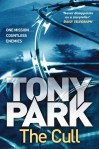
Tony Park, The cull (#MiniBookReview based on a Guest Read)

Tony Park, The cullWhen Tony Park’s The cull was sent to me for review last September, I knew it wasn’t really within my normal ambit but every now and then I try something new, so thought I might give it a go. However, as time passed and more books came, I realised that I had to let it go. But, it occurred to me that Mr Gums, whose reading preferences are a little different to mine, might like to read it during our annual Snowy Mountains getaway. He thought he might so, leaving aside his German translation of Pride and prejudice (which he was reading for the second time), he took it away with him – and enjoyed it, overall.

Some of you may know who Tony Park is, but I have to admit that I didn’t – beyond recognising his name from bookshop shelves – even though The cull is his fourteenth novel! He was born in Sydney, and has worked, according to the media release, “as a reporter, a press secretary, a PR consultant and a freelance writer”. He is a major in the Australian Army Reserve and in 2002 served as a public relations officer in Afghanistan. And, here’s the most relevant bit to this book, he and his wife split their time between Australia and southern Africa where they own a home on the edge of Kruger National Park. He is also, the Media Release says, a volunteer with Veterans for Wildlife, which “pairs military veterans with anti-poaching units and conservation programs in Africa.”

And this is where I should finally talk about the book. It concerns former mercenary Sonja Kurtz, who has apparently appeared in other books by Park. She is hired by a (female, in fact) business tycoon to head a squad whose ostensible task is to gain intelligence about poachers but she ultimately finds herself involved in a full-scale assault against the “poaching kingpins”. In other words, it’s a novel which marries his military experience with his involvement in supporting African wildlife. The Media Release says that Park describes “the job of protecting wildlife” as “a high-risk, high stakes business”. Rhino horn is now worth more than “gold, diamonds or cocaine”.

So what did Mr Gums think? “Pretty good fun”, he says. Like me, he’s not an expert in the crime-action-thriller genres, but he’s read the odd one over the years, including, last year, Tony Jones’ The twentieth man. He thought the characters were well drawn for the genre, and that the writing was engaging and kept him interested. It was full of “gadgets and guns” which entertained him, but had perhaps “unnecessarily detailed descriptions of the sex”. However, that’s part of these sorts of genre books today isn’t it? You find it in movies of these genres too.

Overall, though, it was the theme of protecting African wildlife and environment that made it particularly interesting for him – just as Jones’ exploration of Australia’s first terrorist bombing kept him engaged in that novel. This is what would have drawn me to the book too, if I’d been able to prioritise the read.

And so, that’s about it – except there’s one interesting little thing to add, and it concerns naming rights. I’ll quote from the Acknowledgements at the end:

As with previous books, I’ve surrendered the difficult (for me at least), the task of thinking up names for my characters to a number of worthy charities who have sold or auctioned off rights for generous people to have their names assigned to the cast of The cull and raised money for many good causes in the process.

Those good causes are named, and they are a varied lot, including the HEAL Africa Hospital, the Juvenile Diabetes Foundation, the Australian Rhino Project and the Limpopo Rhino Security Group. I, and probably you, have heard about this phenomenon before, but if you haven’t, here is a 2005 article from the Guardian about authors auctioning off names. It starts by asking “Fancy having your name on a gravestone in Neil Gaiman’s next novel? Or meeting your end at the hands of a zombie in Stephen King’s latest?” Hmm, would you want to be immortalised in some of these ways? There is that thin-end-of-the-wedge issue here – as I touched on in my review of Anna Funder’s Paspaley sponsored story Everything precious – but I don’t think we should let this colour actions like Cull’s which result in money for good causes?

And here endeth this mini-review – with a big thanks to Mr Gums for his contribution.

Tony Park
The cull
Sydney: Pan Macmillan Australia, 2017
411pp.
ISBN: 9781743548455

(Review copy courtesy Pan Macmillan Australia)

Monday musings on Australian literature: Literary culture in colonial Australia

National Library of Australia
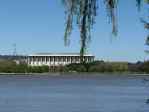
National Library of Australia, from the other side of Lake Burley Griffin

Bill of The Australian Legend’s AWW Gen 1 Week, which has just finished, focused on the authors and the books they wrote about colonial Australia. However, what about the readers? I’ve been planning to write a post on literary culture in colonial Australia for some time, and today seems to be just the right time! My post draws heavily on retired academic Elizabeth Webby’s 2011 John Alexander Ferguson Memorial Lecture titled “Reading in colonial Australia” which was published in the Journal of the Royal Australian Historical Society (vol. 97, pt. 2) in December 2011 (available online). Webby starts by recognising the work done by lawyer-book collector-bibliographer Ferguson whose much-researched collection is at the National Library of Australia and who is commemorated there by the Ferguson Room.

It’s a fascinating lecture, for the content and for the discussion of the information sources Webby used to discover who read what in colonial Australia (1788 to 1901). (I’m always interested in the research process.) There are letters, of course, from colonists back to home, asking for books. Then there are advertisements listing personal libraries for sale. Early explorer George Bass’s library for example contained mostly books on medicine, science, law, theology plus classical authors like Horace, Virgil and Homer. A library typical of “gentlemen’s libraries of the period”. It contained very little fiction.

Another explorer, a couple of decades later, was John Oxley. His library was sold in 1828, and, Webby writes, it

displayed a decidedly stronger taste for fiction, indicating the shift towards novels as the main form of recreational reading which began in this period, although still deplored by many. When John Oxley’s library was sold by auction in Sydney in August 1828 about half of the 330 or so lots listed in the catalogue were works of fiction. They included such recent publications as Sir Walter Scott’s Tales of the Crusaders (1825), the American novelist Fenimore Cooper’s The Prairie (1827), as well as Gothic thrillers like Anne Radcliffe’s Gaston de Blondeville (1826) and Mary Shelley’s early science fiction tale Last Man (1826). Oxley clearly was a regular purchaser of the latest English books.

Later in the article, discussing attitudes to women readers, she refers to the sale of “a lady’s library” in 1833. While she didn’t see a list, it was described as comprising ‘upwards of six hundred volumes, chiefly standard Works, by the most esteemed ancient and modern authors, forming altogether a collection of English Literature rarely to be met with out of Europe'”. She uses this to counter the belief that women only read fiction!

Another fascinating source of information about what people were reading are advertisements for missing books. Fascinating. Besides providing information about what people had in their libraries, they also tell us how precious books were. In some of the ads she found, people threatened legal action or offered rewards. So, of course, I went to Trove to see what I could find. I found some of those Webby describes, but I also found one from June 1830 that seemed to be about recalling books that had been lent out and were now needed back for an estate auction. The list is fairly long, and looks like one of those aforesaid typical “gentlemen’s collections”. It has classics, sermons, theological works, essays, dictionaries and so on, but very little fiction, except for Sir Walter Scott, who’ll appear again later! The list ends with the statement that “The Public are also informed, that this extensive and valuable Library will in a short time be sold by Public Auction, of which due notice will be given. As Mr. HOWE’S Library is well known, it would be useless to make further comments at this time.” Clearly they expected the books to be returned, but I wonder what sort of comments it was useless to make?

Webby also explores lending libraries. They varied greatly. Some were set up by churches, and focused on morality and religion, with “frivolous” or “pernicious” publications being excluded. Some were created for “the colonial elite”, such as the Hobart Town Book Society and Sydney’s Australian Subscription Library. And some were set up to provide reading matter for working people. These were the Mechanics’ Institutes and Schools of Arts whose buildings are still familiar sights in Australian country towns. The short-lived Hobart Town Mechanics Institute was founded in 1827, and Sydney had established its Sydney Mechanics’ School of Arts in 1833. By 1834, it had “upwards of five hundred volumes … consisting of works on science, history and general literature, chiefly contributed by the liberal donations and loans of members and friends.” Indeed, Webby makes several references to people being asked to donate books from their own libraries to, for example, make them available to “the enquiring mechanic, who can find time to dive into their contents.” In truth, though, mechanics did not comprise the main memberships of these organisations.

And here is a good point to discuss what Webby calls the fiction debate. Those of you interested in the history of reading will know that novels were disparaged for a long time. I’ve written before about Jane Austen’s famous defence of the novel in Northanger Abbey, in which she described them as works

in which the greatest powers of the mind are displayed, in which the most thorough knowledge of human nature, the happiest delineation of its varieties, the liveliest effusions of wit and humour, are conveyed to the world in the best–chosen language.

Northanger Abbey was published in 1817 so Austen’s defence is contemporaneous with the period we are discussing. Webby quotes James Ross, editor of the Hobart Town Courier, as supporting novel-reading in 1831. He defended the so-called “frivolous” reading tastes of members, arguing that recreational reading was valid after the “toil of a long day in some official, public or private arduous operation.” He also argued that reading English novels was, as Webby puts it, “almost a patriotic duty”, because these books

keep alive in no small degree that amor patriae, that attachment to our mother country and that familiarity with the manners and relish for the habits of our countrymen which is at all times so desirable.

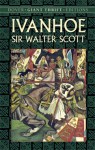
Sir Walter Scott, Ivanhoe
Ivanhoe, first published 1819.

Webby identifies some of the fiction that was being read – including Jane Austen, Charles Dickens and Bulwer Lytton – but the author who pops up most frequently in her survey of the early to mid-nineteenth century is Sir Walter Scott. The first book order from the 1826-established Australian Subscription Library, for example, included only one novelist, Scott.

And the 1836 report of the Sydney Mechanics’ School of Arts defended the inclusion of novels in its library, with the argument, you’ll see, that is still used to defend, for example, the reading of comics. The report says:

… it ought to be remembered, that a taste for reading has to be formed before works of a more philosophical character will be relished or appreciated, and that if any book is likely to accomplish this more speedily than another, it is the works of Scott–containing, as they do, a vast fund of historical information, mixed up, in an agreeable shape, with the manners and customs of different periods.

Webby discusses much more, including the role of periodicals and newspapers in reading culture. She also writes about “reading aloud”, but I might save that for another post.

It’s clear from Webby’s lecture that the information available was scattered and incomplete. She praises Evandale Subscription Library in Tasmania which “stands out for the completeness of its records”. Please note this any of you who are currently involved in organisations, such as reading groups: keep your records! One day, some researcher will want them!

Tasma (Jessie Couvreur), Uncle Piper of Piper’s Hill (#BookReview)

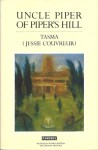
Tasma, Uncle Piper of Piper's Hill

The first thing to say about Tasma’s debut novel Uncle Piper of Piper’s Hill is that it’s rather wordy, speaking to a literacy different from that of today’s readers. For this reason, Uncle Piper won’t appeal to readers who like short simple sentences, and a plot which moves along at a good clip with little reflection or commentary. Consider yourself warned, but know also that, according contemporary reports, this novel made Tasma famous in a week.

So, if you enjoy immersing yourself in the writing of different times, and are interested in late 19th century Australia, Uncle Piper has plenty to offer, starting with well-drawn characters who, in modern clothes, would be as real today as they were in 1888.

Take father, the Uncle Piper of the title, and his son George, for example. Uncle Piper is a self-made man. In his case this involved emigrating from England, where he was poor and with few prospects, to Melbourne, where, starting as a lowly butcher, he worked hard to establish himself as the wealthy, successful businessman he is at the novel’s opening. Now, what often happens when parents struggle to establish themselves and create for their children opportunities that they never had? Why, those children take their easy, comfortable lives for granted. That’s what! Not a new story, is it?

And so, about a third of the way through the novel, we have a wonderful scene between father and son over a girl of whom the father doesn’t approve. Feeding this scene is a two-decade history of growing frustration on Uncle Piper’s part and a learned, practised nonchalance on George’s. The scene is delicious and requires no suspension of disbelief to understand. Here’s a short excerpt of a confrontation in Uncle Piper’s beloved tower at Piper’s Hill:

So he [George] courted a personal attack … and sat caressing his moustache, as was his wont, with his eyes bent on the floor, while his father exposed his grievances in a crescendo key.

If there was anything humiliating in being rated as an “able-bodied young man who wasn’t worth his salt,” as a loafer who was hardly fit to “jackaroo” on a station, as a “lazy lubber” who would “go to the dogs if it weren’t for his father,” George never betrayed that he felt humiliated by so much as the twitching of an eyelid. Persistently stroking the ends of his moustache with an air of profound abstraction, he made it apparent, as soon as Mr. Piper stopped to take breath, that he was suppressing an inclination to yawn.

Can’t you just see it – the increasingly apoplectic father and his determinedly calmly indifferent son!

In basic plot, Uncle Piper of Piper’s Hill is a romance, a marriage story, set against the social backdrop of a meeting between these well-to-do parvenu Pipers, and the impoverished but upper crust Cavendishes. The lowly-born Mrs Cavendish is Uncle Piper’s sister. At the beginning of the novel, the Cavendishes are on a boat being brought out to Australia by Uncle Piper who has, in effect, been supporting them for years and who would now like them with him. He’s offered to find the reluctant Mr Cavendish a job “in the government”. The Cavendishes include two daughters, the kind, unassuming Margaret and her younger sister, the beautiful and imperious Sara. Sara follows her father’s mould of snobbish self-regard trumping any sense of human feeling or empathy, while Margaret is in her mother’s caring and hardworking mould.

Coming out on the same boat is the thirty-something Rev. Lydiat who, unbeknownst to them all, is also connected to the Pipers – this is a nineteenth century novel after all. His now-deceased mother had been Uncle Piper’s second wife. So, the afore-mentioned George is his step-brother, and Uncle Piper’s still-a-child daughter Louey, whom he’d had with the Rev’s mother, is of course his half-sister. But wait, there’s more. Also in Uncle Piper’s household is Laura, the Rev. Lydiat’s sister, whom Uncle Piper had promised his wife, on her deathbed, to care and provide for.

… a house divided against itself …

And now the plot gets complicated – though it’s easy to follow in the book. Rev. Lydiat falls (purely, of course) in love with Sara, while on the boat. And George and Laura, unrelated by blood, are in love. But, Uncle Piper wants George to marry his as-yet-unseen-to-any-of-them cousin Sara. And just to round all this off, Margaret is quietly, humbly, in love with Rev. Lydiat. Lest you give up at this point and think this all sounds a bit silly, let me say that despite its fairly traditional plot of love-triangles and interfering parents, the book has a lot more to offer.

So, where to go from here? There are many angles from which this book could be discussed. Issues like religion, money and class (as I’ve already mentioned), colonial life and the Australian landscape, and even the book’s relevance to Tasma’s biography, are all well worth exploring. I could also have fun teasing out comparisons between this book and Jane Austen’s Persuasion (my review). It’s not hard to see Sir Walter Elliot and his daughter Elizabeth in Mr Cavendish and Sara, or to see Anne Elliot in the capable Margaret. I could also talk about the style, and the influence on the style and tone of its being originally serialised in a newspaper.

However, given my previous reading of Aussie women writers at the time – of Ada Cambridge’s A woman’s friendship and Sisters, and Rosa Praed’s The bond of wedlock – I’d like to mention Tasma’s social commentary, particularly regarding women. Part of the commentary relates to the opportunities offered by Australian life. Uncle Piper’s generosity and capacity for hard work is offset against the snobbery of Mr Cavendish who is happy to take his brother-in-law’s money while continuing to hold himself “above” his host. He is snobbish, selfish and shallow, and by the end of the novel, has learnt nothing. Uncle Piper, on the other hand, along with his son George, learns some lessons and, by the end both have recognised and corrected some of their less tolerant behaviours.

For Uncle Piper much of this change relates to his step-daughter Laura Lydiat. For all his generosity, Uncle Piper has his faults. He can be autocratic, for a start. This does not sit well with the opinionated Laura. She has rejected religion, can be sarcastic, and has an “uncompromising disregard of feelings with which she does not agree”, albeit being very happy to eat at Uncle Piper’s table and wear the clothes he provides! She also does not approve of marriage:

though I abominate the system of marriage, though I think the yoking of two people together without a chance of release–as if the yoke mightn’t gall them any day–perfectly barbarous and absurd–still, in view of our ‘exceptional case’–there, don’t be demonstrative till you’ve heard me to the end–in view, as I said, of our ‘exceptional case,’ I’d have gone off with you to the registrar’s any morning–no, nothing would induce me to go to church–and have signed myself Laura Piper, instead of Laura Lydiat!

MISS THIS IF YOU DON’T WANT TO KNOW WHO MARRIES WHOM …

At the end of the novel, when the also-changed Laura does indeed marry, Tasma compares gentle, dutiful Margaret’s response to the marriage service with Laura’s:

She [Margaret] had followed the service in its most literal sense with all the earnestness of her nature, and would have had no sympathy with the half-perceptible gleam that might have been detected in Laura’s eyes at being called upon to obey George.

START READING HERE AGAIN …

The novel is not, as you can tell from this gentle hint, overtly didactic. There is some running authorial commentary, but the ideas and themes are well conveyed through the story and the characters, who are, for the most part, realistic though there are some saints and sinners among them.

Uncle Piper owes much to the Victorian novel tradition, but one adapted to an Australian setting. The plot overlays a New World made-good story over the more traditional romance narrative. The result is a novel which explores some new ideas about life within a familiar format, which makes it particularly special, I think, for Antipodean readers. Tasma should be read more.

Posted as a contribution to Bill (the Australian Legend)’s Australian Women Writers Gen 1 Week. See also my Monday Musings post this week on Tasma.

AWW Badge 2018

Tasma (Jessie Couvreur)
Uncle Piper of Piper’s Hill: An Australian novel
Project Gutenberg of Australia eBook, 2006
(Originally serialised in The Australasian, 1888; published as a volume, 1889)
Available online at Project Gutenberg of Australia

Monday musings on Australian literature: Tasma (aka Jessie Couvreur)

Tasma, c. 1890. (Public Domain, from the State Library of Victoria, via Wikipedia)

This week Bill (of The Australian Legend) is running an Australian Women Writers Gen 1 Week, through which he plans to highlight Australian women writers from our first generation of writers, which he defines as “those writers who came before the 1890s and the Sydney Bulletin ‘Bush Realism’ school, although many of them continued writing into the first part of the 20th century.” These women, several of whom I read before blogging, include Louisa Atkinson, Ada Cambridge, Rosa Praed, Catherine Helen Spence, and Tasma. I have written about some of these writers before, particularly Louisa Atkinson and Ada Cambridge, so today I’ve decided to highlight Bill’s week by writing on another, Tasma, whose book Uncle Piper of Piper’s Hill I’ve promised to contribute to his project.

Who was Tasma?

Born Jessie Huybers in London in 1848, Tasma (as she later styled herself) came to Hobart, Australia, with her parents in 1852. Her family was apparently among the more prominent in Hobart, with their friends including successful author Louisa Meredith (1812-1895) and her husband Charles. In 1867 Tasma married the 25-year-old Charles Fraser moving to Melbourne with him. However, the marriage was troubled and Tasma returned to Hobart in 1872, leaving her debt-ridden husband behind. The following year she sailed to England with her mother and youngest siblings, and spent the next couple of years soaking up European culture with her family. Returning to Melbourne and her husband in 1875, she discovered that he’d had a child with a servant. With divorce, particularly initiated by women, rare, they remained married but lived mostly separate lives.

She started writing in 1877, taking the pseudonym Tasma to honour the colony of her youth, and in 1878 her first articles were published. In 1879 she returned to Europe with her mother and some siblings, determined to earn her living as a writer. This also marked the final break with Charles, and they were divorced in 1883.

And here I’ll quote biographer Patricia Clarke (see below):

Tasma’s life deserves to be much better known, and not only because of her now almost forgotten fame as a novelist. Just as interesting and more gender-defying, she was also an acclaimed public lecturer in Europe, and a foreign correspondent for the London Times, both roles that contradicted the perception of women as solely home­bound. In her personal life also, Tasma defied all the stereotypes of the nineteenth-century woman by separating from, and divorcing, her first husband.

DPAC’s article (see below) describes her as “a celebrity lecturer” on the “geography, history, industries, culture and social progress of Australia” and says that her lectures were reported in French, Belgian and other newspapers. She met the eminent and more compatible, albeit significantly older, Auguste Couvreur in 1881, and married him in 1885, but before that, writes Clarke:

For six years before her second marriage, Tasma lived the life of a ‘New Woman’, the independent woman then beginning to appear both in real life and in fiction. From her base in Paris she earned her own living and was involved in the radical issues of the day. An interviewer wrote, ‘She was not a woman to hide the light of her militant radicalism under a bushel. When pressed to talk about her method of writing, she spoke instead of the latest developments in collectivism, and made an impassioned plea for the poor’.

Sadly, Jessie Couvreur died in 1897 of coronary heart disease, just before her 49th birthday. Way too young for someone who clearly gave a lot to her times.

What did she write?

Tasma, Uncle Piper of Piper's Hill

During her life, Tasma wrote, according to the DPAC article, 7 novels, 20 short stories (several set in Tasmania) and over 36 articles on a variety of subjects. Uncle Piper of Piper’s Hill, her first novel, was published in 1889, and her last, A fiery ordeal, was published, posthumously, in 1897, the year she died.

In her chapter in Debra Adelaide’s A bright and fiery troop, Margaret Harris quotes 20th century poet and novelist Winifred Birkett’s claiming Tasma as Australian

… in spite of her Dutch-French parentage, English birth, Belgian marriage, and long continental residence and professional career! She has been called by people who cannot get away from systems of category and comparison, “the Australian Jane Austen” and “the Australian George Eliot”, but without bringing her under the patent of any other writer’s name we may remember her simply as the “Tasma” of her own titling, and Australian enough by such an implication.

Interesting! Of course, I did my own bit of research in Trove and found some similar references from her 19th century contemporaries. One article in Tasmanian News (11 August 1892) reported on an interview conducted for a “Celebrity at Home” column in The World journal, writing that “Her interviewer credits her with much of the spirit of Thackeray and George Eliot, which, in combination with marked originality, is the secret of her success.” And an article from the year before in Tasmania’s Mercury (21 January 1891) writes that

The favourite Christmas book of 1888 [Uncle Piper] went through three editions before January, 1890. The success of her last two works has been equally marked, and Mr. Edmund Yates, the most competent of judges, regards her as a story writer of extraordinary power. “Uncle Piper” may very likely live as long as “Charles O’Malley,” and it is not impossible that one of “Tasma’s” literary efforts in the Chaussée de Vleugrat [sic] may yet attain the immortality of “Villette.”

Tasma, The penance of Portia James

Strong praise, eh! I’ve only read 20% (on my Kindle) of Uncle Piper to date, and, while the style owes more to late Victorian than to Jane Austen’s Regency/Georgian era, I can see the comparison in some of the cheekiness I’m reading. To see Eliot, Thackeray and/or Bronte, I think I’ll need to read more!

I won’t say more about her writing, except to share a comment made by Clarke regarding her descent into obscurity:

The usual explanation for her obscurity is that, like other Australian women writers who wrote about love, marriage and domestic relationships and whose main characters were women, her reputation has been overtaken and submerged by the Bulletin school of almost exclusively male writers who emerged in the 1890s. These writers glorified the traditions of mateship and the bush to establish what came to be seen as the authentic picture of Australia. Perhaps Tasma’s later obscurity was influenced by the fact that she died at a relatively young age, that for the second half of her life she lived in Europe, and that she had no direct descendants to keep her memory alive. Other nineteenth-century Australian women writers, such as Ada Cambridge and Rosa Praed, lived much longer, the former in Australia and survived by children, but this has not saved them from a similar, if perhaps less marked, obscurity.

If you’d like to know more, check out the sources below and/or watch for my post later this week …

Sources

Beilby, Raymond. ‘Couvreur, Jessie Catherine (1848–1897)’, Australian Dictionary of Biography, National Centre of Biography, Australian National University, published first in hardcopy 1969.

Clarke, Patricia. ‘In the steps of Rosa Praed and Tasma: Biographical details: A lecture by Harold White Fellow, Patricia Clarke‘, National Library of Australia, Canberra, 1993

‘Couvreur, Jessie Catherine (1848–1897)’, Obituaries Australia, National Centre of Biography, Australian National University. Also available in the original form at Trove, titled “The late ‘Tasma’ Courvreur”, The Mercury, 27 October 1897.

Harris, Margaret. ‘The writing of Tasma, the work of Jessie Couvreur’, in A bright and fiery troop (ed. by Debra Adelaide), Ringwood, Penguin Books, 1988.

‘Tasma (Jessie Couvreur nee Huybers)’, in Signifiant Tasmanian Women, Department of Premier and Cabinet (DPAC) (Tasmania). (Entry based on Patricia Clarke’s Tasma: The life of Jessie Couvreur, 1994)

Jenny Ackland, The secret son (#BookReview)

Jenny Ackland, The secret sonMelbourne-based author Jenny Ackland has tried something rather audacious in her debut novel, The Secret Son. Instead of following the autobiographical route that many first novelists do, she has leapt right in and tackled, albeit from left field, one of Australia’s most controversial legends, Ned Kelly. But, here’s the rub: it’s not exactly about Ned Kelly. It’s far more complex than that.

The secret son spans more than a century, from the 1880s to 1990 and beyond. It is set in both Turkey and Australia, and it weaves two stories. One concerns the 19th-century-born James who ends up living in Turkey, having gone to fight at Gallipoli in 1915, and the other tells of Cem, a 23-year-old Turkish-Australian man who is related to the village where James had lived and who travels there in 1990, ostensibly to learn about his heritage and identity. These two men – James/Jim and Cem/”Jem” – work subtly as foils or parallels for each other. James is intelligent, gentle and hardworking, but somewhat passive. He imagines who his father might have been, what sort of man he was. Cem, on the other hand, is young, directionless, well-meaning but rather self-centred. Turkish taxi-driver, Ibrahim, pins his uncertainty immediately, telling him:

You must know who you are and what man you want to become.

What sort of man he wants to become is something Cem struggles with, making this, partly but by no means primarily, a coming-of-age novel.

This brings me to one of the delights in reading this book, which is Ackland’s depiction of life in the Turkish village she calls Hayat (Turkish, she says, for “heart”). It reminded me of some books I read years ago, such as Beverley Farmer’s stories set in a Greek village. Farmer had married a Greek man and lived for some time in Greece, which explained her convincing insight into village life and relationships. Ackland’s depictions were similarly convincing, so I wanted to know how she’d done it. I found the answer in an ABC Books and Arts interview with her. She too had travelled to Turkey, married a Turkish man, spent time there as a bride and young mother. With this knowledge and experience, and an ability to individuate characters, Ackland creates a world that engaged me.

But now you are probably wondering how Ned Kelly fits into all this. It has to do with a historian named Harry whom Cem meets on the plane. Harry has a theory that Ned Kelly had a secret son who fought at Gallipoli and ended up staying in Turkey. His quest is to prove this theory and, in one of those coincidences that all travellers know about, the village where he believes this son went to is the same one that Cem’s family was from. So the scene is set – but the story that unfolds has less to do with Ned Kelly than with families and secrets, paying debts, and growing up.

I started this post by saying that Ackland has been audacious in this, her debut novel, and I implied that it was because of the Ned Kelly plotline. However, her audaciousness extends beyond this. It’s in the novel’s complex structure, too, in the way she weaves the two men’s stories, to-ing and fro-ing in time. It’s in the recurring motifs like bees and honey, tea and sugar, and woven rugs, that she uses to help keep us grounded. And it’s particularly in the change of voice between the more traditional third person voice used for most of the story to first person for the perspective of Berna, who is the village’s wise woman-cum-fortune-teller. Berna also happens to be Cem’s grandmother and James’ daughter, which effectively connects the two story lines. (The family relationships in this book are, I must say, complicated, and require an attentive reader to keep track!)

Anyhow, Berna provides the main link in the novel’s second plot which is about the “debt” Cem discovers he is expected to pay for something his grandfather Ahmet had done long before he’d left the village for Australia. This plotline exposes dissension in the village, and through it Ackland explores ideas about love and loyalty, truth and lies, revenge and forgiveness, not to mention the application of wisdom versus tradition. As the novel progresses, more of the “truth” about what happened comes out, and the plot thickens as we wonder what will be asked of Cem and what he will do in response. Meanwhile, the Ned Kelly storyline weaves its own path between James, Harry, and the village with the help of a woman pilot called Linda. While complex, it’s sensitively done, with, in the end, enough resolution to be satisfying without being too neat and implausible.

There are many angles from which this book can be talked about, besides those I’ve mentioned. There’s a father-son theme, a cheeky metafictional theme about a book called The secret son, Cem’s family experience in Australia as a child of immigrants, and gender. There’s also the idea of debts due by later generations, which Berna argues is not valid, but which her brother Mehmet supports. It’s relevant, I think, that Berna has the last word in the novel.

Early on Berna tells us that “truth” is not the be-all, that sometimes “life is better with surprises in the recipe”. She’s a wise woman, and this, The secret son, is a wise book. It might be a debut novel, and it might push its readers to keep up at times, but the ideas it explores, and its tolerant, generous treatment of its flawed characters, are those of a humane writer.

Lisa (ANZLitLovers) was impressed by the book too.

AWW Badge 2018Jenny Ackland
The secret son
Sydney: Allen & Unwin, 2015
327pp.
ISBN: 9781925266160

Carson McCullers, Home for Christmas (#Review)

Carson McCullers, 1959

Carson McCullers, 1959 (photo by Carl Van Vechten, Public domain, via Wikimedia Commons)

As you will guess from the title of this Library of America (LOA) Story of the Week, I meant to post on it closer to Christmas Day than I have in fact achieved. I chose it for two reasons – firstly the obvious seasonal one, and secondly because my first Carson McCullers post was an unusual piece and perhaps not completely reflective of the writer she was. Her story “Home before Christmas”, while nothing like her best-known novels, does get us a bit closer to them.

First, though, some background. LOA’s notes tell us that the story, written in 1949, was the first of a few essays McCullers wrote for magazines like Mademoiselle and Redbook. McCullers’ biographer, Virginia Spencer Carr, says, according to LOA, that “even as a preschooler Carson would be asked what she wanted and the answer was, ‘I want book—lots of books, Mama’.” I suspect many of you reading this will say the same about yourselves. I know I would!

LOA shares a couple of other stories about the adult Carson and gift-giving – including one that resulted in such a kerfuffle that someone was written out of a will, and another involving Truman Capote. However, they take us further away from the point of THIS story.

“Home for Christmas” was apparently commissioned by Mademoiselle for its 1949 Christmas issue, and was published alongside pieces by food writer MFK Fisher and novelist Jessamyn West (whom I plan to cover here one day via the Library of America). LOA chose to share McCullers’ piece this last Christmas because 2017 was the centenary of McCullers birth.

Now I said in my opening paragraph that this story, although nothing like her best-known novels, does connect us a little with them. Firstly, an autobiographical piece, it describes life in a southern family, but more significantly, like The member of the wedding, it is seen through a child’s eye. It is not like her novels in the sense that it is not Gothic, and nor does it deal in any major way with the loneliness or “outsiderness” that I remember from her oeuvre – though there is a touch of melancholy in it, all the same.

In some ways, it’s a traditional story about childhood yearning for Christmas. It begins in August with our young first person narrator, that is, Carson, pondering Christmas, and it concludes, just after Christmas, with her yearning for the next Christmas. In between, we hear about the buying of Christmas presents, the cooking of Christmas food, and how Christmas day itself was spent. But, there is also a little unifying theme running through this – the “mystery of Time”.

In the second paragraph, it is August and our narrator is up a tree thinking:

I did not want to talk with my brother. I was experiencing the first wonder about the mystery of Time. Here I was, on this August afternoon, in the tree-house, in the burnt, jaded yard, sick and tired of all our summer ways. (I had read Little Women for the second time, Hans Brinker and the Silver SkatesLittle Men, and Twenty Thousand Leagues under the Sea. I had read movie magazines and even tried to read love stories in the Woman’s Home Companion—I was so sick of everything.) How could it be that I was I and now was now when in four months it would be Christmas, wintertime, cold weather, twilight and the glory of the Christmas tree? I puzzled about the now and later and rubbed the inside of my elbow until there was a little roll of dirt between my forefinger and thumb. Would the now I of the tree-house and the August afternoon be the same I of winter, firelight and the Christmas tree? I wondered.

You can see biographer Carr’s point about books can’t you? Anyhow, again, I suspect many of us have pondered Time in this way. McCullers doesn’t labour the point but it pops up a few more times in the article,  including the notion of time behaving differently for different people. “How”, she writes, “could it be that when she [her sister] opened her eyes it would be Christmas while I lay awake in the dark for hours and hours? The time was the same for both of us, and yet not at all the same.” There’s also a delightful little – almost throwaway – line about how her father would manipulate the clocks to enable them to get up early on Christmas morning but not too early for the parents.

“Home before Christmas” is not a particularly deep story/article, but then as an article for a Christmas edition of a magazine, it probably wasn’t meant to be. It is, however, an enjoyable read and, while presumably part of that bread-and-butter work that writers do to survive, it also provides some insight into a significant writer of, and from, America’s south.

Carson McCullers
“Home for Christmas”
First published: Mademoiselle, December 1949
Available: Online at the Library of America

Bruce Beresford, The best film I never made (#BookReview)

Bruce Beresford, The best film I never madeBruce Beresford, author of The best film I never made, is of special interest to me for a couple of reasons, besides the fact that I’ve enjoyed many of his films over the years. One is that after a few years of taking (or, perhaps, “dragging” is more accurate) our then young son to various classic movie “experiences”, like, say, a silent movie accompanied by live theatre organ, we finally hit pay dirt with Bruce Beresford’s Breaker Morant. He loved it, and I’d say his love of film was born then. The other is that I’ve known for some time that Beresford has wanted to film his old university friend Madeleine St John’s novel The women in black (my review). I want to see that film! According to the brief bio opposite the title page, it is being made now. At last!

All this is to explain why I was keen to read Bruce Beresford’s collection of stories when I saw it appear in Text Publishing’s New Releases list. But, what does “collection of stories” mean in the context of non-fiction? These are not essays or even newspaper columns that have been published before, and, disappointingly, there’s no Introduction, Author’s Note or Afterword providing context. There is, though, in that aforementioned brief bio, the address for his website, and there I found a tab called “Articles”. So this is where they are published? Yes, some anyhow, including some in an earlier form, but not all. However, from this, and from their personal, rather chatty style, I’d liken these articles to blog posts, which in his case comprise musings on things relating to his film and opera directing career and his related cultural interests.

The best film I never made, then, is a collection of these blogpost-cum-stories, organised for the book into four parts: I Family, Journeys, Memories; II Making and Not Making Movies; III Behind the Screen; IV Operas, Painters, Writers. The stories are all dated, ranging from 2004 to 2017. Some have brief updates at the end. The 2010 piece on Jeffrey Smart, “Smart lessons”, for example, has a final annotation noting that Smart died in 2013. The stories are not presented chronologically.

And now, because this is not a book with a narrative structure that can be spoiled – though there is some logic nonetheless to the order – I’m going straight to the end. You’ll guess why when I tell you that the title of the last article is “Australian literature and film”, but that literature connection is not the only reason. Other reasons are that it provides a good introduction to the style and tone of the whole, and also to the way he imparts his experience and understanding of filmmaking.

The main point of this last article is to discuss the idea, put forward he says by the press, that “Australian films would benefit if more adaptations were made from acclaimed literary works. Comparisons are inevitably made with foreign films, particularly English and American …” Commenting that he can understand why writer-directors might want to tell their own stories, he admits that probably a majority of English-language films are adaptations of novels but suggests that many of these would be from popular fiction rather than “literary successes”. He unpicks why:

Many novels are famous for their prose style, various colourful characters, their themes and so on: factors which can obscure the fact that other useful ingredients – a coherent plot for example – may be absent. In film, most of the characteristics that distinguish a literary work – such as a striking prose style – are stripped away and this can reveal the lack of a well-constructed story, or convincing dialogue, and be fatal to the effectiveness of the film.

He then provides examples of English and American adaptations, about which, of course, every reader-filmgoer will have different opinions – but I think his principle stands. He comments for example about the difficult of transferring “the satire and dry cynicism” of Waugh to film, and says Patrick White is notoriously difficult “because his novels like Conrad’s, are psychological studies, intense and profound, and not easy to transfer to a film script”. (Interestingly, though, he suggests that Happy Valley, which I’ve reviewed, could be a good candidate because of its “more conventional narrative”.) Filmmakers do better he argues “to adapt novels which rely on a few strong characters and a compelling narrative” like, for example, Kenneth Cook’s Wake in fright (albeit “won no literary prizes”).

So, this article demonstrates Beresford’s grasp of filmmaking, which, unsurprisingly, runs throughout the book, but it also exemplifies his tone and style, including his willingness to share his own prejudices. He’s not a fan of Tim Winton, for example, describing his books “as bargain-basement Patrick White: stylistically derivative, they are far more savage, full of unpleasant characters, and weakly plotted”. And Christina Stead, he says, is “a turgid writer, in my worthless opinion”. This possibly false but not pompous self-deprecation is another feature of his tone. In the same paragraph as the Stead comment, he writes that he’d filmed Henry Handel Richardson’s The Getting of Wisdom, but that “critics did not share my admiration for the result”! (Other films of his, he agrees, aren’t the best.)

And finally, this chapter also reveals his ability to “tell-all” without being gossipy. He suggests that another reason why classic novels aren’t adapted in Australia (as they are in England) is that they are just not well-known, “certainly the word of their excellence has not reached all of those in charge of making financial decisions.” (The challenge of financing films is a theme running through the book, in fact.) Beresford wrote, he tells us, an adaptation of Henry Handel Richardson’s epic, The fortunes of Richard Mahony. He says he hadn’t expected potential investors to have read it, but he “did at least expect them to have heard of it – and her. But this was not the case.” Oh dear! He backs up this example of philistinism with another:

when I was planning a film about Mahler, a Hollywood executive said, ‘What I can’t understand is why you would want to make a film about a nonentity.’ I said  nothing, but perhaps should have told him that one of the most gifted composers of all time could not accurately be described as a ‘nonentity’ – except by someone of overwhelming stupidity.

To his credit, Beresford does not name this person of “overwhelming stupidity”.

If you’ve enjoyed my discussion of this article, then you are likely to enjoy the book. I loved his discussion of the filmic qualities of the artist Caravaggio, and of his friendship with luminaries like Barry Humphries, Clive James, and the late Jeffrey Smart. His Behind the Scenes section provides fascinating insight into the role of cinematographers, composers and designers in the filmmaking process. And so on.

However, because this is a book of collected articles written over a decade or more, there is the occasional repetition, particularly in the first section about his personal life. And, he does come across somewhat as an unreconstructed male. There are several references to his chasing, or his friends’ marrying, beautiful women, which focus I find out-of-date (but that’s just my worthless opinion!)

The best film I never made is an enjoyable book. It’s more chatty and informative than reflective, but if you have followed Bruce Beresford’s films over the years – including Breaker MorantDriving Miss Daisy, Tender Mercies, Black Robe, Mao’s Last Dancer – and you are interested in the practice of filmmaking and in the arts more generally, this book has a lot to offer. And makes, methinks, a good summer read.

Bruce Beresford
The best film I never made, and other stories about a life in the arts
Melbourne: Text Publishing, 2017
281pp.
ISBN: 9781925603101

(Review copy courtesy Text Publishing)

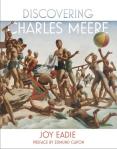
Joy Eadie, Discovering Charles Meere: Art and allusion (#BookReview)

Joy Eadie, Discovering Charles MeereThe award for my last review of the year goes to something a little left field for me, Joy Eadie’s Discovering Charles Meere: Art and allusion. I say left field because it is, essentially, a book of art criticism, and I don’t do much of that here (or anywhere, for that matter!) However, when Halstead Press offered me a copy for review a few months ago, I was intrigued, so accepted the book. And here is why I was intrigued …

In the email offering me the book, the publisher wrote:

Australian Beach Pattern is Meere’s most famous work and hangs in the Art Gallery of NSW. However, despite its popularity and recognition, it has been labelled by critics as an unimaginative work which glorifies an Aryan ideal of mid-twentieth Australia, and Meere’s name is hardly known.

And thus my interest was aroused, because earlier this year I had been to the Brave New World: Australia 1930s exhibition at the National Gallery of Victoria. One of the sections was titled “Body culture” and the commentary noted that “the evolution of a new Australian ‘type’ was also proposed in the 1930s – a white Australian drawn from British stock, but with an athletic and streamlined shape honed by time spent swimming and surfing on local beaches.” The notes referred to the problematic aspects of this idea in an era when eugenics was on the rise in Germany.

While the exhibition didn’t, in fact, include Charles Meere, it is in this context that his most famous work, “Australian Beach Pattern” (online image) dated 1940, has been seen and it is this interpretation that Joy Eadie refutes by offering her own reading of the painting. She does this by analysing the painting and comparing it with like works from his oeuvre to develop her ideas about his themes and world view.

Eadie’s thesis is, essentially, that within Meere’s coolly formal application of an Art Deco-cum-neoclassical style lie recurring features including “a certain dry wit, irony, the use of allusion and appropriation, oblique reference to the historical context and to being in a certain time and place, while recalling other times and places”. These features, she argues, are not easily apparent in one work, such as “Australian Beach Pattern”, but they become evident in the context of several works.

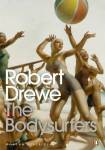
Robert Drewe, The bodysurfersHowever, before I discuss the book, I should explain for those who don’t know that “Australian Beach Pattern” is one of Australia’s iconic images. It was used on the program for the 2000 Sydney Olympics, on the cover of Robert Drewe’s The bodysurfers, and apparently features in curriculum materials about democracy in Australian schools. Merchandise featuring it is also amongst the most popular at the Art Gallery of News South Wales, where the painting has resided since 1965. But now, to the book …

It starts with a brief biography of the little-known British-born Meere (1890-1961), then moves on in Chapter 2 to analyse the poster (“1978 … 1938 150 Years of Progress”) he created for NSW’s 1938 Sesquicentenary celebrations. Referencing some of the tensions of the anniversary planning and using the careful eye for detail needed by an art critic, Eadie identifies features of the poster which depart from traditional poster style, and proposes that Meere’s aim was to subvert the “nationalistic hubris” of the anniversary story. Her analysis includes the suggestion that Meere alludes to Hieronymous Bosch’s “Ship of Fools” painting to comment on the practice of sending British outcasts to the other side of the world. She notes his inclusion of tall strong Aboriginal people on the shore, his placing of his own signature in proximity to these figures, and argues that his “choice of black to proclaim the joyous message of progress” was “deliberate and ironic”.

In this vein – analysing Meere’s painting style, use of colour, allusions to European paintings, historical context, and so on – Eadie discusses picture after picture, including of course “Australian Beach Pattern”, to build up her argument concerning Meere’s more subversive commentary on contemporary culture, and she is, overall, convincing. Her close reading of the paintings, mirrors, really, the close textual analysis literary critics do. And her challenge with Meere reminded me of that issue regarding the value to criticism of knowing the creator that I raised in my recent review of Bernadette Brennan’s book, because, in Meere’s case, it appears there are “no diaries or notebooks recording his artistic practice” so, says Eadie, “one can only speculate”.

And speculate she does, sometimes drawing long bows. These show the depth of her research, but with little evidence for what Meere actually knew, saw, experienced or thought, these bows rely on our agreeing with her assumptions – particularly regarding his alluding to other works. Her analysis of his “Diamonds are a girl’s best friend” painting is fascinating but relies on our making a number of leaps with her. In her chapter discussing the origins of the large number of “copies” of “Australian Beach Pattern” which regularly hit the market, the speculations build, but, as she does elsewhere, she admits to them, calling one idea “highly speculative”. Other times, she explains that she had to work from digital or reproduction copies of works in private hands, and that her analysis could change on seeing the work itself. None of this, however, gets out of hand, and her arguments are clear.

Discovering Charles Meere might sound dry and suited only to specialists, but not so. Eadie’s writing is engaging and refreshingly free of academic jargon and meaningless polysyllabic words. The book is short, nicely produced, and is well-illustrated, making it easy to follow her argument. As for the content, it should appeal to anyone interested in Australian art and 20th century Australian culture. I enjoyed my foray into the outfields of my reading interests!

aww2017 badgeJoy Eadie
Discovering Charles Meere: Art and allusion
Braddon: Halstead Press, 2017
96pp.
ISBN: 9781925043389

(Review copy courtesy Halstead Press)