Wendy Scarfe, The day they shot Edward (#BookReview)

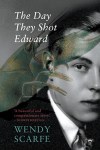
Wendy Scarfe, The day they shot EdwardThere’s something about novellas, about the way they can combine the tautness of the short story with the character development of a novel, and then hone in on an idea, undistracted by side-stories. This, in any case, is what Adelaide-writer Wendy Scarfe achieves in her book, The day they shot Edward.

Like her previous novel, Hunger town (my review), The day they shot Edward is a work of historical fiction. It’s set in Adelaide in 1916, in other words, half-way through World War One. Emotions run high, and 9-year old Matthew, through whose third-person perspective we see most of the events, is often uncertain, if not fearful. The plot is simple enough. We know from the title that Edward has died, and we know from the Prologue that Matthew is implicated in his death in some way, but was a child at the time. From the Prologue we move straight into a chronological narrative telling the story of Matthew, an only child who lives with his restless mother Margaret, his wise Gran (Sarah), and his father, the ironically named Victor, who is dying of tuberculosis on the sleep-out. There are three other main characters, the aforesaid Edward, who is an anarchist and whom Matthew idolises, an intimidating man in a cigar-brown suit, and Mr Werther, the German-born headmaster of Matthew’s school.

Matthew’s life is difficult. A sensitive lad, he is caught between his grounded, politically-aware, loving Gran and his self-centred, unhappy Mother. Gran, who approves of Edward’s activism on behalf of disadvantaged people, is constantly disappointed by her daughter’s readiness to put Matthew’s and anyone else’s interests behind her own desire for acceptance by the “better class”. Matthew himself is conscious of his mother’s self-centredness. Out with Gran and Mr Werther, for example, he feels included, part of “the special laughter and talk of Gran and Mr Werther”, but out with his Mother he feels “alone, beside her but separate” because although she sat with him

in reality she skipped out of her chair nodding, laughing, flirting and frolicking around the room. People always looked at her. She insisted that they did.

Complicating all this is that Edward is attracted to Margaret, and she’s happy to flirt with him but, “lost in her dream of social acceptance”, is unlikely to accept him when she does become free. However, lest you are now seeing Margaret as the villain of the piece, she deserves some sympathy. She had chosen poorly in marriage, and her lot is now doubly difficult in having to care for an ill man who hadn’t been a good husband in the first place. Her life is not easy, and her future not assured.

Anyhow, as if this wasn’t enough in Matthew’s life, there are the political tensions – Mr Werther is insulted by his students and is no longer welcomed amongst people who once socialised with him, and, worse, there are people wanting to trap Edward in the act of subversion. The net is closing in on Edward – as we knew it would from the Prologue.

We see these adult tensions and interactions through Matthew’s eyes – but we know the dangers lying behind the things that simply mystify (or, unsettle) him. I would call Matthew a naive narrator but I’m trying to recollect whether I’ve ever read a third-person naive narrator. Regardless, though, this is essentially what he is.

All this is to say that The day they shot Edward makes for great reading. Although we essentially know the end at the beginning, we do not know who the characters are, nor how or even why it happened. We don’t know, for example, who this Mr Wether is who is accompanying the now violin-playing grown-up Matthew in the Prologue. It is all told through a beautifully controlled narrative. There are recurring plot points – from the opening scene when Matthew decides to save the yabbies he’d caught to his ongoing concern about people liking to kill things, from Edward’s little box-gift for Margaret to the boxes of papers he asks them to store. There’s the quiet build-up of imagery, particularly the increasing references to red/blood/crimson colours. There’s the development of the characters through tight little scenes in the kitchen and living room, on the street and in the schoolyard, in cafes and at the beach. And there’s the language which is poetic, but never obscure.

Ultimately, this is a coming-of-age story. Sure, it’s about politics – about how difficult times turn people to suspicion, intolerance and cruelty – and in this, it’s universal. We see it happening now. But it is also about a young boy surrounded by adults whom he doesn’t understand. He’s only 9 when it all comes to a head – young for a coming-of-age – but as he considers in the Prologue:

Had surprise ceased that tragic night? Or did his understanding as a man mark that moment as his step into awareness?

In this, it’s also universal. Matthew learns some difficult truths the night Edward died – but those truths include some positive ones, such as that love can continue after a person dies, that good choices can be made, and that not all people kill things. A lovely, warm, read.

Lisa (ANZLitLovers) also enjoyed this book.

AWW Badge 2018Wendy Scarfe
The day they shot Edward
Mile End: Wakefield Press, 2018
124pp.
ISBN: 9781743055199

(Review copy courtesy Wakefield Press)

Eleanor Limprecht, The passengers (#BookReview)

The passengers is Eleanor Limprecht’s third novel, but the second I’ve read, that being Long Bay (my review) based on the life of early twentieth century abortionist Rebecca Sinclair. The passengers is also a work of historical fiction, though not specifically based on one person’s experience. Instead, it’s about the Australian war brides who married American soldiers during World War 2 and followed their husbands to the USA after the war.

It is also somewhat more complex in conception and structure than Long Bay’s simple chronological third person narrative. It is framed around a journey, that of war bride Sarah who, through the course of the novel, travels back to Australia, on a cruise-ship, after a 68-year absence. She is accompanied by her circa twenty-year-old American grand-daughter Hannah, who has anorexia nervosa. The narrative comprises alternating chapters in Sarah and Hannah’s first person voices: Sarah’s is primarily her telling her story to Hannah, while Hannah’s is more her internal reflections on her life and her grandmother’s story.

Now, I’m going to get this voice decision out of the way first, because I found it a bit problematic. In her Acknowledgements, Limprecht thanks some people for helping her to hone her focus, and for showing her “how not to be scared of trying a different structure”. Good for her, I say. There’s nothing wrong with trying a different structure. This alternating-voice one, which is not particularly new or out-there, can be used effectively to throw light on two different perspectives and experiences, which is essentially what it does here, though war bride Sarah’s is the main story being told. Hannah never comes quite as alive as Sarah. She provides neat segues between episodes in Sarah’s story, and creates some parallels in their respective experiences, but she, and her condition, don’t really add significantly to the novel. Given this proviso, however, Limprecht does capture her illness authentically, and doesn’t trivialise it by presenting a simple resolution.

Still, the structure works. My issue is more the first-person voices, particularly Sarah’s storytelling one, because it constrains the narrative to the sorts of things Sarah would tell a grand-daughter. She is surprisingly open about deeply personal things like sex with her husband/s, but this narrative approach reduces the opportunity for deeper, more internal, reflections about the emotional, social, and mental challenges faced by war brides.

But now, that discussed, I’ll get on to all the positive things, because this is an enjoyable read. For a start, Limprecht’s evocation of Sarah’s life in Australia, first on a dairy farm south of Sydney and then in Sydney during the war, beautifully conveys life at that time, and captures the strangeness of those days:

How was anyone to make sense of it? The world was upside down, flipped and spinning backwards–women working men’s jobs, street and railway station signs taken down or covered in case the Japs landed, coupons needed just to buy butter, tea, sugar or meat. … The army and navy requisitioning anything they wanted, anything they needed for war. Japanese subs in Sydney harbour.

When death is close, you have to live.

It’s no wonder, as naval officer Jim says to war bride Sarah now en-route to Virginia, that the war “made us do strange things.” For many young women like Sarah, those strange things included marrying young American men whom they barely knew, and not fully comprehending the post-war implications of these weddings, which was that they would be expected to live in America!

Limprecht clearly did her war-bride research well – and I love that she details it at the end of the novel. It shows in the vivid way she relates the experience of these brides as, accompanied by Red Cross workers, they travelled by boat to America and then by train to their husbands all over the country. This part of the narrative not only felt authentic, but it was also highly engaging. At one point Sara describes herself as “barrelling blindly forwards” with “no idea of what world I would enter.” Brave stuff, really. Sarah’s journey continues after her arrival in Virginia, taking us from her early 20s to the present when she is a widow, and retired vet, in her late 80s.

As you’ll have realised by now, the novel’s unifying theme is the journey – a theme I discussed only recently in my post on Glenda Guest’s A week in the life of Cassandra Aberline. Cassie’s journey was about deciding whether she’d made the right decision to leave Perth when she was around 20. Sarah’s is somewhat more complex. It’s about reconnecting with her past, and about putting right, or resolving, the lies she had told both before and after leaving Australia. There’s a journey for Hannah too. She thinks she is there to help her elderly grandmother, but in fact her grandmother had invited her because she hoped it would help Hannah get well. The relationship between Sarah and Hannah is a lovely part of the novel.

There are also several references in the novel to John Steinbeck’s The grapes of wrath, which Sarah reads on her train journey across America. Although the Joads’ travels are rather different from Sarah’s, she sees some similarities to her family’s farm struggles in Australia, and she sees value in Tom Joad’s practical philosophy that “There ain’t no sin and there ain’t no virtue. There’s just stuff people do.”

Overall, then, The passengers is an engaging book about a by-product of war – and the long tail of its aftermath – that has tended to be forgotten in the ongoing focus on men and their experiences. For this, as well as for its lively descriptions of war-time Sydney and of the war brides’ journey by boat to America, I’d recommend it.

Lisa (ANZLitLovers) also enjoyed the war-bride story.

AWW Badge 2018Eleanor Limprecht
The passengers
Sydney: Allen & Unwin, 2018
336pp.
ISBN: 9781760631338

(Review copy courtesy Allen & Unwin)

Sarah Krasnostein, The trauma cleaner (#BookReview)

Sarah Krasnostein, The trauma cleanerI’m ashamed to say that I hadn’t planned to read Sarah Krasnostein’s biography The trauma cleaner. I feared it might be one of those sensationalised, voyeuristic stories, but how wrong I was. I thank Brother Gums and partner for this great birthday gift.

I was wrong because … no, let me start with why I thought what I thought. The subject of this biography, Sandra Pankhurst, is a transgender woman, now in her early-sixties. She’s been a drag queen and a sex worker, and now has a trauma cleaning business, which means she cleans houses after murders and other difficult, messy deaths. It also means that she cleans the houses of hoarders, particularly those whose hoarding has resulted in squalid living conditions. And there’s more. Pankhurst was also an abused, neglected and rejected adopted child, and she experienced the violent death of her pregnant girlfriend. You can see why I feared what I did.

But, I couldn’t have been more wrong, for two main reasons – Sarah Pankhurst is a compelling human being, and Sarah Krasnostein a wonderful writer who knows her subject well. I’m not surprised that the book is doing well on the award circuit this year, including winning the 2018 Victorian Prize for Literature.

First Pankhurst

Born apparently a boy, and adopted when 6-weeks-old by a couple to replace their son who’d died during childbirth, Pankhurst’s life was fraught from the start. He was adopted because his parents had been told they couldn’t have more biological children, but his life was upended five years later when the inevitable happened. A son was born, followed by another two years later. His parents told him they’d made a mistake, because now they had two sons, and proceeded to increasingly exclude him from the family circle. He was physically and emotionally abused and neglected. Unbelievable – except that we all know, don’t we, that human beings are capable of unbelievable cruelty.

Eventually, Pankhurst left home, married, and had children, but his gender dysphoria began to affect his ability to live the life he’d forged. He left his family, and over the next couple of decades was a drag queen and sex worker, and underwent sex reassignment surgery in its early days in Australia, to become the person now known as Sandra. She lost a pregnant partner through a vicious assault by a club bouncer, and worked in the brothels of Kalgoorlie. All this at a time when gay and transgender people were ostracised and brutalised, particularly by those in authority. Then she married an older man, George. She ran a small hardware business with him, and became a respected leader in her community. It was after this business failed that Pankhurst moved into cleaning and thence to her current speciality of trauma cleaning.

Now, popular wisdom would say that a person so neglected and abused would end up abusing others, or, at the very least, be bitter, but not so Pankhurst, which makes her an amazing being, or, as Krasnostein says, “utterly peerless”. Here is just one example of her tender but firm care of a hoarder – Janice, whom she and her team struggle to keep from going through the bags of “rubbish” being thrown out.

And then, speaking to herself [Janice this is], sharp and low, ‘Why do you do this? You know what rubbish is.’

‘Because you see yourself as rubbish,’ Sandra says. ‘Time to start seeing the good in life. You deserve it.’ The angel statue suddenly slips off the couch and bounces on the carpet; a wing snaps off.

‘Is that a bad omen?’ Janice asks, looking up at Sandra frantically.

‘You know what it’s saying?’ Sandra answers with a smile. ‘I’m broken but I’m not dead.’

And this is what she does, time and time again, building up her damaged clients, gently guiding them to make better decisions, and, above all, treating them with absolute dignity, all the while surrounded by a squalor most of us would run a mile from.

And now Krasnostein

But what makes this book so captivating is Krasnostein’s skills in telling it to reveal Pankhurst’s extraordinariness. I’ll start with the mundane, the book’s structure. It begins with an untitled preface in which Krasnostein introduces Pankhurst, and then moves into the first and unnumbered chapter titled Kim, who turns out to be one of Krasnostein’s clients. From here we move to the numbered chapter 2 which begins the chronicle of Pankhurst’s biography with her childhood. The book then progresses in alternating named and numbered chapters – switching that is, between clients and biography – until the last two chapters which are both numbered. This structure does a number of things, one of which is to show, as we go, how Pankhurst’s own experiences have made her the empathetic, but no-nonsense, trauma cleaner (no, person) she is.

This brings me to the book’s genre – a biography of a living person. To write it, Krasnostein had to traverse several mine-fields, the first being the presence of the subject. It’s clear that Krasnostein is close to her subject, which could make us question her objectivity. Fortunately, I’m not a huge believer in objectivity, but I do believe in being thoughtfully analytical, and this is what Krasnostein achieves. She doesn’t hide her admiration of Pankhurst. Indeed she addresses Pankhurst in her “preface” calling the book “my love letter to you”.

Related to this minefield is the fact-gathering one. There are gaps in Pankhurst’s memory. She is not, Krasnostein says, “a flawlessly reliable narrator”:

She is in her early sixties and simply not old enough for that to be the reason why she is so bad with the basic sequence of her life, particularly her early life. Many facts of Sandra’s past are either entirely forgotten, endlessly interchangeable, neurotically ordered, conflicting or loosely tethered to reality.

Krasnostein suggests various reasons for this lack of reliability, including drugs, trauma, and the fact that she has not spent her life surrounded by people who have always known her and with whom she’s shared life’s stories again and again, building up a personal history. Makes sense – and suggests another fallout from the ostracism and neglect experienced by people like Pankhurst.

One of these Pankhurst-memory-gaps relates to her first marriage. Whenever Krasnostein questions her about this time in her life, about the way she left her wife and children, pretty much high-and-dry and with no ongoing interest or involvement, Pankhurst, who exhibits such empathy in so much of her life, seems unable to answer. Krasnostein writes – and this is also a good example of her gorgeous style and of her attempt to get at “the truth”:

When I ask these questions, Sandra genuinely seems to be considering them for the first time and uninterested in pursing them further. We have floated across the line and here we stay, becalmed, past her outer limits. The mediaeval horizon where you simply sailed off the edge of the earth or were swallowed by the monstrous beasts that swam there.

With a biography of a non-famous living person, there are few documentary sources against which the biographer can validate what the subject says, but there are other people. And Krasnostein speaks to them, including this first wife, Linda, who was treated so poorly but who seems to bear no animosity. She’s amazing too. That’s the thing about this book: there’s such a display of basic human compassion amongst people, many of whom have so little.

And finally, if you haven’t already noticed, there’s the language. It frequently took my breath away with its clarity and freshness. Here’s a description of Sandra after she’d experienced a brutal rape while working in a Kalgoorlie brothel:

It’s not the first time she’s had crippling pain that she pushes into a tight little marble and drops down through the grates of her mind, somewhere deep below.

It may be that I loved this book so much because I had no real expectations, but I think it’s more than that. The trauma cleaner is an elegantly conceived and warmly written book about a woman who could teach us all something, I’m sure, about tolerance, acceptance, and respect. With a red-face, I recommend it.

AWW Badge 2018Sarah Krasnostein
The trauma cleaner: One woman’s extraordinary life in death, decay & disaster
Melbourne: Text Publishing, 2017
261pp.
ISBN: 9781925498523

Helen Garner, The last days of chez nous, and Two friends (#BookReview)

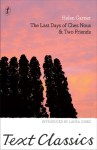
Helen Garner, Last days of chez house & Two friendsHelen Garner must have loved prize-winning book designer WH Chong’s cheeky cypress-dominated cover for the Text Classics edition of her two screenplays, The last days of chez nous and Two friends. You’d only realise this, though, after reading her Preface, in which she explains that she had incorporated cypresses into her screenplay for their “freight of meaning”, but that, because an appropriate location could not be found, they were replaced by a spire! For the published screenplay, however, Garner says she’d taken “the liberty of removing the spire and putting the cypress trees back in.” Love it.

I enjoyed reading this book much more than I expected. I’ve seen and enjoyed both films – a long time ago, as they were made in 1992 and 1986, respectively – but reading screenplays didn’t seem very appealing. How wrong I was. I’m glad, therefore, that Text decided to republish this volume in its Text Classics series. As always, they’ve value-added by commissioning an expert to write a commentary, which, in this case, given there was already an author’s Preface from the original 1992 edition, they appended an Afterword. It’s by well-regarded Australian scriptwriter, Laura Jones (who, coincidentally, is the daughter of the late Australian writer, Jessica Anderson.)

Both the Preface and the Afterword are informative and engaging, but I’ll start by discussing the plays. They are presented in the book in reverse chronological order of their writing, which means The last days of chez nous comes first. Both stories chronicle relationship breakdowns. This is common fare for Garner, but here as in all her work I’ve read, it’s not boring. Her skill lies in the intelligent, clear-sighted way she explores these situations, and in her ability to inject both humour and warmth. She’s never maudlin, and she never judges.

So, in The last days of chez nous, the breakdown is the marriage of Beth and her French husband JP, while in Two friends it’s the friendship between two 14-year-old girls, Louise and Kelly. Both, as is Garner’s wont, draw from her life. She was married to a Frenchman, the marriage did break up, and her husband did fall in love with and eventually marry her sister, most of which happens in the play. In Two friendsBernadette Brennan reports, she drew on a friendship her daughter had had, but, when she saw the film, she realised that it was “really, in a funny sort of way, about me.” And the “me” character was not the sensible daughter, based on her own daughter, but the friend from the troubled background.

In her Preface, Garner tells how the impetus to write her first play, Two friends, was money. She needed it at the time, so when the idea was put to her:

I rushed home and rummaged in my folder of unexamined ideas. Out of it stepped Kelly and Louise, the young girls who became Two friends.

She continues that, although money had been the initial driver, she found, as she got down to it, the writing was “powered by the same drives as fiction” – curiosity, technical fascination, and “the same old need to shape life’s mess into a seizable story.”

This latter point is important, not only because it confirms her lifelong subject matter, “life’s mess” aka relationships, but because it answers those criticisms that she “just” presents her journals. She doesn’t, she “shapes” what she’s experienced (and seen) into “a seizable story”. She also shares in the Preface some of the things she learnt from film writing, including the challenge of working collaboratively which is something writers don’t usually have to do, the “priceless art of the apparently dumb question”, and that she was “forced to learn and relearn the stern law of structure.” She explains, using Last days of chez nous, how her “perfectly smooth narrative curve” was turned into “a little Himalaya of mini-climaxes”.

This is a good place, though, to talk about the structure of Two friends which chronicles the girls’ relationship breakdown in reverse. That is, we start at the point where it appears to have broken down and move back through the months to the peak of their togetherness. Experienced scriptwriter Laura Jones discusses this in her Afterword:

The story … is daringly told in the present tense, backwards, although each of the five parts is told in the present tense, forwards. We hold these two storytelling modes in our minds at once, the forwards momentum and the backwards knowledge […] Such deft playing with time–elegant, formal and musical–offers great storytelling pleasure, as we move from dark to light, from the painful separation of two adolescent girls to the rapturous closeness of ten months earlier.

She’s right, it’s clever because the end is bittersweet – we love the close friendship but we know what’s coming.

Now I want to share some of the experience of reading these plays. Here is an example from early in Two friends when Matthew, Louise’s wannabe boyfriend, tells her he’s seen Kelly:

LOUISE: What did she look like?
MATTHEW: All right.

He shrugs; like many boys he is not good at the kind of detail Louise is after.

These instructions to the actor about his character also enliven the reading. It’s the sort of sentiment you’d find in a Garner novel, though perhaps expressed a little more creatively.

And here’s some scene-setting in the next part, where Louise, Matthew and Kelly are together:

Kelly plays up to Matthew–almost as if she can’t help it. (Kelly will become one of those women who, when there’s a man in the room, unconsciously channel all their attention towards him.)

Similarly, in Last days of chez nous. Here is a scene where Beth has eaten some French cheese that JP has been storing carefully until it reaches maturation. He’s very upset, and eventually Beth senses the importance to him:

Beth is silent. They stand looking at each other. She has not quite succumbed, but for once he has her full attention–and this is so rare that he does not know what to do with it …

All this is probably what always happens in scripts, but Garner’s way of describing the situations and characters certainly made the screenplays more than just readable. They were engrossing.

Of course, I read Shakespeare’s (and other) plays at school – but that was school and, although I enjoyed them, I haven’t really gravitated to reading plays/scripts since. I won’t be quite so cautious in future.

Do you read them?

AWW Badge 2018Helen Garner
The last days of chez nous and Two friends
Melbourne: Text Publishing, 2016
243pp.
ISBN: 9781925355635

(Review copy courtesy Text Publishing)

Glenda Guest, A week in the life of Cassandra Aberline (#BookReview)

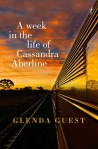
Glenda Guest, A week in the life of Cassandra AberlineWest Australian author Glenda Guest made quite a splash with her first novel, Siddon Rock, though unfortunately I didn’t read it. It won, for example, the Commonwealth Writers’ Prize for Best First Book in 2010. I was very keen, therefore, to read her second novel, A week in the life of Cassandra Aberline, when the opportunity came my way.

There is a mystery and a question at the heart of this novel, and protagonist Cassie’s Alzheimer’s diagnosis in the opening chapter provides the impetus for their resolution. The mystery is implied in the opening page when Cassie accepts a “brown-paper-wrapped-package” and promises someone something. We soon learn that the package contains a good deal of money, but what the promise is, and why, unfolds through the course of the novel. The question appears on page 8, and is, “What if I was wrong?” About what?

Before I discuss that, though, I want to mention the novel’s organising motif, which is a train trip, assigning this book to the “journey” genre (though perhaps “genre” isn’t quite the right word.) In this genre (or form?), the plot is framed by a journey, by the end of which the protagonist resolves something and/or achieves some sort of personal growth. These stories are as old as literature. The Odyssey and The pilgrim’s progress are obvious examples, but Cormac McCarthy’s The road is a more recent one. Sometimes, the journey is full of adventures, of a series of trials that must be overcome, but some are quieter, more internal. A week in the life of Cassandra Aberline is one of these. There is a physical journey, but most of the action is in Cassie’s mind.

So, why does she take this journey? Well, I’ve implied it already, but will expand a bit more. Cassie left Perth, somewhat suddenly, 45 years before the novel opens. It’s clear that whatever it was that prompted this departure has remained unresolved, but now, with her Alzheimer’s diagnosis, she wants to be sure she was right – and if she wasn’t, because she does admit this possibility, she wants to do whatever is “needed to make amends”. And why does she want to do this? Part way through the trip she reveals the underlying reason:

I should like to understand myself properly before it is too late.

In other words, this is a true journey story, so much so that while we might think she is going home to confront the people she left, this is not so, as she clarifies near the end:

She had imagined her search for the truth would have been done by the time the Indian Pacific reached its destination, and that she’d be on a plane back to Sydney today. That was her expectation, but inconstant memory has not cooperated – it has twisted and turned, throwing up irrelevant and forgotten things, and so she has to stay.

She had chosen the train then, not just because it was the way she’d left all those years ago, but because it would give her the time think through the situation.

On the surface, the novel has a simple chronological arc following the train journey, but as Cassie travels we flash back to her childhood and young adulthood in WA’s Wheatbelt, and gradually piece together her story. We learn that she’d lived with her parents and an older sister, that her mother had died just before she started high school, and that she was very close to a neighbouring farm family, the Blanchards, who comprise Mary, her husband Hec, and their identical twin sons, Dion and Coe. Indeed, she spent more time with them than with her own family, particularly after her mother died, as she felt superfluous at home and was warmly welcomed by Mary who didn’t have a daughter.

However, things go awry, as they are wont to do in situations like this – and it’s precipitated by the Vietnam War, further complicated by romance and the fact that identical twins are involved. And here is where I should say that the novel plays with another literary motif – the twins one. However, this and the journey motif never overwhelm the focus on Cassie, who captures our attention from the start, and retains it throughout. She’s an engaging, well-formed character, who’s both resilient and vulnerable, warm and reserved. She has suffered, but she is never self-pitying.

The novel’s success, in fact, rests on Cassie’s ability to engage us, because we meet few other characters directly, albeit we meet several indirectly through her flashbacks. The story is told third person, but is limited to Cassie’s point of view. The over-riding theme is memory – memory which is of course threatened by her Alzheimer’s but which she needs if she is to work through the problem she has set herself. As she struggles to remember what happened in the past – to see if she can make sense of it – she is confronted by memory’s slipperiness (which may not always be related to her diagnosis). Here she responds to Jack, whom she meets on the train and to whom she admits that “a single moment changed everything”:

But memory slips and slides around, she says, so you never really know if what you remember about that young person is true. You can never be sure of what happened at any given moment. I don’t want to end with a question mark still in my mind, but maybe I’ll never really know what was right or what was wrong.

There’s one more significant thing that I haven’t mentioned, and that’s Cassie’s career, as an actor and then university drama teacher. Her real specialty, her love, is Shakespeare, and this too frames the novel – alongside the journey and the twins. Late in the novel, she reflects on how she teaches her students:

Look at Shakespeare, she will say, at how he leaves room for interpretation, for each actor to take a character and make it their own. That’s what good actors do – work from the details to create a believable persona, to make the watcher believe the character on the stage is true.

She is trying to understand herself, the life she has created …

And so, in a very real way, this novel is all about the journey. There is a plot – and it’s a powerful almost-melodramatic-in-that-Shakespearean-way one – but the main interest is Cassie, herself, and her predicament, past, present and future. In the end, the question is not whether she was right or wrong, but something else entirely. An absorbing read.

Lisa (ANZLitLovers) enjoyed this novel too.

AWW Badge 2018 Glenda Guest
A week in the life of Cassandra Aberline
Melbourne: Text Publishing, 2018
206pp.
ISBN: 9781925603262

(Review copy courtesy Text Publishing)

Jane Austen, Sanditon (Unfinished) (#Review)

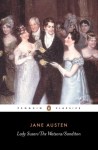
Jane Austen, Lady Susan, The Watsons, Sanditon

I first read Jane Austen’s unfinished novel, Sanditon, in the early 1970s, when I was deep into my love of Austen and had to read everything she wrote. This meant reading her two unfinished novels (the other being The Watsons which I’ve written about here twice before) and her Juvenilia, parts of which I’ve also discussed here. A little later I read the Sanditon completion “by Jane Austen and Another Lady” that was published in 1975. Since then I’ve read Sanditon again, but before I started this blog.

Austen started Sanditon in January 1817, and wrote 12 chapters before leaving it in mid-March, presumably because of her ill-health. She died in July of that year. Like The Watsons, it tantalises Austen fans – even moreso in a way, because we have no information about how she planned to finish it. Here’s what we have …

The novel is set in Sanditon, which Mr Parker and his partner, Lady Denman, are developing into a seaside resort. Due to a carriage accident at the novel’s opening, Mr and Mrs Parker stay at the home of the Heywoods in the country some distance from Sanditon. When they return to Sanditon two weeks later, they bring the Heywoods’ eldest unmarried daughter, the 22-year-old Charlotte, with them. Much of the rest of the novel is seen through her eyes as she meets the various residents of, and visitors to, Sanditon. Like all of Austen’s novels, it is set in a small place and focuses on a few families. But, was it moving in new directions?

The book’s subject is the new fascination with health, and the associated belief in the value of sea-bathing. Some of the fragment’s best comedy comes from descriptions of Mr Parker’s two sisters and brother, Susan, Diana and Arthur, and their various ailments, most, if not all, of which seem imaginary. Indeed, sensible Charlotte suspects “a good deal of fancy” in their “extraordinary state of health.” In her opinion, the number of their “disorders and recoveries” that are “so very much out of the common way, seemed more like the amusement of eager minds in want of employment than of actual afflictions and relief”. She suspects most of their sufferings were

from fancy, the love of distinction and the love of the wonderful. – They had charitable hearts and many amiable feelings – but a spirit of restless activity.

They are kind, and well-intentioned, but she feels

there was vanity in all they did, as well as in all they endured.

Seekers of information about early 19th century health attitudes and practices can learn something from these few chapters.

But there’s more to Sanditon than this health and hypochondria theme, and it relates to money. Of course, money features in Austen’s previous books, but mostly in association with marriage prospects, as it does also in Sanditon. But there’s something new in this novel, something broader about how money operates – about the making of money, and  consumerism. Mr Parker’s sisters are actively involved in finding people to go to Sanditon to take advantage of its health benefits. Mr Parker is thrilled to see cottages in the village “smartened up with a white curtain and ‘Lodgings to let’” signs, but Lady Denman is concerned that lodgings are “underlet”. She is therefore pleased to hear about the possibility of more people coming, through the exertions of Mr Parker’s siblings: “That sounds well”, she says. “That will bring money”. These people include West Indians, who are known to have “full purses” and to “spend more freely.” Lady Denman knows, however, that ensuring stable economics is not simple:

But then, they who scatter their money so freely, never think of whether they may not be doing mischief of raising the price of things – and I have heard that’s very much the case with your West-injines – and if they come among us to raise the price of our necessaries of life, we shall not much thank them Mr Parker.’

Before this, just after Mr Parker had enthused about Sanditon, Mr Heywood had said:

‘Yes – I have heard of Sanditon,’ replied Mr Heywood. – ‘Every five years, one hears of some new place or other starting up by the sea, and growing the fashion. – How they can half of them be filled, is the wonder! Where people can be found with money or time to go to them! – Bad things for a country; – sure to raise the price of provisions and make the poor good for nothing – …’

All this suggests Austen was aware of the changes coming to post-war England. What a shame, she didn’t get to show us what she was thinking.

I’m not going to explore this idea further, nor the tantalising appearance in Chapter 12 of “half-mulatto” Miss Lambe, but move on to a couple of delicious “bits”. One that intrigued me this read is a passing reference to something that’s often discussed, now, regarding the degree to which we separate art from the artist where the artist’s values or behaviour contradict our own. In Sanditon, the man we expect to be the villain, Sir Edward, praises poet Robert Burns. However, our sensible commentator Charlotte is more measured:

‘I have read several of Burns’ poems with great delight,’ said Charlotte as soon as she had time to speak, ‘but I am not poetic enough to separate a man’s poetry entirely from his character; – and poor Burns’s known Irregularities, greatly interrupt my enjoyment of his Lines.

If Charlotte is Austen’s mouthpiece and our guide to life in Sanditon, as she seems to be, this could also be Austen’s condemnation – but with so little of the novel finished, I wouldn’t want to say definitively. However, I love that she raises this contentious issue.

Another “bit” I want to share relates to Austen’s awareness of “modern” expressions. Here she is on the introduction of two sister to Sanditon society:

… the Miss Beauforts were soon satisfied with ‘the circle in which they moved in Sanditon’ to use a proper phrase, for everybody must now ‘move in a circle’, – to the prevalence of which rotatory motion, is perhaps to be attributed the giddiness and false steps of many.

This is pure Austen, complete with a sting in the tail.

I’ll finish here by saying that although Sanditon comprises an early draft of just 12 chapters, and we don’t know where Austen was going, there’s much to enjoy in it – and to ponder, particularly regarding her writing direction – if you love Austen’s work.

Jane Austen
“Sanditon”
in Lady Susan, The Watsons, Sanditon
London: Penguin Books, 1974
ISBN: 9780141907901 (eBook)

Kate Chopin, Her letters (#Review)

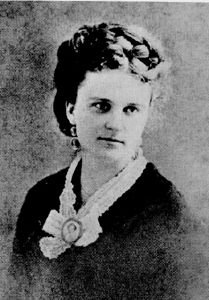
Kate Chopin

Kate Chopin (Public domain, via Wikipedia)

There are a few American authors who, when they pop up as a Library of America (LOA) Story of the Week, I try to read. These include Edith Wharton, Willa Cather and Kate Chopin. I don’t always manage to read them, but I have read the latest Kate Chopin story they’ve published, “Her letters”. And my, what a powerful one it is. Yes, I know, most of her stories are powerful, but this is certainly up there.

The story is pretty simple, plot-wise, though I shall avoid spoiling it as you may wish to read it from the link below. It starts with a woman, sitting by a “generous wood fire … in an ample fireplace” though outside is “a leaden sky in which there was no gleam, so rift, no promise”. She’s decided that she needs to destroy some letters that, we soon realise, relate to an adulterous affair. She’s been meaning to do this for four years in fact, but they’ve “sustained her … kept her spirit from perishing utterly”. However, she believes her days are numbered and, like many diary-writers and letter-owners, she fears their impact on those left behind, particularly on one “near to her, and whose tenderness and years of devotion had made him, in a manner, dear to her.” Her husband, in other words. The “in a manner” here is telling, isn’t it?

But, she can’t do it. Chopin’s description of her pain at the idea of losing them is visceral. What should she do? She lights on a solution, which is to leave them “in charge of the very one who, above all, should be spared knowledge of their contents.” So, she ties them back up, and leaves them with this note:

“I leave this package to the care of my husband. With perfect faith in his loyalty and his love, I ask him to destroy it unopened.”

Of course, she does die first, and he finds the bundle of letters with the note. (On a day much like that day we’d met her: “The day was much like that day a year ago when the leaves were falling and rain pouring steadily from a leaden sky which held no gleam, no promise.”) What do you think he does?

It’s another powerful story from Chopin, about love, passion, adultery – and also honour and trust. It is a story of its time, but there’s a universality to it too. What is so good about it, though, is the controlled way Chopin unravels the plot, and her language. It’s a little full-blown to our ears, perhaps, but she sustains melancholic tones so well, while at the same time conveying character and emotion.

Without spoiling the ending, I’ll share another excerpt. When the husband finds the bundle of letters, he guesses, of course, that they contain a secret, one that may unlock to him something about this wife whom he’d known “to have been cold and passionless, but true, and watchful of his comfort and his happiness.” He’s affected, but he ponders:

… she had embodied herself with terrible significance in an intangible wish, uttered when life still coursed through her veins; knowing that it would reach him when the annihilation of death was between them, but uttered with all confidence in its power and potency. He was moved by the splendid daring of the act, which at the same time exalted him and lifted him above the head of common mortals.

The conclusion is predictable when you get there, but Chopin leads you carefully along with the husband as he works through the problem. The story has no simple answer, and certainly no condemnation, which is Chopin’s way. She doesn’t judge or pontificate. Rather, she leaves it open for (or, forces!) the reader to consider the ways in which our actions affect others, not to mention the issue of love, passion and marriage, and the accommodations we do or don’t make.

As with other stories by her – including “Fedora”, the last one I reviewed – Chopin didn’t immediately find a publisher for “Her letters”. LOA says:

When she finished the story in December 1894, Chopin sent it off to The Century, which had published several of her previous submissions. By this time Chopin was a well-known and respected writer, but the story was rejected—almost surely because it dealt with a woman’s adulterous affair. The magazine’s editor, Richard Watson Gilder, “felt that fiction should be pleasant and avoid the horrifying, the indelicate, or the immoral,” as Chopin scholar Per Seyersted puts it.

Vogue, though, had no such compunctions – and published it as they had other previously rejected stories of hers. One day I’ll read a biography of her …

Let me know what you think, if you read it (just 8 pages) at the link below.

Note: My other Kate Chopin reviews are A pair of silk stockings, After the winterA respectable womanDésirée’s baby, Morning walk and Fedora.

Kate Chopin
“Her letters”
First published: Vogue, April 11 and 18, 1895
Available: Online at the Library of America

Charlie Archbold, Mallee boys (#BookReview)

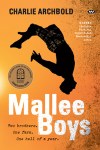
Charlie Archbold, Mallee boysReading synchronicities strike again. Both my last read, John Clanchy’s Sisters, and this one, Charlie Archbold’s Mallee boys, are family stories with a guilt about the death of a family member at their centre. Both, too, are set in non-urban areas, Clanchy’s in coastal New South Wales and Archbold’s in the dry Mallee region of western Victoria. Here, though, the similarities end. Clanchy’s book chronicles a month in the lives of three late-middle-aged sisters, and the person who died was their four-year-old baby brother – a long time ago. Also, Clanchy is a male writer, writing about women, in third person voice. Archbold, on the other hand, is a female writer writing about men. Her subjects are farmer, Tom, and his two sons, Sandy and Red, 15 and 18 at the beginning. The death they are dealing with is their wife and mother, who died just a year before the book opens. This novel, which spans a year, is told in the alternating first person voices of the two brothers.

Mallee boys, however, also reminds me of another book about a farming father and two sons whose wife and mother had died, Stephen Orr’s The hands (my review), but while Orr’s book sits squarely in the literary adult fiction fold, Mallee boys is Young Adult fiction. Its concerns are, therefore, a little different, but it is worth looking at. It won the 2016 Adelaide Festival Unpublished Manuscript Award, and has now been shortlisted for the Children’s Book Council of Australia Book of the Year for Older Readers Award.

Now, that was a long intro – even for me – but I have managed, I think, to include in it a fair introduction to book and its main storyline. I’ll add that while the story is told in the alternating voices of Sandy and Red, the main protagonist is Sandy. He starts and ends the story, and he is presented as the more thoughtful, more reflective, of the two boys. Also, he is not the one carrying the guilt. This is his brother, who was with his mother when she, a pedestrian, was hit by a car.

Like Clanchy with his women characters, Archbold captures the voices of the boys and their father well, their tensions, their squabbles, and most of all the challenges they face in running their home without a mother’s touch! “Chops” for dinner again tonight says it all. Late in the novel, the father Tom admits to being lonely, but his pain is not the focus, this being a YA novel. Sandy is in Year 10, and as a rural boy, is at schooling cross-roads. Their farm can’t afford to send him to boarding school in the city, but can he get a scholarship? Red, on the other hand, is not the scholastic type. He has left school and works the farm with his father, with the usual father-son tensions. Added to this are the boys’ relationships with their friends – not all of whom are “suitable” but Red, in particular, can’t be told and needs to learn the hard way. And, of course, there are girls.

This is all told naturally, neither sensationalised nor sentimentalised, but with enough drama, and humour, to keep readers, particularly the intended audience, interested. I wouldn’t call this a crossover novel exactly, but I did enjoy the read despite its YA intent.

Underpinning the narrative, the plot, is the setting, and this also the London-born Archbold, who has lived and worked as a teacher in the area, evokes beautifully. The setting is the Mallee, which borders the riverland area in which Laguna’s The choke (my review) is set. It’s a dry area, known for sheep and dryland crops like wheat. Farming is tough here, but communities are close. This comes through too, with locals helping each other out, in the natural way people do, something which is surely good for young readers to see and relate to. I do love to see good – but realistic – role modelling in media!

In addition to this, there’s the language. I enjoyed the descriptions of the Mallee, such as Sandy’s of Lake Bonney:

When the river runs low, the water in the lake huddles to the middle, leaving it fringed with smelly sticky mud. It’s a strange place. Because of the drought a lot of the trees around the edge have died. Bony old river red gums stick in the ground like a perching cafe for pelicans and kookaburras.

Tom, the father, tells Red what’s kept him going, despite his loneliness:

“I know it’s the rhythms of nature that have kept me going. This isn’t a glamorous landscape, but it’s in my veins.”

And I enjoyed how the boys describe feelings. Here’s Sandy describing his brother Red:

He acts hard because it gives him control but I know he’s all mushed up inside. Like a beetle with soft guts crammed in under the shell.

And here’s Red, just after his girl has suddenly broken up with him without explaining why:

And so she’s left me hanging, like a daggy bit of wool caught on a fence. Knotted in with no way to break free.

As you’d expect in a coming-of-age story, lessons are learnt, wisdom gained. Sandy says near the end, and this is surely one of the novel’s themes:

… because time doesn’t heal all wounds, like Dad once told me, but it does scab over them.

It sure does. And every now and then those scabs break off and have to re-form, n’est-ce pas? An effective metaphor I think.

Mallee boys, then, is an engaging book about growing up, about facing some of the hardest challenges, and most of all about being male. It’s a book that has something to offer both rural and urban young Australians, and I hope it gets widely read.

AWW Badge 2018Charlie Archbold
Mallee boys 
Mile End: Wakefield Press, 2017
285pp.
ISBN: 9781743055007

(Review copy courtesy Wakefield Press)

John Clanchy, Sisters (#BookReview)

John Clanchy, SistersLocal writer John Clanchy has appeared a couple of times in this blog – as the author of the short story collection, Six: New tales (my review), and as the person launching Stephanie Buckle’s collection, Habits of silence (my review) – but never for one of his novels, until now. Sisters has an interesting history: it was originally drafted at the La Muse writers retreat in southern France in 2008, and has now been published by the retreat publisher, La Muse Books.

Given I introduced the versatile, and too little known, Clanchy in my review of Six, I’ll turn straight to discussing this latest novel of his. Briefly, Sisters tells the story of three late middle-aged sisters and the month they spend together at the family home on the north-central coast of New South Wales where the eldest, Sarah, now lives. The other two sisters, Grace and Rose, are twins. There is a mystery about why Sarah has asked them to come, though Grace is pretty sure she knows why, and we readers are pretty sure we know what it is that Grace believes she knows! It is, however, a little more complex than that – as you would expect. So, the first thing to say is that there is a plot.

The next thing to say is the obvious one – this is a book about sisters. There are, in fact, very few men, and I wondered how Clanchy had managed to capture women so well, because the book succeeds or fails on the basis of his ability to convince us with his women. Well, I had forgotten his dedication, which is “To my sisters Mary, Helen, and Elizabeth / and to Brigid, as ever”. (Brigid is his partner, I believe). I don’t know whether he has brothers too, but clearly he has spent a lot a lot of time with women. No wonder he writes them so well – and with such sensitivity.

So, pretty quickly their individual characters are established. Sarah, as the oldest, is the bossy planner who expects to control their time together. Indeed, she’s orchestrated this month because she has “thinks to discuss … things … to tell.” Grace, the older twin by 49 minutes (!), is widowed and has had breast cancer. She’s a counselor and is seen as the empathetic, reliable one. Rose, by contrast, has had a few husbands and even now is pining for her latest lover back in the city. She can be flighty and a bit oblivious, but can surprise Grace with her perception nonetheless. Clanchy captures the shifting alignments and allegiances between the three beautifully – Sarah’s separation from the twins, Sarah and Grace’s protectiveness towards Rose, Rose and Grace’s natural connection, and so on.

Gradually, Clanchy develops his plot, interweaving the sisters’ time together with stories of their childhood. While they were relatively happy, their growing up was not without drama, recalling Tolstoy’s famous opening to Anna Karenina. Their disabled four-year-old brother drowned in a cave at the beach while under their care, and their father left home for France to live with his mistress. How and why all this happened, what they made of these events as young people and now as adults, and who knew and knows what, underpins the plot. Mystery and secrecy rule. The end, when it comes, is fairly predictable, but then this is not unusual in a well-constructed story. It’s the journey to that point, and the little details in the telling, that make most books worth reading. Here, it’s also the warmth and generosity in the tone that make it such an engaging read – particularly if you are of a certain age!

Of course, Sisters is about more than its plot of unfolding secrets – and the epigraph provides a clue. It comes from TS Eliot’s Four quartets: “We are born with the dead: / See, they return, and bring us with them.” Besides the fact that an old death drives the plot, there is the bigger issue of mortality. The sisters are in their mid-to-late sixties, and one has already had cancer. Rose believes, in fact, that Sarah wants them there to talk about wills. She doesn’t, but mortality is behind her request for them to come – and awareness of mortality imbues much of the sisters’ thoughts and communications over the month. Early on, in Chapter 3, Sarah shows them the work she’s done to restore their (appropriately named) Grandfather Forrest’s orchard:

‘I had to rip the old one out,’ Sarah said without turning her head. ‘It was done for. Over sixty – and over the hill,’ she added. Reminding each of them of a personal fact.

Supporting the plot and theme is Clanchy’s writing. It flows easily from description to dialogue and its various, sometimes funny, set scenes, all supported by evocative turns of phrase. Here’s lively Rose “within whose house of memory window after window was now flying open of its own accord”. And this is thoughtful Grace:

The past was another kind of train journey. One undertaken with only random glimpses of the landscape outside to anchor or trouble the memory …

Memory is, of course, part of the picture – what we remember, how we remember, when we remember, and who remembers what.

There are a few other characters who make brief appearances – those from the past via the sisters’ memories and two policemen, particularly the young, uncomfortable Constable Demko who first visits the sisters to check on neighbours’ reports of nightly activity in the orchard, “Music, people running about, loud voices, laughter …”. It is, of course, the sisters enjoying their summer evenings, “the original Bacchantes” as Sarah tells him.

And here I’ll leave it. Sisters is a gentle, thoughtful novel – sad, but realistically wise. It’s about life and death, regrets and missed opportunities, secrets and guilt, and most of all about love and forgiveness. On the surface, it seems simple – it’s certainly an easy read and it could feel clichéd with its family-secrets-driven plot – but in fact it’s a philosophical book from an older writer reflecting on how we make sense of our lives. His conclusion, I’d say, is that the answer is in the quality of the relationships we forge, and the generosity with which we maintain them. This is the stuff of life.

John Clanchy
Sisters
Labastide Esparbairenque: La Muse Books, 2017
259pp.
ISBN: 9791097233006 (eBook)

(Review copy courtesy La Muse Books)

Claire G. Coleman, Terra nullius (#BookReview)

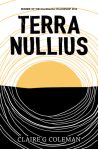
Claire G Coleman, Terra nulliusClaire G. Coleman’s debut novel, Terra nullius, was my reading group’s third book for this year. The first two – An unnecessary woman (my review) and The sympathizer (my review) were well liked – but not so Coleman’s book. In fact that I was the only one who liked it. So, instead of my usual review, I’ve decided to tease out some of the issues my group had with the book, and see where I end up. I didn’t take notes at the meeting, so I’m relying on my memory. I may not have got all the issues down, or down correctly, but I’ll give it my best shot. In doing so, I’ll also draw on GoodReads because its users tend to be general readers, like you finding reading groups.

First though, a brief introduction for those who don’t know the book. Terra nullius starts off reading like an historical fiction novel about the colonial settlement of Australia and the concurrent dispossession of our indigenous people. Coleman’s world of Settlers and Natives, of Troopers and Trackers, of Missions to which stolen children are taken for education, of a Department for the Protection of Natives, and so on, mimics colonial Western Australia in particular, but it’s not long before hints start to appear that all is not as we’ve assumed. Before halfway, all is revealed, and we realise we are not reading historical fiction, but speculative fiction set in some near future. It is, as a result, not about indigenous Australians versus white colonists, but about colonised people of all races versus settler-colonists (“grey fellas”) from somewhere else. This realisation is unsettling, and clever, because it forces non-indigenous readers to switch identification from the colonisers to the colonised.

Now to my reading group’s response. The over-riding criticism was that it was repetitive and tedious. This is the criticism I could most understand, because partway through the novel’s second half I felt the momentum flag a little, which I put down to the structure. It’s multi-stranded, with the stories of different people or groups running parallel for a significant portion of the book. The strands include Native Jacky who is on the run; Settler Sister Bagra who runs a Mission; Settler Sergeant Rohan who leads the posse which is hunting Jacky; Esperance and her camp of free, renegade Natives; and deserter-Settler Johnny Star who is taken in by some rebel Natives. Fortunately, just as I wondered whether the separate groups – the separate strands – were ever going to come together, two things happened. A new character, Father Grark, appeared, and the strands did start to coalesce. These, along with other factors including the writing itself, were enough to prevent the book’s becoming tedious for me.

However, my reading group friends weren’t alone in their criticism. One GoodReads reviewer described it as “gratingly repetitive” and another overall positive reviewer had “some minor quibbles”, of which the main one was that “some elements of the story were repetitive”.

Another criticism made by some of my group was that they weren’t interested in any of the characters. Some GoodReads reviewers concurred. One didn’t “connect with any of the characters” and another said that “the characters, the individuals, are basic, with no complex motivations, no desires”. This surprised me, because I was interested in several of the characters, and I looked forward to their next appearance. One was Esperance, the young woman living with that renegade camp of Natives. Another was Jacky, who is the first character we meet and who, for over half the novel, struggles on alone, trying to survive and keep one step ahead of his pursuers. There are, though, a lot of characters, and I can see the argument that many of them have “no complex motivations”. However, I’m not sure that deep characterisation is always essential for speculative, dystopian fiction, such as this book is. Anyhow, regardless of this point, I can’t accept the argument that none have desires. Esperance and Jacky, for example, certainly have desires. Survival is one, and for Jacky, returning to his home, his country, is a major driving force.

One of the positive GoodReads writers said, and it reflects my response, that “importantly, Coleman’s more ‘extreme’ characters – such as Sister Bagra, in charge of a Native ‘orphanage’ – are frighteningly familiar, and it [is] these elements of the story that will linger.” She is not, in other words, a particularly complex character, but given what I know of colonial history, she is believable. I’d argue that that’s sufficient.

Then there were arguments that the book was too heavy-handed, too obvious, not nuanced enough. Again, there were GoodReads reviewers who agreed, one saying the “messaging was much too overt” and another that it could have been more subtle. However, I’m not sure that I’ve read much dystopian fiction that is subtle. On GoodReads I found a perfect example of how differently we “read” books. One criticised the chapter epigraphs, which come from various fictional “sources”, saying that “the book could have been done much more subtly without the chapter-starters explicitly comparing the colonisation to the colonisation of Australia”, while another said that Coleman’s “use of ‘archival documents’ at the beginning of each chapter gave the book rich perspective.” Again, I concur with the latter, and some in my group agreed that this feature of Coleman’s book was effective and worth exploring further.

It seems that those who are well-versed in speculative fiction’s colonisation stories – in my reading group and on GoodReads – felt that Coleman’s book didn’t offer anything new. A member in my group felt that it was so clearly Western Australia’s story that Coleman may as well have made it Western Australia. I agree that the “facts” aligned closely with the Western Australian experience, but I didn’t see that spoiling its speculative layer. In a way, it increased its effectiveness because, using the GoodReads quote above, it felt “frighteningly familiar”. There is an argument to be had, I suppose, about how “familiar” speculative fiction can be before it’s no longer speculative, but for me it worked.

Other concerns were raised in my group, but there were positives too, particularly regarding the quality of Coleman’s descriptive writing. She knows the landscape well and captures the heat and light, not to mention the weirdness of Australian desert vegetation beautifully:

He [Sergeant Rohan] did not relish another night under the alien trees, the twisted limbs, the hanging bark, the wrong colour: their waxy grey-green leaves too hard, almost glassy.

There’s more to like about the writing than this, however. From the first page when we meet Jacky on the run, I loved Coleman’s voice. It’s direct but evocative, it’s serious but peppered with a light, cheeky touch that uses throwaway lines and afterthoughts to great effect:

Dinner was a disappointment: sure the meat was fresh but it was tough and tasted like all the other Native meats – quite unappetising, only to be relished by the desperate. Good thing they were desperate then.

So, I was impressed by this book. My heart engaged with the characters who were struggling to survive their nightmarish world, while my mind was intrigued by what Coleman was doing, by her layering of historical experience within an imaginative framework, by her grounding us in a familiar story, and then overturning it to force us to see it from a different perspective. I’m not sure I followed all her intellectual twists and turns but I certainly got the point about invasion – and about the cruelty people inflict on each other in its name.

He [Johnny Star] had learned, through his friends, that the bent, broken drugged and drunk state of those surviving near the Settlements was not the habitual state of Natives. The truth was, it was a sort of depression brought on by what they had lost, brought on by being dominated and controlled by another people. Who could not be depressed, being treated like animals in a land that had once been theirs alone.

Without giving away the details, the ending is generally what you’d expect from a dystopian scenario, but it’s not without hope, without defiance too. A great read … at least, I thought so!

Lisa (Anzlitlovers) loved the book, as did Bill (The Australian Legend).

Note: I haven’t cited the individual GoodReads reviewers, but they can be found at the site’s page for the book.

AWW Badge 2018Claire G. Coleman
Terra nullius
Sydney: Hachette Australia, 2017
294pp.
ISBN: 9780733638312