Sebastian Smee, Net loss: The inner life in the digital age (#BookReview)

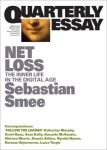
Book CoverIf you’ve been reading my blog recently, you’ll already know why I am reviewing Sebastian Smee’s Quarterly Essay edition, “Net loss: The inner life in the digital age”, but to briefly recap, it’s because it inspired a member of my reading group to recommend we read Anton Chekhov’s short story, “The lady with the little dog”. What wonderful paths a reading life can take, eh?

Smee’s aim in his essay is, he says,

to dig into this idea that we all have an inner life with its own history of metamorphosis – rich, complex and often obscure, even to ourselves, but essential to who we are. It is a part of us we neglect at our peril. I am interested in it because of my sense that, as we live more and more of our lives online and attached to our phones, and as we are battered and buffeted by all the informational, corporate and political surges of contemporary life, this notion of an elusive but somehow sustaining inner self is eroding.

He commences the essay, though, by admitting that he uses social media – a lot. And not only that, he also admits that he knows that he is “handing out information about myself to people whose motives I can’t know. I feel I should be bothered by this, but I’m not, particularly.” He’s not bothered because they know only know “superficial stuff” about him, such as his phone number and age, what sports teams he supports, the music he listens to and where he does the weekly food shop. From all this, he  says, they can probably guess how he’ll vote, but, he says, and this is a big but, “they cannot know my inner life”.

This is where Chekhov’s “The lady with the little dog” comes in because Gurov discusses his inner and outer lives, making clear that the inner life is where “everything that was essential, of interest and of value to him, everything that made the kernel of his life, was hidden from other people”.

The digital age is, as Smee says, making huge incursions into our lives. Children, “from a young age, are encouraged to present performative versions of themselves online” and, for all of us, “it gets harder to be alone with ourselves or to pick up a book; harder still to stay with it”. This is true – to a degree – though there are many of us who do carve out alone-times for ourselves. For me, this includes never being plugged in when I walk. That is definitely my alone-time. As is my yoga time, and bed-time when my phone is in another room, while my book is with me!

But, what is this inner life? How do we define it? Smee says it includes “apprehensions of beauty, your intimations of death, what is going on inside you when you are in love, or when your whole being is in turmoil”. He feels that, today, “we can no longer assume that it has its own reality. To the extent that it exists at all, it seems to have no place in public discourse. Even in discussions of art, it is ignored, thwarted, factored out”. Hmm, I haven’t consciously thought about whether, when discussing the arts, we refer to our inner lives, whether we share our innermost feelings about what we see, hear or read, but I’d have thought we do. Yet, if Smee is right about what he calls “the obscurity and unknowability of our inner selves”, then have we ever?

Anyhow, Smee explores what “self” is and how various writers and artists have viewed it. Chekhov’s Gurov, for example, felt a tension between his inner and outer lives; while American filmmakers Lizzie Fitch and Ryan Trecartin, he says, portray our identity, our inner selves, as something flexible, as something messy, splintered, and defined by our relationships with each other.

Smee talks about the effect of social media, like Facebook, on our selves. Trustworthy studies, like one in the American Journal of Epidemiology, he says, “find that use of Facebook correlates with diminished wellbeing, both physical and mental”. Correlation doesn’t mean causation of course but the implication is there. Smee returns to his question about how much companies like Facebook really know about us, about how accurate their profiles are.

He talks throughout the essay about algorithms, because that is how social media software works. Their algorithms that deal “with big and disparate data sets can see patterns where they couldn’t previously be detected”. This has “proved incredibly useful in business, medicine and elsewhere”. However, these algorithms “still struggle to cope with the messiness and idiosyncrasy that inhere in individual human beings.” Can they, will they ever be able to, gain access to our inner lives? It’s hard to say, he says, because “individual reality is beyond quantification. And cause and effect are always more complex than we like to think”.

Throughout his discussion, Smee draws mostly on writers and artists, rather than on philosophers and psychologists, to explore his topic, to exemplify his arguments. And so to this question of quantifying individual reality, he turns to Cézanne, who conveys in his art that

life … is not hierarchical, like a newspaper article, or linear, like an algorithm. It is fluid and multifaceted … Instead of cause and effect, there are only clusters of interlocking circumstances which mysteriously give rise to new circumstances.

Will, I wonder, this inherent instability save us – and our inner lives?

Social media will, of course, continue to keep trying to access our selves. One way they do so is by trying to capture as much of our attention as they can. And yet, Smee goes on to argue, our inner lives, “the very things that move us the most”, are, in fact, “the hardest to share”. Chekhov knew it was hard to do. Moreover, he knew that sharing our inner selves “can also be a betrayal of the primary, inward experience.” Touché.

Smee also makes an important distinction between private and inner life. Privacy is linked to political freedom (and power), he says, “to what you do and think away from the interested, potentially controlling eyes of others”. It’s “a shallow concept”. Inner life, on the other hand, as he argues throughout the essay, “may be elusive and impossible to define”.

And yet, says Smee, it’s this inner life that can erupt into hate, as we see played out on social media, the trolling, the never-ending vindictiveness. He references Frances Bacon’s paintings, arguing that they “dramatise a tension between the psyche’s darker compulsions and a pressure felt within civilised society to conform, to stifle emotions, not to lash out.”

Do we want these inner lives unleashed? (In a way, though, we then know what people really think?!) However, the question that most interests Smee is why are these negative aspects of our inner lives being unleashed? He suggests that it’s what all the artists (the filmmakers, writers and painters) he quotes are expressing – “an apprehension that we are alone”. This is where, Smee proposes, social media comes in with a solution:

One response to this panic, it seems to me, is to disperse ourselves, by being as widely visible as possible. Social media, and the internet generally, make this feel possible, to an unprecedented degree. They allow us to lay before the world (in the hope that the world will be watching) the things we love, the things we hate, and a mediated image of our lives that can seem to rescue us from the threat of oblivion.

But, to really protect our inner lives, he believes, we need the converse: “to pay attention again to our solitude, daring to hope that we might connect that solitude to the solitude of others.”

So where does the essay leave us? Early on he argues that

Once nurtured in secret, protected by norms of discretion or a presumption of mystery, this ‘inner’ self today feels [my emph] harshly illuminated and remorselessly externalised, and at the same time flattened, constricted and quantified.

It’s easy for us to say, yes, yes, yes, this is so, but I wonder whether this too is just a feeling? And whether, in truth, our inner lives remain as obscure and unknowable as Smee describes in the essay – and therefore as rich as ever? Net loss is a fascinating essay to read – particularly for “arty” types who love allusions to writers and artists. He makes pertinent points about the way social media operates and gives us much to think about regarding the inner life, but in the end leaves us with more questions than answers – which is perfectly alright. The one immutable, however, is that whatever we think is happening, the inner life is worth protecting.

Lisa (ANZLitlovers) reviewed this, as did Amy (The Armchair Critic) who discusses it at some depth including delving into what Smee doesn’t do.

Sebastian Smee
“Net loss: The inner life in the digital age”
in Quarterly Essay, No. 72
Collingwood: Black Inc, 2018
98pp.
ISBN: 9781743820698

Anton Chekhov, The lady with the little dog (#Review)

Penguin collection, translated by Wilks, book cover

“The lady and with the little dog” was an out-of-left-field recommendation for my reading group for two reasons. One is that it is a single short story – not even a whole collection which we have done before. And the other is that the member who recommended it did so on the basis of its being referred to a few times in Sebastian Smee’s recent Quarterly Essay (72), Net loss: The inner life in the digital age, which I’ll review next, hopefully.

So, what to read? We were as a group challenged, albeit was a good challenge. First, “the lady and the little dog” has appeared in many Chekhov collections over the years, accompanied by different selections of stories (though of course some individual ones do recur more than others.) Second, the story has been translated by many translators, including Constance Garnett, Ivy Low Litvinov, collaborators Richard Pevear and Larissa Volokhonsky, and Ronald Wilks. So, do we read all or some of the other stories in the collections we variously acquired (or try, even, to suggest we all read the same collection? That wasn’t going to happen! Particularly given availability challenges.) Or, do we just read the story plus the work that inspired its recommendation? (But what about the fact that there was a mix-up not resolved until late in the month about what exactly was that work!) In the end, our being a disciplined but not controlling group, we all chose our own paths, which made for an interesting meeting.

Penguin collection, translated by Garnett, book cover

Now, I have to admit that at the end of my first reading of the story – this story that is the lead story in so many collections and so must be well-regarded – I was a little underwhelmed, though why is hard to explain. After all, much as I love Guy de Maupassant’s short stories with their dramatic twists, I also love quiet stories about character, which is more Chekhov’s style. I think the issue was that I read it too fast, too distractedly, because when I reread it, Chekhov’s skill started to shine through. Chekhov, by the way, is seen as marking the transition between the mid- to late-nineteenth century realism of de Maupassant and the modernism of early twentieth century Joyce.

The story concerns an adulterous affair between 40-year-old Gurov and the much younger Anna, who meet while holidaying in Yalta without their respective, unsatisfactory spouses. Gurov’s arranged marriage was to a woman whom he considered “not very bright, narrow-minded and unrefined” and who “makes love insincerely”, while Anna sees her husband as “no more than a lackey” or “flunky” (depending on your translation!) She wants “to live life to the full”. Gurov initially sees his seduction of and relationship with Anna as “just another adventure”, not expecting to care when she returns home to St Petersburg. But, after he returns to Moscow, he realises that he’s been touched by her. Life has become meaningless:

Those pointless business affairs and perpetual conversations – always on the same theme – were commandeering the best part of his time, his best strength, so that in the end there remained only a limited, humdrum life, just trivial nonsense.

Penguin collection, translated by Pevear and Voslonsky, book cover

Consequently, he seeks out Anna, and finds that she too was unhappy, and so their affair resumes.

As the affair progresses, Gurov makes a distinction between his inner and outer lives (which is what Smee references in his essay). Gurov thinks:

He was leading a double life: one was undisguised, plain for all to see and known to everyone who needed to know, full of conventional truths and conventional deception, identical to the lives of his friends and acquaintances; and another which went on in secret. And by some strange, possibly fortuitous chain of circumstances, everything that was important, interesting and necessary for him, where he behaved sincerely and did not deceive himself and which was the very essence of his life – that was conducted in complete secrecy; whereas all that was false about him, the front behind which he hid in order to conceal the truth– for instance, his work at the bank, those quarrels at the club, his notions of an ‘inferior breed’, his attending anniversary celebrations with his wife – that was plain for all to see. …

What I noticed more on my second read through was Gurov’s personal growth. In the beginning, he is bored, misogynistic, and selfish. He found men boring, and preferred female company, and yet “he always spoke disparagingly of women and whenever they were discussed in his company he would call them an ‘inferior breed’”. Moreover,

Repeated – and in fact bitter – experience had long taught him that every affair, which at first adds spice and variety to life and seems such a charming, light-hearted adventure, inevitably develops into an enormous, extraordinarily complex problem with respectable people – especially Muscovites, who are so hesitant, so inhibited – until finally the whole situation becomes a real nightmare.

Penguin collection, translated by Slater, book cover

Then Anna appears, and this self-centred man is suddenly possessed by “those stories of easy conquests … and the alluring thought of a swift, fleeting affair, of a romance with a strange woman whose name he didn’t even know.”

By the end, though, not only has he realised that he had “genuinely, truly fallen in love – for the first time in his life”, but that he had come to a new understanding of himself:

Anna Sergeyevna and he loved one another as close intimates, as man and wife, as very dear friends. They thought that fate itself had intended them for each another, and it was a mystery why he should have a wife and she a husband. And in fact, they were like two birds of passage, male and female, caught and forced to live in separate cages. They forgave one another all they had been ashamed of in the past, forgave everything in the present, and they felt that this love of theirs had transformed them both.

There is, however, no easy conclusion – no clever twist, no clear ending, happy or tragic.

And so, of course, as I should have realised on the first read, “The lady with the dog” (or “with the little dog” or “the lap dog” or “the pet dog”, depending on your translation) is a tight, moving, ironic story about a man who, like many of Jane Austen’s best characters in fact, discovers the errors of his attitudes, and is transformed by the knowledge.

Anton Chekhov
“The lady with the little dog”
in The lady with the little dog and other stories
(trans. Ronald Wilks)
London: Penguin Books, 2002)
(“The lady with the little dog”, first pub. 1899)
ISBN (eBook): 9780141906850

Avalailable online at Adelaide University’s etext site.

Louise Erdrich, The bingo palace (#BookReview)

Book coverWhen I bought Louise Erdrich’s The bingo palace in 1995, I never expected it to take me 24 years to read it but, there you go. Time flies, and suddenly it was 2019 and the book was still sitting on the high priority pile next to my bed! Truly! It took Lisa’s ANZLitLovers Indigenous Literature Week to make me finally give it the time it deserved – and even then I’m late. Oh well.
I have read Louise Erdrich before, back in 2000 when I read The crown of Columbus with my reading group. She it wrote with her then husband, the late Michael Dorris. While it was an enjoyable read, it didn’t make a big impression. However, I have always remembered it because of her. So now, her!

Erdrich is an enrolled member of the Anishinaabe nation (also known as Chippewa), and it is among the people of this nation that The bingo palace is set. One of the reasons the novel captured my attention all those years ago is because when we lived in the USA, we became aware of the importance of gambling as a major source of income for many Native American communities. Erdrich’s narrative draws from this fact, but it also provides her with the “luck” or “chance” metaphor – “the drift of chance and possibility” – which underpins the novel. One-third of the novel’s twenty-seven chapters, in fact, include the word “luck” in their titles, as in “Lipsha’s luck”, “Shawnee’s luck”, “Lyman’s luck”, and so on. Luck, good and bad, is a constant in the novel, and Erdrich constantly puts her characters to the test, as they navigate their rocky worlds. How much “luck” is of their own making is a question for them, and us the readers, to consider, I think.

Anyhow, the story centres on an unsettled young man, Lipsha Morrissey, and his love for Shawnee Ray, who has had a baby with Lyman Lamartine, manager of the titular Bingo Palace. The novel contains a complex web of relationships, which takes a while to unravel, but for which we are prepared in the first chapter:

The story comes round, pushing at our brains, and soon we are trying to ravel back to the beginning, trying to put families into order and made sense of things. But we start with one person, and soon another, and another follows, and still another, until we are lost in the connections. (p. 5)

Now, you might have noticed something interesting about the voice in the above paragraph – it’s a first person plural voice. This voice – which operates a bit like a Greek chorus, though here it’s the tribal Chippewa – disappears for most of the novel, reappearing near the end in chapters 25 and 27. The other chapters are told in first person for Lipsha’s story, and third person for all the other stories. This is tricky, daring stuff, but it works, partly because of the power of the stories being told, partly because of its unusual tone (to which I’ll return), and partly because of the language. Erdrich’s language is arresting:

As a baby, Lipsha knew how to make his hands into burrs that would not unstick from Marie’s clothing. (p. 28)

AND

Unwilling, I followed him out to the barn, placing no in my mouth like a pebble to throw. (p. 47)

AND

Albertine could see that Shawnee Ray bent her strength like a bow to the older woman’s need. (p. 210)

AND

We get into the car, pull into the pitted road, and I try not to brush too hard against my sorrows. (p. 215)

Now, back to the story, which concerns Lipsha’s attempts to win Shawnee Ray’s love, after being called back to the reservation by his grandmother, Lulu Lamartine. Life is not simple on the reservation, and as we follow Lipsha’s desperate quest, we are introduced, through a wonderful array of characters, to reservation life – to the tension between old traditions and new businesses, between spiritual life and the material one. Lipsha tries them all – he is initially lucky at bingo and wins a van, only to lose it to some white Montana boys. With a degree of easy-come-easy-go nonchalance, he then seeks out his great grandmother, Fleur Pillager, for love medicine. She lives on sacred land around Lake Machimanito, that Lyman has managed to have set aside for another bingo palace. Lipsha also, with Lyman, tries a spiritual retreat run by ceremony man, Xavier Toose.

All this is told with a tone that veers between resigned realism and sudden visions, a tone that effectively conveys the paradoxes involved in trying to retain tradition while surviving in a modern world. Lyman puts his faith in bingo entrepreneurship, while Shawnee sees education as her way. Zelda, on the other hand, has tried for decades to deny love and passion, while Fleur puts her faith in land and spirit.

Near the end, Lipsha, who has his moments of insight, says:

It’s not completely one way or another, traditional against the bingo. You have to stay alive to keep your tradition alive and working. Everybody knows bingo money is not based on solid ground […]

And yet I can’t help but wonder, now that I know the high and low of bingo life, if we’re going in the wrong direction, arms flung wide, too eager. The money life has got no substance, there’s nothing left when the day is done but a pack of receipts. Money gets money, but little else, nothing sensible to look at or touch or feel in yourself down to your bones … Our reservation is not real estate. Luck fades when sold … (p. 221)

Of course, as I read this, I wondered whether I could see any comparisons with indigenous lives and literature here, and one book immediately came to mind, Alexis Wright’s Carpentaria (my review). The likeness is loose, but both books have a wildness about them. Both confront the challenge of marrying tradition with contemporary life, and both do it by slipping easily between concrete reality and what we non-indigenous readers see as something more magical, but which for many indigenous people is all part of one spectrum. Both books are exhilarating, mind-expanding, to read.

Our “Greek chorus” tells us near the end, when “the federals” try to get the truth out of Lulu:

anyone of us could have told them they were getting into mazy woods when talking to that woman. (p. 265)

As you’d probably expect, there is no simple resolution at the end. Instead, there is, as the “chorus” says, “more to be told, more than we know, more than can be caught in the sieve of our thinking”. Like “the federals”, I got lost at times in the “mazy woods”, but I thoroughly enjoyed the humour and inventiveness, the warmth and heart – along with the challenge – to be had in reading this novel.

Canadian blogger Buried in Print has also reviewed this novel.

BannerLouise Erdrich
The bingo palace
London: Flamingo, 1995 (orig. pub. 1994)
274pp.
ISBN: 9780006547099

Stan Grant, On identity (#BookReview)

Book coverStan Grant seems to be the indigenous-person-du-jour here in Australia. I don’t say this disrespectfully, which I fear is how it may come across given Grant’s views “on identity”, but it feels true – particularly if you watch or listen to the ABC. He pops up regularly on shows, sometimes as presenter, other times as interviewee. He therefore needs no introduction for Aussies. For everyone else, though, a brief introduction. Grant is described in the bio at the front of his book, On identity, as “a self-described Indigenous Australian who counts himself among the Wiradjuri, Kamilaroi, Dharrawal and Irish.” The bio goes on to say that “his  identities embrace all and exclude none“. He is also a Walkley Award-winning journalist (see my Monday Musings on this award), and the author of Talking to my country, which I reviewed a couple of years ago.
Grant could also be described as a (modern) Renaissance man. I say this because of the way he synthesises his wide range of reading – including philosophy, history, psychology, history, anthropology, and literature – into coherent ideas that support his arguments. He did this orally at the conversation event I attended a couple of months ago, and he does it in this long-form essay called On identity.

In my post on that event, I wrote that his main point about identity was its tendency to exclusivity. In On identity, he explores this “exclusivity”, and its ramifications, starting with those boxes we see on all sorts of forms – including the census – that asks whether you are of Aboriginal or Torres Strait Islander descent. As a person with a keen interest in the pros and cons of “labelling”, I’m aware of the obvious implication of this, that is, that it marks or separates people out. However, as Grant points out, it also, in cases where heritage is mixed (like Grant’s, like many indigenous people’s), forces them to deny other aspects of themselves, to exclude other members of their families.

And so it forces Grant, for example, to deny his Irish grandmother Ivy.

If I mark yes on that identity box, then that is who I am; definitively, there is no ambiguity. I will have made a choice that colour, race, culture, whatever these things are, they matter to me more than my grandmother.

Through her, through this conversation about ticking boxes, Grant introduces his theme of “love”, of growing up surrounded by unconditional love, and how a focus on “identity” becomes a cold substitute for what truly sustains and binds, love. Now, this might sound a bit corny, or simplistic, but bear with me …

Grant then leads us through his argument. He discusses the work and ideas of Noongar author Kim Scott, whose trajectory as an indigenous person, Grant admits, has been quite different from his own. Grant grew up knowing he was indigenous. Scott, on the other hand, was raised with very little contact with Noongar people. On discovering his ancestry and wanting to know more, he felt forced to make a choice – was he black or white? And that decision, Scott writes in his family history, Kayang & me, was a “political imperative”. There are no references to “love” in this book, writes Grant, which confirms, he says, “what I have come to believe is true: identity – exclusive identity – has no space for love”.

Grant “deeply” admires Scott, but feels sad that “in writing himself back into a Noongar identity … it isn’t love that calls him, but politics”. Scott is not oblivious to this, worrying that his decision may strand his children in “no man’s land”, making them targets from both sides of “a historical, racial fault-line”. This concern leads Grant back to his mantra that “identity does not liberate: it binds”. He talks about other writers including Jewish ones (like Kafka) and Irish (like Yeats), about their attitudes to the problematic and limiting notion of “identity”. James Joyce’s Stephen Dedalus, he says, “knows if he is to write anything he must find freedom; he must shake loose the chains of identity.”

Grant turns to other writers of colour, who have found their “identity” limiting. Toni Morrison sees that the “very serious function of racism” is to distract, preventing you “from doing your work”. Writing for her, says Grant, “has been the struggle to live free from the white gaze”. Similarly, James Baldwin sought to be “free of identity” by going to France:

Baldwin did not wish to escape being black, but he desperately wanted to be rid of other people’s ideas of blackness.

Unfortunately, Baldwin returned to the USA, and got caught up in black protest. Thus, argues Grant, the man “who had been raised in the church … had forgotten the lessons of his own childhood. He had forgotten about love”:

When Baldwin turned to politics, his words lost no power–perhaps they grew more powerful–but he made the worst bargain I think a writer can make: he swapped freedom for identity and the identity writer can only write propaganda.

Strong words, for another day, perhaps! For Grant, it is the Baldwin of France he returns to “because he taught me that a black man could have the world”.

And here, really, is the paradox that I see in Grant’s argument. It’s sophisticated, erudite, and elegantly written. He makes a strong case for his belief that identity binds rather than frees, and that in so binding, if this makes sense, it keeps people divided. But, I’m not sure that he answers for me what can be done about the division (that is, the oppression of people on the basis of race, colour, religion, gender, sexuality, etc) that has given rise to “identity” in the first place. It’s all very well to point to the limitations of and the problems inherent in the politics of identity, but what is the answer to the underlying problem?

Grant returns at the end of the essay to love. He discusses the relationship between totalitarianism and love. Antebellum America, Nazi Germany, Pol Pot’s Cambodia and other regimes, he writes, turn unity (collective identity) into totality, and “crush love because it is the surest way to crush freedom”. What he means by this is that “we banish love, when we no longer see ourselves in each other”, when “we see instead an enemy”.

So, Grant eschews any identity that would cage him, any identity that would deny any aspect of himself or that would pit himself against others. But, acknowledging at last my paradox, he does admit that there are privileges in identity – whiteness, masculinity, sexuality – which need to be called out. It’s just that they are political, and he’s not about politics*. All he’ll say is that “we find no liberation behind walls”. Amen to that!

On identity is not simple reading. Neither does it provide answers to the “identity” problem. But what I like about it is that it offers a way to think about identity that is positive not negative, that would bring us together, not divide us. Where to next?

Lisa (ANZLitLovers) and Janine (Resident Judge of Port Philip) have also posted on this book.

* What he actually says is: “I have no desire to be the writer of politics” p. 95.

BannerStan Grant
On identity (Little books on big ideas)
Carlton: Melbourne University Press, 2019
95pp.
ISBN: 9780522875522

Tony Birch, The white girl (#BookReview)

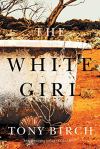
Book coverWe need more novels like Tony Birch’s The white girl and Melissa Lucashenko’s Too much lip. This is not to say that we don’t need all the wonderful Indigenous Australian literature I’ve read and reviewed here over the years, but some of the books, as excellent (and as beloved by me) as they are, can be more challenging to read. The white girl and Too much lip, on the other hand, are accessible, page-turning novels that have the capacity to reach a wide audience, but will they? I sure hope so, because the truths they tell are crucial for all Australians to know if we are to ever become a more mature and united nation.
In other words, it’s not only for their page-turning quality, that I paired these two novels. They have some other similarities, which I’ll briefly address before focusing on The white girl. Both novels are set in rural areas, though Birch’s novel also spends some time in the city, and both have female protagonists, though Birch’s Odette is a grandmother while Lucashenko’s Kerry is a 30-something, not-yet-settled woman. Most importantly, though, both reference long-term issues (the aforementioned truths) that have affected indigenous lives for generations, including, of course, the stolen generations, dispossession and powerlessness, past atrocities, and entrenched institutional discrimination.

However, beyond these, the novels are very different. For a start, Birch’s The white girl, being set in the 1960s, fits into the historical fiction genre whilst Lucashenko’s novel is contemporary. Moreover, Lucashenko’s is more complex and has more humour, albeit of the black sort, than Birch’s more straight drama, so let’s now get to it. Unlike Birch’s previous novel, Ghost river, which is set in Melbourne, The white girl, is set in a fictional town, Deane, and an unnamed city. This effectively universalises the story to suit any part of Australia, making it difficult to shrug off the issues as not relevant to our own places.

The basic plot of The white girl concerns Odette’s determination to save her grand-daughter, Sissy, from falling under the control of white authorities, because this novel is set at a time in Australia when indigenous people came under the Act, an act which meant they could not travel away from where they lived without permission. It also meant that the state was legal guardian of children like Sissy. Things come to a head for Odette and Sissy when a new and more officious policeman, Sergeant Lowe, comes to town to replace the alcoholic, and generally more laissez-faire Bill Shea. Odette feels the time is ripe to reunite Sissy with her mother, Lila, who had left soon after Sissy was born, and who, Odette realises some way into the story, had good reason to disappear.

Birch has set his novel at a time of transition. It’s well into the Menzies era, and indigenous people are becoming more actively engaged in fighting for their rights. Sergeant Lowe, though, is not impressed. When Odette approaches him for the necessary permissions to travel, he refuses, telling her (with the about-to-retire Shea also in his hearing):

‘The whole business of native welfare has been neglected in this district for many years. I will not allow it to continue. Your people need certainty, just as we do, as officers of the Crown. None of this is helped, of course, by those trouble-makers arguing for citizenship of behalf of your people.’

The divisive language (“your people”) and the assertion of absolute power (“I will not allow it to continue”) reflect classic colonial behaviours that ramp up the level of threat felt by Odette. This threat is exacerbated by the presence of a brutal white family in the district, the Kanes, comprising a father and two sons. Lowe is somewhat aware of their trouble-making, but only insofar as it affects another white person in the district, the gentle, brain-damaged Henry who owns the local junkyard. To some extent the book’s characters are stereotypical, but Birch’s story-telling is such that they don’t become – at least not unreasonably so – caricatures. This is partly because they are fleshed out with back-stories. It’s not particularly complex story-telling – the back stories, for example, are common ones – but the novel is believable, perhaps because they are common.

As Lucashenko does in Too much lip, Birch also references traditional culture and its ongoing role in people’s lives. Odette, like many indigenous people, listens to messages from birds (“a morning doesn’t pass without one of them speaking to me”) and to the “old people” from whom she believes her strength comes. Birch also beautifully conveys indigenous people’s resourcefulness in the face of a dominant white culture. For example, Odette’s father tells her, when she’s a young girl, why she should sing in the mission church even though they don’t believe in “their God”:

‘Because it’s best to keep them fellas happy, keep their meanness down.’

And Odette’s response, when asked for her “tribal name” by a patronising white woman who offers her piece-work employment as a card artist, provides a typical example of indigenous response to such self-interested nosiness:

It never failed to surprise Odette how white people were always going on about uplifting Aboriginal people, yet they would demand information about the old ways when it suited them. She looked over to the honey jar sitting on the bread board and read the label to herself. It sounded tribal enough. ‘We’re the Bilga people, ‘ she explained. ‘That’s my tribe. The Bilgas.’

What Birch shows, then, is that survival for indigenous people was (and mostly still is) quite a cat-and-mouse game. It involves “taking a chance with these white people”. This is a risk, Odette and her friends realise, but is often all they have. And that, I think, is the main message Birch wants to leave with his non-indigenous readers. The question is, can we rise to the challenge, and be trusted? Are we prepared to heed the truths being shared? So far, I’d say, the jury is still out.

Lisa (ANZLitLovers) also liked this book. Read for ANZLitLovers ILW2019.

Banner

Tony Birch
The white girl
St Lucia: UQP, 2019
265pp.
ISBN: 9780702260384

(Review copy courtesy UQP)

Mary McCarthy, The group (#BookReview)

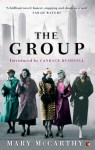
Book coverMy reading group has a few loose “rules” for choosing our reads, but one of the more rigid ones is that each year we like to read at least one classic. This year’s first classic – yes, another is coming – was Mary McCarthy’s The group. As I wrote in last week’s Monday Musings, it was published in 1963 and became a New York Times best-seller. I was initially uncertain about this choice, because I had read it and there are so many classics I still haven’t read, but, as it turned out, I was glad to read it again. This is because it is a true classic, by which I mean it’s a book that you can read again, at a different time in your life, and find new richness.

For those of you who don’t know the story, it centres on the lives of eight women from Vassar College’s Class of ’33 (of which McCarthy herself was a member, so she knew whereof she wrote – Bill!) The novel follows their lives for the next seven years as they, variously, marry, divorce, have children, find jobs, and in the case of one, die. In doing so, it also evokes their era beautifully. This was a time when America was coming out of the Depression, when women’s expectations about their lives were starting to change, when medicine was starting to assert its authoritarian self, when Trotskyism was attracting the radical intelligentsia, and when Europe was moving into World War 2. Our eight women – Kay, Lakey, Polly, Dottie, Priss, Libby, Pokey and Helena – having received a liberal Vassar-style education, are engaged in the issues of their day. Indeed, the role of education is one of the themes of the novel. Early in the novel, Kay recognises that:

That was the big thing they taught you at Vassar: keep your mind open and always ask for the evidence, even from your own side.

Late in the novel, Norine, a friend of the group, and also Vassar ’33, voices the challenge their education has posed for them: “our Vassar education made it tough for me to accept my womanly role”. Some, of course, found it easier to accept than others.

[SLIGHT SPOILER ALERT FOR THE NEXT PARAGRAPH ONLY, BUT THIS IS A CLASSIC SO I’M INCLUDING IT]

I loved the novel – the satire, the writing, the details, the individuation of the characters. What was not to like? Well, there are flaws for some readers. It doesn’t have a strong plot, and the structure is episodic, so that just as you get into one person’s story, you leave her to move onto another. This can be alienating for readers who love to emotionally engage with their characters. I can see all this but, for me, they are not overriding issues. Firstly, while there isn’t a strong plot, there is a narrative trajectory that sees relationships develop and change over time as the girls mature from new graduates to experienced women. Also, the novel commences with the wedding of a character, who recurs more frequently than do others as the book progresses, and it neatly concludes with her funeral. Secondly, despite the episodic approach, I engaged with the lives of each character as she came into focus for a chapter or so. Of course, some engaged me more than others, and, in fact, McCarthy gives some more time than others. What made McCarthy’s approach work for me were the ideas being explored through the various characters, and the writing used to do this. Evocative and/or witty writing expressing interesting ideas or viewpoints will get me every time.

So, for example, the book contains wonderful set pieces that seem to just keep coming, including Dottie’s deflowering and the sociology of the “pessary”, Priss’s (shock! horror!) breast-feeding in hospital under the instruction of her paediatrician husband, Priss versus Norine on child-rearing, Hatton the butler’s management of “his” family, Kay’s time in a mental hospital, to name just a few. These vignettes – which provide such insight into the lifestyles, the political interests, health and medicine, and so on, of these women – make the novel a rich source for social history of the times. Being educated, and generally of a liberal bent, most of the group are actively engaged in the political issues of their day. Some support Roosevelt’s New Deal, while those more radical become involved in socialism, Trotskyism in particular. There are references to World War 2, and the tensions between the America Firsters (sound familiar?) and those who thought America should join the war.

Gender is also an issue. Educated they may be, but these women find themselves, more often than not, controlled by men in what was still a patriarchal society. The women believe that:

It was very important … for a woman to preserve her individuality; otherwise she might not hold her husband.

But the truth is somewhat different. Kay is mischievously committed to a mental hospital by her husband, without her knowledge, and finds she needs his agreement to be discharged, while Priss

did not recommend sacrifice, having meekly given up her job and her social ideals for Sloan’s sake. It was now too late, because of Stephen [her son], but she was convinced she had made a mistake.

And then, as you expect from a classic, these more temporal concerns are wrapped up in bigger, more universal themes, such as juggling love and friendship, managing relationships and work, balancing theory versus practice, or navigating the gap between appearance and reality. Our characters reflect the gamut of human nature, being, variously, conservative, radical, idealistic, pragmatic, confident, kind, empathetic, proud, manipulating, ambitious, pompous, opinionated, naive. You name it, you are likely to find it amongst the eight.

Besides its rich content is the writing. It’s so sly and satiric that it carries you on regardless of the story:

Now, in the chapel, they rearranged their fur pieces and smiled at each other, noddingly, like mature little martens and sables: they had been right, the hardness was only a phase; it was certainly a point for their side that the iconoclast and scoffer was the first of the little band to get married.

Moreover, McCarthy can skewer character with just a few words. Candace Bushnell, in her Introduction to my edition, writes that “Readers who desire ‘likeable characters’ in their fiction above all else may be disturbed to find that every one of her characters is flawed.” This is true, and is, in a way, what I liked best. There’s no perfection here, there’s just young women struggling to make lives for themselves with an education that didn’t always make it easy for them to live in the world they found themselves. Here are couple of McCarthy’s character descriptions:

she had an image of herself as a high-bred, tempestuous creature, a sort of Arab steed in an English sporting primitive. (Libby)

fat cheerful New York society girl with big red cheeks and yellow hair, who talked like a jolly beau of the McKinley period, in imitation of her yachtsman father. (Pokey)

a solemn, ashy-haired little girl who looked like a gopher and who felt it her duty to absorb every bit of word-of-mouth information that pertained to consumer problems. (Priss)

In the last chapter, Polly, the most sympathetic of the women, thinks “how young and superstitious they had all been … and how little they had changed.” Perhaps, though I think she’s being a bit hard and that some wisdom had been achieved. Regardless, the ending, when a certain male character gets his comeuppance, is delicious – and was loved by the members of my group!

Mary McCarthy
The group
London: Virago (Hachette Digital), 2009 (Orig. ed. 1963)
438pp.
ISBN: 9780748126934

Chris Womersley, A lovely and terrible thing (#BookReview)

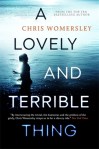
Book coverDescribed as “twenty macabre and deliciously enjoyable stories for readers of Fiona McFarlane and Lauren Groff”, Chris Womersley’s newest book – his debut collection of short stories – wasn’t necessarily a natural fit for me. I haven’t read Lauren Groff, but I have read and really liked Fiona McFarlane’s clever, memorable, The night guest (my review). However, the macabre is not something I naturally gravitate to. Still, I did like The great unknown (my review), edited by Angela Meyer, and I have been wanting to read Chris Womersley for some time, so I decided to put aside my reservations and give it a shot. I’m glad I did, because although there certainly is an element of the macabre here, the stories aren’t all so macabre that I felt the need to strap in for a shivery ride as the promos were also suggesting. This is not meant to put off those who like shivery rides, but to encourage those who don’t. It’s meant to say, in other words, that there’s something for most readers here.

The stories, in other words, do offer some variety. Most are told in first person male voices, but these voices range from children to teens to grown men, from sons and fathers, to brothers and friends, to husbands. There’s a hunchback, a junkie or two – and three stories use female voices. Despite this variety, however, there is an overall similarity in tone – somewhat melancholic, somewhat reflective. Many, in fact, are stories about something that happened in the past so they have that tone of – hmm, regret, or, if not that, of an uneasiness that has carried through to the present. Or sometimes, it’s just resignation. If you like nostalgia, this is not for you, as the first story makes clear:

My God, those suburban evenings, so full of hope and all its little victims. (“Headful of bees”)

So, what are they about? Fundamentally, and not surprisingly, they are about relationships – families, friends, neighbours, strangers, and, particularly, fathers and sons. Many relationships are under some sort of internal or external stress, or are unusual in some way. Most of these stories can be simply weird and, in some cases, even hopeful. But in other relationships, there’s power at play, and it is more often in these that the macabre, if not downright horror, ensues. In some stories, then, like the opening “Headful of bees”, a young person is mystified by the behaviour of an adult neighbour, while in others, such as the second one, “The house of special purpose”, a well-intentioned or naive person is cruelly taken advantage of by those who wield power.

The stories have been ordered in a way that manages our emotions. The truly macabre stories are interspersed with others, which reduces tension a little but also keeps us guessing. Will this story, we wonder, disturb and unnerve, or simply sadden us? There are a few truly shocking stories, and they include my favourites. Naming them, however, would spoil their impact. As one character, not from one of these stories, says:

You think you know people, but they always have something hidden away. It’s an awful lesson, corrosive … (“The age of terror”)

Fortunately, the collection ends on a story that, while containing tragedy, also offers hope about humanity. It’s not a happy story, but neither is it a complete downer, so we close the book feeling at least a little reassured that our journey has not been completely in vain.

Of course, there’s more to enjoying this book than the variety in and challenge of its stories. There’s also the writing. Womersley’s plotting and language is exquisite. I enjoyed his wordplays, and his use of metaphor. In “The middle of nowhere”, the drug-addicted protagonists are both literally and spiritually lost, and in “Growing pain”, a young adolescent girl’s grief and sense of alienation is manifested in a strange, physical way. Water features in many of the stories, as is signalled by the epigram from Moby Dick which ends with “as everybody knows meditation and water are wedded forever”. However, as everyone also knows, water is a paradoxical element – “another dimension, a netherworld” – that can both give and take. And so it is in these stories. Some of the most gruesome of them have water (or a place of water) at their core.

I said above that the stories are about relationships, which they are, but of course these relationships are explored through stories that deal with the things that confront us as humans. There are grieving parents and children, and people with regrets and failed aspirations. There are dreamers, junkies and mentally ill people. There’s birth and death, there’s deep love and desire for true connection, but there’s also revenge, child abuse and cruelty. Many of the stories explore, in some way, “the chasm that exists in all of us – between who we imagine ourselves to be and the person we truly are” (“The mare’s nest”). A character in “Dark the water, so deep the night” tells the young protagonist that “We tell stories to impose order upon the world, to give things meaning. To give us hope.” If there’s one thing we learn here, it’s that stories, on their own, can’t impose order. More often, they illuminate the chaos!

Of course, I didn’t love them all equally, and there is, as I’ve already said, some sameness to them. The tone is similar, and many are told by a narrator remembering the past. Also, many of the protagonists are young people trying to comprehend the adults around them, though there are older protagonists, including a 79-year-old woman in “The age of terror”.

However, I didn’t find one of them boring. This is not surprising because, although A lovely and terrible thing is Womersley’s first collection, he has been writing short stories for a long time. Sixteen of the twenty here, in fact, have been published before, from 2006 on, in some of the best literary magazines around, including Granta, Meanjin, The Griffith Review. Not a bad record, eh? The stories are, to be a little corny, lovely and terrible things. They take us, as another title in the collection suggests, to “the very edge of things”. What I like about them is that they do this with such control that, even when they push us to the limit, they feel true. Highly recommended.

Chris Womersley
A lovely and terrible thing: Short story collection
Sydney: Picador, 2019
270pp.
ISBN:

(Review copy courtesy Pan Macmillan Australia)

Monday musings on Australian literature: Books banned in Australia

Book coverThis week, my reading group will be discussing an American classic, Mary McCarthy’s The group. Published in 1963, it sat on the New York Times best-selling list for five months. It also has the honour of having been banned in Australia! I realised that I’ve never done a Monday Musings on banned books, so now seemed a good time …

Last year, in Banned Books Week, The Canberra Times’ Karen Hardy wrote on the subject. She quotes Meredith Duncan, Library Manager at the ANU, as saying that the main type of books that used to be banned in Australia were those “seen as obscene”. She told Hardy that our attitudinal changes towards sex and sexuality have shaped literary censorship over the years:

“In the introduction to one of the editions we have here of the Kamasutra, which was banned in Australia for many years, reads ‘This is only to be read by married men or medical professionals’.

“A lot of censorship revolved around the idea of women taking charge, a lot of men weren’t comfortable with that.”

As times changed, she said, “homosexuality became a hot topic”.

However, as a National Archives of Australia (NAA) blog post says:

Literary and scholarly works made up only a small proportion of the publications banned by Australian Customs. The bulk of prohibited imports were pulp fiction novels, comics, magazines and pornographic material. These items were considered to be a threat, not only to our morals, but also to Australia’s literary standards. They were banned by Customs under special provisions introduced in 1938 to address the growing number of cheap books and magazines entering the country.

Consequently, in the 1940s and 1950s, those popular pulp fiction crime and detective thrillers with their “themes of both sex and violence” were frequently banned by Customs. (Do check out the blog post to see a selection of these, such as Darcy Glinto’s Road floozie!) Adult magazines, too, “were often subject to blanket prohibitions lasting years”. Playboy, for example, was banned here from 1955 to 1960.

Most of the information below comes from posts on the NAA’s Banned blog which they published over 2013. It is worth checking out, as it includes a wonderful selection of primary source documents. Use this Books page link to check out individual banned books.

Ten books banned in Australia

  • James Baldwin’s Another country: partially banned in 1963, until 1966, allowed only for “the serious minded student or reader”. Among the comments made by Kenneth Binns, of the Literature Censorship Board, was that the description of a homosexual incident “on pages 367-375 would both shock and offend the average Australian reader for he is not as sex conditioned as are readers in most other countries”. (Oh, we innocent little Aussies!) He was also concerned that a ban might “even be associated with Australia’s misunderstood ‘White Australia’ policy and her refusal to support UN condemnation of South African Apartheid”. (Poor misunderstood Australia!)
  • William Burroughs’ Naked Lunch: banned 1960 to 1973. The last work of fiction to be banned in Australia, it was banned for being “hard-core pornography”. It was reviewed by the Commonwealth Literature Censorship Board in 1963 after Clem Christesen, Meanjin’s founder, applied to import the novel. The Board allowed Christesen’s request but unanimously agreed to retain the ban on the general sale of the book. Chairman Kenneth Binns said that “there is no need to note any particularly objectionable scene or passage for the book is so full of them and the general writing so extremely coarse that one need only consider the general character and tone”.
  • Aldous Huxley’s Brave new world: banned 1932 to 1937. Ireland was the only other country to ban it. The ban, says the NAA, was supported “with great gusto by church-related associations and temperance movements” but opposed by librarians (of course) and publishers. The NAA writes that the ban was lifted after the appointment of an Appeal Censor, and that “a sexually permissive culture did not follow, nor did a seditious and morally bankrupt one”. (Funny that!)
  • DH Lawrence’s Lady Chatterley’s lover: banned 1928 to 1965, for, says Duncan, being “sexually obscene, with explicit relationships”.
  • Mary McCarthy’s The group: banned in Australia, Italy and Ireland, says Wikipedia, for “being offensive to public morals.”
  • Grace Metalius’ Peyton Place: banned 1957 to 1971, after initial approval and dissension within the Board. Positive comments about its depiction of small-town America were set against opinions like those of, yes, Kenneth Binns. He thought the novel’s “profanity and obscene expressions” were excessive, and wrote that “It is unfortunate that Mrs Metalious is so flustered with sex, for she often writes well”.
  • Vladimir Nabokov’s Lolita: banned 1955 to 1965, though in 1964 its prohibition was appealed when the ANU’s Dr Bob Brissenden added it as a text for his course on American literature. Apparently, a member of the Liberal and Country Party State Council “wondered why students should not study books such as the Bible, or works by Milton, Shakespeare and Dickens” even though this was a course in American literature!
  • Philip Roth’s Portnoy’s complaint: banned 1969 to 1971, and the last work of fiction to be taken to court in Australia. The National Literature Board of Review called it “obscene”, “filthy”, while Chipman of the Department of Customs and Excise noted that it was a bestseller in the America where “permissiveness is unlimited”. (Take that, Americans!) However, literary experts, including Patrick White, argued that it had merits. Its banning history is interesting regarding the role of the states.
  • JD Salinger’s Catcher in the rye: banned 1956 to 1957, although it had been circulating in Australia since publication in 1951. Talk about after the horse bolting! As with most bannings, it resulted in discussion in the media. The Sydney Morning Herald wrote in 1957, that “this country has one of the most arbitrary – and perhaps one of the most inefficient – systems of book censorship in the world”. The Commonwealth Literature Board could, but didn’t have to, review books banned by Customs. In this case, the Board had “no hesitation” in releasing it!
  • Kathleen Winsor’s Forever Amber: banned 1945 to 1958, for its “crude and obvious appeal to the sexual instinct”, for lacking literary merit and over-emphasising sex. Customs Minister Senator Richard Keane said, “The Almighty did not give the people eyes to read that kind of rubbish”.

Counter-arguments for not banning, or for lifting bans, included practical ones, such as that the book was too expensive for many readers, and that the book was not likely to be of popular interest. (Of course, if they banned it, it would certainly become so!)

Finally, Karen Hardy reminded us in 2018 that there are several non-fiction titles still banned in Australia, including two guide books – Dr Philip Nitschke’s voluntary euthanasia one, The peaceful pill handbook, and The anarchist cookbook, on how to make explosives and weapons, and manufacture drugs. Further, some books remain restricted. Bret Easton Ellis’ 1991 novel, American psycho, for example, cannot be bought in Queensland by those under the age of 18.

As a librarian, I support the freedom to read (freedom of information.)

Comments anyone?

Nadine Gordimer, Harald, Claudia, and their son Duncan (#BookReview)

There are authors I read long before blogging whom I really want to document here, in some way. One of these is Nobel Laureate Nadine Gordimer who first came to my attention in 1983 with her memorable, confronting 1956 short story collection, Six feet of the country.

Nadine Gordimer, as I’m sure you know, had a lifelong concern for economic and racial inequality and injustice in South Africa, and this is evident in her short story, Harald, Claudia, and their son Duncan. The story is told third person through the perspectives of a mother and father, the titular Claudia and Harald. Early in the story, they are visited by Julian, their 30-year-old son Duncan’s friend. They assume there’s been an accident, but

This Julian draws the flaps of his lips in over his teeth and clamps his mouth before he speaks.

A kind of … Not Duncan, no, no! Someone’s been shot. Duncan, he’s been arrested.

This description of Julian is so typical of Gordimer in the way, in a few words, she conveys something grotesque, something that feels more than the bringing of bad news, even before we know why he is there.

Book coverHowever, this 1996 story is particularly intriguing because it seems to be related to her 1997 novel The house gun. As far as I can tell, the first third of the story I read is very close to the first chapter of that book, but after that I don’t know. I do know that the details of the crime seem a little different in “my” story (but it may just be that they are not fully revealed). Also the novel’s Duncan is 27, while the story’s Duncan is 30. So, did Gordimer write the short story and then decide to flesh it out into a novel? I don’t know, but here is what Wikipedia says about The house gun, which was her second post-apartheid novel:

It follows the story of a couple, Claudia and Harald Lingard, dealing with their son Duncan’s murder of one of his housemates. The novel treats the rising crime rate in South Africa and the guns that virtually all households have, as well as the legacy of South African apartheid and the couple’s concerns about their son’s lawyer, who is black.

While the short story doesn’t emphasise all this, there is a reference to people having guns for protection, and there’s the sense that we are dealing with the post-apartheid world.

Anyhow, back to the story. What I love, as I’ve already intimated, is how Gordimer creates tone. Here’s our couple on hearing that the crime for which Duncan has been arrested is murder:

He/she. He strides over and switches off the television. And expels a violent breath. So long as nobody moved, nobody uttered, the word and the act within the word could not enter here. Now with the touch of a switch and the gush of breath a new calendar is opened. The old Gregorian cannot register this day. It does not exist in that means of measure.

What a wonderfully fresh way of conveying the sense of discombobulation, of unreality, that results when the world seems to change in an instant.

From here – it’s a Friday – we follow Harald and Claudia through to their son’s arraignment on Monday, and into the hours immediately after, at which point the story ends, fairly suddenly.

One of the themes, in the story anyhow, concerns the idea that no matter how much you try to lock yourself away from the “outside”, you can’t keep it from coming in. This has a political as well as a personal reading. The story starts by telling us that Harald and Claudia had recently moved from a house to a “town-house complex with grounds maintained and security-monitored entrance”. Later in the story, Claudia, a doctor, does her shift at the clinic which services “areas of the city and once genteel suburbs of Johannesburg where now there was an influx, a rise in and variety of the population.” During this shift, she considers the pain that it is her job to assuage – the pain that comes from inside, like a tumour, and that which comes from the outside, like being burnt or, yes, hit by a bullet. She reflects:

The pain that is the by-product of the body itself, its malfunction, is part of the self; somewhere, a mystery medical science cannot explain, the self is responsible. But this – the bullet in the head: the pure assault of pain.

This is surely a metaphor for that fear of the “outside” by the well-to-dos who choose to live in security-monitored complexes. What’s inside, the implication is, cannot be necessarily controlled but it’s part of your own world; what’s outside is to be feared. In this section of the story, there are references to socioeconomic differences. Claudia gives out diet sheets, for example, to people, mostly black, who, she knows, are “too poor for the luxury of these remedies”.

It is, then, just the sort of story I like to read. The careful word choice, the slightly odd syntax, plus things like the references to class and race, combine to convey something that is more than a simple murder plot involving a son and his devastated parents. As the narrator slyly says:

This is not a detective story. Harald has to understand that the mode of events that genre represents is actuality, this is the sequence of circumstantial evidence and interpretation by which a charge of murder is arrived.

Circumstantial evidence and interpretation. The stuff of complex lives in complex times, eh? I’d like to read the novel now.

Nadine Gordimer
Harald, Claudia, and their son Duncan
London: Bloomsbury Publishing, 1996
(A Bloomsbury Quid)
41pp.
9780747528913

Nigel Featherstone, Bodies of men (#BookReview)

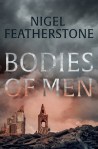
Nigel Featherstone, Bodies of menNigel Featherstone’s latest novel, Bodies of men, is a brave book – and not because it’s a World War 2 story about love between two soldiers at at time when such relationships were taboo, though there is that. No, I mean, because it’s a World War 2 story that was inspired by Featherstone’s three-month writer-in-residence stint at the Australian Defence Force Academy, in 2013. That’s not particularly brave, you are probably thinking, but wait, there’s more. What’s brave is that this novel, this story inspired by that residency, is about some darker sides of war – it’s about deserters, and violence from your own side, for a start … It’s certainly not about heroics, or, to be accurate, not the sort of heroics you’d expect. Courage, it shows, comes in many forms.

Here is what self-described pacifist Featherstone wrote in his blog two months into his residency:

I came here with the idea of exploring ‘masculinity in times of conflict’ …  Perhaps, like always, I’m being driven by that central question: what does it mean to be a good man, which, of course, is almost exactly the same as asking, what does it mean to be a good person?  But the military, especially the Australian kind of military, is all about men, isn’t it, the warrior, that iconic ‘digger’, that myth of our country, that brave saviour of everything we’re meant to stand for (whatever that is).

Those men who could do no wrong.  Except I don’t believe that for a second.

So, what did Featherstone actually write? It’s the story of two Australian soldiers from Sydney. William is from a conservative, well-to-do North Shore Sydney family, with a Member of Parliament father, while James comes from a poorer working class family, with a widowed mother who runs a shop but who’s also a socialist, a pacifist, and committed to helping homeless people. The boys had met and spent a few times together in their youth, but had lost touch for some years – until they find themselves in Egypt in 1941.

The novel opens with a reconnaissance that turns into an ambush. At an important moment, William, just off the boat, prevaricates, but James, there with a different military section, takes the initiative, and saves the day. The men vaguely recognise each other – “The officer”, thinks James, “does look familiar … but no it can’t be” – but have no opportunity to follow up, each returning immediately to their sections. From here the narrative, told third person from the alternating perspectives of William and James, follows the two men on their different paths. William, soon to be a lieutenant, is sent to manage a training camp in the desert. Believing he needs to redeem himself from that first experience of action, he sees this as an opportunity. He excels as a leader of men, finding the right balance between toughness and friendliness, but is dogged by his cold father’s voice, and worries about his ability to be the man his father expects. However, his mind is on that young man he glimpsed. Meanwhile, James goes AWOL on a military motorbike, which he crashes. Luckily, a family takes him in, a family which has its own tricky background and secrets, but James is just the right person to not rock their boat, so a warm relationship develops.

It’s not long before William works out a way of tracking James down. The story is told chronologically, but with frequent flashbacks which fill in that boyhood friendship. It was short, but intense. Both felt it, but William, in particular, struggled to understand it. It is therefore James, who, upon their renewed acquaintance, takes the lead – and the novel becomes, in part, a love story. Featherstone finds the right balance, here, conveying their tenderness and warmth, without sentimentality. We are never allowed to forget that this is war-time, and that both William and James are taking serious risks in their desire to be together.

However, this is not simply a boy-meets-boy, boy-loses-boy, boy-finds-boy again story. As mentioned above, Featherstone’s goal was to explore what it means to be a good man, against the backdrop of war. We do see some action, besides that opening scene, and there is an over-riding sense that something sinister could happen at any moment, but the main theme concerns men and their reactions to their circumstances – soldiers, men in hiding, men displaced, men in resistance. Each of these men provides the reader with a perspective on how men might choose to be. Courage and risk-taking, passion for a cause, recklessness, fear, commitment to helping others, tenderness and kindness – all of these come into play as the story progresses. And, as in all good novels, there are no simple answers. A love story this might be, but a genre romance or war-story it’s not.

How does Featherstone achieve this? Well, sometimes it’s hard to pinpoint these things, isn’t it? In a later post on his blog, Featherstone says that he wrote 38 drafts. You can tell this, and yet you can’t tell. You can tell, because you can feel the craft in the book. You can’t tell, because it also feels organic, not overworked. There’s skill in that. This skill includes the characterisation. William and James are sensitively fleshed out, well individuated, and grow through their experiences. But there are other characters too, including two strong women characters. James’ grounded, supportive mother is one, and open-minded Yetta, the woman who cares for James after his accident is another. It is she who articulates some of the novel’s main messages, including:

‘People must care for people. It’s not more complicated than that.’

There’s skill also in the narrative structure. The novel has a lightly episodic touch, with little breaks marked on the paper between “scenes”, but the story nonetheless flows. These breaks simply provide a way for the narrative to be progressed without unnecessary explication.

And, of course, there’s the writing. It’s spare, and yet perfectly evocative – of life at William’s desert camp, of the nervous busy-ness of war-time Alexandria where wells of quietness can also be found, and of William and James’ love. Here’s an example showing the edgy sort of tone Featherstone creates:

But now, something new: he was – he and James both were – sliding into the back seat of a car. They were being driven along one of Alexandria’s palm-lined boulevards; before long they were surrounded by blackness. William wound down his window and was about to yell, BUGGER THE WAR! – the night was getting away from him – but he managed to drag the words back down to where they belonged, in the pit of his gut.

Bodies of men, then, is a war novel that questions war. But, it is told with a generous touch that doesn’t undermine or betray those who choose to go. It’s a page-turner, underpinned by a fundamental understanding of humanity. It’s a very good read.

Nigel Featherstone
Bodies of men
Sydney: Hachette Australia, 2019
324pp.
ISBN: 9780733640704